Tag: High Tea

  • 5 best things to do in and around Colchester, Essex

    5 best things to do in and around Colchester, Essex

    Dating back over 2000 years to the Iron Age, Colchester in Essex is Britain’s first ever city and former capital of Roman Britain.

    We based our trip to Colchester around me wanting to visit the adorable pastel beach huts on Mersea Island beach and to visit Tiptree Jam Museum and Tearooms for afternoon tea. I sure was blown away by what Colchester had to offer, it was the first I learnt of the long history of the town and I found it to be such an informative trip. I strongly recommend a staycation in or trip to Colchester to learn more about England’s history plus you can combine it with time at the seaside.

    Here’s 5 of the best things to do in and around Colchester, from exploring ancient Roman ruins to having afternoon tea served by one of the best jam producers in the world.

    1. Visit Colchester Castle Museum

    Built in 1100 – commissioned by William the Conqueror in 1076 – Colchester Castle is the largest Norman keep in all of Europe.

    It wasn’t the first building to be constructed upon this land though. Shortly after the Roman invasion by Emperor Claudius in AD 43, Romans built the Temple of Claudius. The temple stood until AD 60 when it was burnt down in an attack on the Roman city by Boudica, Queen of the Iceni tribe. It was rebuilt, along with a wall around the city. It remained until the Roman decline between 330 and 410. In 450, the Anglo-Saxons and Normans took control of Essex but it wasn’t until 917 that Colchester was re-founded.

    In 1076 (over 1000 years since the construction of the Temple of Claudius) the construction of the castle we can see today began upon the foundations of the Roman temple, using stones from other Roman buildings as there was a lack of quality stone in the surrounding area. Originally built as a fort, it is now a museum and has been since 1860.

    If there’s one thing you should do in Colchester it’s visit the castle museum as it extensively documents Colchester’s rich history of thousands of years from the Iron Age right through to modern day. Their collection consists of Celtic coins, a vessel from the Bronze Age, the best preserved Roman statues in Britain, medieval paintings and civil war armour. 

    Colchester’s castle didn’t just go from Norman keep to present day museum. Through the middle ages the castle was used as a prison (you can explore some of cells on your visit) for around five centuries, even when the castle’s interior was in near ruins. Some of the the most infamous prisoners were victims accused of witchcraft, who now have a memorial rose garden in tribute to their cruel treatment.

    In 1727 Charles Gray restored the castle, though his belief that it was a Roman construction led to him tiling the roof in a Mediterranean style that doesn’t match the main structure of the castle.

    Fascinating, right?

    Opening hours

    Monday – Saturday 10am – 5pm

    Sunday 11am – 5pm

    Last admission 4.30pm

    Ticket cost

    Adult £10

    Child  (4-16) £5.95

    Student £6.95

    2 adults & 1 child £23

    1 adult & 3 children £25

    2 adults & 2 children £28

    COVID-19 restrictions

    Please use the provided hand sanitiser before and after entering.

    Pay for tickets and souvenirs by contactless card.

    The castle museum has a one way system.

    Wear a mask at all times indoors.

    All interactive exhibitions are closed.

    Please refrain from touching anything.

    Please stay 1-2 metres away from others.

    2. Take a stroll through Castle Park past the riverside cottages

    Castle Park surrounds Colchester Castle in the north east of the town. The Roman wall divides it into an upper and lower park, perfect for taking a stroll on a dry day. Its picturesque river flowing past, lined by weeping willows and park benches offers up the perfect spot to picnic or sit with your thoughts.

    Be sure to end your walk at the riverside cottages; the row of pink Tudor houses opposite the River Colne, just next to North Bridge are so photogenic.

    The park is also home to various music concerts and festivals across the year.

    Opening hours

    Everyday from 7.30am – 6.30pm

    3. Explore ancient ruins

    As mentioned above, ancient Romans settled in Colchester 2000 years ago and made it their capital in all of Roman Britain. Back then they called Colchester, Camulodunum: “dunum” meant fortress and Camulos meant God of War. The name was inspired by the preceding settlers in the Iron Age who also used Colchester as their fortress.

    Though many of the ancient ruins have been destroyed by attacks to the settlement from Boudica (AD 60) and her people and succeeding settler William the Conqueror and the Normans (450 – 1076), there are still many Roman ruins across the city that you can see.

    As mentioned, the Romans weren’t the only settlers in Colchester, people came before and after, so there’s also relics and ruins survived from the Anglo-Saxon, Norman and medieval periods dotted around the town ready for you to explore. Here are my highlights:

    Saint John’s Abbey Gate

    Saint John’s Abbey Gate is a beautifully crafted gatehouse that was once part of St John’s Abbey. Built in the 1400s, St John’s Abbey Gate is the part of the Benedictine abbey that exists today after the abbey was demolished during the 16th century Reformation.

    Its architecture is unusual for Colchester because it uses East Anglian flushwork, which is when the flint blocks are cemented flush to the wall in tight lines, creating a smoother surface which reflects the wealth and importance of the property.

    Saint Botolph’s Priory

    St Botolph’s Priory was once a medieval place of worship during the worship of the Augustinian rule (written around the year 400). Founded between 1093 and 1100, St Botolph’s Priory was one of the first Augustinian monasteries in England until it came to an end in 1536.

    The building itself was made from stones taken from Roman buildings across the town.

    Much of the building was destroyed in the siege of Colchester in 1648, but what remains of the Grade I listed building is free to explore and with many of the arches and columns intact, it’s still quite a sight to see.

    Balkerne Gate

    Balkerne Gate is the oldest and best surviving Roman gateway in Britain, it’s also known to have been the largest one. It was built into the town wall that went up shortly after Boudica’s attack on Colchester in AD 60 and gives access to the town from the road to Londinium (London).

    The Grade I listed building was made up of two arched passageways, wide enough for carriages, side-by-side and on either side of those were much smaller arched footways. It’s known to have been the largest because there were no other 4 entranced Roman gates in Britain. Most of the gatehouse has fallen and now only the south footway arch remains, which you can still walk through, and it gives a good indication as to how big Balkerne Gate was in its heyday.

    It’s a pretty amazing thing to walk through, the footway that ancient Romans used to pass through either to get in or out of their capital roughly 2000 years ago.

    Unfortunately no one knows the origin of the name Balkerne.

    4. Have afternoon tea at Tiptree Jam Museum and Tearooms

    Tiptree conserves are world famous, they are sold in over 70 countries and are served in luxury hotels and by top airlines all around the world. They received their first Royal Warrant from George V in 1911 and have remained Royal Warrant holders as purveyors of ‘Tiptree’ products to Her Majesty, Queen Elizabeth II.

    Tiptree Jam Museum and Tearooms is located just on the edge of Tiptree village and is just a 20-30mins drive from Colchester.

    With a museum documenting the 135 plus years of history of Wilkin & Son’s Tiptree jam production, a tearoom where you can try their many conserves with afternoon tea, cream tea or lunch and a gift shop where you can buy anything you ate in the tearooms and more, it’s easy to spend a long morning or afternoon here.

    I strongly advise getting the cheese and chutney sandwich with your afternoon tea as their onion chutney is amazing and their signature Little Scarlet Strawberry Jam is a must with your scone!

    Opening hours

    Summer hours 

    Monday – Saturday 9.30am – 4.30pm

    Sunday 10am – 4.30pm

    Winter hours

    Everyday from 9am – 4pm

    COVID-19 restrictions

    Due to the current one-way system, the museum is only accessible as the exit to the tearooms.

    Please use the provided hand sanitiser before and after entering.

    Wear a mask at all times indoors when not eating.

    Please refrain from touching anything in the museum.

    Please stay 1-2 metres away from others.

    5. Visit Mersea beach huts

    Recently the row of identical pastel painted beach huts, owned and rented out by The Little Beach Hut Company, has become a frequently Instagrammed spot in England. As I mentioned at the start, it is why I wanted to go to Colchester in the first place, to get closer to the beach huts. Having grown up surrounded by beach huts, I can confirm that they are the cutest ones I’ve ever seen and well worth the visit. 

    Visiting Mersea Island beach isn’t just about the beach huts though, the 13 mile long beach that wraps around the coast means there’s plenty of space for you and whoever you’re with to set up for the day and soak up the sun, or take a long stroll on a cooler day.

    How to get to Mersea Island

    Mersea Island is just a half an hour drive from Colchester. The Strood is the only road taking you to and from Mersea Island. Constructed into marshland, it floods upon high tide so it’s important that you check the tide times here. You must allow up to an hour and a half either side of high/low tide to make the crossing safely.

    Park up your car in either of the following car parks:


    • West Mersea Beach


    • Victoria Esplanade Parking


    • Sea View Public Parking 


    The closest car park to the pastel beach hurts is the Victoria Esplanade Parking.

    .

    A fascinating history lesson, a beautiful beach and a cute spot for afternoon tea; why not take a trip to Colchester!

    Gabriella

    Pin this post


  • Traditional British meals every traveller needs to try

    Traditional British meals every traveller needs to try

    For all the times I have recommended street food and national dishes all around the world, I haven’t once thought about recommending what tourists visiting the UK should try, until now that is! 

    As a generally cold and wet country, our food tends to be on the stodgy and comfort side, focusing on potatoes and meat that can keep us warm, some of our favourites being bangers and mash (that’s sausages and mashed potatoes), cottage pie (no pastry involved) , shepherds pie (still no pastry involved) and actual pie with pastry involved. Don’t even get me started on the desserts! There’s trifle, crumble, Eton mess, jam roly-poly, summer pudding, sticky toffee pudding, bread and butter pudding and spotted dick (no dick’s involved) – oh yes, we do dessert very well here.

    Amongst all of those extremely delicious delicacies, there’s five things that every traveller absolutely must eat when visiting Great Britain:

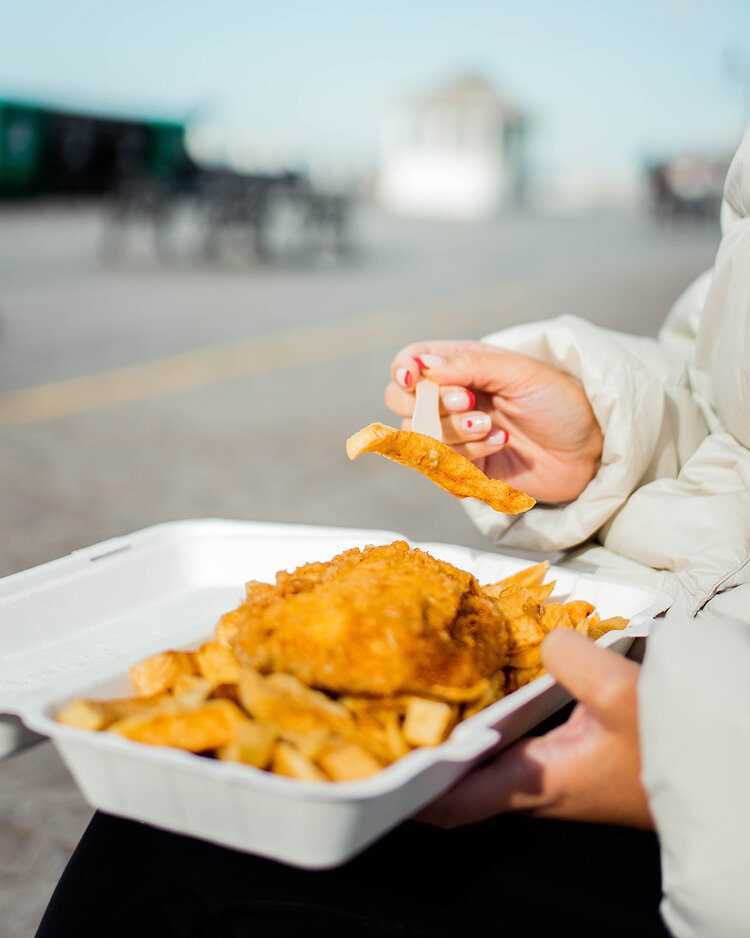
    1. Fish and Chips

    Let me start off with a public service announcement before going any further – if you are North American, in the UK chips are not potato chips, those are known as crisps, chips are fries but chunkier, fluffier and better! Don’t get me wrong, I love fries, but fries are fast food, guilty pleasures, ordered as a side… chips however, chips are life!

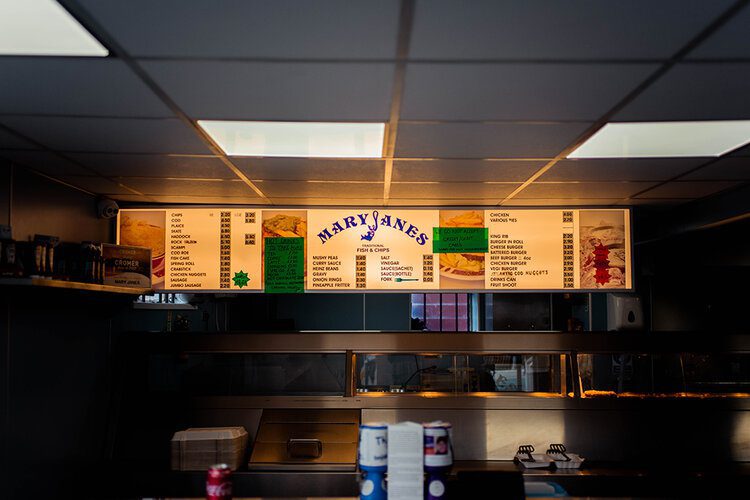
    You order fish and chips from pretty much any restaurant in the UK from The Ivy to any old pub, but the best place to go is a local “chippy” either to eat in or take out. Very few foods bring me as much joy as when I unwrap my greasy paper to reveal more chips than I can physically eat and a piece of fish bigger than my head – challenge accepted!

    The great fish debate has been going on in households since the dawn of time (or at least fish and chips), and really your choice of fried fish comes down to personal taste. Your options for the most part are:


    • Cod


    • Haddock


    • Plaice


    • Skate


    Alternatives are: fish cakes, scampi a battered sausage or chicken nuggets (a firm favourite with kids).

    There are three basic sides to fish and chips: pickled onions, pickled gherkins and mushy peas. I don’t know why, I don’t ask why, I just eat them and they taste good. 

    As for sauces, these tend to be a little more regional but they’re usually all available:


    • Curry sauce (which bares zero resemblance to curry but is amazing)


    • Gravy (that’s a northern thing)


    • Tartar sauce (that’s a posh thing)


    • Ketchup (standard)


    The seasoning though is the most important part: salt and vinegar. Chips without salt and vinegar is like Sonny without Cher, Thelma without Louise, Burt without Earnie, LIFE WITHOUT AIR! They are what bring together this all time favourite meal of the British public. If you’re eating fish and chips in a pub or restaurant you will also be given a wedge of lemon for the fish.

    Traditionally fish and chips is eaten on a Friday.

    2. Sunday roast

    A Sunday roast with all the trimmings is probably the British public’s favourite meal. It is synonymous with family and is a big home comfort for all Brits. Traditionally it is homemade but the alternative is to go to a pub for a carvery which is a buffet served roast. It’s called a roast because the meat and half of the trimmings are roasted, your meat options will be:


    • Chicken


    • Beef


    • Lamb


    • Pork


    • Turkey (reserved for Christmas)


    The basic trimmings are:


    • Roast potatoes


    • Carrots


    • Parsnips


    • Yorkshire puddings


    • Stuffing


    • Gravy


    Everyone has their own veg favourites so there could be additional ones depending on where it’s being served.

    Condiments vary depending on the meat, Horseradish goes with beef, mint sauce goes with lamb, apple sauce accompanies pork and cranberry sauce enhances turkey. Chicken has been in a long-term relationship with gravy for so long that when you invite one the other comes too, chicken has no sauce on the side. Some people might serve bread sauce – a medieval sauce made from bread crumbs, butter and milk – but it isn’t a popular choice despite what Michael might tell you.

    As a tourist visiting who hasn’t been invited into someone’s home for a Sunday roast, you can get one from virtually any pub on a Sunday. It’s not limited to Sunday but traditionally it’s eaten on a Sunday for lunch or dinner so Sunday will be your best bet.

    3. Fry up

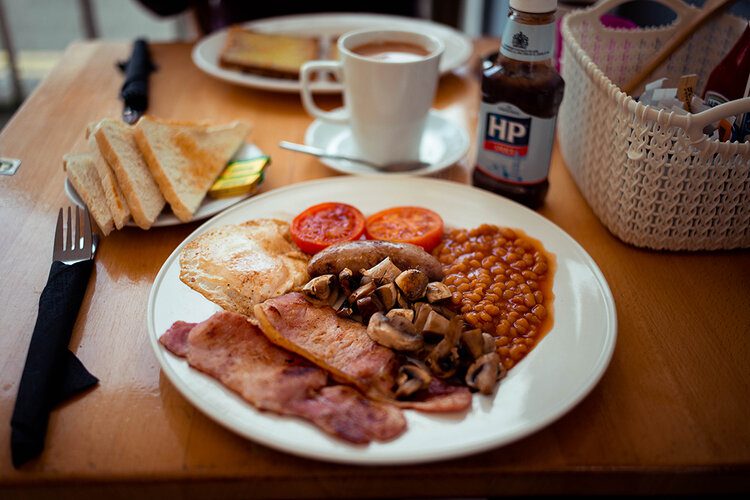
    The fry up, otherwise known as a “full English”, is the quintessential British breakfast. Some ingredients change between England, Ireland, Scotland and Wales but the following staples stay the same:


    • Fried egg


    • Fried tomato


    • Fried mushrooms


    • Bacon


    • Sausage


    • Baked beans


    • A round of buttered toast


    Black pudding is another core ingredient but is an acquired taste so it’s usually an add on.

    Top off your fry up with a squirt of HP Brown sauce, a blob of ketchup and a sprinkling of salt and pepper and you’re ready to tuck in.

    When I was working with children in Paris, the eight year old I was caring for came running across the playground when I was picking her up, looked up at me with disgust and said, “do you English really eat all that meat for breakfast every morning?” – eventually I worked out that she had just learnt in her English class that day about English food and our fry up. I’ll never forget the look on her little face! No we don’t eat a fry up every day or we would be dead in the ground in our 40s! A fry up is predominantly reserved for a lazy brunch or hangover cure.

    You can get your fry up at any greasy spoon café serving fried food and any restaurant or pub open for breakfast/brunch. Your most authentic experience will be in a greasy spoon: an ever so slightly run-down and very cheap café.

    4. Afternoon tea

    Unlike everything listed above, afternoon tea is on the fancy side of Brit favourites and thanks to social media has become a true experience meal rather than just a slightly extra way to eat cake before dinner.

    Afternoon tea is known to north Americans as high tea but they aren’t traditionally the same thing. Take a look at this blog post 

    PFH Fun Fact: though north Americans call afternoon tea “high tea”, they aren’t actually the same thing. Afternoon tea originates from the upper classes and royalty as a meal to satisfy the hunger that occurred between lunch and dinner, whereas high tea originates from the working class who didn’t have long afternoons to spend eating cake and ridiculously small sandwiches because they were well, working, so they had something to eat much later in the day and far more substantial than cake after a hard day’s work.

    A traditional afternoon tea consists of:


    • Finger sandwiches (luckily we have progressed past plain cucumber)


    • A selection on mini cakes and pastries


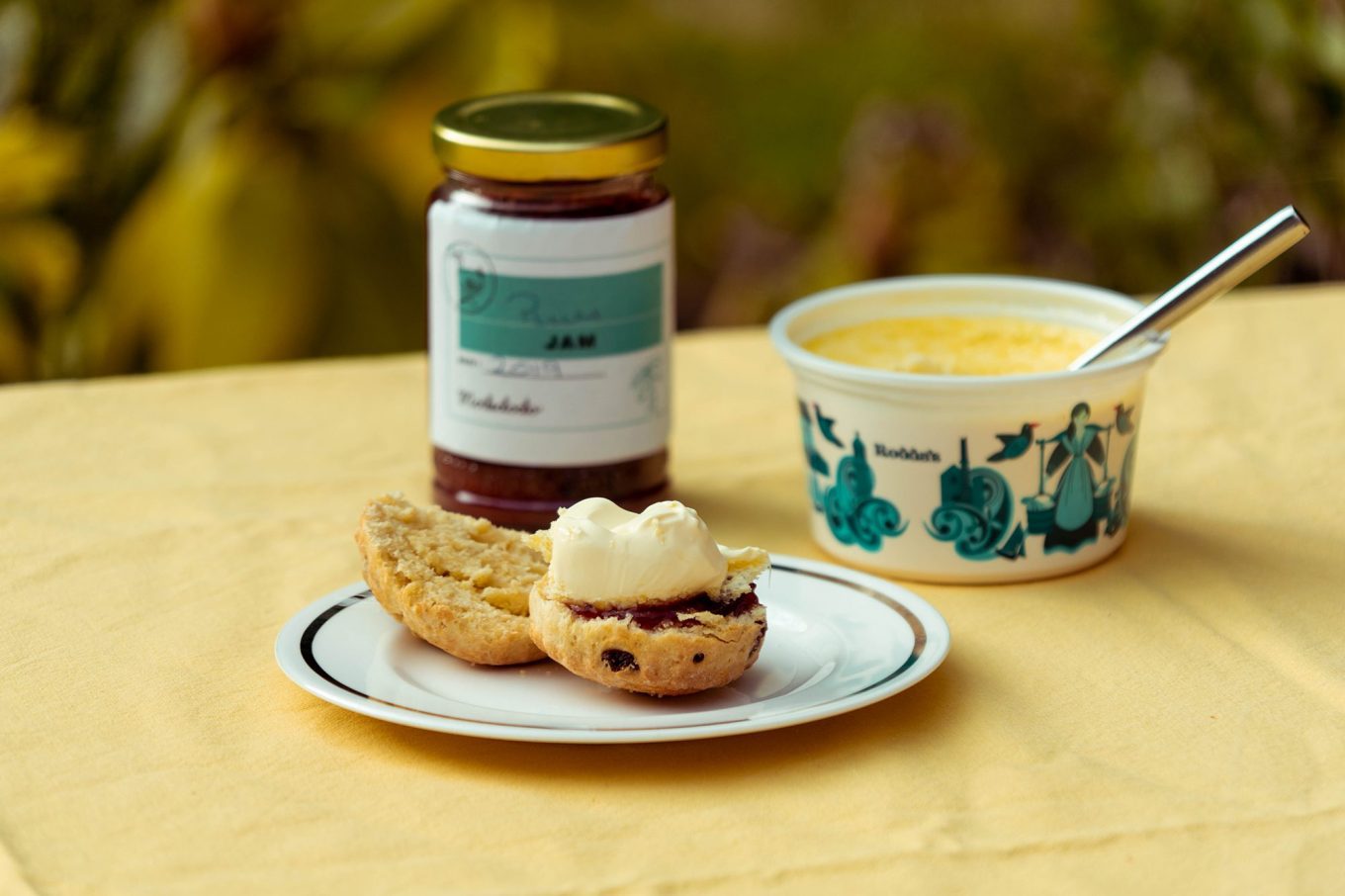
    • Fruit and plain scones served with jam and clotted cream


    • Tea (expect an extensive list)


    Almost everywhere will give you the option to pimp up your afternoon tea with prosecco or champagne, this is known as “Royal tea” and may concur an additional cost.

    There is a certain etiquette to afternoon tea so listen up kids:


    1. The dress code is “smart casual” unless stated otherwise. Use it as a chance to dress up


    2. Place the napkin on your lap


    3. Before pouring your tea, place the strainer over the tea cup so the tea leaves don’t enter your cup


    4. Hold down the lid of the tea pot as your pour


    5. Do not drop your sugar lumps in, place them


    6. Never bash your tea spoon on the side of the tea cup when stirring


    7. NEVER put your pinky in the air, that is not a thing


    8. Do not dunk anything into your tea (do this behind closed doors and only with a sturdy biscuit)


    9. Eat your sandwiches first, with your fingers not cutlery


    10. Never sandwich the two halves of a scone together with jam and cream in the middle


    11. Also it’s scone like “gone” not scone like “bone”


    12. You may use your dessert fork to eat your cakes


    13. Dab your napkin on your mouth, don’t wipe


    Afternoon tea should be served at 4pm but restaurants, cafés and tearooms will generally serve between 2pm – 5pm.

    You will be able to find afternoon and cream tea all across the UK but if you are looking for the crème de la crème for traditional afternoon tea in London your top choices are:

    You will need to book in advance for all of the above.

    If a full afternoon tea seems too much, you can just order a cream tea which is scones served with jam and cream and a pot of tea. It’s the best part of the afternoon tea anyway!

    Want to create your own cream tea or even afternoon/high tea at home? Take a look at my traditional English fruit scones recipe so you can make your very own from scratch!

    .

    Apart from the fried fish, there are gluten free, vegan and vegetarian alternatives to all of the meals above so everyone can have a least one of the above! As we ever so sophisticated Brits say, “dig in!”

    Aloha, Gabriella

    Pin this post


  • Classic English fruit scones recipe

    Classic English fruit scones recipe

    Tell me a more quintessentially British thing to do in the afternoon than indulge in a cream tea or afternoon tea? Of course, absolutely no afternoon tea is complete without good old fashioned fruit scones served with jam and clotted cream. So here I am to bring a little British culinary culture to your home with a very simple and easy recipe for baking fruit scones. 

    To learn more about proper afternoon tea etiquette, take a look at my blog post, Traditional British meals every traveller needs to try.

    Usually my recipe blog posts are inspired by my travels, but the recent glorious sunny days we’ve been having out in the Norfolk countryside has got me thinking about the Great British Summer and it inspired me to look a little closer to home this time.

    Remember everyone, it’s “scone” like “gone” not “scone” like “bone”.

    Scones can come in many shapes and tend to be made using family recipes that have been passed down. So I will be sharing the recipe my Mum uses.

    The recipe below makes approximately 10 scones. 

    Ingredients

    225g self raising flour (plus extra for rolling)

    1 level tsp baking powder

    40g softened butter

    25g caster sugar (and a couple of pinches for sprinkling over the scones)

    1 egg

    150ml milk (plus a dash extra for brushing the scones)

    55g currants

    Jam

    Clotted cream

    Equipment

    Measuring scales

    Sieve 

    Large mixing bowl

    Tsp measurement

    Wooden spoon

    Bowl

    Fork

    Rolling pin

    Round cutter (approx. 6cm wide)

    Pastry brush

    Baking tray

    Reusable tray liner (or greaseproof paper, but try to buy a reusable greaseproof liner)

    Wire rack

    Method

    1. Preheat the oven at 180˚C

    2. Measure out all of your ingredients

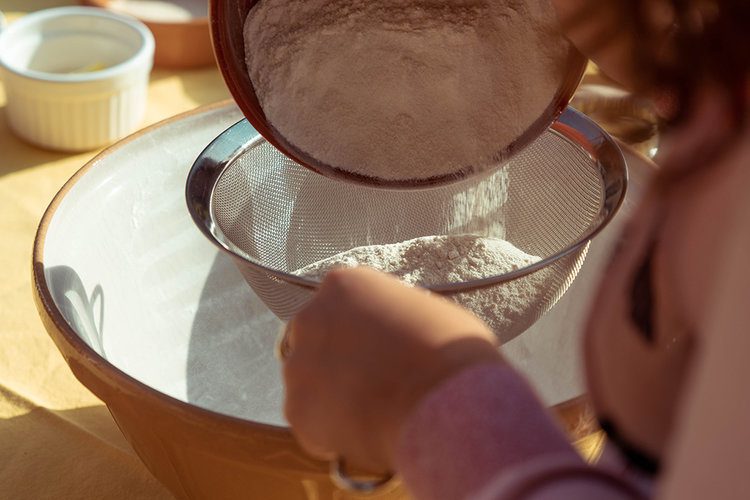
    3. Sieve the baking powder and flour into a large mixing bowl


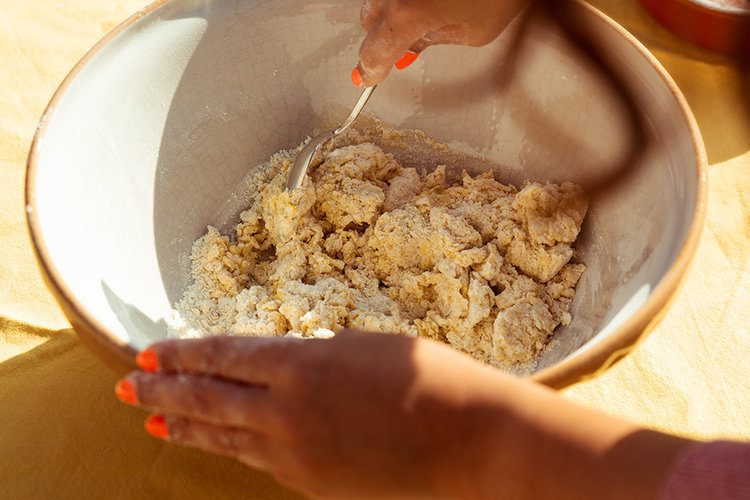
    4. Add the butter to the flour mixture and rub ever so lightly with your finger tips until the mixture resembles breadcrumbs

    5. Stir in the sugar

    6. Break the egg into a separate bowl and whisk with a fork whilst adding the milk

    7. Stir the egg mixture into the large mixing bowl to make a soft dough

    8. Stir in the currants

    9. Your dough should be in-between dry and sticking, if it is too wet and sticky sprinkle flour over it until it is soft rather than sticky

    10. Lightly flour a flat surface for rolling out the dough

    11. Once you have gathered the dough into one lump, remove it from the mixing bowl and place it on your floured surface


    12. Knead the dough very gently

    13. With flour dusted on your rolling pin, roll out the dough to a thickness of 2cm (3/4”)

    14. Using a 5cm (2”) round cutter, cut the dough into as many rounds as you can, placing each one on your lined baking tray

    15. Gather the remaining dough, roll it out to the same thickness and cut what’s left

    You should have approximately 10 scones, I managed to get 11 out of mine so it can vary

    With the scrap of dough left, roll it into a ball to bake – don’t waste anything!

    16. Using the pastry brush, brush the tops of each scone with milk and sprinkle with a very small amount of caster sugar, this will make the tops of the scones go golden brown

    17. Place the tray on the middle shelf of the preheated oven to bake for 10 minutes, if they are not golden brown quickly turn the tray around and bake for 2-3 more minutes, but no more than that

    18. Remove them from the oven and place the scones on a wire rack to cool down

    To serve


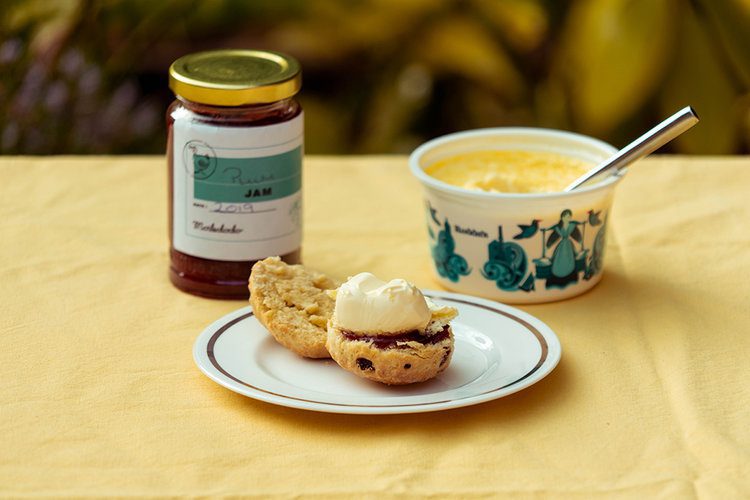
    • Cut in half


    • Spread jam on each half


    • Top with clotted cream


    There you have it, your perfect addition to your afternoon or cream tea. 

    Remember, proper afternoon tea etiquette is to keep those pinkies down and never bang your spoon on your tea cup!

    If you give these a try let me know how it goes. Tag me using @gabriellawisdom and the hashtag #postcardsfromhawaiiblog so I can share it on my Instagram.

    Enjoy!

    Aloha, Gabriella 

    Pin this post