Tag: Responsible

  • How to carbon offset your flights

    How to carbon offset your flights

    Air travel currently accounts for 2.4% of global carbon dioxide emissions, a figure that is still rising at an alarming rate. Though it is not the highest contributor to rising greenhouse gas emissions, it is a significant one for us travellers to consider. Now of course I’m not here to tell you to stop flying, that would be entirely unreasonable of me, not to mention hypocritical, but I am here to help guide you with the ways you can reduce your carbon footprint whilst you travel. This blog post in particular suggests three companies you can use to carbon offset your air travel and towards the end I also suggest more ways in which you reduce your carbon footprint.

    There is a lot of speculation of carbon offsetting which stems from the idea that simply planting trees isn’t the answer, but there is more to carbon offsetting than reforestation. The three companies I have listed below all work on a variety of projects beyond tree planting, from distributing efficient cooking stoves in countries who wouldn’t otherwise have access to them, to funding clean energy farms such as wind and solar. They’re not just helping you to offset your carbon footprint, these companies and their projects are also working hard to improve the quality of life in developing countries.

    Here are the three companies I recommend using to offset you carbon footprint:

    1. Gold Standard

    Gold Standard has offset 117 million tonnes and counting, supporting over 17,000 projects in more than 80 countries.

    Read more about Gold Standard here.

    What you can offset


    • A custom donation for any carbon emissions


    How to calculate 

    With Gold Standard, you calculate your carbon emissions from your air travel, vehicle, home etc. using either of the following calculators and pick from one of their various projects to donate to by the tonne. 

    WWF Carbon Footprint Calculator

    Carbon Footprint Calculator

    There is a wide choice of projects from focusing on sustainable energy sources such as wind and solar power to humanitarian projects such as providing safe water and clean cooking equipment to villages in need all around the world. Take a look at your options here.

    Cost per tonne

    £7.75 – £15.50 or $10 – $20 per tonne.

    How to donate

    Once you have calculated the amount of carbon you wish to offset and the project you want to support you can pay via the payment methods:


    • Visa


    • MasterCard


    • American Express


    • Paypal 


    Choose wisely and keep your points in mind so that you can collect towards your travels and future offsetting payments!

    2. Mossy Earth

    Mossy Earth is a carbon offsetting company that offers an immersive experience. What does this mean? With your donation you receive the following: 


    • A photo & GPS coordinate of each tree


    • Regular on the ground project updates


    Read more about the ways you can reduce your impact here.

    What you can offset


    • Your air travel


    • Your road trip


    • Your carbon footprint


    • A custom donation


    How to calculate

    Mossy has its own calculator which will calculate your footprint by the hour for air travel, by the km for road travel or by the tonne for your custom emissions footprint.

    You can choose to donate either as a one off or via a monthly subscription.

    Unlike Gold Standard, you cannot pick your project to donate to, however here is a list of the project Mossy works on:


    • Wildfire restoration – replants after wildfires


    • Healing clearcuts – replants after illegal logging


    • Native oak woodland restoration – reduces the fire hazard for local communities 


    • Irish reforestation – plants trees in the least forested region in Europe


    • Rewilding impact – helps pay ranger salaries so they can continue to protect forests, sets up cameras for biologists to track wildlife populations and helps to put out wildfires 


    You can also give a gift of a planted tree to a fellow environmentally-conscious traveller (or anyone really). They even have wedding and birthday gift kits!

    Cost per tonne

    £30 or $39 per tonne.

    How to donate

    Once you have calculated the amount of carbon you wish to offset and the project you want to support you can pay via the payment methods:


    • Apple Pay


    • Paypal 


    3. Atmosfair

    Atmosfair is a non-profit organisation that specialises in offsetting air travel emissions. With the donations made, they are developing and financing renewable energies in over 15 countries worldwide.

    To read more about their renewable energy projects, click here.

    What you can offset


    • Your air travel


    • Your carbon footprint


    • A direct donation


    How you calculate

    Atmosfair has its own calculator which can work out your air travel emissions by taking your destination, ticket class, aircraft and route into consideration. Alternatively you can use one of the following calculators to work out your footprint. 

    WWF Carbon Footprint Calculator

    Carbon Footprint Calculator

    You can also choose to donate either as a one off or via a monthly, quarterly or yearly subscription.

    Atmosfair does not participate in any reforestation projects but they do work on the following:


    • Wind energy


    • Solar energy 


    • Hydro power


    • Environmental education


    Cost per tonne

    £20 or $26 per tonne.

    How to donate

    Once you have calculated the amount of carbon you wish to offset and the project you want to support you can pay via the payment methods:


    • Visa


    • MasterCard


    • American Express


    • Paypal 


    Choose wisely and keep your points in mind so that you can collect towards your travels and future offsetting payments!

    We are yet to use Atmosfair but I have included it here because it’s on my radar and it’s also recommended by Natalie Fee in her book, How to save the world for free, which I have recommenced many times in my blog posts and across social media.


    More ways to reduce your air travel carbon footprint

    Offsetting your carbon footprint isn’t the only way to reduce your impact on the world, here are some more ways you can help to save the planet when you fly:

    Fly economy/coach

    As uncomfortable as it is, flying economy/coach is better for the environment as the seats take up less space than first or business. Luckily we can’t all afford business and first so for the most of us, we’re already doing our bit!

    Fly direct

    Yes connections are cheaper, but next time consider flying direct as take offs and landings use the most fuel which means more of them create higher emissions. Balance the cost of a connecting flight against the extra offsetting cost for two or more flights.

    Say no to the inflight meal

    Inflight meals feature a lot of plastic and single use waste. Contact your airline to reject the inflight meal when possible, and instead bring your own food from home – in reusable packaging of course!

    Travel light

    The more you pack, the heavier the plane. The heavier the plane, the more fuel it uses to fly. The more fuel used, the higher the carbon emissions. So try to pack less. This is the one area I particularly struggle with when it comes to travelling. Luckily my upcoming move to Canada is forcing me to reduce my belongings (all being sold, handed down, donated or recycled) so that after the first flight is done, I will be travelling with a lot less from then on.

    If you have any questions about carbon offsetting, please feel free to reach out to me here or via Instagram. I’m no expert but I might be able to offer advice if what you’re looking for isn’t here.

    Thank you for reading this and understanding the importance of protecting the planet we all love to explore!

    Aloha, Gabriella

    Pin this post


  • 10 Lush products for reducing plastic usage whilst travelling

    10 Lush products for reducing plastic usage whilst travelling

    As travellers, we have a rather large impact on the planet with those large carbon emissions produced by every flight we take. This creates a pretty tricky situation for us as the more of this beautiful planet we see, the more we want to travel but this also means we see first hand what a massive impact our neglect has had and we end up contributing to it more. The best thing we can do, second to limiting our travel and opting for direct flights, is to offset our carbon emissions. Some leading airlines such as Virgin have the option to add this on to your flight purchase, but you can also do it externally online. A seriously impactful way, beyond these options, is to reduce our plastic usage to stop it from ending up in landfills or our oceans where it is polluting natural resources and killing animals worldwide. The best way to do this whilst travelling is within our toiletries, so here are 10 products from Lush which come without packaging or in recycled/reusable packaging.

    Before taking you through these 10 products, let me take a moment to tell you why Lush:


    • Their products either come in recycled packaging, reusable packaging or none at all, which they like to call “naked”.


    • Speaking of their recycled packaging, if you bring back five clean pots in store you will receive a free fresh face mask, which comes in a pot that you can bring back with four other pots when you’ve finished it! How great is that?


    • Their products are all handmade with natural ingredients and/or safe synthetics.


    • All the products are vegetarian, with many being vegan, and they don’t test on animals.


    • They advocate for the environment.


    • They’re a super fun brand with everything designed to encourage you to enjoy your bathroom routine.


    Here are 10 products for sustainable travel:

    1. Solid shampoo

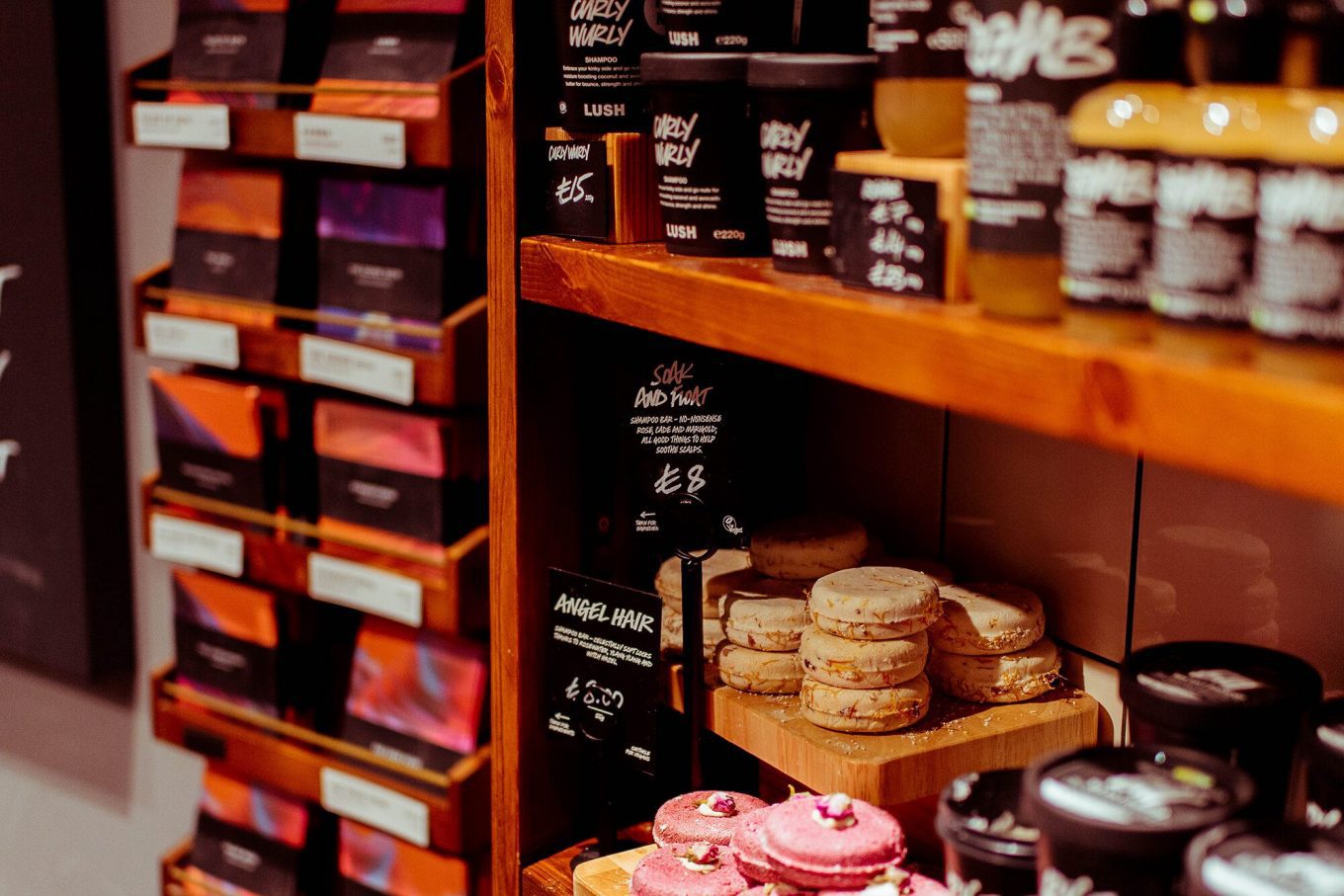
    Switching to solid haircare is one of the easiest and best ways to eradicate plastic packaging from your bathroom products, plus it last forever! I’ve even found it foams up better than liquid shampoo. I use Honey I Washed My Hair and it leaves my hair feeling so soft and silky every time. Store it in one of Lush’s reusable round tins – you’re going to read that a lot in this post! They’re perfect for travel and prevent the need for single use packaging. Just make sure the product has dried before popping the lid back on.

    2. Solid conditioner

    Switch for all the reasons I mentioned above! The solid conditioner bars are a different shape to the shampoo so you’ll want an oval tin for one of these. They’ve recently had a makeover and are now pressed which makes them lather up better than before and come in far more fabulous scents. I previously used Sugar Daddy-O but I cannot tell you how excited I am to try American Cream!

    3. Superbalm scalp treatment

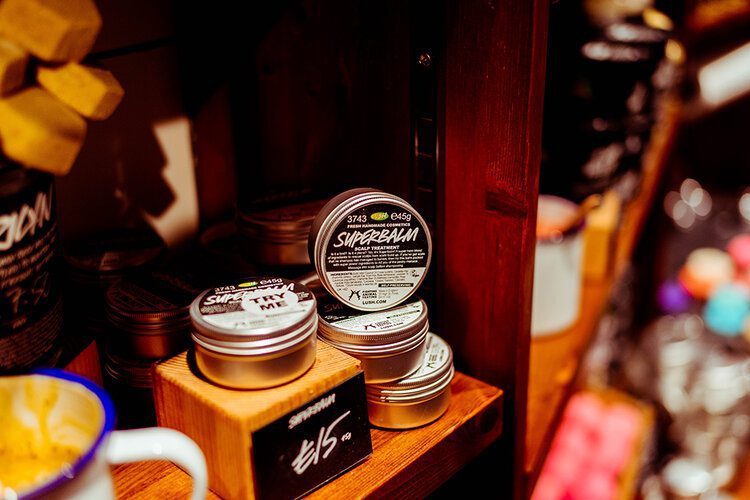
    Whilst I’m away my hair often comes into contact with a variation of soft water, hard water, sea water and chlorine which can wreak havoc on my scalp and make it quite dry. Though the shampoo bar, particularly the Honey I Washed My Hair bar, makes my hair soft and silky, it doesn’t help my scalp. So to treat my dry scalp I was still using Head and Shoulders, but then I came across Superbalm which is formulated with coconut oil and candelila wax to treat dry scalps. If I’m on a short trip I won’t take it, but if I’m on a trip that’s two or more weeks long I will make sure to treat my hair at least once. 

    This product isn’t really a must, it’s just really helpful if you put your hair through a lot whilst you travel.

    The Soak and Float solid shampoo will help with dry scalps too.

    4. Soap/shower gel/body conditioner

    There’s a multitude of options for keeping fresh on your travels with Lush. There’s solid soaps and gels (yes really, gel), liquid shower gel or something in the middle which is their body conditioners. 

    Shower gel and “naked”solid shower gel.

    Grab a piece of one of their numerous naked packaging soaps and store it in a tin, or chop up one of their naked shower gel bars – these are formulated to be more moisturising than the soap – and also store it in a tin. Or you can travel with one of their shower gels which come in a recycled bottle if that’s more your style. Then there’s their body conditioners which clean like soap but apply like moisturiser and leave your skin feeling crazy soft and moisturised. These come in plastic pots which you can return to store for a free face mask as I mentioned earlier.

    There’s an option for everyone. There’s even solid scrubs if exfoliating is more your jam.

    5. Moisturiser 

    Very few moisturisers come in reusable packaging and if they do, they don’t tend to be made of natural ingredients or safe synthetics. There are many options for moisturisers in Lush for all skin types. I use Vanishing Cream because it leaves my skin moisturised and not greasy or oily. Plus it’s made with lavender which is my favourite essential oil and witch hazel which helps to keep skin clear from blemishes. Again it’s in a pot which you can return in store with four others for a free face mask.

    6. Solid cleanser or biodegradable cleanser wipes

    I am a big fan of packaging free makeup remover and cleanser. It took me a long time to find products that worked for my skin, I tried all the big brands from drug store to pricey labels, but all my skin needed was minimal and natural products. I use a magic cloth to remove my makeup with water, then to cleanse I massage Like a Virgin – a solid cleanser that smells like lemon drizzle cake – into my skin and remove it with a reusable cotton pad and warm water. I used to travel with heaps of skincare products and now I just have a magic cloth, a reusable cotton pad, Like a Virgin (which I store in one of Lush’s round tins) and Vanishing cream in my Flat Lay toiletry bag.

    If I have a long flight I pack a 7 to 3 cleansing wipe into my travel bag so I can remove makeup inflight. You just need water and you can get multiple uses out of it before it biodegrades. If I am travelling with this in my hand luggage I will leave Like a Virgin at home. Like most of the products on this list, the cleansing wipes are packaging free so store them in a reusable round tin.

    7. Solid or powder deodorant

    Solid deodorant is a great way to cut down on packing liquids whilst travelling, plus, natural deodorants remove the risk of harmful chemicals that may contribute to breast cancer.

    I have very sensitive skin and don’t get on with Lush’s solid or powder deodorant. Instead I use Neal’s Yard spray on deodorant (not aerosol) but Michael uses T’eo and T for Toes and gets on well with them. He stores T’eo in a square tin.

    8. Toothpaste tablets

    Eliminate non-recyclable packing from your dental care with toothy tabs, there’s a variety of flavours to choose from plus they are a great alternative to packing liquids/gels. It’s just a shame that these don’t come in a reusable tin because that would be far more sustainable but it’s a start.

    9. Makeup

    Lush has a much bigger makeup line than you’d think, from refillable lipsticks to vegan makeup brushes, take a look at what you can replace in your makeup bag, if you wear it.

    My lips suffer greatly with changes of climate, they dry out and crack or peel and I’m not here for it. Keep your lips soft and moisturised with a Lush lip balm, they’re compact and come in so many fun flavours. The scrubs are particularly great for exfoliating dry lips.

    10. Body lotion

    It’s very important, whether you’re going to be bronzing under the sun or hitting the slopes, to keep your skin moisturised so it doesn’t become dry, irritated or flakey. I have found very few body lotions in reusable or responsible packaging; I love Aveeno (thanks to Jennifer Aniston’s ad campaign) but the pumps on their bottle can’t be recycled from home so I sought out an alternative in Lush. Dream Cream like Aveeno is made with oats but it also has lavender oil (yay), rose water and Tea Tree which is, quite appropriately, a dream for your skin.

    .

    These 10 packaging free or recyclable products will not only make travelling without checked luggage so much easier, but they also will prevent you from using any single use hotel products and you will always be prepared!

    Aloha, Gabriella

    Pin this post


    .

    This post has not been written in collaboration with Lush, I just love everything the company stands for and they are an ideal source for plastic free packaging. The photos were taken within the Norwich store.

  • How to practice responsible tourism

    How to practice responsible tourism

    Travel has completely opened my eyes to how much waste there is in the world and the effects that my contributions were having. Seeing real life mounds of discarded single use plastics, videos of animals’ tummies full of plastic and rubbish, animals being harassed for tourists’ amusement and beaches scattered with rubbish – it’s hard to ignore what irresponsible behaviour can lead to. It’s important that we all do our part to stop being so wasteful, to protect our planet from the damage we’ve caused so that future generations of animals and humans don’t suffer because of what we’ve done. 

    My experience of irresponsible tourism 

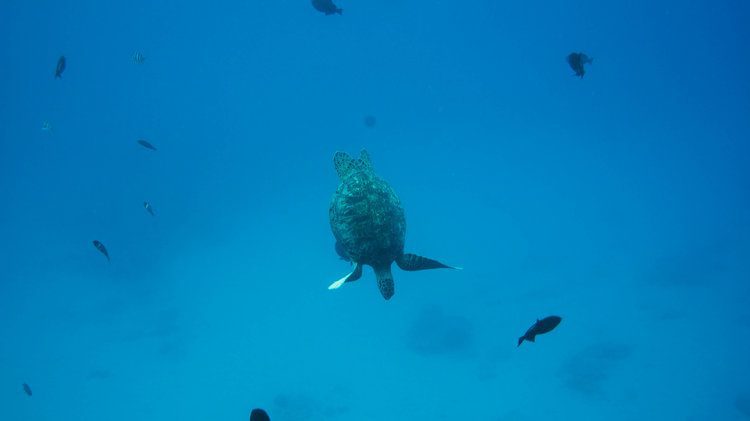
    In February I returned to Hawaii and whilst in Oahu I decided to book an excursion to swim with turtles, something I had done a few years before in Maui and thoroughly enjoyed. I chose to book with a company called Holokai Catamarans based in Waikiki and was gravely disappointed by the behaviour of both the crew and the passengers on my tour.

    We witnessed the crew throw chocolate chip cookies into the water, and last time I checked, wheat and chocolate don’t grow in the sea and are therefore not part of a natural diet for turtles or fish. There were only four turtles in the water, one was young too, and another three boats came to join us, including a boat loaded with scuba divers and even a glass bottom boat! At one point there were approximately 40 people both on and beneath the surface of the water surrounding these poor turtles. 

    That situation had multiple things wrong with it:


    1. The turtles were heavily outnumbered and surrounded. If they feel threatened they will be reluctant to surface for air, which could lead to asphyxiation and therefore death.


    2. Glass bottom boats are extremely dangerous for sea turtles as they can get confused and try to surface beneath the boat. This can damage their head, fins or their shell and even lead to panic and suffocation.


    3. Sea turtles are an endangered species and it is very important that you respect them and their environment. For this reason you legally must stay 10ft back to prevent the turtle from being scared, harassed or harmed. Turtles are curious creatures so there is a good chance that whilst you are observing them that they will surface near you to do the same to you. In this situation, you must remain calm and very slowly give them space, then count your blessings for a beautiful moment you shared with such a magnificent animal.


    Unfortunately the situation worsened and not only were the turtles encompassed by far too many tourists, some groups of people then did the worse thing imaginable, they started to grab at the turtles and chase them, whilst the crew did nothing. I personally had to stop at least five people from chasing the turtles when they surfaced and I even pulled a person away after they touched one of the turtles. It was incredibly distressing! So, for these reasons I cannot recommend taking this tour; their lack of responsibility for their passengers and respect for the turtles was heartbreaking. 

    Once I returned to my hotel I wrote a letter of complaint to the company and I also reported them to Hawaii’s tourism board via their government’s website. Since then I have been far more vigilant over choosing tours, doing my best to make sure they are environmentally conscious and responsible.

    Tips for finding responsible marine tours

    With so many tours available over the internet it might seem like a daunting task to find operators that are responsible. Here are a few pointers for finding tour companies that you can trust to be environmentally conscious:


    1. Always take a peek at their own website, even if you’re using a comparison site. You’ll get a better idea of their priorities and what they pride themselves on. For example, if they mention that they are “the most eco friendly tour operating out of that harbour” you know they’ve got their priorities in order.


    2. If you’re booked to stay in a hotel, ask the concierge or front desk if they can recommend any responsible tours. Then research them before making a booking.


    3. Look for companies that provide or encourage the use of reef safe suncream only.


    4. Small tours are always the better choice. They have a smaller impact on the environment and it means you are going to have a much more personal experience with them. Larger tours are mostly operating to make money and don’t take care of individuals or the environment. Whilst on a whale watching tour in Hawaii, we chose to go on a very small dinghy and because of that it meant we could hear the whales singing through the hull of our boat. Moments later we were joined by a large boat with two decks which was blasting out its own music. Not only was that precious moment lost on those people on the larger tour, but they are discouraging people to truly experience their surroundings.


    5. Take note of companies that partner with nature conservationists, charities and organisations. You know they care for the environment and everyone’s personal experience over masses of paying passengers if they have a strong focus on marine biology and research.


    6. Reach out to travel and environmentally conscious bloggers. Ask them if they know of any trustworthy tours, or if they can recommend any companies. You can always contact me through my Instagram, @gabriellawisdom, or email, if you have any questions or want recommendations.


    If a turtle surfaces near you, remain calm so you don’t antagonise it, do not reach out to it, and when it is safe, put distance between yourself and the turtle.

    Extra measures that you can take

    Of course, responsible tourism doesn’t start and end with the tour operators. We all have a responsibly to protect and preserve our beautiful environment. Here are the ways you can help:


    1. Bring your own reusable water bottles to prevent the use of plastic ones.


    2. Wear and bring your own reef safe suncream. Oxybenzone and octinoxate are harmful chemicals to coral reefs and are often found in suncream and UV protection products. Many leading brands such as Hawaiian Tropic, Australian Gold and Banana Boat are now reef safe. Check the label before purchasing your next bottle.


    3. Be respectful of your environment. Don’t touch or harass any animals, don’t take anything with you except memories and photographs (if it’s appropriate) and don’t leave anything behind such as rubbish. If you see any rubbish, pick it up.


    4. If you do see something wrong, don’t be afraid to voice it and report it. I recommend you report what you witnessed to authorities and sending a private email over blasting them on the internet, the situation will be taken more seriously if you go about it sensibly.


    You may also be interested in this eco-conscious suncream from plastic-free shop Coconut & Cotton.

    Responsible marine companies I have used around the world

    Since my experience in Oahu, Hawaii, I am more determined than ever to make sure I book responsible and environmentally conscious tours. Here are some companies from around the world that I whole heartedly recommend because, each one of them have a passion for the world we live in and the animals we share it with:


    • Ultimate Whale Watch & Snorkel for whale watching in Maui, Hawaii. 


    • Pride of Maui for swimming with sea turtles in Maui, Hawaii.


    • Wild Whales Vancouver for whale watching in Vancouver, Canada.


    • Reef Day-tripper for swimming in the Great Barrier Reef, Cairns, Australia.


    We are all accountable for making sure we protect and preserve our environment. Together we can make great strides towards responsible tourism by acting upon the tips I have highlighted above and booking tours based on their environmental impact and awareness over what costs less.

    .

    Aloha, Gabriella