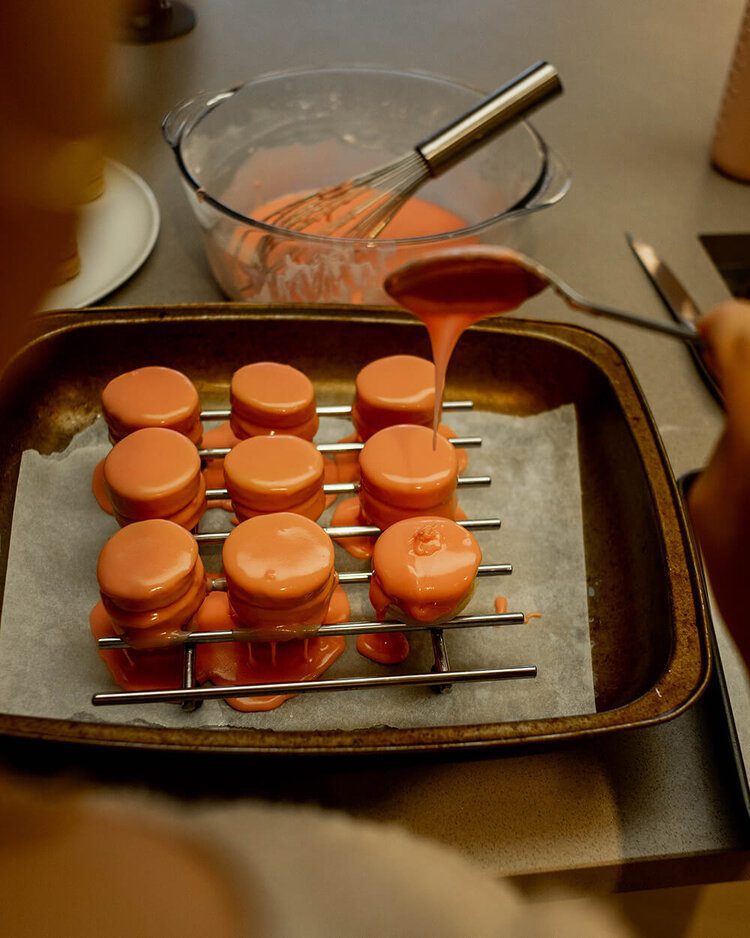
Napolitaines are traditional Mauritian biscuits. They are round, flaky shortbread biscuits (cookies) that are sandwiched together in pairs with jam between them and coated with a thick, bright pink icing. Though the shortbread is savoury, the jam and icing make napolitaines a very sweet treat.
Napolitaines are one of the first things I seek out when I visit Mauritius, they’re like home a comfort to me. They’re one of my favourite Mauritian treats and so I want to share them with you.
Before I share the recipe I have answered a few questions you might have about making napolitaine biscuits but if you want to skip straight to the recipe, feel free to do so.
How many napolitaine biscuits/cookies does this recipe make?
This recipe will make approximately 30 napolitaine biscuits.
How long does it take to make Mauritian napolitaines?
Making the dough for napolitaines will take approximately an hour and they take 22-25 minutes to bake (keep in mind that you may need to bake in batches too). They take about an hour to cool fully and it will take between 10-20 minutes for you to add the jam. Icing could easily take an hour and a half or more and for the best results you should leave them out to dry overnight so the icing sets completely.
I start making my napolitaines 2 days before the day I will be serving them. They take a little planning but they’re worth it.
Which jam goes in Mauritian napolitaine biscuits/cookies?
Traditionally guava jam goes into napolitaines but depending on where you are in the world, guava jam might not be the easiest to get hold of, it certainly isn’t in England. So I use either my homemade raspberry or strawberry jam to go in the middle of my napolitaines.
Can napolitaine biscuits be made dairy free or vegan?
Mauritian napolitaine biscuits (cookies) are already vegetarian. To make them dairy free/vegan you just need to swap out the butter for vegan butter or dairy free margarine and the milk that goes into the icing can be swapped out for a plant based milk alternative. I have actually used vegan margarine and soy milk to make these napolitaines in this recipe.
Can napolitaine biscuits be made gluten free?
I have tried to make gluten free napolitaines but the dough was just too dry and kept falling apart. Gluten free flour is very dry and due to the already crumbly nature of the shortbread the dough just wouldn’t hold together to be able to roll it out.
Ingredients for making Mauritian napolitaines
500g (3 cups + 2 tbsp) plain flour (plus a little extra for rolling)
360g (1 ½ cups) butter or vegan margarine (room temp)
Pinch of salt
8-10 tbsp jam
500g (3¼ cups + 3 tbsp) icing sugar
80ml milk or plant based milk alternative
½ tsp pink food colouring (paste will give you the best colour)
What you need to make Mauritian napolitaines
Measuring cups or scales
Large mixing bowl
Small mixing bowl
Rolling pin
Round cookie cutter 5cm or 2” wide
2 Baking trays
Cooling rack
Whisk
Spoon
How to make Mauritian napolitaines
1. Pre-heat the oven to 180°C or 356°F (fan oven).
2. Sieve the flour into a large mixing bowl and add a pinch of salt.
3. Combine the butter and flour to resemble breadcrumbs then continue to bring them together to form a crumbly dough. If it’s a real struggle to get it to come together then add a knob more of butter.
4. Leave the dough to rest for 15mins at room temperature.
5. Split the dough in half, take one half and roll it out on a lightly floured surface to a thickness of 0.5cm (a little under a ¼”).
6. Cut an equal number of cookies using a round cookie cutter and repeat for the other half of the dough .
7. Place the Napolitaine biscuits on baking trays and bake on the middle shelf of the oven for 22-25 minutes. You want them to be pale in colour, not golden, but baked through. You may need to bake in batches as you might not get them all in the oven.
8. Place the Napolitaine biscuits on a cooling rack and allow to cool fully, this should take approximately an hour.
9. Once cool, apply a teaspoon of jam to the centre of half of the Napolitaine biscuits (cookies) then take each top and press them upon the ones with jam, wiping away any jam that spills out.
10. Add the ½ tsp of pink food colouring to your milk and stir until it looks like strawberry milk. With your icing sugar in a large mixing bowl, begin to add the pink milk gradually, whisking in-between pours. You don’t want to add all the milk right away as you want the consistency of the icing to be thick, you might not need to add all the milk. The ideal consistency should be that when you lift your whisk with icing, the icing that pours off sits for a moment on top of the rest before settling in – see the photo below for reference.
11. Place a plate, greaseproof (parchment) paper or a baking tray under the cooling rack before coating the Napolitaine biscuits with icing.
12. Spoon the icing over a Napolitaine biscuit, holding it still over it until the icing has run all over the Napolitaine biscuit. You want the top and sides to be coated in icing so continue to do this until each one is fully coated.
13. Leave the icing on the Napolitaines to dry fully, it’s best to do this overnight as they need to be dry to the touch then they’re ready to eat.
Achard légumes is a Mauritian mixed vegetable pickle that originates from the Indian dish, achaar.
Though it took me a long time to acquire an appreciation for the taste of achard légumes, its place on the table in my family is a nostalgic one. This bright yellow, orange and green dish has been present at almost every large family gathering and for me, conjures the same comforting summer feels as strawberries and cream.
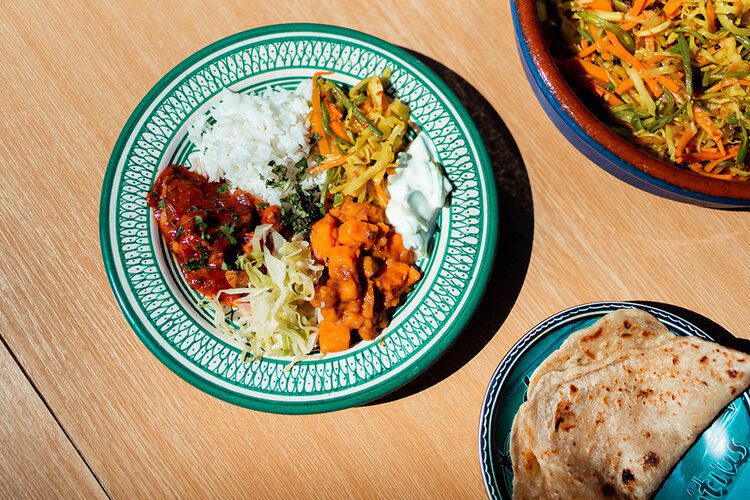
Achard légumes is one of the best side dishes you can make because it compliments such a wide variety of meals. It can be eaten with a curry or rougaille along with many other side dishes, or it can be eaten with a roti (Mauritian flat bread) or fresh bread, it can go into a sandwich or on a salad and it goes great with a BBQ or a cheese board. It’s a really flavoursome way to bring a variety of vegetables to whatever you’re eating.
Just like the rougaille recipe I shared last month, this achard légumes recipe is my Mum’s, so there are variations. Her adaptation is that she doesn’t use vinegar or cauliflower because my Papa, her Dad, didn’t like it so he didn’t use it. Many of the tweaks to our Mauritian recipes come from my Papa not having liked something!
This achard légumes can last up to two weeks if refrigerated if you do the following:
Fry all of the onion as this recipe tells you to. Some recipes will tell you to only fry half and add the rest in raw but this makes the achard watery and it won’t preserve for as long.
Add salt just before eating. Salt will also make the achard watery and again, it won’t last as long.
Prep your vegetables the day before you are planning to cook it. By allowing the vegetables to dry out overnight, the achard will last longer.
I almost forgot to point out, though you will be able to work it out from the ingredients list below, it’s vegan and vegetarian!
This recipe will serve 4-6 people.
Ingredients
3 carrots
3 stringless flat beans
1/4 small white cabbage
2 shallots
2-3 cloves of garlic
1 fresh or dry chilli (add more if you want the achard to have more of a kick)
1/2 tsp mustard seeds
2 tsp fresh turmeric (can be dry if you can’t get hold of fresh)
Large cooking spoon (black or metal, keep in mind that the turmeric will stain it)
When it comes to washing these up, use an old tea towel as the turmeric will stain it.
Method
1. Prepare your vegetables a day before and allow them to dry out.
Julienne the carrots and beans.
Shred the cabbage.
Cut the chilli(es) in half, lengthways. If you don’t like too much spice then remove the seeds, if you don’t mind then keep them in.
2. When you are ready to cook, peel and finely slice the shallots, mince the garlic and ginger and grate the turmeric.
3. Heat 2 tbsp of oil in the wok/frying pan on a medium heat and fry the shallots.
4. Add the garlic, turmeric, mustard seeds, chilli, pepper and ginger and stir through. Let them heat through for a few minutes to release their flavour.
5. Add the carrots and beans. Stir frequently so they get covered with the spices.
6. Add the remaining 2 tbsp of oil along with the cabbage and cook it until it wilts. The length of time you cook your achard really depends on whether you want the vegetables to be crunchy or soft. The longer you cook it, the softer it gets, so stop cooking it when you are happy. We cook ours for about 10mins so there’s still a little crunch.
It is one of the greatest joys in life to experience other cultures and all that comes with it: architecture, cuisine, music, religion and clothing. Having travelled to places such as Morocco, Dubai, Egypt, Mauritius and Singapore, this is a topic I have exhausted on Google. Really it comes down to not wanting to be disrespectful to local customs, be it for religious or cultural reasons.
Whilst seeking out advice on what I can wear, I have asked hotel staff, taxi drivers and so on, and I always get the same answer which is along the lines of “there are only tourists here, don’t worry”, but I don’t agree with this being the answer. Why should we ignore local customs when it comes to dressing in other cultures just because we’re tourists? If you want to immerse yourself in and respect other cultures, you put the effort in to observe and participate.
There is a truth behind what they are saying by certain locations being driven by the tourism industry, and that the lines are blurred on what to wear. For example, Marrakech is far more lenient than somewhere more rural in Morocco but then Dubai is even more accepting of a little more skin, but you should never assume that everyone will be comfortable with the amount you choose to show.
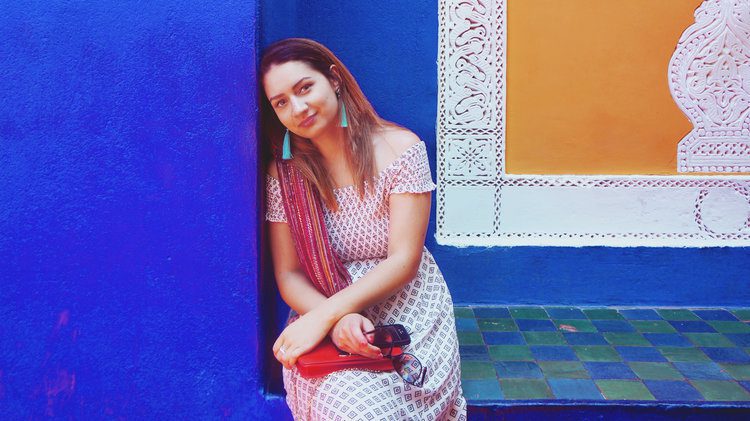
An example of a Bardot sleeve with my scarf close by to cover my shoulders in the presence of others.
From my travels and experiences I have put together the following guidelines for dressing modestly:
Cover your shoulders.
Cover from your knees up.
Don’t wear anything low cut.
Don’t wear anything see-through.
Really none of these are unimaginable, they’re entirely understandable and easily done. However, the problem we 21st century ladies face is how all of the above are the biggest trends going and are completely unavoidable on a shopping trip; Short-shorts cut to reveal some booty, Bardots and cold shoulder sleeves, deep Vs and mesh tops have been dominating the fashion universe for the last few years.
So the question is, how can we dress respectfully, whilst keeping up with current trends?
The answer lies in focusing on our less skin-baring trends and wearing one accessory that will literally have your back throughout your trip:
Cover your shoulders
This is where that one accessory comes into play. The magnificent scarf! This blessing can be carried easily in your bag when you don’t need it, and when you do, it can be worn in a multitude of ways to cover your head, shoulders and legs!
A scarf means you can wear strappy items, cold shoulders or Bardot sleeves and when you need to, you can throw a scarf over your shoulders to cover them.
Go for a light one because if you’re looking at this post then the chances are you are heading somewhere hot, so you want cotton or a loose weave to stop you from overheating. If you want it to be able to cover you legs for visiting a temple but you’re wearing shorts, then pack a wider one that can be tied as a sarong.
Kimonos are another great way to cover up, they’re light and loose so you won’t overheat and they are majorly in fashion at the moment.
Bring some options to accessorise your outfits.
Cover from your knees up
What I mean by this is don’t wear short skirts or shorts, especially not shorts that cut right up your bum. I’m partial to flashing a bit of cheek in swimsuits but when you’re walking through the old Medina in Marrakech, shopping in the souks of Dubai or visiting temples in Singapore, it’s inappropriate and may get you unwanted attention.
Not being able to wear above-the-knee shorts is difficult I know because they are practical and comfortable in the heat, but there are some amazing bottom half trends in fashion at the moment which are entirely suitable:
Palazzo pants
These long and loose trousers are amazing for staying cool in hot climates because they don’t cling to your body, plus the length means they will cover your legs.
Culottes
With the same benefits as the palazzo pants but these bad boys are cropped so the hems won’t get dirty and your lower legs can get a bit of sun.
Jumpsuits
Your whole outfit in one with the practicality of trousers! With such a huge variety of top styles and cuts for the legs, you have so much to choose from.
Midi skirts
My absolute go to at the moment, I am loving midi skirts. I’m short so they don’t crop as high as they would on taller gals, but for me, it means I can get length without them draping along the floor. Brands such as Urban Outfitters are coming out with matching midi co-ords so they’re easy to style.
Midi dresses
Same as the midi skirts except you have one less worry over what to wear on top, because it comes with one!
If you’re heading to any souks or into the desert, I wouldn’t recommend wearing maxi-length skirts or dresses because the hem will get dirty very quickly.
Don’t wear anything low cut
I’m not talking wear roll-necks, but I wouldn’t suggest going more than a couple of inches below your collar bone.
Don’t wear anything see-through
Mesh tops, crochet creations and braless numbers (where nips are visible) are all best to avoid.
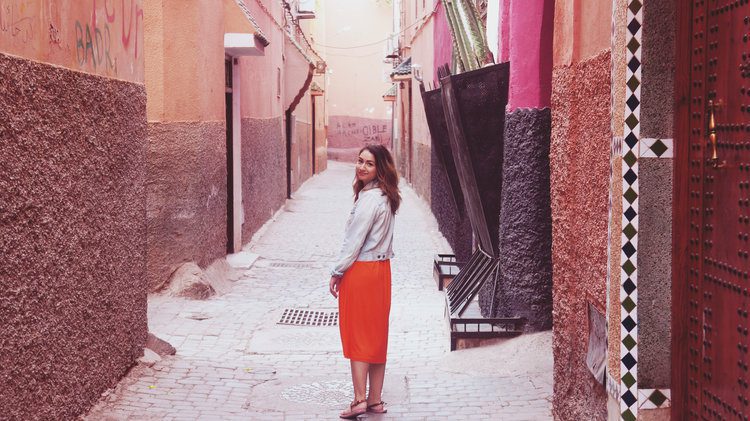
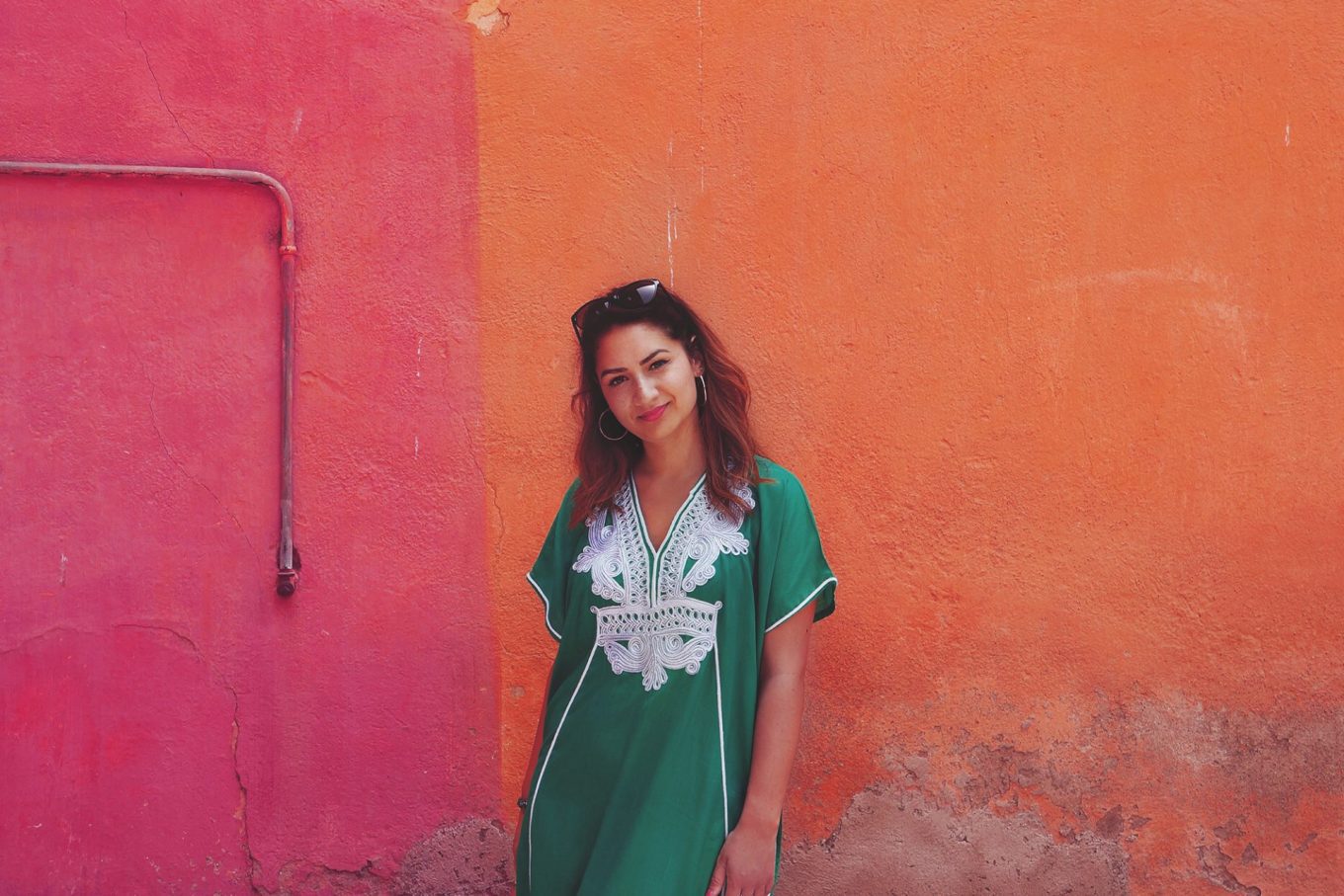
A dress bought in the medina in Marrakech, Morocco.
Hopefully, this has made dressing modestly a little less daunting. There are so many options and with a silver lining of not having to shave half of your legs (if you do shave) it’s easy to adhere to. Plus, you can always buy clothing from the country you’re in (see the photo above).
Some locations are a little more lenient than others, and some might just require dressing modestly when in a place of worship – just do a little research before you go to be sure.
I’ve always wanted to make a trip to Cairo to see the only existing member of the Ancient Seven Wonders of the World. The intelligence behind their design and craftsmanship is unfathomable. I’m so happy I got to check this off my travel bucket list and I fully encourage you to see them once in your lifetime, if possible. Although I’ve written five days just below, we arrived to the hotel about midnight on the day we travelled there and we left the hotel at 6am, so in terms of activities we only had three days. This was more than enough time to get through the things we wanted to do whilst there. So let’s take a look at what that was!
Day 1 (travel)
2pm flight from London Heathrow to Cairo International Airport.
Hotel transfer from airport.
Check into Sofitel Cairo Nile El Gezirah.
Room service dinner before bed.
Day 2
Egyptian breakfast at hotel.
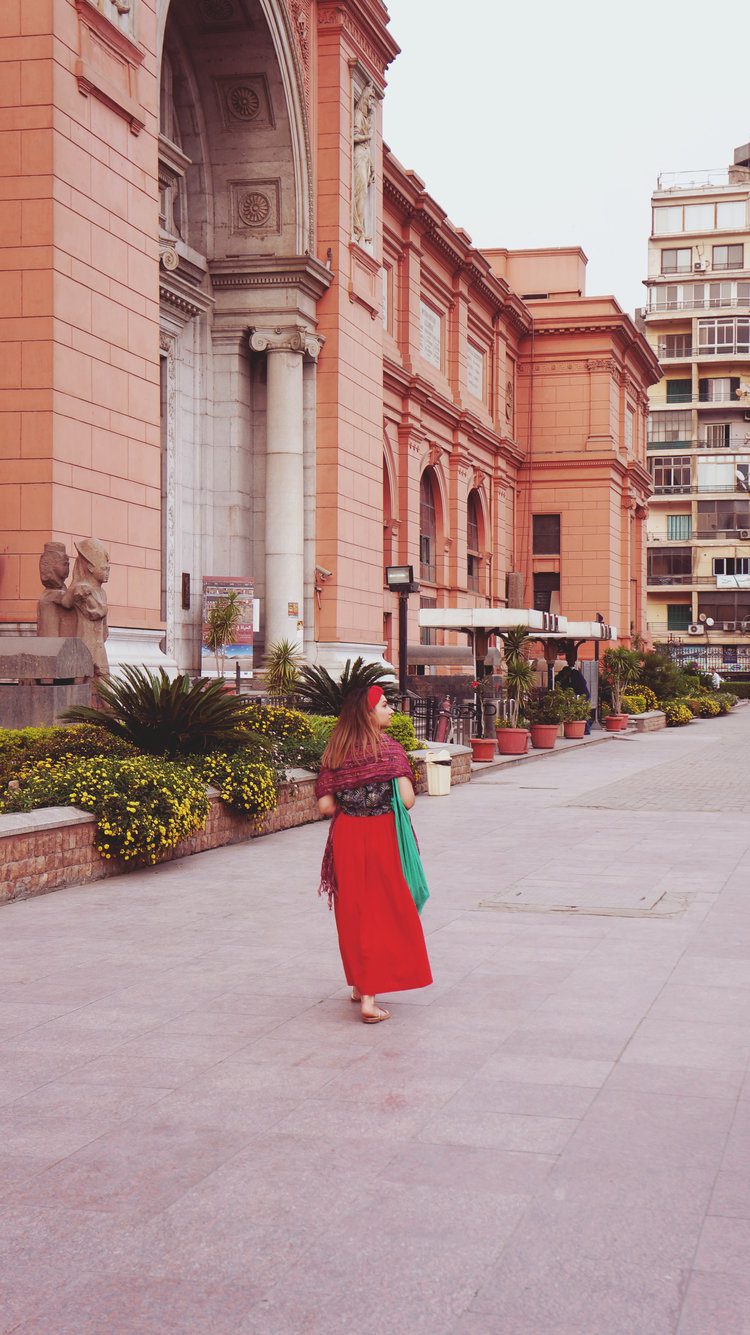
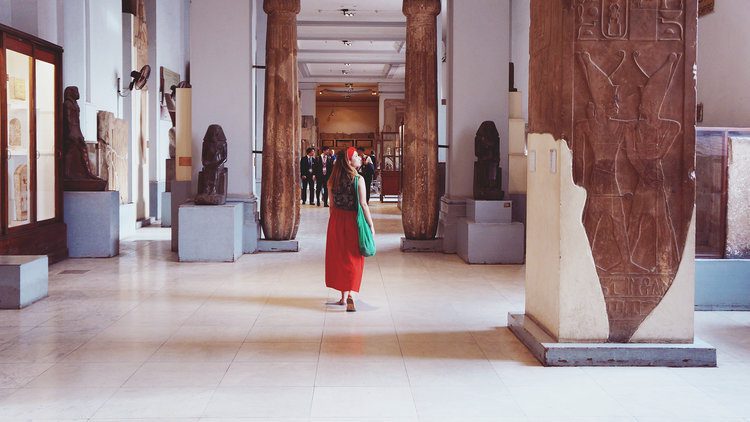
Egyptian Museum.
Cairo City Festival Mall.
Dinner at shopping mall.
Day 3
Egyptian breakfast at hotel.
Emo Tours – Full day tour from Cairo: Giza Pyramids, Memphis and Saqqara.
Dinner cruise on the Nile.
Day 4
Khan el Khalili.
Pool time.
Dinner at hotel.
Day 5 (travel)
Transfer to airport 6am.
Flight from Cairo International Airport to London Heathrow.
Egyptian museum
Tickets need to be bought at the booth after the main gate. It’s 120 EGP per adult. If you have a camera you must buy a ticket to use your camera or you won’t be allowed to enter after security. The ticket is 50 EGP and must be shown to the security guard after your bag has gone through the X-ray machine.
To get to the Royal Mummies hall, turn right at the museum entrance and head upstairs, there is a small ticket desk on the right and it costs 150 EGP per adult. I had really mixed feelings about the Mummy exhibition. On the one hand, it’s absolutely fascinating, how they have been preserved for thousands and thousands of years, they’re an incredible part of our history and if you’ve travelled all that way they’re worth seeing. However, it’s also quite disturbing, not only because they are dehydrated dead bodies with teeth and hair but because of how disrespectful to the dead it is. The room is tiny with multiple glass displays packed in, there is one paper sign on the wall that asks for silence but no one acknowledged it, and there is no crowd control whatsoever so people are packed in almost shoulder to shoulder.
Tutankhamun’s exhibition is also on the top floor in the middle, this is where you can see his world famous gold sarcophagus amongst all the other incredible artefacts found within King Tut’s tomb. Speaking of, from 24th March the largest international exhibition of ancient Egyptian artefacts will be touring 10 cities across the world. Keep an eye out for your closest!
Emo tours – Full day tour from Cairo: Giza Pyramids, Memphis and Saqqara
We booked our full day tour from Cairo through Viator. It was with Emo Tours and cost just £28.49 per person (prices vary with dates). You will be picked up from your hotel at 8am, and the tour will last approximately eight hours taking you to the ancient capital of Egypt, the first step pyramid, lunch, the only existing Ancient Wonder of the World and a papyrus shop.
Memphis
The tour starts with a brief history of the ancient Gods and Kings of Egypt whilst driving to Memphis, the first stop of the day. This is where the remains of Egypt’s ancient capital are on display in the Mid Rahina Museum. Your guide will tell you all about the meanings behind the stances of the Kings’ statues, how to identify the King using their cartouches and their crowns. On display is the second largest sphinx and one of the most incredible pieces of art I have ever seen, the 10 metre long statue of King Ramses II, which was so big they built the museum around it because it couldn’t be moved.
Should you wish to visit without a tour guide, tickets are 60 EGP per adult.
Saqqara
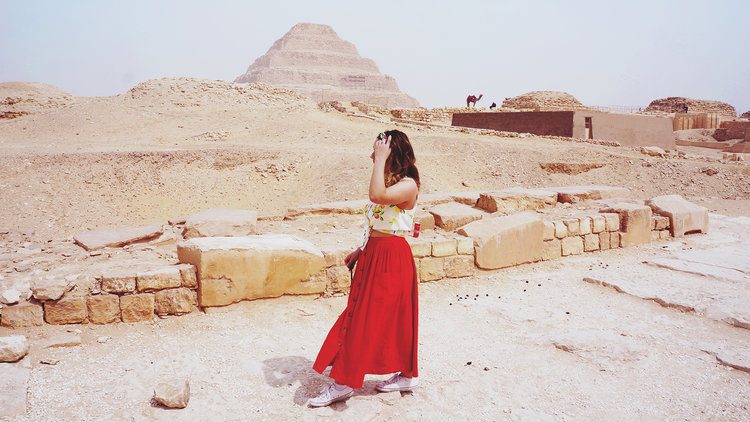
The second stop is the Djoser funerary complex and the first step pyramid. It is here that you will learn all about how crucial Imhotep’s design for the step pyramid is to the architectural evolution of the pyramids, and how much of an impact the economy had on the size of the pyramids.
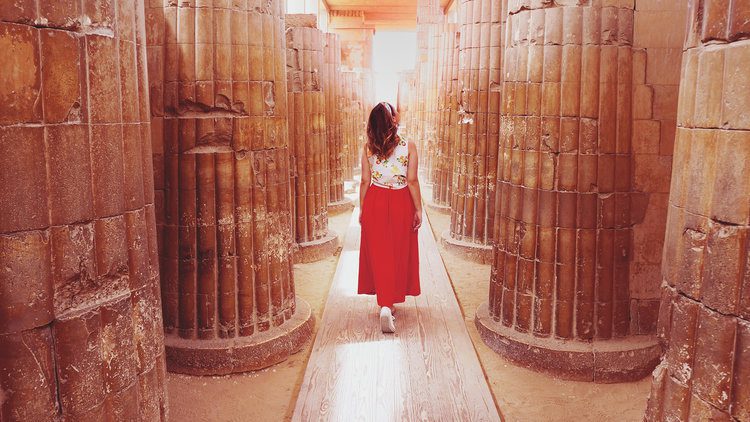
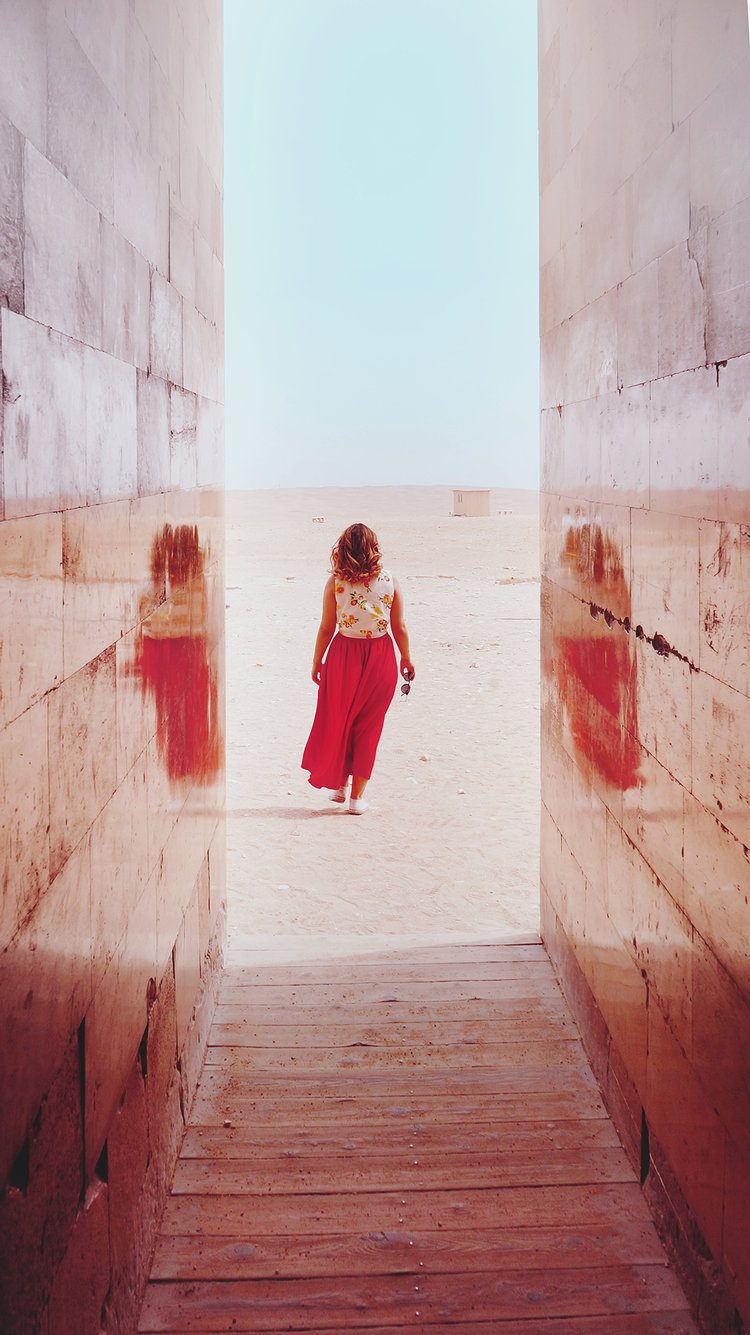
I have listed the Giza Pyramids as the top spot for photos because they are a wonder, but I also think Saqqara is a prime location for shooting. The reflective entrance to the complex and pathway lined with great columns are beautiful places to photograph.
Should you wish to visit without a tour guide, tickets are 120 EGP per adult.
Lunch
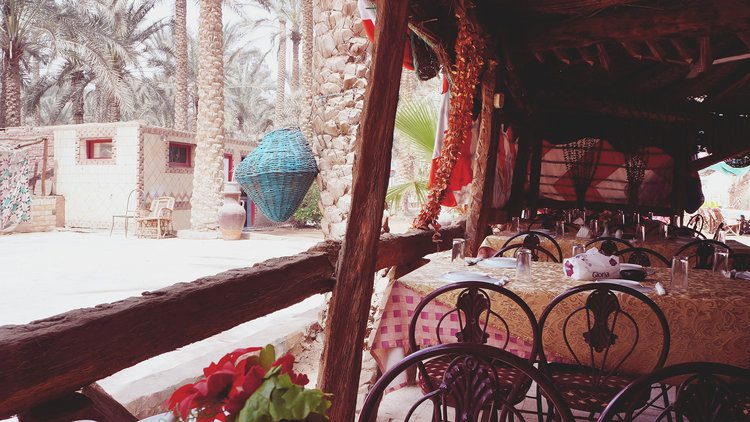
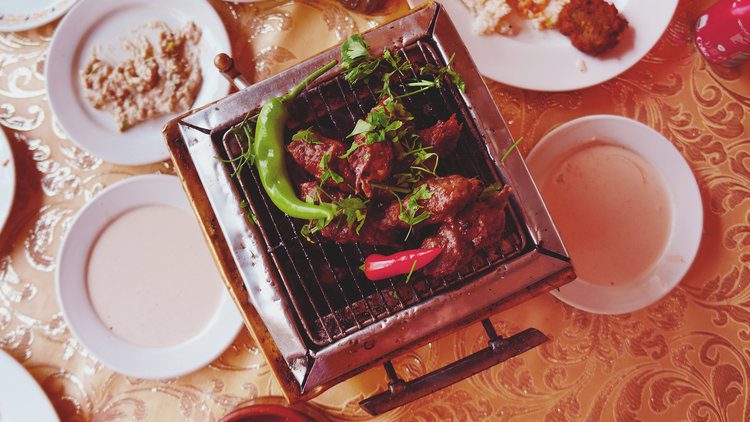
We were taken to a local open air restaurant, where you are greeted by musicians playing as you enter. The food is included in the tour but drinks and tips are not. Before arriving you will be given the choice of chicken or beef, I suggest the beef because it will be a traditional Egyptian Kofta. Along with your meat you will be served a couple of sauces each, Ta’meya (Egyptian Falafel), rice, potatoes (in a sauce which is to be poured over your rice), Mahashy Kromb (spicy rice cooked in cabbage leaves) and cold aubergine, followed by fruit for dessert.
My advice is not to eat the aubergine as improperly refrigerated foods can cause an upset stomach. Also avoid the fruit if it isn’t sealed or has been pierced. See further down for tips on avoiding food poisoning.
Giza Pyramids
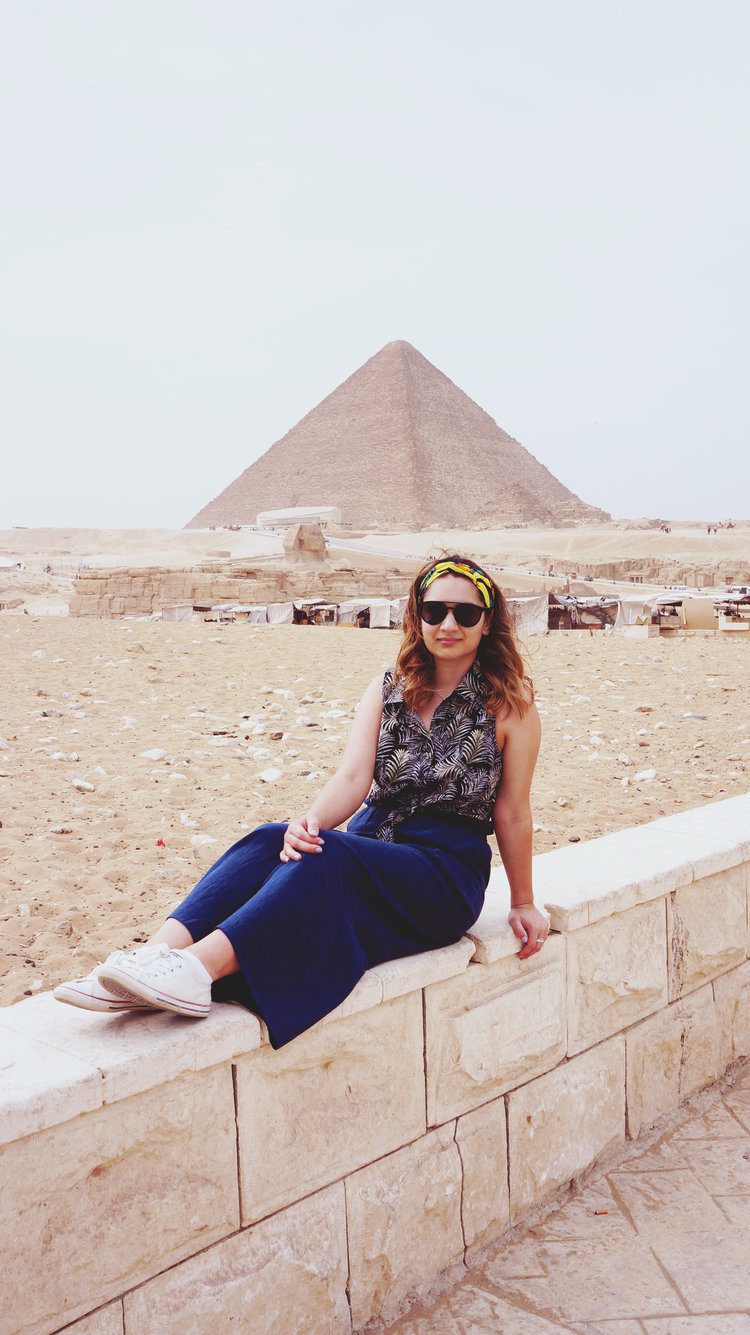
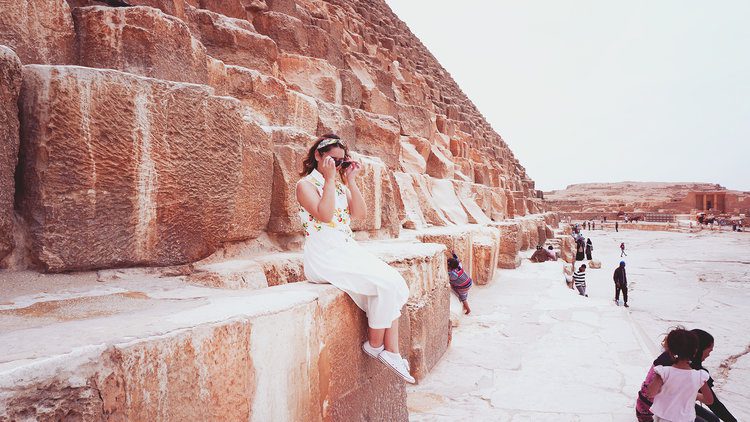
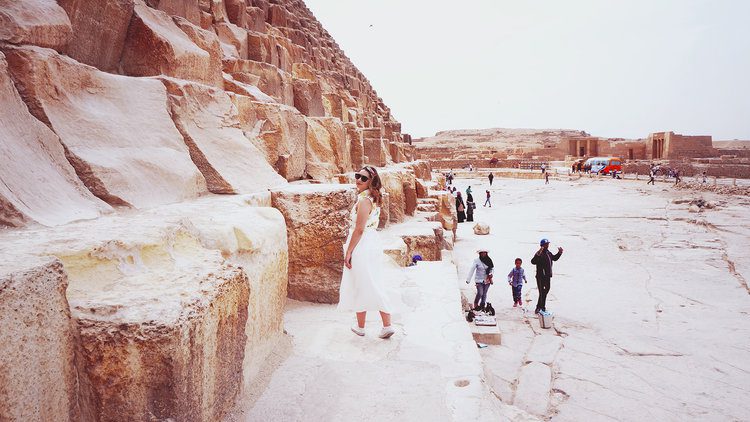
I was warned by so many people that I wouldn’t enjoy this place, that it would be dirty and covered in rubbish and camel poop, but honestly I wasn’t really expecting anything else; It’s a sandy and windy tourist site in a less economically developed country. Trust me though, these things really won’t make the day any less enjoyable.
On the day we went it was 28 degrees Celsius, our bottled water was the same temperature as a warm bath, the wind was up, I had more sand in my hair than in my shoes, the place was swarming with tourists and the camels would sooner bite than be petted – though I respect that choice because I was so hot I was slapping Michael’s hand away when he tried to hold mine. But honestly, was any of this shocking? No!
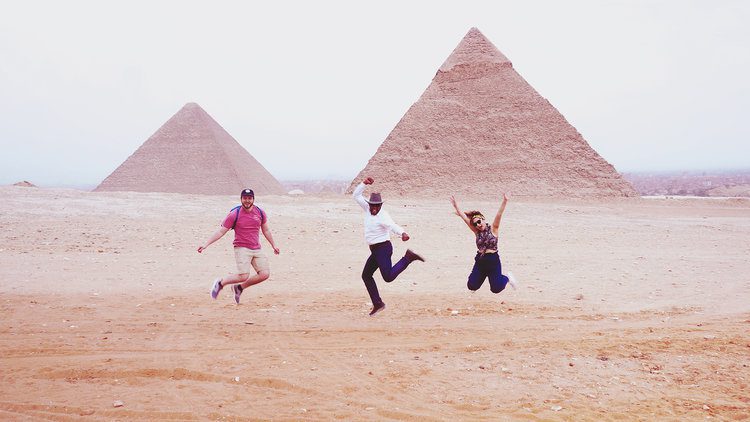
These incredible structures are 5,000 years old, they have such an extraordinary level of technical achievement that for years people were convinced Aliens are why they exist. If they built these colossal tombs under that burning sun, we can handle taking photos of them with some sand in our hair next to a pile of camel poop!
My advice: put on some sensible shoes, suncream, trousers, a pair of sunnies and take in the wonder that is the Giza Pyramids and Sphinx. Once you are there you will learn so much from your guide about how they were built.
Should you wish to visit without a tour guide, tickets are 120 EGP per adult.
Papyrus Institute
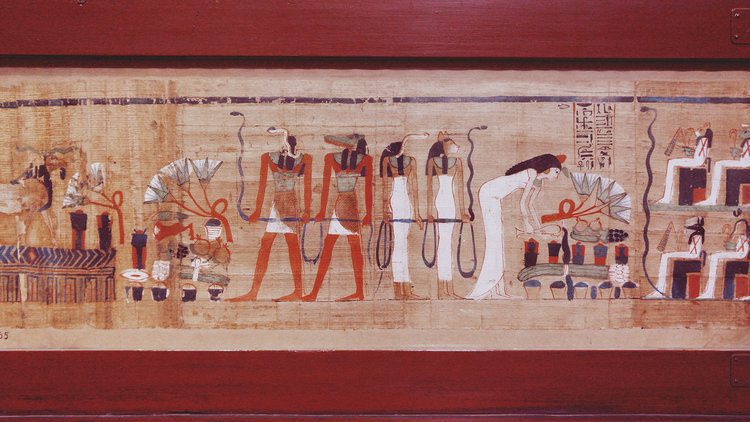
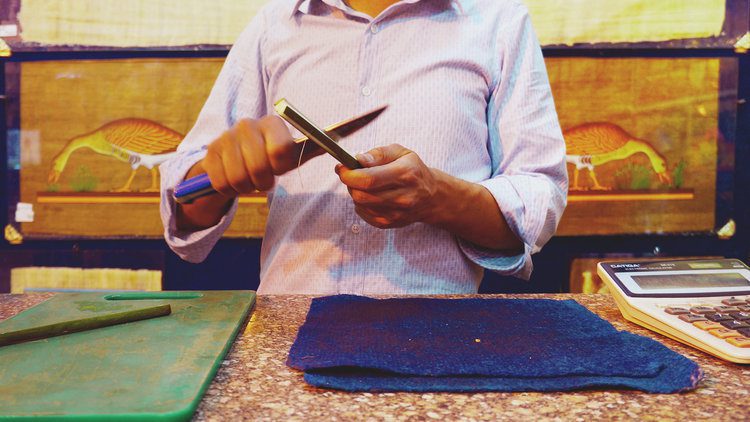
Just before taking us back to our hotel, we stopped off at the Papyrus Institute on Al Ahram road. It was here that we were shown how Papyrus is made from plant to final product. After this you have some time to look around the shop where the walls are filled from ceiling to floor with paintings on papyrus. You can either buy one on display or you can have one personalised with your name in Hieroglyphics. Should you not wish to purchase anything you can leave after you have been shown how papyrus is made.
.
Shout out to Sherif and Mido at Emo Tours, they were two of the best tour guides and chauffeurs we have ever had. Thank you for teaching us more than we ever expected about ancient Egyptian history, helping to create some of these shots, holding my bag for every shoot and holding back tourists so we could get the snaps we wanted. If anyone is going to Cairo to see the Pyramids, I wholeheartedly recommend them.
PFH Top Tip: Tips aren’t included in your tour ticket, so bring some small change for tipping toilet attendants, restaurant staff etc.
Nile
The Nile is the second longest river in the world and plays a big part in ancient Egyptian history, it is considered to be the source of life and fertility.
There are many Nile cruises operating day and night, but I suggest going during the day as you will be able to see so much more. Find a tour which takes a smaller boat so you can see all around you, a larger boat will obstruct your view.
The air is swarming with mosquitos so it is at your own peril if you do not cover yourself in insect repellent. Bring it with you on the boat to top it up should you sweat.
Avoid dinner cruises, they are not worth the money. Most seats won’t get a Nile view and the view you could get will be obstructed by the other tables, they pack you in like a herd of sheep, the food is a buffet which means you run a higher risk of getting food poisoning, plus their “entertainment” is more like karaoke night at a poorly decorated Wetherspoons. You will be much better off booking a small cruise, during the day and without food.
Any hotels on the Nile will have an incredible view, ours was in the centre of the Nile and we could see the Giza Pyramids from our balcony, but know that they are subject to noise pollution from the party boats going past. It’s bearable, but you might want to ask for a room higher up to reduce the noise because it will be on and off from about 8pm-3am.
Khan el Khalili Bazaar
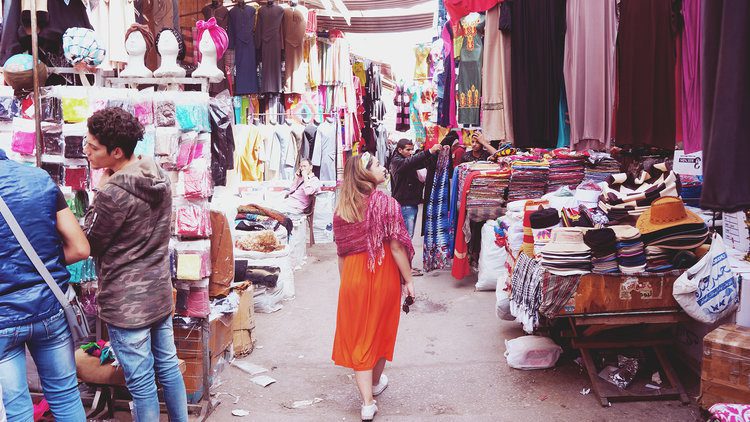
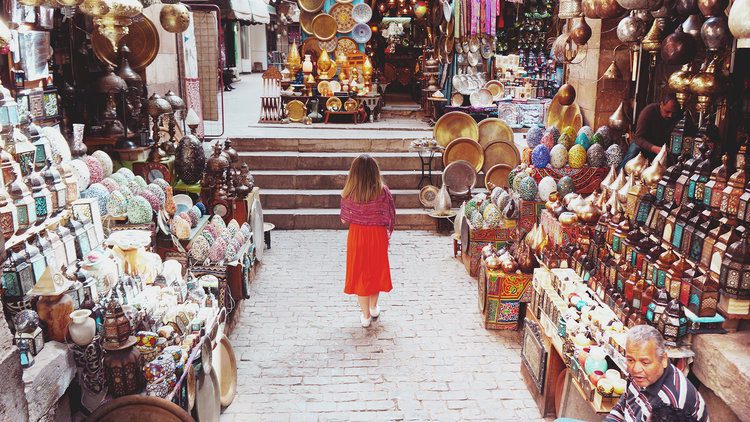
This is a huge bustling market on the East side of the river which has a mixed bag of stalls selling souvenirs to tourists and others selling day to day objects to locals. Depending on how far you want to venture in, you’ll need at least two hours just to scratch the surface.
PFH Top Tip: Wear closed toe shoes because the market is very busy and you will be trampled – do your toes a solid and wear some sneaks.
Chances are you will be harassed verbally to go into their stalls, but it’s part of the experience. Just smile and politely say no thank you and they will leave you alone. The real pushiness will come when you try to barter. If you don’t barter they will rip you off and if you do, be prepared to go hard or go home. I wanted to buy a photo frame and a t-shirt and they asked for 1,400 EGP which is the equivalent of £60 GBP!! Keep in mind that both items were poorly made too. After a lot of fussing I got the photo frame down to 300 EGP which really was still too high, but we had to run to our taxi. As we were heading to our taxi he ran after us saying we could have the t-shirt for 100 EGP, so my point is, no matter what they say, it can always be sold for less.
It’s only worth getting your souvenirs at this market though if 1. You are willing to spend your time haggling down the price and 2. If you aren’t bothered by the poor quality. Whilst you should definitely go for the experience, when it comes to getting souvenirs you’re probably better off going to a shopping mall or the gift shop at your hotel.
PFH Top Tip: Make sure your money is in small notes, familiarise yourself with the currency and fold them individually so that when you barter the price down, you don’t hand over more than what you just worked down to.
What to carry in your bag at all times in Egypt
Toilet roll or tissues – It’s not in cubicles, if you are given any it will be a couple of squares maximum which isn’t ideal if you are suffering from a funny tummy but also the desert air will make your nose dry up and you might get a nosebleed so it’s good to have something on hand.
Hand sanitiser and/or antibacterial wipes – Not all toilets have soap and hygiene levels aren’t great so clean your hands now and then throughout the day.
SPF lip salve – The desert air will dry out your lips and the hot sun can burn them, so keep them moisturised.
Suncream – It’s a hot desert climate and those sun rays will be getting you through the clouds and haze so reapply throughout the day.
Insect repellent – Mosquitos, ants and sandflies all want a piece of you, just like the Paps wanted a piece of Britney.
Insect bite relief – If you do get bit by one of the above it’s good to have some to hand to relieve the itching and discomfort. Germaline, Lucas Paw Paw and calamine cream are all small great options.
Sunglasses – The obvious reason is to protect your eyes from the sun but the other reason is to shield your eyes from clouds of sand if the wind picks up. For this reason take some cheap ones that have UV protection but you won’t cry over if they get a bit scratched up from the sand hurling at your face.
Water – You must stay hydrated in the heat, this is very important. No matter how long you are out for, take at least one bottle.
Scarf – If you are female you should carry a scarf so that you can cover your shoulders and possibly head whilst out in public. Many Egyptians may tell you not to worry but you will encounter some form of harassment if you don’t.
School trips
The working week in Egypt goes from Sunday-Thursday, which makes Friday and Saturday the busiest days if you’re planning on being out and about.
If you go to the big tourist locations such as the Egyptian museum there will most likely be a school trip going on during your visit. So, if you’re not a local, be prepared to feel like a Disney Channel superstar – in other words, you’re more than likely going to be swarmed with children who are fascinated by how you look and dress. Don’t be alarmed, they’re no different to cheeky school children on any field trip around the world. You will undoubtedly be asked where you are from and if they can have a selfie with you – most of them really just want to practice their English.
PFH Top Tip: Friday is the most popular day for school trips so try to avoid planning your visit to the Giza pyramids and the Egyptian museum on those days.
Toilets
The toilets at the tourist spots such as Saqqara and the Pyramids aren’t the most sanitary but given where you are they’re not bad. I’ve been to far worst, believe me! They’re kept in a fairly good condition because the attendant wants a tip.
Toilet roll is scarce so you won’t find any in the stall, you will need to get some from the attendant upon entering. Speaking of toilet roll, their sewerage system can’t cope with paper so do not flush it, there is a bin provided by the side of the toilet.
PFH Top Tip: When you’re out and about, bring a stash of toilet roll or tissues because you won’t be given much, and it’s better to be safe than sorry. Also, carry some kind of antibacterial hand cleaner because not all of them have soap.
Khan el Khalili
Taxis
As you would expect, taxis will do their very best to rip you off. The best way to avoid this is to ask your hotel how much a taxi costs to get to where you’re going then confirm this price with your taxi driver before you get in. By saying it before you get in, they are agreeing to the price and so when they try to ask for more afterwards you can say no you agreed to the first price. No matter how nice the taxi driver is, they will always try to ask for more, just stick to the price you agreed, it won’t be met with any hostile confrontation. Every time it happened we just said no and the driver went back to the original price.
When we went to Khan el Khalili Market we asked the doorman how much it would cost to get there and he said 90 EGP which we confirmed with the taxi driver. However, when he dropped us off back at the hotel after a round trip he asked for 250 EGP, to which we said no it was 90 EGP each way, he then said ok to 180 EGP without hesitation.
Something important to note with taxis in Cairo is that they don’t take payment until the end of all your journeys. For example, if you have them for a round trip to the Egyptian museum they won’t take payment until you have returned to the hotel. Taxi’s can’t park outside tourist locations so they won’t be hanging around, this means you can’t just pick one up when you’re done. You will need to take an educated guess at how long you will be at where you need to go and tell the taxi driver what time you want to be picked up. Be there at that time or you will be stuck. Do your best to memorise your driver and the car, but don’t panic because they will be looking out for you.
The taxi driver will ask you where you have been and suggest places to go, this is just because they want to be your driver for your trip. I wouldn’t try to book them for any day other than the current one, because we found that despite setting a date and time, they never turned up – my thoughts are that they just took the first job they were offered that day, and if you don’t fit in, they won’t show. It’s not surprising given the economy, they need to make money, so my advice is just to say you have a tour booked and then get a fresh taxi from your hotel on the day.
Saqqara
Security
For obvious reasons, security is incredibly high in Cairo. All large complexes such as tourist sites, shopping malls and hotels will require you to walk through a metal detector and your bag to go through an X-ray machine, just like you would at the airport.
Speaking of the airport, no matter what anyone says, you will need to arrive at the airport three hours minimum before your flight. This is because of the huge amount of security which is incredibly time consuming. It starts right after you have entered the airport, you must load all of your luggage into the X-ray machine before you walk through the metal detector.
You will more than likely be asked for a tip by the security staff, this is not professional behaviour and they are just trying to target naive tourists. You are not required to tip, note how anyone who asks will be turning away from their colleagues and muttering it.
PFH Top Tip: I’ve only come across two airports on my travels that have security right before you board the plane and Cairo International Airport is one of them. For this reason, you will not be able to take any liquids you buy in the airport on the plane, so drink them before you arrive at your gate. You will have to ask for water during the flight to stay hydrated.
Food poisoning
Tips for preventing food poisoning
Consider all the local water to be contaminated. Use bottled water to drink, make ice, brush your teeth and boil in the kettle for hot drinks.
Make sure the lid on the bottled water is properly sealed, they will have an extra plastic wrap around the lid.
Wash your hands or use an antibacterial cleaner before eating with your hands.
All meat must be freshly cooked all the way through and eaten hot.
Don’t eat any salads or cold veg, it may have been washed in local water.
Make sure any fruit you eat is properly sealed.
With amazing destinations such as Morocco and Dubai being top of everyones’ travel bucket lists at the moment, it’s important to know what you should and shouldn’t being wearing. Next week I’ll be talking about this exactly and sharing some pointers for dressing modestly in more conservative countries.
Despite being just a five minute walk away from the hustle and bustle of the vibrant souks, Riad Kaiss is a tranquil oasis, whisking you away from the commotion to embrace you into a serene haven.
In 2017 we stayed here for seven nights from the end of May to the beginning of June. I must have trawled through at least 100 hotels online trying to find the right one. Originally I wanted to be outside of the Médina where I was sure it would be quiet, but mediocre reviews and standard room design was pushing me closer to the heart of Marrakech. I made the decision to find a riad mostly looking for the kind of interior design dreams are made of, but I was put off by iffy reviews until I found Riad Kaiss (and her sister hotel Dar Anika) and after reading endless glorious reviews I knew this was the one.
Getting There
Riad Kaiss uses a private taxi company and will arrange the airport transfer for you. It is a fixed price which is added to your bill at the end of your stay, so you won’t need the money to hand. The journey takes 20 minutes, traffic permitting, so just sit back and admire the scenery as you ride in comfort. The hotel will also arrange for you to use the same taxi company should you want to get anywhere else without walking.
Location
Jardin Majorelle
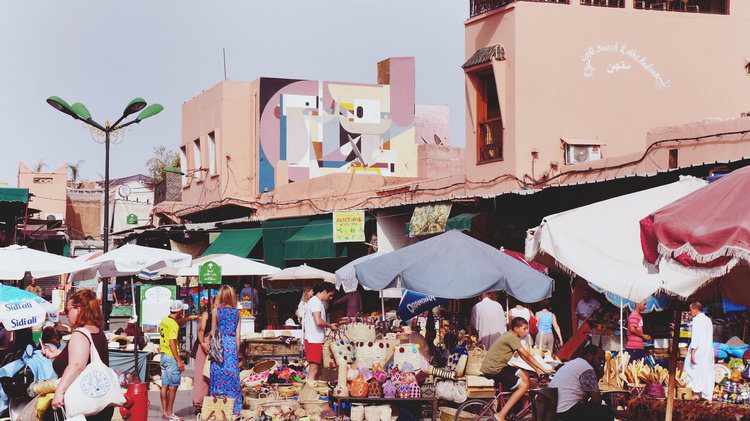
The location is perfect, it’s just two minutes away from Riad Zitoun Lakdim, which is not only one of the main streets that takes you straight into Jemaa el-Fna, it is also lined with little independent shops, hammams and restaurants such as Zwin Zwin Café. The aforementioned Jemaa el-Fna and souks are less than 10 minutes away and it’s no more than 20 minutes via taxi to further tourist hot spots such as Jardin Majorelle.
PFH Top Tip: The shops on Riad Zitoun Lakdim sell the same goods as the souks but often at a cheaper price than you would get bartering. This is because they set the barter price higher than the shops so that if you knock it down you think you’re getting a good deal but you’re actually still paying more.
Welcome
Before we had even arrived in Morocco, the hotel was already reaching out to us to make sure we could make the most of our stay. After booking via hotels.com, we received an email directly from Riad Kaiss packed full of attachments such as restaurant menus, their hamman and massage price list and so much information about excursions. I am aware this is to encourage you to spend more money with the hotel, but there was something endearing in them taking time to contact us directly.
Camel ride excursion booked through Riad Kaiss
Upon our arrival we were offered rose water to cleanse ourselves after our travels, after which we were served milk and dates followed by traditional Moroccan pastries and sweet mint tea, a digestive served in abundance across Morocco.
After this generous welcome feast we were greeted by Abu, who is one of the two brothers that own and run Dar Anika and Riad Kaiss. He gave us a tour of the riad and showed us a couple of rooms so that we could pick our favourite one – each one had a different design. As our luggage was taken to our room he sat with us in the courtyard under a canopy of dangling vines surrounded by candle lit lanterns and proceeded to show us a map of Marrakech. He circled the best cafés, restaurants, evening entertainment, museums and so much more.
Souk Semmarine
The Room
The decor was so ornate and authentic down to the last detail. The thick wooden door was hand painted and opened with a gold key accompanied by a little tassel, inside stood a four-post bed from which hung huge white linen drapes. Surrounding the bed were wardrobes, tables and chairs all wooden with intricately carved patterns, even the window to the courtyard was a wooden carving. In the centre of the tiled floor lay a large worn rug resembling those in the souks and when you looked up the ceiling was painted to look like the zellige tiles featured on almost every wall and floor in Marrakech. There was so much detail to every inch of that room that even the complimentary bottle of water was presented in a hand cut metal case with a pattern similar to the lamps dotted around the room.
Fresh flowers were everywhere you looked and each day the bed was scattered with rose petals and the fruit basket was fully stocked with any fruit you desired from the market – we were assured they were all washed properly in advance. As if there wasn’t enough to look at, in every corner sat hand woven bread baskets and painted plates, the likes of which you could buy in Jemaa el-Fna.
In terms of electrical amenities there were plenty of plug sockets and a fully stocked mini fridge stood discretely behind yet another very delicately hand carved door. Though there was complimentary wifi don’t expect a TV, Marrakech is anything but shy of entertainment so there’s no reason to stay indoors.
My only dispute with this incredible room was that it didn’t have a full length mirror and the light was dim during the day which was an inconvenience when putting an outfit together, but they’re not at all the worst problems for a hotel room.
The Bathroom
Our bathroom was just to die for, it was everything I expected a Moroccan riad bathroom to be. Every detail of our bathroom was not only instagram worthy but it was pure inspiration for how I want my bathroom to look at home. At one end was the toilet which was partitioned for privacy by yet another amazing door (I mean, those doors, drool!). At the other end was an enormous terra-cotta alcove shower framed by a colourful zellige, different to the one running across the rest of the bathroom walls. Within the shower was a further two alcove shelves containing little clay pots full of heavenly scented argon oil shower cream and shampoo.
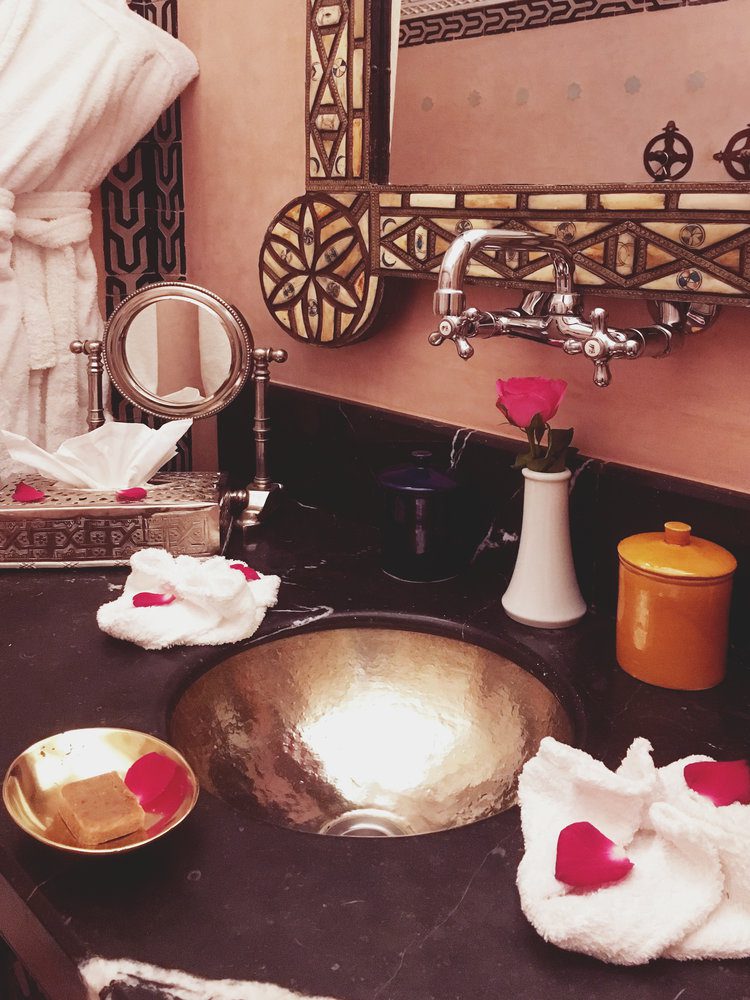
Between the toilet and shower was the dressing area. Hung above the brass dome sink embedded in marble was a huge mirror with a zellige frame. Atop of the marble sat a vanity mirror, tissues encased in silver, clay pots full of cotton pads and ear buds, flowers, towels scattered with petals and a brass dish with argon oil soap wrapped in a leaf. Even the hooks were hand crafted and upon them hung fluffy rose sceneted robes with slippers sitting pretty beneath rose petals – yep, even the slippers were adorned with rose petals!
The Riad
A riad is a traditional Moroccan house which has an interior andalusian-style courtyard. If you are looking for a jaw-dropping and authentic aesthetic then you want a riad within the Médina over a resort hotel just outside the Médina.
I don’t think I could ever do the courtyard justice, there was so much to look at. The floor was tiled in bright colours, fountains were loaded with fresh flowers every morning, huge trees stretched up from the ground and draped multiple vines down all around you, big lanterns surrounded the base of the trees, tables and chairs were in-between them and at one end stood a big wooden swinging bench – It was stunning! Surrounding the courtyard were multiple little rooms, each more detailed than the last – in Marrakech more is more! You could have breakfast in any of these rooms as well as the courtyard.
The rooftop divided into three sections. The first had the swimming pool, a small enclosed area with a pool suitable for no more than a paddle but perfect for a refreshing dip. Around the pool were sun beds accompanied by a straw hat, fan and a towel.
The second rooftop area featured covered seating should you want a change from the courtyard for breakfast.
Finally, the third rooftop area was set just above the other two. A little staircase took you up to more sun beds, a few tables and chairs, and a double bed beneath an iron gazebo. This is where we spent our time chilling out with music and a cold drink when we weren’t outside of the Riad. It was too hot to sit out directly in the sun so this provided shelter from the rays.
Like all good riad hotels should, Kaiss has a hammam. A hammam is a Turkish bath not unlike a dark wet room just with good interior decor. In this one there is a sink and a shower, used for cleansing you before and after your treatment, and 2 wooden slatted beds where you receive your treatment*. The best way to relax after your time in the hammam is a massage, there in a treatment room within the hotel that offers single and couples’ full body massages.
PFH Top Tip: Be prepared for full nudity and boob brushing – all legitimate and not intended to be harassment, like almost all cultures excluding us English prudes, nudity in public baths is the norm.
Dining
The restaurant at Riad Kaiss wasn’t open during our stay because the owners were still refining the menu so the only food you could eat was breakfast but boy did they make it count! Their breakfast immerses you into Moroccan culture by serving up a staggering six course extravaganza! You start with a very traditional harira soup – eating a hot vegetable soup first thing in the morning did take some getting used to but it was delicious. Then along side freshly squeezed orange juice and a hot drink of your choice, you are served yoghurt and a bowl of tropical fruit salad (Oh I nearly forgot, roaming the courtyard are the friendliest tortoises who are partial to a bit of fruit salad, should you want to share!). After this you are brought a crêpe and a slice of cake, similar to a madeira sponge. Following your cake, a selection of jams, butter, honey and peanut butter come out with a bread basket boasting a variety of freshly baked rolls. To finish it off you are offered eggs of your choice and a msemen which is a fried savoury pancake filled with either cheese or vegetables. This breakfast is not for the faint hearted but all courses are optional.
I should also note that we ate in the rooftop restaurant in Dar Anika, the sister hotel. It was so good we went twice. The view of the sun setting over the rooftops as the prayers for Ramadam are sung out on loud speakers across the Médina is a memory I hope to never forget. The food was outstanding too, their lamb shoulder tagine was the best tagine that we had the pleasure of eating.
Service
Every evening a tray of sweet milk and dates was left in our room, fresh juice was offered to us every time we returned to the hotel, and we were given a mobile phone for the duration of our stay should we need to contact the hotel directly for anything at all. We were escorted to the restaurants within walking distance in the evenings, all the staff asked us about our day and how we were enjoying Marrakech, and we were even offered help with bartering if we wanted to get the price down on something in particular.
After checking out we took on one last trip into the souks before leaving. When we came back we were offered a room to shower in before our flight, and upon leaving we were presented with a hand written note from Abu and a packed lunch for our journey home. I’ve never known a hotel to do all of that, to me that is outstanding customer service.
.
If you’re looking for a combination of luxury and authenticity I highly recommend staying at Riad Kaiss or Dar Anika during your time in Marrakech, rooms starts from £186 per night. If you’re still not convinced I’m happy for you to email me here with any questions about my stay at Riad Kaiss.
Aloha, Gabriella
.
Full disclosure – I am not sponsored by Riad Kaiss and have no paid partnership with the hotelier, these are just my own opinions and reviews. Starting price per night was true at time of posting.