Tag: Great British Summer

  • 5 best things to do in and around Colchester, Essex

    5 best things to do in and around Colchester, Essex

    Dating back over 2000 years to the Iron Age, Colchester in Essex is Britain’s first ever city and former capital of Roman Britain.

    We based our trip to Colchester around me wanting to visit the adorable pastel beach huts on Mersea Island beach and to visit Tiptree Jam Museum and Tearooms for afternoon tea. I sure was blown away by what Colchester had to offer, it was the first I learnt of the long history of the town and I found it to be such an informative trip. I strongly recommend a staycation in or trip to Colchester to learn more about England’s history plus you can combine it with time at the seaside.

    Here’s 5 of the best things to do in and around Colchester, from exploring ancient Roman ruins to having afternoon tea served by one of the best jam producers in the world.

    1. Visit Colchester Castle Museum

    Built in 1100 – commissioned by William the Conqueror in 1076 – Colchester Castle is the largest Norman keep in all of Europe.

    It wasn’t the first building to be constructed upon this land though. Shortly after the Roman invasion by Emperor Claudius in AD 43, Romans built the Temple of Claudius. The temple stood until AD 60 when it was burnt down in an attack on the Roman city by Boudica, Queen of the Iceni tribe. It was rebuilt, along with a wall around the city. It remained until the Roman decline between 330 and 410. In 450, the Anglo-Saxons and Normans took control of Essex but it wasn’t until 917 that Colchester was re-founded.

    In 1076 (over 1000 years since the construction of the Temple of Claudius) the construction of the castle we can see today began upon the foundations of the Roman temple, using stones from other Roman buildings as there was a lack of quality stone in the surrounding area. Originally built as a fort, it is now a museum and has been since 1860.

    If there’s one thing you should do in Colchester it’s visit the castle museum as it extensively documents Colchester’s rich history of thousands of years from the Iron Age right through to modern day. Their collection consists of Celtic coins, a vessel from the Bronze Age, the best preserved Roman statues in Britain, medieval paintings and civil war armour. 

    Colchester’s castle didn’t just go from Norman keep to present day museum. Through the middle ages the castle was used as a prison (you can explore some of cells on your visit) for around five centuries, even when the castle’s interior was in near ruins. Some of the the most infamous prisoners were victims accused of witchcraft, who now have a memorial rose garden in tribute to their cruel treatment.

    In 1727 Charles Gray restored the castle, though his belief that it was a Roman construction led to him tiling the roof in a Mediterranean style that doesn’t match the main structure of the castle.

    Fascinating, right?

    Opening hours

    Monday – Saturday 10am – 5pm

    Sunday 11am – 5pm

    Last admission 4.30pm

    Ticket cost

    Adult £10

    Child  (4-16) £5.95

    Student £6.95

    2 adults & 1 child £23

    1 adult & 3 children £25

    2 adults & 2 children £28

    COVID-19 restrictions

    Please use the provided hand sanitiser before and after entering.

    Pay for tickets and souvenirs by contactless card.

    The castle museum has a one way system.

    Wear a mask at all times indoors.

    All interactive exhibitions are closed.

    Please refrain from touching anything.

    Please stay 1-2 metres away from others.

    2. Take a stroll through Castle Park past the riverside cottages

    Castle Park surrounds Colchester Castle in the north east of the town. The Roman wall divides it into an upper and lower park, perfect for taking a stroll on a dry day. Its picturesque river flowing past, lined by weeping willows and park benches offers up the perfect spot to picnic or sit with your thoughts.

    Be sure to end your walk at the riverside cottages; the row of pink Tudor houses opposite the River Colne, just next to North Bridge are so photogenic.

    The park is also home to various music concerts and festivals across the year.

    Opening hours

    Everyday from 7.30am – 6.30pm

    3. Explore ancient ruins

    As mentioned above, ancient Romans settled in Colchester 2000 years ago and made it their capital in all of Roman Britain. Back then they called Colchester, Camulodunum: “dunum” meant fortress and Camulos meant God of War. The name was inspired by the preceding settlers in the Iron Age who also used Colchester as their fortress.

    Though many of the ancient ruins have been destroyed by attacks to the settlement from Boudica (AD 60) and her people and succeeding settler William the Conqueror and the Normans (450 – 1076), there are still many Roman ruins across the city that you can see.

    As mentioned, the Romans weren’t the only settlers in Colchester, people came before and after, so there’s also relics and ruins survived from the Anglo-Saxon, Norman and medieval periods dotted around the town ready for you to explore. Here are my highlights:

    Saint John’s Abbey Gate

    Saint John’s Abbey Gate is a beautifully crafted gatehouse that was once part of St John’s Abbey. Built in the 1400s, St John’s Abbey Gate is the part of the Benedictine abbey that exists today after the abbey was demolished during the 16th century Reformation.

    Its architecture is unusual for Colchester because it uses East Anglian flushwork, which is when the flint blocks are cemented flush to the wall in tight lines, creating a smoother surface which reflects the wealth and importance of the property.

    Saint Botolph’s Priory

    St Botolph’s Priory was once a medieval place of worship during the worship of the Augustinian rule (written around the year 400). Founded between 1093 and 1100, St Botolph’s Priory was one of the first Augustinian monasteries in England until it came to an end in 1536.

    The building itself was made from stones taken from Roman buildings across the town.

    Much of the building was destroyed in the siege of Colchester in 1648, but what remains of the Grade I listed building is free to explore and with many of the arches and columns intact, it’s still quite a sight to see.

    Balkerne Gate

    Balkerne Gate is the oldest and best surviving Roman gateway in Britain, it’s also known to have been the largest one. It was built into the town wall that went up shortly after Boudica’s attack on Colchester in AD 60 and gives access to the town from the road to Londinium (London).

    The Grade I listed building was made up of two arched passageways, wide enough for carriages, side-by-side and on either side of those were much smaller arched footways. It’s known to have been the largest because there were no other 4 entranced Roman gates in Britain. Most of the gatehouse has fallen and now only the south footway arch remains, which you can still walk through, and it gives a good indication as to how big Balkerne Gate was in its heyday.

    It’s a pretty amazing thing to walk through, the footway that ancient Romans used to pass through either to get in or out of their capital roughly 2000 years ago.

    Unfortunately no one knows the origin of the name Balkerne.

    4. Have afternoon tea at Tiptree Jam Museum and Tearooms

    Tiptree conserves are world famous, they are sold in over 70 countries and are served in luxury hotels and by top airlines all around the world. They received their first Royal Warrant from George V in 1911 and have remained Royal Warrant holders as purveyors of ‘Tiptree’ products to Her Majesty, Queen Elizabeth II.

    Tiptree Jam Museum and Tearooms is located just on the edge of Tiptree village and is just a 20-30mins drive from Colchester.

    With a museum documenting the 135 plus years of history of Wilkin & Son’s Tiptree jam production, a tearoom where you can try their many conserves with afternoon tea, cream tea or lunch and a gift shop where you can buy anything you ate in the tearooms and more, it’s easy to spend a long morning or afternoon here.

    I strongly advise getting the cheese and chutney sandwich with your afternoon tea as their onion chutney is amazing and their signature Little Scarlet Strawberry Jam is a must with your scone!

    Opening hours

    Summer hours 

    Monday – Saturday 9.30am – 4.30pm

    Sunday 10am – 4.30pm

    Winter hours

    Everyday from 9am – 4pm

    COVID-19 restrictions

    Due to the current one-way system, the museum is only accessible as the exit to the tearooms.

    Please use the provided hand sanitiser before and after entering.

    Wear a mask at all times indoors when not eating.

    Please refrain from touching anything in the museum.

    Please stay 1-2 metres away from others.

    5. Visit Mersea beach huts

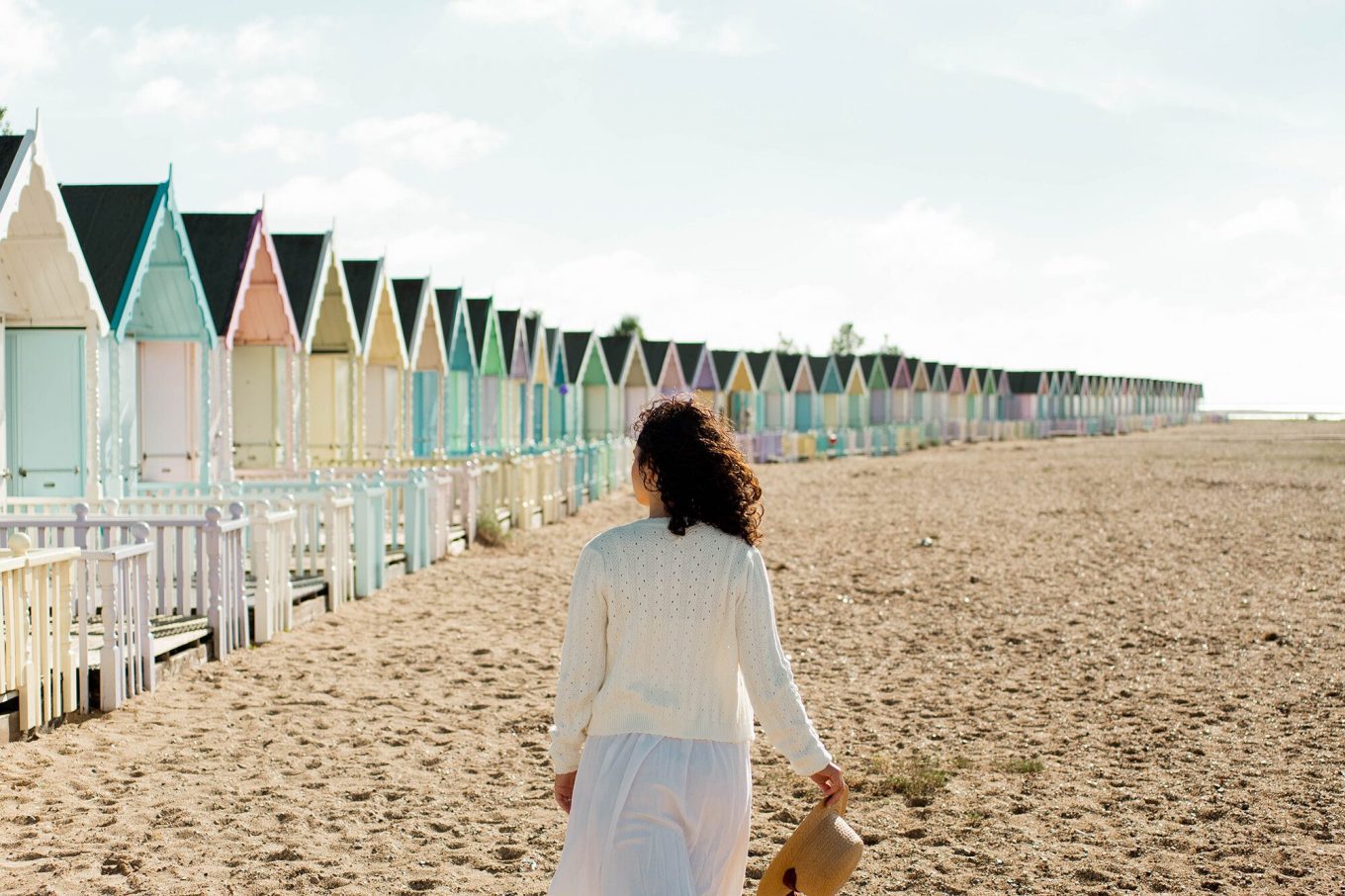
    Recently the row of identical pastel painted beach huts, owned and rented out by The Little Beach Hut Company, has become a frequently Instagrammed spot in England. As I mentioned at the start, it is why I wanted to go to Colchester in the first place, to get closer to the beach huts. Having grown up surrounded by beach huts, I can confirm that they are the cutest ones I’ve ever seen and well worth the visit. 

    Visiting Mersea Island beach isn’t just about the beach huts though, the 13 mile long beach that wraps around the coast means there’s plenty of space for you and whoever you’re with to set up for the day and soak up the sun, or take a long stroll on a cooler day.

    How to get to Mersea Island

    Mersea Island is just a half an hour drive from Colchester. The Strood is the only road taking you to and from Mersea Island. Constructed into marshland, it floods upon high tide so it’s important that you check the tide times here. You must allow up to an hour and a half either side of high/low tide to make the crossing safely.

    Park up your car in either of the following car parks:


    • West Mersea Beach


    • Victoria Esplanade Parking


    • Sea View Public Parking 


    The closest car park to the pastel beach hurts is the Victoria Esplanade Parking.

    .

    A fascinating history lesson, a beautiful beach and a cute spot for afternoon tea; why not take a trip to Colchester!

    Gabriella

    Pin this post


  • A guide to spending the day at the British seaside

    A guide to spending the day at the British seaside

    Well it’s not quite the Great British Summer we were expecting for 2020 but it won’t be like this forever! Let’s make the most of what we have left of the summer and then this little guide will still be around for years to come when you (whether you live in the UK or plan to visit) can spend a classic day at the seaside doing all the things that make summer by the seaside the quintessential pastime that it is.

    I wanted to put this guide together for anyone coming to a British seaside town for the first time, so that you can spend the day doing all of the classics that so many Brits have enjoyed for years. 

    Fun Fact: The day below is my ultimate date plan. My favourite days spent with Michael at home are doing exactly what I’ve listed below. I don’t (always) need a fancy dinner, just give me a handful of 2ps for the arcade and chips swimming in vinegar and I’m on cloud nine.

    Find a spot on the beach

    The goal here to is arrive early to nab a good spot and then spend an almost absurd amount of time there; I’m talking hours. You don’t want to leave until sand is everywhere: hair, mouth and even your bits. If sand isn’t washing out of your crack in the shower at the end of the day, you didn’t stay at the beach long enough. 

    Things to do on the beach:


    • Read a book


    • Make a sandcastle


    • Do a beach clean (and dispose of the rubbish/trash responsibly)


    • Swim in the sea, even if it’s a little chilly


    • Bodyboard, paddle board or surf


    • Rock pooling (discover the sea life living in the rock pools during low tide)


    Things you might want to consider bringing with you for a day at the British Seaside:


    • A windbreaker


    • Collapsible camping chairs


    • A net


    • A bucket and spade


    Please either keep hold of your bucket and spade to reuse and if you don’t want to travel with it, please hand it to a family so that their kids can use them. NEVER leave your bucket and spade on the beach, the tide will carry them out to sea and it will pollute the ocean and could kill marine life.

    THIS IS VERY IMPORTANT: Check the tide times before you plan to go. Having worked in a little café on the beach for 9 summers when I was younger, if I had a penny for every time a tourist asked me where the beach was I wouldn’t have had to work as a waitress for 9 years! Many beaches will be covered during high tide so check the tide times for your beach of choice online. 

    High tide: the sea has come in and is covering the beach.

    Low tide: the sea has gone out and the most amount of beach is uncovered.

    Please make sure you drink plenty of water and regularly apply suncream. Pay attention to signs on the beach that indicate safe swimming areas/rip tides.

    For a packing guide for a day at the beach, check out my blog post: what’s in my beach bag.

    Fish & Chips for lunch

    If you’ve read my blog post, Traditional British meals every traveller needs to try then you’ll know that fish and chips is one of my favourite meals of all time. I cannot go too long without fish and chips, fish and chips is life. If you’re vegan, drop the fish and just go with the chips, many places will fry in veg oil, but check in advance.

    Check out my blog post Traditional British meals every traveller needs to try to read about your different condiment options.

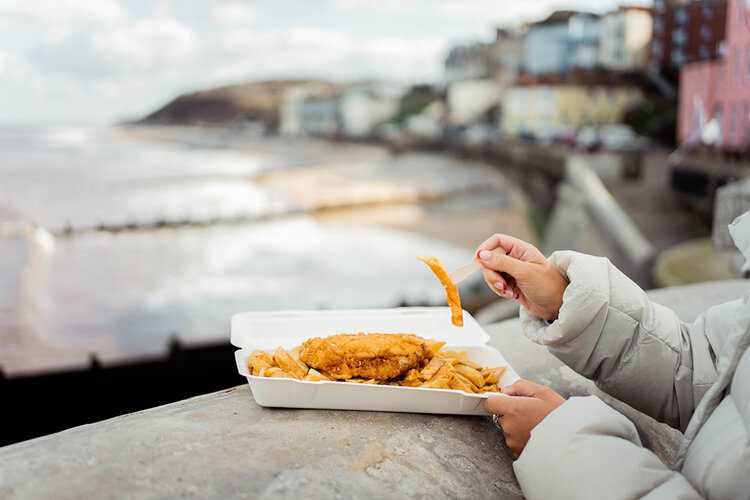
    When getting fish and chips on a day at the beach, you’ll want to get to the chippy before 12pm or later in the afternoon to avoid queues longer than Brighton pier. Get them open (rather than wrapped) so you can add your own salt and vinegar, then head back to the beach. Yes you’re probably going to get sand in your chips, but that’s part of the charm. 

    PSA: Beware of the seagulls!

    Visit the local shops

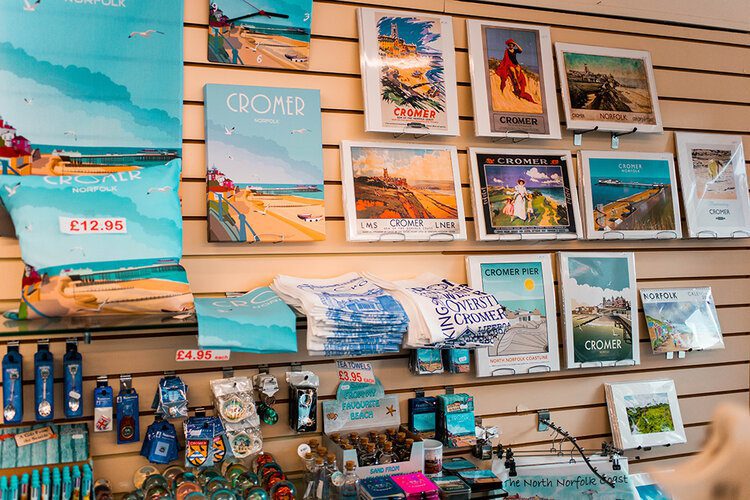
    No trip out is complete without a souvenir of the day. With so many locally made options, it would be a shame to leave the seaside with a standard trinket over a unique-to-the-area souvenir. For example, when visiting the Norfolk seaside, you absolutely must pick up something made with Norfolk lavender or when in Brighton or Blackpool you can’t leave without a stick of rock (hard candy).

    Spend purposefully not mindlessly and support local businesses.

    Enjoy a 99 Flake ice cream

    Ice cream comes after the shops because many won’t let you in with food and drink… it’s fair, I’ve been both the customer who accidentally dropped their ice cream and the shop assistant who has had to clean up the ice cream off the floor, so shop then eat.

    Unless you have allergies – in which case you can get an ice lolly, sorbet or ice cream in a pot – the only ice cream you should be eating at the seaside is a 99 ice cream. But Gaby, what on earth is a 99 ice cream? It’s a soft whip vanilla flavoured ice cream that should be (but isn’t always if you’re being served by a teenager) delicately swirled into a wafer cone (that tastes like nothing but it’s not the same without it) and then penetrated by a Cadbury’s chocolate Flake (a crumbly chocolate stick that falls apart when you try to eat it). Honestly it’s the basic bish of British ice-cream but summer just wouldn’t be the same without it.

    Contrary to popular belief, a 99 Flake ice cream didn’t get its name from its price but unfortunately no one really knows why it is called a 99 flake, 99 or ninety-nine. The true origin has been lost in time with many people claiming to be the first to snap a Cadbury’s Flake in half and stuff it in an ice cream. Origin stories cover tributes to the First World War, cricket, Italian Royalty and shop addresses. Either way, not knowing why it’s called a 99 Flake ice cream is part of the charm.

    Ideally you want to purchase your 99 Flake ice cream from an ice cream van with copyrighted cartoon characters with slightly askew features. Ice cream van jingles are the sound of summer!

    Play in the seafront arcades

    In the days before we all carried around copious amounts of hand sanitiser, I would make sure eating our ice cream came before going to arcades, because there’s nothing sanitary about handling decades worth of copper pennies and then eating with your hands.

    The arcades is one of my favourite parts of the day, it’s good fun with minimal effort and provided you don’t get carried away, it doesn’t cost much. 

    The most classic machine to play is the 2p slot machine. Not just any 2p slot either, you want the one that looks like this one in the photo, where there’s a whole platform pushing coins rather than rickety old arms that barely push the coins anywhere. This machine will give you your best chance of getting more coins back.

    Your technique should be to drop your coin as the top shelf is drawn in, so that by the time it lands, the shelf is all the way out, then when it draws back in again, the coin will push other coins froward and hopefully off the shelf. 

    The goal of these machines is to win something crappy that’s hanging off the edge but if it’s not something you’ll use, either play for the fun of it or even give it back to prevent contributing to waste (because really, these prizes are naff, except for the time I won a High School Musical pen, I still have that). Many arcades offer tickets/tokens that you can collet to buy better toys, but really you’ll only collect enough for some sweeties/candy.

    To manage your spending at the arcades, don’t change up more than £5 of 2ps. Honestly you can get your kicks on a couple of pounds and anymore than £5 you should have just spent it in one of the local gift shops instead. There will be various change-maker machines around the arcade but if you have notes, take them to the counter to be changed up.

    Playing 2p slot machines in the arcades at the seaside is a simple pleasure in life that I think everyone should experience, if possible.

    Grab a pint from the pub

    After a long day at the seaside, it’s really only logical to end it with a cold pint, or something equally classic such as a Pimm’s No.1 Cup or a G&T, at one of the local pubs. 

    If you don’t drink alcohol, don’t worry, this isn’t quite so much about drinking as it is socialising and taking a pause to savour the day you’ve just had at the beach before leaving. Whether it’s a pint of local ale or lemonade, take it out into the beer garden and enjoy what’s left of the sunshine before it dips below the buildings.

    If you are drinking an alcoholic beverage, firstly drink responsibly, and second try a locally brewed beer, cider or gin.

    .

    Gabriella

    Pin this post


    .

    If the photos are confusing it’s because I had originally started shooting this content back in February 2020 (pre-pandemic) for something else, hence the winter gear but I guess it shows you can do ALL of this no matter what time of year it is.

  • How to make the perfect pitcher of Pimm’s No.1 Cup

    How to make the perfect pitcher of Pimm’s No.1 Cup

    Anyone for Pimm’s?

    The perfect pitcher of Pimm’s doesn’t exis…. here it does. This recipe will have you making the perfect pitcher of Pimm’s Fruit Cup to serve this summer.

    Pimm’s No.1 Cup was created by James Pimm in 1840. It’s a gin-based spirit that is mixed with lemonade, ice, mixed fruits and mint. Pimm owned an oyster bar in London where he served up Pimm’s No.1 Cup as a digestive aid in a small tankard, which is how the drink got its name.

    Pimm’s No.1 Cup or known informally as just Pimm’s, is Britain’s favourite summer drink. It is famously served at some of England’s biggest summer events such as Wimbledon and the Chelsea Flower Show and is a staple at any summer wedding, BBQ, cricket match or garden party.

    Pimm’s Drizzle Loaf Cake

    Recipe Here

    Pimm’s o’ clock

    No other cocktail represents the Great British Summer better than Pimm’s, so to help you bring a little British summertime sophistication into your home here’s how to make the perfect pitcher of Pimm’s No.1 Cup!

    This recipe will serve 4 glasses working off the ratio of 50ml of Pimm’s to 150ml of lemonade per person. When making Pimm’s No.1 Cup, the ratio to lemonade is 1 part Pimm’s to 3 parts lemonade.

    Wimbledon themed party snacks

    Read here

    Ingredients to make the perfect pitcher of Pimm’s

    200ml Pimm’s No.1 Cup

    600ml lemonade (clear and carbonated)

    1 orange

    1 lemon

    1 lime

    1/2 cucumber 

    3 strawberries

    A handful of fresh mint leaves

    Ice cubes

    What you need to make the perfect pitcher of Pimm’s

    Pitcher or jug, preferably clear so you can see all the colours of the fruit

    Glasses

    Stirrer (this could literally be a spoon)

    Chopping board

    Sharp knife

    Measuring jug

    Wimbledon themed party snacks

    Read here

    Recipe for how to make the perfect pitcher of Pimm’s

    1. Slice the orange, lemon, lime and strawberries.

    2. Chop up the cucumber into chunks.

    3. Cut off the excess stalks from the mint leaves.

    4. Fill your pitcher 1/3 of the way with ice.

    5. Add the fruit and mint leaves. Before adding the mint leaves, give them a little smack with your hands. This warms up the mint and starts to extract the oils so that they can infuse your drink.

    6. Measure out your Pimm’s Cup and pour into the pitcher.

    7. Measure out your lemonade and pour into the pitcher.

    8. Take your stirrer and stir to combine the Pimm’s Cup and lemonade whilst evenly spreading out the fruit and ice.

    9. It’s ready to pour and serve, chin-chin!

    Alternatively you can mix Pimm’s No.1 Cup with ginger ale or even champagne to make a Pimm’s Royal Cup.

    .

    For more Brit food inspiration check out:

    Traditional British meals every traveller needs to try

    Classic English fruit scones recipe

    Aloha, Gabriella

    Pimm’s Drizzle Loaf Cake

    Recipe Here

    Pin this post