Travel has completely opened my eyes to how much waste there is in the world and the effects that my contributions were having. Seeing real life mounds of discarded single use plastics, videos of animals’ tummies full of plastic and rubbish, animals being harassed for tourists’ amusement and beaches scattered with rubbish – it’s hard to ignore what irresponsible behaviour can lead to. It’s important that we all do our part to stop being so wasteful, to protect our planet from the damage we’ve caused so that future generations of animals and humans don’t suffer because of what we’ve done.
My experience of irresponsible tourism
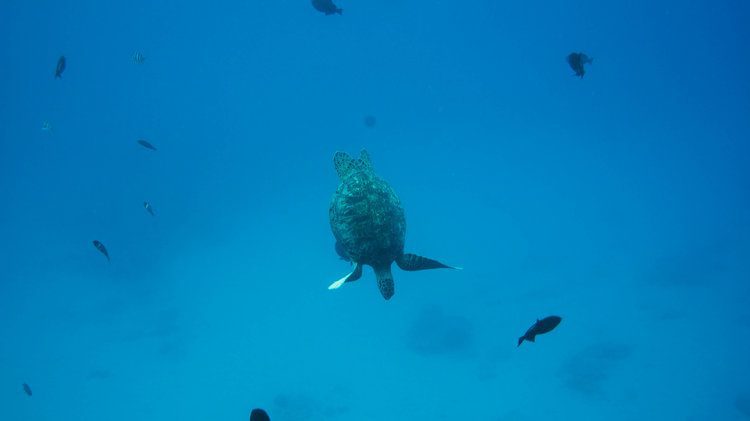
In February I returned to Hawaii and whilst in Oahu I decided to book an excursion to swim with turtles, something I had done a few years before in Maui and thoroughly enjoyed. I chose to book with a company called Holokai Catamarans based in Waikiki and was gravely disappointed by the behaviour of both the crew and the passengers on my tour.
We witnessed the crew throw chocolate chip cookies into the water, and last time I checked, wheat and chocolate don’t grow in the sea and are therefore not part of a natural diet for turtles or fish. There were only four turtles in the water, one was young too, and another three boats came to join us, including a boat loaded with scuba divers and even a glass bottom boat! At one point there were approximately 40 people both on and beneath the surface of the water surrounding these poor turtles.
That situation had multiple things wrong with it:
The turtles were heavily outnumbered and surrounded. If they feel threatened they will be reluctant to surface for air, which could lead to asphyxiation and therefore death.
Glass bottom boats are extremely dangerous for sea turtles as they can get confused and try to surface beneath the boat. This can damage their head, fins or their shell and even lead to panic and suffocation.
Sea turtles are an endangered species and it is very important that you respect them and their environment. For this reason you legally must stay 10ft back to prevent the turtle from being scared, harassed or harmed. Turtles are curious creatures so there is a good chance that whilst you are observing them that they will surface near you to do the same to you. In this situation, you must remain calm and very slowly give them space, then count your blessings for a beautiful moment you shared with such a magnificent animal.
Unfortunately the situation worsened and not only were the turtles encompassed by far too many tourists, some groups of people then did the worse thing imaginable, they started to grab at the turtles and chase them, whilst the crew did nothing. I personally had to stop at least five people from chasing the turtles when they surfaced and I even pulled a person away after they touched one of the turtles. It was incredibly distressing! So, for these reasons I cannot recommend taking this tour; their lack of responsibility for their passengers and respect for the turtles was heartbreaking.
Once I returned to my hotel I wrote a letter of complaint to the company and I also reported them to Hawaii’s tourism board via their government’s website. Since then I have been far more vigilant over choosing tours, doing my best to make sure they are environmentally conscious and responsible.
Tips for finding responsible marine tours
With so many tours available over the internet it might seem like a daunting task to find operators that are responsible. Here are a few pointers for finding tour companies that you can trust to be environmentally conscious:
Always take a peek at their own website, even if you’re using a comparison site. You’ll get a better idea of their priorities and what they pride themselves on. For example, if they mention that they are “the most eco friendly tour operating out of that harbour” you know they’ve got their priorities in order.
If you’re booked to stay in a hotel, ask the concierge or front desk if they can recommend any responsible tours. Then research them before making a booking.
Look for companies that provide or encourage the use of reef safe suncream only.
Small tours are always the better choice. They have a smaller impact on the environment and it means you are going to have a much more personal experience with them. Larger tours are mostly operating to make money and don’t take care of individuals or the environment. Whilst on a whale watching tour in Hawaii, we chose to go on a very small dinghy and because of that it meant we could hear the whales singing through the hull of our boat. Moments later we were joined by a large boat with two decks which was blasting out its own music. Not only was that precious moment lost on those people on the larger tour, but they are discouraging people to truly experience their surroundings.
Take note of companies that partner with nature conservationists, charities and organisations. You know they care for the environment and everyone’s personal experience over masses of paying passengers if they have a strong focus on marine biology and research.
Reach out to travel and environmentally conscious bloggers. Ask them if they know of any trustworthy tours, or if they can recommend any companies. You can always contact me through my Instagram, @gabriellawisdom, or email, if you have any questions or want recommendations.
If a turtle surfaces near you, remain calm so you don’t antagonise it, do not reach out to it, and when it is safe, put distance between yourself and the turtle.
Extra measures that you can take
Of course, responsible tourism doesn’t start and end with the tour operators. We all have a responsibly to protect and preserve our beautiful environment. Here are the ways you can help:
Bring your own reusable water bottles to prevent the use of plastic ones.
Wear and bring your own reef safe suncream. Oxybenzone and octinoxate are harmful chemicals to coral reefs and are often found in suncream and UV protection products. Many leading brands such as Hawaiian Tropic, Australian Gold and Banana Boat are now reef safe. Check the label before purchasing your next bottle.
Be respectful of your environment. Don’t touch or harass any animals, don’t take anything with you except memories and photographs (if it’s appropriate) and don’t leave anything behind such as rubbish. If you see any rubbish, pick it up.
If you do see something wrong, don’t be afraid to voice it and report it. I recommend you report what you witnessed to authorities and sending a private email over blasting them on the internet, the situation will be taken more seriously if you go about it sensibly.
Responsible marine companies I have used around the world
Since my experience in Oahu, Hawaii, I am more determined than ever to make sure I book responsible and environmentally conscious tours. Here are some companies from around the world that I whole heartedly recommend because, each one of them have a passion for the world we live in and the animals we share it with:
Ultimate Whale Watch & Snorkel for whale watching in Maui, Hawaii.
Pride of Maui for swimming with sea turtles in Maui, Hawaii.
Wild Whales Vancouver for whale watching in Vancouver, Canada.
Reef Day-tripper for swimming in the Great Barrier Reef, Cairns, Australia.
We are all accountable for making sure we protect and preserve our environment. Together we can make great strides towards responsible tourism by acting upon the tips I have highlighted above and booking tours based on their environmental impact and awareness over what costs less.
I have been to Hawaii both in the height of summer and winter. I have experienced endless days of sunshine and blue skies and relentless rainstorms and chilly winds.
From my time in Hawaii I have learnt that it’s better to be prepared for both ends of the seasonal scale because you don’t always know what you’re going to get. Plus, there are certain excursions you can do that warrant clothes you wouldn’t quite expect to wear in the Rainbow State.
Hawaii is made of glorious tropical islands, so even in the winter the temperature doesn’t really dip much below 20˚C in the daytime and it will pretty much sit around 24˚C. During the summer months, you’re looking at an average low of 24˚C and a high of 30˚C. As you can imagine you won’t need to make space in your case for a bunch of wooly knits! So let me take you through my packing list and the essential items that I couldn’t do without.
Swimwear
Bring a good selection of swimwear, and I don’t just mean different patterns of the same stringy bikinis (or in my case high waisted ones, they flatter everyone!), I mean different types that suit a range of activities! If you are fully able to go into the ocean, you’d be a fool to stay out of it with so many reasons to enjoy it from cooling off to swimming with turtles! Here are the staple swimsuits I think you need:
Women
A rash guard for three good reasons, the first is if you go surfing you’ll want to protect your chest from a board rash. The second is if the waters are cooler it will help you keep warm in the water. The third is if it’s really hot, it will protect your back from burning in the sun whilst swimming.
A full coverage swimsuit or even better a surf suit for going surfing. I wore a very practical Roxy swimsuit with a rash guard but if you come off your board and get thrown about a bit, your rash guard might ride up and if your swimsuit doesn’t have a high neckline you may or may not have a nip slip… I may or may not be speaking from experience, thank God for those rash guards, hey I guess that’s a fourth good reason to have one!
A bikini, if you’re confident wearing one, to avoid leaving the islands with a pale tummy. I spent two weeks in Mexico in mostly swimsuits and my stomach was a stark contrast to the rest of my body! FYI I don’t like being in bikinis but in Hawaii I realised anyone judging me for a roll or two when I sit up has more insecurities than me, and so I sat out in my bikini and embraced the body I have.
Something cheeky! This is hard because virtually every swimsuit in the shops these days are encroaching on wedge territory. I’m not encouraging it just for fashion’s sake though, I like them because you get a more even tan on your tooshie!
Swimsuits for posing, I’m talking about the really impractical ones, the ones that are meant for sun loungers and cocktail sipping, why not, you’re on holiday/vacay!
Men
Shorts, because you don’t really have a lot of options, sorry.
Rash guard, for the three same reasons as above – if you go surfing, you’ll want to protect your chest from a board rash. If the waters are cooler it will help you keep warm in the water, and if it’s really hot, it will protect your back from burning in the sun whilst swimming.
Cover ups
I am assuming you’ll be spending a lot of time going between the glorious beaches and maybe the pool so I recommend bringing a couple of cover ups to go over your swimsuit. Men, you just need a T-shirt so you’re easily sorted, Women, a tunic is a great option because it can be worn over a swimsuit or with shorts if you’re heading away from the beach (you don’t want to feel like you’re in your undies). A sarong is always a solid cover up but if you’re looking to buy one, wait until you’re in Hawaii and grab a pareo, it’s a traditional Polynesian sarong that can be worn multiple ways.
Shorts
You can’t go wrong with a good pair of shorts, denim is my preference because they go with anything, but bring something that is comfortable so that you can go anywhere in them from hiking to shopping.
Tops
Even though I felt like I wore more than just the same outfit over and over again, I pretty much wore the same top almost everyday! With so much to do, you’ll end up being quite active and wearing a lot of swimwear so don’t stress about brining a lot of tops. Of course bring more if you won’t be wearing many dresses, but I really only needed a few that I would wash and put out to dry on the days I would be mostly on the beach.
Outerwear
I brought a denim jacket to Hawaii both in summer and winter and it was welcomed on both trips. Even in the summer, the nights can be cool so having a versatile jacket is smart, plus you can wear it in air conditioned restaurants and shops, you know, the ones that overcompensate and feel like you’re walking into the Artic circle. That jacket will definitely be needed for winter evenings and some cooler days.
A lightweight shower proof jacket is a great one for both seasons too. The are far more rainy days in winter, obviously, but those glorious rainbows need a little help from a shower or two so it’s not the worst idea to have one to hand.
Haleakala is a chilly ordeal no matter what time of year you go. We went in the middle of summer and it was shockingly cold and wet! Despite wearing thermals, warm layers and waterproofs, we were not prepared for how cold it was and we felt like we had frozen to the bone! Hours later when we returned down from the clouds, we were roasting again. If you are planning on going up to watch the sunrise or sunset from Haleakala, bring layers!
Trousers
Like I mentioned in outerwear even if you’re going in summer, if you’re planning on making a trip up to Haleakala, you are going to need to wrap up so bring a pair of trousers. It could be smart trousers that you can wear in the evening for dinner or a pair of jeans. Honestly even when I went in winter it wasn’t cold enough for trousers, but as I travelled from England with a pair of jeans I wore those on some cooler evenings but again, it wasn’t terrible cold that I felt I had to wear them.
Jewellery
Shell jewellery is so hot right now! I made a bracelet, anklet, choker and earrings after purchasing a jewellery making kit and a box of cowrie shells from Amazon. It’s way cheaper than buying them in any highstreet store! If you don’t fancy making or buying them, wait until you get to Hawaii, there are shops everywhere selling cowrie shell jewellery for just a couple of dollars if that.
Shoes
Really you only need two pairs of shoes for a trip to Hawaii and those are a pair of flip flops for the pool, beach and avoiding awkward tan lines and a pair of trainers or hiking boots for walks, hikes and anything else active. Of course I brought four other pairs of sandals and sneaks just for styling with various outfits, but if you’re aiming to pack light, you can live off two. Maybe bring one nice pair of sandals for any special nights out, at a push.
Mosquito Repellent
If you’re planning on driving the road to Hana you’ll need bug spray! Those nasties are ready to pounce the second you get out of the car, so be prepared.
.
There’s a good chance you’re here because you’re either taking a trip to Hawaii or planning to so here are some other blog posts that might be of use to you:
If you like the look of my packing list and want to make one for yourself, take a look at My ultimate interactive packing list. You can download my template and personalise it to your trip!
Help support these amazing Maui businesses who have suffered from the wildfires that swept the town of Lahaina.
In August 2023 huricane winds blew the deadliest wildfire in the US for 100 years through the historic town of Lahaina on Maui. More than 100 people have died and cultural landmarks, business and homes have been destroyed, leaving nothing behind.
Lahaina, as it is for many, is a special place that held cherished memories.
It is also where many of the recommendations on this list of 6 best things to do on Maui are located.
As these incredible business have suffered huge loss I have updated this blog post to include the ways you can donate and help them recover from the devastating Maui wildfires.
Responsible tourism is encouraged once again to help the economy of the island recover.
If you are able to please donate and when the time is right and these local businesses are able to operate again, be sure to book with them to help them bring joy to the world once again.
Thank you.
—
I had the very best time in Maui despite the weather not cooperating 100% of the time, my birthday in particular. It was all down to the experiences we had whilst on the island. I do want to clarify that we were celebrating Valentine’s day, my birthday and the first anniversary of Postcards from Hawaii, so we spent a fair amount of money on the experiences below. We wouldn’t usually do many big excursions and activities as they are costly, but each one was incredible and I would be foolish not recommend them.
So here are six of the best things to do in Maui, Hawaii, in my opinion:
1. Open door helicopter tour over Molokai
An open door helicopter ride in Hawaii was recommended to me by a follower on Instagram and the second she told me I was desperate to do it! Michael is scared of flying though – he just about stopped digging his nails into my hand in October 2018, he still squeezes my leg during turbulence though – so I thought this was a no-go. I just about got him in a helicopter over the Grand Canyon three years ago and I thought it would never happen again, let alone with the doors off. The gem that he is though surprised me with it for my birthday!
We took the Doors-off West Maui & Molokai tour with Air Maui which is the only doors off helicopter tour on the island. The helicopter takes off from Kahului Airport Road, Hangar 110, and flies over the Pailolo Channel (if you’re lucky and it’s the right season you’ll see whales from above) to the island of Molokai, where you will fly over the 4,000ft high cliffs, cascading water falls, luscious forests and through deep valleys.
There’s no radio for passengers so you can’t really communicate but when your pilot has a playlist including soundtrack numbers from Top Gun, Avatar, Jurassic Park and Weezer’s Island in the Sun, you don’t really have a reason to speak. I could not stop crying with complete and utter joy as we swooped down to fly past the 3,500 ft high waterfalls crashing down to the sea below whilst John William’s “Theme from Jurassic Park” was playing. It was incredible! It was one of the most thrilling and memorable things I have ever experienced.
Price
$325 (£245) per person if you book through Air Maui.
$300 (£225.70) per person booked through Viator – which is what Michael did.
My only gripe is that there are only 3 doors available but there are six seats and they charge the same price for all tickets, so 3 people pay for a doors open experience and don’t get one. Be prepared for not everyone getting seated on the edge, they won’t send the helicopter up with two or less people.
Flight times
8am – 12pm
12pm – 5pm
*flights last approximately 45mins, check in 30mins prior.
What to wear
Air Maui will provide wind-breaker jackets.
Shorts – it is windy but we went in winter and my legs were warm in the sun.
Hair must be tied back.
You are provided with googles and a headset.
You mustn’t have anything in your pockets or be wearing any jewellery.
You must wear closed toe shoes.
Suncream
You aren’t allowed to bring a camera. Only phones are permitted and you are given a lanyard to prevent them from falling,
One of their surf instructors, Richard “Tricky Ricky” Yeckley has lost his job and home along with all of his belongings, saving only his cat and the clothes he wore in the early hours of the morning. Here is a link to his Venmo and Go Fund Me page.
Before our helicopter ride which was in the afternoon, my birthday (which was delayed due to rain) started with a private surf lesson for Michael and I. We booked with Lahaina Surf Shack and had a great time!
Before this trip I had mentioned to Michael that I wanted to try surfing again so he surprised me with a surf lesson for my birthday. We had a semi-private lesson which is for two people and one instructor. “Tricky” Ricky took us out and we had a blast!
Our lesson started on the beach where he briefly broke down how to get up on our board, the correct way to fall that won’t hurt us (and I’m happy to report I didn’t hurt myself) and where to position ourselves on the board.
We spent 2 hours in the water catching endless waves, moving out further so they were bigger and I caught the majority of mine! It wasn’t until Michael got out to take photos that I missed a bunch, typical! Check out my Instastory highlight “Maui part 2” to see what my instructor had to say about me catching a 5ft wave!
What I really admire about learning to surf with Lahaina Surf Shack is that after every wave your instructor encourages you to analyse how you did and gives you pointers so you can improve the next time. This was invaluable because we continued to get better on each wave doing this!
Price for surfing on Maui
Private one on one lessons are $150 per person
Semi private lesson which is for two people are $100 per person
Group lessons are $75
Obviously group lessons are cheaper and make more sense if you are on a budget, but I strongly recommend taking a private/semi private lesson if it’s your first time out because your instructor will be solely focused on you, plus you will get to catch more waves because you won’t be waiting for others to surf theirs.
They also rent out a selection of longboards, short boards, beginner boards and stand up paddle (SUP) boards at a discounted rate if you have had a lesson with them.
What to wear for surf lessons on Maui
Swimsuit
Reef safe suncream
They will provide you with a rash vest and reef booties
3. Hula dancing lessons on Maui
Since publishing this blog post I have learnt that Jordan Saribay, who taught my hula lesson mentioned below has started his own production company called Kupu Productions. His company teaches hula, ukulele and lei making lessons.
Jordan was born and raised in Lahaina and sadly his family lost four of their homes during the wildfires in August 2023.
Here is a link to his family’s Go Fund Me page, donations will be split across the family to help them after their loss.
“In ancient Hawaii, a time when a written language did not exist, hula and its chants played an important role in keeping history, genealogy, mythology and culture alive. With each movement – a hand gesture, step of foot, swaying of hips – a story would unfold. Through the hula, the Native Hawaiians were connected with their land and their gods.” – Taken from the official Hawaiian tourism website.
I really wanted to learn hula dancing, but I didn’t want to get lost in a group. I have zero hand-eye coordination but I also wanted to absorb as much as I could, in groups you risk getting left behind or the class can focus on other people and you don’t end up learning much, so I chose to do a private lesson.
We booked a private Hula lesson with Hawaii Hula Company which lasted an hour and included:
Dancers coming to a location of your choice.
Music.
Use of a pareo which they will show you how to tie.
Fresh flowers and a lesson in making your own rosette for your hair, which you get to keep.
Of course the lesson and brief history of the hula.
The dancers that came out to me were Jordan Nelson Keali’i Kūpule Saribay and his cousin Annastaceya Kau’iokalani Saribay Arcangel-Pang, aren’t they beautiful names! They are both professional dancers in Luau shows at local hotels, in fact Annastaycea dances in the Luau at the hotel we were staying at, Myths of Maui Luau at the Royal Lahaina Resort.
The lesson started with Jordan teaching me to make a rosette for my hair out of plumeria (frangipani) and then he showed me how to tie the pareo (a large sarong) into a dress and a skirt whilst giving me a brief history of the dance. Annastaycea then took me through the routine step by step, putting it together without music at a slow pace, and then we put it to music, picking up the pace. Both Jordan and Annastaycea explained the meaning behind the moves – I was telling the story of a woman’s beauty; her eyes, her hands, her body. They were incredibly patient whilst I fluffed up and very supportive when I remembered the steps! Close to the end, they encouraged Michael to join in and Jordan took his place as photographer, then we all danced together. It was such a joyous experience, and even though I don’t look as gracious as I felt, I enjoyed every moment dancing out beneath the trees with two really lovely instructors.
PFH Fun Fact: If you are in a relationship you wear your flower behind your left ear, and if you are single you wear your flower behind your right.
Price for hula lessons on Maui
$286.46
That is the price we paid for a private lesson for one person.
You can also contact Jordan directly at jksari9@hawaii.edu or on 808 264 4082 which I recommend doing.
What to wear to a hula dance lesson
Bare feet.
Free flowing hair because it feels and looks good when you dance.
A cute top if you plan on wearing the pareo as a skirt.
Shorts so you can hide them under your skirt or dress.
A huge smile! I have the song I danced to playing as I write this and I have a big smile on my face.
4. Whale watching on Maui
My experiences whale watching with Ultimate Whale Watch and Snorkel have been some of the most magical moments of my life.
Sadly most of their vessels were lost in the wildfires that swept Lahaina in August 2023. Some of their crew have also lost their homes and all their belongings in the fires too.
Here is a link to the Venmo Ultimate Whale Watch and Snorkel.
We had always intended to book another snorkel trip with Pride of Maui, especially as we had such a good time with them before but as it was whale season during our trip, we decided that we would use that budget to go on a whale watching tour, and it might have been one of the best decisions of the trip.
Humpback whales migrate to Hawaii’s warm water from November – May to escape the freezing conditions up north. The peak of the season is January – March, and as we were there in February it seemed foolish to pass up the opportunity to go.
The truly amazing thing about humpback whale season is that you can see them from Kāʻanapali beach with the naked eye. In fact, we soon learnt (and I mean from the very first moment we stepped onto our balcony) that it is impossible not to see one! Thanks to them spouting water from their blowholes to such a great height, they are forever catching your eye, even when you’re not looking for them. Plus they are so happy! They spend all day breaching and slapping their pectoral and tail fins but better than that, on a good day you can hear them in the water. Yes, you read that correctly, you can HEAR them in the water! Michael went swimming in the sea and moments later he was dripping on me panting something about how he could hear the whales. Well of course I went running in after him and I can confirm that all you had to do was put your head under water and you could hear the whales communicating. It was wild!
We booked our whale tour for our last night. It was a sunset tour which set off at 5pm and lasted two hours. We chose to book with Ultimate Whale Watch and Snorkel because they offered a small boat tour which only carries 26 people maximum and is a low vessel so you are close to the water. The tour is also led by marine naturalist guides, which I know from previous tours means that you are going to learn heaps about marine life and their enthusiasm for it is unprecedented.
We were out on the water for less than 10mins before our guides spotted our first whale which was a mumma with her calf who were joined by three bottle-nose dolphins. Our guides were so excited you couldn’t help but be filled with joy. We then headed further out where we came across a male whale who was just diving. Disappointed at first because that usually means they won’t resurface for a while we were then treated to his beautiful singing which, and I kid you not, we could feel through the hull of the boat! An experience you wouldn’t get if you were on a big tour boat. Our tour guide then put a hydrophone in the water for us to hear the whale’s song and it has to be one of the most magical experiences of my life. We listened for 12 minutes and I cried for most of them. In those 12 minutes you could hear a pattern in the song as he repeated sections almost like verses and a chorus. We continued on to meet more whales and the highlight was when a youngster swam beneath us and then came up for air beside us before diving again, breaching his tail as he went down. Well, I was a mess! It was breathtaking.
PFH Fun Fact: Did you know a whale’s song is as loud as a jet engine at 140dB, to put that into perspective, humans can reach 70dB when shouting and our tolerance for sound before it is too painful is 120dB.
Price for whale watching on Maui
Adults: $54 plus tax per person
Children: $33 plus tax per child aged 4-12yrs old
What to wear on a whale watching tour
Water proof jacket or something you don’t mind getting wet, it can get splashy.
Bare feet, shoes are left at the harbour so don’t bring anything pricey.
Shorts so you dry quickly.
Tie up hair, it is windy and you don’t want anything obstructing your view.
Sunglasses because until the sun sets, the sun will reflect brightly on the water, and when the boat is going it gets windy so they will prevent your eyes from watering too much.
Suncream.
PFH Top Tip: The guides will say there are no “best seats” because they are all front row seats, and to be fair, they are. However all but two face either left or right which is tricky if the whale is spotted out to one side or the other. We were the last to board after the group was told that the front seats on the bow of the boat are the “splash zone” so everyone avoided them and we got them. I was NOT disappointed! Turns out our seat was best in the house because we had just shy of a 360° unobstructed view, we saw everything! I can only assume they don’t want people fighting for the seat so they make it out to be a bad one but it was incredible!
5. Driving the Road to Hana
We saved driving the road to Hana until a couple of days before the end of our trip because we figured if we’re going to die doing it that it should be at the end of our trip. What am I talking about? Well we received a warning of death from just about everyone we spoke to about driving the road to Hana. Even the lady at our hotel’s guest services told us about guests from the hotel who died doing it or as she put it, “guests who are no longer with us (checked out?)…on earth (oh cool, so dead).
Of course we were worried but we were set on doing it, I wanted to go to a black sand beach and it was sure to be a thrilling experience. I have to say though, the actual road itself did not live up to the hype. Sure, it’s a seemingly never-ending winding road with one sharp apex after the other, but to my surprise it’s very well paved, it has two lanes wide enough to easily fit two cars – aside from the areas where it narrows to one lane but those parts are easy to navigate because each side can be seen so you know when to give way – and there is a wall up on the edge. Never mind the fact that it’s in the jungle which feels less threatening than driving along a cliff edge. Now, maybe it’s because we have driven far worse roads in terrifying conditions that we weren’t as scared as we could have been (I’m talking through the mountains of the Amalfi coast, at night, in a torrential downpour which turned the road into a river and our visibility was non existent, oh and there were land slides all over the shop), but honestly I really got the impression that tourist are warned off it because they just want to keep the road quiet and the land in good condition, which of course is understandable.
The actual road aside, the points to stop off are beautiful! We didn’t managed to stop off at all of the ones recommended below that we were told to stop at, but the ones we did see were amazing!
Hookipa beach park to see turtles on the beach (if you’re lucky, we weren’t)
Twin falls
Nailiili-Haele Falls (bamboo forest)
Rainbow Eucalyptus
Halfway to Hana store for freshly baked warm banana bread – it’s so good!
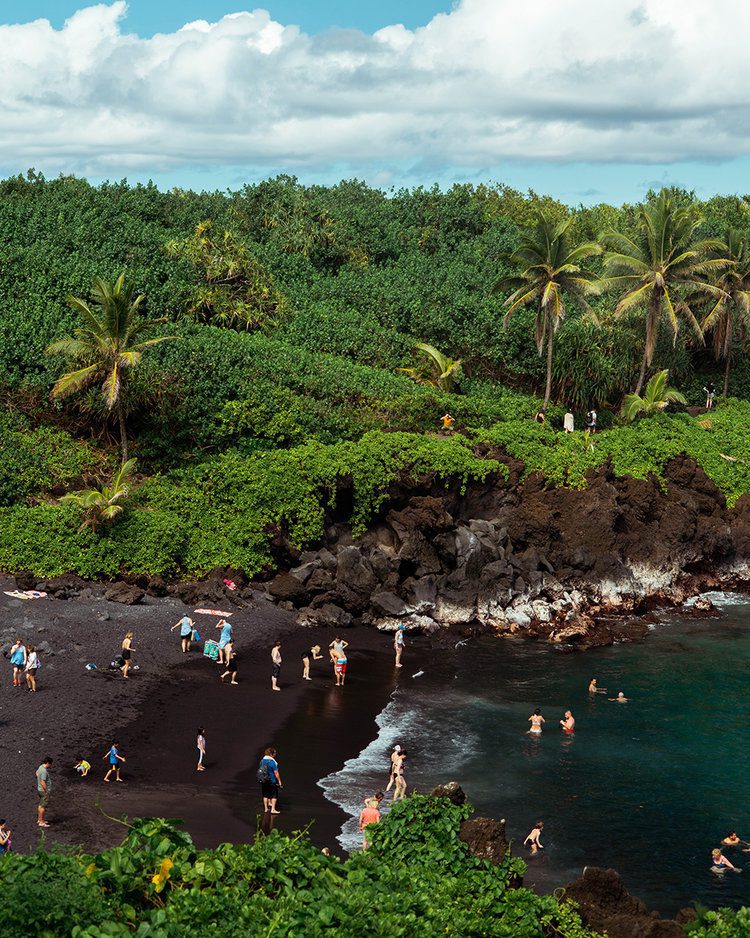
Waianapanapa (black sand beach)
Hana
Kaihalulu Beach (red sand beach)
PFH Top Tip: Though you can go anywhere else on the island and not get eaten, the mosquitos in Hana have an attitude and they will get you the second you step out of your car if you haven’t sprayed. Trust me, I know from experience. I didn’t want to spray in the car so I stepped out to do it and I had a whopping five bites in the time I was spraying! Not cool! Spray before you go!
6. Snorkelling at Molokini & Turtle Town
During the wildfires that destroyed the historic town of Lahaina ion Maui, captain Patrick Grady from the Pride of Maui crew lost his home and all of his possessions.
Here is a link to his Go Fund Me page to help him.
Whilst on a snorkel trip in Waikiki, Oah, a few years back we witnessed the crew throw chocolate chip cookies into the water, and last time I checked wheat and chocolate don’t grow in the sea and are therefore not part of a natural diet for turtles or fish. There were only four turtle in the water, one was young too, and another three boats came to join us, including a boat loaded with scuba divers and even a glass bottom boat! At one point there were approximately 40 people both on and beneath the surface surrounding these poor turtles. You’re supposed to stay 10ft back from them to prevent the turtle from being scared, harassed or harmed and yet people were swarming them whilst the crew did nothing. I had to stop at least five people from chasing the turtles when they surfaced and I even pulled a person away after they TOUCHED one of the turtles. It was incredibly distressing!
It is important that people do not harass turtles when they surface because:
They surface to breathe. If they feel threatened they will be reluctant to surface which could lead to asphyxiation and therefore death
Sea turtles are an endangered species
It is illegal!
I reported the tour company, Holokai, to the authorities and I do not under any circumstances recommend you use them.
If you would like to learn more about responsible tourism and swimming with sea turtles take a read of my blog post How to practice responsible tourism.
The company I do whole heartedly recommend is Pride of Maui and this is for five very good reasons:
They are incredibly conscious of the environment you’re in, they do not and will not allow chasing or touching of the animals.
They provide ocean friendly suncream which doesn’t release harmful chemicals into the reefs
They also provide vests to keep you warm in the water. The water temperature can still be cool in summer.
The crew are great company and they make good cocktails!
They have a BBQ on the boat and will make you the best lunch you can have out on the ocean.
The tour lasts about 5hrs and includes breakfast, a BBQ lunch, cocktails or soft drinks, snorkel equipment and they take you to two snorkel sites: Molokini Crater to swim with the fishies and “Turtle Town” to float with the green sea turtles.
Price for snorkelling in turtle town
$99 per adult aged 13yrs and over.
$69 per child aged 3-12yrs.
Children under 2yrs go free.
Tickets are $25 cheaper (the price quoted above) if you book online. Fuel cost and tax not included.
I didn’t do the Molokini snorkel tour on this trip, but I have used them in the past and it is still one of my top recommendations for things to do in Maui.
Excursions are such a great way to experience more of the country you’re visiting. Many require some planning and preparation, especially if you’re spending the day doing something particularly active. I’ve been on many excursions, tours and day trips, heck, my last trip had eight alone! I use this list as a starting point every time to pack the night before, so here it is for you to use. With this thorough list, you will be ready for whatever the day holds.
General
Backpack
Pretty obvious I know, but I did say it was thorough! It doesn’t have to be a backpack but I strongly suggest it is. After years of not using one because, well, you know: fashion, I can say a backpack is your best option. It distributes the weight evenly and it provides the space you’ll need for the items below.
Money
Souvenirs, tips, drinks, food, rentals – there could be any number of extra costs, some hidden, some not, keep some cash and a card to hand just in case.
Camera
To document your day of course!
Phone
Duhhh…
Phone charger
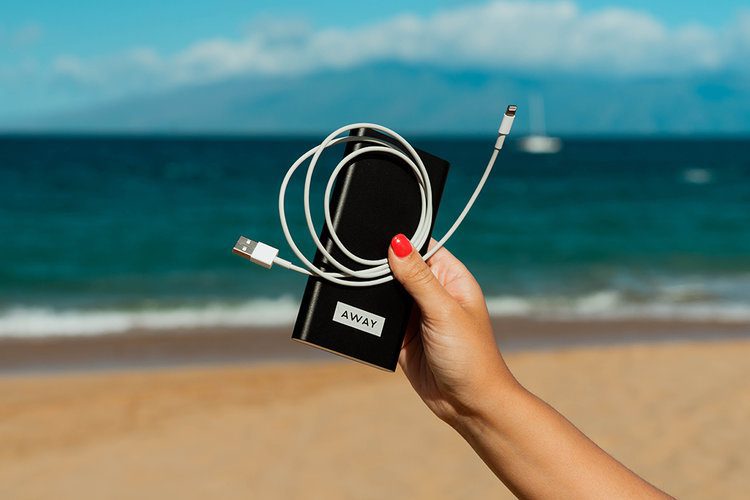
Chances are it’s going to be a long day and whatever you’re doing is undoubtedly going to be well documented on your phone. Don’t get caught out with a flat battery, bring your charging cable and a pre charged power bank.
Food
Water
STAY HYDRATED – she says for the gazillionth time!
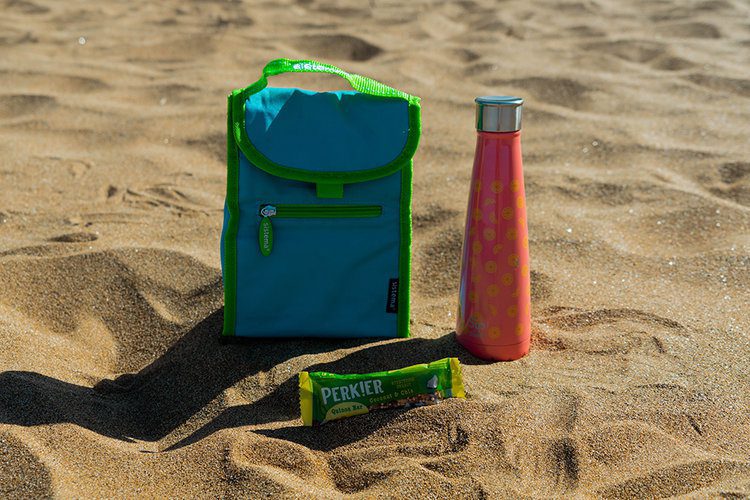
Prevent single use plastic waste by filling a reusable water bottle. Most hotels have water dispensers in the lobby, you can ask coffee shops and restaurants to fill it or you can use a water fountain. I take my water bottle out almost everywhere I go (even the supermarket) and the only time I can recall having issues filling it was boarding my flight home from Singapore: the final security check is as you board the plane so you can’t take any liquids over 100ml on. I just had the flight attendant fill up my bottle on board to prevent using a plastic cup.
Snacks
Excursions usually involve you being active so keep those energy levels up with snacks.
I usually pack up quinoa/cereal bars, fruit and beef jerky.
Breakfast/lunch/dinner
The food you pack will be dependent on what time you’re setting off, how long you’ll be out, where you’re going and what’s included.
If I’m heading out before 10am I’ll pack up cereal bars for breakfast.
If lunch or dinner isn’t included on my tour or I’m not intending to eat out I will pack up sandwiches, crisps (potato chips for my American readers) and fruit and pop them into my travel cool bag to keep them fresh.
PFH Top Tip: Use beeswax wraps and reusable cutlery to prevent plastic waste.
Sun protection
Sun cream
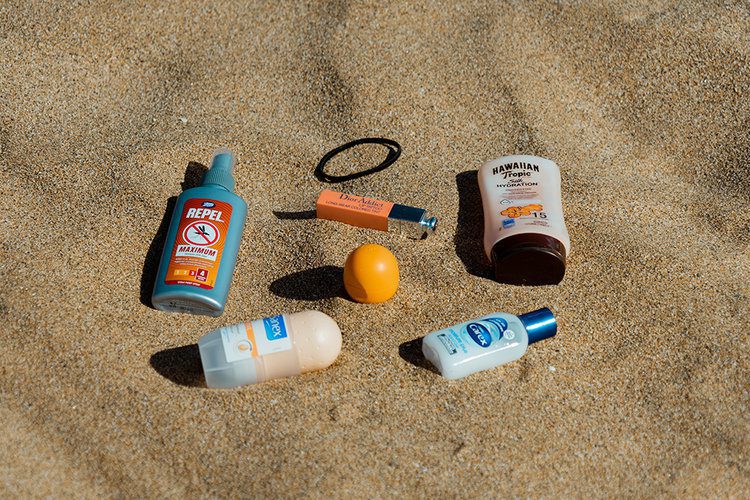
Be ultra prepared with sun cream for your body and face. I always travel with SPF 15 and 30 and 50 if we are going somewhere exceptionally hot.
I swear by Hawaiian Tropic for the following reasons:
It is “reef safe” which means it doesn’t contain oxybenzone and octinoxate which are harmful to coral reefs. When worn on humans they convert harmful UV rays to safe heat on our skin, but when they wash off into the water, they have the complete opposite effect on corals. Instead it strips them of the layer that protects them from bleaching under the sun.
It’s moisturising as well as protective, so it has a better chance of preventing your skin from drying out under the sun. I don’t apply suncream on my hands as often as I should and they always dry out the most!
It smells so good! It will take you to a tropical paradise wherever you are.
Sun hat
Nobody wants a sore, itchy and burnt head, plus it will shield you eyes from the sun and even cover up a bad hair day!
Sunglasses
Protect your eyes and see better with a pair of sunnies to hand.
Clothing
A change of clothes
Based on what you’re doing, make sure your outfit is appropriate and well equipped.
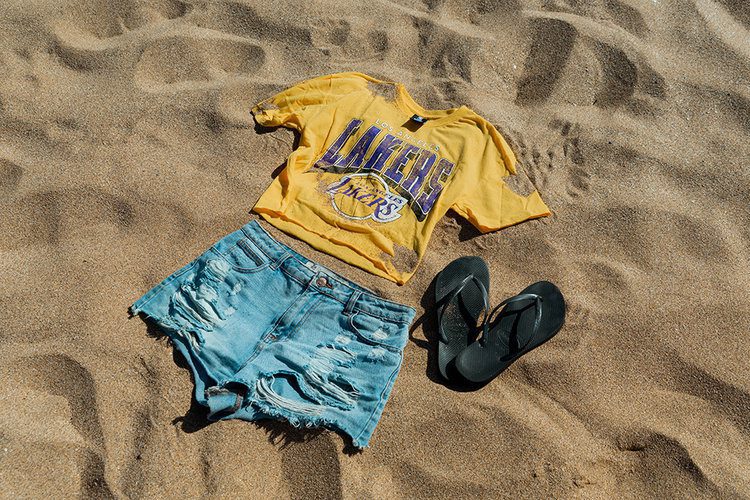
If you are going in the water bring swimwear, flip flops, a cover up and a change of clothes for afterwards should you not have time to dry. Don’t forget underwear if you started in your swimsuit and you don’t want a damp bum!
If you are hiking, make sure you have sports socks, durable footwear and moisture-wicking clothes.
If you are going somewhere where you are likely to get wet, I’m not talking swimming, I mean waterfalls, rainforests, snow etc., bring some waterproof over-trousers and a rain jacket.
Health and beauty
Makeup
It’s not really practical, or comfortable for that matter, to wear a full face of makeup whilst you’re either somewhere hot or doing something active. To make me feel a little better about my bare face I bring a few minimal products that lift my face but also won’t irritate my skin in the sun or water.
These products are:
Concealer. I have to be honest, I am embarrassed of my tired eyes (the life of travel and working for yourself) so I am rarely seen without concealer under my eyes. If I look tired and like I’m not wearing it then give me a heads up because I obviously need to buy a better one!
Tinted eyebrow gels – it will fill in, colour and shape them with little effort.
Lip tint – unlike lipstick, it won’t rub off and unlike lipgloss, your hair won’t get stuck in it (if you have longer hair). I always wear this if I’m doing a water based activity because it brightens my face without being too extra.
If I need a little extra help, I will bring my Charlotte Tilbury 5 minute palette. It has three eyeshadows, two blushers, highlighter and contour all in one compact palette with a mirror to see where you’re applying what.
Hand sanitiser
If you’re planning on eating keep some on you just incase you touched something nasty.
Hair tie
If you have long hair and you’ve got an active day ahead, it’s best to have the option to keep your hair out of your face.
PFH Top Tip: If you are prone to frizz and you’re going to be getting your hair wet, pack a headscarf that you can tie around your hairline to keep that frizz in check.
Bug spray
Always be prepared with bug spray. It amazes me how you can visit two areas of a country and go from a mosquito-free paradise to bug buffet central. In Mexico we spent 11 days in and around Cancún without the need for bug spray but 10 minutes (no exaggeration) in Tulum and I had collected seven mosquito bites. Even on my latest trip, out of my 16 nights in Hawaii on two different islands, 15 were bite free but the one day we drove to Hana, I was a mere 30 seconds late putting on bug spray and I now have six mosquito bites from my butt down to my ankles – if you catch me wiggling in my seat at any moment in the next week, that’s me trying to scratch my butt bites inconspicuously.
I can hear my Mum’s voice in the back of my head telling me “don’t scratch or they’ll scar” and she’s not wrong. I have a cluster of old mozzie bite scars on my shoulder that supports her. So on that note, also pack some cream/ointment for itch relief. I use either calamine lotion or Lucas Paw Paw.
Lip balm
A change in climate can cause chapped lips, especially if you’re prone to that. If you’re going out to sea the salty air and water will cause them to prune and if you’re spending the day in the sun they are likely to dry out and possibly burn. Try to use one with SPF if you’re going to be out in the sun.
Water-based activities
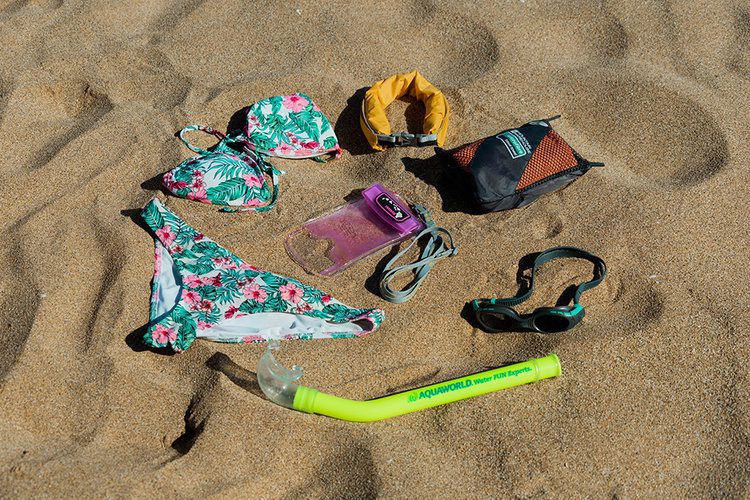
Snorkel and goggles
Pretty much all snorkel tours will provide you with snorkel gear, some even let you keep it! Thanks to our snorkel tour with Aquaworld Cancún, we now have our own snorkels. I always travel with my goggles because I cannot open my eyes under water without wailing in discomfort. Of course snorkel goggles are better, but they’re bulky and I’m trying to save space.
Swimsuit
Yes, I know, obvious, but you don’t want to forget it, so it’s on the list. Plus if you’re like me and want multiple photo opportunities, you’ll want options.
PFH Top Tip: Do your research for the area you’re swimming. Some reefs are cold even in summer so think about wearing a surf suit or bringing a rash guard. If you’re surfing for the first time, check your company provides them, if not you’ll want one because my legs still have a board rash nine days later, God only knows what my top half would look like without a rashy.
Towel
Packing a microfibre towel is a game changer! They’re compact so they take up absolute minimal space compared to the days where you’d be stuffing in a borrowed hotel towel. You can also wear them as a sarong and bonus, they dry really quickly!
Dry bag
For keeping things dry on the boat and putting the wet stuff in when you’re done! This was one of the best travel gifts I have been given. I use it on pretty much every trip.
Waterproof camera/phone case
I picked up one of those waterproof phone pouches in Maui so I could record the whales singing, it cost about $20 but I’ve found one on Amazon that will do the same thing for much less. We actually have an underwater camera case if we’re doing a more professional shoot, but this one is so handy for just taking out to sea to keep my phone at hand and our hotel key card.
It was really useful when we went whale watching because I could keep my phone dry on the way out so it was ready to use when we stopped.
.
Of course this packing guide is quite extensive and covers a variety of activities, so just adapt it to whatever you’ll need. I use it every evening before an excursion to make sure I don’t leave anything important behind.
.
Aloha, Gabriella
Pin this post
.
*Disclaimer: As an Amazon Associate I earn from qualifying purchases, but please know everything I recommend comes from my own personal use.