Tag: Wales

  • 6 top things to do near the Gower Peninsula, Wales

    6 top things to do near the Gower Peninsula, Wales

    The Gower Peninsula is the UK’s first ever Area of Outstanding Beauty (awarded in 1956) and is best know for its enormous beaches, celebrated surf and wild sea life. Whilst there’s so much on offer on the Gower Peninsula, here’s 6 things to do there that will get you started during your time near some of the best rated beaches in the world.

    Our trip to the Gower Peninsula in Wales was my first trip outside of England since the start of the pandemic and was a welcomed break from London that served up both clean air, countryside and the seaside. The Gower Peninsula, just 4 hours from London by car – all things considered that’s not a bad amount to time to get to another country – is an ideal place to unwind, rest and reset before falling back into the hustle and bustle of London.

    Though our trip was just a quick 4 day break (travel included) we managed to cover some pretty key points of interest on the Gower Peninsula including a tidal island, secluded beach, sunflower field and dinner looking out to sea at sunset. We even managed to stop at the capital city of Wales: Cardiff. Here’s my 6 highlights for things to do near the Gower Peninsula in Wales.

    1. Rhossili | Rhosili

    Rhossili is a tiny village on the far west tip of the Gower Peninsula best known for its world famous beach, incredible surf, tidal islands, 250ft cliffs dressed in heather, sunflower field and breathtaking winter sunsets.

    Parking at Rhossili

    Rhossili Bay Car Park is a National Trust car park and is free to members. If you are not a member of the National Trust parking fees are as follows:

    £2 for 2 hours or under

    £6 for over 2 hours

    £4 for 2 hours or under and £6 for over 2 hours for motorhomes (overnight camping is not allowed)

    If there is one place you visit on the Gower Peninsula it is Rhossili, it was the reason we chose to travel to Wales from London on our summer 2021 staycation. Here’s why:

    Rhossili Bay | Rhosili Bae

    Rhossili Bay beach is a 3 mile (5km) long beach that has been voted by Trip Advisor as one of the top 10 beaches to visit in the UK for 8 consecutive years (2021). If a heatwave is forecast in the UK then Rhossili should be your lead destination because this enormous beach won’t have you fighting for room to spread your towels. Even at high tide the remaining beach is still about 10 metres wide which is a pretty big deal because so many top holiday beaches in the UK get covered during high tide.

    Speaking of the tide, low tide reveals the scarce remains of Helvetia, a wooden cargo ship that ran aground way back in 1887. Though it’s really not much to see, what does protrude up from the sand resembles the jagged jaws of a colossal shark.

    Though the best views of Rhossili Bay beach are from the village cliffs that tower 250ft (76m) above, they’re also where the car park is located which means a trek must be made down and back up to enjoy Rhossili beach. This walk will take about 15 mins or more each way. If you have any concerns over accessibility then you can still enjoy the view from the coastal path that runs along the beach to Worms Head. The cliffs are plenty wide enough to set up for a picnic and in my opinion offer a far superior view than you would get from Rhossili Bay beach.

    Rhossili Sunflowers 

    If you’re visiting Rhossili between July and September during a warm summer then you’ll be able to see sunflowers on the Vile. Though if it has been a particularly cold spring they might not bloom until August and if the summer hasn’t seen much sunshine they might reach the end of their season in late August.

    We visited at the end of August in 2021 and the sunflowers were definitely on their last legs but we were still able to capture these photos within them so there’s still hope of a pretty visit even if it hasn’t been the warmest of summers.

    Rhossili Sunflowers is about an 8-10 minute walk from Rhossili Bay car park along the cliff towards Worms Head.

    If you’re visiting with children then perhaps engage with the Gruffalo trail through the sunflowers to entertain your youngsters.

    Once you’ve wondered through the yellow giants pick up a treat from Rhossili Sunflower’s pop-up café which sells all sorts of baked goods fresh from the village bakery. Snacks include salted caramel and Eton mess doughnuts, Welsh Cakes and muffins.

    Ticket costs for Rhossili Sunflowers

    £2 per person ticket cost which includes one sunflower which you can pick from the sunflower field at the back.

    Worms Head causeway

    Worms Head is one of two tidal islands at Rhossili that can only be accessed within a slim five hour window that straddles both sides of low tide. 

    To make the journey across from Rhossili Point to Worms Head tidal island you will need to trek across Worms Head causeway which is basically just one giant trip hazard that links the two points of land. It’s quite the adventure though if done swiftly but safely in sturdy shoes with a good tread. Avoid the rocks with green seaweed on them unless you want to slip like a cartoon on a banana peel.

    Allow yourself breaks to gaze into the rock pools that emerge as the tide recedes revealing shrimp, beadlet anemones, sea snails and more.

    Though it’s important to look where you’re going to avoid slipping, keep looking up so you can navigate the best path across the causeway. Some parts are more even than others.

    PFH Top Tip: to give you the most amount of time to make the return trip you want to start from the base of Rhossili Point. Don’t include the walk from the car park within the five hours to cross as the walk from the car park to the start of the causeway is between 20 – 30mins.

    Check the tide times before planning to cross Worms Head causeway.

    DO NOT cross the causeway close to high tide, the rip tide is extremely dangerous.

    Once on Worms Head island you can head up to its peak to look back at Rhossili Bay and make the short hike over Devil’s bridge, a natural rock bridge that has formed towards the end of the island. On a warm day you might be lucky to spot the odd seal below baking in the glow of the sun.

    2. Langland Bay

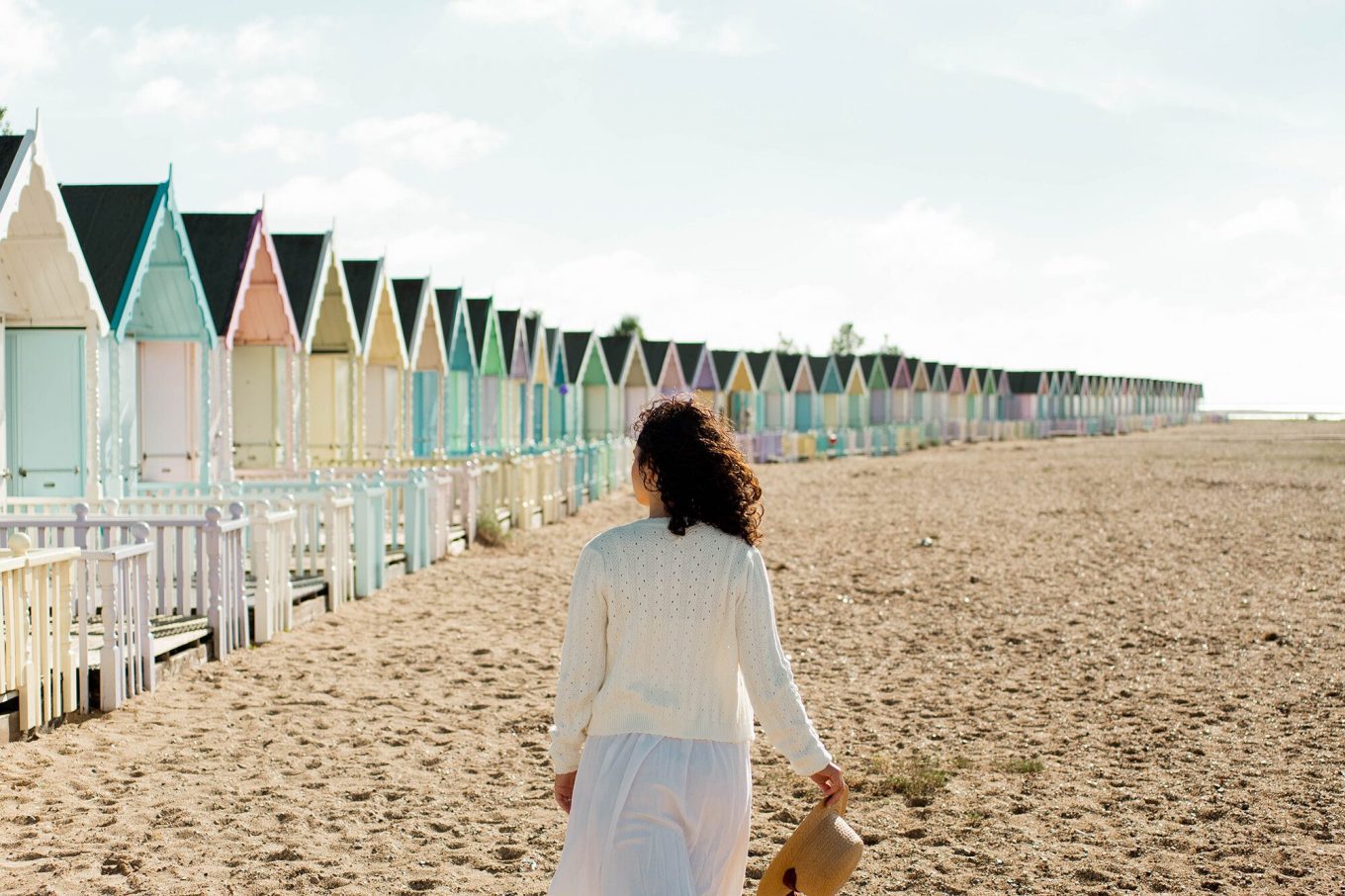
    Start one of your days visiting the Gower Peninsula with a morning spent at Langland Bay beach. Langland Bay is a Blue Flag beach along the Gower coastline and is best know for its row of picturesque green and white beach huts that line the bay and as a popular surf destination when there’s a good swell.

    Langland Brasserie is a beautiful spot for brunch with a good selection of meat, vegetarian and plant-based/vegan meals that can be enjoyed from either inside or on their terrace – both offer a view of the bay.

    Parking at Langland Bay

    Langland Bay car park is a council parking lot located just above the beach behind Langland Brasserie. The beach is accessible from the car park by steps or the slipway. Parking costs are:

    £1.50 for 1 hour

    £3 for 2 hours 

    £5 for all day parking

    3. Hike to a secluded beach

    There are more walking trails on the Gower Peninsula than you can shake a stick at and we definitely had more on our list than we had time for. After spending the morning at Langland Bay we drove to Three Cliffs Bay to walk to the beach and across to Tor Bay, a secluded beach at high tide but accessible from Three Cliffs beach during low tide.

    Three Cliffs Bay

    Three Cliffs Bay is located in the south of the Gower Peninsula. The bay gets its name from the three peaks formed into the sea cliffs that protrude out across the beach. The three cliffs resemble razor sharp teeth and are instantly recognisable on the walk down from the car park where the trees open up to reveal majestic views of the beach.

    See under parking at Three Cliffs Bay below for how to gain access to the beach from the car park.

    Unfortunately neither of these beaches can be accessed by wheelchair.

    Parking at Three Cliffs Bay 

    There is no access directly to the beach at Three Cliffs Bay. The closest car park is Three Cliffs Bay Holiday Park. 

    Parking is £4 per car and lasts all day.

    Get access to Three Cliffs Bay beach by taking the narrow country road opposite the entrance to the holiday park car park. When you reach the end of this road make a left through the wooden gate, a right at the Three Cliffs Bay signpost and follow the trail down to the beach. The walk will take about 15 minutes.

    Reward yourself after your hike with an ice cream from their onsite shop.

    Tor Bay 

    Tor Bay is a beach that come high tide becomes closed off to the two much larger beaches that sit either side of it that usually give access to the bay over the sand when the tide is out.

    At low tide Tor Bay no longer becomes secluded and can be accessed from either Three Cliffs Bay or Oxwich Bay via the beach. 

    Hikes around this area vary depending on how you’re feeling. You can either fill a couple of hours by starting at Three Cliffs Bay Holiday Park, walking down to the beach, across to Tor Bay and up to the cliff top where a path will circle you back to Three Cliffs Bay Holiday Park. If you’re looking for something more meaty at low tide you can continue on the beach from Tor Bay to Oxwich Bay and return along the cliffs. Either way I recommend walking the cliff path back as it offers wonderful views of the bays below. Though we weren’t lucky enough to see them it is possible to spot dolphins, porpoises and basking sharks chilling in the bays along this part of the coast.

    Keep an eye out for starfish and urchins in the rock pools as the tide recedes on your walk!

    4. The Mumbles

    The Mumbles is a seaside district at the very start of the Gower Peninsula, known particularly for its 1700s lighthouse and 1800s pier. Make a stop in Mumbles to explore its quaint little shops including The Lovespoon Gallery which holds a collection of Welsh lovespoons. Lovespoons are hand carved spoons from one single piece of wood with shapes that hold different meanings surrounding affection. The tradition of gifting them to a love interest in place of flowers or a love letter began back in the 1500s.

    There are many places to dine in Mumbles one of which is Castellamare, a restaurant and café that has a view right over the water that’s best enjoyed during sunset on a clear night.

    5. Clyne Gardens

    Clyne Gardens is a free park located in Mumbles, between Mumbles Pier and Swansea and is open 24/7. The gardens are best know for a beautiful collection of rhododendrons and the hilltop view of the beach.

    The peak bloom for the rhododendrons is between March and June but some varieties such as their blue azaleas bloom from late summer to early winter.

    Aside from their rhododendrons Clyne Gardens has a collection of national plants with something special in bloom every season so theres’ always something to see including the tallest recorded Magnolia in Britain.

    Golden hour in summer is a particularly special time to visit, especially when taking a stroll along the Parkland Trail past some truly gorgeous flower beds. A downloadable map of trails with notes on accessibility can be found on the swansea.gov website. 

    Clyne Gardens is dog friendly if you’re visiting with your pup.

    Parking for Clyne Gardens

    Clyne Gardens car park with limited spaces including some disabled bays can be found at the entrance to the gardens. You’ll have better luck getting a space to park on Westport Avenue, just off Mayals Road. From Westport Avenue you can enter Clyne Gardens just around the corner on Mayals Road.

    6. Cardiff | Caerdydd

    Cardiff is the only place on this Wales travel guide that isn’t on the Gower Peninsula but it’s only a 1.5 hour drive from Swansea near Gower. Making a day trip to Cardiff from Gower is a great way to experience the capital city of Wales whilst still staying in a beautiful part of the Welsh countryside (area of outstanding natural beauty to be precise). Cardiff is also super easy to visit on the way to or from England if you are crossing the River Severn to enter or leave Wales. This is what we did, stopping in Cardiff for the morning on the way back to London from the Gower Peninsula.

    As I mentioned, Cardiff is the capital city of Wales and is located on the south coast of the country, less than an hour away from the England-Wales border.

    As we were only stopping in Cardiff for the morning we only had time to visit a couple of spots:

    Cardiff Central Market | Marchnad Caerdydd

    Cardiff Market is an indoor market within the castle quarter. Within this original Victorian building you’ll be able to shop fresh produce from butchers, bakeries, fishmongers, florists, cheesemongers and delicatessens as well as eat in at food stalls. You can pick up a granny cardigan or two or even purchase wool from the haberdashery to make your own one! 

    My food stall recommendations in Cardiff Market are:

    The Naked Vegan

    The Naked Vegan is an award winning vegan bakery offering sweet and savoury plant-based treats. We highly recommend their doughnuts, doozies and pastel de natas (Portuguese tarts).

    The Naked Vegan has two stalls in Cardiff Market: one on the ground floor and the other on the mezzanine. 

    Bull Terrier Café

    The Bull Terrier café is a greasy spoon located on the mezzanine floor in Cardiff Market. It’s as humble as British cafés come; tea is served in mugs, the crockery doesn’t match and the closest member of your 5 A Day is the tomato that comes with your fry up. It’s no frills comfort food that’s cheap and hits the spot every time. Bliss.

    Cardiff Bay

    On a nice day you can take a leisurely stroll from the city centre to the waterfront where you’ll find restaurants, the Giant Wheel and boat rides out from Mermaid Quay to Steep Holm nature reserve and the surrounding coast.

    t will take about half an hour to walk from Cardiff Market to Cardiff Bay.

    Cardiff Bay’s Giant Wheel ticket costs

    £5 per adult 

    £4 per child

    Under 3 year olds go free

    PFH Fun Fact: Turn the wheel in the middle of the carriage to rotate it for a 360° view of the bay.

    If you have any recommendations for what to do near the Gower Peninsula let me know in the comments and drop a comment if you found this travel guide useful.

    Do more on & for the planet, Gabriella

    Pin this post


  • A guide to spending the day at the British seaside

    A guide to spending the day at the British seaside

    Well it’s not quite the Great British Summer we were expecting for 2020 but it won’t be like this forever! Let’s make the most of what we have left of the summer and then this little guide will still be around for years to come when you (whether you live in the UK or plan to visit) can spend a classic day at the seaside doing all the things that make summer by the seaside the quintessential pastime that it is.

    I wanted to put this guide together for anyone coming to a British seaside town for the first time, so that you can spend the day doing all of the classics that so many Brits have enjoyed for years. 

    Fun Fact: The day below is my ultimate date plan. My favourite days spent with Michael at home are doing exactly what I’ve listed below. I don’t (always) need a fancy dinner, just give me a handful of 2ps for the arcade and chips swimming in vinegar and I’m on cloud nine.

    Find a spot on the beach

    The goal here to is arrive early to nab a good spot and then spend an almost absurd amount of time there; I’m talking hours. You don’t want to leave until sand is everywhere: hair, mouth and even your bits. If sand isn’t washing out of your crack in the shower at the end of the day, you didn’t stay at the beach long enough. 

    Things to do on the beach:


    • Read a book


    • Make a sandcastle


    • Do a beach clean (and dispose of the rubbish/trash responsibly)


    • Swim in the sea, even if it’s a little chilly


    • Bodyboard, paddle board or surf


    • Rock pooling (discover the sea life living in the rock pools during low tide)


    Things you might want to consider bringing with you for a day at the British Seaside:


    • A windbreaker


    • Collapsible camping chairs


    • A net


    • A bucket and spade


    Please either keep hold of your bucket and spade to reuse and if you don’t want to travel with it, please hand it to a family so that their kids can use them. NEVER leave your bucket and spade on the beach, the tide will carry them out to sea and it will pollute the ocean and could kill marine life.

    THIS IS VERY IMPORTANT: Check the tide times before you plan to go. Having worked in a little café on the beach for 9 summers when I was younger, if I had a penny for every time a tourist asked me where the beach was I wouldn’t have had to work as a waitress for 9 years! Many beaches will be covered during high tide so check the tide times for your beach of choice online. 

    High tide: the sea has come in and is covering the beach.

    Low tide: the sea has gone out and the most amount of beach is uncovered.

    Please make sure you drink plenty of water and regularly apply suncream. Pay attention to signs on the beach that indicate safe swimming areas/rip tides.

    For a packing guide for a day at the beach, check out my blog post: what’s in my beach bag.

    Fish & Chips for lunch

    If you’ve read my blog post, Traditional British meals every traveller needs to try then you’ll know that fish and chips is one of my favourite meals of all time. I cannot go too long without fish and chips, fish and chips is life. If you’re vegan, drop the fish and just go with the chips, many places will fry in veg oil, but check in advance.

    Check out my blog post Traditional British meals every traveller needs to try to read about your different condiment options.

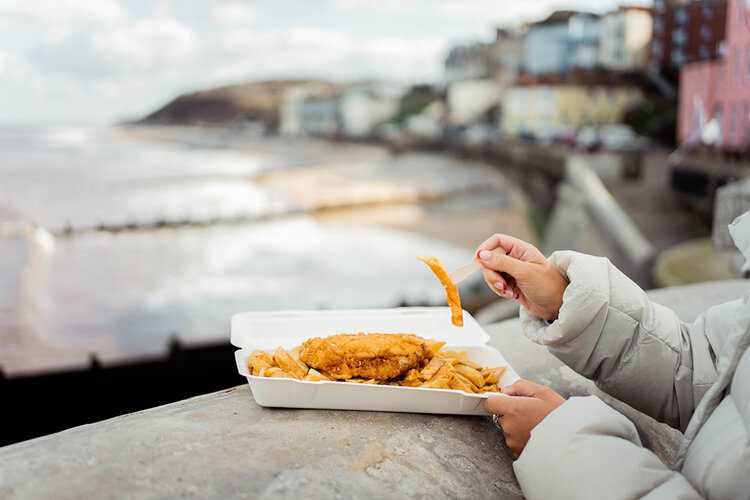
    When getting fish and chips on a day at the beach, you’ll want to get to the chippy before 12pm or later in the afternoon to avoid queues longer than Brighton pier. Get them open (rather than wrapped) so you can add your own salt and vinegar, then head back to the beach. Yes you’re probably going to get sand in your chips, but that’s part of the charm. 

    PSA: Beware of the seagulls!

    Visit the local shops

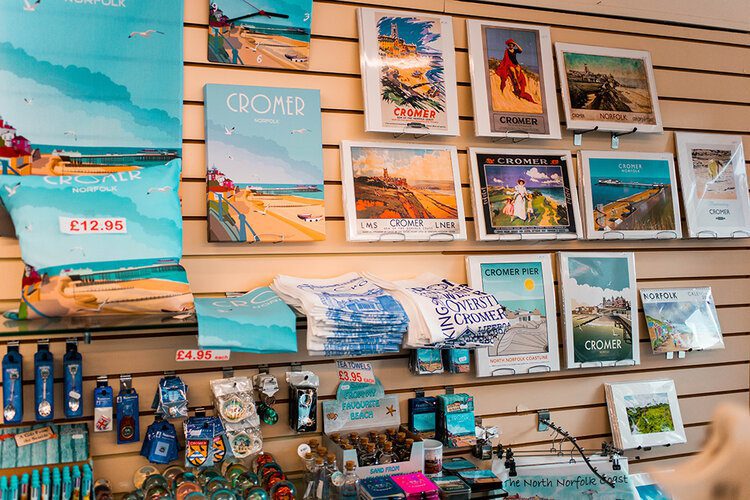
    No trip out is complete without a souvenir of the day. With so many locally made options, it would be a shame to leave the seaside with a standard trinket over a unique-to-the-area souvenir. For example, when visiting the Norfolk seaside, you absolutely must pick up something made with Norfolk lavender or when in Brighton or Blackpool you can’t leave without a stick of rock (hard candy).

    Spend purposefully not mindlessly and support local businesses.

    Enjoy a 99 Flake ice cream

    Ice cream comes after the shops because many won’t let you in with food and drink… it’s fair, I’ve been both the customer who accidentally dropped their ice cream and the shop assistant who has had to clean up the ice cream off the floor, so shop then eat.

    Unless you have allergies – in which case you can get an ice lolly, sorbet or ice cream in a pot – the only ice cream you should be eating at the seaside is a 99 ice cream. But Gaby, what on earth is a 99 ice cream? It’s a soft whip vanilla flavoured ice cream that should be (but isn’t always if you’re being served by a teenager) delicately swirled into a wafer cone (that tastes like nothing but it’s not the same without it) and then penetrated by a Cadbury’s chocolate Flake (a crumbly chocolate stick that falls apart when you try to eat it). Honestly it’s the basic bish of British ice-cream but summer just wouldn’t be the same without it.

    Contrary to popular belief, a 99 Flake ice cream didn’t get its name from its price but unfortunately no one really knows why it is called a 99 flake, 99 or ninety-nine. The true origin has been lost in time with many people claiming to be the first to snap a Cadbury’s Flake in half and stuff it in an ice cream. Origin stories cover tributes to the First World War, cricket, Italian Royalty and shop addresses. Either way, not knowing why it’s called a 99 Flake ice cream is part of the charm.

    Ideally you want to purchase your 99 Flake ice cream from an ice cream van with copyrighted cartoon characters with slightly askew features. Ice cream van jingles are the sound of summer!

    Play in the seafront arcades

    In the days before we all carried around copious amounts of hand sanitiser, I would make sure eating our ice cream came before going to arcades, because there’s nothing sanitary about handling decades worth of copper pennies and then eating with your hands.

    The arcades is one of my favourite parts of the day, it’s good fun with minimal effort and provided you don’t get carried away, it doesn’t cost much. 

    The most classic machine to play is the 2p slot machine. Not just any 2p slot either, you want the one that looks like this one in the photo, where there’s a whole platform pushing coins rather than rickety old arms that barely push the coins anywhere. This machine will give you your best chance of getting more coins back.

    Your technique should be to drop your coin as the top shelf is drawn in, so that by the time it lands, the shelf is all the way out, then when it draws back in again, the coin will push other coins froward and hopefully off the shelf. 

    The goal of these machines is to win something crappy that’s hanging off the edge but if it’s not something you’ll use, either play for the fun of it or even give it back to prevent contributing to waste (because really, these prizes are naff, except for the time I won a High School Musical pen, I still have that). Many arcades offer tickets/tokens that you can collet to buy better toys, but really you’ll only collect enough for some sweeties/candy.

    To manage your spending at the arcades, don’t change up more than £5 of 2ps. Honestly you can get your kicks on a couple of pounds and anymore than £5 you should have just spent it in one of the local gift shops instead. There will be various change-maker machines around the arcade but if you have notes, take them to the counter to be changed up.

    Playing 2p slot machines in the arcades at the seaside is a simple pleasure in life that I think everyone should experience, if possible.

    Grab a pint from the pub

    After a long day at the seaside, it’s really only logical to end it with a cold pint, or something equally classic such as a Pimm’s No.1 Cup or a G&T, at one of the local pubs. 

    If you don’t drink alcohol, don’t worry, this isn’t quite so much about drinking as it is socialising and taking a pause to savour the day you’ve just had at the beach before leaving. Whether it’s a pint of local ale or lemonade, take it out into the beer garden and enjoy what’s left of the sunshine before it dips below the buildings.

    If you are drinking an alcoholic beverage, firstly drink responsibly, and second try a locally brewed beer, cider or gin.

    .

    Gabriella

    Pin this post
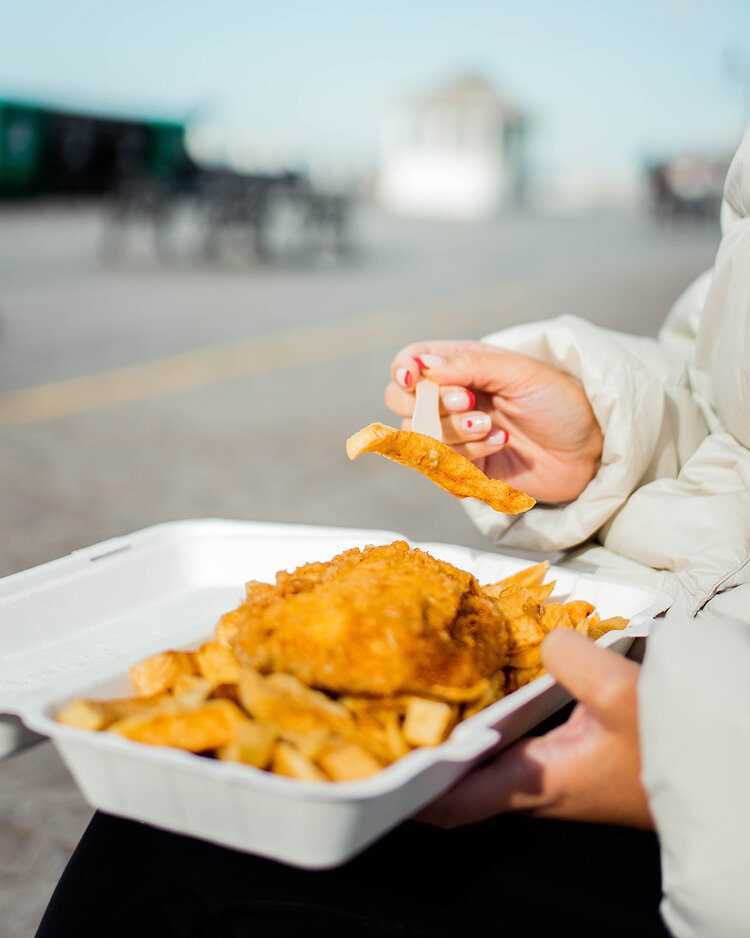


    .

    If the photos are confusing it’s because I had originally started shooting this content back in February 2020 (pre-pandemic) for something else, hence the winter gear but I guess it shows you can do ALL of this no matter what time of year it is.

  • Traditional British meals every traveller needs to try

    Traditional British meals every traveller needs to try

    For all the times I have recommended street food and national dishes all around the world, I haven’t once thought about recommending what tourists visiting the UK should try, until now that is! 

    As a generally cold and wet country, our food tends to be on the stodgy and comfort side, focusing on potatoes and meat that can keep us warm, some of our favourites being bangers and mash (that’s sausages and mashed potatoes), cottage pie (no pastry involved) , shepherds pie (still no pastry involved) and actual pie with pastry involved. Don’t even get me started on the desserts! There’s trifle, crumble, Eton mess, jam roly-poly, summer pudding, sticky toffee pudding, bread and butter pudding and spotted dick (no dick’s involved) – oh yes, we do dessert very well here.

    Amongst all of those extremely delicious delicacies, there’s five things that every traveller absolutely must eat when visiting Great Britain:

    1. Fish and Chips

    Let me start off with a public service announcement before going any further – if you are North American, in the UK chips are not potato chips, those are known as crisps, chips are fries but chunkier, fluffier and better! Don’t get me wrong, I love fries, but fries are fast food, guilty pleasures, ordered as a side… chips however, chips are life!

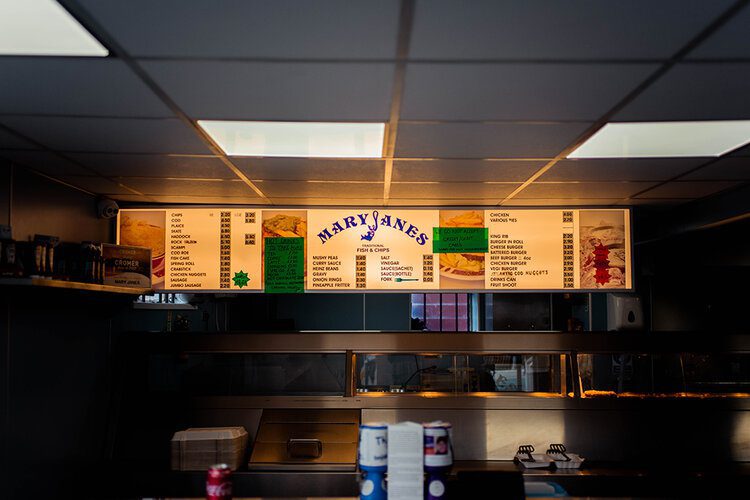
    You order fish and chips from pretty much any restaurant in the UK from The Ivy to any old pub, but the best place to go is a local “chippy” either to eat in or take out. Very few foods bring me as much joy as when I unwrap my greasy paper to reveal more chips than I can physically eat and a piece of fish bigger than my head – challenge accepted!

    The great fish debate has been going on in households since the dawn of time (or at least fish and chips), and really your choice of fried fish comes down to personal taste. Your options for the most part are:


    • Cod


    • Haddock


    • Plaice


    • Skate


    Alternatives are: fish cakes, scampi a battered sausage or chicken nuggets (a firm favourite with kids).

    There are three basic sides to fish and chips: pickled onions, pickled gherkins and mushy peas. I don’t know why, I don’t ask why, I just eat them and they taste good. 

    As for sauces, these tend to be a little more regional but they’re usually all available:


    • Curry sauce (which bares zero resemblance to curry but is amazing)


    • Gravy (that’s a northern thing)


    • Tartar sauce (that’s a posh thing)


    • Ketchup (standard)


    The seasoning though is the most important part: salt and vinegar. Chips without salt and vinegar is like Sonny without Cher, Thelma without Louise, Burt without Earnie, LIFE WITHOUT AIR! They are what bring together this all time favourite meal of the British public. If you’re eating fish and chips in a pub or restaurant you will also be given a wedge of lemon for the fish.

    Traditionally fish and chips is eaten on a Friday.

    2. Sunday roast

    A Sunday roast with all the trimmings is probably the British public’s favourite meal. It is synonymous with family and is a big home comfort for all Brits. Traditionally it is homemade but the alternative is to go to a pub for a carvery which is a buffet served roast. It’s called a roast because the meat and half of the trimmings are roasted, your meat options will be:


    • Chicken


    • Beef


    • Lamb


    • Pork


    • Turkey (reserved for Christmas)


    The basic trimmings are:


    • Roast potatoes


    • Carrots


    • Parsnips


    • Yorkshire puddings


    • Stuffing


    • Gravy


    Everyone has their own veg favourites so there could be additional ones depending on where it’s being served.

    Condiments vary depending on the meat, Horseradish goes with beef, mint sauce goes with lamb, apple sauce accompanies pork and cranberry sauce enhances turkey. Chicken has been in a long-term relationship with gravy for so long that when you invite one the other comes too, chicken has no sauce on the side. Some people might serve bread sauce – a medieval sauce made from bread crumbs, butter and milk – but it isn’t a popular choice despite what Michael might tell you.

    As a tourist visiting who hasn’t been invited into someone’s home for a Sunday roast, you can get one from virtually any pub on a Sunday. It’s not limited to Sunday but traditionally it’s eaten on a Sunday for lunch or dinner so Sunday will be your best bet.

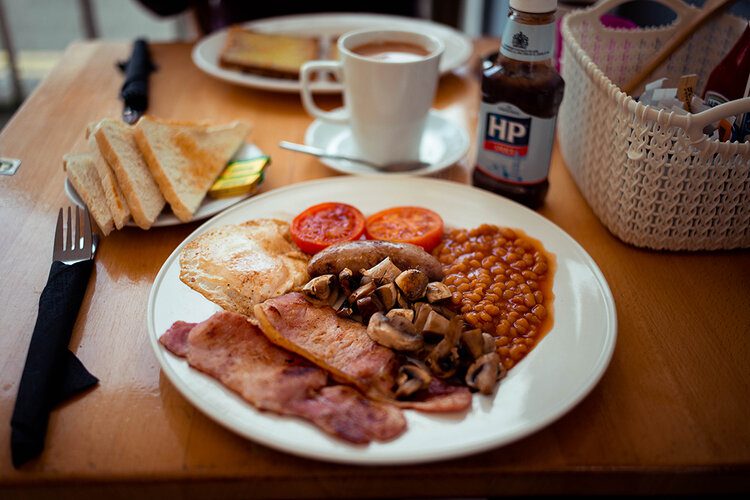
    3. Fry up

    The fry up, otherwise known as a “full English”, is the quintessential British breakfast. Some ingredients change between England, Ireland, Scotland and Wales but the following staples stay the same:


    • Fried egg


    • Fried tomato


    • Fried mushrooms


    • Bacon


    • Sausage


    • Baked beans


    • A round of buttered toast


    Black pudding is another core ingredient but is an acquired taste so it’s usually an add on.

    Top off your fry up with a squirt of HP Brown sauce, a blob of ketchup and a sprinkling of salt and pepper and you’re ready to tuck in.

    When I was working with children in Paris, the eight year old I was caring for came running across the playground when I was picking her up, looked up at me with disgust and said, “do you English really eat all that meat for breakfast every morning?” – eventually I worked out that she had just learnt in her English class that day about English food and our fry up. I’ll never forget the look on her little face! No we don’t eat a fry up every day or we would be dead in the ground in our 40s! A fry up is predominantly reserved for a lazy brunch or hangover cure.

    You can get your fry up at any greasy spoon café serving fried food and any restaurant or pub open for breakfast/brunch. Your most authentic experience will be in a greasy spoon: an ever so slightly run-down and very cheap café.

    4. Afternoon tea

    Unlike everything listed above, afternoon tea is on the fancy side of Brit favourites and thanks to social media has become a true experience meal rather than just a slightly extra way to eat cake before dinner.

    Afternoon tea is known to north Americans as high tea but they aren’t traditionally the same thing. Take a look at this blog post 

    PFH Fun Fact: though north Americans call afternoon tea “high tea”, they aren’t actually the same thing. Afternoon tea originates from the upper classes and royalty as a meal to satisfy the hunger that occurred between lunch and dinner, whereas high tea originates from the working class who didn’t have long afternoons to spend eating cake and ridiculously small sandwiches because they were well, working, so they had something to eat much later in the day and far more substantial than cake after a hard day’s work.

    A traditional afternoon tea consists of:


    • Finger sandwiches (luckily we have progressed past plain cucumber)


    • A selection on mini cakes and pastries


    • Fruit and plain scones served with jam and clotted cream


    • Tea (expect an extensive list)


    Almost everywhere will give you the option to pimp up your afternoon tea with prosecco or champagne, this is known as “Royal tea” and may concur an additional cost.

    There is a certain etiquette to afternoon tea so listen up kids:


    1. The dress code is “smart casual” unless stated otherwise. Use it as a chance to dress up


    2. Place the napkin on your lap


    3. Before pouring your tea, place the strainer over the tea cup so the tea leaves don’t enter your cup


    4. Hold down the lid of the tea pot as your pour


    5. Do not drop your sugar lumps in, place them


    6. Never bash your tea spoon on the side of the tea cup when stirring


    7. NEVER put your pinky in the air, that is not a thing


    8. Do not dunk anything into your tea (do this behind closed doors and only with a sturdy biscuit)


    9. Eat your sandwiches first, with your fingers not cutlery


    10. Never sandwich the two halves of a scone together with jam and cream in the middle


    11. Also it’s scone like “gone” not scone like “bone”


    12. You may use your dessert fork to eat your cakes


    13. Dab your napkin on your mouth, don’t wipe


    Afternoon tea should be served at 4pm but restaurants, cafés and tearooms will generally serve between 2pm – 5pm.

    You will be able to find afternoon and cream tea all across the UK but if you are looking for the crème de la crème for traditional afternoon tea in London your top choices are:

    You will need to book in advance for all of the above.

    If a full afternoon tea seems too much, you can just order a cream tea which is scones served with jam and cream and a pot of tea. It’s the best part of the afternoon tea anyway!

    Want to create your own cream tea or even afternoon/high tea at home? Take a look at my traditional English fruit scones recipe so you can make your very own from scratch!

    .

    Apart from the fried fish, there are gluten free, vegan and vegetarian alternatives to all of the meals above so everyone can have a least one of the above! As we ever so sophisticated Brits say, “dig in!”

    Aloha, Gabriella

    Pin this post