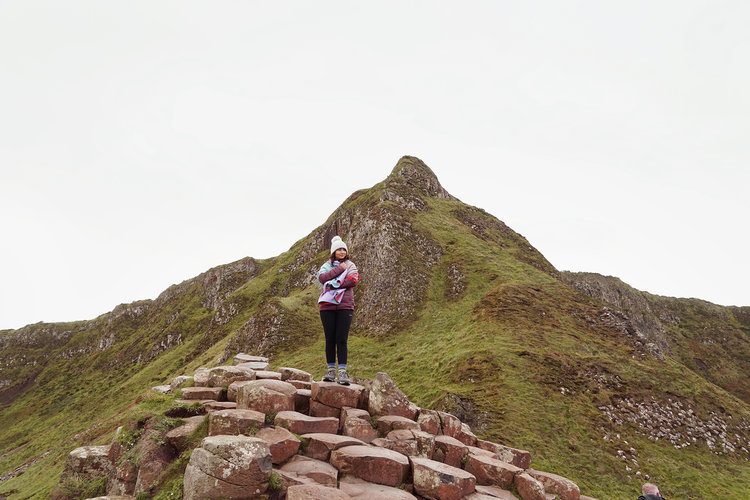
Tag: Ireland

  • A guide to spending the day at the British seaside

    A guide to spending the day at the British seaside

    Well it’s not quite the Great British Summer we were expecting for 2020 but it won’t be like this forever! Let’s make the most of what we have left of the summer and then this little guide will still be around for years to come when you (whether you live in the UK or plan to visit) can spend a classic day at the seaside doing all the things that make summer by the seaside the quintessential pastime that it is.

    I wanted to put this guide together for anyone coming to a British seaside town for the first time, so that you can spend the day doing all of the classics that so many Brits have enjoyed for years. 

    Fun Fact: The day below is my ultimate date plan. My favourite days spent with Michael at home are doing exactly what I’ve listed below. I don’t (always) need a fancy dinner, just give me a handful of 2ps for the arcade and chips swimming in vinegar and I’m on cloud nine.

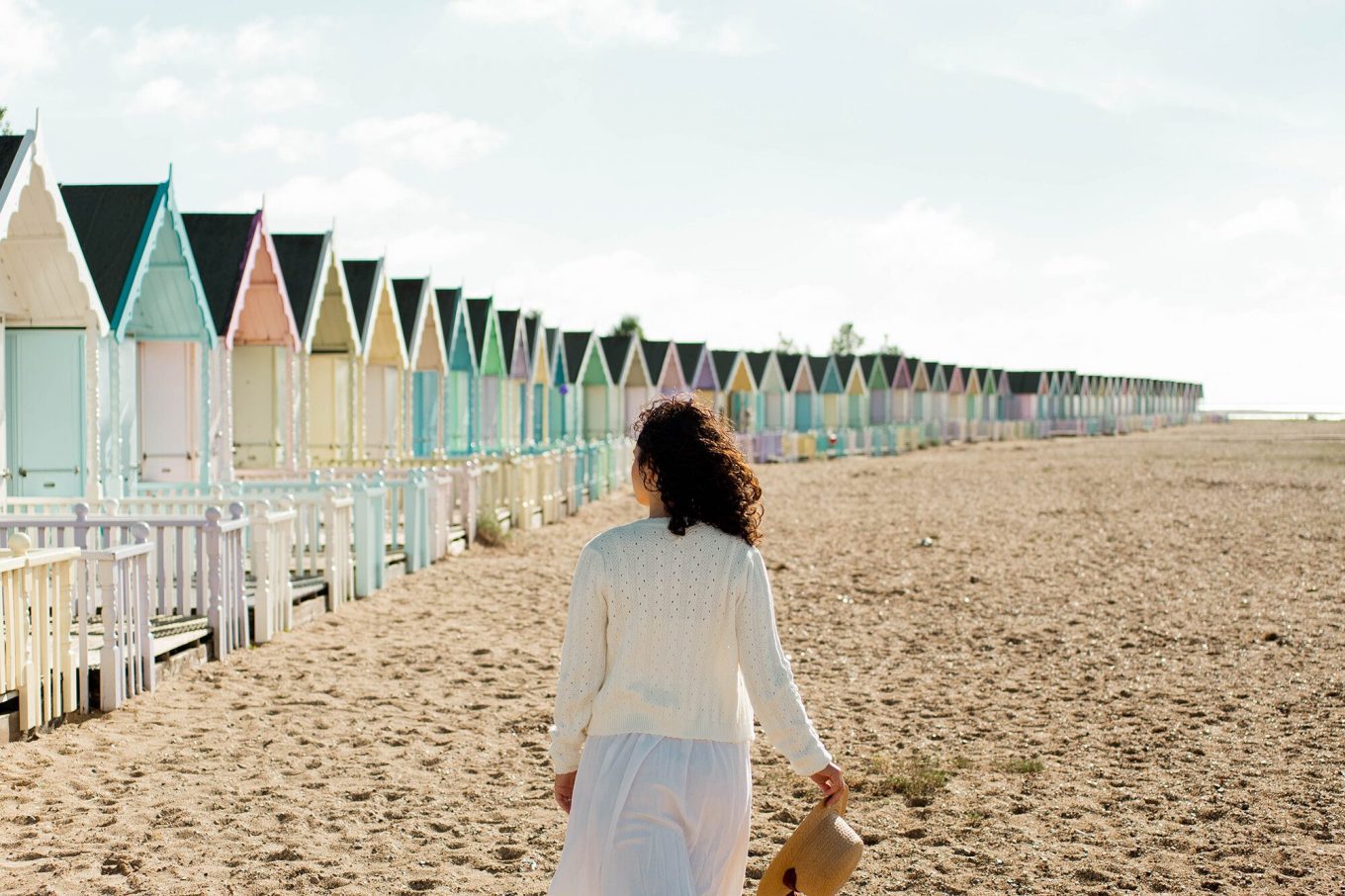
    Find a spot on the beach

    The goal here to is arrive early to nab a good spot and then spend an almost absurd amount of time there; I’m talking hours. You don’t want to leave until sand is everywhere: hair, mouth and even your bits. If sand isn’t washing out of your crack in the shower at the end of the day, you didn’t stay at the beach long enough. 

    Things to do on the beach:


    • Read a book


    • Make a sandcastle


    • Do a beach clean (and dispose of the rubbish/trash responsibly)


    • Swim in the sea, even if it’s a little chilly


    • Bodyboard, paddle board or surf


    • Rock pooling (discover the sea life living in the rock pools during low tide)


    Things you might want to consider bringing with you for a day at the British Seaside:


    • A windbreaker


    • Collapsible camping chairs


    • A net


    • A bucket and spade


    Please either keep hold of your bucket and spade to reuse and if you don’t want to travel with it, please hand it to a family so that their kids can use them. NEVER leave your bucket and spade on the beach, the tide will carry them out to sea and it will pollute the ocean and could kill marine life.

    THIS IS VERY IMPORTANT: Check the tide times before you plan to go. Having worked in a little café on the beach for 9 summers when I was younger, if I had a penny for every time a tourist asked me where the beach was I wouldn’t have had to work as a waitress for 9 years! Many beaches will be covered during high tide so check the tide times for your beach of choice online. 

    High tide: the sea has come in and is covering the beach.

    Low tide: the sea has gone out and the most amount of beach is uncovered.

    Please make sure you drink plenty of water and regularly apply suncream. Pay attention to signs on the beach that indicate safe swimming areas/rip tides.

    For a packing guide for a day at the beach, check out my blog post: what’s in my beach bag.

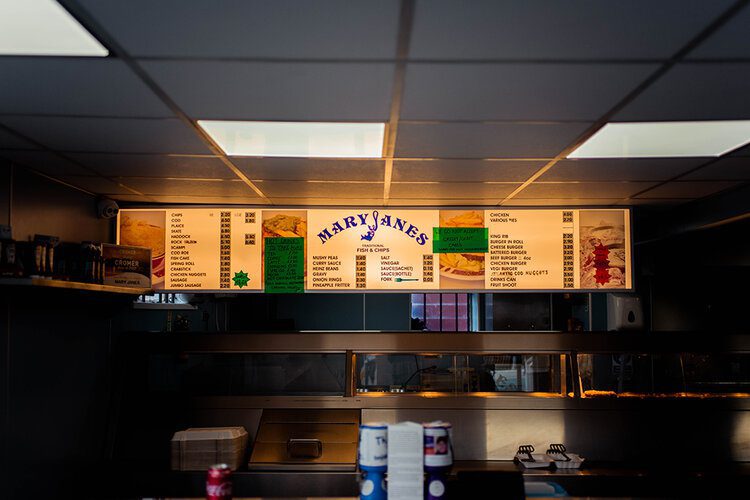
    Fish & Chips for lunch

    If you’ve read my blog post, Traditional British meals every traveller needs to try then you’ll know that fish and chips is one of my favourite meals of all time. I cannot go too long without fish and chips, fish and chips is life. If you’re vegan, drop the fish and just go with the chips, many places will fry in veg oil, but check in advance.

    Check out my blog post Traditional British meals every traveller needs to try to read about your different condiment options.
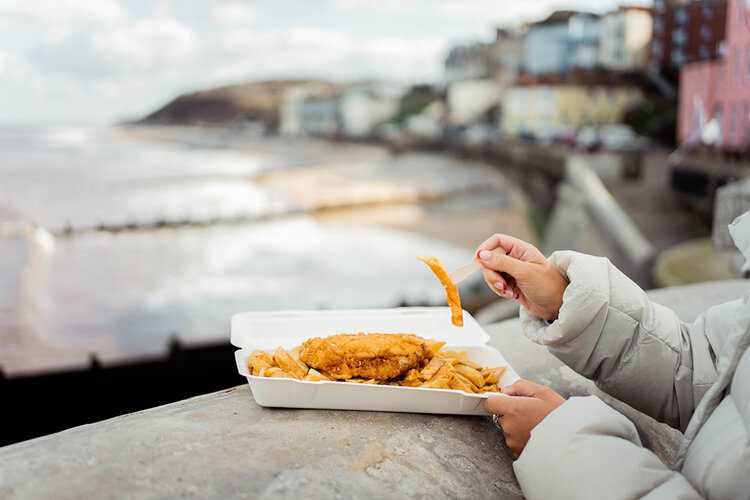
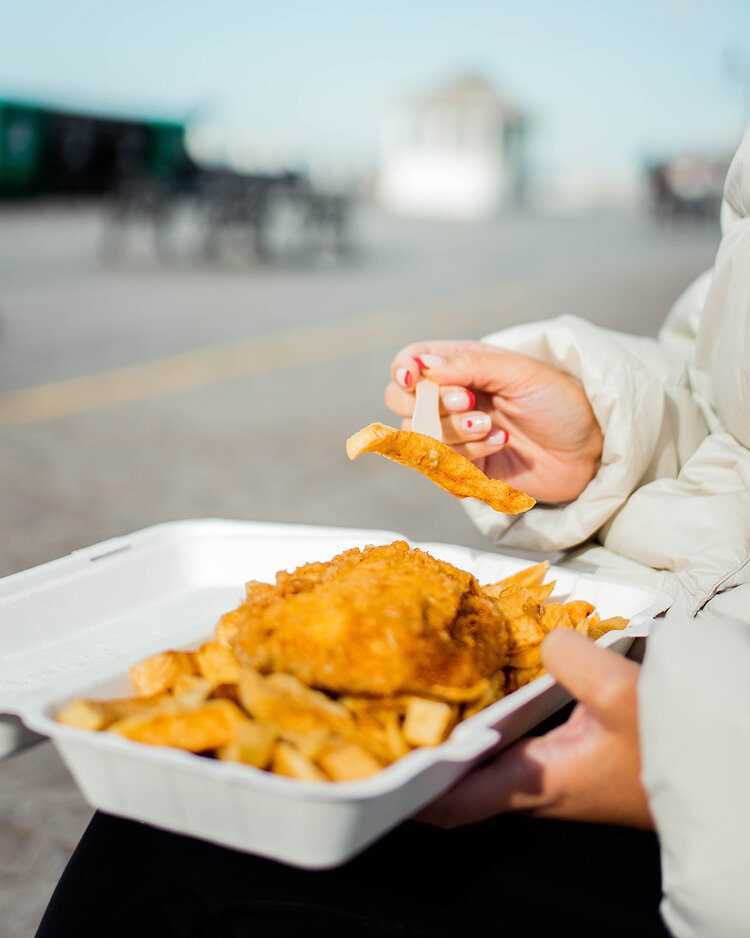
    When getting fish and chips on a day at the beach, you’ll want to get to the chippy before 12pm or later in the afternoon to avoid queues longer than Brighton pier. Get them open (rather than wrapped) so you can add your own salt and vinegar, then head back to the beach. Yes you’re probably going to get sand in your chips, but that’s part of the charm. 

    PSA: Beware of the seagulls!

    Visit the local shops

    No trip out is complete without a souvenir of the day. With so many locally made options, it would be a shame to leave the seaside with a standard trinket over a unique-to-the-area souvenir. For example, when visiting the Norfolk seaside, you absolutely must pick up something made with Norfolk lavender or when in Brighton or Blackpool you can’t leave without a stick of rock (hard candy).
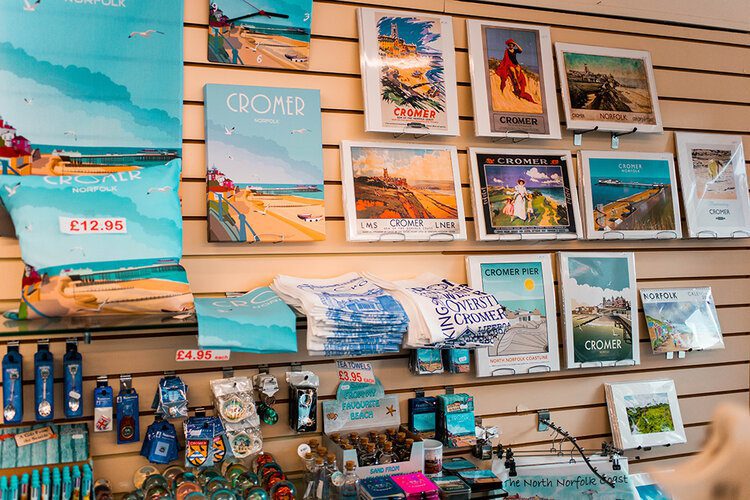
    Spend purposefully not mindlessly and support local businesses.

    Enjoy a 99 Flake ice cream

    Ice cream comes after the shops because many won’t let you in with food and drink… it’s fair, I’ve been both the customer who accidentally dropped their ice cream and the shop assistant who has had to clean up the ice cream off the floor, so shop then eat.

    Unless you have allergies – in which case you can get an ice lolly, sorbet or ice cream in a pot – the only ice cream you should be eating at the seaside is a 99 ice cream. But Gaby, what on earth is a 99 ice cream? It’s a soft whip vanilla flavoured ice cream that should be (but isn’t always if you’re being served by a teenager) delicately swirled into a wafer cone (that tastes like nothing but it’s not the same without it) and then penetrated by a Cadbury’s chocolate Flake (a crumbly chocolate stick that falls apart when you try to eat it). Honestly it’s the basic bish of British ice-cream but summer just wouldn’t be the same without it.

    Contrary to popular belief, a 99 Flake ice cream didn’t get its name from its price but unfortunately no one really knows why it is called a 99 flake, 99 or ninety-nine. The true origin has been lost in time with many people claiming to be the first to snap a Cadbury’s Flake in half and stuff it in an ice cream. Origin stories cover tributes to the First World War, cricket, Italian Royalty and shop addresses. Either way, not knowing why it’s called a 99 Flake ice cream is part of the charm.

    Ideally you want to purchase your 99 Flake ice cream from an ice cream van with copyrighted cartoon characters with slightly askew features. Ice cream van jingles are the sound of summer!

    Play in the seafront arcades

    In the days before we all carried around copious amounts of hand sanitiser, I would make sure eating our ice cream came before going to arcades, because there’s nothing sanitary about handling decades worth of copper pennies and then eating with your hands.

    The arcades is one of my favourite parts of the day, it’s good fun with minimal effort and provided you don’t get carried away, it doesn’t cost much. 

    The most classic machine to play is the 2p slot machine. Not just any 2p slot either, you want the one that looks like this one in the photo, where there’s a whole platform pushing coins rather than rickety old arms that barely push the coins anywhere. This machine will give you your best chance of getting more coins back.

    Your technique should be to drop your coin as the top shelf is drawn in, so that by the time it lands, the shelf is all the way out, then when it draws back in again, the coin will push other coins froward and hopefully off the shelf. 

    The goal of these machines is to win something crappy that’s hanging off the edge but if it’s not something you’ll use, either play for the fun of it or even give it back to prevent contributing to waste (because really, these prizes are naff, except for the time I won a High School Musical pen, I still have that). Many arcades offer tickets/tokens that you can collet to buy better toys, but really you’ll only collect enough for some sweeties/candy.

    To manage your spending at the arcades, don’t change up more than £5 of 2ps. Honestly you can get your kicks on a couple of pounds and anymore than £5 you should have just spent it in one of the local gift shops instead. There will be various change-maker machines around the arcade but if you have notes, take them to the counter to be changed up.

    Playing 2p slot machines in the arcades at the seaside is a simple pleasure in life that I think everyone should experience, if possible.

    Grab a pint from the pub

    After a long day at the seaside, it’s really only logical to end it with a cold pint, or something equally classic such as a Pimm’s No.1 Cup or a G&T, at one of the local pubs. 

    If you don’t drink alcohol, don’t worry, this isn’t quite so much about drinking as it is socialising and taking a pause to savour the day you’ve just had at the beach before leaving. Whether it’s a pint of local ale or lemonade, take it out into the beer garden and enjoy what’s left of the sunshine before it dips below the buildings.

    If you are drinking an alcoholic beverage, firstly drink responsibly, and second try a locally brewed beer, cider or gin.

    .

    Gabriella

    Pin this post


    .

    If the photos are confusing it’s because I had originally started shooting this content back in February 2020 (pre-pandemic) for something else, hence the winter gear but I guess it shows you can do ALL of this no matter what time of year it is.

  • Traditional British meals every traveller needs to try

    Traditional British meals every traveller needs to try

    For all the times I have recommended street food and national dishes all around the world, I haven’t once thought about recommending what tourists visiting the UK should try, until now that is! 

    As a generally cold and wet country, our food tends to be on the stodgy and comfort side, focusing on potatoes and meat that can keep us warm, some of our favourites being bangers and mash (that’s sausages and mashed potatoes), cottage pie (no pastry involved) , shepherds pie (still no pastry involved) and actual pie with pastry involved. Don’t even get me started on the desserts! There’s trifle, crumble, Eton mess, jam roly-poly, summer pudding, sticky toffee pudding, bread and butter pudding and spotted dick (no dick’s involved) – oh yes, we do dessert very well here.

    Amongst all of those extremely delicious delicacies, there’s five things that every traveller absolutely must eat when visiting Great Britain:

    1. Fish and Chips

    Let me start off with a public service announcement before going any further – if you are North American, in the UK chips are not potato chips, those are known as crisps, chips are fries but chunkier, fluffier and better! Don’t get me wrong, I love fries, but fries are fast food, guilty pleasures, ordered as a side… chips however, chips are life!

    You order fish and chips from pretty much any restaurant in the UK from The Ivy to any old pub, but the best place to go is a local “chippy” either to eat in or take out. Very few foods bring me as much joy as when I unwrap my greasy paper to reveal more chips than I can physically eat and a piece of fish bigger than my head – challenge accepted!

    The great fish debate has been going on in households since the dawn of time (or at least fish and chips), and really your choice of fried fish comes down to personal taste. Your options for the most part are:


    • Cod


    • Haddock


    • Plaice


    • Skate


    Alternatives are: fish cakes, scampi a battered sausage or chicken nuggets (a firm favourite with kids).

    There are three basic sides to fish and chips: pickled onions, pickled gherkins and mushy peas. I don’t know why, I don’t ask why, I just eat them and they taste good. 

    As for sauces, these tend to be a little more regional but they’re usually all available:


    • Curry sauce (which bares zero resemblance to curry but is amazing)


    • Gravy (that’s a northern thing)


    • Tartar sauce (that’s a posh thing)


    • Ketchup (standard)


    The seasoning though is the most important part: salt and vinegar. Chips without salt and vinegar is like Sonny without Cher, Thelma without Louise, Burt without Earnie, LIFE WITHOUT AIR! They are what bring together this all time favourite meal of the British public. If you’re eating fish and chips in a pub or restaurant you will also be given a wedge of lemon for the fish.

    Traditionally fish and chips is eaten on a Friday.

    2. Sunday roast

    A Sunday roast with all the trimmings is probably the British public’s favourite meal. It is synonymous with family and is a big home comfort for all Brits. Traditionally it is homemade but the alternative is to go to a pub for a carvery which is a buffet served roast. It’s called a roast because the meat and half of the trimmings are roasted, your meat options will be:


    • Chicken


    • Beef


    • Lamb


    • Pork


    • Turkey (reserved for Christmas)


    The basic trimmings are:


    • Roast potatoes


    • Carrots


    • Parsnips


    • Yorkshire puddings


    • Stuffing


    • Gravy


    Everyone has their own veg favourites so there could be additional ones depending on where it’s being served.

    Condiments vary depending on the meat, Horseradish goes with beef, mint sauce goes with lamb, apple sauce accompanies pork and cranberry sauce enhances turkey. Chicken has been in a long-term relationship with gravy for so long that when you invite one the other comes too, chicken has no sauce on the side. Some people might serve bread sauce – a medieval sauce made from bread crumbs, butter and milk – but it isn’t a popular choice despite what Michael might tell you.

    As a tourist visiting who hasn’t been invited into someone’s home for a Sunday roast, you can get one from virtually any pub on a Sunday. It’s not limited to Sunday but traditionally it’s eaten on a Sunday for lunch or dinner so Sunday will be your best bet.

    3. Fry up

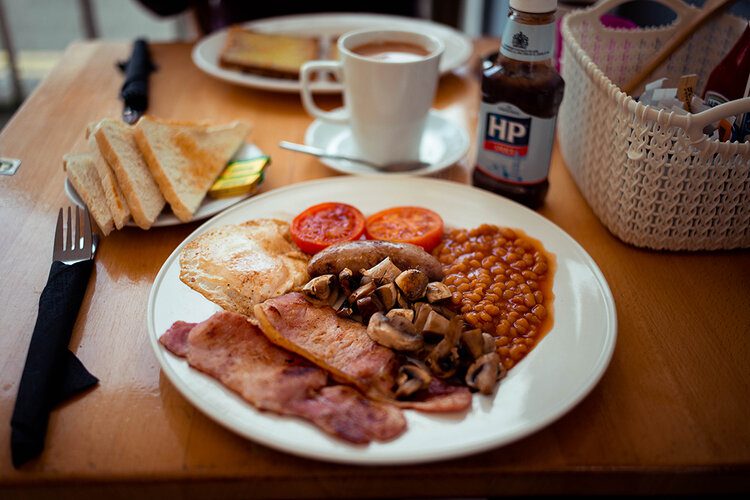
    The fry up, otherwise known as a “full English”, is the quintessential British breakfast. Some ingredients change between England, Ireland, Scotland and Wales but the following staples stay the same:


    • Fried egg


    • Fried tomato


    • Fried mushrooms


    • Bacon


    • Sausage


    • Baked beans


    • A round of buttered toast


    Black pudding is another core ingredient but is an acquired taste so it’s usually an add on.

    Top off your fry up with a squirt of HP Brown sauce, a blob of ketchup and a sprinkling of salt and pepper and you’re ready to tuck in.

    When I was working with children in Paris, the eight year old I was caring for came running across the playground when I was picking her up, looked up at me with disgust and said, “do you English really eat all that meat for breakfast every morning?” – eventually I worked out that she had just learnt in her English class that day about English food and our fry up. I’ll never forget the look on her little face! No we don’t eat a fry up every day or we would be dead in the ground in our 40s! A fry up is predominantly reserved for a lazy brunch or hangover cure.

    You can get your fry up at any greasy spoon café serving fried food and any restaurant or pub open for breakfast/brunch. Your most authentic experience will be in a greasy spoon: an ever so slightly run-down and very cheap café.

    4. Afternoon tea

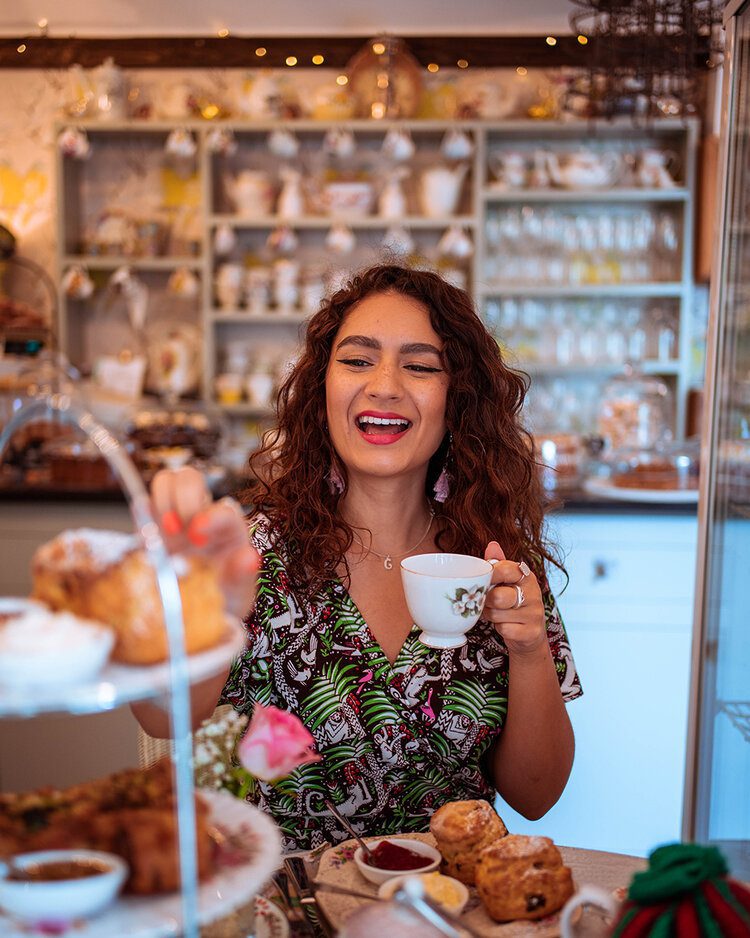
    Unlike everything listed above, afternoon tea is on the fancy side of Brit favourites and thanks to social media has become a true experience meal rather than just a slightly extra way to eat cake before dinner.

    Afternoon tea is known to north Americans as high tea but they aren’t traditionally the same thing. Take a look at this blog post 

    PFH Fun Fact: though north Americans call afternoon tea “high tea”, they aren’t actually the same thing. Afternoon tea originates from the upper classes and royalty as a meal to satisfy the hunger that occurred between lunch and dinner, whereas high tea originates from the working class who didn’t have long afternoons to spend eating cake and ridiculously small sandwiches because they were well, working, so they had something to eat much later in the day and far more substantial than cake after a hard day’s work.

    A traditional afternoon tea consists of:


    • Finger sandwiches (luckily we have progressed past plain cucumber)


    • A selection on mini cakes and pastries


    • Fruit and plain scones served with jam and clotted cream


    • Tea (expect an extensive list)


    Almost everywhere will give you the option to pimp up your afternoon tea with prosecco or champagne, this is known as “Royal tea” and may concur an additional cost.

    There is a certain etiquette to afternoon tea so listen up kids:


    1. The dress code is “smart casual” unless stated otherwise. Use it as a chance to dress up


    2. Place the napkin on your lap


    3. Before pouring your tea, place the strainer over the tea cup so the tea leaves don’t enter your cup


    4. Hold down the lid of the tea pot as your pour


    5. Do not drop your sugar lumps in, place them


    6. Never bash your tea spoon on the side of the tea cup when stirring


    7. NEVER put your pinky in the air, that is not a thing


    8. Do not dunk anything into your tea (do this behind closed doors and only with a sturdy biscuit)


    9. Eat your sandwiches first, with your fingers not cutlery


    10. Never sandwich the two halves of a scone together with jam and cream in the middle


    11. Also it’s scone like “gone” not scone like “bone”


    12. You may use your dessert fork to eat your cakes


    13. Dab your napkin on your mouth, don’t wipe


    Afternoon tea should be served at 4pm but restaurants, cafés and tearooms will generally serve between 2pm – 5pm.

    You will be able to find afternoon and cream tea all across the UK but if you are looking for the crème de la crème for traditional afternoon tea in London your top choices are:

    You will need to book in advance for all of the above.

    If a full afternoon tea seems too much, you can just order a cream tea which is scones served with jam and cream and a pot of tea. It’s the best part of the afternoon tea anyway!

    Want to create your own cream tea or even afternoon/high tea at home? Take a look at my traditional English fruit scones recipe so you can make your very own from scratch!

    .

    Apart from the fried fish, there are gluten free, vegan and vegetarian alternatives to all of the meals above so everyone can have a least one of the above! As we ever so sophisticated Brits say, “dig in!”

    Aloha, Gabriella

    Pin this post


  • Ireland and Northern Ireland itinerary – an eleven day round road trip

    Ireland and Northern Ireland itinerary – an eleven day round road trip

    Ireland! The land of Guinness, lucky locals and the best soda bread you’ll ever eat. My trip to Ireland came to be because my half Irish Godson’s naming day happened in Dublin, giving me the perfect excuse to turn a weekender to Dublin into an extended road trip around the island.

    Over 11 days Michael and I took it in turns to navigate us and our little VW Polo, Maui, through manic city traffic and rural roads that had more sheep than Earnie’s dreams. Starting in Dublin we then went up into Northern Ireland to Belfast, back down into The Republic to Connemara National Park, Galway, then right down the bottom to Cobh before heading back up and round to Dublin for the ferry back to the U.K.

    I have to say September was a great time to go, there were more cold and rainy days than dry but we were treated to some sunny spells, plus in terms of crowds most of the places we went were fairly quiet because it was out of the school holidays and the weather was starting to turn cold and wet.

    Below you will find our day-to-day itinerary and beyond that I have broken down each of the most noteworthy tours of the trip.

    Day 1

    Ferry from Holyhead, Wales to Dublin, Ireland.

    Check into hotel, Rochestown Lodge.

    Day 2

    Taxi into Dublin.

    Dublin Castle.

    Trinity College and Book of Kells.

    Temple Bar.

    St. James’ Gate Guinness Storehouse tour.

    Viking Splash Tour.

    Dinner and drinks at Sheehan’s pub.

    Taxi back to hotel.

    Day 3

    Dunnes Stores.

    Powerscourt and Avoca.

    Drinks out in Dalkey.

    Day 4

    My Godson’s naming ceremony (this could be another day out exploring Dublin).

    Day 5

    Drive to Belfast.

    Titanic Afternoon Tea.

    Titanic Experience tour.

    Check into hotel, Etap by Ibis.

    Day 6

    Giant’s Causeway.

    Dinner out with an old uni friend.

    Day 7

    Explore Belfast.

    Drive to Connemara.

    Check into hotel, Delphi Lodge.

    Dinner at hotel’s restaurant.

    Day 8

    Hike around Connemara park.

    Drive to Galway.

    Check into hotel, Maldron.

    Day 9

    Hooker Statue.

    Kelsey Montague’s wings at O’Connells pub.

    Lynch’s Castle.

    The Long Walk.

    Spanish Arch.

    Coffeewerk and Press.

    Thomas Dillon Claddagh Gold.

    Day 10

    Cliffs of Moher.

    Blarney’s Castle.

    Drive to Cobh.

    Dinner at The Titanic (restaurant).

    Drinks at Kelly’s pub.

    Day 11

    Deck of Cards houses.

    Drive back to Dublin for ferry.

    St. James’ Gate Guinness Storehouse tour

    I have to say despite not being able to touch a Guinness without an unprecedented amount of Ribena, the storehouse tour was my favourite thing that we did on our trip. It’s more than just a chance to drink stout, it’s a very interactive and educational tour that tells the story of Guinness’ origin covering the founder and creator, its ingredients, how it’s made, advertising campaigns and not only do you get a lesson in how to taste the flavours of it’s ingredients, you also get the opportunity to pull your own pint, which you get to drink – if you can stomach it!

    The tour ends at the very top of the world’s largest pint glass, where you’ll be welcomed into a bar with a 360˚ view of Dublin. As you can imagine it gets busier as the day goes on. Up here you can get a variety of Guinness cocktails such as Guinness and Black (Ribena) or you can have it mixed with Prosecco. There is also a restaurant with Guinness inspired dishes, and their enormous gift store will satisfy all of your merchandising desires.

    We spent about 2.5 hours in the storehouse but that can easily be shortened or lengthened depending on how thorough you want to be (or how much drinking you aim to do). The tour is self guided after a quick introduction at the start so it can all be done at your own leisure.

    The Guinness Storehouse is open 7 days a week 9:30am – 7pm (last admission is at 5pm).

    Ticket prices for adults start from €18.50 per person but vary depending on the time of day, as you can imagine the morning tours are cheaper because realistically not many people want to drink a pint of Guinness for breakfast.

    Children aged 13-17 have a fixed price of €16 and children under 13 go free.

    Powerscourt and Avoca

    “Oh my god can we talk about Avoca, have you guys been to Avoca? You have to go to Ireland just to go to Avoca, it’s just heaven. How it’s described in the bible is inaccurate, heaven is what Avoca is… it’s just hand weavers and amazing pastries and it’s just heaven.” – Blake Lively.

    Powerscourt estate, house and garden located in Wicklow are approximately 40mins (drive) outside of Dublin.

    The Terrace Café offers a wide variety of salads, entrees and cakes filled with more butter than a Lurpak factory! Seriously though, that chocolate rice crispy cake took me three glorious days to eat because it was so rich!

    My favourite part of this trip out though was going to the Avoca store. In 1723 a handweaving mill, Avoca Handweavers, was founded in a rural Irish village, Avoca. Over the years Avoca’s popularity grew and the company expanded from woven blankets and garments to food, home decor and a fashion label, all of which is available to buy in their store in Powerscourt.

    I am obsessed with my Avoca blankets, both of which you may have noticed me using as scarves on Instagram. They are so soft, warm and have beautiful designs.

    July Bug Cashmere Throw in Coral, Small £85.45

    Bridget Cashmere Blend Throw in Teal, Small £85.45

    If Powerscourt doesn’t quite make it onto your itinerary but you still want to pay a visit to an Avoca store, don’t worry because there are 12 stores located across the country.

    You do have to pay for access into the gardens but if you have the time for a leisurely stroll it’s worth it because they’re beautiful.

    Tickets to the gardens are as follows:

    March – October

    Adult: €10.00

    Student: €8.50

    Senior: €8.50

    Children aged 5 – 13: €5.00

    Children aged 5 and under: Free

    Family Ticket €25.00 (2 adults & up to 3 children)

    November – February

    Adult: €7.50

    Student: €7.00

    Senior: €7.00

    Children aged 5 – 13: €3.50

    Children aged 5 and under: Free

    Family Ticket €18.00 (2 adults & up to 3 children)

    Titanic Experience tour (with afternoon tea)

    Tissues at the ready people! Of course we all know about the tragedy that was the sinking of RMS Titanic but the Titanic visitors centre in Belfast is so much more than the story of how it came to sink. This fantastic exhibition takes you through the Titanic’s entire history over nine galleries including her design, construction, launch, journey and sinking, but what’s more is how the exhibition continues on to show the aftermath; Titanic’s appearance in the media and the explorations made to the wreck as it lies today.

    Ticket costs for the standard Titanic Experience are:

    Adult: £18.50

    Student: £15

    Senior: £15 (Monday – Friday)

    Children aged 5 – 16: £8

    Children aged 5 and under: Free

    Family Ticket €45.00 (2 adults & 2 children)

    Audio guides are available to book in advance or rent on the day at £3 each are definitely worth it for a more immersive experience into Titanic’s history.

    The Titanic Experience self guided tour included entrance onto SS Nomadic – we completely lost track of time and spent about three hours walking around the exhibition and ran out of time to go onto the Nomadic, which was a real shame. The lesson here is to keep in mind what time the exhibition closes and what it is that you want to get done.

    Titantic Belfast is open every day excluding 24th – 26th December. The opening times are:

    January – March: 10am – 5pm

    April – May: 9am – 6pm

    June – July: 9am – 7pm

    August: 9am – 8pm

    September: 9am – 6pm

    October – December: 10am – 5pm

    The only thing about our visit that really disappointed me was the Sunday afternoon tea. We booked the afternoon tea because it is the only chance you get to be able to stand on a replica of the famous staircase which was also featured in the blockbuster film James Cameron’s Titanic. You really are just paying for this opportunity though. At a cost of just £27.50 you’re not paying out big bucks but even at this price the food served has much to be desired. There may be a large selection on the menu but it is very poorly done, the pastries and cakes were stale, the sandwiches and wraps were soggy and the only thing prepared well was the scone but unfortunately it was not far off the size of a button! A crumb fell off mine and I lost a quarter of my scone! Such a shame, however if it’s the photos you want, just suck it up and get some real food after.

    Giant’s Causeway

    Check out Everything you need to know about visiting Giant’s Causeway to learn more on how to get there, entrance fee, what to wear and more.

    Cliffs of Moher

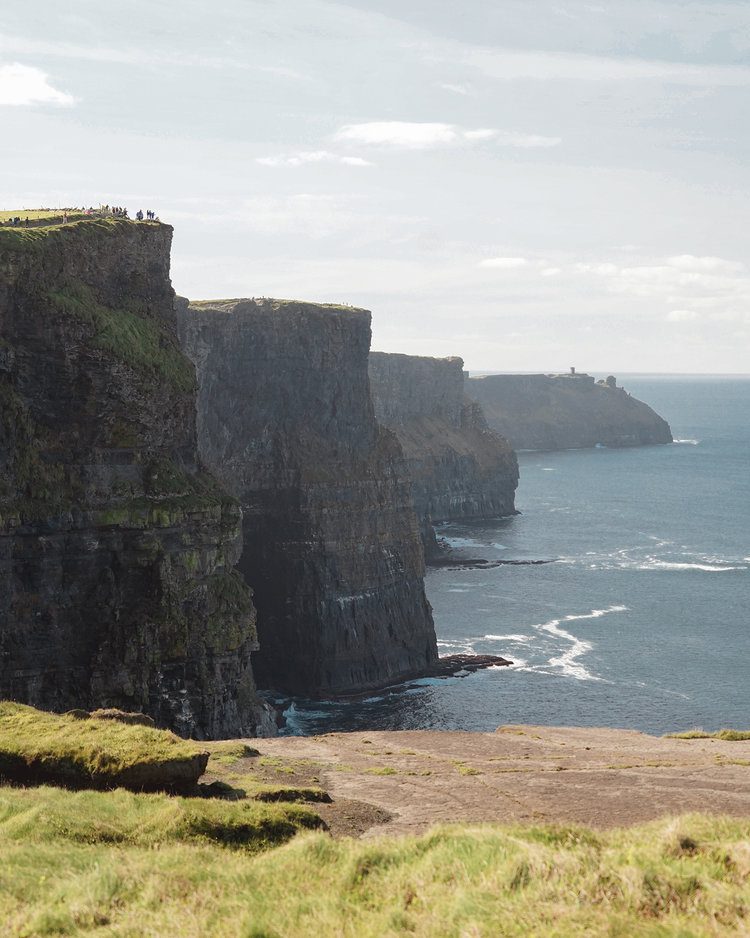
    These 214 metres high, five miles long and 300 million years old Cliffs of Moher are breathtaking, a lovely place to walk (provided you’re not afraid of heights) and a great photo opportunity.

    I believe the best direction for photos of the cliffs is to go left from the visitor centre and follow the path beyond the walled section. Continue on for about 20mins to a grassy section that starts to ascend higher than the rest of the path. From here you will be able to look back on the section of the cliffs that ends with a lonesome sea stack.

    SAFETY WARNING: The barrier does not go all along the cliffs which is great for getting beautiful photos but not if you are nervous over heights or have young children. To go beyond the walled path is at your own risk, but having done it myself and not being a fan of heights I can say it’s not an unreasonable thing to do provided you DO NOT get too close to the edge and you are very mindful of how much room there is when passing other people. Please do not take this lightly, a woman’s body was found at the base of the cliffs just days before my visit.

    Adult tickets are €4 each for the morning (8am – 10.59am) and evening (2pm – 7pm) visits and €8 for the afternoon visit (11am – 3.59pm). Children under the age of 16 go free. If you will be visiting in the morning or evening make certain to book online because the ticket cost at the gate is €8 regardless of the time you arrive.

    Blarney’s Castle

    The 600 year old castle and garden is located just 15mins from Cork (by car) and half an hour from Cobh. Let’s face it, as beautiful as the grounds are, people come here for one thing and that’s to kiss the Blarney Stone (and the millions of strangers who came before you). I’m kidding, luckily they sanitise the stone between kisses.

    Legend has it that kissing the Blarney Stone will give you the gift of the gab, which unlike I was led to believe is actually not to be a chatterbox, but instead it’s to be able to speak with eloquence and charm. Whether this is a negative thing or not I’m going to pretend that every time my school teachers said “Gaby by name, gabby by nature” throughout my youth, it was actually a compliment to my charming and eloquent way with words… yep for sure that’s why I got so many “time-outs”…

    As you can see from the itinerary above, on the day we went to Blarney’s castle we were driving from Galway to Cobh which in itself is a 3hr journey plus we stopped at the Cliffs of Moher before arriving at the castle. We were pushed for time to arrive before the last entrance which was 5.30pm, we made it though and under advisement we were told to go straight to the stone to be able to kiss it before the grounds closed at 6.30pm. We ran straight there past all of the signs that counted down the queue length, scaling the most narrow and steepest spiral staircase I’ve ever had the displeasure of climbing to get to the top. I honestly don’t know how much of a factor the date of our visit played into the fact that NO ONE was in the queue ahead of or behind us, but for sure rocking up near closing time definitely helped, it was dead!

    I really can’t speak for what the queue is like on a busy and no doubt summer’s day, but arriving at 5.30pm on a Friday in September was ace! It meant that we could leisurely take our videos and photos, and that we could actually stop to take in the sights from the top of the castle, something which is forbidden when there is a queue. I have to say after going and seeing the “one hour from here” sign and fearing that people actually have to queue in that hamster tube of a staircase I WOULD NOT want to go when it’s busy.

    As for actually kissing the stone, it’s a bucket list item checked off but it was by no means pleasant! Please know that’s my fear of heights talking in association with my limited height, as unlike me who wailed the whole time and was practically playing with death when I dragged a good 60% of my body upside-down over a 27m drop, with nothing but quivering arms to hold me up and the trust of a stranger holding my waist, Michael literally did it in five seconds. Just in case you think I’m exaggerating, check out my Ireland Instastories highlights on Instagram, it was all caught on film.

    The actual grounds are beautiful and the signage throughout is very informative. Should you be in the area it’s definitely not one to miss.

    Admission into Blarney’s Castle and Gardens is:

    Adult: €16 online (€18 on the door)

    Student & Senior: €13 (€14 on the door)

    Children aged 8 – 16: €7 (€18 on the door)

    Children aged 8 and under: Free

    Family Ticket (2 adults & 2 children): €40 (€45 on the door)

    They’re open every Monday – Saturday unless the 24th 25th of December fall upon those days. The opening times are:

    January – Feb: 9am – 5pm

    March – April: 9am – 6pm

    May: 9am – 6.30pm

    June – August: 9am – 7pm

    September: 9am – 6.30pm

    October: 9am – 6pm

    November – December: 9am – 5pm

    .

    To see what I packed take a look at Packing guide – Ireland, North and ROI.

    Aloha, Gabriella

    Pin this post


  • Packing guide – Ireland, North & ROI

    Packing guide – Ireland, North & ROI

    Last month Michael and I went to Ireland to celebrate my Godson’s naming day in Dublin with his father’s family. It being the first time either of us had been to Ireland we turned it into a roadtrip tour around both Northern and The Republic of Ireland. Starting in Dublin we went on to Belfast, Giant’s Causeway, Connemara, Galway, Cliffs of Moher, Blarney Castle finishing in Cobh before heading back to Dublin for the Ferry back to Britain.

    In total we were away for 11 days. Ireland is the first to get hit with any tail ends of storms coming across the Atlantic Ocean so the weather wasn’t peachy the whole time, but considering Autumn had started to really show its face, the majority of our days were dry albeit cold. The average temperature during our trip was 12˚C with one fluke day of 20˚C and a couple of miserably cold ones at 8˚C but overall it only rained for five of the ten days which I think was pretty good going for Autumn.

    Having travelled in our little VW Polo, there wasn’t much space for luggage and for the safety concern of keeping our back seats clear of any visible belongings, we had less room than I would usually on a trip this length. For this reason you may notice some repeat offender outfits and a black roll neck jumper that has made so many appearances that it’s a wonder how it survived so many bathroom sink washes. I can say though, with hand on heart that you can get away with fewer garments on a trip like this, it really just comes down to how bulky your winter woolies are as to what you can fit in your suitcase.

    Usually I travel with one large suitcase, one carry on case and a handbag but for this trip I only had my big case and a backpack with my hiking boots stuffed into a little crevasse of the boot.

    Right then, let’s start with the key garments I relied on:

    Waterproofs

    Coat, trousers and shoes are all necessary and easily packed down if you get the right gear. I swear by my Mountain Warehouse waterproofs, the pakka over-trousers take up very little space and are so ideal in adverse conditions and my waterproof jacket folds down surprisingly well.

    I couldn’t be happier with my Hi-Tec hiking boots, they’re cute and functional. Waterproof with a good tread and supportive sole they are the best shoes I own in terms of practicality.

    Running tights/sports leggings

    We planned a lot of walking and outdoor activities in Ireland so quick dry leggings are perfect for walks and hikes with unpredictable showers. I mostly wear USA Pro because their cropped legs are the perfect full length for my short leggies.

    Lace up pile lined boots

    I bought my lace up boots from H&M last December partly because they were on trend but also because I loved the idea of warm feet! For £25 my mind is blown by how comfortable they are! Not just that, but they are warm and the thick tread means I wear them for long walks with no risk of slipping. All they needed was a coating with a waterproof spray and they were good to go.

    These boots are a great alternative to hiking boots when you need comfort for long days on your feet but want something with an element of style that can be worn with jeans or dresses. The ones I bought last year aren’t available anymore but they have brought out a similar pair here.

    For extra insulation I pop in my sheepskin insoles, I transfer these into all of my shoes across winter because they keep the chill out beautifully.

    WOC or clutch

    A wallet on a chain is perfect for evenings when you are heading out to dinner or a pub/bar. They’re not cumbersome but they will still hold the basics. I’m not going to suggest you buy YSL unless you want to, but I will say make sure you can get at least your cards, cash, phone and lippy in there. I can get all of those in both my Mulberry Bayswater Clutch (which has been discontinued unfortunately) and my YSL Envelope Chain Wallet and yet they are both entirely different shapes, their size is deceiving and yet they do the trick.

    .

    I didn’t really have many garments that I shouldn’t have brought full stop, it was more that I had overcompensated and brought too many options of that garment and in one case not enough:

    Blue Jeans

    I had a good selection of dresses and skirts, my dungarees and my black jeans already, I didn’t need the extra pair, I never wore them.

    Scarves

    A girl needs options right? I had too many though. I brought two with me and bought an additional one out there plus I bought two Avoca blankets which I used as scarves. Yeah, five was too many.

    I still heavily recommend a blanket scarf though because you can use it as a blanket to keep you warm in the car on your road trip.

    Socks

    I had WAY too many socks, which was linked tightly to me wearing mostly tights but also because I panicked after Canada when I was stuck with only one pair of hiking socks. I ended up packing 7 pairs of socks and it was at least 3 too many.

    Tights

    It’s definitely tights weather now, I’m a fan of 60-70 denier because I put holes in tights like it’s an olympic sport plus I like to keep my leggies warm. To be honest I could’ve done with an extra pair to the two I already had. Only because it was difficult to rotate the two I had whilst waiting for them to dry.

    .

    If you’re a frequent reader did you notice how heels weren’t in this part?! That’s because I actually wore them, can you believe it? It is because I had an event to wear them to and if it wasn’t for that I wouldn’t have bothered with them, but yay for not moaning about them this time, right?

    .

    If you do make a trip over to Ireland I suggest making room for some additional garments because Dunnes Stores (by recommendation from my cousin) is amazing! It’s a crazy cheap department store with good quality products and the best part is that you won’t find those items/designs back home. In total I came home with:

    I told you it was good!

    The other thing you should be making room for is a stunning woven piece from Avoca. Their blankets are the epitome of winter evenings spent snuggled up on the sofa with a cup of hot choccy. Check out my Ireland Instagram Highlight to see more from my visit and if I can’t convince you then maybe Blake Lively can after her recent visit to Ireland – “You have to go to Ireland just to go to Avoca, it’s just heaven”.

    .

    Aloha, Gabriella

    Pin this post


  • Everything you need to know about visiting Giant’s Causeway

    Everything you need to know about visiting Giant’s Causeway

    A trip to Northern Ireland would not be complete without a visit to the magnificent Giant’s Causeway. For centuries this 2016 British Travel Awards Winner* has attracted tourists from all over the world.

    There are two explanations for how Giant’s Causeway was formed: scientific fact and the legend.

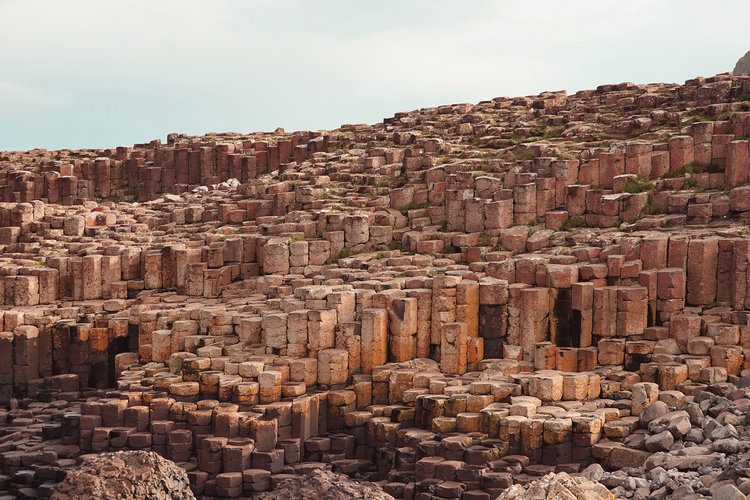
    Science explains that approximately sixty million years ago, molten basalt erupted from the ground forcing its way through a layer of chalk. The basalt formed 40,000 columns as it cooled, the hexagonal shapes developing as the stone fractured.

    The legend however claims that the Irish giant, Fin McCool built the causeway as a crossing to confront his Scottish rival, Benandonner. After building his path to Scotland Finn hastily retreats when he learns that Benandonner is far bigger than he is. Followed by Benandonner, Finn runs home where his wife disguises him as a baby. Seeing the size of the “baby”, Benandonner fears for how big the child’s father is and runs back to Scotland, the causeway crumbling under his feet due to his immense size.

    *Best UK Heritage Attraction.

    Getting there

    Driving

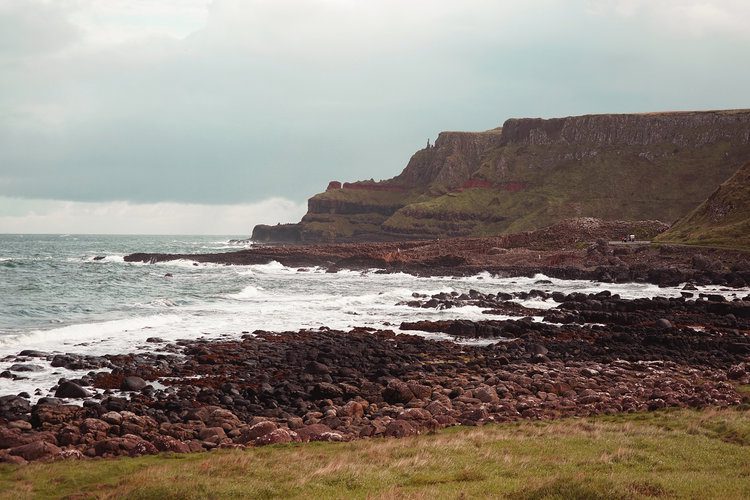
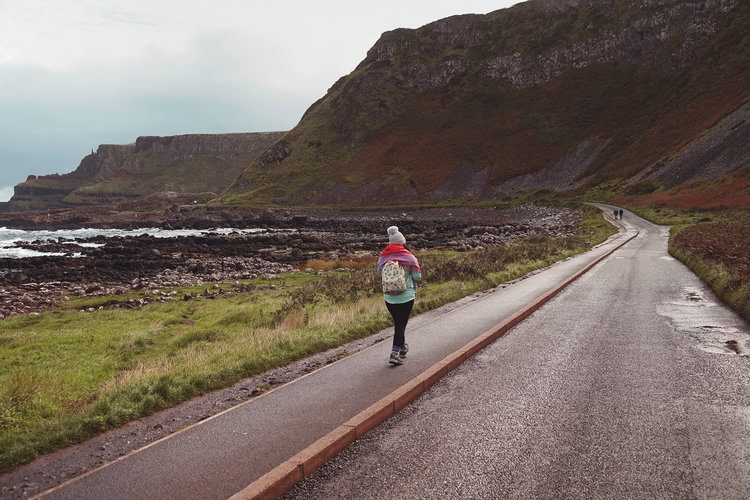
    The Giant’s Causeway is located on Causeway Road just 1hr 15mins from the centre of Belfast. As you get closer to the coast the scenery is beautiful and you’ll feel like you’re in the rom com film “Leap Year” as you cruise though the rolling hills past quaint little churches and fields dotted with fluffy sheep. Check out the map below to see Belfast in correlation to the visitor centre and stones.
    Parking

    Parking is included in the ticket cost (see more below) but spaces are limited. We didn’t have a problem getting parked up but I have heard from others that during peak periods – such as summer or public holidays – the traffic queues up for miles and you could be stuck without access to the car park.

    Time

    We went on a Monday morning outside of any school holidays and arrived at 9am. It was quiet for about one hour and then people started flooding in and before long it was difficult to get photos without a swarm of ant like people in the background.

    Visitor Centre > Giant’s Causeway

    There are two options for getting from the visitor centre to the stones: walk or bus.

    A footpath will take you straight down to the stones and back up again, has opportunities to stop and get photos of the beautiful coastline and will take 20mins maximum to walk each way (depending on how often you stop for photos).

    The bus leaves every 10mins from the back of the visitor centre (where the audio guides are given out) and both drops off at the stones and picks up for the return journey. Tickets are £1 per person per direction and are bought on the bus, National Trust members go free.

    If you are fully able to make the trip by foot do so because it won’t take long, if you have problems on your feet I suggest taking the bus because the path becomes slippery in the rain and though it’s not a long walk, it is a fairly steep ascent back to the visitor centre.

    Tickets

    Tickets include onsite parking, audio guides and access to the visitor centre which has a café, gift shop and an interactive section with more information on the formation of the stones and coastline.

    Save money by purchasing tickets online for:

    Adult: £10

    Children 5-17 years old: £5

    Family: £25 (includes two adults and three children under 17 years old).

    Purchase your E-tickets here.

    Tickets bought on the day at the visitor centre are:

    Adult: £11.50

    Children 5-17 years old: £5.75

    Family: £28.75 (includes two adults and three children under 17 years old).

    National Trust members go free.

    Opening times

    Giant’s Causeway is open from dawn til dusk throughout the year.

    The visitor centre is open as follows:

    January – February: 9am – 5pm.

    March – May: 9am – 6pm.

    June – September: 9am – 7pm.

    October: 9am – 6pm.

    November – December: 9am – 5pm.

    Closed: 24th, 25th and 26th December.

    Last admission is one hour before closing time.

    Safety

    Due to strong winds, big swells and the fact that the attraction is at the water’s edge, safety is a big concern here. If you choose to walk on the stones you do so at your own risk. There are however National Trust officials dotted around to prevent you from going too close to the edge and will blow a whistle to alert your attention if you do. They are equipped with first aid kits and there are flotation devices dotted around should anyone fall in.

    What to wear

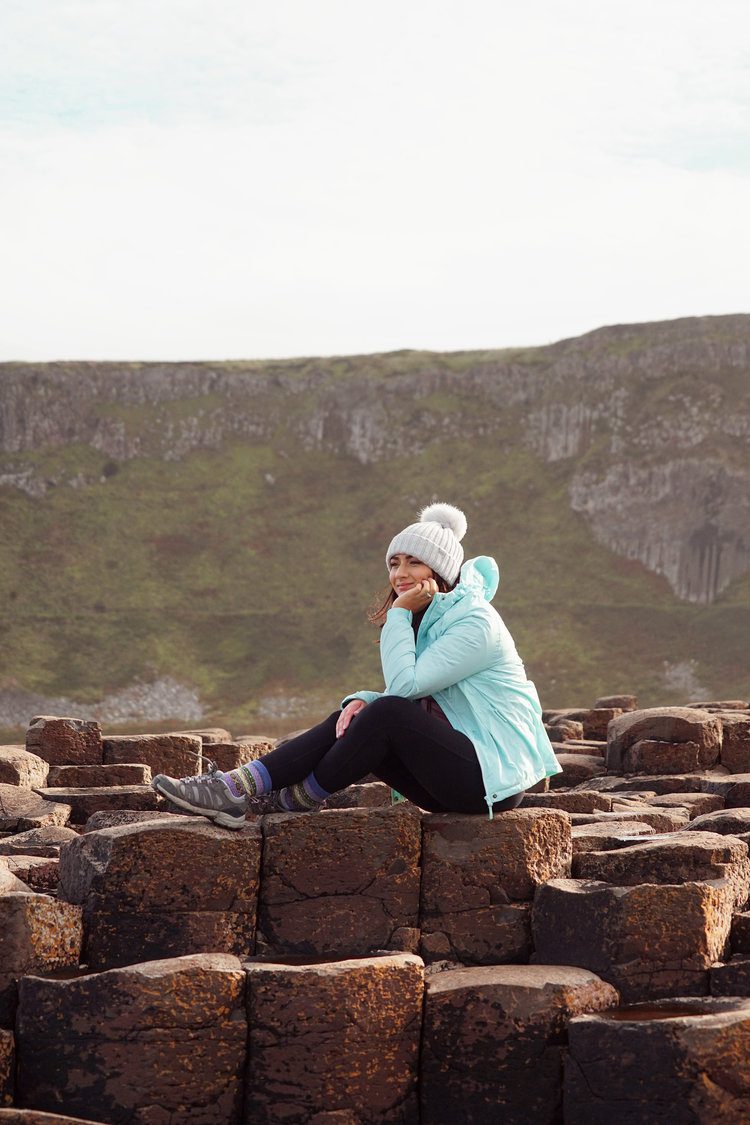
    My advise is based on visiting in September when the weather had made its turn into Autumn with an average of 8˚C. I can’t say what to wear in the warmer months having not been there then, but I do know that the wind is quick changing and can blow right through you so be mindful of that.

    Hat/thermal headband/earmuffs

    The wind can blow past your ears at an uncomfortable speed so wear something on your head if you have sensitive ears or want to keep your head warm.

    Scarf

    Keeps your neck warm and will provide a wind barrier for your face.

    Gloves

    Difficult for taking photos but great for the walk there and back.

    Bottoms

    I strongly suggest trousers because they will preserve your modesty if you are planning on clambering over the stones. I wore my running tights/gym leggings because they are quick drying which is handy as the rain is unpredictable.

    Top half

    This will give you a good idea of how cold the wind was, I wore a sports bra, vest, jumper, gilet and a super light down jacket under my raincoat. This was enough to keep me warm with my hat and scarf but it didn’t stop my nose from going pink nor my eyes and nose from running.

    Waterproof coat or at least a wind breaker

    The forecast didn’t call for rain all day and yet heavy raindrops made an appearance on and off every half an hour to forty minutes.

    Sensible shoes

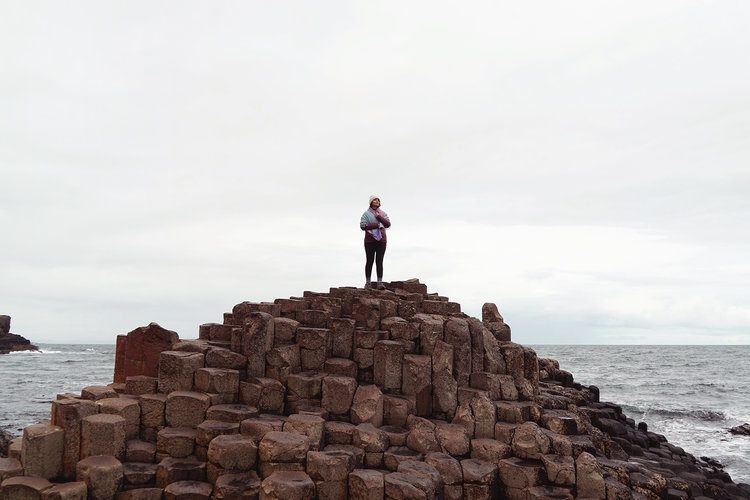
    I wore my hiking boots and even they were slipping. A lot of the stones are unstable and those closer to the sea develop a lovely slimy surface which makes navigating your way across somewhat treacherous. Make sure you wear comfortable shoes with a good tread.

    Thick socks

    Keep your tootsies warm.

    What to bring

    Water

    Always stay hydrated!

    Tissues

    If you have a sensitive nose to colder weather, like myself, I advise taking plenty of tissues because the cold wind is going to make it drip!

    Lip balm

    If you’re prone to chapped lips in cold weather.

    Camera

    How could you not!

    Tripod

    If you want to put your photography skills to good use.

    Don’t forget your tissues!

    .

    Aloha, Gabriella

    Pin this post