Tag: Scotland

  • A guide to spending the day at the British seaside

    A guide to spending the day at the British seaside

    Well it’s not quite the Great British Summer we were expecting for 2020 but it won’t be like this forever! Let’s make the most of what we have left of the summer and then this little guide will still be around for years to come when you (whether you live in the UK or plan to visit) can spend a classic day at the seaside doing all the things that make summer by the seaside the quintessential pastime that it is.

    I wanted to put this guide together for anyone coming to a British seaside town for the first time, so that you can spend the day doing all of the classics that so many Brits have enjoyed for years. 

    Fun Fact: The day below is my ultimate date plan. My favourite days spent with Michael at home are doing exactly what I’ve listed below. I don’t (always) need a fancy dinner, just give me a handful of 2ps for the arcade and chips swimming in vinegar and I’m on cloud nine.

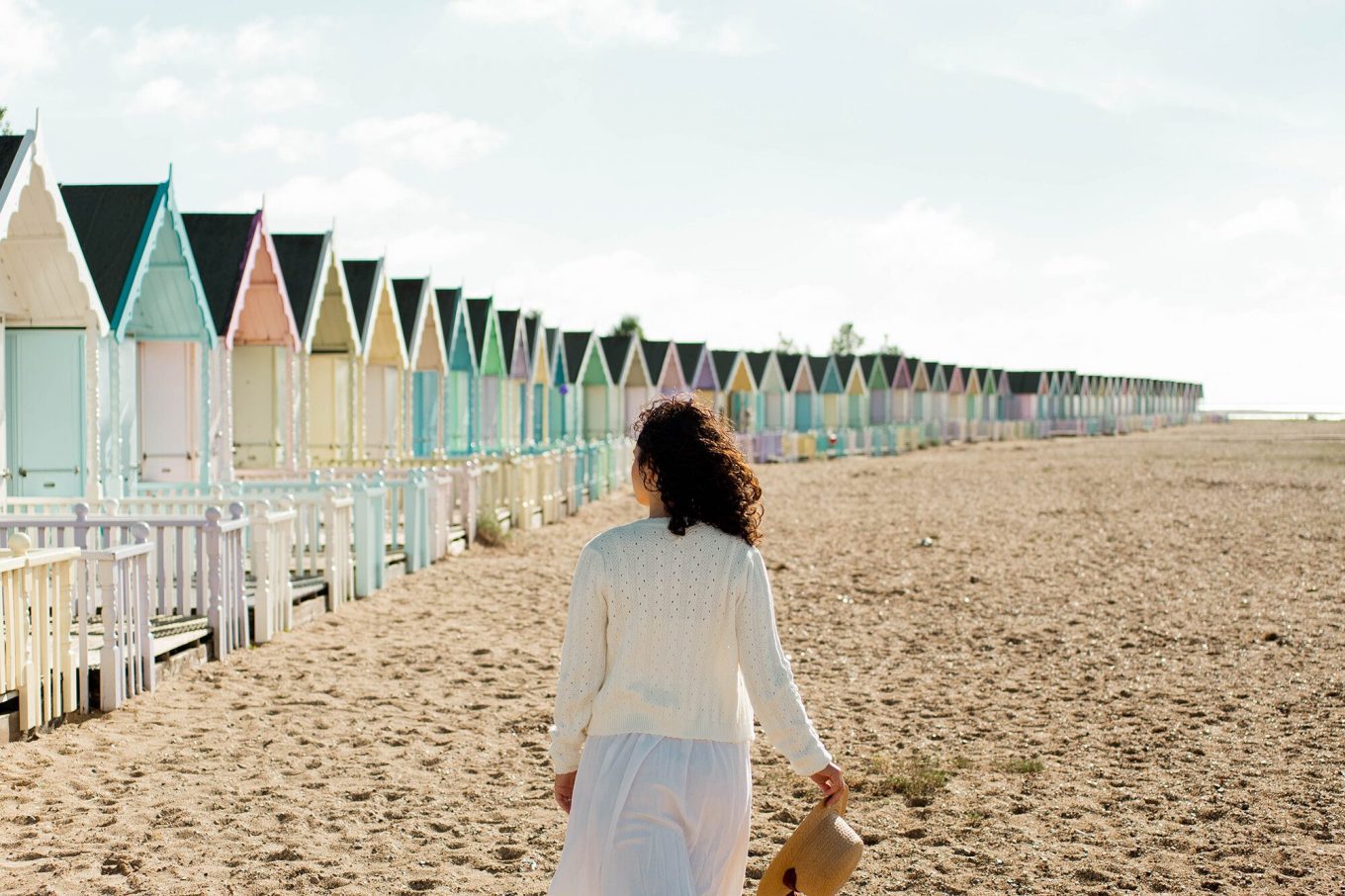
    Find a spot on the beach

    The goal here to is arrive early to nab a good spot and then spend an almost absurd amount of time there; I’m talking hours. You don’t want to leave until sand is everywhere: hair, mouth and even your bits. If sand isn’t washing out of your crack in the shower at the end of the day, you didn’t stay at the beach long enough. 

    Things to do on the beach:


    • Read a book


    • Make a sandcastle


    • Do a beach clean (and dispose of the rubbish/trash responsibly)


    • Swim in the sea, even if it’s a little chilly


    • Bodyboard, paddle board or surf


    • Rock pooling (discover the sea life living in the rock pools during low tide)


    Things you might want to consider bringing with you for a day at the British Seaside:


    • A windbreaker


    • Collapsible camping chairs


    • A net


    • A bucket and spade


    Please either keep hold of your bucket and spade to reuse and if you don’t want to travel with it, please hand it to a family so that their kids can use them. NEVER leave your bucket and spade on the beach, the tide will carry them out to sea and it will pollute the ocean and could kill marine life.

    THIS IS VERY IMPORTANT: Check the tide times before you plan to go. Having worked in a little café on the beach for 9 summers when I was younger, if I had a penny for every time a tourist asked me where the beach was I wouldn’t have had to work as a waitress for 9 years! Many beaches will be covered during high tide so check the tide times for your beach of choice online. 

    High tide: the sea has come in and is covering the beach.

    Low tide: the sea has gone out and the most amount of beach is uncovered.

    Please make sure you drink plenty of water and regularly apply suncream. Pay attention to signs on the beach that indicate safe swimming areas/rip tides.

    For a packing guide for a day at the beach, check out my blog post: what’s in my beach bag.

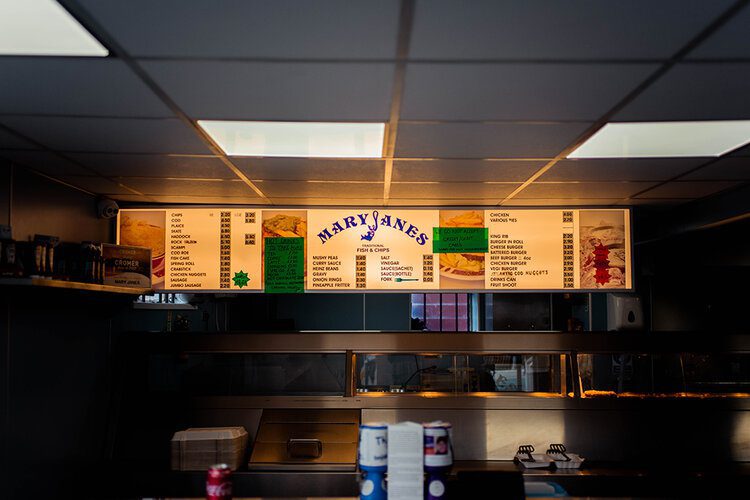
    Fish & Chips for lunch

    If you’ve read my blog post, Traditional British meals every traveller needs to try then you’ll know that fish and chips is one of my favourite meals of all time. I cannot go too long without fish and chips, fish and chips is life. If you’re vegan, drop the fish and just go with the chips, many places will fry in veg oil, but check in advance.

    Check out my blog post Traditional British meals every traveller needs to try to read about your different condiment options.
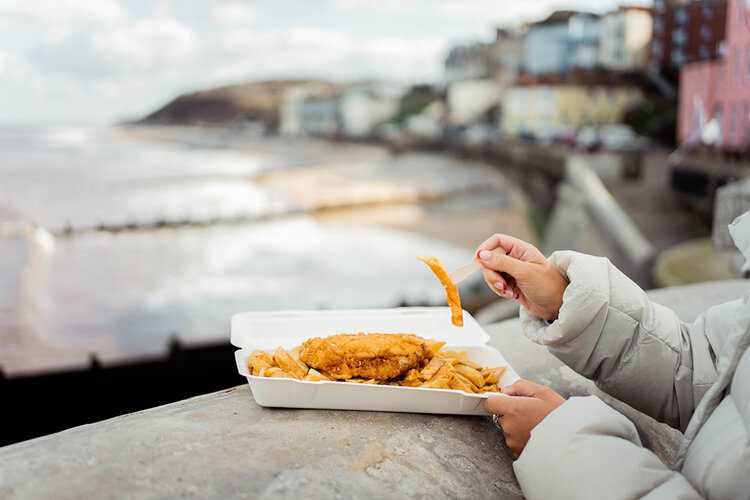
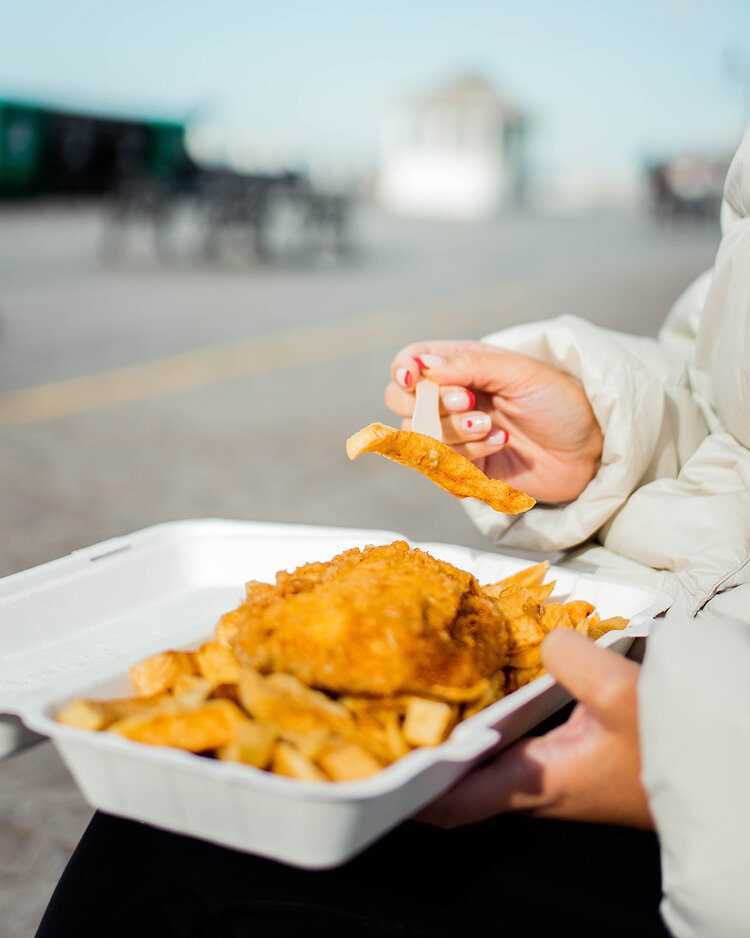
    When getting fish and chips on a day at the beach, you’ll want to get to the chippy before 12pm or later in the afternoon to avoid queues longer than Brighton pier. Get them open (rather than wrapped) so you can add your own salt and vinegar, then head back to the beach. Yes you’re probably going to get sand in your chips, but that’s part of the charm. 

    PSA: Beware of the seagulls!

    Visit the local shops

    No trip out is complete without a souvenir of the day. With so many locally made options, it would be a shame to leave the seaside with a standard trinket over a unique-to-the-area souvenir. For example, when visiting the Norfolk seaside, you absolutely must pick up something made with Norfolk lavender or when in Brighton or Blackpool you can’t leave without a stick of rock (hard candy).
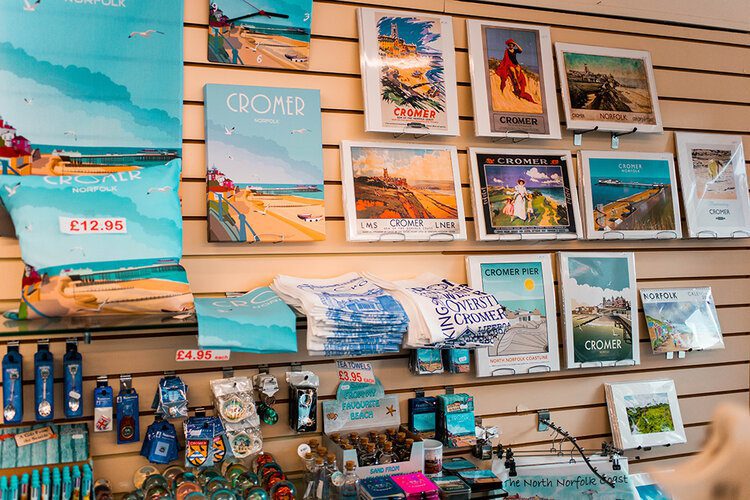
    Spend purposefully not mindlessly and support local businesses.

    Enjoy a 99 Flake ice cream

    Ice cream comes after the shops because many won’t let you in with food and drink… it’s fair, I’ve been both the customer who accidentally dropped their ice cream and the shop assistant who has had to clean up the ice cream off the floor, so shop then eat.

    Unless you have allergies – in which case you can get an ice lolly, sorbet or ice cream in a pot – the only ice cream you should be eating at the seaside is a 99 ice cream. But Gaby, what on earth is a 99 ice cream? It’s a soft whip vanilla flavoured ice cream that should be (but isn’t always if you’re being served by a teenager) delicately swirled into a wafer cone (that tastes like nothing but it’s not the same without it) and then penetrated by a Cadbury’s chocolate Flake (a crumbly chocolate stick that falls apart when you try to eat it). Honestly it’s the basic bish of British ice-cream but summer just wouldn’t be the same without it.
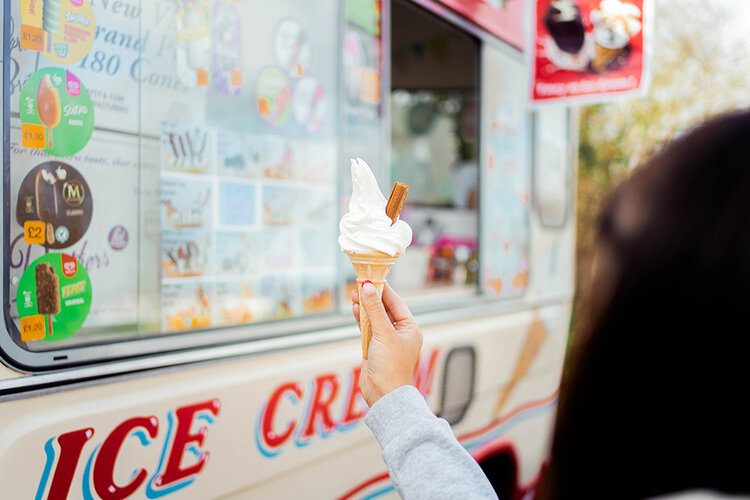
    Contrary to popular belief, a 99 Flake ice cream didn’t get its name from its price but unfortunately no one really knows why it is called a 99 flake, 99 or ninety-nine. The true origin has been lost in time with many people claiming to be the first to snap a Cadbury’s Flake in half and stuff it in an ice cream. Origin stories cover tributes to the First World War, cricket, Italian Royalty and shop addresses. Either way, not knowing why it’s called a 99 Flake ice cream is part of the charm.

    Ideally you want to purchase your 99 Flake ice cream from an ice cream van with copyrighted cartoon characters with slightly askew features. Ice cream van jingles are the sound of summer!

    Play in the seafront arcades

    In the days before we all carried around copious amounts of hand sanitiser, I would make sure eating our ice cream came before going to arcades, because there’s nothing sanitary about handling decades worth of copper pennies and then eating with your hands.

    The arcades is one of my favourite parts of the day, it’s good fun with minimal effort and provided you don’t get carried away, it doesn’t cost much. 

    The most classic machine to play is the 2p slot machine. Not just any 2p slot either, you want the one that looks like this one in the photo, where there’s a whole platform pushing coins rather than rickety old arms that barely push the coins anywhere. This machine will give you your best chance of getting more coins back.

    Your technique should be to drop your coin as the top shelf is drawn in, so that by the time it lands, the shelf is all the way out, then when it draws back in again, the coin will push other coins froward and hopefully off the shelf. 

    The goal of these machines is to win something crappy that’s hanging off the edge but if it’s not something you’ll use, either play for the fun of it or even give it back to prevent contributing to waste (because really, these prizes are naff, except for the time I won a High School Musical pen, I still have that). Many arcades offer tickets/tokens that you can collet to buy better toys, but really you’ll only collect enough for some sweeties/candy.

    To manage your spending at the arcades, don’t change up more than £5 of 2ps. Honestly you can get your kicks on a couple of pounds and anymore than £5 you should have just spent it in one of the local gift shops instead. There will be various change-maker machines around the arcade but if you have notes, take them to the counter to be changed up.

    Playing 2p slot machines in the arcades at the seaside is a simple pleasure in life that I think everyone should experience, if possible.

    Grab a pint from the pub

    After a long day at the seaside, it’s really only logical to end it with a cold pint, or something equally classic such as a Pimm’s No.1 Cup or a G&T, at one of the local pubs. 

    If you don’t drink alcohol, don’t worry, this isn’t quite so much about drinking as it is socialising and taking a pause to savour the day you’ve just had at the beach before leaving. Whether it’s a pint of local ale or lemonade, take it out into the beer garden and enjoy what’s left of the sunshine before it dips below the buildings.

    If you are drinking an alcoholic beverage, firstly drink responsibly, and second try a locally brewed beer, cider or gin.

    .

    Gabriella

    Pin this post


    .

    If the photos are confusing it’s because I had originally started shooting this content back in February 2020 (pre-pandemic) for something else, hence the winter gear but I guess it shows you can do ALL of this no matter what time of year it is.

  • Traditional British meals every traveller needs to try

    Traditional British meals every traveller needs to try

    For all the times I have recommended street food and national dishes all around the world, I haven’t once thought about recommending what tourists visiting the UK should try, until now that is! 

    As a generally cold and wet country, our food tends to be on the stodgy and comfort side, focusing on potatoes and meat that can keep us warm, some of our favourites being bangers and mash (that’s sausages and mashed potatoes), cottage pie (no pastry involved) , shepherds pie (still no pastry involved) and actual pie with pastry involved. Don’t even get me started on the desserts! There’s trifle, crumble, Eton mess, jam roly-poly, summer pudding, sticky toffee pudding, bread and butter pudding and spotted dick (no dick’s involved) – oh yes, we do dessert very well here.

    Amongst all of those extremely delicious delicacies, there’s five things that every traveller absolutely must eat when visiting Great Britain:

    1. Fish and Chips

    Let me start off with a public service announcement before going any further – if you are North American, in the UK chips are not potato chips, those are known as crisps, chips are fries but chunkier, fluffier and better! Don’t get me wrong, I love fries, but fries are fast food, guilty pleasures, ordered as a side… chips however, chips are life!

    You order fish and chips from pretty much any restaurant in the UK from The Ivy to any old pub, but the best place to go is a local “chippy” either to eat in or take out. Very few foods bring me as much joy as when I unwrap my greasy paper to reveal more chips than I can physically eat and a piece of fish bigger than my head – challenge accepted!

    The great fish debate has been going on in households since the dawn of time (or at least fish and chips), and really your choice of fried fish comes down to personal taste. Your options for the most part are:


    • Cod


    • Haddock


    • Plaice


    • Skate


    Alternatives are: fish cakes, scampi a battered sausage or chicken nuggets (a firm favourite with kids).

    There are three basic sides to fish and chips: pickled onions, pickled gherkins and mushy peas. I don’t know why, I don’t ask why, I just eat them and they taste good. 

    As for sauces, these tend to be a little more regional but they’re usually all available:


    • Curry sauce (which bares zero resemblance to curry but is amazing)


    • Gravy (that’s a northern thing)


    • Tartar sauce (that’s a posh thing)


    • Ketchup (standard)


    The seasoning though is the most important part: salt and vinegar. Chips without salt and vinegar is like Sonny without Cher, Thelma without Louise, Burt without Earnie, LIFE WITHOUT AIR! They are what bring together this all time favourite meal of the British public. If you’re eating fish and chips in a pub or restaurant you will also be given a wedge of lemon for the fish.

    Traditionally fish and chips is eaten on a Friday.

    2. Sunday roast

    A Sunday roast with all the trimmings is probably the British public’s favourite meal. It is synonymous with family and is a big home comfort for all Brits. Traditionally it is homemade but the alternative is to go to a pub for a carvery which is a buffet served roast. It’s called a roast because the meat and half of the trimmings are roasted, your meat options will be:


    • Chicken


    • Beef


    • Lamb


    • Pork


    • Turkey (reserved for Christmas)


    The basic trimmings are:


    • Roast potatoes


    • Carrots


    • Parsnips


    • Yorkshire puddings


    • Stuffing


    • Gravy


    Everyone has their own veg favourites so there could be additional ones depending on where it’s being served.

    Condiments vary depending on the meat, Horseradish goes with beef, mint sauce goes with lamb, apple sauce accompanies pork and cranberry sauce enhances turkey. Chicken has been in a long-term relationship with gravy for so long that when you invite one the other comes too, chicken has no sauce on the side. Some people might serve bread sauce – a medieval sauce made from bread crumbs, butter and milk – but it isn’t a popular choice despite what Michael might tell you.

    As a tourist visiting who hasn’t been invited into someone’s home for a Sunday roast, you can get one from virtually any pub on a Sunday. It’s not limited to Sunday but traditionally it’s eaten on a Sunday for lunch or dinner so Sunday will be your best bet.

    3. Fry up

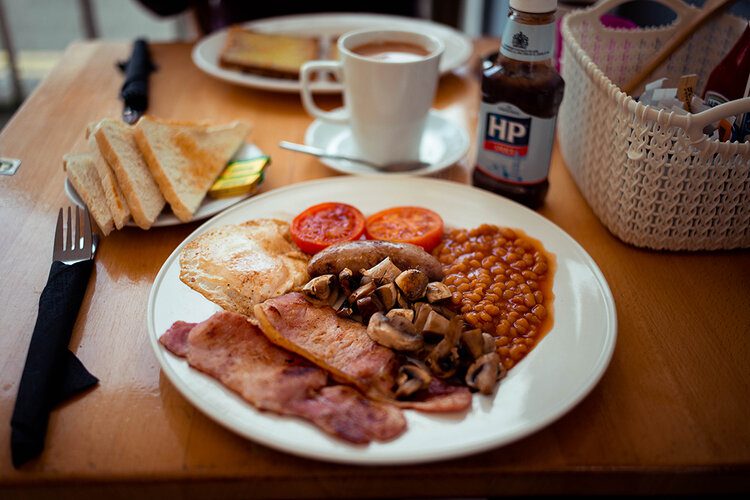
    The fry up, otherwise known as a “full English”, is the quintessential British breakfast. Some ingredients change between England, Ireland, Scotland and Wales but the following staples stay the same:


    • Fried egg


    • Fried tomato


    • Fried mushrooms


    • Bacon


    • Sausage


    • Baked beans


    • A round of buttered toast


    Black pudding is another core ingredient but is an acquired taste so it’s usually an add on.

    Top off your fry up with a squirt of HP Brown sauce, a blob of ketchup and a sprinkling of salt and pepper and you’re ready to tuck in.

    When I was working with children in Paris, the eight year old I was caring for came running across the playground when I was picking her up, looked up at me with disgust and said, “do you English really eat all that meat for breakfast every morning?” – eventually I worked out that she had just learnt in her English class that day about English food and our fry up. I’ll never forget the look on her little face! No we don’t eat a fry up every day or we would be dead in the ground in our 40s! A fry up is predominantly reserved for a lazy brunch or hangover cure.

    You can get your fry up at any greasy spoon café serving fried food and any restaurant or pub open for breakfast/brunch. Your most authentic experience will be in a greasy spoon: an ever so slightly run-down and very cheap café.

    4. Afternoon tea

    Unlike everything listed above, afternoon tea is on the fancy side of Brit favourites and thanks to social media has become a true experience meal rather than just a slightly extra way to eat cake before dinner.

    Afternoon tea is known to north Americans as high tea but they aren’t traditionally the same thing. Take a look at this blog post 

    PFH Fun Fact: though north Americans call afternoon tea “high tea”, they aren’t actually the same thing. Afternoon tea originates from the upper classes and royalty as a meal to satisfy the hunger that occurred between lunch and dinner, whereas high tea originates from the working class who didn’t have long afternoons to spend eating cake and ridiculously small sandwiches because they were well, working, so they had something to eat much later in the day and far more substantial than cake after a hard day’s work.

    A traditional afternoon tea consists of:


    • Finger sandwiches (luckily we have progressed past plain cucumber)


    • A selection on mini cakes and pastries


    • Fruit and plain scones served with jam and clotted cream


    • Tea (expect an extensive list)


    Almost everywhere will give you the option to pimp up your afternoon tea with prosecco or champagne, this is known as “Royal tea” and may concur an additional cost.

    There is a certain etiquette to afternoon tea so listen up kids:


    1. The dress code is “smart casual” unless stated otherwise. Use it as a chance to dress up


    2. Place the napkin on your lap


    3. Before pouring your tea, place the strainer over the tea cup so the tea leaves don’t enter your cup


    4. Hold down the lid of the tea pot as your pour


    5. Do not drop your sugar lumps in, place them


    6. Never bash your tea spoon on the side of the tea cup when stirring


    7. NEVER put your pinky in the air, that is not a thing


    8. Do not dunk anything into your tea (do this behind closed doors and only with a sturdy biscuit)


    9. Eat your sandwiches first, with your fingers not cutlery


    10. Never sandwich the two halves of a scone together with jam and cream in the middle


    11. Also it’s scone like “gone” not scone like “bone”


    12. You may use your dessert fork to eat your cakes


    13. Dab your napkin on your mouth, don’t wipe


    Afternoon tea should be served at 4pm but restaurants, cafés and tearooms will generally serve between 2pm – 5pm.

    You will be able to find afternoon and cream tea all across the UK but if you are looking for the crème de la crème for traditional afternoon tea in London your top choices are:

    You will need to book in advance for all of the above.

    If a full afternoon tea seems too much, you can just order a cream tea which is scones served with jam and cream and a pot of tea. It’s the best part of the afternoon tea anyway!

    Want to create your own cream tea or even afternoon/high tea at home? Take a look at my traditional English fruit scones recipe so you can make your very own from scratch!

    .

    Apart from the fried fish, there are gluten free, vegan and vegetarian alternatives to all of the meals above so everyone can have a least one of the above! As we ever so sophisticated Brits say, “dig in!”

    Aloha, Gabriella

    Pin this post


  • Winter packing guide – Scotland

    Winter packing guide – Scotland

    There are parts of Scotland that are not unlike Iceland in that the weather can change in an instant and you’re not sure what you’re going to get next. In one morning up in the Cairngorms we went from rain to a blizzard then to bright blue skies, and don’t even get me started on the wind in Edinburgh that whipped my hat off my head from under my rain coat, or the intermittent mist in Isle of Skye that is the only thing between you and incredible views. To keep you warm, prepared and prevent you from over or under packing, here’s everything you need:

    Clothing 

    Coats 

    I brought the following coats for a week long trip:


    • Rain coat


    • Puffer coat with a faux fur trim hood


    • Packable down coat


    My lightweight down coat is from Uniqlo.

    A water proof coat will be the most important coat to pack on a trip to Scotland but unless you have a super-dooper amazing rain coat, it won’t be the warmest option which is why I packed two others. The packable down coat was perfect for keeping me warm on dry days whilst the puffer coat was perfect in the snow because it kept me warm, dry and the faux fur trim on the hood caught the snowflakes that fell around my face.

    My raincoat is from Joules and hiking boots were gifted from Dune.

    Thermals

    Without a doubt thermals are the most important items on this list. The thermals I brought on our week long trip around Scotland were:


    • 2 thermal base layers.


    • 4 thermal turtle necks.


    • 1 pair of thermal long johns 


    • 1 pair of thermal tights


    I cannot stress how important thermal layers are. They are the best at keeping you warm and are thin so you can layer up and they take up far less room in your suitcase than wooly jumpers. On really cold days I recommend wearing the tights or long johns under your trousers.

    Zip up fleece

    Fluffy or not, the choice is yours, but a zip up fleece is ideal for Scotland. You can wear it over thermals and under your coat. You can zip it up to stay warm or leave it unzipped when you get warm hiking.

    Bottoms


    • Trousers – I packed one pair to wear over thermal long johns/tights.


    • Running tights – one pair for hiking, I still wore my long johns underneath them.


    • Water proof over trousers – I wore these to keep my legs dry in the rain and snow.


    • Skirt – for the couple of times we went out for dinner or drinks I packed a button down A line skirt which I paired with one of my turtle necks.


    My waterproof over trousers and snow gloves are from Mountain Warehouse.

    Thick PJs

    I learnt from our various accommodations across Scotland that you cannot trust the heating will be sufficient, so pack a pair of warm PJs.

    Footwear

    Hiking boots

    Between the hills in Edinburgh and Glasgow and the mountains in the Highlands it’s more than wise to bring a pair of walking boots, especially if you’re heading up into the Highlands where you’re going to encounter all sorts of terrain.

    Hiking boots are from Dune.

    Water proof shoes/boots

    As practical as hiking boots are, they’re not appropriate for dinner or drinks so take an alternative pair of shoes such as ankle boots for women or Chelsea boots for men. I suggest something water proof because, well, no one wants damp feet.

    Thick socks 

    Whilst high up in the Cairngorms visiting the reindeer I was wearing three pairs of socks under my hiking boots and my toes were still numb. Bring at least four pairs of thick hiking socks.

    Accessories 

    Backpack

    With all the walking you’ll inevitably be doing, the best day bag I can recommend for a trip to Scotland is a backpack.

    Wooly hat

    For an idea on how much you will need a hat to keep your head and ears warm and sheltered from the wind, Michael, whose only hats are baseball caps, had to buy a knitted beanie on day two of our week long trip.

    Snow gloves

    Seeing how the chance of snow in Scotland is pretty high during winter I suggest making the gloves you pack snow gloves. These will keep your mitts warm no matter how cold it gets outside.

    Snood

    For Scotland I recommend a snood over a scarf because when the wind picks up you want your scarf to have as little chance as possible of being blown off your neck.

    Sunglasses

    The sun sits low in the sky in winter and can be pretty blinding on a clear day.

    Miscellaneous 

    Coffee cup

    Hot drinks on the go are a great way to warm up. Favour a thermal cup to keep your drink warmer for longer in the cool weather. This YETI x 4ocean one will keep your drink hot for hours plus each purchase pulls a pound of rubbish from the ocean.

    Water bottle

    It’s important to stay hydrated and it’s a lot harder to do in winter because we don’t notice dehydration the same way that we do in the heat. Keep a reusable water bottle on you and download the Refill app so you find places to refill on the go.

    The Dopper bottle converts into a cup, and the thermal option will keep hot drinks hot for up to 9 hours.

    Blanket

    If you plan to road trip around Scotland, it’s wise to keep a blanket in the car just in case you break down or get stuck in the snow. It will also keep you warm at night in your accommodation. We stayed in an Airbnb in Isle of Skye and it was freezing so the blankets were welcomed. 

    . 

    So there you have it, everything you will need to pack for a trip to Scotland in the chilly winter months, aside from the basics, of course.

    If you haven’t yet planned what you’re doing and need some inspiration, take a look at 9 points of interest on a road trip in Scotland.

    If you would like to edit your own Postcards from Hawaii packing list, check out My ultimate interactive packing list where you will find a downloadable PDF and help on how to use it.

    Aloha, Gabriella. 

    Pin this post


  • 9 points of interest on a road trip in Scotland

    9 points of interest on a road trip in Scotland

    Scotland is beautiful. So beautiful in fact that it made me sad knowing that I was born and raised in England and never took the time to drive up there. With endless snowcapped mountains, more sheep than you can shake a stick at and medieval architecture with the richest of histories, I would recommend a trip to Scotland for anyone who loves starting the day with a hike in the mountains and ending it with a G&T made from a local gin in a quaint village pub.

    In December 2019 we drove from home (Norfolk, England) all the way up to Scotland and back, making overnight stops at Edinburgh, Isle of Skye and Glasgow. Here are nine of the best things that we did both in these destinations and on the journeys in-between:

    1. Edinburgh Castle

    Where?

    Edinburgh

    After pulling over to take selfies at the England/Scotland border, our first stop was Edinburgh, more specifically, Edinburgh Castle.

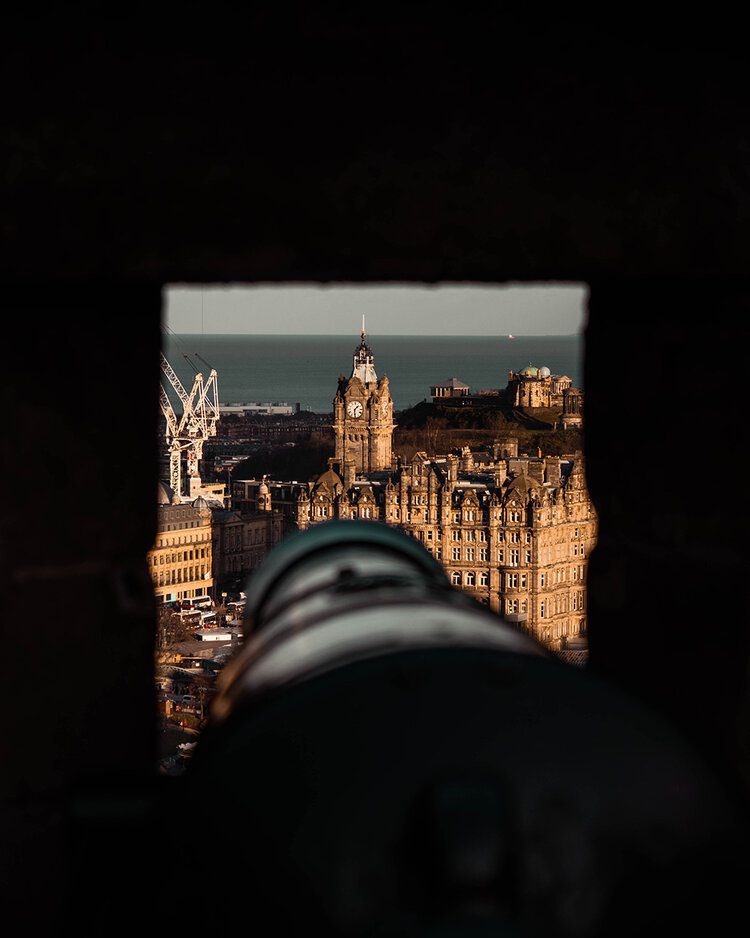
    Proudly looking out over the city from the top of the hill that Edinburgh is built upon is Edinburgh Castle. It’s centuries old and has been the centre piece to centuries of battles between the English and Scottish monarchies, all of which you can learn about within the castle’s walls.

    The views of the city from the castle are amazing but the pièce de résistance is visiting the crown jewels which includes the story of how they were made, hidden, lost and then found.

    PFH Top Tip: Try to be around the castle at 1pm when a gun is fired precisely at one o’ clock. The tradition comes from alerting the ships in the nearby waters to set their maritime clocks. The sound of the gun firing echos across the city and can be heard every day except for Sundays, Good Friday and Christmas Day.

    Cost

    £17.50 for adults

    £10.50 for children aged 5-15 years old

    Children under 5 years old go free

    £14 for seniors aged 60+ 

    Opening times

    1st April – 30th September 9.30 – 6pm (last entry at 5pm)

    1st October – 31st March 9.30am – 5pm (last entry at 4pm)

    2. Whisky tasting or a distillery tour

    Where?

    Edinburgh (and just about everywhere in Scotland)

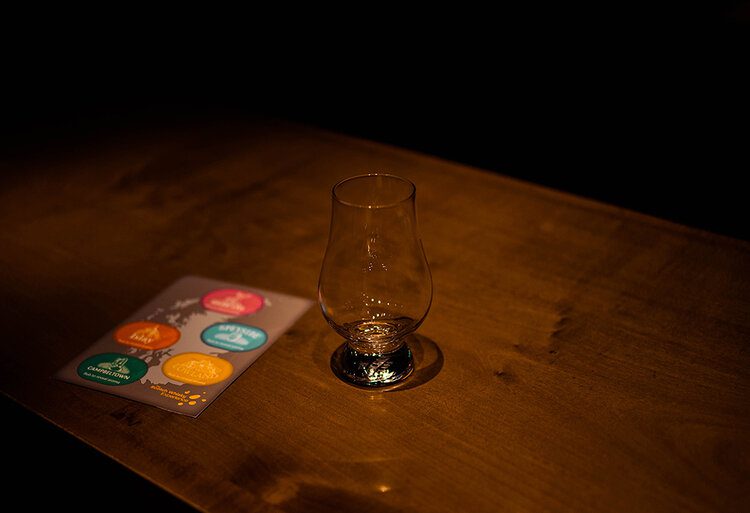
    Whilst in Edinburgh we went to The Scotch Whisky Experience to learn about the production of whisky. There are many options for tours at The Scotch Whisky Experience from the basic introduction covered on the Silver tour right the way through to masterclasses. As we are not fans of whisky but wanted to learn we chose the Silver tour which includes the following:


    • An automated whisky barrel ride that tells you the process of the production of Scotch Whisky.


    • An introductory video that teaches you the various aromas of Scotch whisky related to its region.


    • A lesson in how to taste whisky which includes a dram of Scotch Whisky (or Irn-Bru for children under 18).


    • A viewing of the world’s largest collection of Scotch Whisky.


    • A complimentary crystal whisky tasting glass (adults only).


    Of course you don’t just have to go here, there are many liquor shops in Edinburgh that will teach you about Scotch Whisky, we chose here because we didn’t want to pay for an experience where we had to try more than one whisky!

    The other option you have in Scotland that’s centred around alcohol is to visit one of the countless distilleries both whisky and gin. Scotland gin and whisky is world famous and you won’t find it hard to find a distillery wherever you are in the country. Even when we were on the Isle of Skye and all I could see for miles was mountains and sheep there were still two distilleries there! We weren’t successful with visiting one because the ones we tried to go to were closed on the weekend so my advice is to check in advance. My alternative advice is to sit in a pub and (responsibly) work your way through their selection of local gins!

    Cost

    The costs for the Silver tour as follows:

    £17 for adults

    £8 for children

    £15 for seniors aged 60+

    Opening times

    January – March 10am – 5pm

    April 10am – 6pm

    May – June 10am – 8pm

    July 10am – 8.20pm

    August Monday – Friday 10am – 5pm

    August Saturday & Sunday 1-am – 5.40pm

    September – December 10am – 5pm

    Tours runs approximately every 20mins from opening.

    3. Cairngorms Reindeer Centre

    Where?

    Cairngorms National Park

    Meet Britain’s only free-ranging herd of reindeer in their natural environment at the Cairngorm Reindeer Centre.

    Depending on the time of year there are two different experiences available: the hill trip and the paddock visit.

    Hill trip

    If you are physically able to make the trip up the hill to where the reindeer roam free then I strongly suggest you rise early to get tickets for this tour (see more under opening times below). Upon receiving your ticket you will be given directions and a parking pass for the Sugarbowl car park just a few minutes up the road. Here you will park and wait for the rangers to gather everyone at 11am. From there they will guide you across the road and down a steep path to a bridge crossing a river, where you will then make a short but steep incline up the hill to where the free-ranging reindeer are.

    The rangers will give you a brief introduction to the reindeer herd and will then give you a handful of food to hand feed them. Don’t worry about having to find a reindeer, they know you have food and will come to you. It is best advised that you take your gloves off to feed them so you can feel their velvety soft noses, trust me they’re incredibly soft!

    The tour lasts around 1.5 – 2 hours but you have the option of staying a little longer if you want to hang out with the reindeer for longer. To be honest though it’s very cold up there and once the reindeer work out you don’t have any more food, they aren’t interested in cuddles anymore.

    Reindeer etiquette 


    • All children must stand with an adult.


    • Do not bend down near a reindeer, they will perceive it as a signal that you want to fight them and you’ll be smacked with their antlers. I ducked in a photo so you could see the reindeer behind me without thinking and one came up to headbutt me in the leg with her antlers.


    • Do not chase them.


    • Don’t touch their faces, it irritates them which can again result in an antler-driven headbutt.


    • Don’t approach them from behind, it can startle them and they may run away or again, headbutt you.


    Paddock visit

    From Easter to the New Year it is possible to visit some reindeer in the paddock at the centre.

    This option is best for people with mobility difficulties and young children who are unable to make the steep walk up the hill.

    Whilst at the paddock rangers will teach you about the reindeer and will even be able to identify each one.

    Although you are able to touch the reindeer you won’t be able to hand feed them, this is so they maintain a healthy weight.

    PFH Fun Fact: Each season of calves are named with a theme. Previous themes were cheese (yes there’s Parmesan the reindeer), European cities and to commemorate the 2012 London Olympics the 2012 theme was…2012.

    What to wear

    Second to Ben Nevis, Cairngorms National Park is the highest mountain range in all of the United Kingdom and is a sub-arctic environment. Reindeer don’t feel the cold until the temperature drops below -30 degrees Celsius but you’re not reindeer so here’s how I recommend you keep warm:


    • A warm coat, preferably one that is waterproof as Scotland is notorious for rainfall, and if you go in winter the chances of snowfall are high.


    • A snood. A scarf may unwrap in the wind and you don’t want it to brush against the reindeers’ faces and startle them so I suggest a snood. Plus it will defend your face from the harsh windchill which can be in the minus.


    • Waterproof over trousers.


    • A wooly hat to keep heat from escaping through the top of your head and to protect your ears from the wind.


    • Thermal base layers, both tops and long-johns. For females I recommend a pair of thermal tights so you can have an added layer on your feet.


    • As many thick socks as you can fit into your boots. (I had 3 pairs of snow socks and my toes were still numb).


    • Layers. Layer up as much as you can under your coat.


    • Hiking boots or wellies (you can rent a pair of wellies for £1 from the centre if you don’t have hiking boots or wellies. They won’t let you go up with anything else on your feet).


    Between June – October it is advised that you wear insect repellent. 

    Cost

    Hill trip

    £16 for adults

    £10 for children 

    Children under 3 years old go free

    Paddock visit

    £3.50 for adults

    £2.50 for children

    Children under 3 years old go free

    Closed on Christmas Day, 1st January and from 6th January – 8th February 2020.

    Opening times

    The centre opens at 10am.

    Tickets are first come first served, I strongly advise arriving at least before 9.30am (9am on weekends) to make sure you get tickets.

    Tours depart at 11am and 2.30pm with an additional trip at 3.30pm in July and August during weekdays.

    Still arrive before 9.30am to buy your tickets for the afternoon tours as they will be sold to the people in the queue who don’t get on the 11am tour.

    Winter trips may have adverse weather and therefore the centre may decline children to keep them safe. The centre telephone line is open from 9am so call ahead if you have concerns about the weather. The first time we tried to go the snow was so bad that we couldn’t even get to the centre.

    The paddock is open from 10am – 5pm Easter – New Year.

    4. Loch Ness

    Where?

    Inverness

    It might not be the most beautiful loch in Scotland but it’s without a doubt the most famous one! If you don’t already know why, it’s because legend has it a monster known as the Loch Ness monster, or Nessie for short, lives in the depths of the loch. Its neck long and not unlike a Brachiosaurus with its body formed of many humps that protrude from the water. The first sighting was in 1933 with various pieces of “evidence” coming to light over the years when photoshop didn’t exist so it was hard to disprove.

    Despite Loch Ness being 56.4 km², a road trip around Scotland would be incomplete without an attempt to spot infamous Nessie from one of the many parking bays surrounding the loch.

    Cost

    There is no entrance fee to visit Loch Ness.

    5. Glenfinnan Viaduct (Featured in Harry Potter)

    Where?

    Glenfinnan

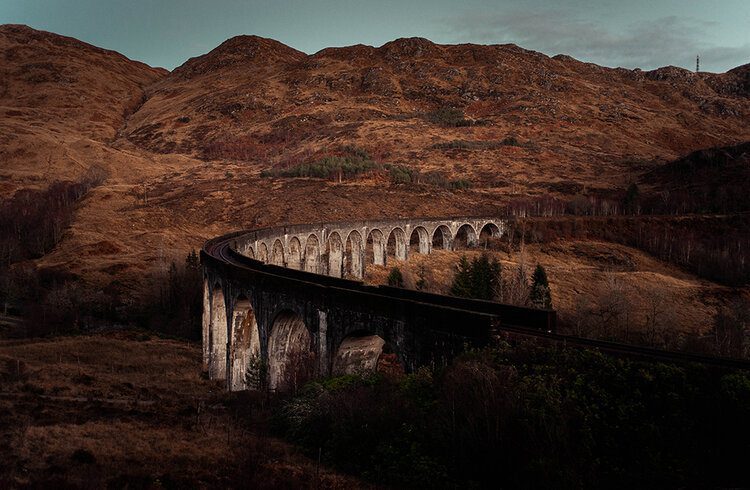
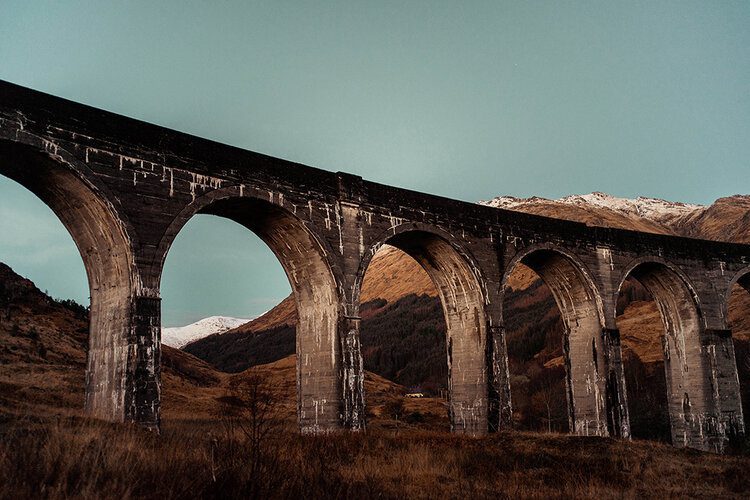
    This 30m high structure built in the 1897 is most famously known for being the railway bridge that the Hogwarts Express travels across in the first Harry Potter film of the series, The Philosopher’s Stone, it’s also worth a visit simply because it’s magnificent. 

    For the best view point on foot, turn right out of the car park and start walking along the road until you reach a private car park which is gated off. Walk past the gate and continue up the path until you find another small path heading up hill on your left, just before you reach the viaduct. You’ll then cross under the viaduct and start curving back on yourself as you walk along the path up the hillside. When the path widens you will be able to look out upon the viaduct.

    PFH Top Tip: For the best photo op, aim to be there around 10.55am or 3pm where you will see the Jacobite steam train cross the bridge aka, the Hogwarts Express.

    Cost

    Though you don’t have to pay to visit the viaduct, there is a £4 charge for parking. Though we arrived at 4pm (in December) when the sun was going down and the kind gentleman allowed us to park for free because we wouldn’t be there long due to the fading light. If you just want to hop out to see the viaduct and/or have a really good camera to shoot in low light, you could try your luck doing this.
    Opening times

    The visitor centre is open 9.30am – 4pm.

    6. The Old Man of Storr

    Where?

    Isle of Skye

    The Old Man of Storr is a peculiar rock formation up in the rocky hills on the Isle of Skye. The pinnacle was created by a massive ancient landslide and on a good day it can be seen for miles, but on a bad day, you’ll be lucky to catch it between breaks in the mist.

    We, of course, hiked up on a very grey and miserable day but we did manage to catch a glimpse as the mist cleared for a few fleeting moments. I would say don’t give up hope if the weather is bad, just pray for wind.
    There are various hiking routes surrounding the Old Man of Storr. As the weather was dreadful and the light was fading we chose to hike up to where it levelled out and we could appreciate the view of both the pinnacle and the vast stretch of water behind. There and back with a break for a cuppa and a few photos took us approximately 2hrs.

    The terrain is steep, rocky and wet so I strongly advise hiking boots. Michael foolishly forgot to pack his and found it to be a slippery slope in his running shoes.

    Cost

    There is one car park that is free whilst the roadside parking is paid parking. I suggest you arrive as early as you can to park in the free car park, which is close to the entrance gate up the mountain (next to the construction site).

    In winter you shouldn’t have a problem parking.

    As we went in winter when it was quiet we used the free car park and therefore I don’t know the cost of parking along the road.

    7. Fairy Pools

    Where?

    Isle of Skye

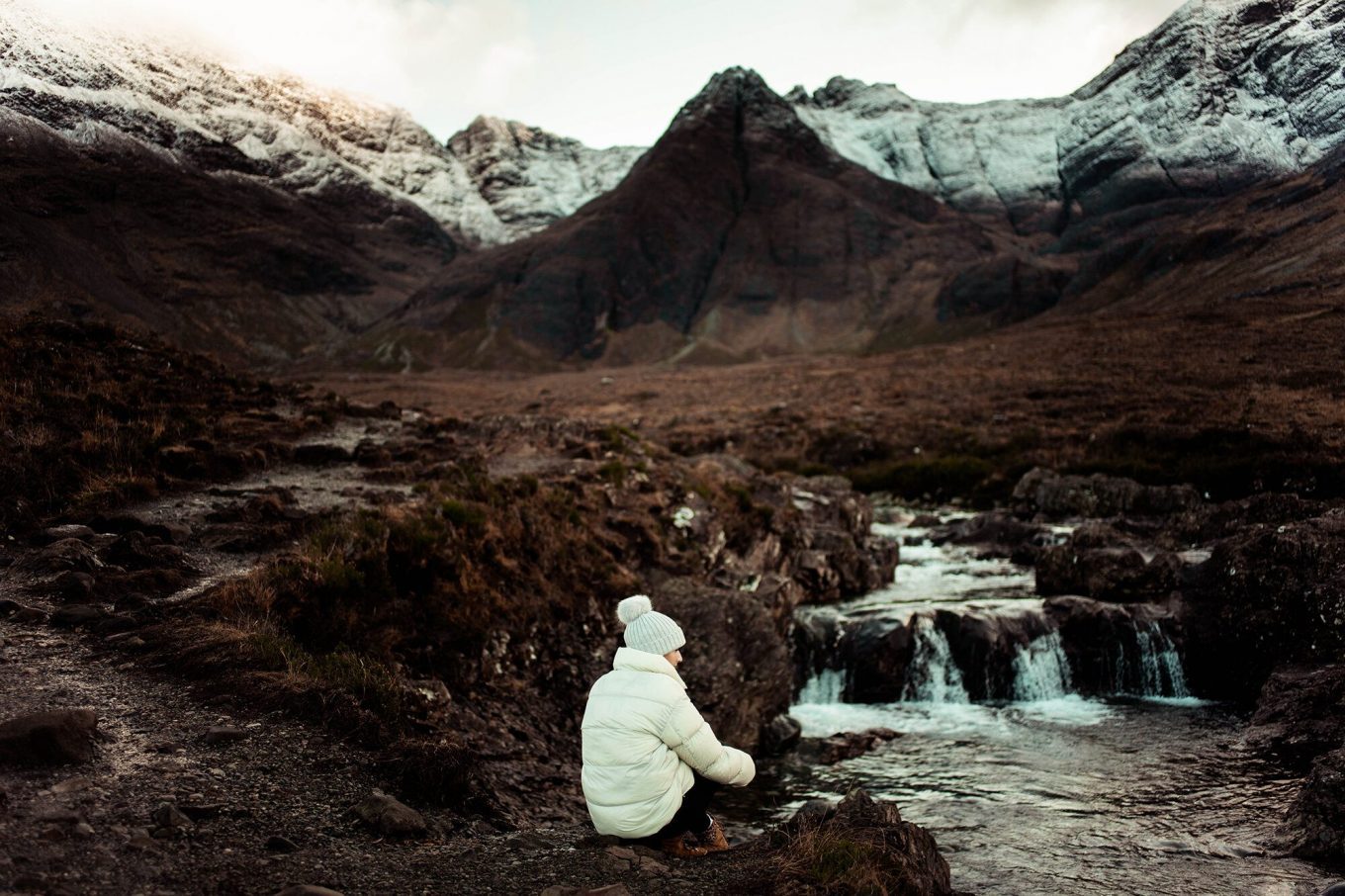
    The walk from the car park to the pools isn’t strenuous like the walk up to the Man of Storr is, it’s paved for most of the way and only has a shallow incline. You do however have to cross many rushing streams both over stepping stones and giving into getting your shoes wet when the rainfall has been heavy and the rocks are submerged. For this reason I strongly recommend wellies or hiking boots.

    Though many online guides will tell you the walk there and back is only 40mins, disregard this because it doesn’t include stopping to take in the view nor does it included walking to the furthest pools.

    There are many pools to see but the further you go the more pure the blue water becomes in colour. Once you see it for yourself it’s not hard to imagine little fairies hanging around.

    The path to the pools is the same you take back.

    Cost

    There is no entrance fee to the Fairy Pools but there is a parking cost of £5 per car. This is cash only so come prepared.

    8. Gallery of Modern Art, Glasgow

    Where?

    Glasgow

    There are four galleries within the GoMA, all of which are free to enter and rotate throughout the year so check ahead to see what is on here.

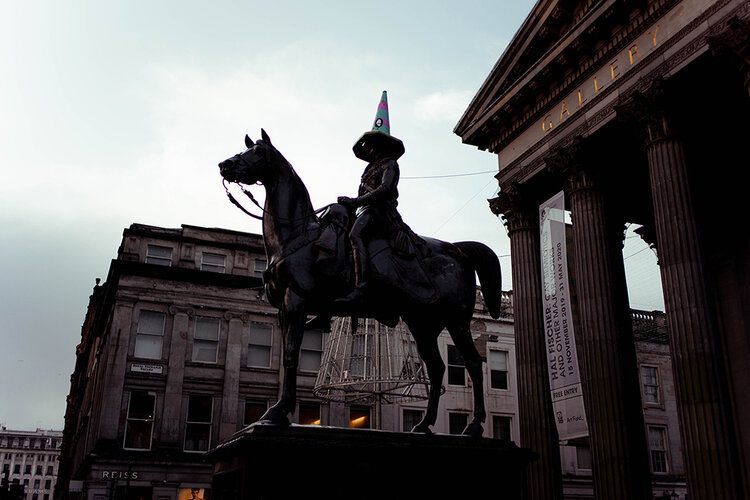
    The best feature of the museum and no doubt the part that draws people to it from all over the world is the equestrian statue of the 1st Duke of Wellington that stands out front with a traffic cone upon his head. The traffic cone hat is a tradition that started way back in the 80s and was accepted as a way of expressing Glaswegians’ humorous side.

    Cost

    Entrance is free

    Opening times

    Monday – Wednesday 10am – 5pm

    Thursday 10am – 8pm

    Friday 11am – 5pm

    Saturday 10am – 5pm

    Sunday 11am – 5pm

    9. Glasgow Cathedral

    Where?

    Glasgow

    Read any guide of places to visit in Glasgow and the cathedral will be top of the list. For over 800 years Christians have worshiped God from within the medieval walls of this vast cathedral. Having been dedicated in 1136, it is the oldest cathedral on mainland Scotland and is the oldest building in all of Glasgow. 

    Cost

    Entrance is free.

    Opening times

    Monday – Saturday 10am – 3.30pm

    Sunday 1pm – 3.30pm

    Our road trip around Scotland was just a week long and we were able to comfortably visit all of these places even with only 6.5 hours of daylight (as we visited in December). I chose these places to highlight because you truly get a feel for Scotland’s passions from their medieval history to the vast and beautiful landscape.

    If you have any questions about my trip, feel free to contact me here.

    Aloha, Gabriella

    Pin this post