Tag: Seaside Town

  • 10 things to do in a day at St Ives, Cornwall

    10 things to do in a day at St Ives, Cornwall

    St Ives is a seaside town in southwest Cornwall famous for its sun-trap harbour lined with restaurants and bars, art scene with more galleries than you can shake a paintbrush at – including Tate St Ives – surf beaches like Porthmeor and beautiful turquoise waters.

    Originally a fishing village, St Ives is now a seaside resort and is top of everyone’s Cornwall bucket list. Why? Because it’s a cute town with independent shops, pretty views and so many places to eat you’ll want to come back to try more. On that note, spending a day in St Ives by my guide involves a lot of eating so bring your stretchy pants, okay?

    What to pack in your bag for a day in St Ives


    • Reusable coffee cup – to responsibly get your hot drink to-go


    • Towel – to sit on when you’re on the beach


    • Face mask – to cover your face to protect others


    • Hand sanitiser – to protect yourself and others


    Remember to always wear your mask indoors and sanitise/wash your hands as often as possible.

    PFH Top Tip: Keep your face mask on in slightly busier areas such as Fore Street and Wharf Road. Also keep an eye out for a sign in the shopfront that tells you how many customers are allowed in at one time.

    1. Arrive early to get parked

    I guarantee if you ever hear someone recommending a day in St Ives, you will hear them say you must arrive early by car if you have any hope of getting parked. With roads barely wide enough for a single car, corners so tight you can’t but hold your breath when you creep around them, there’s very little parking opportunities in St Ives so the car parks fill quickly. 

    If you plan on driving you must arrive to St Ives before 8.30am to get a spot for your car. 

    The car park we used was The Island Car Park and it cost £8.20 to park all day.

    If you aren’t able to drive you can use the bus and train service. I’ve heard from a friend that the train ride in from St Erth is very scenic.

    2. Get coffee from Yallah 

    So I’ve made you arrive early to St Ives to get parked but you’re like, ugh Gaby, none of the shops are open yet. Make your way to the Yallah Kiosk on Wharf Road and grab a coffee to-go, they will make your coffee in your own reusable cup (yay!) so make sure to hand it over. Click here to read Yallah’s sustainability report.

    Take your coffee to one of the benches on the other side of the road and gaze across the harbour at all the little boats bobbing around in the cool clear waters, waiting for the late morning sun to reach them.

    3. Try to spot seals from Smeaton’s Pier

    Take a leisurely stroll over to and along Smeaton’s Pier for a chance of spotting a seal. Catching a glimpse of a seal around St Ives is possible but known to be quite rare unless you take a paid boat trip over to Seal Island.

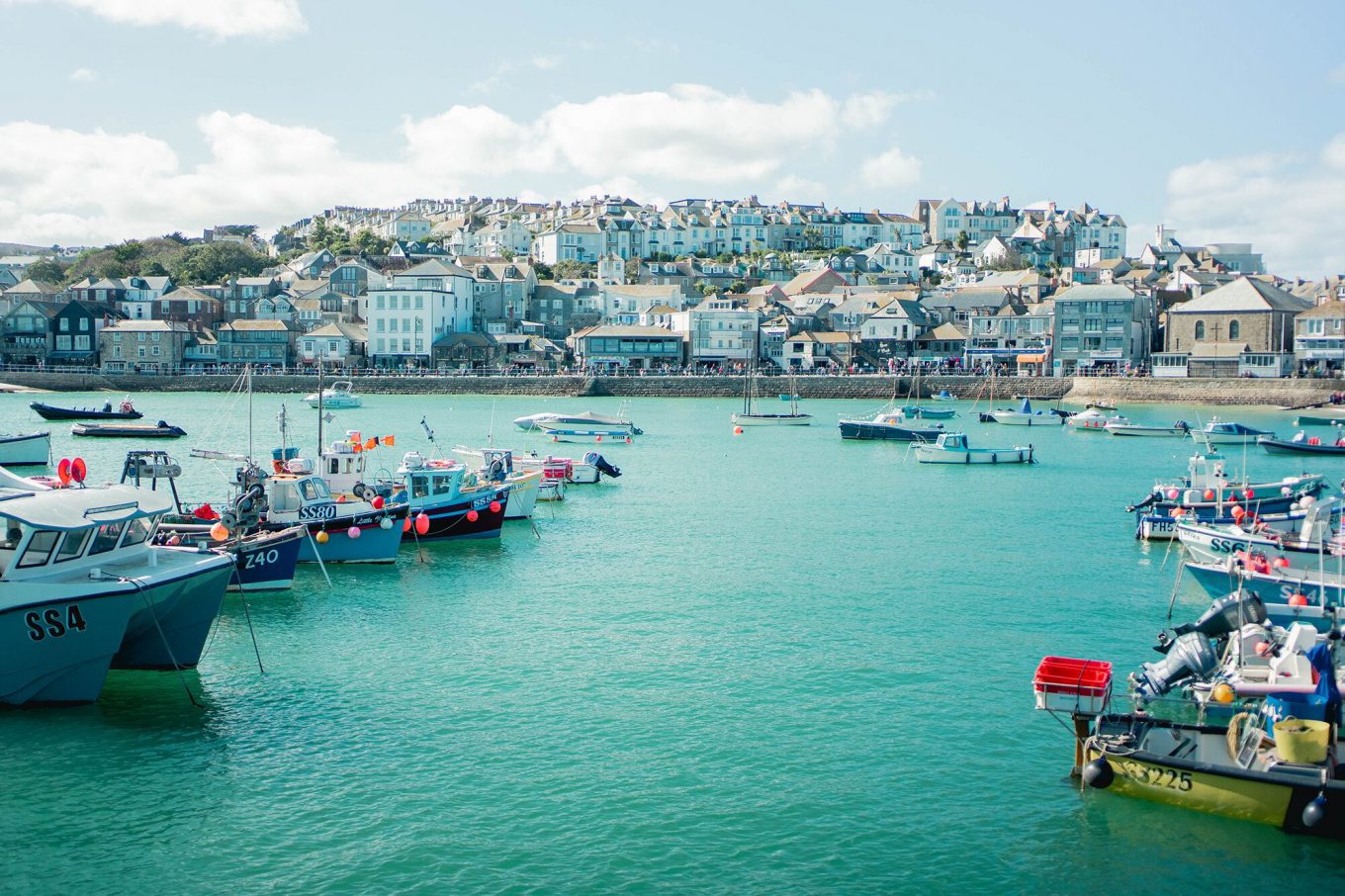
    Either way it’s a nice little walk to kill time before the shops, galleries and museums open, plus it provides the perfect spot to take a photo of St Ives with the little harbour in the foreground which you can see below.

    4. Visit Tate St Ives

    If you want to step up your gallery game (it’s possible that there’s almost as many galleries in Cornwall as there are Cornish pasties) then book tickets for Tate St Ives. Tate St Ives is an art gallery located just off from Porthmeor Beach that showcases a collection of modern art with local ties.

    The current exhibition “Modern Art and St Ives” is the first that you’ll visit and tells the story of modern artists who are connected to St Ives including Barbara Hepworth, Patrick Heron and Alfred Wallis.

    Hungry for more? Then head on over to the Barbara Hepworth Museum and Sculpture Garden. If you purchase a ticket here first, it’s a little pricer than the Tate ticket but it includes entrance to Tate St Ives.

    Opening hours

    Monday to Sunday 10.00–17.20

    Ticket cost

    Adult £9.50

    Children get free access

    Student £8.50

    Senior (60+) £8.50

    Job seeker £8.50

    People with disabilities £8.50 (companion gets free access)

    Accessibility 

    Each floor is accessible by lift.

    Three wheelchairs are available.

    Accessible toilets are located on the third floor.

    Large print guides printed on yellow paper are available upon request.

    A 10 min audio introduction that describes the architecture is available upon request.

    Guide dogs, hearing dogs and assistance dogs are welcomed.

    COVID-19 restrictions

    Please use the provided hand sanitiser before and after entering.

    Observe the one way system.

    Wear a mask at all times indoors.

    Please stay 1-2 metres away from others.

    5. Explore the nooks and crannies

    With its narrow winding streets that offer glimpses of the sea it’s easy to find charm in exploring the nooks and crannies of St Ives. Stumble across a cute cottage or two, an independent gallery and keep an eye out for special spots that looks like you could be peeping out at the shoreline of Positano. 

    6. Pick up a Saffron Bun from Ferrell S H & Son

    A saffron bun is a spiced bun similar to a tea cake. Yellow in colouring, thanks to the saffron, it sits proud and easily identifiable in the shop window of Ferrell S H & Son’s bakery on Fore St, a family run bakery that has been there since the 1960s.

    It’s a traditional Cornish treat and is up there on the must-try-whilst-in-Cornwall list that also includes:


    • Cream tea with Cornish clotted cream (preferably Rodda’s)


    • Cornish pasty


    • Yarg (cheese)


    Heads up, despite the C-19 pandemic, Ferrell S H & Son only accepts cash so have some to hand to get your bun.

    7. Shop on Fore Street

    Whilst on Fore Street, enjoying your saffron bun, potter around the shops. Here you’ll find some of the best independent shops in St Ives including all things surf, seaside themed and rum/gin focused. My favourites along this little street are:

    John’s Liquor Cellar

    Shopping in John’s Liquor Cellar is like stepping into a cave full of intoxicating treasures including locally crafted beers, wines and ciders but most importantly (for me anyway) gins. You’ll find a vast selection of local gins such as Tarquin’s, Trevethan and St Ives in all their available flavours including Trevethan’s pink grapefruit and lychee or Tarquin’s rhubarb and raspberry. They even sell miniatures so you can grab some souvenirs/stocking fillers for friends and family back home.

    Myrings of St Ives fudge and rock shop

    Myrings’ fudge recipe has been passed down through generations for over 30 years. It’s the perfect spot in St Ives to pick up a sweet treat for yourself or a loved one. 

    Cornwall soapbox

    Pick up some handmade soap, a shampoo bar and a candle to match from Cornwall Soapbox. Each soap is made with pure essential oils and organic African Shea Butter. They each smell amazing and even better, they reduce your plastic packaging waste as they’re wrapped in paper.

    The Sewing Room

    It won’t come up on google maps but it’s a little knitting and crochet shop selling needle, hooks, patterns and wool/yarn which will inspire you to make something or pick up kits as gifts for others.

    Yummy Scrummy Bakery

    Pick up a giant iced bun topped with hundreds and thousands before they sell out to the masses!

    8. Get ice cream from Moomaid of Zennor

    “Legend has it that a young Cornishman was lured into the sea by the beauty of the Mermaid of Zennor. Today you’re more likely to be seduced by Daisy, Primrose and Sid Vicious – just three of the cows that help make Tremedda Farm’s ice cream. They are the legendary Moomaids of Zennor.” – Moodmaid of Zennor.

    Once you’ve been into all the wonderful independent shops on and around Fore Street, pop into Moodmaid of Zennor for some locally made Cornish ice cream. Their ice cream is made with fresh ingredients and in small batches so they can ensure only high quality ice cream is going from scoop to tummy. 

    Their flavours run from traditional vanilla clotted cream to salted almond praline. Take it in a cone or a tub dressed up with the likes of brownie chunks and a stick of fudge. 

    WARNING! Cornish seagulls are buttheads and will take the food from your hand mid-flight. Whilst eating lunch on the beach in Port Isaac, a cannibalistic seagull took half of Michael’s egg mayo baguette from his hand and swallowed it whole as we looked on in horror. Be so careful with your ice cream when you eat it okay? Walking around with food by the shoreline in Cornwall is like entering shark infested waters with an open wound. Alright, even without my exaggeration I still advice you to eat quickly.

    9. Sit on the beach

    If it’s a lovely day out then spread out a towel on the sand and either lay back and soak up some rays of sunshine on Porthgwidden Beach or watch the surfers catching waves on Porthmeor Beach.

    10. Get dinner at Porthminster Kitchen looking out on the harbour

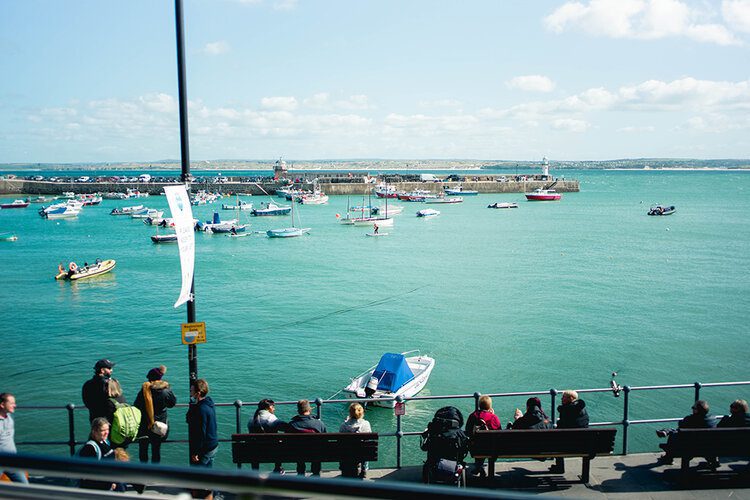
    Porthminster Kitchen is located on Wharf Rd and has an amazing view of the harbour, and oh, when the sun hits the water and it lights up to an electric cyan blue, it feels like you could be anywhere in the Mediterranean.

    The menu features dishes inspired by global cuisine but made with locally sourced Cornish ingredients. They’re sure to tickle your seafood fancies with a wide choice including scallops, squid, clams, mussels and more!

    If you’ve been around here for a while then you’ll know I’m somewhat partial to some fish and chips (fish and chips are life) and of all the chippies in all the land, I have never had mushy peas as good as I have at Porthminster Kitchen. Their spiced peas are like two fish and chips classic sides in one: mushy peas and curry sauce!

    Make sure to book in advance if you’re going to St Ives during peak spring/summer to avoid disappointment, card details are required to make the booking and you will be charged £15 if you don’t show for your booking without prior warning. If it’s forecast to be a sunny day, see if you can ask for a table outside.
    PFH Top Tip: if you can’t get booked into the restaurant for dinner, consider lunch at their café, Porthminster Café, located on Porthminster Beach.

    COVID-19 restrictions


    • Wear your face mask until you are seated at your table and make sure to wear it if you leave your table


    • Pay for your meal by contactless card


    • Observe the one way system


    • Try to keep a distance from others in the restaurant when you’re not at your table


    Travel safely,

    Gabriella

    Pin this post


  • How to spend a day in Clovelly, Devon

    How to spend a day in Clovelly, Devon

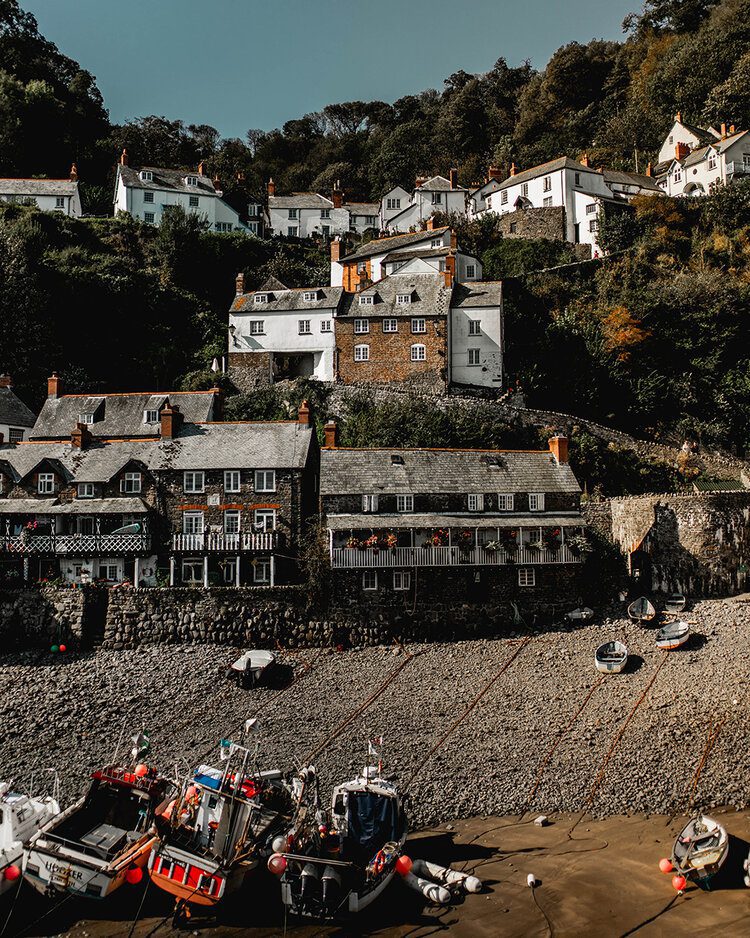
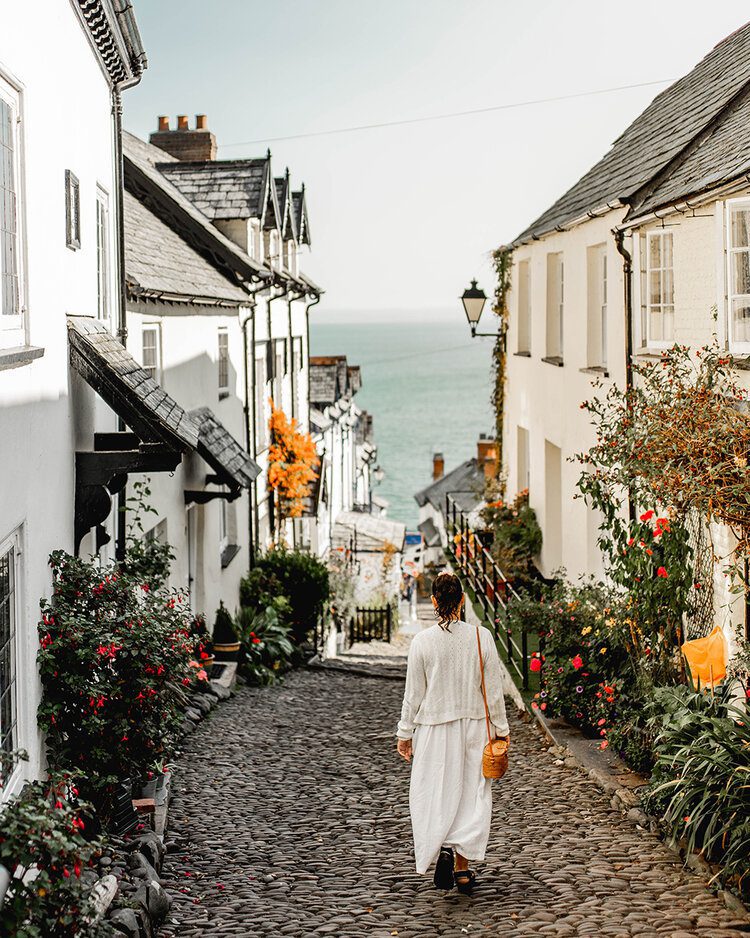
    With a series of white washed cottages cascading down towards the sea from a 400ft cliff edge, Clovelly, a small living fishing village in North Devon, is one of the most picturesque spots in the county. Appearing untouched for centuries, the tiny cobbled high street of Clovelly, inaccessible by vehicle, takes you back to a simpler time where life was enjoyed without the conveniences we take for granted today. 

    Once owned by the Royal Family, Clovelly has been in the hands of just three families since the 13th century. The village is still privately owned and all properties are rented and residence usually stays within a family for generations.

    We chose to visit Clovelly after watching a re-run of the Channel 4 documentary, “Devon and Cornwall” which explored the two counties’ treasures. Once I caught a glimpse on TV of this exclusive village, so lusted after that it requires an entrance fee, I wanted to see it for myself and I am so glad I did. Between shopping for handmade soap and candles from Clovelly Soap, learning about Rex Whistler’s iconic “Toile de Jouy” design from Clovelly Silk, enjoying a Devon cream tea with a view of the sea and exploring a steep, meandering path down to the 14th century quay, visiting Clovelly has been one of my favourite days out in England.

    Read on to find out what you need to know about visiting Clovelly, how we spent the day there and my tips on where to get the best photos.

    Visiting Clovelly

    Before getting into what to do and where to take the best photos in Clovelly, here’s the basics for getting access to the village:

    How to get there 

    Parking at the Clovelly Visitor’s Centre is included in the entrance ticket cost (see below for more).

    The village is located off the A39, 10 miles west of Bideford. Take Junction 27 to exit off the M5.

    The closest train station is Barnstaple and you can take a bus from there to Clovelly.

    Buses also run to Clovelly from Bideford.

    Entrance cost

    Adult: £7.95

    Child (aged 7 – 16): £4.60

    Children under the age of 7 get free entrance

    Family including 2 adults and 2 children: £21

    Season tickets are £26 per adult and £62 per family

    Ticket costs are for 1st April 2020 – 31st March 2021

    Dogs on leads are welcomed

    Opening hours

    Clovelly is open every day except Christmas and New Year’s Day.

    9am – 5pm April – November

    10am – 4pm November – March

    PFH Top Tip: for free entry to Clovelly, visit on Boxing Day.

    You’ll want to allow around three hours for visiting Clovelly to make the most of your time there.

    Covid-19 restrictions

    You must wear a face mask when entering the Visitor’s Centre, museums and shops. 

    Wash your hands as often as possible and use hand sanitiser frequently.

    You are required to fill out a Track and Trace form at the ticket desk.

    Do not visit Clovelly if you are showing any signs of being sick.

    Try to keep at least 1m away from others.

    The Visitor’s Centre has a one-way system. 

    Accessing the village 

    The village is built into a 400 foot cliff and is only accessible by foot down a steep cobbled path. It is very important that you wear comfortable shoes as the high street is made with stones from the beach that are uneven and slippery so you will slip without a decent tread on the soles of your shoes.

    Unfortunately due to the nature of the village being built into a cliff, there is no level access to the village, however the Visitor’s Centre, Mount Pleasant and craft shops (where you’ll find Clovelly Silk, Clovelly Soap and Clovelly Pottery) are accessible.

    Usually, between Easter and October, there is a Land Rover service that offers rides back up to the Visitor’s Centre from the bottom but due to COVID-19, that service has been suspended.

    Start at the Visitor’s Centre and make your way straight down into the village (you can visit the shops on the way back up) as it’s your best chance of seeing the high street empty and therefore the most ideal time to get the best photos of the most photogenic part of the village. I recommend arriving within the first hour of the village opening as it’s the best opportunity to get photos from the top of the high street without other people wandering the street.

    PFH photo guide

    Want photos of Clovelly for the ‘gram or to capture beautiful memories? Well you’re in the right place, there are at least three spots that you will want to take photos of whilst in Clovelly so let me take you through where they are and what time to get there for your best chance of people-free photos:

    1. Clovelly high street

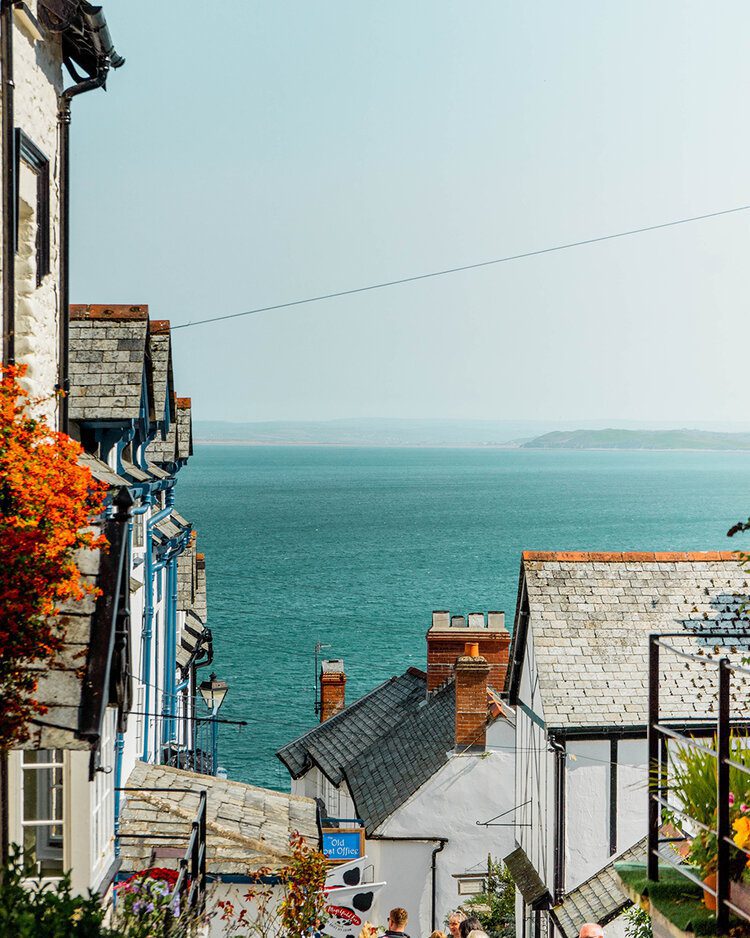
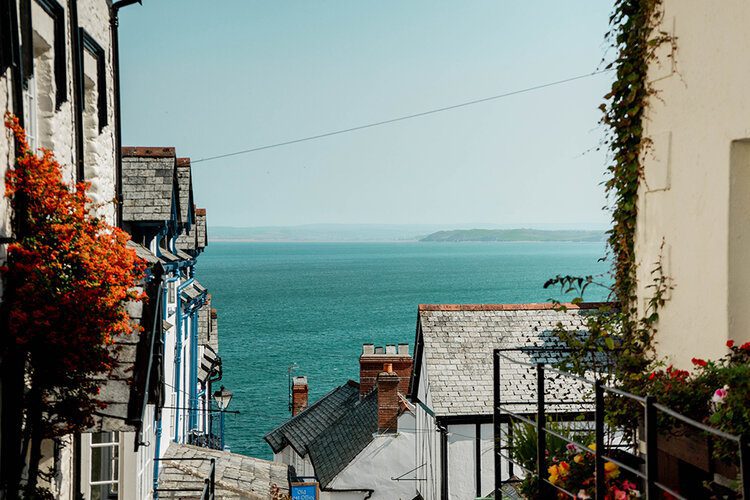
    Take a snap from the top of the high street looking down towards the sea. The high street is iconic as it’s only accessible by foot, or in past times by donkey so you won’t get a single car in your shot. The narrow, cobbled path down is sandwiched between centuries old cottages decorated by flowers with the odd cat silently judging your arrival to their village.

    As mentioned, the cobbled path is the only way into the village so arrive early to get the best chance of an empty street.

    Walk a little further down the path towards the quay to capture more beautiful photos as the sea becomes visible between the cottages, before making your final descent down to the beach.

    2. Clovelly quay

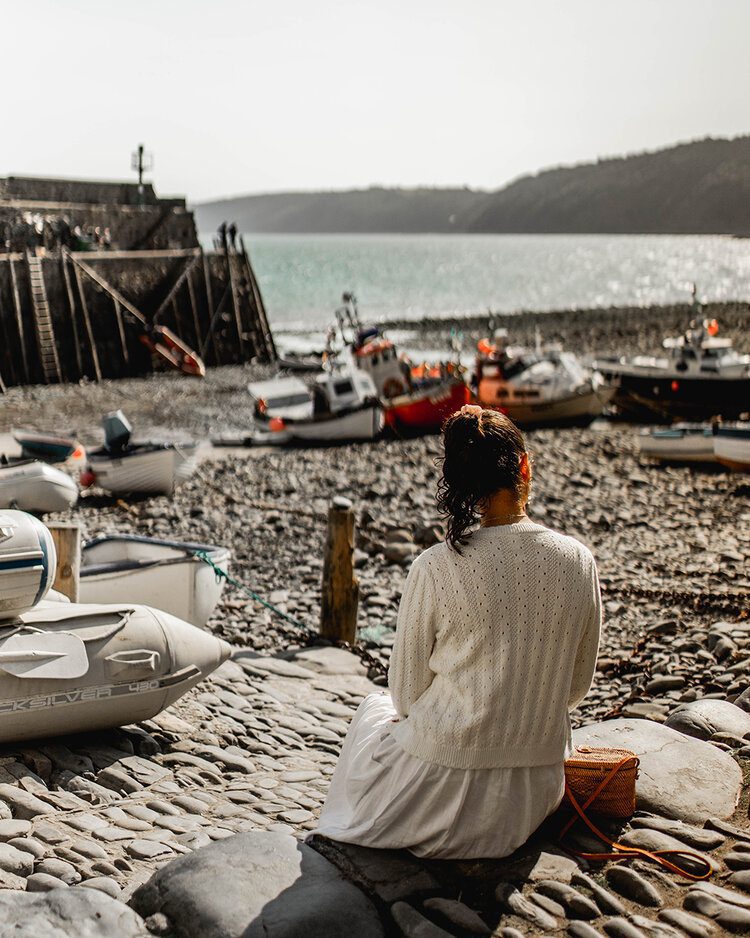
    Make your way down to the end of the high street to get access to Clovelly quay and the beach. If you specifically want the quay either full of water or dry then you will need to check the tide times here. We went at low tide, which is why the boats are on the ground.

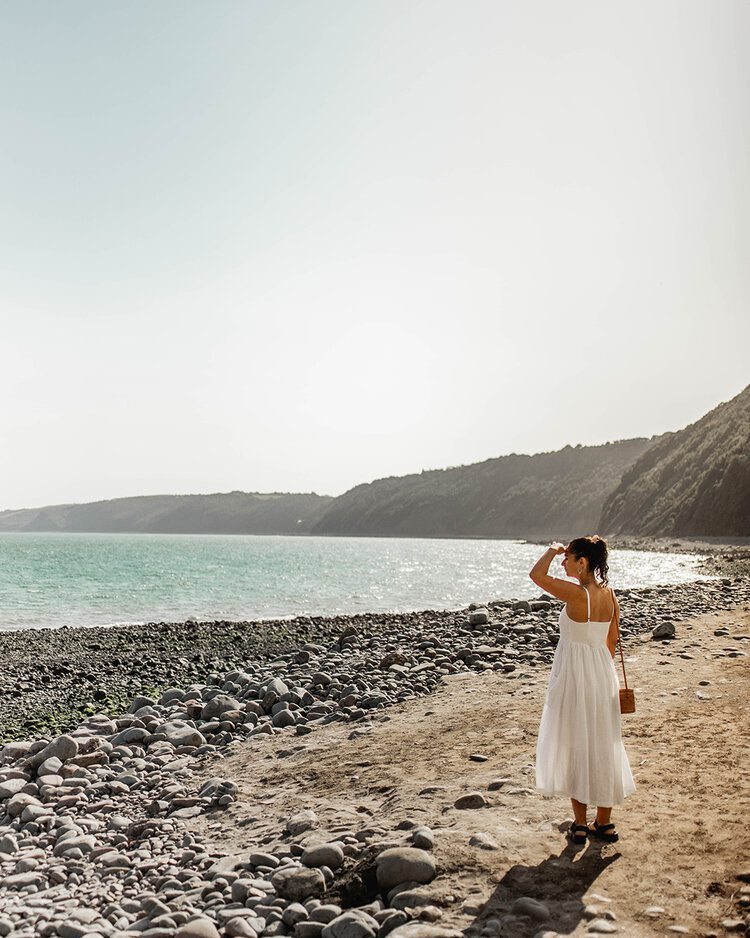
    Take snaps around the quay then take a walk along the beach with the sea to your left. At low tide you’ll be able to walk out to the shore and look back at Clovelly to take photos of it appearing to tumble down into the sea. 

    Heads up, it’s not a sandy beach so if for some reason you decided to ignore my advice earlier when I said wear comfortable shoes, then PAY ATTENTION NOW; the stones are wobbly because the changing tide is forever displacing them and many are covered in seaweed and algae making them slippery, so wear practical shoes so you don’t snap an ankle, capeesh?

    3. Cottage Tea Rooms

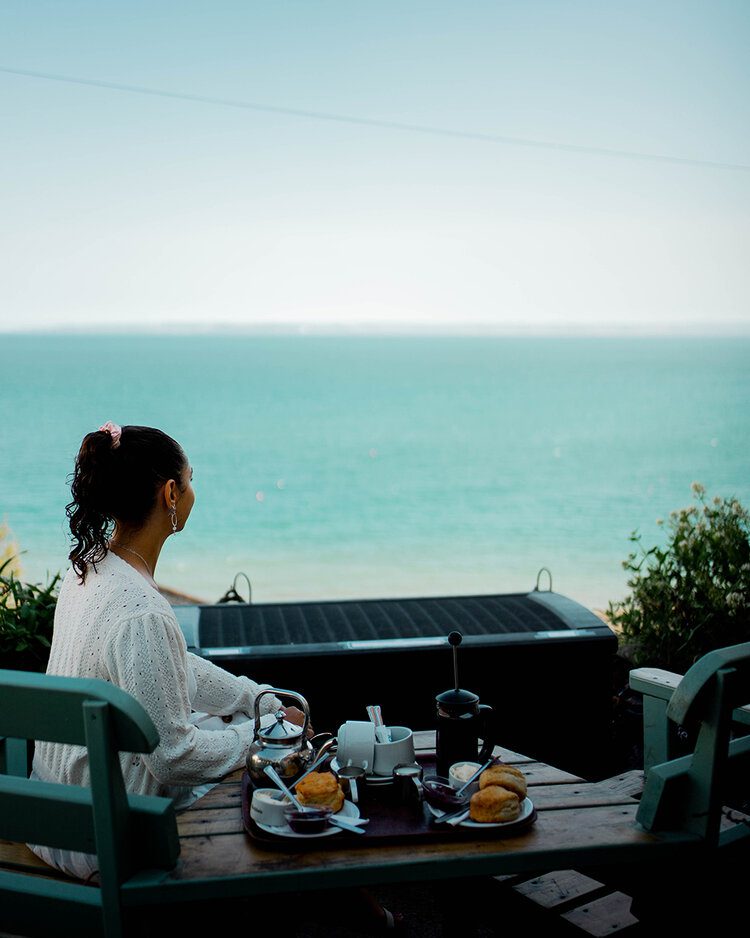
    Read more about eating at the Cottage Tea Rooms below under “what to do in Clovelly”, but I’ll quickly tell you which table to sit at to get the best photos of you enjoying a Devon cream tea with a stunning backdrop. 

    Order to eat in the garden and head straight to the back, right past all the benches, and up to the next cottage’s front door. There on the left, you will find two large chairs, attached to a small table in the middle, looking out to sea. This is the best table as it’s the only one that faces directly towards the sea, not side on like the others, and there’s enough space to get behind it to take photos (or get someone else to take photos of you) of your Devon cream tea and the sea.

    This only works if there’s two of you, I should note as well, there’s only two chairs. If there’s more of you then you’ll have to pick a larger table closest to the sea view and sulk about not being able to sit at the best table I’m afraid.

    What to do in Clovelly 

    With a slight crossover from my little Clovelly photo guide, here is where I expand on how you can spend your day exploring this picturesque village.

    Walk along the beach

    Once you’ve explored the quay that has been keeping boats safe from the wrath of the sea since the 14th century, take a stroll along the pebbled beach to take a look back up at the village, taking in all of its charm including the Lifeboat house which was first in service in 1870 and the oldest cottage in Clovelly, Crazy Kate’s Cottage. The cottage with its long balcony looking out towards the harbour has a sad story behind its name but is one of the villages defining features. At high tide the water comes straight up to the foundations of the cottage.

    As I mentioned in my photo guide, where you can walk to on the beach depends on the tide. If the tide isn’t high, you’ll be able to safely walk along the beach where you’ll find Clovelly Waterfall. Legend has it that Merlin the Arthurian magician was born in the cave behind this waterfall. 

    Cream tea with a view

    A first glance of the village might tell you to get a Devon Cream Tea from the Red Lion pub and sit on the tables outside looking out across the quay but this is not the path for you, oh no, I have something much better for you. Once you have began your ascent up from the beach, take a left into the Cottage Tea Rooms and order to an outside table in the garden around the back of the cottage. 

    If you’ve read my photo guide above then you’ll know which table to go for, if you haven’t then do yourself a favour and scroll up to read it instead of skipping ahead! Aim for an early lunch to beat the lunchtime rush so you have a better chance of getting a seat.

    Their menu offers light lunches, snacks, cakes and cream tea, including a gluten free scone option. Remember in Devon, the cream goes first!

    Fisherman’s Cottage and Charles Kingsley museums

    Just up along from where the tea rooms are located and on the same side is the Fisherman’s Cottage Museum. Pop inside to take a glance at what home life looked like for a Fisherman’s family in the 1930s. The rooms are decorated with period pieces, some of which have been donated by families that have lived there for generations. As you enter you will find an original well that helped to provide the village with water before the main water line was installed. There’s also a collection of framed wedding photos dating back to to the late 1800s.

    Attached to the Fisherman’s Cottage Museum is the Kingsley Museum. Charles Kingsley (1819-1875) was a Victorian writer who grew up in the village. His most famous pieces are “The Water Babies” and “Westward Ho!”. His work is known to have drawn visitors to the village.

    Both the museums are free to enter under the cost of your admission ticket.

    Shopping in Clovelly

    Shopping in Clovelly is a real treat as the craft workshops offer an array of handmade items perfect for personal souvenirs and gifts. What’s particularly precious about the Clovelly workshops is that the fabrics and soaps encourage creativity and self care, they inspire you to do more than buy something to take home, but instead to indulge yourself in a rewarding sewing project or an aromatherapy bath that’s both healing for your soul and a lasting memory of your visit to Clovelly.

    Clovelly Silk 

    Clovelly Silk was one of my favourite parts of visiting Clovelly. The workshop is owned and ran by a couple, Ann and Bill Jarvis who have a rich history in the textiles industry; Ann was head of Liberty of London’s design studio for 10 years where she worked on some of Liberty’s classic prints from their archives whilst designing new ones for their dress and furniture lines. You can purchase a Liberty print bag from their small collection in their shop.

    Please ask permission before taking photographs of their workshop.

    Clovelly Silk is most famous for Ann’s creation of their custom repeating print, “Toile de Jouy” which she created using six of world famous artist, Rex Whistler’s, illustrations of Clovelly which he originally made in 1932. Their “Toile de Jouy” print is available to buy on cushion covers, tea towels and even face masks in six colours. Alternatively, you can buy some fabric to create something yourself for just £25, how’s that for the most darling and personal souvenir of Clovelly?

    Toile de Jouy in Emerald Green.

    As much as I want to keep sharing about Clovelly Silk, I want to you learn about Rex Whistler’s illustrations and the story behind “Toile de Jouy” yourself from Ann and Bill Jarvis because they are such wonderful people with so much passion for their work and pride in the village.

    PFH Fun Fact: HRH The Princess Royal own a “Toile de Jouy” silk scarf.

    Clovelly Pottery

    Need a new mug for your morning cuppa or fancy egg and soldiers out of some handmade egg cups decorated with a pattern unique to Clovelly? Well isn’t that that convenient as Clovelly has its very own pottery workshop selling a collection of work from Clive Pearson and Caroline Curtis.

    Clovelly Soap

    The Clovelly Soap Shop not only sells intoxicating handmade soap wrapped in their custom designed paper, but it also sells all the eco-friendly pampering accessories your heart desires including matching candles, organic cotton towels, bamboo hair wraps and more.

    Their plastic-free artisan soap collection includes:


    • Hand soap


    • Beard wash


    • Shampoo


    • Dog shampoo


    (psst, they take American Express and participate in Shop Small, so if possible, line up your visit when that offer is on).

    Clovelly Fudge

    Back up at the Visitor’s Centre, there’s a small shop selling handmade Clovelly fudge in ever changing seasonal flavours. Perfect for a sweet treat for yourself or a gift to take home.

    Clovelly Court Gardens

    Before leaving, visit the Clovelly Court Gardens that are located at the top of the village. The Victorian walled garden is included in your entrance ticket and features glass greenhouses filled with Mediterranean flora and fauna, which can grow thanks to a maritime microclimate. Unfortunately we didn’t learn of the Clovelly Court Gardens until we had already left so I don’t have any photos for you.


    If you take a trip to North Devon, be sure to add Clovelly to your list! I want to add that there are two hotels in the village, The New Inn at the top of the high street and The Red Lion down at the quay, so should you be interested in extending your stay in the Clovelly, those are your options. 

    .

    Gabriella

    Pin this post


  • A guide to spending the day at the British seaside

    A guide to spending the day at the British seaside

    Well it’s not quite the Great British Summer we were expecting for 2020 but it won’t be like this forever! Let’s make the most of what we have left of the summer and then this little guide will still be around for years to come when you (whether you live in the UK or plan to visit) can spend a classic day at the seaside doing all the things that make summer by the seaside the quintessential pastime that it is.

    I wanted to put this guide together for anyone coming to a British seaside town for the first time, so that you can spend the day doing all of the classics that so many Brits have enjoyed for years. 

    Fun Fact: The day below is my ultimate date plan. My favourite days spent with Michael at home are doing exactly what I’ve listed below. I don’t (always) need a fancy dinner, just give me a handful of 2ps for the arcade and chips swimming in vinegar and I’m on cloud nine.

    Find a spot on the beach

    The goal here to is arrive early to nab a good spot and then spend an almost absurd amount of time there; I’m talking hours. You don’t want to leave until sand is everywhere: hair, mouth and even your bits. If sand isn’t washing out of your crack in the shower at the end of the day, you didn’t stay at the beach long enough. 

    Things to do on the beach:


    • Read a book


    • Make a sandcastle


    • Do a beach clean (and dispose of the rubbish/trash responsibly)


    • Swim in the sea, even if it’s a little chilly


    • Bodyboard, paddle board or surf


    • Rock pooling (discover the sea life living in the rock pools during low tide)


    Things you might want to consider bringing with you for a day at the British Seaside:


    • A windbreaker


    • Collapsible camping chairs


    • A net


    • A bucket and spade


    Please either keep hold of your bucket and spade to reuse and if you don’t want to travel with it, please hand it to a family so that their kids can use them. NEVER leave your bucket and spade on the beach, the tide will carry them out to sea and it will pollute the ocean and could kill marine life.

    THIS IS VERY IMPORTANT: Check the tide times before you plan to go. Having worked in a little café on the beach for 9 summers when I was younger, if I had a penny for every time a tourist asked me where the beach was I wouldn’t have had to work as a waitress for 9 years! Many beaches will be covered during high tide so check the tide times for your beach of choice online. 

    High tide: the sea has come in and is covering the beach.

    Low tide: the sea has gone out and the most amount of beach is uncovered.

    Please make sure you drink plenty of water and regularly apply suncream. Pay attention to signs on the beach that indicate safe swimming areas/rip tides.

    For a packing guide for a day at the beach, check out my blog post: what’s in my beach bag.

    Fish & Chips for lunch

    If you’ve read my blog post, Traditional British meals every traveller needs to try then you’ll know that fish and chips is one of my favourite meals of all time. I cannot go too long without fish and chips, fish and chips is life. If you’re vegan, drop the fish and just go with the chips, many places will fry in veg oil, but check in advance.

    Check out my blog post Traditional British meals every traveller needs to try to read about your different condiment options.

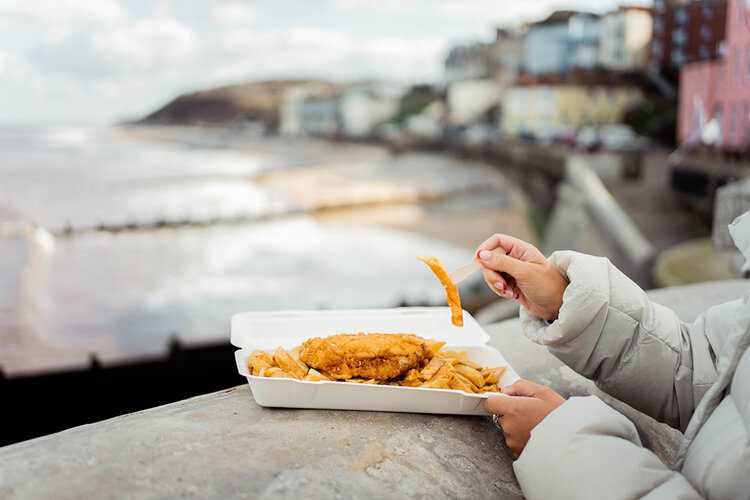
    When getting fish and chips on a day at the beach, you’ll want to get to the chippy before 12pm or later in the afternoon to avoid queues longer than Brighton pier. Get them open (rather than wrapped) so you can add your own salt and vinegar, then head back to the beach. Yes you’re probably going to get sand in your chips, but that’s part of the charm. 

    PSA: Beware of the seagulls!

    Visit the local shops

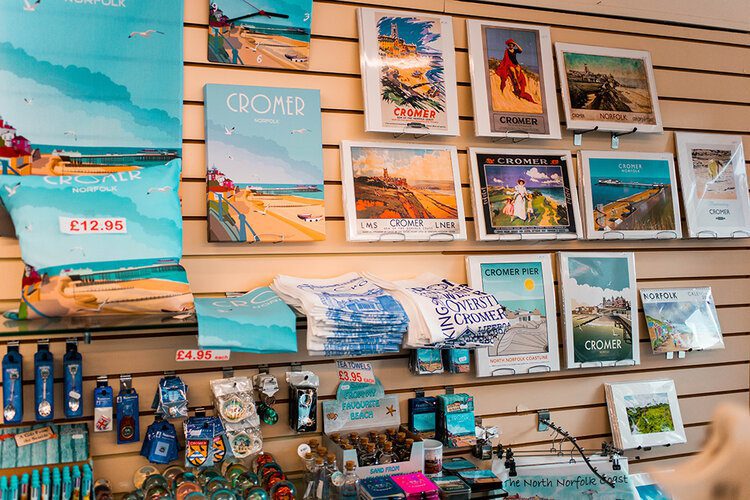
    No trip out is complete without a souvenir of the day. With so many locally made options, it would be a shame to leave the seaside with a standard trinket over a unique-to-the-area souvenir. For example, when visiting the Norfolk seaside, you absolutely must pick up something made with Norfolk lavender or when in Brighton or Blackpool you can’t leave without a stick of rock (hard candy).

    Spend purposefully not mindlessly and support local businesses.

    Enjoy a 99 Flake ice cream

    Ice cream comes after the shops because many won’t let you in with food and drink… it’s fair, I’ve been both the customer who accidentally dropped their ice cream and the shop assistant who has had to clean up the ice cream off the floor, so shop then eat.

    Unless you have allergies – in which case you can get an ice lolly, sorbet or ice cream in a pot – the only ice cream you should be eating at the seaside is a 99 ice cream. But Gaby, what on earth is a 99 ice cream? It’s a soft whip vanilla flavoured ice cream that should be (but isn’t always if you’re being served by a teenager) delicately swirled into a wafer cone (that tastes like nothing but it’s not the same without it) and then penetrated by a Cadbury’s chocolate Flake (a crumbly chocolate stick that falls apart when you try to eat it). Honestly it’s the basic bish of British ice-cream but summer just wouldn’t be the same without it.

    Contrary to popular belief, a 99 Flake ice cream didn’t get its name from its price but unfortunately no one really knows why it is called a 99 flake, 99 or ninety-nine. The true origin has been lost in time with many people claiming to be the first to snap a Cadbury’s Flake in half and stuff it in an ice cream. Origin stories cover tributes to the First World War, cricket, Italian Royalty and shop addresses. Either way, not knowing why it’s called a 99 Flake ice cream is part of the charm.

    Ideally you want to purchase your 99 Flake ice cream from an ice cream van with copyrighted cartoon characters with slightly askew features. Ice cream van jingles are the sound of summer!

    Play in the seafront arcades

    In the days before we all carried around copious amounts of hand sanitiser, I would make sure eating our ice cream came before going to arcades, because there’s nothing sanitary about handling decades worth of copper pennies and then eating with your hands.

    The arcades is one of my favourite parts of the day, it’s good fun with minimal effort and provided you don’t get carried away, it doesn’t cost much. 

    The most classic machine to play is the 2p slot machine. Not just any 2p slot either, you want the one that looks like this one in the photo, where there’s a whole platform pushing coins rather than rickety old arms that barely push the coins anywhere. This machine will give you your best chance of getting more coins back.

    Your technique should be to drop your coin as the top shelf is drawn in, so that by the time it lands, the shelf is all the way out, then when it draws back in again, the coin will push other coins froward and hopefully off the shelf. 

    The goal of these machines is to win something crappy that’s hanging off the edge but if it’s not something you’ll use, either play for the fun of it or even give it back to prevent contributing to waste (because really, these prizes are naff, except for the time I won a High School Musical pen, I still have that). Many arcades offer tickets/tokens that you can collet to buy better toys, but really you’ll only collect enough for some sweeties/candy.

    To manage your spending at the arcades, don’t change up more than £5 of 2ps. Honestly you can get your kicks on a couple of pounds and anymore than £5 you should have just spent it in one of the local gift shops instead. There will be various change-maker machines around the arcade but if you have notes, take them to the counter to be changed up.

    Playing 2p slot machines in the arcades at the seaside is a simple pleasure in life that I think everyone should experience, if possible.

    Grab a pint from the pub

    After a long day at the seaside, it’s really only logical to end it with a cold pint, or something equally classic such as a Pimm’s No.1 Cup or a G&T, at one of the local pubs. 

    If you don’t drink alcohol, don’t worry, this isn’t quite so much about drinking as it is socialising and taking a pause to savour the day you’ve just had at the beach before leaving. Whether it’s a pint of local ale or lemonade, take it out into the beer garden and enjoy what’s left of the sunshine before it dips below the buildings.

    If you are drinking an alcoholic beverage, firstly drink responsibly, and second try a locally brewed beer, cider or gin.

    .

    Gabriella

    Pin this post


    .

    If the photos are confusing it’s because I had originally started shooting this content back in February 2020 (pre-pandemic) for something else, hence the winter gear but I guess it shows you can do ALL of this no matter what time of year it is.