Tag: single-use

  • Why travellers should switch to reusable bamboo pads from Tayvada

    Why travellers should switch to reusable bamboo pads from Tayvada

    Tayvada is an environmentally-conscious, female-owned business based in the USA. Founder Linda Bogdanov’s vision for her brands is to empower everyone to practise self-care in a responsible way that puts the protection of our planet at the forefront of our minds as we do so. Tayvada’s first product is the reusable makeup remover pads that are growing in popularity and recently featured on Glamour.com as one of their top picks for reusable makeup removers.

    Tayvada x Postcards from Hawaii giveaway!

    View this post on Instagram

    A post shared by Postcards from Hawaii (@gabriellawisdom)

    I’ll be taking you through why I love using Tayvada’s reusable bamboo pads, how I use them in my daily skincare routine, why they’re a responsible choice as a sustainable swap in your bathroom and what to expect when you order your own.

    Why reusable pads are better for the planet than single-use cotton pads

    “I started thinking about my own beauty habits and how I was using a lot of disposable cotton pads to take my makeup off and I was using makeup wipes when I travelled.” – Linda, founder of Tayvada.

    The most important thing I want to start off with is explaining why reusable pads are better for our environment than using single-use cotton pads or wipes so with this, let’s explore the difference between the cotton that goes into the single-use pads and the bamboo that goes into reusable pads that should be replacing that daily waste.

    Bamboo vs cotton 

    Bamboo is an evergreen plant which means it remains fresh and functional all year round. It is a highly adaptive plant that grows quickly and is resilient to many pests. According to the Guinness World Records, the fastest growing plant is bamboo with one species having grown 91cm/35in in a day. Despite originating in China, with adequate soil conditions, bamboo can grow in different climates around the world. The use of bamboo can be traced back 7,000 years to the Shang Dynasty in clothing, food, housing, weapons and more. Its durability, strength (bamboo is actually stronger than steel) and renewability means it’s the ideal material for making sustainable products, especially as it naturally biodegrades at the end of its usage.

    Cotton might be the most profitable non-food crop in the world but the methods used to create the cotton that goes into approximately half of all fabrics worldwide are not sustainable and are causing a great deal of waste and pollution.

    Extensive use of pesticides and insecticides to control pests and risk of disease to the cotton plants are polluting the water, air and soil and is causing poor health to the people working on the production line. Not to mention that it takes approximately 20,000 litres of water to create 1kg of cotton before it even becomes something else.
    The average makeup-wearing womxn will use three single-use cotton pads in their daily skincare routine. It takes about 1,000 litres of water to create a pack of 100 single-use cotton pads (which usually comes in a single-use plastic packet) and that pack will only last the average womxn 33 days. Now compare that to Tayvada’s bamboo reusable pads which will last up to 1000 uses! Not to mention one gets thrown into the washing machine whilst the other gets thrown into a landfill.

    When the production of a product that can only be used once is far more damaging to the planet than one that can be used x1000 more, the choice seems obvious, right?

    Unboxing Tayvada’s reusable pads

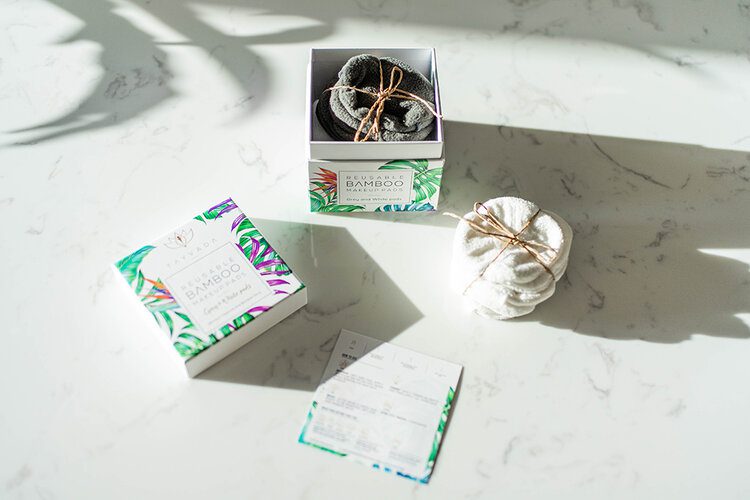
    The packaging for Tayvada’s reusable bamboo pads is minimal, 100% recyclable and can all be repurposed. The box is compact and high quality so you can use it for storage – I currently use one of mine to store some crafting supplies such as twine and tape – but the pretty Bird of Paradise illustration on the box is enough of a reason to keep it around – plus the twine and tissue paper can all be used again.

    Inside the box you receive 14 pads, seven are bamboo charcoal and the other seven are bamboo terry cloth. What’s the difference? Good question.

    Bamboo Charcoal pads 

    The grey fleece charcoal pads are the softest of the two types. They are ideal for makeup removal as they are buttery soft and won’t cause irritation to sensitive skin types. They can remove makeup with just water.

    Charcoal bamboo absorbs moisture so when you use the grey pads with just water to remove your makeup, your face is left clean of excess product and not wet, unlike if you were to use micellar water or an oil based product which leaves residue on your skin. 

    Bamboo charcoal also naturally draws out dirt, oil and toxins from deep inside pores to cleanse the skin. This is ideal because it reduces the size of pores and the likelihood of getting acne, it also makes for a more effective makeup removal process.

    Bamboo terry cloth

    The terry cloth pads are still soft but compared to the charcoal pads they have a textured surface made from minute loops that help to exfoliate by lifting up excess makeup, dirt, oil and dry skin from your face and out of your pores.

    These terry cloth pads are particularly great for applying your toner to remove any makeup that the naked eye can’t see or for removing face masks and/or scrubs. 

    This bamboo terry cloth is also the perfect towelling fabric for absorbing moisture, so I recommend having a little stash in your gym bag so you can pat your face dry from that healthy post-workout shine without irritating your skin.

    .

    There’s one of each for every day of the week so you can get away with washing them just once a week to keep regularity in your skincare routine. I put mine in the washing machine on Sunday morning, naturally air dry them and they’re ready to use by the evening.

    Earlier I mentioned that bamboo is resilient to pests, its natural antibacterial and anti-fungal qualities means the pads won’t grow any nasties in the few days you wait to wash them altogether. 

    The 14 pads come with their own mesh wash bag so they can all stay together and not go to the land of missing socks (I throw my face masks in their mesh bag to wash for that same reason). I wash mine on a 30ºC/86ºF eco wash along with the rest of my darks and/or colours with a dissolvable laundry detergent strip (from Tru Earth) that is free from toxic chemicals and microplastics. Despite them going on a cool wash, the makeup residue gets removed from my Tayvada pads every time with ease.

    A comparison between a new Tayvada Bamboo terry cloth pad and one I’ve been using for a year. It’s a little smaller and darker because it’s been washed so many times but the quality has remained.

    I’ve been using mine for a year now and, as you’d expect with frequent use, the white terry cloth ones have darkened over time but I’m sure if you were to do a warmer wash (think of the planet though) they would come out whiter.

    How I use Tayvada’s reusable bamboo pads in my evening skincare routine

    I use the grey bamboo pad with just water to remove my makeup (yes, I use just water and the pad). Winged eyeliner is part of my everyday makeup look and has been since I was a teenager so I know what problematic makeup removal can look like and I have never had a problem removing it with Tayvada’s reusable pads.

    Something I particularly love about Tayvada’s bamboo pads is that the little pocket where your fingers slip in allows for better grip and control of the pad on my face plus it means that the full surface area can be used for better makeup remover/product application. I am able to utilise both sides of the pad to remove my makeup with ease and if I’m wearing a little more that day then I simply turn the pocket inside out and use that extra clean surface to utilise it all.

    Like with many makeup removal processes one technique doesn’t usually get it all and the naked eye could be missing something, so once I have removed what’s visible with the grey pad, I spray some toner onto a white bamboo terry cloth pad and apply it across my face. This usually lifts the last of my makeup from my skin.

    I then exfoliate my face with a coffee scrub which I remove with water and the same white terry cloth pad I just applied toner with. The little loops of the bamboo terry cloth pick the coffee grains up off my skin and prevent me from making too much mess in the sink (if you’ve tried to remove a face mask or scrub with just your hands and water you’ll know exactly the kind of mess I’m referring to). 

    I then apply a serum and moisturiser before using my gua sha to cool and sculpt my face.

    At least once a week I like to apply a face mask – #selfcare – and to again minimise mess and add a little exfoliation to the process of removal, I use one of the bamboo terry cloth pads to take it off and my skin always feels smoother than when I haven’t used it.

    Once I’ve finished with the pads I simply rinse the pad of coffee and/or face mask as best as I can, then leave them on the edge of the sink to dry before adding them to the wash bag they came with. 

    Why they are perfect for travellers

    One of the most responsible things a traveller can do is do their best to evolve their travel routine into a more eco-conscious one. Travelling is a top contributor to rising carbon emissions, plastic pollution and food waste (to name a few) but of course only a worldwide Coronavirus pandemic can hold many of us – who are fortunate to have the opportunity to travel – back. So it’s of high importance that we make changes that will reduce our carbon footprint as much as we can so that each time we explore our beautiful planet, we aren’t causing her further pain.

    “I had travelled quite significantly and realised the impact this was having on the environment and how my consumption habits in general were impacting our planet. I started thinking about my own beauty habits and how I was using a lot of disposable cotton pads to take my makeup off and I was using makeup wipes when I travelled.” – Linda, founder of Tayvada.

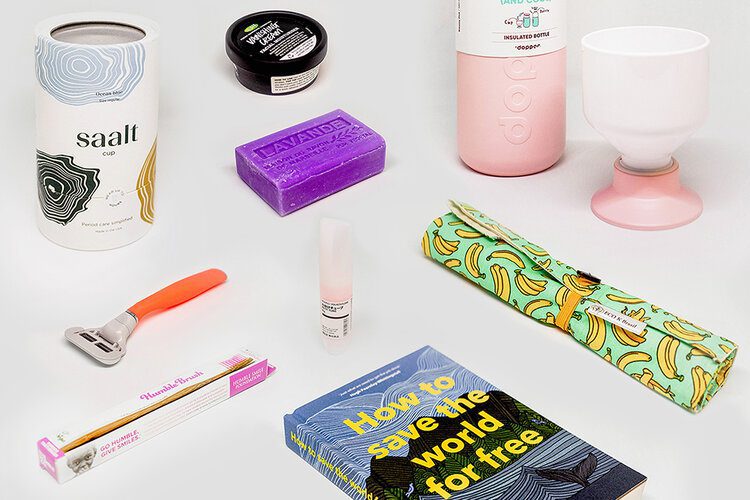
    Some of the many things we can do is offset carbon emissions from our air travel (click here for my blog post that explains how you can do that), avoid staying in all-inclusive resorts (their daily food waste is heartbreaking) and pack items that prevent us from using single-use products that will be contributing to that country’s pollution crisis. Some ideas on reusable items you can bring with you are a water bottle (if you’re going somewhere where the water could be contaminated then bring filtration tablets or seek out a bottle with a filter), straws and cutlery, shopping bags, a menstrual cup and bamboo pads such as the Tayvada ones this very blog post is all about. Fancy that!

    Ok so you know they’re better for the environment than the single-use cotton pads but need a few more reasons as to why we travellers need them in our toiletry kit? Well I’ll answer that now, I know, I’m good to you like that:


    • Unlike a bulky pack of wipes or stack of single-use cotton pads, with enough to cover at least three per day that you’re away these reusable pads won’t take up as much space as you won’t need to pack so many. You can just take a few of each and wash them as you go.


    • They prevent the need for bottles of makeup remover, so there’s less toiletries to pack making your packing process quicker and your luggage lighter.


    • You can travel with an easy mind knowing that your skincare routine isn’t contributing to further daily waste to where you’re travelling to and to the planet.


    • They’re soft on your skin which is welcomed when travel, from pollutants to recirculated air, takes its toll on it. 


    • For every box of Tayavada’s reusable bamboo pads sold they offset the carbon footprint that would be created by a an entire year’s use of single-use cotton pads. So you’re not only saving waste by not using them but you’re helping to counteract the impact for someone who doesn’t have the privilege to afford such a product. To read more about their partner Cool Effects, click here.


    Shop from Tayvada here

    You can purchase your very own pack of Tayvada’s reusable makeup remover pads from their own website here.

    You can also shop them on Amazon in the US, UK, Canada and Mexico. They’re Amazon’s Choice recommendation for reusable makeup remover pads as well as mine.

    If you are in the US you can also shop the pads on Etsy here.

    .

    Tayvada has more low-waste products launching in the coming months, all of which have been designed to replace many of the single-use products we use daily and with the intention of levelling up our self-care rituals. I for one am very excited for what Tayvada has coming next and can’t wait to share it with you.

    Gabriella

    Pin this post


    For full transparency I was originally gifted a box of Tayvada’s reusable makeup remover pads but upon finding they are far better than the ones I was using before (which I have repurposed for alternative cleaning), I purchased more as gifts. This article is a paid piece for Tayvada.

    As an Amazon associate I earn from qualifying purchases.

  • Sustainable stocking fillers for travellers with Coconut & Cotton

    Sustainable stocking fillers for travellers with Coconut & Cotton

    As a follow up to my annual gift guide for environmentally-conscious travellers, Low-waste Christmas gift guide for travellers 2020, Coconut & Cotton and I are bringing you 8 gift ideas for filling the stockings of the travellers in your life with little goodies that they can use on or to remind them of their travels, plus they’re all low or zero waste! 

    To make things better, not only will these gifts be given and received guilt-free, they’re also under £5 each so you can gift responsibly and with love whilst saving pennies which seems to be becoming increasingly hard to do as the festive season rolls around each year. 

    It might be the most wonderful time of the year but it really can’t be ignored that Christmas is also the most wasteful. With approximately 30% extra waste produced via packaging, wrapping, food and unwanted presents it’s so important that everyone takes the right steps towards reducing waste this year. A few ways are:

    As you’re reading this sustainable gift guide, you’re already looking to purchase meaningful and low-waste gifts so that’s amazing and thank you for that! You’re on your way to making the world a better place for everyone.

    Before we take you through our 8 sustainable stocking filler suggestions, let me take a moment to introduce you to Coconut & Cotton (if you haven’t already spotted them on my Instagram Stories).

    Coconut & Cotton is an Earth conscious brand physically located in Shaftesbury, Dorset which is in the south-west of England. All of their products are 97.6% plastic free (they did the math!) and it’s a shopping experience that sustainable dreams are made of. They also have an online shop so you will be able to add everything on our list to your basket by clicking on the product name or images below. Coconut & Cotton is an essential shop that is open during the pandemic so you can shop in-store if you are nearby, but if you aren’t they ship out everything that’s available online in plastic-free and reusable packaging.

    They also run a monthly giveaway that all online shoppers are automatically added to where you’ll have the chance to win a variety of low-waste goodies from their shop. I actually won one earlier this year and received four bars of French soap which I travelled across the UK with as a responsible alternative to the liquid hand soaps and shower gels in the Airbnbs I was staying in.

    I first came across Coconut & Cotton when a fellow 4ocean partner recommended them over Instagram and after looking at their wide range of well-considered and reasonably priced products I was sold on them and I put in an order straight away for some low waste travel essentials (some of which I’ve listed below). Ever since then I have turned to Coconut & Cotton for most of my bathroom, kitchen and travel products. They have everything covered from cooking and cleaning to self care and education, they even have plastic-free toys for children to encourage them to play mindfully!

    Aside from shopping responsibly from Coconut & Cotton, I highly recommend following their Instagram: @coconut.and.cotton because Lucy, the founder of Coconut & Cotton is always on Stories providing highly amusing content that is worth tuning in to not just because she’s so relatable but she also shares new products, does frequent shop tours in case you’ve missed something, product reviews and tips for living a more Earth conscious lifestyle.

    Now you know how amazing Coconut & Cotton is, let me take you through our top 8 low-waste/zero-waste/plastic-free stocking fillers for travellers with a sustainable heart:

    Reusable face mask

    A reusable face mask should be at the top of every traveller’s packing checklist along with their passport. In pandemic centric times we need to put the safety of everyone before anything else and the best ways to do that is to cover faces and clean hands. Along with everyone else, travellers will need to wear a face mask whilst inside buildings and on public transport and as flights could be numerous hours long, they’ll need one that’s comfortable to wear for long periods of time.

    These reusable face masks from Coconut & Cotton are particularly amazing because they are made from 100% Fairtrade cotton, have a pocket to insert filters and they have a built in nose wire for maximum comfort and fit.

    My Coconut & Cotton face mask was the first one I bought and I can tell you it has kept and washed well after months of use.

    Reusable – as always – masks are better for the environment because they create far less waste, they don’t put any critter’s lives at risk (remember to cut your straps before disposing of single-use masks if you have them) and they are plastic free. Then one day, when we don’t need them anymore they will make a great dust cloth.

    Cost

    £4 – 5

    They are available in a variety of colours and in three sizes:

    Bamboo toothbrush

    A massively overlooked bathroom item which has a dreadful impact on the environment is the plastic toothbrush. Did you know that every plastic toothbrush ever used still exists on this planet and will do for approximately 1000 years? Not only do we frequently change toothbrushes for optimal oral hygiene but travellers tend to have multiple toothbrushes on-the-go for when they’re well, on-the-go; I have two in my bathroom (one is for taming my baby hairs), one in my toiletry bag and another in my carry-on toiletry bag for when I travel light. So imagine if those were plastic, how much more waste there would be and was in the years before I made the switch to bamboo toothbrushes.

    Bamboo toothbrushes are the most responsible choice because bamboo is a sustainable material. It is 100% naturally biodegradable and easily sourced. The bristles just need to be removed as they won’t naturally break down.

    PFH Top Tip: travellers can repurpose their old toothbrushes to clean dirt from their hiking boots.

    Coconut & Cotton has a variety of bamboo toothbrushes available online and in-store. This one is from their essential range and is reasonably priced at just £1.50.

    Take a look here for Coconut & Cotton’s plastic-free toothpaste options, some come in travel-friendly containers too.

    Cost 

    £1.50

    Travel Soap

    A bar of soap is the most sustainable toiletry product that a traveller can use on their trips around the world. They have little to no packaging, they last far longer than liquid soap and they are multipurpose. 

    This Travel Soap bar in particular from Coconut & Cotton can be used four ways:


    • as body wash


    • as shampoo


    • for shaving


    • for laundry 


    Not only is this great in terms of preventing further waste from additional products but it also means the traveller you are buying for doesn’t have to pack multiple toiletries, so you’re also gifting them more space and lighter luggage (which is also better for the environment).

    All soap bars from Coconut & Cotton are either packaging-free or in recyclable packaging. This one is also free from parabens, palm oil and cruelty.

    Cost

    £2.80

    Soap tin

    Soap dishes or the side of the bathtub (I know I’m not the only one) suffice at home but travellers need a way to keep their bar of soap sanitary when packed away.

    A simple tin will protect their soap in their luggage and this rectangular one from Coconut & Cotton is the perfect size for a bar of soap and I have never had a problem fitting any bar of soap in it that I have purchased or been gifted.

    Cost

    £2.50

    Natural suncream

    For all travellers (with hopes of) heading to warmer climates in 2021, help them to protect their skin and the environment with a natural suncream such as this one by Shade.

    Suncream is a silent killer. Chemicals such as Oxybenzone and Butylparaben that are in most suncreams cause coral bleaching and disrupt their reproduction, ultimately killing coral reefs, collapsing whole ecosystems and displacing the marine life that once made it home. It is crucial that everyone uses reef safe suncream to help preserve the marvellous marine life that we so love to admire. 

    To help travellers have less of an impact on the delicate ecosystems that they will be snorkelling and/or scuba diving to, make sure they’re equipped with a suncream that will protect both them and coral.

    This natural suncream by Shade from Coconut & Cotton is free from nasty chemicals, is compact so it won’t take up much room in their beach bag and it comes in a reusable tin! 

    “Unlike many chemical sunscreens, Shade™ does not contain burn inhibitors which switch off the burning sensation. If you feel you are beginning to burn, it’s your body’s warning to you that you have been exposed for too long, and the sensible approach is to cover up by wearing clothing or move out of the sun altogether.” – Coconut & Cotton website.

    Cost

    £3.75

    Mini bamboo spork

    You may have noticed a running theme of keeping things compact and light. This is so important for travellers to keep luggage costs down and to fit more in their luggage. Of course, packing reusable items to prevent contributing to our planet’s growing plastic pollution crisis means we have to pack a little more than someone who isn’t taking the necessary steps to save our planet, so finding small reusable alternatives is welcomed. 

    With that said, this little Bamboo Spork from Coconut & Cotton is the ideal small replacement for single-use cutlery when they’re eating on-the-go. Whether it’s tucking into their own packed meal on their train, shaved ice in Maui, an Acai bowl in Bali or a superfood salad in L.A. (a traveller can dream, ok?) they will have their mini spork at the ready!

    Then one day, when it’s no longer usable it can be popped into the compost or used as really tiny firewood.

    Cost

    £2.50

    Moroccan mint tea

    For those travellers who don’t have a trip coming up soon and miss one of the best parts of exploring new countries: trying exciting local and national dishes, we recommend popping a packet of loose tea in their stocking. In particular, this Moroccan Mint Tea from Coconut & Cotton. 

    I wasn’t a fan of mint tea until I went to Marrakech, Morocco in 2017 and now I drink it frequently as a digestive aid after a large meal, just nowhere near as sweet thank goodness. For any traveller who has experienced the spectacle that is being served mint tea in Morocco, this tea will be a very exciting gift and a nostalgic taste of north African and Arab cuisine.

    Loose tea leaves are far more responsible for the environment than tea bags as they eliminate the additional packaging and more importantly they are plastic free. Unfortunately half of the UK’s leading tea bag brands use a plastic skeleton in all of their tea bags and considering millions of cups of tea are being made in Britain daily, that’s a scary amount of plastic being thrown out every time someone enjoys a brew.

    I switched to loose tea leaves Christmas Day 2019 and to the published date of this blog post I have saved myself from adding at least 550 plastic tea bags to the planet.

    Coconut & Cotton has a wide variety of loose tea and is probably the best priced loose tea I’ve seen.

    Cost

    £2.80

    Cocoa Loco cocoa nibs and hazelnut chocolate bar

    What’s a stocking on Christmas day without chocolate? I know, it’s a daunting thought! So whilst you’re filling the stocking of the traveller in your life with wonderful travel-themed gifts, pop in a bar of something sweet like this Cocoa Loco chocolate bar so they have something extra special to nibble on whilst they wait for their bus/train/plane etc.

    Cocoa Loco produces organic, Fairtrade and vegetarian chocolate that is free from palm oil.

    Coconut & Cotton also stock a Sea Salt Dark Chocolate Bar and chocolate covered mango and raspberry pieces.

    Cost

    £3.50

    .

    The Coconut & Cotton shop in Swans Yard, Shaftesbury is open Monday – Saturday, 9:30 – 5pm.

    If you have any questions feel free to reach out to Lucy either via Coconut & Cotton’s Instagram or email her at hello@coconutandcotton.co.uk. 

    Happy Holidays, Gabriella

    .

    Pin this post


  • 10 easy ways everyone can be a sustainable traveller

    10 easy ways everyone can be a sustainable traveller

    Frequent travel is not good for our environment. Yes I said that. When compared to staying at home the impact of air travel emissions or water wastage in hotels – just a couple of examples – are taking their toll on our beautiful planet. Beautiful she is though and so we are desperate to explore all the wonderful things Earth has to offer. From hiking closer to cascading waterfalls that drop from luscious green cliffs hundreds of metres into the sky to snorkelling in reefs where fish of all colours of the rainbow inquisitively dart between your limbs, we don’t want to deny ourselves of these opportunities.

    Seeing those luscious and bountiful forests burn up and the coral reefs bleach and die are heartbreaking but very real scenarios and they are happening across Earth frequently as a repercussion of the times we have all chosen convenience over sustainability. So how do we continue to travel Earth but start to become more mindful of the impact we are having on it? The way to begin is to make more sustainable choices in our regular travel routine and with that being said, here are 10 easy ways that everyone can be a more sustainable traveller, really simple swaps that we can all do to make our travels less impactful and more responsible:

    1. Transportation

    If given the choice between walking and taxi (Uber etc.) you should walk. It not only cuts down on fuel usage but it also saves you money and is a way to work more exercise into your day.

    If given the choice between a taxi (Uber etc.) or public transport, take the public transport. Compared to private car journeys, public transportation produces less air pollution and reduces traffic congestion.

    If you need to hire a car, look for an economic option such as cars that use less fuel or are either electric or hybrids. In years gone by we have rented large fuel guzzling cars and it is not something I intend to do again. 

    Avoid cruises! With the mass generation of hazardous chemical waste, these beasts are polluting both the air and sea! Never mind the fact that a single person’s carbon footprint triples when onboard a cruise. I understand the appeal but please consider that cruises are incredibly damaging to eco-systems, please avoid them at all costs.

    2. Carbon offsetting

    The most responsible way to travel (aside from walking as mentioned above) is to travel by bus or train and though there are many amazing networks in place around the world, not everywhere is connected by rail or road, I mean, I won’t be moving to Vancouver from England on a train anytime soon.

    So the very best things we can do when a flight is involved is to book direct flights and carbon offset them. Check out my blog post, How to carbon offset your flights for three companies that I recommend using including information on what it is that these companies do, how you can calculate your emissions and how much carbon offsetting costs.

    Oh, also pack less, it’s hard I know and something I still have to keep pushing myself to do but lighter suitcases means lighter aeroplanes which means less fuel consumption and so less carbon emissions. 

    3. Environmentally friendly products

    Switch from using single-use products or products with non-recyclable/biodegradable packaging. Every little swap makes a BIG difference to the planet and lessens your contribution to plastic pollution.

    For 26+ ideas on which sustainable swaps you can make for not just on your travels but in your daily-routine take a look at my blog posts:

    Sustainable swaps for travellers

    10 Lush products for reducing plastic usage whilst travelling

    4. Responsible tourism

    The tours and excursions you book tell a big story of the type of traveller, nay person (yeah that’s right I said nay) you are. To knowingly partake in any activity that causes harm to animals and/or the environment is something that needs to stop. 

    Animal tourism stems from the brutal treatment of animals which includes drugging, caging, under-feeding and bullying — just to name a few — to manipulate them for the owners needs. Avoid visiting big cat enclosures, elephant rides, posing with chained monkeys in market squares or with snakes around your neck. 

    I wish I could say I’ve never been a part of this but unfortunately I have been on camel rides that I now know in my heart weren’t being treated well. We must reflect and learn from past experiences so that we consciously make the right decisions in the future.

    I’ve written a full blog post focused on how to find sustainable tours and excursions with advice specifically focused on marine tours here in How to practise responsible tourism.

    You can also help by donating to legitimate sanctuaries and charities who put in the hard work every day to protect our environment and all the wonderful creatures who call it home.

    5. Hotel tips

    Second to staying in sustainable hotels here are some extra measures you can take:


    • Bring your own solid toiletries such as shampoo, conditioner and soap instead of using the tiny plastic bottles the hotel may provide. Yes they look cute but don’t be fooled by their disguise, each one is a threat to the environment. You could also call ahead to see if the hotel uses refillable toiletries so that you can avoid single-use plastic and heavier luggage. IF you do use the mini toiletries for whatever reason, NEVER leave with product still in them, it will get thrown away and it’s a terrible waste. If you’re sacrificing our planet then at least use the whole bottle.


    • Hang up your towels! Hotels are significantly responsible for big time water waste and pollution partly due their never ending laundry piles (well unless there’s a worldwide lockdown of course). Reuse your towel to prevent the need for daily washing, or better yet, take your own microfibre towel so housekeepers aren’t even tempted to kindly (less we not forget they’re not intentionally upsetting us) replace our towels with fresh ones.


    • Turn off the lights, TV, air con/heater and plugs so that electricity isn’t been wasted whilst you’re out exploring.


    • Keep your room clean and tidy so housekeepers don’t have to vacuum (electricity), change the sheets (water) or clean surfaces (chemicals in non-recyclable bottles) until you’ve checked out or unless absolutely necessary. 


    6. Go paperless

    Travel tends to be a slightly trickier area to go paperless with boarding passes automatically being printed out from self-service machines, ticket stubs being issued from booking offices… and though I’m fully aware that these often make great travel mementos, please try to go paperless where you can. 

    My top tips for paperless travel are:


    • Download the app that allows you to have an electronic boarding pass.


    • Buy your tickets to everything you can online checking that you don’t have to print them off.


    • Use Google Maps instead of a paper map.


    • Take photos of brochures/maps etc. (If you do take one, try your best to return it so that someone else can use it).


    • Don’t sign up to mailing lists, unless they’re email mailing lists.


    If you do end up with something that you don’t want to keep anymore, ensure that you recycle it.

    7. Observe local customs

    Part of being a responsible traveller is knowing how to conduct yourself in a way that respects and honours cultures and local customs. Do your research before arriving. Things to be aware of are how to speak, how to act and how to dress.

    For countries where it is advised to be respectful and cover up certain areas of your body, I have written a blog post on how to dress: Observing local customs: how to cover up and dress respectfully.

    You know Chief Seattle’s quote “take only memories, leave only footprints”? Well it’s not just something to re-pin to your “Travel Inspo” board, it’s something to actively practise. Don’t go pinching rocks at Pompeii or coral from the ocean bed, and don’t leave your rubbish/trash on the ground or chemicals from your suncream in the waters.

    Pay attention to signs, I cannot stress this enough for when it comes to taking photos for the ‘gram. If a sign says “stay off the grass” then stay off the grass, if a sign says “no access” then don’t go beyond it and if a sign says “no photos” then don’t take photos.

    If getting a photo is more important than the experience of being there and respecting the country’s rules then quite frankly you don’t deserve to be there. It’s a lesson I’ve taught myself especially since becoming a blogger, if I can’t be respectful and put the experience over the photo then I don’t deserve the experience and I need to check myself. No matter who you are, you are leading by example, so make sure it’s the right one.

    8. Litter pick

    Wherever you are in the world, if you see rubbish/trash on the street, in a bush, in the sea, on the beach etc. then please pick it up (if it is safe to do so) and dispose of it properly. 

    Actively live by “not my garbage, but it’s my planet” everywhere you go and soon enough you will ALWAYS be alert to poorly discarded litter.

    Don’t hesitate to share your litter picking on social media to raise awareness to others of where there’s rubbish/trash that needs to be removed and to advise others to keep their eyes open to it.

    Remember to wash your hands after and carry hand sanitiser, soap leaves or biodegradable anti-bacterial wipes to be extra safe.

    Oh and on the topic of rubbish/trash, keep in mind that not all hotels and airlines have an adequate recycling system so you may want to keep hold of any recyclable waste until you can dispose of it responsibly rather than leaving it to someone who won’t.

    9. Food

    Food is an overlooked but important area for maintaining sustainability on your travels. Taking into account of where you’re choosing to eat is a very important decision and could be the difference between eating responsibly and contributing to more pollution for our planet.


    • Eat locally. Local produce means it hasn’t travelled miles to be on your plate. It also helps to fund the community; it’s always good to support local businesses – responsible local businesses.


    • If you are purchasing a take-out meal make sure you get them to use your own reusable container and request that they do not give you cutlery (use your own reusable cutlery that I have listed in my previous blog post Sustainable swaps for travellers). If they won’t allow it and their packaging is plastic or polystyrene then avoid eating there.


    • Avoid all-inclusive offers. All-inclusive leads to an obscene amount of waste.


    • Cook yourself. Stay in accommodation that has a kitchen/kitchenette and shop from a local market so you can cook your food yourself. Not only does this cut down on food wastage but it also saves you money. For simple ideas on preparing food in your hotel room take a look at my blog post, 6 items for making food in your hotel room.


    • If you eat out, carry a reusable container with you so you can keep the leftovers. Most restaurants offer a “doggy bag” or a box but you never know if it’s going to be plastic.


    10. Souvenirs 

    When it comes to buying souvenirs, take your time to find locally produced and handcrafted items. By doing so you are supporting the local community. Mass produced souvenirs aren’t very meaningful and are often discarded. If you’re uncertain, ask locals where you can go.

    Another thing to consider is finding local classes where you can learn to make something. Wouldn’t you prefer a handmade clay pot over a generic shot glass?

    .

    So there you go, 10 ways you can become a sustainable traveller! Comment below if you do any of these or have any additional suggestions!

    Aloha, Gabriella

    Pin this post