As a follow up to my annual gift guide for environmentally-conscious travellers, Low-waste Christmas gift guide for travellers 2020, Coconut & Cotton and I are bringing you 8 gift ideas for filling the stockings of the travellers in your life with little goodies that they can use on or to remind them of their travels, plus they’re all low or zero waste!
To make things better, not only will these gifts be given and received guilt-free, they’re also under £5 each so you can gift responsibly and with love whilst saving pennies which seems to be becoming increasingly hard to do as the festive season rolls around each year.
It might be the most wonderful time of the year but it really can’t be ignored that Christmas is also the most wasteful. With approximately 30% extra waste produced via packaging, wrapping, food and unwanted presents it’s so important that everyone takes the right steps towards reducing waste this year. A few ways are:
Bring your own shopping bags when you go out to buy gifts
Buy and cook what will be eaten, freeze what you can’t
Avoid gifts with excess packaging
Buy meaningful and useful gifts that won’t get thrown away
As you’re reading this sustainable gift guide, you’re already looking to purchase meaningful and low-waste gifts so that’s amazing and thank you for that! You’re on your way to making the world a better place for everyone.
Before we take you through our 8 sustainable stocking filler suggestions, let me take a moment to introduce you to Coconut & Cotton (if you haven’t already spotted them on my Instagram Stories).
Coconut & Cotton is an Earth conscious brand physically located in Shaftesbury, Dorset which is in the south-west of England. All of their products are 97.6% plastic free (they did the math!) and it’s a shopping experience that sustainable dreams are made of. They also have an online shop so you will be able to add everything on our list to your basket by clicking on the product name or images below. Coconut & Cotton is an essential shop that is open during the pandemic so you can shop in-store if you are nearby, but if you aren’t they ship out everything that’s available online in plastic-free and reusable packaging.
They also run a monthly giveaway that all online shoppers are automatically added to where you’ll have the chance to win a variety of low-waste goodies from their shop. I actually won one earlier this year and received four bars of French soap which I travelled across the UK with as a responsible alternative to the liquid hand soaps and shower gels in the Airbnbs I was staying in.
I first came across Coconut & Cotton when a fellow 4ocean partner recommended them over Instagram and after looking at their wide range of well-considered and reasonably priced products I was sold on them and I put in an order straight away for some low waste travel essentials (some of which I’ve listed below). Ever since then I have turned to Coconut & Cotton for most of my bathroom, kitchen and travel products. They have everything covered from cooking and cleaning to self care and education, they even have plastic-free toys for children to encourage them to play mindfully!
Aside from shopping responsibly from Coconut & Cotton, I highly recommend following their Instagram: @coconut.and.cotton because Lucy, the founder of Coconut & Cotton is always on Stories providing highly amusing content that is worth tuning in to not just because she’s so relatable but she also shares new products, does frequent shop tours in case you’ve missed something, product reviews and tips for living a more Earth conscious lifestyle.
Now you know how amazing Coconut & Cotton is, let me take you through our top 8 low-waste/zero-waste/plastic-free stocking fillers for travellers with a sustainable heart:
A reusable face mask should be at the top of every traveller’s packing checklist along with their passport. In pandemic centric times we need to put the safety of everyone before anything else and the best ways to do that is to cover faces and clean hands. Along with everyone else, travellers will need to wear a face mask whilst inside buildings and on public transport and as flights could be numerous hours long, they’ll need one that’s comfortable to wear for long periods of time.
These reusable face masks from Coconut & Cotton are particularly amazing because they are made from 100% Fairtrade cotton, have a pocket to insert filters and they have a built in nose wire for maximum comfort and fit.
My Coconut & Cotton face mask was the first one I bought and I can tell you it has kept and washed well after months of use.
Reusable – as always – masks are better for the environment because they create far less waste, they don’t put any critter’s lives at risk (remember to cut your straps before disposing of single-use masks if you have them) and they are plastic free. Then one day, when we don’t need them anymore they will make a great dust cloth.
Cost
£4 – 5
They are available in a variety of colours and in three sizes:
A massively overlooked bathroom item which has a dreadful impact on the environment is the plastic toothbrush. Did you know that every plastic toothbrush ever used still exists on this planet and will do for approximately 1000 years? Not only do we frequently change toothbrushes for optimal oral hygiene but travellers tend to have multiple toothbrushes on-the-go for when they’re well, on-the-go; I have two in my bathroom (one is for taming my baby hairs), one in my toiletry bag and another in my carry-on toiletry bag for when I travel light. So imagine if those were plastic, how much more waste there would be and was in the years before I made the switch to bamboo toothbrushes.
Bamboo toothbrushes are the most responsible choice because bamboo is a sustainable material. It is 100% naturally biodegradable and easily sourced. The bristles just need to be removed as they won’t naturally break down.
PFH Top Tip: travellers can repurpose their old toothbrushes to clean dirt from their hiking boots.
Coconut & Cotton has a variety of bamboo toothbrushes available online and in-store. This one is from their essential range and is reasonably priced at just £1.50.
Take a look here for Coconut & Cotton’s plastic-free toothpaste options, some come in travel-friendly containers too.
A bar of soap is the most sustainable toiletry product that a traveller can use on their trips around the world. They have little to no packaging, they last far longer than liquid soap and they are multipurpose.
This Travel Soap bar in particular from Coconut & Cotton can be used four ways:
as body wash
as shampoo
for shaving
for laundry
Not only is this great in terms of preventing further waste from additional products but it also means the traveller you are buying for doesn’t have to pack multiple toiletries, so you’re also gifting them more space and lighter luggage (which is also better for the environment).
All soap bars from Coconut & Cotton are either packaging-free or in recyclable packaging. This one is also free from parabens, palm oil and cruelty.
Soap dishes or the side of the bathtub (I know I’m not the only one) suffice at home but travellers need a way to keep their bar of soap sanitary when packed away.
A simple tin will protect their soap in their luggage and this rectangular one from Coconut & Cotton is the perfect size for a bar of soap and I have never had a problem fitting any bar of soap in it that I have purchased or been gifted.
For all travellers (with hopes of) heading to warmer climates in 2021, help them to protect their skin and the environment with a natural suncream such as this one by Shade.
Suncream is a silent killer. Chemicals such as Oxybenzone and Butylparaben that are in most suncreams cause coral bleaching and disrupt their reproduction, ultimately killing coral reefs, collapsing whole ecosystems and displacing the marine life that once made it home. It is crucial that everyone uses reef safe suncream to help preserve the marvellous marine life that we so love to admire.
To help travellers have less of an impact on the delicate ecosystems that they will be snorkelling and/or scuba diving to, make sure they’re equipped with a suncream that will protect both them and coral.
“Unlike many chemical sunscreens, Shade™ does not contain burn inhibitors which switch off the burning sensation. If you feel you are beginning to burn, it’s your body’s warning to you that you have been exposed for too long, and the sensible approach is to cover up by wearing clothing or move out of the sun altogether.” – Coconut & Cotton website.
You may have noticed a running theme of keeping things compact and light. This is so important for travellers to keep luggage costs down and to fit more in their luggage. Of course, packing reusable items to prevent contributing to our planet’s growing plastic pollution crisis means we have to pack a little more than someone who isn’t taking the necessary steps to save our planet, so finding small reusable alternatives is welcomed.
With that said, this little Bamboo Spork from Coconut & Cotton is the ideal small replacement for single-use cutlery when they’re eating on-the-go. Whether it’s tucking into their own packed meal on their train, shaved ice in Maui, an Acai bowl in Bali or a superfood salad in L.A. (a traveller can dream, ok?) they will have their mini spork at the ready!
Then one day, when it’s no longer usable it can be popped into the compost or used as really tiny firewood.
For those travellers who don’t have a trip coming up soon and miss one of the best parts of exploring new countries: trying exciting local and national dishes, we recommend popping a packet of loose tea in their stocking. In particular, this Moroccan Mint Tea from Coconut & Cotton.
I wasn’t a fan of mint tea until I went to Marrakech, Morocco in 2017 and now I drink it frequently as a digestive aid after a large meal, just nowhere near as sweet thank goodness. For any traveller who has experienced the spectacle that is being served mint tea in Morocco, this tea will be a very exciting gift and a nostalgic taste of north African and Arab cuisine.
Loose tea leaves are far more responsible for the environment than tea bags as they eliminate the additional packaging and more importantly they are plastic free. Unfortunately half of the UK’s leading tea bag brands use a plastic skeleton in all of their tea bags and considering millions of cups of tea are being made in Britain daily, that’s a scary amount of plastic being thrown out every time someone enjoys a brew.
I switched to loose tea leaves Christmas Day 2019 and to the published date of this blog post I have saved myself from adding at least 550 plastic tea bags to the planet.
Coconut & Cotton has a wide variety of loose tea and is probably the best priced loose tea I’ve seen.
What’s a stocking on Christmas day without chocolate? I know, it’s a daunting thought! So whilst you’re filling the stocking of the traveller in your life with wonderful travel-themed gifts, pop in a bar of something sweet like this Cocoa Loco chocolate bar so they have something extra special to nibble on whilst they wait for their bus/train/plane etc.
Cocoa Loco produces organic, Fairtrade and vegetarian chocolate that is free from palm oil.
Mince pies are small, sweet pies traditionally served at Christmas as an afternoon treat with a cup of tea or coffee. There are various versions of mince pies available to shop, from sweet to savoury pastries, sober to boozy mincemeat fillings and with all sorts of additions such as nuts and cranberries but this recipe makes a festively spiced mincemeat with a simple savoury shortcrust pastry. If you’re unfamiliar with mincemeat (not mince meat) then rest assured that it is not made from meat, it is a combination of dried fruits and peel mixed together with sugar and spices such as nutmeg, cinnamon and cloves.
Fun facts about mince pies
The concept of spiced fruit came to England from the middle east in the 13th century
They’re traditionally religious and represent the birth of Jesus, the key spices – nutmeg, cinnamon and cloves – symbolise the gifts given by the three wise men
Originally they were rectangular to represent Jesus’ cradle
This mince pie recipe will show you how to make both the mince pie filling and the pastry. This is important because to save money and time most Brits (who aren’t just buying pre-made mince pies) will buy a jar of ready-made mincemeat, but I have been informed that mincemeat isn’t available in North American supermarkets as well as various other places around the world. So, I’m helping you to make this British classic from scratch, don’t worry it’s super easy and requires little to no baking skills!
So one thing I should note about this recipe is there’s one ingredient that is found in all pre-made jars of mincemeat on British supermarket shelves but isn’t in mine: suet. The reason I chose not to put suet in is because traditional meat suet isn’t vegan or vegetarian (if you didn’t know, it’s made from animal fat) and though there is vegetarian suet, that contains gluten. I’ve put together a recipe that can be made gluten free, dairy free, vegan and vegetarian and suet just didn’t make the cut. So instead I’ve used butter because it’s gluten free and can be swapped out to dairy free margarine without hesitation.
Swaps to make this allergy friendly are:
Gluten free
Gluten free self raising flour
Dairy free
Margarine
Vegan
Margarine
Dairy free milk to glaze instead of egg
Vegetarian
This recipe is vegetarian, it doesn’t use meat!
Despite having a chef and a professional cook in the family who have helped me out with many of the recipes here on PFH, when it came to mince pies I turned to Michael’s Nanny (that’s grandma for any confused North American readers) who hands down makes the family’s favourite mince pies. I don’t even like mince pies unless they’re hers. She has the contrast between spiced, sweet and savoury down and though I believe what really makes hers the best is that they’re baked with love (or maybe it’s more to do with the fact that she gets me piddled on her home made sloe gin every year), I’ve done my best to bring her pastry recipe to you, so you too can have a little British magic at home this festive holiday season.
When planning to make these, take note that you’ll want to leave at least 24 hours between making the mincemeat filling and baking the pies. The mincemeat mixture needs at least 24 hours for the flavours to infuse and intensify, giving your pies that beloved festively spiced flavour.
Right then, if you bothered to read any of that it’s finally time to get to the recipe!
Makes 24
Equipment
12 case muffin tin (x2 if baking all 24)
Measuring cups/scales
Spoon measurements
Mixing bowl
Wooden spoon
X2 jars with lids
Grater
Large wax wrap
Rolling pin
Round cookie cutter (size depends on the size of your muffin tin)
Star cookie cutter (for the lids)
Fork
Pastry brush
Filling ingredients
375g / 2½ cups, 13½ oz of mixed fruit and peel
125g, ½ cup, 4½ oz soft brown sugar
1tbs vanilla extract
1tsp ground mixed spice
½ tsp cinnamon
150g, ⅔ cups, 5 ½ oz grated butter
1 medium orange – juice and zest
1 lemon – juice and zest
1 Bramley apple – peeled, cored and grated
If you want these to be a little boozy then add 1 tbsp of brandy when you add the vanilla
Pastry Ingredients
250g, 2 cups, 16oz Self Raising flour
114g, ½ cup, 4oz butter (just do 8oz margarine if you’re going vegan or dairy free)
114g, ½ cup, 4oz margarine (extra for greasing)
16 – 20 tsp water
1 Egg or 2 tbsps of dairy free milk
Icing sugar (for decorating or hiding mistakes)
Method
Mincemeat filling
1. Measure out the butter and grate it (if you’re using a dairy free butter you can skip grating it, it just makes the harder butter easier to work with) then add to the mixing bowl.
2. Measure out the mixed fruit and peel, sugar, vanilla, mixed spice and cinnamon and add to the butter.
3. Peel, core and chop the apple and add to the mix.
4. Zest and juice the lemon and orange and add it all to the mix.
5. Combine all the mince pie filling ingredients by giving them a good stir with a wooden spoon.
6. Spoon the filling into a couple of jars and leave in the fridge for at least 24 hours to let the flavours fully infuse. I recommend leaving it in the jars for at least 2 days. It will last for about a week.
Pastry
Preheat the oven to 180°C/356°F.
1. Grease the muffin tin with margarine.
2. Measure out the flour and add it to a mixing bowl.
3. Measure out the margarine and add it to the bowl.
4. If you’re using butter, measure it out and cut it into cubes so it’s easier to manage.
5. Rub the butter and/or margarine into the flour with your fingers to resemble breadcrumbs.
6. Sprinkle flour on your hands to stop the mixture from sticking to your hands in this next part. Add water by the teaspoon and bring the mixture together with your hands to form a dough. Keep adding teaspoons of water until its formed until a ball that’s not too dry and not too sticky.
7. Knead the dough a little because I’m telling you to. Honestly I don’t understand kneading but it made it easier to roll out than when I didn’t (I’m a travel blogger not a GBBO contestant, okay).
8. Cover the dough in the mixing bowl with a wax wrap and place in the fridge for 15mins to make the dough easier to manage.
9. Sprinkle your surface and rolling pin lightly with flour before thinly rolling out your dough (you can split the dough in half to make it easier to roll out).
10. Cut out 24 pie bases with a round cookie cutter and transfer the disk to your muffin tins, gently pressing them in for a snug fit.
11. Fill each pie with a tablespoon of your mincemeat filling, avoid adding too much of the syrup that will have formed in your mincemeat as it will spill out when baking and make it really hard to get the pies out of the tin.
12. Crack an egg and beat it with a fork or pour 2 tbsps of dairy free milk into a cup and use whichever one to glaze the rim of the pies.
13. Return to your pastry, bring it together again and roll it out.
14. Cut out 24 lids with the star cutter and place one on top of each pie, gently pressing down on the edges so they seal to the pie base.
15. Wash over each lid with either the leftover egg or milk.
16. Place the trays in the oven and bake for 15-20 mins, until the pastry is golden brown.
17. Remove from the oven and set aside to cool for 5mins before gently removing each pie from the tin.
18. Before serving dust the mince pies with icing sugar. You can do this by placing some icing sugar in a sieve then holding it over the pies and tapping.
If you aren’t eating all 24 right away (I mean at a party, although Michael could probably manage one tray to himself) then you can store them in a tin or air-tight tub and if you want them for a later date then once they’ve completely cooled down, pop them in a sealed container in the freezer.
The festive season is upon us and it’s time to start gift shopping to prevent a last minute panic, wasteful buying and delayed packages (both due to the holidays and COVID-19). Don’t panic, I’m here to help you get the traveller in your life a useful and low-waste gift that they will love.
This gift guide is organised into the following categories to make shopping easier for you:
£10 and under
£10 – £25
£25 and over
Make it yourself
Gift vouchers, donations, memberships and subscriptions
There’s so much I can recommend but to stop this from being overwhelming and me repeating myself I’ve linked my previous gift guides below:
Happy holidays, happy shopping and I hope someone gifts you as thoughtfully as you are doing by being here and reading this.
£10 and under
Soap bar from UpCircle
A bar of soap is the perfect stocking filler for travellers because it’s small, cheap and it’s low-waste.
UpCircle is an environmentally-conscious beauty company who creates vegan products free from palm oil, silicones, sulphates, mineral oil, perfume or paragons. They’re sustainable, cruelty free, ocean friendly and their packaging is 100% recyclable. As if that wasn’t enough they also repurpose the following natural ingredients to save waste:
Fruit waters
Date seeds
Maple bark
Chai spices
Chamomile stem
Coffee grounds
Olive stones
Argan shells
Apricot stones
Coffee oil
I can tell you first hand that these repurposed ingredients mean their products smell AMAZING!
This Cinnamon and Ginger Chai soap bar exfoliates, purifies and cleanses, plus it smells like Christmas so it’s perfect for the holidays!
For the most cost-effective, zero waste and practical stocking filler purchase a bamboo mini spork. This tiny utensil can be carried in travellers’ bags no matter how small and means they will always have cutlery to eat food on-the-go. This is particularly handy for travelling by air, they can eat their packed meal (to prevent food and plastic waste) and keep their bag light. It’s also ideal for keeping in their bag for days when they weren’t expecting to get food out. It’s also really cute!
This bamboo spork will biodegrade when it’s no longer usable so it’s a win-win!
If you’re a frequent PFH reader (thank you if you are) then you’ll know I swear by lavender for working through stress, anxiety and jet lag. My top lavender product is a linen/pillow spray to help ease you into a calm and restful slumber. This year, with the pandemic in mind I am suggesting you get the frequent traveller in your life some lavender hand sanitiser.
I use and strongly recommend either of these from Norfolk Lavender or Cotswold Lavender. They will not only help to keep their hands clean but the scent of lavender is far more soothing in these stressful times than the strong scent of alcohol that others have. Neither of these gels cause dry skin (though I do recommend frequent moisturising) and they sink into the skin quickly without residue.
Take a look at these blog posts for more PFH lavender content:
Help the traveller in your life to get some decent shut-eye with an Anatomicals sleep mask. This will make sleeping in public spaces far easier and more comfortable.
Plus, their designs are always funny. Anatomicals does a gift set of a sleep mask and sleep balm made with lavender (yay) that will give them that extra hand to get to sleep.
£10 – £25
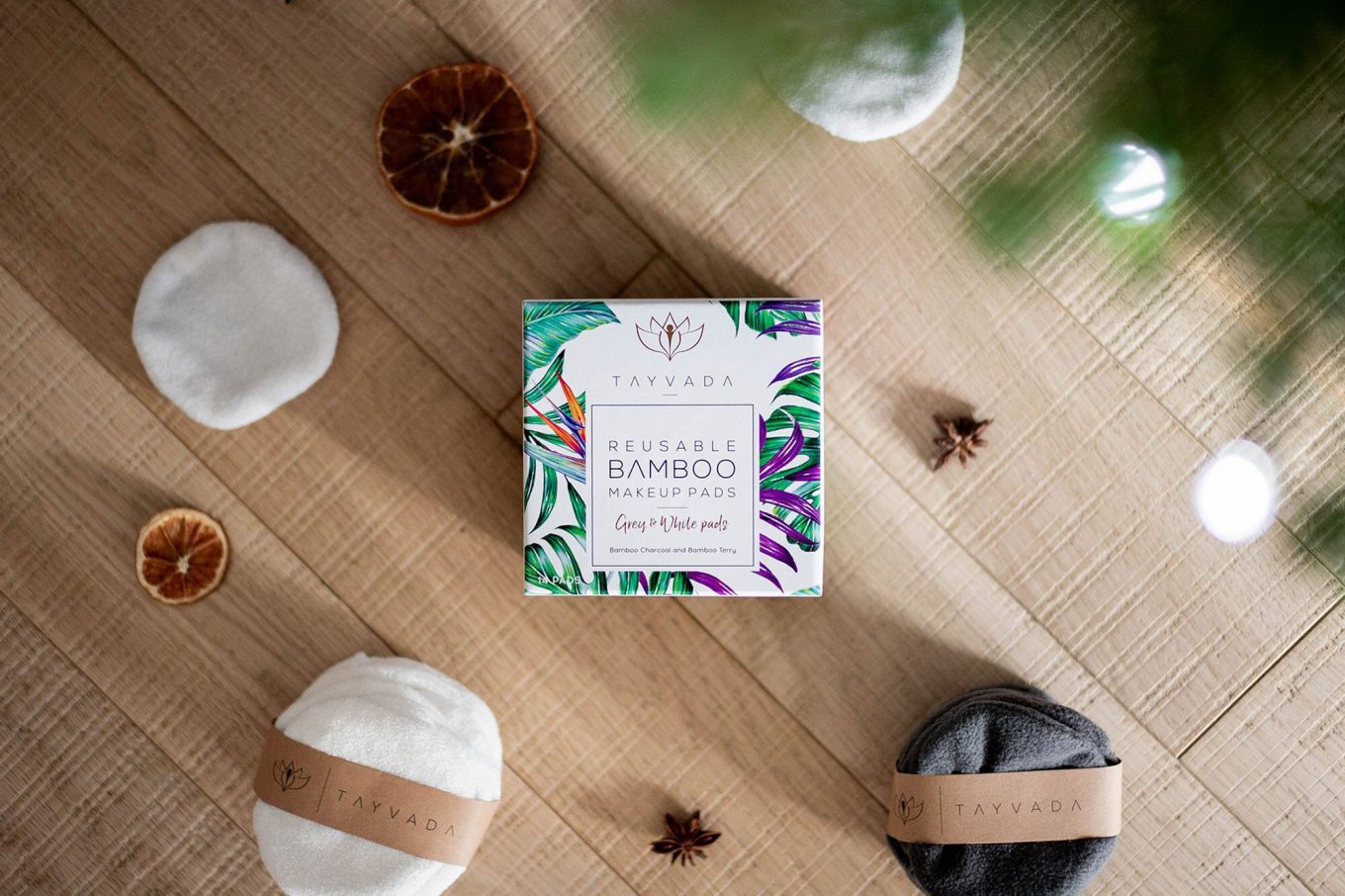
Reusable bamboo face pads from Tayvada
Making the switch from single-use cotton wool pads to reusable bamboo pads is not only a gift for the traveller in your life but also to our planet.
Why switch to Tayvada reusable pads?
It takes approximately 20,000 litres of water to produce 15-20 packs of cotton wool pads
The average womxn uses three single-use cotton wool pads a day
You don’t run the risk of getting stray strands of cotton in your eyes (we’ve all been there right?)
They’re made with bamboo which is a sustainable material
The packaging is plastic free
You will never run out of pads
The ever so soft grey fleece charcoal pads will remove makeup with just water, which means you can save the planet from a lifetime of bottled makeup remover by switching to these pads. Cleanse your skin with the more textured white terry bamboo pads to complete your Tayvada routine before applying the rest of your skincare. You can also use them to apply serums and remove face mask residue.
Why do travellers want reusable pads?
Unlike a bulky pack of face wipes, these bamboo pads will compress down and take up less room in their luggage
They will need less pads than single-use wipes or cotton wool pads as they are washable
They prevent the need for bottles of makeup remover, so there’s less for them to pack
They’re kind to their skin, which is important when changes in climate can take a toll on it
They can travel with an easy mind knowing that their skincare routine isn’t contributing to further daily waste to the planet
Tayvada is an eco-conscious brand that focuses on the importance of self-care whilst protecting our environment. They create long-lasting and high-quality reusable products that will replace the single-use bathroom items that are causing further damage to our planet every single day. Plus, the beautiful packaging will remind them of their last tropical getaway (as though it hasn’t been months since any of us got on a plane to go somewhere for sun).
Now available to shop on Etsy, Tayvada.com and Amazon US, Canada and Mexico. Shipping to the UK is available through Amazon.com.
A box of Tayvada’s reusable bamboo face pads come with 14 pads accompanied by a mesh washing bag.
Face masks from Dune
In this new age of travel, a face mask is compulsory and for sustainable travellers a reusable face mask is a necessity. Purchasing a set of reusable face masks from Dune not only provides a thoughtful, useful and responsible gift but it also raises money for charity. Oh yeah, this is a good one right?
All profits made from the sales of their face masks goes to their charity partner, YoungMinds, an organisation committed to supporting the mental health and wellbeing of children and young adults.
Other designs are available to shop in store.
Whilst we’re focusing on Dune, why not take a browse of their footwear and accessories. Their Loupe sandals are my go-to shoes for my travels (in warm climates) as they can be dressed up or down, they’re comfortable and they are high quality so they don’t damage your feet and will wear for a long time to come.
Plastic-free safety razor from Up circle
UpCircle is an environmentally-conscious beauty company who creates vegan products free from palm oil, silicones, sulphates, mineral oil, perfume or paragons. They’re sustainable, cruelty free, ocean friendly and their packaging is 100% recyclable.
UpCircle’s safety razor only costs £24.99 which is an amazing price especially considering how long it will last you, plus, it comes with two safety blades. If you return 5 blades to them to be recycled you’ll get £1 off your blades refill pack.
Why do travellers want to switch to a safety razor?
It is built to last and will long outlive a plastic razor
It isn’t single-use
All materials are recyclable
Replacement blades are cheaper than for a single-use razor or replacement plastic heads
There is little to no chance of uncomfortable razor burn as its single blade prevents bacteria collecting and it doesn’t mean you have multiple blades irritating sensitive skin
They can travel with the razor in hand luggage (without the blade) and the blades are universal and easy to purchase
It will save them approximately £163 a year compared to buying single-use razors – that’s a flight with a budget airline!
They’re easy to use and clean
Please note you must be over the age of 18 years old to purchase this product.
Makeup/cosmetic bags from Flat Lay co.
One of my most popular blog posts, Why the Flat Lay Co.’s makeup bag should be your go-to, is about one of my favourite products for travel which is a cosmetic/makeup bag from Flat Lay co. I started working with them in the very early days of PFH and I have loved using them so much that I have purchased them for friends and family for years.
This year Flat Lay co. came out with two new products in addition to their original Flat Lay bags. Their two new products are a box bag and standing brush bag.
Flat Lay co. bags mean no more rummaging in poor storage for your makeup as their products open out so you can see and access everything easily. They’re so much easier to pack and fit heaps so you don’t have to squeeze in multiple toiletry bags and you can still see everything! I have been travelling with mine for nearly 3 years and I haven’t used anything else since, I also use one for my toiletries.
All makeup-wearing people need one of these in their life!
Refillable pen
It’s estimated that 1.6 billion disposable plastic pens are thrown away every year in the US alone. I was shocked too when I realised how much I’d contributed to this worldwide waste without even thinking about it! It wasn’t until I read about this from 4ocean that I realised how wasteful I had been all the way through school, college, uni and even now with work (I’m now using up then pens to be able to replace them with reusable and low-waste alternatives).
The way to overcome this is to purchase refillable pens. Travellers always need pens for making notes, keeping diaries and journals and for filling out arrival/landing/customs cards. Plus, this pandemic is the ideal time to be carrying their own pen rather than using one that likely hasn’t been cleaned between uses.
Refillable pen brands I recommend are Parker, Sheaffer and Cross but you don’t need to buy their pens to use their refills. The pen pictured above is my everyday pen from The Beverly Hills Hotel gift shop and I use Sheaffer refills in it.
Tile
This gift is for the paranoid traveller, the one with expensive camera equipment or the one who loses things easily. Tile is a small tracking device that can be labeled to correspond with the item it’s linked to and it can be slipped into any luggage or become a keychain so your travellers can check if their belongings are nearby with the help of the app.
Either use the app along with Bluetooth to find its whereabouts or ring it to set off a loud alert so you can track it with your ears. They can also use the tile to find their phone, even when it’s on silent. If their item is lost beyond the range of the device, they can alert the Tile community so others can help to pick up its location.
The range for their products varies between 150ft/46m and 400ft/122m.
I recommend only getting either a Pro or Mate as they have replaceable batteries. Prices start from £19.99.
Fulton x Selfridges umbrella
When a Brit recommends an umbrella, you know you can trust them. Yes, our wet weather has made us pros in precipitation preparation. My favourite umbrella to date is the Fulton x Selfridges Super Slim Umbrella for the following reasons:
It’s the lightest umbrella I have ever owned – Fulton actually makes the lightest umbrellas in the UK
It’s compact so it doesn’t take up much room in my bag
As it’s from Selfridges, it makes a great prop on a rainy day
It’s a very British fashion statement for a very reasonable cost
Fulton is the Queen’s official umbrella supplier (now you know why the £18 price tag is amazing) Wills and Kate use them too, just saying…
Wet weather isn’t always in cold climates such as a British winter, so raincoats are often unwelcome and cumbersome. Umbrellas however don’t take up much space when they’re not being used and won’t compromise body temperature for keeping dry.
PFH Fun Fact: Fulton’s Birdcage is HRH Queen Elizabeth’s umbrella of choice and has been made in a range of colours to coordinate with her iconic rainbow outfit choices.
Satin bonnet
This one is particularly for curly haired travellers but it will also protect all hair types from breakage and frizz.
A silk or satin (to keep the cost down and avoid irritation to sensitive skin) bonnet is perfect for curly travellers who don’t already have one as it means they can slip it on before sleeping on the plane, train, bus or in an actual bed.
It’s particularly welcomes to curly travellers who don’t want to wake up on the plane with bed head and trust me, that’s not an easy fix in an aeroplane lavatory.
I recommend Only Curls because it’s low-cost, comes in cute colours and I personally use and love mine.
Saalt was the first and only menstrual cup brand I have purchased and used and I started working with them because I 100% swear by them. Their cups are comfortable, easy to use and their customer service is there for you 24/7 no matter your issue whether it’s how to use it or getting over any mental blocks. They also partner with various charities from Her International, an organisation dedicated to keeping girls in school when they get their periods, to Sustainable Coastlines Hawaii, an organisation cleaning up rubbish/trash from Hawaii’s coastline. With every cup sold, a portion of the profits go to Her International.
Why do travellers want to switch to a menstrual cup?
It will save the planet from over 4.3 billion menstrual hygiene products that are thrown away every year in the UK and 20 billion pounds in the USA
It will save space in their luggage
It will save them money as it’s reusable
They don’t have to make frequent bathroom swaps to change it
It’s healthier for their body as it won’t absorb bacteria and chemicals like tampons do
It reduces cramps so they can get up and go without their period pain holding them back
Saalt cups are available in five colours, three sizes and two types of silicone. They also sell menstrual cups for teens if the traveller you’re buying for is a youngster.
Thermal tumbler reusable cup
Switching to a reusable coffee cup is one of the best sustainable swaps you can make to remove excessive single-use waste from your life and the planet. With so many options out there it’s hard to know what’s best for you so I created 5 best reusable coffee cups for travel, a blog post that will help you pick the right cup for your needs.
Within this gift guide I want to put a focus on a thermal tumbler because I think they’re the best cup for multiple reasons, some of which are:
You can use it on a plane to prevent using a single-use plastic or paper cup
Its size means it’s not cumbersome
It keep drinks hot and cold much longer than most cups
The vacuum lid means it’s far less likely to spill
The straw means you can drink on-the-go without spillage (think driving or turbulence)
£25 and over
Yemalla Lila tote bag
A Lila tote bag from Yemalla is the perfect beach bag for travellers because despite being able to carry a significant amount, it packs flat. It’s woven the same way as a hammock so it not only expands to fit your beach towel, book, sun hat and more but it will hold it all securely unlike loosely woven bags. It’s made from 100% natural fibres and has been naturally dyed into four available colours.
Yemalla is an incredible brand whose products support artists around the world who make handmade items from responsibly sourced materials. What’s better is that with every purchase made they plants five trees with Ecologi which you will get GPS coordinates for, so you can see your contribution to replenishing our tree population for yourself. So really this bag is two gifts in one.
Yemalla is ran by two worldwide travellers, Nicole and Joe, so I can guarantee they know exactly what they’re looking for in accessories that travel well. They also produce wall hangings and plant hangers that will bring a touch of boho island magic to any traveller’s home.
Stress Less Journal from CGD London
2020 has been a rough year for all of us and it tested me to my limits. With the postponement of our move to Canada just a few weeks before our moving date, not having a home, the recent attention to the Black Lives Matter movement and the travel industry taking a massive hit as borders worldwide closed, a mental breakdown came that I never could have prepared for. Along with other tips I have shared in my blog post, Stress-reducing products for coping with anxiety on your travels, I used CGD London’s Stress Less Journal. The pages of this book got me through the most difficult time in my life and I couldn’t recommend it more for anyone going through any kind of struggles with their mental health.
The pages of this journal educated and helped me to process what I was going through and if you have a frequent traveller in your life who is currently grounded, I strongly recommend this gift as the means to work through the difficulties they are facing mentally by not being able to travel around the world. I never imagined in my wildest nightmares that there would come a time where International travel wouldn’t be an option. I especially recommend this gift if the traveller you’re here for works in the travel industry.
Ultralight Black Hole® Tote Pack 27L from Patagonia
This super light and compressible bag can be worn two way and comes in five colours. It can either be a backpack or they can tuck the strap in to make it a tote so it’s the perfect transitional bag from hiking to shopping at a local market. When it’s not being used it will pack down into itself so it takes up very little space in their luggage. It’s water resistant and made with 100% recycled nylon! Yay!
Patagonia is an active brand that is trusted and worn by travellers all around the world. Anything Patagonia will be a welcomed gift for a traveller whether it’s an accessory or item of clothing. We love Patagonia because it’s comfortable, made well and designed to make adventuring easy. Learn more about the amazing things that Patagonia does for the planet here.
Make it yourself
Laundry bag/gift bag
Want to knock it out of the park this year with a gift that is useful, personal, homemade, sustainable and the gift wrap all-in-one? Thought so!
Follow my really easy step-by-step guide for sewing a drawstring laundry bag. Travellers can use this drawstring bag for protecting their shoes in their luggage, storing dirty laundry between washes, keeping their undies together or organising their clothing when packing. You can use them as gift bags for more laundry bags or other gifts on this list.
Making drawstring bags eradicates the need for single-use gift wrap so not only are you making something personal but you’re also saving the planet from further waste with something that can be used again for multiple purposes.
Last Christmas I only gave gifts in drawstring bags and stockings that I made in various sizes.
Scrunchies
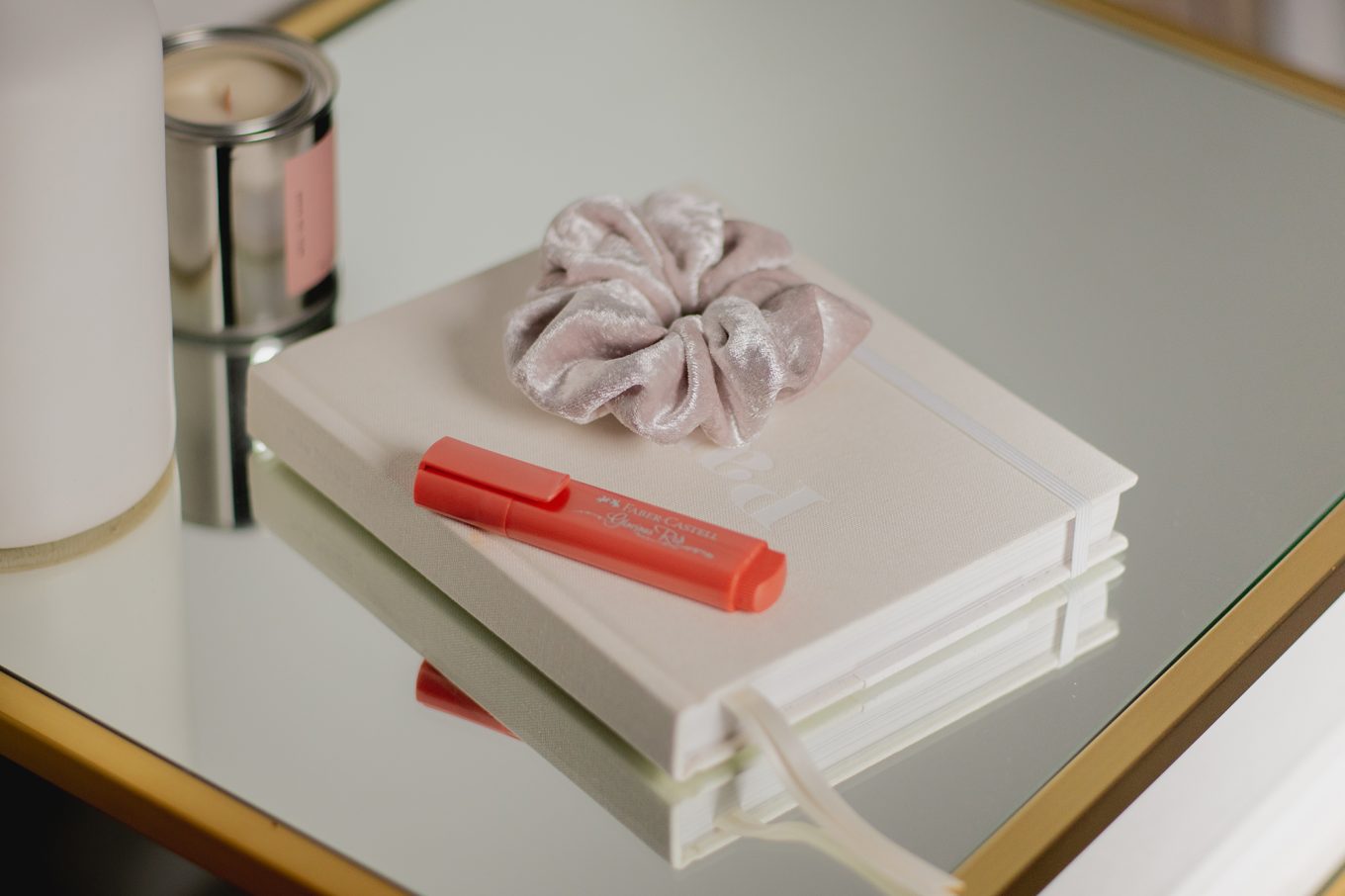
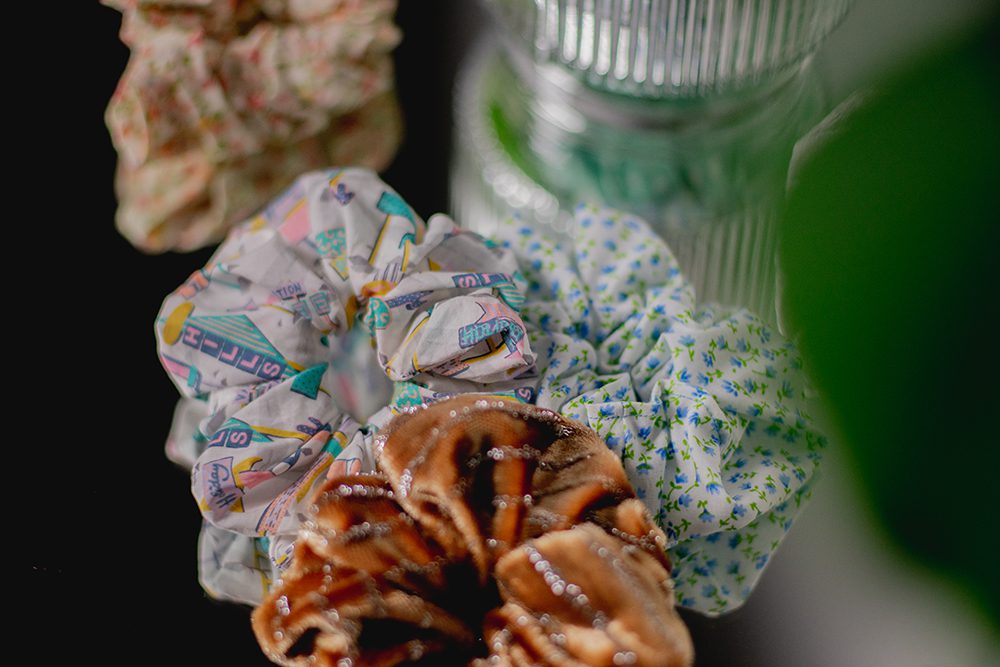
Know a traveller who is forever leaving their hair ties on their wrist in their photos and then complaining about how they forgot to take it off? Yeah, me too. Fix that problem for them by making some cute and one-of-a-kind scrunchies. It doesn’t take much to make these, you can even use scrap fabric or repurpose some old garments, sheets etc. I mean, wash them first, don’t be nasty!
Gift vouchers, donations, memberships and subscriptions
Priority Pass
This gift is for the Jetsetter who travels in style. Our Priority Pass was a perk that came with our American Express (gotta get those points for more travel right?) and up until the world’s borders closed I throughly enjoyed being able to relax before a flight in one of many airport lounges around the world.
The gift of lounge access means the travellers you love will be able to avoid bathroom queues, grab a snack or meal, enjoy a beverage to calm any travel anxieties, connect to fast and strong WiFi, sit in a comfortable chair near a power outlet so they can charge up their electronics and enjoy some peace and quiet before embarking on their journeys around the world. Some even have showers, cinemas and spa treatments.
A Priority Pass membership will get your travellers access to over 1300 lounges in more than 600 cities across 148 countries. Plus new lounges are being added all the time.
There are three levels for Priority Pass memberships so you can gift accordingly to how much this person means to you! These memberships include reducing the price of their entrance (this is great if they’re already paying to enter lounges), 10 visits before a reduced price and unlimited free access to all lounges (given the cost of this one, they need to be someone you really give a crap about, just saying).
Taking into consideration how the world is right now, I would suggest holding off on purchasing this until frequent International travel is an option again, so maybe just make them an “I owe you” card until they want to activate this gift.
Donations to disaster relief funds, animal sanctuaries, rainforest replanting etc.
My favourite gift to receive (in my adult years, I’d be fooling myself if I said otherwise) is a donation made in my name for anything that is going to save lives or our planet.
Be creative and find something that is deeply personal to the traveller you are gifting. Maybe it’s for their favourite country, animal or plant? Just make sure if you’ve chosen an animal sanctuary that they are not exploiting the animals for tourism.
Mossy Earth
I feel this may be the most responsible and thoughtful gift idea on my list. For the traveller who is committed to protecting the planet they so dearly love exploring, an annual membership or vouchers to Mossy Earth will contribute to offsetting their Carbon Footprint for their air travel.
It is a gift to the environment, their conscience and your soul.
To read about who Mossy Earth are, understand more about offsetting air travel and see other options take a look at my blog post, How to carbon offset your flights.
TouchNote
A TouchNote membership gives your traveller the opportunity to stay in touch with personalised postcards from their travels whilst they’re on the go. A membership includes the use of stickers, filters and artwork plus it includes monthly credits that roll over so they can send photos of their travels to you and all of their loved ones from anywhere in the world (provided they can get online). All they need to do is download the app and activate the membership.
To read more about TouchNote and their premium memberships take a look at the following blog posts:
TouchNote prints and posts cards from their closest location to the delivery address so your gift will be preventing a larger carbon footprint created by other cards sent from where they are travelling. For example, instead of them sending a card from Australia to England, it will be printed and posted in England. It’s the little things!
Spotify
Give the gift of music with either a full subscription or a voucher towards one. I believe that a great playlist really makes a trip, so gift them access to unlimited and ad-free listening to all of their favourite artists.
Oh and don’t forget to hint at them to download my travel themed playlists. To listen (for free) to any of my seven travel inspired and themed playlists, click here.
4ocean x Final Straw
Is the idea of not giving a physical gift not sitting well with you but you want to do something that gives back to the planet? Why not purchase something from 4ocean then? This way you will be able to give them a gift and pull at least one pound of rubbish/trash from the ocean.
4ocean has released so many new and amazing products this year including bamboo cutlery, sandwich bags and deck chairs so there’s something for all price ranges.
An amazing stocking filler idea is the 4ocean x Final Straw collapsible travel straw. It pulls one pound of rubbish/trash from oceans and coastlines and is made with post-consumer recycled plastic!
.
Mele Kalikimaka, Gabriella
Pin this post
.
This post has been created with paid partnerships, sponsored content and gifted items and as an Amazon associate I earn from qualifying purchases. I want you to know I completely support and believe in these companies and products and I use all of these products myself.
If there’s one thing British cuisine does well it’s dessert, or as we call it, pudding! With so many classics it was hard to get it down to a digestible number so here’s 11 of the greatest British desserts that I think travellers to the UK need to try, (at least one anyway!)
All of these desserts can be ordered in pubs across Great Britain (they might not have all of them but it would be peculiar if they didn’t have at least one) and if you want to save money you can also buy them in pretty much any large supermarket across the nation. I’ve also linked out to recipes if you fancy making them yourself at home whilst the pandemic is preventing international travel.
Traditionally, all the puddings/desserts below are made with wheat and dairy, but with so many more alternatives available these days, it’s easy to make or find gluten free, dairy free or vegan versions of these Great British delights.
I started working on this blog post in March right before the UK went into lockdown so I didn’t manage to get photos for all of the following sweet treats, so Michael very kindly provided some illustrations so you can get an idea of what they look like. Aww ain’t he cute!
1. Sticky Toffee pudding
What is it?
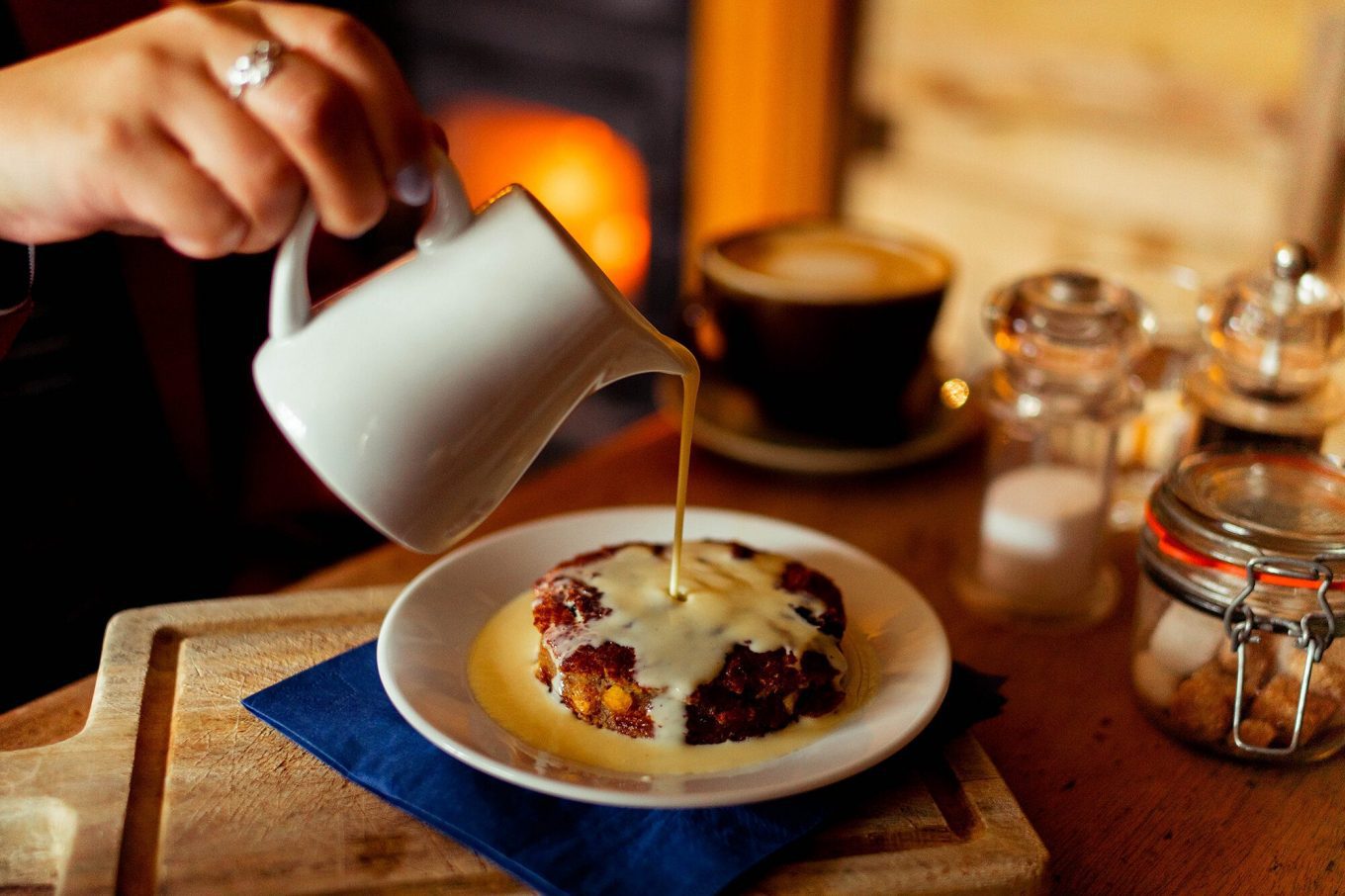
Sticky toffee pudding, often known as STP, is a dark, moist sponge that is coated to the point that it’s virtually swimming in a rich toffee sauce. Sometimes the sponge is light and fluffy and others make it dense but it’s always extra sweet and sticky.
Origin story
The origin of sticky toffee pudding is still highly debated between three possibilities:
STP was first made by Francis Coulson at Sharrow Bay in the Lake District in Cumbria, England in the 70s. Coulson’s recipe is so sought after that all the staff at Sharrow Bay have had to sign a non-disclosure agreement. The recipe itself is kept in a vault within the hotel.
STP was first made in Aberdeenshire in Scotland.
Francis Coulson received the recipe from Mrs Martin of The Old Rectory in Claughton, Lancashire in England.
Whatever the origin is, it came from a desire to create something warm and comforting for dark and cold winter nights.
Served with
Served hot with either custard, cream or vanilla ice cream.
It’s a polkadot patterned male genital usually served with custard but sometimes cream… UGH could you imagine? Nope, despite the comical name, spotted dick is a steamed suet pudding packed full of currants or raisins. The pudding itself isn’t very sweet but it gets its sweet taste from the dried fruit and custard that it should always be accompanied by.
Origin story
Spotted dick originated in the Victorian Era, a period known for its pudding inventions. Its first published mention was in 1850 by chef Alexis Soyer in The Modern Housewife, or, Ménagère.
So why spotted dick? “Spotted” comes from the dried fruit scattered throughout the pudding and “dick” is a dialectal name for a plain pudding shorted from “puddick”. Alternative names for spotted dick are Spotted Dog or Railway Cake; “dog” was also another name for a plain pudding abbreviated from “puddog”.
Served with
Served hot with warm custard.
Recipe
Get James Martin’s spotted dick and custard recipe here.
For Nadiya Hussain’s Irish soda bread spotted dick recipe, click here.
3. Bread and Butter pudding
What is it?
Bread and butter pudding is made from layered slices of buttered, stale bread that have been sprinkled with currants and cooked in nutmeg seasoned egg and cream mixture. It should be golden and crunchy on top and soft and moist on the bottom. It’s incredibly fragrant for a fairly simple pudding and is ideal for using up stale bread that’s on its way out. Bread and butter pudding is made with stale bread in the same way that banana bread is made with over-ripened bananas.
Origin story
The earliest publication of a bread and butter recipe was in Eliza Smith’s The Compleat Housewife in 1728 (take the fact that most of these desserts come from some kind of how-to-be-a-good-housewife guide, with a pinch of salt, Lord knows I am).
Before it became bread and butter pudding though, it was known as “whitepot”. Whitepot used bone marrow in place of butter, yeah…. I’m glad it changed too.
The much loved dessert comes from the necessity to use up stale bread so that it doesn’t go to waste.
Served with
Served hot with either custard, cream or ice cream.
Recipe
For Delia Smith’s classic bread and butter pudding recipe, click here.
For Jamie Oliver’s bread and butter panettone pudding tart recipe, click here. I made this a couple of Christmases ago and it’s an amazing use for panettone bread, if you’re someone that always gets given one over the festive period.
4. Summer pudding
What is it?
Summer pudding, otherwise known as summer fruits pudding, is a chilled bread pudding that has been soaked in the fruit juices of seasonal summer berries and has a centre packed full of all of those juicy berries. The berries used may include any of the following:
Raspberries
Strawberries
Blackcurrants
Whitecurrants
Redcurrants
Blackberries
Tayberries
Loganberries
Cherries
Blueberries
Gooseberries
Origin story
Another Victorian pudding made from stale bread, yes, but this one is entirely different from bread and butter pudding as it swaps out a rich dairy mixture for being soaked in fresh summer berries. Oh, and it’s served chilled.
A similar recipe to summer pudding dates back to 1904 but was served hot. The most similar recipe came much earlier in the late 1800’s but it was called “Hydropathic pudding”, served to ladies in spas as it was seen to be a healthier option to stodgier suet puddings.
Served with
Serve chilled with thick pouring cream.
Recipe
The very best summer fruit pudding recipe has to come from Delia Smith, click here for her recipe.
5. Crumble
What is it?
Crumble is to the Brits what pie is to North Americans; it can be made with multiple fruit fillings and is often enjoyed after a large family meal.
It’s a base of stewed fruit topped with mixture resembling breadcrumbs made from flour, butter and sugar which is baked to go golden and crunchy.
Origin story
Crumbles came about during World War II when food was rationed and the breadcrumb-like topping was a far more economical way to create a dessert over making a pie during a time when ingredients were limited. To further reduce the use of flour, oat and often breadcrumbs could be used to top this dessert.
The most popular crumble fillings are apple and rhubarb.
Lorem ipsum dolor sit amet, consectetur adipiscing elit. Ut elit tellus, luctus nec ullamcorper mattis, pulvinar dapibus leo.
6. Jam Roly-Poly
What is it?
A jam roly-poly is not dissimilar to a Swiss roll in that it’s spread with strawberry jam and rolled up before being steamed or baked.
Origin story
The jam roly-poly is another Victorian era suet pudding creation, honestly how the women survived in corsets is beyond me. It was originally rolled up and steamed within an old shirt sleeve which got it the appetising nicknames: shirt-sleeve pudding and dead man’s arm… yum!
It’s a simple delight that’s a popular choice with kids and is a staple dessert on school dinner menus across the nation.
Served with
Serve hot with warm custard.
Recipe
Click here for The Hairy Biker’s jam roly-poly pudding recipe.
7. Trifle
What is it?
I’m sure many Brits would agree that Christmas wouldn’t be Christmas without a trifle.
Trifle is the traditional English dessert that Rachel Green was trying to make for Thanksgiving when she got mixed up with shepherds pie in Friends, “The One Where Ross Got High”.
It’s made up of layers of sponge soaked in booze, fruit, jam/jelly and English custard that is topped off with whipped cream and sprinkled with either chocolate shavings or almond flakes.
Just like a crumble, the fruit can be your own choice. Strawberry is a firm favourite but it’s equally delicious when made with seasonal fruits.
Origin story
The trifle is one of the oldest desserts in British history and was first published in 1585 in Thomas Dawson’s cookbook, The Good Huswifes Jewell. It evolved from a fruit foole which is a dessert made from fruit mixed into a sweetened cream.
The Scottish version is a tipsy laird and in the US there’s a trifle variant called a tipsy cake… yeah, a boozy one for sure, but you can swap out the sherry (etc.) for fruit juice so it’s more appropriate for the kiddies to eat.
Served with
As trifle is made with layers of custard and cream, it doesn’t need to be served with anything.
Recipe
For a traditional trifle recipe made with jam, click here for Mary Berry’s recipe.
For Jamie Oliver’s trifle recipe made with jelly, click here.
8. Eton Mess
What is it?
Eton mess is a delightfully simple dessert made from meringue, cream and summer berries.
Origin story
Eton mess is a dessert that originates from Eton College, the poshest all boys school in the United Kingdom; it’s where Princes William and Harry went to school.
Eton mess is know to have first been made in 1893. Originally Eton mess was made from either strawberries or bananas mixed with either ice cream or cream and was available from their tuck shop in the 1930s. It was years later that the meringue was added. Its name comes from its place of origin and the fact that it wasn’t well presented.
Legend goes that a dessert of strawberries, cream and meringue was accidentally dropped on the floor during the annual Eton vs Harrow cricket match in the late 19th century, instead of letting it go to waste, they scooped it up and served it anyway. It is now served every year at the cricket match, however you can get it from most pubs in summer or it’s easy peasy to make at home, especially if you use pre-made meringues.
Served with
As Eton mess is made with cream, it doesn’t need to be served with anything else.
Recipe
Click here for an Eton mess recipe that teaches you how to make meringues from scratch.
9. Knickerbocker Glory
What is it?
A knickerbocker glory is a British ice cream sundae.
Origin story
The knickerbocker glory is known to have been around since 1920s but its true origin story seems to be lost in a multitude of claims from being named after the popular Dutch surname to Lyon producing a series of desserts named after outer-garments.
Served with
As knickerbocker glories are packed full of cream and ice cream, it doesn’t need to be served with anything else.
Recipe
Click here for Mary Berry’s knickerbocker glory recipe.
10. Banoffee Pie
What is it?
Banoffee pie is an incredibly indulgent pie filled with toffee, sliced bananas and cream.
Origin story
The banoffee pie is the most recent dessert creation on this list. It was first created in East Sussex by British restaurateur Nigel Mackenzie in 1972 when he and his chef Ian Dowding were making a Blum’s Coffee Toffee Pie but decided to adapt it to include fruit. It instantly took off and became a permanent dessert on the menu at The Hungry Monk. The recipe became accessible to all when Nestlé printed it on the side of their cans of Carnation condensed milk.
Served with
As banoffee pie is topped with lashings of cream, it doesn’t need to be served with anything but it can be served with ice cream.
Recipe
Click here for Mary Berry’s classic banoffee pie recipe.
11. Treacle Tart
What is it?
Treacle tart is a shortcrust pastry base filled with a thick golden syrup mixture and is probably the sweetest one on here.
Origin story
The recipe for treacle tart first appeared in one of Mary Jewry’s cookbooks in 1879 but it was made with a much thicker black treacle and isn’t a representation of the treacle tart Brits know and love today. The modern treacle tart came about in the 1880s with the invention of golden syrup.
It was a popular dessert with less fortunate families as it could simply be made with bread and treacle which were much cheaper ingredients than fresh fruits.
PFH Fun Fact: “treacle tart” is cockney slang for “sweetheart”.
Served with
Served hot or cold with whipped or clotted cream or ice cream.
Recipe
Click here for James Martin’s treacle tart recipe.
Achard légumes is a Mauritian mixed vegetable pickle that originates from the Indian dish, achaar.
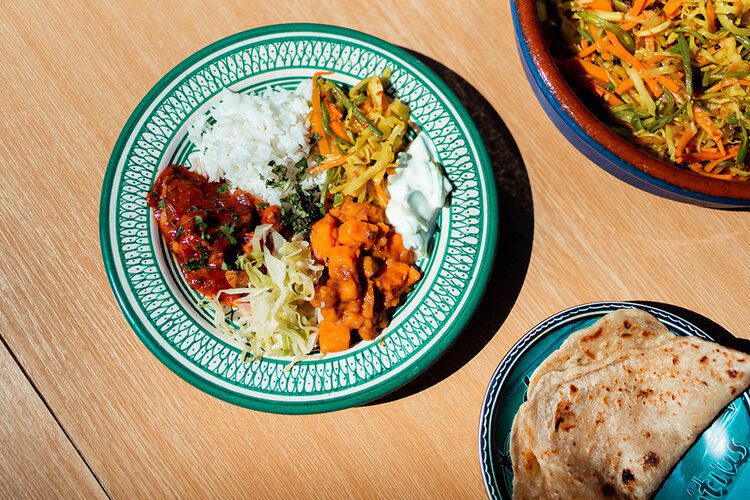
Though it took me a long time to acquire an appreciation for the taste of achard légumes, its place on the table in my family is a nostalgic one. This bright yellow, orange and green dish has been present at almost every large family gathering and for me, conjures the same comforting summer feels as strawberries and cream.
Achard légumes is one of the best side dishes you can make because it compliments such a wide variety of meals. It can be eaten with a curry or rougaille along with many other side dishes, or it can be eaten with a roti (Mauritian flat bread) or fresh bread, it can go into a sandwich or on a salad and it goes great with a BBQ or a cheese board. It’s a really flavoursome way to bring a variety of vegetables to whatever you’re eating.
Just like the rougaille recipe I shared last month, this achard légumes recipe is my Mum’s, so there are variations. Her adaptation is that she doesn’t use vinegar or cauliflower because my Papa, her Dad, didn’t like it so he didn’t use it. Many of the tweaks to our Mauritian recipes come from my Papa not having liked something!
This achard légumes can last up to two weeks if refrigerated if you do the following:
Fry all of the onion as this recipe tells you to. Some recipes will tell you to only fry half and add the rest in raw but this makes the achard watery and it won’t preserve for as long.
Add salt just before eating. Salt will also make the achard watery and again, it won’t last as long.
Prep your vegetables the day before you are planning to cook it. By allowing the vegetables to dry out overnight, the achard will last longer.
I almost forgot to point out, though you will be able to work it out from the ingredients list below, it’s vegan and vegetarian!
This recipe will serve 4-6 people.
Ingredients
3 carrots
3 stringless flat beans
1/4 small white cabbage
2 shallots
2-3 cloves of garlic
1 fresh or dry chilli (add more if you want the achard to have more of a kick)
1/2 tsp mustard seeds
2 tsp fresh turmeric (can be dry if you can’t get hold of fresh)
Large cooking spoon (black or metal, keep in mind that the turmeric will stain it)
When it comes to washing these up, use an old tea towel as the turmeric will stain it.
Method
1. Prepare your vegetables a day before and allow them to dry out.
Julienne the carrots and beans.
Shred the cabbage.
Cut the chilli(es) in half, lengthways. If you don’t like too much spice then remove the seeds, if you don’t mind then keep them in.
2. When you are ready to cook, peel and finely slice the shallots, mince the garlic and ginger and grate the turmeric.
3. Heat 2 tbsp of oil in the wok/frying pan on a medium heat and fry the shallots.
4. Add the garlic, turmeric, mustard seeds, chilli, pepper and ginger and stir through. Let them heat through for a few minutes to release their flavour.
5. Add the carrots and beans. Stir frequently so they get covered with the spices.
6. Add the remaining 2 tbsp of oil along with the cabbage and cook it until it wilts. The length of time you cook your achard really depends on whether you want the vegetables to be crunchy or soft. The longer you cook it, the softer it gets, so stop cooking it when you are happy. We cook ours for about 10mins so there’s still a little crunch.
This playlist isn’t your average compilation of 80s hits that are amazing but aren’t actually anything to do with being out on the open road. Oh no, this playlist features 35 songs that span decades and genres with hits from Eagles to RhiRhi and Prince to Gerry Reed, don’t worry there’s still some corkers from Mr Bruce Springsteen and The Beach Boys! Whether you know your destination or not, these 2 hours of cruisin’ hits will get you there.
This is the 7th PFH playlist, if you haven’t already listened to my previously published and very popular playlists, click the links below:
Click the link below to listen to your perfect road trip playlist via Spotify and if you don’t have a Spotify account, I’ve written out the track listing below.
Track listing
Life is a Highway – Rascal Flatts
Take It Easy, – Eagles
Everyday Is A Winding Road, – Sheryl Crow
Highway To Hell – AC/DC
Thunder Road – Bruce Springsteen
Chevy Thunder – Spector
Carolyn – Swiss Lips
Little Honda – The Beach Boys
On The Road Again – Willie Nelson
Road To Nowhere – Talking Heads
Shut Up And Drive – Rihanna
Mutsang Sally – Wilson Pickett
Ride Wit Me – Nelly
Little Deuce Coupe – The Beach Boys
Get Outta My Dreams, Get Into My Car – Billy Ocean
A traditional Mauritian rougaille (or rougail depending on the region) is a flavoursome tomato based sauce that can be cooked with any meat or vegetable. It is one of the most basic dishes in Mauritian cuisine and because of that, it’s one that tends to vary ever so slightly from one Mauritian family to the next.
The ingredients to our family’s rougaille causes a heated debate between my Mum and her four sisters and brother because even they believe their little additions and substitutes are better than the others. I learnt not to get them started on whether or not to add ginger – my Papa, their Dad, didn’t like ginger so it was never added to his rougaille when he made it but not all of his kids followed suit with that, and they will argue until they turn blue (as many Mauritian families do) over whose is the best. It’s the same with their vermicelli (a dessert), achard legumes (vegetable pickle) and créole rice (a rice dish not dissimilar to a paella) – despite the culinary competition, you are always guaranteed one hell of a feast when my aunts and uncle cook together.
This rougaille recipe is my Mum’s, her adaptation is that she favours passata over fresh tomatoes, purely because the tomatoes we can buy in England aren’t as flavoursome as they are in other places around the world, so passata provides the rich tomato taste the dish requires, oh and as tribute to her Dad, she doesn’t use ginger.
As I mentioned earlier, a rougaille sauce can be cooked with any meat or vegetable, it is even popularly accompanied by boiled eggs in Mauritius. This recipe is for a saucisse rougaille, sausage rougaille, as it’s one of the most simple to make but the option is there to substitute the sausages to make this recipe vegetarian or vegan!
This recipe will serve 5-6 people.
Ingredients
X2 packs of sausages
500g passata (or chopped fresh tomatoes if you can buy them beautifully ripe and flavoursome)
X2 tbsp oil
X4 spring onions/scallions
X1 fresh chilli
X1 onion
X2 garlic cloves
X2 sprigs of thyme
A handful of fresh coriander
1tbsp chopped chives
1tbsp chopped parsley leaves
Salt and pepper
All the herbs can be dry if fresh herbs aren’t an option for you, it will taste better with fresh herbs but it’s not the end of the world if you don’t grow them or can’t buy them fresh.
1. Cook your sausages in the oven for as long as the instructions on the packet say.
2. Peel and finely chop the onion, garlic, spring onions and coriander leaves.
3. Cut the chilli in quarters – deseed it if you don’t want your rougaille to be too hot, or cook with the seeds if you do.
If you don’t cook the seeds into the rougaille then keep them either to cook into something else or plant them so you can grow your own chillies!
4. Add the oil to your saucepan and sauté the onions and then garlic.
5. Add the spring onions (scallions) and chilli. Keep the heat low as you’re not cooking these ingredients, you’re heating them to bring out the flavour. Let them sit for about 5mins gently tossing them around every minute or so to stop it sticking.
6. Pour in the passata and stir through.
7. Add the thyme, parsley and chives and season it with salt and pepper. Stir it and leave to simmer on the same low heat whilst you prepare your sausages.
8. When the sausages are cooked remove the excess oil by putting them on paper towels or your reusable alternative which will absorb it.
9. Cut the sausages into bite-sized pieces.
10. Add the sausages to the rougaille sauce and stir through. Leave it to simmer for another 5mins.
11. Season to taste with salt and pepper.
12. Right before serving, sprinkle and stir in the coriander leaving some aside for a garnish.
13. Serve with rice, fresh bread or roti (Mauritian flat bread). Garnish with the remaining coriander leaves. Enjoy!
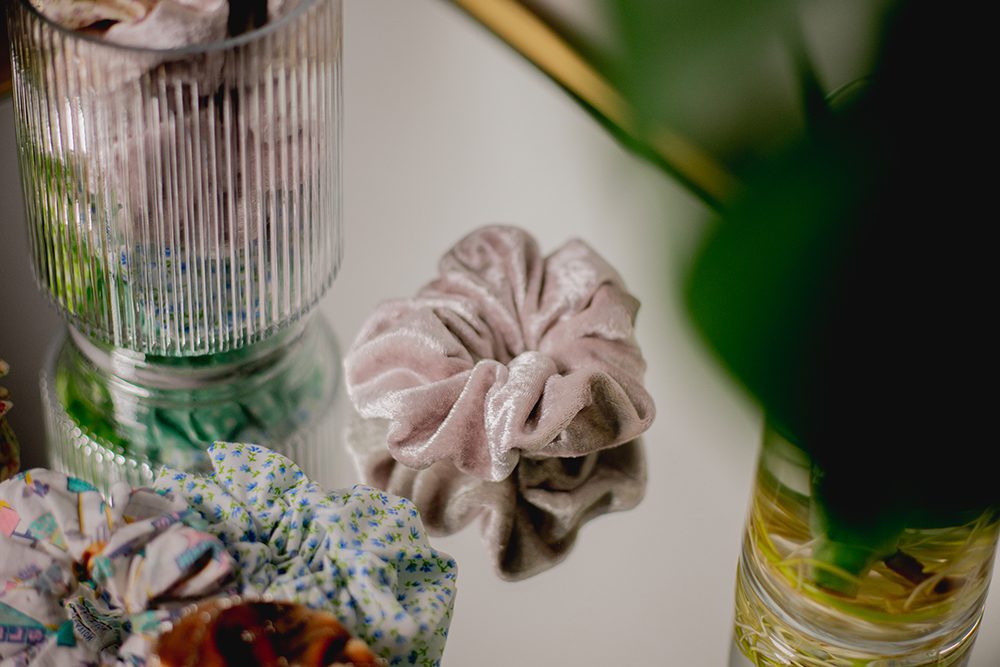
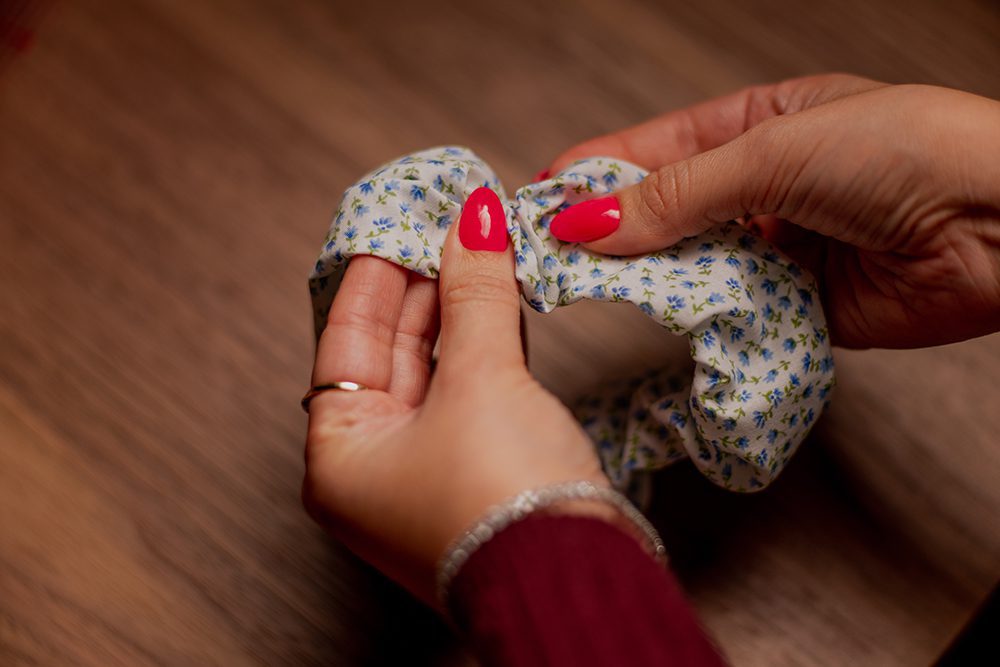
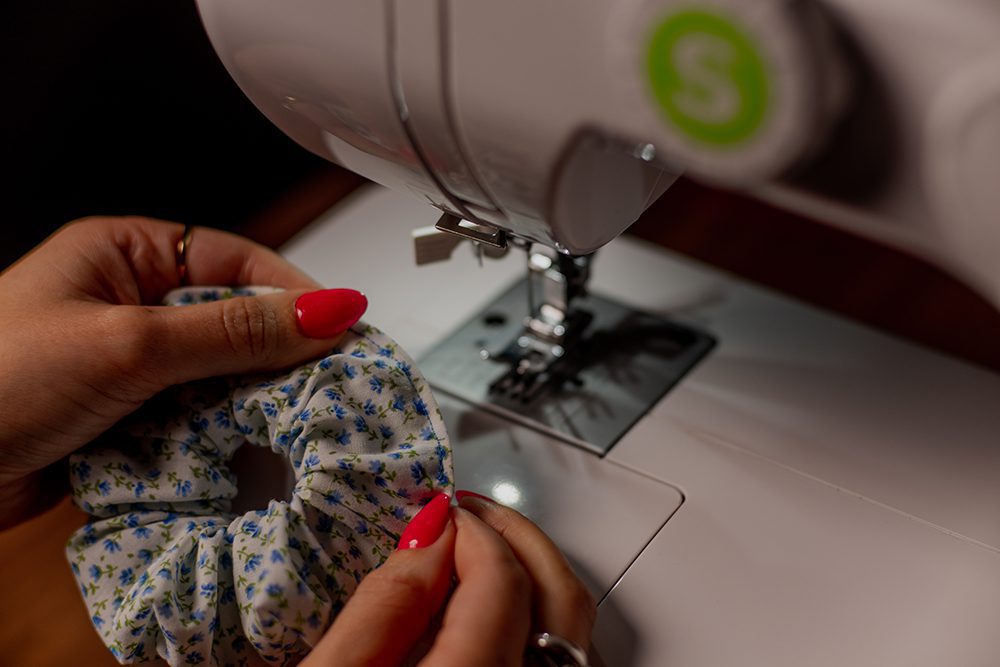
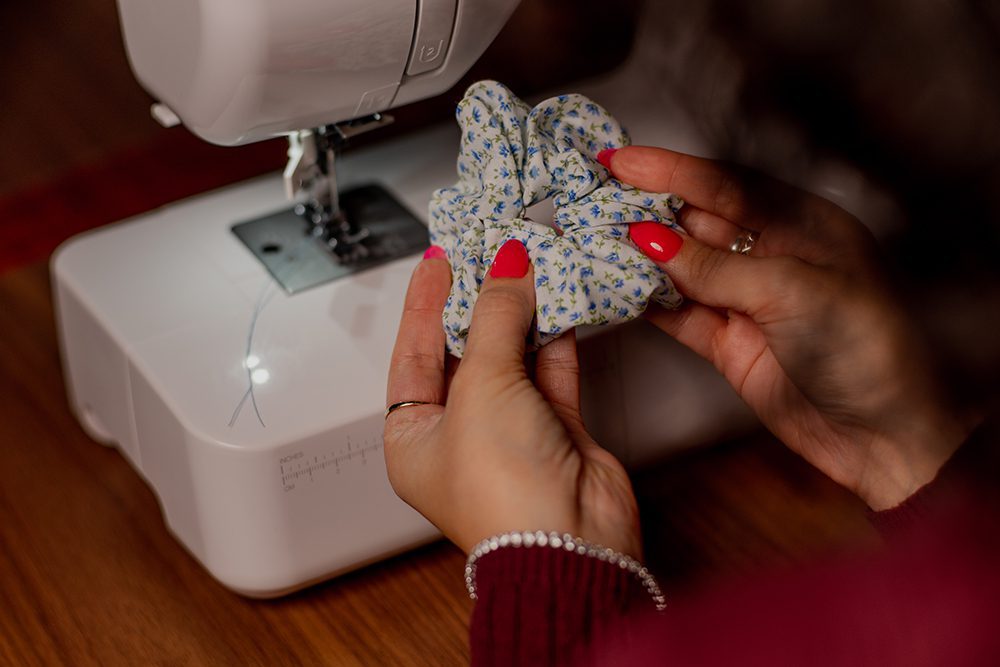
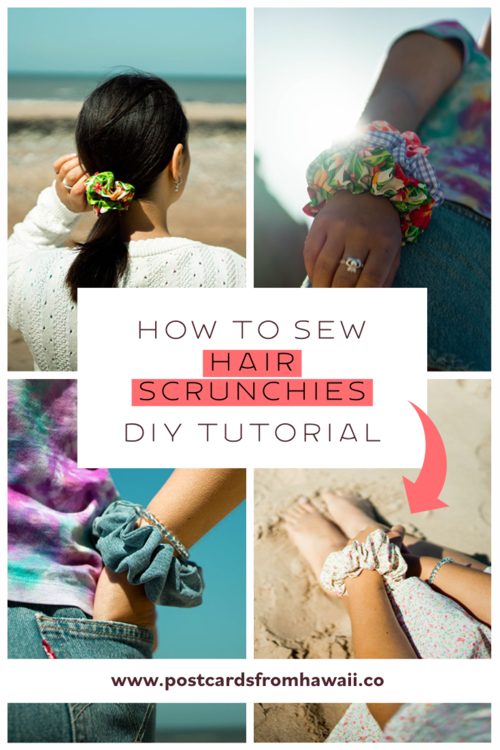
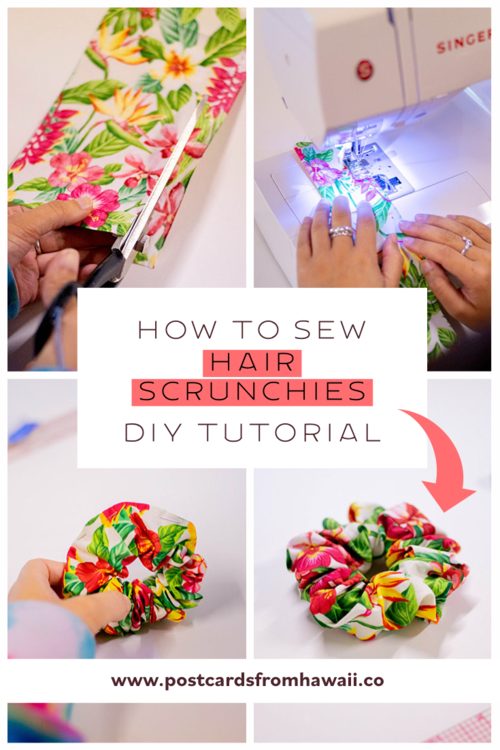
Whether you’ve been sewing for years and are looking for a quick project or you’ve just started and you want an easy sewing project to start with, this sewing tutorial for how to make hair scrunchies is perfect.
In this hair scrunchie sewing tutorial I’m going to be giving you a step-by-step guide for making your very own hair scrunchies, complete with photos of every stage plus I’ve created a YouTube tutorial to make it even easier for you to follow along. You can find my YouTube tutorial for how to sew hair scrunchies below.
I originally created this blog post back in 2020 when I was looking for fun projects that we could do whilst we also safely kept indoors during the pandemic. With the help from my best friend, Amy-Olivia, (we graduated together with our fashion degrees) we came up with the easiest sewing tutorial for making hair scrunchies for you. These hair scrunchies are so easy to make that it might even become addictive and before you know it you’ll have a collection in every scrap of fabric you can find.
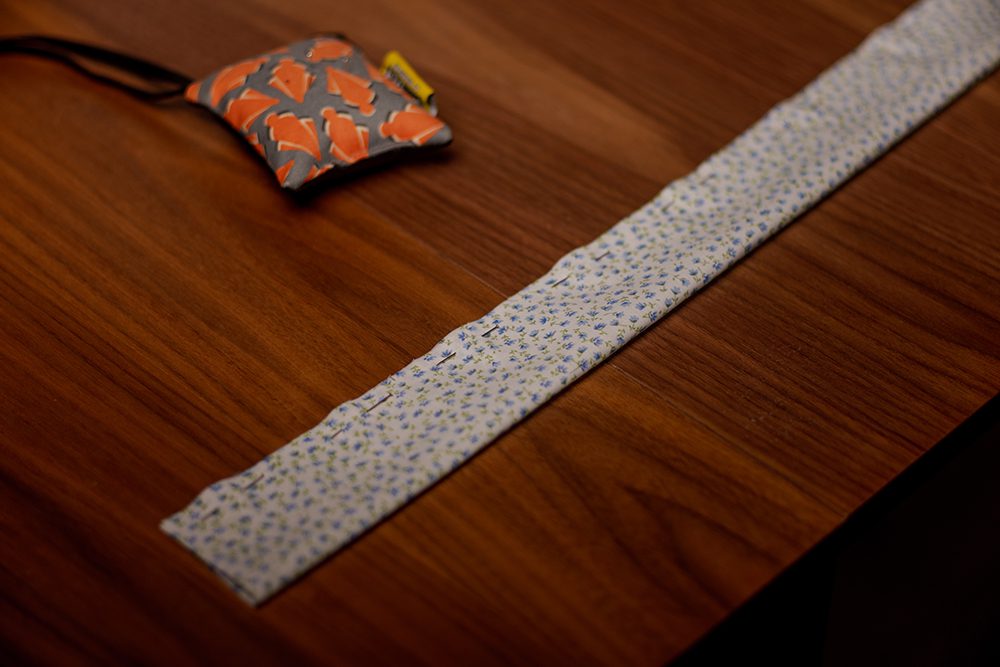
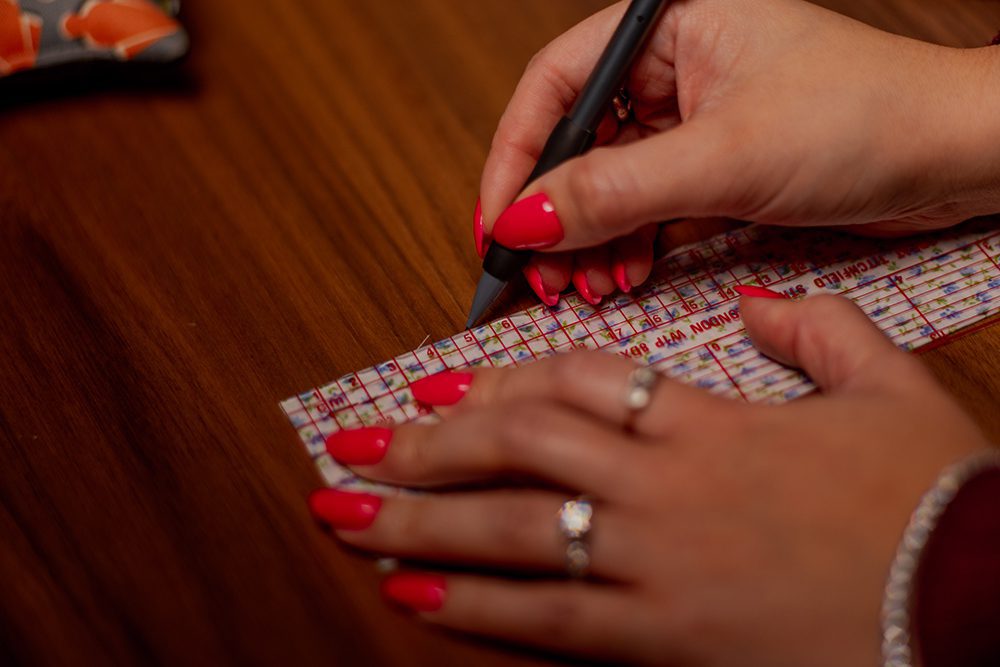
Actually, that’s the best part! You only ned a small strip of fabric measuring 55cm long and 12cm wide (21.5” long x 5” wide) for making hair scrunchies so you can easily use offcuts from previous projects to save wasting that fabric.
You can get creatively sustainable too by cutting up old garments to up-cycle them into hair scrunchies or you could sew fabric scraps together to make a sort of patchwork hair scrunchie if you don’t have enough scraps of the same fabric. Not only is getting a second life out of your fabric and clothes a fun challenge but it’s also better choice for the planet.
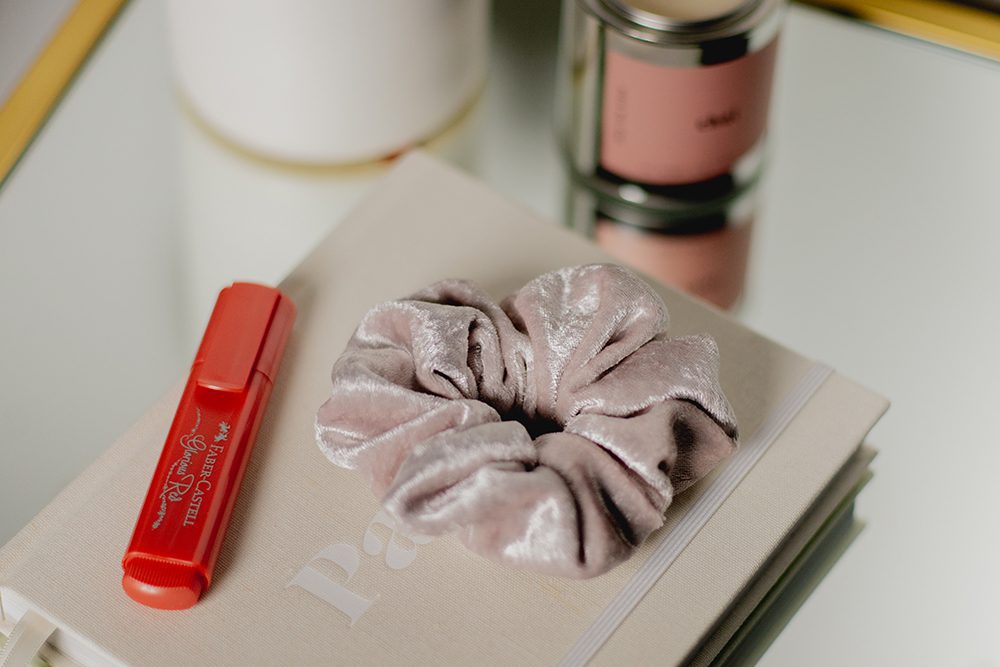
These DIY hair scrunchies make great gifts and stocking fillers too! I make them every year for my friends and family. They’re personal, from the heart and super cheap to make!
Ok let’s get creating!
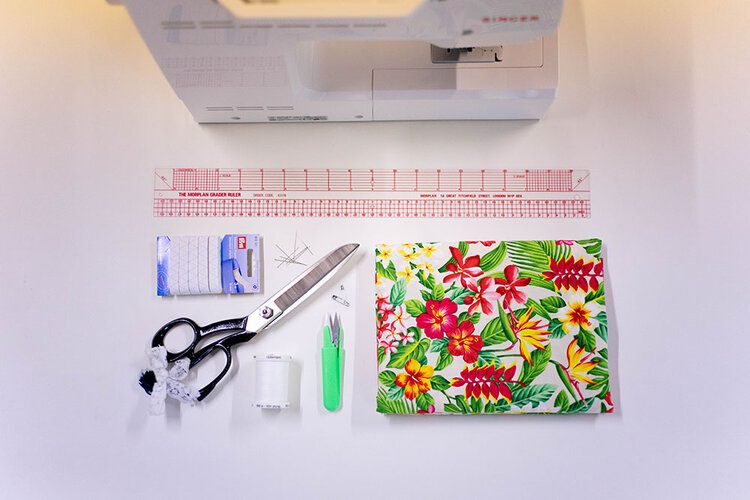
What you need to make hair scrunchies
Fabric measuring 55cm long and 12cm wide (21.5” long x 5” wide)
Set up your sewing machine and make a bobbin in the matching thread to your scrunchie.
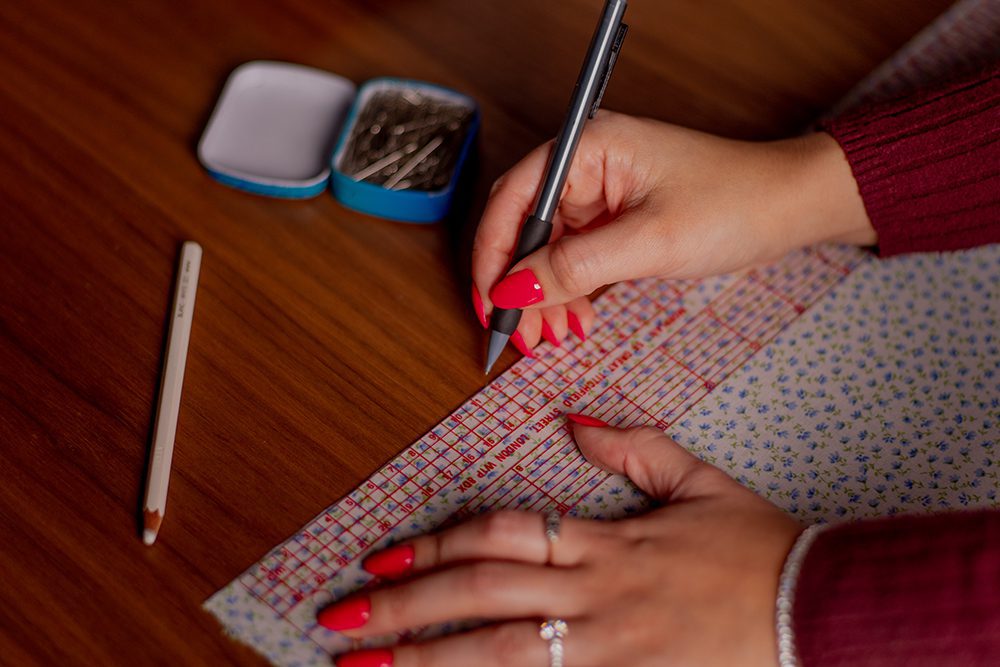
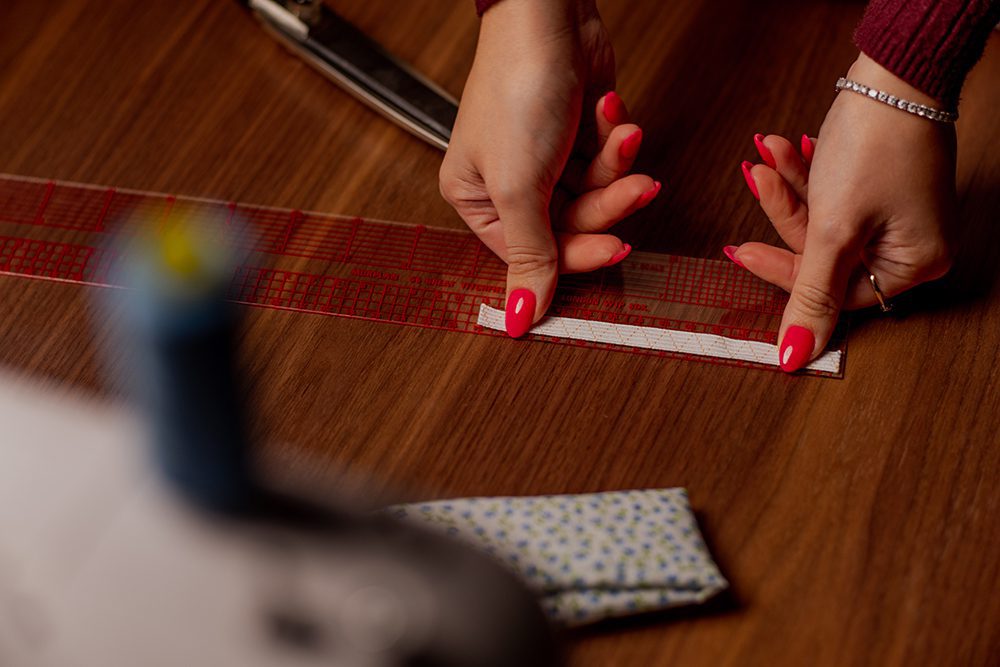
1. Iron your fabric before starting then measure out and cut your fabric.
2. Fold the fabric in half, lengthways with the right side facing in and pin it.
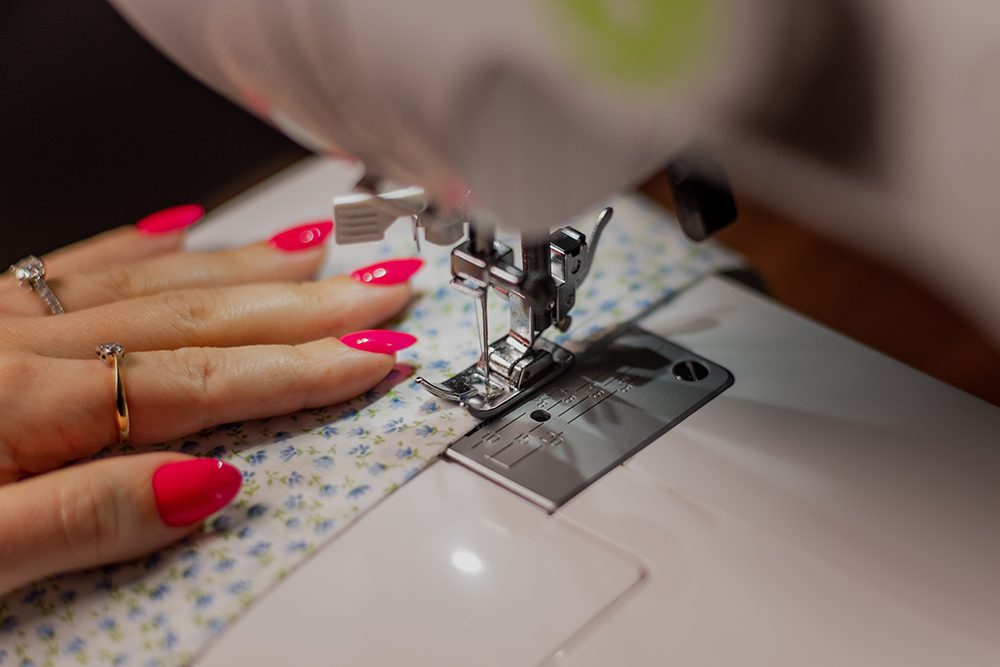
3. Sew where you’ve pinned starting about 5cm/2” from the top edge and ending about 5cm/2” from the bottom. Use the edge of the foot as your seam allowance guide and make sure you backstitch where you start and end your stitching to stop it from unravelling. Snip your thread.
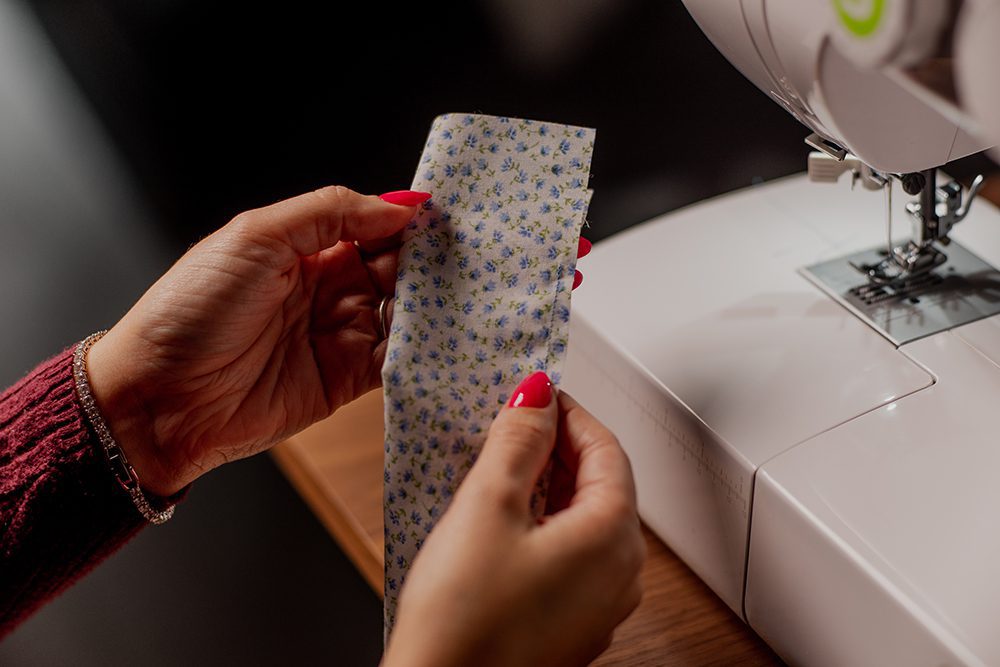
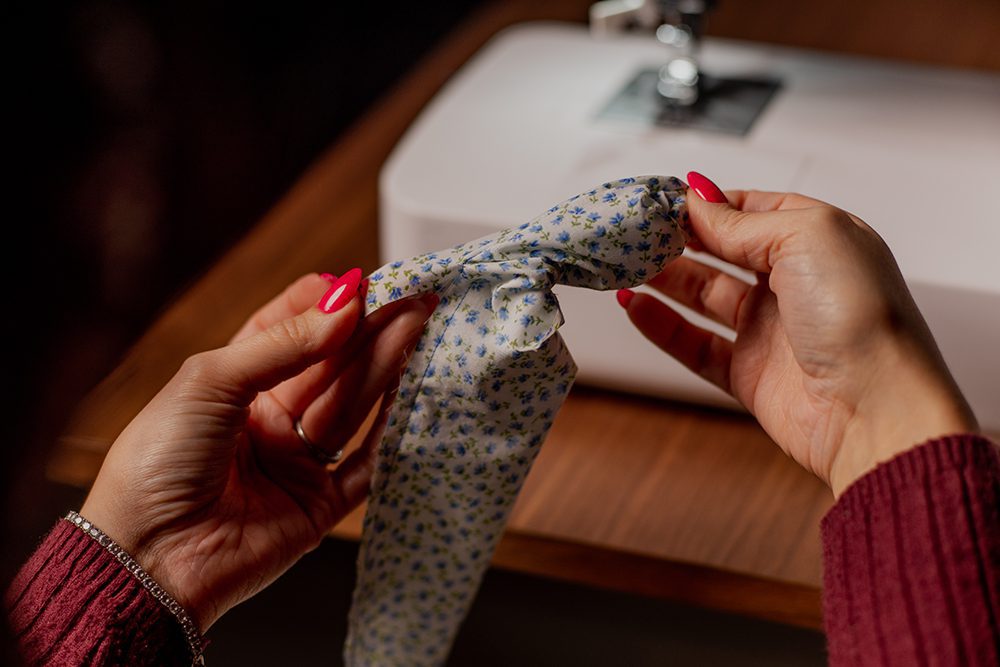
4. Turn your piece inside out so the fabric is the right way around.
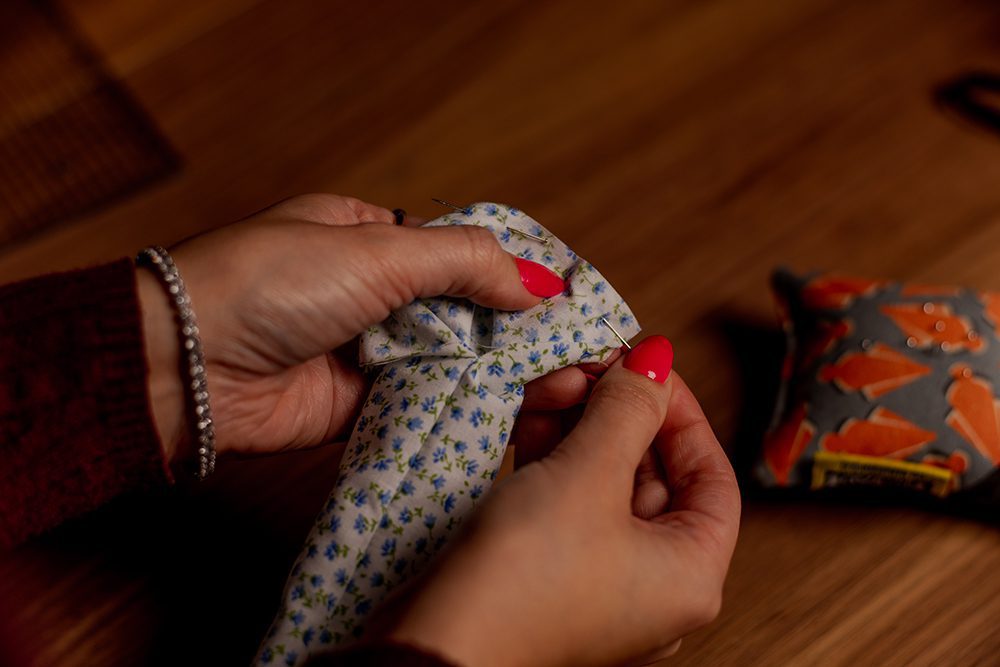
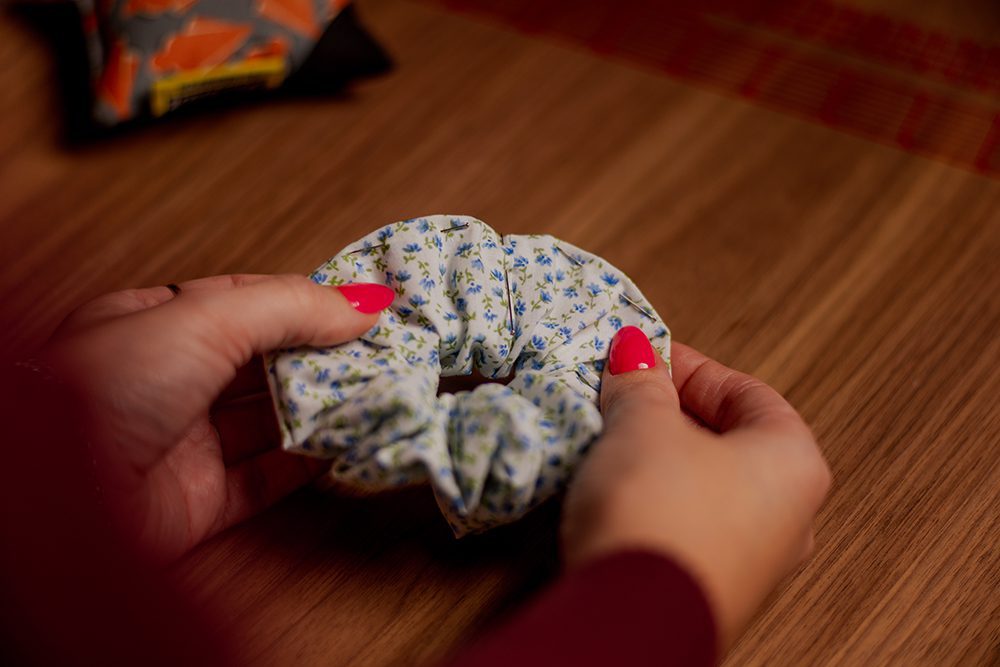
5. Fold your piece in half and take the two ends and pin them together, right sides facing in.
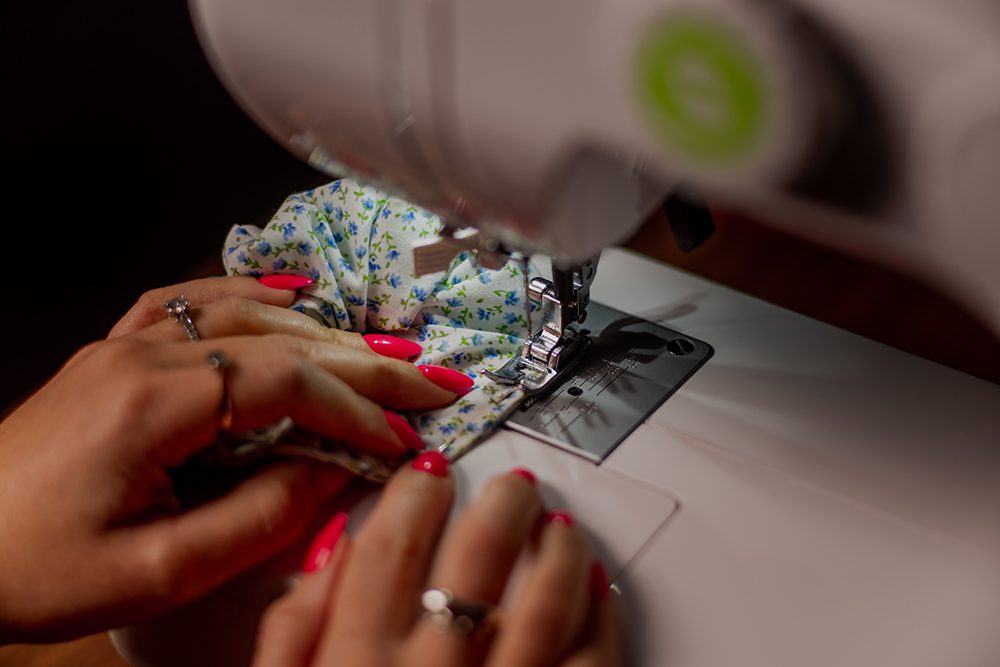
6. Sew along where you’ve pinned, from top to bottom, backstitching at both ends to secure the stitching. Again, use the edge of the foot to guide your seam allowance. Snip your thread.
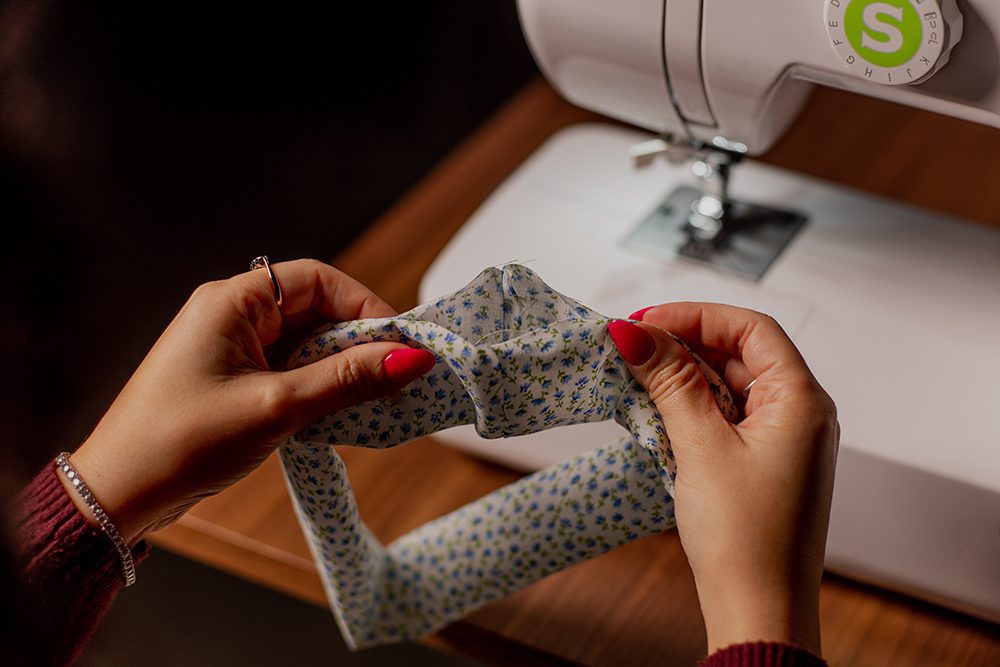
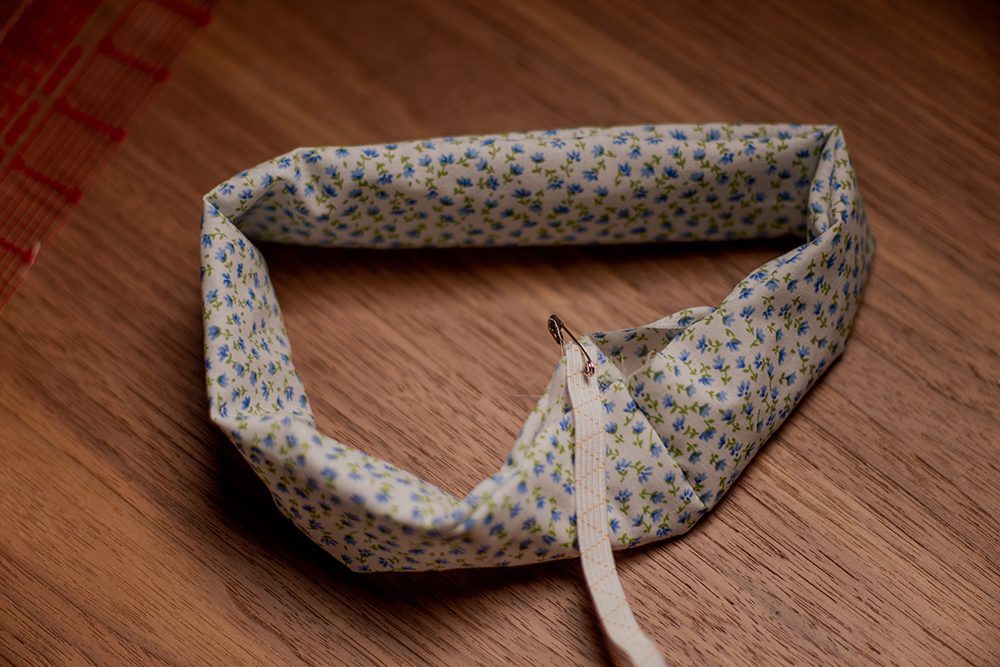
7. Push the new seam in so you have a circular tube with a little opening at the top.
8. Measure out and cut your elastic.
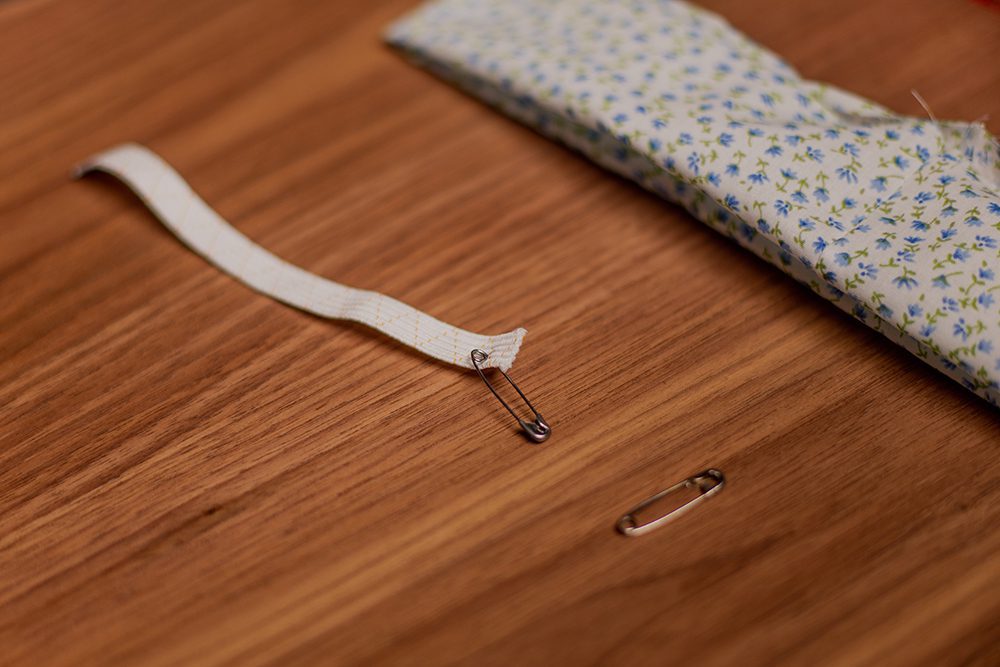
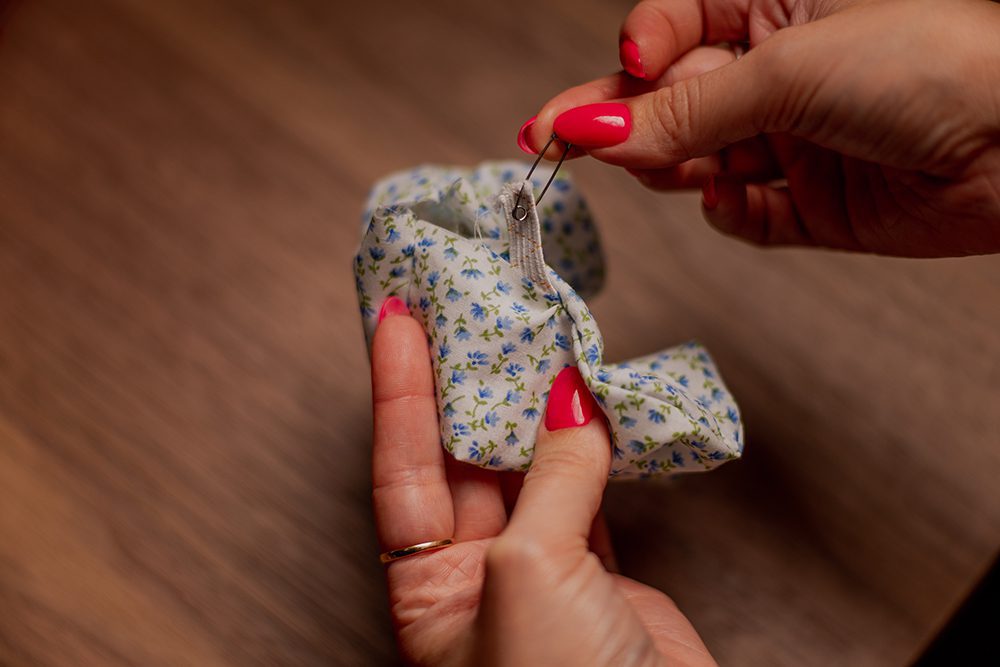
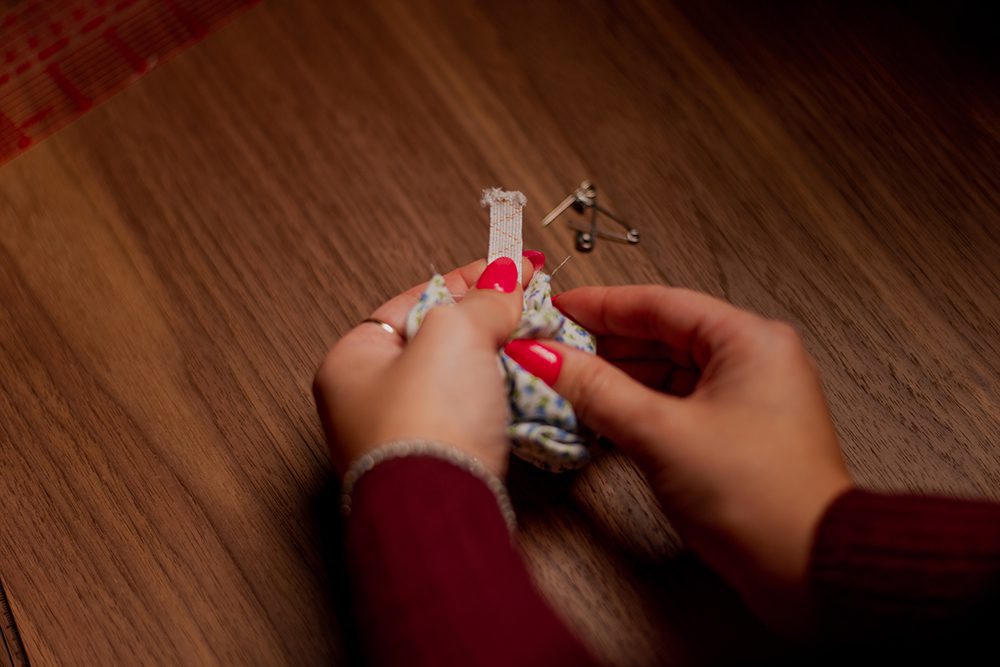
9. Take your safety pins and pin one to one end of the elastic, then use the other safety pin to secure the other end of the elastic to your scrunchie fabric. This is to hold the elastic in place whilst you thread it through the scrunchie.
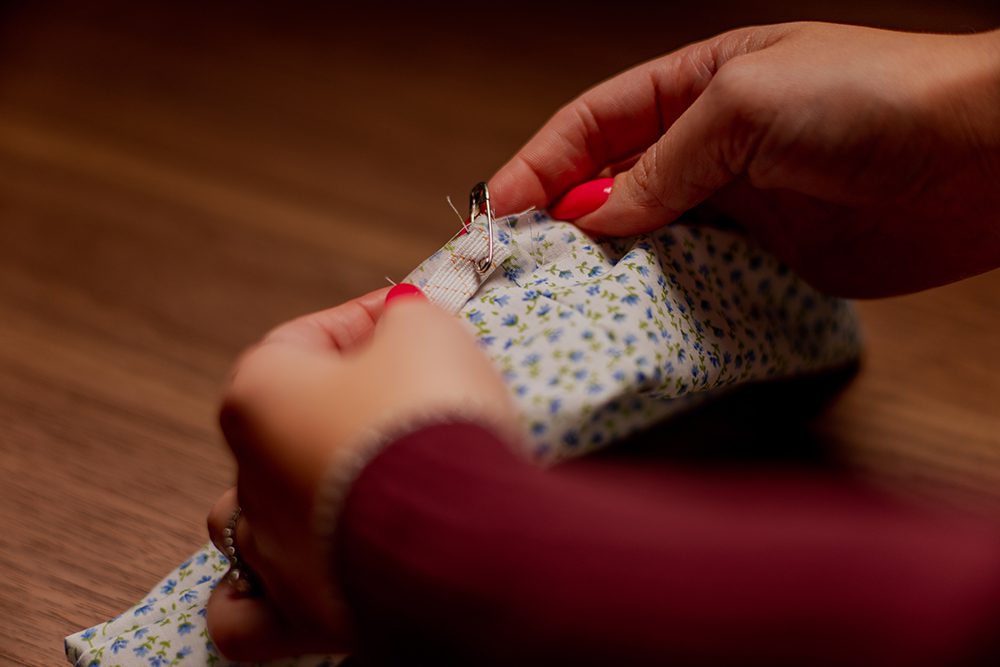
10. Take the loose end of your elastic (that you didn’t pin to the fabric) and thread it through the scrunchie. Use the safety pin to push the elastic through, gathering the fabric as you go and pulling it back so you move through the ring of fabric. Keep going until the safety pin is back where you started.
11. Keeping hold of both ends of the elastic, remove the safety pin from the scrunchie then both from the elastic. Hold the ends of the elastic together.
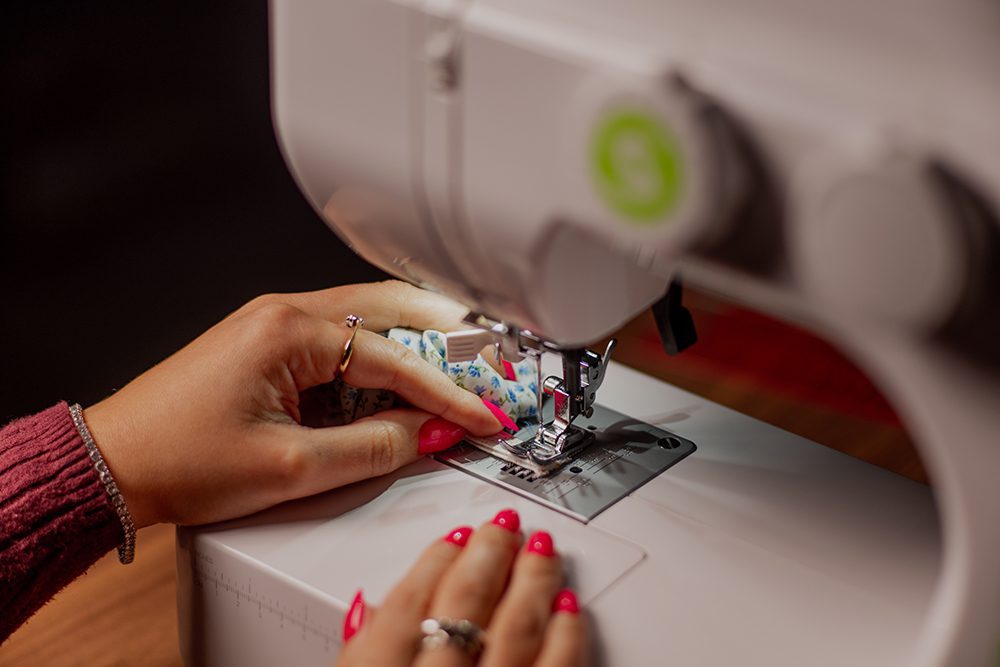
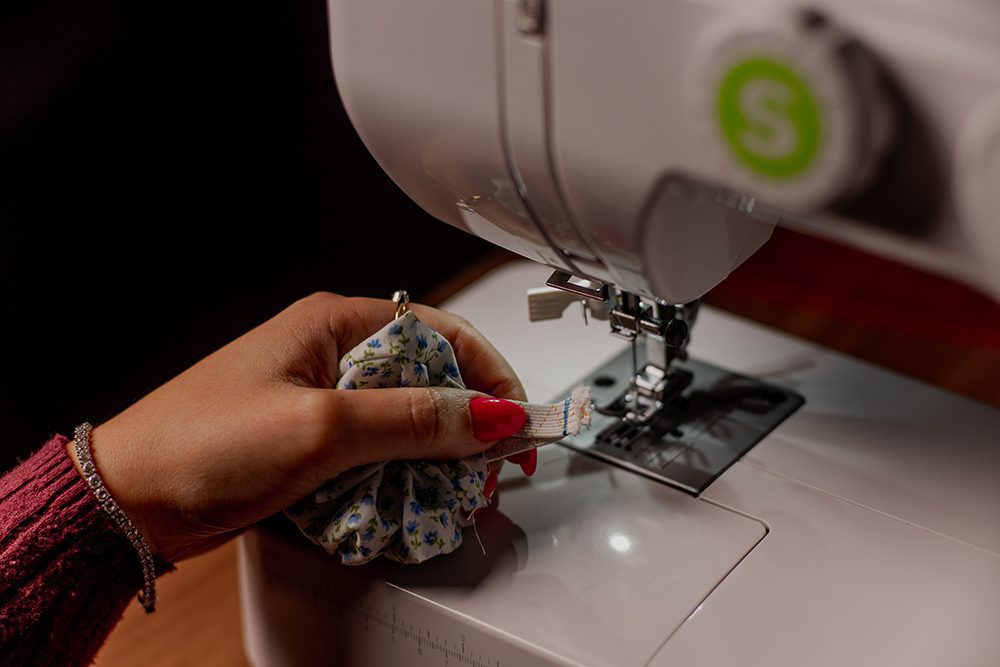
12. Being careful not to let go, place the ends of the elastic under the sewing machine foot, one on top of the other, and sew back and forth a few times to stitch the ends together and secure the stitching. Snip your thread.
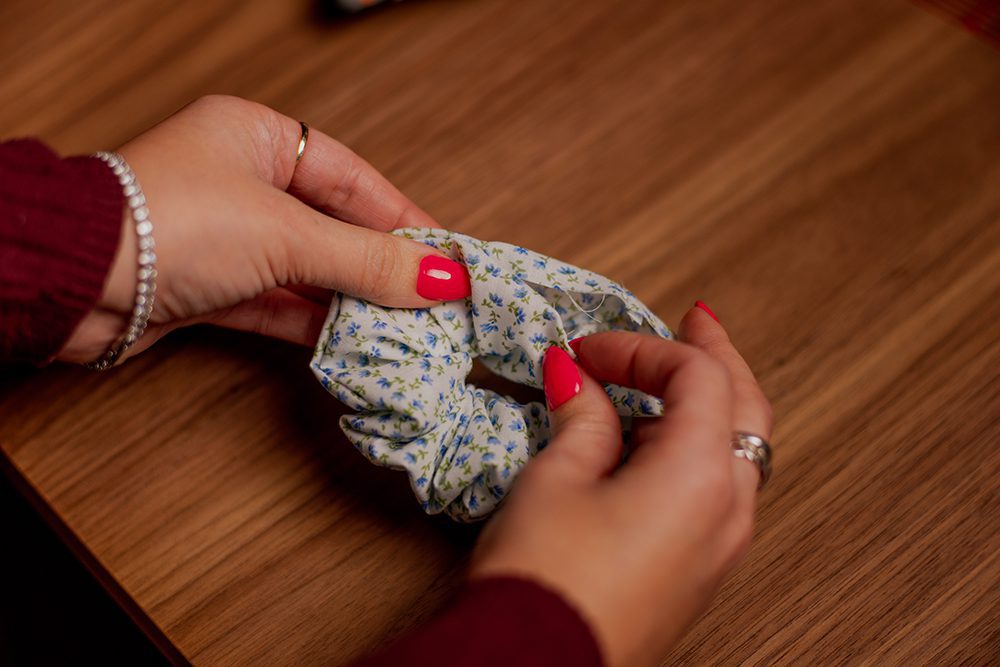
13. Take hold of your scrunchie where it’s open and fold in the raw edges closing them together until it matches the existing seam.
14. Pin it closed and top stitch along where you’ve pinned to close the hole. Keep the stitching close to the edge of the scrunchie and make sure you don’t sew the elastic that’s within. Back stitch both ends and snip away your thread.
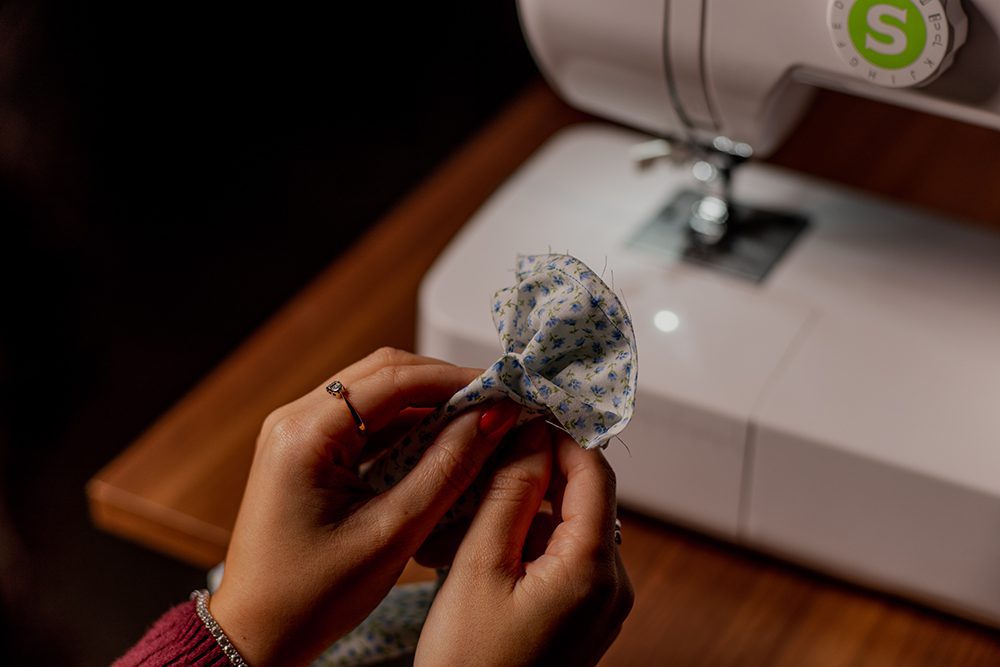
15. The last step before you can wear your scrunchie is to twist the fabric around the elastic so that the seam, and where you’ve just stitched the hole closed, is now on the inside of the scrunchie, this way you can hide the stitching when it’s worn.
I hope you enjoyed making your very own homemade hair scrunchie with this easy sewing tutorial. I would love it if you tagged me @gabriellawisdom in any images or videos you share online! If you found this helpful or want to share what you made please leave a comment on this blog post below!
My Paris mixtape playlist is inspired by French jazz cafés. It’s made of songs that are sung in French and are reminiscent of people-watching from Parisienne café terraces, sipping from tiny glasses of wine in dark corners and strolling along the Seine after the sun has gone down. When you listen to this you adopt the Parisienne blasé attitude accompanied by an air of cultured superiority. If you know, you know.
This is the 6th PFH playlist, if you haven’t already listened to my previously published playlists, click the links below:
So, coffees in our regular cafés aren’t an option right now and boy does that suck, but why not take it as an opportunity to get a little experimental at home and try out something new?
Let’s take a quick trip around the world from the comfort of our own homes, well actually around Europe with a short stop in India, good job we’re not flying all that way just for a coffee, right? Although I’m certain at this point you would 100% hop on a plane to India even just for a coffee, until travel is an option again, let’s be safe and stick to trying these coffees.
I can’t actually drink caffeinated coffee as I have a rather unfortunate sensitivity to caffeine, so I had my brother, who’s a chef, and my partner, who’s a self-proclaimed coffee connoisseur (yeah, I laughed too), come up with these coffees for you. Of course, you can make all of these with decaffeinated coffee should you wish, just as any seasoned coffee-drinker will tell you, it won’t be quite the same.
1. Indian Cappuccino (Dalgona)
The skilful one with a sweet reward.
Also known as a beaten coffee, Desi coffee or that whipped coffee that has featured on every it-girl’s Insta feed since the COVID-19 pandemic!
Origin
India
Ingredients
2tbsp of instant coffee granules
2tbsp sugar
1tsp boiling water
Glass of milk
Method
Heat your glass of milk either in the microwave or on the stove.
Whip together the coffee granules, sugar and water until the consistency resembles peanut butter.
Spoon half of the coffee mixture into the hot milk and stir.
Spoon the rest on top and serve.
2. Kaisermelange
The wildcard, like no coffee you’ve ever had before.
Origin
Austria
Ingredients
X1 egg yolk
X1 shot of espresso
Method
Make the espresso.
Separate the egg yolk from the white.
Add the egg yolk to the espresso
Stir and serve.
3. Irish coffee
The boozy one.
Origin
Ireland
Ingredients
Black filter/drip coffee
Shot of whiskey
1tsp brown sugar
Fresh double cream
The ratio really depends on the size of glass you’re using. You want the coffee and whiskey mixture to be 3/4 of the glass and the cream top to be 1/4 of the glass.
Method
Stir the coffee, whiskey and sugar together until the sugar has dissolved.
Gently pour the cream onto a spoon over the coffee (this is to make the cream float on top rather than mix in) and serve.
4. Café Bombón
The don’t-have-dessert-with-this-coffee-because-this-coffee-is-your-dessert one.
Origin
Spain
Ingredients
X1 shot of espresso
2tsp condensed milk
Method
Add the condensed milk to the bottom of the glass.
Make the espresso.
Pour the espresso on top of the condensed milk.
Stir before drinking.
5. Affogato
The ice cream float for sleepy adults.
Origin
Italy
Ingredients
X1 shot of espresso
X1 round scoop of vanilla ice cream
Method
Make the expresso and add it to a larger heat proof drinking glass.
Add the single round scoop of ice cream into the coffee.