Tag: English

  • British Christmas mince pies recipe (no suet)

    British Christmas mince pies recipe (no suet)

    Mince pies are small, sweet pies traditionally served at Christmas as an afternoon treat with a cup of tea or coffee. There are various versions of mince pies available to shop, from sweet to savoury pastries, sober to boozy mincemeat fillings and with all sorts of additions such as nuts and cranberries but this recipe makes a festively spiced mincemeat with a simple savoury shortcrust pastry. If you’re unfamiliar with mincemeat (not mince meat) then rest assured that it is not made from meat, it is a combination of dried fruits and peel mixed together with sugar and spices such as nutmeg, cinnamon and cloves.

    Fun facts about mince pies


    • The concept of spiced fruit came to England from the middle east in the 13th century


    • They’re traditionally religious and represent the birth of Jesus, the key spices – nutmeg, cinnamon and cloves – symbolise the gifts given by the three wise men


    • Originally they were rectangular to represent Jesus’ cradle


    This mince pie recipe will show you how to make both the mince pie filling and the pastry. This is important because to save money and time most Brits (who aren’t just buying pre-made mince pies) will buy a jar of ready-made mincemeat, but I have been informed that mincemeat isn’t available in North American supermarkets as well as various other places around the world. So, I’m helping you to make this British classic from scratch, don’t worry it’s super easy and requires little to no baking skills!

    So one thing I should note about this recipe is there’s one ingredient that is found in all pre-made jars of mincemeat on British supermarket shelves but isn’t in mine: suet. The reason I chose not to put suet in is because traditional meat suet isn’t vegan or vegetarian (if you didn’t know, it’s made from animal fat) and though there is vegetarian suet, that contains gluten. I’ve put together a recipe that can be made gluten free, dairy free, vegan and vegetarian and suet just didn’t make the cut. So instead I’ve used butter because it’s gluten free and can be swapped out to dairy free margarine without hesitation. 

    Swaps to make this allergy friendly are:

    Gluten free 


    • Gluten free self raising flour


    Dairy free 


    • Margarine


    Vegan 


    • Margarine


    • Dairy free milk to glaze instead of egg


    Vegetarian


    • This recipe is vegetarian, it doesn’t use meat!


    Despite having a chef and a professional cook in the family who have helped me out with many of the recipes here on PFH, when it came to mince pies I turned to Michael’s Nanny (that’s grandma for any confused North American readers) who hands down makes the family’s favourite mince pies. I don’t even like mince pies unless they’re hers. She has the contrast between spiced, sweet and savoury down and though I believe what really makes hers the best is that they’re baked with love (or maybe it’s more to do with the fact that she gets me piddled on her home made sloe gin every year), I’ve done my best to bring her pastry recipe to you, so you too can have a little British magic at home this festive holiday season.

    When planning to make these, take note that you’ll want to leave at least 24 hours between making the mincemeat filling and baking the pies. The mincemeat mixture needs at least 24 hours for the flavours to infuse and intensify, giving your pies that beloved festively spiced flavour.

    Right then, if you bothered to read any of that it’s finally time to get to the recipe! 

    Makes 24

    Equipment


    • 12 case muffin tin (x2 if baking all 24)


    • Measuring cups/scales


    • Spoon measurements


    • Mixing bowl


    • Wooden spoon


    • X2 jars with lids


    • Grater


    • Large wax wrap


    • Rolling pin


    • Round cookie cutter (size depends on the size of your muffin tin)


    • Star cookie cutter (for the lids)


    • Fork


    • Pastry brush


    Filling ingredients


    • 375g / 2½ cups, 13½ oz of mixed fruit and peel


    • 125g, ½ cup, 4½ oz soft brown sugar


    • 1tbs vanilla extract


    • 1tsp ground mixed spice


    • ½ tsp cinnamon


    • 150g, ⅔ cups, 5 ½ oz grated butter


    • 1 medium orange – juice and zest


    • 1 lemon – juice and zest


    • 1 Bramley apple – peeled, cored and grated


    If you want these to be a little boozy then add 1 tbsp of brandy when you add the vanilla

    Pastry Ingredients 


    • 250g, 2 cups, 16oz Self Raising flour


    • 114g, ½ cup, 4oz butter (just do 8oz margarine if you’re going vegan or dairy free)


    • 114g, ½ cup, 4oz margarine (extra for greasing)


    • 16 – 20 tsp water


    • 1 Egg or 2 tbsps of dairy free milk


    • Icing sugar (for decorating or hiding mistakes)


    Method 

    Mincemeat filling

    1. Measure out the butter and grate it (if you’re using a dairy free butter you can skip grating it, it just makes the harder butter easier to work with) then add to the mixing bowl.

    2. Measure out the mixed fruit and peel, sugar, vanilla, mixed spice and cinnamon and add to the butter.

    3. Peel, core and chop the apple and add to the mix.

    4. Zest and juice the lemon and orange and add it all to the mix.

    5. Combine all the mince pie filling ingredients by giving them a good stir with a wooden spoon.

    6. Spoon the filling into a couple of jars and leave in the fridge for at least 24 hours to let the flavours fully infuse. I recommend leaving it in the jars for at least 2 days. It will last for about a week.

    Pastry

    Preheat the oven to 180°C/356°F.

    1. Grease the muffin tin with margarine.

    2. Measure out the flour and add it to a mixing bowl.

    3. Measure out the margarine and add it to the bowl.

    4. If you’re using butter, measure it out and cut it into cubes so it’s easier to manage.

    5. Rub the butter and/or margarine into the flour with your fingers to resemble breadcrumbs.

    6. Sprinkle flour on your hands to stop the mixture from sticking to your hands in this next part. Add water by the teaspoon and bring the mixture together with your hands to form a dough. Keep adding teaspoons of water until its formed until a ball that’s not too dry and not too sticky.

    7. Knead the dough a little because I’m telling you to. Honestly I don’t understand kneading but it made it easier to roll out than when I didn’t (I’m a travel blogger not a GBBO contestant, okay).

    8. Cover the dough in the mixing bowl with a wax wrap and place in the fridge for 15mins to make the dough easier to manage.

    9. Sprinkle your surface and rolling pin lightly with flour before thinly rolling out your dough (you can split the dough in half to make it easier to roll out).

    10. Cut out 24 pie bases with a round cookie cutter and transfer the disk to your muffin tins, gently pressing them in for a snug fit.

    11. Fill each pie with a tablespoon of your mincemeat filling, avoid adding too much of the syrup that will have formed in your mincemeat as it will spill out when baking and make it really hard to get the pies out of the tin.

    12. Crack an egg and beat it with a fork or pour 2 tbsps of dairy free milk into a cup and use whichever one to glaze the rim of the pies.

    13. Return to your pastry, bring it together again and roll it out.

    14. Cut out 24 lids with the star cutter and place one on top of each pie, gently pressing down on the edges so they seal to the pie base.

    15. Wash over each lid with either the leftover egg or milk.

    16. Place the trays in the oven and bake for 15-20 mins, until the pastry is golden brown.

    17. Remove from the oven and set aside to cool for 5mins before gently removing each pie from the tin.

    18. Before serving dust the mince pies with icing sugar. You can do this by placing some icing sugar in a sieve then holding it over the pies and tapping.

    If you aren’t eating all 24 right away (I mean at a party, although Michael could probably manage one tray to himself) then you can store them in a tin or air-tight tub and if you want them for a later date then once they’ve completely cooled down, pop them in a sealed container in the freezer.

    Bon appétit!

    If you want to try any other classic British sweet treats check out my other blog post, Great British desserts every traveller must try and if you haven’t already, why not give my banana bread recipe a go! 

    For other festive content take a look at:

    Mele Kalikimaka, Gabriella

    Pin this post


  • 7 must-visit attractions in the Cotswolds, England

    7 must-visit attractions in the Cotswolds, England

    The Cotswolds is an iconic rural area in the English countryside. Located in the South of central England, it’s just a stone’s throw away from the Welsh border. It’s perfect for a staycation or if you’re travelling from abroad it’s an ideal escape to the British countryside; think The Holiday (2006) and those are the vibes you’re getting (it’s not set in the Cotswolds, but you get the idea).

    The Cotswolds cover 800 square miles, stretching across these five counties: Gloucestershire, Oxfordshire, Wiltshire, Warwickshire and Worcestershire. Despite covering five different counties that each have their own individual charm, the Cotswolds stands in unison with its easily identifiable golden Cotswolds stone walls and buildings, medieval villages and rolling hills for as far as the eye can see. 

    PFH Fun Fact: “Cot” means sheep enclosure and ‘wold’ means hill.

    With plenty to do it’s important to me that I stress that these aren’t the only things you can do in the Cotswolds but they were my favourites and really give you the full Cotswold experience, which is why I wanted to share them with you:

    1. See Arlington Row in Bibury

    Bibury is small, quaint and picturesque village in Gloucestershire and is just a short drive from “the capital of the Cotswolds”, Cirencester. From the evidence of its existence provided in the Doomsday Book, the village of Bibury dates back as far as 1086.

    British textile designer, William Morris, once described Bibury as “the most beautiful village in England” and as it’s home to one of the most photographed places in England, it’s hard to argue with that statement.

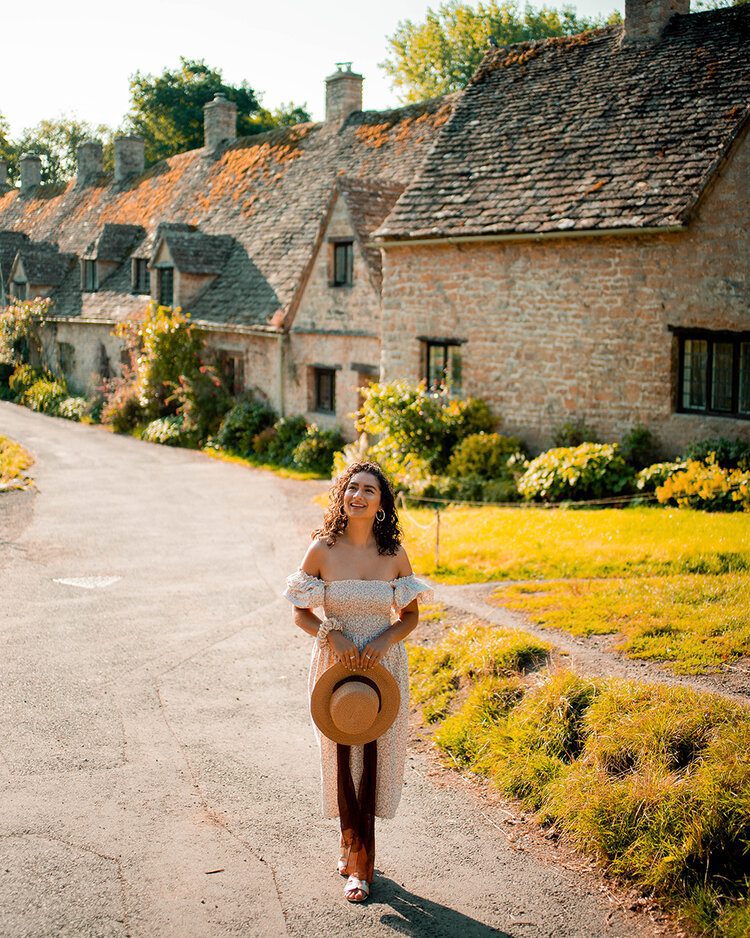
    Arlington Row is the most photographed row of cottages in England and when you see it in person you’ll realise why. It’s the quintessential image of honey coloured Cotswold stone cottages, nestled into the beautiful British countryside, surrounded by brightly coloured flowers and accessed by a little bridge over the gentle River Coln that’s full of kingfishers, ducks and royal swans. Catch it on a quiet, sunny morning and it feels like you’re in a scene from Stardust… well that’s actually because some scenes from Stardust (2007) were shot along Arlington Row. Actually the Cotswolds is home to many movie locations such as Bridget Jones’ Diary, Downton Abbey and Harry Potter. To find out more, check out this helpful article by Rabbie’s Travelfeels.

    Arlington Row was originally built as a wool store in 1380 for Arlington Mill. In the 17th century, it was converted into cottages for the weavers, who used to hang the washed wool out on racks that lead to the name of the nearby meadow, Rack Isle. In 1929 it was purchased and preserved  by the Royal Society of the Arts then in the 1970s it was purchased and preserved by the National Trust.

    All but one of the cottages are privately owned and occupied but you can actually stay at 9 Arlington Row for a minimum or 3 nights for about £500. You can book it here via the National Trust website, keep in mind you’ll need to book months out for this popular spot.

    PFH Fun Fact: Arlington Row featured on the inside cover of the 2010 issued British passports, making the village an even more popular destination to visit.

    Aside from being home to an Instagrammble hotspot, Bibury is also known for its unique and rare wildlife that mostly live in the protected meadow behind Arlington Row, Rack Isle. Take a long stroll around the village and make time for a treat in one of the local tearooms.

    As you can imagine, Bibury is a popular village to visit and it gets busy so if you want to see it at its best I suggest arriving early in the morning. 7.30am in summer is ideal as the sun is just creeping over the tops of the cottages creating a warm glow on the already golden stone and as everyone is asleep it’s quiet enough to only hear the birds singing. It’s ideal for taking in your surroundings and getting photos. You won’t need to rise so early in winter but still go as early as you can to avoid crowds. If you do arrive early, please be quiet and respectful of the people who actually live in these cottages.

    2. Visit Bourton-on-the-Water

    Bourton-on-the-Water, dubbed “the Venice of the Cotswolds”, is one of the prettiest villages in the Cotswolds by far! The village is located in Gloucestershire and straddles the River Windrush and each side is accessible via a series of low bridges, which make for a great photo spot by the way.

    There’s plenty to do in Bourton-on-the-Water besides taking cute photos and even though I don’t plan on having any yet, it’s a great spot for kids with wildlife parks, the Motoring Museum which is home to Brum (if you know, you know) and the Model Village to keep them entertained. 

    Start by arriving early to avoid the crowds, take a stroll along the river, taking cute photos whilst no one else is around getting in the background. This will also ensure you nab a parking spot before the village fills up. Next, grab breakfast in Bakery On The Water, a small family run artisan bakery, and if the weather is good choose to sit outside where you can sit next to the river as it runs down into the village. Walk off your breakfast by visiting the Motoring Museum next door which is home to over 40 cars including little Brum. 

    For those of you who didn’t grow up watching Brum on the tele in the 90s, he was a little, yellow, half-scale replica of a late-1920s Austin 7 Chummy convertible car with giant eyeballs, who would regularly drive off to “Big Town” when his owner wasn’t looking. Each episode would see him coming to someone’s rescue or learning something new and would end with him coming home with some souvenir of the day which, for some reason, NEVER seemed to baffle his owner when he found it at the end of the day. It’s a classic!

    Once you’re done at the Motoring Museum, stroll over to the Model Village, a miniature replica of the very same village you’re in. Built in the 1930s, it’s the only Grade II listed model village in the country. At £4.50 per adult and £3.50 per child (children under 3yrs old go free) it’s entertaining for all ages, especially when you realise there’s a model village in the model village, in the model village in the model village – that honestly gets me every time! 

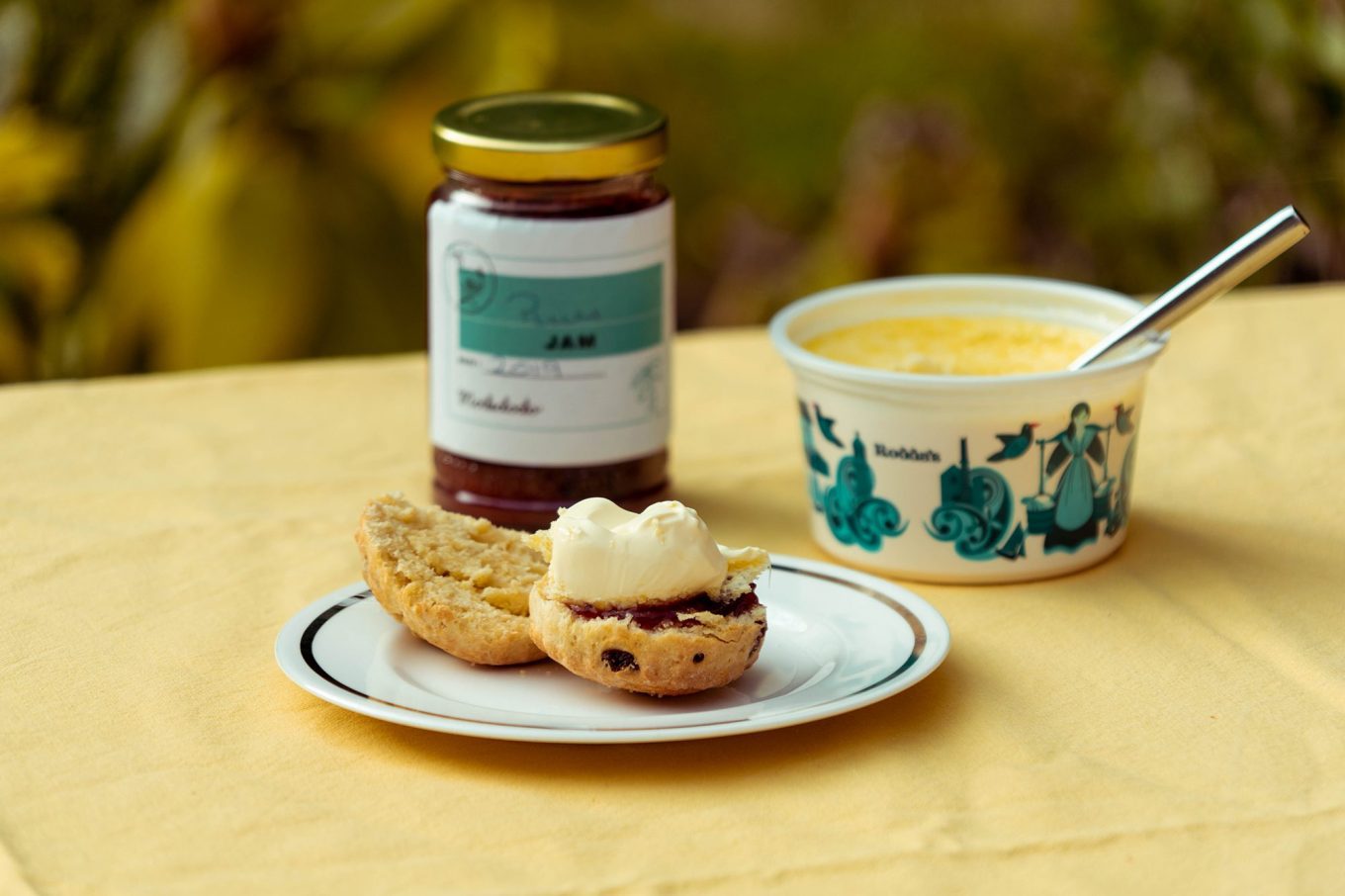
    Once you’ve finished up in the model village, spend some time pottering around the shops and maybe take a break for a cream tea (a pot of tea served with a scone topped with jam and clotted cream) before leaving.

    3. Go for a long hike

    Provided you are able to do so, hiking or going for a long stroll out in the countryside of the Cotswolds is an absolute must. With plenty of paths, routes and bridleways it’s hard to choose which to tackle, but the number one trail is Cotswold Way. This 102 mile long National Trail is the most famous walk in the Cotswolds as it goes all the way from one end of the Cotswolds to the other: from Bath, Somerset to Chipping Campden, Gloucestershire. There’s plenty of opportunities along the trail to do sections of it rather than the full 102 miles, thank goodness. We chose to do the Leckhampton Hill Loop which is a moderate hike with some steep sections that starts and ends in Seven Springs. It’s 4.5 miles (7.25km) and will take around 3hrs to complete. The Leckhampton Hill Loop covers some of the best sections of The Cotswold Way including vast luscious grasslands home to roaming cows, Iron Age remains and an incredible hilltop view over Cheltenham. Park up early in the lay-by opposite the Seven Springs pub.

    Another really beautiful spot to hike that is close to the Cotswolds but not in it, is the Wye Valley Area of Outstanding Natural Beauty, there’s a pay and display car park at Symonds Yat Rock where you can start many trails. Make sure you make a stop at the view point from Symonds Yat Rock for breathtaking views of the valley which includes a horseshoe bend in the River Wye and the chance to spot a Peregrine Falcon, the world’s fastest bird, soar.

    Be sure to bring water, wear suitable footwear and if you walk in the summer make sure you wear suncream.

    4. Take a deep breath at Cotswold Lavender

    If you’re a frequenting reader of Postcards from Hawaii, you probably know that I am obsessed with lavender, so one of the first things I needed upon arriving in the Cotswolds in July 2020 was to visit Cotswold Lavender.

    Cotswold Lavender is a third-generation family run Lavender farm and distillery, located in Snowshill, Worcestershire that overlooks the Vale of Evesham. Unlike many other Lavender farms across England, their visiting months are limited to just June and July so aim for these summer months if you’re planning to visit. The middle of July is when the lavender is most in bloom.

    The field opens at 10am and costs £4 per adult and £2 per child aged 5-16 years, children under 5 get free entry.

    With over 40 varieties of lavender across 140 miles (225km) of rows there’s plenty of opportunities to take a moment to deeply breathe in the intoxicating and calming scent of the lavender plus you can get all the photos you need from various angles thanks to the plants being split up into various patches.

    The best angle is with the lavender farmhouse in the background (it’s on the right as you enter the lavender fields). As always, arrive early for the best shots.

    There’s plenty of picnic benches amongst the lavender if you want to bring your own lunch.

    Be sure to pick up some of their lavender products before leaving, they’re amongst my favourite lavender products I’ve ever purchased. Their lavender hand sanitising gel is ideal for keeping you clean and calm in a pandemic and their sleep spray is heavenly! 

    For further reading on lavender on PFH, check out 10 lavender products for more relaxing travels and How to sleep on long flights.

    5. Go wine tasting on a vineyard tour

    Catch them on a glorious spring/summer’s day and the vineyards within the Cotswolds look and feel like rural France.

    Our vineyard of choice is one of the oldest in England: Three Choirs in Gloucestershire. A tour and tasting at Three Choirs Vineyard costs just £12.50 per person and includes a 30-45mins guided walking tour of the factory which gives you a brief history of the vineyard and their wine production plus you get a tasting of four of their wines which includes their sparkling, red and white wines. Bookings must be made in advance by contacting them here.

    Be sure to book a table at their brasserie where you can dine on a carefully selected menu to compliment their wines whilst looking out over their some 45,000 French and German grape vines set upon 75 acres of hills. 

    After your meal, take a lazy stroll on the vineyard walk which is mapped out with plenty of signage explaining the history of Three Choirs’ wine production. 

    There’s also a shop for you to purchase your favourites from your tasting and meal and with their own onsite accommodation, there’s also the option to wake up to the beautiful view of the vines.

    6. Enjoy a lazy pub lunch 

    Though it’s not what we’ve been used to, I honestly much prefer the way pubs are set up now due to the worldwide C-19 pandemic. Everything is table service which means you don’t have to queue at a crowded bar, the tables and toilets are regularly cleaned which means no more sticky surfaces and seating is far more spread out so you can rest assured that everyone in the village won’t know your business because no one can hear you chatter at your table now!

    Pretty much every village in the Cotswolds has a pub so you won’t have to look far to find a dreamy location for your lazy lunch. Treat yourself after a long morning walk/hike – like the ones I mentioned earlier – to a pint and lunch or better yet, end your week with a Sunday lunch carvery. 

    The pub we chose to eat at was The Royal George in Birdlip, a tiny but picturesque village in Gloucestershire.

    You could also grab a pint in the oldest pub in Britain, The Porch House in Stow-on-the-Wold with parts of its building known to date back to the year 947!

    7. Experience ancient Rome in Bath

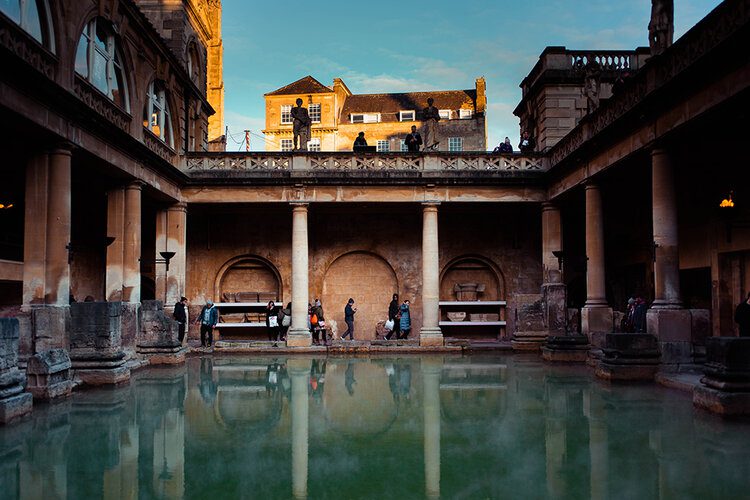
    Bath, Somerset is located at the very base of the Cotswolds. Its history spans thousands of years as it was an ancient Roman settlement over 2000 years ago. I highly recommend spending some time exploring Bath and learning about its rich history making sure to visit the Roman Baths, stroll the cobbled street and eat at Sally Lunn’s. To read more about what to do in Bath, take a look at Long weekend in Bath, England itinerary.


    If you do visit any of these places during the pandemic, please make sure you bring a reusable face mask and keep your face covered whenever you’re inside or in close proximity to other people outside of your allowed bubble. Please regularly wash your hands or use sanitiser and put in the effort to socially distance yourself from others.

    As I have recommended with many of the things to do in this list, arrive early to avoid crowds and not only will you have a better chance of taking great photos but you will also reduce the amount of people you are around.

    Gabriella

    Pin this post


  • A guide to spending the day at the British seaside

    A guide to spending the day at the British seaside

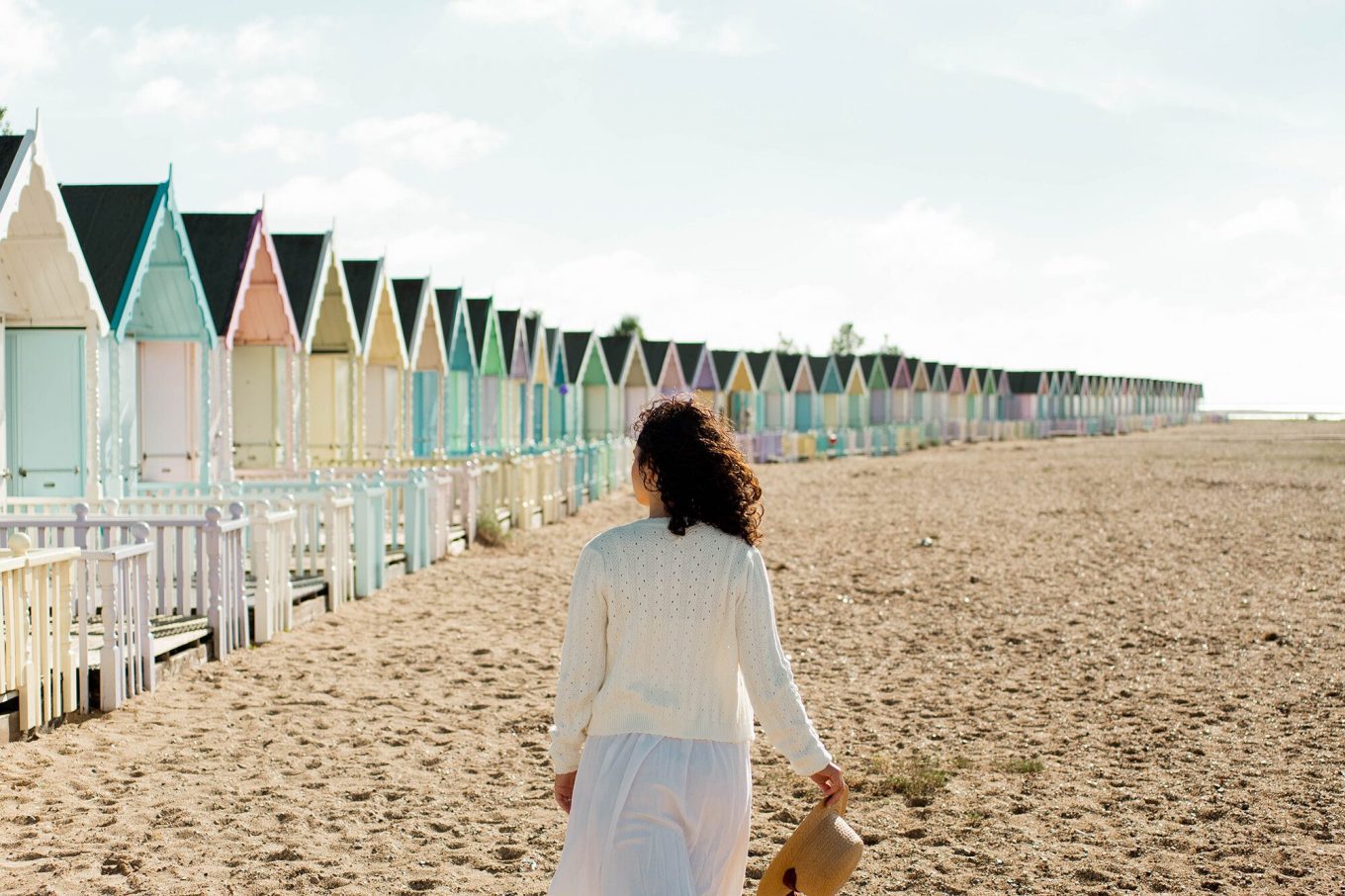
    Well it’s not quite the Great British Summer we were expecting for 2020 but it won’t be like this forever! Let’s make the most of what we have left of the summer and then this little guide will still be around for years to come when you (whether you live in the UK or plan to visit) can spend a classic day at the seaside doing all the things that make summer by the seaside the quintessential pastime that it is.

    I wanted to put this guide together for anyone coming to a British seaside town for the first time, so that you can spend the day doing all of the classics that so many Brits have enjoyed for years. 

    Fun Fact: The day below is my ultimate date plan. My favourite days spent with Michael at home are doing exactly what I’ve listed below. I don’t (always) need a fancy dinner, just give me a handful of 2ps for the arcade and chips swimming in vinegar and I’m on cloud nine.

    Find a spot on the beach

    The goal here to is arrive early to nab a good spot and then spend an almost absurd amount of time there; I’m talking hours. You don’t want to leave until sand is everywhere: hair, mouth and even your bits. If sand isn’t washing out of your crack in the shower at the end of the day, you didn’t stay at the beach long enough. 

    Things to do on the beach:


    • Read a book


    • Make a sandcastle


    • Do a beach clean (and dispose of the rubbish/trash responsibly)


    • Swim in the sea, even if it’s a little chilly


    • Bodyboard, paddle board or surf


    • Rock pooling (discover the sea life living in the rock pools during low tide)


    Things you might want to consider bringing with you for a day at the British Seaside:


    • A windbreaker


    • Collapsible camping chairs


    • A net


    • A bucket and spade


    Please either keep hold of your bucket and spade to reuse and if you don’t want to travel with it, please hand it to a family so that their kids can use them. NEVER leave your bucket and spade on the beach, the tide will carry them out to sea and it will pollute the ocean and could kill marine life.

    THIS IS VERY IMPORTANT: Check the tide times before you plan to go. Having worked in a little café on the beach for 9 summers when I was younger, if I had a penny for every time a tourist asked me where the beach was I wouldn’t have had to work as a waitress for 9 years! Many beaches will be covered during high tide so check the tide times for your beach of choice online. 

    High tide: the sea has come in and is covering the beach.

    Low tide: the sea has gone out and the most amount of beach is uncovered.

    Please make sure you drink plenty of water and regularly apply suncream. Pay attention to signs on the beach that indicate safe swimming areas/rip tides.

    For a packing guide for a day at the beach, check out my blog post: what’s in my beach bag.

    Fish & Chips for lunch

    If you’ve read my blog post, Traditional British meals every traveller needs to try then you’ll know that fish and chips is one of my favourite meals of all time. I cannot go too long without fish and chips, fish and chips is life. If you’re vegan, drop the fish and just go with the chips, many places will fry in veg oil, but check in advance.

    Check out my blog post Traditional British meals every traveller needs to try to read about your different condiment options.

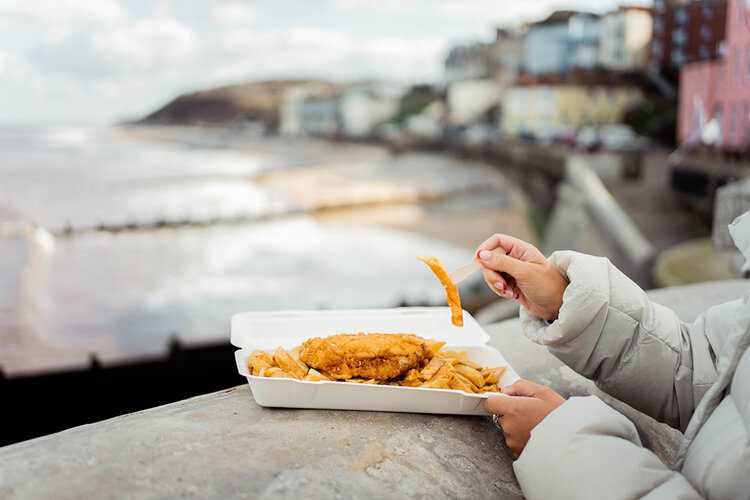
    When getting fish and chips on a day at the beach, you’ll want to get to the chippy before 12pm or later in the afternoon to avoid queues longer than Brighton pier. Get them open (rather than wrapped) so you can add your own salt and vinegar, then head back to the beach. Yes you’re probably going to get sand in your chips, but that’s part of the charm. 

    PSA: Beware of the seagulls!

    Visit the local shops

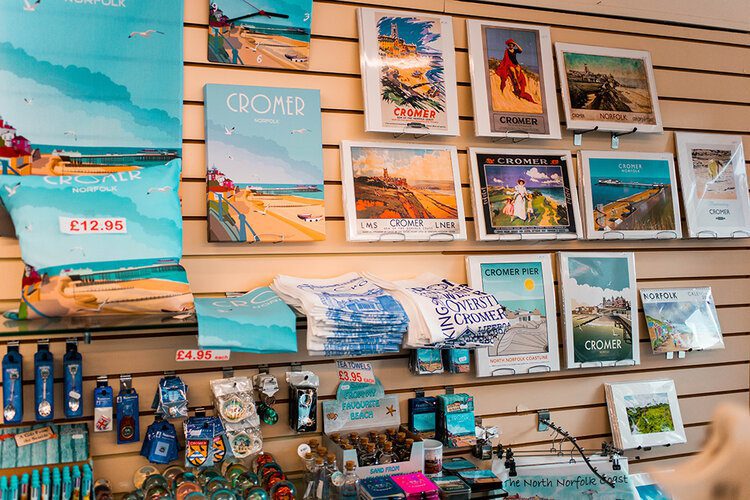
    No trip out is complete without a souvenir of the day. With so many locally made options, it would be a shame to leave the seaside with a standard trinket over a unique-to-the-area souvenir. For example, when visiting the Norfolk seaside, you absolutely must pick up something made with Norfolk lavender or when in Brighton or Blackpool you can’t leave without a stick of rock (hard candy).

    Spend purposefully not mindlessly and support local businesses.

    Enjoy a 99 Flake ice cream

    Ice cream comes after the shops because many won’t let you in with food and drink… it’s fair, I’ve been both the customer who accidentally dropped their ice cream and the shop assistant who has had to clean up the ice cream off the floor, so shop then eat.

    Unless you have allergies – in which case you can get an ice lolly, sorbet or ice cream in a pot – the only ice cream you should be eating at the seaside is a 99 ice cream. But Gaby, what on earth is a 99 ice cream? It’s a soft whip vanilla flavoured ice cream that should be (but isn’t always if you’re being served by a teenager) delicately swirled into a wafer cone (that tastes like nothing but it’s not the same without it) and then penetrated by a Cadbury’s chocolate Flake (a crumbly chocolate stick that falls apart when you try to eat it). Honestly it’s the basic bish of British ice-cream but summer just wouldn’t be the same without it.

    Contrary to popular belief, a 99 Flake ice cream didn’t get its name from its price but unfortunately no one really knows why it is called a 99 flake, 99 or ninety-nine. The true origin has been lost in time with many people claiming to be the first to snap a Cadbury’s Flake in half and stuff it in an ice cream. Origin stories cover tributes to the First World War, cricket, Italian Royalty and shop addresses. Either way, not knowing why it’s called a 99 Flake ice cream is part of the charm.

    Ideally you want to purchase your 99 Flake ice cream from an ice cream van with copyrighted cartoon characters with slightly askew features. Ice cream van jingles are the sound of summer!

    Play in the seafront arcades

    In the days before we all carried around copious amounts of hand sanitiser, I would make sure eating our ice cream came before going to arcades, because there’s nothing sanitary about handling decades worth of copper pennies and then eating with your hands.

    The arcades is one of my favourite parts of the day, it’s good fun with minimal effort and provided you don’t get carried away, it doesn’t cost much. 

    The most classic machine to play is the 2p slot machine. Not just any 2p slot either, you want the one that looks like this one in the photo, where there’s a whole platform pushing coins rather than rickety old arms that barely push the coins anywhere. This machine will give you your best chance of getting more coins back.

    Your technique should be to drop your coin as the top shelf is drawn in, so that by the time it lands, the shelf is all the way out, then when it draws back in again, the coin will push other coins froward and hopefully off the shelf. 

    The goal of these machines is to win something crappy that’s hanging off the edge but if it’s not something you’ll use, either play for the fun of it or even give it back to prevent contributing to waste (because really, these prizes are naff, except for the time I won a High School Musical pen, I still have that). Many arcades offer tickets/tokens that you can collet to buy better toys, but really you’ll only collect enough for some sweeties/candy.

    To manage your spending at the arcades, don’t change up more than £5 of 2ps. Honestly you can get your kicks on a couple of pounds and anymore than £5 you should have just spent it in one of the local gift shops instead. There will be various change-maker machines around the arcade but if you have notes, take them to the counter to be changed up.

    Playing 2p slot machines in the arcades at the seaside is a simple pleasure in life that I think everyone should experience, if possible.

    Grab a pint from the pub

    After a long day at the seaside, it’s really only logical to end it with a cold pint, or something equally classic such as a Pimm’s No.1 Cup or a G&T, at one of the local pubs. 

    If you don’t drink alcohol, don’t worry, this isn’t quite so much about drinking as it is socialising and taking a pause to savour the day you’ve just had at the beach before leaving. Whether it’s a pint of local ale or lemonade, take it out into the beer garden and enjoy what’s left of the sunshine before it dips below the buildings.

    If you are drinking an alcoholic beverage, firstly drink responsibly, and second try a locally brewed beer, cider or gin.

    .

    Gabriella

    Pin this post


    .

    If the photos are confusing it’s because I had originally started shooting this content back in February 2020 (pre-pandemic) for something else, hence the winter gear but I guess it shows you can do ALL of this no matter what time of year it is.

  • Classic English fruit scones recipe

    Classic English fruit scones recipe

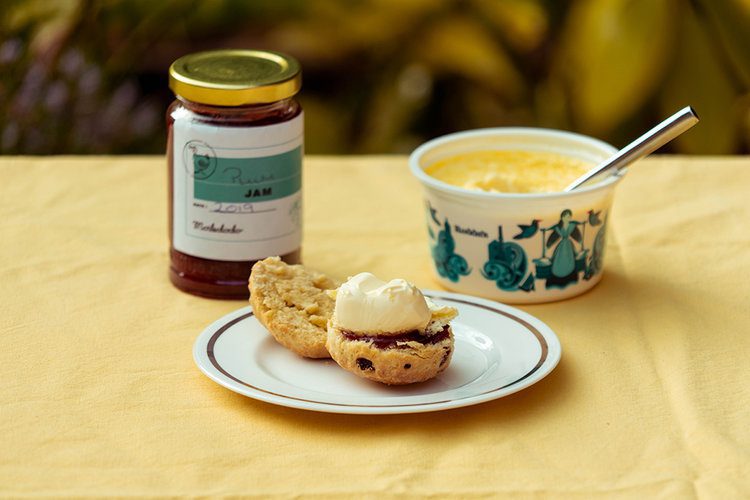
    Tell me a more quintessentially British thing to do in the afternoon than indulge in a cream tea or afternoon tea? Of course, absolutely no afternoon tea is complete without good old fashioned fruit scones served with jam and clotted cream. So here I am to bring a little British culinary culture to your home with a very simple and easy recipe for baking fruit scones. 

    To learn more about proper afternoon tea etiquette, take a look at my blog post, Traditional British meals every traveller needs to try.

    Usually my recipe blog posts are inspired by my travels, but the recent glorious sunny days we’ve been having out in the Norfolk countryside has got me thinking about the Great British Summer and it inspired me to look a little closer to home this time.

    Remember everyone, it’s “scone” like “gone” not “scone” like “bone”.

    Scones can come in many shapes and tend to be made using family recipes that have been passed down. So I will be sharing the recipe my Mum uses.

    The recipe below makes approximately 10 scones. 

    Ingredients

    225g self raising flour (plus extra for rolling)

    1 level tsp baking powder

    40g softened butter

    25g caster sugar (and a couple of pinches for sprinkling over the scones)

    1 egg

    150ml milk (plus a dash extra for brushing the scones)

    55g currants

    Jam

    Clotted cream

    Equipment

    Measuring scales

    Sieve 

    Large mixing bowl

    Tsp measurement

    Wooden spoon

    Bowl

    Fork

    Rolling pin

    Round cutter (approx. 6cm wide)

    Pastry brush

    Baking tray

    Reusable tray liner (or greaseproof paper, but try to buy a reusable greaseproof liner)

    Wire rack

    Method

    1. Preheat the oven at 180˚C

    2. Measure out all of your ingredients

    3. Sieve the baking powder and flour into a large mixing bowl


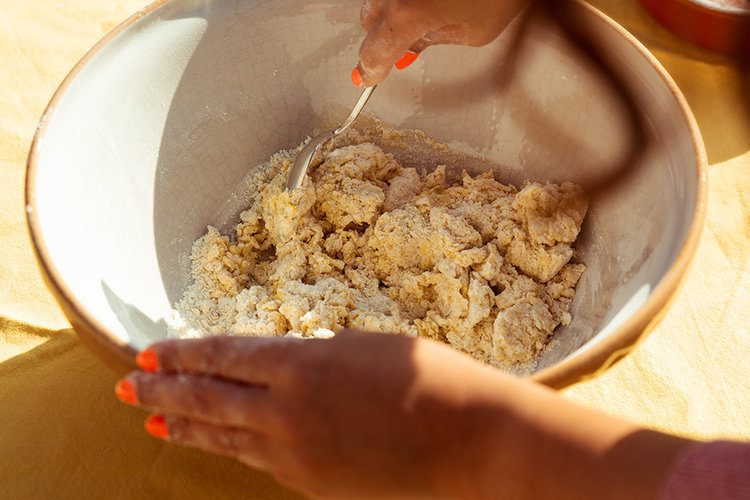
    4. Add the butter to the flour mixture and rub ever so lightly with your finger tips until the mixture resembles breadcrumbs

    5. Stir in the sugar

    6. Break the egg into a separate bowl and whisk with a fork whilst adding the milk

    7. Stir the egg mixture into the large mixing bowl to make a soft dough

    8. Stir in the currants

    9. Your dough should be in-between dry and sticking, if it is too wet and sticky sprinkle flour over it until it is soft rather than sticky

    10. Lightly flour a flat surface for rolling out the dough

    11. Once you have gathered the dough into one lump, remove it from the mixing bowl and place it on your floured surface


    12. Knead the dough very gently

    13. With flour dusted on your rolling pin, roll out the dough to a thickness of 2cm (3/4”)

    14. Using a 5cm (2”) round cutter, cut the dough into as many rounds as you can, placing each one on your lined baking tray

    15. Gather the remaining dough, roll it out to the same thickness and cut what’s left

    You should have approximately 10 scones, I managed to get 11 out of mine so it can vary

    With the scrap of dough left, roll it into a ball to bake – don’t waste anything!

    16. Using the pastry brush, brush the tops of each scone with milk and sprinkle with a very small amount of caster sugar, this will make the tops of the scones go golden brown

    17. Place the tray on the middle shelf of the preheated oven to bake for 10 minutes, if they are not golden brown quickly turn the tray around and bake for 2-3 more minutes, but no more than that

    18. Remove them from the oven and place the scones on a wire rack to cool down

    To serve


    • Cut in half


    • Spread jam on each half


    • Top with clotted cream


    There you have it, your perfect addition to your afternoon or cream tea. 

    Remember, proper afternoon tea etiquette is to keep those pinkies down and never bang your spoon on your tea cup!

    If you give these a try let me know how it goes. Tag me using @gabriellawisdom and the hashtag #postcardsfromhawaiiblog so I can share it on my Instagram.

    Enjoy!

    Aloha, Gabriella 

    Pin this post