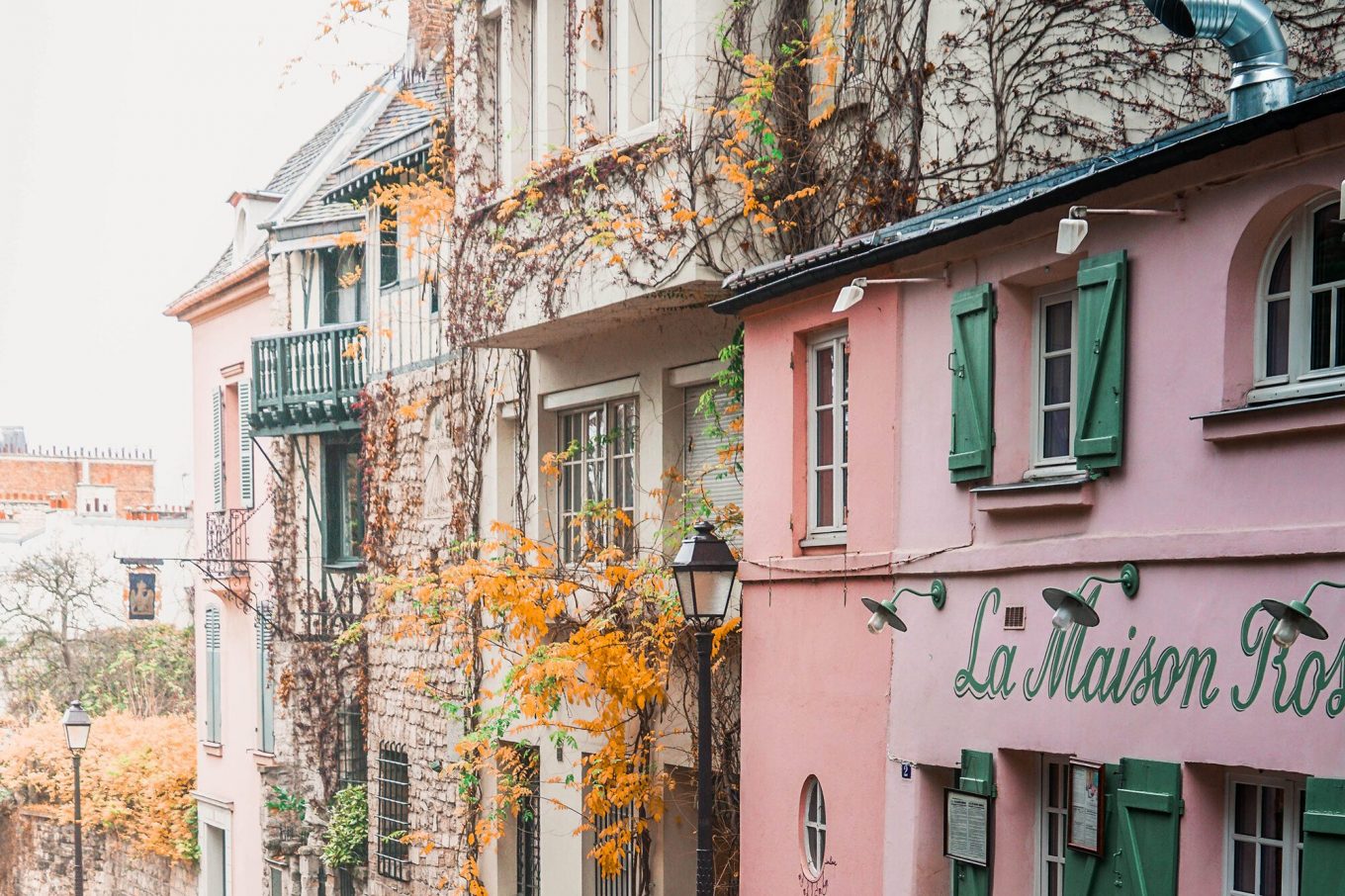
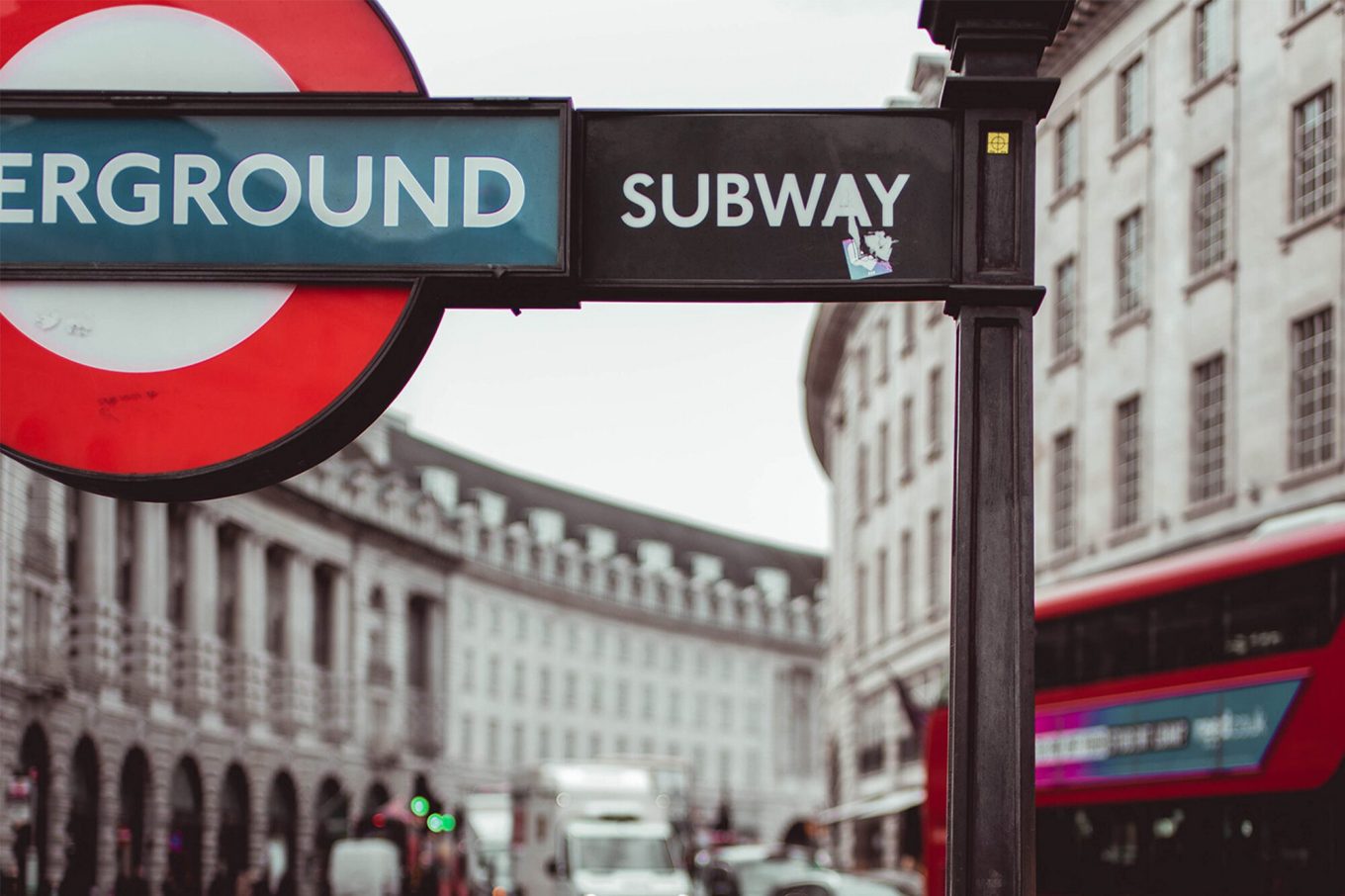
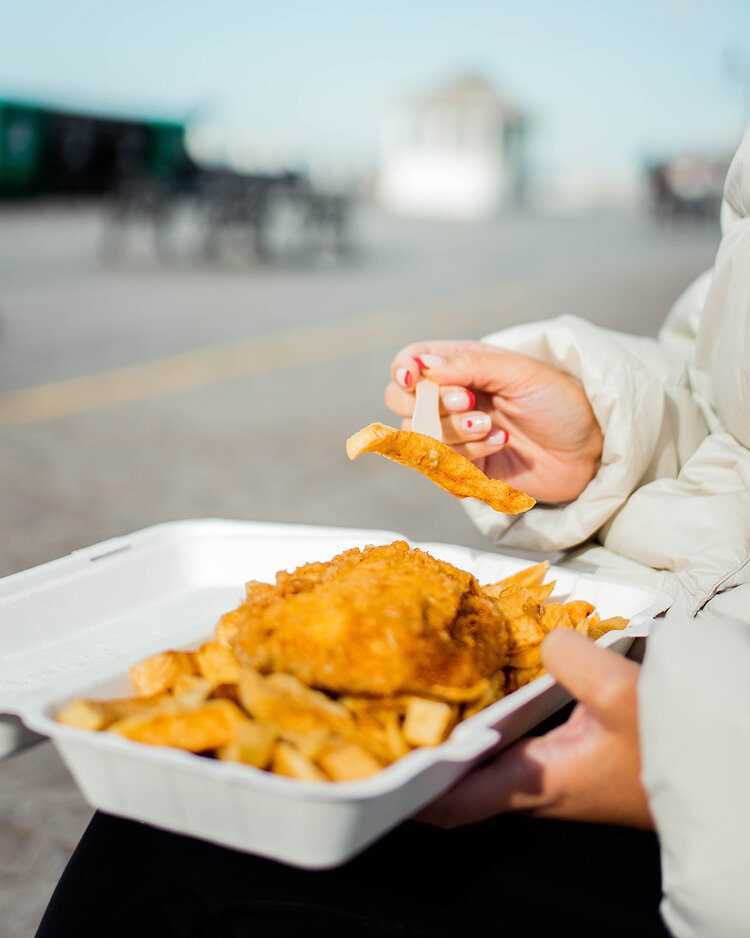
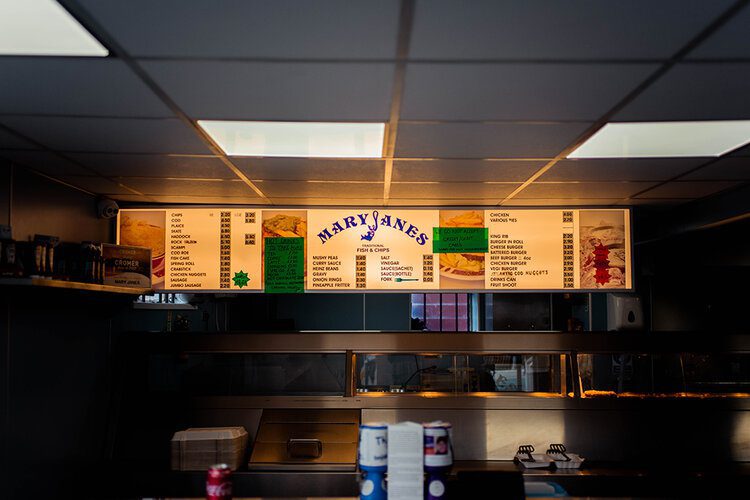
My Paris mixtape playlist is inspired by French jazz cafés. It’s made of songs that are sung in French and are reminiscent of people-watching from Parisienne café terraces, sipping from tiny glasses of wine in dark corners and strolling along the Seine after the sun has gone down. When you listen to this you adopt the Parisienne blasé attitude accompanied by an air of cultured superiority. If you know, you know.
This is the 6th PFH playlist, if you haven’t already listened to my previously published playlists, click the links below:
So, coffees in our regular cafés aren’t an option right now and boy does that suck, but why not take it as an opportunity to get a little experimental at home and try out something new?
Let’s take a quick trip around the world from the comfort of our own homes, well actually around Europe with a short stop in India, good job we’re not flying all that way just for a coffee, right? Although I’m certain at this point you would 100% hop on a plane to India even just for a coffee, until travel is an option again, let’s be safe and stick to trying these coffees.
I can’t actually drink caffeinated coffee as I have a rather unfortunate sensitivity to caffeine, so I had my brother, who’s a chef, and my partner, who’s a self-proclaimed coffee connoisseur (yeah, I laughed too), come up with these coffees for you. Of course, you can make all of these with decaffeinated coffee should you wish, just as any seasoned coffee-drinker will tell you, it won’t be quite the same.
1. Indian Cappuccino (Dalgona)
The skilful one with a sweet reward.
Also known as a beaten coffee, Desi coffee or that whipped coffee that has featured on every it-girl’s Insta feed since the COVID-19 pandemic!
Origin
India
Ingredients
2tbsp of instant coffee granules
2tbsp sugar
1tsp boiling water
Glass of milk
Method
Heat your glass of milk either in the microwave or on the stove.
Whip together the coffee granules, sugar and water until the consistency resembles peanut butter.
Spoon half of the coffee mixture into the hot milk and stir.
Spoon the rest on top and serve.
2. Kaisermelange
The wildcard, like no coffee you’ve ever had before.
Origin
Austria
Ingredients
X1 egg yolk
X1 shot of espresso
Method
Make the espresso.
Separate the egg yolk from the white.
Add the egg yolk to the espresso
Stir and serve.
3. Irish coffee
The boozy one.
Origin
Ireland
Ingredients
Black filter/drip coffee
Shot of whiskey
1tsp brown sugar
Fresh double cream
The ratio really depends on the size of glass you’re using. You want the coffee and whiskey mixture to be 3/4 of the glass and the cream top to be 1/4 of the glass.
Method
Stir the coffee, whiskey and sugar together until the sugar has dissolved.
Gently pour the cream onto a spoon over the coffee (this is to make the cream float on top rather than mix in) and serve.
4. Café Bombón
The don’t-have-dessert-with-this-coffee-because-this-coffee-is-your-dessert one.
Origin
Spain
Ingredients
X1 shot of espresso
2tsp condensed milk
Method
Add the condensed milk to the bottom of the glass.
Make the espresso.
Pour the espresso on top of the condensed milk.
Stir before drinking.
5. Affogato
The ice cream float for sleepy adults.
Origin
Italy
Ingredients
X1 shot of espresso
X1 round scoop of vanilla ice cream
Method
Make the expresso and add it to a larger heat proof drinking glass.
Add the single round scoop of ice cream into the coffee.
The perfect pitcher of Pimm’s doesn’t exis…. here it does. This recipe will have you making the perfect pitcher of Pimm’s Fruit Cup to serve this summer.
Pimm’s No.1 Cup was created by James Pimm in 1840. It’s a gin-based spirit that is mixed with lemonade, ice, mixed fruits and mint. Pimm owned an oyster bar in London where he served up Pimm’s No.1 Cup as a digestive aid in a small tankard, which is how the drink got its name.
Pimm’s No.1 Cup or known informally as just Pimm’s, is Britain’s favourite summer drink. It is famously served at some of England’s biggest summer events such as Wimbledon and the Chelsea Flower Show and is a staple at any summer wedding, BBQ, cricket match or garden party.
No other cocktail represents the Great British Summer better than Pimm’s, so to help you bring a little British summertime sophistication into your home here’s how to make the perfect pitcher of Pimm’s No.1 Cup!
This recipe will serve 4 glasses working off the ratio of 50ml of Pimm’s to 150ml of lemonade per person. When making Pimm’s No.1 Cup, the ratio to lemonade is 1 part Pimm’s to 3 parts lemonade.
Recipe for how to make the perfect pitcher of Pimm’s
1. Slice the orange, lemon, lime and strawberries.
2. Chop up the cucumber into chunks.
3. Cut off the excess stalks from the mint leaves.
4. Fill your pitcher 1/3 of the way with ice.
5. Add the fruit and mint leaves. Before adding the mint leaves, give them a little smack with your hands. This warms up the mint and starts to extract the oils so that they can infuse your drink.
6. Measure out your Pimm’s Cup and pour into the pitcher.
7. Measure out your lemonade and pour into the pitcher.
8. Take your stirrer and stir to combine the Pimm’s Cup and lemonade whilst evenly spreading out the fruit and ice.
9. It’s ready to pour and serve, chin-chin!
Alternatively you can mix Pimm’s No.1 Cup with ginger ale or even champagne to make a Pimm’s Royal Cup.
Making and listening to a playlist themed with my travel destination always gets me excited when I’m planning, packing and even on my travels there. If you haven’t already listened to my previously published playlists, click the links below:
I go to London so often that it never occurred to me to make a playlist until I knew it was my last time visiting before the big move to Canada (postponed courtesy of COVID-19) where I got all nostalgic and put together this playlist. I was surprised by how many songs I had always known but never before realised are about London, hopefully this playlist will enlighten you too! Never before have I made such an eclectic playlist with one running theme, I’ve got everything from your angry-at-the-world punk to a poppy love song by T.Swift! To listen to decades of London themed hits on Google Play click here and for Spotify click here.
If you don’t have access to either of these, I’ve listed the songs down below:
London Calling, The Clash
Waterloo Sunset, The Kinks
Warwick Avenue, Duffy
God Save The Queen, Sex Pistols
Hometown Glory, Adele
Up The Junction, Squeeze
Take Me Back To London (feat. Stormzy), Ed Sheeran
For all the times I have recommended street food and national dishes all around the world, I haven’t once thought about recommending what tourists visiting the UK should try, until now that is!
As a generally cold and wet country, our food tends to be on the stodgy and comfort side, focusing on potatoes and meat that can keep us warm, some of our favourites being bangers and mash (that’s sausages and mashed potatoes), cottage pie (no pastry involved) , shepherds pie (still no pastry involved) and actual pie with pastry involved. Don’t even get me started on the desserts! There’s trifle, crumble, Eton mess, jam roly-poly, summer pudding, sticky toffee pudding, bread and butter pudding and spotted dick (no dick’s involved) – oh yes, we do dessert very well here.
Amongst all of those extremely delicious delicacies, there’s five things that every traveller absolutely must eat when visiting Great Britain:
1. Fish and Chips
Let me start off with a public service announcement before going any further – if you are North American, in the UK chips are not potato chips, those are known as crisps, chips are fries but chunkier, fluffier and better! Don’t get me wrong, I love fries, but fries are fast food, guilty pleasures, ordered as a side… chips however, chips are life!
You order fish and chips from pretty much any restaurant in the UK from The Ivy to any old pub, but the best place to go is a local “chippy” either to eat in or take out. Very few foods bring me as much joy as when I unwrap my greasy paper to reveal more chips than I can physically eat and a piece of fish bigger than my head – challenge accepted!
The great fish debate has been going on in households since the dawn of time (or at least fish and chips), and really your choice of fried fish comes down to personal taste. Your options for the most part are:
Cod
Haddock
Plaice
Skate
Alternatives are: fish cakes, scampi a battered sausage or chicken nuggets (a firm favourite with kids).
There are three basic sides to fish and chips: pickled onions, pickled gherkins and mushy peas. I don’t know why, I don’t ask why, I just eat them and they taste good.
As for sauces, these tend to be a little more regional but they’re usually all available:
Curry sauce (which bares zero resemblance to curry but is amazing)
Gravy (that’s a northern thing)
Tartar sauce (that’s a posh thing)
Ketchup (standard)
The seasoning though is the most important part: salt and vinegar. Chips without salt and vinegar is like Sonny without Cher, Thelma without Louise, Burt without Earnie, LIFE WITHOUT AIR! They are what bring together this all time favourite meal of the British public. If you’re eating fish and chips in a pub or restaurant you will also be given a wedge of lemon for the fish.
Traditionally fish and chips is eaten on a Friday.
2. Sunday roast
A Sunday roast with all the trimmings is probably the British public’s favourite meal. It is synonymous with family and is a big home comfort for all Brits. Traditionally it is homemade but the alternative is to go to a pub for a carvery which is a buffet served roast. It’s called a roast because the meat and half of the trimmings are roasted, your meat options will be:
Chicken
Beef
Lamb
Pork
Turkey (reserved for Christmas)
The basic trimmings are:
Roast potatoes
Carrots
Parsnips
Yorkshire puddings
Stuffing
Gravy
Everyone has their own veg favourites so there could be additional ones depending on where it’s being served.
Condiments vary depending on the meat, Horseradish goes with beef, mint sauce goes with lamb, apple sauce accompanies pork and cranberry sauce enhances turkey. Chicken has been in a long-term relationship with gravy for so long that when you invite one the other comes too, chicken has no sauce on the side. Some people might serve bread sauce – a medieval sauce made from bread crumbs, butter and milk – but it isn’t a popular choice despite what Michael might tell you.
As a tourist visiting who hasn’t been invited into someone’s home for a Sunday roast, you can get one from virtually any pub on a Sunday. It’s not limited to Sunday but traditionally it’s eaten on a Sunday for lunch or dinner so Sunday will be your best bet.
3. Fry up
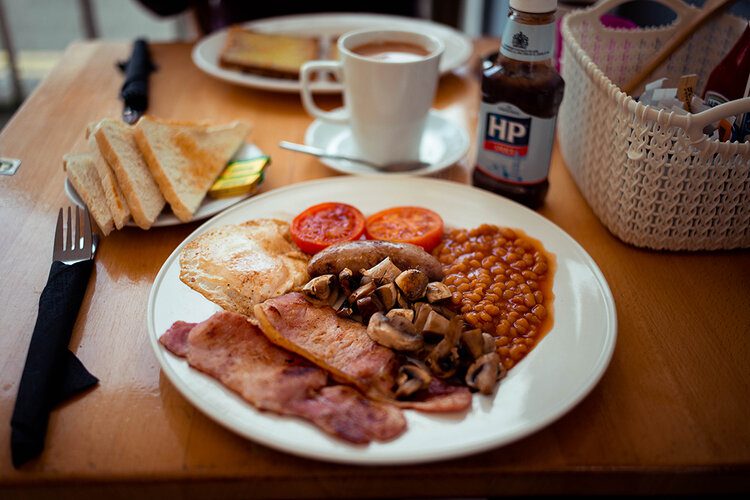
The fry up, otherwise known as a “full English”, is the quintessential British breakfast. Some ingredients change between England, Ireland, Scotland and Wales but the following staples stay the same:
Fried egg
Fried tomato
Fried mushrooms
Bacon
Sausage
Baked beans
A round of buttered toast
Black pudding is another core ingredient but is an acquired taste so it’s usually an add on.
Top off your fry up with a squirt of HP Brown sauce, a blob of ketchup and a sprinkling of salt and pepper and you’re ready to tuck in.
When I was working with children in Paris, the eight year old I was caring for came running across the playground when I was picking her up, looked up at me with disgust and said, “do you English really eat all that meat for breakfast every morning?” – eventually I worked out that she had just learnt in her English class that day about English food and our fry up. I’ll never forget the look on her little face! No we don’t eat a fry up every day or we would be dead in the ground in our 40s! A fry up is predominantly reserved for a lazy brunch or hangover cure.
You can get your fry up at any greasy spoon café serving fried food and any restaurant or pub open for breakfast/brunch. Your most authentic experience will be in a greasy spoon: an ever so slightly run-down and very cheap café.
4. Afternoon tea
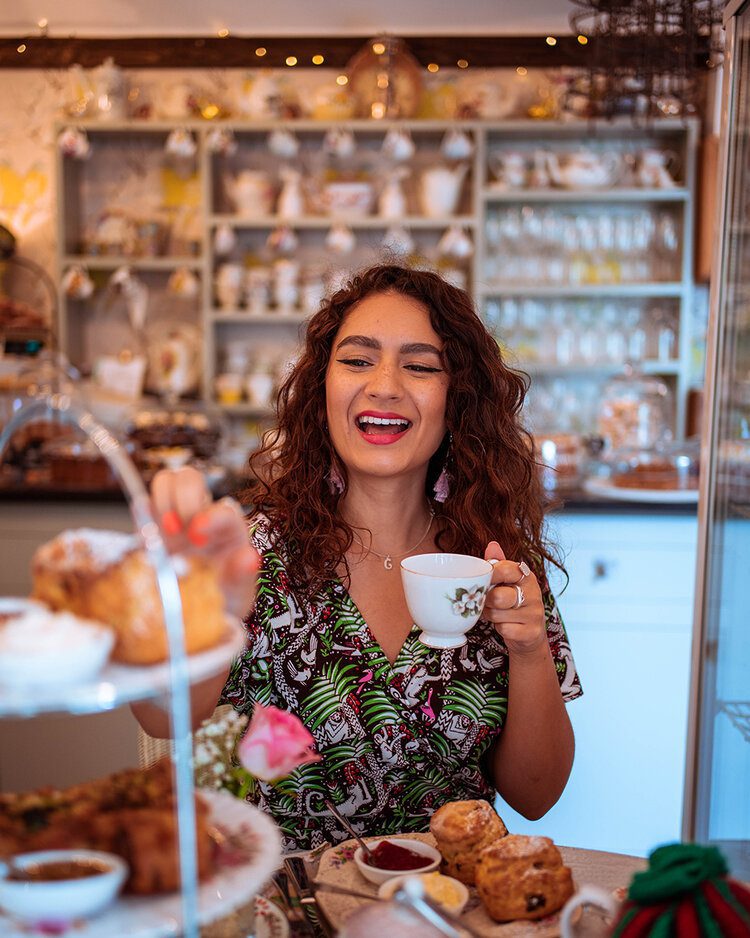
Unlike everything listed above, afternoon tea is on the fancy side of Brit favourites and thanks to social media has become a true experience meal rather than just a slightly extra way to eat cake before dinner.
Afternoon tea is known to north Americans as high tea but they aren’t traditionally the same thing. Take a look at this blog post
PFH Fun Fact: though north Americans call afternoon tea “high tea”, they aren’t actually the same thing. Afternoon tea originates from the upper classes and royalty as a meal to satisfy the hunger that occurred between lunch and dinner, whereas high tea originates from the working class who didn’t have long afternoons to spend eating cake and ridiculously small sandwiches because they were well, working, so they had something to eat much later in the day and far more substantial than cake after a hard day’s work.
A traditional afternoon tea consists of:
Finger sandwiches (luckily we have progressed past plain cucumber)
A selection on mini cakes and pastries
Fruit and plain scones served with jam and clotted cream
Tea (expect an extensive list)
Almost everywhere will give you the option to pimp up your afternoon tea with prosecco or champagne, this is known as “Royal tea” and may concur an additional cost.
There is a certain etiquette to afternoon tea so listen up kids:
The dress code is “smart casual” unless stated otherwise. Use it as a chance to dress up
Place the napkin on your lap
Before pouring your tea, place the strainer over the tea cup so the tea leaves don’t enter your cup
Hold down the lid of the tea pot as your pour
Do not drop your sugar lumps in, place them
Never bash your tea spoon on the side of the tea cup when stirring
NEVER put your pinky in the air, that is not a thing
Do not dunk anything into your tea (do this behind closed doors and only with a sturdy biscuit)
Eat your sandwiches first, with your fingers not cutlery
Never sandwich the two halves of a scone together with jam and cream in the middle
Also it’s scone like “gone” not scone like “bone”
You may use your dessert fork to eat your cakes
Dab your napkin on your mouth, don’t wipe
Afternoon tea should be served at 4pm but restaurants, cafés and tearooms will generally serve between 2pm – 5pm.
You will be able to find afternoon and cream tea all across the UK but if you are looking for the crème de la crème for traditional afternoon tea in London your top choices are:
You will need to book in advance for all of the above.
If a full afternoon tea seems too much, you can just order a cream tea which is scones served with jam and cream and a pot of tea. It’s the best part of the afternoon tea anyway!
Want to create your own cream tea or even afternoon/high tea at home? Take a look at my traditional English fruit scones recipe so you can make your very own from scratch!
.
Apart from the fried fish, there are gluten free, vegan and vegetarian alternatives to all of the meals above so everyone can have a least one of the above! As we ever so sophisticated Brits say, “dig in!”
In December 2019 Michael, my brother and I set off on a road trip to Bath in Somerset, England. We stayed two nights in a central location to explore the small city and visit the Christmas market. I recommend a trip to Bath anytime of the year because it’s so pretty and rich in history, 2,000+ years in fact, but if you are only to go there once, I strongly recommend going for Bath’s Christmas market.
Before heading home, we made a trip to visit Stonehenge as it was just an hour’s drive from Bath, so I’ve included it in this itinerary.
Here’s everything we did and what I recommend doing:
Day 1
Check into apartment
Pulteney Bridge
Bath Guildhall Market
Shopping
Volunteer Rifleman’s Arms
Day 2
Christmas Market
Bath Abbey
Roman Baths
Sally Lunn’s Buns
Day 3
The Circus
Leave bath
Drive to Stonehenge
Apartment
Originally seeking a hotel room that would sleep three people, I found that Bath was close to booked up during the Christmas market, even a couple of months out. Whilst on hotels.com I found an apartment that slept up to four people located seconds down the road from Pulteney Bridge (see below). It’s an extremely central location.
The apartment was clean, spacious, modern, had an equipped kitchen, a smart TV and offered great views of Bath’s Rugby pitch and the River Avon. It was perfect for our needs during our stay.
My only gripe with this beautiful apartment was that the kitchen/living room had five windows and no curtains which means that the person sleeping on the sofa bed receives an early wake up call, especially as the sun rises on that side.
There is no parking, but we parked in the underground car park in the shopping centre. It’s a 7mins drive and took less than 10mins to walk.
Pulteney Bridge
Pulteney Bridge was completed in 1774 and crosses the River Avon.
Its defining feature is that it has shops built along it on both sides, many of which are coffee shops offering great views of the river. It is one of only four bridges in the world that is lined with shops, the others located in Florence, Venice and Erfurt.
PFH Fun Fact: Pulteney Bridge was the filming location of Javert’s suicide in Les Misérables (2012).
Bath Guildhall Market
This 19th Century market is the oldest shopping centre in the city. Though it only has around 20 stalls, the variety covers a wealth of needs from household products, to knitting, leather goods and food.
I recommend picking up some bits from the Deli stall opposite the haberdashery, their English Breakfast scotch eggs are delicious!
Volunteer Rifleman’s Arms
You know those pubs you see in movies set in quaint little towns, where it’s packed full of locals and the atmosphere is both welcoming and electric? At first you’re not quite sure if you belong and then it’s like you’re part of the furniture – that’s what you get at the Volunteer Rifleman’s Arms on New Bond St.
I highly recommend stopping here in the late afternoon/early evening for a pint or G&T.
Christmas market
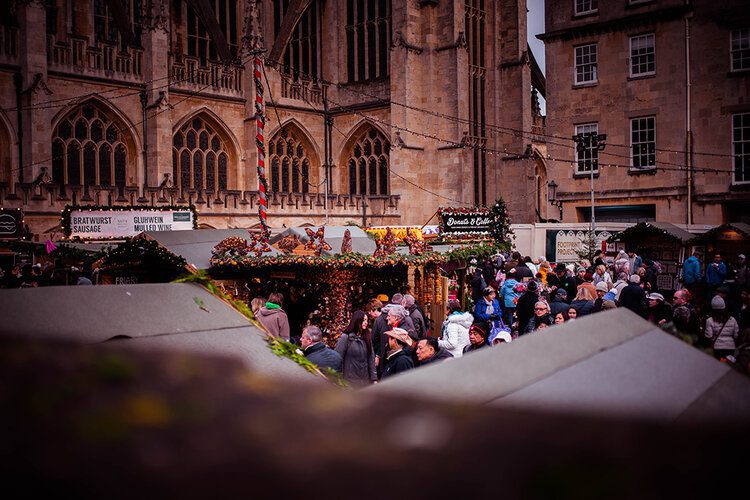
Bath Christmas market is award winning and one of the very best in the country. All of the stalls are individual chalets spread out across the city and cover food, drink, jewellery, homemade gifts, Christmas decorations and more!
Top stalls to visit
(From 2019, but hopefully they’ll return for 2020)
Pollyfields – for handmade Christmas decorations made from citrus fruits and chillis that embody the smell of Christmas.
Rose and Green – for handmade Christmas decorations from recycled clothing found in charity shops.
Flapjackery – for home-made flapjacks the size of bricks, all gluten free with vegan options too.
Opening hours
Mondays, Tuesdays and Wednesdays: 10am – 7pm
Thursdays, Fridays and Saturdays: 10am – 8pm
Sundays: 10am – 6pm
The 2020 dates of Bath Christmas Market will be published in late spring 2020.
Bath Abbey
Located right in the heart of Bath and right next to the Roman baths, it’s hard to miss Bath Abbey. Built in the 7th century, the gothic architecture has seen many restorations but has always been a working place of worship.
The exterior of Bath Abbey is best enjoyed during golden hour when the honey-gold stone is bathed in what seems like an aethereal light.
Opening hours
Monday: 9.30am – 5.30
Tuesday – Friday: 9am – 5.30pm
Friday: 9am – 5.30pm
Saturday: 9am – 6pm
Ticket costs
Adult ticket £8
Child ticket £4
Roman baths
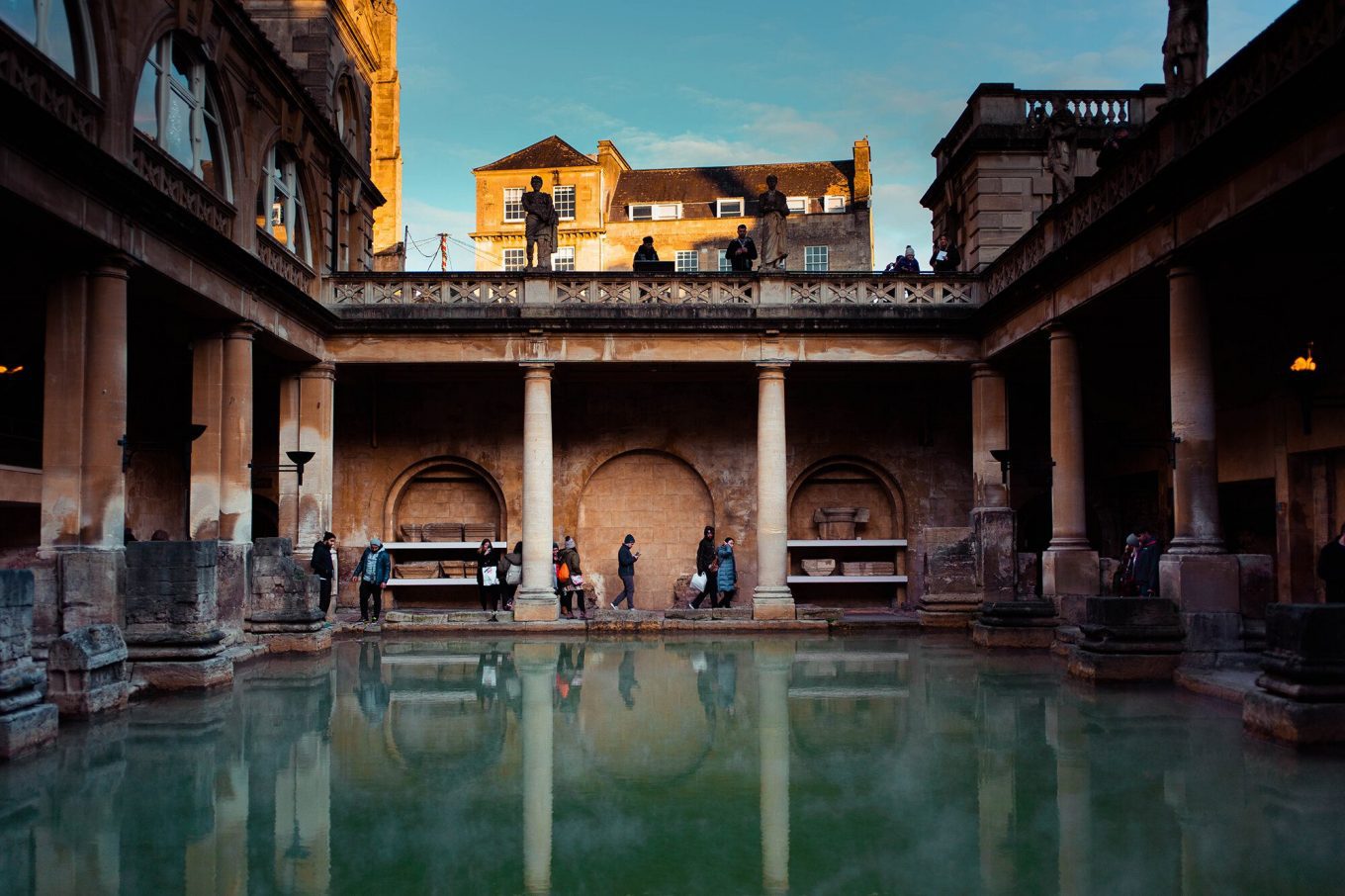
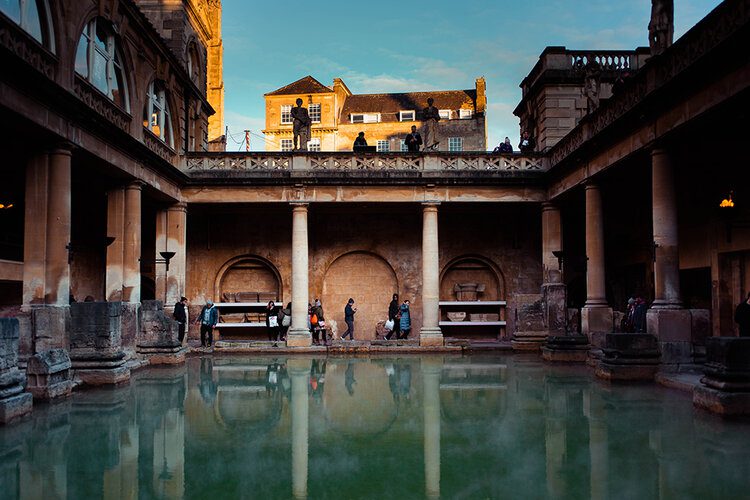
Bath, originally named “Aquae Sulis”, was founded by the Romans over 2000 years ago. The city became a spa when they built baths from natural hot springs intended for worshipping their Goddess of wisdom, healing and sacred waters, Sulis Minerva, with dedicated temples built onsite.
Tickets include an audio guide which gives you a thorough history of the constructions of the baths, the usage of them, the Romans using them and artefacts found onsite. The audio guide will take you just shy of two hours to complete, so dedicate your time accordingly.
Sally Lunn’s is a world famous tea house, located in the oldest house in Bath (built 1482), and is where Georgian baker, Sally Lunn, first created the Bath Bun – a giant bread bun served sweet or savoury.
The buns are still baked to a secret recipe, but you can buy your own to enjoy at home – just pick them up from the gift shop.
If you dine in, you will get complimentary access to the museum below which includes the original underground kitchen where the buns were originally baked back in 1680.
Check out the menu here, you won’t be disappointed!
Opening hours
10am – 8pm
Museum closes at 6pm.
The Circus
The Circus is a circular formation of large Georgian townhouses designed by architect John Wood, the elder but completed by his son John Wood, the younger.
The houses are all Grade 1 listed buildings and are a fine example of Georgian architecture. John Wood, the elder, was inspired by Stonehenge (see below for more on Stonehenge) and built The Circus to the same diameter.
PFH Fun Fact: The Circus has been home to artist Thomas Gainsborough and actor Nicholas Cage.
Stonehenge
As we were just an hour’s drive from Stonehenge, I’d never been before and it didn’t look like we would be back down south any time soon, we decided to make a stop there before heading home.
Though the true origin story of Stonehenge is a mystery: who built it? How did they build it? Why did they build it? What was it for? – We do know that the first construction of this unique prehistoric monument took place at least 5,000 years ago, *mind blown*. To put that into perspective, that’s 3,000 years before the Romans even settled in bath (mentioned above under Roman Baths).
Stonehenge’s most fascinating feature is that the stones align with the movement of the sun, lining up directly with the midsummer sunrise and the midwinter sunset, two events that draw people in from all around the world, every year.
Click here to learn more about the history of Stonehenge.
Opening hours
October – March : 9.30am – 5pm
April – May: 9am – 7pm
June – August 9am – 8pm
September.- October: 9am – 7pm
Ticket costs
Adult tickets start from £19
Child (15-17 years old) tickets start from £11.40
Children under 5 years old go free
Student and senior tickets start from £13.05
Family tickets start from £49.40
Parking during peak times costs £5 but is refunded upon purchasing your tickets.
I also visited Bath’s fashion museum and I highly recommend going. When I visited way back in 2009 (I was there to take a tour of Bath Spa university) they had J.Lo’s Versace dress on display, oh yes I mean THE jungle dress from the 2000 Grammys.
Scotland is beautiful. So beautiful in fact that it made me sad knowing that I was born and raised in England and never took the time to drive up there. With endless snowcapped mountains, more sheep than you can shake a stick at and medieval architecture with the richest of histories, I would recommend a trip to Scotland for anyone who loves starting the day with a hike in the mountains and ending it with a G&T made from a local gin in a quaint village pub.
In December 2019 we drove from home (Norfolk, England) all the way up to Scotland and back, making overnight stops at Edinburgh, Isle of Skye and Glasgow. Here are nine of the best things that we did both in these destinations and on the journeys in-between:
1. Edinburgh Castle
Where?
Edinburgh
After pulling over to take selfies at the England/Scotland border, our first stop was Edinburgh, more specifically, Edinburgh Castle.
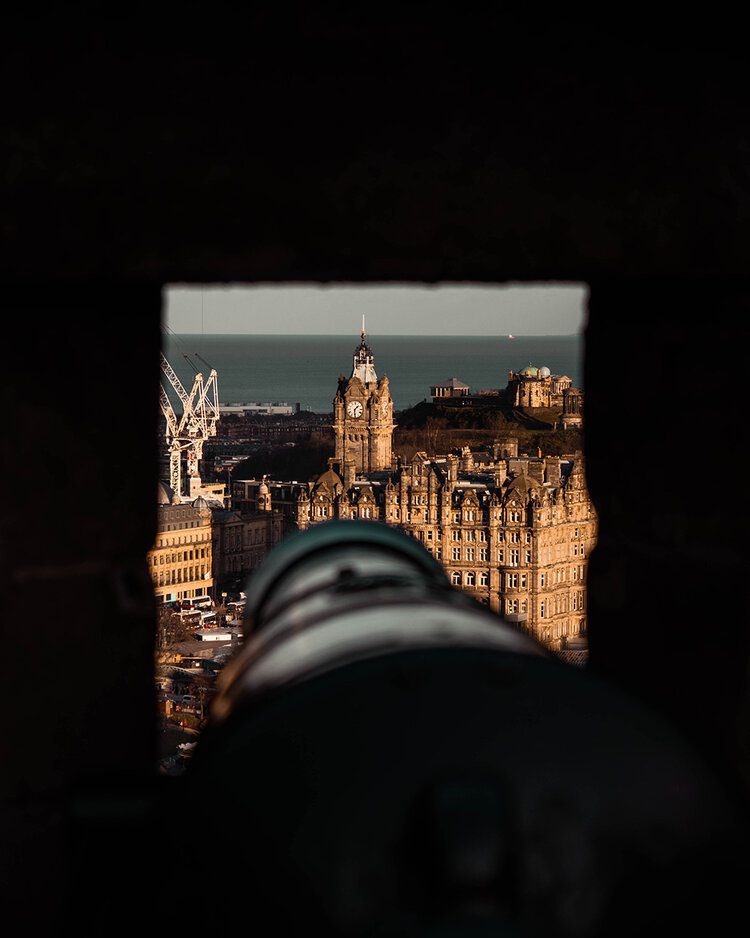
Proudly looking out over the city from the top of the hill that Edinburgh is built upon is Edinburgh Castle. It’s centuries old and has been the centre piece to centuries of battles between the English and Scottish monarchies, all of which you can learn about within the castle’s walls.
The views of the city from the castle are amazing but the pièce de résistance is visiting the crown jewels which includes the story of how they were made, hidden, lost and then found.
PFH Top Tip: Try to be around the castle at 1pm when a gun is fired precisely at one o’ clock. The tradition comes from alerting the ships in the nearby waters to set their maritime clocks. The sound of the gun firing echos across the city and can be heard every day except for Sundays, Good Friday and Christmas Day.
Cost
£17.50 for adults
£10.50 for children aged 5-15 years old
Children under 5 years old go free
£14 for seniors aged 60+
Opening times
1st April – 30th September 9.30 – 6pm (last entry at 5pm)
1st October – 31st March 9.30am – 5pm (last entry at 4pm)
2. Whisky tasting or a distillery tour
Where?
Edinburgh (and just about everywhere in Scotland)
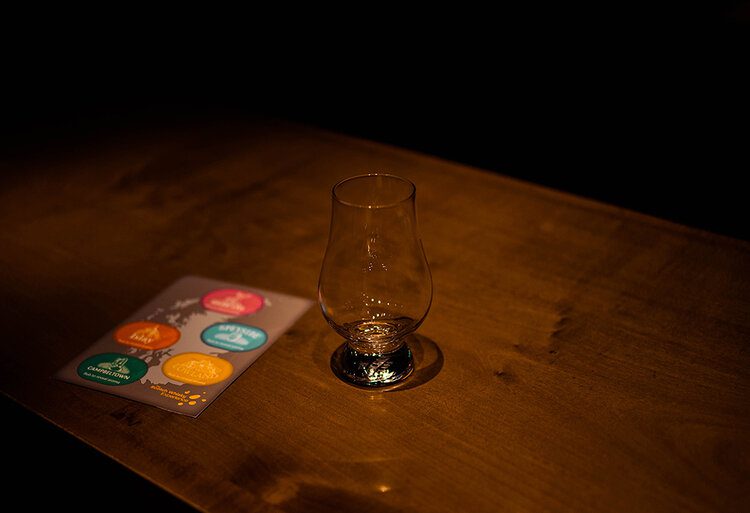
Whilst in Edinburgh we went to The Scotch Whisky Experience to learn about the production of whisky. There are many options for tours at The Scotch Whisky Experience from the basic introduction covered on the Silver tour right the way through to masterclasses. As we are not fans of whisky but wanted to learn we chose the Silver tour which includes the following:
An automated whisky barrel ride that tells you the process of the production of Scotch Whisky.
An introductory video that teaches you the various aromas of Scotch whisky related to its region.
A lesson in how to taste whisky which includes a dram of Scotch Whisky (or Irn-Bru for children under 18).
A viewing of the world’s largest collection of Scotch Whisky.
A complimentary crystal whisky tasting glass (adults only).
Of course you don’t just have to go here, there are many liquor shops in Edinburgh that will teach you about Scotch Whisky, we chose here because we didn’t want to pay for an experience where we had to try more than one whisky!
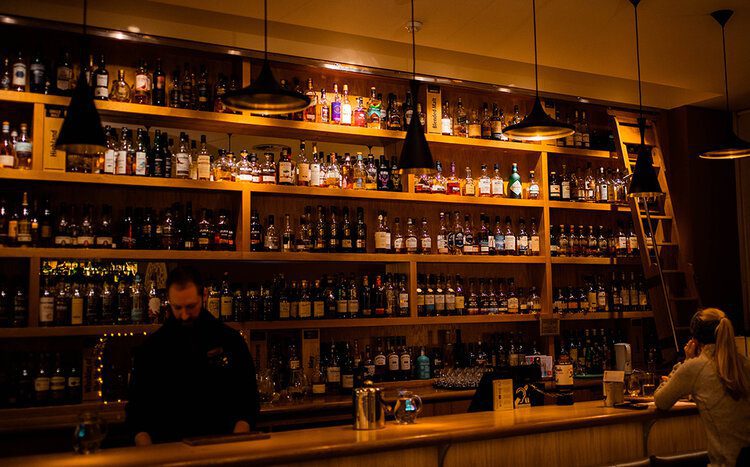
The other option you have in Scotland that’s centred around alcohol is to visit one of the countless distilleries both whisky and gin. Scotland gin and whisky is world famous and you won’t find it hard to find a distillery wherever you are in the country. Even when we were on the Isle of Skye and all I could see for miles was mountains and sheep there were still two distilleries there! We weren’t successful with visiting one because the ones we tried to go to were closed on the weekend so my advice is to check in advance. My alternative advice is to sit in a pub and (responsibly) work your way through their selection of local gins!
Cost
The costs for the Silver tour as follows:
£17 for adults
£8 for children
£15 for seniors aged 60+
Opening times
January – March 10am – 5pm
April 10am – 6pm
May – June 10am – 8pm
July 10am – 8.20pm
August Monday – Friday 10am – 5pm
August Saturday & Sunday 1-am – 5.40pm
September – December 10am – 5pm
Tours runs approximately every 20mins from opening.
3. Cairngorms Reindeer Centre
Where?
Cairngorms National Park
Meet Britain’s only free-ranging herd of reindeer in their natural environment at the Cairngorm Reindeer Centre.
Depending on the time of year there are two different experiences available: the hill trip and the paddock visit.
Hill trip
If you are physically able to make the trip up the hill to where the reindeer roam free then I strongly suggest you rise early to get tickets for this tour (see more under opening times below). Upon receiving your ticket you will be given directions and a parking pass for the Sugarbowl car park just a few minutes up the road. Here you will park and wait for the rangers to gather everyone at 11am. From there they will guide you across the road and down a steep path to a bridge crossing a river, where you will then make a short but steep incline up the hill to where the free-ranging reindeer are.
The rangers will give you a brief introduction to the reindeer herd and will then give you a handful of food to hand feed them. Don’t worry about having to find a reindeer, they know you have food and will come to you. It is best advised that you take your gloves off to feed them so you can feel their velvety soft noses, trust me they’re incredibly soft!
The tour lasts around 1.5 – 2 hours but you have the option of staying a little longer if you want to hang out with the reindeer for longer. To be honest though it’s very cold up there and once the reindeer work out you don’t have any more food, they aren’t interested in cuddles anymore.
Reindeer etiquette
All children must stand with an adult.
Do not bend down near a reindeer, they will perceive it as a signal that you want to fight them and you’ll be smacked with their antlers. I ducked in a photo so you could see the reindeer behind me without thinking and one came up to headbutt me in the leg with her antlers.
Do not chase them.
Don’t touch their faces, it irritates them which can again result in an antler-driven headbutt.
Don’t approach them from behind, it can startle them and they may run away or again, headbutt you.
Paddock visit
From Easter to the New Year it is possible to visit some reindeer in the paddock at the centre.
This option is best for people with mobility difficulties and young children who are unable to make the steep walk up the hill.
Whilst at the paddock rangers will teach you about the reindeer and will even be able to identify each one.
Although you are able to touch the reindeer you won’t be able to hand feed them, this is so they maintain a healthy weight.
PFH Fun Fact: Each season of calves are named with a theme. Previous themes were cheese (yes there’s Parmesan the reindeer), European cities and to commemorate the 2012 London Olympics the 2012 theme was…2012.
What to wear
Second to Ben Nevis, Cairngorms National Park is the highest mountain range in all of the United Kingdom and is a sub-arctic environment. Reindeer don’t feel the cold until the temperature drops below -30 degrees Celsius but you’re not reindeer so here’s how I recommend you keep warm:
A warm coat, preferably one that is waterproof as Scotland is notorious for rainfall, and if you go in winter the chances of snowfall are high.
A snood. A scarf may unwrap in the wind and you don’t want it to brush against the reindeers’ faces and startle them so I suggest a snood. Plus it will defend your face from the harsh windchill which can be in the minus.
Waterproof over trousers.
A wooly hat to keep heat from escaping through the top of your head and to protect your ears from the wind.
Thermal base layers, both tops and long-johns. For females I recommend a pair of thermal tights so you can have an added layer on your feet.
As many thick socks as you can fit into your boots. (I had 3 pairs of snow socks and my toes were still numb).
Layers. Layer up as much as you can under your coat.
Hiking boots or wellies (you can rent a pair of wellies for £1 from the centre if you don’t have hiking boots or wellies. They won’t let you go up with anything else on your feet).
Between June – October it is advised that you wear insect repellent.
Cost
Hill trip
£16 for adults
£10 for children
Children under 3 years old go free
Paddock visit
£3.50 for adults
£2.50 for children
Children under 3 years old go free
Closed on Christmas Day, 1st January and from 6th January – 8th February 2020.
Opening times
The centre opens at 10am.
Tickets are first come first served, I strongly advise arriving at least before 9.30am (9am on weekends) to make sure you get tickets.
Tours depart at 11am and 2.30pm with an additional trip at 3.30pm in July and August during weekdays.
Still arrive before 9.30am to buy your tickets for the afternoon tours as they will be sold to the people in the queue who don’t get on the 11am tour.
Winter trips may have adverse weather and therefore the centre may decline children to keep them safe. The centre telephone line is open from 9am so call ahead if you have concerns about the weather. The first time we tried to go the snow was so bad that we couldn’t even get to the centre.
The paddock is open from 10am – 5pm Easter – New Year.
4. Loch Ness
Where?
Inverness
It might not be the most beautiful loch in Scotland but it’s without a doubt the most famous one! If you don’t already know why, it’s because legend has it a monster known as the Loch Ness monster, or Nessie for short, lives in the depths of the loch. Its neck long and not unlike a Brachiosaurus with its body formed of many humps that protrude from the water. The first sighting was in 1933 with various pieces of “evidence” coming to light over the years when photoshop didn’t exist so it was hard to disprove.
Despite Loch Ness being 56.4 km², a road trip around Scotland would be incomplete without an attempt to spot infamous Nessie from one of the many parking bays surrounding the loch.
Cost
There is no entrance fee to visit Loch Ness.
5. Glenfinnan Viaduct (Featured in Harry Potter)
Where?
Glenfinnan
This 30m high structure built in the 1897 is most famously known for being the railway bridge that the Hogwarts Express travels across in the first Harry Potter film of the series, The Philosopher’s Stone, it’s also worth a visit simply because it’s magnificent.
For the best view point on foot, turn right out of the car park and start walking along the road until you reach a private car park which is gated off. Walk past the gate and continue up the path until you find another small path heading up hill on your left, just before you reach the viaduct. You’ll then cross under the viaduct and start curving back on yourself as you walk along the path up the hillside. When the path widens you will be able to look out upon the viaduct.
PFH Top Tip: For the best photo op, aim to be there around 10.55am or 3pm where you will see the Jacobite steam train cross the bridge aka, the Hogwarts Express.
Cost
Though you don’t have to pay to visit the viaduct, there is a £4 charge for parking. Though we arrived at 4pm (in December) when the sun was going down and the kind gentleman allowed us to park for free because we wouldn’t be there long due to the fading light. If you just want to hop out to see the viaduct and/or have a really good camera to shoot in low light, you could try your luck doing this.
Opening times
The visitor centre is open 9.30am – 4pm.
6. The Old Man of Storr
Where?
Isle of Skye
The Old Man of Storr is a peculiar rock formation up in the rocky hills on the Isle of Skye. The pinnacle was created by a massive ancient landslide and on a good day it can be seen for miles, but on a bad day, you’ll be lucky to catch it between breaks in the mist.
We, of course, hiked up on a very grey and miserable day but we did manage to catch a glimpse as the mist cleared for a few fleeting moments. I would say don’t give up hope if the weather is bad, just pray for wind.
There are various hiking routes surrounding the Old Man of Storr. As the weather was dreadful and the light was fading we chose to hike up to where it levelled out and we could appreciate the view of both the pinnacle and the vast stretch of water behind. There and back with a break for a cuppa and a few photos took us approximately 2hrs.
The terrain is steep, rocky and wet so I strongly advise hiking boots. Michael foolishly forgot to pack his and found it to be a slippery slope in his running shoes.
Cost
There is one car park that is free whilst the roadside parking is paid parking. I suggest you arrive as early as you can to park in the free car park, which is close to the entrance gate up the mountain (next to the construction site).
In winter you shouldn’t have a problem parking.
As we went in winter when it was quiet we used the free car park and therefore I don’t know the cost of parking along the road.
7. Fairy Pools
Where?
Isle of Skye
The walk from the car park to the pools isn’t strenuous like the walk up to the Man of Storr is, it’s paved for most of the way and only has a shallow incline. You do however have to cross many rushing streams both over stepping stones and giving into getting your shoes wet when the rainfall has been heavy and the rocks are submerged. For this reason I strongly recommend wellies or hiking boots.
Though many online guides will tell you the walk there and back is only 40mins, disregard this because it doesn’t include stopping to take in the view nor does it included walking to the furthest pools.
There are many pools to see but the further you go the more pure the blue water becomes in colour. Once you see it for yourself it’s not hard to imagine little fairies hanging around.
The path to the pools is the same you take back.
Cost
There is no entrance fee to the Fairy Pools but there is a parking cost of £5 per car. This is cash only so come prepared.
8. Gallery of Modern Art, Glasgow
Where?
Glasgow
There are four galleries within the GoMA, all of which are free to enter and rotate throughout the year so check ahead to see what is on here.
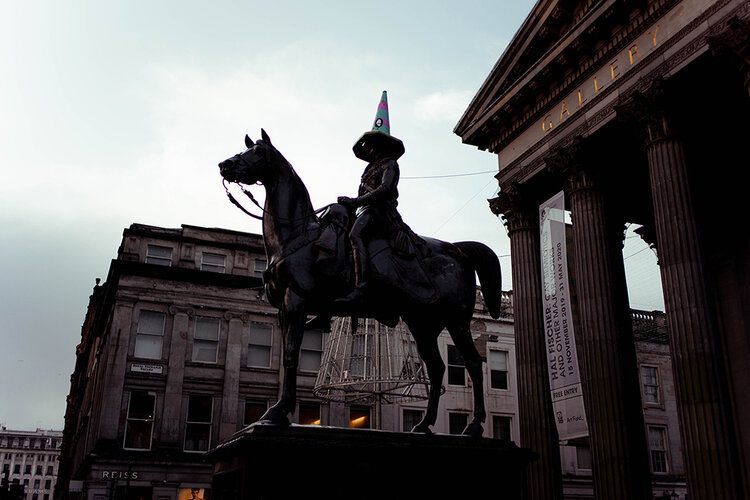
The best feature of the museum and no doubt the part that draws people to it from all over the world is the equestrian statue of the 1st Duke of Wellington that stands out front with a traffic cone upon his head. The traffic cone hat is a tradition that started way back in the 80s and was accepted as a way of expressing Glaswegians’ humorous side.
Cost
Entrance is free
Opening times
Monday – Wednesday 10am – 5pm
Thursday 10am – 8pm
Friday 11am – 5pm
Saturday 10am – 5pm
Sunday 11am – 5pm
9. Glasgow Cathedral
Where?
Glasgow
Read any guide of places to visit in Glasgow and the cathedral will be top of the list. For over 800 years Christians have worshiped God from within the medieval walls of this vast cathedral. Having been dedicated in 1136, it is the oldest cathedral on mainland Scotland and is the oldest building in all of Glasgow.
Cost
Entrance is free.
Opening times
Monday – Saturday 10am – 3.30pm
Sunday 1pm – 3.30pm
Our road trip around Scotland was just a week long and we were able to comfortably visit all of these places even with only 6.5 hours of daylight (as we visited in December). I chose these places to highlight because you truly get a feel for Scotland’s passions from their medieval history to the vast and beautiful landscape.
If you have any questions about my trip, feel free to contact me here.
No trip to any Christmas market is complete without a glass of mulled wine, even just the scent of it brings festive joy.
For those of you who don’t know, mulled wine is a full-bodied red wine which has been infused with a variety of spices and citrus fruits and served warm.
The first records of red wine being spiced and served hot was in Rome 2000 years ago and though the variation of spices changes between countries, traditions and households, the act of drinking mulled wine during the festive season in Europe has withheld for centuries. To compare Europe’s love for mulled wine, consider it what eggnog is to North Americans.
Though it is possible to buy pre-bottled red wine or mulled wine spice sachets (the Fortnum and Mason’s ones are particularly good) nothing beats making it from scratch, plus it’s very simple and it’s guaranteed to impress your party guests.
This recipe is for one bottle of wine which will serve four glasses, for a guide to serving portions, estimate two glasses per guest.
Ingredients
100g caster sugar
1/2 lemon
1/2 lime
1 clementine
3 whole cloves
Half a cinnamon stick
Half a grated nutmeg
1 fresh bay leaf
1 vanilla pod
1 star anise
1 bottle of full-bodied red wine
Equipment
Large saucepan
Scales
Spoon
Chopping board
Small sharp knife
Citrus juicer
Silicone or wooden spoon
Ladle
Method
1. Peel large sections of the rind of half the lemon and lime and the whole clementine using the sharp knife.
2. Slice the clementine in half and squeeze the juice with the citrus juicer.
3. Slice the vanilla pod in half, length-ways.
4. Measure out the sugar and put in the saucepan.
5. Place the saucepan over a medium heat (or the cooler side of an AGA) along with all of the fruit peel and the clementine juice.
6. Give it a stir so the sugar is coated in juice.
7. Add the cloves, vanilla pod, bay leaf, cinnamon stick and grate in half of the nutmeg.
8. Pour in just enough red wine to cover the sugar then stir.
9. Allow the mixture to simmer until the sugar has dissolved creating a thick syrup. This allow the spices to infuse into the wine for a richly spiced taste, plus it makes your kitchen smell amazing!
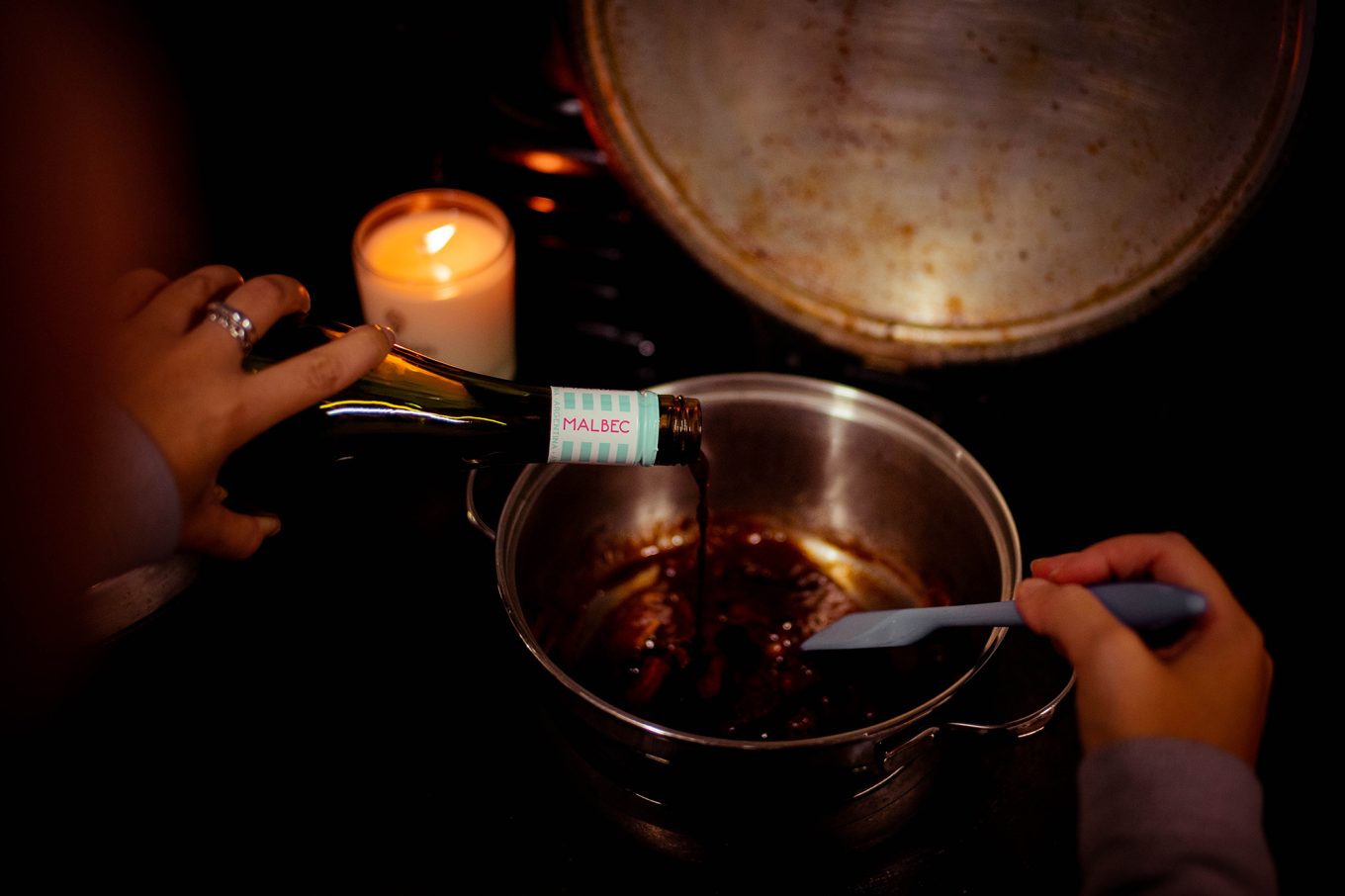
11. If you’re using a hob, turn the heat down low whilst you add the rest of the bottle of wine then add your star anise. Turn up the heat slightly to allow the wine to heat through.
12. When the wine is warm, use a ladle to serve it into mugs or heat proof glasses.
London is one of the most magical places to be at Christmas, the whole city sparkles as everyone with rosey noses from the cold wishes you a merry Christmas, before they elbow you in the ribs squeezing onto the tube at Oxford Circus. I said magical, not perfect!
Seriously though, it is one of the best places to visit around the holidays, there’s so much going on that everyone can find something they’ll enjoy doing. Don’t believe me? Well check out my list of 12 things to do in London during the holidays below:
1. Marvel at the Christmas lights and displays
Central London’s Christmas lights attract thousands of people every year. For the best displays head to:
Oxford Street
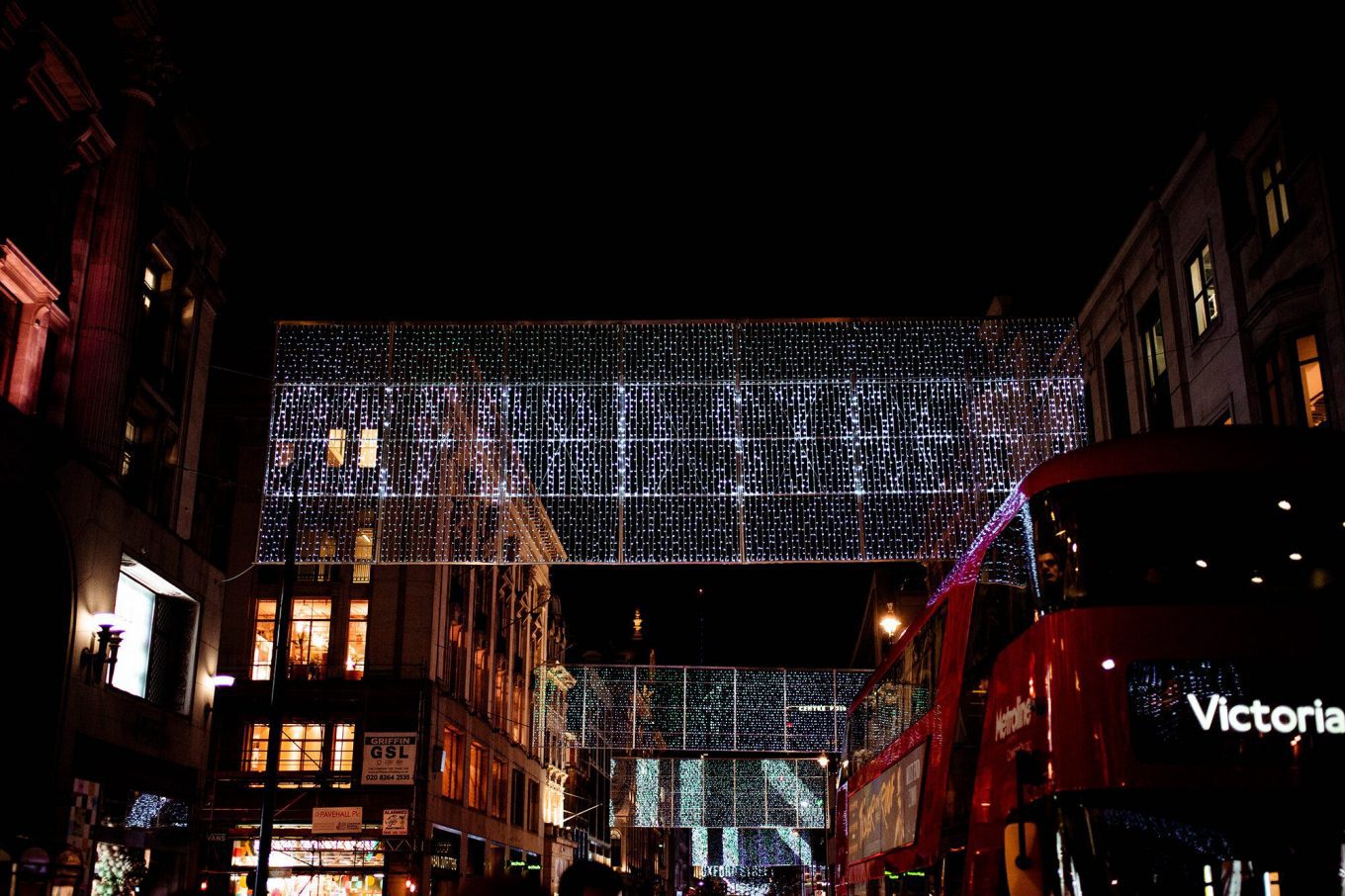
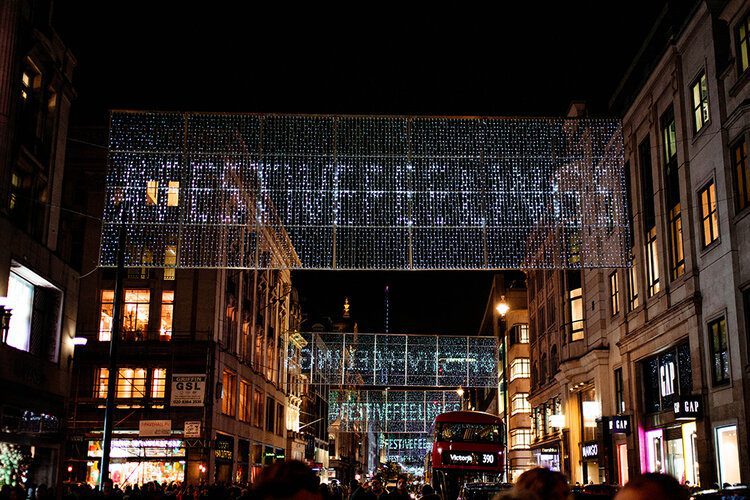
For the first time in six years, Oxford Street’s Christmas lights have had a makeover and all the lights have been replaced with LED ones. The 2019 display is made up of 27 LED interactive “light curtains” made up of 222,000 lights. The theme is #festivefeelings and if that doesn’t summarise the end of this decade I don’t know what does.
Regent Street
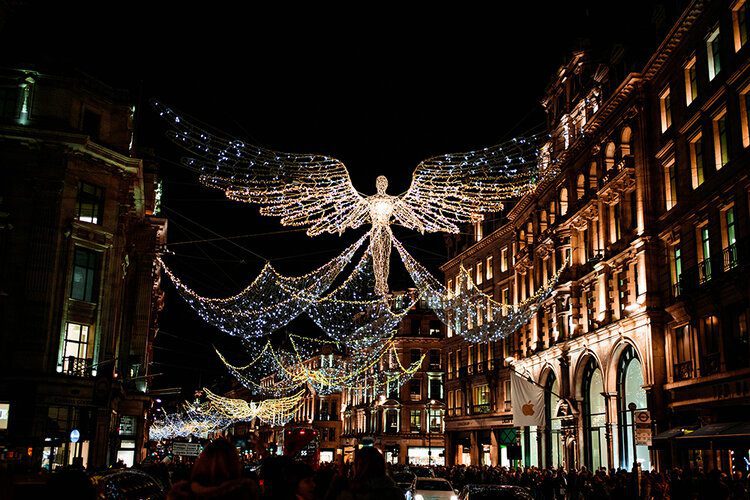
This year Regent Street is celebrating its 200th anniversary. Go pay a visit to the angels that float gracefully above this iconic London street. This year’s “The Spirit of Christmas” lights are inspired by their 1954 Christmas light display.
Carnaby Street
The Christmas display at Carnaby Street always has a contemporary theme that captures compelling moments in time. Last year (2018) was dedicated to Queen’s Bohemian Rhapsody celebrating not only the incredible success of the band but also the Academy Award winning film that loosely documented their rise to fame.
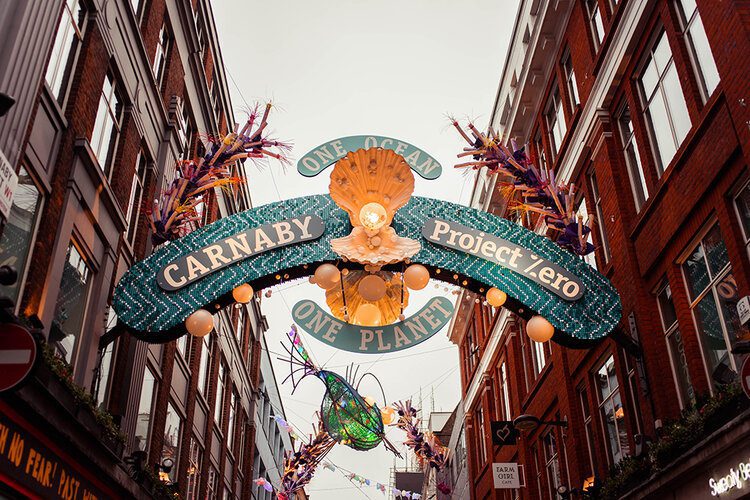
This year the theme of Carnaby Street’s Christmas display is the plastic pollution crisis in our oceans. Carnaby x Project Zero has created a seascape featuring jellyfish, a whale, crabs and more and has various points where you can donate to the oceanic conservation charity, Project Zero. There are also recycling points for single use coffee cups and tips on how you can help the ocean today!
Covent Garden Market
Covent Garden market never disappoints as the quaint little spot in central London always shows off with an Instgrammable art installation. Last year a little green car stacked impossibly high with presents sat in the courtyard with pretty little benches all around. This year various companies including the Royal Opera House has sponsored various Christmas trees which you can stand amongst for that all important IG snap. From ballerina shoes to giant hanging candy canes, each tree is uniquely festive.
Tiffany & co. also pulled a fun festive installation out of the bag which you can also grab photos with.
2. Ice skating
Ice rinks pop up all across London from Canary Wharf in East London to the Westfield in West London. The two best ones to skate at though are:
Natural History Museum ice rink
If you’re looking for the nicest rink with the best view then head to the ice rink at the Natural History Museum in Knightsbridge, opposite the V&A museum. From the ice you’ll be able to look up at the museum’s grand facade plus they have a giant Christmas tree in the centre which is sponsored by Viktor & Rolf this year (2019).
The Natural History Museum ice rink is particularly good to visit if you are bringing children because they offer little penguins to keep them upright, plus you can take them to the museum after your time on the ice.
Cost
Adult tickets start from £12.65
Child tickets under 12 years old start from £8.80
Family tickets start from £39.60
Entrance to the Natural History Museum is free!
Opening times
19 October 2019 – 12 January 2020
Daily 10am – 10pm
Closed Christmas Day
Skate at Somerset House
Michael and I have been skating at the ice rink in Somerset House since we were at uni, nearly a decade has passed and I still cling to the wall whilst it zips off lapping me until I get bored waiting for him to fall and leave the ice to get a hot drink instead.
What I love most about the Skate at Somerset House is their sponsors and this year is no exception as it’s sponsored by none other than Fortnum & Mason. For those of you who don’t know, Fortnum & Mason is a department store, originally founded as a grocery store in 1707. It is by appointment to Her Majesty Queen Elizabeth II and the Prince of Wales and is the luxury that you never knew you needed in life, especially during the holiday season.
Take a snap in front of their Christmas tree, pick up some treats and stocking fillers in their pop up store which features everything they do best: tea, biscuits, coffee, jam, chocolate, sweets and more! They even have a little Christmas shop in there too! Once you’ve shopped, adjourn to The Lodge next door which is their pop up restaurant where you can crack your own walnuts and enjoy people falling on the ice from the warm with one of many festive themed drinks and an extensive menu of posh party food classics.
Cost
Adult tickets are £15
Children under 12 years old are £9.50
Opening times
13 Nov 2019 – 12 Jan 2020
Mon – Sat 9am – 9pm
Sun 9am – 8pm
.
Personally I would recommend the NHM ice rink if you want great photos and Skate at Somerset House if you want a good time off the ice.
3. Winter Wonderland in Hyde Park
Located in the centre of Hyde Park, Winter Wonderland in Hyde Park attracts over 3 million tourists a year (according to The Londonist).
It’s fun for anyone who doesn’t mind loud noises and big crowds. I can’t lie, although it’s definitely something you should experience in London around the Holidays, it requires patience. It’s best experienced with a large group of friends who are happy to stand around the Eastern European themed lodges and bars or with kids who want to ice skate and go on the rides.
As well as bars and rides, there’s also plenty of eateries covering a multitude of cuisines and market stalls selling festive wares.
Cost
Entrance to Winter Wonderland is free
Opening times
21st November 2019 – 5th January 2020
Daily 10am – 10pm
4. Take a stroll through Hyde Park with a hot drink
If the shoulder to shoulder bustle of Winter Wonderland isn’t your thing, and trust me no one blames you, take it easy in Hyde Park by going for a stroll with a hot drink instead. The park is surrounded by coffee shops and filled with multiple kiosks. Remember to bring your reusable cup!
5. Visit the Liberty of London Christmas shop
Liberty of London’s Christmas shop on the top floor is the best Christmas shop you’ll find in London. Two rooms are dedicated to all things festive from decorations big and small to crackers, candles and advent calendars. Not just any decorations either, if you’re looking to theme your tree like you’re a high-rolling-Kardashian then this is the place to come. A patriotic brit theme? Pick up an array of glittering Union Jack baubles and portraits of the Queen. A tropical theme? Brightly coloured hibiscus flowers and palm trees are to hand. You can even go for a Christmas dinner theme with felt sprouts, turkeys and pigs-in-blankets! Whatever you think of, you can most definitely pull off with a one stop shop at Liberty.
PFH Top Tip: Liberty of London marks up prices big time, I bought a candle in there for £27.95 only to find it elsewhere for £20. I would browse for Inspiration and search online for a better price.
6. Christmas window displays at Selfridges & co.
Before enduring some wildly expensive gift shopping in Selfridges, take a moment to marvel at their themed window displays. Another window display worth checking out is Fortnum and Mason’s.
7. Shop in Fortnum and Mason’s food hall
If you didn’t fancy ice skating at Somerset House or want to expand on your Fortnum’s experience then head to Fortnum and Mason’s original store on Piccadilly Street. I am a big fan of their food hall and have bought stocking fillers and Christmas treats here for the last eight years. You can never go wrong with a treat from Fortnum’s.
My top stocking filler picks for my family every year are:
Dark Chocolate covered ginger
Cinnamon dusted almonds
Tins of biscuits
Tins of loose tea
Chutneys
Welsh rarebit
8. Harrods at night
Harrods has the most impressive and iconic shop front. When the sun goes down its whole facade comes to life with the help of 12,000 light bulbs, a tradition which began 60 years ago in 1959. This has been a very popular Instagrammable spot this year so it’s a great place to grab a snap for your ‘gram.
9. Borough Market
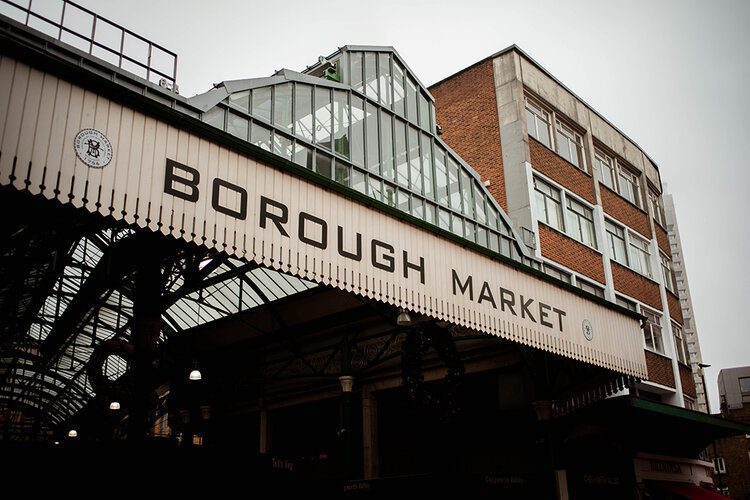
Feeling peckish? Head to Borough Market near London Bridge.
Borough Market is one of the oldest food markets in London. A food market is known to have been at Borough Market as far back as the 12th century. Now with over 100 traders you’re sure to find a snack, meal or stocking filler here.
PFH Top Tip: The doughnuts from Bread Ahead are amazing!
It’s one of the most classic and cultured things to do in London: dinner and a show. With a multitude of theatres spread out across the West End you’ll be best leaving yourself plenty of time before your show to grab dinner so that you can get there without rushing.
These pubs in London boast the richest history but are often overlooked by tourists who either want pretty exteriors for photos or locals who want cheap deals in Whetherspoons. The ones I recommend are:
Ye Olde Cheshire Cheese
Ye Olde Cheshire Cheese deserves top spot just for the name. It’s one of the oldest pubs in London having been re-built after The Great Fire of London in 1666 and still has all of it’s dark and awkward character it did way back when. Head deeper underground as the light fades and the randomly shaped rooms shrink to enjoy a pint or two just as Charles Dickens often did way back in the 1800s.
Where?
Fleet Street
Opening hours
Mon – Fri 11.30am-11pm
Sat 12pm-11pm
Sun closed
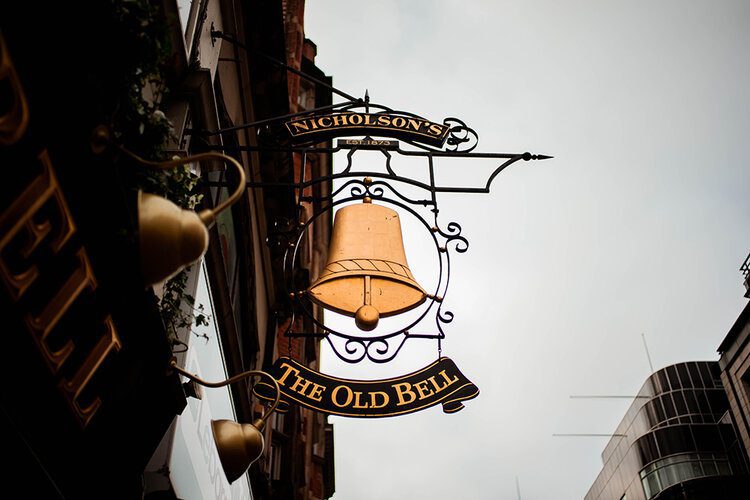
The Old Bell Tavern
Famously built by Sir Christopher Wren (one smart cookie), The Old Bell Tavern has been a licensed tavern for more than 300 years. It was originally built to house Sir Wren’s masons who were rebuilding the St Bride’s Church after the fire of 1666.
PFH Fun Fact: The Old Bell Tavern is located on the same street as the infamous Demon Barber of Fleet Street, Sweeney Todd!
Where?
Fleet Street
Opening hours
Mon – Wed 11.30am – 11pm
Thurs – Fri 11am – 11pm
Sat 12pm – 9pm
Sun 2pm – 6pm
The Hoop and Grapes
Not to be confused with Hoop & Grapes, another London pub. Though the interior doesn’t give the impression, this building has been standing for the last four centuries and famously survived The Great Fire of London in 1666. The fire stopped just 50 yards from the pub and is one of very few timber framed buildings to have survived this period.
PFH Top Tip: Try a G&T from their extensive list of flavoured gins. Instead of those awful fishbowls pubs often serve them in, Hoop and Grapes serves your G&T in a tall crystal glass, classy. My tipple of choice is a single shot of Chase’s Pink Grapefruit and Pomelo gin with Fever Tree’s Mediterranean tonic… you can thank me later.
Where?
Aldgate
Opening hours
Mon 12pm – 10.30pm
Tues – Sun 12pm – 11.30pm
Lamb & Flag
Tucked away into the back streets of Covent Garden just before you reach China Town is Lamb & Flag, yet another spot where Charles Dickens would frequent. They’re better known for their bloody history though. During the early nineteenth century the pub was dubbed “The Bucket of Blood” as the tiny alleyway alongside the pubs side door used to host bare-knuckle prize fights. It’s also known to be the location where Jon Dryden was attacked by thugs in 1679.
Where?
Covent Garden
Opening hours
Mon – Thurs 11am-11pm
Fri – Sat 11am-11.30pm
Sun 12pm -10.30pm
The George
This 17th century medieval coaching inn is remarkably the only remaining galleried inn in London. What’s a galleried inn I hear you say? Galleried inns have balconies looking out onto an inner-courtyard which would host Elizabethan theatrical productions.
It’s also another spot where Dickens would wet his whistle and was mentioned in “Little Dorrit”.
Where?
Southwark
Opening hours
Mon – Thurs 11am – 11pm
Fri- Sat 11am – 12am
Sun 12pm – 10.30pm
PFH Top Tip: If you want any chance of sitting down in a London pub, avoid 5pm – 7pm when 99.9% of Londoners will be clocking off work and heading to their local watering hole. You can’t argue against this time having the best atmosphere though.
New Year’s Eve fireworks
Ok sorry, you can’t do this all throughout the holiday season but if you’re lucky enough to be in London to ring in the new year then this is an absolute must just once in your life. Line up along the river bank opposite the Coca Cola London Eye to take in one of the world’s most spectacularly orchestrated firework displays, and you can guarantee that this year’s display is going to be their best one yet as we welcome in the new decade!
Unfortunately the tickets for the New Year’s Eve fireworks have sold out but london.gov have ideas for other ways you can enjoy them here.
I hope you have a wonderful time if you’re visiting London during the holidays. If you do anything on this list, be sure to tag me in your Instagram posts and stories using @gabriellawisdom and I’ll share them!
Mele Kalikimaka, Gabriella
Pin this post
If you loved this post, check out my following London guides:
Lavender has blown up over the last few years and like pretty much everything that’s popular these days, it’s due to Instagram. As someone who uses Instagram for work I’m not mad at it, however, the behaviour displayed on the app and the examples being set can sometimes have a damaging effect. Unfortunately, the increasing desire to get that shot for the ‘gram in a lavender field has led to inconsiderate behaviour over in the fields of Provence.
It has come to light that in their desperation to get their own shot of themselves frolicking in rolling fields of lavender, people are flying to Provence in France and trespassing onto farmers’ fields, picking the lavender, stomping on the plants when they want to cross rows and there isn’t a gap and leaving rubbish. It’s easy to think a few sprigs of lavender won’t be missed but these fields are farmers’ livelihoods; it’s how they’re paying bills and providing for their families. To draw upon the DVD piracy campaign (are these even on DVDs anymore?), you wouldn’t steal a car, so why would you steal someone’s lavender stock? Whether you are using Instagram for work or pleasure, you are making an impression on someone, and therefore it is so important to lead by example.
So how can we solve this (whilst saving money)? Instead of entering someone’s field, visit the fields dotted around England where you can get a responsible, rewarding and legal experience. Sure, there are entrance fees or tour costs but you actually get to learn about the lavender plants and pick it guilt free.
The most important thing is to share with others about responsible tourism. Educate your followers, whether there’s 42k or 42 of them, about visiting a field that is supporting the industry as well as giving you the opportunity to get that all important Instagram-worthy photo.
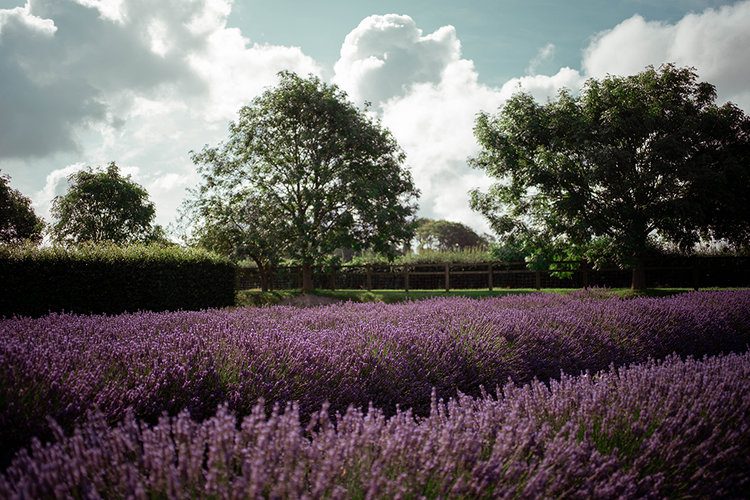
I’m sharing Norfolk Lavender with you not only because you’ve asked to see more local content on here, but because it offers so much more than a lavender field. It really is a great day out for everyone. Entrance is free, there’s a café, gardens, a huge gift shop, a plant nursery, a farm shop and an animal garden and play park for children. Plus, in summer, when the lavender is in full bloom, they offer tours of both their lavender distillery and their new lavender field for a reasonable price. Read on for everything you need to know about visiting Norfolk Lavender.
Getting there
Norfolk Lavender is conveniently located in the countryside but close to the seaside in Heacham, West Norfolk. This means your day out doesn’t have to end there, Hunstanton (a popular and typical seaside town) is just 3 miles down the road. So if the intoxicating smell of lavender doesn’t do it, the sea air will guarantee you a great night’s sleep.
Parking at Norfolk Lavender is free.
Opening times
Monday – Sunday
9am – 5pm March – October
9am – 4.30pm November – February
Accessibility
All of the attractions at Norfolk Lavender are on one level so everything has full wheelchair accessibility plus there are two toilets for people with disabilities. I do just want to point out that the gift shop is split over two levels inside with stair-only access, however if you go back outside and around the building you can gain access to the second level without stairs where the ground naturally slopes. They also have a wheel chair available for guests to borrow but you must reserve it in advance.
Tour
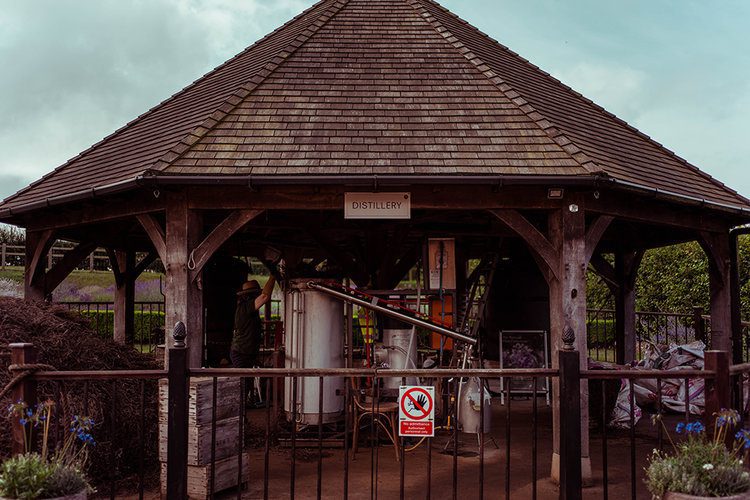
In the peak months of lavender bloom Norfolk Lavender offer a tour in their newest field, Torrey’s Field. The tour lasts 45mins and includes a visit in the field with an opportunity to take photos and pick your own lavender, facts about plants, a history of Norfolk Lavender and a visit to their distillery.
The tour dates vary year to year depending on the crop so it can be anytime between June – August. Check the Norfolk Lavender website to be certain.
Tour times
11am, 12 noon, 1pm, and 2pm.
Ticket cost
£5 per person.
Tickets are purchased in the gift shop.
Tour cap off at 15 people max.
The Lavender Lounge tearooms
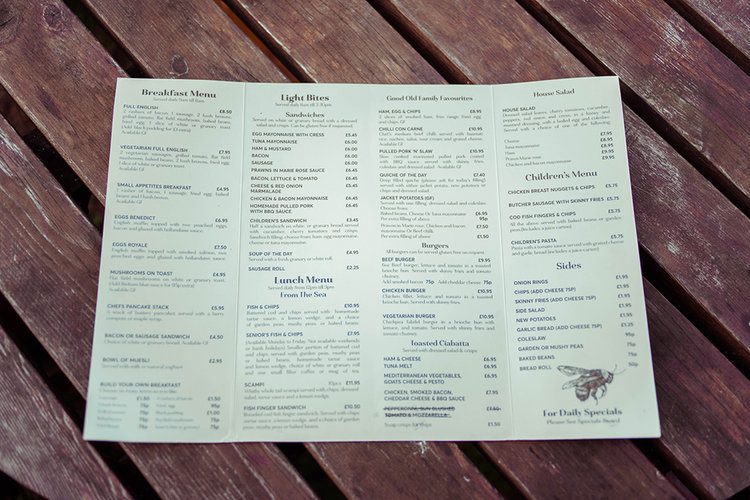
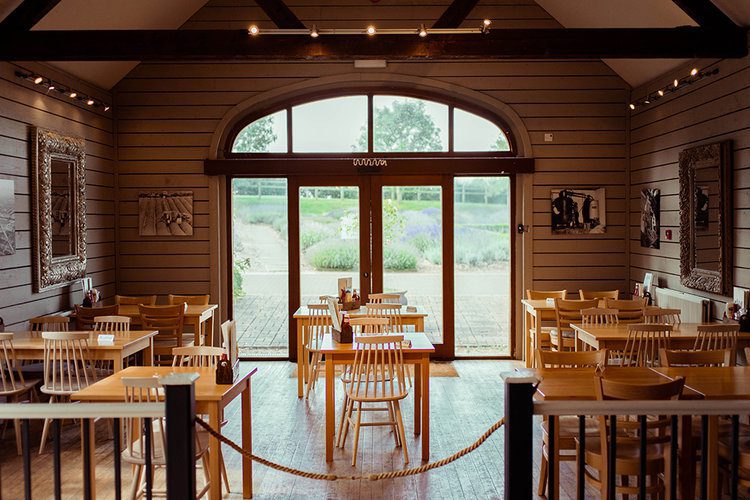
Though the presentation of the food leaves something to be desired, it is very good. They serve a good variety of snacks and meals from cakes and scones to sandwiches and hot meals.
I strongly recommend you try a slice of their lavender cake. Unlike most lavender flavoured or infused foods, the cake perfectly balances the lavender taste and goes down nicely with a coffee or a cuppa. They also serve up a great variety of generously filled sandwiches.
There are plenty of tables both inside and outside so you have a very good chance of getting a seat, but keep in mind that if you sit outside you will be surrounded by bees and wasps because they are attracted to the surrounding plants.
Breakfast 9am -11am
Light Bites 11am – 3.30pm
Lunch 12pm – 3pm
Gift shop
Norfolk Lavender was founded in 1932 and is now England’s best lavender farm. If me telling you isn’t enough then maybe you’ll trust the Queen of England. Norfolk Lavender has been growing lavender on HM The Queen’s Sandringham Estate since 1936 and currently holds a warrant of appointment from HRH The Prince of Wales, Prince Charles for all of their products.
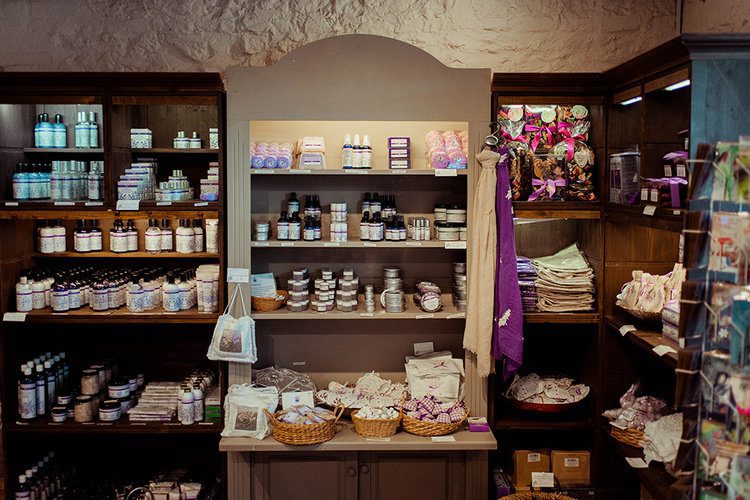
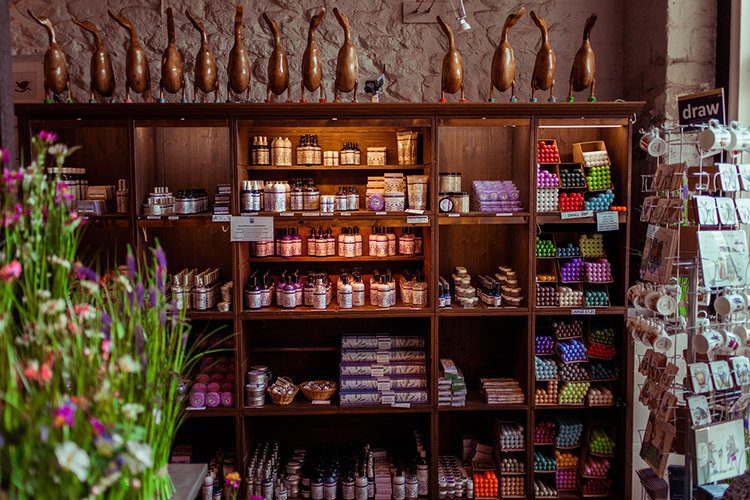
Their gift shop has the largest variety of lavender products I have ever seen anywhere in the world, with everything from lavender infused food to beauty products, and trust me when I say they are some of the best lavender products you will ever use.
Aside from having every lavender product you could possibly imagine, the gift shop expands further down into the building to reveal kitchenware, children’s toys, gardening tools, food and so much more. It’s impossible for me not to buy something every time I visit.
All of their lavender products are available to buy through their online store but you can also find a list of stockist here.
Plant centre
As you exit the far side of the gift shop, there is a purple hut selling gardening items such as tools, seeds, bird feeders etc. Pass through this shop and you will enter the plant nursery where you will find the largest range of lavender products on sale in England, plus many other plant varieties.
Gardens
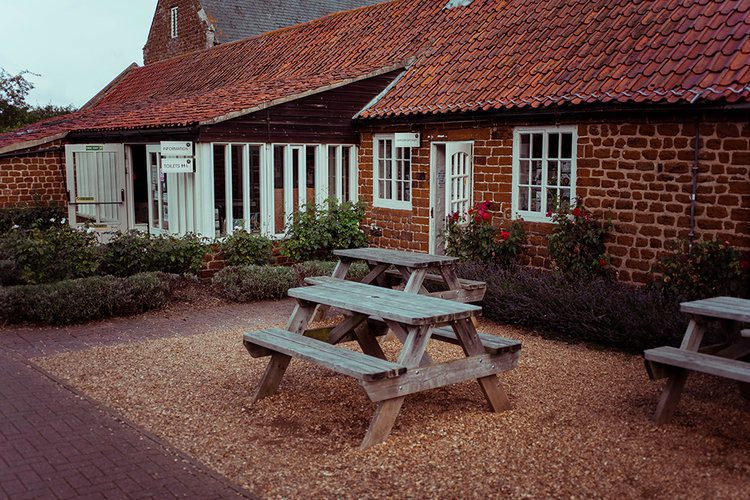
As you enter Norfolk Lavender from the car park, take the small entrance to the left of the gate for the opportunity to walk through their herb and lavender garden.
This small garden is not only a great place to see the different varieties of lavender but it is also another opportunity for photos. The field is best for shots within long rows of lavender, but the garden has lavender bushes that have grown higher so you can get photos that appear like you’re more nestled into the lavender.
For a further stroll into their grounds, from the plant nursery, turn right and cross over the bridge to gain access to their gardens. It’s a pleasant place for walking off your slice of lavender sponge cake or for children to play away from the plants.
Farm shop
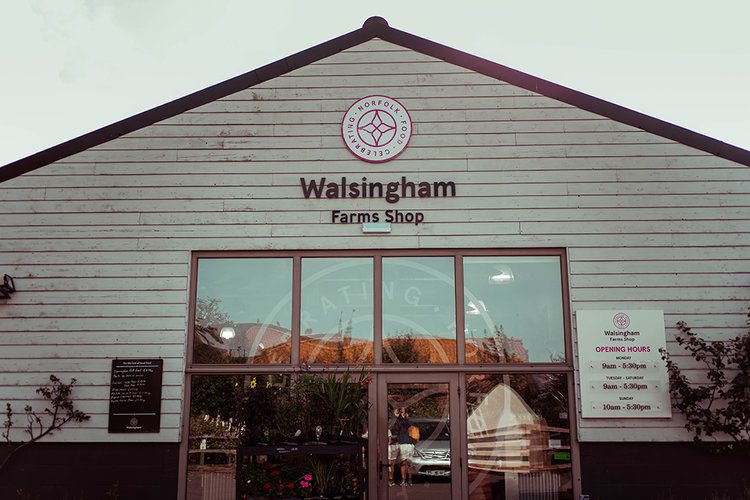
Opposite the ground of Norfolk Lavender, on the side of the car park, is an award winning farm shop, Walsingham Farm Shop, selling fresh and local produce. I’ve picked up a bite to eat a few times from here when either The Lavender Lounge is full or has stopped serving food, and I’ve enjoyed everything I’ve bought from there. If you are planning on bringing anything back home from the farm shop, I suggest bringing a cool bag/box in the car as you are most likely visiting in summer.
Opening times
April – October
9am – 5.30pm Everyday
November – March
Monday 10am – 4pm
Tuesday – Saturday 9am – 5pm
Sunday 10am – 4pm
Animal garden and play park
I haven’t been here because I don’t have kids but I know people who have been with theirs and have enjoyed it. To get all the information you need to visit click here.
For the history of England’s lavender, click here to read a summary on Norfolk Lavender’s website.
.
As amazing as Norfolk Lavender is, I have to be honest the most spectacular lavender field that I have visited is Hitchin Lavender. It is located near Luton (about 1hr 30mins drive from central London) and is the biggest lavender field in England.
Their field is designated to visitors who want to cut their own lavender to fill a bag that is provided with your entrance ticket of just £6 per adult and £3 per child aged aged 5-14 yrs (under 5 yrs go free). However, there isn’t as much to do at Hitchin Lavender as there is at Norfolk Lavender and they don’t offer nearly as many products as Norfolk Lavender does, so I will say it depends on where you’re located, how far you’re willing to drive and what kind of experience you want to have.