Tag: Europe

  • Best locations to photograph Tower Bridge

    Best locations to photograph Tower Bridge

    Tower Bridge, often confused for London Bridge, is one of the most iconic landmarks in London, England. This fully functioning Victorian bascule bridge has helped countless people to travel between the banks of the river by foot or road vehicle and ships to sail down the Thames since June 1894, when Tower Bridge was first opened to public use.

    This Tower Bridge photography guide shares where to get photos of Tower Bridge from all its glorious angles, how to get there, where to eat with a view of Tower Bridge, who designed it, when it lifts open, which movies Tower Bridge is in and more!

    Whatever your reason for visiting one of the most fascinating and beautiful bridges in the world is, this guide will help you find 14 of the best locations to take your Tower Bridge pictures.

    Tower Bridge location

    Tower Bridge is located in Tower Hamlets and Southwark, between the Thames Tunnel and London Bridge. Built between 1886 and 1894, Tower Bridge takes the London Inner Ring Road across the River Thames passing some of London’s most significant and famous landmarks: HMS Belfast, St Paul’s Cathedral and Tower of London and from it you can see The Shard, The “walkie-talkie” (20 Fenchurch St) which has London’s Sky Garden, the Gherkin (30 St Mary Axe) and on the other side you can see Canary Wharf.

    Tower Bridge often gets confused for London Bridge, I get it because it’s the most famous bridge in London but London Bridge is actually a much smaller bridge next to it. Check out number 7 to read more.

    Tower Bridge architects

    The Victorian structure, designed by Sir Horace Jones and John Wolfe Barry, was the largest bascule bridge (lifting bridge) at the time it was built and is still to this day considered an engineering marvel. 

    When there isn’t a worldwide pandemic Tower Bridge is open to the public. The museum includes a tour of the historic engine rooms and access to the glass walkway 42 metres above the River Thames.

    The Queen’s Walk, HMS Belfast

    When to see Tower Bridge lift

    Tower Bridge lifts about 800 – 850 times a year and when it does it kinda feels like magic. Click here to see the bridge lift schedule and what vessel will be passing beneath.

    Tower Bridge in TV and film

    Tower Bridge is one of the most recognisable landmarks in London and has been featured in many blockbuster films such as Spider-man: Far From Home (2019), Mission: Impossible (1996) Mary Poppins Return (2018), Sherlock Holmes (2009), Fast & Furious 6 (2013), 28 Weeks Later (2007), Bridget Jones’ Diary (2001) and The Edge of Reason (2004) – to name a few.

    Nearest tube station to Tower Bridge

    The nearest tube station to Tower Bridge is Tower Hill on the Circle and District lines.

    See number 14 on this list for how to visit Tower Bridge via one of London’s red buses.

    Places to eat near Tower Bridge

    There are so many restaurants and bars in London where you can eat with a view of Tower Bridge, here are some of my favourites:


    • Tavolino Bar & Kitchen – see number 9 for photos and more info.


    • Jin Bo Law – see number 10 see for photos and more info.


    • GŎNG at Shangri-La The Shard – see number 11 for photos and more info.


    • Le Pont de la Tour – see number 12, Butler’s Wharf, for photos and more info.


    If you haven’t gathered already, Tower Bridge is a pretty special bridge. For me it’s one of those landmarks that you can’t help but marvel at, no matter how many times you’ve seen it and there’s no wonder why it’s one of the most Instagrammed landmarks in London. So I’ve put together a list of 12 of the best locations in London to take photos of Tower Bridge so you can admire her too and maybe get some pretty photos on the way.

    1. St Katherine Docks

    Located on the left bank of the River Thames is St Katherine Docks, the only marina in central London and one of the best spots for getting close to Tower Bridge without being on it. 

    From here you can get amazing photos looking up at the bridge with either Girl With A Dolphin fountain or The Time Piece Sundial. Alternatively you can swing from a lamppost or pop a squat on one of the benches opposite The Tower Hotel.

    The best time to take photos at St Katherine Docks is early morning, ideally sunrise, as the benches here get crowded in the day time with everyone taking a coffee or lunch break. Also London Bridge at sunrise on a clear day is nothing short of glorious. Right when the sun is low enough that it only catches a select few buildings it illuminates the unobstructed Tower Bridge and turns the two towers golden – it’s really worth the early rise.

    If you don’t care for early starts and empty locations then visit in the afternoon when you can take a stroll around the central London marina and enjoy lunch in one of the many surrounding restaurants.

    The closest tube station to St Katherine Docks is Tower Hill on the District and Circle Lines.

    2. On Tower Bridge

    With a pedestrian bridge on both sides of the bridge, one of the very best places to experience and photograph Tower Bridge is on the bridge itself.

    Tower Bridge’s pedestrian walkways are open 24/7 unless the bridge is opening, it’s not often but to be sure you can check here.

    It goes without saying that the later in the day you go, the busier it gets but part of the magic of walking across Tower Bridge is joining other tourists and Londoners who are swept up in the beauty of this Victorian masterpiece as much as you.

    The best locations on the bridge to get photos are from either end before the first tower. Once in-between the two towers it’s a little harder to capture them in the background as they’re close together and you can’t get as much distance as the ends of the bridge.

    If you want a red bus then fear not, plenty will pass whilst you’re on the bridge but as always, the second you want one there won’t be one in sight! Be patient as one will come and hey, you might even get a Black Taxi Cab too!

    The closest tube station to Tower Bridge is Tower Hill on the District and Circle Lines or London Bridge on the Jubilee and Northern lines.

    3. Butler’s Wharf

    On the south bank of the River Thames is Butler’s Wharf, an old warehouse that is now home to restaurants and luxury apartments.

    From Butler’s Wharf you can get photos of/with Tower Bridge with some on London’s most famous skyscrapers in the background: The Gherkin (30 St Mary Axe), “walkie-talkie” (20 Fenchurch Street) and “cheese grater” (The Leadenhall Building).

    Though it’s quieter in the morning, the right bank of the River Thames is more popular and has heavier footfall so you may be joined by joggers and dog walkers. For the most enjoyable experience, book a table at one of the waterfront restaurants opposite Butler’s Wharf Pier.

    There’s two locations for taking photos of Tower Bridge worth noting at Butler’s Wharf. The first is opposite Butler’s Wharf Chop House restaurant, right where the railing starts on the wall. Use the railing as leverage to get up on the wall to sit for a photo (trust me it’s so much easier than trying to hop up the wall, especially if you’re short). The second spot is opposite the restaurant Le Pont De La Tour.

    PFH Top Tip: Between Butler’s Wharf and The Queen’s Walk/Potters Fields Park is WatchHouse Tower Bridge, an artisanal coffee shop with some of the most incredible cakes and pastries. I had a banana and Nutella brownie and it was like a cookie, brownie and slice of banana bread had a baby and that baby was delicious.

    The closest tube station to Butler’s Wharf is Tower Hill on the District and Circle Lines or London Bridge on the Jubilee and Northern lines.

    4. The Queen’s Walk

    The Queens Walk is the most popular spot to take photos of/with Tower Bridge. It’s the spot you’ll see most on Instagram, most likely featuring girls with big skirts, a bow in their hair and a bouquet of flowers (hey no prop judgement here, does it look like I’m reading the Metro above? To be clear, I did later it wasn’t wasted). If you only have time for one spot to take photos then this is the one as it’s the most recognised.

    The wall does vary in height if you’re planning on sitting but be advised that on the other side is a long drop to the Thames, so whatever you do be careful.


    Though it’s easy to get photos along the wall here any time of day – the wall is long and unobstructed – be prepared to have an audience. Opposite the wall, along The Queen’s Walk, is Potters Fields Park (next on this list) which is perfect for enjoying an ice cream or coffee from WatchHouse Tower Bridge, but no so convenient for taking photos when you feel self-conscious about it. 

    When photos aren’t your priority, take a leisurely stroll along The Queen’s Walk, it’s a really lovely way to see the city and passes the London Eye, Shakespeare’s Globe Theatre and Tate Modern.

    The closest tube station to this part of The Queen’s Walk is Tower Hill on the District and Circle Lines or London Bridge on the Jubilee and Northern lines.

    5. Potters Fields Park

    As mentioned above, Potters Fields Park is located opposite part of The Queen’s Walk that is right next to the south bank steps leading up to Tower Bridge. 

    This tiny park in the centre of London is the best free location to sit and enjoy a coffee, picnic, ice cream (for most of the year there’s an ice cream truck here) or beer (public drinking is allowed in England – please drink responsibly) whilst looking out across the River Thames to the some of the landmarks that make up London’s skyline, including Tower Bridge.

    Potters Fields Park is significantly quieter in the morning than any other time of day as it’s a popular spot for outdoor socialising.

    The closest tube station to Potters Fields Park is Tower Hill on the District and Circle Lines or London Bridge on the Jubilee and Northern lines.

    6. More London Riverside

    Nestled between the buildings that make up More London, on the river bank next to HMS Belfast, is a walkway called More London (yeah hella confusing, I know) where you can spy Tower Bridge poking out from behind City Hall, otherwise known as the Snail.

    Footfall in More London is heavy so arrive before 8am if you want to use the buildings to frame Tower Bridge without other people in your photo.


    The closest tube station to More London is London Bridge on the Jubilee and Northern lines.

    7. London Bridge

    Located half a mile along the River Thames is London Bridge, the best bridge to snap a photo of Tower Bridge.

    From London Bridge you can capture Tower Bridge with HMS Belfast in the foreground and Canary Wharf in the back. 

    Have a zoom lens at the ready for photos of Tower Bridge from London Bridge as they’re about half a mile apart from each other.

    London Bridge isn’t a location you have to worry about timings in terms of footfall but the time of day will have a dramatic effect on your photos. In spring/summer the sun rises behind Tower Bridge from this location so keep that in mind when you plan your arrival time. 

    Michael and I look these photos at 8.30am in April for reference.

    Once you’ve taken your photos of Tower Bridge from London Bridge stroll over to Borough Market (open Monday – Saturday) for something to eat or drink. Borough Market is one of the oldest food markets in London and offers a huge variety of global cuisines and specialised delicacies.

    The closest tube station to More London is London Bridge on the Jubilee and Northern lines.

    8. Thames Path

    A little further away from the other seven locations for taking photos of Tower Bridge on this list is a spot on the Thames Path, a walkway that for the most part runs parallel along the River Thames.

    Opposite Tower Bridge Wharf building on the left bank of the River Thames is a popular spot for giving your feet a rest. From these benches you look out across the river and see Tower Bridge and The Shard just behind.

    I really recommend planning a walk on the Thames Path for a sunny day – it’s one of my favourite walks in London. Start at Canary Wharf and walk along the river and I know you’ll be impressed when you suddenly turn a corner at this very spot (opposite Tower Bridge Wharf building) and bam! Tower Bridge and The Shard are right in front of you.

    The closest tube station to this area of the Thames Path is Tower Hill on the District and Circle Lines.

    9. Tavolino Bar & Kitchen

    Tavolino Bar & Kitchen is an Italian restaurant along the south bank of the River Thames and is another spot in More London which I mentioned in number 6 on this list.

    Tavolino is split across two floors and a terrace, all of which offer a spectacular view of Tower Bridge. It’s actually a pretty perfect place in London to take photos of or with Tower Bridge and dine with said view as for the most part, especially the terrace, the views of the bridge from each level are unobstructed.

    Book Tavolino to avoid disappointment on a sunny day. There are 100 seats inside though so it’s unlikely to be full unless you visit during a particularly popular time such as Christmas.

    How to get to Tavolino Bar & Kitchen

    The closest tube station to Tavolino is London Bridge on the Northern and Jubilee Lines. From there it’s a 6 minute walk to More London along the river Thames where Tavolino is located.

    10. Jin Bo Law 

    Jin Bo Law is the skybar at the Dorsett City London hotel in Aldgate, East London. Despite only being located on the 14th floor (usually you need a fair bit of height in London for killer views of the city) Jin Bow Law offers a spectacular view some of the city’s most iconic landmarks including the Shard, Gherkin, “walkie-talkie” (where the Sky Garden is located) and the one you’re here for: Tower Bridge.

    Jin Bo Law is the perfect spot to combine getting Tower Bridge photos with a night out in the city.

    Reserve a table to avoid disappoint – speaking of avoiding, heads up there’s a minimum spend on Friday nights.

    How to get to Jin Bo Law

    The closest tube station to Jin Bo Law is Aldgate on the Circle and Metropolitan lines, the station is located right next to the Dorsett hotel where Jin Bo Law is located.

    Alternatively you can travel via the District or Hammersmith & City Lines to Aldgate East station which is a 5 minute walk away from Jin Bo Law down Aldgate High Street. 

    You can also get to Jin Bo Law on the tube from Liverpool St Station which is accessible via the Central, Circle, Hammersmith & City and Metropolitan Lines and the National Rail, it’s an 8 minute walk.

    11. GŎNG bar at Shangri-La The Shard

    GŎNG is the bar at the top of Shangri-La The Shard, the five star Singapore hotel chain that sits right at the top at one of London’s newer landmarks.

    GŎNG is located 52 stories up in The Shard and offers one of the best photo locations in London as it’s the highest bar in all of Europe. As I mentioned in my review of Shangri-La The Shard, going for a drink at GŎNG bar is a far superior experience over booking a ticket for The View From The Shard. Granted the viewing platform offer 260º views but it costs £25 per person and compared to the minimum spend of £35 per person it makes more sense to enjoy the view with a drink for almost the same cost, no? Of course you do you, I just think this is the smarter option.

    You can’t book a specific table at GŎNG so I’m afraid you can’t be guaranteed a view of Tower Bridge but you can request it and if you book for a quieter time (avoid 5-8pm on Fridays and weekends for example) then you might stand a better chance of getting this corner table.

    If you want to find out how to get free perks whilst staying at Shangri-La then take a look at my blog post How to make the most of your stay at Shangri-La The Shard, London.

    How to get to GŎNG bar a Shangri-La The Shard

    The closest tube station to GŎNG is London Bridge on the Northern and Jubilee Lines. Take the exit for The Shard or Guy’s and St Thomas’ Hospital, it’s signposted within London Bridge station, The Shard is located right next to this exit. Enter through the Shangri-La entrance on St Thomas street and the concierge will give you access to the elevator to GŎNG.

    12. Le Pont de la Tour

    Le Pont de la Tour is a French restaurant at Butler’s Wharf on the south bank of the River Thames. As I mentioned under number 3 above, Butler’s Wharf is a great place to take photos of Tower Bridge and one of the more quiet ones.

    When the weather accommodates for al fresco dining, the terrace at Le Pont de la Tour offers tables with a beautiful view of Tower Bridge with the “walkie-talkie” and Gherkin as a backdrop. Unfortunately for us when we dined at Le Pont de la Tour the weather was about right for a true British bank holiday Monday as it rained the entire day and into the night, so our photo truly doesn’t do it justice, I know you’ll do better!

    When we visited we enjoyed the Côte de Bœuf with béarnaise sauce and it really was incredible.

    Make a booking on the terrace – it’s heated during the cooler months – for a view of Tower Bridge at Le Pont de la Tour.

    How to get to Le Pont de la Tour

    The closest tube station to Le Pont de la Tour is Tower Hill on the Circle and District Lines or London Bridge on the Jubilee or Northern Line. From Tower Hill you’ll get to cross Tower Bridge.

    13. Tíng at Shangri-La The Shard 

    Up on level 35 of the Shangri-La hotel at The Shard is where you’ll find the hotel’s restaurant Tíng. 

    Tíng is where you can enjoy every meal of the day and if you’re feeling extra fancy a 3-5 course tasting menu is served in the evening but the most impressive (and popular) meal to eat at Tíng is their famous afternoon tea.

    Look out across pretty much all of the best parts of London, including Tower Bridge, whilst treating yourself to one of Britain’s favourite pastimes: afternoon tea. With each season comes a different theme. The two pictured here are their Alpine Afternoon Tea which was their 2021 festive theme and the other is their annual Pink Afternoon Tea in support of breast cancer research.

    All afternoon teas at Tíng start with a complimentary welcome tea served within a mesmerising dry ice display that spills out across your table so you really are dining above the clouds as you look down on Tower Bridge. It’s actually my favourite place to enjoy afternoon tea in London.

    If you want to find out how to get free perks whilst staying at Shangri-La then take a look at my blog post How to make the most of your stay at Shangri-La The Shard, London.

    How to get to Tíng at Shangri-La The Shard

    The closest tube station to Tíng restaurant is London Bridge on the Northern and Jubilee Lines. Take the exit for The Shard or Guy’s and St Thomas’ Hospital, it’s signposted within London Bridge station, The Shard is located right next to this exit. Enter through the Shangri-La entrance on St Thomas street and the concierge will give you access to the elevator to Tíng on level 35.

    14. The 343 red bus over Tower Bridge 

    One of the best ways to experience Tower Bridge is to cross it on one of London’s iconic double decker red buses. If you’re really lucky, maybe you’ll be able to sit on the top deck right at the front!

    If you’re already in the area taking Tower Bridge photos from one of the many spots in this list of places to take Tower Bridge photos then you can simply hop on the bus just before the bridge to take it across and then jump off on the other side see Tower Bridge from the other side of the River Thames.

    For this quick ride you’ll want to pick up the 343 bus from Tower Hill Tower Gateway Station (Stop TE) heading towards New Cross Gate. Buses run regularly throughout the day (although there’s never one when you want one) so you won’t be waiting long. As soon as you pay to board, either via a contactless or Oyster card, take the flight of steps up on the left as quickly as possible – the bus will pull away as soon as the doors close – and head to the front of the bus. There will be just enough time to set up your camera or pull out your phone.

    A couple of other locations that offer views of Tower Bridge from above are:


    • The London Eye


    • The Sky Garden


    Butler’s Wharf

    I hope you enjoy these 12 best locations in London to take photos of Tower Bridge. I’ve picked each one with not only amazing photography opportunities in mind but because they each offer a new part of London to explore. It took me a long time to shake the feeling that the photo is the most important thing so my best piece of advice for visiting these places is to enjoy the area whilst you are there. Get a coffee, go for walk, enjoy an ice cream and enjoy the view. 

    Use #postcardsfromhawaiiblog to share your Tower Bridge photos so I can share them!

    Do more on & for the planet, Gabriella

    Pin this post


  • Eco-conscious Cornwall packing guide

    Eco-conscious Cornwall packing guide

    Whether it’s a staycation within the UK or you’re coming from far and wide (post pandemic) a holiday/vacation to Cornwall in south-west England will be one of your best adventures in Great Britain. 

    If you haven’t already take a look at my previous travel guide for Cornwall, 8 beautiful places to visit in Cornwall part 1 and part 2 to learn about everything you don’t want to miss on your trip. There’s something for everyone from indulging on Cornish pasties and cream teas to riding waves and hiking to medieval castle ruins.

    To help you prepare for your best trip to Cornwall I’ve put together this pinpointed packing guide for some key things that will make life so much easier on your holiday/vacation to the Cornish coast.

    Wetsuit

    One of the most ideal things to pack for a trip to Cornwall is a wetsuit as it’s one of the top locations in the world for water sports. It will insulate you when the water is chilly and protect your skin from board rash so if you already have one this is definitely the trip to pack it.

    If you don’t have a wetsuit, don’t panic as you’ll have plenty of options for renting them out at a low cost and some tourism companies include wetsuit rental in their prices – check ahead of time just to be sure. 

    Swimsuit  

    Unless you are going in the middle of winter and have no intentions of getting into the sea, the first thing you should be packing for a trip to Cornwall is your swimsuit. 

    The beaches in Cornwall are the best I’ve been to in the UK. Golden sands + turquoise waters + warm sunshine = the perfect set up for very long and lazy beach days.

    Whether you’re jumping into a wetsuit and onto a surfboard, cooling off in the ocean, going for a swim at one of the many sea pools and lidos in Cornwall or laying out in the sun a swimsuit is a Cornwall staycation necessity. 

    Of course you can wear whatever makes you feel comfortable and if that’s not a swimsuit than I am here for you no matter what you choose. My message is more that if you do choose a swimsuit and it’s time to purchase a new one look for one made from recycled fabric or even biodegradable (yah that’s a thing now, I’m yet to try but I hear good things). I have a few swimsuits made from recycled plastic bottles and you would never know from the texture.

    The most responsible thing is to use the swimsuits you already have though so as difficult as it is and I REALLY understand this one, please try to limit your purchases and use what you have.

    Another tip for swimwear is to purchase interchangeable sets or reversible pieces for more options on your travels.

    Dock and Bay towel/poncho

    The most sustainable choice would be to pack a towel you already own but if you need a new one then I recommend one from Dock & Bay. Michael and I been using Dock & Bay products since 2018 for the following reasons:


    • All of their products are now made from 100% recycled materials.


    • They’re part of the blue light card discount for NHS staff.


    • 5% of their profits go to one of their partnered environmental charities. Their 2021 partner is WWF and if you purchase one of their two collaborative towels they will donate 20% of those profits to WWF.


    • They are compact and pack down much smaller than a regular towel.


    • They dry x3 times faster than a regular towel.


    • They’re sand resistant so you can shake it right off.


    Along with one of the XL towels which are perfect for stretching out on to sunbath or to share with someone else for a picnic, the towel you absolutely need for a trip to Cornwall is one of Dock & Bay’s ponchos. 

    Their super absorbent towels are the best accessory for any waterspouts from surfing to kayaking and for hanging out on the beach. I forgot to bring mine and Michael could tell you I said “I wish I had my Dock & Bay poncho” every. single. day. As they’re made from the same material as the towel they’re just as absorbent and lightweight but the reason they’re perfect for a trip to Cornwall is because they’re big enough to get changed in and out of your swimsuit in public without revealing yourself to the world.

    Dry bag

    Dry bags are a must have for me when I’m going anywhere near the water for two reasons:

    1. They keep your belongings together and dry on the beach, paddle board, boat etc. You can us it to store suncream, your phone, car keys etc.

    2. You can pop your wet swimsuit and towel in it after you’ve changed and it will stop everything else from getting damp.

    Look after your dry bag and it will see you through many years of travelling all over the world. 

    Sandals/trainers suitable for hiking 

    The South West Coastal Path is the longest walking trail in England. At 630miles long it passes through Somerset, Devon, Cornwall and Dorset. Whether you’re embarking on the full length or just enjoying parts of it, the trail is an opportunity to get some of that fresh sea-air in your lungs – the kind that people say will make you sleep better – to be at one with nature and enjoy some incredible views of the prettiest coastline in England.

    The path is natural and therefore uneven so though it wouldn’t be impossible to take it on in flip flops but it would be super uncomfortable. For this reason I think a pair of trainers, hiking boots or some bang-on-trend Dad sandals (like these ones from Dune) is something you need on your feet for enjoying long walks in Cornwall without the risk of rolling your ankle.

    To prevent unnecessary waste make sure that when you purchase a pair of shoes or sandals they are high quality, made with care and meant to last. A comfortable pair of shoes is one of the most important things to me and something I value highly in the world (hence why I work with Dune) I believe an uncomfortable pair of shoes can ruin your day let alone your travels – and trust, I’ve been there. So look for shoes that are comfortable for you, sensible and versatile so you can enjoy them for years on your travels around the world. 

    Biodegradable disposable BBQ

    I don’t know about you but BBQs along with Pimm’s are my first thought when I hear the word summer. Was it even summer if you didn’t have a BBQ? 

    With over a million sold each summer in the UK it’s safe to say disposable BBQ grills are a popular summer accessory HOWEVER safe they are not. Regular disposable BBQs are not-only single use but they are toxic, non-recyclable nor biodegradable. 

    Of course we love the idea of being able to take a little BBQ out to the beach or the park to cook up a quick feast with friends and family under the sun so what’s the alternative? It’s pretty simple: a biodegradable disposable BBQ grill!

    We purchased our sustainable BBQ grill from Casus Grill for the following reasons:


    • It’s made from 100% natural materials: bamboo, lava stone, recycled cardboard and charcoal


    • Everything but the lava stone is biodegradable


    • Remove the lava stones and use on a fire, campfire or log burner – they are a neutral product that will return to earth when burnt


    • It’s free from fossil waste


    It lit quickly (out of the wind) and was ready to cook on within an hour. If you need to purchase a disposable BBQ try to choose a sustainable grill from now on to reduce your impact on our planet. I recognise they are more expensive and not everyone is in a position to buy one but I encourage you to make this choice if you are able to.

    DO NOT leave any kind of disposable BBQ in an enclosed space, the carbon monoxide fumes are poisonous and may result in death.

    Reusable water bottle

    Stay hydrated kids, there are very few things in life more important than drinking water. Please don’t go littering the earth with endless single-use plastic bottles to do this though, instead bring a reusable water bottle.

    By law all licensed pubs, bars, nightclubs, cafes, restaurants, takeaway food and drink outlets, cinemas and theatres are required to provide tap water to anyone who (politely) asks for it. Though pandemic rules have made this a little difficult so be smart about it, it is absolutely acceptable to ask for your bottle to be filled with tap water so just think of all the money you’ll be saving as well as plastic!

    I always recommend a thermal one as most will keep cold liquids cool for 24 hours and hot liquids warm for 12 hours which is not only super handy on travels around the world but it also cuts out that nasty risk of plastic water bottles poisoning you when you leave them in the car to get warm.

    My thermal bottle is from Dopper and if you’re interested in why I love it so much you can read about here.

    Waterproof phone case or camera case  

    This truly depends on the kind of traveller you are. If you love to document your adventures, are outdoorsy or even clumsy then a waterproof case for your camera or phone will suit you on Manu of your travels, however if you like to be in the moment and reduce your screen time then this won’t necessarily be an accessory you need on your packing checklist for Cornwall.

    If you do want one, look for one that fits multiple phone makes and models so that you don’t need to buy a new one when you get a new phone. 

    Better still, though it is more cumbersome, invest in a waterproof camera case so that you have better quality photos and are less likely to need a new camera case as cameras last far long than phones. 

    Reef-safe sun cream  

    Cancer doesn’t discriminate folks the sun will cause damage to everyone’s skin so always protect it from harmful UV rays by wearing suncream/sunscreen/sunblock – whatever you call it, wear it!

    Unfortunately chemicals that go into most suncreams to help protect us from the sun have harmful effects on creatures living in the sea so when we enter the water wearing sun protection made with oxybenzone and octinoxate they wash off and cause corals to bleach and die and when they die an entire ecosystems are destroyed. That means no more colourful reefs to explore on your travels.

    Over 50% of our planet’s coral reefs have been destroyed in the last 30 years due to Climate Change and pollutants. Next time you purchase sunscreen make sure it doesn’t contain oxybenzone and octinoxate. Instead look for sunscreen that contains zinc oxide and titanium dioxide, these are not linked to coral bleaching and will still protect your skin from harmful UV rays.

    You may be thinking, but Gaby I won’t be exploring tropical coral reefs in Cornwall so why is wearing a reef-safe sunscreen important? Our oceans are connected and whether you’re swimming in Cornwall or Mauritius once you’re in the water those chemicals are casing harm to something in our global waters so please try to purchase reef-safe suncream when your current one runs out.

    I have been using Shade – sold through Coconut & Cotton – as it is a natural suncream that is free from any harmful chemicals plus the package is plastic free and reusable.

    Other reef safe suncream brands I use (but have reduced as they are sold in single-use plastic bottles) are Australian Gold and Hawaiian Tropic.

    Raincoat

    Though for the most part the weather is beautiful in Cornwall the weather can drastically change should a storm roll in from the Atlantic. Whilst in Cornwall towards the end of September the weather went from shorts-and-tshirts weather to wet, windy and cold overnight. 

    To be prepared pack a raincoat no matter the time of year you’re going – after all it’s not the weather than can hold you back from having a good time it’s how you dress for it.

    If you don’t own a good waterproof coat look for one with taped seams for extra protection from wet weather. I’ve had my Joules one for years and it has seen me through freezing cold and wet conditions in Scotland so I highly recommend it but you don’t have to spend heaps on a rain coat, Michael has one from Mountain Warehouse which was much cheaper and it saw him through the same weather.

    Looking for a raincoat with taped seams will ensue that coat is more durable which means will have better longevity that ultimately means it’s a more sustainable way forward than buying endless cheap raincoats or worse single-use plastic ponchos.


    .  

    Do more on & for the planet, Gabriella

    Pin this post


    As an Amazon affiliate I may earn from qualifying purchases.

  • 8 beautiful places to visit in Cornwall part 2

    8 beautiful places to visit in Cornwall part 2

    In a follow up to 8 beautiful places to visit in Cornwall part 1 here’s another 8, I know, I spoil you. In this travel guide for Cornwall I’m sharing photogenic places and adventurous things to do in the top part of the county. From learning about complex eco-systems in the magnificent biomes of Eden Project to surfing waves rolling in from the Atlantic Ocean this second part to my Cornwall travel guide will plan out your most memorable trip there.

    1. Summerleaze Beach in Bude

    Take a day trip over to Summerleaze Beach in Bude where some of the highest summer temperatures in Cornwall are recorded so you can not only catch a great tan (don’t forget to wear your reef safe sun cream folks) but it’s the ideal spot to cool off too thanks to the huge sea pool that sits at the base of the cliffs.

    Bude sea pool is a 91m long by 45m wide semi-natural pool that was built in the 1930s to create a safe place to swim. It is both free to use and unrestricted (unless there’s a pandemic).

    For the best position to get a photo of Bude sea pool, head up the path behind the ice cream shops and stand safely at the top of the cliffs above. Hopefully the sun will catch the water for you and you’ll get some beautiful sea sparkles in your photo.

    2. Tintagel Castle 

    Tintagel Castle is a medieval fort built in the 1200s but ruins onsite are known to date back to the 4th Century AD. Cross a bridge suspended high above rough waters and enter the legendary birthplace of King Arthur. Work your way around the one way system that will take you up to the top of the cliff and down to the visitor centre.

    If the legend of King Arthur and Merlin tickles your fancy you can also visit Merlin’s Cave, thought to be Merlin’s home, at low tide.

    Land Rovers and step free access is available to most of this heritage site.

    If on foot, wear sensible footwear as the ground is uneven and a it’s a trek just to the castle and back from the village alone.

    As interesting as the castle ruins are it’s the views of the coastline from them that’s the most photogenic.

    Tickets must be booked in advance with English Heritage as they only allow access on a timed schedule. Tickets will give you access to the castle’s remains which offer spectacular views of the rugged area of coastline.

    After your visit to Tintagel Castle, potter through the village where you’ll find many tearooms to enjoy a Cornish cream tea in their garden.

    3. Port Gaverne

    One of my favourite memories from our trip to Cornwall was standup paddleboarding with Cornish Rock Tors at Port Gaverne. 

    Our instructor, whose name has sadly escaped me, was the best you could have asked for. Not only did he make sure we knew exactly what we were doing before getting out on the water but he had the patience to let us build up our confidence before we left the port to reach the open water. With him we explored a cave, attempted tricks and even took a moment of calm to practice some yoga – anyone remember Michael doing a headstand on a paddle board out of nowhere when he cannot walk down the street without tripping over?

    2 hour sessions are £40 per person and include wetsuit rental.

    SUPing isn’t all Cornish Rock Tors offers, they also do coasteering, kayaking and sea swimming. Also they’re a single-use plastic free business with a Surfers Against Sewage’s Plastic Free Champion certification, so yay for that!

    Save time searching for almost non-existent parking by parking in St. Endellion Car Park and walk 5mins down to Cornish Rock Tors. When you’ve finished paddleboarding, walk to Port Isaac, which is only 10 minutes in the other direction to St. Endellion Car Park for lunch. Port Isaac is where much of the filming for the ITV series Doc Martin took place.

    4. Polzeath

    Polzeath beach attracts more surfers than you can shake a shortboard at. The large beach and on-beach parking means that the waves are more accessible than some of the smaller, more limited destinations.

    For this reason it’s a pretty ideal place to learn to surf and there’s heaps of surf schools to choose from. I will say it gets busier for this reason though so if you seek less distraction look for a quieter location but it is where you’ll find some of the most experienced surf instructors.

    We joined friends on a lesson with George’s Surf School which is considered to be within the “Top Ten Surf Schools in the World” by The Guardian. Their patience and guidance will motivate and comfort you no matter how you progress in your lesson. Your instructor won’t just help you stand but they will also correct you so each time you catch a wave you’re not just standing and falling but actually improving on your technique.

    Wetsuits are available to rent for a small fee from multiple vendors on the beach.

    Polzeath beach has a community atmosphere that makes you feel like summer will never end. There’s multiple restaurants right on the beach including the hot-spot rum bar out the back of Surfside Polzeath. For beach babe apparel check out Fusion on Dander’s Hill.

    5. Newquay

    Newquay is a coastal town in north Cornwall that is known best for being a top location for surfing thanks to the strong surf coming in from the Atlantic Ocean. Fistral Beach and Watergate Bay are the two most popular places to surf with Watergate Bay being where the English National Surfing Championships are held every year. Yeww!

    Fancy yourself as a surfer but can’t catch a wave to save your life? I feel you and Newquay is the place for you to kit yourself out in all the surfer themed apparel your heart desires.

    Best surf apparel shops in Newquay 


    • Ann’s Cottage Surf Shop


    • Watershed


    • Married to the Sea


    • Northshore Surf Shop


    • The Wave Project – an amazing organisation who offers complimentary surf therapy classes to people with various mental health diagnoses, profits from the shop help to keep those classes funded.


    Newquay airport, located 15 minutes outside of the town, has regularly scheduled flights (when there isn’t a pandemic) to Spain, Germany, Ireland, London, Liverpool, Manchester, Glasgow and Edinburgh. 

    Where to stay in Newquay

    If you’re happy to spend extra on a beautiful place to stay in Newquay then I highly recommend booking a stay at Tolcarne Beach Village on Tolcarne Beach. 

    Tolcarne Beach Village offers four types of rooms: beach cabins, beach houses, apartments and colonial rooms (yeah the name makes me uncomfortable too).

    We stayed in one of the colonial rooms, Ganges Suite and the room is one of the most beautiful and well designed interiors I have ever stayed in. Every detail of the room from the antique dressing table to the record player makes you feel like you’ve stepped into a time gone by. Pop a record on, light the fire, draw a bubble bath and take in the sea view from the balcony whilst you wait for it to fill up. In the morning take a cuppa out onto the balcony in one of their robes and spy on the early rising surfers.

    At low tide you can walk into Newquay from Tolcarne Beach.

    Lorem ipsum dolor sit amet, consectetur adipiscing elit. Ut elit tellus, luctus nec ullamcorper mattis, pulvinar dapibus leo.

    6. Eden Project

    As an eco-activist who regularly writes about sustainable travel, I’m sure it’s not hard for you to imagine why visiting the Eden Project was one of my favourite things to do in Cornwall. 

    The first of two biomes is a humid tropical forest filled with rope bridges weaving you through palm trees, waterfalls, hibiscus flowers and more – it honestly felt like I’d been magically transported back into the Malaysian jungle.

    The second biome is a mediterranean South African, Western Australian and Californian climate that boasts a cacti garden, olive trees and even a little vineyard. There’s even a terrace right in the centre where you can sip sangria surrounded by hot pink bougainvillea.

    Within each dome and the surrounding grounds is heaps of information about various threats to our planet’s complex and wonderful eco-systems from mass palm oil farming in South America to bush fires in Australia. The educational material is both informative and easy to digest plus it offers further reading and shares organisations that you can support who are making a difference for all of us and the future of our planet

    What’s better than the entrance being less than £30 per adult (which funds the good work that they do)? The ticket is an annual pass so you don’t have to pay again to return within a year.

    PFH Top Tip: 

    If you’re visiting on a chilly day, layer up so you can shed one or two whilst you’re in the warm and humid biomes.

    Be sure to visit the gift shop for a host of eco-conscious and low-waste products from their very own skincare and kitchenware to reusable nappies and clothing.

    7. The Hidden Hut at Porthcurnick

    We were pulled to Porthcurnick beach for one thing only and that was The Hidden Hut. Ran by Simon Stallard & Jemma Glass, The Hidden Hut is a beach cafe turned beach dining experience.

    If you’re a frequenting reader here then you’ll probably know how much love I have for fish and chips on the beach, but The Hidden Hut elevates seafood on the sand. You won’t find a deep-fat fryer here, instead they cook fresh locally sourced ingredients that the use their outdoor stove and bakery oven to whip up chowders, dhal, grilled fish, briskets, soups, stews, Cornish pasties, sausage rolls, cakes and more.

    The menu changes to cater to seasonal local produce but here’s an idea of what you could expect to see:


    • Wood fried pork sausages served on a tomato and bean salad topped with a rosemary crumb and tomato basil dressing


    • Beef brisket and pork shoulder chilli with feta, jalapeños, sour cream and bulgar wheat


    • Smoked Cullen skink chowder topped with chives, spring onions, sourdough croutons and served with a freshly baked roll


    • Spinach and chickpea dhal with raita, pickled red onions and a coriander flatbread.


    • Roasted onion, leek and cider soup with sage and blue cheese sourdough croutons served with a freshly baked roll.


    Good, right?

    Outside of pandemic restrictions, The Hidden Hut hosts a weekly ‘feast night” and “Beach Breakfasts” where they set out a long table on the beach and anyone with a ticket is encouraged to dine socially. You bring the plates, cutlery and wine and they’ll serve the food. 

    Thankfully the daily lunch menu doesn’t require booking but to avoid an even longer wait and disappointment if your choice sells out, get in the queue early because that thing will tail down to the beach. Michael got into the queue at 11.45 and was able to see the menu at 12.15pm. By 12.30pm he had returned with the food – take note that this was mid-September and the wait will be much longer during the height of summer.

    Come prepared with your travel cutlery and a towel to enjoy your meal on the beach.

    How to find The Hidden Hut

    The Hidden Hut was originally built pre-war (don’t ask which one, I couldn’t find it) intentionally to be difficult to find.

    Parking is extremely limited for Porthcurnick beach. Arrive early to nab street parking on a road that I can’t even find the name for so I’ve included a screenshot of it below. Once full of cars, the dead-end road isn’t wide enough to turn around so if you have the space when you arrive, park facing the way you came from to save reversing until you reach a driveway to turn in. 

    Take the slipway at the end of this road to the beach and don’t be surprised if you still can’t see The Hidden Hut. From the centre of the beach turn your back to the water and head inland but off to the left where a path will lead you up to this secluded restaurant.

    It sounds fussy but it is worth it to eat at The Hidden Hut.

    8. Falmouth 

    Spend the afternoon in Falmouth where you can enjoy lunch looking out to the harbour and potter around outdoor activity shops in town with a takeaway coffee (they’ll serve it into your reusable cup) from Beacon Coffee. We stopped for lunch at Indidog Eatery where I indulged in an Asparagus grilled cheese sandwich which was the best grilled cheese sandwich I have ever had (not to mention it’s Instagrammable). Before leaving take a nosy in Falmouth Art Gallery on Webber Street and/or visit the National Maritime Museum.

    Part 1 of 8 beautiful places to visit in Cornwall is available here so if you’re planning on booking your staycation in Cornwall, take a look for tips on visiting St Michael’s Mount or swimming in the UK’s most beautiful art deco lido.

    Do more on & for the planet, Gabriella

    Pin this post


    As an Amazon associate I earn from qualifying purchases.

  • 8 beautiful places to visit in Cornwall part 1

    8 beautiful places to visit in Cornwall part 1

    Reflecting on my staycation to Cornwall I have put together a two part guide that shares some of the most beautiful places to visit in the county of Cornwall. This first part of my Cornwall travel guide focuses on the Instagram-worthy southern tip of the county and explores beautiful seaside towns, a legendary castle, white sandy beaches and the very ends of the country. So if planning a trip that involves taking a dip in an Art Deco lido, dining in restaurants that look out to cute harbours and hiking dramatic coastal paths excites you ,then you’re in the right place with the first part to my Cornwall travel guide. 

    Planning a staycation in Cornwall? Take a look at 8 beautiful places to visit in Cornwall part 2 for more on visiting the top half of Cornwall where I share about visiting the incredible Eden Project, which company to learn how to surf with and where to find a secret restaurant on the beach.

    1. St Michael’s Mount near Marazion

    St Michael’s Mount is a very small rocky island, just off the shore of Marazion, that is home to a medieval castle and gardens and a village with no more than 53 houses that can only be accessed by boat during high tide. During low tide St Michael’s Mount can be accessed from the beach along a cobbled pathway that becomes partly submerged during mid tide and non-existent once the tide has rolled all the way in. To bare witness to the path disappearing I suggest booking your tickets a couple of hours before the tidal cut off, by the time you get onto the island and have taken a leisurely stroll around the castle and gardens the water will be creeping up onto the path.

    Michael miscalculated how long it would take us to get to Marazion and by the time we made it on the St Michael’s Mount we only had 40mins to get around the castle and back down before the tide came in and trust me when I said we had to run to make it round and down in time. The tide comes in fast too, so don’t dawdle as you make your way back along the path unless you want wet ankles.

    Once you’ve made it back to the beach, turn back to take some Insta-worthy photos of the St Michael’s Mount as the tide creeps over the path.

    St Michael’s Mount off the coast of Cornwall came into the possession of the monks who also owned Mont St Michel, its sister isle, in Normandy in 1066 but it wasn’t until the 12th Century that the church and priory still seen today on the mount was constructed. The actual castle wasn’t built until the 14th Century but has been heavily involved in centuries of rich history including the War of the Roses, the Civil War and the Spanish Armada. Legends surround the island from a giant to mermaid sightings to spiritual miracles including a tale of Saint Michael – the patron saint of fishermen – appearing on the island to ward fishermen from certain peril. 

    The castle had been home to the St Aubyn family since the 17th Century and with the National Trust the family have been able to open the castle grounds to the public between the months of April and October. As you weave through each room you’ll come across peculiar relics brought to the castle by various family members over the years.

    Once you’ve explored the hallowed halls of the castle grounds make your way to the gardens. Due to the location of St Michael’s Mount, the island has its own microclimate that allows for the gardens to bloom the likes of Agave (best known for making Tequila), Puya, and Agapanthus (better known as Lily of the Nile or African Lily). Take the winding path down from the castle through the gardens and out to the lawn where you can enjoy a picnic or at the very least an ice cream.

    You must book your ticket to St Michael’s Mount in advance as it’s a very popular location and visiting times are entirely dependant on the tide times which limits entrance every day.

    2. Penzance 

    Whilst in Penzance book a swim in Jubilee Pool, an Art Deco lido that opened to the public in 1935. Holding 5 million litres of water, it is the largest seawater pool in the UK and only goes 1-2 degrees Celsius above the temperature of the sea. Its unique triangular shape is to protect it from large swells when storms roll in. 

    Entrance to the main pool is less than £5 per person, book your tickets here.

    If you just want to visit Jubilee for a photo because it’s too cold for you then you can enter the terrace where the Jubilee Pool Café is located for free.

    Where to stay in Penzance

    For most of our staycation spent exploring Cornwall we were based in an AirBnb in Plymouth, Devon but we did stay in a couple of hotels and one of them was Artist Residence in Penzance. Artist Residence is a boutique hotel tucked away into a Georgian house on a quiet street in Penzance, you wouldn’t believe it has 16 rooms, 3 suites, a restaurant, bar and outdoor terrace within. Mix-matched decor bring an eclectic vibe to these airy rooms that are moments away from Jubilee Pool, the town centre and opposite the oldest pub in Penzance, The Turk’s Head.

    PFH Top Tip

    Artist Residence uses full-sized toiletries that they refill so you can pack less in your wash bag knowing that they’ve got you covered.

    3. Porthcurno

    When planning a trip to Cornwall you must visit Porthcurno, it’s one of the most beautiful and photogenic beaches I have ever seen and what makes it even more special is that it’s in England. Now I know that the majority of Brits knew we had beaches like Porthcurno but having grown up on the east coast with the North Sea it blew my mind to see white sandy beaches with the kind of calm, turquoise waters you associate with far flung tropical islands. I mean I’m beyond grateful to have grown up and worked my teens – early twenties on the beach but Porthcurno is operating on another level to my beloved West Runton. 

    From Google Maps it doesn’t look like there’s much going on at multi-award-winning Porthcurno beach, in fact it doesn’t actually seem like a beach is there but it has to be my favourite beach in Cornwall and if you get the chance to visit you’ll understand why. The combination of soft white sand and crystal clear water that is sheltered by tall rugged cliffs makes for the ideal beach day. Try your best to visit on a sunny day because when the sunlight hits the water it becomes almost electric in colour.

    To really take in the glory of Porthcurno take the South West Coastal path up to the Minack Theatre – an open air theatre built into the granite cliff – as you ascend take a moment to pause and admire the beach from above, it’s where these photos of Porthcurno were taken.

    Lifeguards are usually on duty between May and September but check the RNLI website to be sure.

    4. Land’s End

    A visit to Cornwall should include a trip to Land’s End if for nothing more than to say you’ve been to Land’s End: the most westerly point of England but unlike most of Cornwall, Land’s End appears to have become more of a gimmick than a place of wonder. 

    There’s plenty to keep children amused including the interactive Aardman and Arthur exhibitions but in general you won’t need to spend too much time here once you’ve passed through the End to End exhibit, seen the iconic Land’s End sign, admired the rugged granite cliffs that drop down into the wild waves of the Atlantic and maybe purchased a souvenir or two from The First and Last House. Not to say Land’s End isn’t worth visiting, it wouldn’t be on my list if not, but it might not be as fulfilling as hiking the coastal paths, catching a wave or soaking up the sun on golden beaches so don’t schedule a whole day here.

    5. Sennen Cove

    On a windy day, park up facing the sea at Sennen Cove and watch as enormous waves roll in and crash upon the rocks in such a dramatic fashion you’ll have your eyes peeled to spot the Little Mermaid hanging out on them.

    PFH Top Tip:

    Save money by visiting during off-peek times where there won’t be anyone charging you to take a photo with the official Land’s End sign.

    6. St Ives

    St Ives is one of the most idyllic and Instagrammable seaside towns in Cornwall. Once a fishing village, the harbour makes for the most wonderful photos and view to enjoy with an ice cream from Moomaid of Zennor. 

    I won’t say more about St Ives because I have a full guide on visiting this beautiful coastal town which I want you to read as I so kindly made it for you, so click here for 10 things to do in a day at St Ives, Cornwall. It covers everything from where to get your morning coffee to kick off the day to where you can go to spot seals.

    7. Lizard Point

    Right at the end of the Lizard Peninsula, Lizard Point is the southernmost point of mainland Great Britain. Take the South West Coastal Path from Lizard Point to Kynance Cove for sweeping views of the craggy coastline. The walk will take 45mins – 1 hour one way and will offer plenty of spots to take beautiful photos whilst giving you a healthy dose of exercise.

    PFH Fun Fact:

    The biggest rescue made by the RNLI was made here in 1907 along with three other lifeboat crews. Over 16 hours they rowed back and forth to return 456 passengers from SS Suevic safely to shore.

    8. Kynance Cove

    Kynance Cove is known for it’s array of serpentine rock formations that create a complex coastline of sea stacks, islands and caves. At low tide a white sandy beach is revealed, which unfortunately we did not get the chance to see, and when the sun touches the water it lights it up to a glassy turquoise similar to that of Porthcurno on a sunny day.

    Even if the tide is in you can still roam the cliffs and enjoy the view.


    Do more on & for the planet, Gabriella

    Pin this post


  • 8 Parisian chic things to do in the city of lights

    8 Parisian chic things to do in the city of lights

    Paris is a city I hold very close to my heart. According to Michael we actually met multiple times in college (that’s high school for my North American readers), none of which I actually have any recollection of (kind of like Lara-Jean and Peter’s meet cute in To All The Boys: Always and Forever [2021]) but for me, the first time I really paid attention to him was on a trip our arts department took to Paris.

    Until the Coronavirus pandemic, Michael and I have returned to Paris every year since that trip and we even moved there together at just 21 years old – I didn’t move straight away and I wrote a blog post about sustaining long distance relationships which you can read here, I also didn’t have a job right away when I moved and I wrote a blog post about how I kept myself busy during that period of time which you can read here.

    I love Paris dearly, she was my first experience of independence, she tested my anxiety and she healed me when I needed it most. My life in the city of lights was challenging and transformative and it was these 10 Parisian chic things to do in Paris that you’re here to read about that made living in Paris even more magical (and realistic) than Emily in Paris.

    Don’t worry first-timers, these recommendations of some of the best things to do in Paris include the famous city landmarks you’re so eager to visit, but the way I want you to experience them make them more than checking off a Paris bucket list, I want you to inhale the magic of each of these places. 

    Currently in my London apartment I live right next to the Eurostar to Paris and trust me, the day there’s a safe opportunity to do so, I’m jumping right on that train and going back to Paris, the city of love, to say one last goodbye before I move to Canada and I will be doing every one of these:

    1. People-watch from a Parisian café terrace

    This is one of my all time favourite things to do in Paris. Take a moment out of your day exploring to sit at at some of the smallest tables in the world out front of any café you stumble across on the streets of Paris and just observe the world continuing to move around whilst you are sat still.

    In my opinion this is one of the most Parisian chic things you can do in Paris. If people-watching isn’t your thing then bring a book, maybe one you’ve picked up from the bouquinistes along the Seine (see number 7 for more), or use the moment to journal your thoughts and feelings of being in one of the most romantic cities in the world.

    As pretty as they are (I get it, I’ve done it) don’t be fooled by the more popular cafés in Paris such as Ladurée on the Champs-Élysées, Café de Flore on Boulevard Saint-Germain or Angelina on Rue de Rivoli whose sweet treats and the luxury of enjoying them there come at a higher cost. It doesn’t have to be the most Instagrammed café in Paris, it will still be every bit as charming, and hey! If the service is slow and the waiter isn’t impressed by your attempt to order in French, even better!

    The true experience is to sit at a terrace to get your caffeine fix because your feet are tired from being a flâneur. What’s a flâneur you say? It’s the French term for a person who strolls or saunters simply observing their surroundings. You give your feet a rest and you hydrate but you continue to soak up everything passing you by on the street in front.

    This is equally as enjoyable during happy hour with a carafe de vin blanc. 

    2. Spend a rainy afternoon in the Louvre Museum

    If wet weather is holding you back from wandering along the chic streets of Paris, don’t worry a moment more, instead take those feet (or however you are mobile) indoors to Musée du Louvre. The Louvre Museum is the biggest art museum in the world and is home to some of the most prestigious works of art known the world over such as Da Vinci’s Mona Lisa, Delacroix’s Liberty leading the people and Alexandros of Antioch’s Venus de Milo.

    With three wings hosting over 380,000 pieces of art work from sculptures to tapestries, paintings and drawings in various mediums, the personal apartments of Napoleon III along with his predecessor’s klepto collection of global art, you will be able to spend all the hours you wait for the rain to pass observing some of the most historic pieces of artwork in the world.

    Personally I believe the most Parisian chic part of the Louvre is Cour Marly in the Richelieu wing of the museum. This indoor courtyard is home to sculptures commissioned by Louis XIV at the end of his reign and is one of the most well-lit areas of the Louvre as it sits under a glass ceiling. I would sit in here often when I lived in Paris, this bright room of sandy coloured stone walls is like no where else in the museum. 

    How to visit the permanent exhibitions at the Louvre Museum for free


    • EU citizens aged 18-25 with proof of ID


    • All nationalities under the age of 26 years old with proof of ID every Friday 6pm-9.45pm


    • Teachers of the arts


    • Visitors with different abilities and the person accompanying them


    • Bastille Day: 14th July


    You may also be interested in 7 free museums in Paris for Europeans aged 18-25.

    PFH Top Tip: Don’t get into the outrageously long queue at the Louvre Pyramid, you can get access by showing a valid ID at any of the other entrances.

    Musée du Louvre opening hours

    Monday 9am – 6pm

    Tuesday Closed

    Wednesday – Sunday 9am – 6pm

    Exhibits begin closing at 5.30pm

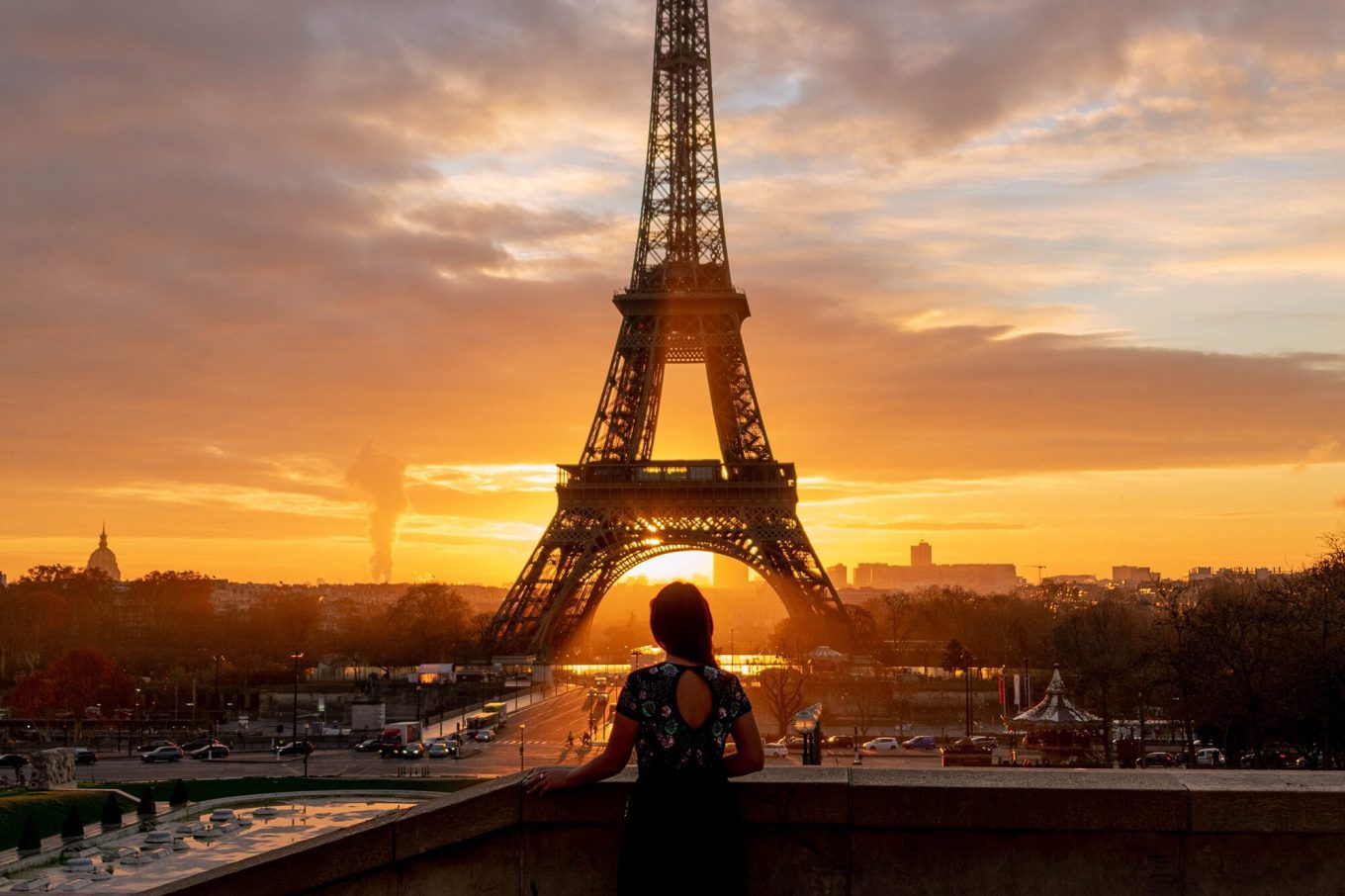
    3. Stay up to see the Eiffel Tower sparkle for 10 minutes at 1am

    Every evening from sunset to 1am, 336 yellow bulbs illuminate the exterior of the Eiffel Tower. For an extra special moment between her and you, stay up to bear witness to the 10 uninterrupted minutes that the Eiffel Tower sparkles like she’s made of pure magic before she fades into the dark wee hours of the morning when the lights go out.

    Sure, she sparkles on the hour for 5 minutes during the late hours of the night, but it’s those final sparkles during the stillness of those early hours that make you feel like she’s putting on a show just for you.

    You may also be interested in my Paris Instagram guide.

    4. Practice mindfulness in Notre Dame

    Unfortunately due to the fire of 2019 that destroyed the spire and most of the roof and the pandemic that has slowed down the reconstruction of Notre Dame, this 858 year old medieval Catholic cathedral is temporarily closed. One day, even if it takes a couple of decade to fully restore it, Notre Dame will reopen and this is for then.

    In the first month that I had moved to Paris it was winter and one of the coldest ones I have experienced there. I hadn’t at that point set up any job interviews, my anxiety was preventing me from seeking out friends and Michael, a new intern at a global advertising agency, was working all hours. I was lonely and struggled to be on my own. As I mentioned in the introduction to this post, Paris challenged me and so I didn’t feel like this for long but in that time I would seek comfort sitting in Notre Dame. 

    As the cathedral was open for prayer I would take a seat towards the middle where it was far away enough from tourists but still in one of the darker spots so I didn’t feel like everyone could see me and I would simply sit with my thoughts. Sometimes I journaled and often I just switched off and sat in silence. Now I know it to be practising mindfulness but back then I just wanted to be somewhere where I didn’t feel alone but didn’t actually have to interact with anyone. Notre Dame was there for me when I needed it most and I long for the day it’s restored for you.

    5. Get lost on the streets of Montmartre

    Once home to some artists that you may have heard of: Picasso, Van Gogh, Monet and Renoir just to name a few, Montmartre is a village unlike the rest of Paris. Set on a hill in the 18th arrondissement, Montmartre is one of the most charming districts of Paris.

    Montmartre is a beautiful maze of wonky buildings on tight cobbled streets that should absolutely be explored without much of a destination in mind. As if by magic you’ll be transported away from the manic streets below to a peaceful corners surrounded by paint chipped buildings dressed with climbing vines and windows framed by hand painted shutters. The reason Montmartre feels different to the rest of Paris is because it wasn’t part of the city until the 19th Century. 

    As long as you’re making your way uphill you will eventually reach Sacré Coeur, the Basilica of the Sacred Heart of Paris, which sits on top of the hill. On a clear day you can look out across the city of Paris from the steps in front but it’s a difficult place to stay for long as it’s swarming with tourists. I have enjoyed lunch on these steps in the past in quiet moments but the magic is in the little back streets of Montmartre.

    6. Stroll along the Seine

    Something I did more times than I can count over the year with friends and Michael is stroll along the Seine. Sometimes it was to get somewhere, others it was for exercise, sometimes it was simply just to enjoy the moment. A lot of the time it was to pick a spot to dangle my feet over the edge and enjoy a picnic of brie, a baguette, grapes and wine. Don’t be fooled by how chic this sounds, my 21 year old cheap ass drank the sweetest wine I could get my hands, ahhh those were the days.

    I’m not bias over which part of the river to walk along, it really depends on how much time you have in the day as to how much you want to cover. If you want convenient then stay around Île de la Cité as it’s close to some of the places in this guide and if you want scenic then you want Avenue de New York for views of the Eiffel Tower across the water but in my opinion the ideal picnic spot is between Point du Carrousel and Pont des Arts on la Rive Droite. It’s down from the hustle and bustle from the street above, there’s a few benches against the wall with some trees for shade on a sunny day and the cobbled path is wide enough for you to sit on the edge without getting in the way of passers-by.

    You may also be interested in my ultimate Paris travel guide.

    7. Shop for your next coffee table book at the bouquinistes of Paris

    Paris is home to some of the most famous fashion houses on the planet, beautiful department stores such as Galleries Lafayette and Printemps and best shopping streets including Rue Saint-Honoré, Saint-Germain, Avenue des Champs-Élysées and Canal Saint-Martin, but the best shopping you will ever do in Paris is at the bouquinistes along the Seine.

    The bouquinistes are green boxes located along the banks of the river that open out to create open-air second-hand book stores. It’s not just pre-loved books you’ll find amongst these stalls, you can also pick up old magazines, postcards, paintings and prints.

    The Parisian bouquinistes can be found from Pont Marie to Quai du Louvre on la Rive Gauche (the left bank) and from Quai de la Tournelle to Quai Voltaire on la Rive Droite (the right bank).

    PFH Fun Fact: The Parisian bouquinistes became a UNESCO World Heritage Site in 1991, recognised for their literary significance.

    8. Read a book in Parc Monceau

    Honestly any Parisian Parc will do (one of my favourites is Jardin Tuileries leading up to the Louvre) but I recommend Parc Monceau in the 8th arrondissement mostly because it was where I have happy memories of long summer evenings in the grass as I lived next to it. It should also be noted though that Parc Monceau featured in six of Monet’s world renowned paintings created in 1876 and 1878. 

    Park bench or grass, take your pick, and settle in with your book. I’ve done this year around with ease, wrapping up warm during the cooler months however I highly recommend doing this in spring when the city is starting to warm up but is not yet sizzling. 

    Just imagine: with your book in hand a gentle breeze rustles the leaves in the trees above, soft rays from the sun tickle the hairs on your arms, there’s a faint murmur of joggers’ footsteps on the path, children laughing as they play and conversations in a language that maybe you don’t fully understand so it doesn’t distract you away from the page in front of you. Bliss.

    PFH Fun Fact: Claude Monet’s The Parc Monceau (1878) and Landscape: The Parc Monceau (1876) are on view in Gallery 818 at The Met on Fifth Avenue in New York City.

    You may also be interested in listening to my Paris playlist.


    Do more on and for the planet, Gabriella

    Pin this post


  • 10 iconic London landmarks you must see

    10 iconic London landmarks you must see

    Visiting landmarks is one of the most popular things to do when travelling to somewhere new. Landmarks represent the culture and history of the place you’re visiting, they tell stories and inspire your own, plus they make for great photo ops! 

    A city like London is ever-changing which means many of the locations on this list of 10 London landmarks have only been an addition to the city within the last 20 years and yet it seems like they’ve been there forever. Others however have had centuries of attention and experience with tourists such as Westminster Abbey which dates back to the year 960.

    What makes our capital’s landmarks that extra bit special is the rich royal association with so many of them, but if that isn’t your jam then I also include modern structures that make up our city’s famous skyline. I’ll include a little bit about the structures, where to find them and tips on where to go to get photos of them too, there’s also a map at the end to make it easier for you to navigate on your next trip to London.

    1. Buckingham Palace

    Located: City of Westminster

    With it being the most watched title on Netflix, chances are you’ve watched The Crown. If by chance you haven’t, it’s like a fancy reality TV show that makes you feel both jealous and sorry for the most famous family in the world, it’s basically KUWTK but with less class… if you didn’t at least laugh with pity over that, you can go and read some other fabulous travel blog!

    Get your royal fix with a visit to one of the most popular destinations for worldwide travellers coming to London: Buckingham Palace.

    Home to the Queen of England, Buckingham Palace is located in the City of Westminster at the end of The Mall, a 0.58 m/0.93 km long red road which is featured in various celebratory ceremonies such as the Trooping of the Colour.

    The palace spans over 39 acres and has 755 rooms.

    The best way to get unobstructed photos of the palace is to hold your camera between the cast iron gates. If you want to be in the photo then I suggest walking over to the Queen Victoria Memorial monument located straight opposite the palace gates. From up there you will be able to get a photo with the palace as your backdrop.

    Click here for information regarding visiting some of the rooms of Buckingham Palace.

    2. Westminster Abbey

    Located: City of Westminster

    If Buckingham Palace gave you a thrill and you want another fix of Royal fancy pants-ness, then head to Westminster Abbey. This Grade I listed house of worship as we see it today took 500 years to build – let that sink it for a moment – and has hosted many world famous ceremonies since the completion of the two main towers in 1745.

    Westminster Abbey is famously known for where 23 million people worldwide saw the future King of England, Prince William, marry Catherine Middleton and 200 million people heard (ahh the days of radio) Queenie pops marry Prince Phillip. Along with 16 other royal weddings that have taken place within these hallowed grounds it is also the location of every Coronation of British Monarch since 1066.

    Westminster Abbey is usually free to visit but is closed for public visits during the COVID-19 pandemic. It is however open for individual prayer. Once it’s open again I suggest visiting as you will be able to see the world famous Coronation Chair. Since its creation in the 14th Century, 26 monarchs have been crowned in the Coronation Chair. 

    Stand on the pavement (sidewalk) where Victoria Street meets Storey’s Gate for the best view.

    3. Big Ben and the Houses of Parliament

    Located: City of Westminster

    The Houses of Parliament is the informal name for the Palace of Westminster where the House of Commons and House of Lords meet to form the Parliament of the United Kingdom. 

    The current palace that stands today wasn’t the original one. The original medieval palace was completed at the start of the 11th Century and its purpose was to serve as the primary residence to the monarchy in the start of the 11th Century. Parliament didn’t start gathering there until the 13th Century. Fire safety wasn’t great in London though as you’ll be able to work out from this blog post and in 1834 the palace burnt down. It was rebuilt in the 1800s and though it is no longer home to the Royal family it does still remain a property of the Crown.

    Featured on one of the nation’s favourite sauce bottles (HP’s Brown Sauce) and arguably the most iconic film location in London is possibly the most famous clock in the world, Big Ben. Completed in 1859, he has witnessed six monarchs and 41 Prime Ministers since the very first chime. 

    Big Ben actually refers to the great bell of the clock whilst the clock tower is named Elizabeth Tower, after Queen Elizabeth II to commemorate her Diamond Jubilee. Big Ben and the Palace of Westminster became a UNESCO World Heritage Site in 1987 and, like many others on this list, is a Grade I listed building.

    Unfortunately Big Ben has been undergoing a face lift since 2017 which is set to finish in 2021, which means he’s currently hidden under scaffolding and for the protection of the construction workers’ ear drums, only chimes to bring in the new year and to commemorate Remembrance Sunday until he can resume his regular chime schedule. Do not dismay, sure, it makes for pretty pants photos but it’s all to conserve the tower. Great things to take away from this is that a lift is being installed so that the tower becomes accessible to those with different abilities, The Ayrton Light (the green light above the clock face that indicated when Parliament is sitting) will be upgraded to low-energy LEDs, plus it will be restored to its original colours.

    If you still want to mark the times with a photo there two of the best locations are from Westminster Bridge and the walkway under Westminster bridge, facing dead opposite Big Ben on the south bank of the River Thames. 

    4. Trafalgar Square

    Located: City of Westminster

    Trafalgar Square is a public square that was built to commemorate the Battle of Trafalgar, a victory over France and Spain during the Napoleonic Wars in 1805. Despite the battle being won in 1805, the square wasn’t actually opened until 1844. 

    Within the square is the National Gallery, a statue of Lord Nelson (Nelson’s Column) which is surrounded by four seven ton lions, two large water fountains that feature mermaids, dolphins and tritons and four great plinths, three of which have statues whilst the fourth does not. The Fourth Plinth was left bare due to insufficient funds but since 1999 has been home to various works of contemporary art. Permanent proposals for the plinth are still being discussed but rumour has it, it’s being reserved for when Queen Elizabeth passes.

    For the best photos of and with Trafalgar Square, take them from the steps out front of the National Gallery, from the edge of the water fountains with the National Gallery in the background or in front of the famous lions. Please note that you can no longer climb onto the lions as over their lifetime the bronze has been worn dangerously thin and could collapse.

    5. London Eye

    Located: South Bank along the River Thames

    The London Eye, otherwise known as the Millennium Wheel was opened to the public in, you guessed it, 2000! as part of the city’s millennium celebrations. When it opened it was the tallest ferris wheel in the world (it’s now the fourth).

    There are 32 capsules numbered from 1 to 33 but number 13 is missing from the wheel for superstitious reasons. Each one can carry up to 25 people and a full rotation lasts 30mins. The views are panoramic and on a good day you can see as far as Windsor Castle (Windsor is where Prince Harry and Megan Markle got married, if you don’t know).

    PFH Fun Fact: the London Eye was only supposed to me a temporary instalment but its popularity got it an indefinite position on the bank of the River Thames. If my photo albums weren’t already packed for Canada I would share my old developed film photos of a pre-teen Gaby on the London Eye with the bushy eyebrows I wish I still had. If I ever make it to Canada, remind me to share them with you.

    To find out four of the best places to take photos of and with the London Eye, take a look at my blog post, 10 most Instagrammable places in London, England.

    Book tickets for a ride on the London Eye here.

    6. Tower Bridge

    Located: Tower Hamlets and Southwark

    Up next is the often-confused-for-London-Bridge Tower Bridge. The most famous suspension bridge in London was built in the late 1800s and takes the London Inner Ring Road across the River Thames.

    Any person or vehicle can access the bridge deck unless the bridge is opening for marine vessel (I’ve only had one lucky chance to see in my life thus far, it feels like a scene from inception) and if you want to explore the glass floor, the high-level walkway and Victorian engine rooms, it costs a small entrance fee. Just take note that whilst London is in tier 3 or any form of lockdown during the COVID-19 pandemic, the high-level walkway will be closed.

    It has in the last decade, like everywhere else photogenic on this planet, become a sought after Instagrammable location and as someone who put it in their own London Instagram guide I’m not knocking that but the reason I’m bringing it up is because I need you to know this: It is not safe, smart or responsible to straddle the railings whose sole purpose is to stop you from getting hit by the busy two-way traffic on the bridge. Too many people hop onto these railings and spread their legs into oncoming traffic. I’ve seen it on the gram and I’ve seen it in person and trust me, a red bus isn’t stopping for your pins, okay? Don’t do it! You can get amazing content without risking a fractured leg.

    On the topic of photos, check out the blog post I mentioned above to find out two locations to get photos of and with Tower Bridge: 10 most Instagrammable places in London, England.

    7. St. Paul’s Cathedral 

    Located: City of London

    This Anglican cathedral sits atop the highest point in the city of London, Ludgate Hill. Completed in 1710 this cathedral designed by Sir Christopher Wren (who I’ve spoken about here) only took 35 years to build – compare that to Westminster Abbey’s 500 – and replaced the original Gothic St. Paul’s Cathedral which was destroyed in the Great Fire of London (1666). It has since become a Grade I listed building.

    PFH Fun Fact: St. Paul’s Cathedral is the second largest church building in England, the first is Liverpool Cathedral.

    Aside from being an iconic landmark and beautiful house of worship, St. Paul’s Cathedral is famously known for some very high profile ceremonies such as the funeral of these questionable leaders: Lord Admiral Nelson, the Duke of Wellington and former Prime Ministers, Sir Winston Churchill and Baroness Thatcher. It’s also where a staggering 750 million people tuned in to see next in line to the throne, Prince Charles, marry The Peoples’ Princess, Lady Diana Spencer.

    Other celebrations include jubilees, services that marked the end of both World Wars (it’s worth taking a look at photos of St Paul’s Cathedral surviving the Blitz FYI) and two milestone birthdays for Queen Elizabeth II. In summary, St. Paul’s Cathedral is a pretty big deal.

    There are many options for getting a snap of or with St. Paul’s Cathedral. Four of the most popular are:


    • From the Millenium Bridge which crosses over the River Thames.


    • Within One New Change shopping centre located opposite. Stand in the narrow entrance between the tall glass walls and the cathedral will be centred.


    • From the top of One New Change shopping centre. There’s a viewing platform that looks out over parts of the city including St Paul’s Cathedral.


    • The best spot is within Festival Gardens right next to a red telephone box. I’ve popped a little Google Maps screen shot below to indicate where to go.


    8. Piccadilly Circus

    Located: West End

    Featured heavily in films such as Bridget Jones’ Diary, Harry Potter and the Deathly Hallows Part 1, Bend it Like Beckham, Mission: Impossible – Rogue Nation and Fast and Furious 6, Piccadilly Circus is a major traffic junction famous for its video and neon advertisements.

    The first advertisement to go up in Piccadilly Square was for Perrier and as the years went by more and more were added and by the 70s most of the surrounding area was covered with illuminated billboards. Since then the adverts have reduced and now only one building hosts them. In 2017 the final six screens were removed and replaced by one ultra high-definition curved screen that can display numerous ads at once.

    PFH Fun Fact: The term “it’s like Piccadilly Circus” is used to describe a very busy location. These days you’ll find it’s far more quiet than say Oxford Circus, but the saying is still in use.

    Stand with or next to Eros fountain, located right in the centre of Piccadilly Circus to get photos of the famous neon advertisements. Check out 10 most Instagrammable places in London, England for another Instagrammable spot here.

    9. The Gherkin

    Located: City of London

    The Gherkin or as it’s formally known, 30 St Mary Axe, is a bullet shaped glass building in London’s financial district. In stark contrast to many of the Grade I listed buildings in this blog post it is a contemporary landmark but has become one of the most widely recognised buildings in the city since it opened in 2004. You may recognise it from Harry Potter and the Half Blood Prince.

    For a photo with The Gherkin, head towards St Andrew Undershaft Church and stand on the corner of St Mary Axe and Leadenhall Street.

    10. The Shard

    Located: Southwark

    Taken from our apartment.

    The Shard is the newest landmark to London on this list. This stretched out glass pyramid can be seen for miles as it stands out on its own, just a little to the side of the other popular skyscrapers such as the “Walkie Talkie”, the “Cheese Grater” and the aforementioned “Gherkin”. 

    The 72-storey Neo-futurism skyscraper opened in 2013 and is the second tallest building in London. If you’ve got a little more than spare change put away then book a stay or maybe just afternoon tea at the Shangri-La located at the top for panoramic views of the city.

    Head to Lovat Lane for a photo on an old cobbled lane with The Shard in the background, it’s an architectural juxtaposition.

    Travel safely, Gabriella

    Pin this post


  • Best Christmas light displays in London – a walking tour

    Best Christmas light displays in London – a walking tour

    It’s Christmastime in the city… different city but same vibe. 

    Having just come out of a second nationwide lockdown in the UK, there was one simple thing I did during it which brought me so much joy and that was go for a walk with Michael to see all of the beautiful Christmas lights in central London. Sure, it’s something I do every year whilst doing my Christmas shopping, or when I’ve made a trip out to go ice skating at the Natural History Museum or to meet friends for drinks. Though with all of those options cancelled for Christmas 2020, I found myself in a position where there was nothing to distract me from the simplicity of gazing up at sparkling Christmas lights whose sole purpose is to bring a little sparkle and festive spirit into our dark evenings. It was magical and exactly the healing I didn’t realise I needed after spending three weeks indoors (with the exception of exercise and supermarket shops).

    Covent Garden

    After mapping out a little route for Michael and I, I decided that it was something I eagerly wanted to share with you. Though I have created this guide in a time where all of the usual things I would do in London during the holidays have been cancelled, it is something that I know will stand the test of time. So whether you’re turning to this guide as someone in the UK this year (2020) or in years to come when the world has healed and you’re going on holiday/vacation here, one thing London can give to you this and every holiday season is sparkling displays of hope, joy and light.

    Covent Garden 

    Start your walking tour of London’s Christmas lights in Covent Garden by making your way to the piazza where you have two displays to appreciate. The first is the set of sponsored trees in front of the market and the second is their famous tree, just around the corner. Their 60ft tree is adorned with over 30,000 red and white lights and really is breathtaking. 

    If ever you’re in London during the holidays and the weather is a bit wet and gloomy, head over to Covent Garden to see the tree because the lights from the tree bouncing off the puddles below will warm your soul.

    PFH Fun Fact: The annual Covent Garden tree comes from Woods Farm and for every tree they cut down, they plant another three.

    Leicester Square

    From Covent Garden, head over to Piccadilly whilst making a stop at Leicester Square. Hanging from the trees in the square are a collection of lights that look as though the stars are within reach. It’s not the most impressive display but it’s a good one to stop at on your way to the knock out ones.

    Fortnum and Mason

    When you reach Piccadilly Circus you will be drawn toward Regents Street but first I want you to walk down Piccadilly Street until you reach Fortnum and Mason. Each year their storefront display changes and this year it has been made up to look like a gigantic 2020 advent calendar, it really shouldn’t be missed. 

    Whilst here, get a little closer and take a look at their eight beautiful Christmas window displays and if the store is open, pop inside for the best food hall in all of London (which is always seasonally themed) and head up to their Christmas floor.

    If you do get the opportunity to visit Fortnum and Mason in 2020 (there’s not much time left so hurry) this year’s festive window display is extra special as each window is dedicated to eight moments from Fortnum’s past Christmases including 1930, 1934, 1936, 1957, 1962, 2008, 2015 and 2020 – pay attention to the right hand corner of the displays as they feature the original Christmas brochure from that year. 2020 in particular was brought to life by Spanish illustrator Lalalimola and includes some quirky kitchenware characters enjoying a festive meal around a lively table – think Fortnums meets Beauty and The Beast.

    New Bond Street

    From Fortnum and Mason, pass through Burlington Arcade (just seconds down Piccadilly St.) to head towards New Bond Street. When you get to the end of Burlington Arcade make a left towards Tiffany and then turn right onto New Bond Street.

    Here you will be met by lights strung up between the building above plus you get the treat of all the luxury stores’ individual lights. One that you shouldn’t miss because it’s not only gorgeous but fast becoming an iconic Instagrammable spot during the festive season is Cartier.

    Shoes have been gifted by Dune – they are Poste in brown croc.

    Each year Cartier makes the exterior of their stores sparkle as magnificently as their contents inside with sparkling garlands, strings of lights and the world famous big red bow. The store is wrapped up as the most perfect gift you could ever receive.

    Regent Street 

    From New Bond Street walk down Burlington Gardens which turns into Vigo Street before joining Regent Street.

    Personally I think Regent Street has the best Christmas lights in all of London. Every year the angels descend and line the sky down the entire length of the street from Piccadilly Circus to Oxford Circus. 

    If you ever need your festive spirits lifted then stand on the island in the middle of Regent Street and gaze up at the glittering angels. Works for me, every time. Oh and how handy, this spot also happens to be a brilliant spot for a photo! For the best angle, stand where the road straightens up so the lights line up behind you.

    Carnaby Street 

    Once you’ve said hello to the Regent Street angels, turn off onto Beak Street to make a left onto Carnaby Street for their annual display. Each year their theme changes to comment on something of social significance. This year was all about choosing love, no matter how that looks for you and everyone else. The 2020 neon display share high energy vibes and reminds us that we’ve all endured something crappy this year but we can always choose love above anything else.

    Previous displays include (my favourite) one made from ocean plastic which highlighted our plastic pollution crisis, a dedication to Queen, there was the Christmas carnival back in 2017 and Rock N’ Roll one of 2012.

    Oxford Street

    Finally, do a Chris Martin and take your feet to Oxford Street for the end of your PFH Christmas lights tour of London.

    From the end of Carnaby Street, take a left onto Great Marlborough Street to join back up with Regent Street which you can continue down until you reach Oxford Circus. Whether you turn left or right you’ll be able to admire the Oxford Street Christmas lights as they’re strung on both sides until the road changes.

    For 2020 the 2019 display has returned (yay for reusing them) but this time instead of #’s (yeah that was thirsty) they’re displaying something a little more wholesome: messages to our essential and key workers who have been busting their guts to keep things running. Yep, that trumps #festivefeelings.

    Mele Kalikimaka, Gabriella

    Pin this post


  • British Christmas mince pies recipe (no suet)

    British Christmas mince pies recipe (no suet)

    Mince pies are small, sweet pies traditionally served at Christmas as an afternoon treat with a cup of tea or coffee. There are various versions of mince pies available to shop, from sweet to savoury pastries, sober to boozy mincemeat fillings and with all sorts of additions such as nuts and cranberries but this recipe makes a festively spiced mincemeat with a simple savoury shortcrust pastry. If you’re unfamiliar with mincemeat (not mince meat) then rest assured that it is not made from meat, it is a combination of dried fruits and peel mixed together with sugar and spices such as nutmeg, cinnamon and cloves.

    Fun facts about mince pies


    • The concept of spiced fruit came to England from the middle east in the 13th century


    • They’re traditionally religious and represent the birth of Jesus, the key spices – nutmeg, cinnamon and cloves – symbolise the gifts given by the three wise men


    • Originally they were rectangular to represent Jesus’ cradle


    This mince pie recipe will show you how to make both the mince pie filling and the pastry. This is important because to save money and time most Brits (who aren’t just buying pre-made mince pies) will buy a jar of ready-made mincemeat, but I have been informed that mincemeat isn’t available in North American supermarkets as well as various other places around the world. So, I’m helping you to make this British classic from scratch, don’t worry it’s super easy and requires little to no baking skills!

    So one thing I should note about this recipe is there’s one ingredient that is found in all pre-made jars of mincemeat on British supermarket shelves but isn’t in mine: suet. The reason I chose not to put suet in is because traditional meat suet isn’t vegan or vegetarian (if you didn’t know, it’s made from animal fat) and though there is vegetarian suet, that contains gluten. I’ve put together a recipe that can be made gluten free, dairy free, vegan and vegetarian and suet just didn’t make the cut. So instead I’ve used butter because it’s gluten free and can be swapped out to dairy free margarine without hesitation. 

    Swaps to make this allergy friendly are:

    Gluten free 


    • Gluten free self raising flour


    Dairy free 


    • Margarine


    Vegan 


    • Margarine


    • Dairy free milk to glaze instead of egg


    Vegetarian


    • This recipe is vegetarian, it doesn’t use meat!


    Despite having a chef and a professional cook in the family who have helped me out with many of the recipes here on PFH, when it came to mince pies I turned to Michael’s Nanny (that’s grandma for any confused North American readers) who hands down makes the family’s favourite mince pies. I don’t even like mince pies unless they’re hers. She has the contrast between spiced, sweet and savoury down and though I believe what really makes hers the best is that they’re baked with love (or maybe it’s more to do with the fact that she gets me piddled on her home made sloe gin every year), I’ve done my best to bring her pastry recipe to you, so you too can have a little British magic at home this festive holiday season.

    When planning to make these, take note that you’ll want to leave at least 24 hours between making the mincemeat filling and baking the pies. The mincemeat mixture needs at least 24 hours for the flavours to infuse and intensify, giving your pies that beloved festively spiced flavour.

    Right then, if you bothered to read any of that it’s finally time to get to the recipe! 

    Makes 24

    Equipment


    • 12 case muffin tin (x2 if baking all 24)


    • Measuring cups/scales


    • Spoon measurements


    • Mixing bowl


    • Wooden spoon


    • X2 jars with lids


    • Grater


    • Large wax wrap


    • Rolling pin


    • Round cookie cutter (size depends on the size of your muffin tin)


    • Star cookie cutter (for the lids)


    • Fork


    • Pastry brush


    Filling ingredients


    • 375g / 2½ cups, 13½ oz of mixed fruit and peel


    • 125g, ½ cup, 4½ oz soft brown sugar


    • 1tbs vanilla extract


    • 1tsp ground mixed spice


    • ½ tsp cinnamon


    • 150g, ⅔ cups, 5 ½ oz grated butter


    • 1 medium orange – juice and zest


    • 1 lemon – juice and zest


    • 1 Bramley apple – peeled, cored and grated


    If you want these to be a little boozy then add 1 tbsp of brandy when you add the vanilla

    Pastry Ingredients 


    • 250g, 2 cups, 16oz Self Raising flour


    • 114g, ½ cup, 4oz butter (just do 8oz margarine if you’re going vegan or dairy free)


    • 114g, ½ cup, 4oz margarine (extra for greasing)


    • 16 – 20 tsp water


    • 1 Egg or 2 tbsps of dairy free milk


    • Icing sugar (for decorating or hiding mistakes)


    Method 

    Mincemeat filling

    1. Measure out the butter and grate it (if you’re using a dairy free butter you can skip grating it, it just makes the harder butter easier to work with) then add to the mixing bowl.

    2. Measure out the mixed fruit and peel, sugar, vanilla, mixed spice and cinnamon and add to the butter.

    3. Peel, core and chop the apple and add to the mix.

    4. Zest and juice the lemon and orange and add it all to the mix.

    5. Combine all the mince pie filling ingredients by giving them a good stir with a wooden spoon.

    6. Spoon the filling into a couple of jars and leave in the fridge for at least 24 hours to let the flavours fully infuse. I recommend leaving it in the jars for at least 2 days. It will last for about a week.

    Pastry

    Preheat the oven to 180°C/356°F.

    1. Grease the muffin tin with margarine.

    2. Measure out the flour and add it to a mixing bowl.

    3. Measure out the margarine and add it to the bowl.

    4. If you’re using butter, measure it out and cut it into cubes so it’s easier to manage.

    5. Rub the butter and/or margarine into the flour with your fingers to resemble breadcrumbs.

    6. Sprinkle flour on your hands to stop the mixture from sticking to your hands in this next part. Add water by the teaspoon and bring the mixture together with your hands to form a dough. Keep adding teaspoons of water until its formed until a ball that’s not too dry and not too sticky.

    7. Knead the dough a little because I’m telling you to. Honestly I don’t understand kneading but it made it easier to roll out than when I didn’t (I’m a travel blogger not a GBBO contestant, okay).

    8. Cover the dough in the mixing bowl with a wax wrap and place in the fridge for 15mins to make the dough easier to manage.

    9. Sprinkle your surface and rolling pin lightly with flour before thinly rolling out your dough (you can split the dough in half to make it easier to roll out).

    10. Cut out 24 pie bases with a round cookie cutter and transfer the disk to your muffin tins, gently pressing them in for a snug fit.

    11. Fill each pie with a tablespoon of your mincemeat filling, avoid adding too much of the syrup that will have formed in your mincemeat as it will spill out when baking and make it really hard to get the pies out of the tin.

    12. Crack an egg and beat it with a fork or pour 2 tbsps of dairy free milk into a cup and use whichever one to glaze the rim of the pies.

    13. Return to your pastry, bring it together again and roll it out.

    14. Cut out 24 lids with the star cutter and place one on top of each pie, gently pressing down on the edges so they seal to the pie base.

    15. Wash over each lid with either the leftover egg or milk.

    16. Place the trays in the oven and bake for 15-20 mins, until the pastry is golden brown.

    17. Remove from the oven and set aside to cool for 5mins before gently removing each pie from the tin.

    18. Before serving dust the mince pies with icing sugar. You can do this by placing some icing sugar in a sieve then holding it over the pies and tapping.

    If you aren’t eating all 24 right away (I mean at a party, although Michael could probably manage one tray to himself) then you can store them in a tin or air-tight tub and if you want them for a later date then once they’ve completely cooled down, pop them in a sealed container in the freezer.

    Bon appétit!

    If you want to try any other classic British sweet treats check out my other blog post, Great British desserts every traveller must try and if you haven’t already, why not give my banana bread recipe a go! 

    For other festive content take a look at:

    Mele Kalikimaka, Gabriella

    Pin this post


  • 18 most Instagrammable cafés & restaurants in London

    18 most Instagrammable cafés & restaurants in London

    UPDATE 2021 – Now a list of 18 most Instagrammable cafés, restaurants and bars in London.

    Instagrammable places to eat have been trending for the better part of a decade and with new places cropping up all the time, it’s hard to keep track of them and easy to forget about others that have been left in the dark. To help make things a little easier, I’ve put together a list of 18 (originally 10 but I keep finding more) of the most photogenic restaurants and cafés across London that will complement your IG feed perfectly.

    If you’ve browsed a few ‘gram worthy guides for places to eat in London you may notice a few differences with mine and that a couple of popular ones are missing. That’s because although I’ve been to them, I’ve chosen mine not just because they are pretty but because the service and food was amazing too, and really isn’t that the most important thing if you’re going to be spending your money to provide free marketing for them? I think so.

    So without further ado, here is my guide to 18 of the most Instagrammable (and delicious) cafés and restaurants in London:

    1. Dalloway Terrace

    Location

    Fitzrovia

    Closest Underground station

    Tottenham Court Road – Central and Northern Lines

    Dalloway Terrace is most popular for photos because of its feature wall that changes seasonally. Though it’s beautiful when it’s adorned with spring flowers, the cooler season is the best time to come. The covered terrace at Dalloway Terrace is one of the cosiest spots when the temperature drops in the city as it’s kept warm with outdoor heaters.

    Sure, the wall is beautiful and it is the restaurant’s defining feature, but I also want to stress that the food here is amazing! If you love truffles then you won’t be disappointed, their wild mushroom risotto was the perfect autumnal comfort food and don’t get me started on how much I enjoyed pinching Michael’s fries!

    PFH Top Tip: it’s not possible to book a specific table, which means you can’t be guaranteed one against the feature wall. I suggest booking first thing or arriving a little earlier for your reservation and asking if it’s possible to wait for one. 

    PLEASE be kind and polite to the staff. When we went we wanted to sit with the wall, we asked if it was possible and they let us wait for one to be sanitised. As we were eating our meal a couple were showed to their table and the woman starting screaming (no lie) at the staff because she wanted to sit with the wall for photos and refused to sit down despite there being no other tables available. See what patience and kindness will get you?

    As an alternative to the terrace try The Coral Room, the bar at the hotel, as it’s equally as beautiful. See number 14 for more.

    Book your table for 12pm to get the best chance of a seat against the feature wall.

    2. Winter Garden at The Landmark London

    Location

    Marylebone 

    Closest Underground station


    • Marylebone – Bakerloo


    • Baker Street – Bakerloo, Circle and Hammersmith & City, Jubilee and Metropolitan Lines


    • Edgware Road – Bakerloo, Circle and District, Circle and Hammersmith & City


    I learnt about The Landmark London back in 2014 when I was working for its sister hotel, K West. I used to go over there every other month for team meetings or fam trips and it was always my favourite hotel of the three to work in because of what’s waiting inside for you when you get past reception. 

    The Winter Garden is a spectacular indoor courtyard filled with tall palm trees reaching up towards the high glass ceiling. The ceiling previously only covered the ground floor but it was raised to create the Winter Garden as it is today.

    Though The Landmark London’s High Palms High Tea is named one of the best afternoon teas in London according to Time Out London, I do highly recommend eating lunch their too. The Landmark has a set menu for £45 pp which includes 3 courses and a glass of prosecco, the set menu includes their exquisite Slow Cooked Short Rib of Aubrey Allen’s Beef which I highly recommend if you eat meat. You can also enjoy a more budget friendly visit by booking a table at the Garden Terrace, which overlooks the Winter Garden, for tea, coffee or cocktails.

    PFH Fun Fact: T-Swift stayed at The Landmark London.

    Book your table here.

    Please note a smart dress code is required as this is a five-star hotel.

    3. Tiffany Blue Box Café at Harrods

    Location

    Ground floor of Harrods in Knightsbridge.

    Closest Underground station

    Knightsbridge – Piccadilly Line

    Who doesn’t want to have breakfast at Tiffany’s? It’s entirely possible at the Tiffany Blue Box Café in Harrods. The whole decor is Tiffany Blue and is made complete with little nods to the movie classic such as sheets of the script and a replica eye mask to the one Holly Golightly wore. How could a fan resist?

    If breakfast doesn’t take your fancy, book a table later in the day for a four course afternoon tea with unlimited tea, sandwiches and scones.

    Get ready to pose with your Tiffany tea cup before indulging yourself in all the sweet and savoury treats of your dreams.

    Reservations are necessary to avoid disappointment as tables are limited.

    4. EL&N

    Wardour Street EL&N

    Locations


    • Hans Crescent, Knightsbridge


    • St Pancras Station


    • Selfridges


    • Market Place, Oxford Circus


    • Brompton Road, South Kensington


    • Park Lane, Mayfair


    • Lowndes Street, Belgravia


    • Carnaby Street


    • Wardour Street, Soho


    Closest Underground station to the Knightsbridge location

    Hans Crescent, Knightsbridge – Piccadilly Line

    Wardour Street, Tottenham Court Road – Central and Nothern Lines

    Something that’s extra special about EL&N is that the interior for each one is different. Yes they’re all cute, pink and serve some of the most outrageously beautiful drinks and cakes you’ve ever seen, but they still all have something unique about them. Whether it’s a wall of candy love-hearts, floor to ceiling flowers or neon signs there’s a perfect backdrop for your next Instagram post waiting for you inside.

    The most popular and photo-worthy EL&N location in London over the years is the one with the twin alcoves lined with candy love-hearts, you can find this Instagrammable location downstairs in their Hans Crescent café, opposite Harrods in Knightsbridge. I think their newer location on Wardour Street is definitely going to take over as EL&N’s most Instagrammble café! With neon signs lining the walls and a pink and purple arcade that features a pink motorbike arcade game, EL&N on Wardour St is crushing the Instagrammable café game!

    With queues almost always out the door, EL&N is one of the top examples of a café nailing the highly sought after “most Instagrammable café in London” title. The menu actually tells you what photographs best and which is most popular for TikTok and they’re not wrong, these drinks really do look good in your hand or on the table in a photo. I highly recommend their Lucky Latte (see above) it’s topped with Lucky Charms cereal!

    Hans Crescent EL&N. Photo taken by @sarahtaylorphotoandfilm

    EL&N does not accept any bookings so arrive when it opens to get the best table.

    5. Drunch

    Locations


    • Regent’s Park


    • Mayfair


    Closest Underground station

    Regent’s Park: St John’s Wood – Jubilee Line

    Mayfair: Bond Street – Jubilee and Central Lines

    Fancy getting photos for the ‘gram and a decent brunch? Then make your way over to Drunch. Unlike most of the Instaworthy cafés, restaurants and bars on this list, the decor or view is not the main attraction, oh no. When it comes to brunch no one does it better than Drunch. Whether it’s an outrageously themed cocktail like the Escobar’s or a designer latte with a chocolate dusted haute couture logo, Turkish Eggs or heart-shaped-nutella-stuffed pancakes – you don’t want to miss the opportunity to snap the most Instagrammable brunch in London for your feed.

    Head to their Regent’s Park for cosy lounge vibes and the Mayfair Drunch for terrace dining with gigantic teddies for company.

    Drunch doesn’t take reservations so I recommend arriving when they open (11am weekdays and 10am on weekends). Expect a long queue on weekends.

    6. Peggy Porschen

    Locations


    • Belgravia (pictured)


    • Chelsea


    Closest Underground station

    Victoria – Circle and District and Victoria Lines

    It’s possible that Belgravia Peggy Porschen is the most Instagrammed café in London. Its seasonally decorated exterior is posted by food, fashion, travel, beauty and lifestyle bloggers who have travelled here from all around the world.

    As Peggy Porschen is first and foremost a bakery, I can guarantee you that you will always enjoy what you eat here, provided you have a sweet tooth. Their selection of cupcakes, biscuits and cakes by the slice is vast and trust me, everything is photogenic. If cake isn’t your thing then you can still get something that will make your table flat lay super cute, order a coffee or hot chocolate and it will come with a festive chocolate dusting.

    Either book a table here or arrive 10mins before they open (10am) to grab a table out front. Make sure you select outdoor seating with your booking to get the best spot for photos. The outdoor seats are ideal because you’ll have natural lighting, a backdrop of the pink café and your photographer (or the poor schmuck you’ve convinced to take photos of you) will be able to step back onto the pavement to get a clear shot of you.

    7. The Ivy

    Photo taken by @leana.esch

    Location

    There are multiple restaurants all across the UK.

    The exterior restaurant in the blog post is The Ivy Market Grill Covent Garden and the interior photographs are of The Ivy Brasserie, Norwich.

    Closest Underground station for The Ivy Market Grill

    Covent Garden – Piccadilly Line

    The Ivy Tower Bridge

    Each restaurant under The Ivy umbrella is decorated with a different theme but they are always elegant. If you don’t want to eat out I recommend going for drinks. The seasonal cocktail list never disappoints – I’m talking Lavender Ladies in summer and Toffee Apple Martinis in Autumn – but the mixologists are always prepared to serve you whatever your heart desires.

    It’s not too costly given the atmosphere but if you do want to keep the cost down go for breakfast. You can get a tea/coffee and a selection of mini pastries for less than £12 per person, I highly recommend their vegetarian breakfast though if you’re extra hungry.

    Though each restaurant’s interior is different, the doorway is always adorned with a seasonal display making it an ideal spot for a photo before you enjoy a drink or meal there.

    Book your table here.

    Please note the dress code is smart casual

    8. Aubaine

    Aubaine Selfridges

    Locations


    • Selfridges


    • Brompton Road, Kensington


    • Marylebone


    • Mayfair


    • Notting Hill


    • Covent Garden


    Closest Underground station to Selfridges

    Bond Street – Central Line and Jubilee Lines


    For a quick trip to France on the Tube, head to any of Aubaine’s locations across all of the most popular spots in London. 

    Aubaine Mayfair

    Aubaine’s Selfridges location is particularly popular on Instagram as it’s decorated head to toe in lavender and lilac wisteria (not real if you’re worried about hay fever). I recommend booking for the first reservation in the morning and asking for a table within the flowers when you arrive because you cannot be guaranteed a seat there, plus the breakfast menu is delicious whether you’re ordering a croissant like I did or Eggs Benedict like Michael.

    As for Aubaine’s Mayfair location I recommend booking for drinks and/or dinner – I mean champagne cocktails and burrata after work, on a date night or with friends sounds perfect right?

    Book your table at Selfridges for when they open to get the best opportunity to sit at their prettiest tables. Tables at Aubaine restaurants can all be booked except the Deli at Covent Garden which only takes walk-ins.

    9. Saint Aymes

    Location

    Tyburnia

    Closest Underground station

    Marble Arch – Central Line

    For another café with shockingly priced but ridiculously attractive drinks, head to Saint Aymes. At one point in time Saint Aymes was dubbed the prettiest café in London (according to their website anyway). Each area of the café is decorated with a different floral display and though it’s all photogenic, I would say the outdoor seats are the best. To get those I recommend turning up when it opens (check the times on the website for the day you want to visit because it varies) because there’s a £25 minimum spend to book a table. 

    Saint Aymes has been featured in major publications such as Marie Claire, Time Out and The Telegraph and has been used as a shoot location by L’Oreal, Too Faced and Instax Fuji Film, so you know, it cute!

    10. Farm Girl

    Location


    • Notting Hill (pictured)


    • Soho


    • Knightsbridge, Harvey Nichols


    • Fitzrovia


    • Hoxton


    For a killer vegan menu that looks even more exciting than it already sounds, head to any of Farm Girl’s locations. I’m talking braised shiitake bulgogi tacos, Açai smoothie bowls and coconut BLTs with rose, matcha or turmeric lattes decorated with a cute bulldog.

    If flat lays of your food is what you’re after then Farm Girl is the place for you.

    11. Circolo Popolare

    Location

    Fitzrovia

    Closest Underground station

    Tottenham Court Road – Central Line

    Tucked away on one of the side streets off Oxford Street hides Circolo Popolare, the Italian restaurant of dreams in central London. Absolutely nothing could prepare me for the beautiful decor of this restaurant, I love it so much I’ve written about it twice and eaten there more times than I should admit.

    The lighting within Circolo Popolare is romantic but dim and makes taking photos a little harder so I found the best spot to be outside in their little garden. However, it’s not as breathtaking as their white alcoves filled with wine bottles, purple and red flowers strung from the ceiling beams and fairy lights that resembles a starry sky (they create beautiful bokeh too). You’ll just have to go twice to decide for yourself which is best and though harder to get a photo I do recommend going for dinner as this restaurant is romantic AF.

    Circolo Popolare is part of the Big Mamma group whose restaurants are known for incredible food all across Europe. I highly recommend their Cacio e Pepe which on weekends and evenings is served for two straight from a pecorino wheel, alternatively you can order a plate of Cacio e Pepe on weekdays for lunch.

    Click here to make a reservation, they do take walk-ins of up to 6 people if you can’t get a table.

    12. Alto San Carlo at Selfridges

    Location

    Fifth floor of Selfridges on Oxford Street.

    Closest Underground station

    Bond Street on the Jubilee and Central Lines.

    What could possibly be one of the most sought after restaurants with their summer 2021 Dior takeover is Alto on the fifth floor of Selfridges. 

    Usually decorated with lemons and hanging vines this Italian rooftop restaurant looks like you’ve stepped out of central London and into the Amalfi Coast. During the Dior takeover it resembles more of the terrace of an Italian villa whose Dioriviera ceiling drapes seek to offer you a cool sanctuary from the sun.

    The menu is Italian cuisine served in a tapas style with the purpose of ordering multiple plates to share. Yes that means you can order pasta, pizza and risotto and eat it all!

    Might I suggest a linen outfit or a summer dress (if you wear them) – dress for lunch in Capri for the right vibe in your photos.

    To get to Alto, take the express lift opposite the Chanel perfume counter on the ground floor.

    Reservations are necessary, Alto x Dior is not currently taking walk-ins.

    13. Club Mexicana

    Locations


    • Soho


    • Seven Dials Market, Covent Garden


    Closest Underground station

    Oxford Circus – Central, Bakerloo and Victoria Lines.

    Hidden away from shoppers, tourists and locals that regularly line Carnaby Street is Kingly Court (opposite Broadwick Street) where you’ll find a treasure trove of restaurants, including Club Mexicana.

    Club Mexicana is a vegan Mexican restaurant; it’s colourful, delicious and will blow your mind even if you’ve been eating vegan before it became a trend. 

    As a vegetarian who misses fish tacos, their beer-battered Baja Tofish tacos satisfy that craving so well that upon my first bite I forgot it was vegan as was momentarily hesitant to take another bite because I was convinced it was fish! 

    These colourful tacos, burritos and Mexican beers served with chilli salt rims on hot pink tables will give you the pop of colour that your summer Instagram feed is craving.

    Added bonus, you can get x3 tacos and a margarita for under £20!

    Reservations are necessary to avoid disappointment. Please note that Club Mexicana asks that reservations are for dining not just drinking.

    14. The Coral Room at The Bloomsbury Hotel

    Location

    Fitzrovia

    Closest Underground station 

    Tottenham Court Road – Central and Northern Lines

    Another favourite of mine and Instagrammable restaurant at The Bloomsbury Hotel in Fitzrovia is their bar, The Coral Room. 

    Sure the decorative seasonal wall in Dalloway Terraces outside is beautiful for photos but The Coral Room is my personal favourite of the two. The boldly painted coral walls, colourful L.E. Hall artwork hung in gold bamboo frames on every wall, potted palms that almost give the impression that they’re leaning in to your intimate conversations and statement bar that glows from within, all pull together to create a tropical oasis from bustling Oxford Street that’s just minutes away.

    You can trust in The Coral Room to make cocktails that not only taste good but look every bit as glamorous as you’ll feel sipping them.

    You can enjoy a light lunch, afternoon tea or drinks at The Coral Room. My recommendation is to get drinks and then take your meal in Dalloway Terraces (reservations needed).

    The Coral Room is less popular than Dalloway Terraces so it will be easier to get a table here, however their afternoon tea is popular so it’s best to book your table.

    15. Jin Bo Law at the Dorsett City Hotel

    Location

    Aldgate 

    Closest Underground station 

    Aldgate – Circle and Metropolitan Lines

    Aldgate East – District and Hammersmith & City Lines

    Jin Bo Law is the skybar at the Dorsett City Hotel. Located on the 14th floor of the hotel Jin Bo Law offers incredible views out across the city of London and serves as an incredible backdrop for your “out in the city” photos. The view from Jin Bo Law includes the Gherkin, Shard and “walkie-talkie” on right and Tower Bridge and the River Thames to the left.

    Jin Bo Law is my top choice on this list to start an evening out in the city both for the view and the music, if 90s/00s RnB and cocktails is your thing then you’ll love Jin Bo Law.

    For the best photos reserve a table outside on weekday when it’s quieter. The vibe is better at the weekend but there’s a minimum spend on Friday nights so something to keep that in mind when booking.

    For another rooftop bar see number 17 on the list of most Instagrammable cafés and restaurants in London.

    16. Christina’s Shoreditch at the Mondrian London Shoreditch hotel

    Location

    Shoreditch

    Closest Underground station 

    Liverpool St Station – Central, Circle Hammersmith & City and Metropolitan Lines and the Overground, TFL rail, C2C, Greater Anglia, Stansted Express

    Shoreditch High Street – Overground

    Old Street – Northern Line or the Great Northern network

    Christina’s Shoreditch is the café and bar in one of East London’s newest hotels: Mondrian Shoreditch hotel. The Mondrian chain took over The Curtain hotel after is had to close its doors during the height of the pandemic and the makeover has been an incredible transformation. The Mondrian Shoreditch now boasts three amazing places to dine including BiBa, a Spanish restaurant ran by World Famous Michelin Star chef, Dani García.

    Christina’s, located to the right of the hotel, is where you enjoy pastries baked fresh in the neighbourhood bakery, Chestnut Bakery, some of the best sandos in London that are made with fresh ingredients from local farmers and growers and you can sip on cocktails made with ingredients only sourced from independent suppliers such as Hepple Gin and Kanpai Sake. Christina’s has put sustainability at the forefront of their conception and everything delicious morsel served speaks to this.

    Pop into the lobby at the Mondrian Shoreditch London for a neat Lightroom experience much like a mini Yayoi Kusama: Infinity Mirror Room.

    Book a table at Christina’s Shoreditch to avoid disappointment. 

    17. The Aviary at Montcalm Royal London House hotel

    Location

    Shoreditch

    Closest Underground station 

    Liverpool St Station – Central, Circle Hammersmith & City and Metropolitan Lines and the Overground, TFL rail, C2C, Greater Anglia, Stansted Express

    Shoreditch High Street – Overground

    Old Street – Northern Line or the Great Northern network

    Much like number 15 (Jin Bo Law) on this list of Instaworthy restaurants in London, The Aviary is also a skybar bar within a Shoreditch hotel. The Aviary is the rooftop restaurant and bar at the Montcalm Royal London House hotel. Some of the view highlights at The Aviary include the “walkie-talkie” and The Shard.

    Though the view isn’t quite as impressive as Jin Bo Law the terrace at The Aviary is much bigger so you can enjoy drinks with a backdrop of London’s skyscrapers with a little more personal space.

    The Aviary also has some of the most sought after dining experiences in London: igloo pods, you’ll need to plan your booking in advance for these as they’re always snapped up quickly.

    Book a table on the terrace for a seat outside with a city view.

    18. Tavolino

    Location

    Southwark

    Closest Underground station 

    London Bridge – Northern and Jubilee Lines. 

    Tavolino is an Italian restaurant located within one of London’s newer complex, More London, which sits along the River Thames close to London Bridge station. Aside from very good pizza, pasta and cocktails made with some of the best Italian spirits Tavolino is one of the best spots to savour a view of Tower Bridge, one of London’s most iconic landmarks. For more ideas on where to take photos of or with Tower Bridge then take a look at my blog post, Best locations to photograph Tower Bridge.

    Book a table outside on the terrace if it’s not raining for unobstructed views of Tower Bridge. If it’s raining book a table inside and request the second floor for the best indoor views of the bridge.

    So there you have it, my top 18 Instagrammable cafés, restaurants and bars in London where you’ll be able to get killer content and good food! Enjoy! 

    Keep an eye out here throughout the summer of 2021 as new restaurants get added!

    Do more on & for the planet, Gabriella

    Pin this post


    If you enjoyed this blog post, why not check out my 10 most Instagrammable places in London, England blog post.

  • 13 things you don’t want to miss along the Jurassic Coast

    13 things you don’t want to miss along the Jurassic Coast

    The Jurassic Coast is a 95 mile stretch of UNESCO coastline that holds 185 million years of history. Starting in Exmouth, Devon and ending at Old Harry Rocks in Dorset, the geology of this World Heritage Site covers three fascinating periods of history:


    • Triassic


    • Jurassic


    • Cretaceous 


    These three time periods make up the Mesozoic Era which was a time spanning approximately 250 to 65 million years ago. Here’s a brief overview of what went on in these three periods:

    Triassic 

    252 – 201 million years ago

    The rise of reptiles and the first dinosaurs.

    The landscape of this area was sweltering hot deserts. The Earth’s crust was sinking which caused layers of sediment to layer up which formed rocks.

    Jurassic 

    201 – 145 million years ago

    Birds and mammals graced the planet.

    Rising sea levels transformed the desert into a tropical sea. Towards the end of the Jurassic period however the sea levels dropped and a forest grew. 

    Cretaceous 

    145 – 66 million years ago

    Dinosaurs became extinct.

    At the beginning of the Cretaceous period, the forest that had grown towards the end of the Jurassic period died and the landscape changed to rivers, lagoons and swampland. Towards the end of the Cretaceous period, the sea levels rose again and the older layers of rock from previous time periods were covered in sandstone and chalk.

    .

    On an adventure exploring the Earth’s history along the Jurassic Coast, you can expect to learn about creatures you never knew existed, literally walk in the footsteps of dinosaurs, hunt for fossils, enjoy fish and chips in beautiful coastal towns, indulge in locally made ice cream and marvel at the rugged coastline.

    To save time and fussing around with cash or prevent needing to run back to the car for every car park on the Jurassic Coast, download the following parking apps so that you can pay for and top up your parking from anywhere on your phone.


    • PayByPhone


    • RingGo


    • JustPark


    • Flowbird


    • Parking Ops


    Unfortunately I can’t remember which one is used where but if you have them all ready to go you won’t waste any time. Some car parks are free and there are a few that only take cash, so I recommend keeping some spare change on you before you arrive.

    Let me take you from west to east for 13 things you don’t want to miss along the Jurassic Coast:

    Exmouth

    Park your car at Foxholes car park right next to the beach and get a Kelly’s Cornish ice cream from the little hut on the seafront before taking a stroll down the promenade. It’s right at the end where you’ll find very short cliffs of bright red rock topped with luscious green foliage. 

    250 millions years ago (that’s even older than the dinosaurs) this landscape was a scorching hot desert. It was the centre of the super continent Pangea and was very close to the equator. During this time, very little plants could survive the heat and flash flooding.

    The layer of red rock you can see today at Exmouth beach is 185 million year old sand dunes from the aforementioned time where this part of the world was desert.

    Sidmouth

    Sidmouth is a seaside town that takes about half an hour to drive to from Exmouth. The town’s backdrop, Sid Valley, is made of red cliffs from the Triassic period. 

    Like with many coastal towns and cities along the south west coast, the popularity of seaside resorts between the 18th and 19th centuries made Sidmouth a desired holiday spot. Its pretty town centre echos this period in time but now offers a variety of both high street stores and independent shops and eateries which were a welcomed escape for us when the heavens opened the day we visited.

    On a sunny day you can sit out on the beach, walk the Blue Plaque trail or hike parts of the South West Coastal Path. 

    I particularly recommend popping into the National Trust gift shop in town as they sell all sorts of wonderful guides on the area plus eco-friendly items that can help you to reduce your daily single-use plastic waste. I picked up a National Trust Scone recipe book which I’m particularly excited about as it features 50 regional scone recipes from all around the United Kingdom.

    Make time to visit Sidmouth Museum as it is home to rare fossils from the Triassic period.

    Charmouth 

    A trip to the Jurassic Coast is incomplete without making the effort to go hunt for fossils yourself and Charmouth beach is the perfect place to do it!

    Though you could hunt for fossils anywhere along the Jurassic Coast, Charmouth’s shingle beach is particularly popular for fossil hunting because it is a large area full of opportunity as fossils are plentiful within the shingle, particularly after high tide.

    Before you begin your hunt, make a stop at Charmouth Heritage Coast Centre where you can see a display of the types of fossils you can find with a careful eye along the beach. 

    Charmouth Heritage Coast Centre is open every day from 11am – 3pm and entrance is free.

    Tips for fossil hunting


    • Always check the tide times before you go


    • Wear waterproof and sturdy shoes


    • It’s quieter in winter, so you’ll have a better chance of finding something


    • The best time to go is when the tide is going out as high tide will have resurfaced a new layer of rocks


    • Your eyes are your best tool


    • Spend time turning over rocks, you never know what’s underneath them


    • Be patient, finding fossils really relies on luck


    NEVER dig into the cliffs, these are structurally unsafe and you could cause cliff fall. Coastal erosion is sad enough, do not contribute to it.

    The most common and easiest to find fossils are:
    Belemnites 

    They existed during the Jurassic period and went extinct during the Cretaceous period. They had a squid-like body but a hard internal skeleton. Fossilised Belemnites look like stone bullets.

    Ammonite 

    They were squid like creatures that lived within the chamber of a tightly spiralled shell. The shell is what you will be able to find fossilised on the beach with a careful eye.

    Seashells

    Fossilised seashells look just like regular seashells but attached to rock.

    If fossils aren’t your thing, you can also find heaps of sea glass in all sorts of colours on Charmouth beach.

    West Bay

    West Bay’s crumbling golden cliffs have become a famous landmark in popular culture thanks to the popular ITV crime drama, Broadchurch. The erosion of these sand cliffs reveal indications of fallen sea levels from 175 million years ago. 

    The best time to see them is on a clear, sunny day when the light hits them and highlights their golden tone.

    When you’ve had your time on the beach, venture behind the car park to The Customs House Emporium for a chance to find some relics of a different kind. Riffle through vintage, antique and retro items to find a favourite record, a pre-loved jacket or a second hand table.

    Chesil Beach

    Chesil beach is an 18 mile long shingle ridge that stretches from West Bay to the Isle of Portland and is one of Dorset’s most iconic landmarks.

    Unlike the soft sandy beaches of south west England, Chesil Beach is formed entirely from shingle. As the ridge is entirely exposed to the elements it doesn’t make for the perfect spot to lounge in the sun or picnic, but is a place where you can walk off your fish and chips. The sound of the waves pummelling and dragging the stones should be a soundscape on the Calm app.

    Wear practical footwear as the shingle does not make for a sturdy surface.

    Need a Friday night movie recommendation? Ian McEwan’s novel-turned-film, On Chesil Beach (2018) is another beautiful period film starring the amazing Saoirse Ronan that features Chesil Beach.

    Isle of Portland

    At the far end of Chesil beach is the Isle of Portland, which is best known for its quarry which has provided the stone that built Buckingham Palace.

    The best place to see all of Chesil beach is from the top of the hill where the Weymouth Olympic Rings are (Weymouth hosted the sailing competitions during the 2012 Olympic Games). You can drive up there and park just opposite them. From the rings you will get an amazing view down at Chesil Beach. 

    Another neat thing to see on the Isle of Portland is Pulpit Rock. Located at the far end of the Isle of Portland, Pulpit rock resembles an open bible leaning upon a pulpit. 

    Weymouth

    Weymouth is your classically quaint English seaside town that has been a popular destination for holidaymakers for over 200 years. 

    This long curved beach of soft golden sands is lined with a Georgian Esplanade where you can buy ice cream, sandwiches, buckets, spades and more! The shallow waters are sheltered so they’re perfect for dipping your feet and playing with children and dogs.

    Stroll over to the marina to an array of little sail boats bobbing in sparkling waters against a backdrop of colourful rainbow houses. This part of Weymouth feels like the Mediterranean. 

    PFH Top Tip: Arrive early to park in Pavilion Forecourt car park, it’s small so it fills quickly but it offers the ideal location between the beach and the marina.

    Durdle Door

    Durdle Door is one of the most iconic sights of the Jurassic Coast and was my favourite spot to visit. Tucked away, far out of sight from the car park is the beautifully natural, limestone arch of Durdle Door, jutting out from the beach into the surprisingly crystal clear waters of the English Channel.

    Durdle Door was formed by a rippling effect through the Earth’s crust that spread north when the African and European tectonic plates collided with each other. To give you an idea of how immense that pressure was, that same collision created the mountainous region we know today as the Alps. It was this rippling effect that pushed and shoved the Earth’s crust to create the rugged coastline of south Dorset and Purbeck. Durdle Door was in the centre of one of the folds in the rock and as the sea eroded the softer rock, it revealed an arch which we know as Durdle Door.

    PFH Top Tip: Beat the crowds and park in the field car park on the top road as it is open in the early hours of the morning. The official Durdle Door car park is closer but it doesn’t open until 9.30am and gets busy incredibly fast. Arrive for sunrise, park in the field, walk the extra 10 minutes and you will have the place to yourself. Both car parks have pay and display machines.

    The walk from even the first car park is a steep path from the clifftop down to the sea so I strongly advise you wear trainers/sneakers and make sure you have plenty of water with you for the walk back up. Though it doesn’t take long if you’re of average health, it is steep and can be a struggle on a warm or hot day. 

    With my shoe warning in mind, I also want to add that although it looks like sand from above, the beach is made from tiny shingle that doesn’t look threatening until it fills the space between your sandal and the soles of your feet, at which point it’s like walking on needles. I strongly advise you to wear trainers/sneakers, trust me, your feet will thank me.

    The reason I recommend you arrive early is because there are plenty of photo opportunities on your journey down to the beach that get very crowded once the clifftop car park opens. Once you have made the first descent down the path from the cliff edge, you will come to a plateau which is the perfect opportunity to capture Durdle Door from above. From here you will also be able to see Man O’ War beach located to the left of Durdle Door, it’s another beautiful spot where the water looks all shades of turquoise before turning to a deep blue as you look further out to sea.

    Take the steps down to the beach where you will be able to capture Durdle Door from the water’s edge. Then lay out a blanket or a towel and enjoy with view with a picnic as you take in the beauty of this natural rock formation, to the sound of gentle waves lapping upon the shore.

    Lulworth Cove

    Located just a 10 minute drive from Durdle Door is the equally photogenic coastal gem, Lulworth Cove. Unlike Durdle Door where the only thing there is the beach unless you make the trek back up to the clifftop for a single mobile food truck and toilet block, Lulworth Cove has no end of ice cream shops and souvenirs, most importantly locally made, edible souvenirs such as cider and fudge. 

    Park up at the top of the village, potter around the shops and visitor centre before heading down to the beach. Though there isn’t much beach around at high tide it is the best time to visit to be able to see all the wonderful blues and green of the water, especially when the sun hits it. For the best view walk up the narrow path to the top of the cliff (it’s not very far) to look down upon the beautiful cove encompassed by white and green cliffs. Take a moment to marvel at the sea sparkles as the sunlight bounces off the calm turquoise water.

    I highly recommend trying as many flavours of Purbeck ice cream as you can whilst in Dorset. It’s a Dorset ice cream company that does the best clotted cream and berries ice cream I’ve ever had… and I’ve had a lot. You’ll find Purbeck ice cream being sold here.

    Kimmeridge

    Along with enjoying the breathtaking scenery of the Jurassic Coast firsthand, the main excitement of visiting this 185+ million year old coastline is to learn about who roamed the land and ruled the ocean millions of years before we ever existed.

    Located in Kimmeridge is the The Etches Collection Museum of Jurassic Marine Life, a museum dedicated entirely to Dr Steve Etches MBE’s collection of fossilised marine life from the Kimmeridgian Seas. The exhibitions include footage of how he excavates his fossils, his notes on everything he finds as well as information on what you are looking at. 

    Step back in time, 157 million years ago to be precise, to a prehistoric seascape home to terrifying predators and sea monsters you would never want to meet whilst taking a dip in the ocean. Come face to face with these amazing pieces of history from tiny ammonites to enormous Ichthyosaurus.

    Whether you are an experienced palaeontologist or novice fossil hunter, you are sure to be fascinated by Etches’ collection of fossils and the world that came before us millions of years ago.

    Opening hours 

    Open daily from 10am – 5pm.

    Closed on 24th, 25th & 26th December.

    Ticket cost

    Adults £8

    Children (5-16 years) £4

    Children under 5 years old are free

    Family ticket (2 adults + 2 children) £20.00

    Family ticket (1 Adult + 3 children)  £ 16.00

    Tickets are an annual pass.

    Accessibility 


    • The building has step free access


    • A lift is available to travel between floors


    • There’s an accessible toilet on both floors


    COVID-19 restrictions


    • Please use the provided hand sanitiser before and after entering


    • Observe the one way system


    • Wear a face mask at all times indoors


    • Please stay 1-2 metres away from others


    Spyway dinosaur footprints

    Though learning about fossils is fascinating and gazing at Durdle Door is breathtaking, making a trip out to the Spyway dinosaur footprints is without the doubt the coolest thing you can do along the Jurassic Coast. In fact I would go as far as to say it is in my top five things to do in the UK along with feeding Reindeer in the Scottish Highlands and frolicking in lavender fields.

    Park up at the Spyway National Trust car park and take the footpath between the fields making a right onto Priest’s Way. Walk for about 12mins until you see a wooden gate on the right hand side that has a little sign that says “Dinosaur Footprints”. Enter the gate and keep walking until you see a patch of rock at a lower level to the surrounding field. It’s within this patch of rock that you will find a series of huge round indentations, these my friend, are brachiosaurs (of the sauropods) footprints made 140 million years before you took your first steps. 

    This magical piece of history is just out in the middle of a field, next to a quarry and free for anyone to visit. What’s cooler than literally walking in the footsteps of some of the largest animals that ever lived?

    It’s presumed that the quarry was once a watering hole, and that the dinosaurs’ footprints were imprinted into the soft mud which then became preserved by the layers of rock that formed over them. 

    Swanage

    Swanage is the most easterly seaside town along the Jurassic Coast and has been a popular seaside resort since the Victorian era. Explore its cluster of independent shops and grab some Fish and Chips from Harry Ramsden’s on the seafront to enjoy on a rented deckchair on the beach (£2) followed by an ice cream.

    Walk off your meal along the soft sand then spend your pennies at the arcades. Click here for more ideas on how to spend a day at the seaside.

    Old Harry Rocks

    The last stop along the Jurassic Coast when travelling from west to east is Old Harry Rocks, a series of startling white chalk formations that are ever so slowly tumbling into the sea, due to natural erosion. 

    During the Cretaceous period, 100 million years ago, a substantial amount of plankton skeletons drifted to the bottom of the ocean in this very spot. Over the next 35 million years this formed a thick later of white limestone known as chalk, and that’s how the cliffs here at Old Harry Rocks were made.

    The name Old Harry refers to the lonely stack of chalk furthest out to sea. He used to have a wife (another stack next to it) but in 1896 coastal erosion got the better of her and she fell into the sea.

    Legend has it that Old Harry Rocks was named after Harry Paye, an infamous pirate known for running amuck along this part of the coast.

    The closest car park is a National Trust one at South Beach. It will take about half an hour to walk from the car park to Old Harry Rocks along the South West Coast Path.

    Gabriella

    Pin this post