Looking for some ideas on where to go for a romantic getaway for Valentine’s Day? Great, because I’m here to share different trips that all have one thing in common: they’re the kind of trip where you can focus on switching off from the outside world and spend some quality time together! Let me take you through five of my best romantic suggestions for what kind of holiday/vacation to book to reconnect you with your partner in a world that’s constantly trying to pull our attention away from each other:
1. Snow one can get in the way of what I’m feeling
Nothing calls for snuggles more than cold weather so why not take advantage of sub-zero temperatures and find snow. Imagine a chalet or cabin tucked into the side of a mountain covered in snow with a fire burning, a soft rug or blanket on the floor in front beckoning you two to rest your feet.
In the day time you can don a pair of snowshoes and head off for a little trek or even go skiing together. First time? Then book a lesson with dinner to follow so you can celebrate your new found skill together.
Draw a bubble bath to warm up your fingers and toes together. Champagne (or your non-alcoholic drink of choice) and strawberries are an absolute must here.
2. I’m cra-sea for you
Don’t fancy the cold? Then why not spend Valentine’s Day under the sun? Book a trip where you can tell each other what you love most about the other with sand between your toes, go play in the waves together with no inhibitions and dance together as the sun goes down and paints a scene of cotton candy in the sky.
Maybe you can make a playlist together that is full of the songs you’ve loved whilst you’ve been together or just fill it with Marvin Gaye (you do you boo) and both listen to it as you lay out under the sun.
3. Have I told you lakely that I love you
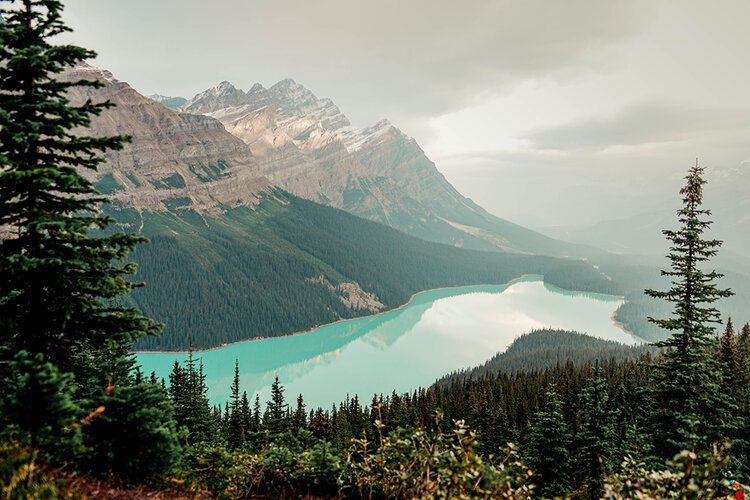
Imagine this: you wake up, make coffee for two and as the scent starts to wake you up you draw open the curtains and all you see is a smooth lake with a still layer of mist hovering just above it. Birds are singing, the air is crisp and the skies are clear and that pastel blue that tells you it’s going to be a cold but beautiful day for a walk.
Cosy on up under a blanket together on the sofa with a book, go for for a hike. Whether you fancy something active or chill, the stillness of a lake in winter will encourage you to take it slow together.
Uncertain about where to start with booking a trip by a lake? Begin with looking at national parks with lakes. Some of the most beautiful places I’ve seen around the world have been lakes.
4. Truly, madly, deep tissue massage
There are very few trips more relaxing than a spa break. Quiet lounges, couples massages, time in a sauna and all the fancy infused water you can drink? What’s not to love?!
If possible, look for a spa hotel that’s located out in the countryside so you can enjoy being outside and go for a walk together. If it’s in a city, make plans to never leave the comfort of your complimentary robe, order in room service and settle down with a film you both love.
5. A matcha made in heaven
Maybe it’s not the destination that will sway your decision but instead the cuisine. I get it, why not spend the most romantic night of the year at a candle-lit table full of what your heart desires? Think stone cooked pizza in Italy, tom kha kai in Thailand or consider going to Mauritius for dhal puri.
One of the best parts of travelling is eating the national and local cuisine and food is a love language so it makes perfect sense, right?
.
If you can’t be with your other half this Valentine’s Day then I also have a blog post on surviving long distance relationships. Michael and I have been together over 10 years but the first 3 years were spent doing long distance so you can trust that I have a good idea about what a struggle it is, especially on Valentine’s Day. Remember to travel safely during the pandemic and don’t put yourselves or anyone else at risk.
In short, journaling is the process of exploring your feelings, thoughts and goals through the written word. It’s to help you process events in your life whether they’re positive or negative and can be a very important method of self care and growth. Journaling comes in many forms. It could be doodling, an unconscious flow of the written word, a “dear diary” account of your day, manifestations or it could be thoughtful answers to guiding prompts.
I have found prompts to be the best method for me and so after using multiple journals over the last year (many only cover 3 months maximum) I started refining and writing my own prompts that I found most helpful for analysis of my body and mental health, reflection of my achievements and encouragement for setting goals for my life for 2021. Before the new year I gathered them all together and Michael helped me lay them out into my own diary and journal which I would like to share some of today.
I’ll break down the prompts into sections that cover a reflection of the year just gone, planning for the year ahead, daily self care, a weekly reflection, a quarterly check-in and travel specific ones so you can head to what you think you’ll find most effective for your self development.
Reflect on last year
This section is brief but it’s there to encourage you to look back on the self-growth you’ve already achieved before writing about what you can further do in the year ahead. Use these as a chance to analyse your behaviour so you can decide what you want to continue, improve on or change. Don’t just question what you’ve done for yourself, also look at what you’re doing for your community.
My top 10 highlights:
5 things I achieved:
5 good things I did for others:
5 things I’m grateful for:
5 things I learnt:
Planning for the year ahead – goal setting
This is a big one because if there’s one thing I’ve learnt – this comes from Andi Eaton, author, content creator, spiritual goddess and founder of Oui, We – it’s that you have to be specific with want you want from life/the universe/others and yourself if you want it to materialise. Give these prompts sufficient time so you can be clear with yourself and your page on what you want from this year.
These prompts cover everything from travel to mental health, everything is relevant for helping you to develop what you want to achieve by the end of the year.
What do I want to achieve this year (bucket list/manifestations)?:
What can I do to achieve these?
Top 3 priorities for the next 12 months:
Top travel goal:
Top career goal:
Top financial goal:
Top health goal:
Top relationship goal:
Top community goal:
Top environmental goal:
What are my biggest energy drainers?:
How can I manage my time better?:
What do I need to achieve my goals?
What is going to happen when I achieve my goals?
How will I feel and look when I achieve my goals?
How will others benefit from me achieving my goals?
Where do I want to travel to this year?:
What will be my first trip of the year and why?
Top 10 actions for the next 30 days:
Why are these actions important?
3 things I want to do more of:
3 things I want to do less of:
Habits I’m going to create or change:
Things I want to learn:
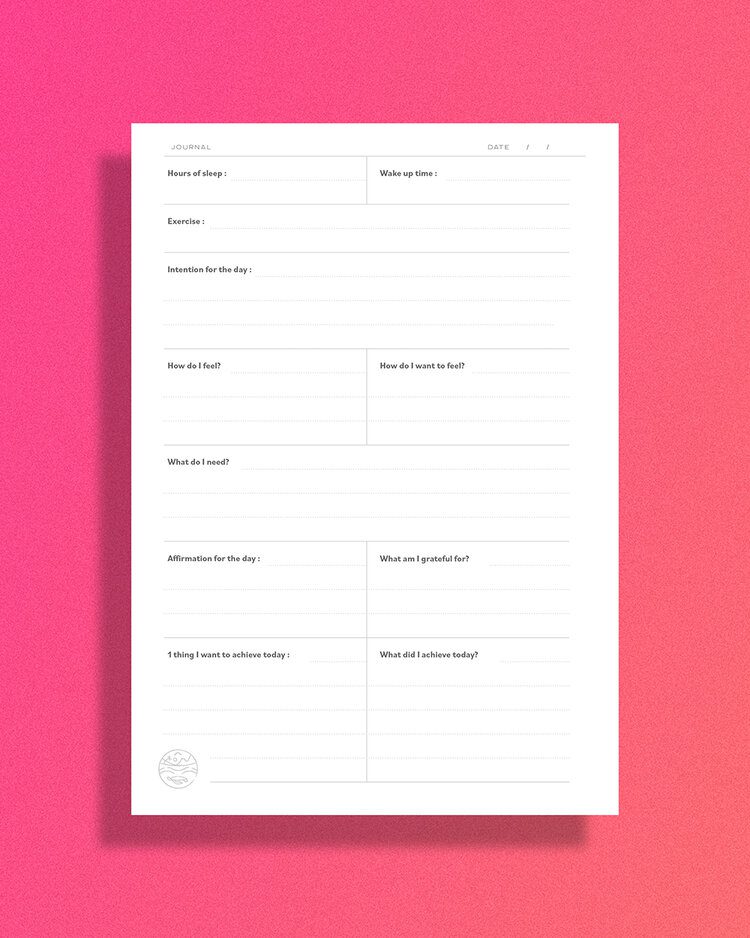
Daily check-in journal
If you want to make big moves in life, you have to start with yourself.
It’s all good and well to set the big goals but it’s the little things you do, think and feel every day that will help you progress towards them. Making a note of your sleep (sleep is high up on the list of underrated things that will make you feel better) and what you’re doing to get your body moving (this doesn’t have to be a full on workout, a simple walk outside for fresh air will have a positive impact on your mental health) will help you to keep track of moods. For example, when I was really struggling with a feeling of suffocation and restlessness in the evening I realised from my daily journal I wasn’t spending enough time outside. Likewise, I can also see that my most productive and calm self last year was when I was getting to bed early and rising early, I can see that from where I was clocking in my hours of sleep and what time I was getting up.
Next is to focus on your mental health by questioning and being honest about your feelings and what it is you need from yourself or maybe the day to improve or preserve your mood. It’s not to shame you on how you feel but to be honest with yourself. Goal and intention setting is invalid if you can’t first focus on where you are in the moments that will get you towards them.
Writing down at least one thing you are grateful for whether it’s the coffee that got you out of bed before midday or that the world has recovered from the Coronavirus pandemic and you can embrace people again.
Now that you’re conscious of your feelings and mood give yourself a mini pep talk in the form of your daily affirmation. This should be a positive statement that will help you to work through your negative thoughts and put you on the path of self-love. An example would be “I write interesting blog posts that inspire people to do more on and for our beautiful planet”. Repeating positive affirmations to yourself will encourage you to be kind to yourself, something I know all too well is very hard to do. If you’re struggling with what to write, I suggest logging when someone says something kind or positive about you or your actions that made you feel good about yourself and then using that as inspiration to write your daily affirmation.
The final prompts of the day are to write out the most important thing that you want to achieve that day. Pay attention when I say it doesn’t matter how big or small this is, it’s not an expectation of moving mountains, it’s just a space for you to put out into the universe one thing that will give you a sense of pride, accomplishment, self worth and/or purpose and trust me that can come from something as simple as eating a banana instead of a chocolate biscuit or a banana as well as a chocolate biscuit. “What did I achieve today?” is where I can acknowledge what I did and hopefully that includes what I wrote down as the one thing I wanted to achieve. Sometimes it isn’t though and that’s ok because I will have done something that day and this is my chance to be easy on myself and instead celebrate what I did do. Remember that you have the opportunity to learn something from the goals you don’t achieve, it doesn’t have to be a bad thing but just another part of self-growth.
Hours of sleep:
Wake up time:
Exercise:
Intention for the day:
How do I feel?
How do I want to feel?
What do I need?
Affirmation of the day:
What am I grateful for?
One thing I want to achieve today:
What did I achieve today?
Weekly reflection
This will provide a chance for you to look at the week you’ve just had and assess how you felt, what from the week affected your mood and explore what went well, what didn’t and how you can improve on that for the week ahead. It’s a chance for you to express your discomfort and find a rational response to them. Journaling a reflection of how your week went overall is important for leaving your stresses and worries on the page so that you don’t carry them within your body into the next week.
How did you feel this week?
What can I do to improve my mood?
What went well this week?
What could have gone better?
Is there anything I want to get off my chest?
Make a list of all of my worries:
Write down rational thoughts about my worries:
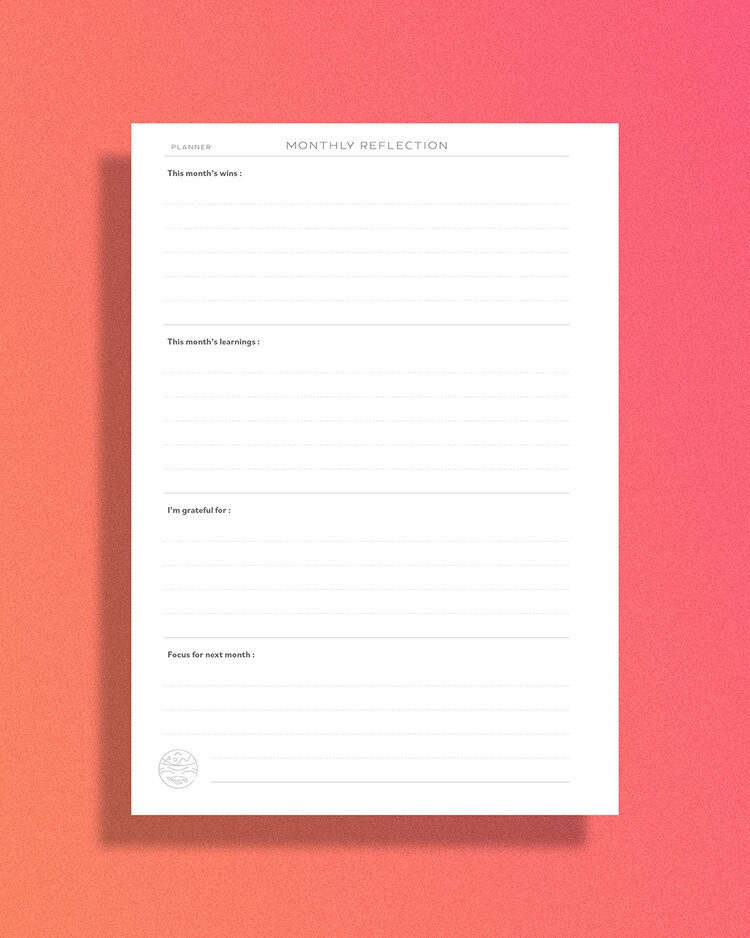
Monthly reflection
It’s important to celebrate the wins and the progress you’re making as the months go by. Remind yourself what you’ve achieved in the month and likewise analyse what didn’t go well and note what you’ve learnt from it then use these to realign your goals for the month ahead.
This month’s wins:
This month’s learnings:
I’m grateful for:
Focus for next month:
Quarterly goals check-in
Setting your big goals, dreams and intentions at the beginning of the year is great but without checking in on them and your progress, how can you be sure that you’re working towards them? That’s why I have quarterly check-ins to see where I’m at and refocus my trajectory towards my long-term goals for the future.
Top 3 professional goals for the next 3 months:
To 3 personal priorities for the next 3 months:
How will these help me to achieve my long-term goals?
Habits to focus on:
Things I want to learn:
Travel reflection
For a few years before I started blogging which ultimately ended up being a travel journal of sorts for me – where I reflect upon my trip, highlight the good and the bad and share my recommendations – I had tried to keep a travel journal. I attempted to write everything I did and I attached ticket stubs, napkins, brochures and more in a scrapbook manner but I could never keep up with them. I didn’t recognise the potential of focusing on the important facts of feelings and saw it as something that was holding me back from adventuring outdoors so I never finished them.
Since then I’ve developed prompts to keep the information to the point so I don’t feel inconvenienced but reflective, so I have the chance to process my feelings and can jot down the information I might want for future blog posts or conversations. At the very least, this has proven so handy for when I need to recall travel destinations and dates for when I donate blood.
These pages can be filled out in the morning, evening before bed or whilst you’re flying home or to the next destination.
Destination:
Travel dates:
Where did you stay?:
How do you feel about where you stayed?
What was your favourite meal of the trip and where did you eat it?
What are your top 5 moments from the trip?
Did you try anything new?
How did it make you feel?
What from this trip would you recommend to someone else?
Did anything upset you on this trip?
Is there anything you can do to avoid this happening again?
Did you learn anything from this trip?
Would you come back to this place?
If you’ve already started journaling and goal setting, that’s great! Don’t feel like because you have set your goals you can’t add more. I’m constantly editing and setting new ones because my intentions and purpose changes as the year goes on. If I kept to the same manifestations then I wouldn’t have the opportunities I do now and I wouldn’t be true to my own self-growth.
I hope that you find these prompts helpful for refining what you want for yourself and that they will help you to keep track of your most meaningful travel moments. Wishing you safe travels for the year ahead.
A new year comes our way and although there’s a lot of naivety that comes with thinking we can only become our best selves after the clock strikes 12am on the first of January, it’s hard not to get swept up in the “new year, new you” state of mind. Of course I’m not judging anyone for this, I do it too but I also want to encourage you to reflect upon how much you changed throughout the year and not just in January. It’s been an especially tricky one this year too, so celebrate the self growth from the whole year!
I’ve put together 12 suggestions for travel-themed goals and aspirations, not to pressure you into thinking all of these will make you the best globetrotter ever or that you HAVE to do all of them, but to help inspire you to better your own travel experiences and have a more positive impact on our shared environment.
1. Learn a new language
Start to learn a new language or brush up on one you already have an understanding of.
It’s a skill that will always prove useful and be impressive. My top tips for choosing a language to study are:
Pick one that means something to you – though I don’t dedicate enough time to it my choice is French because my Mauritian family speaks French. Michael has been intermittently learning Brazilian Portuguese because he loves the culture.
Pick one that you can practise often – maybe you travel there frequently or have friends and/or family who can help you improve.
Pick one that is widely spoken – Spanish is a good example as it is spoken across many continents and has similarities to other languages that make it a little easier to comprehend them. When I was living in Paris in my early twenties a waiter told me to learn Spanish not French as it is spoken in more countries and it has really stayed with me.
Due to my complexion I have had more people speak Spanish to me around the world than French and I wish I had chosen Spanish over French. Of course, in saying that, there’s no time like the present.
“A year from now, you may wish you had started today” – Karen Lamb.
A great resource for this is the Duolingo app – not sponsored, I just enjoy using it as it presents every lesson as a game.
2. Make sustainable swaps
Make a sustainable swap that eliminates a single use plastic in your daily travel routine.
Travelling around the world, as magical as it is, just isn’t all that good to our planet. Of course I want us all, who are able to, to be able to explore and appreciate the beauty of Mother Earth and explore not only what she has on offer but also self growth and healing that comes from the freedom of travel, but to be able to do so responsibly we must make more of an effort to help to restore her.
Shop Coconut & Cotton here.
How? The most responsible thing you can do to protect and help the environment heal is to use up what you already have before purchasing something else. So start there. Unfortunately choosing to purchase reusable, biodegradable and non-toxic products comes at a higher cost which I appreciate makes things a little more complicated and annoyingly the large corporations who can afford to make these items more affordable haven’t been held accountable enough to do so. The best thing you can do is to use and and reuse what you have. A few examples are:
Instead of purchasing a new tin or sandwich wrap for your lunch use a washed out margarine tub. They’re also great for storing leftovers, cookies and holding your veggie scraps in the freezer until you’re ready to make homemade stock. Sure they don’t look as cute but repurposing is far cuter than overflowing landfills, right?
If you don’t have a reusable coffee cup, aren’t ready to buy one (check out my reusable coffee cup guide when you are), but want to stop using single use coffee cups then dig out an old camping flask or use an old pickle jar for your iced coffee.
Use up your skincare products before buying more. I was so guilty of switching to clean and more responsibly packaged products before using what I had and I didn’t acknowledge it until I was cleaning out my draws whilst packing for Canada in early 2020. I was so proud of myself for reducing my skincare routine to fewer products that were more responsible but I had disregarded the heaps of half used bottles in my drawers. I used up what I could and gave the rest away to friends and family so it wasn’t wasted but it was a big lesson in not turning my back on what I already have. Take advantage of those half full bottles and pack them for your trips – they’ll be lighter than new products and you’ll get through them in no time.
If the hotel you stay in has a bar of soap, pack it before you check out. Some hotels participate in a scheme where it gets reused but if you aren’t aware of them doing that, keep it so you can finish it to save it from getting thrown away.
Naked products from Lush (zero packaging) to reduce your waste on your travels.
When you are ready to purchase eco-conscious products to swap out single-use ones in your day-to-day life and/or travel routine then take a look at the following blog posts I wrote that will help you to make effective, sustainable swaps on your travels:
If 2021 allows it and it is safe for you to do so (be smart about this one) then plan that trip that’s been on your bucket list for who knows how long! If 2020 has taught us anything it’s to seize the moment and book that trip because you really don’t know when that opportunity will no longer be available to you, right?
My top five bucket list trips for your possible inspiration are:
India – I really want to see the Taj Mahal
China – to walk along a part of the Great Wall of China is a major goal of mine
Skiing – I haven’t been skiing since I was 14 and I really want to give it another go (hopefully in Canada), I want some major Wham! Last Christmas music video vibes on this trip
A train ride through some jaw dropping countryside
Polynesian Islands – any one will do!
This one doesn’t necessarily mean you have to spend top dollar to pull it off by the way. Before I was supposed to move to Canada I was a smidge disappointed that I never put in more effort to explore the south west of England as I really wanted to go to Devon and Cornwall. A silver lining to a really pants side effect of the pandemic meant that I was able to safely explore (when domestic travel was encouraged to boost local tourism) both of those places and I had a summer holiday in England that I never expected but absolutely adored. No expensive flights or fancy hotels necessary!
4. Carbon Offset
Carbon Offset all your air travel as the year goes on.
Think positive thoughts! Travel will be a possibility again and when it is you can make a world of difference by offsetting your air travel.
Air travel is a significant contributor to rising greenhouse gas emissions but unfortunately it is often the only practical way to travel overseas. There are ways to lessen the environmental blow to the planet and one is to offset your air travel.
Realistically, reforestation (planting trees) won’t be enough to offset the carbon footprint air travels creates for every traveller on the planet but there are organisations you can donate to that will help to provide clean and renewable energy sources around the world such as hydro power, wind and solar energy. If every traveller made the effort to invest in these causes every time they travelled by air then that would make a difference.
Atmosfair are an amazing company who develop renewable energies and finance environmental education in 15 countries around the world.
To find out more about carbon offsetting your flights for 2021 including other companies that I use and recommend then take a look at my blog post, How to carbon offset your flights.
5. Save pennies
Create or add to a savings account dedicated to your travels.
9 times out of 10 seasoned travellers already have a dedicated travel fund so the advice of starting one will probably be lost on you but I have a few ideas for how you can keep it topped up:
If you have a regular pay cheque then set up a Direct Debit that takes a fixed amount – one that you can comfortably afford to put away – every month and pays into your travel fund.
Say you’re self employed, a regular pay cheque isn’t a luxury you can always count on so try settling on a percentage of each pay cheque to go into that travel fund. (This is what I do).
Most online banking apps allow you to “round up” your spendings and direct that to a specified savings account.
Spare change was already a dying concept but the pandemic really wiped that one out but if you do ever get some then the OG of savings accounts, the piggy bank, is a trusty contributor to your travels.
I’ve been doing at least one of the above since I started working when I was 14 years old and I have always had a travel fund because of that. It might not have always been able to take me around the world, but I never had an empty travel savings account because of these methods. Even for the period when I first moved to Paris, was still applying for jobs and was eating a lot of lettuce and microwaveable fries (I didn’t have an oven… or morals) I was never broke because I had saved a set amount from each pay cheque that summer for my travels.
6. Explore your own country
Take a leaf out of the book of 2020 and make a special effort to explore part of your own country that you’ve never been before.
The path less travelled might be one of the best trips you take. I mentioned earlier in “Tick off a bucket list location” that I was able to see more of England this year and it was a trip I will always cherish. Sure, it is super sucky that I can’t currently get over to Canada and as of the publication date of this blog post it’s been over 8 months since I was supposed to move and I’m still in England but the extra summer I got here (and when it was encouraged to safely travel England to boost the economy – didn’t exactly work out for us all did it, but we’re learning from that mistake) meant that I could see parts of England such as the Cotswolds, Jurassic Coast and Cornwall that I didn’t think I would get the chance to before leaving for Canada.
It was one of the greatest gifts from such a crappy year. At first glance I still think this photo of a beach in Cornwall is Portugal!
Not being able to travel far and wide encouraged so many of us to see what we had nearby and if you didn’t I really do recommend taking the opportunity to, especially whilst we still cannot travel internationally. It will also be a far more cost-effective trip as you can get a train, bus or drive yourself.
This is one that doesn’t have to be achieved right at the start of the year and it’s also something that can happen multiple times throughout the year. These are my favourite kind of goals for the year ahead, one where you can reflect at the end of the year and see what amazing things you achieved that made the whole year one to be grateful for. Even 2020 can be a year of gratitude, I’m serious, take a moment to acknowledge positive experiences from this year. Did you learn to cook something from your travels for the first time (was it my amazing banana bread??), did you take an online course on something you wanted to learn more about, did you start a new exercise regime or did you find inner strength by surviving your most fragile moments during lockdown/quarantine/isolation? These are all accomplishments that can be listed as new things you tried this year just gone.
8. Journal about your travels
Journal about your favourite travel moments so that you can reflect on them in years to come.
I’ve tried to keep up travel diaries and journals, I would attach crumpled plane tickets, scribbled on maps, napkins from my favourite restaurants and ticket stubs and write out everything I did that day but I never end up finishing them because I wanted to live in the moment and before long I’ve forgotten many of the details of the trip like the location of the restaurant I loved or name of the beach I watched sunrise from. It doesn’t mean the feeling has escaped me, that stays, but the details fade. If you too are like this then my suggestion is to write out the following prompts and answer them either on your trip or on the flight home:
Trip location
Travel dates
Where did you stay? Did you like where you stayed?
What was your favourite meal of the trip and where did you eat it?
What are your top five moments from the trip?
Did you try anything new? How did it make you feel?
Would you come back to this place?
What from this trip would you recommend to someone else?
Did you learn anything from this trip?
These examples will prevent you from falling behind on a daily entry from your trip but they will keep the details if you ever need to go back on them. Whether you want to fill in your own blank, recommend to a friend or start a travel blog, these notes will help jog your memory of what was important on that trip.
9. Donate
Donate to a local cause somewhere you are going or have travelled to.
It doesn’t have to be the kind of donation that gets hospitals and libraries named after you, I’m pretty sure that only happens in the movies… but every little helps someone in need and there are so many options:
Disaster relief organisations – say there’s been a wildfire or oil spill, your donation can help to stop and prevent the crisis plus it will help to rehabilitate those whose lives have been gravely affected. The Red Cross is always a good choice.
You can donate some books and stationery to a local school or church in need.
Organisations fighting to end period poverty in lesser developed communities. ActionAid is my recommendation or if you are ready to purchase a menstrual cup then get one from Saalt as they donate some of the profits and cups to communities in need.
You can make purchases form companies such as 4ocean which will help to fund ocean clean-ups on a larger scale that combat our plastic pollution crisis.
Disease relief organisations in countries who don’t have the means to provide medication to everyone – Sightsavers is one of my top choices.
Keep an eye out for a donation basket in the supermarket if you shop in one abroad that is donating food to shelters. Ideal foods to donate are: pasta, rice, jars of sauce, tins of fruit and vegetables and cereal.
Organisations such as Greenpeace, WWF and the Leonardo Dicaprio Foundation are my top choices for environmental projects that cover everything from climate change to poaching.
Find something that means something to you or that affects somewhere you cherished visiting and your contributions will save lives.
10. Travel lighter
Pack less to take a load off your mind, away from the plane and out of the washing machine.
I’ve been working on packing lighter for a long time and I’m finally getting much better! I’m one of those people who likes to be prepared for everything so packing light has always been a challenge but I consider these three main points to focus myself into packing less. It’s less stressful because there’s less to squeeze into my luggage, it makes the aeroplane lighter which saves on fuel consumption and it means I have less to wash when I return home.
Consider packing clothes that form a capsule collection that you can put together multiple outfits with and use accessories to your advantage. The benefits of packing less greatly outweigh having to lug around makeup you didn’t use, shoes you didn’t wear and clothes you didn’t need.
11. Plan a road trip
Road trips are one of the greatest ways to travel! You get more time to experience where you’re visiting, you can add, drop and change things last minute and you can see way more places in one trip than a single destination. It gives you the chance to slow down and savour each moment plus it’s a really good way to help you get into the habit of packing light.
There are so many incredible places around the world to map out road trips but my top countries are:
USA – there’s just SO much choice
Italy – just eat your way across the country
Canada – the national parks are incredible
United Kingdom – from sunny Cornish beaches to the snowy Scottish highlands
Take time off social media to be more present and mindful of your surroundings.
This is a particularly difficult one because we live in an era where everything gets shared on social media in the moment. In this final suggestion I want to let you know that I don’t mean for you to not take photos and videos, but instead of sharing them straight away, take a moment, a few hours or even a day away from uploading them to social media so you can enjoy the moment that you’re taking the photo of.
I’ve had too many moments when I’ve shot videos for Instagram Stories and then spent 20mins uploading them (adding captions, GIFs and sassy comments) and missed something whilst I’ve had my head down. If it doesn’t need to go live right that second then simply save it and upload it later on. This way you get content but you also get to enjoy what you’re doing, it’s less scary than you think.
Bonus
Pledge to read your favourite travel blog, Postcards from Hawaii, every week!
.
Remember none of these have to be done from the first day of the year to be successful or impactful, do that at your own pace and when it feels right to you. When you feel more financially secure, when you’ve used up products you already own and when you can dedicate more time to yourself. New Year’s goals are to improve your whole year not just the first week of the month.
I have been working from home for the last two years and Michael for the past six, so we know a thing or two about creating a safe, productive and comfortable working space at home. We are especially pro at navigating working together in confined spaces such as hotel rooms or say quarantined houses during COVID-19-related worldwide lockdowns…
These are our top tips for how we work together in hotel rooms, which are the most confined places we work from, but they will particularly help you survive working from home during self-isolation/quarantine/lockdown when you have a partner, friend or family working from the same space as you.
Here are our eight tips that we have put together that reduce distraction, loneliness and the desire to kill each other… well, to quote Hannah Montana, nobody’s perfect.
1. You can do it on the bed and the table
Usually there’s only one desk in hotel rooms so we take it in turns between the bed and the desk based on whose work is a priority, taking into account the type of work it is. For example: If I’m writing, that takes priority over Michael sketching out story boards so I will use the desk in that case, or if he’s animating then that takes priority over me making pins which I can do sitting on the bed. Do not get into bed though!
Of course if you’re both working from home during the 2020 COVID-19 pandemic you have probably sorted out desks for both of you, but if there is a situation where one is better than the other, say one is a desk and the other is the kitchen table, then consider taking it in turns.
2. So you can walk the walk, but can you type the talk
Given the close quarters, it seems so much easier to just speak out aloud to each other but resist the temptation because it’s extremely distracting. Try your best not to frequently interrupt each other by talking, especially if it’s just chitter-chatter.
To get around this we use a messaging app such as WhatsApp or FB Messenger. I prefer FB Messenger because it can be used on laptops and desktops rather than just phones because it’s less distracting. I find if I pick up my phone to answer a message I’ll spend more time on my phone checking Instagram or looking at photos of myself, oh wait that’s the same thing… As I was saying, it’s easier to get distracted on your phone.
By messaging each other, it cuts down on frequent distractions as it can sit there waiting until you’re ready to answer rather than blowing your train of thought.
3. Coffee breaks not break ups
It is key to have regular tea/coffee breaks for the following reasons:
Something to work towards
Gives you time to socialise together
Gives you a break from your work
Gives you energy
A change of scenery
Set a couple of breaks: one in the morning and one in the afternoon. Organise a time for lunch too so you’re not eating alone if you don’t have to.
4. Timing is everything
Just like your breaks, make sure you set working hours too. This will either stop you from overworking or not doing enough, we’ve all been both types at some point whether we’re in a physical office or not.
Starting and finishing in good time helps to make sure you and your partner, friend or family member(s) get some time together in the evenings. It’s important to honour this and hold each other accountable too so you don’t influence each other into a bad routine.
5. Play music not games
Pick a communal playlist that you can both enjoy or at least settle on a radio station that you both listen to. For the most part, Michael and I hate each other’s taste in music so this is compulsory to stop arguments and the constant distraction of having to skip songs.
If you’re looking for some AMAZING playlist I just so happen to have the following travel-themed playlists for you:
If one of you does something that annoys the other then accept that you will need to wear headphones.
Michael gets really stabby when he’s using his drawing-pad-thingy so I have to stick on my headphones and he says I type aggressively like a cat on a computer meme so he wears his headphones if that gets too much or I do it on purpose to annoy him.
Tip number 2 is especially useful here as you definitely won’t be able to communicate with headphones on.
7. Meet in the middle
Organise little meetings with each other so you can discuss each other’s plan of action or progress. When you don’t have a social office environment to lean on this will come in particularly helpful. Even if you both don’t understand everything, it helps productivity to air out what you’re working on. Plus you never know when the other person can offer helpful advice. For example I asked if we could sit down and discuss this blog post and he helped me expand on these points.
You’re not replacing each other’s bosses or superiors to be clear, this is to support and encourage each other.
8. Keep it clean
Michael has the most annoying habit of leaving his shoes in the middle of a room ready for me to break my neck at any given moment and I like to leave my glasses and mugs laying around and let’s face it, blaming an imaginary co-worker only works until the evening when someone actually has to wash up my mugs or pick up Michael’s shoes after I’ve thrown them across the room… so do each other a favour and keep it clean.
A particularly good tip for working in hotel rooms is to use VIPoo or light a candle (BE CAREFUL) if you use the bathroom because no one wants that stinking distraction in their work space.
.
I’m going to offer more blog posts like this that are travel related but respect the fact that we can’t actually travel anywhere at the moment. Please let me know if there’s anything you want to see on Postcards from Hawaii during this COVID-19 isolation period.
You know that special feeling you get when you receive mail through the door that isn’t an electricity bill, a flyer for an elderly care home or a fast food menu that doesn’t even have a voucher attached?! No, I’m talking when it’s something just for you, from someone you care about, that you didn’t know was coming, you know? Well, TouchNote took that and combined it with the digital era to create an award-winning app that allows you to send personalised postcards, greetings card and more via your mobile, tablet or desktop to your loved ones all over the world. In an instant you can send a photo from your travels, of your kids or pets, any cherished moment in time, and have it arrive through the mailbox of your nearest and dearest a few days later. It’s what TouchNote like to call “keeping in TouchNote”.
Why I use TouchNote
I have been using TouchNote since 2014, way back when Michael and I had officially put both of our names down on a lease for our first place together and wanted to send personalised Christmas cards out to our family all around the world. Since then I’ve using TouchNote to send birthday messages, thank you notes, Christmas cards and travel postcards to and from all over the world.
To get the best idea of why I love using TouchNote and how much it means to me and my loved ones, watch the video below created in collaboration with TouchNote.
What I love most about TouchNote is how easy it is to use their app to make something so unique and personal at such a low cost. I have been sending my best friends postcards for almost a decade now and though finding the most ridiculous cards I could get my hands on was fun, it was always a pain to then purchase a stamp and locate a postbox. Since using TouchNote I can do it all from my phone at one all-inclusive cost for printing and postage.
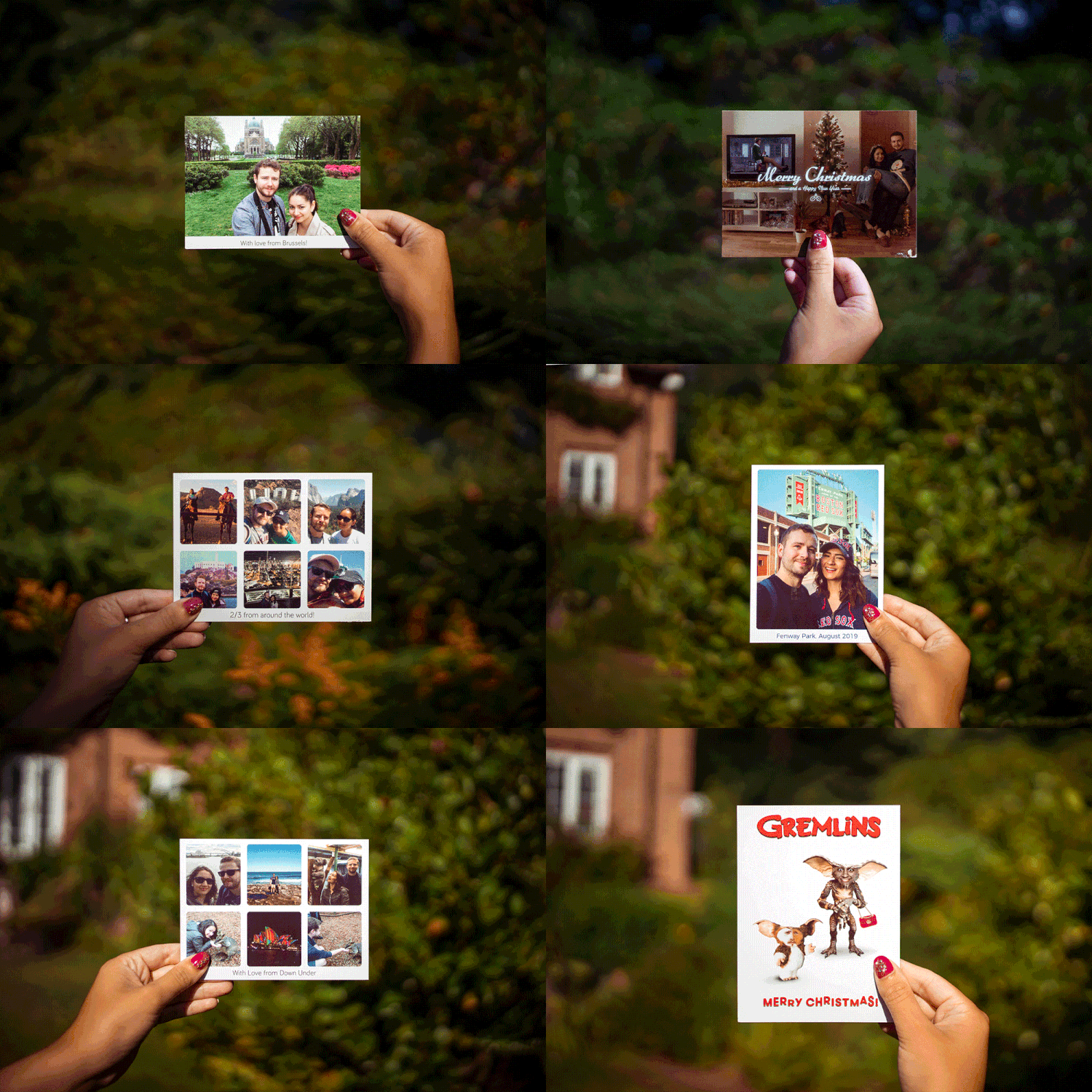
I sent this card to my parents’ next door neighbours in 2016. They lived next to my childhood home for years and are dear friends of the family. Michael and I set off for our 16 week long round the world trip where we visited their daughter who is living and working out in Sydney, Australia. They gave us a bon voyage card along with Aussie Dollars to spend on our trip, so to say thank you, we put together a few photos of us out in Australia on the TouchNote app and sent them a postcard.
It’s not only sending them abroad that is cost-effective though. I can send postcards to my parents in England from anywhere in the world and only have to pay English postage because it will be sent from Guernsey. So not only is it cheaper but I also know it won’t take weeks to arrive! You can read more about where they print and post plus delivery time under “Delivery” further down.
On the same round the world trip I mentioned above, I was able to send my parents postcards from Malaysia, Singapore, Australia, New Zealand, Hawaii, Las Vegas, the Grand Canyon, Hollywood, Yosemite, San Francisco, Seattle, Vancouver, New York and Rio de Janeiro in just three TouchNote postcards using their grid layout, at a fraction of the cost that it would have had I sent them individually from each destination.
Another brilliant bonus about having the TouchNote app is that it is my address book, no matter where I go. The app allows you to save addresses in the TouchNote Address Book, even when you’re not sending a postcard. So whenever I need to send something abroad, whether it’s a TouchNote card or not, I always go on the app to check my address book.
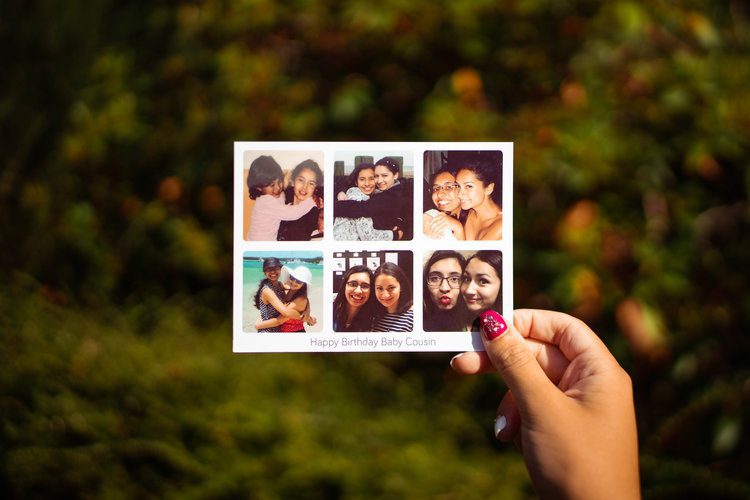
Sometimes you just can’t find the perfect birthday card, so TouchNote comes in handy for sending one from the heart. The first card is a postcard I sent my (not so) baby cousin, Rachel, for her birthday and it’s a collection of photos of us together over the years. She lives in New Zealand and I’m in England so we don’t get to see each other often, so each photo is extra special.
“I love receiving TouchNote postcards from my daughter from her travels around the world. TouchNote cards are more than just a postcard, it’s visually sending a little piece of her home. I see what she is seeing as well as her, it makes them so much more personal and keeping in touch is more enjoyable. The postcards all live on our fridge and are a constant and happy reminder for all to see.”
My Mum
Cost
To pay for postcards, greetings cards and more you need credits. A postcard costs just one credit and a greetings card is two. The cost of credits vary depending on the country you are in and how many you are purchasing. There are three ways to purchase credits:
Credit pack
The best value for money for just purchasing credits is to buy a credit pack. For a long time this is what I would do around Christmas because I knew I would be sending multiple cards all at the same time.
Credit pack prices vary on your location but they all offer a discounted price for buying in bulk. For current pricing click here to view them via the app.
Credits expire one year from the purchase date, so please remember to use your credits within a year.
Per card
If you only want to purchase one card you don’t have to purchase a credit pack, you can create your card and then simply pay for it at the end.
Premium membership
There are four types of Premium memberships: Bronze, Silver, Gold and Platinum. Each one offers various perks that greatly benefit users who send postcards every month and love to get creative with TouchNote stickers, borders and more! The perks included are:
Free postcards every month
Money off extra cards
Money off other photo gifts
Access to 100+ Premium designs and illustrations
Use of photo filters
Use of stickers
Personalised stamps
Add the location to cards
Bonus free cards during the year
What’s great about the premium subscriptions is that if you don’t use your cards for that month, they will roll over onto the next! So you can even be smart and bank a few every month ready for Christmas when you know you’ll have more to send out!
You also have the option to pay monthly or one upfront cost. To securely pay for your credits, TouchNote accepts Visa, Mastercard, American Express and PayPal.
TouchNote prints and posts cards from the UK, USA, Netherlands and Australia. This means that the cost of international postage is cut down drastically. I am so grateful for this because I send out Christmas and birthday cards to Australia, New Zealand and Canada so I know not only am I sending a personal and creative card with TouchNote, but I’m also saving money on postage.
As the printing location depends on the destination of your card, the delivery times can vary, but here is an approximation of how long it should take:
UK – 1-3 working days
USA – 2-5 working days
Europe – 3-5 working days
Australia – 2-4 working days
Rest of the World – 5-10 working days
Also keep in mind that postal systems work differently around the world so the delivery time does also rely on that.
.
So what are you waiting for? Send your loved ones a personalised message through the good old fashioned post and make their day. Whether it’s for a birthday, good luck, congratulations or just a reminder of how much you care for them, TouchNote will help you say it better.
Disclaimer: This is a paid post in partnership with TouchNote UK. Please know that I have been using them since 2014 and I only recommend brands I personally love and use myself.