Tag: Travel Guide

  • 10 iconic London landmarks you must see

    10 iconic London landmarks you must see

    Visiting landmarks is one of the most popular things to do when travelling to somewhere new. Landmarks represent the culture and history of the place you’re visiting, they tell stories and inspire your own, plus they make for great photo ops! 

    A city like London is ever-changing which means many of the locations on this list of 10 London landmarks have only been an addition to the city within the last 20 years and yet it seems like they’ve been there forever. Others however have had centuries of attention and experience with tourists such as Westminster Abbey which dates back to the year 960.

    What makes our capital’s landmarks that extra bit special is the rich royal association with so many of them, but if that isn’t your jam then I also include modern structures that make up our city’s famous skyline. I’ll include a little bit about the structures, where to find them and tips on where to go to get photos of them too, there’s also a map at the end to make it easier for you to navigate on your next trip to London.

    1. Buckingham Palace

    Located: City of Westminster

    With it being the most watched title on Netflix, chances are you’ve watched The Crown. If by chance you haven’t, it’s like a fancy reality TV show that makes you feel both jealous and sorry for the most famous family in the world, it’s basically KUWTK but with less class… if you didn’t at least laugh with pity over that, you can go and read some other fabulous travel blog!

    Get your royal fix with a visit to one of the most popular destinations for worldwide travellers coming to London: Buckingham Palace.

    Home to the Queen of England, Buckingham Palace is located in the City of Westminster at the end of The Mall, a 0.58 m/0.93 km long red road which is featured in various celebratory ceremonies such as the Trooping of the Colour.

    The palace spans over 39 acres and has 755 rooms.

    The best way to get unobstructed photos of the palace is to hold your camera between the cast iron gates. If you want to be in the photo then I suggest walking over to the Queen Victoria Memorial monument located straight opposite the palace gates. From up there you will be able to get a photo with the palace as your backdrop.

    Click here for information regarding visiting some of the rooms of Buckingham Palace.

    2. Westminster Abbey

    Located: City of Westminster

    If Buckingham Palace gave you a thrill and you want another fix of Royal fancy pants-ness, then head to Westminster Abbey. This Grade I listed house of worship as we see it today took 500 years to build – let that sink it for a moment – and has hosted many world famous ceremonies since the completion of the two main towers in 1745.

    Westminster Abbey is famously known for where 23 million people worldwide saw the future King of England, Prince William, marry Catherine Middleton and 200 million people heard (ahh the days of radio) Queenie pops marry Prince Phillip. Along with 16 other royal weddings that have taken place within these hallowed grounds it is also the location of every Coronation of British Monarch since 1066.

    Westminster Abbey is usually free to visit but is closed for public visits during the COVID-19 pandemic. It is however open for individual prayer. Once it’s open again I suggest visiting as you will be able to see the world famous Coronation Chair. Since its creation in the 14th Century, 26 monarchs have been crowned in the Coronation Chair. 

    Stand on the pavement (sidewalk) where Victoria Street meets Storey’s Gate for the best view.

    3. Big Ben and the Houses of Parliament

    Located: City of Westminster

    The Houses of Parliament is the informal name for the Palace of Westminster where the House of Commons and House of Lords meet to form the Parliament of the United Kingdom. 

    The current palace that stands today wasn’t the original one. The original medieval palace was completed at the start of the 11th Century and its purpose was to serve as the primary residence to the monarchy in the start of the 11th Century. Parliament didn’t start gathering there until the 13th Century. Fire safety wasn’t great in London though as you’ll be able to work out from this blog post and in 1834 the palace burnt down. It was rebuilt in the 1800s and though it is no longer home to the Royal family it does still remain a property of the Crown.

    Featured on one of the nation’s favourite sauce bottles (HP’s Brown Sauce) and arguably the most iconic film location in London is possibly the most famous clock in the world, Big Ben. Completed in 1859, he has witnessed six monarchs and 41 Prime Ministers since the very first chime. 

    Big Ben actually refers to the great bell of the clock whilst the clock tower is named Elizabeth Tower, after Queen Elizabeth II to commemorate her Diamond Jubilee. Big Ben and the Palace of Westminster became a UNESCO World Heritage Site in 1987 and, like many others on this list, is a Grade I listed building.

    Unfortunately Big Ben has been undergoing a face lift since 2017 which is set to finish in 2021, which means he’s currently hidden under scaffolding and for the protection of the construction workers’ ear drums, only chimes to bring in the new year and to commemorate Remembrance Sunday until he can resume his regular chime schedule. Do not dismay, sure, it makes for pretty pants photos but it’s all to conserve the tower. Great things to take away from this is that a lift is being installed so that the tower becomes accessible to those with different abilities, The Ayrton Light (the green light above the clock face that indicated when Parliament is sitting) will be upgraded to low-energy LEDs, plus it will be restored to its original colours.

    If you still want to mark the times with a photo there two of the best locations are from Westminster Bridge and the walkway under Westminster bridge, facing dead opposite Big Ben on the south bank of the River Thames. 

    4. Trafalgar Square

    Located: City of Westminster

    Trafalgar Square is a public square that was built to commemorate the Battle of Trafalgar, a victory over France and Spain during the Napoleonic Wars in 1805. Despite the battle being won in 1805, the square wasn’t actually opened until 1844. 

    Within the square is the National Gallery, a statue of Lord Nelson (Nelson’s Column) which is surrounded by four seven ton lions, two large water fountains that feature mermaids, dolphins and tritons and four great plinths, three of which have statues whilst the fourth does not. The Fourth Plinth was left bare due to insufficient funds but since 1999 has been home to various works of contemporary art. Permanent proposals for the plinth are still being discussed but rumour has it, it’s being reserved for when Queen Elizabeth passes.

    For the best photos of and with Trafalgar Square, take them from the steps out front of the National Gallery, from the edge of the water fountains with the National Gallery in the background or in front of the famous lions. Please note that you can no longer climb onto the lions as over their lifetime the bronze has been worn dangerously thin and could collapse.

    5. London Eye

    Located: South Bank along the River Thames

    The London Eye, otherwise known as the Millennium Wheel was opened to the public in, you guessed it, 2000! as part of the city’s millennium celebrations. When it opened it was the tallest ferris wheel in the world (it’s now the fourth).

    There are 32 capsules numbered from 1 to 33 but number 13 is missing from the wheel for superstitious reasons. Each one can carry up to 25 people and a full rotation lasts 30mins. The views are panoramic and on a good day you can see as far as Windsor Castle (Windsor is where Prince Harry and Megan Markle got married, if you don’t know).

    PFH Fun Fact: the London Eye was only supposed to me a temporary instalment but its popularity got it an indefinite position on the bank of the River Thames. If my photo albums weren’t already packed for Canada I would share my old developed film photos of a pre-teen Gaby on the London Eye with the bushy eyebrows I wish I still had. If I ever make it to Canada, remind me to share them with you.

    To find out four of the best places to take photos of and with the London Eye, take a look at my blog post, 10 most Instagrammable places in London, England.

    Book tickets for a ride on the London Eye here.

    6. Tower Bridge

    Located: Tower Hamlets and Southwark

    Up next is the often-confused-for-London-Bridge Tower Bridge. The most famous suspension bridge in London was built in the late 1800s and takes the London Inner Ring Road across the River Thames.

    Any person or vehicle can access the bridge deck unless the bridge is opening for marine vessel (I’ve only had one lucky chance to see in my life thus far, it feels like a scene from inception) and if you want to explore the glass floor, the high-level walkway and Victorian engine rooms, it costs a small entrance fee. Just take note that whilst London is in tier 3 or any form of lockdown during the COVID-19 pandemic, the high-level walkway will be closed.

    It has in the last decade, like everywhere else photogenic on this planet, become a sought after Instagrammable location and as someone who put it in their own London Instagram guide I’m not knocking that but the reason I’m bringing it up is because I need you to know this: It is not safe, smart or responsible to straddle the railings whose sole purpose is to stop you from getting hit by the busy two-way traffic on the bridge. Too many people hop onto these railings and spread their legs into oncoming traffic. I’ve seen it on the gram and I’ve seen it in person and trust me, a red bus isn’t stopping for your pins, okay? Don’t do it! You can get amazing content without risking a fractured leg.

    On the topic of photos, check out the blog post I mentioned above to find out two locations to get photos of and with Tower Bridge: 10 most Instagrammable places in London, England.

    7. St. Paul’s Cathedral 

    Located: City of London

    This Anglican cathedral sits atop the highest point in the city of London, Ludgate Hill. Completed in 1710 this cathedral designed by Sir Christopher Wren (who I’ve spoken about here) only took 35 years to build – compare that to Westminster Abbey’s 500 – and replaced the original Gothic St. Paul’s Cathedral which was destroyed in the Great Fire of London (1666). It has since become a Grade I listed building.

    PFH Fun Fact: St. Paul’s Cathedral is the second largest church building in England, the first is Liverpool Cathedral.

    Aside from being an iconic landmark and beautiful house of worship, St. Paul’s Cathedral is famously known for some very high profile ceremonies such as the funeral of these questionable leaders: Lord Admiral Nelson, the Duke of Wellington and former Prime Ministers, Sir Winston Churchill and Baroness Thatcher. It’s also where a staggering 750 million people tuned in to see next in line to the throne, Prince Charles, marry The Peoples’ Princess, Lady Diana Spencer.

    Other celebrations include jubilees, services that marked the end of both World Wars (it’s worth taking a look at photos of St Paul’s Cathedral surviving the Blitz FYI) and two milestone birthdays for Queen Elizabeth II. In summary, St. Paul’s Cathedral is a pretty big deal.

    There are many options for getting a snap of or with St. Paul’s Cathedral. Four of the most popular are:


    • From the Millenium Bridge which crosses over the River Thames.


    • Within One New Change shopping centre located opposite. Stand in the narrow entrance between the tall glass walls and the cathedral will be centred.


    • From the top of One New Change shopping centre. There’s a viewing platform that looks out over parts of the city including St Paul’s Cathedral.


    • The best spot is within Festival Gardens right next to a red telephone box. I’ve popped a little Google Maps screen shot below to indicate where to go.


    8. Piccadilly Circus

    Located: West End

    Featured heavily in films such as Bridget Jones’ Diary, Harry Potter and the Deathly Hallows Part 1, Bend it Like Beckham, Mission: Impossible – Rogue Nation and Fast and Furious 6, Piccadilly Circus is a major traffic junction famous for its video and neon advertisements.

    The first advertisement to go up in Piccadilly Square was for Perrier and as the years went by more and more were added and by the 70s most of the surrounding area was covered with illuminated billboards. Since then the adverts have reduced and now only one building hosts them. In 2017 the final six screens were removed and replaced by one ultra high-definition curved screen that can display numerous ads at once.

    PFH Fun Fact: The term “it’s like Piccadilly Circus” is used to describe a very busy location. These days you’ll find it’s far more quiet than say Oxford Circus, but the saying is still in use.

    Stand with or next to Eros fountain, located right in the centre of Piccadilly Circus to get photos of the famous neon advertisements. Check out 10 most Instagrammable places in London, England for another Instagrammable spot here.

    9. The Gherkin

    Located: City of London

    The Gherkin or as it’s formally known, 30 St Mary Axe, is a bullet shaped glass building in London’s financial district. In stark contrast to many of the Grade I listed buildings in this blog post it is a contemporary landmark but has become one of the most widely recognised buildings in the city since it opened in 2004. You may recognise it from Harry Potter and the Half Blood Prince.

    For a photo with The Gherkin, head towards St Andrew Undershaft Church and stand on the corner of St Mary Axe and Leadenhall Street.

    10. The Shard

    Located: Southwark

    Taken from our apartment.

    The Shard is the newest landmark to London on this list. This stretched out glass pyramid can be seen for miles as it stands out on its own, just a little to the side of the other popular skyscrapers such as the “Walkie Talkie”, the “Cheese Grater” and the aforementioned “Gherkin”. 

    The 72-storey Neo-futurism skyscraper opened in 2013 and is the second tallest building in London. If you’ve got a little more than spare change put away then book a stay or maybe just afternoon tea at the Shangri-La located at the top for panoramic views of the city.

    Head to Lovat Lane for a photo on an old cobbled lane with The Shard in the background, it’s an architectural juxtaposition.

    Travel safely, Gabriella

    Pin this post


  • Best Christmas light displays in London – a walking tour

    Best Christmas light displays in London – a walking tour

    It’s Christmastime in the city… different city but same vibe. 

    Having just come out of a second nationwide lockdown in the UK, there was one simple thing I did during it which brought me so much joy and that was go for a walk with Michael to see all of the beautiful Christmas lights in central London. Sure, it’s something I do every year whilst doing my Christmas shopping, or when I’ve made a trip out to go ice skating at the Natural History Museum or to meet friends for drinks. Though with all of those options cancelled for Christmas 2020, I found myself in a position where there was nothing to distract me from the simplicity of gazing up at sparkling Christmas lights whose sole purpose is to bring a little sparkle and festive spirit into our dark evenings. It was magical and exactly the healing I didn’t realise I needed after spending three weeks indoors (with the exception of exercise and supermarket shops).

    Covent Garden

    After mapping out a little route for Michael and I, I decided that it was something I eagerly wanted to share with you. Though I have created this guide in a time where all of the usual things I would do in London during the holidays have been cancelled, it is something that I know will stand the test of time. So whether you’re turning to this guide as someone in the UK this year (2020) or in years to come when the world has healed and you’re going on holiday/vacation here, one thing London can give to you this and every holiday season is sparkling displays of hope, joy and light.

    Covent Garden 

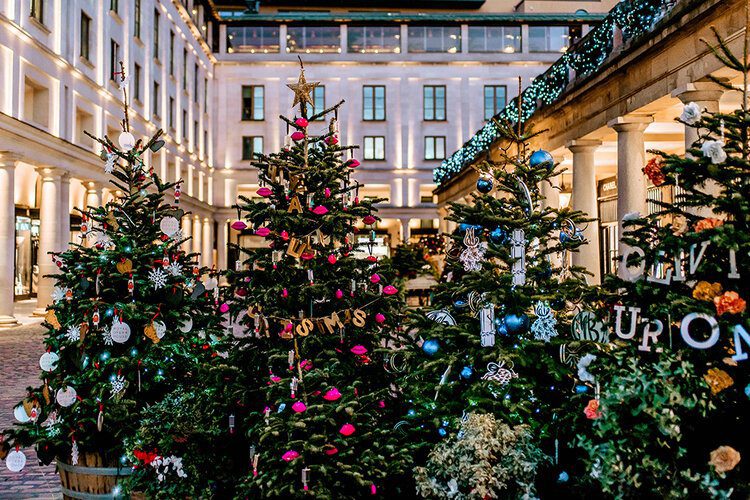
    Start your walking tour of London’s Christmas lights in Covent Garden by making your way to the piazza where you have two displays to appreciate. The first is the set of sponsored trees in front of the market and the second is their famous tree, just around the corner. Their 60ft tree is adorned with over 30,000 red and white lights and really is breathtaking. 

    If ever you’re in London during the holidays and the weather is a bit wet and gloomy, head over to Covent Garden to see the tree because the lights from the tree bouncing off the puddles below will warm your soul.

    PFH Fun Fact: The annual Covent Garden tree comes from Woods Farm and for every tree they cut down, they plant another three.

    Leicester Square

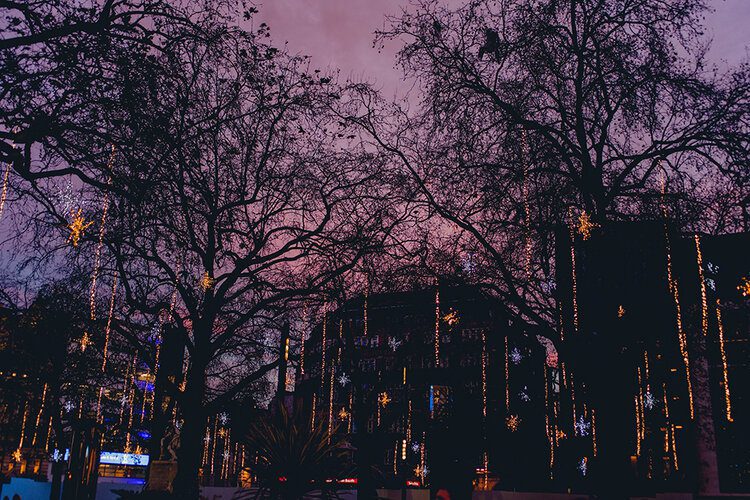
    From Covent Garden, head over to Piccadilly whilst making a stop at Leicester Square. Hanging from the trees in the square are a collection of lights that look as though the stars are within reach. It’s not the most impressive display but it’s a good one to stop at on your way to the knock out ones.

    Fortnum and Mason

    When you reach Piccadilly Circus you will be drawn toward Regents Street but first I want you to walk down Piccadilly Street until you reach Fortnum and Mason. Each year their storefront display changes and this year it has been made up to look like a gigantic 2020 advent calendar, it really shouldn’t be missed. 

    Whilst here, get a little closer and take a look at their eight beautiful Christmas window displays and if the store is open, pop inside for the best food hall in all of London (which is always seasonally themed) and head up to their Christmas floor.

    If you do get the opportunity to visit Fortnum and Mason in 2020 (there’s not much time left so hurry) this year’s festive window display is extra special as each window is dedicated to eight moments from Fortnum’s past Christmases including 1930, 1934, 1936, 1957, 1962, 2008, 2015 and 2020 – pay attention to the right hand corner of the displays as they feature the original Christmas brochure from that year. 2020 in particular was brought to life by Spanish illustrator Lalalimola and includes some quirky kitchenware characters enjoying a festive meal around a lively table – think Fortnums meets Beauty and The Beast.

    New Bond Street

    From Fortnum and Mason, pass through Burlington Arcade (just seconds down Piccadilly St.) to head towards New Bond Street. When you get to the end of Burlington Arcade make a left towards Tiffany and then turn right onto New Bond Street.

    Here you will be met by lights strung up between the building above plus you get the treat of all the luxury stores’ individual lights. One that you shouldn’t miss because it’s not only gorgeous but fast becoming an iconic Instagrammable spot during the festive season is Cartier.

    Shoes have been gifted by Dune – they are Poste in brown croc.

    Each year Cartier makes the exterior of their stores sparkle as magnificently as their contents inside with sparkling garlands, strings of lights and the world famous big red bow. The store is wrapped up as the most perfect gift you could ever receive.

    Regent Street 

    From New Bond Street walk down Burlington Gardens which turns into Vigo Street before joining Regent Street.

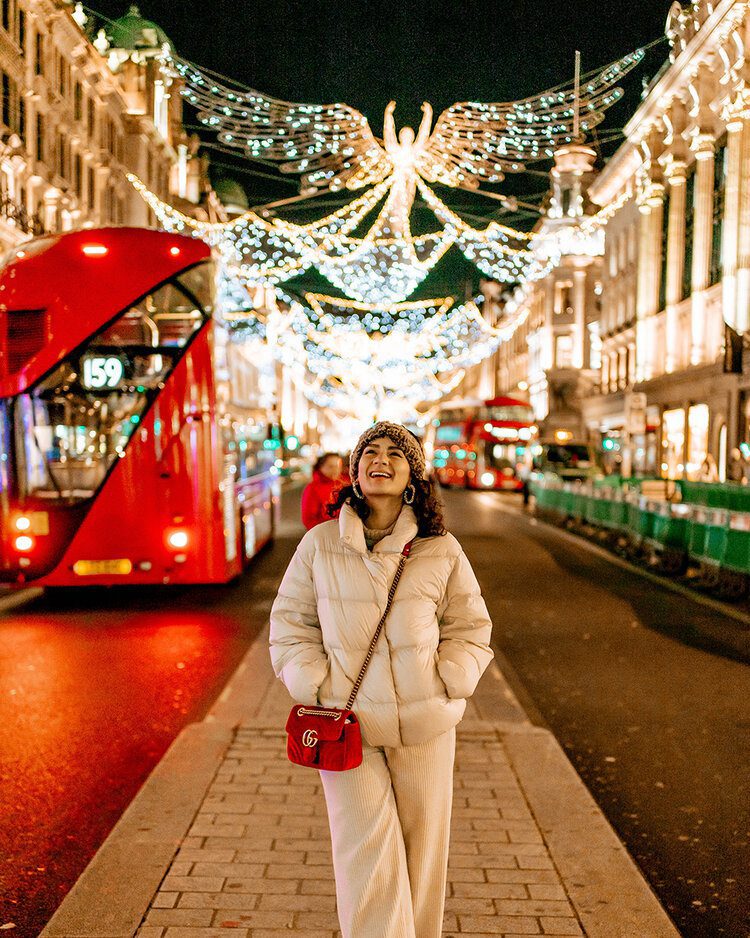
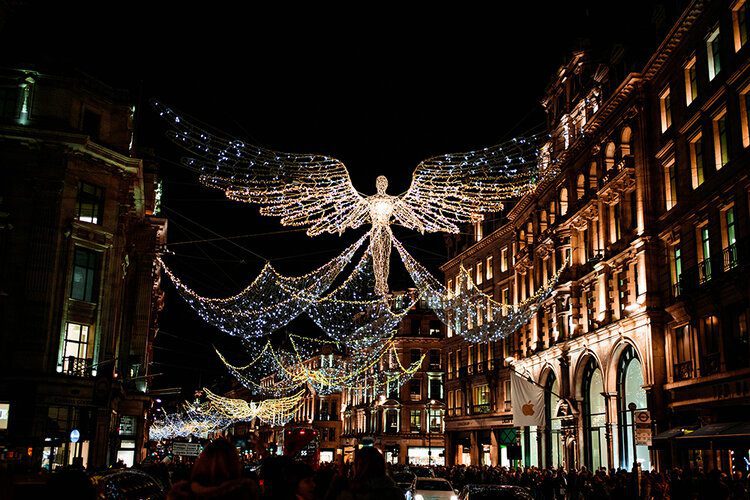
    Personally I think Regent Street has the best Christmas lights in all of London. Every year the angels descend and line the sky down the entire length of the street from Piccadilly Circus to Oxford Circus. 

    If you ever need your festive spirits lifted then stand on the island in the middle of Regent Street and gaze up at the glittering angels. Works for me, every time. Oh and how handy, this spot also happens to be a brilliant spot for a photo! For the best angle, stand where the road straightens up so the lights line up behind you.

    Carnaby Street 

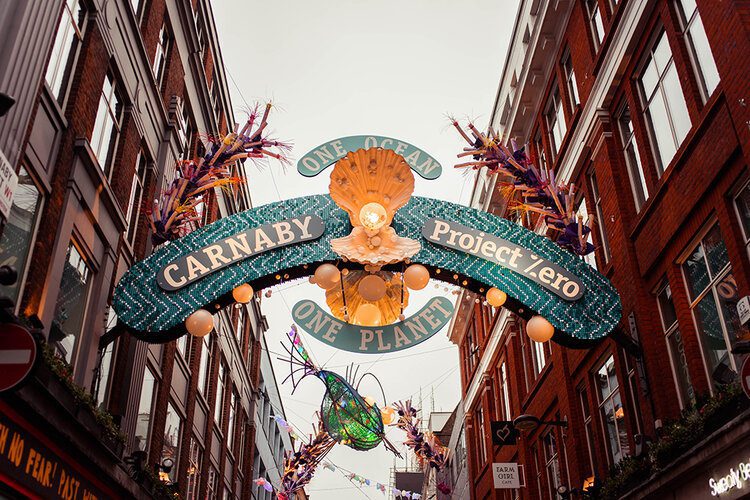
    Once you’ve said hello to the Regent Street angels, turn off onto Beak Street to make a left onto Carnaby Street for their annual display. Each year their theme changes to comment on something of social significance. This year was all about choosing love, no matter how that looks for you and everyone else. The 2020 neon display share high energy vibes and reminds us that we’ve all endured something crappy this year but we can always choose love above anything else.

    Previous displays include (my favourite) one made from ocean plastic which highlighted our plastic pollution crisis, a dedication to Queen, there was the Christmas carnival back in 2017 and Rock N’ Roll one of 2012.

    Oxford Street

    Finally, do a Chris Martin and take your feet to Oxford Street for the end of your PFH Christmas lights tour of London.

    From the end of Carnaby Street, take a left onto Great Marlborough Street to join back up with Regent Street which you can continue down until you reach Oxford Circus. Whether you turn left or right you’ll be able to admire the Oxford Street Christmas lights as they’re strung on both sides until the road changes.

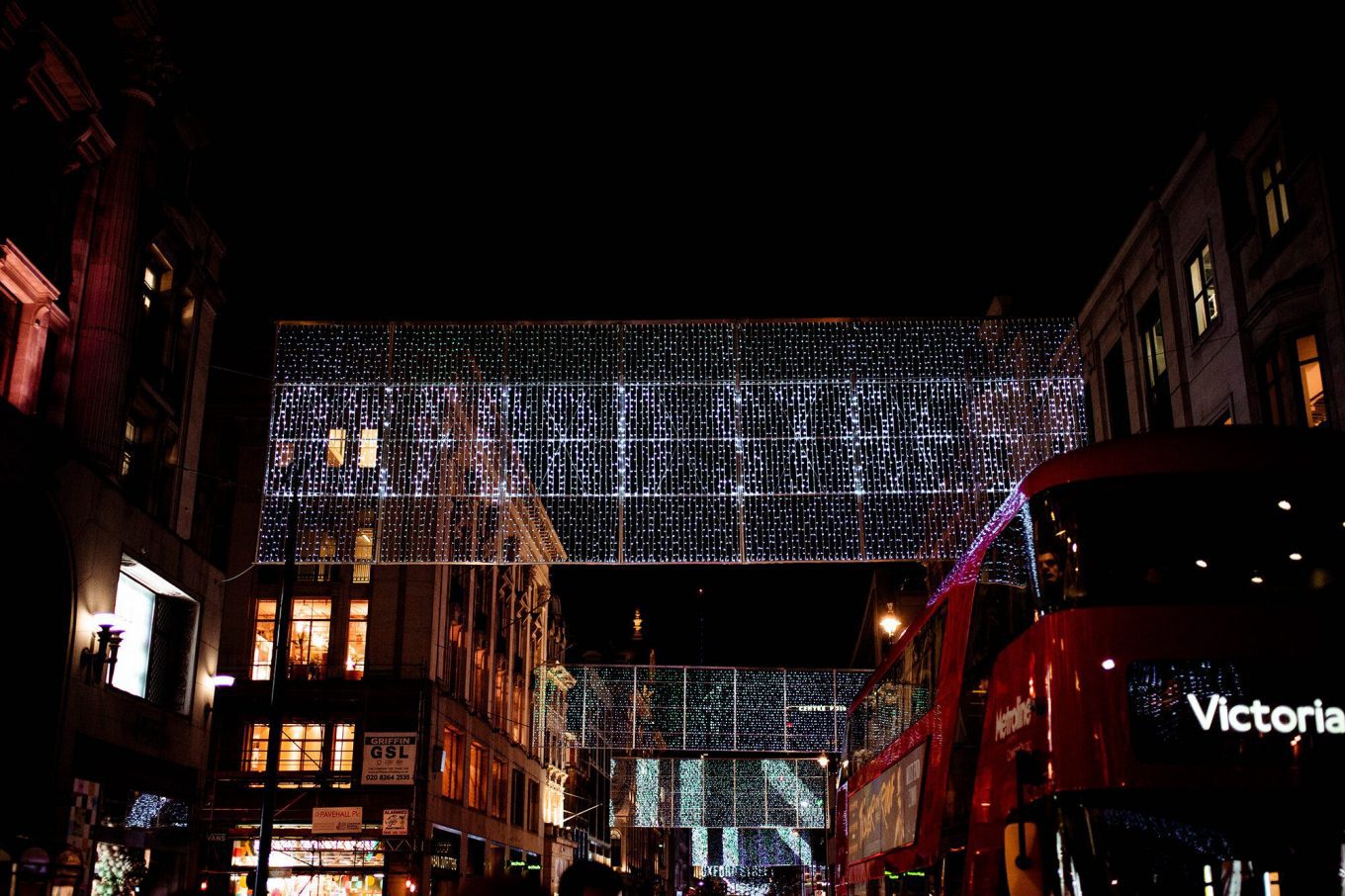
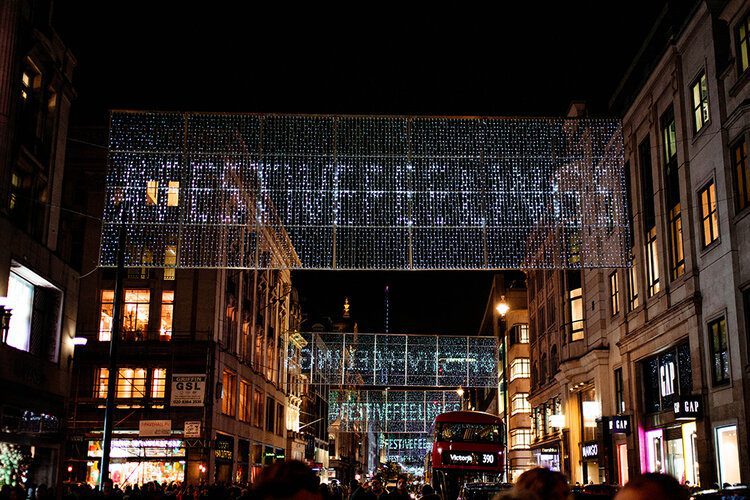
    For 2020 the 2019 display has returned (yay for reusing them) but this time instead of #’s (yeah that was thirsty) they’re displaying something a little more wholesome: messages to our essential and key workers who have been busting their guts to keep things running. Yep, that trumps #festivefeelings.

    Mele Kalikimaka, Gabriella

    Pin this post


  • 13 things you don’t want to miss along the Jurassic Coast

    13 things you don’t want to miss along the Jurassic Coast

    The Jurassic Coast is a 95 mile stretch of UNESCO coastline that holds 185 million years of history. Starting in Exmouth, Devon and ending at Old Harry Rocks in Dorset, the geology of this World Heritage Site covers three fascinating periods of history:


    • Triassic


    • Jurassic


    • Cretaceous 


    These three time periods make up the Mesozoic Era which was a time spanning approximately 250 to 65 million years ago. Here’s a brief overview of what went on in these three periods:

    Triassic 

    252 – 201 million years ago

    The rise of reptiles and the first dinosaurs.

    The landscape of this area was sweltering hot deserts. The Earth’s crust was sinking which caused layers of sediment to layer up which formed rocks.

    Jurassic 

    201 – 145 million years ago

    Birds and mammals graced the planet.

    Rising sea levels transformed the desert into a tropical sea. Towards the end of the Jurassic period however the sea levels dropped and a forest grew. 

    Cretaceous 

    145 – 66 million years ago

    Dinosaurs became extinct.

    At the beginning of the Cretaceous period, the forest that had grown towards the end of the Jurassic period died and the landscape changed to rivers, lagoons and swampland. Towards the end of the Cretaceous period, the sea levels rose again and the older layers of rock from previous time periods were covered in sandstone and chalk.

    .

    On an adventure exploring the Earth’s history along the Jurassic Coast, you can expect to learn about creatures you never knew existed, literally walk in the footsteps of dinosaurs, hunt for fossils, enjoy fish and chips in beautiful coastal towns, indulge in locally made ice cream and marvel at the rugged coastline.

    To save time and fussing around with cash or prevent needing to run back to the car for every car park on the Jurassic Coast, download the following parking apps so that you can pay for and top up your parking from anywhere on your phone.


    • PayByPhone


    • RingGo


    • JustPark


    • Flowbird


    • Parking Ops


    Unfortunately I can’t remember which one is used where but if you have them all ready to go you won’t waste any time. Some car parks are free and there are a few that only take cash, so I recommend keeping some spare change on you before you arrive.

    Let me take you from west to east for 13 things you don’t want to miss along the Jurassic Coast:

    Exmouth

    Park your car at Foxholes car park right next to the beach and get a Kelly’s Cornish ice cream from the little hut on the seafront before taking a stroll down the promenade. It’s right at the end where you’ll find very short cliffs of bright red rock topped with luscious green foliage. 

    250 millions years ago (that’s even older than the dinosaurs) this landscape was a scorching hot desert. It was the centre of the super continent Pangea and was very close to the equator. During this time, very little plants could survive the heat and flash flooding.

    The layer of red rock you can see today at Exmouth beach is 185 million year old sand dunes from the aforementioned time where this part of the world was desert.

    Sidmouth

    Sidmouth is a seaside town that takes about half an hour to drive to from Exmouth. The town’s backdrop, Sid Valley, is made of red cliffs from the Triassic period. 

    Like with many coastal towns and cities along the south west coast, the popularity of seaside resorts between the 18th and 19th centuries made Sidmouth a desired holiday spot. Its pretty town centre echos this period in time but now offers a variety of both high street stores and independent shops and eateries which were a welcomed escape for us when the heavens opened the day we visited.

    On a sunny day you can sit out on the beach, walk the Blue Plaque trail or hike parts of the South West Coastal Path. 

    I particularly recommend popping into the National Trust gift shop in town as they sell all sorts of wonderful guides on the area plus eco-friendly items that can help you to reduce your daily single-use plastic waste. I picked up a National Trust Scone recipe book which I’m particularly excited about as it features 50 regional scone recipes from all around the United Kingdom.

    Make time to visit Sidmouth Museum as it is home to rare fossils from the Triassic period.

    Charmouth 

    A trip to the Jurassic Coast is incomplete without making the effort to go hunt for fossils yourself and Charmouth beach is the perfect place to do it!

    Though you could hunt for fossils anywhere along the Jurassic Coast, Charmouth’s shingle beach is particularly popular for fossil hunting because it is a large area full of opportunity as fossils are plentiful within the shingle, particularly after high tide.

    Before you begin your hunt, make a stop at Charmouth Heritage Coast Centre where you can see a display of the types of fossils you can find with a careful eye along the beach. 

    Charmouth Heritage Coast Centre is open every day from 11am – 3pm and entrance is free.

    Tips for fossil hunting


    • Always check the tide times before you go


    • Wear waterproof and sturdy shoes


    • It’s quieter in winter, so you’ll have a better chance of finding something


    • The best time to go is when the tide is going out as high tide will have resurfaced a new layer of rocks


    • Your eyes are your best tool


    • Spend time turning over rocks, you never know what’s underneath them


    • Be patient, finding fossils really relies on luck


    NEVER dig into the cliffs, these are structurally unsafe and you could cause cliff fall. Coastal erosion is sad enough, do not contribute to it.

    The most common and easiest to find fossils are:

    Belemnites 

    They existed during the Jurassic period and went extinct during the Cretaceous period. They had a squid-like body but a hard internal skeleton. Fossilised Belemnites look like stone bullets.

    Ammonite 

    They were squid like creatures that lived within the chamber of a tightly spiralled shell. The shell is what you will be able to find fossilised on the beach with a careful eye.

    Seashells

    Fossilised seashells look just like regular seashells but attached to rock.

    If fossils aren’t your thing, you can also find heaps of sea glass in all sorts of colours on Charmouth beach.

    West Bay

    West Bay’s crumbling golden cliffs have become a famous landmark in popular culture thanks to the popular ITV crime drama, Broadchurch. The erosion of these sand cliffs reveal indications of fallen sea levels from 175 million years ago. 

    The best time to see them is on a clear, sunny day when the light hits them and highlights their golden tone.

    When you’ve had your time on the beach, venture behind the car park to The Customs House Emporium for a chance to find some relics of a different kind. Riffle through vintage, antique and retro items to find a favourite record, a pre-loved jacket or a second hand table.

    Chesil Beach

    Chesil beach is an 18 mile long shingle ridge that stretches from West Bay to the Isle of Portland and is one of Dorset’s most iconic landmarks.

    Unlike the soft sandy beaches of south west England, Chesil Beach is formed entirely from shingle. As the ridge is entirely exposed to the elements it doesn’t make for the perfect spot to lounge in the sun or picnic, but is a place where you can walk off your fish and chips. The sound of the waves pummelling and dragging the stones should be a soundscape on the Calm app.

    Wear practical footwear as the shingle does not make for a sturdy surface.

    Need a Friday night movie recommendation? Ian McEwan’s novel-turned-film, On Chesil Beach (2018) is another beautiful period film starring the amazing Saoirse Ronan that features Chesil Beach.

    Isle of Portland

    At the far end of Chesil beach is the Isle of Portland, which is best known for its quarry which has provided the stone that built Buckingham Palace.

    The best place to see all of Chesil beach is from the top of the hill where the Weymouth Olympic Rings are (Weymouth hosted the sailing competitions during the 2012 Olympic Games). You can drive up there and park just opposite them. From the rings you will get an amazing view down at Chesil Beach. 

    Another neat thing to see on the Isle of Portland is Pulpit Rock. Located at the far end of the Isle of Portland, Pulpit rock resembles an open bible leaning upon a pulpit. 

    Weymouth

    Weymouth is your classically quaint English seaside town that has been a popular destination for holidaymakers for over 200 years. 

    This long curved beach of soft golden sands is lined with a Georgian Esplanade where you can buy ice cream, sandwiches, buckets, spades and more! The shallow waters are sheltered so they’re perfect for dipping your feet and playing with children and dogs.

    Stroll over to the marina to an array of little sail boats bobbing in sparkling waters against a backdrop of colourful rainbow houses. This part of Weymouth feels like the Mediterranean. 

    PFH Top Tip: Arrive early to park in Pavilion Forecourt car park, it’s small so it fills quickly but it offers the ideal location between the beach and the marina.

    Durdle Door

    Durdle Door is one of the most iconic sights of the Jurassic Coast and was my favourite spot to visit. Tucked away, far out of sight from the car park is the beautifully natural, limestone arch of Durdle Door, jutting out from the beach into the surprisingly crystal clear waters of the English Channel.

    Durdle Door was formed by a rippling effect through the Earth’s crust that spread north when the African and European tectonic plates collided with each other. To give you an idea of how immense that pressure was, that same collision created the mountainous region we know today as the Alps. It was this rippling effect that pushed and shoved the Earth’s crust to create the rugged coastline of south Dorset and Purbeck. Durdle Door was in the centre of one of the folds in the rock and as the sea eroded the softer rock, it revealed an arch which we know as Durdle Door.

    PFH Top Tip: Beat the crowds and park in the field car park on the top road as it is open in the early hours of the morning. The official Durdle Door car park is closer but it doesn’t open until 9.30am and gets busy incredibly fast. Arrive for sunrise, park in the field, walk the extra 10 minutes and you will have the place to yourself. Both car parks have pay and display machines.

    The walk from even the first car park is a steep path from the clifftop down to the sea so I strongly advise you wear trainers/sneakers and make sure you have plenty of water with you for the walk back up. Though it doesn’t take long if you’re of average health, it is steep and can be a struggle on a warm or hot day. 

    With my shoe warning in mind, I also want to add that although it looks like sand from above, the beach is made from tiny shingle that doesn’t look threatening until it fills the space between your sandal and the soles of your feet, at which point it’s like walking on needles. I strongly advise you to wear trainers/sneakers, trust me, your feet will thank me.

    The reason I recommend you arrive early is because there are plenty of photo opportunities on your journey down to the beach that get very crowded once the clifftop car park opens. Once you have made the first descent down the path from the cliff edge, you will come to a plateau which is the perfect opportunity to capture Durdle Door from above. From here you will also be able to see Man O’ War beach located to the left of Durdle Door, it’s another beautiful spot where the water looks all shades of turquoise before turning to a deep blue as you look further out to sea.

    Take the steps down to the beach where you will be able to capture Durdle Door from the water’s edge. Then lay out a blanket or a towel and enjoy with view with a picnic as you take in the beauty of this natural rock formation, to the sound of gentle waves lapping upon the shore.

    Lulworth Cove

    Located just a 10 minute drive from Durdle Door is the equally photogenic coastal gem, Lulworth Cove. Unlike Durdle Door where the only thing there is the beach unless you make the trek back up to the clifftop for a single mobile food truck and toilet block, Lulworth Cove has no end of ice cream shops and souvenirs, most importantly locally made, edible souvenirs such as cider and fudge. 

    Park up at the top of the village, potter around the shops and visitor centre before heading down to the beach. Though there isn’t much beach around at high tide it is the best time to visit to be able to see all the wonderful blues and green of the water, especially when the sun hits it. For the best view walk up the narrow path to the top of the cliff (it’s not very far) to look down upon the beautiful cove encompassed by white and green cliffs. Take a moment to marvel at the sea sparkles as the sunlight bounces off the calm turquoise water.

    I highly recommend trying as many flavours of Purbeck ice cream as you can whilst in Dorset. It’s a Dorset ice cream company that does the best clotted cream and berries ice cream I’ve ever had… and I’ve had a lot. You’ll find Purbeck ice cream being sold here.

    Kimmeridge

    Along with enjoying the breathtaking scenery of the Jurassic Coast firsthand, the main excitement of visiting this 185+ million year old coastline is to learn about who roamed the land and ruled the ocean millions of years before we ever existed.

    Located in Kimmeridge is the The Etches Collection Museum of Jurassic Marine Life, a museum dedicated entirely to Dr Steve Etches MBE’s collection of fossilised marine life from the Kimmeridgian Seas. The exhibitions include footage of how he excavates his fossils, his notes on everything he finds as well as information on what you are looking at. 

    Step back in time, 157 million years ago to be precise, to a prehistoric seascape home to terrifying predators and sea monsters you would never want to meet whilst taking a dip in the ocean. Come face to face with these amazing pieces of history from tiny ammonites to enormous Ichthyosaurus.

    Whether you are an experienced palaeontologist or novice fossil hunter, you are sure to be fascinated by Etches’ collection of fossils and the world that came before us millions of years ago.

    Opening hours 

    Open daily from 10am – 5pm.

    Closed on 24th, 25th & 26th December.

    Ticket cost

    Adults £8

    Children (5-16 years) £4

    Children under 5 years old are free

    Family ticket (2 adults + 2 children) £20.00

    Family ticket (1 Adult + 3 children)  £ 16.00

    Tickets are an annual pass.

    Accessibility 


    • The building has step free access


    • A lift is available to travel between floors


    • There’s an accessible toilet on both floors


    COVID-19 restrictions


    • Please use the provided hand sanitiser before and after entering


    • Observe the one way system


    • Wear a face mask at all times indoors


    • Please stay 1-2 metres away from others


    Spyway dinosaur footprints

    Though learning about fossils is fascinating and gazing at Durdle Door is breathtaking, making a trip out to the Spyway dinosaur footprints is without the doubt the coolest thing you can do along the Jurassic Coast. In fact I would go as far as to say it is in my top five things to do in the UK along with feeding Reindeer in the Scottish Highlands and frolicking in lavender fields.

    Park up at the Spyway National Trust car park and take the footpath between the fields making a right onto Priest’s Way. Walk for about 12mins until you see a wooden gate on the right hand side that has a little sign that says “Dinosaur Footprints”. Enter the gate and keep walking until you see a patch of rock at a lower level to the surrounding field. It’s within this patch of rock that you will find a series of huge round indentations, these my friend, are brachiosaurs (of the sauropods) footprints made 140 million years before you took your first steps. 

    This magical piece of history is just out in the middle of a field, next to a quarry and free for anyone to visit. What’s cooler than literally walking in the footsteps of some of the largest animals that ever lived?

    It’s presumed that the quarry was once a watering hole, and that the dinosaurs’ footprints were imprinted into the soft mud which then became preserved by the layers of rock that formed over them. 

    Swanage

    Swanage is the most easterly seaside town along the Jurassic Coast and has been a popular seaside resort since the Victorian era. Explore its cluster of independent shops and grab some Fish and Chips from Harry Ramsden’s on the seafront to enjoy on a rented deckchair on the beach (£2) followed by an ice cream.

    Walk off your meal along the soft sand then spend your pennies at the arcades. Click here for more ideas on how to spend a day at the seaside.

    Old Harry Rocks

    The last stop along the Jurassic Coast when travelling from west to east is Old Harry Rocks, a series of startling white chalk formations that are ever so slowly tumbling into the sea, due to natural erosion. 

    During the Cretaceous period, 100 million years ago, a substantial amount of plankton skeletons drifted to the bottom of the ocean in this very spot. Over the next 35 million years this formed a thick later of white limestone known as chalk, and that’s how the cliffs here at Old Harry Rocks were made.

    The name Old Harry refers to the lonely stack of chalk furthest out to sea. He used to have a wife (another stack next to it) but in 1896 coastal erosion got the better of her and she fell into the sea.

    Legend has it that Old Harry Rocks was named after Harry Paye, an infamous pirate known for running amuck along this part of the coast.

    The closest car park is a National Trust one at South Beach. It will take about half an hour to walk from the car park to Old Harry Rocks along the South West Coast Path.

    Gabriella

    Pin this post


  • 6 best things to do when visiting Plymouth, Devon

    6 best things to do when visiting Plymouth, Devon

    Once an important commercial shipping port to the Americas, the final departure point for the Mayflower and former home to the Royal Navy, Plymouth is a city rich in maritime history. Britain’s ocean city is one that exudes pride for its participation in colonising what is now known as the United States of America but is also deeply scarred by bombing during World War II known as the Plymouth Blitz that annihilated the city. Whichever way you look at Plymouth it’s a beautiful and fascinating city that caters to everyone whether your desire is to sample gin from the oldest gin distillery in the country, indulge in just-caught-that-day seafood, shop in the largest shopping centre in the southwest of England or swim in an art deco seawater pool. Want to know more? Great, let me take you through my 6 favourite things to do in Plymouth.

    This guide shares things you can do in Plymouth but please know there is so much more to see and do beyond the city such as coastal walks, visiting beaches and taking day trips to Cornwall, so make sure you explore further when you visit.

    Remember to always wear your mask indoors and sanitise/wash your hands as often as possible.

    1. Barbican

    Barbican is a waterfront neighbourhood that covers both the west and north sides of Sutton Harbour, Plymouth’s original harbour where the Mayflower sailed from (see more below). Despite the city being hit hard by the Luftwaffe in WWII, 100 listed building still stand in the area today including the Old Custom House and Plymouth Gin distillery both built in the 1500s.

    Present day, Barbican’s tiny cobbled streets are lined with shops, galleries, restaurants and pubs. It’s also where you’ll find the Mayflower Museum and the Plymouth Gin Distillery.

    Whilst pottering around the streets make a plan to get brunch from Rockets and Rascals where you can choose from meat, vegan and veggie options.

    PFH Fun Fact: Barbican has the largest concentration of cobbled streets in Britain.

    2. Mayflower museum and memorial

    400 years ago, on the 16th September 1620, a ship called the Mayflower made its final departure from England to the New World – now known as the United States of America – carrying 100 or so people plus crew with big dreams of building a new colony in the Americas.

    Across two floors of the Mayflower museum, located opposite the commemorative Mayflower steps, a permanent exhibition tells the story of who decided that they had had enough of England, why and how they went about attaining the Mayflower to make a 66 day-long voyage in cramped, damp and filthy conditions to the Americas. It also documents the six week-long troubles the passengers and crew faced before even departing from Plymouth and why Plymouth became the unplanned final departure point for the Mayflower.

    There is some but little information on the impact the new settlers had on the Native inhabitants who had lived in the Americas for over 12,000 years so my advice is, visit the Mayflower Museum to learn of the hardship, determination and strength of the people who faced an arduous journey to make a new home for themselves, but please make sure that you continue your education further to understand the damage and heartbreak caused on the other side of their journey. Though many see and celebrate the successful voyage and settlement of the Founding Pilgrim Fathers and Plymouth Colony, it is important to recognise their ignorant behaviour towards the indigenous peoples whose livelihoods were plundered, pillaged and sold off from under them.

    Opening hours

    Monday to Saturday 9am – 5pm

    Sundays 10am – 4pm

    Closed on Sundays between November and March

    Closed 25th Dec – 1st Jan

    Ticket cost

    Adult £3

    Children (5-16) £1.50

    Family (2 adults and 2-3 children) £8

    Senior and student £2.50

    Accessibility 

    Each floor is accessible by lift.

    COVID-19 restrictions

    Please use the provided hand sanitiser before and after entering.

    Observe the one way system.

    Wear a mask at all times indoors.

    Please stay 1-2 metres away from others.

    3. Plymouth Gin Distillery

    Take a glimpse into the process of creating Plymouth Gin in the oldest working distillery in England where they’ve been using the original recipe since 1793. For just £11 per adult you will get to learn all about the fascinating history of Plymouth Gin which continues on to an immersive experience involving their botanicals during a tasting of three of their gins, ending with the opportunity to take home a miniature bottle of gin or enjoy a drink at their bar. Before leaving you’ll be given a 10% discount code for their gift shop.

    Tours last about 40mins, allow extra time if you chose to drink at their bar.

    There’s also an opportunity to upgrade to a gin connoisseur and master distiller tour too. 

    If you’re a gin drinker then I would put this to the top of your list in Plymouth because it’s the perfect opportunity to learn more about gin whilst tasting it, but also to learn about the city with an overview of the distillery’s strong ties to the navy.

    Opening hours

    Tuesday – Saturday 11am – 5.30pm

    Sundays 12pm – 5.30pm

    Closed on Mondays

    Tours are ran daily and can be booked by calling ahead.

    Ticket cost

    Adult £11

    Accessibility 

    As it is a listed building, the floors are uneven but ramps and lifts are available to gain access to each floor.

    COVID-19 restrictions

    Tours are limited to 8 people.

    Tours must be booked in advance.

    Please use the provided hand sanitiser before and after entering.

    You must complete the track and trace form or log your location using the NHS Track and Trace app.

    Wear a mask at all times indoors excluding the time of your tasting.

    Please stay 1-2 metres away from others.

    4. Minevera Inn

    If gin isn’t your choice of tipple, pop into the oldest pub in Plymouth, Minerva Inn, where they serve a variety of local beers, ciders and spirits. Built from timber recovered from the Spanish Armada Fleet in the 1500s, drinks have been served at Minerva Inn since 1540. The walls are decorated with ephemera from the pub’s long history and photographs of how Looe Street, where the pub is located in Barbican, looked before it was bombed during the Plymouth Blitz.

    Whilst there, ask the friendly staff about the grim albeit interesting stories of the Press Gang’s occupation of the pub back in the 17th century and if your stomach can handle it, the ghostly tales of figures from time gone by.

    Opening hours

    Regular hours are:

    Monday – Wednesday 11.30am-11pm

    Thursday & Friday 11.30am – midnight

    Saturdays 12pm – 12am

    Sundays 1.30pm – 10.30pm

    Please note that at the time of publishing (October 2020) pubs in England must close at 10pm under new COVID-19 restrictions.

    COVID-19 restrictions

    Please use the provided hand sanitiser before and after entering.

    You must complete the track and trace form or log your location using the NHS Track and Trace app.

    Wear a mask at all times indoors unless you are at your table.

    Please stay 1-2 metres away from others.

    Table service only.

    5. Tinside Lido

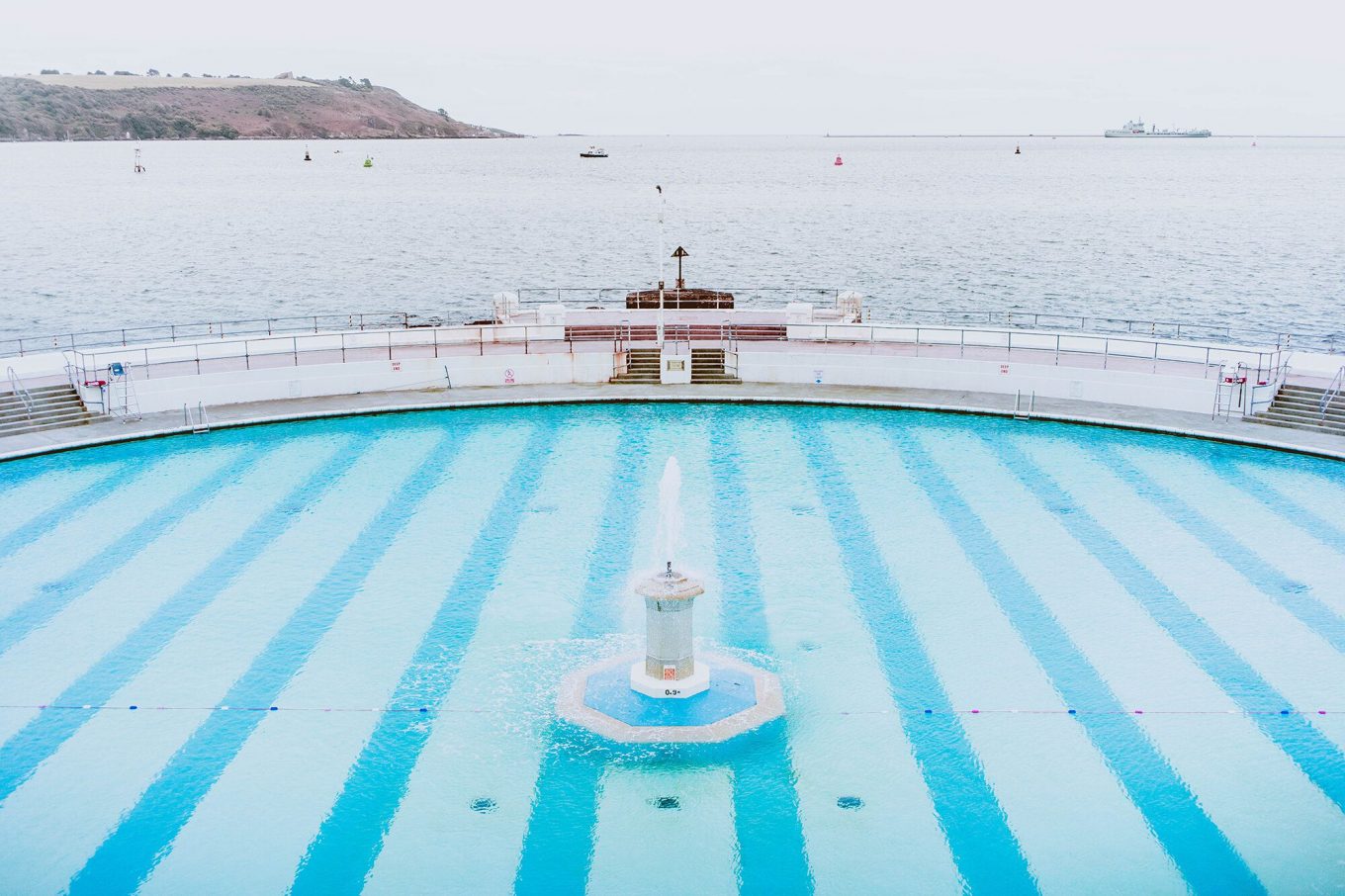
    Tinside Lido is Plymouth’s Art Deco seawater swimming pool built into the shoreline and cliffs in Hoe. This Grade II listed building was originally opened in 1935 and was a popular holiday for people living in the UK during the tourism boom in the early-mid 20th century. Unfortunately, for Tinside Lido, as international travel picked up towards the end of the century, fewer people visited and in 1992 it was closed and soon fell into disrepair. However, in 2002 funds were raised to restore the iconic outdoor pool and it was successfully reopened in 2005. Yay!

    So now for just £5 you can take a dip in a beautiful 1930s seawater lido where on one side you can admire the classic Art Deco architecture and on the other you can gaze out to sea. Warning, the pool is only ever 2 degrees Celsius above sea temperature so if it’s a chilly day, prepare for a shock! 

    When you’re done, pop over to The Terrace (just a 2 minute walk away) where you can get a cuppa to warm your bones after a cold swim or maybe a glass of wine on a sunny day whilst looking out at the lido.

    Though you can’t swim in the lido during the cooler months, you can still view it from a platform above the pool just off from the main road.

    PFH Fun Fact: Tinside Lido was featured in a BBC ident.

    If you’re visiting Plymouth in the summer, hang around Hoe Park at sunset to see the sun dip behind the hill, casting an array of peachy pink stripes across the sky.

    Opening hours

    The pool is open seasonally from 10.00 and each paid admission counts for a two hour swim.

    The C-19 pandemic has altered the lido’s open season, so check here before paying a visit.

    Ticket cost

    Adult £5

    Accessibility 

    There is a road side lift to take you to reception.

    There is an internal lift to the pool level.

    There is a hoist in the main pool.

    Dedicated toilets and changing rooms are available.

    COVID-19 restrictions

    Wear a mask at all times indoors.

    Please stay 1-2 metres away from others.

    6. Royal William Yard

    Unsure about what you fancy for dinner and need a variety of choices? Or maybe you want dinner somewhere steeped in maritime history, then head over to Royal William Yard. Royal William Yard is a Grade I listed building that used to be naval buildings but is now the top waterfront dining destination in the city as it’s filled with restaurants as well as a boutique, salon, hotel, wine merchant and brewery, plus there’s a monthly food market.

    Take no notice of Wagamama or Prezzo though as there’s far more exciting eateries including Le Vignoble with over 300 wines from around the world on offer and The Hook & Line where you can order from a menu of fresh seafood caught locally on the owners’ fishing boats.

    By the way, you’ll find the city’s first ever speciality rum bar at The Hook & Line, serving up a selection from all around the world including popular local rums. This is homage to the city’s and the restaurant location’s naval heritage. If ale is your poison, then try their signature ale: The Hook, Line & Sinker.

    COVID-19 restrictions

    Please use the provided hand sanitiser before and after entering.

    You must complete the track and trace form or log your location using the NHS Track and Trace app.

    Wear a mask at all times indoors unless you are seated at your table.

    Observe the one way system.

    Please stay 1-2 metres away from others.

    Table service only.


    I really enjoyed visiting Plymouth. Even without a particular interest in its naval history it’s wonderful to experience the city’s various nods to its maritime culture, whether it’s a tour at the distillery that used to supply the naval officers with gin, a swim in a seawater pool, a meal at a restaurant located in naval buildings or learning about the voyage of the Mayflower. 

    Gabriella

    Pin this post


  • 10 things to do in a day at St Ives, Cornwall

    10 things to do in a day at St Ives, Cornwall

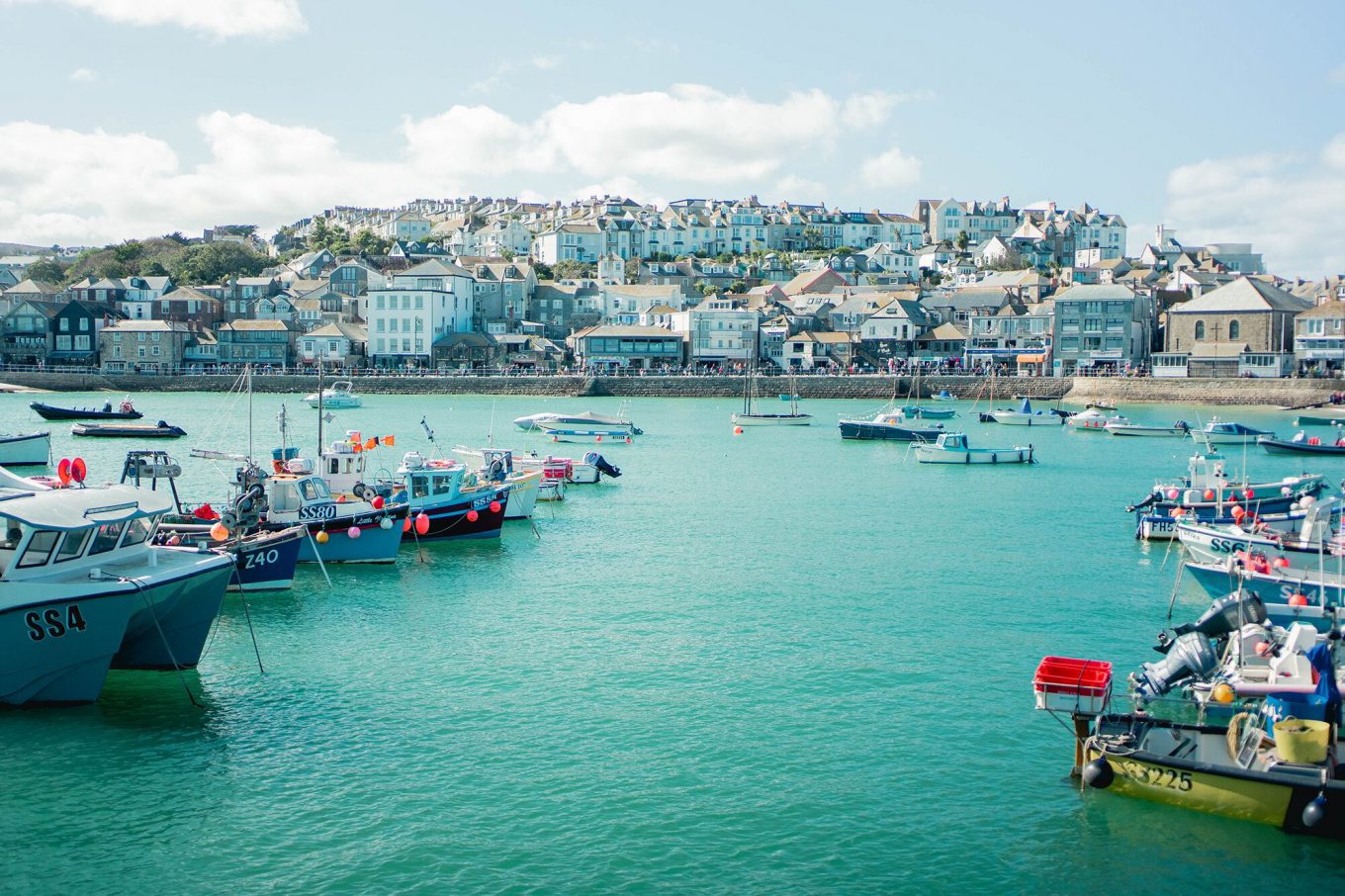
    St Ives is a seaside town in southwest Cornwall famous for its sun-trap harbour lined with restaurants and bars, art scene with more galleries than you can shake a paintbrush at – including Tate St Ives – surf beaches like Porthmeor and beautiful turquoise waters.

    Originally a fishing village, St Ives is now a seaside resort and is top of everyone’s Cornwall bucket list. Why? Because it’s a cute town with independent shops, pretty views and so many places to eat you’ll want to come back to try more. On that note, spending a day in St Ives by my guide involves a lot of eating so bring your stretchy pants, okay?

    What to pack in your bag for a day in St Ives


    • Reusable coffee cup – to responsibly get your hot drink to-go


    • Towel – to sit on when you’re on the beach


    • Face mask – to cover your face to protect others


    • Hand sanitiser – to protect yourself and others


    Remember to always wear your mask indoors and sanitise/wash your hands as often as possible.

    PFH Top Tip: Keep your face mask on in slightly busier areas such as Fore Street and Wharf Road. Also keep an eye out for a sign in the shopfront that tells you how many customers are allowed in at one time.

    1. Arrive early to get parked

    I guarantee if you ever hear someone recommending a day in St Ives, you will hear them say you must arrive early by car if you have any hope of getting parked. With roads barely wide enough for a single car, corners so tight you can’t but hold your breath when you creep around them, there’s very little parking opportunities in St Ives so the car parks fill quickly. 

    If you plan on driving you must arrive to St Ives before 8.30am to get a spot for your car. 

    The car park we used was The Island Car Park and it cost £8.20 to park all day.

    If you aren’t able to drive you can use the bus and train service. I’ve heard from a friend that the train ride in from St Erth is very scenic.

    2. Get coffee from Yallah 

    So I’ve made you arrive early to St Ives to get parked but you’re like, ugh Gaby, none of the shops are open yet. Make your way to the Yallah Kiosk on Wharf Road and grab a coffee to-go, they will make your coffee in your own reusable cup (yay!) so make sure to hand it over. Click here to read Yallah’s sustainability report.

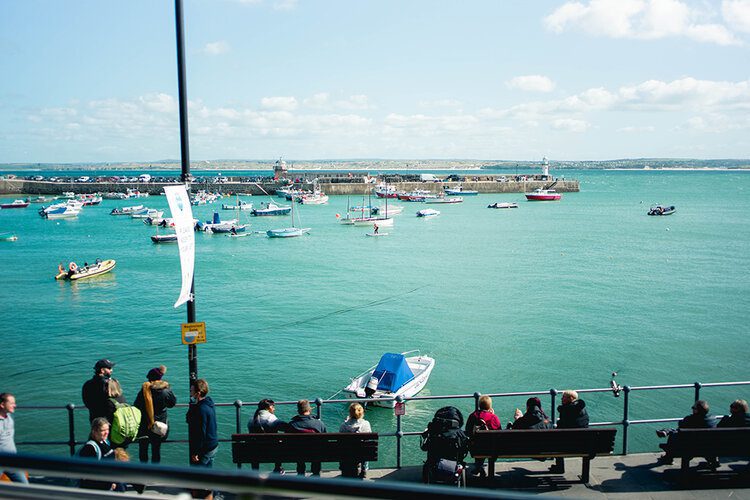
    Take your coffee to one of the benches on the other side of the road and gaze across the harbour at all the little boats bobbing around in the cool clear waters, waiting for the late morning sun to reach them.

    3. Try to spot seals from Smeaton’s Pier

    Take a leisurely stroll over to and along Smeaton’s Pier for a chance of spotting a seal. Catching a glimpse of a seal around St Ives is possible but known to be quite rare unless you take a paid boat trip over to Seal Island.

    Either way it’s a nice little walk to kill time before the shops, galleries and museums open, plus it provides the perfect spot to take a photo of St Ives with the little harbour in the foreground which you can see below.

    4. Visit Tate St Ives

    If you want to step up your gallery game (it’s possible that there’s almost as many galleries in Cornwall as there are Cornish pasties) then book tickets for Tate St Ives. Tate St Ives is an art gallery located just off from Porthmeor Beach that showcases a collection of modern art with local ties.

    The current exhibition “Modern Art and St Ives” is the first that you’ll visit and tells the story of modern artists who are connected to St Ives including Barbara Hepworth, Patrick Heron and Alfred Wallis.

    Hungry for more? Then head on over to the Barbara Hepworth Museum and Sculpture Garden. If you purchase a ticket here first, it’s a little pricer than the Tate ticket but it includes entrance to Tate St Ives.

    Opening hours

    Monday to Sunday 10.00–17.20

    Ticket cost

    Adult £9.50

    Children get free access

    Student £8.50

    Senior (60+) £8.50

    Job seeker £8.50

    People with disabilities £8.50 (companion gets free access)

    Accessibility 

    Each floor is accessible by lift.

    Three wheelchairs are available.

    Accessible toilets are located on the third floor.

    Large print guides printed on yellow paper are available upon request.

    A 10 min audio introduction that describes the architecture is available upon request.

    Guide dogs, hearing dogs and assistance dogs are welcomed.

    COVID-19 restrictions

    Please use the provided hand sanitiser before and after entering.

    Observe the one way system.

    Wear a mask at all times indoors.

    Please stay 1-2 metres away from others.

    5. Explore the nooks and crannies

    With its narrow winding streets that offer glimpses of the sea it’s easy to find charm in exploring the nooks and crannies of St Ives. Stumble across a cute cottage or two, an independent gallery and keep an eye out for special spots that looks like you could be peeping out at the shoreline of Positano. 

    6. Pick up a Saffron Bun from Ferrell S H & Son

    A saffron bun is a spiced bun similar to a tea cake. Yellow in colouring, thanks to the saffron, it sits proud and easily identifiable in the shop window of Ferrell S H & Son’s bakery on Fore St, a family run bakery that has been there since the 1960s.

    It’s a traditional Cornish treat and is up there on the must-try-whilst-in-Cornwall list that also includes:


    • Cream tea with Cornish clotted cream (preferably Rodda’s)


    • Cornish pasty


    • Yarg (cheese)


    Heads up, despite the C-19 pandemic, Ferrell S H & Son only accepts cash so have some to hand to get your bun.

    7. Shop on Fore Street

    Whilst on Fore Street, enjoying your saffron bun, potter around the shops. Here you’ll find some of the best independent shops in St Ives including all things surf, seaside themed and rum/gin focused. My favourites along this little street are:

    John’s Liquor Cellar

    Shopping in John’s Liquor Cellar is like stepping into a cave full of intoxicating treasures including locally crafted beers, wines and ciders but most importantly (for me anyway) gins. You’ll find a vast selection of local gins such as Tarquin’s, Trevethan and St Ives in all their available flavours including Trevethan’s pink grapefruit and lychee or Tarquin’s rhubarb and raspberry. They even sell miniatures so you can grab some souvenirs/stocking fillers for friends and family back home.

    Myrings of St Ives fudge and rock shop

    Myrings’ fudge recipe has been passed down through generations for over 30 years. It’s the perfect spot in St Ives to pick up a sweet treat for yourself or a loved one. 

    Cornwall soapbox

    Pick up some handmade soap, a shampoo bar and a candle to match from Cornwall Soapbox. Each soap is made with pure essential oils and organic African Shea Butter. They each smell amazing and even better, they reduce your plastic packaging waste as they’re wrapped in paper.

    The Sewing Room

    It won’t come up on google maps but it’s a little knitting and crochet shop selling needle, hooks, patterns and wool/yarn which will inspire you to make something or pick up kits as gifts for others.

    Yummy Scrummy Bakery

    Pick up a giant iced bun topped with hundreds and thousands before they sell out to the masses!

    8. Get ice cream from Moomaid of Zennor

    “Legend has it that a young Cornishman was lured into the sea by the beauty of the Mermaid of Zennor. Today you’re more likely to be seduced by Daisy, Primrose and Sid Vicious – just three of the cows that help make Tremedda Farm’s ice cream. They are the legendary Moomaids of Zennor.” – Moodmaid of Zennor.

    Once you’ve been into all the wonderful independent shops on and around Fore Street, pop into Moodmaid of Zennor for some locally made Cornish ice cream. Their ice cream is made with fresh ingredients and in small batches so they can ensure only high quality ice cream is going from scoop to tummy. 

    Their flavours run from traditional vanilla clotted cream to salted almond praline. Take it in a cone or a tub dressed up with the likes of brownie chunks and a stick of fudge. 

    WARNING! Cornish seagulls are buttheads and will take the food from your hand mid-flight. Whilst eating lunch on the beach in Port Isaac, a cannibalistic seagull took half of Michael’s egg mayo baguette from his hand and swallowed it whole as we looked on in horror. Be so careful with your ice cream when you eat it okay? Walking around with food by the shoreline in Cornwall is like entering shark infested waters with an open wound. Alright, even without my exaggeration I still advice you to eat quickly.

    9. Sit on the beach

    If it’s a lovely day out then spread out a towel on the sand and either lay back and soak up some rays of sunshine on Porthgwidden Beach or watch the surfers catching waves on Porthmeor Beach.

    10. Get dinner at Porthminster Kitchen looking out on the harbour

    Porthminster Kitchen is located on Wharf Rd and has an amazing view of the harbour, and oh, when the sun hits the water and it lights up to an electric cyan blue, it feels like you could be anywhere in the Mediterranean.

    The menu features dishes inspired by global cuisine but made with locally sourced Cornish ingredients. They’re sure to tickle your seafood fancies with a wide choice including scallops, squid, clams, mussels and more!

    If you’ve been around here for a while then you’ll know I’m somewhat partial to some fish and chips (fish and chips are life) and of all the chippies in all the land, I have never had mushy peas as good as I have at Porthminster Kitchen. Their spiced peas are like two fish and chips classic sides in one: mushy peas and curry sauce!

    Make sure to book in advance if you’re going to St Ives during peak spring/summer to avoid disappointment, card details are required to make the booking and you will be charged £15 if you don’t show for your booking without prior warning. If it’s forecast to be a sunny day, see if you can ask for a table outside.

    PFH Top Tip: if you can’t get booked into the restaurant for dinner, consider lunch at their café, Porthminster Café, located on Porthminster Beach.

    COVID-19 restrictions


    • Wear your face mask until you are seated at your table and make sure to wear it if you leave your table


    • Pay for your meal by contactless card


    • Observe the one way system


    • Try to keep a distance from others in the restaurant when you’re not at your table


    Travel safely,

    Gabriella

    Pin this post


  • How to spend a day in Clovelly, Devon

    How to spend a day in Clovelly, Devon

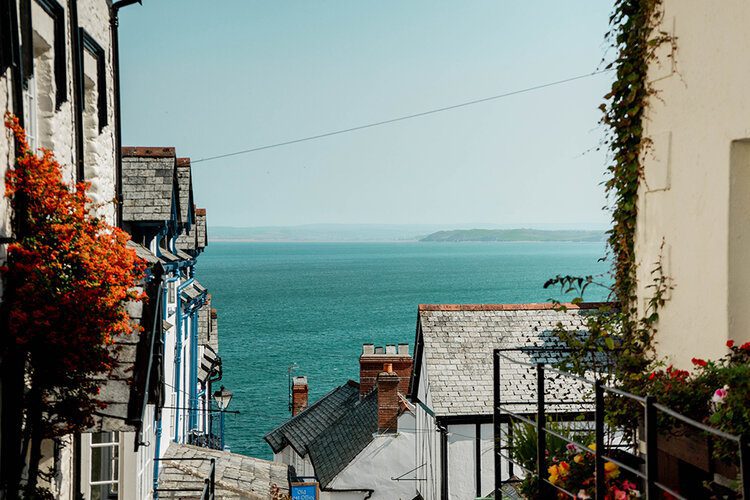
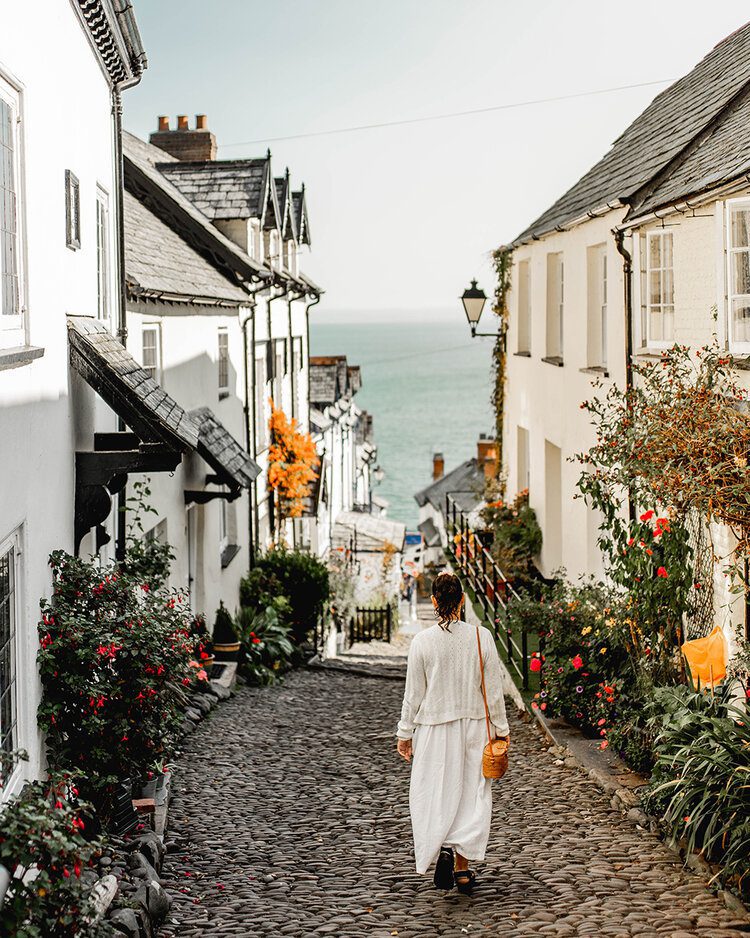
    With a series of white washed cottages cascading down towards the sea from a 400ft cliff edge, Clovelly, a small living fishing village in North Devon, is one of the most picturesque spots in the county. Appearing untouched for centuries, the tiny cobbled high street of Clovelly, inaccessible by vehicle, takes you back to a simpler time where life was enjoyed without the conveniences we take for granted today. 

    Once owned by the Royal Family, Clovelly has been in the hands of just three families since the 13th century. The village is still privately owned and all properties are rented and residence usually stays within a family for generations.

    We chose to visit Clovelly after watching a re-run of the Channel 4 documentary, “Devon and Cornwall” which explored the two counties’ treasures. Once I caught a glimpse on TV of this exclusive village, so lusted after that it requires an entrance fee, I wanted to see it for myself and I am so glad I did. Between shopping for handmade soap and candles from Clovelly Soap, learning about Rex Whistler’s iconic “Toile de Jouy” design from Clovelly Silk, enjoying a Devon cream tea with a view of the sea and exploring a steep, meandering path down to the 14th century quay, visiting Clovelly has been one of my favourite days out in England.

    Read on to find out what you need to know about visiting Clovelly, how we spent the day there and my tips on where to get the best photos.

    Visiting Clovelly

    Before getting into what to do and where to take the best photos in Clovelly, here’s the basics for getting access to the village:

    How to get there 

    Parking at the Clovelly Visitor’s Centre is included in the entrance ticket cost (see below for more).

    The village is located off the A39, 10 miles west of Bideford. Take Junction 27 to exit off the M5.

    The closest train station is Barnstaple and you can take a bus from there to Clovelly.

    Buses also run to Clovelly from Bideford.

    Entrance cost

    Adult: £7.95

    Child (aged 7 – 16): £4.60

    Children under the age of 7 get free entrance

    Family including 2 adults and 2 children: £21

    Season tickets are £26 per adult and £62 per family

    Ticket costs are for 1st April 2020 – 31st March 2021

    Dogs on leads are welcomed

    Opening hours

    Clovelly is open every day except Christmas and New Year’s Day.

    9am – 5pm April – November

    10am – 4pm November – March

    PFH Top Tip: for free entry to Clovelly, visit on Boxing Day.

    You’ll want to allow around three hours for visiting Clovelly to make the most of your time there.

    Covid-19 restrictions

    You must wear a face mask when entering the Visitor’s Centre, museums and shops. 

    Wash your hands as often as possible and use hand sanitiser frequently.

    You are required to fill out a Track and Trace form at the ticket desk.

    Do not visit Clovelly if you are showing any signs of being sick.

    Try to keep at least 1m away from others.

    The Visitor’s Centre has a one-way system. 

    Accessing the village 

    The village is built into a 400 foot cliff and is only accessible by foot down a steep cobbled path. It is very important that you wear comfortable shoes as the high street is made with stones from the beach that are uneven and slippery so you will slip without a decent tread on the soles of your shoes.

    Unfortunately due to the nature of the village being built into a cliff, there is no level access to the village, however the Visitor’s Centre, Mount Pleasant and craft shops (where you’ll find Clovelly Silk, Clovelly Soap and Clovelly Pottery) are accessible.

    Usually, between Easter and October, there is a Land Rover service that offers rides back up to the Visitor’s Centre from the bottom but due to COVID-19, that service has been suspended.

    Start at the Visitor’s Centre and make your way straight down into the village (you can visit the shops on the way back up) as it’s your best chance of seeing the high street empty and therefore the most ideal time to get the best photos of the most photogenic part of the village. I recommend arriving within the first hour of the village opening as it’s the best opportunity to get photos from the top of the high street without other people wandering the street.

    PFH photo guide

    Want photos of Clovelly for the ‘gram or to capture beautiful memories? Well you’re in the right place, there are at least three spots that you will want to take photos of whilst in Clovelly so let me take you through where they are and what time to get there for your best chance of people-free photos:

    1. Clovelly high street

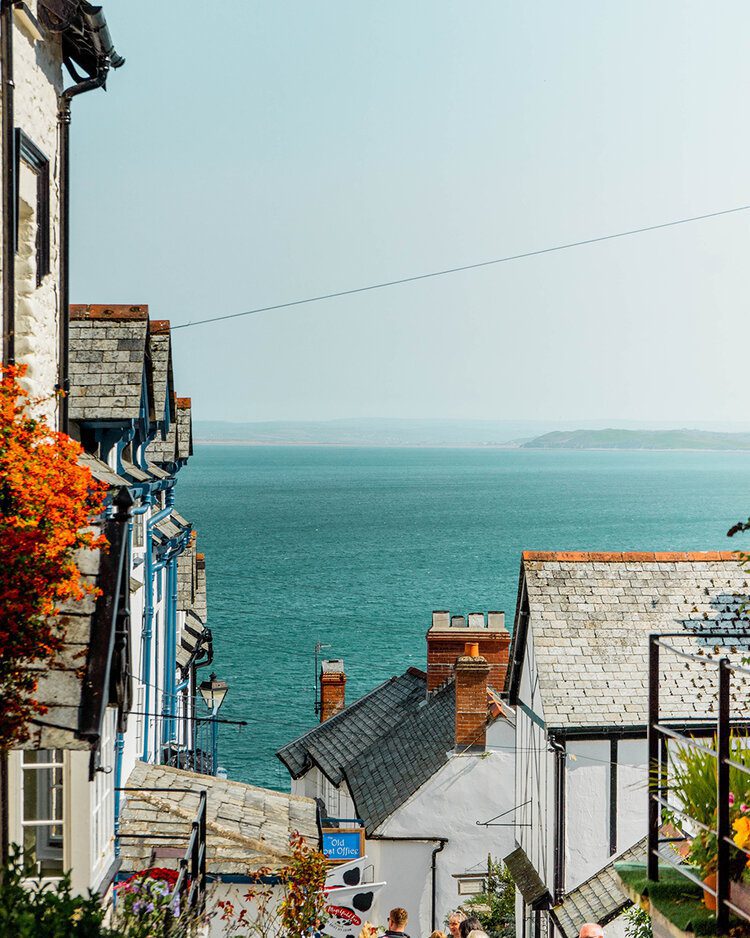
    Take a snap from the top of the high street looking down towards the sea. The high street is iconic as it’s only accessible by foot, or in past times by donkey so you won’t get a single car in your shot. The narrow, cobbled path down is sandwiched between centuries old cottages decorated by flowers with the odd cat silently judging your arrival to their village.

    As mentioned, the cobbled path is the only way into the village so arrive early to get the best chance of an empty street.

    Walk a little further down the path towards the quay to capture more beautiful photos as the sea becomes visible between the cottages, before making your final descent down to the beach.

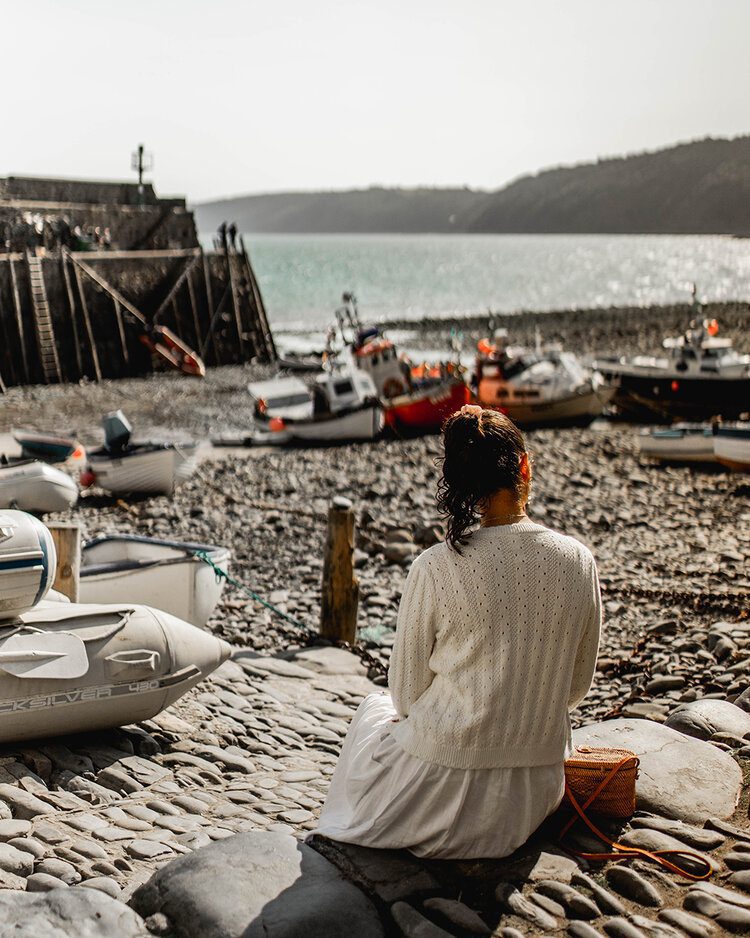
    2. Clovelly quay

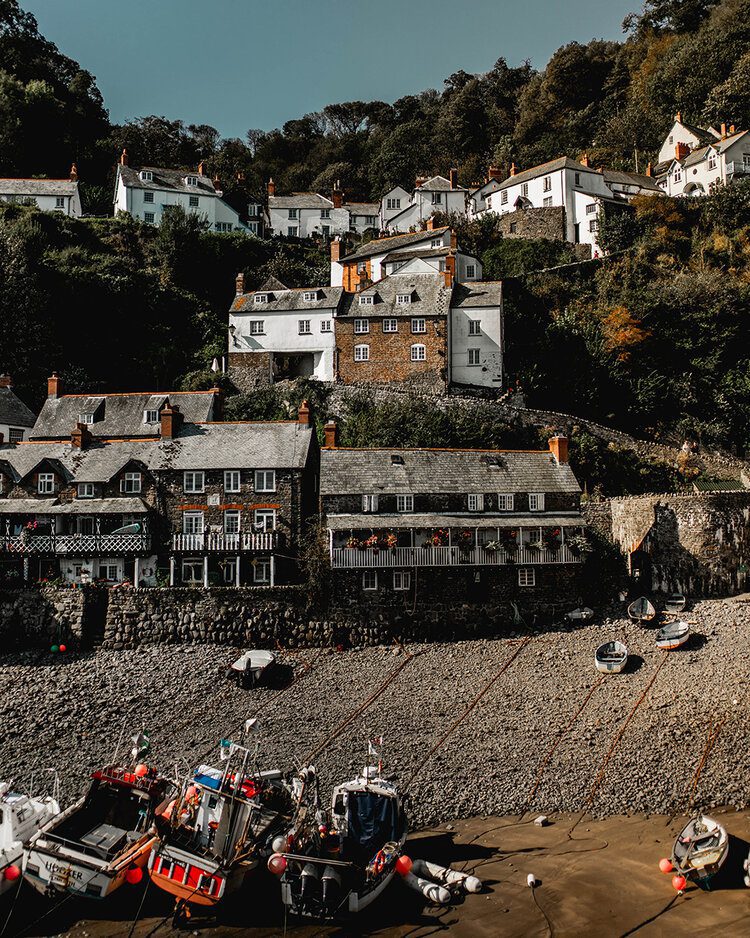
    Make your way down to the end of the high street to get access to Clovelly quay and the beach. If you specifically want the quay either full of water or dry then you will need to check the tide times here. We went at low tide, which is why the boats are on the ground.

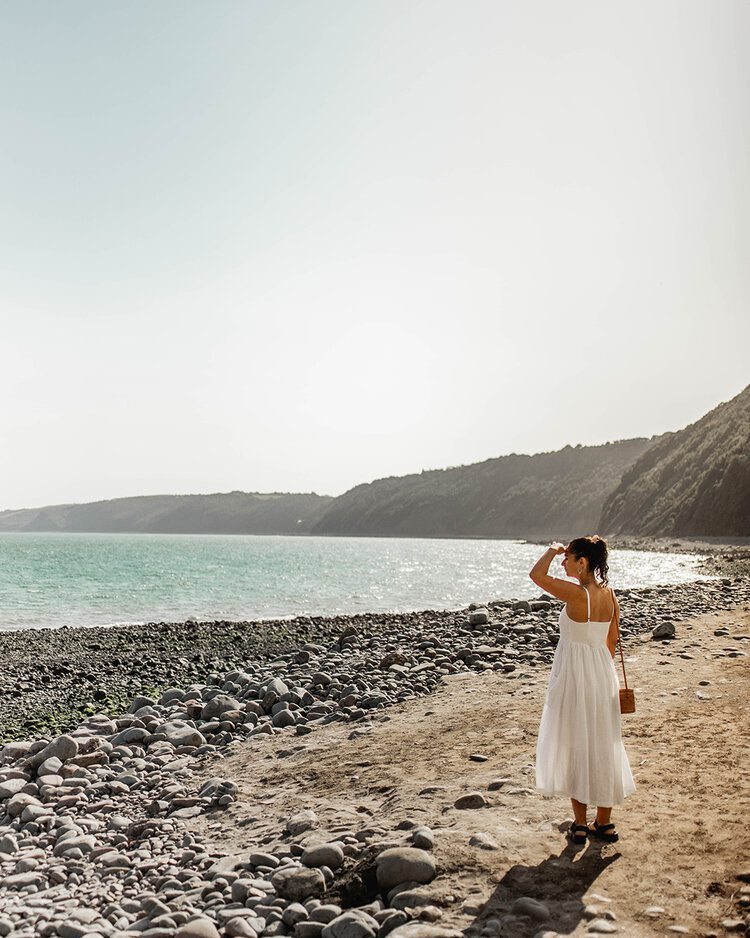
    Take snaps around the quay then take a walk along the beach with the sea to your left. At low tide you’ll be able to walk out to the shore and look back at Clovelly to take photos of it appearing to tumble down into the sea. 

    Heads up, it’s not a sandy beach so if for some reason you decided to ignore my advice earlier when I said wear comfortable shoes, then PAY ATTENTION NOW; the stones are wobbly because the changing tide is forever displacing them and many are covered in seaweed and algae making them slippery, so wear practical shoes so you don’t snap an ankle, capeesh?

    3. Cottage Tea Rooms

    Read more about eating at the Cottage Tea Rooms below under “what to do in Clovelly”, but I’ll quickly tell you which table to sit at to get the best photos of you enjoying a Devon cream tea with a stunning backdrop. 

    Order to eat in the garden and head straight to the back, right past all the benches, and up to the next cottage’s front door. There on the left, you will find two large chairs, attached to a small table in the middle, looking out to sea. This is the best table as it’s the only one that faces directly towards the sea, not side on like the others, and there’s enough space to get behind it to take photos (or get someone else to take photos of you) of your Devon cream tea and the sea.

    This only works if there’s two of you, I should note as well, there’s only two chairs. If there’s more of you then you’ll have to pick a larger table closest to the sea view and sulk about not being able to sit at the best table I’m afraid.

    What to do in Clovelly 

    With a slight crossover from my little Clovelly photo guide, here is where I expand on how you can spend your day exploring this picturesque village.

    Walk along the beach

    Once you’ve explored the quay that has been keeping boats safe from the wrath of the sea since the 14th century, take a stroll along the pebbled beach to take a look back up at the village, taking in all of its charm including the Lifeboat house which was first in service in 1870 and the oldest cottage in Clovelly, Crazy Kate’s Cottage. The cottage with its long balcony looking out towards the harbour has a sad story behind its name but is one of the villages defining features. At high tide the water comes straight up to the foundations of the cottage.

    As I mentioned in my photo guide, where you can walk to on the beach depends on the tide. If the tide isn’t high, you’ll be able to safely walk along the beach where you’ll find Clovelly Waterfall. Legend has it that Merlin the Arthurian magician was born in the cave behind this waterfall. 

    Cream tea with a view

    A first glance of the village might tell you to get a Devon Cream Tea from the Red Lion pub and sit on the tables outside looking out across the quay but this is not the path for you, oh no, I have something much better for you. Once you have began your ascent up from the beach, take a left into the Cottage Tea Rooms and order to an outside table in the garden around the back of the cottage. 

    If you’ve read my photo guide above then you’ll know which table to go for, if you haven’t then do yourself a favour and scroll up to read it instead of skipping ahead! Aim for an early lunch to beat the lunchtime rush so you have a better chance of getting a seat.

    Their menu offers light lunches, snacks, cakes and cream tea, including a gluten free scone option. Remember in Devon, the cream goes first!

    Fisherman’s Cottage and Charles Kingsley museums

    Just up along from where the tea rooms are located and on the same side is the Fisherman’s Cottage Museum. Pop inside to take a glance at what home life looked like for a Fisherman’s family in the 1930s. The rooms are decorated with period pieces, some of which have been donated by families that have lived there for generations. As you enter you will find an original well that helped to provide the village with water before the main water line was installed. There’s also a collection of framed wedding photos dating back to to the late 1800s.

    Attached to the Fisherman’s Cottage Museum is the Kingsley Museum. Charles Kingsley (1819-1875) was a Victorian writer who grew up in the village. His most famous pieces are “The Water Babies” and “Westward Ho!”. His work is known to have drawn visitors to the village.

    Both the museums are free to enter under the cost of your admission ticket.

    Shopping in Clovelly

    Shopping in Clovelly is a real treat as the craft workshops offer an array of handmade items perfect for personal souvenirs and gifts. What’s particularly precious about the Clovelly workshops is that the fabrics and soaps encourage creativity and self care, they inspire you to do more than buy something to take home, but instead to indulge yourself in a rewarding sewing project or an aromatherapy bath that’s both healing for your soul and a lasting memory of your visit to Clovelly.

    Clovelly Silk 

    Clovelly Silk was one of my favourite parts of visiting Clovelly. The workshop is owned and ran by a couple, Ann and Bill Jarvis who have a rich history in the textiles industry; Ann was head of Liberty of London’s design studio for 10 years where she worked on some of Liberty’s classic prints from their archives whilst designing new ones for their dress and furniture lines. You can purchase a Liberty print bag from their small collection in their shop.

    Please ask permission before taking photographs of their workshop.

    Clovelly Silk is most famous for Ann’s creation of their custom repeating print, “Toile de Jouy” which she created using six of world famous artist, Rex Whistler’s, illustrations of Clovelly which he originally made in 1932. Their “Toile de Jouy” print is available to buy on cushion covers, tea towels and even face masks in six colours. Alternatively, you can buy some fabric to create something yourself for just £25, how’s that for the most darling and personal souvenir of Clovelly?

    Toile de Jouy in Emerald Green.

    As much as I want to keep sharing about Clovelly Silk, I want to you learn about Rex Whistler’s illustrations and the story behind “Toile de Jouy” yourself from Ann and Bill Jarvis because they are such wonderful people with so much passion for their work and pride in the village.

    PFH Fun Fact: HRH The Princess Royal own a “Toile de Jouy” silk scarf.

    Clovelly Pottery

    Need a new mug for your morning cuppa or fancy egg and soldiers out of some handmade egg cups decorated with a pattern unique to Clovelly? Well isn’t that that convenient as Clovelly has its very own pottery workshop selling a collection of work from Clive Pearson and Caroline Curtis.

    Clovelly Soap

    The Clovelly Soap Shop not only sells intoxicating handmade soap wrapped in their custom designed paper, but it also sells all the eco-friendly pampering accessories your heart desires including matching candles, organic cotton towels, bamboo hair wraps and more.

    Their plastic-free artisan soap collection includes:


    • Hand soap


    • Beard wash


    • Shampoo


    • Dog shampoo


    (psst, they take American Express and participate in Shop Small, so if possible, line up your visit when that offer is on).

    Clovelly Fudge

    Back up at the Visitor’s Centre, there’s a small shop selling handmade Clovelly fudge in ever changing seasonal flavours. Perfect for a sweet treat for yourself or a gift to take home.

    Clovelly Court Gardens

    Before leaving, visit the Clovelly Court Gardens that are located at the top of the village. The Victorian walled garden is included in your entrance ticket and features glass greenhouses filled with Mediterranean flora and fauna, which can grow thanks to a maritime microclimate. Unfortunately we didn’t learn of the Clovelly Court Gardens until we had already left so I don’t have any photos for you.


    If you take a trip to North Devon, be sure to add Clovelly to your list! I want to add that there are two hotels in the village, The New Inn at the top of the high street and The Red Lion down at the quay, so should you be interested in extending your stay in the Clovelly, those are your options. 

    .

    Gabriella

    Pin this post


  • 8 best things to do in Bristol, England

    8 best things to do in Bristol, England

    Located in South West England between Gloucestershire and Somerset, Bristol is uniquely its own county which is very fitting of the city’s forward thinking and progressive aura. In stark contrast to its torrid past of transporting hundreds of thousands of enslaved Black people to the Americas, the city now fights hard for racial equality and against climate change; winning the EU’s European Green Capital Award in 2015 and famous for the pulling down of the statue of Edward Colston, an 18th century member of parliament who was heavily involved in the transatlantic slave trade.

    Virtute et industria (with courage and industry).

    Up until the industrial revolution, Bristol was one of England’s leading cities. Through the 19th century, Bristol was a pioneering city in engineering with the likes of Victorian engineer, Isambard Kingdom Brunel, designing the Great Western Railway, the grandmother of all modern day ships, SS Great Britain and the Clifton Suspension Bridge. 

    These aren’t Bristol’s only claims to fame, the city is also home to world famous artist Banksy, multiple Academy Award winning animation studio Aardman (creators of Wallace and Gromit, Chicken Run and Peter Gabriel’s Sledgehammer music video), Sir Allen Lane created the first ever paperback book (Penguin paperbacks) there and Elizabeth Blackwell, England’s first woman doctor was born in Bristol.

    Aside from being a hub of creativity and a great place to visit with much to do and see, it’s also a stone’s throw away from the quaint villages of the Cotswolds and ancient Roman remains in Bath.

    1. Clifton Suspension Bridge

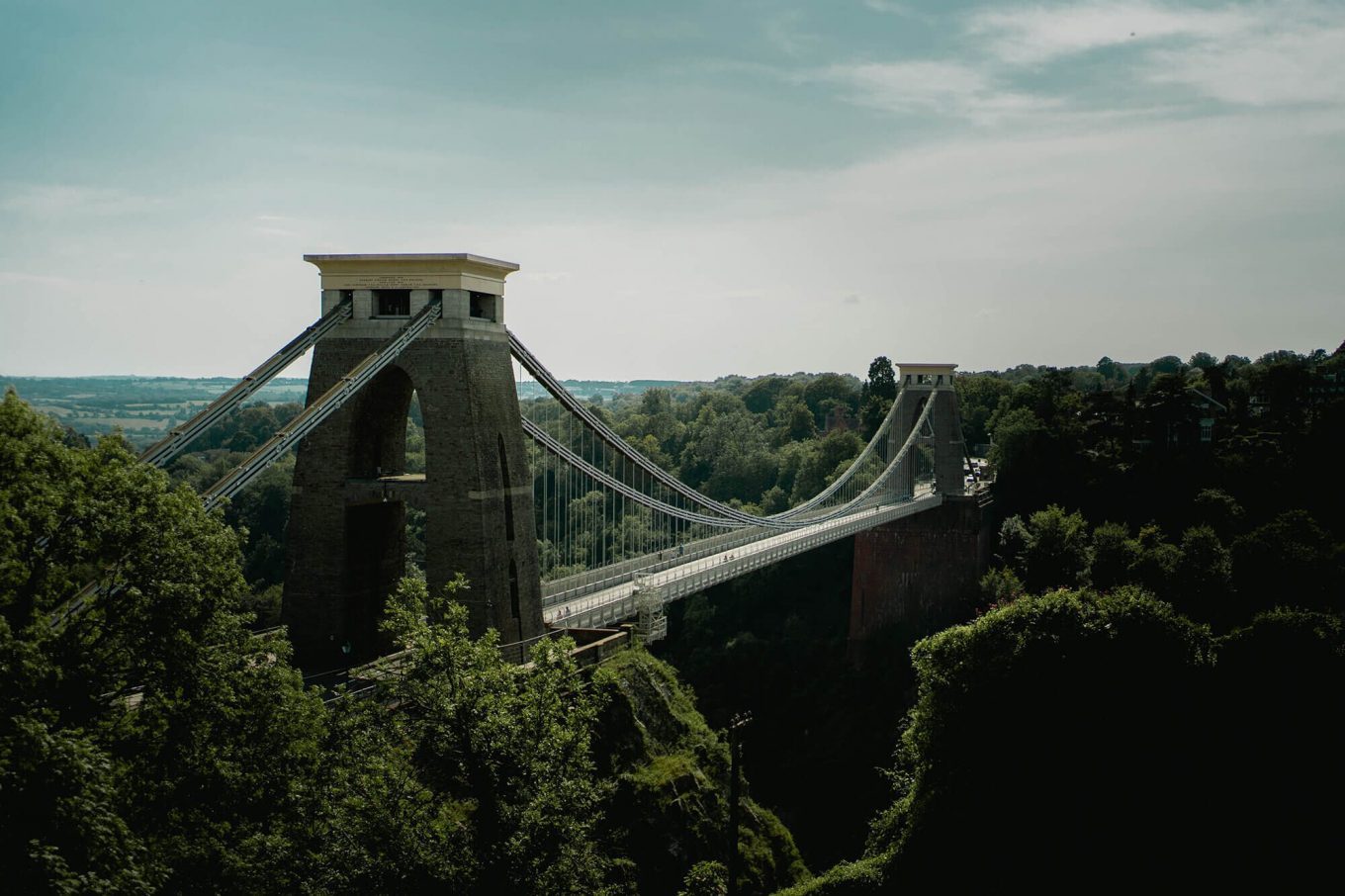
    Clifton Suspension Bridge is Bristol’s most iconic landmark. Designed by Victorian engineer, Isambard Kingdom Brunel, it took 33 years to build and is one of the oldest surviving iron suspensions bridges in the world. Sitting 245ft above high water, it first opened in 1864 and is still fully functioning as a crossing over the River Avon, now a Grade I listed building.

    There are multiple spots to see and capture Clifton Suspension Bridge from. To name a few you can cross the bridge, look down at it from Clifton Observatory or up at it from Hotwell Rd below.

    The best time to see Clifton Suspension Bridge though is annual Bristol Balloon Fiesta (which I didn’t know existed until I reached Bristol a mere few days after it finished). What’s the annual Bristol Balloon Fiesta? Good question. Every August, countless hot air balloons take to the sky above the bridge and on two evenings (a Thursday and a Saturday) from 6pm until midnight, the bridge closes during the Fiesta Night Glow, which is when the sun goes down and the multiples burners dot the sky like giant fireflies. Yeah, I can’t believe I missed it either.

    Ticket cost

    Should you need to drive over Clifton suspension bridge, it costs £1 per motor vehicle, including motorcycles.

    COVID-19 restrictions

    The pedestrian walkway currently has a one way system and doesn’t allow for stopping.

    2. Street graffiti including Banksy pieces

    Bristol’s graffiti scene is world famous thanks to it being the birthplace and live exhibition of the elusive graffiti artist, Banksy. See some of his most iconic pieces first hand such as “Girl With the Pierced Eardrum” (2014) with her 2020 COVID-19 face mask addition in Albion Docks in Hanover Place and “Well Hung Lover” on the side of a sexual health clinic on Frogmore Street. Bristol’s most recent Banksy addition went up on Valentine’s Day 2020 on Marsh Lane in Barton Hill and features a young girl catapulting a firework of red flowers.

    For a guide to Banksy’s artwork across the city, download the Banksy Bristol Trail by Cactus Apps for IOS here and Android here.

    Banky’s isn’t the only graffiti worth viewing across Bristol though, in fact the city is home to over 200 street artists and graffiti writers. I recommend heading to North Street for an exhibition of powerful and thought provoking pieces commenting on current affairs including climate change, racial inequality and the COVID-19 pandemic. 

    I particularly recommend seeing the giant Greta Thunberg tribute mural on the side of the Tobacco Factory (one of the most highly coveted walls for street art in Bristol) in the Aldi supermarket car park, which went up in 2019 and was painted by Jody Thomas.

    Bristol is home to Upfest, Europe’s largest urban arts festival. Unfortunately it has been postponed this year (2020).

    3. Bristol Beer Factory

    Is beer your choice tipple? Then head to the Bristol Beer Factory Tap Room for a flight or pints of their on tap ales, stouts and wheat beers, then shop what took your fancy in their bottle shop attached to the bar. 

    Take the sustainable route when you shop and purchase one of their reusable bottles so you can fill it with whichever beer of your choice. Their refillable container options and prices are:


    • £5/ltr Cask


    • £6/ltr Keg


    • £8 to fill a BBF growler


    The Bristol Beer Factory began brewing in 2004 but it wasn’t the first brewery to work out of their current building. It was Ashton Gate Brewery who began brewing there back in the 1820s, to read more, click here.

    Pre-pandemic, Bristol Beer Factory offers Brewery Tours for £20 per person. I’m sure these will start again when the pandemic has improved, so if this interests you, keep an eye out here.

    You can also grab a BBF pint across the city in various pubs. Our personal favourite was Grain Barge which is a floating bar and restaurant in Bristol Harbour. I seriously recommend eating here because their dishes are made with local produce and taste amazing (they have really great vegetarian options) and the view from the top deck is a real treat.

    Opening hours for BBF Tap Room bottle shop and bar

    Closed on Mondays

    Tuesday 12pm – 6pm

    Wednesday 12pm – 9pm

    Thursday 12pm – 10pm

    Friday & Saturday 12pm – 11pm

    Sunday 12pm – 6pm

    COVID-19 restrictions

    Please use the provided hand sanitiser before and after entering.

    Complete the Track and Trace form with your contact details.

    Pay for drinks by contactless card.

    Please stay 1-2 metres away from others.

    4. Floating Harbour

    Bristol Harbour has been in use since 13th century and in 1806, 80 acres of the tidal river were impounded to create a permanent floating harbour. It was a commercial port until 1975 when the waterway was getting too crowded and ships were getting bigger and struggling to pass through to the central port. 

    It has since been transformed into a residential and leisure area with the waterway now home to floating pubs, house boats and rental companies offering up paddle boarding and kayaking.

    The views of the River Avon with its backdrop of rainbow houses climbing up the city hill are so beautiful and worth a visit, so for the best spot, head to Bristol Marina. 

    5. Everyman Theatre

    Everyman Theatre brings a touch of Hollywood glamour to your movie viewing experience within their three screening rooms. Order at the bar from a choice of snacks, soft drinks, shakes and cocktails and it will be served to you at your luxury sofa seat just before the movie starts.

    Choose from both new and previous releases, plus theatre recordings, from the listings announced every Monday for the week ahead.

    Opening hours

    10am daily (or half an hour before the first film of the day, if earlier).

    There are numerous Everyman Theatres across the UK, find out their locations here.

    Ticket cost

    Adult £11.40

    Child  (up to age 14) £7.40

    There’s an online booking fee of £1.50 per transaction.

    COVID-19 restrictions

    Please use the provided hand sanitiser before and after entering.

    Pay for tickets and refreshments by contactless card.

    It is not required but it is recommended that you wear a face mask when not eating or drinking.

    Please stay 1-2 metres away from others when out of your seat.

    6. Charity/second hand (thrift) shops on Gloucester Road

    For the best second hand charity shopping (that’s philanthropic thrifting for my North American folk) head to Gloucester Road. The charity shops on Gloucester Road carry both your usual second hand clothing, accessories, books and homeware plus vintage numbers and don’t charge you marked up prices that require signing off your first born (you know the kind of vintage shops I mean). I managed to pick up a couple of Marks and Spencer St. Michael dresses (a clothing line that dates back to the 1920s) for less than £15 each and a Liberty of London silk scarf for just £9.99. 

    I highly recommend spending a few hours browsing each charity shop on both sides of the street hunting for gems. My personal favourite stores were Shelter, Cancer Research UK and St Peter’s Hospice.  

    One of the vintage dresses I found on Gloucester Road.

    There are also numerous eco-conscious shops on Gloucester Rd selling everything from bulk buy food products to sustainably sourced clothing.

    COVID-19 restrictions

    Fitting rooms are closed – check with the sales assistant if they allow returns should it not fit.

    Please use the provided hand sanitiser before and after entering.

    Pay for items by contactless card.

    Wear a face mask at all times in the shops.

    Please stay 1-2 metres away from others.

    7. St Nicholas Market

    Open since 1743, St Nicholas Market, also known as St Nicks Market, is Bristol’s oldest market. It has over 60 stalls selling nicknacks, fabrics, food, kitchenware, toiletries, clothing and more. The glass arcade is where you will find the food stalls selling a multitude of cuisines.

    Opening hours

    St Nicholas Indoor Market Monday – Saturday 9.30am – 5pm

    Bristol Farmers’ and Producers’ Market Wednesdays 9.30am – 2.30pm

    Street Food Market Tuesdays and Fridays 11am – 2.30pm 

    Bristol Indies Market Fridays and Saturdays 10am – 5pm

    COVID-19 restrictions

    Please use the provided hand sanitiser before and after entering.

    Where possible, pay by contactless card.

    There is a one way system in place.

    Wear a mask at all times indoors.

    Please stay 1-2 metres away from others.

    8. SS Great Britain 

    Dubbed the grandmother of all modern day ships, Brunel’s (the same guy who designed the Clifton Suspension Bridge) SS Great Britain is one of the most important historic ships in the world. Launched in 1843 by Prince Albert she was the first ship of her size to be built from iron and the first to feature Brunel’s newest invention, a screw propeller, to replace paddle wheels.

    SS Great Britain was in service right up until 1933, an extraordinarily long time. In 1970 she was transported back to Bristol where she was restored and placed on display so that you can tour this innovative masterpiece and accompanying exhibitions.

    Opening hours

    Thursday – Sunday 10am – 6pm.

    Ticket cost

    Adult £18

    Child  (5-16) £10

    Student £15

    An adult accompanying a person with disabilities. gets free access

    Family ticket including 2 adults & 2-3 children £48

    COVID-19 restrictions

    Wear a mask at all times indoors.

    Please use the provided hand sanitiser before and after entering.

    Pay for tickets and souvenirs by contactless card.

    There is a one way system in place.

    Interactive exhibitions are supervised.

    Please stay 1-2 metres away from others.


    Bristol is such an innovative and progressive city, they embrace creativity and change for the better. It’s an inspiring city to visit, with plenty to do and see from drinking at an independent brewery to seeing world famous street art and from learning about centuries old engineering to shopping second hand whilst raising money for charity. 

    Bristol was an absolute delight for me and I really hope you get the opportunity to visit one day.

    Gabriella

    Pin this post


  • 5 top things to do in Memphis, Tennessee

    5 top things to do in Memphis, Tennessee

    In September 2019 Michael and I based a road trip through Tennessee, Texas and Louisiana around my creative immersion retreat with Andi Eaton, founder of Oui We, in New Orleans. 

    Our road trip featured stays in Nashville, Memphis, Dallas, Houston and New Orleans. It was a lot of hours on the road to fit them all into 2 weeks so we only had one night in Memphis with the priority being to visit Graceland. Here are the 5 top things I recommend doing whilst in Memphis:

    1. Graceland

    As I just mentioned, Graceland was the purpose of our one night stop in Memphis. 

    There are four experiences available when visiting Graceland, here’s a quick summary of what’s included:

    Ultimate VIP tour

    This top dollar tour gets you a guided tour around the Graceland Mansion, a self-guided tour of Elvis’ jets and full access to Elvis Presley’s Memphis Entertainment Complex which includes: the Presley Motors Automobile Collection, The Entertainer Career Museum and the discovery exhibits. You also get access to the VIP exhibit, a meal voucher and a show and tell session with the personal Graceland Archives.

    Elvis Entourage VIP tour

    Skip the lines with this tour ticket that includes an audio-guided tour of the Graceland Mansion, a self guided tour of the VIP exhibit and Elvis’ jets and full access to the Elvis Presley’s Memphis Entertainment Complex which includes: the Presley Motors Automobile Collection, The Entertainer Career Museum and the discovery exhibits.

    Elvis Experience tour

    This is the tour that Michael and I chose to go on because it was the cheapest ticket that gave access to the Graceland Mansion (audio tour included) plus it includes a self guided tour of Elvis’ jets and full access to the Elvis Presley’s Memphis Entertainment Complex which includes: the Presley Motors Automobile Collection, The Entertainer Career Museum and the discovery exhibits.

    Elvis Presley’s Memphis and Planes tour

    The cheapest ticket of the set includes the self guided tour of the jets with full access to the Elvis Presley’s Memphis Entertainment Complex which includes: the Presley Motors Automobile Collection, The Entertainer Career Museum and the discovery exhibits but it does not include a tour of the Graceland Mansion.

    Visiting Graceland was both exciting and sad. On the one hand it was amazing to see the original decor of the Mansion from the kitchen to the famous Jungle room and I was thrilled to see his costumes all the way from his movies to his live performances. However, it would be terrible not to acknowledge that Elvis was thrust into an unfathomable level of fame extremely young and was extorted for his talent up until his untimely death at just 42 years old. I mean, let’s face it, touring the man’s house and belongings doesn’t exactly honour him as much as it does make A LOT of money. Elvis’ talent, voice and movies continues to transcend across the eras though and as long as it does, the option will always be there to visit his home and final resting place.

    Opening hours

    Though Graceland has officially reopened after temporarily closing due to the COVID-19 pandemic, I encourage you to check here before visiting to see if their opening hours have changed since the publication of this blog post.

    New safety measures include the mandatory wearing of a face mask and all visitors will undergo a temperature check before entering. If your temperature registers as 100.4°F and over (38°C and over) you will not be permitted to enter.

    Open 9am – 5pm Monday – Saturday and 9am – 4pm on Sunday.

    Ticket costs

    Ultimate VIP tour

    $180 per person

    Children under the age of 2 are free

    Elvis Entourage VIP tour

    $108.50 per person

    Children under the age of 2 are free

    Elvis Experience tour

    Adult: $69

    Children aged 5-10 yrs: $38

    Seniors (65+): $62.70

    Children under the age of 4 are free

    Elvis Presley’s Memphis and Planes tour

    Adult: $41.50

    Children aged 5-10 yrs: $21

    Seniors (65+): $37.35

    Children under the age of 4 are free

    Click here to purchase tickets in advance and to review who is eligible for a discount.

    PFH Top Tip: If you are on a budget but still want to pay your respects to Mr. Presley, there is the option to do a walk-up visit to the Meditation Garden where Elvis’ and his families graves are located (this is also accessible with all tickets that include a tour of the mansion). Walk-ups are allowed between 7.30am – 8.30am daily from the gates of Graceland. However due to the COVID-19 pandemic, walk-ups are temporarily suspended.

    Accessibility 

    Audio guides are given in the form of iPads and are fully captioned with visuals. Except for the two basement rooms of the Graceland Mansion which are only accessible by stairs, all rooms that are toured in the Graceland Mansion are wheelchair accessible. If the visitor in the wheelchair can walk they may take the stairs down, if they cannot, there is a video option for touring the rooms available to them. The Lisa Marie and Hound Dog II airplanes are not wheelchair accessible.

    2. Sun Studio

    The Legendary Sun Studio is known the world over as the “birthplace of Rock n’ Roll”. B.B. King, Johnny Cash, Jerry Lee Lewis and The King himself, Elvis Presley, all recorded here and now that the studio has been transformed into a museum, you too can walk these very hallowed halls as they did, way back when, better yet, you can stand in the very spot where Elvis first recorded. The museum is full of memorabilia and the tour features live recordings of sessions.

    Opening hours

    New safety measures due to the COVID-19 pandemic include the mandatory wearing of a face mask and all visitors will undergo a temperature check before entering. If your temperature registers as 100°F and over (37°C and over) you will be denied entry.

    Open 10am – 6.15pm every day.

    Tours operate every hour on the half of the hour from 10.30am – 5.30pm.

    Ticket costs

    All tickets are sold in person on the day.

    Adults: $15

    Children aged 5-11 years are free

    Children under the age of 5 aren’t allowed access

    Accessibility 

    In 2003, the building was designated a National Historic Landmark and therefore renovations cannot be made to the studio. The gift shop/cafe is wheelchair accessible but the first half of the tour is inaccessible due to a staircase, the second half in the studio is accessible.

    3. Beale Street

    Beale Street, dubbed “Home of the Blues” is the most famous street in Downtown Memphis. With 24 bars and restaurants it won’t be hard to find a spot to listen to some of the biggest Blues and Country hits ever recorded.

    Beale Street has an interesting history of gambling, drinking and murder that goes beyond the party central location it is known as today. Click here to read more about it on the Beale Street website. 

    On Friday and Saturday nights, a security checkpoint goes up at 9pm checking that anyone entering the street is 21 or older. Minors already on the street may stay up until 11pm with an adult, after 11pm it’s 21 and over only. The street is basically an open air club.

    4. The Peabody

    The Peabody Hotel is one of the most legendary hotels in Memphis. Originally it was on the corner of Main and Monroe but was later moved to its current location of Union and 2nd St. Despite the rebuild it has always been considered the “South’s Grand Hotel”. It’s not the design of the hotel nor the famous guests that make it world famous though, nope, it’s the ducks. 

    Ever since 1933 when the General Manager of the hotel returned from a hunting trip with the ducks in tow, the resident Peabody Ducks have marched to and from the fountain, through the grand lobby of the hotel at 11am and 5pm every single day. How did these ducks suddenly conform to marching a red carpet? Bellman Edward Pembroke was a former circus animal trainer who decided to train them to do the now-famous Peabody Duck March. Mr. Pembroke became The Peabody Duckmaster, serving for 50 years until his retirement. Others have taken on the title, with many, many ducks taken under their wing (yep, I did that). I never saw the ducks myself, honestly I can’t decide how I feel about this duck parade. Though the Peabody Hotel states the ducks aren’t domesticated, they also say they live in a fancy pants house on the roof… 

    Alternatively what you can do, which is what we did, is take the lift up to the rooftop (it’s free when there isn’t an event on) for sweeping views of Memphis including the Mississippi River. It’s particularly lovely during golden hour.

    5. National Civil Rights Museum

    I don’t know whether it was ignorance or lack of research when deciding what to do in Memphis that led to us missing the National Civil Rights History Museum located in the former Lorraine Motel, the very motel that civil rights leader Dr. Martin Luther King Jr. was murdered on April 4, 1968.

    I have chosen to put this on my list despite not visiting because I not only regret not being aware of this museum but it’s also important that I inform anyone who reads this that it is in Memphis and is an integral part of Memphis’, America’s and the world’s history. One day when the opportunity to return to Memphis is available to me, visiting this museum to learn more about the history of civil rights in the USA will be the first thing I do.

    The museum features interactive exhibits that document both the distressing and inspiring history of the fight for human rights and social justice across the USA both throughout history and the present day. 

    Opening hours

    Though the National Civil Rights History Museum officially reopened 1st July 2020 after temporarily closing due to the COVID-19 pandemic, I encourage you to check here before visiting to see if their opening hours have changed since the publication of this blog post.

    New safety measures include the mandatory wearing of a face mask and keeping 6ft apart from other people.

    Open 9am – 5pm every day except Tuesday and Sunday.

    Ticket costs

    Adults: $17

    Seniors (55+): $15

    Children (5-17): $14

    Children under the age of 4 are free

    Active U.S. Military are free

    Click here to purchase tickets in advance.

    Accessibility 

    Click here for more information regarding the opportunities to visitors with different hearing or visual abilities.

    .

    Safe travels, Gabriella

    Pin this post


    .

    Ticket prices were accurate at the time of publishing.

  • 12 things to do in London during the holidays

    12 things to do in London during the holidays

    London is one of the most magical places to be at Christmas, the whole city sparkles as everyone with rosey noses from the cold wishes you a merry Christmas, before they elbow you in the ribs squeezing onto the tube at Oxford Circus. I said magical, not perfect! 

    Seriously though, it is one of the best places to visit around the holidays, there’s so much going on that everyone can find something they’ll enjoy doing. Don’t believe me? Well check out my list of 12 things to do in London during the holidays below:

    1. Marvel at the Christmas lights and displays

    Central London’s Christmas lights attract thousands of people every year. For the best displays head to:

    Oxford Street

    For the first time in six years, Oxford Street’s Christmas lights have had a makeover and all the lights have been replaced with LED ones. The 2019 display is made up of 27 LED interactive “light curtains” made up of 222,000 lights. The theme is #festivefeelings and if that doesn’t summarise the end of this decade I don’t know what does.

    Regent Street

    This year Regent Street is celebrating its 200th anniversary. Go pay a visit to the angels that float gracefully above this iconic London street. This year’s “The Spirit of Christmas” lights are inspired by their 1954 Christmas light display.

    Carnaby Street

    The Christmas display at Carnaby Street always has a contemporary theme that captures compelling moments in time. Last year (2018) was dedicated to Queen’s Bohemian Rhapsody celebrating not only the incredible success of the band but also the Academy Award winning film that loosely documented their rise to fame.

    This year the theme of Carnaby Street’s Christmas display is the plastic pollution crisis in our oceans. Carnaby x Project Zero has created a seascape featuring jellyfish, a whale, crabs and more and has various points where you can donate to the oceanic conservation charity, Project Zero. There are also recycling points for single use coffee cups and tips on how you can help the ocean today!

    Covent Garden Market

    Covent Garden market never disappoints as the quaint little spot in central London always shows off with an Instgrammable art installation. Last year a little green car stacked impossibly high with presents sat in the courtyard with pretty little benches all around. This year various companies including the Royal Opera House has sponsored various Christmas trees which you can stand amongst for that all important IG snap. From ballerina shoes to giant hanging candy canes, each tree is uniquely festive.

    Tiffany & co. also pulled a fun festive installation out of the bag which you can also grab photos with.

    2. Ice skating

    Ice rinks pop up all across London from Canary Wharf in East London to the Westfield in West London. The two best ones to skate at though are:

    Natural History Museum ice rink

    If you’re looking for the nicest rink with the best view then head to the ice rink at the Natural History Museum in Knightsbridge, opposite the V&A museum. From the ice you’ll be able to look up at the museum’s grand facade plus they have a giant Christmas tree in the centre which is sponsored by Viktor & Rolf this year (2019).

    The Natural History Museum ice rink is particularly good to visit if you are bringing children because they offer little penguins to keep them upright, plus you can take them to the museum after your time on the ice.

    Cost

    Adult tickets start from £12.65

    Child tickets under 12 years old start from £8.80 

    Family tickets start from £39.60

    Entrance to the Natural History Museum is free!

    Opening times

    19 October 2019 – 12 January 2020

    Daily 10am – 10pm

    Closed Christmas Day

    Skate at Somerset House

    Michael and I have been skating at the ice rink in Somerset House since we were at uni, nearly a decade has passed and I still cling to the wall whilst it zips off lapping me until I get bored waiting for him to fall and leave the ice to get a hot drink instead.

    What I love most about the Skate at Somerset House is their sponsors and this year is no exception as it’s sponsored by none other than Fortnum & Mason. For those of you who don’t know, Fortnum & Mason is a department store, originally founded as a grocery store in 1707. It is by appointment to Her Majesty Queen Elizabeth II and the Prince of Wales and is the luxury that you never knew you needed in life, especially during the holiday season.

    Take a snap in front of their Christmas tree, pick up some treats and stocking fillers in their pop up store which features everything they do best: tea, biscuits, coffee, jam, chocolate, sweets and more! They even have a little Christmas shop in there too! Once you’ve shopped, adjourn to The Lodge next door which is their pop up restaurant where you can crack your own walnuts and enjoy people falling on the ice from the warm with one of many festive themed drinks and an extensive menu of posh party food classics.

    Cost

    Adult tickets are £15

    Children under 12 years old are £9.50

    Opening times

    13 Nov 2019 – 12 Jan 2020

    Mon – Sat 9am – 9pm

    Sun 9am – 8pm

    .

    Personally I would recommend the NHM ice rink if you want great photos and Skate at Somerset House if you want a good time off the ice.

    3. Winter Wonderland in Hyde Park

    Located in the centre of Hyde Park, Winter Wonderland in Hyde Park attracts over 3 million tourists a year (according to The Londonist).

    It’s fun for anyone who doesn’t mind loud noises and big crowds. I can’t lie, although it’s definitely something you should experience in London around the Holidays, it requires patience. It’s best experienced with a large group of friends who are happy to stand around the Eastern European themed lodges and bars or with kids who want to ice skate and go on the rides.

    As well as bars and rides, there’s also plenty of eateries covering a multitude of cuisines and market stalls selling festive wares.

    Cost

    Entrance to Winter Wonderland is free

    Opening times

    21st November 2019 – 5th January 2020

    Daily 10am – 10pm

    4. Take a stroll through Hyde Park with a hot drink

    If the shoulder to shoulder bustle of Winter Wonderland isn’t your thing, and trust me no one blames you, take it easy in Hyde Park by going for a stroll with a hot drink instead. The park is surrounded by coffee shops and filled with multiple kiosks. Remember to bring your reusable cup!

    5. Visit the Liberty of London Christmas shop

    Liberty of London’s Christmas shop on the top floor is the best Christmas shop you’ll find in London. Two rooms are dedicated to all things festive from decorations big and small to crackers, candles and advent calendars. Not just any decorations either, if you’re looking to theme your tree like you’re a high-rolling-Kardashian then this is the place to come. A patriotic brit theme? Pick up an array of glittering Union Jack baubles and portraits of the Queen. A tropical theme? Brightly coloured hibiscus flowers and palm trees are to hand. You can even go for a Christmas dinner theme with felt sprouts, turkeys and pigs-in-blankets! Whatever you think of, you can most definitely pull off with a one stop shop at Liberty.

    PFH Top Tip: Liberty of London marks up prices big time, I bought a candle in there for £27.95 only to find it elsewhere for £20. I would browse for Inspiration and search online for a better price.

    6. Christmas window displays at Selfridges & co.

    Before enduring some wildly expensive gift shopping in Selfridges, take a moment to marvel at their themed window displays. Another window display worth checking out is Fortnum and Mason’s.

    7. Shop in Fortnum and Mason’s food hall

    If you didn’t fancy ice skating at Somerset House or want to expand on your Fortnum’s experience then head to Fortnum and Mason’s original store on Piccadilly Street. I am a big fan of their food hall and have bought stocking fillers and Christmas treats here for the last eight years. You can never go wrong with a treat from Fortnum’s. 

    My top stocking filler picks for my family every year are:


    • Dark Chocolate covered ginger


    • Cinnamon dusted almonds


    • Tins of biscuits


    • Tins of loose tea


    • Chutneys


    • Welsh rarebit


    8. Harrods at night

    Harrods has the most impressive and iconic shop front. When the sun goes down its whole facade comes to life with the help of 12,000 light bulbs, a tradition which began 60 years ago in 1959. This has been a very popular Instagrammable spot this year so it’s a great place to grab a snap for your ‘gram.

    9. Borough Market

    Feeling peckish? Head to Borough Market near London Bridge.

    Borough Market is one of the oldest food markets in London. A food market is known to have been at Borough Market as far back as the 12th century. Now with over 100 traders you’re sure to find a snack, meal or stocking filler here.

    PFH Top Tip: The doughnuts from Bread Ahead are amazing!

    Search the market map here.

    Opening hours

    Monday – Thursday 10am – 5pm

    Friday 10am – 6pm 

    Saturday 8am – 5pm

    Sunday closed

    10. Get dinner and watch a show on the West End

    It’s one of the most classic and cultured things to do in London: dinner and a show. With a multitude of theatres spread out across the West End you’ll be best leaving yourself plenty of time before your show to grab dinner so that you can get there without rushing. 

    To find out how to get the cheapest theatre tickets in London take a look at my blog post, How to get discounted London theatre tickets.

    11. Grab a pint in a traditional English pub

    These pubs in London boast the richest history but are often overlooked by tourists who either want pretty exteriors for photos or locals who want cheap deals in Whetherspoons. The ones I recommend are: 

    Ye Olde Cheshire Cheese

    Ye Olde Cheshire Cheese deserves top spot just for the name. It’s one of the oldest pubs in London having been re-built after The Great Fire of London in 1666 and still has all of it’s dark and awkward character it did way back when. Head deeper underground as the light fades and the randomly shaped rooms shrink to enjoy a pint or two just as Charles Dickens often did way back in the 1800s.

    Where? 

    Fleet Street

    Opening hours

    Mon – Fri 11.30am-11pm 

    Sat 12pm-11pm

    Sun closed

    The Old Bell Tavern

    Famously built by Sir Christopher Wren (one smart cookie), The Old Bell Tavern has been a licensed tavern for more than 300 years. It was originally built to house Sir Wren’s masons who were rebuilding the St Bride’s Church after the fire of 1666.

    PFH Fun Fact: The Old Bell Tavern is located on the same street as the infamous Demon Barber of Fleet Street, Sweeney Todd!

    Where?

    Fleet Street

    Opening hours

    Mon – Wed 11.30am – 11pm

    Thurs – Fri 11am – 11pm

    Sat 12pm – 9pm

    Sun 2pm – 6pm

    The Hoop and Grapes

    Not to be confused with Hoop & Grapes, another London pub. Though the interior doesn’t give the impression, this building has been standing for the last four centuries and famously survived The Great Fire of London in 1666. The fire stopped just 50 yards from the pub and is one of very few timber framed buildings to have survived this period.

    PFH Top Tip: Try a G&T from their extensive list of flavoured gins. Instead of those awful fishbowls pubs often serve them in, Hoop and Grapes serves your G&T in a tall crystal glass, classy. My tipple of choice is a single shot of Chase’s Pink Grapefruit and Pomelo gin with Fever Tree’s Mediterranean tonic… you can thank me later.

    Where?

    Aldgate 

    Opening hours

    Mon 12pm – 10.30pm

    Tues – Sun 12pm – 11.30pm

    Lamb & Flag

    Tucked away into the back streets of Covent Garden just before you reach China Town is Lamb & Flag, yet another spot where Charles Dickens would frequent. They’re better known for their bloody history though. During the early nineteenth century the pub was dubbed “The Bucket of Blood” as the tiny alleyway alongside the pubs side door used to host bare-knuckle prize fights. It’s also known to be the location where Jon Dryden was attacked by thugs in 1679.

    Where?

    Covent Garden

    Opening hours

    Mon – Thurs 11am-11pm 

    Fri – Sat 11am-11.30pm 

    Sun 12pm -10.30pm 

    The George

    This 17th century medieval coaching inn is remarkably the only remaining galleried inn in London. What’s a galleried inn I hear you say? Galleried inns have balconies looking out onto an inner-courtyard which would host Elizabethan theatrical productions. 

    It’s also another spot where Dickens would wet his whistle and was mentioned in “Little Dorrit”.

    Where?

    Southwark

    Opening hours

    Mon – Thurs 11am – 11pm

    Fri- Sat 11am – 12am

    Sun 12pm – 10.30pm

    PFH Top Tip: If you want any chance of sitting down in a London pub, avoid 5pm – 7pm when 99.9% of Londoners will be clocking off work and heading to their local watering hole. You can’t argue against this time having the best atmosphere though.

    New Year’s Eve fireworks

    Ok sorry, you can’t do this all throughout the holiday season but if you’re lucky enough to be in London to ring in the new year then this is an absolute must just once in your life. Line up along the river bank opposite the Coca Cola London Eye to take in one of the world’s most spectacularly orchestrated firework displays, and you can guarantee that this year’s display is going to be their best one yet as we welcome in the new decade! 

    Unfortunately the tickets for the New Year’s Eve fireworks have sold out but london.gov have ideas for other ways you can enjoy them here.

    I hope you have a wonderful time if you’re visiting London during the holidays. If you do anything on this list, be sure to tag me in your Instagram posts and stories using @gabriellawisdom and I’ll share them!

    Mele Kalikimaka, Gabriella

    Pin this post


    If you loved this post, check out my following London guides:

  • Boston, Massachusetts, USA itinerary

    Boston, Massachusetts, USA itinerary

    Our trip to Boston came about because we wanted to holiday/vacation with our friends from Canada. They had the idea of road tripping down from the east coast of Canada to Boston so we flew over there to meet them. We then headed on to New York City, which you can read about here, New York City, USA itinerary.

    Boston Cream Pie -the official dessert of Massachusetts.


    In total we had six nights, but a late arrival and early departure meant that we only had five days in Boston. Without tooting my own horn (which I completely am by the way) I would say we did a really great job of seeing what Boston had to offer. In those four days we learnt way more about the American revolution and civil war than I ever thought we would, rooted for the Red Sox at Fenway Park and ate enough chowder that I was probably about 70% Gaby and 30% soup by the end of our trip.

    Day 1

    Flight from London to Boston

    Check into Aloft Marriott hotel

    Day 2

    Fenway Park

    Red Sox baseball game

    Day 3

    Old Town Trolley Hop-on-hop-off tour

    MIT (Old Town Trolley)

    Cheers Bar (Old Town Trolley)

    Boston Common and Boston Public Garden (Old Town Trolley)

    Boston Public Library (Old Town Trolley)

    Boston Tea Party ships and museum

    Day 4

    Harvard University tour with Hahvahd

    Quincy Market

    Faneuil Hall

    Day 5

    Freedom Trail walking tour (part 1/2) with National Parks Service

    Old State House Museum

    Quincy Market

    Freedom Trail walking tour (part 2/2) with National Parks Service

    Harpoon Brewery

    Day 6

    Civil rights walking tour with National Parks Service

    Quincy Market

    Souvenir shopping

    Day 7

    Amtrak train from Boston to NYC

    Fenway Park

    As you read this you will come to learn that Boston holds a lot of firsts. The first largest public library, the first city park, and Fenway Park is no exception. Fenway Park has been home to the Boston Red Sox – Boston’s Major League Baseball team – since 1912 and was the first MLB ballpark, making it the oldest.

    For a full timeline of Fenway Park over the decades click here. Also, Tom Acitelli has written a great piece on everything you need to know about Fenway Park for Curbed: Fenway Park guide for the home of the Red Sox.

    PFH Interesting Fact: Given the context of this one, it is not a fun fact – Fenway Park opened the very same week that RMS Titanic sank and therefore received very little coverage in the media.

    Ticket Costs

    For information about buying tickets, click here.

    Old Town Trolley hop-on-hop-off tour

    I believe the best way get to know a city is by foot, but of course that isn’t an option for everyone so I understand that it is an ideal mode of transportation for seeing a new city. As I mentioned we were travelling with friends who love hop-on-hop-off tours so I found Old Town Trolley who are top rated on Trip Advisor. They have 18 stops, all of which you can see here.

    Of the 18 the following were the stops we got off to explore further:


    • MIT


    • Cheers Bar


    • Boston Common and Boston Public Garden


    • Boston Public Library


    Cheers bar

    Altogether now, “Where everybody knows your name”…

    The Cheers bar on Beacon Street might look like the bar from the outside but heads up, don’t expect the interior. Inside you will find a large gift shop with a great selection of Cheers merch and a “set bar” which means it’s a bar that looks like you’re on the film set of Cheers, except that the bar actually functions, but it’s surroundings aren’t the same as the actual set of Cheers.

    Pick up some merchandise and grab a beer if you’re a hardcore fan but if not, head somewhere else as it gets very crowded here.

    Boston Common and Boston Public Garden

    Opening in 1634, Boston Common – located in downtown Boston – is the oldest city park in the United States. 

    Located opposite Boston Common, Boston Public Garden is also a first of its kind: established in 1837, it was the first botanical garden in the United States.

    There are two centuries between these two parks and the eras of their creation shine through their design. Boston Common was designed with practicality in mind: it had walkways that made travelling across town easier, and it was used for grazing livestock. Boston Public Garden however was decorative and representative of Victorian flair. The pathways were meant for strolling and appreciating nature.

    Both are popular spots for both tourists visiting the city and locals seeking a break from the day-to-day. 

    Opening hours

    The parks open every day from 6.30am – 11pm but are open to pedestrian access 24 hours a day.

    Boston Public Library

    In the late 1800s, the Boston Public Library was the first large free municipal library in the United States. It is home to some of the world’s most famous pieces of work such as a collection of William Shakespeare’s first editions and Mozart’s original scores. The 2018 figures for the library showed that they have over 23,421, 600 items in the library’s collection.

    Those stats also show that in that one year the library received 3,590,293 visitors, but if you are one of them, be mindful of the people working and studying and be respectfully quiet as you gaze up at the beautiful architecture and admire their staggering collection of written pieces.

    Opening hours 

    Monday – Thursday 9am – 9pm

    Friday – Sunday 9am – 5pm

    Open every day excluding these dates.

    .

    I’m not entirely sure that I would recommend doing this particular tour, it didn’t offer much information about Boston or the drop off points whilst en route and although the free and discounted access to local museums and attractions are useful, I’m not sure that it justifies spending the money on the Hop-on-hop-off ticket.

    Opening hours

    9am is the first pick up and 5pm is the last of the day.

    Ticket costs

    $41.54 per adult 

    $22.64 per child aged 4-12yrs

    Under 4yrs go free

    Ticket includes complimentary admission to the Old State House Museum and Dreamland Wax Museum.

    Order the tickets online here for the cheapest price.

    Boston Tea Party ships and museum

    This interactive and experiential tour of the Boston Tea Party ships and museum will leave you knowing everything about the infamous Boston Tea Party right from the meeting that sparked the idea through to the aftermath of the rebellious actions that took place in Boston Harbour on 16th December, 1773.

    Due to the museum’s immersive tour, this is definitely a great option for children who want/need to learn more about this important part of American history that was a defining factor in the country’s fight for freedom. 


    Opening hours

    In Season: Monday – Sunday 9am to 6pm

    Off Season: Monday – Sunday 9am to 5pm

    Ticket costs

    $29.95 per adult

    $21.95 per child aged 5-12

    Under 5yrs go free

    If you do choose to do a tour with Old Town Trolley, remember you get $7.50 off Boston Tea Party Ships & Museum admission.

    Harvard University tour with Hahvahd

    Originally we were planning on taking the complimentary tour of Harvard led by students through the university itself but as we were there during the summer break, the tours weren’t running. Our friend found Hahvahd (a play on the Bostonian accent), an independent tour company which is still led by students.

    The two downsides to the Hahvahd tour are that it is much bigger than the university-ran one is, so you have to stay close to be able to hear what they’re saying and you have to pay but I can honestly say I’m not mad at the cost. We learnt a lot of about the university and the tickets are reasonable.

    The tour takes you around the campus (please note that you cannot enter any of the buildings unless you are a student or teaching faculty) whilst you learn about the pivotal points of the university’s history, its notable alumni, the architecture and traditions.

    PFH Fun Fact: Women did not receive the same stature of degree upon graduating as men until 1999!

    Legend has it that if you rub the toe of John Harvard’s left shoe you will be accepted into Harvard University.

    Meeting point

    Harvard Square

    Opening hours

    Daily, every half an hour between 10am – 4.30pm

    The tour typically lasts 70mins.

    Ticket costs

    $14 per adult 

    $11.50 seniors (62+)

    $11.50 children aged 7-17yrs

    Free for children under the age of 6yrs

    Quincy Market

    Quincy Market gets its name from its creator, Mayor Quincy. In 1825 Mayor Quincy decided to build a market that would house the ever growing trade vendors who could no longer be housed in the small market place beneath Faneuil Hall.

    Quincy Market has seen many changes over the years, all of which you can read about here, but its current usage is a food market which is home to 18 restaurants and 35 colonnade eateries of all cuisines at very reasonable prices. I have to say, I have been to a lot of food markets around the world and hands down Quincy Market is my favourite one!

    As you can see in the image above, the building is called Quincy Market and locals still call it that, but if you search for it on Google Maps, it will come up as Faneuil Hall Market place (see map at the end for reference).

    It’s very important whilst travelling that you try the local specialities so that you may broaden your horizons and better understand the location. As such, you cannot leave Quincy Market without trying the following Bostonian delights:


    • Boston cream pie (official dessert of Massachusetts)


    • New England clam chowder (especially from Chowder Co.)


    • Lobster roll


    Opening hours

    Monday – Thursday 10am – 7pm

    10 am – 7 pm (Winter)

    Friday – Saturday 10 am – 9 pm

    Sunday 11 am – 7 pm

    12pm – 6 pm (Winter)

    Freedom Trail walking tour (part 1/2) with National Parks Service

    Whilst taking a stroll through the shop stalls in Faneuil Hall the day before, I overheard an announcement about free walking tours covering parts of the Freedom Trail being led by the National Parks Service, whose hub is in the centre of Faneuil Hall. I had originally wanted to do the full Freedom Trail but as we didn’t have a lot of time and were travelling with a toddler, the short walking tours with NPS worked out to be the best option. 

    There were two Freedom Trail tours running that day:


    1. Tours of the Freedom Trail: Meetings, Mobs & Martyrs


    2. Tours of the Freedom Trail: Enemies to this Country


    The Meetings, Mobs & Martyrs tour takes takes you to the following locations:


    • Faneuil Hall – a summary of tax and who didn’t have the right to vote


    • Old state house – an account of the Boston Massacre


    • Old South Meeting House – Boston tea party summary


    Opening hours

    Daily, May 27 – October 26, 2019 10 am

    Daily, July 4 – August 31, 2019 10 am and 11 am

    Meeting point

    Faneuil Hall, downstairs

    Ticket costs

    Free

    Old State House Museum

    As the tickets for the Old State House Museum were free with our Old Town Trolley tour ticket, we decided to visit between our National Parks Service walking tours. To claim your ticket, show your Trolley ticket/confirmation email at the ticketing desk.

    Built in 1713, The Old State House is the oldest surviving public building in Boston. Its purpose was to be the government offices of the Massachusetts Bay Colony. The Council Chamber of the Royal Governor, located upstairs, is open to those who hold a ticket to the museum. 

    The museum is home to both permanent and featured exhibitions covering moments in both Boston’s personal history such as the Boston Massacre, to larger events that shaped the United States Constitution.

    Opening hours

    Daily 9am – 5pm

    Ticket costs

    $12.00 per adult

    $10.00 seniors (62+) & students

    Free up to 18yrs

    Freedom Trail walking tour (part 2/2) with National Parks Service

    The Enemies to this Country tour takes you to the following locations:


    1. Faneuil Hall


    2. Rose Kennedy Greenway


    3. Paul Revere’s house and Rachel Revere Square – personal history on the Revere family


    4. Old North Church – a summary of the battles


    Opening hours

    Daily, May 27 – October 26, 2019 2pm

    Daily, July 4 – August 31, 2019 2pm and 3pm.

    Meeting point

    Faneuil Hall, downstairs

    Ticket costs

    Free

    Harpoon Brewery

    I strongly recommend an afternoon/evening at Harpoon Brewery and beer hall if you enjoy drinking or sampling beer. It is a local brewery situated in Boston’s Seaport District that offers a guided tour of the brewery. Alternatively, you can choose to sit in the beer hall and sample/drink any of the beer from their full range. I don’t drink beer unless it’s fruity and Belgian and even I enjoyed the IPA UFO flight which featured grapefruit, peach and raspberry flavoured pale ales.

    The beer hall is a great social setting with such a fun vibe through its top notch 80s playlist and wide selection of boardgames which anyone can play! 

    Opening hours

    Sunday – Thursday 11am – 8pm

    Friday – Saturday 11am – 11pm

    Civil rights walking tour with National Parks Service

    Out of the three Park Ranger led walking tours we took whilst in Boston, the civil rights one was by far my favourite. Of course each one is rich in history as the city was home to many pivotal points in American history, but this one was not only poignant for me as a bi-racial person, but also because the inequality between people of colour and white people and the plight for fair treatment that you learn about in this tour is not dissimilar to how society in the United States still operates today. It was also led with so much passion that it was hard not to be completely swept up in the movements throughout America’s black civil rights history. This tour takes takes you to the following locations:


    • George Shaw memorial


    • Bottom of Beacon Hill


    • George Middleton’s house


    • Philips school


    • Abiel Smith school (the segregated black school for the area)


    • Lewis Hayden’s house


    • African Meeting House


    George Shaw memorial – Your guide will encourage you to look beyond the purpose of the memorial and really study and analyse its racist significance.


    Each destination includes a small talk about the location, including its significance whilst featuring the stories and facts about the leading figures of the fight for civil rights and the underground railroad.

    The tour ends at the African Meeting House which is next to the Museum of African American History, should you want to further your experience and knowledge, the museum ticket includes a timed entry to the African Meeting House.

    Opening hours

    Daily, May 27 – October 26, 2019 1pm

    Daily, July 4 – August 31, 2019 10am and 1pm.

    Meeting point

    George Shaw memorial

    Ticket costs

    Free

    PFH Top Tip: Although the tour starts at the George Shaw memorial, be sure to stop at the National Parks information centre in Faneuil Hall, and watch the video (shown on repeat) downstairs. The video tells the story of Lewis Hayden’s life journey from slavery to one of the most significant leaders in the underground railroad movement.

    Souvenir shopping

    If you’re looking for souvenirs, the best place to go is down the sides of Quincy Market. There are a couple of stores selling all the Boston classics from lobster printed this and that to Bostonian baked beans sweets. There’s a couple of sports goods shops too selling all the gear your could need for their beloved New England Patriots and Red Sox, plus there’s a bunch of stalls dotted all around selling everything from knock-off Harvard apparel to the real deal.

    I was pleasantly surprised by how rich in American history Boston was. I did not go expecting to come away with so much knowledge about such pivotal moments in the history of the United States, but I am so pleased I did. I truly hope that if you take a trip to Boston that this blog post encourages you to learn more about America’s fight for independence and civil rights.

    Aloha, Gabriella 

    Pin this post