Tag: Travel Planning

  • 10 iconic London landmarks you must see

    10 iconic London landmarks you must see

    Visiting landmarks is one of the most popular things to do when travelling to somewhere new. Landmarks represent the culture and history of the place you’re visiting, they tell stories and inspire your own, plus they make for great photo ops! 

    A city like London is ever-changing which means many of the locations on this list of 10 London landmarks have only been an addition to the city within the last 20 years and yet it seems like they’ve been there forever. Others however have had centuries of attention and experience with tourists such as Westminster Abbey which dates back to the year 960.

    What makes our capital’s landmarks that extra bit special is the rich royal association with so many of them, but if that isn’t your jam then I also include modern structures that make up our city’s famous skyline. I’ll include a little bit about the structures, where to find them and tips on where to go to get photos of them too, there’s also a map at the end to make it easier for you to navigate on your next trip to London.

    1. Buckingham Palace

    Located: City of Westminster

    With it being the most watched title on Netflix, chances are you’ve watched The Crown. If by chance you haven’t, it’s like a fancy reality TV show that makes you feel both jealous and sorry for the most famous family in the world, it’s basically KUWTK but with less class… if you didn’t at least laugh with pity over that, you can go and read some other fabulous travel blog!

    Get your royal fix with a visit to one of the most popular destinations for worldwide travellers coming to London: Buckingham Palace.

    Home to the Queen of England, Buckingham Palace is located in the City of Westminster at the end of The Mall, a 0.58 m/0.93 km long red road which is featured in various celebratory ceremonies such as the Trooping of the Colour.

    The palace spans over 39 acres and has 755 rooms.

    The best way to get unobstructed photos of the palace is to hold your camera between the cast iron gates. If you want to be in the photo then I suggest walking over to the Queen Victoria Memorial monument located straight opposite the palace gates. From up there you will be able to get a photo with the palace as your backdrop.

    Click here for information regarding visiting some of the rooms of Buckingham Palace.

    2. Westminster Abbey

    Located: City of Westminster

    If Buckingham Palace gave you a thrill and you want another fix of Royal fancy pants-ness, then head to Westminster Abbey. This Grade I listed house of worship as we see it today took 500 years to build – let that sink it for a moment – and has hosted many world famous ceremonies since the completion of the two main towers in 1745.

    Westminster Abbey is famously known for where 23 million people worldwide saw the future King of England, Prince William, marry Catherine Middleton and 200 million people heard (ahh the days of radio) Queenie pops marry Prince Phillip. Along with 16 other royal weddings that have taken place within these hallowed grounds it is also the location of every Coronation of British Monarch since 1066.

    Westminster Abbey is usually free to visit but is closed for public visits during the COVID-19 pandemic. It is however open for individual prayer. Once it’s open again I suggest visiting as you will be able to see the world famous Coronation Chair. Since its creation in the 14th Century, 26 monarchs have been crowned in the Coronation Chair. 

    Stand on the pavement (sidewalk) where Victoria Street meets Storey’s Gate for the best view.

    3. Big Ben and the Houses of Parliament

    Located: City of Westminster

    The Houses of Parliament is the informal name for the Palace of Westminster where the House of Commons and House of Lords meet to form the Parliament of the United Kingdom. 

    The current palace that stands today wasn’t the original one. The original medieval palace was completed at the start of the 11th Century and its purpose was to serve as the primary residence to the monarchy in the start of the 11th Century. Parliament didn’t start gathering there until the 13th Century. Fire safety wasn’t great in London though as you’ll be able to work out from this blog post and in 1834 the palace burnt down. It was rebuilt in the 1800s and though it is no longer home to the Royal family it does still remain a property of the Crown.

    Featured on one of the nation’s favourite sauce bottles (HP’s Brown Sauce) and arguably the most iconic film location in London is possibly the most famous clock in the world, Big Ben. Completed in 1859, he has witnessed six monarchs and 41 Prime Ministers since the very first chime. 

    Big Ben actually refers to the great bell of the clock whilst the clock tower is named Elizabeth Tower, after Queen Elizabeth II to commemorate her Diamond Jubilee. Big Ben and the Palace of Westminster became a UNESCO World Heritage Site in 1987 and, like many others on this list, is a Grade I listed building.

    Unfortunately Big Ben has been undergoing a face lift since 2017 which is set to finish in 2021, which means he’s currently hidden under scaffolding and for the protection of the construction workers’ ear drums, only chimes to bring in the new year and to commemorate Remembrance Sunday until he can resume his regular chime schedule. Do not dismay, sure, it makes for pretty pants photos but it’s all to conserve the tower. Great things to take away from this is that a lift is being installed so that the tower becomes accessible to those with different abilities, The Ayrton Light (the green light above the clock face that indicated when Parliament is sitting) will be upgraded to low-energy LEDs, plus it will be restored to its original colours.

    If you still want to mark the times with a photo there two of the best locations are from Westminster Bridge and the walkway under Westminster bridge, facing dead opposite Big Ben on the south bank of the River Thames. 

    4. Trafalgar Square

    Located: City of Westminster

    Trafalgar Square is a public square that was built to commemorate the Battle of Trafalgar, a victory over France and Spain during the Napoleonic Wars in 1805. Despite the battle being won in 1805, the square wasn’t actually opened until 1844. 

    Within the square is the National Gallery, a statue of Lord Nelson (Nelson’s Column) which is surrounded by four seven ton lions, two large water fountains that feature mermaids, dolphins and tritons and four great plinths, three of which have statues whilst the fourth does not. The Fourth Plinth was left bare due to insufficient funds but since 1999 has been home to various works of contemporary art. Permanent proposals for the plinth are still being discussed but rumour has it, it’s being reserved for when Queen Elizabeth passes.

    For the best photos of and with Trafalgar Square, take them from the steps out front of the National Gallery, from the edge of the water fountains with the National Gallery in the background or in front of the famous lions. Please note that you can no longer climb onto the lions as over their lifetime the bronze has been worn dangerously thin and could collapse.

    5. London Eye

    Located: South Bank along the River Thames

    The London Eye, otherwise known as the Millennium Wheel was opened to the public in, you guessed it, 2000! as part of the city’s millennium celebrations. When it opened it was the tallest ferris wheel in the world (it’s now the fourth).

    There are 32 capsules numbered from 1 to 33 but number 13 is missing from the wheel for superstitious reasons. Each one can carry up to 25 people and a full rotation lasts 30mins. The views are panoramic and on a good day you can see as far as Windsor Castle (Windsor is where Prince Harry and Megan Markle got married, if you don’t know).

    PFH Fun Fact: the London Eye was only supposed to me a temporary instalment but its popularity got it an indefinite position on the bank of the River Thames. If my photo albums weren’t already packed for Canada I would share my old developed film photos of a pre-teen Gaby on the London Eye with the bushy eyebrows I wish I still had. If I ever make it to Canada, remind me to share them with you.

    To find out four of the best places to take photos of and with the London Eye, take a look at my blog post, 10 most Instagrammable places in London, England.

    Book tickets for a ride on the London Eye here.

    6. Tower Bridge

    Located: Tower Hamlets and Southwark

    Up next is the often-confused-for-London-Bridge Tower Bridge. The most famous suspension bridge in London was built in the late 1800s and takes the London Inner Ring Road across the River Thames.

    Any person or vehicle can access the bridge deck unless the bridge is opening for marine vessel (I’ve only had one lucky chance to see in my life thus far, it feels like a scene from inception) and if you want to explore the glass floor, the high-level walkway and Victorian engine rooms, it costs a small entrance fee. Just take note that whilst London is in tier 3 or any form of lockdown during the COVID-19 pandemic, the high-level walkway will be closed.

    It has in the last decade, like everywhere else photogenic on this planet, become a sought after Instagrammable location and as someone who put it in their own London Instagram guide I’m not knocking that but the reason I’m bringing it up is because I need you to know this: It is not safe, smart or responsible to straddle the railings whose sole purpose is to stop you from getting hit by the busy two-way traffic on the bridge. Too many people hop onto these railings and spread their legs into oncoming traffic. I’ve seen it on the gram and I’ve seen it in person and trust me, a red bus isn’t stopping for your pins, okay? Don’t do it! You can get amazing content without risking a fractured leg.

    On the topic of photos, check out the blog post I mentioned above to find out two locations to get photos of and with Tower Bridge: 10 most Instagrammable places in London, England.

    7. St. Paul’s Cathedral 

    Located: City of London

    This Anglican cathedral sits atop the highest point in the city of London, Ludgate Hill. Completed in 1710 this cathedral designed by Sir Christopher Wren (who I’ve spoken about here) only took 35 years to build – compare that to Westminster Abbey’s 500 – and replaced the original Gothic St. Paul’s Cathedral which was destroyed in the Great Fire of London (1666). It has since become a Grade I listed building.

    PFH Fun Fact: St. Paul’s Cathedral is the second largest church building in England, the first is Liverpool Cathedral.

    Aside from being an iconic landmark and beautiful house of worship, St. Paul’s Cathedral is famously known for some very high profile ceremonies such as the funeral of these questionable leaders: Lord Admiral Nelson, the Duke of Wellington and former Prime Ministers, Sir Winston Churchill and Baroness Thatcher. It’s also where a staggering 750 million people tuned in to see next in line to the throne, Prince Charles, marry The Peoples’ Princess, Lady Diana Spencer.

    Other celebrations include jubilees, services that marked the end of both World Wars (it’s worth taking a look at photos of St Paul’s Cathedral surviving the Blitz FYI) and two milestone birthdays for Queen Elizabeth II. In summary, St. Paul’s Cathedral is a pretty big deal.

    There are many options for getting a snap of or with St. Paul’s Cathedral. Four of the most popular are:


    • From the Millenium Bridge which crosses over the River Thames.


    • Within One New Change shopping centre located opposite. Stand in the narrow entrance between the tall glass walls and the cathedral will be centred.


    • From the top of One New Change shopping centre. There’s a viewing platform that looks out over parts of the city including St Paul’s Cathedral.


    • The best spot is within Festival Gardens right next to a red telephone box. I’ve popped a little Google Maps screen shot below to indicate where to go.


    8. Piccadilly Circus

    Located: West End

    Featured heavily in films such as Bridget Jones’ Diary, Harry Potter and the Deathly Hallows Part 1, Bend it Like Beckham, Mission: Impossible – Rogue Nation and Fast and Furious 6, Piccadilly Circus is a major traffic junction famous for its video and neon advertisements.

    The first advertisement to go up in Piccadilly Square was for Perrier and as the years went by more and more were added and by the 70s most of the surrounding area was covered with illuminated billboards. Since then the adverts have reduced and now only one building hosts them. In 2017 the final six screens were removed and replaced by one ultra high-definition curved screen that can display numerous ads at once.

    PFH Fun Fact: The term “it’s like Piccadilly Circus” is used to describe a very busy location. These days you’ll find it’s far more quiet than say Oxford Circus, but the saying is still in use.

    Stand with or next to Eros fountain, located right in the centre of Piccadilly Circus to get photos of the famous neon advertisements. Check out 10 most Instagrammable places in London, England for another Instagrammable spot here.

    9. The Gherkin

    Located: City of London

    The Gherkin or as it’s formally known, 30 St Mary Axe, is a bullet shaped glass building in London’s financial district. In stark contrast to many of the Grade I listed buildings in this blog post it is a contemporary landmark but has become one of the most widely recognised buildings in the city since it opened in 2004. You may recognise it from Harry Potter and the Half Blood Prince.

    For a photo with The Gherkin, head towards St Andrew Undershaft Church and stand on the corner of St Mary Axe and Leadenhall Street.

    10. The Shard

    Located: Southwark

    Taken from our apartment.

    The Shard is the newest landmark to London on this list. This stretched out glass pyramid can be seen for miles as it stands out on its own, just a little to the side of the other popular skyscrapers such as the “Walkie Talkie”, the “Cheese Grater” and the aforementioned “Gherkin”. 

    The 72-storey Neo-futurism skyscraper opened in 2013 and is the second tallest building in London. If you’ve got a little more than spare change put away then book a stay or maybe just afternoon tea at the Shangri-La located at the top for panoramic views of the city.

    Head to Lovat Lane for a photo on an old cobbled lane with The Shard in the background, it’s an architectural juxtaposition.

    Travel safely, Gabriella

    Pin this post


  • Best Christmas light displays in London – a walking tour

    Best Christmas light displays in London – a walking tour

    It’s Christmastime in the city… different city but same vibe. 

    Having just come out of a second nationwide lockdown in the UK, there was one simple thing I did during it which brought me so much joy and that was go for a walk with Michael to see all of the beautiful Christmas lights in central London. Sure, it’s something I do every year whilst doing my Christmas shopping, or when I’ve made a trip out to go ice skating at the Natural History Museum or to meet friends for drinks. Though with all of those options cancelled for Christmas 2020, I found myself in a position where there was nothing to distract me from the simplicity of gazing up at sparkling Christmas lights whose sole purpose is to bring a little sparkle and festive spirit into our dark evenings. It was magical and exactly the healing I didn’t realise I needed after spending three weeks indoors (with the exception of exercise and supermarket shops).

    Covent Garden

    After mapping out a little route for Michael and I, I decided that it was something I eagerly wanted to share with you. Though I have created this guide in a time where all of the usual things I would do in London during the holidays have been cancelled, it is something that I know will stand the test of time. So whether you’re turning to this guide as someone in the UK this year (2020) or in years to come when the world has healed and you’re going on holiday/vacation here, one thing London can give to you this and every holiday season is sparkling displays of hope, joy and light.

    Covent Garden 

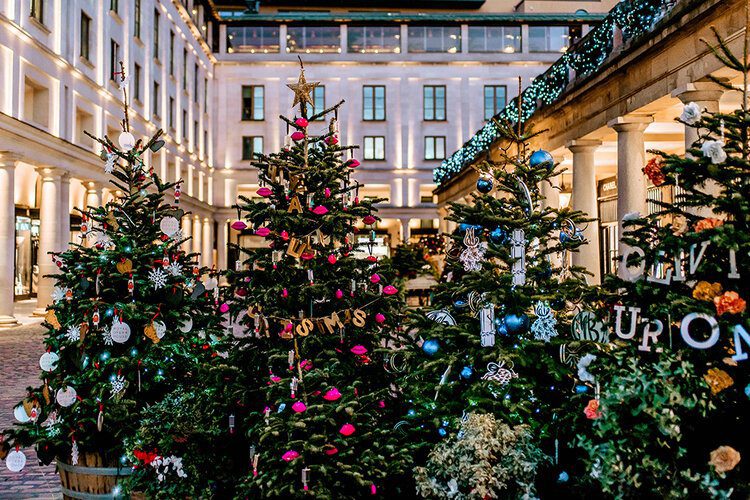
    Start your walking tour of London’s Christmas lights in Covent Garden by making your way to the piazza where you have two displays to appreciate. The first is the set of sponsored trees in front of the market and the second is their famous tree, just around the corner. Their 60ft tree is adorned with over 30,000 red and white lights and really is breathtaking. 

    If ever you’re in London during the holidays and the weather is a bit wet and gloomy, head over to Covent Garden to see the tree because the lights from the tree bouncing off the puddles below will warm your soul.

    PFH Fun Fact: The annual Covent Garden tree comes from Woods Farm and for every tree they cut down, they plant another three.

    Leicester Square

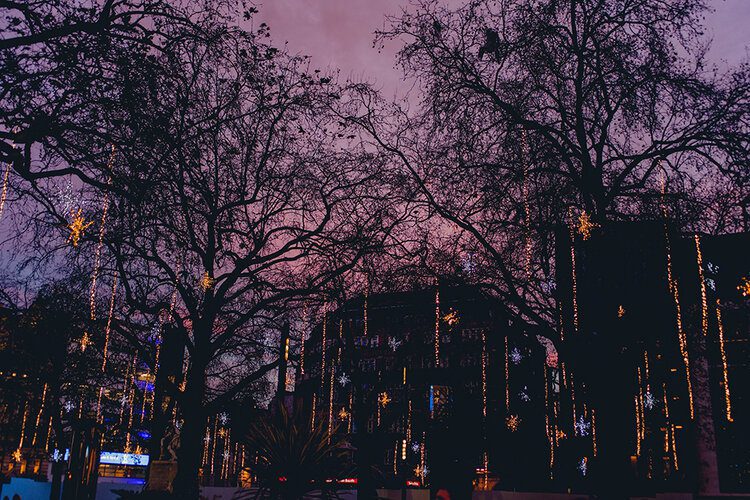
    From Covent Garden, head over to Piccadilly whilst making a stop at Leicester Square. Hanging from the trees in the square are a collection of lights that look as though the stars are within reach. It’s not the most impressive display but it’s a good one to stop at on your way to the knock out ones.

    Fortnum and Mason

    When you reach Piccadilly Circus you will be drawn toward Regents Street but first I want you to walk down Piccadilly Street until you reach Fortnum and Mason. Each year their storefront display changes and this year it has been made up to look like a gigantic 2020 advent calendar, it really shouldn’t be missed. 

    Whilst here, get a little closer and take a look at their eight beautiful Christmas window displays and if the store is open, pop inside for the best food hall in all of London (which is always seasonally themed) and head up to their Christmas floor.

    If you do get the opportunity to visit Fortnum and Mason in 2020 (there’s not much time left so hurry) this year’s festive window display is extra special as each window is dedicated to eight moments from Fortnum’s past Christmases including 1930, 1934, 1936, 1957, 1962, 2008, 2015 and 2020 – pay attention to the right hand corner of the displays as they feature the original Christmas brochure from that year. 2020 in particular was brought to life by Spanish illustrator Lalalimola and includes some quirky kitchenware characters enjoying a festive meal around a lively table – think Fortnums meets Beauty and The Beast.

    New Bond Street

    From Fortnum and Mason, pass through Burlington Arcade (just seconds down Piccadilly St.) to head towards New Bond Street. When you get to the end of Burlington Arcade make a left towards Tiffany and then turn right onto New Bond Street.

    Here you will be met by lights strung up between the building above plus you get the treat of all the luxury stores’ individual lights. One that you shouldn’t miss because it’s not only gorgeous but fast becoming an iconic Instagrammable spot during the festive season is Cartier.

    Shoes have been gifted by Dune – they are Poste in brown croc.

    Each year Cartier makes the exterior of their stores sparkle as magnificently as their contents inside with sparkling garlands, strings of lights and the world famous big red bow. The store is wrapped up as the most perfect gift you could ever receive.

    Regent Street 

    From New Bond Street walk down Burlington Gardens which turns into Vigo Street before joining Regent Street.

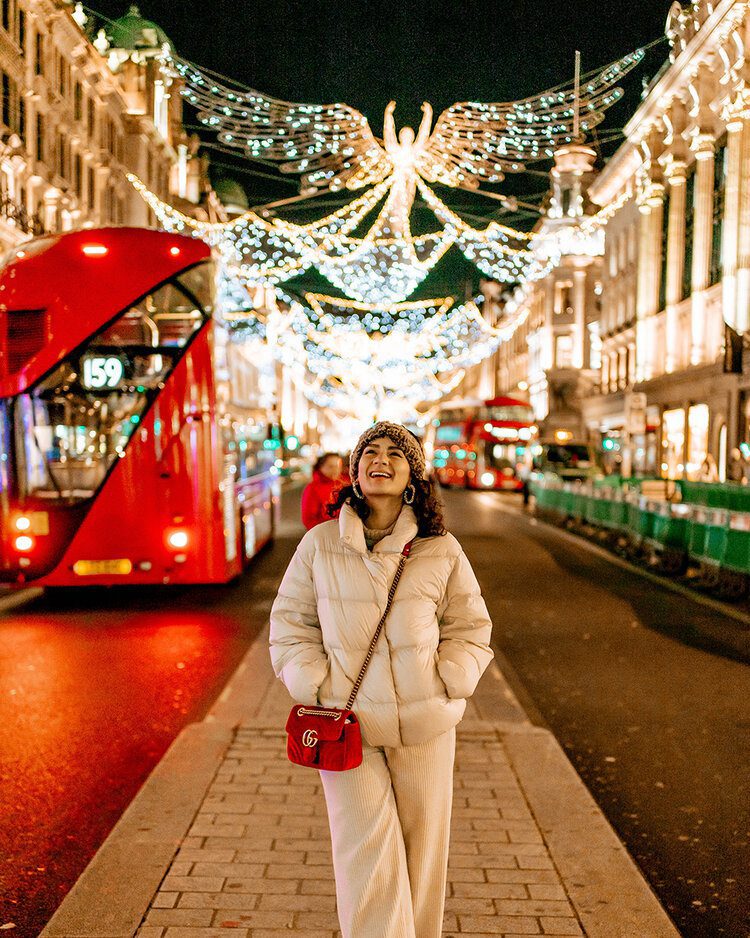
    Personally I think Regent Street has the best Christmas lights in all of London. Every year the angels descend and line the sky down the entire length of the street from Piccadilly Circus to Oxford Circus. 

    If you ever need your festive spirits lifted then stand on the island in the middle of Regent Street and gaze up at the glittering angels. Works for me, every time. Oh and how handy, this spot also happens to be a brilliant spot for a photo! For the best angle, stand where the road straightens up so the lights line up behind you.

    Carnaby Street 

    Once you’ve said hello to the Regent Street angels, turn off onto Beak Street to make a left onto Carnaby Street for their annual display. Each year their theme changes to comment on something of social significance. This year was all about choosing love, no matter how that looks for you and everyone else. The 2020 neon display share high energy vibes and reminds us that we’ve all endured something crappy this year but we can always choose love above anything else.

    Previous displays include (my favourite) one made from ocean plastic which highlighted our plastic pollution crisis, a dedication to Queen, there was the Christmas carnival back in 2017 and Rock N’ Roll one of 2012.

    Oxford Street

    Finally, do a Chris Martin and take your feet to Oxford Street for the end of your PFH Christmas lights tour of London.

    From the end of Carnaby Street, take a left onto Great Marlborough Street to join back up with Regent Street which you can continue down until you reach Oxford Circus. Whether you turn left or right you’ll be able to admire the Oxford Street Christmas lights as they’re strung on both sides until the road changes.

    For 2020 the 2019 display has returned (yay for reusing them) but this time instead of #’s (yeah that was thirsty) they’re displaying something a little more wholesome: messages to our essential and key workers who have been busting their guts to keep things running. Yep, that trumps #festivefeelings.

    Mele Kalikimaka, Gabriella

    Pin this post


  • 18 most Instagrammable cafés & restaurants in London

    18 most Instagrammable cafés & restaurants in London

    UPDATE 2021 – Now a list of 18 most Instagrammable cafés, restaurants and bars in London.

    Instagrammable places to eat have been trending for the better part of a decade and with new places cropping up all the time, it’s hard to keep track of them and easy to forget about others that have been left in the dark. To help make things a little easier, I’ve put together a list of 18 (originally 10 but I keep finding more) of the most photogenic restaurants and cafés across London that will complement your IG feed perfectly.

    If you’ve browsed a few ‘gram worthy guides for places to eat in London you may notice a few differences with mine and that a couple of popular ones are missing. That’s because although I’ve been to them, I’ve chosen mine not just because they are pretty but because the service and food was amazing too, and really isn’t that the most important thing if you’re going to be spending your money to provide free marketing for them? I think so.

    So without further ado, here is my guide to 18 of the most Instagrammable (and delicious) cafés and restaurants in London:

    1. Dalloway Terrace

    Location

    Fitzrovia

    Closest Underground station

    Tottenham Court Road – Central and Northern Lines

    Dalloway Terrace is most popular for photos because of its feature wall that changes seasonally. Though it’s beautiful when it’s adorned with spring flowers, the cooler season is the best time to come. The covered terrace at Dalloway Terrace is one of the cosiest spots when the temperature drops in the city as it’s kept warm with outdoor heaters.

    Sure, the wall is beautiful and it is the restaurant’s defining feature, but I also want to stress that the food here is amazing! If you love truffles then you won’t be disappointed, their wild mushroom risotto was the perfect autumnal comfort food and don’t get me started on how much I enjoyed pinching Michael’s fries!

    PFH Top Tip: it’s not possible to book a specific table, which means you can’t be guaranteed one against the feature wall. I suggest booking first thing or arriving a little earlier for your reservation and asking if it’s possible to wait for one. 

    PLEASE be kind and polite to the staff. When we went we wanted to sit with the wall, we asked if it was possible and they let us wait for one to be sanitised. As we were eating our meal a couple were showed to their table and the woman starting screaming (no lie) at the staff because she wanted to sit with the wall for photos and refused to sit down despite there being no other tables available. See what patience and kindness will get you?

    As an alternative to the terrace try The Coral Room, the bar at the hotel, as it’s equally as beautiful. See number 14 for more.

    Book your table for 12pm to get the best chance of a seat against the feature wall.

    2. Winter Garden at The Landmark London

    Location

    Marylebone 

    Closest Underground station


    • Marylebone – Bakerloo


    • Baker Street – Bakerloo, Circle and Hammersmith & City, Jubilee and Metropolitan Lines


    • Edgware Road – Bakerloo, Circle and District, Circle and Hammersmith & City


    I learnt about The Landmark London back in 2014 when I was working for its sister hotel, K West. I used to go over there every other month for team meetings or fam trips and it was always my favourite hotel of the three to work in because of what’s waiting inside for you when you get past reception. 

    The Winter Garden is a spectacular indoor courtyard filled with tall palm trees reaching up towards the high glass ceiling. The ceiling previously only covered the ground floor but it was raised to create the Winter Garden as it is today.

    Though The Landmark London’s High Palms High Tea is named one of the best afternoon teas in London according to Time Out London, I do highly recommend eating lunch their too. The Landmark has a set menu for £45 pp which includes 3 courses and a glass of prosecco, the set menu includes their exquisite Slow Cooked Short Rib of Aubrey Allen’s Beef which I highly recommend if you eat meat. You can also enjoy a more budget friendly visit by booking a table at the Garden Terrace, which overlooks the Winter Garden, for tea, coffee or cocktails.

    PFH Fun Fact: T-Swift stayed at The Landmark London.

    Book your table here.

    Please note a smart dress code is required as this is a five-star hotel.

    3. Tiffany Blue Box Café at Harrods

    Location

    Ground floor of Harrods in Knightsbridge.

    Closest Underground station

    Knightsbridge – Piccadilly Line

    Who doesn’t want to have breakfast at Tiffany’s? It’s entirely possible at the Tiffany Blue Box Café in Harrods. The whole decor is Tiffany Blue and is made complete with little nods to the movie classic such as sheets of the script and a replica eye mask to the one Holly Golightly wore. How could a fan resist?

    If breakfast doesn’t take your fancy, book a table later in the day for a four course afternoon tea with unlimited tea, sandwiches and scones.

    Get ready to pose with your Tiffany tea cup before indulging yourself in all the sweet and savoury treats of your dreams.

    Reservations are necessary to avoid disappointment as tables are limited.

    4. EL&N

    Wardour Street EL&N

    Locations


    • Hans Crescent, Knightsbridge


    • St Pancras Station


    • Selfridges


    • Market Place, Oxford Circus


    • Brompton Road, South Kensington


    • Park Lane, Mayfair


    • Lowndes Street, Belgravia


    • Carnaby Street


    • Wardour Street, Soho


    Closest Underground station to the Knightsbridge location

    Hans Crescent, Knightsbridge – Piccadilly Line

    Wardour Street, Tottenham Court Road – Central and Nothern Lines

    Something that’s extra special about EL&N is that the interior for each one is different. Yes they’re all cute, pink and serve some of the most outrageously beautiful drinks and cakes you’ve ever seen, but they still all have something unique about them. Whether it’s a wall of candy love-hearts, floor to ceiling flowers or neon signs there’s a perfect backdrop for your next Instagram post waiting for you inside.

    The most popular and photo-worthy EL&N location in London over the years is the one with the twin alcoves lined with candy love-hearts, you can find this Instagrammable location downstairs in their Hans Crescent café, opposite Harrods in Knightsbridge. I think their newer location on Wardour Street is definitely going to take over as EL&N’s most Instagrammble café! With neon signs lining the walls and a pink and purple arcade that features a pink motorbike arcade game, EL&N on Wardour St is crushing the Instagrammable café game!

    With queues almost always out the door, EL&N is one of the top examples of a café nailing the highly sought after “most Instagrammable café in London” title. The menu actually tells you what photographs best and which is most popular for TikTok and they’re not wrong, these drinks really do look good in your hand or on the table in a photo. I highly recommend their Lucky Latte (see above) it’s topped with Lucky Charms cereal!

    Hans Crescent EL&N. Photo taken by @sarahtaylorphotoandfilm

    EL&N does not accept any bookings so arrive when it opens to get the best table.

    5. Drunch

    Locations


    • Regent’s Park


    • Mayfair


    Closest Underground station

    Regent’s Park: St John’s Wood – Jubilee Line

    Mayfair: Bond Street – Jubilee and Central Lines

    Fancy getting photos for the ‘gram and a decent brunch? Then make your way over to Drunch. Unlike most of the Instaworthy cafés, restaurants and bars on this list, the decor or view is not the main attraction, oh no. When it comes to brunch no one does it better than Drunch. Whether it’s an outrageously themed cocktail like the Escobar’s or a designer latte with a chocolate dusted haute couture logo, Turkish Eggs or heart-shaped-nutella-stuffed pancakes – you don’t want to miss the opportunity to snap the most Instagrammable brunch in London for your feed.

    Head to their Regent’s Park for cosy lounge vibes and the Mayfair Drunch for terrace dining with gigantic teddies for company.

    Drunch doesn’t take reservations so I recommend arriving when they open (11am weekdays and 10am on weekends). Expect a long queue on weekends.

    6. Peggy Porschen

    Locations


    • Belgravia (pictured)


    • Chelsea


    Closest Underground station

    Victoria – Circle and District and Victoria Lines

    It’s possible that Belgravia Peggy Porschen is the most Instagrammed café in London. Its seasonally decorated exterior is posted by food, fashion, travel, beauty and lifestyle bloggers who have travelled here from all around the world.

    As Peggy Porschen is first and foremost a bakery, I can guarantee you that you will always enjoy what you eat here, provided you have a sweet tooth. Their selection of cupcakes, biscuits and cakes by the slice is vast and trust me, everything is photogenic. If cake isn’t your thing then you can still get something that will make your table flat lay super cute, order a coffee or hot chocolate and it will come with a festive chocolate dusting.

    Either book a table here or arrive 10mins before they open (10am) to grab a table out front. Make sure you select outdoor seating with your booking to get the best spot for photos. The outdoor seats are ideal because you’ll have natural lighting, a backdrop of the pink café and your photographer (or the poor schmuck you’ve convinced to take photos of you) will be able to step back onto the pavement to get a clear shot of you.

    7. The Ivy

    Photo taken by @leana.esch

    Location

    There are multiple restaurants all across the UK.

    The exterior restaurant in the blog post is The Ivy Market Grill Covent Garden and the interior photographs are of The Ivy Brasserie, Norwich.

    Closest Underground station for The Ivy Market Grill

    Covent Garden – Piccadilly Line

    The Ivy Tower Bridge

    Each restaurant under The Ivy umbrella is decorated with a different theme but they are always elegant. If you don’t want to eat out I recommend going for drinks. The seasonal cocktail list never disappoints – I’m talking Lavender Ladies in summer and Toffee Apple Martinis in Autumn – but the mixologists are always prepared to serve you whatever your heart desires.

    It’s not too costly given the atmosphere but if you do want to keep the cost down go for breakfast. You can get a tea/coffee and a selection of mini pastries for less than £12 per person, I highly recommend their vegetarian breakfast though if you’re extra hungry.

    Though each restaurant’s interior is different, the doorway is always adorned with a seasonal display making it an ideal spot for a photo before you enjoy a drink or meal there.

    Book your table here.

    Please note the dress code is smart casual

    8. Aubaine

    Aubaine Selfridges

    Locations


    • Selfridges


    • Brompton Road, Kensington


    • Marylebone


    • Mayfair


    • Notting Hill


    • Covent Garden


    Closest Underground station to Selfridges

    Bond Street – Central Line and Jubilee Lines


    For a quick trip to France on the Tube, head to any of Aubaine’s locations across all of the most popular spots in London. 

    Aubaine Mayfair

    Aubaine’s Selfridges location is particularly popular on Instagram as it’s decorated head to toe in lavender and lilac wisteria (not real if you’re worried about hay fever). I recommend booking for the first reservation in the morning and asking for a table within the flowers when you arrive because you cannot be guaranteed a seat there, plus the breakfast menu is delicious whether you’re ordering a croissant like I did or Eggs Benedict like Michael.

    As for Aubaine’s Mayfair location I recommend booking for drinks and/or dinner – I mean champagne cocktails and burrata after work, on a date night or with friends sounds perfect right?

    Book your table at Selfridges for when they open to get the best opportunity to sit at their prettiest tables. Tables at Aubaine restaurants can all be booked except the Deli at Covent Garden which only takes walk-ins.

    9. Saint Aymes

    Location

    Tyburnia

    Closest Underground station

    Marble Arch – Central Line

    For another café with shockingly priced but ridiculously attractive drinks, head to Saint Aymes. At one point in time Saint Aymes was dubbed the prettiest café in London (according to their website anyway). Each area of the café is decorated with a different floral display and though it’s all photogenic, I would say the outdoor seats are the best. To get those I recommend turning up when it opens (check the times on the website for the day you want to visit because it varies) because there’s a £25 minimum spend to book a table. 

    Saint Aymes has been featured in major publications such as Marie Claire, Time Out and The Telegraph and has been used as a shoot location by L’Oreal, Too Faced and Instax Fuji Film, so you know, it cute!

    10. Farm Girl

    Location


    • Notting Hill (pictured)


    • Soho


    • Knightsbridge, Harvey Nichols


    • Fitzrovia


    • Hoxton


    For a killer vegan menu that looks even more exciting than it already sounds, head to any of Farm Girl’s locations. I’m talking braised shiitake bulgogi tacos, Açai smoothie bowls and coconut BLTs with rose, matcha or turmeric lattes decorated with a cute bulldog.

    If flat lays of your food is what you’re after then Farm Girl is the place for you.

    11. Circolo Popolare

    Location

    Fitzrovia

    Closest Underground station

    Tottenham Court Road – Central Line

    Tucked away on one of the side streets off Oxford Street hides Circolo Popolare, the Italian restaurant of dreams in central London. Absolutely nothing could prepare me for the beautiful decor of this restaurant, I love it so much I’ve written about it twice and eaten there more times than I should admit.

    The lighting within Circolo Popolare is romantic but dim and makes taking photos a little harder so I found the best spot to be outside in their little garden. However, it’s not as breathtaking as their white alcoves filled with wine bottles, purple and red flowers strung from the ceiling beams and fairy lights that resembles a starry sky (they create beautiful bokeh too). You’ll just have to go twice to decide for yourself which is best and though harder to get a photo I do recommend going for dinner as this restaurant is romantic AF.

    Circolo Popolare is part of the Big Mamma group whose restaurants are known for incredible food all across Europe. I highly recommend their Cacio e Pepe which on weekends and evenings is served for two straight from a pecorino wheel, alternatively you can order a plate of Cacio e Pepe on weekdays for lunch.

    Click here to make a reservation, they do take walk-ins of up to 6 people if you can’t get a table.

    12. Alto San Carlo at Selfridges

    Location

    Fifth floor of Selfridges on Oxford Street.

    Closest Underground station

    Bond Street on the Jubilee and Central Lines.

    What could possibly be one of the most sought after restaurants with their summer 2021 Dior takeover is Alto on the fifth floor of Selfridges. 

    Usually decorated with lemons and hanging vines this Italian rooftop restaurant looks like you’ve stepped out of central London and into the Amalfi Coast. During the Dior takeover it resembles more of the terrace of an Italian villa whose Dioriviera ceiling drapes seek to offer you a cool sanctuary from the sun.

    The menu is Italian cuisine served in a tapas style with the purpose of ordering multiple plates to share. Yes that means you can order pasta, pizza and risotto and eat it all!

    Might I suggest a linen outfit or a summer dress (if you wear them) – dress for lunch in Capri for the right vibe in your photos.

    To get to Alto, take the express lift opposite the Chanel perfume counter on the ground floor.

    Reservations are necessary, Alto x Dior is not currently taking walk-ins.

    13. Club Mexicana

    Locations


    • Soho


    • Seven Dials Market, Covent Garden


    Closest Underground station

    Oxford Circus – Central, Bakerloo and Victoria Lines.

    Hidden away from shoppers, tourists and locals that regularly line Carnaby Street is Kingly Court (opposite Broadwick Street) where you’ll find a treasure trove of restaurants, including Club Mexicana.

    Club Mexicana is a vegan Mexican restaurant; it’s colourful, delicious and will blow your mind even if you’ve been eating vegan before it became a trend. 

    As a vegetarian who misses fish tacos, their beer-battered Baja Tofish tacos satisfy that craving so well that upon my first bite I forgot it was vegan as was momentarily hesitant to take another bite because I was convinced it was fish! 

    These colourful tacos, burritos and Mexican beers served with chilli salt rims on hot pink tables will give you the pop of colour that your summer Instagram feed is craving.

    Added bonus, you can get x3 tacos and a margarita for under £20!

    Reservations are necessary to avoid disappointment. Please note that Club Mexicana asks that reservations are for dining not just drinking.

    14. The Coral Room at The Bloomsbury Hotel

    Location

    Fitzrovia

    Closest Underground station 

    Tottenham Court Road – Central and Northern Lines

    Another favourite of mine and Instagrammable restaurant at The Bloomsbury Hotel in Fitzrovia is their bar, The Coral Room. 

    Sure the decorative seasonal wall in Dalloway Terraces outside is beautiful for photos but The Coral Room is my personal favourite of the two. The boldly painted coral walls, colourful L.E. Hall artwork hung in gold bamboo frames on every wall, potted palms that almost give the impression that they’re leaning in to your intimate conversations and statement bar that glows from within, all pull together to create a tropical oasis from bustling Oxford Street that’s just minutes away.

    You can trust in The Coral Room to make cocktails that not only taste good but look every bit as glamorous as you’ll feel sipping them.

    You can enjoy a light lunch, afternoon tea or drinks at The Coral Room. My recommendation is to get drinks and then take your meal in Dalloway Terraces (reservations needed).

    The Coral Room is less popular than Dalloway Terraces so it will be easier to get a table here, however their afternoon tea is popular so it’s best to book your table.

    15. Jin Bo Law at the Dorsett City Hotel

    Location

    Aldgate 

    Closest Underground station 

    Aldgate – Circle and Metropolitan Lines

    Aldgate East – District and Hammersmith & City Lines

    Jin Bo Law is the skybar at the Dorsett City Hotel. Located on the 14th floor of the hotel Jin Bo Law offers incredible views out across the city of London and serves as an incredible backdrop for your “out in the city” photos. The view from Jin Bo Law includes the Gherkin, Shard and “walkie-talkie” on right and Tower Bridge and the River Thames to the left.

    Jin Bo Law is my top choice on this list to start an evening out in the city both for the view and the music, if 90s/00s RnB and cocktails is your thing then you’ll love Jin Bo Law.

    For the best photos reserve a table outside on weekday when it’s quieter. The vibe is better at the weekend but there’s a minimum spend on Friday nights so something to keep that in mind when booking.

    For another rooftop bar see number 17 on the list of most Instagrammable cafés and restaurants in London.

    16. Christina’s Shoreditch at the Mondrian London Shoreditch hotel

    Location

    Shoreditch

    Closest Underground station 

    Liverpool St Station – Central, Circle Hammersmith & City and Metropolitan Lines and the Overground, TFL rail, C2C, Greater Anglia, Stansted Express

    Shoreditch High Street – Overground

    Old Street – Northern Line or the Great Northern network

    Christina’s Shoreditch is the café and bar in one of East London’s newest hotels: Mondrian Shoreditch hotel. The Mondrian chain took over The Curtain hotel after is had to close its doors during the height of the pandemic and the makeover has been an incredible transformation. The Mondrian Shoreditch now boasts three amazing places to dine including BiBa, a Spanish restaurant ran by World Famous Michelin Star chef, Dani García.

    Christina’s, located to the right of the hotel, is where you enjoy pastries baked fresh in the neighbourhood bakery, Chestnut Bakery, some of the best sandos in London that are made with fresh ingredients from local farmers and growers and you can sip on cocktails made with ingredients only sourced from independent suppliers such as Hepple Gin and Kanpai Sake. Christina’s has put sustainability at the forefront of their conception and everything delicious morsel served speaks to this.

    Pop into the lobby at the Mondrian Shoreditch London for a neat Lightroom experience much like a mini Yayoi Kusama: Infinity Mirror Room.

    Book a table at Christina’s Shoreditch to avoid disappointment. 

    17. The Aviary at Montcalm Royal London House hotel

    Location

    Shoreditch

    Closest Underground station 

    Liverpool St Station – Central, Circle Hammersmith & City and Metropolitan Lines and the Overground, TFL rail, C2C, Greater Anglia, Stansted Express

    Shoreditch High Street – Overground

    Old Street – Northern Line or the Great Northern network

    Much like number 15 (Jin Bo Law) on this list of Instaworthy restaurants in London, The Aviary is also a skybar bar within a Shoreditch hotel. The Aviary is the rooftop restaurant and bar at the Montcalm Royal London House hotel. Some of the view highlights at The Aviary include the “walkie-talkie” and The Shard.

    Though the view isn’t quite as impressive as Jin Bo Law the terrace at The Aviary is much bigger so you can enjoy drinks with a backdrop of London’s skyscrapers with a little more personal space.

    The Aviary also has some of the most sought after dining experiences in London: igloo pods, you’ll need to plan your booking in advance for these as they’re always snapped up quickly.

    Book a table on the terrace for a seat outside with a city view.

    18. Tavolino

    Location

    Southwark

    Closest Underground station 

    London Bridge – Northern and Jubilee Lines. 

    Tavolino is an Italian restaurant located within one of London’s newer complex, More London, which sits along the River Thames close to London Bridge station. Aside from very good pizza, pasta and cocktails made with some of the best Italian spirits Tavolino is one of the best spots to savour a view of Tower Bridge, one of London’s most iconic landmarks. For more ideas on where to take photos of or with Tower Bridge then take a look at my blog post, Best locations to photograph Tower Bridge.

    Book a table outside on the terrace if it’s not raining for unobstructed views of Tower Bridge. If it’s raining book a table inside and request the second floor for the best indoor views of the bridge.

    So there you have it, my top 18 Instagrammable cafés, restaurants and bars in London where you’ll be able to get killer content and good food! Enjoy! 

    Keep an eye out here throughout the summer of 2021 as new restaurants get added!

    Do more on & for the planet, Gabriella

    Pin this post


    If you enjoyed this blog post, why not check out my 10 most Instagrammable places in London, England blog post.

  • 13 things you don’t want to miss along the Jurassic Coast

    13 things you don’t want to miss along the Jurassic Coast

    The Jurassic Coast is a 95 mile stretch of UNESCO coastline that holds 185 million years of history. Starting in Exmouth, Devon and ending at Old Harry Rocks in Dorset, the geology of this World Heritage Site covers three fascinating periods of history:


    • Triassic


    • Jurassic


    • Cretaceous 


    These three time periods make up the Mesozoic Era which was a time spanning approximately 250 to 65 million years ago. Here’s a brief overview of what went on in these three periods:

    Triassic 

    252 – 201 million years ago

    The rise of reptiles and the first dinosaurs.

    The landscape of this area was sweltering hot deserts. The Earth’s crust was sinking which caused layers of sediment to layer up which formed rocks.

    Jurassic 

    201 – 145 million years ago

    Birds and mammals graced the planet.

    Rising sea levels transformed the desert into a tropical sea. Towards the end of the Jurassic period however the sea levels dropped and a forest grew. 

    Cretaceous 

    145 – 66 million years ago

    Dinosaurs became extinct.

    At the beginning of the Cretaceous period, the forest that had grown towards the end of the Jurassic period died and the landscape changed to rivers, lagoons and swampland. Towards the end of the Cretaceous period, the sea levels rose again and the older layers of rock from previous time periods were covered in sandstone and chalk.

    .

    On an adventure exploring the Earth’s history along the Jurassic Coast, you can expect to learn about creatures you never knew existed, literally walk in the footsteps of dinosaurs, hunt for fossils, enjoy fish and chips in beautiful coastal towns, indulge in locally made ice cream and marvel at the rugged coastline.

    To save time and fussing around with cash or prevent needing to run back to the car for every car park on the Jurassic Coast, download the following parking apps so that you can pay for and top up your parking from anywhere on your phone.


    • PayByPhone


    • RingGo


    • JustPark


    • Flowbird


    • Parking Ops


    Unfortunately I can’t remember which one is used where but if you have them all ready to go you won’t waste any time. Some car parks are free and there are a few that only take cash, so I recommend keeping some spare change on you before you arrive.

    Let me take you from west to east for 13 things you don’t want to miss along the Jurassic Coast:

    Exmouth

    Park your car at Foxholes car park right next to the beach and get a Kelly’s Cornish ice cream from the little hut on the seafront before taking a stroll down the promenade. It’s right at the end where you’ll find very short cliffs of bright red rock topped with luscious green foliage. 

    250 millions years ago (that’s even older than the dinosaurs) this landscape was a scorching hot desert. It was the centre of the super continent Pangea and was very close to the equator. During this time, very little plants could survive the heat and flash flooding.

    The layer of red rock you can see today at Exmouth beach is 185 million year old sand dunes from the aforementioned time where this part of the world was desert.

    Sidmouth

    Sidmouth is a seaside town that takes about half an hour to drive to from Exmouth. The town’s backdrop, Sid Valley, is made of red cliffs from the Triassic period. 

    Like with many coastal towns and cities along the south west coast, the popularity of seaside resorts between the 18th and 19th centuries made Sidmouth a desired holiday spot. Its pretty town centre echos this period in time but now offers a variety of both high street stores and independent shops and eateries which were a welcomed escape for us when the heavens opened the day we visited.

    On a sunny day you can sit out on the beach, walk the Blue Plaque trail or hike parts of the South West Coastal Path. 

    I particularly recommend popping into the National Trust gift shop in town as they sell all sorts of wonderful guides on the area plus eco-friendly items that can help you to reduce your daily single-use plastic waste. I picked up a National Trust Scone recipe book which I’m particularly excited about as it features 50 regional scone recipes from all around the United Kingdom.

    Make time to visit Sidmouth Museum as it is home to rare fossils from the Triassic period.

    Charmouth 

    A trip to the Jurassic Coast is incomplete without making the effort to go hunt for fossils yourself and Charmouth beach is the perfect place to do it!

    Though you could hunt for fossils anywhere along the Jurassic Coast, Charmouth’s shingle beach is particularly popular for fossil hunting because it is a large area full of opportunity as fossils are plentiful within the shingle, particularly after high tide.

    Before you begin your hunt, make a stop at Charmouth Heritage Coast Centre where you can see a display of the types of fossils you can find with a careful eye along the beach. 

    Charmouth Heritage Coast Centre is open every day from 11am – 3pm and entrance is free.

    Tips for fossil hunting


    • Always check the tide times before you go


    • Wear waterproof and sturdy shoes


    • It’s quieter in winter, so you’ll have a better chance of finding something


    • The best time to go is when the tide is going out as high tide will have resurfaced a new layer of rocks


    • Your eyes are your best tool


    • Spend time turning over rocks, you never know what’s underneath them


    • Be patient, finding fossils really relies on luck


    NEVER dig into the cliffs, these are structurally unsafe and you could cause cliff fall. Coastal erosion is sad enough, do not contribute to it.

    The most common and easiest to find fossils are:

    Belemnites 

    They existed during the Jurassic period and went extinct during the Cretaceous period. They had a squid-like body but a hard internal skeleton. Fossilised Belemnites look like stone bullets.

    Ammonite 

    They were squid like creatures that lived within the chamber of a tightly spiralled shell. The shell is what you will be able to find fossilised on the beach with a careful eye.

    Seashells

    Fossilised seashells look just like regular seashells but attached to rock.

    If fossils aren’t your thing, you can also find heaps of sea glass in all sorts of colours on Charmouth beach.

    West Bay

    West Bay’s crumbling golden cliffs have become a famous landmark in popular culture thanks to the popular ITV crime drama, Broadchurch. The erosion of these sand cliffs reveal indications of fallen sea levels from 175 million years ago. 

    The best time to see them is on a clear, sunny day when the light hits them and highlights their golden tone.

    When you’ve had your time on the beach, venture behind the car park to The Customs House Emporium for a chance to find some relics of a different kind. Riffle through vintage, antique and retro items to find a favourite record, a pre-loved jacket or a second hand table.

    Chesil Beach

    Chesil beach is an 18 mile long shingle ridge that stretches from West Bay to the Isle of Portland and is one of Dorset’s most iconic landmarks.

    Unlike the soft sandy beaches of south west England, Chesil Beach is formed entirely from shingle. As the ridge is entirely exposed to the elements it doesn’t make for the perfect spot to lounge in the sun or picnic, but is a place where you can walk off your fish and chips. The sound of the waves pummelling and dragging the stones should be a soundscape on the Calm app.

    Wear practical footwear as the shingle does not make for a sturdy surface.

    Need a Friday night movie recommendation? Ian McEwan’s novel-turned-film, On Chesil Beach (2018) is another beautiful period film starring the amazing Saoirse Ronan that features Chesil Beach.

    Isle of Portland

    At the far end of Chesil beach is the Isle of Portland, which is best known for its quarry which has provided the stone that built Buckingham Palace.

    The best place to see all of Chesil beach is from the top of the hill where the Weymouth Olympic Rings are (Weymouth hosted the sailing competitions during the 2012 Olympic Games). You can drive up there and park just opposite them. From the rings you will get an amazing view down at Chesil Beach. 

    Another neat thing to see on the Isle of Portland is Pulpit Rock. Located at the far end of the Isle of Portland, Pulpit rock resembles an open bible leaning upon a pulpit. 

    Weymouth

    Weymouth is your classically quaint English seaside town that has been a popular destination for holidaymakers for over 200 years. 

    This long curved beach of soft golden sands is lined with a Georgian Esplanade where you can buy ice cream, sandwiches, buckets, spades and more! The shallow waters are sheltered so they’re perfect for dipping your feet and playing with children and dogs.

    Stroll over to the marina to an array of little sail boats bobbing in sparkling waters against a backdrop of colourful rainbow houses. This part of Weymouth feels like the Mediterranean. 

    PFH Top Tip: Arrive early to park in Pavilion Forecourt car park, it’s small so it fills quickly but it offers the ideal location between the beach and the marina.

    Durdle Door

    Durdle Door is one of the most iconic sights of the Jurassic Coast and was my favourite spot to visit. Tucked away, far out of sight from the car park is the beautifully natural, limestone arch of Durdle Door, jutting out from the beach into the surprisingly crystal clear waters of the English Channel.

    Durdle Door was formed by a rippling effect through the Earth’s crust that spread north when the African and European tectonic plates collided with each other. To give you an idea of how immense that pressure was, that same collision created the mountainous region we know today as the Alps. It was this rippling effect that pushed and shoved the Earth’s crust to create the rugged coastline of south Dorset and Purbeck. Durdle Door was in the centre of one of the folds in the rock and as the sea eroded the softer rock, it revealed an arch which we know as Durdle Door.

    PFH Top Tip: Beat the crowds and park in the field car park on the top road as it is open in the early hours of the morning. The official Durdle Door car park is closer but it doesn’t open until 9.30am and gets busy incredibly fast. Arrive for sunrise, park in the field, walk the extra 10 minutes and you will have the place to yourself. Both car parks have pay and display machines.

    The walk from even the first car park is a steep path from the clifftop down to the sea so I strongly advise you wear trainers/sneakers and make sure you have plenty of water with you for the walk back up. Though it doesn’t take long if you’re of average health, it is steep and can be a struggle on a warm or hot day. 

    With my shoe warning in mind, I also want to add that although it looks like sand from above, the beach is made from tiny shingle that doesn’t look threatening until it fills the space between your sandal and the soles of your feet, at which point it’s like walking on needles. I strongly advise you to wear trainers/sneakers, trust me, your feet will thank me.

    The reason I recommend you arrive early is because there are plenty of photo opportunities on your journey down to the beach that get very crowded once the clifftop car park opens. Once you have made the first descent down the path from the cliff edge, you will come to a plateau which is the perfect opportunity to capture Durdle Door from above. From here you will also be able to see Man O’ War beach located to the left of Durdle Door, it’s another beautiful spot where the water looks all shades of turquoise before turning to a deep blue as you look further out to sea.

    Take the steps down to the beach where you will be able to capture Durdle Door from the water’s edge. Then lay out a blanket or a towel and enjoy with view with a picnic as you take in the beauty of this natural rock formation, to the sound of gentle waves lapping upon the shore.

    Lulworth Cove

    Located just a 10 minute drive from Durdle Door is the equally photogenic coastal gem, Lulworth Cove. Unlike Durdle Door where the only thing there is the beach unless you make the trek back up to the clifftop for a single mobile food truck and toilet block, Lulworth Cove has no end of ice cream shops and souvenirs, most importantly locally made, edible souvenirs such as cider and fudge. 

    Park up at the top of the village, potter around the shops and visitor centre before heading down to the beach. Though there isn’t much beach around at high tide it is the best time to visit to be able to see all the wonderful blues and green of the water, especially when the sun hits it. For the best view walk up the narrow path to the top of the cliff (it’s not very far) to look down upon the beautiful cove encompassed by white and green cliffs. Take a moment to marvel at the sea sparkles as the sunlight bounces off the calm turquoise water.

    I highly recommend trying as many flavours of Purbeck ice cream as you can whilst in Dorset. It’s a Dorset ice cream company that does the best clotted cream and berries ice cream I’ve ever had… and I’ve had a lot. You’ll find Purbeck ice cream being sold here.

    Kimmeridge

    Along with enjoying the breathtaking scenery of the Jurassic Coast firsthand, the main excitement of visiting this 185+ million year old coastline is to learn about who roamed the land and ruled the ocean millions of years before we ever existed.

    Located in Kimmeridge is the The Etches Collection Museum of Jurassic Marine Life, a museum dedicated entirely to Dr Steve Etches MBE’s collection of fossilised marine life from the Kimmeridgian Seas. The exhibitions include footage of how he excavates his fossils, his notes on everything he finds as well as information on what you are looking at. 

    Step back in time, 157 million years ago to be precise, to a prehistoric seascape home to terrifying predators and sea monsters you would never want to meet whilst taking a dip in the ocean. Come face to face with these amazing pieces of history from tiny ammonites to enormous Ichthyosaurus.

    Whether you are an experienced palaeontologist or novice fossil hunter, you are sure to be fascinated by Etches’ collection of fossils and the world that came before us millions of years ago.

    Opening hours 

    Open daily from 10am – 5pm.

    Closed on 24th, 25th & 26th December.

    Ticket cost

    Adults £8

    Children (5-16 years) £4

    Children under 5 years old are free

    Family ticket (2 adults + 2 children) £20.00

    Family ticket (1 Adult + 3 children)  £ 16.00

    Tickets are an annual pass.

    Accessibility 


    • The building has step free access


    • A lift is available to travel between floors


    • There’s an accessible toilet on both floors


    COVID-19 restrictions


    • Please use the provided hand sanitiser before and after entering


    • Observe the one way system


    • Wear a face mask at all times indoors


    • Please stay 1-2 metres away from others


    Spyway dinosaur footprints

    Though learning about fossils is fascinating and gazing at Durdle Door is breathtaking, making a trip out to the Spyway dinosaur footprints is without the doubt the coolest thing you can do along the Jurassic Coast. In fact I would go as far as to say it is in my top five things to do in the UK along with feeding Reindeer in the Scottish Highlands and frolicking in lavender fields.

    Park up at the Spyway National Trust car park and take the footpath between the fields making a right onto Priest’s Way. Walk for about 12mins until you see a wooden gate on the right hand side that has a little sign that says “Dinosaur Footprints”. Enter the gate and keep walking until you see a patch of rock at a lower level to the surrounding field. It’s within this patch of rock that you will find a series of huge round indentations, these my friend, are brachiosaurs (of the sauropods) footprints made 140 million years before you took your first steps. 

    This magical piece of history is just out in the middle of a field, next to a quarry and free for anyone to visit. What’s cooler than literally walking in the footsteps of some of the largest animals that ever lived?

    It’s presumed that the quarry was once a watering hole, and that the dinosaurs’ footprints were imprinted into the soft mud which then became preserved by the layers of rock that formed over them. 

    Swanage

    Swanage is the most easterly seaside town along the Jurassic Coast and has been a popular seaside resort since the Victorian era. Explore its cluster of independent shops and grab some Fish and Chips from Harry Ramsden’s on the seafront to enjoy on a rented deckchair on the beach (£2) followed by an ice cream.

    Walk off your meal along the soft sand then spend your pennies at the arcades. Click here for more ideas on how to spend a day at the seaside.

    Old Harry Rocks

    The last stop along the Jurassic Coast when travelling from west to east is Old Harry Rocks, a series of startling white chalk formations that are ever so slowly tumbling into the sea, due to natural erosion. 

    During the Cretaceous period, 100 million years ago, a substantial amount of plankton skeletons drifted to the bottom of the ocean in this very spot. Over the next 35 million years this formed a thick later of white limestone known as chalk, and that’s how the cliffs here at Old Harry Rocks were made.

    The name Old Harry refers to the lonely stack of chalk furthest out to sea. He used to have a wife (another stack next to it) but in 1896 coastal erosion got the better of her and she fell into the sea.

    Legend has it that Old Harry Rocks was named after Harry Paye, an infamous pirate known for running amuck along this part of the coast.

    The closest car park is a National Trust one at South Beach. It will take about half an hour to walk from the car park to Old Harry Rocks along the South West Coast Path.

    Gabriella

    Pin this post


  • 6 best things to do when visiting Plymouth, Devon

    6 best things to do when visiting Plymouth, Devon

    Once an important commercial shipping port to the Americas, the final departure point for the Mayflower and former home to the Royal Navy, Plymouth is a city rich in maritime history. Britain’s ocean city is one that exudes pride for its participation in colonising what is now known as the United States of America but is also deeply scarred by bombing during World War II known as the Plymouth Blitz that annihilated the city. Whichever way you look at Plymouth it’s a beautiful and fascinating city that caters to everyone whether your desire is to sample gin from the oldest gin distillery in the country, indulge in just-caught-that-day seafood, shop in the largest shopping centre in the southwest of England or swim in an art deco seawater pool. Want to know more? Great, let me take you through my 6 favourite things to do in Plymouth.

    This guide shares things you can do in Plymouth but please know there is so much more to see and do beyond the city such as coastal walks, visiting beaches and taking day trips to Cornwall, so make sure you explore further when you visit.

    Remember to always wear your mask indoors and sanitise/wash your hands as often as possible.

    1. Barbican

    Barbican is a waterfront neighbourhood that covers both the west and north sides of Sutton Harbour, Plymouth’s original harbour where the Mayflower sailed from (see more below). Despite the city being hit hard by the Luftwaffe in WWII, 100 listed building still stand in the area today including the Old Custom House and Plymouth Gin distillery both built in the 1500s.

    Present day, Barbican’s tiny cobbled streets are lined with shops, galleries, restaurants and pubs. It’s also where you’ll find the Mayflower Museum and the Plymouth Gin Distillery.

    Whilst pottering around the streets make a plan to get brunch from Rockets and Rascals where you can choose from meat, vegan and veggie options.

    PFH Fun Fact: Barbican has the largest concentration of cobbled streets in Britain.

    2. Mayflower museum and memorial

    400 years ago, on the 16th September 1620, a ship called the Mayflower made its final departure from England to the New World – now known as the United States of America – carrying 100 or so people plus crew with big dreams of building a new colony in the Americas.

    Across two floors of the Mayflower museum, located opposite the commemorative Mayflower steps, a permanent exhibition tells the story of who decided that they had had enough of England, why and how they went about attaining the Mayflower to make a 66 day-long voyage in cramped, damp and filthy conditions to the Americas. It also documents the six week-long troubles the passengers and crew faced before even departing from Plymouth and why Plymouth became the unplanned final departure point for the Mayflower.

    There is some but little information on the impact the new settlers had on the Native inhabitants who had lived in the Americas for over 12,000 years so my advice is, visit the Mayflower Museum to learn of the hardship, determination and strength of the people who faced an arduous journey to make a new home for themselves, but please make sure that you continue your education further to understand the damage and heartbreak caused on the other side of their journey. Though many see and celebrate the successful voyage and settlement of the Founding Pilgrim Fathers and Plymouth Colony, it is important to recognise their ignorant behaviour towards the indigenous peoples whose livelihoods were plundered, pillaged and sold off from under them.

    Opening hours

    Monday to Saturday 9am – 5pm

    Sundays 10am – 4pm

    Closed on Sundays between November and March

    Closed 25th Dec – 1st Jan

    Ticket cost

    Adult £3

    Children (5-16) £1.50

    Family (2 adults and 2-3 children) £8

    Senior and student £2.50

    Accessibility 

    Each floor is accessible by lift.

    COVID-19 restrictions

    Please use the provided hand sanitiser before and after entering.

    Observe the one way system.

    Wear a mask at all times indoors.

    Please stay 1-2 metres away from others.

    3. Plymouth Gin Distillery

    Take a glimpse into the process of creating Plymouth Gin in the oldest working distillery in England where they’ve been using the original recipe since 1793. For just £11 per adult you will get to learn all about the fascinating history of Plymouth Gin which continues on to an immersive experience involving their botanicals during a tasting of three of their gins, ending with the opportunity to take home a miniature bottle of gin or enjoy a drink at their bar. Before leaving you’ll be given a 10% discount code for their gift shop.

    Tours last about 40mins, allow extra time if you chose to drink at their bar.

    There’s also an opportunity to upgrade to a gin connoisseur and master distiller tour too. 

    If you’re a gin drinker then I would put this to the top of your list in Plymouth because it’s the perfect opportunity to learn more about gin whilst tasting it, but also to learn about the city with an overview of the distillery’s strong ties to the navy.

    Opening hours

    Tuesday – Saturday 11am – 5.30pm

    Sundays 12pm – 5.30pm

    Closed on Mondays

    Tours are ran daily and can be booked by calling ahead.

    Ticket cost

    Adult £11

    Accessibility 

    As it is a listed building, the floors are uneven but ramps and lifts are available to gain access to each floor.

    COVID-19 restrictions

    Tours are limited to 8 people.

    Tours must be booked in advance.

    Please use the provided hand sanitiser before and after entering.

    You must complete the track and trace form or log your location using the NHS Track and Trace app.

    Wear a mask at all times indoors excluding the time of your tasting.

    Please stay 1-2 metres away from others.

    4. Minevera Inn

    If gin isn’t your choice of tipple, pop into the oldest pub in Plymouth, Minerva Inn, where they serve a variety of local beers, ciders and spirits. Built from timber recovered from the Spanish Armada Fleet in the 1500s, drinks have been served at Minerva Inn since 1540. The walls are decorated with ephemera from the pub’s long history and photographs of how Looe Street, where the pub is located in Barbican, looked before it was bombed during the Plymouth Blitz.

    Whilst there, ask the friendly staff about the grim albeit interesting stories of the Press Gang’s occupation of the pub back in the 17th century and if your stomach can handle it, the ghostly tales of figures from time gone by.

    Opening hours

    Regular hours are:

    Monday – Wednesday 11.30am-11pm

    Thursday & Friday 11.30am – midnight

    Saturdays 12pm – 12am

    Sundays 1.30pm – 10.30pm

    Please note that at the time of publishing (October 2020) pubs in England must close at 10pm under new COVID-19 restrictions.

    COVID-19 restrictions

    Please use the provided hand sanitiser before and after entering.

    You must complete the track and trace form or log your location using the NHS Track and Trace app.

    Wear a mask at all times indoors unless you are at your table.

    Please stay 1-2 metres away from others.

    Table service only.

    5. Tinside Lido

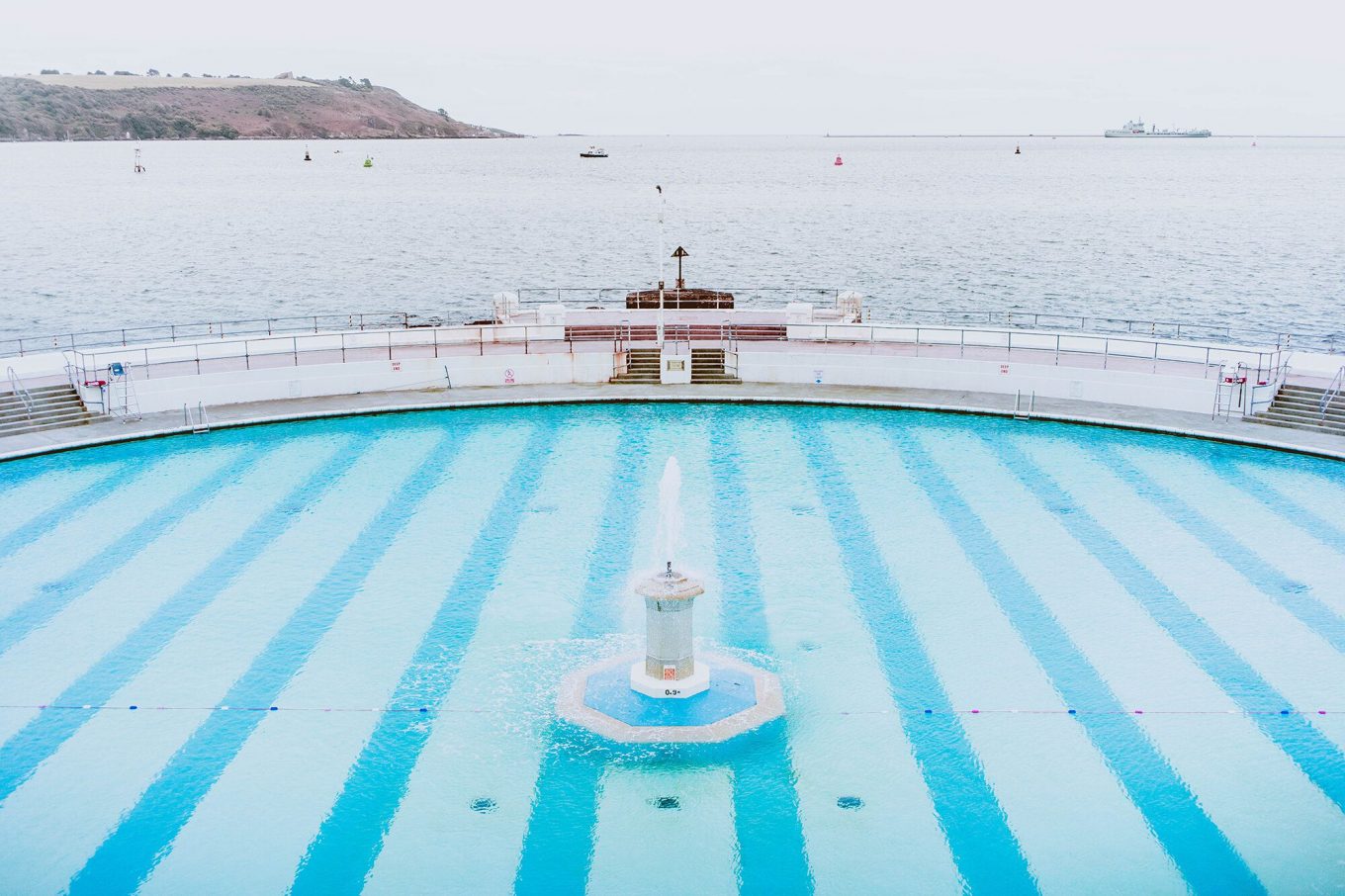
    Tinside Lido is Plymouth’s Art Deco seawater swimming pool built into the shoreline and cliffs in Hoe. This Grade II listed building was originally opened in 1935 and was a popular holiday for people living in the UK during the tourism boom in the early-mid 20th century. Unfortunately, for Tinside Lido, as international travel picked up towards the end of the century, fewer people visited and in 1992 it was closed and soon fell into disrepair. However, in 2002 funds were raised to restore the iconic outdoor pool and it was successfully reopened in 2005. Yay!

    So now for just £5 you can take a dip in a beautiful 1930s seawater lido where on one side you can admire the classic Art Deco architecture and on the other you can gaze out to sea. Warning, the pool is only ever 2 degrees Celsius above sea temperature so if it’s a chilly day, prepare for a shock! 

    When you’re done, pop over to The Terrace (just a 2 minute walk away) where you can get a cuppa to warm your bones after a cold swim or maybe a glass of wine on a sunny day whilst looking out at the lido.

    Though you can’t swim in the lido during the cooler months, you can still view it from a platform above the pool just off from the main road.

    PFH Fun Fact: Tinside Lido was featured in a BBC ident.

    If you’re visiting Plymouth in the summer, hang around Hoe Park at sunset to see the sun dip behind the hill, casting an array of peachy pink stripes across the sky.

    Opening hours

    The pool is open seasonally from 10.00 and each paid admission counts for a two hour swim.

    The C-19 pandemic has altered the lido’s open season, so check here before paying a visit.

    Ticket cost

    Adult £5

    Accessibility 

    There is a road side lift to take you to reception.

    There is an internal lift to the pool level.

    There is a hoist in the main pool.

    Dedicated toilets and changing rooms are available.

    COVID-19 restrictions

    Wear a mask at all times indoors.

    Please stay 1-2 metres away from others.

    6. Royal William Yard

    Unsure about what you fancy for dinner and need a variety of choices? Or maybe you want dinner somewhere steeped in maritime history, then head over to Royal William Yard. Royal William Yard is a Grade I listed building that used to be naval buildings but is now the top waterfront dining destination in the city as it’s filled with restaurants as well as a boutique, salon, hotel, wine merchant and brewery, plus there’s a monthly food market.

    Take no notice of Wagamama or Prezzo though as there’s far more exciting eateries including Le Vignoble with over 300 wines from around the world on offer and The Hook & Line where you can order from a menu of fresh seafood caught locally on the owners’ fishing boats.

    By the way, you’ll find the city’s first ever speciality rum bar at The Hook & Line, serving up a selection from all around the world including popular local rums. This is homage to the city’s and the restaurant location’s naval heritage. If ale is your poison, then try their signature ale: The Hook, Line & Sinker.

    COVID-19 restrictions

    Please use the provided hand sanitiser before and after entering.

    You must complete the track and trace form or log your location using the NHS Track and Trace app.

    Wear a mask at all times indoors unless you are seated at your table.

    Observe the one way system.

    Please stay 1-2 metres away from others.

    Table service only.


    I really enjoyed visiting Plymouth. Even without a particular interest in its naval history it’s wonderful to experience the city’s various nods to its maritime culture, whether it’s a tour at the distillery that used to supply the naval officers with gin, a swim in a seawater pool, a meal at a restaurant located in naval buildings or learning about the voyage of the Mayflower. 

    Gabriella

    Pin this post


  • 10 things to do in a day at St Ives, Cornwall

    10 things to do in a day at St Ives, Cornwall

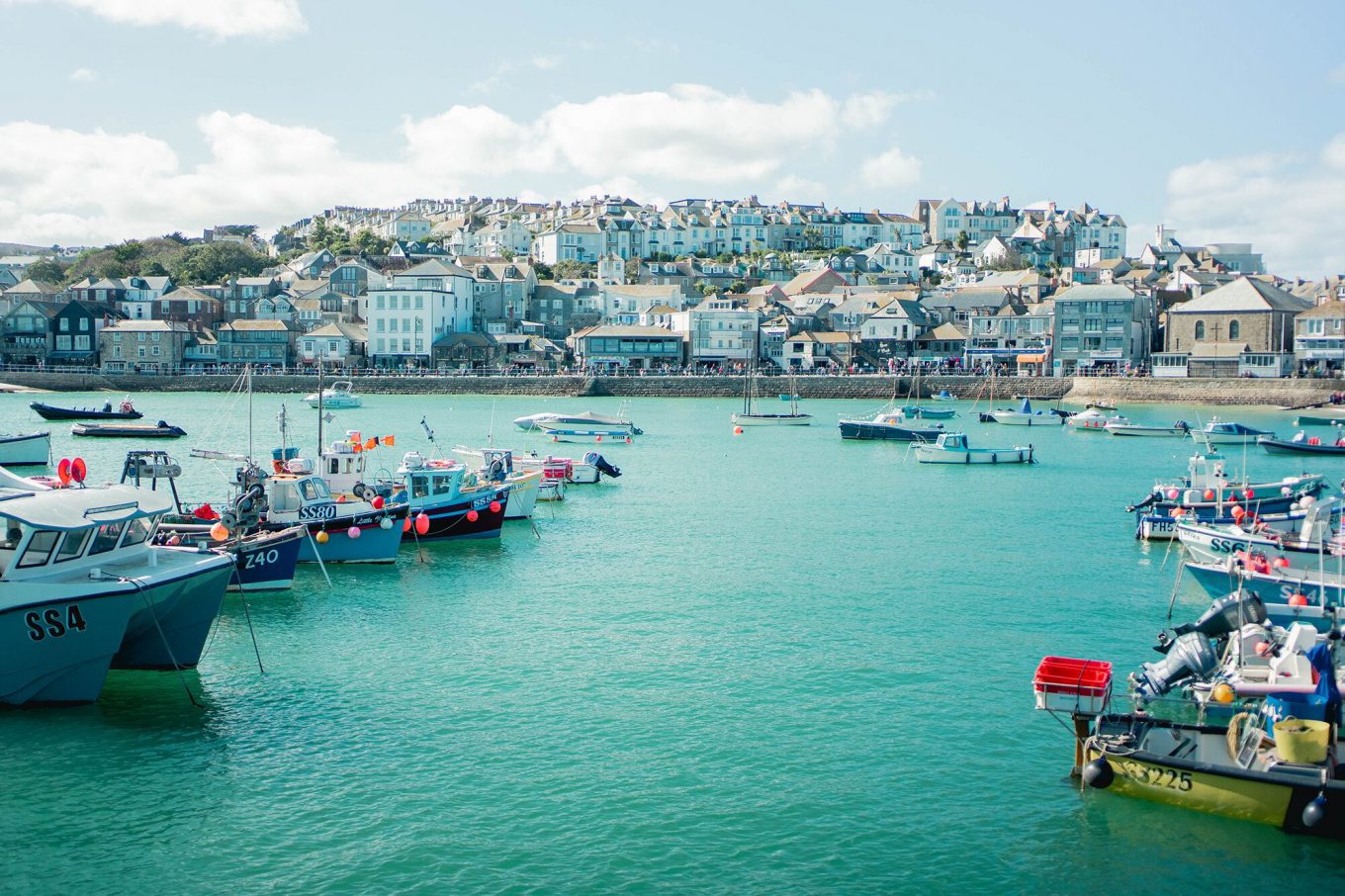
    St Ives is a seaside town in southwest Cornwall famous for its sun-trap harbour lined with restaurants and bars, art scene with more galleries than you can shake a paintbrush at – including Tate St Ives – surf beaches like Porthmeor and beautiful turquoise waters.

    Originally a fishing village, St Ives is now a seaside resort and is top of everyone’s Cornwall bucket list. Why? Because it’s a cute town with independent shops, pretty views and so many places to eat you’ll want to come back to try more. On that note, spending a day in St Ives by my guide involves a lot of eating so bring your stretchy pants, okay?

    What to pack in your bag for a day in St Ives


    • Reusable coffee cup – to responsibly get your hot drink to-go


    • Towel – to sit on when you’re on the beach


    • Face mask – to cover your face to protect others


    • Hand sanitiser – to protect yourself and others


    Remember to always wear your mask indoors and sanitise/wash your hands as often as possible.

    PFH Top Tip: Keep your face mask on in slightly busier areas such as Fore Street and Wharf Road. Also keep an eye out for a sign in the shopfront that tells you how many customers are allowed in at one time.

    1. Arrive early to get parked

    I guarantee if you ever hear someone recommending a day in St Ives, you will hear them say you must arrive early by car if you have any hope of getting parked. With roads barely wide enough for a single car, corners so tight you can’t but hold your breath when you creep around them, there’s very little parking opportunities in St Ives so the car parks fill quickly. 

    If you plan on driving you must arrive to St Ives before 8.30am to get a spot for your car. 

    The car park we used was The Island Car Park and it cost £8.20 to park all day.

    If you aren’t able to drive you can use the bus and train service. I’ve heard from a friend that the train ride in from St Erth is very scenic.

    2. Get coffee from Yallah 

    So I’ve made you arrive early to St Ives to get parked but you’re like, ugh Gaby, none of the shops are open yet. Make your way to the Yallah Kiosk on Wharf Road and grab a coffee to-go, they will make your coffee in your own reusable cup (yay!) so make sure to hand it over. Click here to read Yallah’s sustainability report.

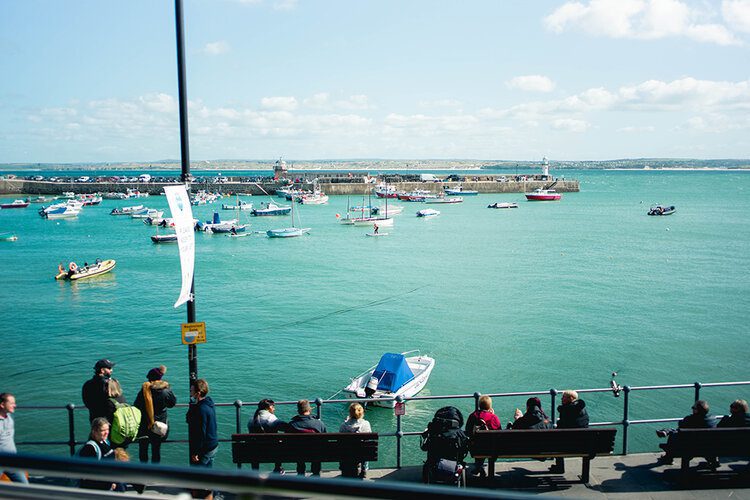
    Take your coffee to one of the benches on the other side of the road and gaze across the harbour at all the little boats bobbing around in the cool clear waters, waiting for the late morning sun to reach them.

    3. Try to spot seals from Smeaton’s Pier

    Take a leisurely stroll over to and along Smeaton’s Pier for a chance of spotting a seal. Catching a glimpse of a seal around St Ives is possible but known to be quite rare unless you take a paid boat trip over to Seal Island.

    Either way it’s a nice little walk to kill time before the shops, galleries and museums open, plus it provides the perfect spot to take a photo of St Ives with the little harbour in the foreground which you can see below.

    4. Visit Tate St Ives

    If you want to step up your gallery game (it’s possible that there’s almost as many galleries in Cornwall as there are Cornish pasties) then book tickets for Tate St Ives. Tate St Ives is an art gallery located just off from Porthmeor Beach that showcases a collection of modern art with local ties.

    The current exhibition “Modern Art and St Ives” is the first that you’ll visit and tells the story of modern artists who are connected to St Ives including Barbara Hepworth, Patrick Heron and Alfred Wallis.

    Hungry for more? Then head on over to the Barbara Hepworth Museum and Sculpture Garden. If you purchase a ticket here first, it’s a little pricer than the Tate ticket but it includes entrance to Tate St Ives.

    Opening hours

    Monday to Sunday 10.00–17.20

    Ticket cost

    Adult £9.50

    Children get free access

    Student £8.50

    Senior (60+) £8.50

    Job seeker £8.50

    People with disabilities £8.50 (companion gets free access)

    Accessibility 

    Each floor is accessible by lift.

    Three wheelchairs are available.

    Accessible toilets are located on the third floor.

    Large print guides printed on yellow paper are available upon request.

    A 10 min audio introduction that describes the architecture is available upon request.

    Guide dogs, hearing dogs and assistance dogs are welcomed.

    COVID-19 restrictions

    Please use the provided hand sanitiser before and after entering.

    Observe the one way system.

    Wear a mask at all times indoors.

    Please stay 1-2 metres away from others.

    5. Explore the nooks and crannies

    With its narrow winding streets that offer glimpses of the sea it’s easy to find charm in exploring the nooks and crannies of St Ives. Stumble across a cute cottage or two, an independent gallery and keep an eye out for special spots that looks like you could be peeping out at the shoreline of Positano. 

    6. Pick up a Saffron Bun from Ferrell S H & Son

    A saffron bun is a spiced bun similar to a tea cake. Yellow in colouring, thanks to the saffron, it sits proud and easily identifiable in the shop window of Ferrell S H & Son’s bakery on Fore St, a family run bakery that has been there since the 1960s.

    It’s a traditional Cornish treat and is up there on the must-try-whilst-in-Cornwall list that also includes:


    • Cream tea with Cornish clotted cream (preferably Rodda’s)


    • Cornish pasty


    • Yarg (cheese)


    Heads up, despite the C-19 pandemic, Ferrell S H & Son only accepts cash so have some to hand to get your bun.

    7. Shop on Fore Street

    Whilst on Fore Street, enjoying your saffron bun, potter around the shops. Here you’ll find some of the best independent shops in St Ives including all things surf, seaside themed and rum/gin focused. My favourites along this little street are:

    John’s Liquor Cellar

    Shopping in John’s Liquor Cellar is like stepping into a cave full of intoxicating treasures including locally crafted beers, wines and ciders but most importantly (for me anyway) gins. You’ll find a vast selection of local gins such as Tarquin’s, Trevethan and St Ives in all their available flavours including Trevethan’s pink grapefruit and lychee or Tarquin’s rhubarb and raspberry. They even sell miniatures so you can grab some souvenirs/stocking fillers for friends and family back home.

    Myrings of St Ives fudge and rock shop

    Myrings’ fudge recipe has been passed down through generations for over 30 years. It’s the perfect spot in St Ives to pick up a sweet treat for yourself or a loved one. 

    Cornwall soapbox

    Pick up some handmade soap, a shampoo bar and a candle to match from Cornwall Soapbox. Each soap is made with pure essential oils and organic African Shea Butter. They each smell amazing and even better, they reduce your plastic packaging waste as they’re wrapped in paper.

    The Sewing Room

    It won’t come up on google maps but it’s a little knitting and crochet shop selling needle, hooks, patterns and wool/yarn which will inspire you to make something or pick up kits as gifts for others.

    Yummy Scrummy Bakery

    Pick up a giant iced bun topped with hundreds and thousands before they sell out to the masses!

    8. Get ice cream from Moomaid of Zennor

    “Legend has it that a young Cornishman was lured into the sea by the beauty of the Mermaid of Zennor. Today you’re more likely to be seduced by Daisy, Primrose and Sid Vicious – just three of the cows that help make Tremedda Farm’s ice cream. They are the legendary Moomaids of Zennor.” – Moodmaid of Zennor.

    Once you’ve been into all the wonderful independent shops on and around Fore Street, pop into Moodmaid of Zennor for some locally made Cornish ice cream. Their ice cream is made with fresh ingredients and in small batches so they can ensure only high quality ice cream is going from scoop to tummy. 

    Their flavours run from traditional vanilla clotted cream to salted almond praline. Take it in a cone or a tub dressed up with the likes of brownie chunks and a stick of fudge. 

    WARNING! Cornish seagulls are buttheads and will take the food from your hand mid-flight. Whilst eating lunch on the beach in Port Isaac, a cannibalistic seagull took half of Michael’s egg mayo baguette from his hand and swallowed it whole as we looked on in horror. Be so careful with your ice cream when you eat it okay? Walking around with food by the shoreline in Cornwall is like entering shark infested waters with an open wound. Alright, even without my exaggeration I still advice you to eat quickly.

    9. Sit on the beach

    If it’s a lovely day out then spread out a towel on the sand and either lay back and soak up some rays of sunshine on Porthgwidden Beach or watch the surfers catching waves on Porthmeor Beach.

    10. Get dinner at Porthminster Kitchen looking out on the harbour

    Porthminster Kitchen is located on Wharf Rd and has an amazing view of the harbour, and oh, when the sun hits the water and it lights up to an electric cyan blue, it feels like you could be anywhere in the Mediterranean.

    The menu features dishes inspired by global cuisine but made with locally sourced Cornish ingredients. They’re sure to tickle your seafood fancies with a wide choice including scallops, squid, clams, mussels and more!

    If you’ve been around here for a while then you’ll know I’m somewhat partial to some fish and chips (fish and chips are life) and of all the chippies in all the land, I have never had mushy peas as good as I have at Porthminster Kitchen. Their spiced peas are like two fish and chips classic sides in one: mushy peas and curry sauce!

    Make sure to book in advance if you’re going to St Ives during peak spring/summer to avoid disappointment, card details are required to make the booking and you will be charged £15 if you don’t show for your booking without prior warning. If it’s forecast to be a sunny day, see if you can ask for a table outside.

    PFH Top Tip: if you can’t get booked into the restaurant for dinner, consider lunch at their café, Porthminster Café, located on Porthminster Beach.

    COVID-19 restrictions


    • Wear your face mask until you are seated at your table and make sure to wear it if you leave your table


    • Pay for your meal by contactless card


    • Observe the one way system


    • Try to keep a distance from others in the restaurant when you’re not at your table


    Travel safely,

    Gabriella

    Pin this post


  • How to spend a day in Clovelly, Devon

    How to spend a day in Clovelly, Devon

    With a series of white washed cottages cascading down towards the sea from a 400ft cliff edge, Clovelly, a small living fishing village in North Devon, is one of the most picturesque spots in the county. Appearing untouched for centuries, the tiny cobbled high street of Clovelly, inaccessible by vehicle, takes you back to a simpler time where life was enjoyed without the conveniences we take for granted today. 

    Once owned by the Royal Family, Clovelly has been in the hands of just three families since the 13th century. The village is still privately owned and all properties are rented and residence usually stays within a family for generations.

    We chose to visit Clovelly after watching a re-run of the Channel 4 documentary, “Devon and Cornwall” which explored the two counties’ treasures. Once I caught a glimpse on TV of this exclusive village, so lusted after that it requires an entrance fee, I wanted to see it for myself and I am so glad I did. Between shopping for handmade soap and candles from Clovelly Soap, learning about Rex Whistler’s iconic “Toile de Jouy” design from Clovelly Silk, enjoying a Devon cream tea with a view of the sea and exploring a steep, meandering path down to the 14th century quay, visiting Clovelly has been one of my favourite days out in England.

    Read on to find out what you need to know about visiting Clovelly, how we spent the day there and my tips on where to get the best photos.

    Visiting Clovelly

    Before getting into what to do and where to take the best photos in Clovelly, here’s the basics for getting access to the village:

    How to get there 

    Parking at the Clovelly Visitor’s Centre is included in the entrance ticket cost (see below for more).

    The village is located off the A39, 10 miles west of Bideford. Take Junction 27 to exit off the M5.

    The closest train station is Barnstaple and you can take a bus from there to Clovelly.

    Buses also run to Clovelly from Bideford.

    Entrance cost

    Adult: £7.95

    Child (aged 7 – 16): £4.60

    Children under the age of 7 get free entrance

    Family including 2 adults and 2 children: £21

    Season tickets are £26 per adult and £62 per family

    Ticket costs are for 1st April 2020 – 31st March 2021

    Dogs on leads are welcomed

    Opening hours

    Clovelly is open every day except Christmas and New Year’s Day.

    9am – 5pm April – November

    10am – 4pm November – March

    PFH Top Tip: for free entry to Clovelly, visit on Boxing Day.

    You’ll want to allow around three hours for visiting Clovelly to make the most of your time there.

    Covid-19 restrictions

    You must wear a face mask when entering the Visitor’s Centre, museums and shops. 

    Wash your hands as often as possible and use hand sanitiser frequently.

    You are required to fill out a Track and Trace form at the ticket desk.

    Do not visit Clovelly if you are showing any signs of being sick.

    Try to keep at least 1m away from others.

    The Visitor’s Centre has a one-way system. 

    Accessing the village 

    The village is built into a 400 foot cliff and is only accessible by foot down a steep cobbled path. It is very important that you wear comfortable shoes as the high street is made with stones from the beach that are uneven and slippery so you will slip without a decent tread on the soles of your shoes.

    Unfortunately due to the nature of the village being built into a cliff, there is no level access to the village, however the Visitor’s Centre, Mount Pleasant and craft shops (where you’ll find Clovelly Silk, Clovelly Soap and Clovelly Pottery) are accessible.

    Usually, between Easter and October, there is a Land Rover service that offers rides back up to the Visitor’s Centre from the bottom but due to COVID-19, that service has been suspended.

    Start at the Visitor’s Centre and make your way straight down into the village (you can visit the shops on the way back up) as it’s your best chance of seeing the high street empty and therefore the most ideal time to get the best photos of the most photogenic part of the village. I recommend arriving within the first hour of the village opening as it’s the best opportunity to get photos from the top of the high street without other people wandering the street.

    PFH photo guide

    Want photos of Clovelly for the ‘gram or to capture beautiful memories? Well you’re in the right place, there are at least three spots that you will want to take photos of whilst in Clovelly so let me take you through where they are and what time to get there for your best chance of people-free photos:

    1. Clovelly high street

    Take a snap from the top of the high street looking down towards the sea. The high street is iconic as it’s only accessible by foot, or in past times by donkey so you won’t get a single car in your shot. The narrow, cobbled path down is sandwiched between centuries old cottages decorated by flowers with the odd cat silently judging your arrival to their village.

    As mentioned, the cobbled path is the only way into the village so arrive early to get the best chance of an empty street.

    Walk a little further down the path towards the quay to capture more beautiful photos as the sea becomes visible between the cottages, before making your final descent down to the beach.

    2. Clovelly quay

    Make your way down to the end of the high street to get access to Clovelly quay and the beach. If you specifically want the quay either full of water or dry then you will need to check the tide times here. We went at low tide, which is why the boats are on the ground.

    Take snaps around the quay then take a walk along the beach with the sea to your left. At low tide you’ll be able to walk out to the shore and look back at Clovelly to take photos of it appearing to tumble down into the sea. 

    Heads up, it’s not a sandy beach so if for some reason you decided to ignore my advice earlier when I said wear comfortable shoes, then PAY ATTENTION NOW; the stones are wobbly because the changing tide is forever displacing them and many are covered in seaweed and algae making them slippery, so wear practical shoes so you don’t snap an ankle, capeesh?

    3. Cottage Tea Rooms

    Read more about eating at the Cottage Tea Rooms below under “what to do in Clovelly”, but I’ll quickly tell you which table to sit at to get the best photos of you enjoying a Devon cream tea with a stunning backdrop. 

    Order to eat in the garden and head straight to the back, right past all the benches, and up to the next cottage’s front door. There on the left, you will find two large chairs, attached to a small table in the middle, looking out to sea. This is the best table as it’s the only one that faces directly towards the sea, not side on like the others, and there’s enough space to get behind it to take photos (or get someone else to take photos of you) of your Devon cream tea and the sea.

    This only works if there’s two of you, I should note as well, there’s only two chairs. If there’s more of you then you’ll have to pick a larger table closest to the sea view and sulk about not being able to sit at the best table I’m afraid.

    What to do in Clovelly 

    With a slight crossover from my little Clovelly photo guide, here is where I expand on how you can spend your day exploring this picturesque village.

    Walk along the beach

    Once you’ve explored the quay that has been keeping boats safe from the wrath of the sea since the 14th century, take a stroll along the pebbled beach to take a look back up at the village, taking in all of its charm including the Lifeboat house which was first in service in 1870 and the oldest cottage in Clovelly, Crazy Kate’s Cottage. The cottage with its long balcony looking out towards the harbour has a sad story behind its name but is one of the villages defining features. At high tide the water comes straight up to the foundations of the cottage.

    As I mentioned in my photo guide, where you can walk to on the beach depends on the tide. If the tide isn’t high, you’ll be able to safely walk along the beach where you’ll find Clovelly Waterfall. Legend has it that Merlin the Arthurian magician was born in the cave behind this waterfall. 

    Cream tea with a view

    A first glance of the village might tell you to get a Devon Cream Tea from the Red Lion pub and sit on the tables outside looking out across the quay but this is not the path for you, oh no, I have something much better for you. Once you have began your ascent up from the beach, take a left into the Cottage Tea Rooms and order to an outside table in the garden around the back of the cottage. 

    If you’ve read my photo guide above then you’ll know which table to go for, if you haven’t then do yourself a favour and scroll up to read it instead of skipping ahead! Aim for an early lunch to beat the lunchtime rush so you have a better chance of getting a seat.

    Their menu offers light lunches, snacks, cakes and cream tea, including a gluten free scone option. Remember in Devon, the cream goes first!

    Fisherman’s Cottage and Charles Kingsley museums

    Just up along from where the tea rooms are located and on the same side is the Fisherman’s Cottage Museum. Pop inside to take a glance at what home life looked like for a Fisherman’s family in the 1930s. The rooms are decorated with period pieces, some of which have been donated by families that have lived there for generations. As you enter you will find an original well that helped to provide the village with water before the main water line was installed. There’s also a collection of framed wedding photos dating back to to the late 1800s.

    Attached to the Fisherman’s Cottage Museum is the Kingsley Museum. Charles Kingsley (1819-1875) was a Victorian writer who grew up in the village. His most famous pieces are “The Water Babies” and “Westward Ho!”. His work is known to have drawn visitors to the village.

    Both the museums are free to enter under the cost of your admission ticket.

    Shopping in Clovelly

    Shopping in Clovelly is a real treat as the craft workshops offer an array of handmade items perfect for personal souvenirs and gifts. What’s particularly precious about the Clovelly workshops is that the fabrics and soaps encourage creativity and self care, they inspire you to do more than buy something to take home, but instead to indulge yourself in a rewarding sewing project or an aromatherapy bath that’s both healing for your soul and a lasting memory of your visit to Clovelly.

    Clovelly Silk 

    Clovelly Silk was one of my favourite parts of visiting Clovelly. The workshop is owned and ran by a couple, Ann and Bill Jarvis who have a rich history in the textiles industry; Ann was head of Liberty of London’s design studio for 10 years where she worked on some of Liberty’s classic prints from their archives whilst designing new ones for their dress and furniture lines. You can purchase a Liberty print bag from their small collection in their shop.

    Please ask permission before taking photographs of their workshop.

    Clovelly Silk is most famous for Ann’s creation of their custom repeating print, “Toile de Jouy” which she created using six of world famous artist, Rex Whistler’s, illustrations of Clovelly which he originally made in 1932. Their “Toile de Jouy” print is available to buy on cushion covers, tea towels and even face masks in six colours. Alternatively, you can buy some fabric to create something yourself for just £25, how’s that for the most darling and personal souvenir of Clovelly?

    Toile de Jouy in Emerald Green.

    As much as I want to keep sharing about Clovelly Silk, I want to you learn about Rex Whistler’s illustrations and the story behind “Toile de Jouy” yourself from Ann and Bill Jarvis because they are such wonderful people with so much passion for their work and pride in the village.

    PFH Fun Fact: HRH The Princess Royal own a “Toile de Jouy” silk scarf.

    Clovelly Pottery

    Need a new mug for your morning cuppa or fancy egg and soldiers out of some handmade egg cups decorated with a pattern unique to Clovelly? Well isn’t that that convenient as Clovelly has its very own pottery workshop selling a collection of work from Clive Pearson and Caroline Curtis.

    Clovelly Soap

    The Clovelly Soap Shop not only sells intoxicating handmade soap wrapped in their custom designed paper, but it also sells all the eco-friendly pampering accessories your heart desires including matching candles, organic cotton towels, bamboo hair wraps and more.

    Their plastic-free artisan soap collection includes:


    • Hand soap


    • Beard wash


    • Shampoo


    • Dog shampoo


    (psst, they take American Express and participate in Shop Small, so if possible, line up your visit when that offer is on).

    Clovelly Fudge

    Back up at the Visitor’s Centre, there’s a small shop selling handmade Clovelly fudge in ever changing seasonal flavours. Perfect for a sweet treat for yourself or a gift to take home.

    Clovelly Court Gardens

    Before leaving, visit the Clovelly Court Gardens that are located at the top of the village. The Victorian walled garden is included in your entrance ticket and features glass greenhouses filled with Mediterranean flora and fauna, which can grow thanks to a maritime microclimate. Unfortunately we didn’t learn of the Clovelly Court Gardens until we had already left so I don’t have any photos for you.


    If you take a trip to North Devon, be sure to add Clovelly to your list! I want to add that there are two hotels in the village, The New Inn at the top of the high street and The Red Lion down at the quay, so should you be interested in extending your stay in the Clovelly, those are your options. 

    .

    Gabriella

    Pin this post


  • 10 accessories to transform a simple outfit

    10 accessories to transform a simple outfit

    As the significant damage to our planet that fast fashion causes is coming more into focus, I wanted to create a blog post that highlights the simple ways you can accessorise one dress to create different looks without needing to buy new outfits for a trip, instead using what you already have or can buy second hand. It’s a great way to reduce the amount of clothes you pack into your luggage, which also saves fuel consumption on your travels as the load is lighter and helps to prevent you needing to buy more than necessary, contributing to the effects of fast fashion consumption. 

    “My mother worshipped at the alter of accessories and I got the bug. She always said, if you have a good, little, simple black dress and you have different accessories, you can have 27 different outfits.” – Iris Apfel.

    I have decided to focus on one dress to show you the ways just one outfit can be changed up for different looks. I have taken this dress on almost every trip since I bought it in 2018 and no matter how many times I post a photo wearing it on Instagram I never get any comments about needing to wear something new. It’s ok to repeat outfits, in fact it’s amazing and something we should be doing a lot more.

    This dress was purchased from Urban Outfitters, which I no longer recommend due to their unethical practices, but as it’s a simple linen dress that has been on trend for the last few years, it is easier to buy one from more responsible brands, or better yet, you could make one yourself. You could also buy one second hand or borrow one from a friend.

    PFH Top Tip: A white dress will get you far. It’s a classic that is easily accessorised and if you’re taking photos it suits most locations.

    These accessories will change up your outfit, help you to save pennies, make life easier and prevent you from overpacking multiple garments.

    Silk scarf 

    A silk scarf really is one of the best accessories womxn can travel with because it’s so versatile. I realise silk scarves are expensive but you can save pennies by buying one second hand, I bought a Liberty silk scarf for just £9.99 ($13 USD) in a charity shop. It doesn’t have to be silk either, there are many shops selling silk imitation scarves, just be mindful to avoid buying one from a fast fashion brand. I’ve done it in the past, but I don’t intend to anymore.

    Here are the ways you can wear a silk scarf to accessorise an outfit in different ways:

    Headband 

    Fold your square in half into a triangle and roll it up keeping its length, so that you have one long piece. Wrap in around your hairline, tying it either at the top of your head or at the nape of your neck, depending on the look you want. Either keep your hair down or if you have the length, you can tie it up.

    Bracelet 

    Tie your scarf around your wrist for a cute bracelet. This is especially cute if it catches in a breeze.

    Tie your hair up

    You can also use your scarf to tie up your hair. Wrap it around a messy bun or a pony tail for an effortlessly styled look.

    50s bandana style

    The second Girls From Ipanema (originally titled in Brazilian Portuguese Coisa Mais Linda) came to Netflix last year – it’s a Brazilian drama about independent women breaking free from oppressive gender roles to make a name for themselves in beautiful Rio de Janeiro – I started wearing my headscarves in the bandana style that the lead character, Maria Luiza, does. It also picked up as a popular style so it won’t look dated by any means. This style automatically makes your outfit chic, plus it helps to protect your head from the sun.

    Neckerchief 

    For an air of sophistication tie your scarf around your neck.

    Other ways you can use your scarf:


    • Tie it around a handbag for a different look.


    • Use it as a DIY face covering.


    • Tie it around your body to make a boob tube – yep this style has made a comeback.


    • If you have curly hair you can tie it around your curls before you go to bed so your curls don’t get damaged as you sleep.


    Straw hat

    A straw hat is such a great prop let alone accessory. When taking photos, you can swing it, throw it, or you know, actually wear it. A hat always makes an outfit look well put together plus it will protect your hair from the sun and cover up any not-so-great hair days.

    A straw hat will get you far, it’s timeless and goes with so many outfits from floaty dresses to cut off denim shorts.

    If you need a transitional hat for changing seasons, I suggest a beret or a structured felt hat. A beret looks cute with a jumper/sweater in Autumn/Fall, a coat in winter and a dress in spring; I don’t recommend wearing one in summer as the wool gets hot and itchy.

    Statement jewellery

    Statement jewellery always pulls together an otherwise simple outfit. Whether it’s a big necklace layered with shells or beads or a knock out pair of earrings it’s going to give your simple outfit a fresh look. 

    Earrings and necklace from Lux Reve.

    A personal favourite of mine is to tie up my hair into a messy bun, wrap a scarf around my hairline in a headband style and pop in a pair of statement earrings.

    Cardigan

    A short knitted cardigan will compliment so many sundresses, keep you warm on a chilly day, cover your arms on a day you’re feeling a little self conscious of them and if it buttons up, it will transform your dress into a skirt. 

    You can also throw it over your shoulders and knot the sleeves over your chest for a quick chic look.

    This little white cardigan pictured here was my last purchase from Urban Outfitters before I became clued up to they’re misconduct with paying employees. I don’t want to encourage you to buy from them so my top tip would be to knit it yourself, or if you don’t think you’re able to knit one, go to a wool shop and ask if you can pay one of the sales assistants to knit one from the patterns they sell. They often sell garments they have knitted themselves, so take the opportunity to get something custom made and of high quality. If you’re really lucky, maybe there’s someone in your family, like a Grandma, who could possibly knit you one.

    Denim jacket

    Maybe it’s a cooler day or you want to dress down your look, just add a denim jacket and it will compliment almost any sundress. A denim jacket always comes in handy on warmer trips because it will take the chill off cooler evenings or shops with air con.

    PFH Top Tip: Customise your jacket with pins, patches or embroidery for a unique look.

    Shirt

    To make my dress look like a skirt, I layer a button up shirt over the top and tie it up at the front, around the waist. A simple addition like this gives you a new outfit with minimal packing. Plus you can team the top up with a pair of denim short on another day.

    Bags

    Aside from its purpose of carrying your belongings, it’s a great prop for photos and the style of bag changes the look of your outfit. 

    A basket bag has been a classic for years and goes with so many outfits, an ethically made or personalised tote bag makes for a bold statement, a designer handbag levels up your outfit, a colourful bag makes the outfit playful and a backpack makes it casual.

    Sunglasses 

    As well has protecting your eyes from the sun, sunglasses are such a great prop for photos: wear them on your face, on your head, tuck them into your neckline or hold them in your hand. 

    Sunnies will change a look quickly and dramatically depending on their style. Want something edgy? Go for a round, black pair. Wear a gimmicky shaped pair (but not something that you won’t wear often or will throw away) like hearts if you want something fun and quirky or a pair that’s a bright colour. Oversized has been chic for goodness knows how long, likewise, tortoiseshell is a classic. Sun damage to your vision is important to avoid, so invest in a pair that’s going to protect your eyes. You don’t need to spend big bucks on a designer label but please make sure they have UV protection lenses.

    The bonus to packing multiple sunglasses is that they are much smaller and lighter than packing multiple garments.

    Shoes

    Shoes are the most important accessory for changing up a look. Elevate it with a pair of heels and bring it down to earth with trainers/sneakers. My go to shoes, unless I’m going somewhere cold, is a pair of plain sandals in either tan or gold. They smoothly take me from a day on the beach to dinner and cocktails in the evening and they go with almost everything! My absolute favourites are Dune’s Loupe sandals – I believe in investing in a good pair of shoes is more important than buying endless cheap shoes from the likes of Primark/H&M/New Look because they will last longer and won’t cause long term damage to your feet. I mean, don’t get me wrong, it took me a long time to figure that out, despite my Mum telling me for years, but I get it now, so hopefully you listen to me when I tell you.

    If there’s one thing I’ve learnt about packing shoes it’s that it is important to pack shoes that go with multiple outfits and outfits that go with most, if not all, of the shoes you pack. It sounds simple but it’s so easy to pack outfits that only go with one pair of shoes and it creates deadweight in your suitcase and limits your options. By keeping things interchangeable it prevents you from overpacking and keeps your outfit options versatile.

    .

    You may have noticed that in some of my photos I have more than one of these accessories, that’s the beauty of these, you can mix and match so that your one dress can feel like so many different looks.

    Styling outfits before packing always helps me to cut down on how many clothes I think I need to pack for a trip.

    Let’s see if we can make a difference together by nipping fast fashion habits in the bud!

    Gabriella 

    Pin this post


  • 5 best things to do in and around Colchester, Essex

    5 best things to do in and around Colchester, Essex

    Dating back over 2000 years to the Iron Age, Colchester in Essex is Britain’s first ever city and former capital of Roman Britain.

    We based our trip to Colchester around me wanting to visit the adorable pastel beach huts on Mersea Island beach and to visit Tiptree Jam Museum and Tearooms for afternoon tea. I sure was blown away by what Colchester had to offer, it was the first I learnt of the long history of the town and I found it to be such an informative trip. I strongly recommend a staycation in or trip to Colchester to learn more about England’s history plus you can combine it with time at the seaside.

    Here’s 5 of the best things to do in and around Colchester, from exploring ancient Roman ruins to having afternoon tea served by one of the best jam producers in the world.

    1. Visit Colchester Castle Museum

    Built in 1100 – commissioned by William the Conqueror in 1076 – Colchester Castle is the largest Norman keep in all of Europe.

    It wasn’t the first building to be constructed upon this land though. Shortly after the Roman invasion by Emperor Claudius in AD 43, Romans built the Temple of Claudius. The temple stood until AD 60 when it was burnt down in an attack on the Roman city by Boudica, Queen of the Iceni tribe. It was rebuilt, along with a wall around the city. It remained until the Roman decline between 330 and 410. In 450, the Anglo-Saxons and Normans took control of Essex but it wasn’t until 917 that Colchester was re-founded.

    In 1076 (over 1000 years since the construction of the Temple of Claudius) the construction of the castle we can see today began upon the foundations of the Roman temple, using stones from other Roman buildings as there was a lack of quality stone in the surrounding area. Originally built as a fort, it is now a museum and has been since 1860.

    If there’s one thing you should do in Colchester it’s visit the castle museum as it extensively documents Colchester’s rich history of thousands of years from the Iron Age right through to modern day. Their collection consists of Celtic coins, a vessel from the Bronze Age, the best preserved Roman statues in Britain, medieval paintings and civil war armour. 

    Colchester’s castle didn’t just go from Norman keep to present day museum. Through the middle ages the castle was used as a prison (you can explore some of cells on your visit) for around five centuries, even when the castle’s interior was in near ruins. Some of the the most infamous prisoners were victims accused of witchcraft, who now have a memorial rose garden in tribute to their cruel treatment.

    In 1727 Charles Gray restored the castle, though his belief that it was a Roman construction led to him tiling the roof in a Mediterranean style that doesn’t match the main structure of the castle.

    Fascinating, right?

    Opening hours

    Monday – Saturday 10am – 5pm

    Sunday 11am – 5pm

    Last admission 4.30pm

    Ticket cost

    Adult £10

    Child  (4-16) £5.95

    Student £6.95

    2 adults & 1 child £23

    1 adult & 3 children £25

    2 adults & 2 children £28

    COVID-19 restrictions

    Please use the provided hand sanitiser before and after entering.

    Pay for tickets and souvenirs by contactless card.

    The castle museum has a one way system.

    Wear a mask at all times indoors.

    All interactive exhibitions are closed.

    Please refrain from touching anything.

    Please stay 1-2 metres away from others.

    2. Take a stroll through Castle Park past the riverside cottages

    Castle Park surrounds Colchester Castle in the north east of the town. The Roman wall divides it into an upper and lower park, perfect for taking a stroll on a dry day. Its picturesque river flowing past, lined by weeping willows and park benches offers up the perfect spot to picnic or sit with your thoughts.

    Be sure to end your walk at the riverside cottages; the row of pink Tudor houses opposite the River Colne, just next to North Bridge are so photogenic.

    The park is also home to various music concerts and festivals across the year.

    Opening hours

    Everyday from 7.30am – 6.30pm

    3. Explore ancient ruins

    As mentioned above, ancient Romans settled in Colchester 2000 years ago and made it their capital in all of Roman Britain. Back then they called Colchester, Camulodunum: “dunum” meant fortress and Camulos meant God of War. The name was inspired by the preceding settlers in the Iron Age who also used Colchester as their fortress.

    Though many of the ancient ruins have been destroyed by attacks to the settlement from Boudica (AD 60) and her people and succeeding settler William the Conqueror and the Normans (450 – 1076), there are still many Roman ruins across the city that you can see.

    As mentioned, the Romans weren’t the only settlers in Colchester, people came before and after, so there’s also relics and ruins survived from the Anglo-Saxon, Norman and medieval periods dotted around the town ready for you to explore. Here are my highlights:

    Saint John’s Abbey Gate

    Saint John’s Abbey Gate is a beautifully crafted gatehouse that was once part of St John’s Abbey. Built in the 1400s, St John’s Abbey Gate is the part of the Benedictine abbey that exists today after the abbey was demolished during the 16th century Reformation.

    Its architecture is unusual for Colchester because it uses East Anglian flushwork, which is when the flint blocks are cemented flush to the wall in tight lines, creating a smoother surface which reflects the wealth and importance of the property.

    Saint Botolph’s Priory

    St Botolph’s Priory was once a medieval place of worship during the worship of the Augustinian rule (written around the year 400). Founded between 1093 and 1100, St Botolph’s Priory was one of the first Augustinian monasteries in England until it came to an end in 1536.

    The building itself was made from stones taken from Roman buildings across the town.

    Much of the building was destroyed in the siege of Colchester in 1648, but what remains of the Grade I listed building is free to explore and with many of the arches and columns intact, it’s still quite a sight to see.

    Balkerne Gate

    Balkerne Gate is the oldest and best surviving Roman gateway in Britain, it’s also known to have been the largest one. It was built into the town wall that went up shortly after Boudica’s attack on Colchester in AD 60 and gives access to the town from the road to Londinium (London).

    The Grade I listed building was made up of two arched passageways, wide enough for carriages, side-by-side and on either side of those were much smaller arched footways. It’s known to have been the largest because there were no other 4 entranced Roman gates in Britain. Most of the gatehouse has fallen and now only the south footway arch remains, which you can still walk through, and it gives a good indication as to how big Balkerne Gate was in its heyday.

    It’s a pretty amazing thing to walk through, the footway that ancient Romans used to pass through either to get in or out of their capital roughly 2000 years ago.

    Unfortunately no one knows the origin of the name Balkerne.

    4. Have afternoon tea at Tiptree Jam Museum and Tearooms

    Tiptree conserves are world famous, they are sold in over 70 countries and are served in luxury hotels and by top airlines all around the world. They received their first Royal Warrant from George V in 1911 and have remained Royal Warrant holders as purveyors of ‘Tiptree’ products to Her Majesty, Queen Elizabeth II.

    Tiptree Jam Museum and Tearooms is located just on the edge of Tiptree village and is just a 20-30mins drive from Colchester.

    With a museum documenting the 135 plus years of history of Wilkin & Son’s Tiptree jam production, a tearoom where you can try their many conserves with afternoon tea, cream tea or lunch and a gift shop where you can buy anything you ate in the tearooms and more, it’s easy to spend a long morning or afternoon here.

    I strongly advise getting the cheese and chutney sandwich with your afternoon tea as their onion chutney is amazing and their signature Little Scarlet Strawberry Jam is a must with your scone!

    Opening hours

    Summer hours 

    Monday – Saturday 9.30am – 4.30pm

    Sunday 10am – 4.30pm

    Winter hours

    Everyday from 9am – 4pm

    COVID-19 restrictions

    Due to the current one-way system, the museum is only accessible as the exit to the tearooms.

    Please use the provided hand sanitiser before and after entering.

    Wear a mask at all times indoors when not eating.

    Please refrain from touching anything in the museum.

    Please stay 1-2 metres away from others.

    5. Visit Mersea beach huts

    Recently the row of identical pastel painted beach huts, owned and rented out by The Little Beach Hut Company, has become a frequently Instagrammed spot in England. As I mentioned at the start, it is why I wanted to go to Colchester in the first place, to get closer to the beach huts. Having grown up surrounded by beach huts, I can confirm that they are the cutest ones I’ve ever seen and well worth the visit. 

    Visiting Mersea Island beach isn’t just about the beach huts though, the 13 mile long beach that wraps around the coast means there’s plenty of space for you and whoever you’re with to set up for the day and soak up the sun, or take a long stroll on a cooler day.

    How to get to Mersea Island

    Mersea Island is just a half an hour drive from Colchester. The Strood is the only road taking you to and from Mersea Island. Constructed into marshland, it floods upon high tide so it’s important that you check the tide times here. You must allow up to an hour and a half either side of high/low tide to make the crossing safely.

    Park up your car in either of the following car parks:


    • West Mersea Beach


    • Victoria Esplanade Parking


    • Sea View Public Parking 


    The closest car park to the pastel beach hurts is the Victoria Esplanade Parking.

    .

    A fascinating history lesson, a beautiful beach and a cute spot for afternoon tea; why not take a trip to Colchester!

    Gabriella

    Pin this post


  • Get creative with travel stickers and TouchNote

    Get creative with travel stickers and TouchNote

    We’ve all fallen victim to a souvenir right? Whether it’s a snow globe, shot glass or keyring, we’ve all purchased something either for ourselves or someone else. Some of us even collect certain souvenirs, even though it makes for more expensive travels, awkward packing and opens us to disappointment when we can’t find what we want. My souvenir weaknesses: pencils and wait for it… photo frames. Born out of vanity and the desire to show (prove to) the world (or really just the people that entered my home) that I had a boyfriend, came the desire to collect photo frames from the destinations Michael and I travel to. Yes I collect one the heaviest, most expensive and impractical souvenirs there are, in fact athere is a stack of 18 on my bedroom floor right now waiting for photos!

    There is something else though that Michael and I have been collecting over the years we’ve been travelling together that is far more practical and creative: travel patches and stickers.

    Luggage labels

    Back in the glory days of travel, when any travels abroad were a luxury, when you were not only expected to but wanted to dress up and there was no such thing as budget airlines, travel stickers were in fact luggage labels. Their purpose wasn’t to document your travels or personalise your luggage, no, they were actually a marketing technique for grand and prestigious hotels to advertise their properties around the world. They would hire artists from all over the world to create their stickers for their guests, only the best would do.


    This wasn’t their only purpose though, they were also the means for porters of ships, aircraft and trains to identify luggage according to both the class of the passenger and final destination. Hotels would send their luggage labels out to their guests in advance to add it to their luggage so that the porters could direct their luggage on to the right location.

    Eventually they become an artistic representation of status and indicated how well-travelled you were. Then as the times changed, travel became cheaper and more accessible and suitcases dropped in quality, luggage labels became a thing of the past.

    In 2016 Louis Vuitton released their “my LV world tour” collection which features a range of travel stamps that at an extra cost could be pressed onto a choice from 18 pieces of Louis Vuitton luggage and accessories. With this new personalised service came a book written by Francisca Mattéoli titled World Tour: Vintage Hotel Labels from the Collection of Gaston-Louis Vuitton. The title is pretty self explanatory but it documents a selection from Louis Vuitton’s vast luggage label collection from around the world, which tell a story of the history of graphic design; it truly is a visual beauty.

    Travel stickers with TouchNote

    These days travel stickers are an affordable and creative souvenir, plus with a throw back to the golden era of travel, it’s an instant way to show off your travels by displaying them on your suitcase, laptop, notebooks etc. Travel stickers aren’t just a memento, they’re an expression.

    TouchNote has tapped in on this notion and has created a collection of wanderlust-inspired travel stickers from popular destinations all the way from quaint little Spanish towns to the bright lights of the Las Vegas strip. 

    Pick from 47 different travels stickers on the TouchNote app!

    Now you have the opportunity to add their fun travel stickers to your TouchNote postcards to add that well-travelled, golden-age-of-travel finishing touch to your cards!


    How to use TouchNote travel stickers


    1. Tap “Add Stickers”


    2. Pick from their selection of “Everyday” or “Travel” stickers


    3. Drag it with your finger to move it around


    4. Pinch it with you fingers to make it bigger or smaller


    Download the TouchNote app here today to get started on your own creation and start your free 14 day membership trial where you will get full access to all of their stickers!

    To read about why I use TouchNote or to get more information on how to order your postcard, delivery and memberships, take a look at Postcards from the world with TouchNote.

    I would love to hear what ephemera and/or souvenirs you collect on your travels! Let me know via email or DM me on Instagram and I will share them on stories! Even better, tag me – @gabriellawisdom – in photos of the postcards you make with TouchNote so I can share them!! 

    Spread the love! 

    Aloha, Gabriella

    Pin this post


    . 

    Disclaimer: This is a paid post in partnership with TouchNote UK. Please know that I have been using them since 2014 and I only recommend brands I personally love and use myself.

    .