Tag: Destination

  • 13 things you don’t want to miss along the Jurassic Coast

    13 things you don’t want to miss along the Jurassic Coast

    The Jurassic Coast is a 95 mile stretch of UNESCO coastline that holds 185 million years of history. Starting in Exmouth, Devon and ending at Old Harry Rocks in Dorset, the geology of this World Heritage Site covers three fascinating periods of history:


    • Triassic


    • Jurassic


    • Cretaceous 


    These three time periods make up the Mesozoic Era which was a time spanning approximately 250 to 65 million years ago. Here’s a brief overview of what went on in these three periods:

    Triassic 

    252 – 201 million years ago

    The rise of reptiles and the first dinosaurs.

    The landscape of this area was sweltering hot deserts. The Earth’s crust was sinking which caused layers of sediment to layer up which formed rocks.

    Jurassic 

    201 – 145 million years ago

    Birds and mammals graced the planet.

    Rising sea levels transformed the desert into a tropical sea. Towards the end of the Jurassic period however the sea levels dropped and a forest grew. 

    Cretaceous 

    145 – 66 million years ago

    Dinosaurs became extinct.

    At the beginning of the Cretaceous period, the forest that had grown towards the end of the Jurassic period died and the landscape changed to rivers, lagoons and swampland. Towards the end of the Cretaceous period, the sea levels rose again and the older layers of rock from previous time periods were covered in sandstone and chalk.

    .

    On an adventure exploring the Earth’s history along the Jurassic Coast, you can expect to learn about creatures you never knew existed, literally walk in the footsteps of dinosaurs, hunt for fossils, enjoy fish and chips in beautiful coastal towns, indulge in locally made ice cream and marvel at the rugged coastline.

    To save time and fussing around with cash or prevent needing to run back to the car for every car park on the Jurassic Coast, download the following parking apps so that you can pay for and top up your parking from anywhere on your phone.


    • PayByPhone


    • RingGo


    • JustPark


    • Flowbird


    • Parking Ops


    Unfortunately I can’t remember which one is used where but if you have them all ready to go you won’t waste any time. Some car parks are free and there are a few that only take cash, so I recommend keeping some spare change on you before you arrive.

    Let me take you from west to east for 13 things you don’t want to miss along the Jurassic Coast:

    Exmouth

    Park your car at Foxholes car park right next to the beach and get a Kelly’s Cornish ice cream from the little hut on the seafront before taking a stroll down the promenade. It’s right at the end where you’ll find very short cliffs of bright red rock topped with luscious green foliage. 

    250 millions years ago (that’s even older than the dinosaurs) this landscape was a scorching hot desert. It was the centre of the super continent Pangea and was very close to the equator. During this time, very little plants could survive the heat and flash flooding.

    The layer of red rock you can see today at Exmouth beach is 185 million year old sand dunes from the aforementioned time where this part of the world was desert.

    Sidmouth

    Sidmouth is a seaside town that takes about half an hour to drive to from Exmouth. The town’s backdrop, Sid Valley, is made of red cliffs from the Triassic period. 

    Like with many coastal towns and cities along the south west coast, the popularity of seaside resorts between the 18th and 19th centuries made Sidmouth a desired holiday spot. Its pretty town centre echos this period in time but now offers a variety of both high street stores and independent shops and eateries which were a welcomed escape for us when the heavens opened the day we visited.

    On a sunny day you can sit out on the beach, walk the Blue Plaque trail or hike parts of the South West Coastal Path. 

    I particularly recommend popping into the National Trust gift shop in town as they sell all sorts of wonderful guides on the area plus eco-friendly items that can help you to reduce your daily single-use plastic waste. I picked up a National Trust Scone recipe book which I’m particularly excited about as it features 50 regional scone recipes from all around the United Kingdom.

    Make time to visit Sidmouth Museum as it is home to rare fossils from the Triassic period.

    Charmouth 

    A trip to the Jurassic Coast is incomplete without making the effort to go hunt for fossils yourself and Charmouth beach is the perfect place to do it!

    Though you could hunt for fossils anywhere along the Jurassic Coast, Charmouth’s shingle beach is particularly popular for fossil hunting because it is a large area full of opportunity as fossils are plentiful within the shingle, particularly after high tide.

    Before you begin your hunt, make a stop at Charmouth Heritage Coast Centre where you can see a display of the types of fossils you can find with a careful eye along the beach. 

    Charmouth Heritage Coast Centre is open every day from 11am – 3pm and entrance is free.

    Tips for fossil hunting


    • Always check the tide times before you go


    • Wear waterproof and sturdy shoes


    • It’s quieter in winter, so you’ll have a better chance of finding something


    • The best time to go is when the tide is going out as high tide will have resurfaced a new layer of rocks


    • Your eyes are your best tool


    • Spend time turning over rocks, you never know what’s underneath them


    • Be patient, finding fossils really relies on luck


    NEVER dig into the cliffs, these are structurally unsafe and you could cause cliff fall. Coastal erosion is sad enough, do not contribute to it.

    The most common and easiest to find fossils are:

    Belemnites 

    They existed during the Jurassic period and went extinct during the Cretaceous period. They had a squid-like body but a hard internal skeleton. Fossilised Belemnites look like stone bullets.

    Ammonite 

    They were squid like creatures that lived within the chamber of a tightly spiralled shell. The shell is what you will be able to find fossilised on the beach with a careful eye.

    Seashells

    Fossilised seashells look just like regular seashells but attached to rock.

    If fossils aren’t your thing, you can also find heaps of sea glass in all sorts of colours on Charmouth beach.

    West Bay

    West Bay’s crumbling golden cliffs have become a famous landmark in popular culture thanks to the popular ITV crime drama, Broadchurch. The erosion of these sand cliffs reveal indications of fallen sea levels from 175 million years ago. 

    The best time to see them is on a clear, sunny day when the light hits them and highlights their golden tone.

    When you’ve had your time on the beach, venture behind the car park to The Customs House Emporium for a chance to find some relics of a different kind. Riffle through vintage, antique and retro items to find a favourite record, a pre-loved jacket or a second hand table.

    Chesil Beach

    Chesil beach is an 18 mile long shingle ridge that stretches from West Bay to the Isle of Portland and is one of Dorset’s most iconic landmarks.

    Unlike the soft sandy beaches of south west England, Chesil Beach is formed entirely from shingle. As the ridge is entirely exposed to the elements it doesn’t make for the perfect spot to lounge in the sun or picnic, but is a place where you can walk off your fish and chips. The sound of the waves pummelling and dragging the stones should be a soundscape on the Calm app.

    Wear practical footwear as the shingle does not make for a sturdy surface.

    Need a Friday night movie recommendation? Ian McEwan’s novel-turned-film, On Chesil Beach (2018) is another beautiful period film starring the amazing Saoirse Ronan that features Chesil Beach.

    Isle of Portland

    At the far end of Chesil beach is the Isle of Portland, which is best known for its quarry which has provided the stone that built Buckingham Palace.

    The best place to see all of Chesil beach is from the top of the hill where the Weymouth Olympic Rings are (Weymouth hosted the sailing competitions during the 2012 Olympic Games). You can drive up there and park just opposite them. From the rings you will get an amazing view down at Chesil Beach. 

    Another neat thing to see on the Isle of Portland is Pulpit Rock. Located at the far end of the Isle of Portland, Pulpit rock resembles an open bible leaning upon a pulpit. 

    Weymouth

    Weymouth is your classically quaint English seaside town that has been a popular destination for holidaymakers for over 200 years. 

    This long curved beach of soft golden sands is lined with a Georgian Esplanade where you can buy ice cream, sandwiches, buckets, spades and more! The shallow waters are sheltered so they’re perfect for dipping your feet and playing with children and dogs.

    Stroll over to the marina to an array of little sail boats bobbing in sparkling waters against a backdrop of colourful rainbow houses. This part of Weymouth feels like the Mediterranean. 

    PFH Top Tip: Arrive early to park in Pavilion Forecourt car park, it’s small so it fills quickly but it offers the ideal location between the beach and the marina.

    Durdle Door

    Durdle Door is one of the most iconic sights of the Jurassic Coast and was my favourite spot to visit. Tucked away, far out of sight from the car park is the beautifully natural, limestone arch of Durdle Door, jutting out from the beach into the surprisingly crystal clear waters of the English Channel.

    Durdle Door was formed by a rippling effect through the Earth’s crust that spread north when the African and European tectonic plates collided with each other. To give you an idea of how immense that pressure was, that same collision created the mountainous region we know today as the Alps. It was this rippling effect that pushed and shoved the Earth’s crust to create the rugged coastline of south Dorset and Purbeck. Durdle Door was in the centre of one of the folds in the rock and as the sea eroded the softer rock, it revealed an arch which we know as Durdle Door.

    PFH Top Tip: Beat the crowds and park in the field car park on the top road as it is open in the early hours of the morning. The official Durdle Door car park is closer but it doesn’t open until 9.30am and gets busy incredibly fast. Arrive for sunrise, park in the field, walk the extra 10 minutes and you will have the place to yourself. Both car parks have pay and display machines.

    The walk from even the first car park is a steep path from the clifftop down to the sea so I strongly advise you wear trainers/sneakers and make sure you have plenty of water with you for the walk back up. Though it doesn’t take long if you’re of average health, it is steep and can be a struggle on a warm or hot day. 

    With my shoe warning in mind, I also want to add that although it looks like sand from above, the beach is made from tiny shingle that doesn’t look threatening until it fills the space between your sandal and the soles of your feet, at which point it’s like walking on needles. I strongly advise you to wear trainers/sneakers, trust me, your feet will thank me.

    The reason I recommend you arrive early is because there are plenty of photo opportunities on your journey down to the beach that get very crowded once the clifftop car park opens. Once you have made the first descent down the path from the cliff edge, you will come to a plateau which is the perfect opportunity to capture Durdle Door from above. From here you will also be able to see Man O’ War beach located to the left of Durdle Door, it’s another beautiful spot where the water looks all shades of turquoise before turning to a deep blue as you look further out to sea.

    Take the steps down to the beach where you will be able to capture Durdle Door from the water’s edge. Then lay out a blanket or a towel and enjoy with view with a picnic as you take in the beauty of this natural rock formation, to the sound of gentle waves lapping upon the shore.

    Lulworth Cove

    Located just a 10 minute drive from Durdle Door is the equally photogenic coastal gem, Lulworth Cove. Unlike Durdle Door where the only thing there is the beach unless you make the trek back up to the clifftop for a single mobile food truck and toilet block, Lulworth Cove has no end of ice cream shops and souvenirs, most importantly locally made, edible souvenirs such as cider and fudge. 

    Park up at the top of the village, potter around the shops and visitor centre before heading down to the beach. Though there isn’t much beach around at high tide it is the best time to visit to be able to see all the wonderful blues and green of the water, especially when the sun hits it. For the best view walk up the narrow path to the top of the cliff (it’s not very far) to look down upon the beautiful cove encompassed by white and green cliffs. Take a moment to marvel at the sea sparkles as the sunlight bounces off the calm turquoise water.

    I highly recommend trying as many flavours of Purbeck ice cream as you can whilst in Dorset. It’s a Dorset ice cream company that does the best clotted cream and berries ice cream I’ve ever had… and I’ve had a lot. You’ll find Purbeck ice cream being sold here.

    Kimmeridge

    Along with enjoying the breathtaking scenery of the Jurassic Coast firsthand, the main excitement of visiting this 185+ million year old coastline is to learn about who roamed the land and ruled the ocean millions of years before we ever existed.

    Located in Kimmeridge is the The Etches Collection Museum of Jurassic Marine Life, a museum dedicated entirely to Dr Steve Etches MBE’s collection of fossilised marine life from the Kimmeridgian Seas. The exhibitions include footage of how he excavates his fossils, his notes on everything he finds as well as information on what you are looking at. 

    Step back in time, 157 million years ago to be precise, to a prehistoric seascape home to terrifying predators and sea monsters you would never want to meet whilst taking a dip in the ocean. Come face to face with these amazing pieces of history from tiny ammonites to enormous Ichthyosaurus.

    Whether you are an experienced palaeontologist or novice fossil hunter, you are sure to be fascinated by Etches’ collection of fossils and the world that came before us millions of years ago.

    Opening hours 

    Open daily from 10am – 5pm.

    Closed on 24th, 25th & 26th December.

    Ticket cost

    Adults £8

    Children (5-16 years) £4

    Children under 5 years old are free

    Family ticket (2 adults + 2 children) £20.00

    Family ticket (1 Adult + 3 children)  £ 16.00

    Tickets are an annual pass.

    Accessibility 


    • The building has step free access


    • A lift is available to travel between floors


    • There’s an accessible toilet on both floors


    COVID-19 restrictions


    • Please use the provided hand sanitiser before and after entering


    • Observe the one way system


    • Wear a face mask at all times indoors


    • Please stay 1-2 metres away from others


    Spyway dinosaur footprints

    Though learning about fossils is fascinating and gazing at Durdle Door is breathtaking, making a trip out to the Spyway dinosaur footprints is without the doubt the coolest thing you can do along the Jurassic Coast. In fact I would go as far as to say it is in my top five things to do in the UK along with feeding Reindeer in the Scottish Highlands and frolicking in lavender fields.

    Park up at the Spyway National Trust car park and take the footpath between the fields making a right onto Priest’s Way. Walk for about 12mins until you see a wooden gate on the right hand side that has a little sign that says “Dinosaur Footprints”. Enter the gate and keep walking until you see a patch of rock at a lower level to the surrounding field. It’s within this patch of rock that you will find a series of huge round indentations, these my friend, are brachiosaurs (of the sauropods) footprints made 140 million years before you took your first steps. 

    This magical piece of history is just out in the middle of a field, next to a quarry and free for anyone to visit. What’s cooler than literally walking in the footsteps of some of the largest animals that ever lived?

    It’s presumed that the quarry was once a watering hole, and that the dinosaurs’ footprints were imprinted into the soft mud which then became preserved by the layers of rock that formed over them. 

    Swanage

    Swanage is the most easterly seaside town along the Jurassic Coast and has been a popular seaside resort since the Victorian era. Explore its cluster of independent shops and grab some Fish and Chips from Harry Ramsden’s on the seafront to enjoy on a rented deckchair on the beach (£2) followed by an ice cream.

    Walk off your meal along the soft sand then spend your pennies at the arcades. Click here for more ideas on how to spend a day at the seaside.

    Old Harry Rocks

    The last stop along the Jurassic Coast when travelling from west to east is Old Harry Rocks, a series of startling white chalk formations that are ever so slowly tumbling into the sea, due to natural erosion. 

    During the Cretaceous period, 100 million years ago, a substantial amount of plankton skeletons drifted to the bottom of the ocean in this very spot. Over the next 35 million years this formed a thick later of white limestone known as chalk, and that’s how the cliffs here at Old Harry Rocks were made.

    The name Old Harry refers to the lonely stack of chalk furthest out to sea. He used to have a wife (another stack next to it) but in 1896 coastal erosion got the better of her and she fell into the sea.

    Legend has it that Old Harry Rocks was named after Harry Paye, an infamous pirate known for running amuck along this part of the coast.

    The closest car park is a National Trust one at South Beach. It will take about half an hour to walk from the car park to Old Harry Rocks along the South West Coast Path.

    Gabriella

    Pin this post


  • 6 best things to do when visiting Plymouth, Devon

    6 best things to do when visiting Plymouth, Devon

    Once an important commercial shipping port to the Americas, the final departure point for the Mayflower and former home to the Royal Navy, Plymouth is a city rich in maritime history. Britain’s ocean city is one that exudes pride for its participation in colonising what is now known as the United States of America but is also deeply scarred by bombing during World War II known as the Plymouth Blitz that annihilated the city. Whichever way you look at Plymouth it’s a beautiful and fascinating city that caters to everyone whether your desire is to sample gin from the oldest gin distillery in the country, indulge in just-caught-that-day seafood, shop in the largest shopping centre in the southwest of England or swim in an art deco seawater pool. Want to know more? Great, let me take you through my 6 favourite things to do in Plymouth.

    This guide shares things you can do in Plymouth but please know there is so much more to see and do beyond the city such as coastal walks, visiting beaches and taking day trips to Cornwall, so make sure you explore further when you visit.

    Remember to always wear your mask indoors and sanitise/wash your hands as often as possible.

    1. Barbican

    Barbican is a waterfront neighbourhood that covers both the west and north sides of Sutton Harbour, Plymouth’s original harbour where the Mayflower sailed from (see more below). Despite the city being hit hard by the Luftwaffe in WWII, 100 listed building still stand in the area today including the Old Custom House and Plymouth Gin distillery both built in the 1500s.

    Present day, Barbican’s tiny cobbled streets are lined with shops, galleries, restaurants and pubs. It’s also where you’ll find the Mayflower Museum and the Plymouth Gin Distillery.

    Whilst pottering around the streets make a plan to get brunch from Rockets and Rascals where you can choose from meat, vegan and veggie options.

    PFH Fun Fact: Barbican has the largest concentration of cobbled streets in Britain.

    2. Mayflower museum and memorial

    400 years ago, on the 16th September 1620, a ship called the Mayflower made its final departure from England to the New World – now known as the United States of America – carrying 100 or so people plus crew with big dreams of building a new colony in the Americas.

    Across two floors of the Mayflower museum, located opposite the commemorative Mayflower steps, a permanent exhibition tells the story of who decided that they had had enough of England, why and how they went about attaining the Mayflower to make a 66 day-long voyage in cramped, damp and filthy conditions to the Americas. It also documents the six week-long troubles the passengers and crew faced before even departing from Plymouth and why Plymouth became the unplanned final departure point for the Mayflower.

    There is some but little information on the impact the new settlers had on the Native inhabitants who had lived in the Americas for over 12,000 years so my advice is, visit the Mayflower Museum to learn of the hardship, determination and strength of the people who faced an arduous journey to make a new home for themselves, but please make sure that you continue your education further to understand the damage and heartbreak caused on the other side of their journey. Though many see and celebrate the successful voyage and settlement of the Founding Pilgrim Fathers and Plymouth Colony, it is important to recognise their ignorant behaviour towards the indigenous peoples whose livelihoods were plundered, pillaged and sold off from under them.

    Opening hours

    Monday to Saturday 9am – 5pm

    Sundays 10am – 4pm

    Closed on Sundays between November and March

    Closed 25th Dec – 1st Jan

    Ticket cost

    Adult £3

    Children (5-16) £1.50

    Family (2 adults and 2-3 children) £8

    Senior and student £2.50

    Accessibility 

    Each floor is accessible by lift.

    COVID-19 restrictions

    Please use the provided hand sanitiser before and after entering.

    Observe the one way system.

    Wear a mask at all times indoors.

    Please stay 1-2 metres away from others.

    3. Plymouth Gin Distillery

    Take a glimpse into the process of creating Plymouth Gin in the oldest working distillery in England where they’ve been using the original recipe since 1793. For just £11 per adult you will get to learn all about the fascinating history of Plymouth Gin which continues on to an immersive experience involving their botanicals during a tasting of three of their gins, ending with the opportunity to take home a miniature bottle of gin or enjoy a drink at their bar. Before leaving you’ll be given a 10% discount code for their gift shop.

    Tours last about 40mins, allow extra time if you chose to drink at their bar.

    There’s also an opportunity to upgrade to a gin connoisseur and master distiller tour too. 

    If you’re a gin drinker then I would put this to the top of your list in Plymouth because it’s the perfect opportunity to learn more about gin whilst tasting it, but also to learn about the city with an overview of the distillery’s strong ties to the navy.

    Opening hours

    Tuesday – Saturday 11am – 5.30pm

    Sundays 12pm – 5.30pm

    Closed on Mondays

    Tours are ran daily and can be booked by calling ahead.

    Ticket cost

    Adult £11

    Accessibility 

    As it is a listed building, the floors are uneven but ramps and lifts are available to gain access to each floor.

    COVID-19 restrictions

    Tours are limited to 8 people.

    Tours must be booked in advance.

    Please use the provided hand sanitiser before and after entering.

    You must complete the track and trace form or log your location using the NHS Track and Trace app.

    Wear a mask at all times indoors excluding the time of your tasting.

    Please stay 1-2 metres away from others.

    4. Minevera Inn

    If gin isn’t your choice of tipple, pop into the oldest pub in Plymouth, Minerva Inn, where they serve a variety of local beers, ciders and spirits. Built from timber recovered from the Spanish Armada Fleet in the 1500s, drinks have been served at Minerva Inn since 1540. The walls are decorated with ephemera from the pub’s long history and photographs of how Looe Street, where the pub is located in Barbican, looked before it was bombed during the Plymouth Blitz.

    Whilst there, ask the friendly staff about the grim albeit interesting stories of the Press Gang’s occupation of the pub back in the 17th century and if your stomach can handle it, the ghostly tales of figures from time gone by.

    Opening hours

    Regular hours are:

    Monday – Wednesday 11.30am-11pm

    Thursday & Friday 11.30am – midnight

    Saturdays 12pm – 12am

    Sundays 1.30pm – 10.30pm

    Please note that at the time of publishing (October 2020) pubs in England must close at 10pm under new COVID-19 restrictions.

    COVID-19 restrictions

    Please use the provided hand sanitiser before and after entering.

    You must complete the track and trace form or log your location using the NHS Track and Trace app.

    Wear a mask at all times indoors unless you are at your table.

    Please stay 1-2 metres away from others.

    Table service only.

    5. Tinside Lido

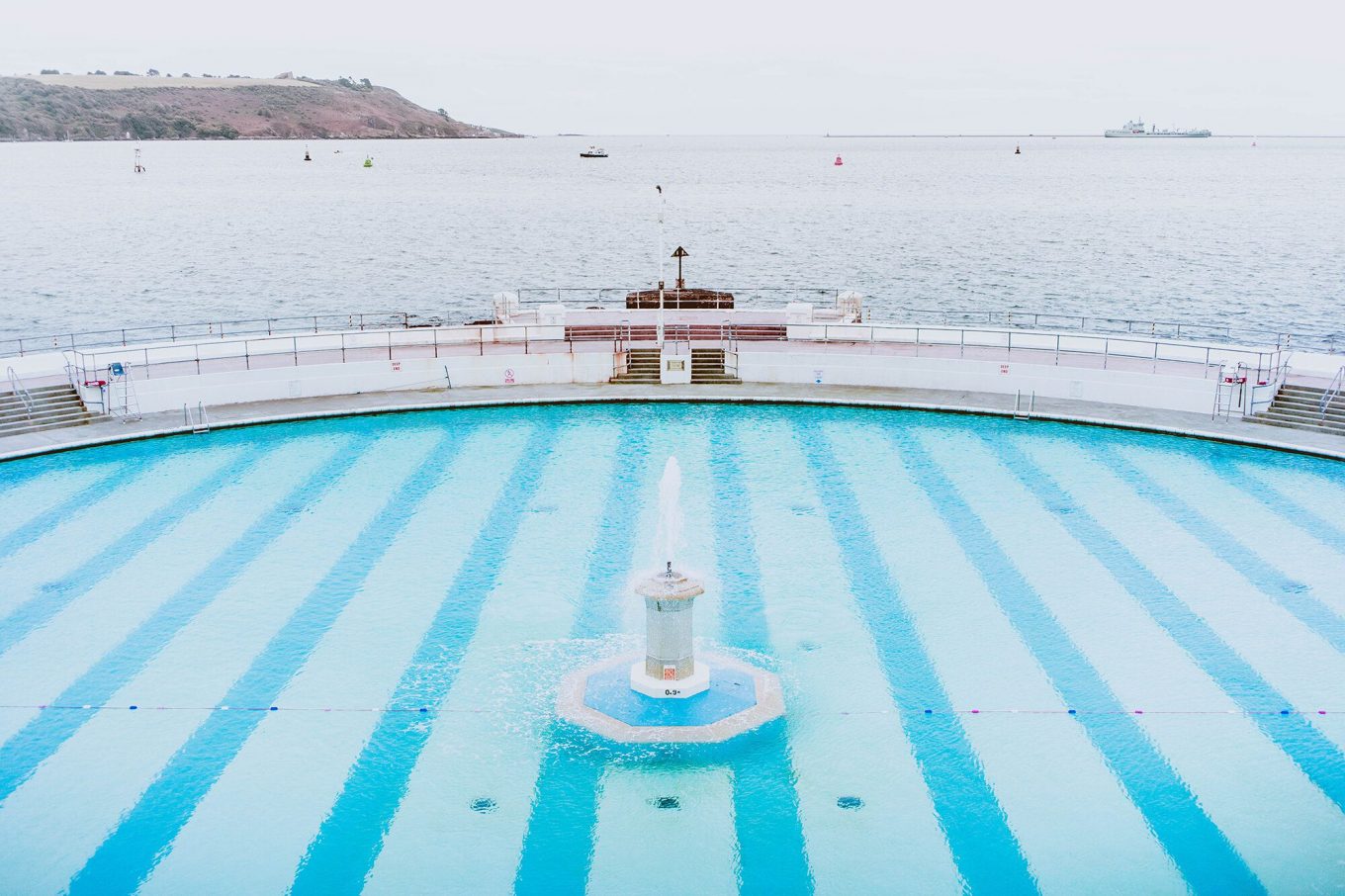
    Tinside Lido is Plymouth’s Art Deco seawater swimming pool built into the shoreline and cliffs in Hoe. This Grade II listed building was originally opened in 1935 and was a popular holiday for people living in the UK during the tourism boom in the early-mid 20th century. Unfortunately, for Tinside Lido, as international travel picked up towards the end of the century, fewer people visited and in 1992 it was closed and soon fell into disrepair. However, in 2002 funds were raised to restore the iconic outdoor pool and it was successfully reopened in 2005. Yay!

    So now for just £5 you can take a dip in a beautiful 1930s seawater lido where on one side you can admire the classic Art Deco architecture and on the other you can gaze out to sea. Warning, the pool is only ever 2 degrees Celsius above sea temperature so if it’s a chilly day, prepare for a shock! 

    When you’re done, pop over to The Terrace (just a 2 minute walk away) where you can get a cuppa to warm your bones after a cold swim or maybe a glass of wine on a sunny day whilst looking out at the lido.

    Though you can’t swim in the lido during the cooler months, you can still view it from a platform above the pool just off from the main road.

    PFH Fun Fact: Tinside Lido was featured in a BBC ident.

    If you’re visiting Plymouth in the summer, hang around Hoe Park at sunset to see the sun dip behind the hill, casting an array of peachy pink stripes across the sky.

    Opening hours

    The pool is open seasonally from 10.00 and each paid admission counts for a two hour swim.

    The C-19 pandemic has altered the lido’s open season, so check here before paying a visit.

    Ticket cost

    Adult £5

    Accessibility 

    There is a road side lift to take you to reception.

    There is an internal lift to the pool level.

    There is a hoist in the main pool.

    Dedicated toilets and changing rooms are available.

    COVID-19 restrictions

    Wear a mask at all times indoors.

    Please stay 1-2 metres away from others.

    6. Royal William Yard

    Unsure about what you fancy for dinner and need a variety of choices? Or maybe you want dinner somewhere steeped in maritime history, then head over to Royal William Yard. Royal William Yard is a Grade I listed building that used to be naval buildings but is now the top waterfront dining destination in the city as it’s filled with restaurants as well as a boutique, salon, hotel, wine merchant and brewery, plus there’s a monthly food market.

    Take no notice of Wagamama or Prezzo though as there’s far more exciting eateries including Le Vignoble with over 300 wines from around the world on offer and The Hook & Line where you can order from a menu of fresh seafood caught locally on the owners’ fishing boats.

    By the way, you’ll find the city’s first ever speciality rum bar at The Hook & Line, serving up a selection from all around the world including popular local rums. This is homage to the city’s and the restaurant location’s naval heritage. If ale is your poison, then try their signature ale: The Hook, Line & Sinker.

    COVID-19 restrictions

    Please use the provided hand sanitiser before and after entering.

    You must complete the track and trace form or log your location using the NHS Track and Trace app.

    Wear a mask at all times indoors unless you are seated at your table.

    Observe the one way system.

    Please stay 1-2 metres away from others.

    Table service only.


    I really enjoyed visiting Plymouth. Even without a particular interest in its naval history it’s wonderful to experience the city’s various nods to its maritime culture, whether it’s a tour at the distillery that used to supply the naval officers with gin, a swim in a seawater pool, a meal at a restaurant located in naval buildings or learning about the voyage of the Mayflower. 

    Gabriella

    Pin this post


  • 10 things to do in a day at St Ives, Cornwall

    10 things to do in a day at St Ives, Cornwall

    St Ives is a seaside town in southwest Cornwall famous for its sun-trap harbour lined with restaurants and bars, art scene with more galleries than you can shake a paintbrush at – including Tate St Ives – surf beaches like Porthmeor and beautiful turquoise waters.

    Originally a fishing village, St Ives is now a seaside resort and is top of everyone’s Cornwall bucket list. Why? Because it’s a cute town with independent shops, pretty views and so many places to eat you’ll want to come back to try more. On that note, spending a day in St Ives by my guide involves a lot of eating so bring your stretchy pants, okay?

    What to pack in your bag for a day in St Ives


    • Reusable coffee cup – to responsibly get your hot drink to-go


    • Towel – to sit on when you’re on the beach


    • Face mask – to cover your face to protect others


    • Hand sanitiser – to protect yourself and others


    Remember to always wear your mask indoors and sanitise/wash your hands as often as possible.

    PFH Top Tip: Keep your face mask on in slightly busier areas such as Fore Street and Wharf Road. Also keep an eye out for a sign in the shopfront that tells you how many customers are allowed in at one time.

    1. Arrive early to get parked

    I guarantee if you ever hear someone recommending a day in St Ives, you will hear them say you must arrive early by car if you have any hope of getting parked. With roads barely wide enough for a single car, corners so tight you can’t but hold your breath when you creep around them, there’s very little parking opportunities in St Ives so the car parks fill quickly. 

    If you plan on driving you must arrive to St Ives before 8.30am to get a spot for your car. 

    The car park we used was The Island Car Park and it cost £8.20 to park all day.

    If you aren’t able to drive you can use the bus and train service. I’ve heard from a friend that the train ride in from St Erth is very scenic.

    2. Get coffee from Yallah 

    So I’ve made you arrive early to St Ives to get parked but you’re like, ugh Gaby, none of the shops are open yet. Make your way to the Yallah Kiosk on Wharf Road and grab a coffee to-go, they will make your coffee in your own reusable cup (yay!) so make sure to hand it over. Click here to read Yallah’s sustainability report.

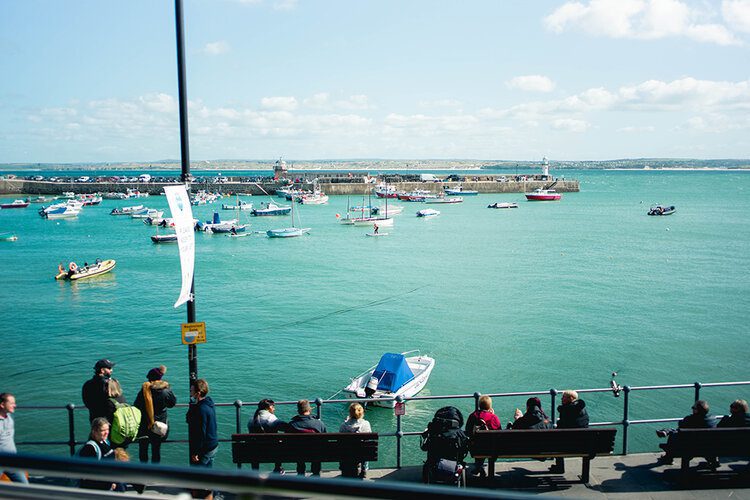
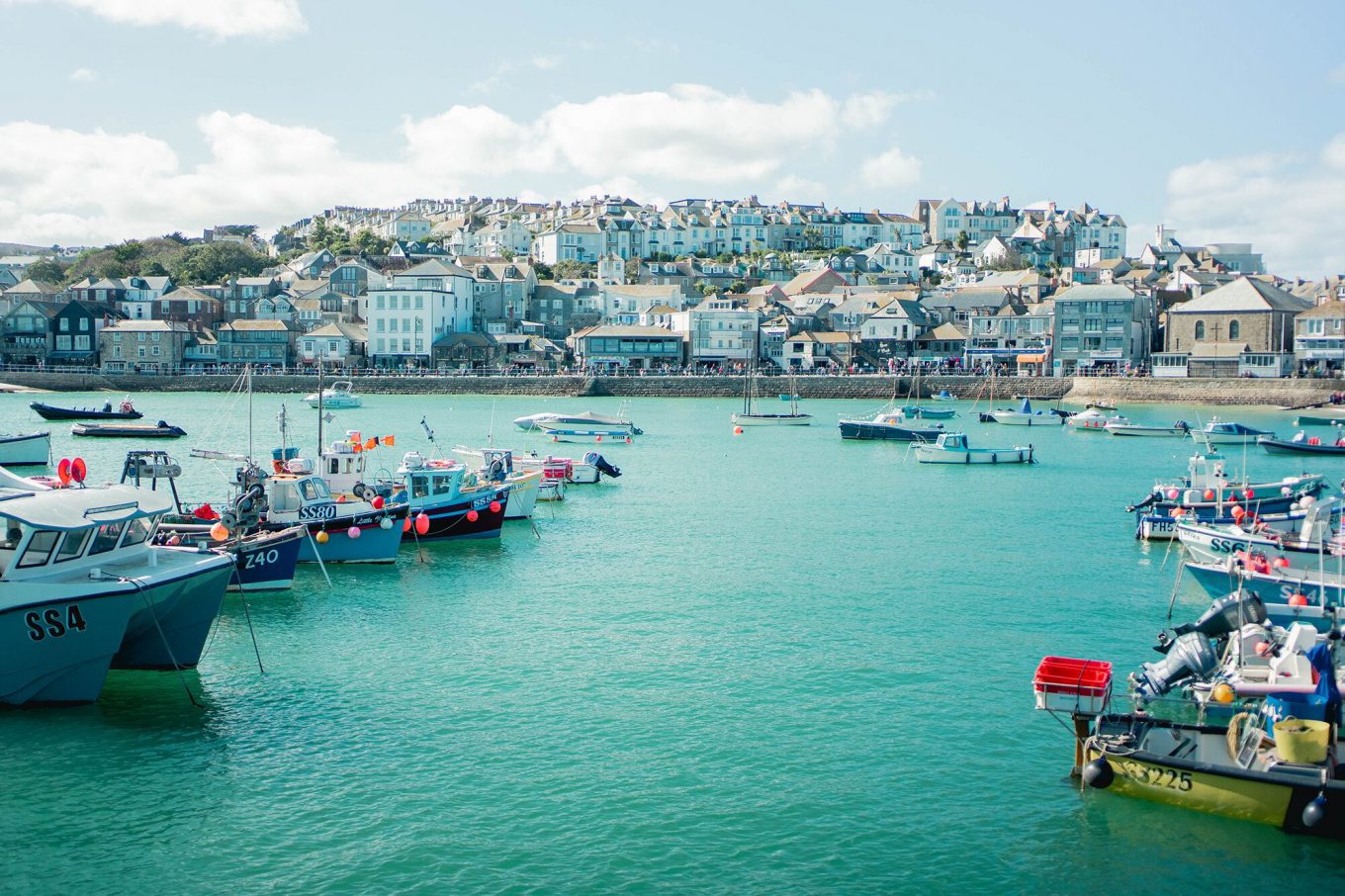
    Take your coffee to one of the benches on the other side of the road and gaze across the harbour at all the little boats bobbing around in the cool clear waters, waiting for the late morning sun to reach them.

    3. Try to spot seals from Smeaton’s Pier

    Take a leisurely stroll over to and along Smeaton’s Pier for a chance of spotting a seal. Catching a glimpse of a seal around St Ives is possible but known to be quite rare unless you take a paid boat trip over to Seal Island.

    Either way it’s a nice little walk to kill time before the shops, galleries and museums open, plus it provides the perfect spot to take a photo of St Ives with the little harbour in the foreground which you can see below.

    4. Visit Tate St Ives

    If you want to step up your gallery game (it’s possible that there’s almost as many galleries in Cornwall as there are Cornish pasties) then book tickets for Tate St Ives. Tate St Ives is an art gallery located just off from Porthmeor Beach that showcases a collection of modern art with local ties.

    The current exhibition “Modern Art and St Ives” is the first that you’ll visit and tells the story of modern artists who are connected to St Ives including Barbara Hepworth, Patrick Heron and Alfred Wallis.

    Hungry for more? Then head on over to the Barbara Hepworth Museum and Sculpture Garden. If you purchase a ticket here first, it’s a little pricer than the Tate ticket but it includes entrance to Tate St Ives.

    Opening hours

    Monday to Sunday 10.00–17.20

    Ticket cost

    Adult £9.50

    Children get free access

    Student £8.50

    Senior (60+) £8.50

    Job seeker £8.50

    People with disabilities £8.50 (companion gets free access)

    Accessibility 

    Each floor is accessible by lift.

    Three wheelchairs are available.

    Accessible toilets are located on the third floor.

    Large print guides printed on yellow paper are available upon request.

    A 10 min audio introduction that describes the architecture is available upon request.

    Guide dogs, hearing dogs and assistance dogs are welcomed.

    COVID-19 restrictions

    Please use the provided hand sanitiser before and after entering.

    Observe the one way system.

    Wear a mask at all times indoors.

    Please stay 1-2 metres away from others.

    5. Explore the nooks and crannies

    With its narrow winding streets that offer glimpses of the sea it’s easy to find charm in exploring the nooks and crannies of St Ives. Stumble across a cute cottage or two, an independent gallery and keep an eye out for special spots that looks like you could be peeping out at the shoreline of Positano. 

    6. Pick up a Saffron Bun from Ferrell S H & Son

    A saffron bun is a spiced bun similar to a tea cake. Yellow in colouring, thanks to the saffron, it sits proud and easily identifiable in the shop window of Ferrell S H & Son’s bakery on Fore St, a family run bakery that has been there since the 1960s.

    It’s a traditional Cornish treat and is up there on the must-try-whilst-in-Cornwall list that also includes:


    • Cream tea with Cornish clotted cream (preferably Rodda’s)


    • Cornish pasty


    • Yarg (cheese)


    Heads up, despite the C-19 pandemic, Ferrell S H & Son only accepts cash so have some to hand to get your bun.

    7. Shop on Fore Street

    Whilst on Fore Street, enjoying your saffron bun, potter around the shops. Here you’ll find some of the best independent shops in St Ives including all things surf, seaside themed and rum/gin focused. My favourites along this little street are:

    John’s Liquor Cellar

    Shopping in John’s Liquor Cellar is like stepping into a cave full of intoxicating treasures including locally crafted beers, wines and ciders but most importantly (for me anyway) gins. You’ll find a vast selection of local gins such as Tarquin’s, Trevethan and St Ives in all their available flavours including Trevethan’s pink grapefruit and lychee or Tarquin’s rhubarb and raspberry. They even sell miniatures so you can grab some souvenirs/stocking fillers for friends and family back home.

    Myrings of St Ives fudge and rock shop

    Myrings’ fudge recipe has been passed down through generations for over 30 years. It’s the perfect spot in St Ives to pick up a sweet treat for yourself or a loved one. 

    Cornwall soapbox

    Pick up some handmade soap, a shampoo bar and a candle to match from Cornwall Soapbox. Each soap is made with pure essential oils and organic African Shea Butter. They each smell amazing and even better, they reduce your plastic packaging waste as they’re wrapped in paper.

    The Sewing Room

    It won’t come up on google maps but it’s a little knitting and crochet shop selling needle, hooks, patterns and wool/yarn which will inspire you to make something or pick up kits as gifts for others.

    Yummy Scrummy Bakery

    Pick up a giant iced bun topped with hundreds and thousands before they sell out to the masses!

    8. Get ice cream from Moomaid of Zennor

    “Legend has it that a young Cornishman was lured into the sea by the beauty of the Mermaid of Zennor. Today you’re more likely to be seduced by Daisy, Primrose and Sid Vicious – just three of the cows that help make Tremedda Farm’s ice cream. They are the legendary Moomaids of Zennor.” – Moodmaid of Zennor.

    Once you’ve been into all the wonderful independent shops on and around Fore Street, pop into Moodmaid of Zennor for some locally made Cornish ice cream. Their ice cream is made with fresh ingredients and in small batches so they can ensure only high quality ice cream is going from scoop to tummy. 

    Their flavours run from traditional vanilla clotted cream to salted almond praline. Take it in a cone or a tub dressed up with the likes of brownie chunks and a stick of fudge. 

    WARNING! Cornish seagulls are buttheads and will take the food from your hand mid-flight. Whilst eating lunch on the beach in Port Isaac, a cannibalistic seagull took half of Michael’s egg mayo baguette from his hand and swallowed it whole as we looked on in horror. Be so careful with your ice cream when you eat it okay? Walking around with food by the shoreline in Cornwall is like entering shark infested waters with an open wound. Alright, even without my exaggeration I still advice you to eat quickly.

    9. Sit on the beach

    If it’s a lovely day out then spread out a towel on the sand and either lay back and soak up some rays of sunshine on Porthgwidden Beach or watch the surfers catching waves on Porthmeor Beach.

    10. Get dinner at Porthminster Kitchen looking out on the harbour

    Porthminster Kitchen is located on Wharf Rd and has an amazing view of the harbour, and oh, when the sun hits the water and it lights up to an electric cyan blue, it feels like you could be anywhere in the Mediterranean.

    The menu features dishes inspired by global cuisine but made with locally sourced Cornish ingredients. They’re sure to tickle your seafood fancies with a wide choice including scallops, squid, clams, mussels and more!

    If you’ve been around here for a while then you’ll know I’m somewhat partial to some fish and chips (fish and chips are life) and of all the chippies in all the land, I have never had mushy peas as good as I have at Porthminster Kitchen. Their spiced peas are like two fish and chips classic sides in one: mushy peas and curry sauce!

    Make sure to book in advance if you’re going to St Ives during peak spring/summer to avoid disappointment, card details are required to make the booking and you will be charged £15 if you don’t show for your booking without prior warning. If it’s forecast to be a sunny day, see if you can ask for a table outside.

    PFH Top Tip: if you can’t get booked into the restaurant for dinner, consider lunch at their café, Porthminster Café, located on Porthminster Beach.

    COVID-19 restrictions


    • Wear your face mask until you are seated at your table and make sure to wear it if you leave your table


    • Pay for your meal by contactless card


    • Observe the one way system


    • Try to keep a distance from others in the restaurant when you’re not at your table


    Travel safely,

    Gabriella

    Pin this post


  • How to spend a day in Clovelly, Devon

    How to spend a day in Clovelly, Devon

    With a series of white washed cottages cascading down towards the sea from a 400ft cliff edge, Clovelly, a small living fishing village in North Devon, is one of the most picturesque spots in the county. Appearing untouched for centuries, the tiny cobbled high street of Clovelly, inaccessible by vehicle, takes you back to a simpler time where life was enjoyed without the conveniences we take for granted today. 

    Once owned by the Royal Family, Clovelly has been in the hands of just three families since the 13th century. The village is still privately owned and all properties are rented and residence usually stays within a family for generations.

    We chose to visit Clovelly after watching a re-run of the Channel 4 documentary, “Devon and Cornwall” which explored the two counties’ treasures. Once I caught a glimpse on TV of this exclusive village, so lusted after that it requires an entrance fee, I wanted to see it for myself and I am so glad I did. Between shopping for handmade soap and candles from Clovelly Soap, learning about Rex Whistler’s iconic “Toile de Jouy” design from Clovelly Silk, enjoying a Devon cream tea with a view of the sea and exploring a steep, meandering path down to the 14th century quay, visiting Clovelly has been one of my favourite days out in England.

    Read on to find out what you need to know about visiting Clovelly, how we spent the day there and my tips on where to get the best photos.

    Visiting Clovelly

    Before getting into what to do and where to take the best photos in Clovelly, here’s the basics for getting access to the village:

    How to get there 

    Parking at the Clovelly Visitor’s Centre is included in the entrance ticket cost (see below for more).

    The village is located off the A39, 10 miles west of Bideford. Take Junction 27 to exit off the M5.

    The closest train station is Barnstaple and you can take a bus from there to Clovelly.

    Buses also run to Clovelly from Bideford.

    Entrance cost

    Adult: £7.95

    Child (aged 7 – 16): £4.60

    Children under the age of 7 get free entrance

    Family including 2 adults and 2 children: £21

    Season tickets are £26 per adult and £62 per family

    Ticket costs are for 1st April 2020 – 31st March 2021

    Dogs on leads are welcomed

    Opening hours

    Clovelly is open every day except Christmas and New Year’s Day.

    9am – 5pm April – November

    10am – 4pm November – March

    PFH Top Tip: for free entry to Clovelly, visit on Boxing Day.

    You’ll want to allow around three hours for visiting Clovelly to make the most of your time there.

    Covid-19 restrictions

    You must wear a face mask when entering the Visitor’s Centre, museums and shops. 

    Wash your hands as often as possible and use hand sanitiser frequently.

    You are required to fill out a Track and Trace form at the ticket desk.

    Do not visit Clovelly if you are showing any signs of being sick.

    Try to keep at least 1m away from others.

    The Visitor’s Centre has a one-way system. 

    Accessing the village 

    The village is built into a 400 foot cliff and is only accessible by foot down a steep cobbled path. It is very important that you wear comfortable shoes as the high street is made with stones from the beach that are uneven and slippery so you will slip without a decent tread on the soles of your shoes.

    Unfortunately due to the nature of the village being built into a cliff, there is no level access to the village, however the Visitor’s Centre, Mount Pleasant and craft shops (where you’ll find Clovelly Silk, Clovelly Soap and Clovelly Pottery) are accessible.

    Usually, between Easter and October, there is a Land Rover service that offers rides back up to the Visitor’s Centre from the bottom but due to COVID-19, that service has been suspended.

    Start at the Visitor’s Centre and make your way straight down into the village (you can visit the shops on the way back up) as it’s your best chance of seeing the high street empty and therefore the most ideal time to get the best photos of the most photogenic part of the village. I recommend arriving within the first hour of the village opening as it’s the best opportunity to get photos from the top of the high street without other people wandering the street.

    PFH photo guide

    Want photos of Clovelly for the ‘gram or to capture beautiful memories? Well you’re in the right place, there are at least three spots that you will want to take photos of whilst in Clovelly so let me take you through where they are and what time to get there for your best chance of people-free photos:

    1. Clovelly high street

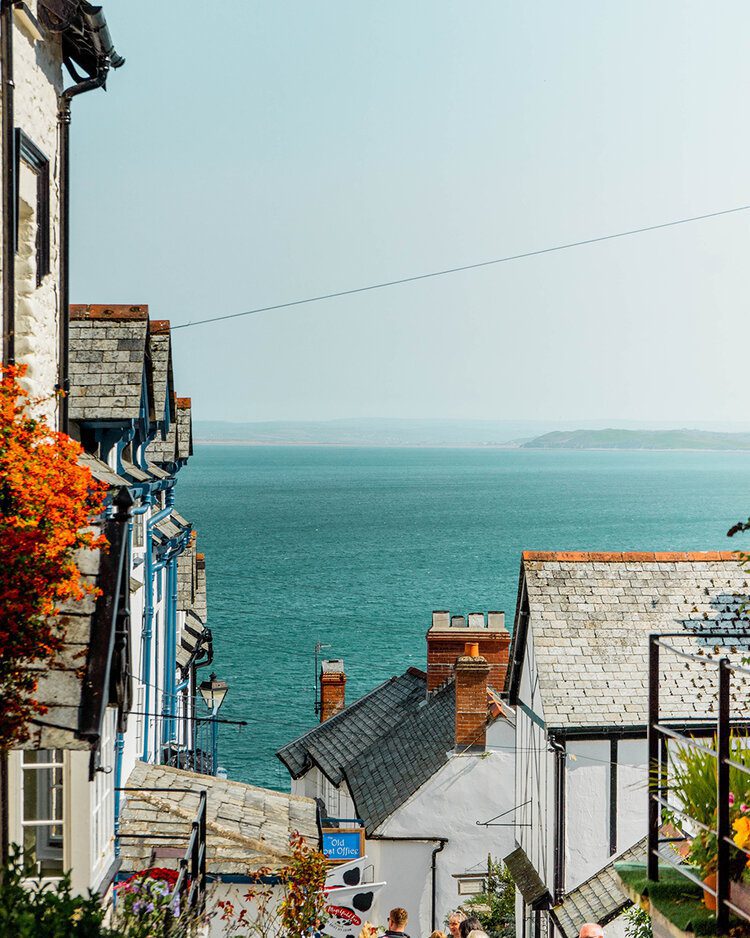
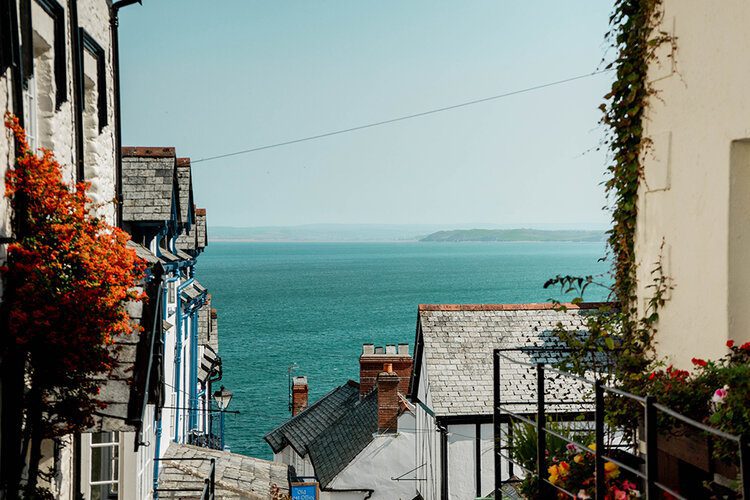
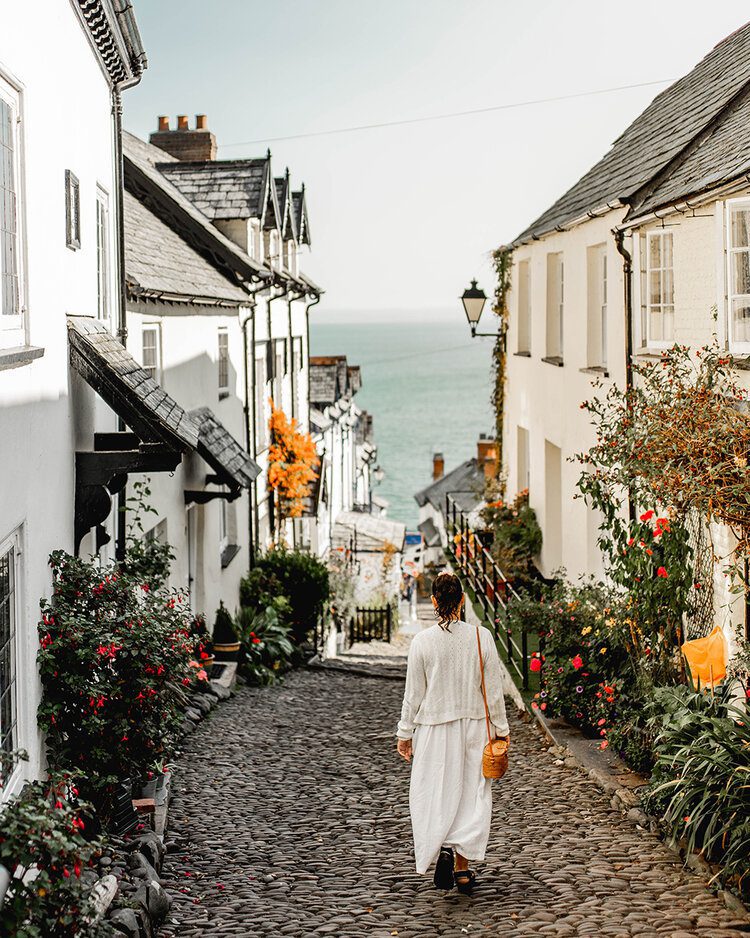
    Take a snap from the top of the high street looking down towards the sea. The high street is iconic as it’s only accessible by foot, or in past times by donkey so you won’t get a single car in your shot. The narrow, cobbled path down is sandwiched between centuries old cottages decorated by flowers with the odd cat silently judging your arrival to their village.

    As mentioned, the cobbled path is the only way into the village so arrive early to get the best chance of an empty street.

    Walk a little further down the path towards the quay to capture more beautiful photos as the sea becomes visible between the cottages, before making your final descent down to the beach.

    2. Clovelly quay

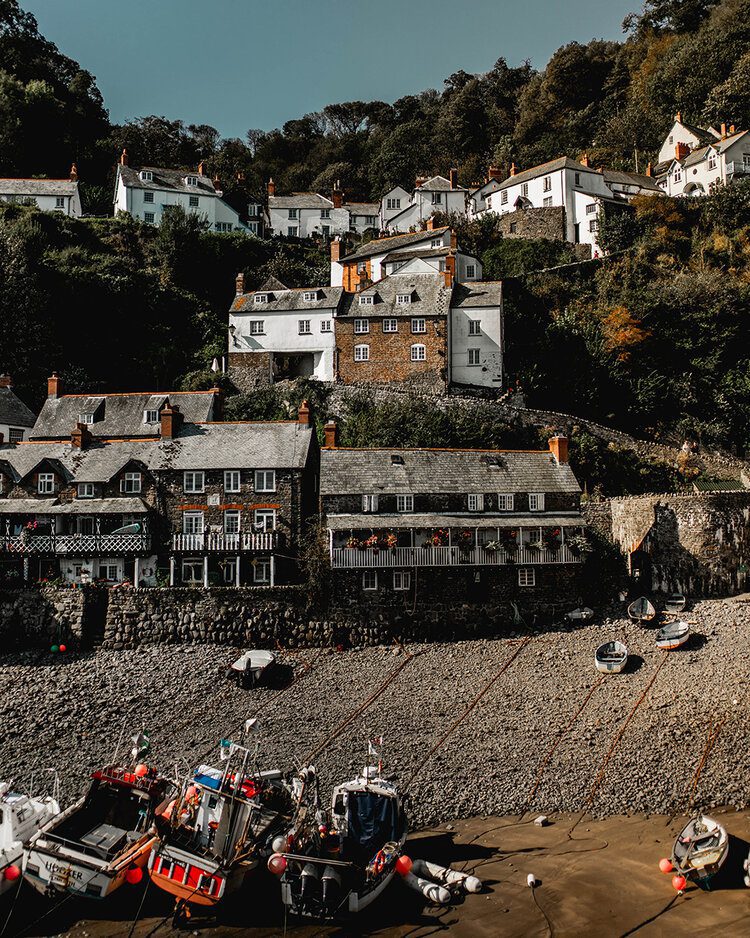
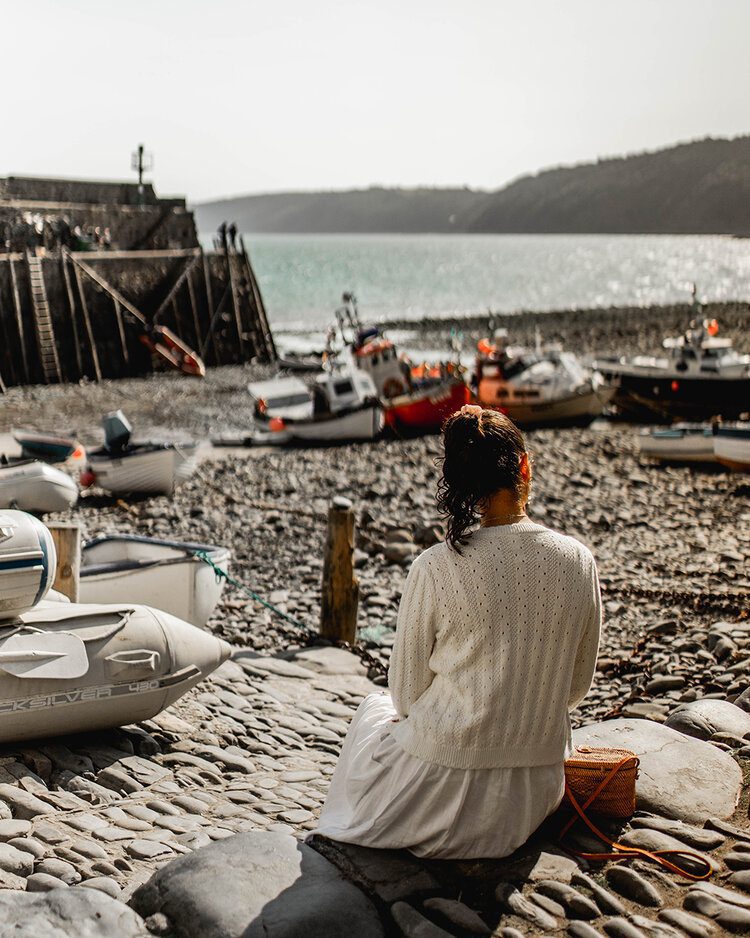
    Make your way down to the end of the high street to get access to Clovelly quay and the beach. If you specifically want the quay either full of water or dry then you will need to check the tide times here. We went at low tide, which is why the boats are on the ground.

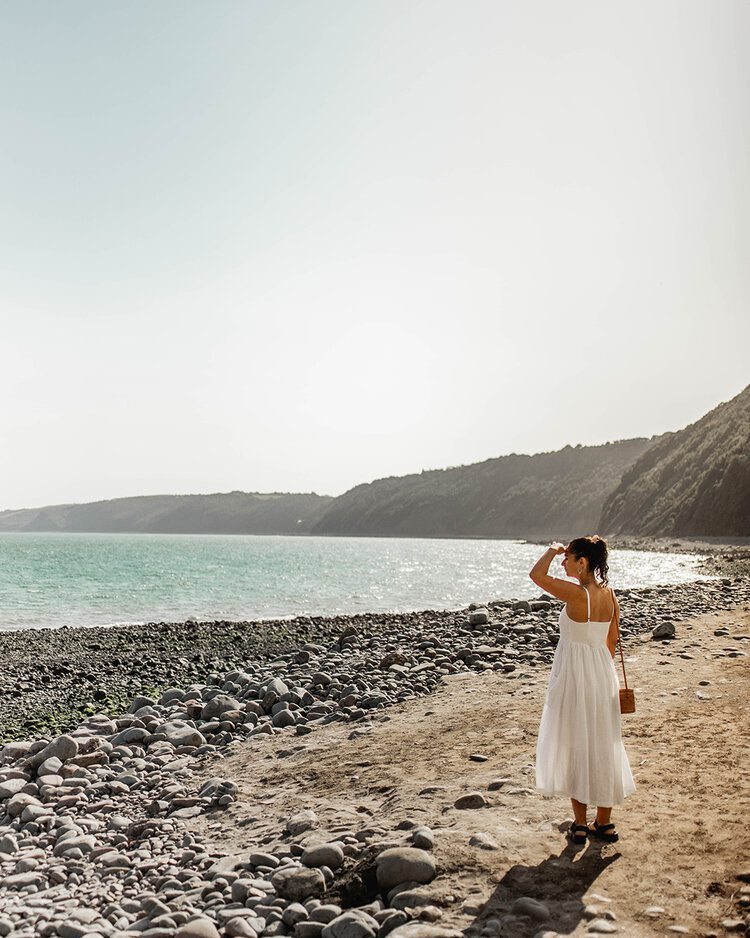
    Take snaps around the quay then take a walk along the beach with the sea to your left. At low tide you’ll be able to walk out to the shore and look back at Clovelly to take photos of it appearing to tumble down into the sea. 

    Heads up, it’s not a sandy beach so if for some reason you decided to ignore my advice earlier when I said wear comfortable shoes, then PAY ATTENTION NOW; the stones are wobbly because the changing tide is forever displacing them and many are covered in seaweed and algae making them slippery, so wear practical shoes so you don’t snap an ankle, capeesh?

    3. Cottage Tea Rooms

    Read more about eating at the Cottage Tea Rooms below under “what to do in Clovelly”, but I’ll quickly tell you which table to sit at to get the best photos of you enjoying a Devon cream tea with a stunning backdrop. 

    Order to eat in the garden and head straight to the back, right past all the benches, and up to the next cottage’s front door. There on the left, you will find two large chairs, attached to a small table in the middle, looking out to sea. This is the best table as it’s the only one that faces directly towards the sea, not side on like the others, and there’s enough space to get behind it to take photos (or get someone else to take photos of you) of your Devon cream tea and the sea.

    This only works if there’s two of you, I should note as well, there’s only two chairs. If there’s more of you then you’ll have to pick a larger table closest to the sea view and sulk about not being able to sit at the best table I’m afraid.

    What to do in Clovelly 

    With a slight crossover from my little Clovelly photo guide, here is where I expand on how you can spend your day exploring this picturesque village.

    Walk along the beach

    Once you’ve explored the quay that has been keeping boats safe from the wrath of the sea since the 14th century, take a stroll along the pebbled beach to take a look back up at the village, taking in all of its charm including the Lifeboat house which was first in service in 1870 and the oldest cottage in Clovelly, Crazy Kate’s Cottage. The cottage with its long balcony looking out towards the harbour has a sad story behind its name but is one of the villages defining features. At high tide the water comes straight up to the foundations of the cottage.

    As I mentioned in my photo guide, where you can walk to on the beach depends on the tide. If the tide isn’t high, you’ll be able to safely walk along the beach where you’ll find Clovelly Waterfall. Legend has it that Merlin the Arthurian magician was born in the cave behind this waterfall. 

    Cream tea with a view

    A first glance of the village might tell you to get a Devon Cream Tea from the Red Lion pub and sit on the tables outside looking out across the quay but this is not the path for you, oh no, I have something much better for you. Once you have began your ascent up from the beach, take a left into the Cottage Tea Rooms and order to an outside table in the garden around the back of the cottage. 

    If you’ve read my photo guide above then you’ll know which table to go for, if you haven’t then do yourself a favour and scroll up to read it instead of skipping ahead! Aim for an early lunch to beat the lunchtime rush so you have a better chance of getting a seat.

    Their menu offers light lunches, snacks, cakes and cream tea, including a gluten free scone option. Remember in Devon, the cream goes first!

    Fisherman’s Cottage and Charles Kingsley museums

    Just up along from where the tea rooms are located and on the same side is the Fisherman’s Cottage Museum. Pop inside to take a glance at what home life looked like for a Fisherman’s family in the 1930s. The rooms are decorated with period pieces, some of which have been donated by families that have lived there for generations. As you enter you will find an original well that helped to provide the village with water before the main water line was installed. There’s also a collection of framed wedding photos dating back to to the late 1800s.

    Attached to the Fisherman’s Cottage Museum is the Kingsley Museum. Charles Kingsley (1819-1875) was a Victorian writer who grew up in the village. His most famous pieces are “The Water Babies” and “Westward Ho!”. His work is known to have drawn visitors to the village.

    Both the museums are free to enter under the cost of your admission ticket.

    Shopping in Clovelly

    Shopping in Clovelly is a real treat as the craft workshops offer an array of handmade items perfect for personal souvenirs and gifts. What’s particularly precious about the Clovelly workshops is that the fabrics and soaps encourage creativity and self care, they inspire you to do more than buy something to take home, but instead to indulge yourself in a rewarding sewing project or an aromatherapy bath that’s both healing for your soul and a lasting memory of your visit to Clovelly.

    Clovelly Silk 

    Clovelly Silk was one of my favourite parts of visiting Clovelly. The workshop is owned and ran by a couple, Ann and Bill Jarvis who have a rich history in the textiles industry; Ann was head of Liberty of London’s design studio for 10 years where she worked on some of Liberty’s classic prints from their archives whilst designing new ones for their dress and furniture lines. You can purchase a Liberty print bag from their small collection in their shop.

    Please ask permission before taking photographs of their workshop.

    Clovelly Silk is most famous for Ann’s creation of their custom repeating print, “Toile de Jouy” which she created using six of world famous artist, Rex Whistler’s, illustrations of Clovelly which he originally made in 1932. Their “Toile de Jouy” print is available to buy on cushion covers, tea towels and even face masks in six colours. Alternatively, you can buy some fabric to create something yourself for just £25, how’s that for the most darling and personal souvenir of Clovelly?

    Toile de Jouy in Emerald Green.

    As much as I want to keep sharing about Clovelly Silk, I want to you learn about Rex Whistler’s illustrations and the story behind “Toile de Jouy” yourself from Ann and Bill Jarvis because they are such wonderful people with so much passion for their work and pride in the village.

    PFH Fun Fact: HRH The Princess Royal own a “Toile de Jouy” silk scarf.

    Clovelly Pottery

    Need a new mug for your morning cuppa or fancy egg and soldiers out of some handmade egg cups decorated with a pattern unique to Clovelly? Well isn’t that that convenient as Clovelly has its very own pottery workshop selling a collection of work from Clive Pearson and Caroline Curtis.

    Clovelly Soap

    The Clovelly Soap Shop not only sells intoxicating handmade soap wrapped in their custom designed paper, but it also sells all the eco-friendly pampering accessories your heart desires including matching candles, organic cotton towels, bamboo hair wraps and more.

    Their plastic-free artisan soap collection includes:


    • Hand soap


    • Beard wash


    • Shampoo


    • Dog shampoo


    (psst, they take American Express and participate in Shop Small, so if possible, line up your visit when that offer is on).

    Clovelly Fudge

    Back up at the Visitor’s Centre, there’s a small shop selling handmade Clovelly fudge in ever changing seasonal flavours. Perfect for a sweet treat for yourself or a gift to take home.

    Clovelly Court Gardens

    Before leaving, visit the Clovelly Court Gardens that are located at the top of the village. The Victorian walled garden is included in your entrance ticket and features glass greenhouses filled with Mediterranean flora and fauna, which can grow thanks to a maritime microclimate. Unfortunately we didn’t learn of the Clovelly Court Gardens until we had already left so I don’t have any photos for you.


    If you take a trip to North Devon, be sure to add Clovelly to your list! I want to add that there are two hotels in the village, The New Inn at the top of the high street and The Red Lion down at the quay, so should you be interested in extending your stay in the Clovelly, those are your options. 

    .

    Gabriella

    Pin this post


  • 8 best things to do in Bristol, England

    8 best things to do in Bristol, England

    Located in South West England between Gloucestershire and Somerset, Bristol is uniquely its own county which is very fitting of the city’s forward thinking and progressive aura. In stark contrast to its torrid past of transporting hundreds of thousands of enslaved Black people to the Americas, the city now fights hard for racial equality and against climate change; winning the EU’s European Green Capital Award in 2015 and famous for the pulling down of the statue of Edward Colston, an 18th century member of parliament who was heavily involved in the transatlantic slave trade.

    Virtute et industria (with courage and industry).

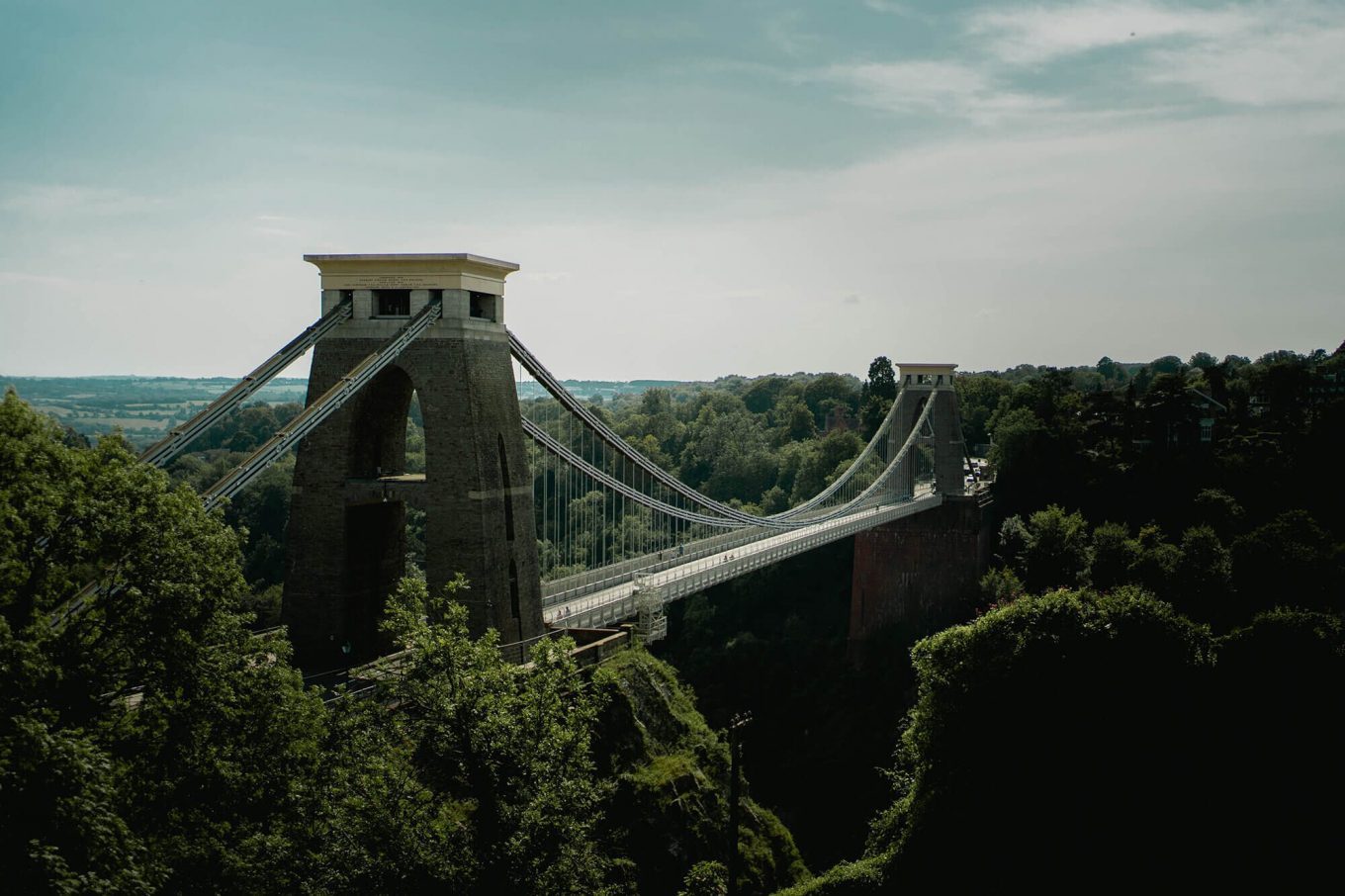
    Up until the industrial revolution, Bristol was one of England’s leading cities. Through the 19th century, Bristol was a pioneering city in engineering with the likes of Victorian engineer, Isambard Kingdom Brunel, designing the Great Western Railway, the grandmother of all modern day ships, SS Great Britain and the Clifton Suspension Bridge. 

    These aren’t Bristol’s only claims to fame, the city is also home to world famous artist Banksy, multiple Academy Award winning animation studio Aardman (creators of Wallace and Gromit, Chicken Run and Peter Gabriel’s Sledgehammer music video), Sir Allen Lane created the first ever paperback book (Penguin paperbacks) there and Elizabeth Blackwell, England’s first woman doctor was born in Bristol.

    Aside from being a hub of creativity and a great place to visit with much to do and see, it’s also a stone’s throw away from the quaint villages of the Cotswolds and ancient Roman remains in Bath.

    1. Clifton Suspension Bridge

    Clifton Suspension Bridge is Bristol’s most iconic landmark. Designed by Victorian engineer, Isambard Kingdom Brunel, it took 33 years to build and is one of the oldest surviving iron suspensions bridges in the world. Sitting 245ft above high water, it first opened in 1864 and is still fully functioning as a crossing over the River Avon, now a Grade I listed building.

    There are multiple spots to see and capture Clifton Suspension Bridge from. To name a few you can cross the bridge, look down at it from Clifton Observatory or up at it from Hotwell Rd below.

    The best time to see Clifton Suspension Bridge though is annual Bristol Balloon Fiesta (which I didn’t know existed until I reached Bristol a mere few days after it finished). What’s the annual Bristol Balloon Fiesta? Good question. Every August, countless hot air balloons take to the sky above the bridge and on two evenings (a Thursday and a Saturday) from 6pm until midnight, the bridge closes during the Fiesta Night Glow, which is when the sun goes down and the multiples burners dot the sky like giant fireflies. Yeah, I can’t believe I missed it either.

    Ticket cost

    Should you need to drive over Clifton suspension bridge, it costs £1 per motor vehicle, including motorcycles.

    COVID-19 restrictions

    The pedestrian walkway currently has a one way system and doesn’t allow for stopping.

    2. Street graffiti including Banksy pieces

    Bristol’s graffiti scene is world famous thanks to it being the birthplace and live exhibition of the elusive graffiti artist, Banksy. See some of his most iconic pieces first hand such as “Girl With the Pierced Eardrum” (2014) with her 2020 COVID-19 face mask addition in Albion Docks in Hanover Place and “Well Hung Lover” on the side of a sexual health clinic on Frogmore Street. Bristol’s most recent Banksy addition went up on Valentine’s Day 2020 on Marsh Lane in Barton Hill and features a young girl catapulting a firework of red flowers.

    For a guide to Banksy’s artwork across the city, download the Banksy Bristol Trail by Cactus Apps for IOS here and Android here.

    Banky’s isn’t the only graffiti worth viewing across Bristol though, in fact the city is home to over 200 street artists and graffiti writers. I recommend heading to North Street for an exhibition of powerful and thought provoking pieces commenting on current affairs including climate change, racial inequality and the COVID-19 pandemic. 

    I particularly recommend seeing the giant Greta Thunberg tribute mural on the side of the Tobacco Factory (one of the most highly coveted walls for street art in Bristol) in the Aldi supermarket car park, which went up in 2019 and was painted by Jody Thomas.

    Bristol is home to Upfest, Europe’s largest urban arts festival. Unfortunately it has been postponed this year (2020).

    3. Bristol Beer Factory

    Is beer your choice tipple? Then head to the Bristol Beer Factory Tap Room for a flight or pints of their on tap ales, stouts and wheat beers, then shop what took your fancy in their bottle shop attached to the bar. 

    Take the sustainable route when you shop and purchase one of their reusable bottles so you can fill it with whichever beer of your choice. Their refillable container options and prices are:


    • £5/ltr Cask


    • £6/ltr Keg


    • £8 to fill a BBF growler


    The Bristol Beer Factory began brewing in 2004 but it wasn’t the first brewery to work out of their current building. It was Ashton Gate Brewery who began brewing there back in the 1820s, to read more, click here.

    Pre-pandemic, Bristol Beer Factory offers Brewery Tours for £20 per person. I’m sure these will start again when the pandemic has improved, so if this interests you, keep an eye out here.

    You can also grab a BBF pint across the city in various pubs. Our personal favourite was Grain Barge which is a floating bar and restaurant in Bristol Harbour. I seriously recommend eating here because their dishes are made with local produce and taste amazing (they have really great vegetarian options) and the view from the top deck is a real treat.

    Opening hours for BBF Tap Room bottle shop and bar

    Closed on Mondays

    Tuesday 12pm – 6pm

    Wednesday 12pm – 9pm

    Thursday 12pm – 10pm

    Friday & Saturday 12pm – 11pm

    Sunday 12pm – 6pm

    COVID-19 restrictions

    Please use the provided hand sanitiser before and after entering.

    Complete the Track and Trace form with your contact details.

    Pay for drinks by contactless card.

    Please stay 1-2 metres away from others.

    4. Floating Harbour

    Bristol Harbour has been in use since 13th century and in 1806, 80 acres of the tidal river were impounded to create a permanent floating harbour. It was a commercial port until 1975 when the waterway was getting too crowded and ships were getting bigger and struggling to pass through to the central port. 

    It has since been transformed into a residential and leisure area with the waterway now home to floating pubs, house boats and rental companies offering up paddle boarding and kayaking.

    The views of the River Avon with its backdrop of rainbow houses climbing up the city hill are so beautiful and worth a visit, so for the best spot, head to Bristol Marina. 

    5. Everyman Theatre

    Everyman Theatre brings a touch of Hollywood glamour to your movie viewing experience within their three screening rooms. Order at the bar from a choice of snacks, soft drinks, shakes and cocktails and it will be served to you at your luxury sofa seat just before the movie starts.

    Choose from both new and previous releases, plus theatre recordings, from the listings announced every Monday for the week ahead.

    Opening hours

    10am daily (or half an hour before the first film of the day, if earlier).

    There are numerous Everyman Theatres across the UK, find out their locations here.

    Ticket cost

    Adult £11.40

    Child  (up to age 14) £7.40

    There’s an online booking fee of £1.50 per transaction.

    COVID-19 restrictions

    Please use the provided hand sanitiser before and after entering.

    Pay for tickets and refreshments by contactless card.

    It is not required but it is recommended that you wear a face mask when not eating or drinking.

    Please stay 1-2 metres away from others when out of your seat.

    6. Charity/second hand (thrift) shops on Gloucester Road

    For the best second hand charity shopping (that’s philanthropic thrifting for my North American folk) head to Gloucester Road. The charity shops on Gloucester Road carry both your usual second hand clothing, accessories, books and homeware plus vintage numbers and don’t charge you marked up prices that require signing off your first born (you know the kind of vintage shops I mean). I managed to pick up a couple of Marks and Spencer St. Michael dresses (a clothing line that dates back to the 1920s) for less than £15 each and a Liberty of London silk scarf for just £9.99. 

    I highly recommend spending a few hours browsing each charity shop on both sides of the street hunting for gems. My personal favourite stores were Shelter, Cancer Research UK and St Peter’s Hospice.  

    One of the vintage dresses I found on Gloucester Road.

    There are also numerous eco-conscious shops on Gloucester Rd selling everything from bulk buy food products to sustainably sourced clothing.

    COVID-19 restrictions

    Fitting rooms are closed – check with the sales assistant if they allow returns should it not fit.

    Please use the provided hand sanitiser before and after entering.

    Pay for items by contactless card.

    Wear a face mask at all times in the shops.

    Please stay 1-2 metres away from others.

    7. St Nicholas Market

    Open since 1743, St Nicholas Market, also known as St Nicks Market, is Bristol’s oldest market. It has over 60 stalls selling nicknacks, fabrics, food, kitchenware, toiletries, clothing and more. The glass arcade is where you will find the food stalls selling a multitude of cuisines.

    Opening hours

    St Nicholas Indoor Market Monday – Saturday 9.30am – 5pm

    Bristol Farmers’ and Producers’ Market Wednesdays 9.30am – 2.30pm

    Street Food Market Tuesdays and Fridays 11am – 2.30pm 

    Bristol Indies Market Fridays and Saturdays 10am – 5pm

    COVID-19 restrictions

    Please use the provided hand sanitiser before and after entering.

    Where possible, pay by contactless card.

    There is a one way system in place.

    Wear a mask at all times indoors.

    Please stay 1-2 metres away from others.

    8. SS Great Britain 

    Dubbed the grandmother of all modern day ships, Brunel’s (the same guy who designed the Clifton Suspension Bridge) SS Great Britain is one of the most important historic ships in the world. Launched in 1843 by Prince Albert she was the first ship of her size to be built from iron and the first to feature Brunel’s newest invention, a screw propeller, to replace paddle wheels.

    SS Great Britain was in service right up until 1933, an extraordinarily long time. In 1970 she was transported back to Bristol where she was restored and placed on display so that you can tour this innovative masterpiece and accompanying exhibitions.

    Opening hours

    Thursday – Sunday 10am – 6pm.

    Ticket cost

    Adult £18

    Child  (5-16) £10

    Student £15

    An adult accompanying a person with disabilities. gets free access

    Family ticket including 2 adults & 2-3 children £48

    COVID-19 restrictions

    Wear a mask at all times indoors.

    Please use the provided hand sanitiser before and after entering.

    Pay for tickets and souvenirs by contactless card.

    There is a one way system in place.

    Interactive exhibitions are supervised.

    Please stay 1-2 metres away from others.


    Bristol is such an innovative and progressive city, they embrace creativity and change for the better. It’s an inspiring city to visit, with plenty to do and see from drinking at an independent brewery to seeing world famous street art and from learning about centuries old engineering to shopping second hand whilst raising money for charity. 

    Bristol was an absolute delight for me and I really hope you get the opportunity to visit one day.

    Gabriella

    Pin this post


  • 5 best things to do in and around Colchester, Essex

    5 best things to do in and around Colchester, Essex

    Dating back over 2000 years to the Iron Age, Colchester in Essex is Britain’s first ever city and former capital of Roman Britain.

    We based our trip to Colchester around me wanting to visit the adorable pastel beach huts on Mersea Island beach and to visit Tiptree Jam Museum and Tearooms for afternoon tea. I sure was blown away by what Colchester had to offer, it was the first I learnt of the long history of the town and I found it to be such an informative trip. I strongly recommend a staycation in or trip to Colchester to learn more about England’s history plus you can combine it with time at the seaside.

    Here’s 5 of the best things to do in and around Colchester, from exploring ancient Roman ruins to having afternoon tea served by one of the best jam producers in the world.

    1. Visit Colchester Castle Museum

    Built in 1100 – commissioned by William the Conqueror in 1076 – Colchester Castle is the largest Norman keep in all of Europe.

    It wasn’t the first building to be constructed upon this land though. Shortly after the Roman invasion by Emperor Claudius in AD 43, Romans built the Temple of Claudius. The temple stood until AD 60 when it was burnt down in an attack on the Roman city by Boudica, Queen of the Iceni tribe. It was rebuilt, along with a wall around the city. It remained until the Roman decline between 330 and 410. In 450, the Anglo-Saxons and Normans took control of Essex but it wasn’t until 917 that Colchester was re-founded.

    In 1076 (over 1000 years since the construction of the Temple of Claudius) the construction of the castle we can see today began upon the foundations of the Roman temple, using stones from other Roman buildings as there was a lack of quality stone in the surrounding area. Originally built as a fort, it is now a museum and has been since 1860.

    If there’s one thing you should do in Colchester it’s visit the castle museum as it extensively documents Colchester’s rich history of thousands of years from the Iron Age right through to modern day. Their collection consists of Celtic coins, a vessel from the Bronze Age, the best preserved Roman statues in Britain, medieval paintings and civil war armour. 

    Colchester’s castle didn’t just go from Norman keep to present day museum. Through the middle ages the castle was used as a prison (you can explore some of cells on your visit) for around five centuries, even when the castle’s interior was in near ruins. Some of the the most infamous prisoners were victims accused of witchcraft, who now have a memorial rose garden in tribute to their cruel treatment.

    In 1727 Charles Gray restored the castle, though his belief that it was a Roman construction led to him tiling the roof in a Mediterranean style that doesn’t match the main structure of the castle.

    Fascinating, right?

    Opening hours

    Monday – Saturday 10am – 5pm

    Sunday 11am – 5pm

    Last admission 4.30pm

    Ticket cost

    Adult £10

    Child  (4-16) £5.95

    Student £6.95

    2 adults & 1 child £23

    1 adult & 3 children £25

    2 adults & 2 children £28

    COVID-19 restrictions

    Please use the provided hand sanitiser before and after entering.

    Pay for tickets and souvenirs by contactless card.

    The castle museum has a one way system.

    Wear a mask at all times indoors.

    All interactive exhibitions are closed.

    Please refrain from touching anything.

    Please stay 1-2 metres away from others.

    2. Take a stroll through Castle Park past the riverside cottages

    Castle Park surrounds Colchester Castle in the north east of the town. The Roman wall divides it into an upper and lower park, perfect for taking a stroll on a dry day. Its picturesque river flowing past, lined by weeping willows and park benches offers up the perfect spot to picnic or sit with your thoughts.

    Be sure to end your walk at the riverside cottages; the row of pink Tudor houses opposite the River Colne, just next to North Bridge are so photogenic.

    The park is also home to various music concerts and festivals across the year.

    Opening hours

    Everyday from 7.30am – 6.30pm

    3. Explore ancient ruins

    As mentioned above, ancient Romans settled in Colchester 2000 years ago and made it their capital in all of Roman Britain. Back then they called Colchester, Camulodunum: “dunum” meant fortress and Camulos meant God of War. The name was inspired by the preceding settlers in the Iron Age who also used Colchester as their fortress.

    Though many of the ancient ruins have been destroyed by attacks to the settlement from Boudica (AD 60) and her people and succeeding settler William the Conqueror and the Normans (450 – 1076), there are still many Roman ruins across the city that you can see.

    As mentioned, the Romans weren’t the only settlers in Colchester, people came before and after, so there’s also relics and ruins survived from the Anglo-Saxon, Norman and medieval periods dotted around the town ready for you to explore. Here are my highlights:

    Saint John’s Abbey Gate

    Saint John’s Abbey Gate is a beautifully crafted gatehouse that was once part of St John’s Abbey. Built in the 1400s, St John’s Abbey Gate is the part of the Benedictine abbey that exists today after the abbey was demolished during the 16th century Reformation.

    Its architecture is unusual for Colchester because it uses East Anglian flushwork, which is when the flint blocks are cemented flush to the wall in tight lines, creating a smoother surface which reflects the wealth and importance of the property.

    Saint Botolph’s Priory

    St Botolph’s Priory was once a medieval place of worship during the worship of the Augustinian rule (written around the year 400). Founded between 1093 and 1100, St Botolph’s Priory was one of the first Augustinian monasteries in England until it came to an end in 1536.

    The building itself was made from stones taken from Roman buildings across the town.

    Much of the building was destroyed in the siege of Colchester in 1648, but what remains of the Grade I listed building is free to explore and with many of the arches and columns intact, it’s still quite a sight to see.

    Balkerne Gate

    Balkerne Gate is the oldest and best surviving Roman gateway in Britain, it’s also known to have been the largest one. It was built into the town wall that went up shortly after Boudica’s attack on Colchester in AD 60 and gives access to the town from the road to Londinium (London).

    The Grade I listed building was made up of two arched passageways, wide enough for carriages, side-by-side and on either side of those were much smaller arched footways. It’s known to have been the largest because there were no other 4 entranced Roman gates in Britain. Most of the gatehouse has fallen and now only the south footway arch remains, which you can still walk through, and it gives a good indication as to how big Balkerne Gate was in its heyday.

    It’s a pretty amazing thing to walk through, the footway that ancient Romans used to pass through either to get in or out of their capital roughly 2000 years ago.

    Unfortunately no one knows the origin of the name Balkerne.

    4. Have afternoon tea at Tiptree Jam Museum and Tearooms

    Tiptree conserves are world famous, they are sold in over 70 countries and are served in luxury hotels and by top airlines all around the world. They received their first Royal Warrant from George V in 1911 and have remained Royal Warrant holders as purveyors of ‘Tiptree’ products to Her Majesty, Queen Elizabeth II.

    Tiptree Jam Museum and Tearooms is located just on the edge of Tiptree village and is just a 20-30mins drive from Colchester.

    With a museum documenting the 135 plus years of history of Wilkin & Son’s Tiptree jam production, a tearoom where you can try their many conserves with afternoon tea, cream tea or lunch and a gift shop where you can buy anything you ate in the tearooms and more, it’s easy to spend a long morning or afternoon here.

    I strongly advise getting the cheese and chutney sandwich with your afternoon tea as their onion chutney is amazing and their signature Little Scarlet Strawberry Jam is a must with your scone!

    Opening hours

    Summer hours 

    Monday – Saturday 9.30am – 4.30pm

    Sunday 10am – 4.30pm

    Winter hours

    Everyday from 9am – 4pm

    COVID-19 restrictions

    Due to the current one-way system, the museum is only accessible as the exit to the tearooms.

    Please use the provided hand sanitiser before and after entering.

    Wear a mask at all times indoors when not eating.

    Please refrain from touching anything in the museum.

    Please stay 1-2 metres away from others.

    5. Visit Mersea beach huts

    Recently the row of identical pastel painted beach huts, owned and rented out by The Little Beach Hut Company, has become a frequently Instagrammed spot in England. As I mentioned at the start, it is why I wanted to go to Colchester in the first place, to get closer to the beach huts. Having grown up surrounded by beach huts, I can confirm that they are the cutest ones I’ve ever seen and well worth the visit. 

    Visiting Mersea Island beach isn’t just about the beach huts though, the 13 mile long beach that wraps around the coast means there’s plenty of space for you and whoever you’re with to set up for the day and soak up the sun, or take a long stroll on a cooler day.

    How to get to Mersea Island

    Mersea Island is just a half an hour drive from Colchester. The Strood is the only road taking you to and from Mersea Island. Constructed into marshland, it floods upon high tide so it’s important that you check the tide times here. You must allow up to an hour and a half either side of high/low tide to make the crossing safely.

    Park up your car in either of the following car parks:


    • West Mersea Beach


    • Victoria Esplanade Parking


    • Sea View Public Parking 


    The closest car park to the pastel beach hurts is the Victoria Esplanade Parking.

    .

    A fascinating history lesson, a beautiful beach and a cute spot for afternoon tea; why not take a trip to Colchester!

    Gabriella

    Pin this post


  • 7 must-visit attractions in the Cotswolds, England

    7 must-visit attractions in the Cotswolds, England

    The Cotswolds is an iconic rural area in the English countryside. Located in the South of central England, it’s just a stone’s throw away from the Welsh border. It’s perfect for a staycation or if you’re travelling from abroad it’s an ideal escape to the British countryside; think The Holiday (2006) and those are the vibes you’re getting (it’s not set in the Cotswolds, but you get the idea).

    The Cotswolds cover 800 square miles, stretching across these five counties: Gloucestershire, Oxfordshire, Wiltshire, Warwickshire and Worcestershire. Despite covering five different counties that each have their own individual charm, the Cotswolds stands in unison with its easily identifiable golden Cotswolds stone walls and buildings, medieval villages and rolling hills for as far as the eye can see. 

    PFH Fun Fact: “Cot” means sheep enclosure and ‘wold’ means hill.

    With plenty to do it’s important to me that I stress that these aren’t the only things you can do in the Cotswolds but they were my favourites and really give you the full Cotswold experience, which is why I wanted to share them with you:

    1. See Arlington Row in Bibury

    Bibury is small, quaint and picturesque village in Gloucestershire and is just a short drive from “the capital of the Cotswolds”, Cirencester. From the evidence of its existence provided in the Doomsday Book, the village of Bibury dates back as far as 1086.

    British textile designer, William Morris, once described Bibury as “the most beautiful village in England” and as it’s home to one of the most photographed places in England, it’s hard to argue with that statement.

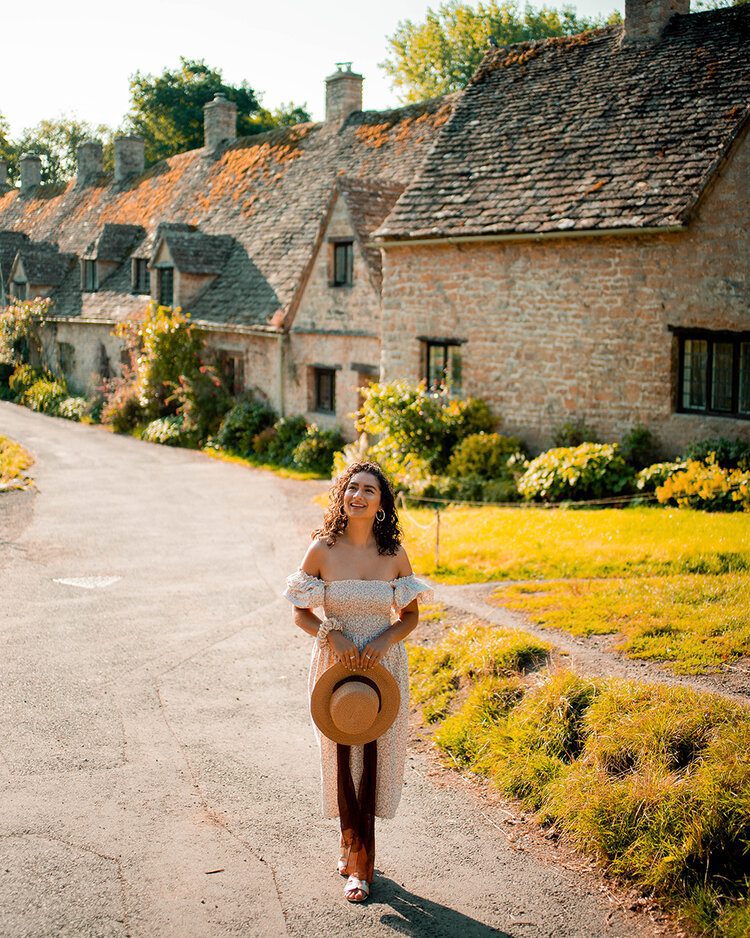
    Arlington Row is the most photographed row of cottages in England and when you see it in person you’ll realise why. It’s the quintessential image of honey coloured Cotswold stone cottages, nestled into the beautiful British countryside, surrounded by brightly coloured flowers and accessed by a little bridge over the gentle River Coln that’s full of kingfishers, ducks and royal swans. Catch it on a quiet, sunny morning and it feels like you’re in a scene from Stardust… well that’s actually because some scenes from Stardust (2007) were shot along Arlington Row. Actually the Cotswolds is home to many movie locations such as Bridget Jones’ Diary, Downton Abbey and Harry Potter. To find out more, check out this helpful article by Rabbie’s Travelfeels.

    Arlington Row was originally built as a wool store in 1380 for Arlington Mill. In the 17th century, it was converted into cottages for the weavers, who used to hang the washed wool out on racks that lead to the name of the nearby meadow, Rack Isle. In 1929 it was purchased and preserved  by the Royal Society of the Arts then in the 1970s it was purchased and preserved by the National Trust.

    All but one of the cottages are privately owned and occupied but you can actually stay at 9 Arlington Row for a minimum or 3 nights for about £500. You can book it here via the National Trust website, keep in mind you’ll need to book months out for this popular spot.

    PFH Fun Fact: Arlington Row featured on the inside cover of the 2010 issued British passports, making the village an even more popular destination to visit.

    Aside from being home to an Instagrammble hotspot, Bibury is also known for its unique and rare wildlife that mostly live in the protected meadow behind Arlington Row, Rack Isle. Take a long stroll around the village and make time for a treat in one of the local tearooms.

    As you can imagine, Bibury is a popular village to visit and it gets busy so if you want to see it at its best I suggest arriving early in the morning. 7.30am in summer is ideal as the sun is just creeping over the tops of the cottages creating a warm glow on the already golden stone and as everyone is asleep it’s quiet enough to only hear the birds singing. It’s ideal for taking in your surroundings and getting photos. You won’t need to rise so early in winter but still go as early as you can to avoid crowds. If you do arrive early, please be quiet and respectful of the people who actually live in these cottages.

    2. Visit Bourton-on-the-Water

    Bourton-on-the-Water, dubbed “the Venice of the Cotswolds”, is one of the prettiest villages in the Cotswolds by far! The village is located in Gloucestershire and straddles the River Windrush and each side is accessible via a series of low bridges, which make for a great photo spot by the way.

    There’s plenty to do in Bourton-on-the-Water besides taking cute photos and even though I don’t plan on having any yet, it’s a great spot for kids with wildlife parks, the Motoring Museum which is home to Brum (if you know, you know) and the Model Village to keep them entertained. 

    Start by arriving early to avoid the crowds, take a stroll along the river, taking cute photos whilst no one else is around getting in the background. This will also ensure you nab a parking spot before the village fills up. Next, grab breakfast in Bakery On The Water, a small family run artisan bakery, and if the weather is good choose to sit outside where you can sit next to the river as it runs down into the village. Walk off your breakfast by visiting the Motoring Museum next door which is home to over 40 cars including little Brum. 

    For those of you who didn’t grow up watching Brum on the tele in the 90s, he was a little, yellow, half-scale replica of a late-1920s Austin 7 Chummy convertible car with giant eyeballs, who would regularly drive off to “Big Town” when his owner wasn’t looking. Each episode would see him coming to someone’s rescue or learning something new and would end with him coming home with some souvenir of the day which, for some reason, NEVER seemed to baffle his owner when he found it at the end of the day. It’s a classic!

    Once you’re done at the Motoring Museum, stroll over to the Model Village, a miniature replica of the very same village you’re in. Built in the 1930s, it’s the only Grade II listed model village in the country. At £4.50 per adult and £3.50 per child (children under 3yrs old go free) it’s entertaining for all ages, especially when you realise there’s a model village in the model village, in the model village in the model village – that honestly gets me every time! 

    Once you’ve finished up in the model village, spend some time pottering around the shops and maybe take a break for a cream tea (a pot of tea served with a scone topped with jam and clotted cream) before leaving.

    3. Go for a long hike

    Provided you are able to do so, hiking or going for a long stroll out in the countryside of the Cotswolds is an absolute must. With plenty of paths, routes and bridleways it’s hard to choose which to tackle, but the number one trail is Cotswold Way. This 102 mile long National Trail is the most famous walk in the Cotswolds as it goes all the way from one end of the Cotswolds to the other: from Bath, Somerset to Chipping Campden, Gloucestershire. There’s plenty of opportunities along the trail to do sections of it rather than the full 102 miles, thank goodness. We chose to do the Leckhampton Hill Loop which is a moderate hike with some steep sections that starts and ends in Seven Springs. It’s 4.5 miles (7.25km) and will take around 3hrs to complete. The Leckhampton Hill Loop covers some of the best sections of The Cotswold Way including vast luscious grasslands home to roaming cows, Iron Age remains and an incredible hilltop view over Cheltenham. Park up early in the lay-by opposite the Seven Springs pub.

    Another really beautiful spot to hike that is close to the Cotswolds but not in it, is the Wye Valley Area of Outstanding Natural Beauty, there’s a pay and display car park at Symonds Yat Rock where you can start many trails. Make sure you make a stop at the view point from Symonds Yat Rock for breathtaking views of the valley which includes a horseshoe bend in the River Wye and the chance to spot a Peregrine Falcon, the world’s fastest bird, soar.

    Be sure to bring water, wear suitable footwear and if you walk in the summer make sure you wear suncream.

    4. Take a deep breath at Cotswold Lavender

    If you’re a frequenting reader of Postcards from Hawaii, you probably know that I am obsessed with lavender, so one of the first things I needed upon arriving in the Cotswolds in July 2020 was to visit Cotswold Lavender.

    Cotswold Lavender is a third-generation family run Lavender farm and distillery, located in Snowshill, Worcestershire that overlooks the Vale of Evesham. Unlike many other Lavender farms across England, their visiting months are limited to just June and July so aim for these summer months if you’re planning to visit. The middle of July is when the lavender is most in bloom.

    The field opens at 10am and costs £4 per adult and £2 per child aged 5-16 years, children under 5 get free entry.

    With over 40 varieties of lavender across 140 miles (225km) of rows there’s plenty of opportunities to take a moment to deeply breathe in the intoxicating and calming scent of the lavender plus you can get all the photos you need from various angles thanks to the plants being split up into various patches.

    The best angle is with the lavender farmhouse in the background (it’s on the right as you enter the lavender fields). As always, arrive early for the best shots.

    There’s plenty of picnic benches amongst the lavender if you want to bring your own lunch.

    Be sure to pick up some of their lavender products before leaving, they’re amongst my favourite lavender products I’ve ever purchased. Their lavender hand sanitising gel is ideal for keeping you clean and calm in a pandemic and their sleep spray is heavenly! 

    For further reading on lavender on PFH, check out 10 lavender products for more relaxing travels and How to sleep on long flights.

    5. Go wine tasting on a vineyard tour

    Catch them on a glorious spring/summer’s day and the vineyards within the Cotswolds look and feel like rural France.

    Our vineyard of choice is one of the oldest in England: Three Choirs in Gloucestershire. A tour and tasting at Three Choirs Vineyard costs just £12.50 per person and includes a 30-45mins guided walking tour of the factory which gives you a brief history of the vineyard and their wine production plus you get a tasting of four of their wines which includes their sparkling, red and white wines. Bookings must be made in advance by contacting them here.

    Be sure to book a table at their brasserie where you can dine on a carefully selected menu to compliment their wines whilst looking out over their some 45,000 French and German grape vines set upon 75 acres of hills. 

    After your meal, take a lazy stroll on the vineyard walk which is mapped out with plenty of signage explaining the history of Three Choirs’ wine production. 

    There’s also a shop for you to purchase your favourites from your tasting and meal and with their own onsite accommodation, there’s also the option to wake up to the beautiful view of the vines.

    6. Enjoy a lazy pub lunch 

    Though it’s not what we’ve been used to, I honestly much prefer the way pubs are set up now due to the worldwide C-19 pandemic. Everything is table service which means you don’t have to queue at a crowded bar, the tables and toilets are regularly cleaned which means no more sticky surfaces and seating is far more spread out so you can rest assured that everyone in the village won’t know your business because no one can hear you chatter at your table now!

    Pretty much every village in the Cotswolds has a pub so you won’t have to look far to find a dreamy location for your lazy lunch. Treat yourself after a long morning walk/hike – like the ones I mentioned earlier – to a pint and lunch or better yet, end your week with a Sunday lunch carvery. 

    The pub we chose to eat at was The Royal George in Birdlip, a tiny but picturesque village in Gloucestershire.

    You could also grab a pint in the oldest pub in Britain, The Porch House in Stow-on-the-Wold with parts of its building known to date back to the year 947!

    7. Experience ancient Rome in Bath

    Bath, Somerset is located at the very base of the Cotswolds. Its history spans thousands of years as it was an ancient Roman settlement over 2000 years ago. I highly recommend spending some time exploring Bath and learning about its rich history making sure to visit the Roman Baths, stroll the cobbled street and eat at Sally Lunn’s. To read more about what to do in Bath, take a look at Long weekend in Bath, England itinerary.


    If you do visit any of these places during the pandemic, please make sure you bring a reusable face mask and keep your face covered whenever you’re inside or in close proximity to other people outside of your allowed bubble. Please regularly wash your hands or use sanitiser and put in the effort to socially distance yourself from others.

    As I have recommended with many of the things to do in this list, arrive early to avoid crowds and not only will you have a better chance of taking great photos but you will also reduce the amount of people you are around.

    Gabriella

    Pin this post


  • Best independent coffee shops in Norwich, Norfolk

    Best independent coffee shops in Norwich, Norfolk

    Searching for good coffee near me in Norwich? This list of 8 cafes in Norwich will help you find some of the best coffee in North Norfolk.

    Norwich is England’s first UNESCO City of Literature and it’s the most complete medieval city in the UK with its Norman castle standing since 1067 and cathedral since 1096. It has 12 heritage sights which include buildings from the Norman, Middle Ages, Georgian and Victorian Eras. It’s the only city located within a National Park: The Norfolk Broads – remember the lyrics “From Ibiza to the Norfolk Broads” in David Bowie’s Life On Mars?. It’s also in the top 10 shopping destinations in the UK with two shopping malls and the largest permanent undercover market in Europe.  Then there’s some Norfolk’s best independent coffee shops in Norwich!

    My partner and I grew up in Norfolk, both not far from Norwich, I even went to university in Norwich at Norwich University of the Arts. Being somewhere so close to home I never really saw Norwich as more than a place to shop, eat out with friends and catch live music, then the more I travelled the less time I spent in Norfolk. So despite Norwich being a pretty perfect combination of history and pop culture, it kind of just became one big shopping centre for me, somewhere I went in and out of in a day. It wasn’t until the pandemic when we had a staycation in the city that we came to appreciate how unique the wonderful city of Norwich is.

    Ancestors

    How’s that for a lesson in taking for granted what you’ve had all along? The C-19 pandemic has really taught me to appreciate what I have, and it came at a point right when I was about to leave, never knowing exactly how good I had it, right under my nose.

    So whilst exploring the ancient nooks and crannies of Norwich, Michael (my partner) began his quest for finding a few independent coffee shops and local cafes in Norwich where he could get some really good coffee. As the list of coffee near me in Norwich grew, I saw the opportunity for a blog post so we can share with you all the best cafes in Norwich and why they’re great. If you’re a frequenting reader of Postcards from Hawaii (thank you, by the way) you’ll know I can’t drink caffeinated coffee, but Michael is a self-proclaimed coffee connoisseur (or as I like to call him, a coffee snob) so you can trust the advice here.

    Here are 8 of the best independent coffee shops in Norwich, their locations, what they offer and why Michael recommends them:

    Kofra 

    Kofra is a small, local independent chain of coffee roasters and brewers with three cafes in Norwich, spread across the city. Two of which are on corners, tucked away into residential areas and the third, a much larger coffee shop, serves wine, cheese and cured meats to sit in or takeaway.

    Upper St. Giles

    There’s so much charm in Kofra’s locations and knowing that you really wouldn’t know that their coffee shops exist in such quiet parts of the city without a recommendation or research. They’re far enough away from the centre of Norwich that you can enjoy your coffee with very little sound or distraction, making it easier to not only slow down your thoughts but to savour the flavour of their own roasted blends.

    Kofra’s coffee beans originate from South America, Central America and Africa and you can purchase their beans to take home or online.

    Kofra coffee shop locations in Norwich


    • Onley Street


    • Bell Road


    • Upper St. Giles


    Onley Street

    Opening hours for Kofra

    Monday – Saturday 8am – 5pm

    Sunday 9am – 5pm

    Michael’s take on Kofra

    The best espresso in Norwich!

    Strangers

    Like Kofra, Strangers is also a small, local independent chain of coffee roasters and brewers with three coffee shops located around Norwich.

    Strangers started in 2009 and have since won many awards for their focus on the quality of their coffee beans and attention to ethics of the coffees they source globally. In 2019 Strangers was named in the Big Seven Travel’s top 50 coffee shops in England.

    Dove Street

    The locations of all three of Strangers coffee shops in Norwich are super convenient as each one is opposite a big shopping attraction. If you only manage one cafe in Norwich from this list, make it this one, because Strangers is the OG independent coffee shop of Norwich, and it isn’t multi-award winning for nothing.

    Strangers’ beans originate from Columbia, Costa Rice, Ethiopia, Brazil and Guatemala. Pick up their coffee beans or grounds from any of their locations, or shop online.

    Strangers coffee shop locations in Norwich


    • Dove Street


    • Pottergate


    • All Saints Green (Closed during the C-19 pandemic)


    Opening hours for Strangers

    Monday – Saturday 10.30am – 3.30pm 

    Sunday Closed

    Michael’s take on Strangers

    Strangers has over 10 years of experience and it shows through the quality of their coffee.

    Ancestors 

    Ancestors has one location in Norwich and oh boy did they design it well. Its clean, bright and minimal interior will not only give you plant envy, but it also makes you feel even more positive about your responsible decision to drink/eat here. Ancestors is an all vegan cafe in Norwich serving both savoury and sweet treats.

    Check out their colourful Instagram to get you excited to visit. There’s a strong opportunity to get some decent content for IG right here.

    Though they don’t brew their own coffee and tea, you can purchase them to take home.

    Ancestors coffee shop locations in Norwich


    • Magdalen St


    Opening hours for Ancestors

    Monday 10am – 3pm 

    Tuesday – Saturday 10am – 4.30pm

    Sunday 10am – 4pm

    Michael’s take on Ancestors

    Ancestors’ coffee quality and interior design make them my second favourite coffee spot in Norwich.

    Rabbit

    Located in the centre, nestled into the iconic lanes of Norwich sits Rabbit: a coffee shop that brews their own coffee and boasts indulgent brunch, lunch and dinner menus with gluten free and vegan options. They’re also pet friendly.

    Rabbit’s dark and cosy interior makes it the perfect place to hide away from the hustle and bustle of the world and is particularly ideal to escape a rainy day. It’s also another spot offering up some major plant inspo.

    Rabbit roasts their own coffee which is available to purchase in store.

    Rabbit coffee shop locations in Norwich


    • Pottergate


    Opening hours for Rabbit

    Thursday – Saturday 12pm – 4pm

    Monday – Wednesday Closed

    Michael’s take on Rabbit

    They have a cool logo, designed by The Click – a great graphic design studio in Norwich.

    Bread Source 

    Bread Source is an award winning artisan bakery selling some of the best bread products you’ll ever eat, from their Pistachio Raspberry Rolls to sour sough, you’re in for a treat. Back to coffee, Bread Source make espresso based drinks using the Workhouse Blend from Horsham Roasters which has a nutty, chocolate taste with caramel and orange notes. Bread Source is by far one of my favourite cafes in Norwich.

    What makes Bread Source particularly amazing is that everything they sell from their own products to wine, cheese, meats and milk/m*lk is all from independent brands mostly located in Norfolk. It’s also the only coffee shop in Norwich on this list to have a location in Norwich market, the one that’s largest permanent undercover market in Europe – you really can’t get more central than that!

    You can buy Bread Source’s coffee, bread, pastries, cheese, jam and more online as well as in store.

    Bread Source coffee shop locations in Norwich


    • Marriott Close 


    • Upper St Giles St 


    • Bridewell Alley


    • Norwich Market 


    • Red Lion Street – in Aylsham, outside of Norwich.


    Opening hours for Bread Source

    Monday and Sundays Closed

    Upper St. Giles and Bridewell Alley:

    Tuesday – Saturday 8am – 3pm

    Marriott Close:

    Tuesday – Friday 8:00am – 2:00am

    Saturday – 8:00am – 4:00pm

    Norwich Market:

    Tuesday – Saturday 8:30am – 3:00pm

    Michael’s take on Bread Source

    They are the perfect breakfast spot.

    Alchemista

    Alchemista, as you may gather from the name, has a scientific approach to coffee but with a gothic twist: their iced coffees are served in skulls, their decor looks like it was pulled from Frankenstein’s laboratory and their menu is all about coffee potions and concoctions.

    Speaking of those concoctions, their menu offers speciality coffees and coffee infused cocktails that will really spice up your usual coffee order.

    Alchemista coffee shop locations in Norwich


    • St Gregory’s Alley


    Opening hours for Alchemista

    Monday – Saturday 8.30am – 5pm 

    Sunday 10am – 4pm

    Michael’s take on Alchemista

    If Espresso Martinis are your poison, you will love the cocktails at Alchemista.

    Artel

    Artel’s menu has been curated to offer up nutritious and hearty meals made with locally sourced and seasonal ingredients that cover gluten free, vegan and vegetarian options. Though it’s a short menu, it has you covered from light bites, such as chilli cheese scones, all the way to a full English featuring Norfolk streaky bacon and chipolatas. 

    With two levels and outdoor tables, there’s plenty of seating at Artel and just like Rabbit, Artel is also pet friendly.

    Artel also exhibits artwork from local artists.

    Artel coffee shop locations in Norwich


    • London Street


    Opening hours for Artel

    Monday – Friday 9am – 4pm 

    Saturday 9am – 5pm

    Sunday 9am – 4pm

    Michael’s take on Artel

    Great for brunch, they offer an exciting breakfast menu.

    Smokey Barn

    Smokey Barn is located in a converted barn in Riverside, the edge of the city centre. Smokey Barn’s intimate setting means there isn’t much room to sit but it’s perfect if you want to pick up a coffee on a stroll along the river or if you’re on your way to or from Carrow Road football stadium. Despite being located next to The Waterfront (many a raucous teen years spent there) the surrounding area (during Smokey Barn’s opening hours) is quiet; surrounded by churches and crooked Tudor houses it really is a lovely spot to grab a coffee to-go. Don’t forget your reusable coffee cup!

    Smokey Barn does their own onsite roasting of a range of rainforest alliance, fairtrade and organic beans, which you can purchase in store and online.

    Smokey Barn coffee shop locations in Norwich


    • King’s Street


    Opening hours for Smokey Barn

    Monday – Friday 8am – 3pm

    Closed on weekends

    Michael’s take on Smoky Barn

    The perfect spot if you want to escape the city noise altogether. Smoky Barn is also the closest coffee shop on this Norwich cafe guide to NCFC’s Carrow Road football stadium.

    Whilst travelling, Michael appeases his coffee addiction with the help of his WACACO Nanopresso Portable Espresso Machine available to purchase from Amazon with the link below.

    Summary of best coffee shops and cafes in Norwich


    1. Kofra


    2. Strangers


    3. Ancestors


    4. Rabbit


    5. Bread Source


    6. Alchemista


    7. Artel


    8. Smokey Barn


    Opening hours and seating options are a little different due to COVID-19, so keep in mind these will change in time, as things improve. Enjoy!

    Do more on & for the planet, Gabriella & Michael

    Pin this post


    As an Amazon Associate I earn from qualifying purchases but please know that we recommend products from personal use which you can see throughout my blog posts.

  • Top 6 classic English cocktail recipes

    Top 6 classic English cocktail recipes

    England, as it turns out, has created some of the world’s most famous and favourite cocktails. Hands up if you’ve ordered an espresso martini in the hopes that you’ll be able to suppress your yawns with the caffeine kick and hide the fact that you would rather be in bed binging Netflix – you’re not alone. It’s also not far off how the famous British cocktail, the espresso martini, was created one night in London – or so rumour has it!

    One of my favourite things to do on my travels is to try a local tipple that has a historical or cultural connection to where I’m visiting. I find you can learn a lot about the history of a place from its cocktail creations. From the sweet, fruity sip of a Singapore Sling created to disguise alcohol for female socialites so they could “acceptably” drink in public settings, to the warming sip of a New Orleans’ Sazerac, known to be the world’s first cocktail that is famously served in a bar – The Sazerac Bar – that up until 1949, only served men.

    With the help of The Ivy Brasserie Norwich I was able to put together this cocktail list of six classic English cocktails. Here you’ll learn a bit about their creation, what’s in them and how to make them. I can guarantee you that just as long as alcoholic beverages are your thing, then there is something here for you whether you prefer sweet, sour or straight up boozy, one of these is sure to delight. When ordering these cocktails, go to a bar, like The Ivy, where you can guarantee you’ll not only be served by experienced bartenders but at a well-stocked bar so that they are able to create cocktails that aren’t on their menu. For this reason, your average pub shouldn’t be your go-to when ordering these cocktails.

    So let’s find out the origin story of the following 6 classic English cocktails and the recipes for how you can make these famous British cocktails at home.

    1. Vesper Martini

    The Vesper Martini cocktail was created by British writer, Ian Fleming in his very first James Bond novel, “Casino Royale”, published in 1953. It’s named after the double agent, Vesper Lynd, one of Bond’s many, many, lovers but arguably his first and only love.

    As in true Bond style, his martini preference is, altogether now, “shaken, not stirred,” but the golden rule is to always stir a spirit-only drink and not shake it as it dilutes the drink, but as per Mr. Bond’s strict instructions to “shake it very well until it’s ice-cold,” the Vesper Martini must also be shaken, not stirred.

    Be warned the Vesper martini is the strongest drink on this list of English cocktail drinks, so take it easy with this one.

    Ingredients to make a Vesper martini cocktail

    60ml Gordon’s gin

    20ml Vodka

    10ml Kina Lillet (White vermouth)

    Ice

    Strip of lemon zest

    How to make a Vesper Martini cocktail


    • Pour the gin, vodka and white vermouth into a shaker with ice.


    • Shake until the shaker is ice cold.


    • Double strain into a martini coupe glass.


    • Pinch the zest to spray over the glass then place the zest into the glass.


    2. Espresso Martini

    The world famous espresso martini was created by London bartender, Dick Bradsell, in 1984 upon request by a then up and coming British super model for “something that will wake me up and then f**k me up?”.

    The queryable thing here is that the model is rumoured to be Naomi Campbell but with a simple Google, it’s a struggle to believe, even with my background in working with models, that a 14 year old Naomi was storming bars and demanding drinks when she wasn’t even “discovered” until she was 15!

    Anyway, in 1984 upon this request Dick Bradsell came up with what is now one of the most classic cocktails in the world: the espresso martini. Bradsell’s espresso martini creation combined coffee to wake her up and vodka to do the rest. He says that the coffee machine was right next to the station where he served drinks and so it was on his mind when he was putting together this classic cocktail recipe.

    Ingredients to make an espresso martini cocktail

    40ml Vodka

    20ml Coffee liqueur (recommended: Kahlua)

    20ml Espresso

    Ice

    3 coffee beans

    How to make an espresso martini cocktail


    • Make a shot of espresso and leave it to chill.


    • Pour the vodka, coffee liqueur and espresso into a shaker with ice.


    • Shake vigorously in order to create a froth and until the shaker feels ice cold.


    • Strain into a chilled martini coupe glass.


    • Garnish by placing three coffee beans onto the top of the foam.


    Bars across the UK have began created all sorts of magical variants of the traditional English espresso martini cocktails including The Ivy who does a Salted Caramel Espresso Martini.

    3. Gimlet

    The Gimlet became popular in England after its mention in the 1953 novel by Raymond Chandler, The Long Goodbye. Before then, it is said to have been created in the late 19th century with the purpose of preventing sailors from getting scurvy. Its name is credit to two sources so without really knowing which one is right I’m letting you know both: one is after a hand-held tool for boring holes, which was used on the ships and the other is after Rear-Admiral Sir Thomas Desmond Gimlette who is sometimes credited as the original creator of the Gimlet after he mixed his daily ration of lime cordial (to prevent scurvy) with gin.

    When the Gimlet was first created it was 50% gin and 50% lime cordial, since then the Gimlet’s proportions have changed and are now served more to a 1 part lime and 2 parts gin standard, I’m including the original volume below as it’s the traditional recipe.

    Ingredients to make a gimlet cocktail

    50ml Rose’s Lime Juice Cordial

    50ml Gin

    Ice

    Strip of lime zest

    How to make a gimlet cocktail


    • Pour the gin and lime syrup into a shaker with ice.


    • Shake until the shaker feels cold.


    • Strain into a chilled martini glass.


    • Pinch the zest to spray over the glass then place the zest on the rim of the glass.


    In term of taste, it’s really not dissimilar to a Brazilian Caipirinha.

    4. Bramble

    The Espresso Martini wasn’t British bartender. Dick Bradsell’s only cocktail creation, he also came up with another classic English cocktail: the bramble. Bradsell invented the bramble in the 80s at Fred’s Club in Soho, London and says it was inspired by the blackberries he used to pick on the Isle of Wight as a child. When looking to create this simple cocktail he adapted a Singapore Sling. He dropped a few ingredients and served it in a short glass and called it a Bramble after the bush in which Blackberries (the dominant flavour of this cocktail) grow on.

    Ingredients to make a bramble cocktail

    50ml Gin

    25ml Lemon juice

    2 bar spoons simple sugar syrup

    2 bar spoons crème de mûre (blackberry liqueur)

    Ice

    Crushed ice

    Blackberries

    Strip of lemon zest

    How to make a bramble cocktail


    • Pour the gin, lemon juice and syrup into a shaker with ice.


    • Fill an Old Fashioned glass with crushed ice.


    • Drizzle the crème de mure over the ice.


    • Strain the cocktail into the glass and garnish with blackberries and lemon zest.


    5. Tom/John Collins

    John Collins created the classic English cocktail John Collins in a restaurant in London around 1860. In 1874 a popular joke was being told in New York whereby people would start a conversation asking if someone had seen Tom Collins, they would then proceed to say that this Tom Collins has been talking smack about them and that they should go find them. Tom Collins was a fictional person. Rumour has it that one day a witty barman made a John Collins and served it to a man asking for a Tom Collins and from that moment on, the name of the cocktail changed to Tom Collins and was so cemented that in 1876 Jerry Thomas, known as “the father of American mixology” published the recipe to a John Collins as a Tom Collins is his book, The Bartenders’ Guide. Poor John, right?

    John hasn’t been completely left behind though, as now a John Collins is known as the rum based version of his original cocktail.

    The classic Tom Collins cocktail is a long drink, perfect for sipping out on the grass on a summer’s afternoon or accompanying a weekend brunch.

    Ingredients to make a Tom Collins cocktail

    50ml Gin (Tom) or rum (John)

    25ml Lemon juice

    25ml Simple sugar syrup

    125ml chilled soda water

    Strip of lemon zest

    How to make a Tom Collins cocktail


    • Fill a Collins glass with cubes of ice.


    • Pour in the gin, lemon juice and syrup.


    • Stir to combine and then top off with the soda water.


    • Garnish with lemon zest.


    6. Pimm’s No1. Cup

    To find out how to make one of the most famous British cocktails, a Pimm’s fruit cup, head to my previous blog post: How to make the perfect pitcher of Pimm’s No1. Cup You’ll also get to learn more about the history of this classic English cocktail and its important and beloved place in British culture.

    .

    So there you have it, 6 English cocktails, which one are you eager to try? Let me know in the comments below if you make one of the drinks from this classic cocktail recipe list and what you thought of it!

    Do more on & for the planet, Gabriella

    Please drink responsibly.

    Pin this post


    .

    The Ivy uses biodegradable straws, should you wish to use your own, just request that no straw is served in your drink.

  • Mauritian achard légumes (vegetable pickle) recipe

    Mauritian achard légumes (vegetable pickle) recipe

    Achard légumes is a Mauritian mixed vegetable pickle that originates from the Indian dish, achaar.

    Though it took me a long time to acquire an appreciation for the taste of achard légumes, its place on the table in my family is a nostalgic one. This bright yellow, orange and green dish has been present at almost every large family gathering and for me, conjures the same comforting summer feels as strawberries and cream. 

    Achard légumes is one of the best side dishes you can make because it compliments such a wide variety of meals. It can be eaten with a curry or rougaille along with many other side dishes, or it can be eaten with a roti (Mauritian flat bread) or fresh bread, it can go into a sandwich or on a salad and it goes great with a BBQ or a cheese board. It’s a really flavoursome way to bring a variety of vegetables to whatever you’re eating.

    Just like the rougaille recipe I shared last month, this achard légumes recipe is my Mum’s, so there are variations.  Her adaptation is that she doesn’t use vinegar or cauliflower because my Papa, her Dad, didn’t like it so he didn’t use it. Many of the tweaks to our Mauritian recipes come from my Papa not having liked something!

    This achard légumes can last up to two weeks if refrigerated if you do the following:


    • Fry all of the onion as this recipe tells you to. Some recipes will tell you to only fry half and add the rest in raw but this makes the achard watery and it won’t preserve for as long.


    • Add salt just before eating. Salt will also make the achard watery and again, it won’t last as long.


    • Prep your vegetables the day before you are planning to cook it. By allowing the vegetables to dry out overnight, the achard will last longer.


    I almost forgot to point out, though you will be able to work it out from the ingredients list below, it’s vegan and vegetarian!

    This recipe will serve 4-6 people.

    Ingredients 

    3 carrots

    3 stringless flat beans

    1/4 small white cabbage

    2 shallots

    2-3 cloves of garlic

    1 fresh or dry chilli (add more if you want the achard to have more of a kick)

    1/2 tsp mustard seeds

    2 tsp fresh turmeric (can be dry if you can’t get hold of fresh)

    2 tsp fresh ginger

    4 tbsp oil

    Salt and pepper

    You may also be interested in my Mauritian rougaille recipe to serve as your entrée/main dish.

    Equipment 

    Chopping board

    Sharp knife

    Measuring spoons

    A wok or a large saucepan

    Large cooking spoon (black or metal, keep in mind that the turmeric will stain it)

    When it comes to washing these up, use an old tea towel as the turmeric will stain it.

    Method

    1. Prepare your vegetables a day before and allow them to dry out.


    • Julienne the carrots and beans.


    • Shred the cabbage.


    • Cut the chilli(es) in half, lengthways. If you don’t like too much spice then remove the seeds, if you don’t mind then keep them in.


    2. When you are ready to cook, peel and finely slice the shallots, mince the garlic and ginger and grate the turmeric.

    3. Heat 2 tbsp of oil in the wok/frying pan on a medium heat and fry the shallots.

    4. Add the garlic, turmeric, mustard seeds, chilli, pepper and ginger and stir through. Let them heat through for a few minutes to release their flavour.

    5. Add the carrots and beans. Stir frequently so they get covered with the spices.

    6. Add the remaining 2 tbsp of oil along with the cabbage and cook it until it wilts. The length of time you cook your achard really depends on whether you want the vegetables to be crunchy or soft. The longer you cook it, the softer it gets, so stop cooking it when you are happy. We cook ours for about 10mins so there’s still a little crunch.

    You may also be interested in my family’s rougaille/rougail recipe.

    7. Serve with your food of choice! Add salt just before eating.

    8. Pop the rest into a container (be mindful that this pickle will stain plastic) and store in the fridge for up to 2 weeks.

    .

    Bon appétit, Gabriella

    Pin this post