Tag: environmentally conscious

  • Eco-conscious Cornwall packing guide

    Eco-conscious Cornwall packing guide

    Whether it’s a staycation within the UK or you’re coming from far and wide (post pandemic) a holiday/vacation to Cornwall in south-west England will be one of your best adventures in Great Britain. 

    If you haven’t already take a look at my previous travel guide for Cornwall, 8 beautiful places to visit in Cornwall part 1 and part 2 to learn about everything you don’t want to miss on your trip. There’s something for everyone from indulging on Cornish pasties and cream teas to riding waves and hiking to medieval castle ruins.

    To help you prepare for your best trip to Cornwall I’ve put together this pinpointed packing guide for some key things that will make life so much easier on your holiday/vacation to the Cornish coast.

    Wetsuit

    One of the most ideal things to pack for a trip to Cornwall is a wetsuit as it’s one of the top locations in the world for water sports. It will insulate you when the water is chilly and protect your skin from board rash so if you already have one this is definitely the trip to pack it.

    If you don’t have a wetsuit, don’t panic as you’ll have plenty of options for renting them out at a low cost and some tourism companies include wetsuit rental in their prices – check ahead of time just to be sure. 

    Swimsuit  

    Unless you are going in the middle of winter and have no intentions of getting into the sea, the first thing you should be packing for a trip to Cornwall is your swimsuit. 

    The beaches in Cornwall are the best I’ve been to in the UK. Golden sands + turquoise waters + warm sunshine = the perfect set up for very long and lazy beach days.

    Whether you’re jumping into a wetsuit and onto a surfboard, cooling off in the ocean, going for a swim at one of the many sea pools and lidos in Cornwall or laying out in the sun a swimsuit is a Cornwall staycation necessity. 

    Of course you can wear whatever makes you feel comfortable and if that’s not a swimsuit than I am here for you no matter what you choose. My message is more that if you do choose a swimsuit and it’s time to purchase a new one look for one made from recycled fabric or even biodegradable (yah that’s a thing now, I’m yet to try but I hear good things). I have a few swimsuits made from recycled plastic bottles and you would never know from the texture.

    The most responsible thing is to use the swimsuits you already have though so as difficult as it is and I REALLY understand this one, please try to limit your purchases and use what you have.

    Another tip for swimwear is to purchase interchangeable sets or reversible pieces for more options on your travels.

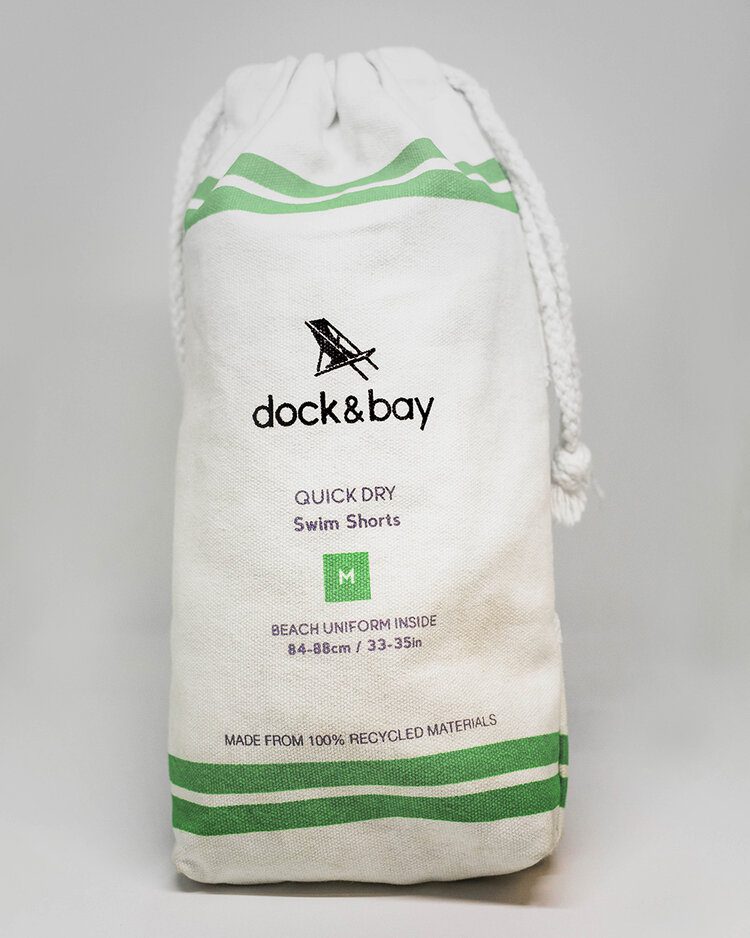
    Dock and Bay towel/poncho

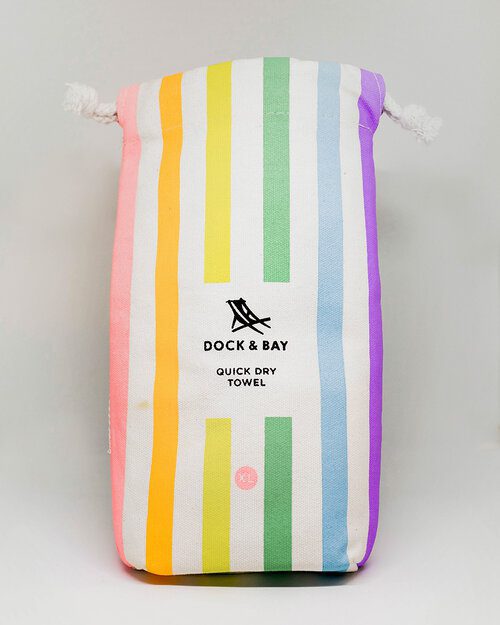
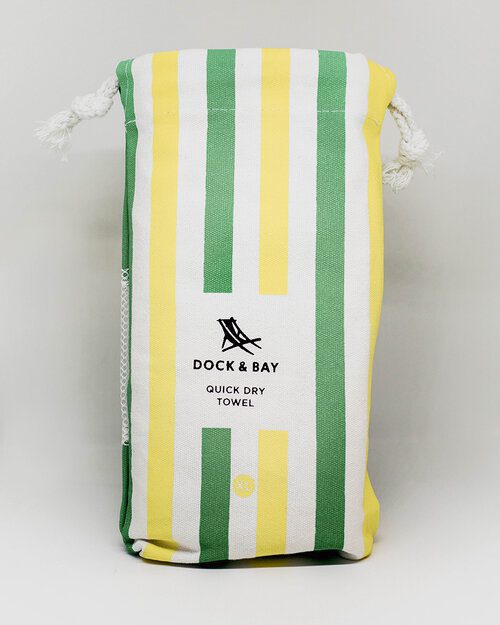
    The most sustainable choice would be to pack a towel you already own but if you need a new one then I recommend one from Dock & Bay. Michael and I been using Dock & Bay products since 2018 for the following reasons:


    • All of their products are now made from 100% recycled materials.


    • They’re part of the blue light card discount for NHS staff.


    • 5% of their profits go to one of their partnered environmental charities. Their 2021 partner is WWF and if you purchase one of their two collaborative towels they will donate 20% of those profits to WWF.


    • They are compact and pack down much smaller than a regular towel.


    • They dry x3 times faster than a regular towel.


    • They’re sand resistant so you can shake it right off.


    Along with one of the XL towels which are perfect for stretching out on to sunbath or to share with someone else for a picnic, the towel you absolutely need for a trip to Cornwall is one of Dock & Bay’s ponchos. 

    Their super absorbent towels are the best accessory for any waterspouts from surfing to kayaking and for hanging out on the beach. I forgot to bring mine and Michael could tell you I said “I wish I had my Dock & Bay poncho” every. single. day. As they’re made from the same material as the towel they’re just as absorbent and lightweight but the reason they’re perfect for a trip to Cornwall is because they’re big enough to get changed in and out of your swimsuit in public without revealing yourself to the world.

    Dry bag

    Dry bags are a must have for me when I’m going anywhere near the water for two reasons:

    1. They keep your belongings together and dry on the beach, paddle board, boat etc. You can us it to store suncream, your phone, car keys etc.

    2. You can pop your wet swimsuit and towel in it after you’ve changed and it will stop everything else from getting damp.

    Look after your dry bag and it will see you through many years of travelling all over the world. 

    Sandals/trainers suitable for hiking 

    The South West Coastal Path is the longest walking trail in England. At 630miles long it passes through Somerset, Devon, Cornwall and Dorset. Whether you’re embarking on the full length or just enjoying parts of it, the trail is an opportunity to get some of that fresh sea-air in your lungs – the kind that people say will make you sleep better – to be at one with nature and enjoy some incredible views of the prettiest coastline in England.

    The path is natural and therefore uneven so though it wouldn’t be impossible to take it on in flip flops but it would be super uncomfortable. For this reason I think a pair of trainers, hiking boots or some bang-on-trend Dad sandals (like these ones from Dune) is something you need on your feet for enjoying long walks in Cornwall without the risk of rolling your ankle.

    To prevent unnecessary waste make sure that when you purchase a pair of shoes or sandals they are high quality, made with care and meant to last. A comfortable pair of shoes is one of the most important things to me and something I value highly in the world (hence why I work with Dune) I believe an uncomfortable pair of shoes can ruin your day let alone your travels – and trust, I’ve been there. So look for shoes that are comfortable for you, sensible and versatile so you can enjoy them for years on your travels around the world. 

    Biodegradable disposable BBQ

    I don’t know about you but BBQs along with Pimm’s are my first thought when I hear the word summer. Was it even summer if you didn’t have a BBQ? 

    With over a million sold each summer in the UK it’s safe to say disposable BBQ grills are a popular summer accessory HOWEVER safe they are not. Regular disposable BBQs are not-only single use but they are toxic, non-recyclable nor biodegradable. 

    Of course we love the idea of being able to take a little BBQ out to the beach or the park to cook up a quick feast with friends and family under the sun so what’s the alternative? It’s pretty simple: a biodegradable disposable BBQ grill!

    We purchased our sustainable BBQ grill from Casus Grill for the following reasons:


    • It’s made from 100% natural materials: bamboo, lava stone, recycled cardboard and charcoal


    • Everything but the lava stone is biodegradable


    • Remove the lava stones and use on a fire, campfire or log burner – they are a neutral product that will return to earth when burnt


    • It’s free from fossil waste


    It lit quickly (out of the wind) and was ready to cook on within an hour. If you need to purchase a disposable BBQ try to choose a sustainable grill from now on to reduce your impact on our planet. I recognise they are more expensive and not everyone is in a position to buy one but I encourage you to make this choice if you are able to.

    DO NOT leave any kind of disposable BBQ in an enclosed space, the carbon monoxide fumes are poisonous and may result in death.

    Reusable water bottle

    Stay hydrated kids, there are very few things in life more important than drinking water. Please don’t go littering the earth with endless single-use plastic bottles to do this though, instead bring a reusable water bottle.

    By law all licensed pubs, bars, nightclubs, cafes, restaurants, takeaway food and drink outlets, cinemas and theatres are required to provide tap water to anyone who (politely) asks for it. Though pandemic rules have made this a little difficult so be smart about it, it is absolutely acceptable to ask for your bottle to be filled with tap water so just think of all the money you’ll be saving as well as plastic!

    I always recommend a thermal one as most will keep cold liquids cool for 24 hours and hot liquids warm for 12 hours which is not only super handy on travels around the world but it also cuts out that nasty risk of plastic water bottles poisoning you when you leave them in the car to get warm.

    My thermal bottle is from Dopper and if you’re interested in why I love it so much you can read about here.

    Waterproof phone case or camera case  

    This truly depends on the kind of traveller you are. If you love to document your adventures, are outdoorsy or even clumsy then a waterproof case for your camera or phone will suit you on Manu of your travels, however if you like to be in the moment and reduce your screen time then this won’t necessarily be an accessory you need on your packing checklist for Cornwall.

    If you do want one, look for one that fits multiple phone makes and models so that you don’t need to buy a new one when you get a new phone. 

    Better still, though it is more cumbersome, invest in a waterproof camera case so that you have better quality photos and are less likely to need a new camera case as cameras last far long than phones. 

    Reef-safe sun cream  

    Cancer doesn’t discriminate folks the sun will cause damage to everyone’s skin so always protect it from harmful UV rays by wearing suncream/sunscreen/sunblock – whatever you call it, wear it!

    Unfortunately chemicals that go into most suncreams to help protect us from the sun have harmful effects on creatures living in the sea so when we enter the water wearing sun protection made with oxybenzone and octinoxate they wash off and cause corals to bleach and die and when they die an entire ecosystems are destroyed. That means no more colourful reefs to explore on your travels.

    Over 50% of our planet’s coral reefs have been destroyed in the last 30 years due to Climate Change and pollutants. Next time you purchase sunscreen make sure it doesn’t contain oxybenzone and octinoxate. Instead look for sunscreen that contains zinc oxide and titanium dioxide, these are not linked to coral bleaching and will still protect your skin from harmful UV rays.

    You may be thinking, but Gaby I won’t be exploring tropical coral reefs in Cornwall so why is wearing a reef-safe sunscreen important? Our oceans are connected and whether you’re swimming in Cornwall or Mauritius once you’re in the water those chemicals are casing harm to something in our global waters so please try to purchase reef-safe suncream when your current one runs out.

    I have been using Shade – sold through Coconut & Cotton – as it is a natural suncream that is free from any harmful chemicals plus the package is plastic free and reusable.

    Other reef safe suncream brands I use (but have reduced as they are sold in single-use plastic bottles) are Australian Gold and Hawaiian Tropic.

    Raincoat

    Though for the most part the weather is beautiful in Cornwall the weather can drastically change should a storm roll in from the Atlantic. Whilst in Cornwall towards the end of September the weather went from shorts-and-tshirts weather to wet, windy and cold overnight. 

    To be prepared pack a raincoat no matter the time of year you’re going – after all it’s not the weather than can hold you back from having a good time it’s how you dress for it.

    If you don’t own a good waterproof coat look for one with taped seams for extra protection from wet weather. I’ve had my Joules one for years and it has seen me through freezing cold and wet conditions in Scotland so I highly recommend it but you don’t have to spend heaps on a rain coat, Michael has one from Mountain Warehouse which was much cheaper and it saw him through the same weather.

    Looking for a raincoat with taped seams will ensue that coat is more durable which means will have better longevity that ultimately means it’s a more sustainable way forward than buying endless cheap raincoats or worse single-use plastic ponchos.


    .  

    Do more on & for the planet, Gabriella

    Pin this post


    As an Amazon affiliate I may earn from qualifying purchases.

  • Why travellers should switch to reusable bamboo pads from Tayvada

    Why travellers should switch to reusable bamboo pads from Tayvada

    Tayvada is an environmentally-conscious, female-owned business based in the USA. Founder Linda Bogdanov’s vision for her brands is to empower everyone to practise self-care in a responsible way that puts the protection of our planet at the forefront of our minds as we do so. Tayvada’s first product is the reusable makeup remover pads that are growing in popularity and recently featured on Glamour.com as one of their top picks for reusable makeup removers.

    Tayvada x Postcards from Hawaii giveaway!

    View this post on Instagram

    A post shared by Postcards from Hawaii (@gabriellawisdom)

    I’ll be taking you through why I love using Tayvada’s reusable bamboo pads, how I use them in my daily skincare routine, why they’re a responsible choice as a sustainable swap in your bathroom and what to expect when you order your own.

    Why reusable pads are better for the planet than single-use cotton pads

    “I started thinking about my own beauty habits and how I was using a lot of disposable cotton pads to take my makeup off and I was using makeup wipes when I travelled.” – Linda, founder of Tayvada.

    The most important thing I want to start off with is explaining why reusable pads are better for our environment than using single-use cotton pads or wipes so with this, let’s explore the difference between the cotton that goes into the single-use pads and the bamboo that goes into reusable pads that should be replacing that daily waste.

    Bamboo vs cotton 

    Bamboo is an evergreen plant which means it remains fresh and functional all year round. It is a highly adaptive plant that grows quickly and is resilient to many pests. According to the Guinness World Records, the fastest growing plant is bamboo with one species having grown 91cm/35in in a day. Despite originating in China, with adequate soil conditions, bamboo can grow in different climates around the world. The use of bamboo can be traced back 7,000 years to the Shang Dynasty in clothing, food, housing, weapons and more. Its durability, strength (bamboo is actually stronger than steel) and renewability means it’s the ideal material for making sustainable products, especially as it naturally biodegrades at the end of its usage.

    Cotton might be the most profitable non-food crop in the world but the methods used to create the cotton that goes into approximately half of all fabrics worldwide are not sustainable and are causing a great deal of waste and pollution.

    Extensive use of pesticides and insecticides to control pests and risk of disease to the cotton plants are polluting the water, air and soil and is causing poor health to the people working on the production line. Not to mention that it takes approximately 20,000 litres of water to create 1kg of cotton before it even becomes something else.

    The average makeup-wearing womxn will use three single-use cotton pads in their daily skincare routine. It takes about 1,000 litres of water to create a pack of 100 single-use cotton pads (which usually comes in a single-use plastic packet) and that pack will only last the average womxn 33 days. Now compare that to Tayvada’s bamboo reusable pads which will last up to 1000 uses! Not to mention one gets thrown into the washing machine whilst the other gets thrown into a landfill.

    When the production of a product that can only be used once is far more damaging to the planet than one that can be used x1000 more, the choice seems obvious, right?

    Unboxing Tayvada’s reusable pads

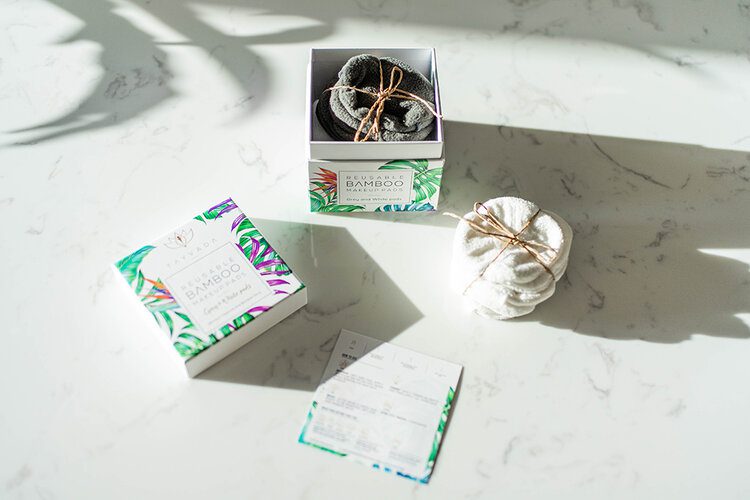
    The packaging for Tayvada’s reusable bamboo pads is minimal, 100% recyclable and can all be repurposed. The box is compact and high quality so you can use it for storage – I currently use one of mine to store some crafting supplies such as twine and tape – but the pretty Bird of Paradise illustration on the box is enough of a reason to keep it around – plus the twine and tissue paper can all be used again.

    Inside the box you receive 14 pads, seven are bamboo charcoal and the other seven are bamboo terry cloth. What’s the difference? Good question.

    Bamboo Charcoal pads 

    The grey fleece charcoal pads are the softest of the two types. They are ideal for makeup removal as they are buttery soft and won’t cause irritation to sensitive skin types. They can remove makeup with just water.

    Charcoal bamboo absorbs moisture so when you use the grey pads with just water to remove your makeup, your face is left clean of excess product and not wet, unlike if you were to use micellar water or an oil based product which leaves residue on your skin. 

    Bamboo charcoal also naturally draws out dirt, oil and toxins from deep inside pores to cleanse the skin. This is ideal because it reduces the size of pores and the likelihood of getting acne, it also makes for a more effective makeup removal process.

    Bamboo terry cloth

    The terry cloth pads are still soft but compared to the charcoal pads they have a textured surface made from minute loops that help to exfoliate by lifting up excess makeup, dirt, oil and dry skin from your face and out of your pores.

    These terry cloth pads are particularly great for applying your toner to remove any makeup that the naked eye can’t see or for removing face masks and/or scrubs. 

    This bamboo terry cloth is also the perfect towelling fabric for absorbing moisture, so I recommend having a little stash in your gym bag so you can pat your face dry from that healthy post-workout shine without irritating your skin.

    .

    There’s one of each for every day of the week so you can get away with washing them just once a week to keep regularity in your skincare routine. I put mine in the washing machine on Sunday morning, naturally air dry them and they’re ready to use by the evening.

    Earlier I mentioned that bamboo is resilient to pests, its natural antibacterial and anti-fungal qualities means the pads won’t grow any nasties in the few days you wait to wash them altogether. 

    The 14 pads come with their own mesh wash bag so they can all stay together and not go to the land of missing socks (I throw my face masks in their mesh bag to wash for that same reason). I wash mine on a 30ºC/86ºF eco wash along with the rest of my darks and/or colours with a dissolvable laundry detergent strip (from Tru Earth) that is free from toxic chemicals and microplastics. Despite them going on a cool wash, the makeup residue gets removed from my Tayvada pads every time with ease.

    A comparison between a new Tayvada Bamboo terry cloth pad and one I’ve been using for a year. It’s a little smaller and darker because it’s been washed so many times but the quality has remained.

    I’ve been using mine for a year now and, as you’d expect with frequent use, the white terry cloth ones have darkened over time but I’m sure if you were to do a warmer wash (think of the planet though) they would come out whiter.

    How I use Tayvada’s reusable bamboo pads in my evening skincare routine

    I use the grey bamboo pad with just water to remove my makeup (yes, I use just water and the pad). Winged eyeliner is part of my everyday makeup look and has been since I was a teenager so I know what problematic makeup removal can look like and I have never had a problem removing it with Tayvada’s reusable pads.

    Something I particularly love about Tayvada’s bamboo pads is that the little pocket where your fingers slip in allows for better grip and control of the pad on my face plus it means that the full surface area can be used for better makeup remover/product application. I am able to utilise both sides of the pad to remove my makeup with ease and if I’m wearing a little more that day then I simply turn the pocket inside out and use that extra clean surface to utilise it all.

    Like with many makeup removal processes one technique doesn’t usually get it all and the naked eye could be missing something, so once I have removed what’s visible with the grey pad, I spray some toner onto a white bamboo terry cloth pad and apply it across my face. This usually lifts the last of my makeup from my skin.

    I then exfoliate my face with a coffee scrub which I remove with water and the same white terry cloth pad I just applied toner with. The little loops of the bamboo terry cloth pick the coffee grains up off my skin and prevent me from making too much mess in the sink (if you’ve tried to remove a face mask or scrub with just your hands and water you’ll know exactly the kind of mess I’m referring to). 

    I then apply a serum and moisturiser before using my gua sha to cool and sculpt my face.

    At least once a week I like to apply a face mask – #selfcare – and to again minimise mess and add a little exfoliation to the process of removal, I use one of the bamboo terry cloth pads to take it off and my skin always feels smoother than when I haven’t used it.

    Once I’ve finished with the pads I simply rinse the pad of coffee and/or face mask as best as I can, then leave them on the edge of the sink to dry before adding them to the wash bag they came with. 

    Why they are perfect for travellers

    One of the most responsible things a traveller can do is do their best to evolve their travel routine into a more eco-conscious one. Travelling is a top contributor to rising carbon emissions, plastic pollution and food waste (to name a few) but of course only a worldwide Coronavirus pandemic can hold many of us – who are fortunate to have the opportunity to travel – back. So it’s of high importance that we make changes that will reduce our carbon footprint as much as we can so that each time we explore our beautiful planet, we aren’t causing her further pain.

    “I had travelled quite significantly and realised the impact this was having on the environment and how my consumption habits in general were impacting our planet. I started thinking about my own beauty habits and how I was using a lot of disposable cotton pads to take my makeup off and I was using makeup wipes when I travelled.” – Linda, founder of Tayvada.

    Some of the many things we can do is offset carbon emissions from our air travel (click here for my blog post that explains how you can do that), avoid staying in all-inclusive resorts (their daily food waste is heartbreaking) and pack items that prevent us from using single-use products that will be contributing to that country’s pollution crisis. Some ideas on reusable items you can bring with you are a water bottle (if you’re going somewhere where the water could be contaminated then bring filtration tablets or seek out a bottle with a filter), straws and cutlery, shopping bags, a menstrual cup and bamboo pads such as the Tayvada ones this very blog post is all about. Fancy that!

    Ok so you know they’re better for the environment than the single-use cotton pads but need a few more reasons as to why we travellers need them in our toiletry kit? Well I’ll answer that now, I know, I’m good to you like that:


    • Unlike a bulky pack of wipes or stack of single-use cotton pads, with enough to cover at least three per day that you’re away these reusable pads won’t take up as much space as you won’t need to pack so many. You can just take a few of each and wash them as you go.


    • They prevent the need for bottles of makeup remover, so there’s less toiletries to pack making your packing process quicker and your luggage lighter.


    • You can travel with an easy mind knowing that your skincare routine isn’t contributing to further daily waste to where you’re travelling to and to the planet.


    • They’re soft on your skin which is welcomed when travel, from pollutants to recirculated air, takes its toll on it. 


    • For every box of Tayavada’s reusable bamboo pads sold they offset the carbon footprint that would be created by a an entire year’s use of single-use cotton pads. So you’re not only saving waste by not using them but you’re helping to counteract the impact for someone who doesn’t have the privilege to afford such a product. To read more about their partner Cool Effects, click here.


    Shop from Tayvada here

    You can purchase your very own pack of Tayvada’s reusable makeup remover pads from their own website here.

    You can also shop them on Amazon in the US, UK, Canada and Mexico. They’re Amazon’s Choice recommendation for reusable makeup remover pads as well as mine.

    If you are in the US you can also shop the pads on Etsy here.

    .

    Tayvada has more low-waste products launching in the coming months, all of which have been designed to replace many of the single-use products we use daily and with the intention of levelling up our self-care rituals. I for one am very excited for what Tayvada has coming next and can’t wait to share it with you.

    Gabriella

    Pin this post


    For full transparency I was originally gifted a box of Tayvada’s reusable makeup remover pads but upon finding they are far better than the ones I was using before (which I have repurposed for alternative cleaning), I purchased more as gifts. This article is a paid piece for Tayvada.

    As an Amazon associate I earn from qualifying purchases.

  • Sustainable stocking fillers for travellers with Coconut & Cotton

    Sustainable stocking fillers for travellers with Coconut & Cotton

    As a follow up to my annual gift guide for environmentally-conscious travellers, Low-waste Christmas gift guide for travellers 2020, Coconut & Cotton and I are bringing you 8 gift ideas for filling the stockings of the travellers in your life with little goodies that they can use on or to remind them of their travels, plus they’re all low or zero waste! 

    To make things better, not only will these gifts be given and received guilt-free, they’re also under £5 each so you can gift responsibly and with love whilst saving pennies which seems to be becoming increasingly hard to do as the festive season rolls around each year. 

    It might be the most wonderful time of the year but it really can’t be ignored that Christmas is also the most wasteful. With approximately 30% extra waste produced via packaging, wrapping, food and unwanted presents it’s so important that everyone takes the right steps towards reducing waste this year. A few ways are:

    As you’re reading this sustainable gift guide, you’re already looking to purchase meaningful and low-waste gifts so that’s amazing and thank you for that! You’re on your way to making the world a better place for everyone.

    Before we take you through our 8 sustainable stocking filler suggestions, let me take a moment to introduce you to Coconut & Cotton (if you haven’t already spotted them on my Instagram Stories).

    Coconut & Cotton is an Earth conscious brand physically located in Shaftesbury, Dorset which is in the south-west of England. All of their products are 97.6% plastic free (they did the math!) and it’s a shopping experience that sustainable dreams are made of. They also have an online shop so you will be able to add everything on our list to your basket by clicking on the product name or images below. Coconut & Cotton is an essential shop that is open during the pandemic so you can shop in-store if you are nearby, but if you aren’t they ship out everything that’s available online in plastic-free and reusable packaging.

    They also run a monthly giveaway that all online shoppers are automatically added to where you’ll have the chance to win a variety of low-waste goodies from their shop. I actually won one earlier this year and received four bars of French soap which I travelled across the UK with as a responsible alternative to the liquid hand soaps and shower gels in the Airbnbs I was staying in.

    I first came across Coconut & Cotton when a fellow 4ocean partner recommended them over Instagram and after looking at their wide range of well-considered and reasonably priced products I was sold on them and I put in an order straight away for some low waste travel essentials (some of which I’ve listed below). Ever since then I have turned to Coconut & Cotton for most of my bathroom, kitchen and travel products. They have everything covered from cooking and cleaning to self care and education, they even have plastic-free toys for children to encourage them to play mindfully!

    Aside from shopping responsibly from Coconut & Cotton, I highly recommend following their Instagram: @coconut.and.cotton because Lucy, the founder of Coconut & Cotton is always on Stories providing highly amusing content that is worth tuning in to not just because she’s so relatable but she also shares new products, does frequent shop tours in case you’ve missed something, product reviews and tips for living a more Earth conscious lifestyle.

    Now you know how amazing Coconut & Cotton is, let me take you through our top 8 low-waste/zero-waste/plastic-free stocking fillers for travellers with a sustainable heart:

    Reusable face mask

    A reusable face mask should be at the top of every traveller’s packing checklist along with their passport. In pandemic centric times we need to put the safety of everyone before anything else and the best ways to do that is to cover faces and clean hands. Along with everyone else, travellers will need to wear a face mask whilst inside buildings and on public transport and as flights could be numerous hours long, they’ll need one that’s comfortable to wear for long periods of time.

    These reusable face masks from Coconut & Cotton are particularly amazing because they are made from 100% Fairtrade cotton, have a pocket to insert filters and they have a built in nose wire for maximum comfort and fit.

    My Coconut & Cotton face mask was the first one I bought and I can tell you it has kept and washed well after months of use.

    Reusable – as always – masks are better for the environment because they create far less waste, they don’t put any critter’s lives at risk (remember to cut your straps before disposing of single-use masks if you have them) and they are plastic free. Then one day, when we don’t need them anymore they will make a great dust cloth.

    Cost

    £4 – 5

    They are available in a variety of colours and in three sizes:

    Bamboo toothbrush

    A massively overlooked bathroom item which has a dreadful impact on the environment is the plastic toothbrush. Did you know that every plastic toothbrush ever used still exists on this planet and will do for approximately 1000 years? Not only do we frequently change toothbrushes for optimal oral hygiene but travellers tend to have multiple toothbrushes on-the-go for when they’re well, on-the-go; I have two in my bathroom (one is for taming my baby hairs), one in my toiletry bag and another in my carry-on toiletry bag for when I travel light. So imagine if those were plastic, how much more waste there would be and was in the years before I made the switch to bamboo toothbrushes.

    Bamboo toothbrushes are the most responsible choice because bamboo is a sustainable material. It is 100% naturally biodegradable and easily sourced. The bristles just need to be removed as they won’t naturally break down.

    PFH Top Tip: travellers can repurpose their old toothbrushes to clean dirt from their hiking boots.

    Coconut & Cotton has a variety of bamboo toothbrushes available online and in-store. This one is from their essential range and is reasonably priced at just £1.50.

    Take a look here for Coconut & Cotton’s plastic-free toothpaste options, some come in travel-friendly containers too.

    Cost 

    £1.50

    Travel Soap

    A bar of soap is the most sustainable toiletry product that a traveller can use on their trips around the world. They have little to no packaging, they last far longer than liquid soap and they are multipurpose. 

    This Travel Soap bar in particular from Coconut & Cotton can be used four ways:


    • as body wash


    • as shampoo


    • for shaving


    • for laundry 


    Not only is this great in terms of preventing further waste from additional products but it also means the traveller you are buying for doesn’t have to pack multiple toiletries, so you’re also gifting them more space and lighter luggage (which is also better for the environment).

    All soap bars from Coconut & Cotton are either packaging-free or in recyclable packaging. This one is also free from parabens, palm oil and cruelty.

    Cost

    £2.80

    Soap tin

    Soap dishes or the side of the bathtub (I know I’m not the only one) suffice at home but travellers need a way to keep their bar of soap sanitary when packed away.

    A simple tin will protect their soap in their luggage and this rectangular one from Coconut & Cotton is the perfect size for a bar of soap and I have never had a problem fitting any bar of soap in it that I have purchased or been gifted.

    Cost

    £2.50

    Natural suncream

    For all travellers (with hopes of) heading to warmer climates in 2021, help them to protect their skin and the environment with a natural suncream such as this one by Shade.

    Suncream is a silent killer. Chemicals such as Oxybenzone and Butylparaben that are in most suncreams cause coral bleaching and disrupt their reproduction, ultimately killing coral reefs, collapsing whole ecosystems and displacing the marine life that once made it home. It is crucial that everyone uses reef safe suncream to help preserve the marvellous marine life that we so love to admire. 

    To help travellers have less of an impact on the delicate ecosystems that they will be snorkelling and/or scuba diving to, make sure they’re equipped with a suncream that will protect both them and coral.

    This natural suncream by Shade from Coconut & Cotton is free from nasty chemicals, is compact so it won’t take up much room in their beach bag and it comes in a reusable tin! 

    “Unlike many chemical sunscreens, Shade™ does not contain burn inhibitors which switch off the burning sensation. If you feel you are beginning to burn, it’s your body’s warning to you that you have been exposed for too long, and the sensible approach is to cover up by wearing clothing or move out of the sun altogether.” – Coconut & Cotton website.

    Cost

    £3.75

    Mini bamboo spork

    You may have noticed a running theme of keeping things compact and light. This is so important for travellers to keep luggage costs down and to fit more in their luggage. Of course, packing reusable items to prevent contributing to our planet’s growing plastic pollution crisis means we have to pack a little more than someone who isn’t taking the necessary steps to save our planet, so finding small reusable alternatives is welcomed. 

    With that said, this little Bamboo Spork from Coconut & Cotton is the ideal small replacement for single-use cutlery when they’re eating on-the-go. Whether it’s tucking into their own packed meal on their train, shaved ice in Maui, an Acai bowl in Bali or a superfood salad in L.A. (a traveller can dream, ok?) they will have their mini spork at the ready!

    Then one day, when it’s no longer usable it can be popped into the compost or used as really tiny firewood.

    Cost

    £2.50

    Moroccan mint tea

    For those travellers who don’t have a trip coming up soon and miss one of the best parts of exploring new countries: trying exciting local and national dishes, we recommend popping a packet of loose tea in their stocking. In particular, this Moroccan Mint Tea from Coconut & Cotton. 

    I wasn’t a fan of mint tea until I went to Marrakech, Morocco in 2017 and now I drink it frequently as a digestive aid after a large meal, just nowhere near as sweet thank goodness. For any traveller who has experienced the spectacle that is being served mint tea in Morocco, this tea will be a very exciting gift and a nostalgic taste of north African and Arab cuisine.

    Loose tea leaves are far more responsible for the environment than tea bags as they eliminate the additional packaging and more importantly they are plastic free. Unfortunately half of the UK’s leading tea bag brands use a plastic skeleton in all of their tea bags and considering millions of cups of tea are being made in Britain daily, that’s a scary amount of plastic being thrown out every time someone enjoys a brew.

    I switched to loose tea leaves Christmas Day 2019 and to the published date of this blog post I have saved myself from adding at least 550 plastic tea bags to the planet.

    Coconut & Cotton has a wide variety of loose tea and is probably the best priced loose tea I’ve seen.

    Cost

    £2.80

    Cocoa Loco cocoa nibs and hazelnut chocolate bar

    What’s a stocking on Christmas day without chocolate? I know, it’s a daunting thought! So whilst you’re filling the stocking of the traveller in your life with wonderful travel-themed gifts, pop in a bar of something sweet like this Cocoa Loco chocolate bar so they have something extra special to nibble on whilst they wait for their bus/train/plane etc.

    Cocoa Loco produces organic, Fairtrade and vegetarian chocolate that is free from palm oil.

    Coconut & Cotton also stock a Sea Salt Dark Chocolate Bar and chocolate covered mango and raspberry pieces.

    Cost

    £3.50

    .

    The Coconut & Cotton shop in Swans Yard, Shaftesbury is open Monday – Saturday, 9:30 – 5pm.

    If you have any questions feel free to reach out to Lucy either via Coconut & Cotton’s Instagram or email her at hello@coconutandcotton.co.uk. 

    Happy Holidays, Gabriella

    .

    Pin this post


  • 10 easy ways everyone can be a sustainable traveller

    10 easy ways everyone can be a sustainable traveller

    Frequent travel is not good for our environment. Yes I said that. When compared to staying at home the impact of air travel emissions or water wastage in hotels – just a couple of examples – are taking their toll on our beautiful planet. Beautiful she is though and so we are desperate to explore all the wonderful things Earth has to offer. From hiking closer to cascading waterfalls that drop from luscious green cliffs hundreds of metres into the sky to snorkelling in reefs where fish of all colours of the rainbow inquisitively dart between your limbs, we don’t want to deny ourselves of these opportunities.

    Seeing those luscious and bountiful forests burn up and the coral reefs bleach and die are heartbreaking but very real scenarios and they are happening across Earth frequently as a repercussion of the times we have all chosen convenience over sustainability. So how do we continue to travel Earth but start to become more mindful of the impact we are having on it? The way to begin is to make more sustainable choices in our regular travel routine and with that being said, here are 10 easy ways that everyone can be a more sustainable traveller, really simple swaps that we can all do to make our travels less impactful and more responsible:

    1. Transportation

    If given the choice between walking and taxi (Uber etc.) you should walk. It not only cuts down on fuel usage but it also saves you money and is a way to work more exercise into your day.

    If given the choice between a taxi (Uber etc.) or public transport, take the public transport. Compared to private car journeys, public transportation produces less air pollution and reduces traffic congestion.

    If you need to hire a car, look for an economic option such as cars that use less fuel or are either electric or hybrids. In years gone by we have rented large fuel guzzling cars and it is not something I intend to do again. 

    Avoid cruises! With the mass generation of hazardous chemical waste, these beasts are polluting both the air and sea! Never mind the fact that a single person’s carbon footprint triples when onboard a cruise. I understand the appeal but please consider that cruises are incredibly damaging to eco-systems, please avoid them at all costs.

    2. Carbon offsetting

    The most responsible way to travel (aside from walking as mentioned above) is to travel by bus or train and though there are many amazing networks in place around the world, not everywhere is connected by rail or road, I mean, I won’t be moving to Vancouver from England on a train anytime soon.

    So the very best things we can do when a flight is involved is to book direct flights and carbon offset them. Check out my blog post, How to carbon offset your flights for three companies that I recommend using including information on what it is that these companies do, how you can calculate your emissions and how much carbon offsetting costs.

    Oh, also pack less, it’s hard I know and something I still have to keep pushing myself to do but lighter suitcases means lighter aeroplanes which means less fuel consumption and so less carbon emissions. 

    3. Environmentally friendly products

    Switch from using single-use products or products with non-recyclable/biodegradable packaging. Every little swap makes a BIG difference to the planet and lessens your contribution to plastic pollution.

    For 26+ ideas on which sustainable swaps you can make for not just on your travels but in your daily-routine take a look at my blog posts:

    Sustainable swaps for travellers

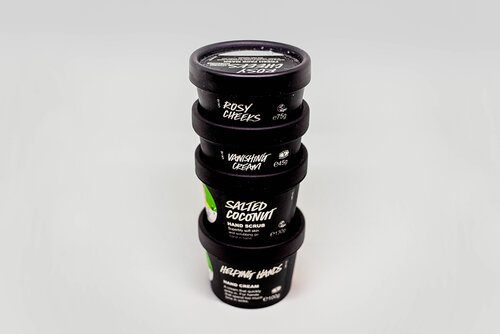
    10 Lush products for reducing plastic usage whilst travelling

    4. Responsible tourism

    The tours and excursions you book tell a big story of the type of traveller, nay person (yeah that’s right I said nay) you are. To knowingly partake in any activity that causes harm to animals and/or the environment is something that needs to stop. 

    Animal tourism stems from the brutal treatment of animals which includes drugging, caging, under-feeding and bullying — just to name a few — to manipulate them for the owners needs. Avoid visiting big cat enclosures, elephant rides, posing with chained monkeys in market squares or with snakes around your neck. 

    I wish I could say I’ve never been a part of this but unfortunately I have been on camel rides that I now know in my heart weren’t being treated well. We must reflect and learn from past experiences so that we consciously make the right decisions in the future.

    I’ve written a full blog post focused on how to find sustainable tours and excursions with advice specifically focused on marine tours here in How to practise responsible tourism.

    You can also help by donating to legitimate sanctuaries and charities who put in the hard work every day to protect our environment and all the wonderful creatures who call it home.

    5. Hotel tips

    Second to staying in sustainable hotels here are some extra measures you can take:


    • Bring your own solid toiletries such as shampoo, conditioner and soap instead of using the tiny plastic bottles the hotel may provide. Yes they look cute but don’t be fooled by their disguise, each one is a threat to the environment. You could also call ahead to see if the hotel uses refillable toiletries so that you can avoid single-use plastic and heavier luggage. IF you do use the mini toiletries for whatever reason, NEVER leave with product still in them, it will get thrown away and it’s a terrible waste. If you’re sacrificing our planet then at least use the whole bottle.


    • Hang up your towels! Hotels are significantly responsible for big time water waste and pollution partly due their never ending laundry piles (well unless there’s a worldwide lockdown of course). Reuse your towel to prevent the need for daily washing, or better yet, take your own microfibre towel so housekeepers aren’t even tempted to kindly (less we not forget they’re not intentionally upsetting us) replace our towels with fresh ones.


    • Turn off the lights, TV, air con/heater and plugs so that electricity isn’t been wasted whilst you’re out exploring.


    • Keep your room clean and tidy so housekeepers don’t have to vacuum (electricity), change the sheets (water) or clean surfaces (chemicals in non-recyclable bottles) until you’ve checked out or unless absolutely necessary. 


    6. Go paperless

    Travel tends to be a slightly trickier area to go paperless with boarding passes automatically being printed out from self-service machines, ticket stubs being issued from booking offices… and though I’m fully aware that these often make great travel mementos, please try to go paperless where you can. 

    My top tips for paperless travel are:


    • Download the app that allows you to have an electronic boarding pass.


    • Buy your tickets to everything you can online checking that you don’t have to print them off.


    • Use Google Maps instead of a paper map.


    • Take photos of brochures/maps etc. (If you do take one, try your best to return it so that someone else can use it).


    • Don’t sign up to mailing lists, unless they’re email mailing lists.


    If you do end up with something that you don’t want to keep anymore, ensure that you recycle it.

    7. Observe local customs

    Part of being a responsible traveller is knowing how to conduct yourself in a way that respects and honours cultures and local customs. Do your research before arriving. Things to be aware of are how to speak, how to act and how to dress.

    For countries where it is advised to be respectful and cover up certain areas of your body, I have written a blog post on how to dress: Observing local customs: how to cover up and dress respectfully.

    You know Chief Seattle’s quote “take only memories, leave only footprints”? Well it’s not just something to re-pin to your “Travel Inspo” board, it’s something to actively practise. Don’t go pinching rocks at Pompeii or coral from the ocean bed, and don’t leave your rubbish/trash on the ground or chemicals from your suncream in the waters.

    Pay attention to signs, I cannot stress this enough for when it comes to taking photos for the ‘gram. If a sign says “stay off the grass” then stay off the grass, if a sign says “no access” then don’t go beyond it and if a sign says “no photos” then don’t take photos.

    If getting a photo is more important than the experience of being there and respecting the country’s rules then quite frankly you don’t deserve to be there. It’s a lesson I’ve taught myself especially since becoming a blogger, if I can’t be respectful and put the experience over the photo then I don’t deserve the experience and I need to check myself. No matter who you are, you are leading by example, so make sure it’s the right one.

    8. Litter pick

    Wherever you are in the world, if you see rubbish/trash on the street, in a bush, in the sea, on the beach etc. then please pick it up (if it is safe to do so) and dispose of it properly. 

    Actively live by “not my garbage, but it’s my planet” everywhere you go and soon enough you will ALWAYS be alert to poorly discarded litter.

    Don’t hesitate to share your litter picking on social media to raise awareness to others of where there’s rubbish/trash that needs to be removed and to advise others to keep their eyes open to it.

    Remember to wash your hands after and carry hand sanitiser, soap leaves or biodegradable anti-bacterial wipes to be extra safe.

    Oh and on the topic of rubbish/trash, keep in mind that not all hotels and airlines have an adequate recycling system so you may want to keep hold of any recyclable waste until you can dispose of it responsibly rather than leaving it to someone who won’t.

    9. Food

    Food is an overlooked but important area for maintaining sustainability on your travels. Taking into account of where you’re choosing to eat is a very important decision and could be the difference between eating responsibly and contributing to more pollution for our planet.


    • Eat locally. Local produce means it hasn’t travelled miles to be on your plate. It also helps to fund the community; it’s always good to support local businesses – responsible local businesses.


    • If you are purchasing a take-out meal make sure you get them to use your own reusable container and request that they do not give you cutlery (use your own reusable cutlery that I have listed in my previous blog post Sustainable swaps for travellers). If they won’t allow it and their packaging is plastic or polystyrene then avoid eating there.


    • Avoid all-inclusive offers. All-inclusive leads to an obscene amount of waste.


    • Cook yourself. Stay in accommodation that has a kitchen/kitchenette and shop from a local market so you can cook your food yourself. Not only does this cut down on food wastage but it also saves you money. For simple ideas on preparing food in your hotel room take a look at my blog post, 6 items for making food in your hotel room.


    • If you eat out, carry a reusable container with you so you can keep the leftovers. Most restaurants offer a “doggy bag” or a box but you never know if it’s going to be plastic.


    10. Souvenirs 

    When it comes to buying souvenirs, take your time to find locally produced and handcrafted items. By doing so you are supporting the local community. Mass produced souvenirs aren’t very meaningful and are often discarded. If you’re uncertain, ask locals where you can go.

    Another thing to consider is finding local classes where you can learn to make something. Wouldn’t you prefer a handmade clay pot over a generic shot glass?

    .

    So there you go, 10 ways you can become a sustainable traveller! Comment below if you do any of these or have any additional suggestions!

    Aloha, Gabriella

    Pin this post


  • 10 Lush products for reducing plastic usage whilst travelling

    10 Lush products for reducing plastic usage whilst travelling

    As travellers, we have a rather large impact on the planet with those large carbon emissions produced by every flight we take. This creates a pretty tricky situation for us as the more of this beautiful planet we see, the more we want to travel but this also means we see first hand what a massive impact our neglect has had and we end up contributing to it more. The best thing we can do, second to limiting our travel and opting for direct flights, is to offset our carbon emissions. Some leading airlines such as Virgin have the option to add this on to your flight purchase, but you can also do it externally online. A seriously impactful way, beyond these options, is to reduce our plastic usage to stop it from ending up in landfills or our oceans where it is polluting natural resources and killing animals worldwide. The best way to do this whilst travelling is within our toiletries, so here are 10 products from Lush which come without packaging or in recycled/reusable packaging.

    Before taking you through these 10 products, let me take a moment to tell you why Lush:


    • Their products either come in recycled packaging, reusable packaging or none at all, which they like to call “naked”.


    • Speaking of their recycled packaging, if you bring back five clean pots in store you will receive a free fresh face mask, which comes in a pot that you can bring back with four other pots when you’ve finished it! How great is that?


    • Their products are all handmade with natural ingredients and/or safe synthetics.


    • All the products are vegetarian, with many being vegan, and they don’t test on animals.


    • They advocate for the environment.


    • They’re a super fun brand with everything designed to encourage you to enjoy your bathroom routine.


    Here are 10 products for sustainable travel:

    1. Solid shampoo

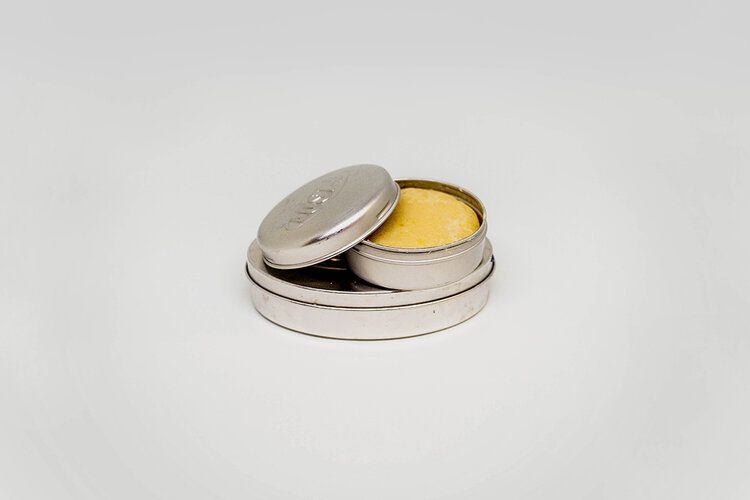
    Switching to solid haircare is one of the easiest and best ways to eradicate plastic packaging from your bathroom products, plus it last forever! I’ve even found it foams up better than liquid shampoo. I use Honey I Washed My Hair and it leaves my hair feeling so soft and silky every time. Store it in one of Lush’s reusable round tins – you’re going to read that a lot in this post! They’re perfect for travel and prevent the need for single use packaging. Just make sure the product has dried before popping the lid back on.

    2. Solid conditioner

    Switch for all the reasons I mentioned above! The solid conditioner bars are a different shape to the shampoo so you’ll want an oval tin for one of these. They’ve recently had a makeover and are now pressed which makes them lather up better than before and come in far more fabulous scents. I previously used Sugar Daddy-O but I cannot tell you how excited I am to try American Cream!

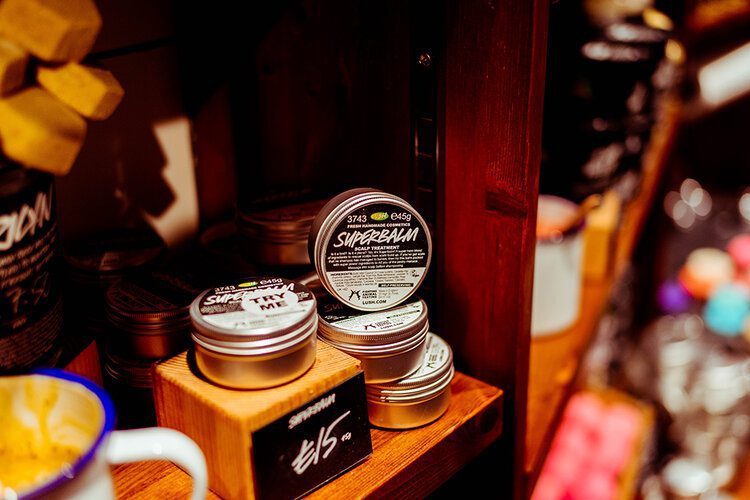
    3. Superbalm scalp treatment

    Whilst I’m away my hair often comes into contact with a variation of soft water, hard water, sea water and chlorine which can wreak havoc on my scalp and make it quite dry. Though the shampoo bar, particularly the Honey I Washed My Hair bar, makes my hair soft and silky, it doesn’t help my scalp. So to treat my dry scalp I was still using Head and Shoulders, but then I came across Superbalm which is formulated with coconut oil and candelila wax to treat dry scalps. If I’m on a short trip I won’t take it, but if I’m on a trip that’s two or more weeks long I will make sure to treat my hair at least once. 

    This product isn’t really a must, it’s just really helpful if you put your hair through a lot whilst you travel.

    The Soak and Float solid shampoo will help with dry scalps too.

    4. Soap/shower gel/body conditioner

    There’s a multitude of options for keeping fresh on your travels with Lush. There’s solid soaps and gels (yes really, gel), liquid shower gel or something in the middle which is their body conditioners. 

    Shower gel and “naked”solid shower gel.

    Grab a piece of one of their numerous naked packaging soaps and store it in a tin, or chop up one of their naked shower gel bars – these are formulated to be more moisturising than the soap – and also store it in a tin. Or you can travel with one of their shower gels which come in a recycled bottle if that’s more your style. Then there’s their body conditioners which clean like soap but apply like moisturiser and leave your skin feeling crazy soft and moisturised. These come in plastic pots which you can return to store for a free face mask as I mentioned earlier.

    There’s an option for everyone. There’s even solid scrubs if exfoliating is more your jam.

    5. Moisturiser 

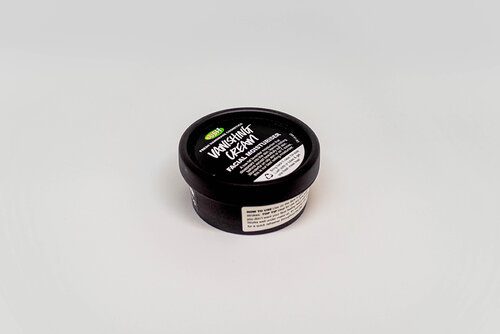
    Very few moisturisers come in reusable packaging and if they do, they don’t tend to be made of natural ingredients or safe synthetics. There are many options for moisturisers in Lush for all skin types. I use Vanishing Cream because it leaves my skin moisturised and not greasy or oily. Plus it’s made with lavender which is my favourite essential oil and witch hazel which helps to keep skin clear from blemishes. Again it’s in a pot which you can return in store with four others for a free face mask.

    6. Solid cleanser or biodegradable cleanser wipes

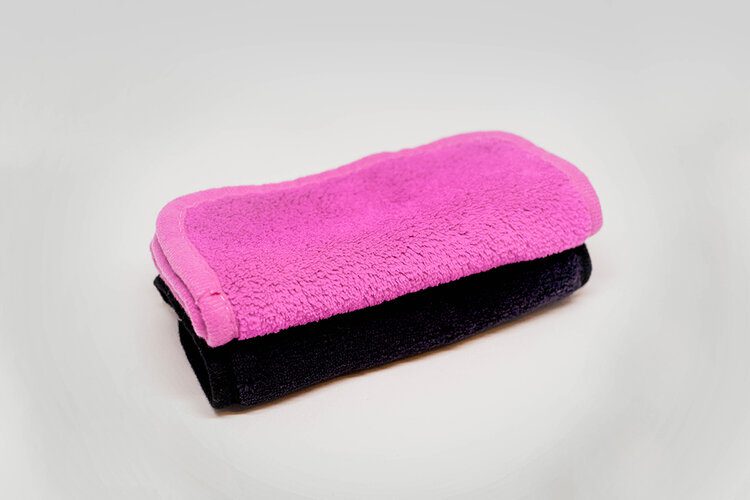
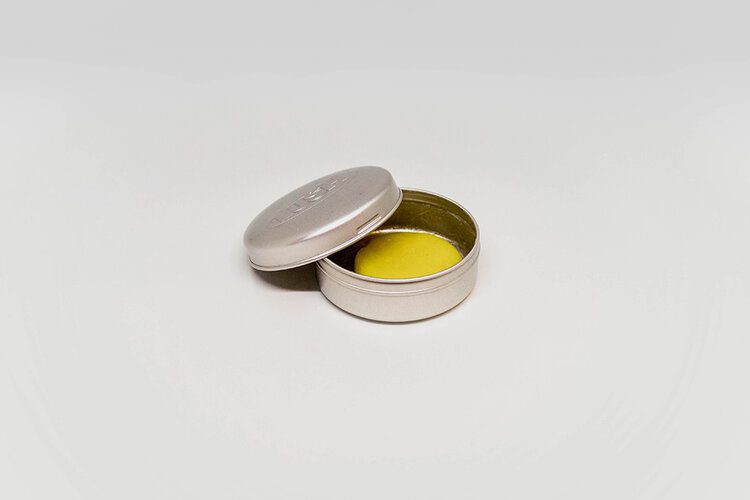
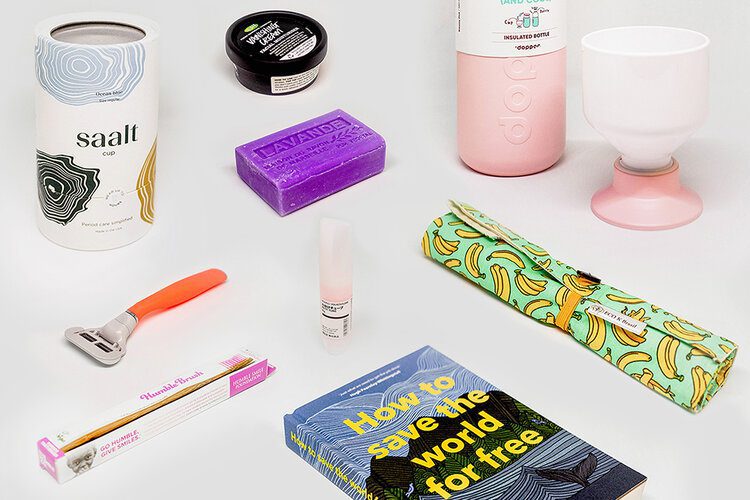
    I am a big fan of packaging free makeup remover and cleanser. It took me a long time to find products that worked for my skin, I tried all the big brands from drug store to pricey labels, but all my skin needed was minimal and natural products. I use a magic cloth to remove my makeup with water, then to cleanse I massage Like a Virgin – a solid cleanser that smells like lemon drizzle cake – into my skin and remove it with a reusable cotton pad and warm water. I used to travel with heaps of skincare products and now I just have a magic cloth, a reusable cotton pad, Like a Virgin (which I store in one of Lush’s round tins) and Vanishing cream in my Flat Lay toiletry bag.

    If I have a long flight I pack a 7 to 3 cleansing wipe into my travel bag so I can remove makeup inflight. You just need water and you can get multiple uses out of it before it biodegrades. If I am travelling with this in my hand luggage I will leave Like a Virgin at home. Like most of the products on this list, the cleansing wipes are packaging free so store them in a reusable round tin.
    7. Solid or powder deodorant

    Solid deodorant is a great way to cut down on packing liquids whilst travelling, plus, natural deodorants remove the risk of harmful chemicals that may contribute to breast cancer.

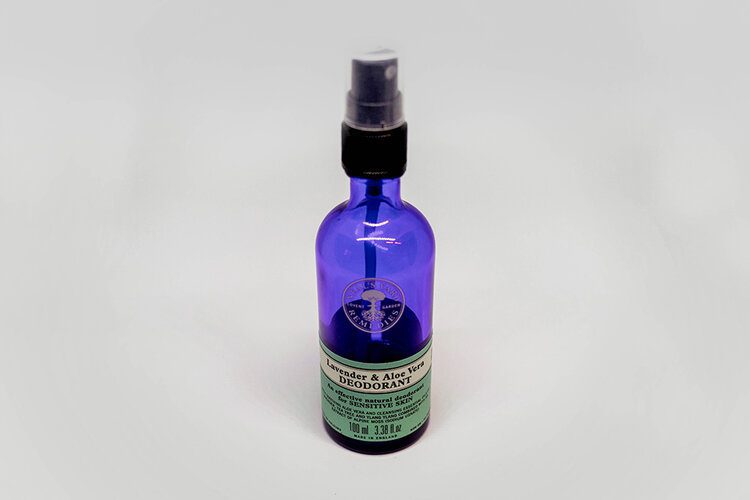
    I have very sensitive skin and don’t get on with Lush’s solid or powder deodorant. Instead I use Neal’s Yard spray on deodorant (not aerosol) but Michael uses T’eo and T for Toes and gets on well with them. He stores T’eo in a square tin.

    8. Toothpaste tablets

    Eliminate non-recyclable packing from your dental care with toothy tabs, there’s a variety of flavours to choose from plus they are a great alternative to packing liquids/gels. It’s just a shame that these don’t come in a reusable tin because that would be far more sustainable but it’s a start.

    9. Makeup

    Lush has a much bigger makeup line than you’d think, from refillable lipsticks to vegan makeup brushes, take a look at what you can replace in your makeup bag, if you wear it.

    My lips suffer greatly with changes of climate, they dry out and crack or peel and I’m not here for it. Keep your lips soft and moisturised with a Lush lip balm, they’re compact and come in so many fun flavours. The scrubs are particularly great for exfoliating dry lips.

    10. Body lotion

    It’s very important, whether you’re going to be bronzing under the sun or hitting the slopes, to keep your skin moisturised so it doesn’t become dry, irritated or flakey. I have found very few body lotions in reusable or responsible packaging; I love Aveeno (thanks to Jennifer Aniston’s ad campaign) but the pumps on their bottle can’t be recycled from home so I sought out an alternative in Lush. Dream Cream like Aveeno is made with oats but it also has lavender oil (yay), rose water and Tea Tree which is, quite appropriately, a dream for your skin.

    .

    These 10 packaging free or recyclable products will not only make travelling without checked luggage so much easier, but they also will prevent you from using any single use hotel products and you will always be prepared!

    Aloha, Gabriella

    Pin this post


    .

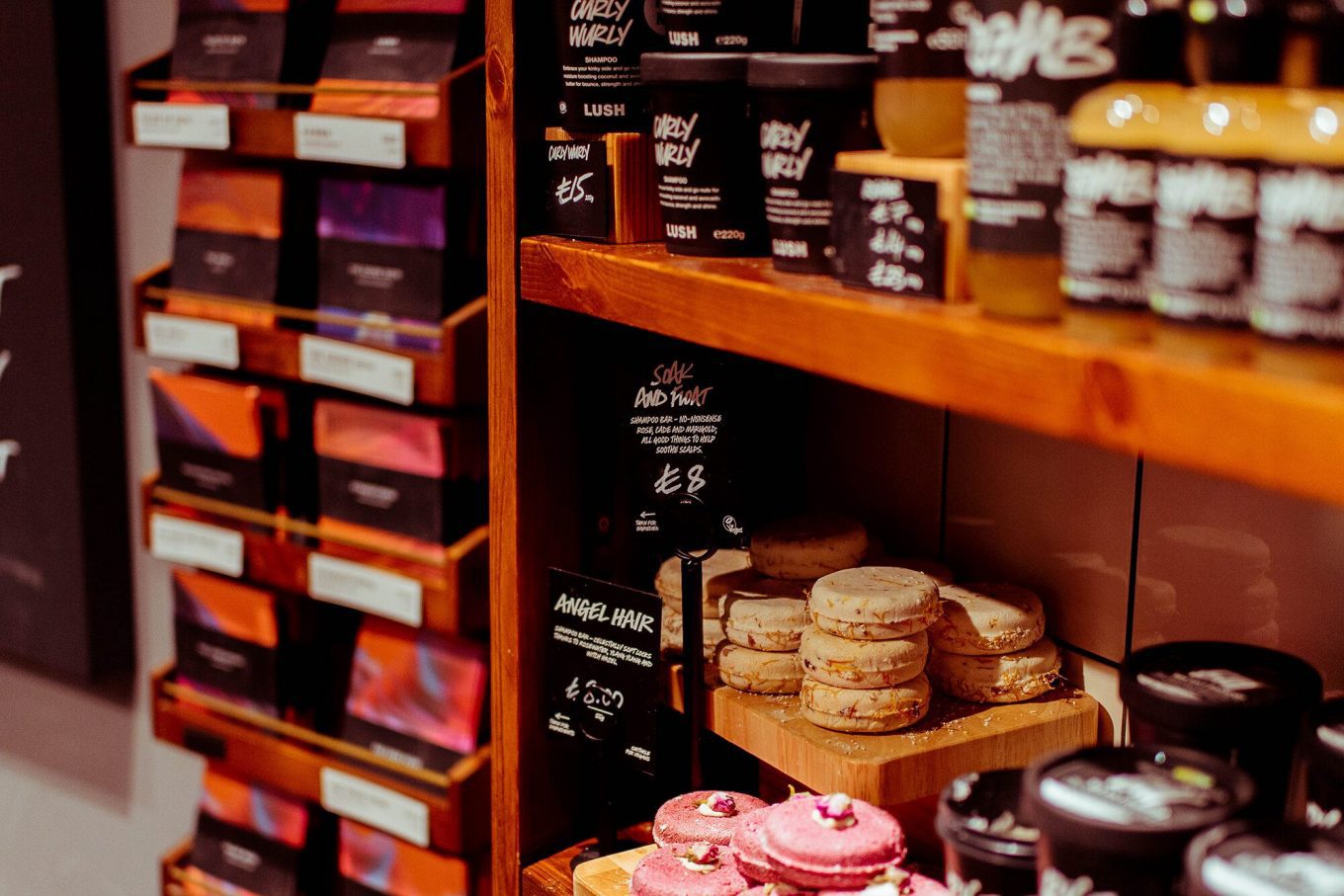
    This post has not been written in collaboration with Lush, I just love everything the company stands for and they are an ideal source for plastic free packaging. The photos were taken within the Norwich store.

  • Sustainable swaps for travellers

    Sustainable swaps for travellers

    “The greatest threat to our planet is the belief that someone else will save it” – Robert Swan.

    More than ever, the time has come to take a stand against plastic pollution from land to sea. 8 million tons (this number IS shocking, you’re right) of plastic pollution enters our oceans every year causing 100,000 marine animals deaths each year.

    With 40% of the plastic produced every year being single-use plastics, we all need to take responsibility and make as many sustainable swaps as possible to save our planet from irrevocable damage. The problem lies in idly going through life consuming excessive amounts of plastic which have sustainable and reusable alternatives, then incorrectly disposing it, without reusing or recycling, and without any awareness of the harm caused. 

    In this blog post I am focussing specifically on the environmentally-conscious swaps we travellers can make to make the world a better place. It’s no secret that the impact travel has on the environment is significant, so along with offsetting your travel I am sharing the 25 sustainable swaps I have made specifically on my travels, so that we can reduce our wasteful impact around the world:


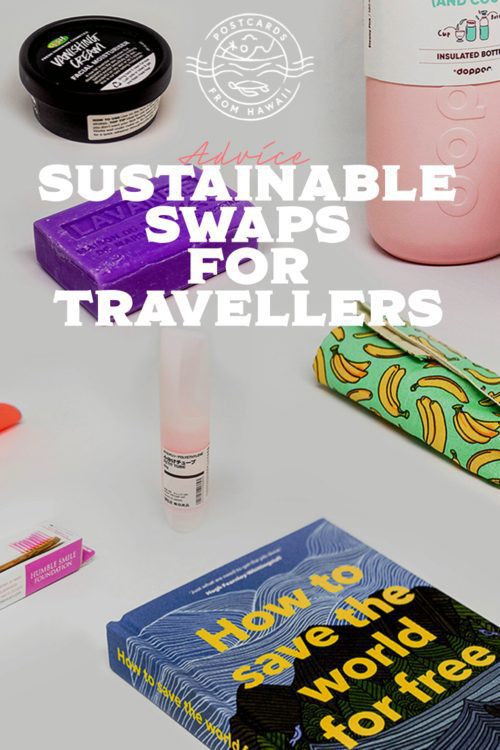
    Toiletries

    The area you can make the biggest reduction of single-use items whilst travelling is with your toiletries. Toiletries are one of the leading contributors to throw-away items that build up in landfills, our oceans and even on the street! I can’t tell you how many strange places I’ve seen plastic ear buds/Q-tips in peculiar places. By making these simple and sustainable swaps you will be doing more for our planet than you could ever realise:

    Bamboo toothbrush

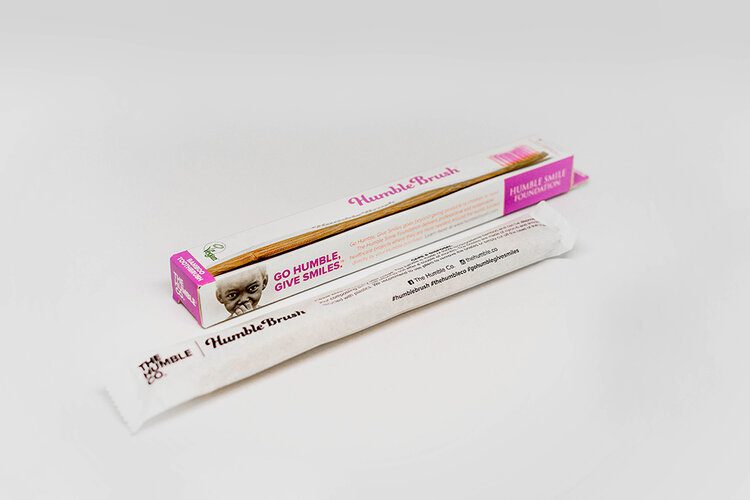
    Did you know that every plastic toothbrush that has ever been made since their invention in the 30s still exists? Why? Because each plastic toothbrush takes over 400 years to decompose and with each person using approximately 300 toothbrushes in a lifetime, well it’s a lot to take in right? So with those figures in mind, it’s about time we started using an alternative. Bamboo toothbrushes are eco-friendly, made from natural fibres and will decompose after use. The Humble Co. was founded in 2013 by dentist Noel Abdayem. He set out to create products that are not only good for us but are kind to our planet too. What’s even more admirable about The Humble Co. is that they also provide dental care for children in need all over our planet via their Humble Smile Foundation, and you can help too as it is funded directly by proceeds from every product sold.

    As well as the product being sustainable, the packaging is too. The boxes are 100% recyclable and the inside wrapper is compostable.

    Chewing gum

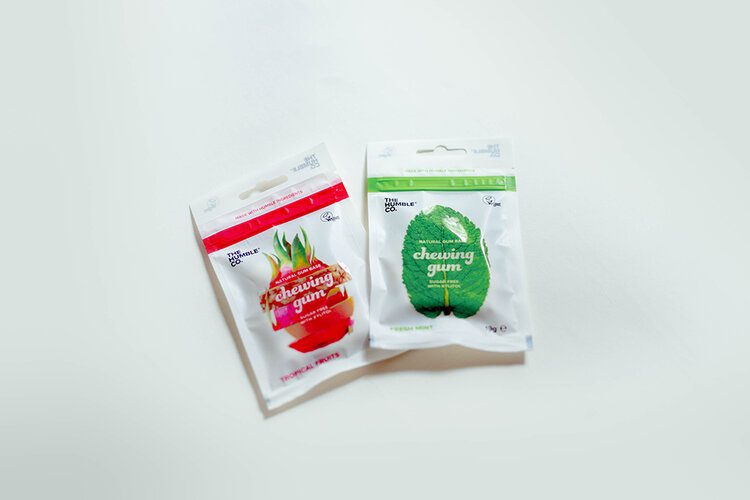
    Sticking (pun not intended but a happy coincidence nevertheless) with The Humble Co. let’s take a look at their chewing gum. It took me longer than I care to admit to realise that if my body can’t digest gum than neither can the planet… Most chewing gum is made from polymers which are synthetic plastics (complicated science stuff, stick with me here) that do not biodegrade and will therefore forever exist on our planet. The Humble Co. however, make a natural alternative made from chicle, a natural gum base from the Sapodilla tree, that doesn’t contain any artificial flavours or sugar, and since the company was founded by a dentist you can trust that it’s good for your teeth!

    Why just stop at mint either, their natural chewing gum comes in lemon, liquorice and tropical fruits too!

    Dental floss

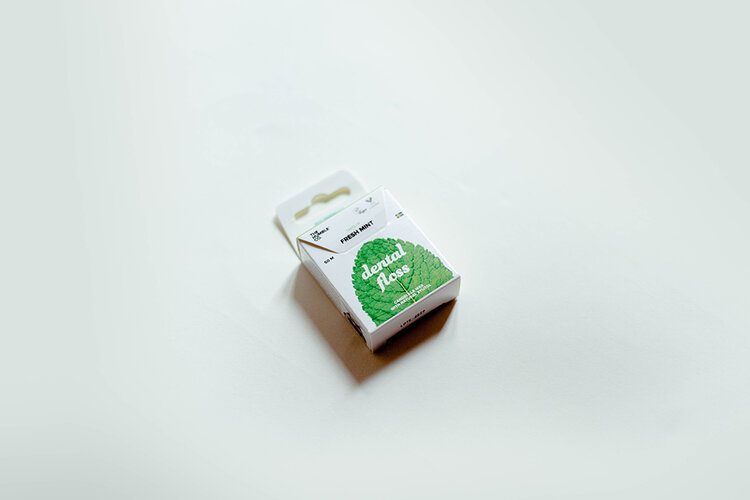
    Amongst many products, some of which are listed above, The Humble Co. also make dental floss. Over 70 million plastic dental floss containers are discarded every year so their solution was to make the packaging 100% recyclable, so it’s simply a cardboard box that does the exact same job with no risk to the environment.

    Bonus: The Humble Co. products are all vegan!

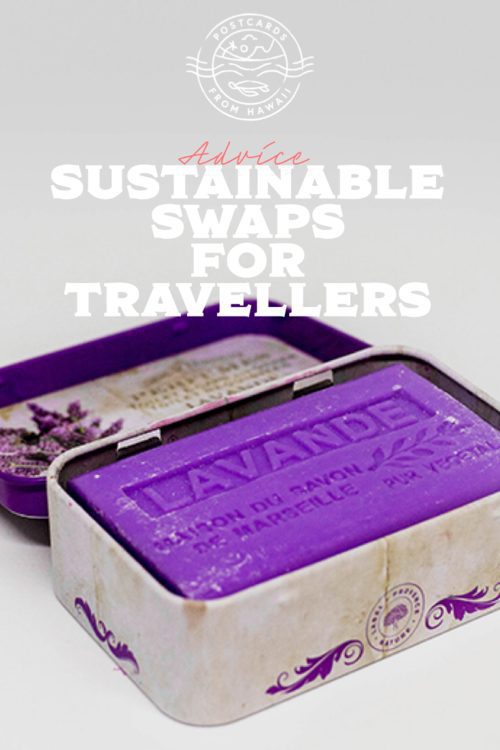
    Bar of soap for hands and body

    It’s time to stop using mini toiletries. As cute as it is to see mini versions of the products we know and love, they aren’t worth the damage they are doing to our environment. Travelling with solid toiletries means that not only will you always be prepared but by using your own packaging-free products you are eliminating the need for single-use mini toiletries all around the world.

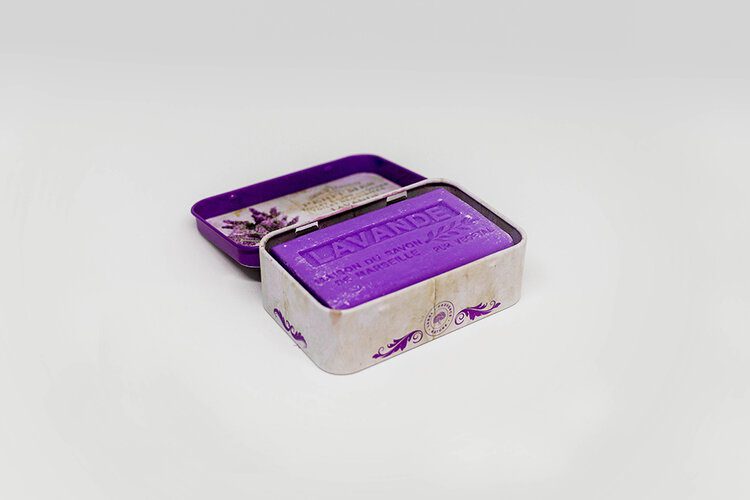
    I use Maison du Savon de Marseille bars of soap for three main reasons:


    1. They are sold without packaging


    2. They smell amazing and have a HUGE variety of scents


    3. They are made with shea butter which means they hydrate your skin as well as cleaning it and they last twice as long as any other soap


    Plus you can pick up a reusable tin to store it in when you travel.


    Another solid (pun intended) favourite of mine is from Anatomicals because they smell incredible!

    Solid shampoo and conditioner

    Just like a bar of soap (above), solid shampoo and conditioner bars will prevent the use of plastic bottles, you will always be prepared and they last up to three times longer than a regular bottle.

    I personally use, love and recommend LUSH. They have a significant variety of both shampoo and conditioner bars and sell reusable tins for storage and travel.

    Magic cloth makeup remover

    Making the switch to magic cloths to remove my makeup last year was one of the best decisions I have ever made. These cloths completely eliminate the need for any bottled makeup remover, all you need is the cloth and water! 

    Simply wet the cloth and wipe away your makeup; its ultra soft woven fabric will remove all types of makeup, even waterproof. To clean your cloth simply wash it in warm water with soap and hang it out to dry. It is the most natural and gentle way to remove makeup without any risk of irritation from chemicals.

    Zero packaging toiletries

    Where possible, make a switch to zero packaging toiletries such as solids like soap, cleanser, shampoo, etc.

    On the days where I wear a little more makeup than usual, I like to use a solid cleanser to clear my pores of anything gross. I simply rub a little into my hands, massage in into my face and wipe it away with a reusable cotton pad (see next) and warm water before using a responsibly packaged moisturiser (see two below). My current solid cleanser is “Like a Virgin” from LUSH. Its vegan formula cleanses, brightens and tones the skin, plus it smells exactly like fresh Sicilian lemons.


    Cotton pads

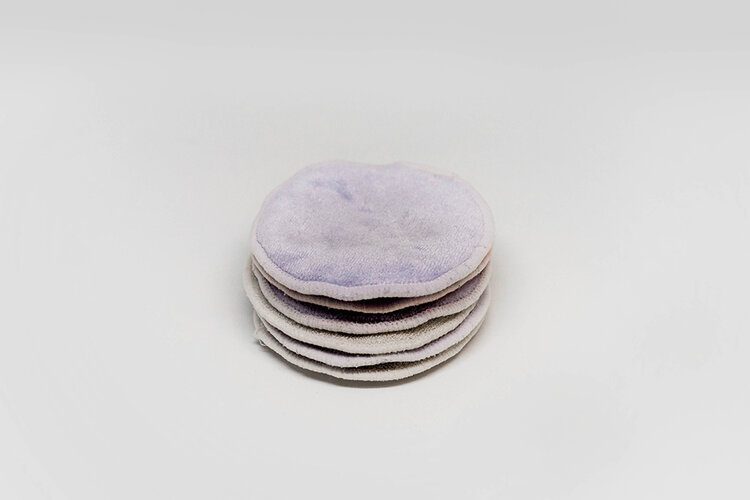
    To use those packaging free/solid toiletries, purchase some reusable cotton pads, therefore eliminating the need for single-use ones. These will not only save you money but they will also save the environment. To clean them, just pop them in a mesh bag (it saves you from having to fish them out between your socks and pants) and into the washing machine.


    Recycled packaging toiletries

    Not all toiletries can come packaging free otherwise we’d spend an awkward journey home trying not to spill liquids from our hands. Products such as moisturisers, lotions, scrubs etc can be purchased from stores such as LUSH who use recycled packaging. Plus what’s even better about LUSH is that if you return five of their pots (clean) they will repurpose them and you will receive a free face mask!

    I only use facial moisturisers from LUSH for this reason and highly recommend their Vanishing Cream. Its combination of lavender and rose water absorbs immediately into the skin without any greasy residue, leaving your skin feeling soft and nourished. I’ll confess it’s not cheap but a little goes a long way and it’s worth the price to save the environment.

    Mini travel bottles

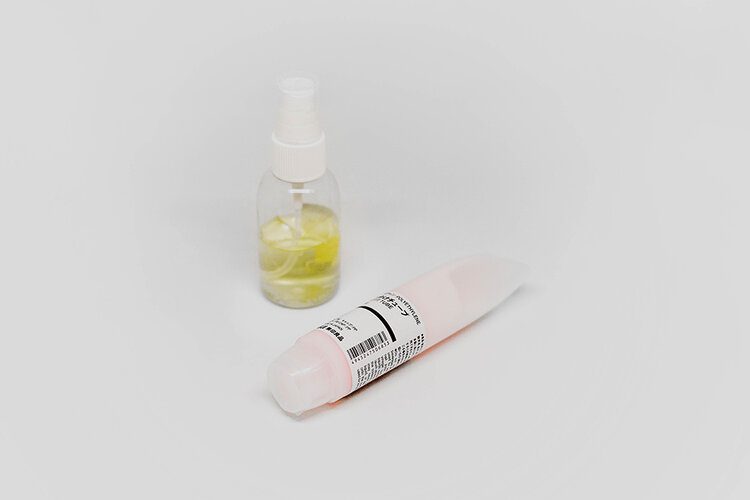
    If for your own reasons you still need/want to use products that come is plastic packaging (I’m not judging, the only products I have found that tame my frizzy locks unfortunately are packaged in plastic) then I suggest you buy the biggest bottle you can so that it lasts longer, and with that fill smaller reusable travel bottles.


    Natural deodorant

    Far too many deodorants come in single-use plastic bottles so consider swapping to one with more responsible packaging that also has natural ingredients so it’s better for both your body and the planet.

    I am currently using the Lavender & Aloe Vera spray on deodorant from Neal’s Yard because it is made entirely from natural ingredients and the bottle can be repurposed. If you do decide to dispose of the bottle then you can recycle both the glass and paper label and if you take the plastic pump into a Neal’s Yard store, they will recycle it for you.

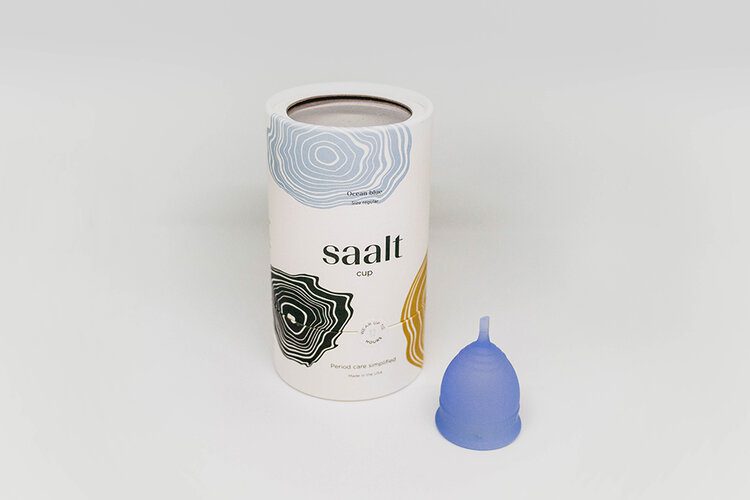
    Menstrual cup

    For any person who has a period, swapping from tampons and single-use pads to a reusable menstrual cup is one of the best decisions you can make for the planet, your body and your purse! I can’t express how much better my life is now that I have made this swap or how empowered I feel to be bleeding so responsibly every time my period comes around, but to get an idea take a look at Travelling on your period with a Saalt menstrual cup, a blog post I wrote all about exactly why menstruating individuals should switch to a menstrual cup!

    If for some reason you don’t want to read my very informative blog post (shame on you, I put a lot of blood, sweat and tears into that…) then here are some figures to glance at:


    • Over 4.3 billion menstrual hygiene products are thrown away every year in the UK and 20 billion pounds in the USA


    • It takes longer than the lifetime of the user for just one to decompose


    • One cup prevents approximately 3000 tampons from ending up in landfills


    • One cup lasts 10 years and will save an average of £1,150 or $1,500


    Saalt are partnered with Her International, an organisation dedicated to keeping girls in school when they get their periods. With every cup sold, a portion of the profits go to Her International, giving girls the opportunity and means to stay in school during their period so they can receive the education they deserve which will lead to a better quality of life.

    If you want to purchase your new Saalt menstrual cup from their website, use “POSTCARDS10” for a 10% discount on your order!

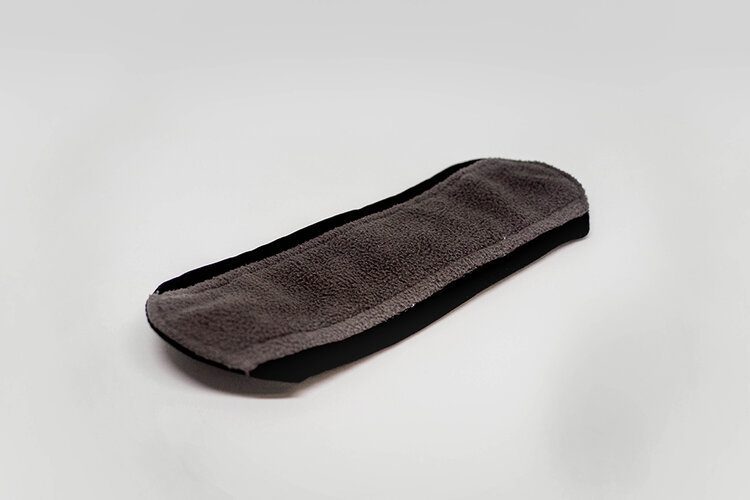
    Menstrual pads

    If something that needs inserting isn’t your thing just yet (no pressure, you do you boo) then make the switch from single-use menstrual pads to reusable cotton menstrual pads. They are made from natural charcoal bamboo fibres and are incredibly absorbent. To clean them you simply pop them in the washing machine with a dark load.

    I currently use High Oh’s reusable pads during evenings where I don’t fancy inserting my cup – you know the really lazy one where you just lay in bed binge eating with Netflix.

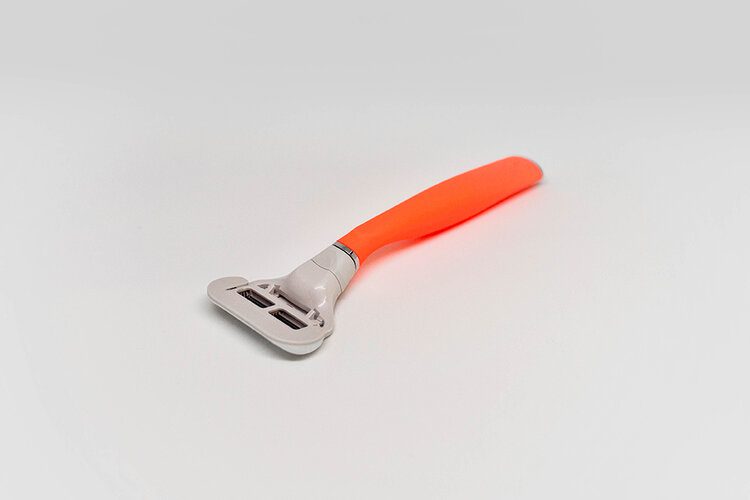
    Razor

    According to a recent report by Statista, 163 million consumers in the United States and 5.5 million in Great Britain used disposable razors in 2018, and as they aren’t usually recyclable you can bet they’re poisoning our earth and making their way into our ocean.

    There are two ways around this and they are to switch to a reusable razor whereby you are only replacing the head rather than the whole body and the other is to use a safety razor where you only need to replace the blades.

    I am currently using a Flamingo reusable razor whereby I remove the head only but I do intend to switch to a safety razor.

    Have you ever noticed how disposable razors are mostly targeted at women and come in all shades of pink but men’s razors are mostly reusable? What’s up with that? Flamingo have recently been taking massive stands against the stigma of female hair removal from the design of the razor to embracing your body hair.

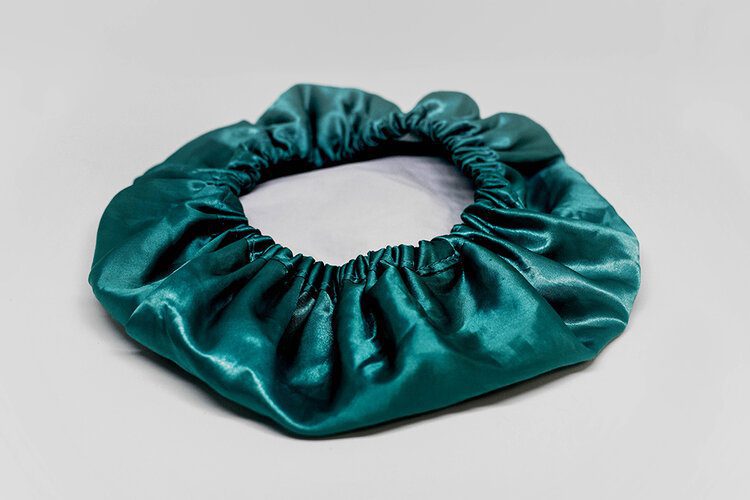
    Shower cap

    As most disposable shower caps are made from a PVC-based material, they are not recyclable. Instead of using the disposable ones in hotels rooms, purchase a reusable one so that it has a much longer life.

    Mine is from Boots but I recommend you get one online with a fun pattern!

    Cotton ear buds & Q-tips

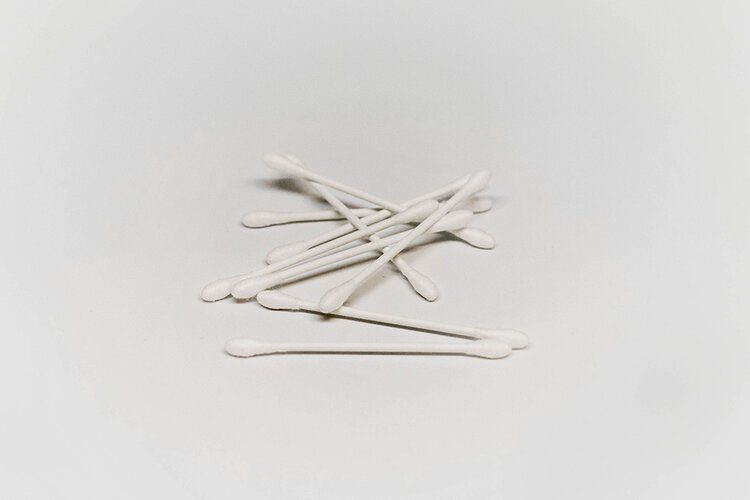
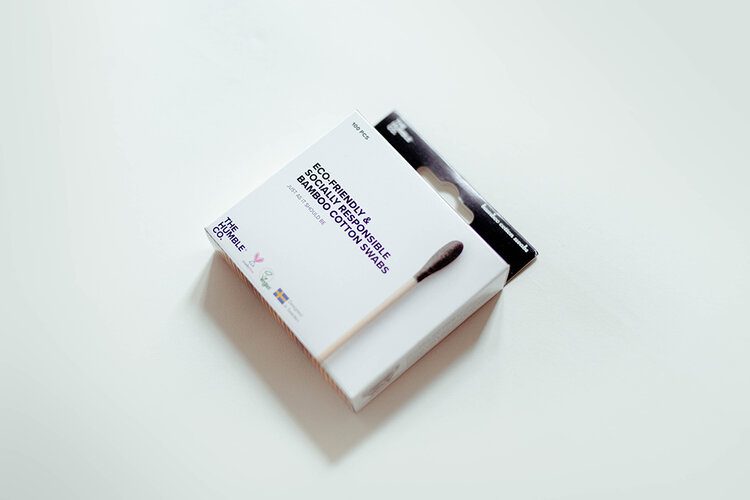
    In May 2019 plastic stemmed cotton buds were finally banned in England with all retailers required to make the switch to compostable paper, wood or bamboo stems before April 2020. Unfortunately this isn’t the case for the rest of the world, so you cannot trust that your hotel or the drug stores/chemists where you travel to will stock compostable ear buds/Q-tips, so travel with your own ones. 

    In the UK you will find compostable ones everywhere from chemists to supermarkets. I even saw The Humble Co.’s bamboo ones being sold in Oliver Bonas the other day.


    Towels

    One of the biggest areas that hotels produce waste is water. Let alone the plumbing in every room, the daily washing of towels and linens produces a significant amount of water waste. Two ways you can avoid adding to this whilst travelling is to leave a note for housekeeping asking that they do not change your towels and sheets during your stay, and then use your own towel. Have you noticed that despite the signs in almost every room claiming the hotel’s green initiative, and telling you that if you fold your towels they won’t wash them to save water wastage, for some reason your towel always disappears off the hook and a fresh folded set is on the rack? Yeah, not cool!

    Dock and Bay’s towels are compact, quick dry and sand resistant, all of their packaging is 100% biodegradable and they have an eco collection which features towels made from 30% recycled materials. Plus they come in all sorts of cute colours and designs all named after popular travel destinations! They also have hair wraps which save you from needing two towels if you have longer hair.

    Food

    The second best way to reduce your plastic waste whilst travelling is to travel with reusable food items that prevent single-use plastics such as water bottles and coffee cups from being consumed excessively. By using a reusable water bottle you will be saving the planet from 40 plastic bottles PER YEAR! Here are few ways you can save the planet and also money by not having to eat out all the time:

    Cutlery

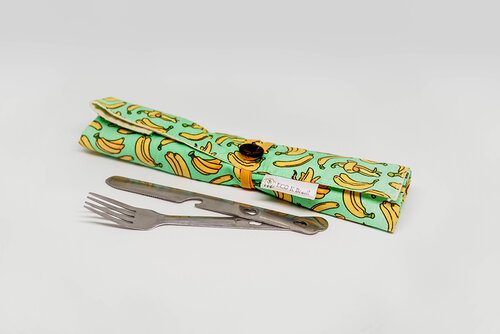
    Whether it’s bamboo or metal, start travelling with a set of cutlery to prevent the need to use plastic cutlery. This kit will also prove to be very helpful in hotel rooms if you want to rustle up a bite to eat.

    I bought mine as a camping KFS set from Mountain Warehouse for £4.99. I chose metal because Michael (my partner) has a habit of snapping our bamboo straws and I wanted our cutlery to be sturdy and last as long as possible. 

    We picked up this little wrap for them on a market in Brazil but they’re super easy to make if you want to do it yourself. If not, this specific KFS set from Mountain Warehouse clicks together so you won’t have stray cutlery in your bag.

    Bamboo straws

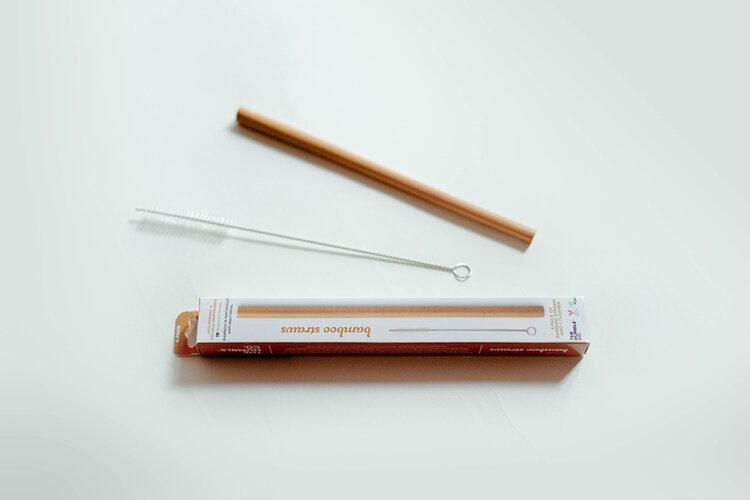
    Throwing it back to The Humble Co. they also make bamboo straws to accompany their many other bamboo alternatives. With over 8.5 billion plastic straws used annually (yes, you read that correctly), it is imperative that for the sake of our planet, and all the creatures living on both land and sea, we make the swap to a responsible choice. The most sustainable being bamboo because it can be reused (unlike paper) and will decompose naturally (unlike glass and metal). Of course paper, metal and glass are all 100% better alternatives to plastic. 

    The Humble Co’s. bamboo straws come with a cleaner as well as a clean conscience.

    Water bottle

    One of the best investments an environmentally conscious, actually ANY, traveller can make is a reusable water bottle. We all need to stay hydrated, especially when we’re out and about exploring, hiking, snorkelling etc. So to prevent the need for endless plastic bottles make the switch to a reusable one. By using a reusable water bottle, you will save our planet from 40 plastic bottles a year!

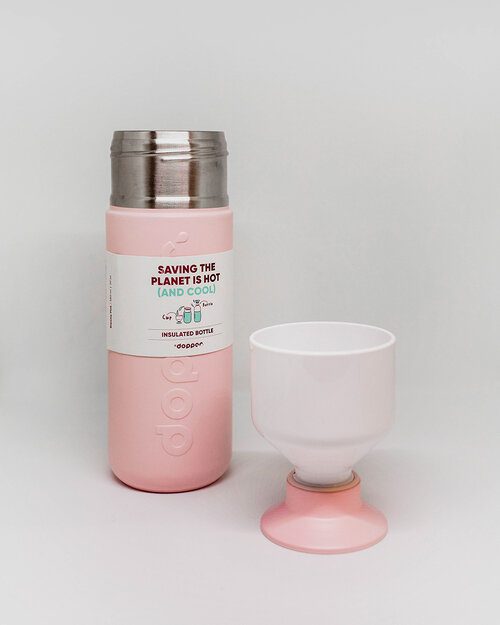
    I used to recommend S’well bottles but after my second one I have come to learn the rubber seal isn’t reliable causing the bottles to leak. So I recently switched to Dopper, a company based in the Netherlands whose mission is to empower people to choose reusable over single-use water bottles to protect our world’s water resources.

    Reasons why I love Dopper: 


    • Every purchase helps to fight to keep our oceans clean


    • The company has launched multiple initiatives around the world to provide clean water to communities in need, and they offer educational programmes to raise awareness of plastic pollution


    • The bottles come in a variety of materials and colours


    • The bottles are sustainably made


    • The bottles are a bottle and cup in one


    • They have thermal bottles that stay hot for 9 hours and cold for 24


    You will be able to fill up your water bottle in pretty much any restaurant or café and many public places such as airports, shopping malls and parks have water fountains. A bottle such as Dopper’s is particularly brilliant for preventing plastic usage on flights as you can fill your water bottle in the airport prior to your flight and if you fancy any other drink, you can unscrew your cup and use that instead of a plastic one.

    Coffee cup

    Along with a water bottle, a reusable coffee cup is one the the best sustainable swaps you can make for the environment. Approximately 16 billion disposable coffee cups are used each year, many of which aren’t recycled.

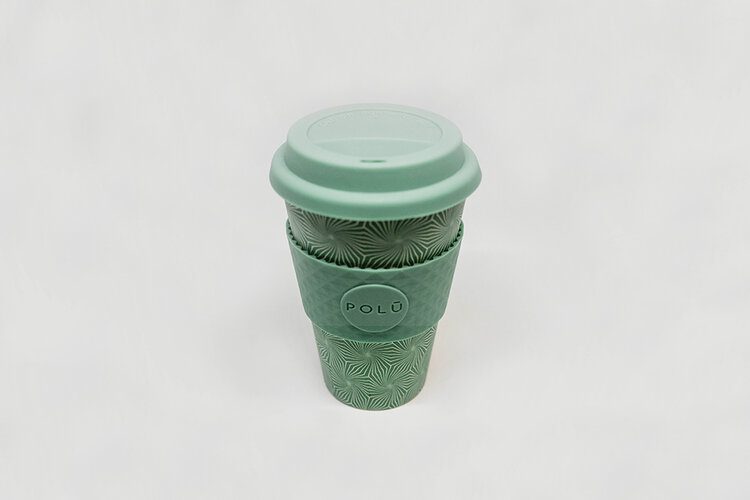
    My current coffee cup is from Polū, a company founded by two Aussie eco-warriors whose mission is to eliminate single-use products and promote Zero Waste living. Their bamboo fibre coffee cups are ethically sourced and completely compostable, whilst their silicone sleeve and lid are both recyclable. 

    What’s better is that with every purchase of a Polū cup, 50p is donated to AccesSurf, a Honolulu based non-profit charity organisation that provides water-based programmes, services, and events for people with disabilities.

    In addition to saving the planet from an abundance of single-use cups, another perk of using a reusable coffee cup is that most leading coffee shops offer a discount when you present your cup. In England for example you can save 25p in Costa and Starbucks and a whopping 50p in Pret.

    If you want to buy your very own compostable Polū coffee cup, saving both the planet and helping AccesSurf bring joy to people with disabilities in Honolulu then click here to make your purchase, and use “POSTCARDSFROMHAWAII” for 10% off your purchase!

    Sandwich wraps

    One of the best ways to save money when travelling often is to pack up your own food for the day instead of having to constantly buy meals out. To read more about this check out my blog post, 6 items for making food in your hotel room.

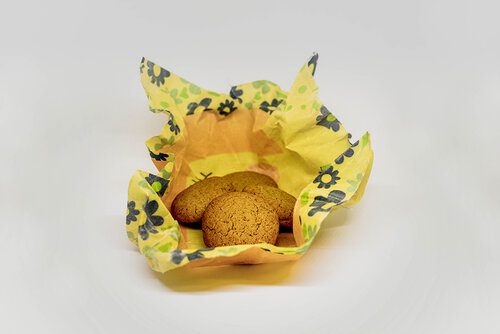
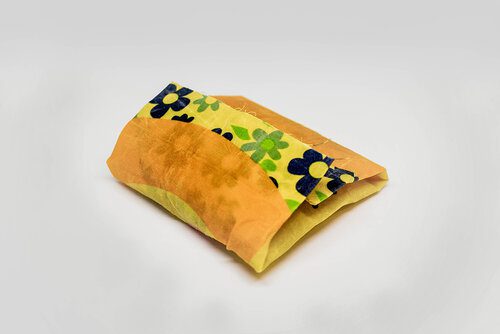
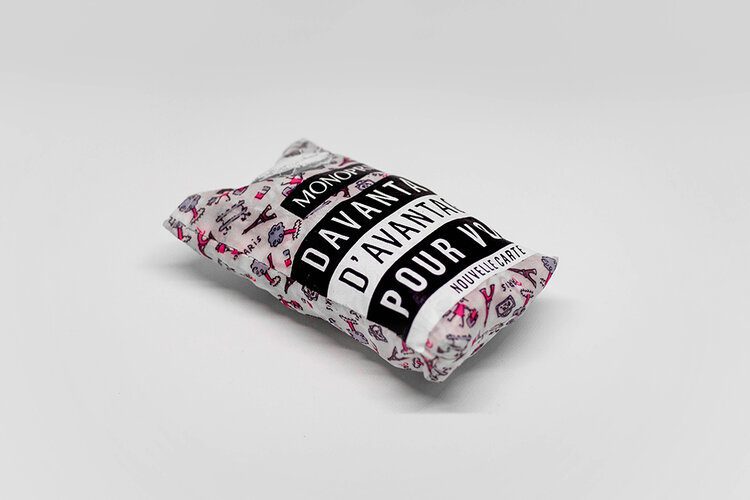
    To prevent using plastic wrap or sandwich bags, purchase a couple of wax wraps, made with either bees wax or plant resin for vegans. Their texture means you can easily fold them around your food and wipe them clean between each use. They’re also great for taking home any solid leftovers should you choose to eat out. You can also get a tin so you can make up and eat salads, pasta etc. on the go or you can take them to eateries to get your food to go packaging free.

    Shopping

    The third biggest area that we travellers can reduce our wasteful impact on the planet is with shopping. I know we’re not always prancing around on the beach in swimwear and buying handmade treasures from local markets, but when we do, when can do it responsibly. Here’s how:

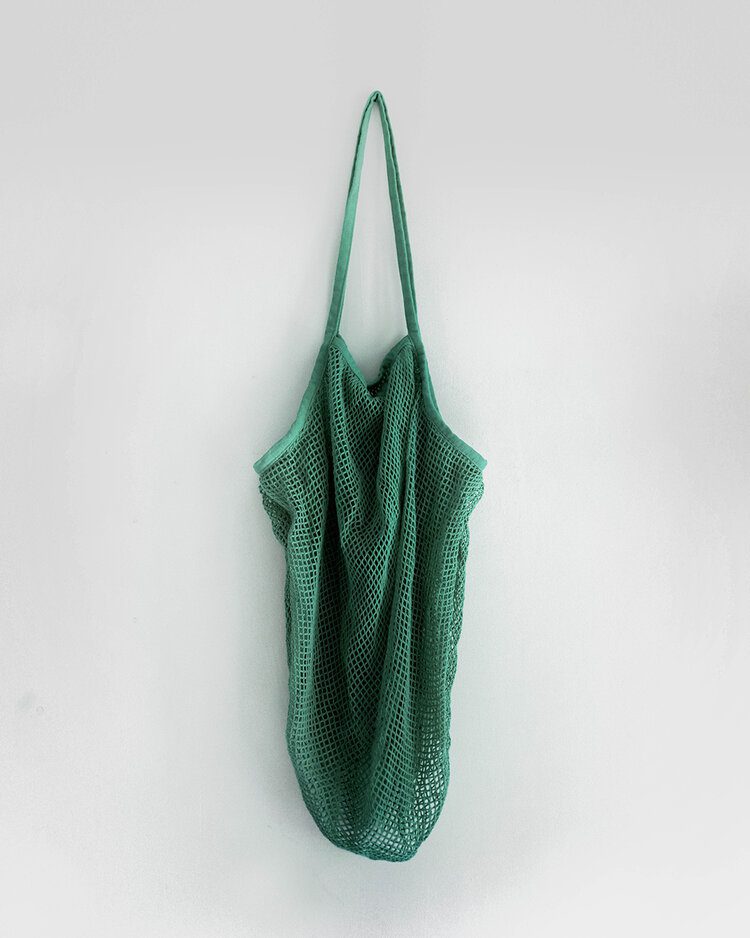
    Shopping bags

    Plastic shopping bags have a lifetime of mere minutes to hours and yet they can take up to 1,000 years to decompose! We have long outgrown the need for plastic shopping bags with reusable alternatives for every thing we have ever used them for. Years ago I used to travel with plastic bags for the following uses:

    Use: Packing clothes in to keep them organised.

    Replacement: Reusable packing cubes.

    Use: Storing my shoes to protect anything in my suitcase from getting marked or dirty.

    Replacement: Reusable waterproof shoe bags.

    Use: Shopping, I would get new plastic bags every time I went shopping for souvenirs etc.

    Replacement: Reusable shopping bags.

    There really isn’t a need for plastic shopping bags anymore. Just keep a couple of reusable bags on you and you’ll never be caught out. You can buy foldable ones from anywhere online to your local supermarket, and virtually every shop selling food or clothes will have a reusable bag you can purchase should you ever be caught out.

    If you have self catered accommodations when you travel and require a supermarket shop, try to buy products that either have zero packaging or recycled packaging. I realise this depends on the place you shop but it’s good to keep it in mind.

    Clothing that is made from recycled bottles and organic cotton

    Many leading brands such as ASOS and H&M have started to get onboard with making garments from recycled bottles and organic cotton. 

    Clothes made from recycled bottles repurpose something single-use into something that can last you for years to come and make you feel good about it every time you wear it. Although it doesn’t sound comfortable you would never be able to tell that it’s made from plastic. The most common garments you will find made from plastic bottles is swimwear, so next time you need some new swimmers whether it’s for doing laps or posing for the ‘gram, consider something that not only looks great on you, but is also doing great things for the environment.

    For women I recommend looking at ASOS because they offer a full range of responsibly recycled swimsuits and bikinis for maternity, tall, petite and regular. 

    For men I recommend looking at Dock & Bay. Their shorts are made from 100% recycled plastic bottles with 6 plastic bottles in every pair! I bought Michael a pair for his birthday last year (before I started working with them) and he loves them because they’re responsible, stylish and quick dry!

    Second hand clothing

    Consider buying your clothes from a second hand store either thrifted or vintage. I’ll be honest, I used to be so grossed out by this and it has taken me up until this year to actually start doing it and let me tell you, few things overjoy me as much as finding a bargain!

    . 

    There you have it, 25 sustainable swaps that we travellers can make to reduce our wasteful impact on the environment. Of course, these don’t just apply to travellers, please share this blog post with everyone you know who has a passion for saving the world and anyone who needs to make a start. 

    For more ideas on living sustainably to help protect our planet I strongly suggest purchasing “How to save the world for free” by Natalie Fee. This witty book offers advice on how to reduce your wasteful impact on our planet from food to sex (you bet sex was the first section I read!). There’s even a section on travel.


    Aloha, Gabriella

    Pin this post


  • How travel has changed me

    How travel has changed me

    For those of you who don’t know, I’m Gabriella Wisdom, creator of this here; Postcards from Hawaii, a travel blog for the organised and environmentally conscious traveller.

    Today, 22nd February 2019, I am celebrating the first anniversary of Postcards from Hawaii! To commemorate this I have decided to create a blog post that shares all the ways that travel has change me.

    Despite travelling my entire life – I’m not exaggerating here, I literally mean my entire life, I’ve been travelling since I was still cooking in my mummy’s tummy – it still changes me for the better with every trip I go on. Travelling around the world, has made me a better person inside and out.

    Health

    During 2014-15 I was living and working in London. I was the Meetings and Events Coordinator at a quirky 4 star hotel in west London. You’ve probably heard bloggers from all around the world say how they were working in the corporate world before embarking on their self-employed adventure, and I think there’s really something to be said about that. It was no secret that I wasn’t enjoying all aspects of my job. I loved the planning and organising side of things but I was terrible with all things sales and figures related. I really wanted to be good at my job, I would spend most evenings working in the office two hours longer than I required just to get a handle on things but every morning and night, as I rode the Central line from one side of London to the other (oh yes, the Central line!) I dreamed of getting out and seeing the world.

    As a result of over exerting myself, sucking at my job, long commutes and little time or desire to cook when I eventually got home I ended up eating my sorrows. In the 12 months I was living in London I gained 19lbs! I spent many weekends sitting on the floor of my wardrobe crying because nothing fit me.

    After leaving London and moving back to Norfolk, Michael and I decided to go on a round the world trip* that we mapped out ourselves to cover seven countries over 16 weeks departing May 2016. It was upon booking this trip late 2015 that I decided I needed to get into shape. I started going to the gym regularly for the first in my life and I hired a personal trainer which combined with a healthy diet that removed the endless takeaways, frozen pizzas, chips, McDonalds and whatever else that should be eaten in moderation but wasn’t from my daily consumption. Within 6 months I Iost those 19lbs, became the fittest I had been up to that point, gained confidence over my body and felt amazing!

    View this post on Instagram

    A post shared by Postcards from Hawaii (@gabriellawisdom)

    Throw back to when I lost 19lb before my round the world trip.

    View this post on Instagram

    A post shared by Postcards from Hawaii (@gabriellawisdom)

    Of course my weight bounces around a few pounds now and then because it’s hard to keep a steady exercise routine whilst on the go, but a life of travel has continued to inspire me to stay fit and healthy. Whilst I’m away on a trip I make good use of hotel gyms and exercises routines that I can do in my room and I am careful not to overeat, and when I’m at home I have a pretty packed gym schedule. In the last three years I have been inspired enough to maintain my weight loss whilst enjoying the food I want to in moderation. 

    Travel and wanting to be able to partake on active excursions is what gave me the push to look after my body and that is a pretty big deal.

    *If you haven’t already, check out Round the world trip activities itinerary Part 1 and Round the world trip activities itinerary Part 2 to see what we got up to on our RTW.

    Environmentally conscious

    Travel has completely opened my eyes to how much waste there is in the world and the effects that my contributions were having. Seeing real life mounds of discarded single use plastics, videos of animals’ tummies full of plastic and rubbish, animals being harassed for tourists’ amusement and beaches scattered with rubbish – it’s hard to ignore what irresponsible behaviour can lead to. It’s important that we all do our part to stop being so wasteful, to protect our planet from the damage we’ve caused so that future generations of animals and humans don’t suffer by what we’ve done. 

    You can read some of the ways that you too can help to prevent more waste and to reduce your single use plastics in my previous blog post 7 items to buy to become a more sustainable traveller. I am currently working on a part 2 so keep an eye out for that.

    New and improved

    Travel has made me want to be a better person. I’ve seen a lot of poverty on my travels which is very humbling and it’s hard not to take a good look at yourself and try to find ways to improve yourself and the impact you have on the world. 

    This goes hand-in-hand with being environmentally conscious. Over the year that I’ve been blogging my efforts have been: 


    • Donating between 6-12 tins of food in the food shelter donation basket in our local supermarket per month.


    • Donated a sum of money to Epilepsy Research UK (an organisation which is close to my family’s heart).


    • Bought a 4ocean bracelet after researching organisations that help to clean up and protect our oceans – who knew that one purchase would lead to one of my biggest opportunities to help do just that by being invited to become a partner.


    • Donated blood, signed up to be on the bone marrow donor list and I’ve chosen to have my organs donated should the worst happen to me.


    • Donated to the Leonardo DiCaprio Foundation to help put a stop to the mass deforestation to farm palm oil.


    • Donated money Could You Cup to provide menstrual cups to disadvantaged girls to keep them in school.


    • If there is an opportunity to add money to a purchase that goes towards a charity or buying a bag where the proceeds go to charity, I will do it.


    • When I’m buying something from Amazon I only shop on Amazon.smile now so that proceeds of my purchases go to one of their select charities.


    • Spare change goes into charity donation boxes.


    Every little thing helps to make a big difference. It’s a satisfying and rewarding feeling to know your money is doing something good. 

    Of course the other thing I’ve done to help people is blogging itself, I aim to make every blog post helpful for someone’s travels. When I get feedback saying how I’ve helped or even inspired someone, well that’s just one of the greatest feelings!

    Food

    Despite being half Mauritian and basically growing up in a curry house, I am a little bit of a fuss-pot and I cannot handle spice, like not one bit. The other day when I was in Oahu I was starving and the hot wings I ordered were so hot even Michael rejected them. I ploughed through though, tears streaming down my face, mouth on fire… Boy did I pay for it the next day!

    I digress, travelling the world has opened up my tastebuds to a multitude of sensations. I have tried so many things I never imagined I would, dishes I didn’t know existed. 

    I strongly recommend seeking food outside of your hotel. Granted not all street food is safe, so keep your wits about you, but you can grab a great meal by straying from the beaten path. If eating street food is asking too much, try going to local or independently owned cafés and restaurants. That’s something which is becoming increasingly easier thanks to Instagram, give it a go.

    Priorities

    To say my priorities had changed would be an understatement! For years I thought I would be married at 26 with a house and looking to get pregnant with the first of three children. Could you imagine?! 

    I just turned 27 three days ago, I’m not engaged let alone married, I haven’t decided where I want to settle let alone buy a property there and I swear if I get pregnant before my 30s I screwed up real bad with my contraception.

    It’s not just the long term plans that changed though. Two years ago we were seriously thinking about getting engaged, one year ago we were looking into buying a house to rent it out, and luckily my cousin made two children for me play with so broody was never an option. 

    The only thing that stayed the same year in year out, was the desire to travel and see the world. 

    Ambition

    Travel has undoubtedly given me ambition, a driving force to succeed. Before blogging I had absolutely no idea what I wanted to do for work. I had previously worked as a waitress for far longer than I should have, an au pair, one of those girls that hand out leaflets in a shopping mall, a meetings and events coordinator (as mentioned above) and a sales assistant. I plodded through life working just so I could travel. I would put huge chunks of my pay checks away into an account dedicated purely to travel. 

    You see, Michael and I aren’t party people (that sentence right there supports that!) we don’t spend any evenings out drinking, we have very few friends in Norfolk and because we are both self employed we work more than anything else. What I’m trying to say is we don’t really have much of a life outside of travel and work. Is this a complaint though? No. Sure it would be nice if we could work less and earn more – preach, right? – but we work our butts off because we enjoy what we do. For the first time, I really enjoy what I do. 

    Of course it’s incredibly hard work and entirely time consuming. I am never not working; I am always writing, pitching, researching or shooting. It’s easy for people to think my trips are holidays, I hear it all the time, but right now I’m spending a beautifully sunny day in Maui indoors writing because I have a blog post to put out for you all, I spent all morning shooting for brands and I struggled in the wind to tie up three balloons with an amused audience to create content that will hopefully inspire you to travel or at the very least make you smile.

    At the end of the day, I finally harnessed my passion to create a career for myself. Travel blogging is finally something that I wake up excited to continue, stay up working on and put in a lot of overtime for because I enjoy it and it makes me happy. After the jobs I’ve done, I can say it is very important to be happy. I won’t lie, a hefty savings account and Michael’s job are the reason why I’ve been able to go on this journey, it is impossible to go into travel blogging without a decent amount of finances to get you off the ground, the phrase “it takes money to make money” doesn’t go amiss here, travel blogging is a huge investment both financially and into yourself. I can honesty say though, I there is nothing else I would rather be doing at the moment.

    .

    On that note I will wrap this up by saying mahalo for being on this journey with me. I am so grateful for each and every one of you from my dedicated returning readers to my new ones! 

    Aloha, Gabriella