Author: Gabriella Wisdom

  • 13 things you don’t want to miss along the Jurassic Coast

    13 things you don’t want to miss along the Jurassic Coast

    The Jurassic Coast is a 95 mile stretch of UNESCO coastline that holds 185 million years of history. Starting in Exmouth, Devon and ending at Old Harry Rocks in Dorset, the geology of this World Heritage Site covers three fascinating periods of history:


    • Triassic


    • Jurassic


    • Cretaceous 


    These three time periods make up the Mesozoic Era which was a time spanning approximately 250 to 65 million years ago. Here’s a brief overview of what went on in these three periods:

    Triassic 

    252 – 201 million years ago

    The rise of reptiles and the first dinosaurs.

    The landscape of this area was sweltering hot deserts. The Earth’s crust was sinking which caused layers of sediment to layer up which formed rocks.

    Jurassic 

    201 – 145 million years ago

    Birds and mammals graced the planet.

    Rising sea levels transformed the desert into a tropical sea. Towards the end of the Jurassic period however the sea levels dropped and a forest grew. 

    Cretaceous 

    145 – 66 million years ago

    Dinosaurs became extinct.

    At the beginning of the Cretaceous period, the forest that had grown towards the end of the Jurassic period died and the landscape changed to rivers, lagoons and swampland. Towards the end of the Cretaceous period, the sea levels rose again and the older layers of rock from previous time periods were covered in sandstone and chalk.

    .

    On an adventure exploring the Earth’s history along the Jurassic Coast, you can expect to learn about creatures you never knew existed, literally walk in the footsteps of dinosaurs, hunt for fossils, enjoy fish and chips in beautiful coastal towns, indulge in locally made ice cream and marvel at the rugged coastline.

    To save time and fussing around with cash or prevent needing to run back to the car for every car park on the Jurassic Coast, download the following parking apps so that you can pay for and top up your parking from anywhere on your phone.


    • PayByPhone


    • RingGo


    • JustPark


    • Flowbird


    • Parking Ops


    Unfortunately I can’t remember which one is used where but if you have them all ready to go you won’t waste any time. Some car parks are free and there are a few that only take cash, so I recommend keeping some spare change on you before you arrive.

    Let me take you from west to east for 13 things you don’t want to miss along the Jurassic Coast:

    Exmouth

    Park your car at Foxholes car park right next to the beach and get a Kelly’s Cornish ice cream from the little hut on the seafront before taking a stroll down the promenade. It’s right at the end where you’ll find very short cliffs of bright red rock topped with luscious green foliage. 

    250 millions years ago (that’s even older than the dinosaurs) this landscape was a scorching hot desert. It was the centre of the super continent Pangea and was very close to the equator. During this time, very little plants could survive the heat and flash flooding.

    The layer of red rock you can see today at Exmouth beach is 185 million year old sand dunes from the aforementioned time where this part of the world was desert.

    Sidmouth

    Sidmouth is a seaside town that takes about half an hour to drive to from Exmouth. The town’s backdrop, Sid Valley, is made of red cliffs from the Triassic period. 

    Like with many coastal towns and cities along the south west coast, the popularity of seaside resorts between the 18th and 19th centuries made Sidmouth a desired holiday spot. Its pretty town centre echos this period in time but now offers a variety of both high street stores and independent shops and eateries which were a welcomed escape for us when the heavens opened the day we visited.

    On a sunny day you can sit out on the beach, walk the Blue Plaque trail or hike parts of the South West Coastal Path. 

    I particularly recommend popping into the National Trust gift shop in town as they sell all sorts of wonderful guides on the area plus eco-friendly items that can help you to reduce your daily single-use plastic waste. I picked up a National Trust Scone recipe book which I’m particularly excited about as it features 50 regional scone recipes from all around the United Kingdom.

    Make time to visit Sidmouth Museum as it is home to rare fossils from the Triassic period.

    Charmouth 

    A trip to the Jurassic Coast is incomplete without making the effort to go hunt for fossils yourself and Charmouth beach is the perfect place to do it!

    Though you could hunt for fossils anywhere along the Jurassic Coast, Charmouth’s shingle beach is particularly popular for fossil hunting because it is a large area full of opportunity as fossils are plentiful within the shingle, particularly after high tide.

    Before you begin your hunt, make a stop at Charmouth Heritage Coast Centre where you can see a display of the types of fossils you can find with a careful eye along the beach. 

    Charmouth Heritage Coast Centre is open every day from 11am – 3pm and entrance is free.

    Tips for fossil hunting


    • Always check the tide times before you go


    • Wear waterproof and sturdy shoes


    • It’s quieter in winter, so you’ll have a better chance of finding something


    • The best time to go is when the tide is going out as high tide will have resurfaced a new layer of rocks


    • Your eyes are your best tool


    • Spend time turning over rocks, you never know what’s underneath them


    • Be patient, finding fossils really relies on luck


    NEVER dig into the cliffs, these are structurally unsafe and you could cause cliff fall. Coastal erosion is sad enough, do not contribute to it.

    The most common and easiest to find fossils are:

    Belemnites 

    They existed during the Jurassic period and went extinct during the Cretaceous period. They had a squid-like body but a hard internal skeleton. Fossilised Belemnites look like stone bullets.

    Ammonite 

    They were squid like creatures that lived within the chamber of a tightly spiralled shell. The shell is what you will be able to find fossilised on the beach with a careful eye.

    Seashells

    Fossilised seashells look just like regular seashells but attached to rock.

    If fossils aren’t your thing, you can also find heaps of sea glass in all sorts of colours on Charmouth beach.

    West Bay

    West Bay’s crumbling golden cliffs have become a famous landmark in popular culture thanks to the popular ITV crime drama, Broadchurch. The erosion of these sand cliffs reveal indications of fallen sea levels from 175 million years ago. 

    The best time to see them is on a clear, sunny day when the light hits them and highlights their golden tone.

    When you’ve had your time on the beach, venture behind the car park to The Customs House Emporium for a chance to find some relics of a different kind. Riffle through vintage, antique and retro items to find a favourite record, a pre-loved jacket or a second hand table.

    Chesil Beach

    Chesil beach is an 18 mile long shingle ridge that stretches from West Bay to the Isle of Portland and is one of Dorset’s most iconic landmarks.

    Unlike the soft sandy beaches of south west England, Chesil Beach is formed entirely from shingle. As the ridge is entirely exposed to the elements it doesn’t make for the perfect spot to lounge in the sun or picnic, but is a place where you can walk off your fish and chips. The sound of the waves pummelling and dragging the stones should be a soundscape on the Calm app.

    Wear practical footwear as the shingle does not make for a sturdy surface.

    Need a Friday night movie recommendation? Ian McEwan’s novel-turned-film, On Chesil Beach (2018) is another beautiful period film starring the amazing Saoirse Ronan that features Chesil Beach.

    Isle of Portland

    At the far end of Chesil beach is the Isle of Portland, which is best known for its quarry which has provided the stone that built Buckingham Palace.

    The best place to see all of Chesil beach is from the top of the hill where the Weymouth Olympic Rings are (Weymouth hosted the sailing competitions during the 2012 Olympic Games). You can drive up there and park just opposite them. From the rings you will get an amazing view down at Chesil Beach. 

    Another neat thing to see on the Isle of Portland is Pulpit Rock. Located at the far end of the Isle of Portland, Pulpit rock resembles an open bible leaning upon a pulpit. 

    Weymouth

    Weymouth is your classically quaint English seaside town that has been a popular destination for holidaymakers for over 200 years. 

    This long curved beach of soft golden sands is lined with a Georgian Esplanade where you can buy ice cream, sandwiches, buckets, spades and more! The shallow waters are sheltered so they’re perfect for dipping your feet and playing with children and dogs.

    Stroll over to the marina to an array of little sail boats bobbing in sparkling waters against a backdrop of colourful rainbow houses. This part of Weymouth feels like the Mediterranean. 

    PFH Top Tip: Arrive early to park in Pavilion Forecourt car park, it’s small so it fills quickly but it offers the ideal location between the beach and the marina.

    Durdle Door

    Durdle Door is one of the most iconic sights of the Jurassic Coast and was my favourite spot to visit. Tucked away, far out of sight from the car park is the beautifully natural, limestone arch of Durdle Door, jutting out from the beach into the surprisingly crystal clear waters of the English Channel.

    Durdle Door was formed by a rippling effect through the Earth’s crust that spread north when the African and European tectonic plates collided with each other. To give you an idea of how immense that pressure was, that same collision created the mountainous region we know today as the Alps. It was this rippling effect that pushed and shoved the Earth’s crust to create the rugged coastline of south Dorset and Purbeck. Durdle Door was in the centre of one of the folds in the rock and as the sea eroded the softer rock, it revealed an arch which we know as Durdle Door.

    PFH Top Tip: Beat the crowds and park in the field car park on the top road as it is open in the early hours of the morning. The official Durdle Door car park is closer but it doesn’t open until 9.30am and gets busy incredibly fast. Arrive for sunrise, park in the field, walk the extra 10 minutes and you will have the place to yourself. Both car parks have pay and display machines.

    The walk from even the first car park is a steep path from the clifftop down to the sea so I strongly advise you wear trainers/sneakers and make sure you have plenty of water with you for the walk back up. Though it doesn’t take long if you’re of average health, it is steep and can be a struggle on a warm or hot day. 

    With my shoe warning in mind, I also want to add that although it looks like sand from above, the beach is made from tiny shingle that doesn’t look threatening until it fills the space between your sandal and the soles of your feet, at which point it’s like walking on needles. I strongly advise you to wear trainers/sneakers, trust me, your feet will thank me.

    The reason I recommend you arrive early is because there are plenty of photo opportunities on your journey down to the beach that get very crowded once the clifftop car park opens. Once you have made the first descent down the path from the cliff edge, you will come to a plateau which is the perfect opportunity to capture Durdle Door from above. From here you will also be able to see Man O’ War beach located to the left of Durdle Door, it’s another beautiful spot where the water looks all shades of turquoise before turning to a deep blue as you look further out to sea.

    Take the steps down to the beach where you will be able to capture Durdle Door from the water’s edge. Then lay out a blanket or a towel and enjoy with view with a picnic as you take in the beauty of this natural rock formation, to the sound of gentle waves lapping upon the shore.

    Lulworth Cove

    Located just a 10 minute drive from Durdle Door is the equally photogenic coastal gem, Lulworth Cove. Unlike Durdle Door where the only thing there is the beach unless you make the trek back up to the clifftop for a single mobile food truck and toilet block, Lulworth Cove has no end of ice cream shops and souvenirs, most importantly locally made, edible souvenirs such as cider and fudge. 

    Park up at the top of the village, potter around the shops and visitor centre before heading down to the beach. Though there isn’t much beach around at high tide it is the best time to visit to be able to see all the wonderful blues and green of the water, especially when the sun hits it. For the best view walk up the narrow path to the top of the cliff (it’s not very far) to look down upon the beautiful cove encompassed by white and green cliffs. Take a moment to marvel at the sea sparkles as the sunlight bounces off the calm turquoise water.

    I highly recommend trying as many flavours of Purbeck ice cream as you can whilst in Dorset. It’s a Dorset ice cream company that does the best clotted cream and berries ice cream I’ve ever had… and I’ve had a lot. You’ll find Purbeck ice cream being sold here.

    Kimmeridge

    Along with enjoying the breathtaking scenery of the Jurassic Coast firsthand, the main excitement of visiting this 185+ million year old coastline is to learn about who roamed the land and ruled the ocean millions of years before we ever existed.

    Located in Kimmeridge is the The Etches Collection Museum of Jurassic Marine Life, a museum dedicated entirely to Dr Steve Etches MBE’s collection of fossilised marine life from the Kimmeridgian Seas. The exhibitions include footage of how he excavates his fossils, his notes on everything he finds as well as information on what you are looking at. 

    Step back in time, 157 million years ago to be precise, to a prehistoric seascape home to terrifying predators and sea monsters you would never want to meet whilst taking a dip in the ocean. Come face to face with these amazing pieces of history from tiny ammonites to enormous Ichthyosaurus.

    Whether you are an experienced palaeontologist or novice fossil hunter, you are sure to be fascinated by Etches’ collection of fossils and the world that came before us millions of years ago.

    Opening hours 

    Open daily from 10am – 5pm.

    Closed on 24th, 25th & 26th December.

    Ticket cost

    Adults £8

    Children (5-16 years) £4

    Children under 5 years old are free

    Family ticket (2 adults + 2 children) £20.00

    Family ticket (1 Adult + 3 children)  £ 16.00

    Tickets are an annual pass.

    Accessibility 


    • The building has step free access


    • A lift is available to travel between floors


    • There’s an accessible toilet on both floors


    COVID-19 restrictions


    • Please use the provided hand sanitiser before and after entering


    • Observe the one way system


    • Wear a face mask at all times indoors


    • Please stay 1-2 metres away from others


    Spyway dinosaur footprints

    Though learning about fossils is fascinating and gazing at Durdle Door is breathtaking, making a trip out to the Spyway dinosaur footprints is without the doubt the coolest thing you can do along the Jurassic Coast. In fact I would go as far as to say it is in my top five things to do in the UK along with feeding Reindeer in the Scottish Highlands and frolicking in lavender fields.

    Park up at the Spyway National Trust car park and take the footpath between the fields making a right onto Priest’s Way. Walk for about 12mins until you see a wooden gate on the right hand side that has a little sign that says “Dinosaur Footprints”. Enter the gate and keep walking until you see a patch of rock at a lower level to the surrounding field. It’s within this patch of rock that you will find a series of huge round indentations, these my friend, are brachiosaurs (of the sauropods) footprints made 140 million years before you took your first steps. 

    This magical piece of history is just out in the middle of a field, next to a quarry and free for anyone to visit. What’s cooler than literally walking in the footsteps of some of the largest animals that ever lived?

    It’s presumed that the quarry was once a watering hole, and that the dinosaurs’ footprints were imprinted into the soft mud which then became preserved by the layers of rock that formed over them. 

    Swanage

    Swanage is the most easterly seaside town along the Jurassic Coast and has been a popular seaside resort since the Victorian era. Explore its cluster of independent shops and grab some Fish and Chips from Harry Ramsden’s on the seafront to enjoy on a rented deckchair on the beach (£2) followed by an ice cream.

    Walk off your meal along the soft sand then spend your pennies at the arcades. Click here for more ideas on how to spend a day at the seaside.

    Old Harry Rocks

    The last stop along the Jurassic Coast when travelling from west to east is Old Harry Rocks, a series of startling white chalk formations that are ever so slowly tumbling into the sea, due to natural erosion. 

    During the Cretaceous period, 100 million years ago, a substantial amount of plankton skeletons drifted to the bottom of the ocean in this very spot. Over the next 35 million years this formed a thick later of white limestone known as chalk, and that’s how the cliffs here at Old Harry Rocks were made.

    The name Old Harry refers to the lonely stack of chalk furthest out to sea. He used to have a wife (another stack next to it) but in 1896 coastal erosion got the better of her and she fell into the sea.

    Legend has it that Old Harry Rocks was named after Harry Paye, an infamous pirate known for running amuck along this part of the coast.

    The closest car park is a National Trust one at South Beach. It will take about half an hour to walk from the car park to Old Harry Rocks along the South West Coast Path.

    Gabriella

    Pin this post


  • Eco-friendly Airbnb packing checklist

    Eco-friendly Airbnb packing checklist

    You may or may not know that I was supposed to move to Canada on 13th April 2020. I was just a few weeks away from my moving date when the news came that the worldwide spread of the coronavirus meant that the border needed to close. With most of my belongings packed up ready to be sent overseas and nowhere to live other than temporary accommodation we decided that as soon as the restrictions lifted we would hop around Airbnbs with the few belongings we had access to, waiting for each monthly announcement in the hopes that the border would open for us again. As the announcements are every month and there’s no indication as to which way it could go, we have entered an indefinite state of uncertainty as to where we can live for longer than 30 days. So with that on our minds, we chose to live week-to-week, safely exploring parts of England I always wanted to but hadn’t previously made the time to do so before moving.

    To prevent the need to eat out, not just to save money but because we didn’t want to be around too many people during a pandemic, we wanted to book accommodation that had a kitchen and that could feel like a home, particularly whilst we didn’t have one. This lead to us staying in various Airbnbs across England.

    Doing this meant I worked out what I needed to travel with to make life easier living with the uncertainty of what the next Airbnb would provide by having it already to hand, but also having environmentally conscious products so that even if the Airbnb provided it, I had a plastic-free/responsible/sustainable alternative.

    So now I’m sharing my checklist with you for what I recommend packing for a comfortable and eco-friendly stay in an Airbnb. As much as this blog post is about making sure you are prepared in case your host hasn’t provided some basics such as salt and pepper, soap or towels, it’s also about being equipped with environmentally conscious alternatives so that you aren’t using single-use plastics or harmful chemicals.

    If you’re an Airbnb host then I’m so happy to have you here! I hope that you pick up some tips on what sustainable swaps you can make to provide a more environmentally conscious experience for your guests.

    Kitchen 

    Dish soap and brush/sponge/cloth

    Pack a bar of dish soap along with your choice of eco brush, sponge or cloth (these could be made from coconut, cotton or bamboo) because if your host has provided washing up liquid and a sponge the chances are it won’t be eco friendly.

    The benefits to using solid dish washing soap:


    • Vegan


    • Organic


    • Free from palm oil


    • It will also last far longer than liquid soap, so you get more washes out of it


    • No plastic packaging and any packaging is recyclable


    Tea towel

    Packing a tea towel is less about there not being one at the Airbnb you’re staying in but more about the quality of the one they’ve provided for you to use. Out of all the Airbnbs I’ve stayed in only two places had decent tea towels, the rest only provided one and they were those awful thin ones that don’t absorb any water and leave fluff all over the thing you’re trying to dry. 

    Your alternative is to let things drip dry but I’ve noted that not every Airbnb provides a drying rack, so you have to do the drying, and now we’re back to square one in needing a good tea towel.

    Try to avoid the dishwasher, especially if there’s only a a few things going in there. It’s a waste of energy and water.

    Seasoning

    Personally, I think if a host provided at least salt and pepper to season your food then they’re a decent human being. It’s inexpensive but goes a long way for making guests feel at home when they can make food that doesn’t taste like eating cardboard. Unfortunately not every host provides this so pack some with you, along with your favourite seasonings to bring life to what you cook.

    To save on packing, bring a combined seasoning like this Hawaiian seasoning that has garlic, salt, pepper and ginger.

    Remember to reuse your containers! You can even use it to make your own seasoning mix!

    Cooking oil

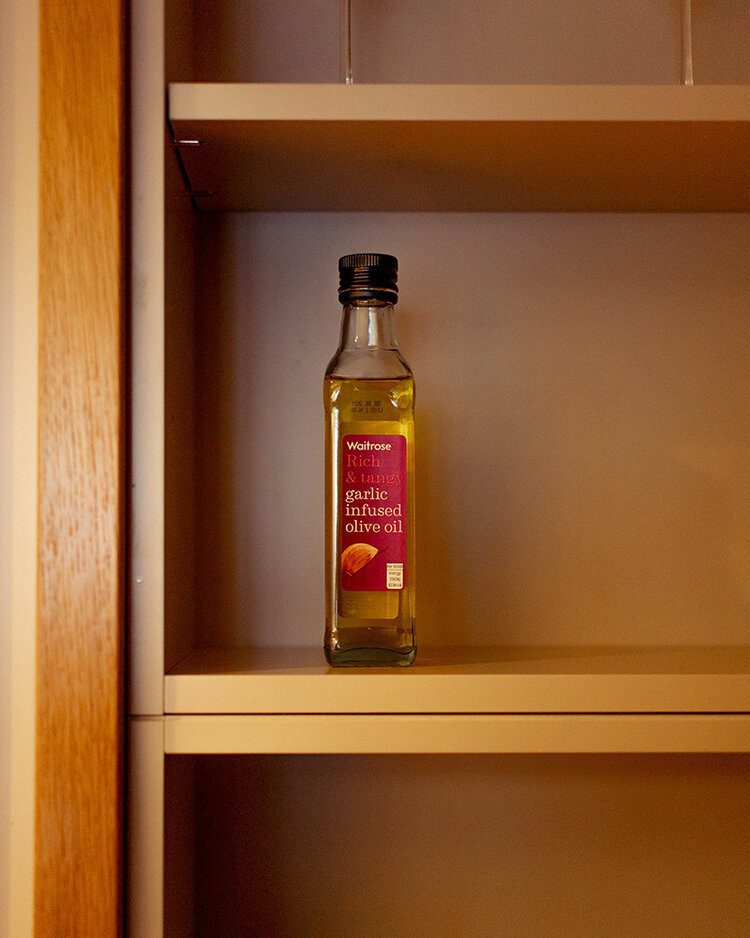
    Similar to seasoning, a considerate Airbnb host will provide oil for cooking but it isn’t a given. To bring more flavour to your cooking, bring an oil that has been infused with an additional herb such as garlic, basil or chilli.

    If you’re buying bottled oil, choose glass over plastic and reuse the bottle. I would normally have my reusable oil pourer bottle which I pop a few garlic gloves or rosemary, sage and thyme in to infuse it myself, but it was in storage (ready for our move to Canada) at the time of publishing.

    If you want to save on the amount you’re packing/buying then you can always use butter/spread to cook with.


    Tea and coffee

    Not every Airbnb provides tea and coffee but if they do I am absolutely certain they will be provided in single use sachets or pods which contributes to more plastic waste. 

    Bring loose tea from home so that you can start the day with your favourite cuppa and avoid plastic packaging and plastic teabags.

    Did you know that half of the leading UK teabag brands contain polypropylene, a plastic that won’t biodegrade? With over 10 million mugs of tea being made a day in the UK, that’s a catastrophic amount of plastic tea bags that will sit on our planet for thousands of years to come.

    Unfortunately not all bags that coffee grounds come in can be recycled so if you are purchasing these then shop from a local or independent coffee shop who has sourced them sustainably so you are at least protecting the environment in another way and supporting a local business.

    If you’re a coffee snob, travel with a WACACO Nanopress portable espresso maker so that you will always get a high quality shot of espresso and can avoid the temptation of coffee machines that use non-biodegradable pods.


    Candle and matches

    Lighting a candle will help to get rid of smells when you’re cooking. You might think this is a little extra and a candle with the means to light it wouldn’t usually make your packing list, but if your Airbnb is a studio then it will help to prevent your clothes smelling like a fry up.

    I love lavender candles but if you’re cooking something particularly potent such as bacon/vegan bacon or onions then choose a citrus scented candle to neutralise the smell of your cooking.

    Yes, matches are made with our precious trees, but they are a more sustainable alternative to a lighter as those are made from plastic and metal and will never biodegrade. Second to this, because lighters are made from mixed materials, they aren’t recyclable. 

    View this post on Instagram

    A post shared by 4ocean (@4ocean)

    A candle also fits into the comfort category below as it is a moment of self care that we all deserve when taking a break from our regular schedule.

    Subscribe to Postcards from Hawaii at the bottom of this page to learn how to make your own candles.

    Swiss army knife

    A Swiss army knife is always a wise thing to travel with (in checked luggage) for obvious reasons from needing to cut something to opening a wine bottle. 

    My particular reason for recommending you bring one is that not all Airbnb hosts provide a sharp knife and aside from burning your food, there’s nothing more frustrating when cooking than not being able to successfully chop it up. A Swiss army knife provides you with a knife without needing to carry around a big kitchen knife.


    Beeswax wraps

    Cooked extra and need to put your leftovers somewhere and the Airbnb you’re in doesn’t have any food containers? Beeswax wraps mean you can easily wrap up food or cover a bowl for the next day. They also come in handy for a sustainable packed lunch if you plan on making sandwiches for on-the-go.


    Food storage containers

    Whether it’s a fancy glass one with a bamboo lid, a repurposed butter tub or a plastic tub from an old take-out order, packing a couple of reusable food storage containers means you can store your leftovers in the fridge or freezer (depending on how long you’re staying). 

    You can even use these to pack up a salad for a cheap and sustainable lunch on-the-go whilst you explore wherever it is you’re staying.


    Bathroom 

    Toilet roll

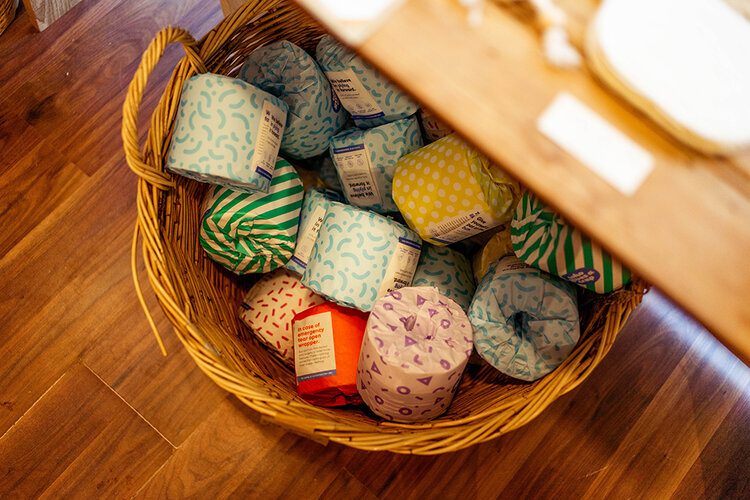
    I really think not supplying at least two rolls of toilet roll is a cruel joke but some Airbnbs, believe or not, don’t provide any and rarely is it enough to last you and your fellow guests more than a few days. Be prepared with your own toilet roll, and better yet, buy it from an eco-conscious brand like Who Gives A Crap who make 100% recycled toilet paper wrapped in recyclable (plastic-free whoop whoop) packaging!

    Soap

    Pack a bar of soap to wash your body in the shower and your hands at the sink to prevent needing to use what will probably be a plastic bottle of liquid soap. 

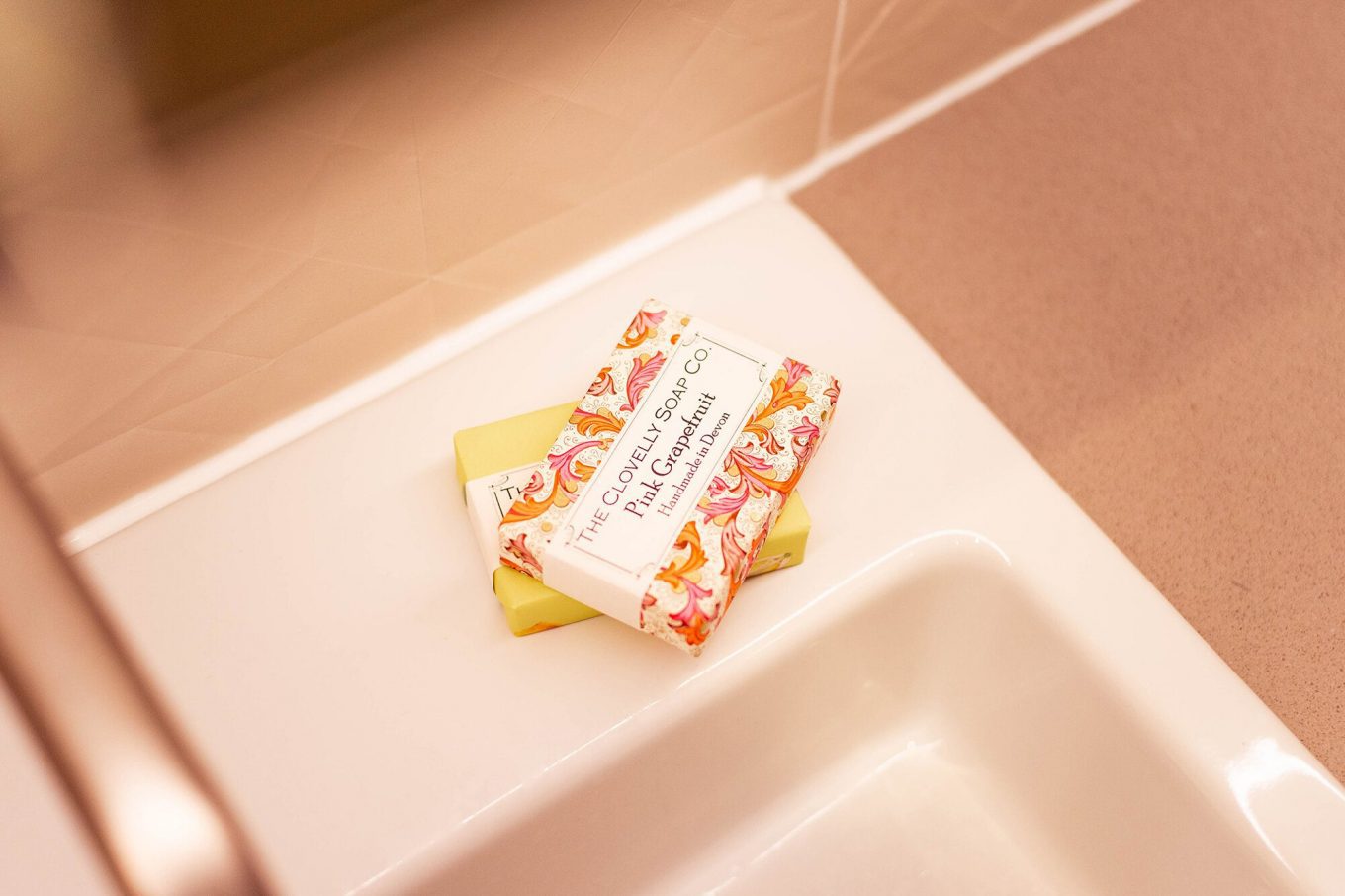
    Handmade soaps from independent retailers are always a good purchase on your travels, they’re a souvenir that won’t gather dust in a draw somewhere plus they help to protect the planet from further plastic waste. I picked these bars up from Clovelly Soap.

    Shampoo and conditioner

    Sometimes a bottle of shampoo and conditioner is provided but it will be a plastic one or worse, mini plastic bottles, so avoid using these by bringing your own solid hair products.

    As a curly haired gal using the Curly Girl Method to revive my hair I appreciate that most solid shampoos contain parabens and sulphates that we don’t want drying out our curly locks, so bring your preferred hair products to prevent an attack on your scalp. 

    Towel

    Before packing a towel, double check if your Airbnb provides them. Most Airbnbs do and will list it under the essential amenities along with toilet roll and soap if they are providing them, but if they aren’t then you don’t want to be caught out.

    If you have one, pack a microfibre towel to save space.


    Hairdryer

    It’s rare that an Airbnb will have a hairdryer for you to use but if it does have one it will be listed on the Airbnb’s amenities. I can tell you with 99.9% certainty that even if they did provide one it won’t be accompanied by a diffuser for curly hair. So if you, like me, want to style your curls or maybe you want to dry your hair quickly in winter I suggest bringing your own hairdryer with attachments.

    This is a big difference between hotels and Airbnbs and something that unless your hair is textured, might not cross your mind.


    Laundry

    Laundry detergent 

    If you are staying in an Airbnb with a washing machine then SCORE! The chances of being provided with detergent is pretty darn slim though and only once has it been powder, the rest have been pods or tablets. Individually wrapped tablets are usually wrapped in plastic and pods though dissolvable contain harmful chemicals to wildlife, so though you don’t see the harm when you wash your clothes, the toxic water leaving your washing machine is going out to aquatic life. Never mind the fact that they all come in plastic bags. 

    Avoid tablets and pods by bringing eco-friendly laundry detergent strips.

    The benefits to using laundry detergent eco-strips:


    • Vegan


    • They are flat so they are perfect for packing


    • They are completely dissolvable and biodegradable


    • Phosphate-free


    • Paraben-free


    • No plastic packaging, the packaging is recyclable


    Washing line

    Maybe you’re lucky and the Airbnb you’re staying in has a clothes horse, but maybe you’re not and now you’re stuck dodging the clothes you’ve hung up everywhere you can because you want to avoid using the tumble dryer. Well, having a portable washing line means you can easily hang your clothes out to dry in the bathroom.

    A travel washing line is also useful for when there isn’t a washing machine and you want to give your undies a quick wash in the sink (pssst the eco-strips mentioned above are good for doing that. Tear them to use less on smaller washes) then hang them up to dry. 


    Comfort

    Google Chromecast

    Not all TVs are smart, which isn’t a bad thing, it means that people are using the old TVs until they don’t work anymore which is better than upgrading and wasting what you already have. It does mean however that you’re stuck with your bog standard channels and if it’s not a night where the The Great British Bake Off or The Bachelor (look at me making pop culture references without having watched them) isn’t on, then you’ll be forced to watch one of the 76 game shows that are always on air.

    Pop in your Google Chromecast/Fire Stick/Streaming thingy-ma-bob and you’ll be able to continue watching whatever you’ve been binging on Netflix, or whatever.

    If you don’t have one and won’t make use of it then obviously this isn’t important so just forget I ever said it okay? Cool.


    Slippers

    Despite being charged a cleaning fee, you can’t always guarantee that the floor has been cleaned, so bring a pair of slippers to protect your socks from getting grubby. Also if the floors are cold they will keep your feet warm and provide a sense of home comfort.

    To make things easier for you, copy and paste the checklist below so that you can drop it into your own packing list or use my interactive packing list here.

    Eco-friendly Airbnb packing checklist

    ☐ Dish soap
    ☐ Brush / sponge / cloth
    ☐ Tea towel
    ☐ Seasoning
    ☐ Cooking oil
    ☐ Tea and coffee
    ☐ Candle
    ☐ Matches
    ☐ Swiss army knife
    ☐ Beeswax wraps
    ☐ Food storage containers
    ☐ Toilet roll
    ☐ Soap
    ☐ Shampoo and conditioner
    ☐ Towel
    ☐ Hairdryer
    ☐ Laundry detergent
    ☐ Washing line
    ☐ Chromecast
    ☐ Slippers


    I do understand that buying eco-friendly products is more expensive than buying those that aren’t, so please don’t feel guilty if you don’t have the budget to afford some swaps. Instead, start by using up what you already have and find a way to repurpose it. For example, wash out a butter tub and use it for leftovers or wash the sandwich bags you already have to reuse if you aren’t able to purchase beeswax wraps. To quote Tesco, “every little helps”.

    Gabriella

    Pin this post


  • 6 best things to do when visiting Plymouth, Devon

    6 best things to do when visiting Plymouth, Devon

    Once an important commercial shipping port to the Americas, the final departure point for the Mayflower and former home to the Royal Navy, Plymouth is a city rich in maritime history. Britain’s ocean city is one that exudes pride for its participation in colonising what is now known as the United States of America but is also deeply scarred by bombing during World War II known as the Plymouth Blitz that annihilated the city. Whichever way you look at Plymouth it’s a beautiful and fascinating city that caters to everyone whether your desire is to sample gin from the oldest gin distillery in the country, indulge in just-caught-that-day seafood, shop in the largest shopping centre in the southwest of England or swim in an art deco seawater pool. Want to know more? Great, let me take you through my 6 favourite things to do in Plymouth.

    This guide shares things you can do in Plymouth but please know there is so much more to see and do beyond the city such as coastal walks, visiting beaches and taking day trips to Cornwall, so make sure you explore further when you visit.

    Remember to always wear your mask indoors and sanitise/wash your hands as often as possible.

    1. Barbican

    Barbican is a waterfront neighbourhood that covers both the west and north sides of Sutton Harbour, Plymouth’s original harbour where the Mayflower sailed from (see more below). Despite the city being hit hard by the Luftwaffe in WWII, 100 listed building still stand in the area today including the Old Custom House and Plymouth Gin distillery both built in the 1500s.

    Present day, Barbican’s tiny cobbled streets are lined with shops, galleries, restaurants and pubs. It’s also where you’ll find the Mayflower Museum and the Plymouth Gin Distillery.

    Whilst pottering around the streets make a plan to get brunch from Rockets and Rascals where you can choose from meat, vegan and veggie options.

    PFH Fun Fact: Barbican has the largest concentration of cobbled streets in Britain.

    2. Mayflower museum and memorial

    400 years ago, on the 16th September 1620, a ship called the Mayflower made its final departure from England to the New World – now known as the United States of America – carrying 100 or so people plus crew with big dreams of building a new colony in the Americas.

    Across two floors of the Mayflower museum, located opposite the commemorative Mayflower steps, a permanent exhibition tells the story of who decided that they had had enough of England, why and how they went about attaining the Mayflower to make a 66 day-long voyage in cramped, damp and filthy conditions to the Americas. It also documents the six week-long troubles the passengers and crew faced before even departing from Plymouth and why Plymouth became the unplanned final departure point for the Mayflower.

    There is some but little information on the impact the new settlers had on the Native inhabitants who had lived in the Americas for over 12,000 years so my advice is, visit the Mayflower Museum to learn of the hardship, determination and strength of the people who faced an arduous journey to make a new home for themselves, but please make sure that you continue your education further to understand the damage and heartbreak caused on the other side of their journey. Though many see and celebrate the successful voyage and settlement of the Founding Pilgrim Fathers and Plymouth Colony, it is important to recognise their ignorant behaviour towards the indigenous peoples whose livelihoods were plundered, pillaged and sold off from under them.

    Opening hours

    Monday to Saturday 9am – 5pm

    Sundays 10am – 4pm

    Closed on Sundays between November and March

    Closed 25th Dec – 1st Jan

    Ticket cost

    Adult £3

    Children (5-16) £1.50

    Family (2 adults and 2-3 children) £8

    Senior and student £2.50

    Accessibility 

    Each floor is accessible by lift.

    COVID-19 restrictions

    Please use the provided hand sanitiser before and after entering.

    Observe the one way system.

    Wear a mask at all times indoors.

    Please stay 1-2 metres away from others.

    3. Plymouth Gin Distillery

    Take a glimpse into the process of creating Plymouth Gin in the oldest working distillery in England where they’ve been using the original recipe since 1793. For just £11 per adult you will get to learn all about the fascinating history of Plymouth Gin which continues on to an immersive experience involving their botanicals during a tasting of three of their gins, ending with the opportunity to take home a miniature bottle of gin or enjoy a drink at their bar. Before leaving you’ll be given a 10% discount code for their gift shop.

    Tours last about 40mins, allow extra time if you chose to drink at their bar.

    There’s also an opportunity to upgrade to a gin connoisseur and master distiller tour too. 

    If you’re a gin drinker then I would put this to the top of your list in Plymouth because it’s the perfect opportunity to learn more about gin whilst tasting it, but also to learn about the city with an overview of the distillery’s strong ties to the navy.

    Opening hours

    Tuesday – Saturday 11am – 5.30pm

    Sundays 12pm – 5.30pm

    Closed on Mondays

    Tours are ran daily and can be booked by calling ahead.

    Ticket cost

    Adult £11

    Accessibility 

    As it is a listed building, the floors are uneven but ramps and lifts are available to gain access to each floor.

    COVID-19 restrictions

    Tours are limited to 8 people.

    Tours must be booked in advance.

    Please use the provided hand sanitiser before and after entering.

    You must complete the track and trace form or log your location using the NHS Track and Trace app.

    Wear a mask at all times indoors excluding the time of your tasting.

    Please stay 1-2 metres away from others.

    4. Minevera Inn

    If gin isn’t your choice of tipple, pop into the oldest pub in Plymouth, Minerva Inn, where they serve a variety of local beers, ciders and spirits. Built from timber recovered from the Spanish Armada Fleet in the 1500s, drinks have been served at Minerva Inn since 1540. The walls are decorated with ephemera from the pub’s long history and photographs of how Looe Street, where the pub is located in Barbican, looked before it was bombed during the Plymouth Blitz.

    Whilst there, ask the friendly staff about the grim albeit interesting stories of the Press Gang’s occupation of the pub back in the 17th century and if your stomach can handle it, the ghostly tales of figures from time gone by.

    Opening hours

    Regular hours are:

    Monday – Wednesday 11.30am-11pm

    Thursday & Friday 11.30am – midnight

    Saturdays 12pm – 12am

    Sundays 1.30pm – 10.30pm

    Please note that at the time of publishing (October 2020) pubs in England must close at 10pm under new COVID-19 restrictions.

    COVID-19 restrictions

    Please use the provided hand sanitiser before and after entering.

    You must complete the track and trace form or log your location using the NHS Track and Trace app.

    Wear a mask at all times indoors unless you are at your table.

    Please stay 1-2 metres away from others.

    Table service only.

    5. Tinside Lido

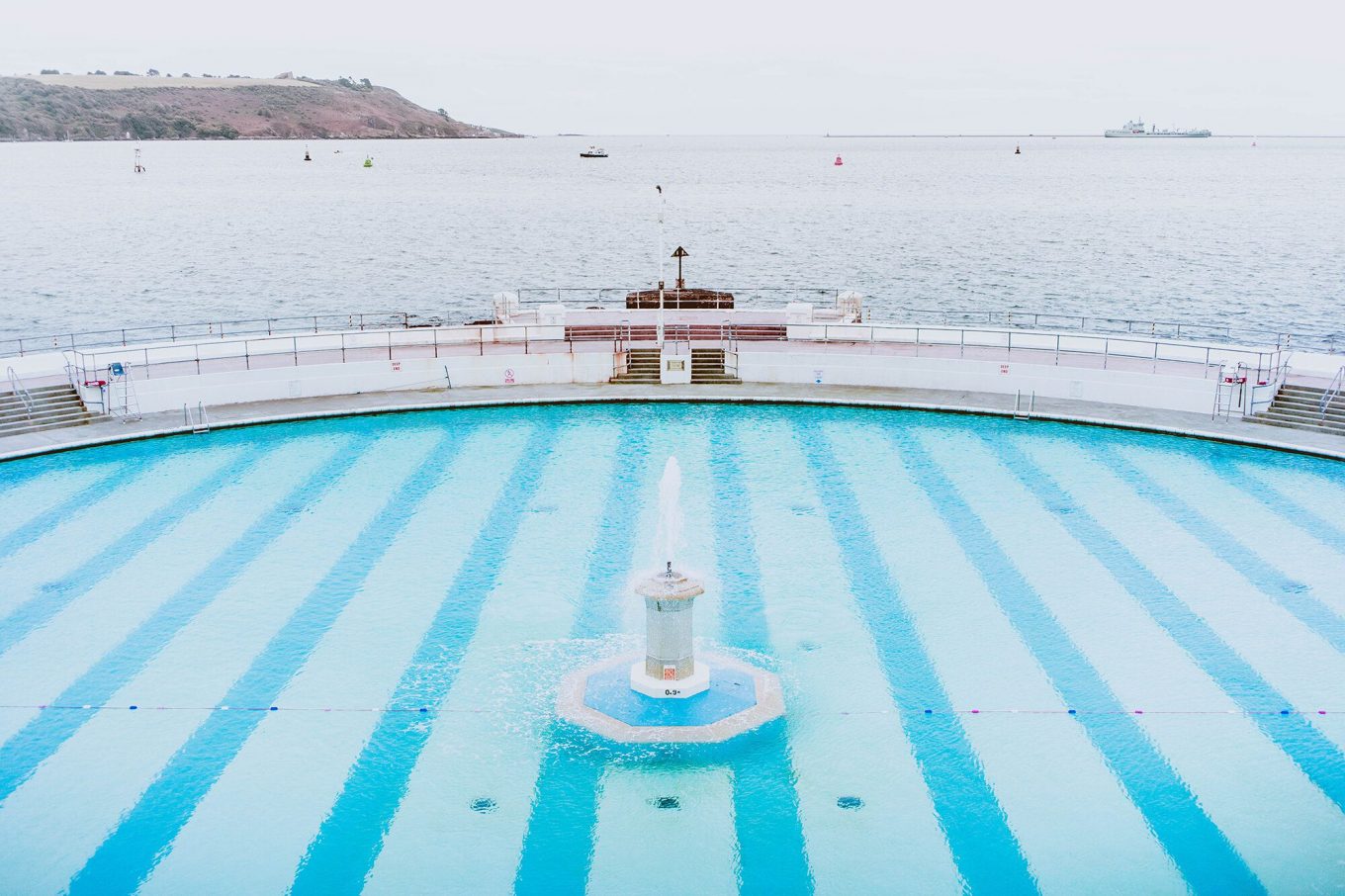
    Tinside Lido is Plymouth’s Art Deco seawater swimming pool built into the shoreline and cliffs in Hoe. This Grade II listed building was originally opened in 1935 and was a popular holiday for people living in the UK during the tourism boom in the early-mid 20th century. Unfortunately, for Tinside Lido, as international travel picked up towards the end of the century, fewer people visited and in 1992 it was closed and soon fell into disrepair. However, in 2002 funds were raised to restore the iconic outdoor pool and it was successfully reopened in 2005. Yay!

    So now for just £5 you can take a dip in a beautiful 1930s seawater lido where on one side you can admire the classic Art Deco architecture and on the other you can gaze out to sea. Warning, the pool is only ever 2 degrees Celsius above sea temperature so if it’s a chilly day, prepare for a shock! 

    When you’re done, pop over to The Terrace (just a 2 minute walk away) where you can get a cuppa to warm your bones after a cold swim or maybe a glass of wine on a sunny day whilst looking out at the lido.

    Though you can’t swim in the lido during the cooler months, you can still view it from a platform above the pool just off from the main road.

    PFH Fun Fact: Tinside Lido was featured in a BBC ident.

    If you’re visiting Plymouth in the summer, hang around Hoe Park at sunset to see the sun dip behind the hill, casting an array of peachy pink stripes across the sky.

    Opening hours

    The pool is open seasonally from 10.00 and each paid admission counts for a two hour swim.

    The C-19 pandemic has altered the lido’s open season, so check here before paying a visit.

    Ticket cost

    Adult £5

    Accessibility 

    There is a road side lift to take you to reception.

    There is an internal lift to the pool level.

    There is a hoist in the main pool.

    Dedicated toilets and changing rooms are available.

    COVID-19 restrictions

    Wear a mask at all times indoors.

    Please stay 1-2 metres away from others.

    6. Royal William Yard

    Unsure about what you fancy for dinner and need a variety of choices? Or maybe you want dinner somewhere steeped in maritime history, then head over to Royal William Yard. Royal William Yard is a Grade I listed building that used to be naval buildings but is now the top waterfront dining destination in the city as it’s filled with restaurants as well as a boutique, salon, hotel, wine merchant and brewery, plus there’s a monthly food market.

    Take no notice of Wagamama or Prezzo though as there’s far more exciting eateries including Le Vignoble with over 300 wines from around the world on offer and The Hook & Line where you can order from a menu of fresh seafood caught locally on the owners’ fishing boats.

    By the way, you’ll find the city’s first ever speciality rum bar at The Hook & Line, serving up a selection from all around the world including popular local rums. This is homage to the city’s and the restaurant location’s naval heritage. If ale is your poison, then try their signature ale: The Hook, Line & Sinker.

    COVID-19 restrictions

    Please use the provided hand sanitiser before and after entering.

    You must complete the track and trace form or log your location using the NHS Track and Trace app.

    Wear a mask at all times indoors unless you are seated at your table.

    Observe the one way system.

    Please stay 1-2 metres away from others.

    Table service only.


    I really enjoyed visiting Plymouth. Even without a particular interest in its naval history it’s wonderful to experience the city’s various nods to its maritime culture, whether it’s a tour at the distillery that used to supply the naval officers with gin, a swim in a seawater pool, a meal at a restaurant located in naval buildings or learning about the voyage of the Mayflower. 

    Gabriella

    Pin this post


  • 10 things to do in a day at St Ives, Cornwall

    10 things to do in a day at St Ives, Cornwall

    St Ives is a seaside town in southwest Cornwall famous for its sun-trap harbour lined with restaurants and bars, art scene with more galleries than you can shake a paintbrush at – including Tate St Ives – surf beaches like Porthmeor and beautiful turquoise waters.

    Originally a fishing village, St Ives is now a seaside resort and is top of everyone’s Cornwall bucket list. Why? Because it’s a cute town with independent shops, pretty views and so many places to eat you’ll want to come back to try more. On that note, spending a day in St Ives by my guide involves a lot of eating so bring your stretchy pants, okay?

    What to pack in your bag for a day in St Ives


    • Reusable coffee cup – to responsibly get your hot drink to-go


    • Towel – to sit on when you’re on the beach


    • Face mask – to cover your face to protect others


    • Hand sanitiser – to protect yourself and others


    Remember to always wear your mask indoors and sanitise/wash your hands as often as possible.

    PFH Top Tip: Keep your face mask on in slightly busier areas such as Fore Street and Wharf Road. Also keep an eye out for a sign in the shopfront that tells you how many customers are allowed in at one time.

    1. Arrive early to get parked

    I guarantee if you ever hear someone recommending a day in St Ives, you will hear them say you must arrive early by car if you have any hope of getting parked. With roads barely wide enough for a single car, corners so tight you can’t but hold your breath when you creep around them, there’s very little parking opportunities in St Ives so the car parks fill quickly. 

    If you plan on driving you must arrive to St Ives before 8.30am to get a spot for your car. 

    The car park we used was The Island Car Park and it cost £8.20 to park all day.

    If you aren’t able to drive you can use the bus and train service. I’ve heard from a friend that the train ride in from St Erth is very scenic.

    2. Get coffee from Yallah 

    So I’ve made you arrive early to St Ives to get parked but you’re like, ugh Gaby, none of the shops are open yet. Make your way to the Yallah Kiosk on Wharf Road and grab a coffee to-go, they will make your coffee in your own reusable cup (yay!) so make sure to hand it over. Click here to read Yallah’s sustainability report.

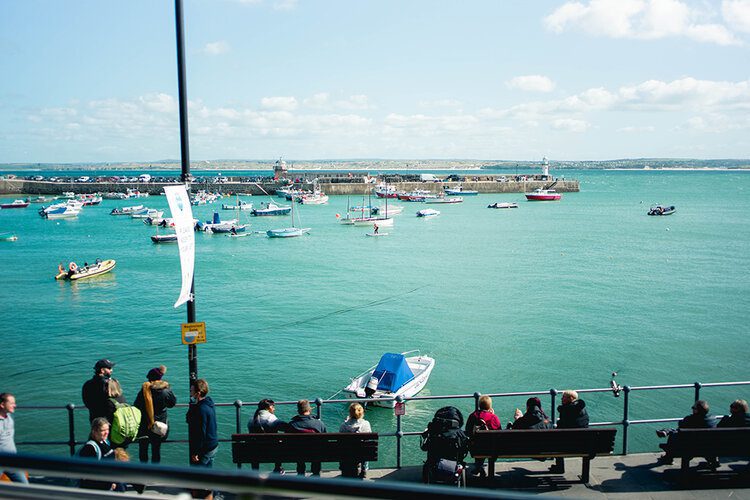
    Take your coffee to one of the benches on the other side of the road and gaze across the harbour at all the little boats bobbing around in the cool clear waters, waiting for the late morning sun to reach them.

    3. Try to spot seals from Smeaton’s Pier

    Take a leisurely stroll over to and along Smeaton’s Pier for a chance of spotting a seal. Catching a glimpse of a seal around St Ives is possible but known to be quite rare unless you take a paid boat trip over to Seal Island.

    Either way it’s a nice little walk to kill time before the shops, galleries and museums open, plus it provides the perfect spot to take a photo of St Ives with the little harbour in the foreground which you can see below.

    4. Visit Tate St Ives

    If you want to step up your gallery game (it’s possible that there’s almost as many galleries in Cornwall as there are Cornish pasties) then book tickets for Tate St Ives. Tate St Ives is an art gallery located just off from Porthmeor Beach that showcases a collection of modern art with local ties.

    The current exhibition “Modern Art and St Ives” is the first that you’ll visit and tells the story of modern artists who are connected to St Ives including Barbara Hepworth, Patrick Heron and Alfred Wallis.

    Hungry for more? Then head on over to the Barbara Hepworth Museum and Sculpture Garden. If you purchase a ticket here first, it’s a little pricer than the Tate ticket but it includes entrance to Tate St Ives.

    Opening hours

    Monday to Sunday 10.00–17.20

    Ticket cost

    Adult £9.50

    Children get free access

    Student £8.50

    Senior (60+) £8.50

    Job seeker £8.50

    People with disabilities £8.50 (companion gets free access)

    Accessibility 

    Each floor is accessible by lift.

    Three wheelchairs are available.

    Accessible toilets are located on the third floor.

    Large print guides printed on yellow paper are available upon request.

    A 10 min audio introduction that describes the architecture is available upon request.

    Guide dogs, hearing dogs and assistance dogs are welcomed.

    COVID-19 restrictions

    Please use the provided hand sanitiser before and after entering.

    Observe the one way system.

    Wear a mask at all times indoors.

    Please stay 1-2 metres away from others.

    5. Explore the nooks and crannies

    With its narrow winding streets that offer glimpses of the sea it’s easy to find charm in exploring the nooks and crannies of St Ives. Stumble across a cute cottage or two, an independent gallery and keep an eye out for special spots that looks like you could be peeping out at the shoreline of Positano. 

    6. Pick up a Saffron Bun from Ferrell S H & Son

    A saffron bun is a spiced bun similar to a tea cake. Yellow in colouring, thanks to the saffron, it sits proud and easily identifiable in the shop window of Ferrell S H & Son’s bakery on Fore St, a family run bakery that has been there since the 1960s.

    It’s a traditional Cornish treat and is up there on the must-try-whilst-in-Cornwall list that also includes:


    • Cream tea with Cornish clotted cream (preferably Rodda’s)


    • Cornish pasty


    • Yarg (cheese)


    Heads up, despite the C-19 pandemic, Ferrell S H & Son only accepts cash so have some to hand to get your bun.

    7. Shop on Fore Street

    Whilst on Fore Street, enjoying your saffron bun, potter around the shops. Here you’ll find some of the best independent shops in St Ives including all things surf, seaside themed and rum/gin focused. My favourites along this little street are:

    John’s Liquor Cellar

    Shopping in John’s Liquor Cellar is like stepping into a cave full of intoxicating treasures including locally crafted beers, wines and ciders but most importantly (for me anyway) gins. You’ll find a vast selection of local gins such as Tarquin’s, Trevethan and St Ives in all their available flavours including Trevethan’s pink grapefruit and lychee or Tarquin’s rhubarb and raspberry. They even sell miniatures so you can grab some souvenirs/stocking fillers for friends and family back home.

    Myrings of St Ives fudge and rock shop

    Myrings’ fudge recipe has been passed down through generations for over 30 years. It’s the perfect spot in St Ives to pick up a sweet treat for yourself or a loved one. 

    Cornwall soapbox

    Pick up some handmade soap, a shampoo bar and a candle to match from Cornwall Soapbox. Each soap is made with pure essential oils and organic African Shea Butter. They each smell amazing and even better, they reduce your plastic packaging waste as they’re wrapped in paper.

    The Sewing Room

    It won’t come up on google maps but it’s a little knitting and crochet shop selling needle, hooks, patterns and wool/yarn which will inspire you to make something or pick up kits as gifts for others.

    Yummy Scrummy Bakery

    Pick up a giant iced bun topped with hundreds and thousands before they sell out to the masses!

    8. Get ice cream from Moomaid of Zennor

    “Legend has it that a young Cornishman was lured into the sea by the beauty of the Mermaid of Zennor. Today you’re more likely to be seduced by Daisy, Primrose and Sid Vicious – just three of the cows that help make Tremedda Farm’s ice cream. They are the legendary Moomaids of Zennor.” – Moodmaid of Zennor.

    Once you’ve been into all the wonderful independent shops on and around Fore Street, pop into Moodmaid of Zennor for some locally made Cornish ice cream. Their ice cream is made with fresh ingredients and in small batches so they can ensure only high quality ice cream is going from scoop to tummy. 

    Their flavours run from traditional vanilla clotted cream to salted almond praline. Take it in a cone or a tub dressed up with the likes of brownie chunks and a stick of fudge. 

    WARNING! Cornish seagulls are buttheads and will take the food from your hand mid-flight. Whilst eating lunch on the beach in Port Isaac, a cannibalistic seagull took half of Michael’s egg mayo baguette from his hand and swallowed it whole as we looked on in horror. Be so careful with your ice cream when you eat it okay? Walking around with food by the shoreline in Cornwall is like entering shark infested waters with an open wound. Alright, even without my exaggeration I still advice you to eat quickly.

    9. Sit on the beach

    If it’s a lovely day out then spread out a towel on the sand and either lay back and soak up some rays of sunshine on Porthgwidden Beach or watch the surfers catching waves on Porthmeor Beach.

    10. Get dinner at Porthminster Kitchen looking out on the harbour

    Porthminster Kitchen is located on Wharf Rd and has an amazing view of the harbour, and oh, when the sun hits the water and it lights up to an electric cyan blue, it feels like you could be anywhere in the Mediterranean.

    The menu features dishes inspired by global cuisine but made with locally sourced Cornish ingredients. They’re sure to tickle your seafood fancies with a wide choice including scallops, squid, clams, mussels and more!

    If you’ve been around here for a while then you’ll know I’m somewhat partial to some fish and chips (fish and chips are life) and of all the chippies in all the land, I have never had mushy peas as good as I have at Porthminster Kitchen. Their spiced peas are like two fish and chips classic sides in one: mushy peas and curry sauce!

    Make sure to book in advance if you’re going to St Ives during peak spring/summer to avoid disappointment, card details are required to make the booking and you will be charged £15 if you don’t show for your booking without prior warning. If it’s forecast to be a sunny day, see if you can ask for a table outside.

    PFH Top Tip: if you can’t get booked into the restaurant for dinner, consider lunch at their café, Porthminster Café, located on Porthminster Beach.

    COVID-19 restrictions


    • Wear your face mask until you are seated at your table and make sure to wear it if you leave your table


    • Pay for your meal by contactless card


    • Observe the one way system


    • Try to keep a distance from others in the restaurant when you’re not at your table


    Travel safely,

    Gabriella

    Pin this post


  • How to spend a day in Clovelly, Devon

    How to spend a day in Clovelly, Devon

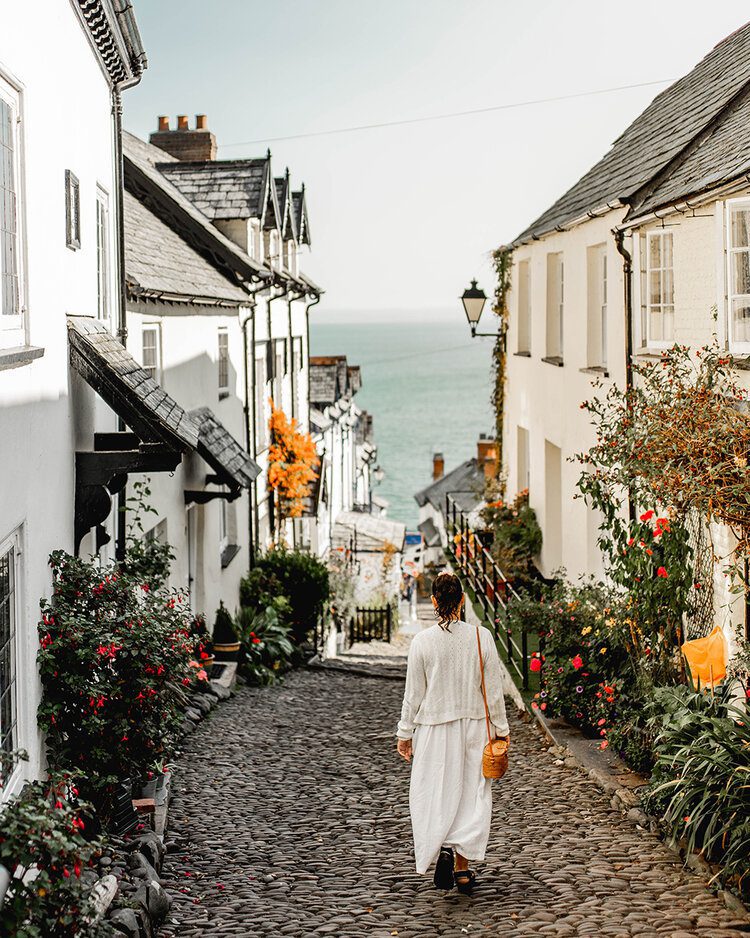
    With a series of white washed cottages cascading down towards the sea from a 400ft cliff edge, Clovelly, a small living fishing village in North Devon, is one of the most picturesque spots in the county. Appearing untouched for centuries, the tiny cobbled high street of Clovelly, inaccessible by vehicle, takes you back to a simpler time where life was enjoyed without the conveniences we take for granted today. 

    Once owned by the Royal Family, Clovelly has been in the hands of just three families since the 13th century. The village is still privately owned and all properties are rented and residence usually stays within a family for generations.

    We chose to visit Clovelly after watching a re-run of the Channel 4 documentary, “Devon and Cornwall” which explored the two counties’ treasures. Once I caught a glimpse on TV of this exclusive village, so lusted after that it requires an entrance fee, I wanted to see it for myself and I am so glad I did. Between shopping for handmade soap and candles from Clovelly Soap, learning about Rex Whistler’s iconic “Toile de Jouy” design from Clovelly Silk, enjoying a Devon cream tea with a view of the sea and exploring a steep, meandering path down to the 14th century quay, visiting Clovelly has been one of my favourite days out in England.

    Read on to find out what you need to know about visiting Clovelly, how we spent the day there and my tips on where to get the best photos.

    Visiting Clovelly

    Before getting into what to do and where to take the best photos in Clovelly, here’s the basics for getting access to the village:

    How to get there 

    Parking at the Clovelly Visitor’s Centre is included in the entrance ticket cost (see below for more).

    The village is located off the A39, 10 miles west of Bideford. Take Junction 27 to exit off the M5.

    The closest train station is Barnstaple and you can take a bus from there to Clovelly.

    Buses also run to Clovelly from Bideford.

    Entrance cost

    Adult: £7.95

    Child (aged 7 – 16): £4.60

    Children under the age of 7 get free entrance

    Family including 2 adults and 2 children: £21

    Season tickets are £26 per adult and £62 per family

    Ticket costs are for 1st April 2020 – 31st March 2021

    Dogs on leads are welcomed

    Opening hours

    Clovelly is open every day except Christmas and New Year’s Day.

    9am – 5pm April – November

    10am – 4pm November – March

    PFH Top Tip: for free entry to Clovelly, visit on Boxing Day.

    You’ll want to allow around three hours for visiting Clovelly to make the most of your time there.

    Covid-19 restrictions

    You must wear a face mask when entering the Visitor’s Centre, museums and shops. 

    Wash your hands as often as possible and use hand sanitiser frequently.

    You are required to fill out a Track and Trace form at the ticket desk.

    Do not visit Clovelly if you are showing any signs of being sick.

    Try to keep at least 1m away from others.

    The Visitor’s Centre has a one-way system. 

    Accessing the village 

    The village is built into a 400 foot cliff and is only accessible by foot down a steep cobbled path. It is very important that you wear comfortable shoes as the high street is made with stones from the beach that are uneven and slippery so you will slip without a decent tread on the soles of your shoes.

    Unfortunately due to the nature of the village being built into a cliff, there is no level access to the village, however the Visitor’s Centre, Mount Pleasant and craft shops (where you’ll find Clovelly Silk, Clovelly Soap and Clovelly Pottery) are accessible.

    Usually, between Easter and October, there is a Land Rover service that offers rides back up to the Visitor’s Centre from the bottom but due to COVID-19, that service has been suspended.

    Start at the Visitor’s Centre and make your way straight down into the village (you can visit the shops on the way back up) as it’s your best chance of seeing the high street empty and therefore the most ideal time to get the best photos of the most photogenic part of the village. I recommend arriving within the first hour of the village opening as it’s the best opportunity to get photos from the top of the high street without other people wandering the street.

    PFH photo guide

    Want photos of Clovelly for the ‘gram or to capture beautiful memories? Well you’re in the right place, there are at least three spots that you will want to take photos of whilst in Clovelly so let me take you through where they are and what time to get there for your best chance of people-free photos:

    1. Clovelly high street

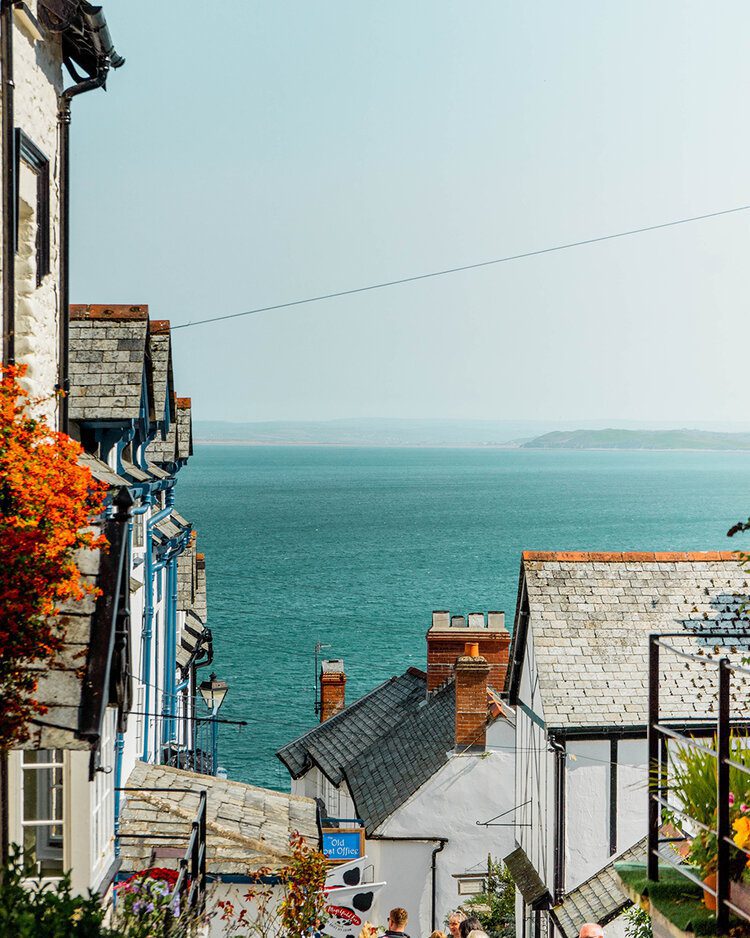
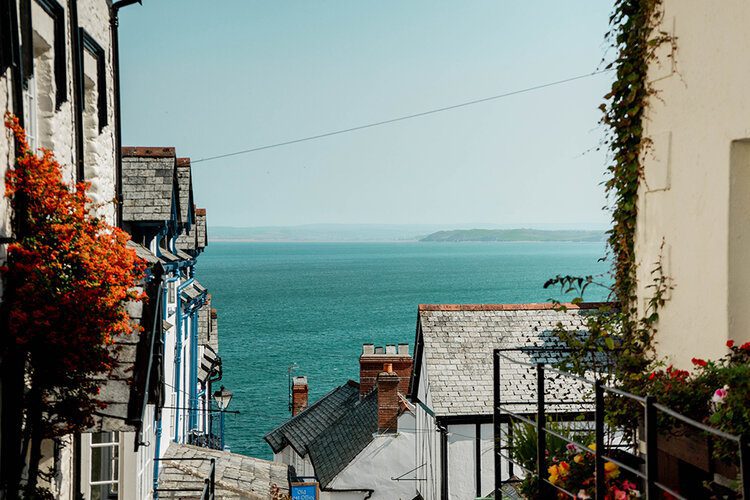
    Take a snap from the top of the high street looking down towards the sea. The high street is iconic as it’s only accessible by foot, or in past times by donkey so you won’t get a single car in your shot. The narrow, cobbled path down is sandwiched between centuries old cottages decorated by flowers with the odd cat silently judging your arrival to their village.

    As mentioned, the cobbled path is the only way into the village so arrive early to get the best chance of an empty street.

    Walk a little further down the path towards the quay to capture more beautiful photos as the sea becomes visible between the cottages, before making your final descent down to the beach.

    2. Clovelly quay

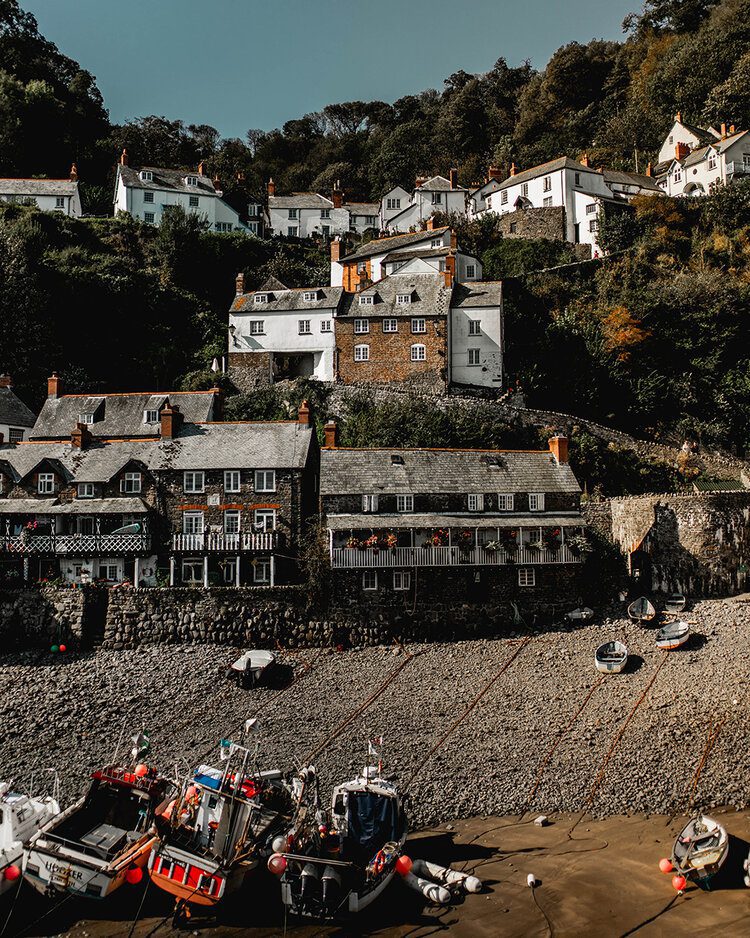
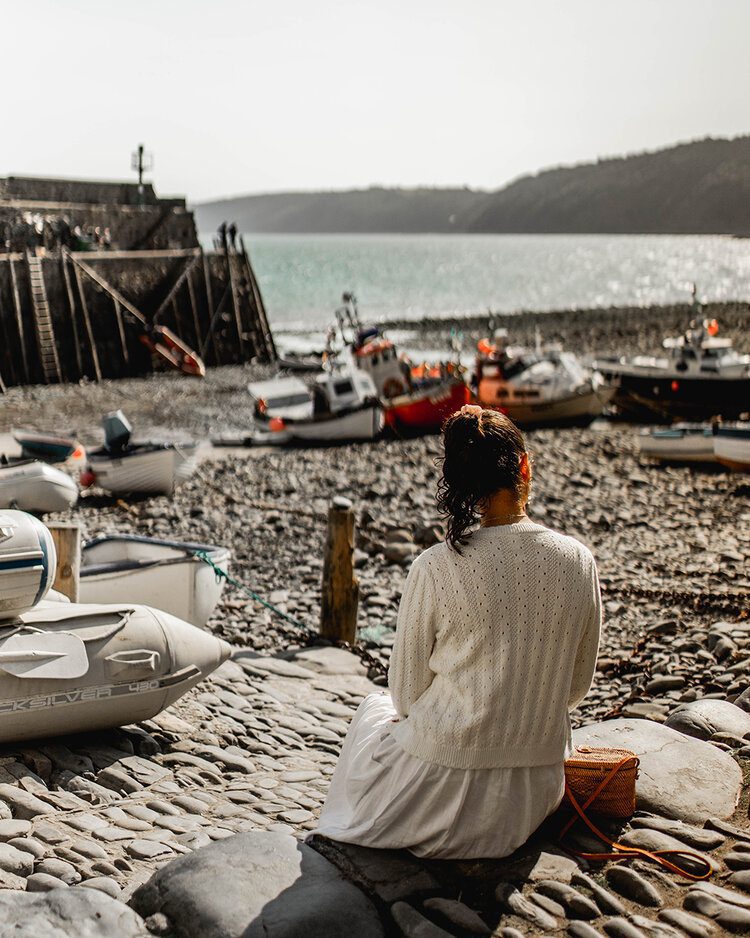
    Make your way down to the end of the high street to get access to Clovelly quay and the beach. If you specifically want the quay either full of water or dry then you will need to check the tide times here. We went at low tide, which is why the boats are on the ground.

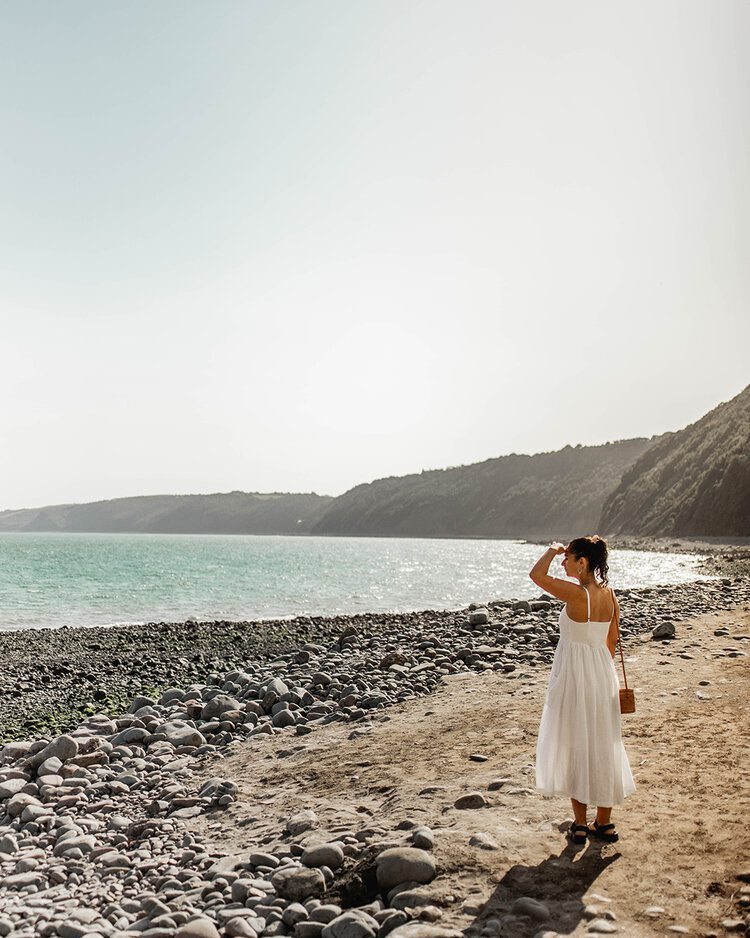
    Take snaps around the quay then take a walk along the beach with the sea to your left. At low tide you’ll be able to walk out to the shore and look back at Clovelly to take photos of it appearing to tumble down into the sea. 

    Heads up, it’s not a sandy beach so if for some reason you decided to ignore my advice earlier when I said wear comfortable shoes, then PAY ATTENTION NOW; the stones are wobbly because the changing tide is forever displacing them and many are covered in seaweed and algae making them slippery, so wear practical shoes so you don’t snap an ankle, capeesh?

    3. Cottage Tea Rooms

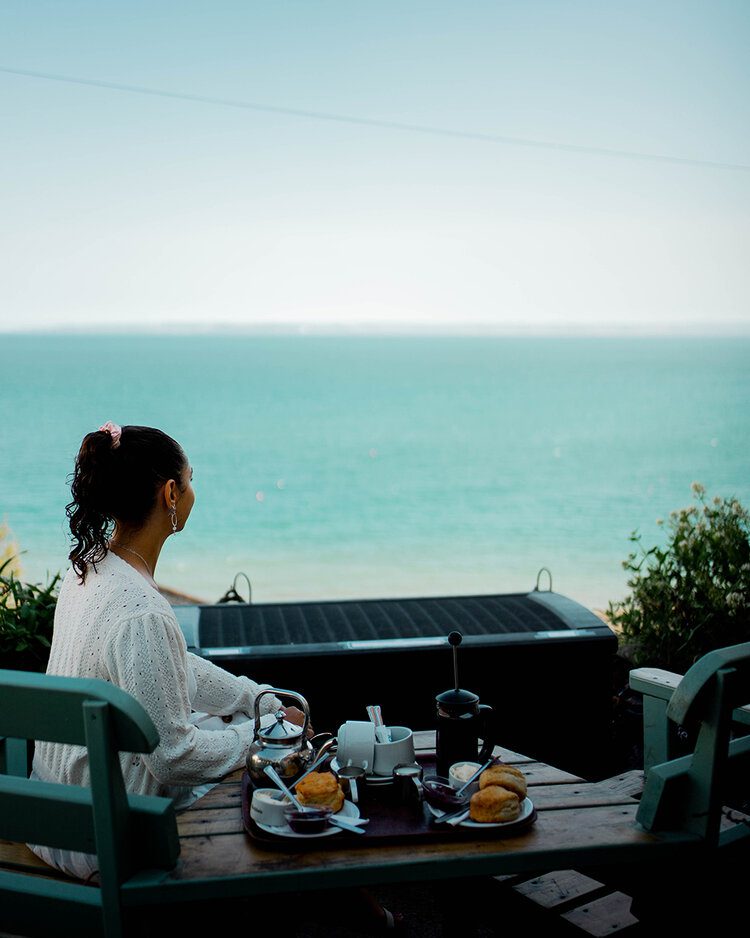
    Read more about eating at the Cottage Tea Rooms below under “what to do in Clovelly”, but I’ll quickly tell you which table to sit at to get the best photos of you enjoying a Devon cream tea with a stunning backdrop. 

    Order to eat in the garden and head straight to the back, right past all the benches, and up to the next cottage’s front door. There on the left, you will find two large chairs, attached to a small table in the middle, looking out to sea. This is the best table as it’s the only one that faces directly towards the sea, not side on like the others, and there’s enough space to get behind it to take photos (or get someone else to take photos of you) of your Devon cream tea and the sea.

    This only works if there’s two of you, I should note as well, there’s only two chairs. If there’s more of you then you’ll have to pick a larger table closest to the sea view and sulk about not being able to sit at the best table I’m afraid.

    What to do in Clovelly 

    With a slight crossover from my little Clovelly photo guide, here is where I expand on how you can spend your day exploring this picturesque village.

    Walk along the beach

    Once you’ve explored the quay that has been keeping boats safe from the wrath of the sea since the 14th century, take a stroll along the pebbled beach to take a look back up at the village, taking in all of its charm including the Lifeboat house which was first in service in 1870 and the oldest cottage in Clovelly, Crazy Kate’s Cottage. The cottage with its long balcony looking out towards the harbour has a sad story behind its name but is one of the villages defining features. At high tide the water comes straight up to the foundations of the cottage.

    As I mentioned in my photo guide, where you can walk to on the beach depends on the tide. If the tide isn’t high, you’ll be able to safely walk along the beach where you’ll find Clovelly Waterfall. Legend has it that Merlin the Arthurian magician was born in the cave behind this waterfall. 

    Cream tea with a view

    A first glance of the village might tell you to get a Devon Cream Tea from the Red Lion pub and sit on the tables outside looking out across the quay but this is not the path for you, oh no, I have something much better for you. Once you have began your ascent up from the beach, take a left into the Cottage Tea Rooms and order to an outside table in the garden around the back of the cottage. 

    If you’ve read my photo guide above then you’ll know which table to go for, if you haven’t then do yourself a favour and scroll up to read it instead of skipping ahead! Aim for an early lunch to beat the lunchtime rush so you have a better chance of getting a seat.

    Their menu offers light lunches, snacks, cakes and cream tea, including a gluten free scone option. Remember in Devon, the cream goes first!

    Fisherman’s Cottage and Charles Kingsley museums

    Just up along from where the tea rooms are located and on the same side is the Fisherman’s Cottage Museum. Pop inside to take a glance at what home life looked like for a Fisherman’s family in the 1930s. The rooms are decorated with period pieces, some of which have been donated by families that have lived there for generations. As you enter you will find an original well that helped to provide the village with water before the main water line was installed. There’s also a collection of framed wedding photos dating back to to the late 1800s.

    Attached to the Fisherman’s Cottage Museum is the Kingsley Museum. Charles Kingsley (1819-1875) was a Victorian writer who grew up in the village. His most famous pieces are “The Water Babies” and “Westward Ho!”. His work is known to have drawn visitors to the village.

    Both the museums are free to enter under the cost of your admission ticket.

    Shopping in Clovelly

    Shopping in Clovelly is a real treat as the craft workshops offer an array of handmade items perfect for personal souvenirs and gifts. What’s particularly precious about the Clovelly workshops is that the fabrics and soaps encourage creativity and self care, they inspire you to do more than buy something to take home, but instead to indulge yourself in a rewarding sewing project or an aromatherapy bath that’s both healing for your soul and a lasting memory of your visit to Clovelly.

    Clovelly Silk 

    Clovelly Silk was one of my favourite parts of visiting Clovelly. The workshop is owned and ran by a couple, Ann and Bill Jarvis who have a rich history in the textiles industry; Ann was head of Liberty of London’s design studio for 10 years where she worked on some of Liberty’s classic prints from their archives whilst designing new ones for their dress and furniture lines. You can purchase a Liberty print bag from their small collection in their shop.

    Please ask permission before taking photographs of their workshop.

    Clovelly Silk is most famous for Ann’s creation of their custom repeating print, “Toile de Jouy” which she created using six of world famous artist, Rex Whistler’s, illustrations of Clovelly which he originally made in 1932. Their “Toile de Jouy” print is available to buy on cushion covers, tea towels and even face masks in six colours. Alternatively, you can buy some fabric to create something yourself for just £25, how’s that for the most darling and personal souvenir of Clovelly?

    Toile de Jouy in Emerald Green.

    As much as I want to keep sharing about Clovelly Silk, I want to you learn about Rex Whistler’s illustrations and the story behind “Toile de Jouy” yourself from Ann and Bill Jarvis because they are such wonderful people with so much passion for their work and pride in the village.

    PFH Fun Fact: HRH The Princess Royal own a “Toile de Jouy” silk scarf.

    Clovelly Pottery

    Need a new mug for your morning cuppa or fancy egg and soldiers out of some handmade egg cups decorated with a pattern unique to Clovelly? Well isn’t that that convenient as Clovelly has its very own pottery workshop selling a collection of work from Clive Pearson and Caroline Curtis.

    Clovelly Soap

    The Clovelly Soap Shop not only sells intoxicating handmade soap wrapped in their custom designed paper, but it also sells all the eco-friendly pampering accessories your heart desires including matching candles, organic cotton towels, bamboo hair wraps and more.

    Their plastic-free artisan soap collection includes:


    • Hand soap


    • Beard wash


    • Shampoo


    • Dog shampoo


    (psst, they take American Express and participate in Shop Small, so if possible, line up your visit when that offer is on).

    Clovelly Fudge

    Back up at the Visitor’s Centre, there’s a small shop selling handmade Clovelly fudge in ever changing seasonal flavours. Perfect for a sweet treat for yourself or a gift to take home.

    Clovelly Court Gardens

    Before leaving, visit the Clovelly Court Gardens that are located at the top of the village. The Victorian walled garden is included in your entrance ticket and features glass greenhouses filled with Mediterranean flora and fauna, which can grow thanks to a maritime microclimate. Unfortunately we didn’t learn of the Clovelly Court Gardens until we had already left so I don’t have any photos for you.


    If you take a trip to North Devon, be sure to add Clovelly to your list! I want to add that there are two hotels in the village, The New Inn at the top of the high street and The Red Lion down at the quay, so should you be interested in extending your stay in the Clovelly, those are your options. 

    .

    Gabriella

    Pin this post


  • 8 best things to do in Bristol, England

    8 best things to do in Bristol, England

    Located in South West England between Gloucestershire and Somerset, Bristol is uniquely its own county which is very fitting of the city’s forward thinking and progressive aura. In stark contrast to its torrid past of transporting hundreds of thousands of enslaved Black people to the Americas, the city now fights hard for racial equality and against climate change; winning the EU’s European Green Capital Award in 2015 and famous for the pulling down of the statue of Edward Colston, an 18th century member of parliament who was heavily involved in the transatlantic slave trade.

    Virtute et industria (with courage and industry).

    Up until the industrial revolution, Bristol was one of England’s leading cities. Through the 19th century, Bristol was a pioneering city in engineering with the likes of Victorian engineer, Isambard Kingdom Brunel, designing the Great Western Railway, the grandmother of all modern day ships, SS Great Britain and the Clifton Suspension Bridge. 

    These aren’t Bristol’s only claims to fame, the city is also home to world famous artist Banksy, multiple Academy Award winning animation studio Aardman (creators of Wallace and Gromit, Chicken Run and Peter Gabriel’s Sledgehammer music video), Sir Allen Lane created the first ever paperback book (Penguin paperbacks) there and Elizabeth Blackwell, England’s first woman doctor was born in Bristol.

    Aside from being a hub of creativity and a great place to visit with much to do and see, it’s also a stone’s throw away from the quaint villages of the Cotswolds and ancient Roman remains in Bath.

    1. Clifton Suspension Bridge

    Clifton Suspension Bridge is Bristol’s most iconic landmark. Designed by Victorian engineer, Isambard Kingdom Brunel, it took 33 years to build and is one of the oldest surviving iron suspensions bridges in the world. Sitting 245ft above high water, it first opened in 1864 and is still fully functioning as a crossing over the River Avon, now a Grade I listed building.

    There are multiple spots to see and capture Clifton Suspension Bridge from. To name a few you can cross the bridge, look down at it from Clifton Observatory or up at it from Hotwell Rd below.

    The best time to see Clifton Suspension Bridge though is annual Bristol Balloon Fiesta (which I didn’t know existed until I reached Bristol a mere few days after it finished). What’s the annual Bristol Balloon Fiesta? Good question. Every August, countless hot air balloons take to the sky above the bridge and on two evenings (a Thursday and a Saturday) from 6pm until midnight, the bridge closes during the Fiesta Night Glow, which is when the sun goes down and the multiples burners dot the sky like giant fireflies. Yeah, I can’t believe I missed it either.

    Ticket cost

    Should you need to drive over Clifton suspension bridge, it costs £1 per motor vehicle, including motorcycles.

    COVID-19 restrictions

    The pedestrian walkway currently has a one way system and doesn’t allow for stopping.

    2. Street graffiti including Banksy pieces

    Bristol’s graffiti scene is world famous thanks to it being the birthplace and live exhibition of the elusive graffiti artist, Banksy. See some of his most iconic pieces first hand such as “Girl With the Pierced Eardrum” (2014) with her 2020 COVID-19 face mask addition in Albion Docks in Hanover Place and “Well Hung Lover” on the side of a sexual health clinic on Frogmore Street. Bristol’s most recent Banksy addition went up on Valentine’s Day 2020 on Marsh Lane in Barton Hill and features a young girl catapulting a firework of red flowers.

    For a guide to Banksy’s artwork across the city, download the Banksy Bristol Trail by Cactus Apps for IOS here and Android here.

    Banky’s isn’t the only graffiti worth viewing across Bristol though, in fact the city is home to over 200 street artists and graffiti writers. I recommend heading to North Street for an exhibition of powerful and thought provoking pieces commenting on current affairs including climate change, racial inequality and the COVID-19 pandemic. 

    I particularly recommend seeing the giant Greta Thunberg tribute mural on the side of the Tobacco Factory (one of the most highly coveted walls for street art in Bristol) in the Aldi supermarket car park, which went up in 2019 and was painted by Jody Thomas.

    Bristol is home to Upfest, Europe’s largest urban arts festival. Unfortunately it has been postponed this year (2020).

    3. Bristol Beer Factory

    Is beer your choice tipple? Then head to the Bristol Beer Factory Tap Room for a flight or pints of their on tap ales, stouts and wheat beers, then shop what took your fancy in their bottle shop attached to the bar. 

    Take the sustainable route when you shop and purchase one of their reusable bottles so you can fill it with whichever beer of your choice. Their refillable container options and prices are:


    • £5/ltr Cask


    • £6/ltr Keg


    • £8 to fill a BBF growler


    The Bristol Beer Factory began brewing in 2004 but it wasn’t the first brewery to work out of their current building. It was Ashton Gate Brewery who began brewing there back in the 1820s, to read more, click here.

    Pre-pandemic, Bristol Beer Factory offers Brewery Tours for £20 per person. I’m sure these will start again when the pandemic has improved, so if this interests you, keep an eye out here.

    You can also grab a BBF pint across the city in various pubs. Our personal favourite was Grain Barge which is a floating bar and restaurant in Bristol Harbour. I seriously recommend eating here because their dishes are made with local produce and taste amazing (they have really great vegetarian options) and the view from the top deck is a real treat.

    Opening hours for BBF Tap Room bottle shop and bar

    Closed on Mondays

    Tuesday 12pm – 6pm

    Wednesday 12pm – 9pm

    Thursday 12pm – 10pm

    Friday & Saturday 12pm – 11pm

    Sunday 12pm – 6pm

    COVID-19 restrictions

    Please use the provided hand sanitiser before and after entering.

    Complete the Track and Trace form with your contact details.

    Pay for drinks by contactless card.

    Please stay 1-2 metres away from others.

    4. Floating Harbour

    Bristol Harbour has been in use since 13th century and in 1806, 80 acres of the tidal river were impounded to create a permanent floating harbour. It was a commercial port until 1975 when the waterway was getting too crowded and ships were getting bigger and struggling to pass through to the central port. 

    It has since been transformed into a residential and leisure area with the waterway now home to floating pubs, house boats and rental companies offering up paddle boarding and kayaking.

    The views of the River Avon with its backdrop of rainbow houses climbing up the city hill are so beautiful and worth a visit, so for the best spot, head to Bristol Marina. 

    5. Everyman Theatre

    Everyman Theatre brings a touch of Hollywood glamour to your movie viewing experience within their three screening rooms. Order at the bar from a choice of snacks, soft drinks, shakes and cocktails and it will be served to you at your luxury sofa seat just before the movie starts.

    Choose from both new and previous releases, plus theatre recordings, from the listings announced every Monday for the week ahead.

    Opening hours

    10am daily (or half an hour before the first film of the day, if earlier).

    There are numerous Everyman Theatres across the UK, find out their locations here.

    Ticket cost

    Adult £11.40

    Child  (up to age 14) £7.40

    There’s an online booking fee of £1.50 per transaction.

    COVID-19 restrictions

    Please use the provided hand sanitiser before and after entering.

    Pay for tickets and refreshments by contactless card.

    It is not required but it is recommended that you wear a face mask when not eating or drinking.

    Please stay 1-2 metres away from others when out of your seat.

    6. Charity/second hand (thrift) shops on Gloucester Road

    For the best second hand charity shopping (that’s philanthropic thrifting for my North American folk) head to Gloucester Road. The charity shops on Gloucester Road carry both your usual second hand clothing, accessories, books and homeware plus vintage numbers and don’t charge you marked up prices that require signing off your first born (you know the kind of vintage shops I mean). I managed to pick up a couple of Marks and Spencer St. Michael dresses (a clothing line that dates back to the 1920s) for less than £15 each and a Liberty of London silk scarf for just £9.99. 

    I highly recommend spending a few hours browsing each charity shop on both sides of the street hunting for gems. My personal favourite stores were Shelter, Cancer Research UK and St Peter’s Hospice.  

    One of the vintage dresses I found on Gloucester Road.

    There are also numerous eco-conscious shops on Gloucester Rd selling everything from bulk buy food products to sustainably sourced clothing.

    COVID-19 restrictions

    Fitting rooms are closed – check with the sales assistant if they allow returns should it not fit.

    Please use the provided hand sanitiser before and after entering.

    Pay for items by contactless card.

    Wear a face mask at all times in the shops.

    Please stay 1-2 metres away from others.

    7. St Nicholas Market

    Open since 1743, St Nicholas Market, also known as St Nicks Market, is Bristol’s oldest market. It has over 60 stalls selling nicknacks, fabrics, food, kitchenware, toiletries, clothing and more. The glass arcade is where you will find the food stalls selling a multitude of cuisines.

    Opening hours

    St Nicholas Indoor Market Monday – Saturday 9.30am – 5pm

    Bristol Farmers’ and Producers’ Market Wednesdays 9.30am – 2.30pm

    Street Food Market Tuesdays and Fridays 11am – 2.30pm 

    Bristol Indies Market Fridays and Saturdays 10am – 5pm

    COVID-19 restrictions

    Please use the provided hand sanitiser before and after entering.

    Where possible, pay by contactless card.

    There is a one way system in place.

    Wear a mask at all times indoors.

    Please stay 1-2 metres away from others.

    8. SS Great Britain 

    Dubbed the grandmother of all modern day ships, Brunel’s (the same guy who designed the Clifton Suspension Bridge) SS Great Britain is one of the most important historic ships in the world. Launched in 1843 by Prince Albert she was the first ship of her size to be built from iron and the first to feature Brunel’s newest invention, a screw propeller, to replace paddle wheels.

    SS Great Britain was in service right up until 1933, an extraordinarily long time. In 1970 she was transported back to Bristol where she was restored and placed on display so that you can tour this innovative masterpiece and accompanying exhibitions.

    Opening hours

    Thursday – Sunday 10am – 6pm.

    Ticket cost

    Adult £18

    Child  (5-16) £10

    Student £15

    An adult accompanying a person with disabilities. gets free access

    Family ticket including 2 adults & 2-3 children £48

    COVID-19 restrictions

    Wear a mask at all times indoors.

    Please use the provided hand sanitiser before and after entering.

    Pay for tickets and souvenirs by contactless card.

    There is a one way system in place.

    Interactive exhibitions are supervised.

    Please stay 1-2 metres away from others.


    Bristol is such an innovative and progressive city, they embrace creativity and change for the better. It’s an inspiring city to visit, with plenty to do and see from drinking at an independent brewery to seeing world famous street art and from learning about centuries old engineering to shopping second hand whilst raising money for charity. 

    Bristol was an absolute delight for me and I really hope you get the opportunity to visit one day.

    Gabriella

    Pin this post


  • 10 accessories to transform a simple outfit

    10 accessories to transform a simple outfit

    As the significant damage to our planet that fast fashion causes is coming more into focus, I wanted to create a blog post that highlights the simple ways you can accessorise one dress to create different looks without needing to buy new outfits for a trip, instead using what you already have or can buy second hand. It’s a great way to reduce the amount of clothes you pack into your luggage, which also saves fuel consumption on your travels as the load is lighter and helps to prevent you needing to buy more than necessary, contributing to the effects of fast fashion consumption. 

    “My mother worshipped at the alter of accessories and I got the bug. She always said, if you have a good, little, simple black dress and you have different accessories, you can have 27 different outfits.” – Iris Apfel.

    I have decided to focus on one dress to show you the ways just one outfit can be changed up for different looks. I have taken this dress on almost every trip since I bought it in 2018 and no matter how many times I post a photo wearing it on Instagram I never get any comments about needing to wear something new. It’s ok to repeat outfits, in fact it’s amazing and something we should be doing a lot more.

    This dress was purchased from Urban Outfitters, which I no longer recommend due to their unethical practices, but as it’s a simple linen dress that has been on trend for the last few years, it is easier to buy one from more responsible brands, or better yet, you could make one yourself. You could also buy one second hand or borrow one from a friend.

    PFH Top Tip: A white dress will get you far. It’s a classic that is easily accessorised and if you’re taking photos it suits most locations.

    These accessories will change up your outfit, help you to save pennies, make life easier and prevent you from overpacking multiple garments.

    Silk scarf 

    A silk scarf really is one of the best accessories womxn can travel with because it’s so versatile. I realise silk scarves are expensive but you can save pennies by buying one second hand, I bought a Liberty silk scarf for just £9.99 ($13 USD) in a charity shop. It doesn’t have to be silk either, there are many shops selling silk imitation scarves, just be mindful to avoid buying one from a fast fashion brand. I’ve done it in the past, but I don’t intend to anymore.

    Here are the ways you can wear a silk scarf to accessorise an outfit in different ways:

    Headband 

    Fold your square in half into a triangle and roll it up keeping its length, so that you have one long piece. Wrap in around your hairline, tying it either at the top of your head or at the nape of your neck, depending on the look you want. Either keep your hair down or if you have the length, you can tie it up.

    Bracelet 

    Tie your scarf around your wrist for a cute bracelet. This is especially cute if it catches in a breeze.

    Tie your hair up

    You can also use your scarf to tie up your hair. Wrap it around a messy bun or a pony tail for an effortlessly styled look.

    50s bandana style

    The second Girls From Ipanema (originally titled in Brazilian Portuguese Coisa Mais Linda) came to Netflix last year – it’s a Brazilian drama about independent women breaking free from oppressive gender roles to make a name for themselves in beautiful Rio de Janeiro – I started wearing my headscarves in the bandana style that the lead character, Maria Luiza, does. It also picked up as a popular style so it won’t look dated by any means. This style automatically makes your outfit chic, plus it helps to protect your head from the sun.

    Neckerchief 

    For an air of sophistication tie your scarf around your neck.

    Other ways you can use your scarf:


    • Tie it around a handbag for a different look.


    • Use it as a DIY face covering.


    • Tie it around your body to make a boob tube – yep this style has made a comeback.


    • If you have curly hair you can tie it around your curls before you go to bed so your curls don’t get damaged as you sleep.


    Straw hat

    A straw hat is such a great prop let alone accessory. When taking photos, you can swing it, throw it, or you know, actually wear it. A hat always makes an outfit look well put together plus it will protect your hair from the sun and cover up any not-so-great hair days.

    A straw hat will get you far, it’s timeless and goes with so many outfits from floaty dresses to cut off denim shorts.

    If you need a transitional hat for changing seasons, I suggest a beret or a structured felt hat. A beret looks cute with a jumper/sweater in Autumn/Fall, a coat in winter and a dress in spring; I don’t recommend wearing one in summer as the wool gets hot and itchy.

    Statement jewellery

    Statement jewellery always pulls together an otherwise simple outfit. Whether it’s a big necklace layered with shells or beads or a knock out pair of earrings it’s going to give your simple outfit a fresh look. 

    Earrings and necklace from Lux Reve.

    A personal favourite of mine is to tie up my hair into a messy bun, wrap a scarf around my hairline in a headband style and pop in a pair of statement earrings.

    Cardigan

    A short knitted cardigan will compliment so many sundresses, keep you warm on a chilly day, cover your arms on a day you’re feeling a little self conscious of them and if it buttons up, it will transform your dress into a skirt. 

    You can also throw it over your shoulders and knot the sleeves over your chest for a quick chic look.

    This little white cardigan pictured here was my last purchase from Urban Outfitters before I became clued up to they’re misconduct with paying employees. I don’t want to encourage you to buy from them so my top tip would be to knit it yourself, or if you don’t think you’re able to knit one, go to a wool shop and ask if you can pay one of the sales assistants to knit one from the patterns they sell. They often sell garments they have knitted themselves, so take the opportunity to get something custom made and of high quality. If you’re really lucky, maybe there’s someone in your family, like a Grandma, who could possibly knit you one.

    Denim jacket

    Maybe it’s a cooler day or you want to dress down your look, just add a denim jacket and it will compliment almost any sundress. A denim jacket always comes in handy on warmer trips because it will take the chill off cooler evenings or shops with air con.

    PFH Top Tip: Customise your jacket with pins, patches or embroidery for a unique look.

    Shirt

    To make my dress look like a skirt, I layer a button up shirt over the top and tie it up at the front, around the waist. A simple addition like this gives you a new outfit with minimal packing. Plus you can team the top up with a pair of denim short on another day.

    Bags

    Aside from its purpose of carrying your belongings, it’s a great prop for photos and the style of bag changes the look of your outfit. 

    A basket bag has been a classic for years and goes with so many outfits, an ethically made or personalised tote bag makes for a bold statement, a designer handbag levels up your outfit, a colourful bag makes the outfit playful and a backpack makes it casual.

    Sunglasses 

    As well has protecting your eyes from the sun, sunglasses are such a great prop for photos: wear them on your face, on your head, tuck them into your neckline or hold them in your hand. 

    Sunnies will change a look quickly and dramatically depending on their style. Want something edgy? Go for a round, black pair. Wear a gimmicky shaped pair (but not something that you won’t wear often or will throw away) like hearts if you want something fun and quirky or a pair that’s a bright colour. Oversized has been chic for goodness knows how long, likewise, tortoiseshell is a classic. Sun damage to your vision is important to avoid, so invest in a pair that’s going to protect your eyes. You don’t need to spend big bucks on a designer label but please make sure they have UV protection lenses.

    The bonus to packing multiple sunglasses is that they are much smaller and lighter than packing multiple garments.

    Shoes

    Shoes are the most important accessory for changing up a look. Elevate it with a pair of heels and bring it down to earth with trainers/sneakers. My go to shoes, unless I’m going somewhere cold, is a pair of plain sandals in either tan or gold. They smoothly take me from a day on the beach to dinner and cocktails in the evening and they go with almost everything! My absolute favourites are Dune’s Loupe sandals – I believe in investing in a good pair of shoes is more important than buying endless cheap shoes from the likes of Primark/H&M/New Look because they will last longer and won’t cause long term damage to your feet. I mean, don’t get me wrong, it took me a long time to figure that out, despite my Mum telling me for years, but I get it now, so hopefully you listen to me when I tell you.

    If there’s one thing I’ve learnt about packing shoes it’s that it is important to pack shoes that go with multiple outfits and outfits that go with most, if not all, of the shoes you pack. It sounds simple but it’s so easy to pack outfits that only go with one pair of shoes and it creates deadweight in your suitcase and limits your options. By keeping things interchangeable it prevents you from overpacking and keeps your outfit options versatile.

    .

    You may have noticed that in some of my photos I have more than one of these accessories, that’s the beauty of these, you can mix and match so that your one dress can feel like so many different looks.

    Styling outfits before packing always helps me to cut down on how many clothes I think I need to pack for a trip.

    Let’s see if we can make a difference together by nipping fast fashion habits in the bud!

    Gabriella 

    Pin this post


  • 5 best things to do in and around Colchester, Essex

    5 best things to do in and around Colchester, Essex

    Dating back over 2000 years to the Iron Age, Colchester in Essex is Britain’s first ever city and former capital of Roman Britain.

    We based our trip to Colchester around me wanting to visit the adorable pastel beach huts on Mersea Island beach and to visit Tiptree Jam Museum and Tearooms for afternoon tea. I sure was blown away by what Colchester had to offer, it was the first I learnt of the long history of the town and I found it to be such an informative trip. I strongly recommend a staycation in or trip to Colchester to learn more about England’s history plus you can combine it with time at the seaside.

    Here’s 5 of the best things to do in and around Colchester, from exploring ancient Roman ruins to having afternoon tea served by one of the best jam producers in the world.

    1. Visit Colchester Castle Museum

    Built in 1100 – commissioned by William the Conqueror in 1076 – Colchester Castle is the largest Norman keep in all of Europe.

    It wasn’t the first building to be constructed upon this land though. Shortly after the Roman invasion by Emperor Claudius in AD 43, Romans built the Temple of Claudius. The temple stood until AD 60 when it was burnt down in an attack on the Roman city by Boudica, Queen of the Iceni tribe. It was rebuilt, along with a wall around the city. It remained until the Roman decline between 330 and 410. In 450, the Anglo-Saxons and Normans took control of Essex but it wasn’t until 917 that Colchester was re-founded.

    In 1076 (over 1000 years since the construction of the Temple of Claudius) the construction of the castle we can see today began upon the foundations of the Roman temple, using stones from other Roman buildings as there was a lack of quality stone in the surrounding area. Originally built as a fort, it is now a museum and has been since 1860.

    If there’s one thing you should do in Colchester it’s visit the castle museum as it extensively documents Colchester’s rich history of thousands of years from the Iron Age right through to modern day. Their collection consists of Celtic coins, a vessel from the Bronze Age, the best preserved Roman statues in Britain, medieval paintings and civil war armour. 

    Colchester’s castle didn’t just go from Norman keep to present day museum. Through the middle ages the castle was used as a prison (you can explore some of cells on your visit) for around five centuries, even when the castle’s interior was in near ruins. Some of the the most infamous prisoners were victims accused of witchcraft, who now have a memorial rose garden in tribute to their cruel treatment.

    In 1727 Charles Gray restored the castle, though his belief that it was a Roman construction led to him tiling the roof in a Mediterranean style that doesn’t match the main structure of the castle.

    Fascinating, right?

    Opening hours

    Monday – Saturday 10am – 5pm

    Sunday 11am – 5pm

    Last admission 4.30pm

    Ticket cost

    Adult £10

    Child  (4-16) £5.95

    Student £6.95

    2 adults & 1 child £23

    1 adult & 3 children £25

    2 adults & 2 children £28

    COVID-19 restrictions

    Please use the provided hand sanitiser before and after entering.

    Pay for tickets and souvenirs by contactless card.

    The castle museum has a one way system.

    Wear a mask at all times indoors.

    All interactive exhibitions are closed.

    Please refrain from touching anything.

    Please stay 1-2 metres away from others.

    2. Take a stroll through Castle Park past the riverside cottages

    Castle Park surrounds Colchester Castle in the north east of the town. The Roman wall divides it into an upper and lower park, perfect for taking a stroll on a dry day. Its picturesque river flowing past, lined by weeping willows and park benches offers up the perfect spot to picnic or sit with your thoughts.

    Be sure to end your walk at the riverside cottages; the row of pink Tudor houses opposite the River Colne, just next to North Bridge are so photogenic.

    The park is also home to various music concerts and festivals across the year.

    Opening hours

    Everyday from 7.30am – 6.30pm

    3. Explore ancient ruins

    As mentioned above, ancient Romans settled in Colchester 2000 years ago and made it their capital in all of Roman Britain. Back then they called Colchester, Camulodunum: “dunum” meant fortress and Camulos meant God of War. The name was inspired by the preceding settlers in the Iron Age who also used Colchester as their fortress.

    Though many of the ancient ruins have been destroyed by attacks to the settlement from Boudica (AD 60) and her people and succeeding settler William the Conqueror and the Normans (450 – 1076), there are still many Roman ruins across the city that you can see.

    As mentioned, the Romans weren’t the only settlers in Colchester, people came before and after, so there’s also relics and ruins survived from the Anglo-Saxon, Norman and medieval periods dotted around the town ready for you to explore. Here are my highlights:

    Saint John’s Abbey Gate

    Saint John’s Abbey Gate is a beautifully crafted gatehouse that was once part of St John’s Abbey. Built in the 1400s, St John’s Abbey Gate is the part of the Benedictine abbey that exists today after the abbey was demolished during the 16th century Reformation.

    Its architecture is unusual for Colchester because it uses East Anglian flushwork, which is when the flint blocks are cemented flush to the wall in tight lines, creating a smoother surface which reflects the wealth and importance of the property.

    Saint Botolph’s Priory

    St Botolph’s Priory was once a medieval place of worship during the worship of the Augustinian rule (written around the year 400). Founded between 1093 and 1100, St Botolph’s Priory was one of the first Augustinian monasteries in England until it came to an end in 1536.

    The building itself was made from stones taken from Roman buildings across the town.

    Much of the building was destroyed in the siege of Colchester in 1648, but what remains of the Grade I listed building is free to explore and with many of the arches and columns intact, it’s still quite a sight to see.

    Balkerne Gate

    Balkerne Gate is the oldest and best surviving Roman gateway in Britain, it’s also known to have been the largest one. It was built into the town wall that went up shortly after Boudica’s attack on Colchester in AD 60 and gives access to the town from the road to Londinium (London).

    The Grade I listed building was made up of two arched passageways, wide enough for carriages, side-by-side and on either side of those were much smaller arched footways. It’s known to have been the largest because there were no other 4 entranced Roman gates in Britain. Most of the gatehouse has fallen and now only the south footway arch remains, which you can still walk through, and it gives a good indication as to how big Balkerne Gate was in its heyday.

    It’s a pretty amazing thing to walk through, the footway that ancient Romans used to pass through either to get in or out of their capital roughly 2000 years ago.

    Unfortunately no one knows the origin of the name Balkerne.

    4. Have afternoon tea at Tiptree Jam Museum and Tearooms

    Tiptree conserves are world famous, they are sold in over 70 countries and are served in luxury hotels and by top airlines all around the world. They received their first Royal Warrant from George V in 1911 and have remained Royal Warrant holders as purveyors of ‘Tiptree’ products to Her Majesty, Queen Elizabeth II.

    Tiptree Jam Museum and Tearooms is located just on the edge of Tiptree village and is just a 20-30mins drive from Colchester.

    With a museum documenting the 135 plus years of history of Wilkin & Son’s Tiptree jam production, a tearoom where you can try their many conserves with afternoon tea, cream tea or lunch and a gift shop where you can buy anything you ate in the tearooms and more, it’s easy to spend a long morning or afternoon here.

    I strongly advise getting the cheese and chutney sandwich with your afternoon tea as their onion chutney is amazing and their signature Little Scarlet Strawberry Jam is a must with your scone!

    Opening hours

    Summer hours 

    Monday – Saturday 9.30am – 4.30pm

    Sunday 10am – 4.30pm

    Winter hours

    Everyday from 9am – 4pm

    COVID-19 restrictions

    Due to the current one-way system, the museum is only accessible as the exit to the tearooms.

    Please use the provided hand sanitiser before and after entering.

    Wear a mask at all times indoors when not eating.

    Please refrain from touching anything in the museum.

    Please stay 1-2 metres away from others.

    5. Visit Mersea beach huts

    Recently the row of identical pastel painted beach huts, owned and rented out by The Little Beach Hut Company, has become a frequently Instagrammed spot in England. As I mentioned at the start, it is why I wanted to go to Colchester in the first place, to get closer to the beach huts. Having grown up surrounded by beach huts, I can confirm that they are the cutest ones I’ve ever seen and well worth the visit. 

    Visiting Mersea Island beach isn’t just about the beach huts though, the 13 mile long beach that wraps around the coast means there’s plenty of space for you and whoever you’re with to set up for the day and soak up the sun, or take a long stroll on a cooler day.

    How to get to Mersea Island

    Mersea Island is just a half an hour drive from Colchester. The Strood is the only road taking you to and from Mersea Island. Constructed into marshland, it floods upon high tide so it’s important that you check the tide times here. You must allow up to an hour and a half either side of high/low tide to make the crossing safely.

    Park up your car in either of the following car parks:


    • West Mersea Beach


    • Victoria Esplanade Parking


    • Sea View Public Parking 


    The closest car park to the pastel beach hurts is the Victoria Esplanade Parking.

    .

    A fascinating history lesson, a beautiful beach and a cute spot for afternoon tea; why not take a trip to Colchester!

    Gabriella

    Pin this post


  • Great British desserts every traveller must try

    Great British desserts every traveller must try

    If there’s one thing British cuisine does well it’s dessert, or as we call it, pudding! With so many classics it was hard to get it down to a digestible number so here’s 11 of the greatest British desserts that I think travellers to the UK need to try, (at least one anyway!)

    All of these desserts can be ordered in pubs across Great Britain (they might not have all of them but it would be peculiar if they didn’t have at least one) and if you want to save money you can also buy them in pretty much any large supermarket across the nation. I’ve also linked out to recipes if you fancy making them yourself at home whilst the pandemic is preventing international travel.

    Traditionally, all the puddings/desserts below are made with wheat and dairy, but with so many more alternatives available these days, it’s easy to make or find gluten free, dairy free or vegan versions of these Great British delights.

    I started working on this blog post in March right before the UK went into lockdown so I didn’t manage to get photos for all of the following sweet treats, so Michael very kindly provided some illustrations so you can get an idea of what they look like. Aww ain’t he cute!

    1. Sticky Toffee pudding

    What is it?

    Sticky toffee pudding, often known as STP, is a dark, moist sponge that is coated to the point that it’s virtually swimming in a rich toffee sauce. Sometimes the sponge is light and fluffy and others make it dense but it’s always extra sweet and sticky.

    Origin story

    The origin of sticky toffee pudding is still highly debated between three possibilities:


    1. STP was first made by Francis Coulson at Sharrow Bay in the Lake District in Cumbria, England in the 70s. Coulson’s recipe is so sought after that all the staff at Sharrow Bay have had to sign a non-disclosure agreement. The recipe itself is kept in a vault within the hotel.


    2. STP was first made in Aberdeenshire in Scotland.


    3. Francis Coulson received the recipe from Mrs Martin of The Old Rectory in Claughton, Lancashire in England.


    Whatever the origin is, it came from a desire to create something warm and comforting for dark and cold winter nights.

    Served with

    Served hot with either custard, cream or vanilla ice cream.

    Recipe

    Get Mary Berry’s classic recipe here.

    2. Spotted Dick

    What is it?

    It’s a polkadot patterned male genital usually served with custard but sometimes cream… UGH could you imagine? Nope, despite the comical name, spotted dick is a steamed suet pudding packed full of currants or raisins. The pudding itself isn’t very sweet but it gets its sweet taste from the dried fruit and custard that it should always be accompanied by.

    Origin story

    Spotted dick originated in the Victorian Era, a period known for its pudding inventions. Its first published mention was in 1850 by chef Alexis Soyer in The Modern Housewife, or, Ménagère. 

    So why spotted dick? “Spotted” comes from the dried fruit scattered throughout the pudding and “dick” is a dialectal name for a plain pudding shorted from “puddick”. Alternative names for spotted dick are Spotted Dog or Railway Cake; “dog” was also another name for a plain pudding abbreviated from “puddog”.

    Served with

    Served hot with warm custard.

    Recipe

    Get James Martin’s spotted dick and custard recipe here.

    For Nadiya Hussain’s Irish soda bread spotted dick recipe, click here.

    3. Bread and Butter pudding

    What is it?

    Bread and butter pudding is made from layered slices of buttered, stale bread that have been sprinkled with currants and cooked in nutmeg seasoned egg and cream mixture. It should be golden and crunchy on top and soft and moist on the bottom. It’s incredibly fragrant for a fairly simple pudding and is ideal for using up stale bread that’s on its way out. Bread and butter pudding is made with stale bread in the same way that banana bread is made with over-ripened bananas.

    Origin story

    The earliest publication of a bread and butter recipe was in Eliza Smith’s The Compleat Housewife in 1728 (take the fact that most of these desserts come from some kind of how-to-be-a-good-housewife guide, with a pinch of salt, Lord knows I am). 

    Before it became bread and butter pudding though, it was known as “whitepot”. Whitepot used bone marrow in place of butter, yeah…. I’m glad it changed too.

    The much loved dessert comes from the necessity to use up stale bread so that it doesn’t go to waste. 

    Served with

    Served hot with either custard, cream or ice cream.

    Recipe

    For Delia Smith’s classic bread and butter pudding recipe, click here. 

    For Jamie Oliver’s bread and butter panettone pudding tart recipe, click here. I made this a couple of Christmases ago and it’s an amazing use for panettone bread, if you’re someone that always gets given one over the festive period. 

    4. Summer pudding

    What is it?

    Summer pudding, otherwise known as summer fruits pudding, is a chilled bread pudding that has been soaked in the fruit juices of seasonal summer berries and has a centre packed full of all of those juicy berries. The berries used may include any of the following:


    • Raspberries


    • Strawberries


    • Blackcurrants


    • Whitecurrants


    • Redcurrants


    • Blackberries


    • Tayberries


    • Loganberries


    • Cherries 


    • Blueberries


    • Gooseberries


    Origin story

    Another Victorian pudding made from stale bread, yes, but this one is entirely different from bread and butter pudding as it swaps out a rich dairy mixture for being soaked in fresh summer berries. Oh, and it’s served chilled.

    A similar recipe to summer pudding dates back to 1904 but was served hot. The most similar recipe came much earlier in the late 1800’s but it was called “Hydropathic pudding”, served to ladies in spas as it was seen to be a healthier option to stodgier suet puddings.

    Served with

    Serve chilled with thick pouring cream.

    Recipe

    The very best summer fruit pudding recipe has to come from Delia Smith, click here for her recipe.

    5. Crumble 

    What is it?

    Crumble is to the Brits what pie is to North Americans; it can be made with multiple fruit fillings and is often enjoyed after a large family meal.

    It’s a base of stewed fruit topped with mixture resembling breadcrumbs made from flour, butter and sugar which is baked to go golden and crunchy.

    Origin story

    Crumbles came about during World War II when food was rationed and the breadcrumb-like topping was a far more economical way to create a dessert over making a pie during a time when ingredients were limited. To further reduce the use of flour, oat and often breadcrumbs could be used to top this dessert.

    The most popular crumble fillings are apple and rhubarb.

    Served with

    Served hot with custard, cream or ice cream.

    Recipe

    Click here for Jamie Oliver’s rhubarb crumble.

    Lorem ipsum dolor sit amet, consectetur adipiscing elit. Ut elit tellus, luctus nec ullamcorper mattis, pulvinar dapibus leo.

    6. Jam Roly-Poly

    What is it?

    A jam roly-poly is not dissimilar to a Swiss roll in that it’s spread with strawberry jam and rolled up before being steamed or baked.

    Origin story

    The jam roly-poly is another Victorian era suet pudding creation, honestly how the women survived in corsets is beyond me. It was originally rolled up and steamed within an old shirt sleeve which got it the appetising nicknames: shirt-sleeve pudding and dead man’s arm… yum!

    It’s a simple delight that’s a popular choice with kids and is a staple dessert on school dinner menus across the nation. 

    Served with

    Serve hot with warm custard.

    Recipe

    Click here for The Hairy Biker’s jam roly-poly pudding recipe.

    7. Trifle

    What is it?

    I’m sure many Brits would agree that Christmas wouldn’t be Christmas without a trifle.

    Trifle is the traditional English dessert that Rachel Green was trying to make for Thanksgiving when she got mixed up with shepherds pie in Friends, “The One Where Ross Got High”.

    It’s made up of layers of sponge soaked in booze, fruit, jam/jelly and English custard that is topped off with whipped cream and sprinkled with either chocolate shavings or almond flakes. 

    Just like a crumble, the fruit can be your own choice. Strawberry is a firm favourite but it’s equally delicious when made with seasonal fruits.

    Origin story

    The trifle is one of the oldest desserts in British history and was first published in 1585 in Thomas Dawson’s cookbook, The Good Huswifes Jewell. It evolved from a fruit foole which is a dessert made from fruit mixed into a sweetened cream.

    The Scottish version is a tipsy laird and in the US there’s a trifle variant called a tipsy cake… yeah, a boozy one for sure, but you can swap out the sherry (etc.) for fruit juice so it’s more appropriate for the kiddies to eat.

    Served with

    As trifle is made with layers of custard and cream, it doesn’t need to be served with anything.

    Recipe

    For a traditional trifle recipe made with jam, click here for Mary Berry’s recipe.

    For Jamie Oliver’s trifle recipe made with jelly, click here. 

    8. Eton Mess

    What is it?

    Eton mess is a delightfully simple dessert made from meringue, cream and summer berries.

    Origin story

    Eton mess is a dessert that originates from Eton College, the poshest all boys school in the United Kingdom; it’s where Princes William and Harry went to school.

    Eton mess is know to have first been made in 1893. Originally Eton mess was made from either strawberries or bananas mixed with either ice cream or cream and was available from their tuck shop in the 1930s. It was years later that the meringue was added. Its name comes from its place of origin and the fact that it wasn’t well presented.

    Legend goes that a dessert of strawberries, cream and meringue was accidentally dropped on the floor during the annual Eton vs Harrow cricket match in the late 19th century, instead of letting it go to waste, they scooped it up and served it anyway. It is now served every year at the cricket match, however you can get it from most pubs in summer or it’s easy peasy to make at home, especially if you use pre-made meringues.

    Served with

    As Eton mess is made with cream, it doesn’t need to be served with anything else.

    Recipe

    Click here for an Eton mess recipe that teaches you how to make meringues from scratch.

    9. Knickerbocker Glory

    What is it?

    A knickerbocker glory is a British ice cream sundae.

    Origin story

    The knickerbocker glory is known to have been around since 1920s but its true origin story seems to be lost in a multitude of claims from being named after the popular Dutch surname to Lyon producing a series of desserts named after outer-garments.

    Served with

    As knickerbocker glories are packed full of cream and ice cream, it doesn’t need to be served with anything else.

    Recipe

    Click here for Mary Berry’s knickerbocker glory recipe.

    10. Banoffee Pie

    What is it?

    Banoffee pie is an incredibly indulgent pie filled with toffee, sliced bananas and cream.

    Origin story

    The banoffee pie is the most recent dessert creation on this list. It was first created in East Sussex by British restaurateur Nigel Mackenzie in 1972 when he and his chef Ian Dowding were making a Blum’s Coffee Toffee Pie but decided to adapt it to include fruit. It instantly took off and became a permanent dessert on the menu at The Hungry Monk. The recipe became accessible to all when Nestlé printed it on the side of their cans of Carnation condensed milk. 

    Served with

    As banoffee pie is topped with lashings of cream, it doesn’t need to be served with anything but it can be served with ice cream.

    Recipe

    Click here for Mary Berry’s classic banoffee pie recipe. 

    11. Treacle Tart

    What is it?

    Treacle tart is a shortcrust pastry base filled with a thick golden syrup mixture and is probably the sweetest one on here.

    Origin story

    The recipe for treacle tart first appeared in one of Mary Jewry’s cookbooks in 1879 but it was made with a much thicker black treacle and isn’t a representation of the treacle tart Brits know and love today. The modern treacle tart came about in the 1880s with the invention of golden syrup.

    It was a popular dessert with less fortunate families as it could simply be made with bread and treacle which were much cheaper ingredients than fresh fruits.

    PFH Fun Fact: “treacle tart” is cockney slang for “sweetheart”.

    Served with

    Served hot or cold with whipped or clotted cream or ice cream.

    Recipe

    Click here for James Martin’s treacle tart recipe. 

    .

    I hope you have sweet tooth!

    Gabriella

    Pin this post


  • 7 must-visit attractions in the Cotswolds, England

    7 must-visit attractions in the Cotswolds, England

    The Cotswolds is an iconic rural area in the English countryside. Located in the South of central England, it’s just a stone’s throw away from the Welsh border. It’s perfect for a staycation or if you’re travelling from abroad it’s an ideal escape to the British countryside; think The Holiday (2006) and those are the vibes you’re getting (it’s not set in the Cotswolds, but you get the idea).

    The Cotswolds cover 800 square miles, stretching across these five counties: Gloucestershire, Oxfordshire, Wiltshire, Warwickshire and Worcestershire. Despite covering five different counties that each have their own individual charm, the Cotswolds stands in unison with its easily identifiable golden Cotswolds stone walls and buildings, medieval villages and rolling hills for as far as the eye can see. 

    PFH Fun Fact: “Cot” means sheep enclosure and ‘wold’ means hill.

    With plenty to do it’s important to me that I stress that these aren’t the only things you can do in the Cotswolds but they were my favourites and really give you the full Cotswold experience, which is why I wanted to share them with you:

    1. See Arlington Row in Bibury

    Bibury is small, quaint and picturesque village in Gloucestershire and is just a short drive from “the capital of the Cotswolds”, Cirencester. From the evidence of its existence provided in the Doomsday Book, the village of Bibury dates back as far as 1086.

    British textile designer, William Morris, once described Bibury as “the most beautiful village in England” and as it’s home to one of the most photographed places in England, it’s hard to argue with that statement.
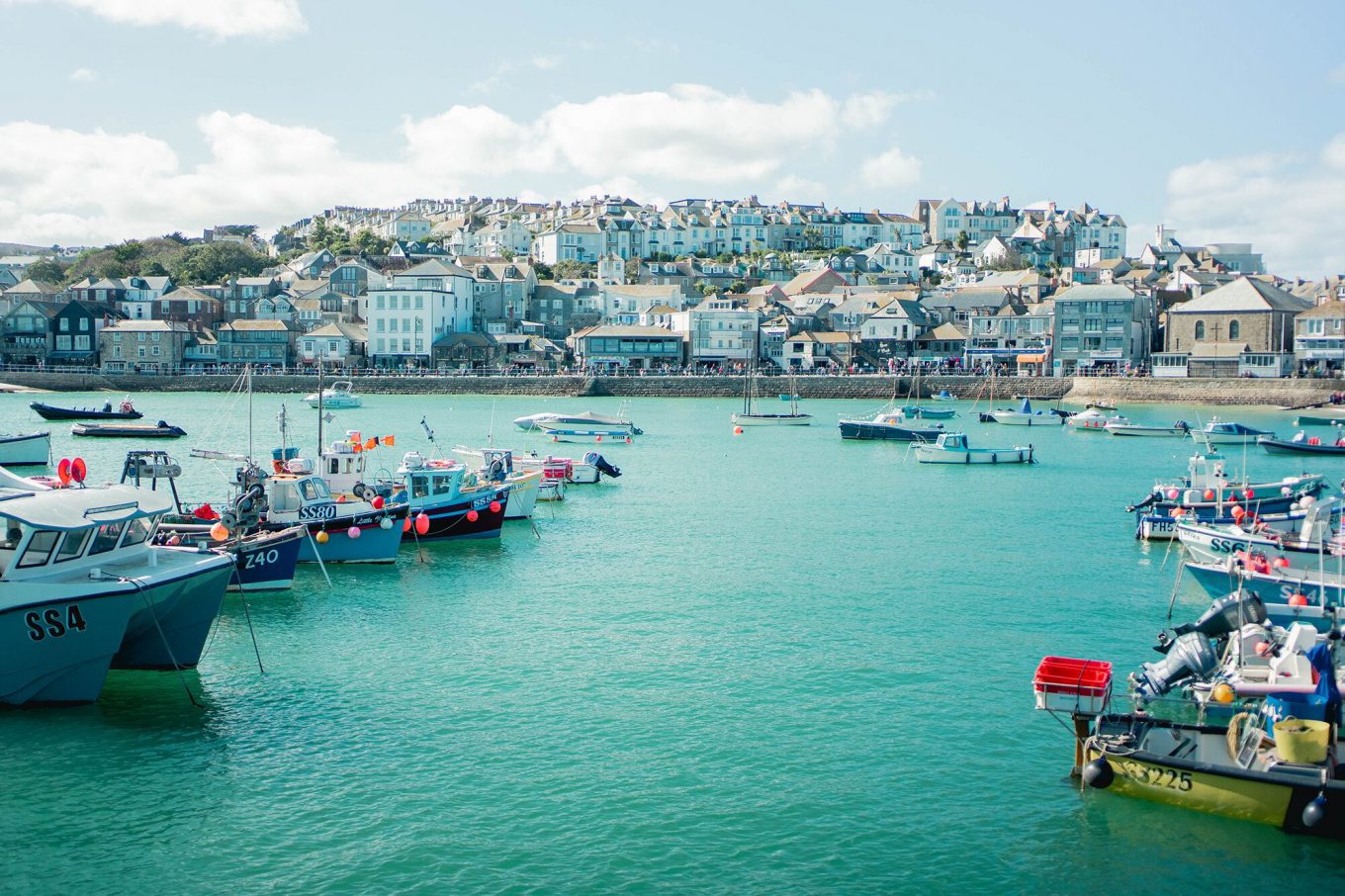
    Arlington Row is the most photographed row of cottages in England and when you see it in person you’ll realise why. It’s the quintessential image of honey coloured Cotswold stone cottages, nestled into the beautiful British countryside, surrounded by brightly coloured flowers and accessed by a little bridge over the gentle River Coln that’s full of kingfishers, ducks and royal swans. Catch it on a quiet, sunny morning and it feels like you’re in a scene from Stardust… well that’s actually because some scenes from Stardust (2007) were shot along Arlington Row. Actually the Cotswolds is home to many movie locations such as Bridget Jones’ Diary, Downton Abbey and Harry Potter. To find out more, check out this helpful article by Rabbie’s Travelfeels.

    Arlington Row was originally built as a wool store in 1380 for Arlington Mill. In the 17th century, it was converted into cottages for the weavers, who used to hang the washed wool out on racks that lead to the name of the nearby meadow, Rack Isle. In 1929 it was purchased and preserved  by the Royal Society of the Arts then in the 1970s it was purchased and preserved by the National Trust.

    All but one of the cottages are privately owned and occupied but you can actually stay at 9 Arlington Row for a minimum or 3 nights for about £500. You can book it here via the National Trust website, keep in mind you’ll need to book months out for this popular spot.

    PFH Fun Fact: Arlington Row featured on the inside cover of the 2010 issued British passports, making the village an even more popular destination to visit.

    Aside from being home to an Instagrammble hotspot, Bibury is also known for its unique and rare wildlife that mostly live in the protected meadow behind Arlington Row, Rack Isle. Take a long stroll around the village and make time for a treat in one of the local tearooms.

    As you can imagine, Bibury is a popular village to visit and it gets busy so if you want to see it at its best I suggest arriving early in the morning. 7.30am in summer is ideal as the sun is just creeping over the tops of the cottages creating a warm glow on the already golden stone and as everyone is asleep it’s quiet enough to only hear the birds singing. It’s ideal for taking in your surroundings and getting photos. You won’t need to rise so early in winter but still go as early as you can to avoid crowds. If you do arrive early, please be quiet and respectful of the people who actually live in these cottages.

    2. Visit Bourton-on-the-Water

    Bourton-on-the-Water, dubbed “the Venice of the Cotswolds”, is one of the prettiest villages in the Cotswolds by far! The village is located in Gloucestershire and straddles the River Windrush and each side is accessible via a series of low bridges, which make for a great photo spot by the way.

    There’s plenty to do in Bourton-on-the-Water besides taking cute photos and even though I don’t plan on having any yet, it’s a great spot for kids with wildlife parks, the Motoring Museum which is home to Brum (if you know, you know) and the Model Village to keep them entertained. 

    Start by arriving early to avoid the crowds, take a stroll along the river, taking cute photos whilst no one else is around getting in the background. This will also ensure you nab a parking spot before the village fills up. Next, grab breakfast in Bakery On The Water, a small family run artisan bakery, and if the weather is good choose to sit outside where you can sit next to the river as it runs down into the village. Walk off your breakfast by visiting the Motoring Museum next door which is home to over 40 cars including little Brum. 

    For those of you who didn’t grow up watching Brum on the tele in the 90s, he was a little, yellow, half-scale replica of a late-1920s Austin 7 Chummy convertible car with giant eyeballs, who would regularly drive off to “Big Town” when his owner wasn’t looking. Each episode would see him coming to someone’s rescue or learning something new and would end with him coming home with some souvenir of the day which, for some reason, NEVER seemed to baffle his owner when he found it at the end of the day. It’s a classic!

    Once you’re done at the Motoring Museum, stroll over to the Model Village, a miniature replica of the very same village you’re in. Built in the 1930s, it’s the only Grade II listed model village in the country. At £4.50 per adult and £3.50 per child (children under 3yrs old go free) it’s entertaining for all ages, especially when you realise there’s a model village in the model village, in the model village in the model village – that honestly gets me every time! 

    Once you’ve finished up in the model village, spend some time pottering around the shops and maybe take a break for a cream tea (a pot of tea served with a scone topped with jam and clotted cream) before leaving.

    3. Go for a long hike

    Provided you are able to do so, hiking or going for a long stroll out in the countryside of the Cotswolds is an absolute must. With plenty of paths, routes and bridleways it’s hard to choose which to tackle, but the number one trail is Cotswold Way. This 102 mile long National Trail is the most famous walk in the Cotswolds as it goes all the way from one end of the Cotswolds to the other: from Bath, Somerset to Chipping Campden, Gloucestershire. There’s plenty of opportunities along the trail to do sections of it rather than the full 102 miles, thank goodness. We chose to do the Leckhampton Hill Loop which is a moderate hike with some steep sections that starts and ends in Seven Springs. It’s 4.5 miles (7.25km) and will take around 3hrs to complete. The Leckhampton Hill Loop covers some of the best sections of The Cotswold Way including vast luscious grasslands home to roaming cows, Iron Age remains and an incredible hilltop view over Cheltenham. Park up early in the lay-by opposite the Seven Springs pub.

    Another really beautiful spot to hike that is close to the Cotswolds but not in it, is the Wye Valley Area of Outstanding Natural Beauty, there’s a pay and display car park at Symonds Yat Rock where you can start many trails. Make sure you make a stop at the view point from Symonds Yat Rock for breathtaking views of the valley which includes a horseshoe bend in the River Wye and the chance to spot a Peregrine Falcon, the world’s fastest bird, soar.

    Be sure to bring water, wear suitable footwear and if you walk in the summer make sure you wear suncream.

    4. Take a deep breath at Cotswold Lavender

    If you’re a frequenting reader of Postcards from Hawaii, you probably know that I am obsessed with lavender, so one of the first things I needed upon arriving in the Cotswolds in July 2020 was to visit Cotswold Lavender.

    Cotswold Lavender is a third-generation family run Lavender farm and distillery, located in Snowshill, Worcestershire that overlooks the Vale of Evesham. Unlike many other Lavender farms across England, their visiting months are limited to just June and July so aim for these summer months if you’re planning to visit. The middle of July is when the lavender is most in bloom.

    The field opens at 10am and costs £4 per adult and £2 per child aged 5-16 years, children under 5 get free entry.

    With over 40 varieties of lavender across 140 miles (225km) of rows there’s plenty of opportunities to take a moment to deeply breathe in the intoxicating and calming scent of the lavender plus you can get all the photos you need from various angles thanks to the plants being split up into various patches.

    The best angle is with the lavender farmhouse in the background (it’s on the right as you enter the lavender fields). As always, arrive early for the best shots.

    There’s plenty of picnic benches amongst the lavender if you want to bring your own lunch.

    Be sure to pick up some of their lavender products before leaving, they’re amongst my favourite lavender products I’ve ever purchased. Their lavender hand sanitising gel is ideal for keeping you clean and calm in a pandemic and their sleep spray is heavenly! 

    For further reading on lavender on PFH, check out 10 lavender products for more relaxing travels and How to sleep on long flights.

    5. Go wine tasting on a vineyard tour

    Catch them on a glorious spring/summer’s day and the vineyards within the Cotswolds look and feel like rural France.

    Our vineyard of choice is one of the oldest in England: Three Choirs in Gloucestershire. A tour and tasting at Three Choirs Vineyard costs just £12.50 per person and includes a 30-45mins guided walking tour of the factory which gives you a brief history of the vineyard and their wine production plus you get a tasting of four of their wines which includes their sparkling, red and white wines. Bookings must be made in advance by contacting them here.

    Be sure to book a table at their brasserie where you can dine on a carefully selected menu to compliment their wines whilst looking out over their some 45,000 French and German grape vines set upon 75 acres of hills. 

    After your meal, take a lazy stroll on the vineyard walk which is mapped out with plenty of signage explaining the history of Three Choirs’ wine production. 

    There’s also a shop for you to purchase your favourites from your tasting and meal and with their own onsite accommodation, there’s also the option to wake up to the beautiful view of the vines.

    6. Enjoy a lazy pub lunch 

    Though it’s not what we’ve been used to, I honestly much prefer the way pubs are set up now due to the worldwide C-19 pandemic. Everything is table service which means you don’t have to queue at a crowded bar, the tables and toilets are regularly cleaned which means no more sticky surfaces and seating is far more spread out so you can rest assured that everyone in the village won’t know your business because no one can hear you chatter at your table now!

    Pretty much every village in the Cotswolds has a pub so you won’t have to look far to find a dreamy location for your lazy lunch. Treat yourself after a long morning walk/hike – like the ones I mentioned earlier – to a pint and lunch or better yet, end your week with a Sunday lunch carvery. 

    The pub we chose to eat at was The Royal George in Birdlip, a tiny but picturesque village in Gloucestershire.

    You could also grab a pint in the oldest pub in Britain, The Porch House in Stow-on-the-Wold with parts of its building known to date back to the year 947!

    7. Experience ancient Rome in Bath

    Bath, Somerset is located at the very base of the Cotswolds. Its history spans thousands of years as it was an ancient Roman settlement over 2000 years ago. I highly recommend spending some time exploring Bath and learning about its rich history making sure to visit the Roman Baths, stroll the cobbled street and eat at Sally Lunn’s. To read more about what to do in Bath, take a look at Long weekend in Bath, England itinerary.


    If you do visit any of these places during the pandemic, please make sure you bring a reusable face mask and keep your face covered whenever you’re inside or in close proximity to other people outside of your allowed bubble. Please regularly wash your hands or use sanitiser and put in the effort to socially distance yourself from others.

    As I have recommended with many of the things to do in this list, arrive early to avoid crowds and not only will you have a better chance of taking great photos but you will also reduce the amount of people you are around.

    Gabriella

    Pin this post