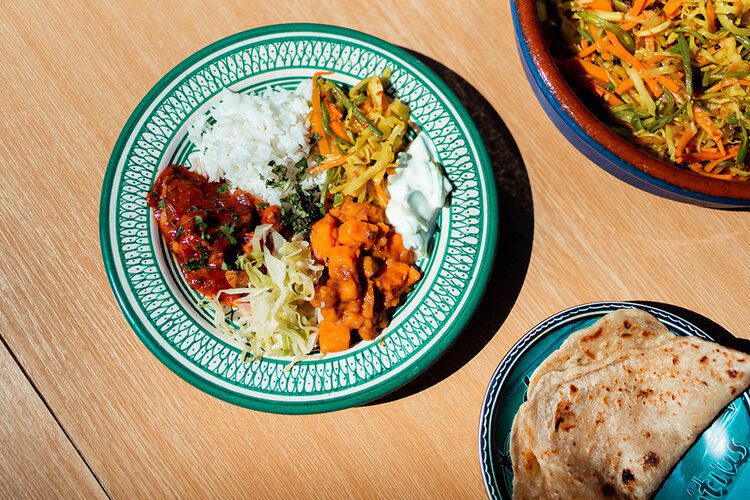
Achard légumes is a Mauritian mixed vegetable pickle that originates from the Indian dish, achaar.
Though it took me a long time to acquire an appreciation for the taste of achard légumes, its place on the table in my family is a nostalgic one. This bright yellow, orange and green dish has been present at almost every large family gathering and for me, conjures the same comforting summer feels as strawberries and cream.
Achard légumes is one of the best side dishes you can make because it compliments such a wide variety of meals. It can be eaten with a curry or rougaille along with many other side dishes, or it can be eaten with a roti (Mauritian flat bread) or fresh bread, it can go into a sandwich or on a salad and it goes great with a BBQ or a cheese board. It’s a really flavoursome way to bring a variety of vegetables to whatever you’re eating.
Just like the rougaille recipe I shared last month, this achard légumes recipe is my Mum’s, so there are variations. Her adaptation is that she doesn’t use vinegar or cauliflower because my Papa, her Dad, didn’t like it so he didn’t use it. Many of the tweaks to our Mauritian recipes come from my Papa not having liked something!
This achard légumes can last up to two weeks if refrigerated if you do the following:
Fry all of the onion as this recipe tells you to. Some recipes will tell you to only fry half and add the rest in raw but this makes the achard watery and it won’t preserve for as long.
Add salt just before eating. Salt will also make the achard watery and again, it won’t last as long.
Prep your vegetables the day before you are planning to cook it. By allowing the vegetables to dry out overnight, the achard will last longer.
I almost forgot to point out, though you will be able to work it out from the ingredients list below, it’s vegan and vegetarian!
This recipe will serve 4-6 people.
Ingredients
3 carrots
3 stringless flat beans
1/4 small white cabbage
2 shallots
2-3 cloves of garlic
1 fresh or dry chilli (add more if you want the achard to have more of a kick)
1/2 tsp mustard seeds
2 tsp fresh turmeric (can be dry if you can’t get hold of fresh)
Large cooking spoon (black or metal, keep in mind that the turmeric will stain it)
When it comes to washing these up, use an old tea towel as the turmeric will stain it.
Method
1. Prepare your vegetables a day before and allow them to dry out.
Julienne the carrots and beans.
Shred the cabbage.
Cut the chilli(es) in half, lengthways. If you don’t like too much spice then remove the seeds, if you don’t mind then keep them in.
2. When you are ready to cook, peel and finely slice the shallots, mince the garlic and ginger and grate the turmeric.
3. Heat 2 tbsp of oil in the wok/frying pan on a medium heat and fry the shallots.
4. Add the garlic, turmeric, mustard seeds, chilli, pepper and ginger and stir through. Let them heat through for a few minutes to release their flavour.
5. Add the carrots and beans. Stir frequently so they get covered with the spices.
6. Add the remaining 2 tbsp of oil along with the cabbage and cook it until it wilts. The length of time you cook your achard really depends on whether you want the vegetables to be crunchy or soft. The longer you cook it, the softer it gets, so stop cooking it when you are happy. We cook ours for about 10mins so there’s still a little crunch.
Frequent travel is not good for our environment. Yes I said that. When compared to staying at home the impact of air travel emissions or water wastage in hotels – just a couple of examples – are taking their toll on our beautiful planet. Beautiful she is though and so we are desperate to explore all the wonderful things Earth has to offer. From hiking closer to cascading waterfalls that drop from luscious green cliffs hundreds of metres into the sky to snorkelling in reefs where fish of all colours of the rainbow inquisitively dart between your limbs, we don’t want to deny ourselves of these opportunities.
Seeing those luscious and bountiful forests burn up and the coral reefs bleach and die are heartbreaking but very real scenarios and they are happening across Earth frequently as a repercussion of the times we have all chosen convenience over sustainability. So how do we continue to travel Earth but start to become more mindful of the impact we are having on it? The way to begin is to make more sustainable choices in our regular travel routine and with that being said, here are 10 easy ways that everyone can be a more sustainable traveller, really simple swaps that we can all do to make our travels less impactful and more responsible:
1. Transportation
If given the choice between walking and taxi (Uber etc.) you should walk. It not only cuts down on fuel usage but it also saves you money and is a way to work more exercise into your day.
If given the choice between a taxi (Uber etc.) or public transport, take the public transport. Compared to private car journeys, public transportation produces less air pollution and reduces traffic congestion.
If you need to hire a car, look for an economic option such as cars that use less fuel or are either electric or hybrids. In years gone by we have rented large fuel guzzling cars and it is not something I intend to do again.
Avoid cruises! With the mass generation of hazardous chemical waste, these beasts are polluting both the air and sea! Never mind the fact that a single person’s carbon footprint triples when onboard a cruise. I understand the appeal but please consider that cruises are incredibly damaging to eco-systems, please avoid them at all costs.
2. Carbon offsetting
The most responsible way to travel (aside from walking as mentioned above) is to travel by bus or train and though there are many amazing networks in place around the world, not everywhere is connected by rail or road, I mean, I won’t be moving to Vancouver from England on a train anytime soon.
So the very best things we can do when a flight is involved is to book direct flights and carbon offset them. Check out my blog post, How to carbon offset your flights for three companies that I recommend using including information on what it is that these companies do, how you can calculate your emissions and how much carbon offsetting costs.
Oh, also pack less, it’s hard I know and something I still have to keep pushing myself to do but lighter suitcases means lighter aeroplanes which means less fuel consumption and so less carbon emissions.
3. Environmentally friendly products
Switch from using single-use products or products with non-recyclable/biodegradable packaging. Every little swap makes a BIG difference to the planet and lessens your contribution to plastic pollution.
For 26+ ideas on which sustainable swaps you can make for not just on your travels but in your daily-routine take a look at my blog posts:
The tours and excursions you book tell a big story of the type of traveller, nay person (yeah that’s right I said nay) you are. To knowingly partake in any activity that causes harm to animals and/or the environment is something that needs to stop.
Animal tourism stems from the brutal treatment of animals which includes drugging, caging, under-feeding and bullying — just to name a few — to manipulate them for the owners needs. Avoid visiting big cat enclosures, elephant rides, posing with chained monkeys in market squares or with snakes around your neck.
I wish I could say I’ve never been a part of this but unfortunately I have been on camel rides that I now know in my heart weren’t being treated well. We must reflect and learn from past experiences so that we consciously make the right decisions in the future.
I’ve written a full blog post focused on how to find sustainable tours and excursions with advice specifically focused on marine tours here in How to practise responsible tourism.
You can also help by donating to legitimate sanctuaries and charities who put in the hard work every day to protect our environment and all the wonderful creatures who call it home.
5. Hotel tips
Second to staying in sustainable hotels here are some extra measures you can take:
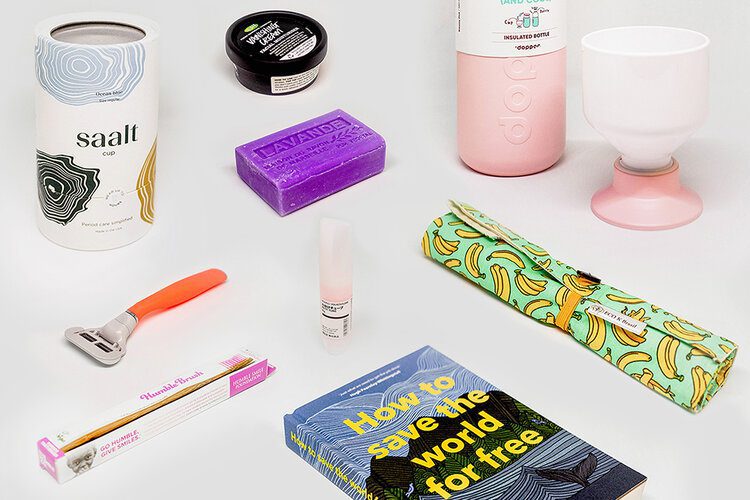
Bring your own solid toiletries such as shampoo, conditioner and soap instead of using the tiny plastic bottles the hotel may provide. Yes they look cute but don’t be fooled by their disguise, each one is a threat to the environment. You could also call ahead to see if the hotel uses refillable toiletries so that you can avoid single-use plastic and heavier luggage. IF you do use the mini toiletries for whatever reason, NEVER leave with product still in them, it will get thrown away and it’s a terrible waste. If you’re sacrificing our planet then at least use the whole bottle.
Hang up your towels! Hotels are significantly responsible for big time water waste and pollution partly due their never ending laundry piles (well unless there’s a worldwide lockdown of course). Reuse your towel to prevent the need for daily washing, or better yet, take your own microfibre towel so housekeepers aren’t even tempted to kindly (less we not forget they’re not intentionally upsetting us) replace our towels with fresh ones.
Turn off the lights, TV, air con/heater and plugs so that electricity isn’t been wasted whilst you’re out exploring.
Keep your room clean and tidy so housekeepers don’t have to vacuum (electricity), change the sheets (water) or clean surfaces (chemicals in non-recyclable bottles) until you’ve checked out or unless absolutely necessary.
6. Go paperless
Travel tends to be a slightly trickier area to go paperless with boarding passes automatically being printed out from self-service machines, ticket stubs being issued from booking offices… and though I’m fully aware that these often make great travel mementos, please try to go paperless where you can.
My top tips for paperless travel are:
Download the app that allows you to have an electronic boarding pass.
Buy your tickets to everything you can online checking that you don’t have to print them off.
Use Google Maps instead of a paper map.
Take photos of brochures/maps etc. (If you do take one, try your best to return it so that someone else can use it).
Don’t sign up to mailing lists, unless they’re email mailing lists.
If you do end up with something that you don’t want to keep anymore, ensure that you recycle it.
7. Observe local customs
Part of being a responsible traveller is knowing how to conduct yourself in a way that respects and honours cultures and local customs. Do your research before arriving. Things to be aware of are how to speak, how to act and how to dress.
You know Chief Seattle’s quote “take only memories, leave only footprints”? Well it’s not just something to re-pin to your “Travel Inspo” board, it’s something to actively practise. Don’t go pinching rocks at Pompeii or coral from the ocean bed, and don’t leave your rubbish/trash on the ground or chemicals from your suncream in the waters.
Pay attention to signs, I cannot stress this enough for when it comes to taking photos for the ‘gram. If a sign says “stay off the grass” then stay off the grass, if a sign says “no access” then don’t go beyond it and if a sign says “no photos” then don’t take photos.
If getting a photo is more important than the experience of being there and respecting the country’s rules then quite frankly you don’t deserve to be there. It’s a lesson I’ve taught myself especially since becoming a blogger, if I can’t be respectful and put the experience over the photo then I don’t deserve the experience and I need to check myself. No matter who you are, you are leading by example, so make sure it’s the right one.
8. Litter pick
Wherever you are in the world, if you see rubbish/trash on the street, in a bush, in the sea, on the beach etc. then please pick it up (if it is safe to do so) and dispose of it properly.
Actively live by “not my garbage, but it’s my planet” everywhere you go and soon enough you will ALWAYS be alert to poorly discarded litter.
Don’t hesitate to share your litter picking on social media to raise awareness to others of where there’s rubbish/trash that needs to be removed and to advise others to keep their eyes open to it.
Remember to wash your hands after and carry hand sanitiser, soap leaves or biodegradable anti-bacterial wipes to be extra safe.
Oh and on the topic of rubbish/trash, keep in mind that not all hotels and airlines have an adequate recycling system so you may want to keep hold of any recyclable waste until you can dispose of it responsibly rather than leaving it to someone who won’t.
9. Food
Food is an overlooked but important area for maintaining sustainability on your travels. Taking into account of where you’re choosing to eat is a very important decision and could be the difference between eating responsibly and contributing to more pollution for our planet.
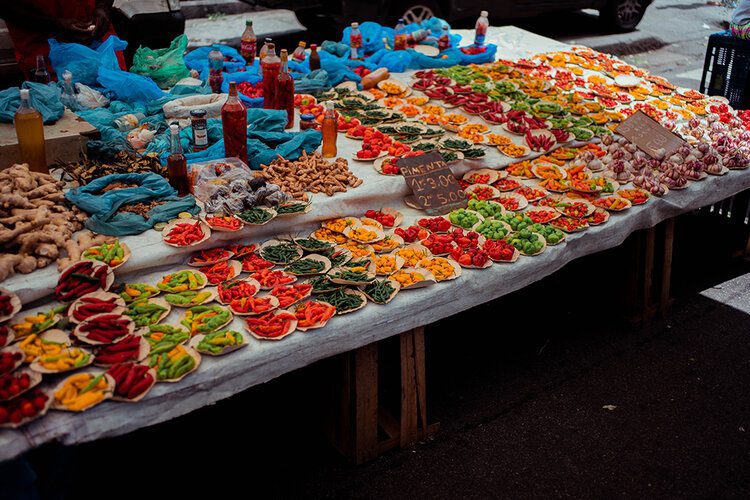
Eat locally. Local produce means it hasn’t travelled miles to be on your plate. It also helps to fund the community; it’s always good to support local businesses – responsible local businesses.
If you are purchasing a take-out meal make sure you get them to use your own reusable container and request that they do not give you cutlery (use your own reusable cutlery that I have listed in my previous blog post Sustainable swaps for travellers). If they won’t allow it and their packaging is plastic or polystyrene then avoid eating there.
Avoid all-inclusive offers. All-inclusive leads to an obscene amount of waste.
Cook yourself. Stay in accommodation that has a kitchen/kitchenette and shop from a local market so you can cook your food yourself. Not only does this cut down on food wastage but it also saves you money. For simple ideas on preparing food in your hotel room take a look at my blog post, 6 items for making food in your hotel room.
If you eat out, carry a reusable container with you so you can keep the leftovers. Most restaurants offer a “doggy bag” or a box but you never know if it’s going to be plastic.
10. Souvenirs
When it comes to buying souvenirs, take your time to find locally produced and handcrafted items. By doing so you are supporting the local community. Mass produced souvenirs aren’t very meaningful and are often discarded. If you’re uncertain, ask locals where you can go.
Another thing to consider is finding local classes where you can learn to make something. Wouldn’t you prefer a handmade clay pot over a generic shot glass?
.
So there you go, 10 ways you can become a sustainable traveller! Comment below if you do any of these or have any additional suggestions!
A traditional Mauritian rougaille (or rougail depending on the region) is a flavoursome tomato based sauce that can be cooked with any meat or vegetable. It is one of the most basic dishes in Mauritian cuisine and because of that, it’s one that tends to vary ever so slightly from one Mauritian family to the next.
The ingredients to our family’s rougaille causes a heated debate between my Mum and her four sisters and brother because even they believe their little additions and substitutes are better than the others. I learnt not to get them started on whether or not to add ginger – my Papa, their Dad, didn’t like ginger so it was never added to his rougaille when he made it but not all of his kids followed suit with that, and they will argue until they turn blue (as many Mauritian families do) over whose is the best. It’s the same with their vermicelli (a dessert), achard legumes (vegetable pickle) and créole rice (a rice dish not dissimilar to a paella) – despite the culinary competition, you are always guaranteed one hell of a feast when my aunts and uncle cook together.
This rougaille recipe is my Mum’s, her adaptation is that she favours passata over fresh tomatoes, purely because the tomatoes we can buy in England aren’t as flavoursome as they are in other places around the world, so passata provides the rich tomato taste the dish requires, oh and as tribute to her Dad, she doesn’t use ginger.
As I mentioned earlier, a rougaille sauce can be cooked with any meat or vegetable, it is even popularly accompanied by boiled eggs in Mauritius. This recipe is for a saucisse rougaille, sausage rougaille, as it’s one of the most simple to make but the option is there to substitute the sausages to make this recipe vegetarian or vegan!
This recipe will serve 5-6 people.
Ingredients
X2 packs of sausages
500g passata (or chopped fresh tomatoes if you can buy them beautifully ripe and flavoursome)
X2 tbsp oil
X4 spring onions/scallions
X1 fresh chilli
X1 onion
X2 garlic cloves
X2 sprigs of thyme
A handful of fresh coriander
1tbsp chopped chives
1tbsp chopped parsley leaves
Salt and pepper
All the herbs can be dry if fresh herbs aren’t an option for you, it will taste better with fresh herbs but it’s not the end of the world if you don’t grow them or can’t buy them fresh.
1. Cook your sausages in the oven for as long as the instructions on the packet say.
2. Peel and finely chop the onion, garlic, spring onions and coriander leaves.
3. Cut the chilli in quarters – deseed it if you don’t want your rougaille to be too hot, or cook with the seeds if you do.
If you don’t cook the seeds into the rougaille then keep them either to cook into something else or plant them so you can grow your own chillies!
4. Add the oil to your saucepan and sauté the onions and then garlic.
5. Add the spring onions (scallions) and chilli. Keep the heat low as you’re not cooking these ingredients, you’re heating them to bring out the flavour. Let them sit for about 5mins gently tossing them around every minute or so to stop it sticking.
6. Pour in the passata and stir through.
7. Add the thyme, parsley and chives and season it with salt and pepper. Stir it and leave to simmer on the same low heat whilst you prepare your sausages.
8. When the sausages are cooked remove the excess oil by putting them on paper towels or your reusable alternative which will absorb it.
9. Cut the sausages into bite-sized pieces.
10. Add the sausages to the rougaille sauce and stir through. Leave it to simmer for another 5mins.
11. Season to taste with salt and pepper.
12. Right before serving, sprinkle and stir in the coriander leaving some aside for a garnish.
13. Serve with rice, fresh bread or roti (Mauritian flat bread). Garnish with the remaining coriander leaves. Enjoy!
So, coffees in our regular cafés aren’t an option right now and boy does that suck, but why not take it as an opportunity to get a little experimental at home and try out something new?
Let’s take a quick trip around the world from the comfort of our own homes, well actually around Europe with a short stop in India, good job we’re not flying all that way just for a coffee, right? Although I’m certain at this point you would 100% hop on a plane to India even just for a coffee, until travel is an option again, let’s be safe and stick to trying these coffees.
I can’t actually drink caffeinated coffee as I have a rather unfortunate sensitivity to caffeine, so I had my brother, who’s a chef, and my partner, who’s a self-proclaimed coffee connoisseur (yeah, I laughed too), come up with these coffees for you. Of course, you can make all of these with decaffeinated coffee should you wish, just as any seasoned coffee-drinker will tell you, it won’t be quite the same.
1. Indian Cappuccino (Dalgona)
The skilful one with a sweet reward.
Also known as a beaten coffee, Desi coffee or that whipped coffee that has featured on every it-girl’s Insta feed since the COVID-19 pandemic!
Origin
India
Ingredients
2tbsp of instant coffee granules
2tbsp sugar
1tsp boiling water
Glass of milk
Method
Heat your glass of milk either in the microwave or on the stove.
Whip together the coffee granules, sugar and water until the consistency resembles peanut butter.
Spoon half of the coffee mixture into the hot milk and stir.
Spoon the rest on top and serve.
2. Kaisermelange
The wildcard, like no coffee you’ve ever had before.
Origin
Austria
Ingredients
X1 egg yolk
X1 shot of espresso
Method
Make the espresso.
Separate the egg yolk from the white.
Add the egg yolk to the espresso
Stir and serve.
3. Irish coffee
The boozy one.
Origin
Ireland
Ingredients
Black filter/drip coffee
Shot of whiskey
1tsp brown sugar
Fresh double cream
The ratio really depends on the size of glass you’re using. You want the coffee and whiskey mixture to be 3/4 of the glass and the cream top to be 1/4 of the glass.
Method
Stir the coffee, whiskey and sugar together until the sugar has dissolved.
Gently pour the cream onto a spoon over the coffee (this is to make the cream float on top rather than mix in) and serve.
4. Café Bombón
The don’t-have-dessert-with-this-coffee-because-this-coffee-is-your-dessert one.
Origin
Spain
Ingredients
X1 shot of espresso
2tsp condensed milk
Method
Add the condensed milk to the bottom of the glass.
Make the espresso.
Pour the espresso on top of the condensed milk.
Stir before drinking.
5. Affogato
The ice cream float for sleepy adults.
Origin
Italy
Ingredients
X1 shot of espresso
X1 round scoop of vanilla ice cream
Method
Make the expresso and add it to a larger heat proof drinking glass.
Add the single round scoop of ice cream into the coffee.
The perfect pitcher of Pimm’s doesn’t exis…. here it does. This recipe will have you making the perfect pitcher of Pimm’s Fruit Cup to serve this summer.
Pimm’s No.1 Cup was created by James Pimm in 1840. It’s a gin-based spirit that is mixed with lemonade, ice, mixed fruits and mint. Pimm owned an oyster bar in London where he served up Pimm’s No.1 Cup as a digestive aid in a small tankard, which is how the drink got its name.
Pimm’s No.1 Cup or known informally as just Pimm’s, is Britain’s favourite summer drink. It is famously served at some of England’s biggest summer events such as Wimbledon and the Chelsea Flower Show and is a staple at any summer wedding, BBQ, cricket match or garden party.
No other cocktail represents the Great British Summer better than Pimm’s, so to help you bring a little British summertime sophistication into your home here’s how to make the perfect pitcher of Pimm’s No.1 Cup!
This recipe will serve 4 glasses working off the ratio of 50ml of Pimm’s to 150ml of lemonade per person. When making Pimm’s No.1 Cup, the ratio to lemonade is 1 part Pimm’s to 3 parts lemonade.
Recipe for how to make the perfect pitcher of Pimm’s
1. Slice the orange, lemon, lime and strawberries.
2. Chop up the cucumber into chunks.
3. Cut off the excess stalks from the mint leaves.
4. Fill your pitcher 1/3 of the way with ice.
5. Add the fruit and mint leaves. Before adding the mint leaves, give them a little smack with your hands. This warms up the mint and starts to extract the oils so that they can infuse your drink.
6. Measure out your Pimm’s Cup and pour into the pitcher.
7. Measure out your lemonade and pour into the pitcher.
8. Take your stirrer and stir to combine the Pimm’s Cup and lemonade whilst evenly spreading out the fruit and ice.
9. It’s ready to pour and serve, chin-chin!
Alternatively you can mix Pimm’s No.1 Cup with ginger ale or even champagne to make a Pimm’s Royal Cup.
Sure, there’s a lot to see along the Road to Hana: a volcanic black sand beach, green sea turtles sunbathing, a bamboo forest… but no road trip to Hana would be complete without making a stop at the “Halfway to Hana” store for warm banana bread. Oh yes, warm! This little hut has been serving up fresh banana bread for 37 years (as of 2020) and is by far one of the best parts of making this road trip.
Not making a trip to Hawaii anytime soon? Yeah, me neither, but that doesn’t mean we can’t bring a little aloha into our kitchens! Here is my simple banana bread recipe that I have been baking for over a decade.
100g butter or margarine (with a little extra for greasing)
2 ripe bananas
2 tbsp milk
2 eggs
1 tsp baking powder
Ingredients
Equipment
Scales
Wooden spoon
Plate
Fork
Knife
Measuring spoons
Large mixing bowl
Loaf tin
Greaseproof/parchment paper
Cake tester or skewer
Cooling rack
Equipment
Method
1. Preheat the oven to 180°C or 350°F.
2. Lightly grease a loaf tin with butter then line with greaseproof/parchment paper.
3. Mash the bananas with a fork on a plate and add to the mixing bowl.
4. Measure out the remaining ingredients and add to the mixing bowl. If you want to do something a little extra, you can sprinkle in some desiccated coconut or chocolate chips before mixing it all together.
5. Beat the ingredients together to form a wet mixture.
6. Pour the mixture into the loaf tin.
7. Place into the oven and bake for 50mins.
8. After 50mins check the cake with a cake tester or skewer – insert it and remove, if it comes out wet with cake mixture stuck to it then place the tin back into the oven for 5-10mins and check on it every couple of minutes. If the skewer/cake tester comes out clean and the top of the banana bread is golden brown, then remove it from the oven.
9. Turn out the baked banana bread, peel of the grease proof paper and place on a wire cooling rack.
10. Slice it when you’re ready to serve, it’s best served warm with butter.
For all the times I have recommended street food and national dishes all around the world, I haven’t once thought about recommending what tourists visiting the UK should try, until now that is!
As a generally cold and wet country, our food tends to be on the stodgy and comfort side, focusing on potatoes and meat that can keep us warm, some of our favourites being bangers and mash (that’s sausages and mashed potatoes), cottage pie (no pastry involved) , shepherds pie (still no pastry involved) and actual pie with pastry involved. Don’t even get me started on the desserts! There’s trifle, crumble, Eton mess, jam roly-poly, summer pudding, sticky toffee pudding, bread and butter pudding and spotted dick (no dick’s involved) – oh yes, we do dessert very well here.
Amongst all of those extremely delicious delicacies, there’s five things that every traveller absolutely must eat when visiting Great Britain:
1. Fish and Chips
Let me start off with a public service announcement before going any further – if you are North American, in the UK chips are not potato chips, those are known as crisps, chips are fries but chunkier, fluffier and better! Don’t get me wrong, I love fries, but fries are fast food, guilty pleasures, ordered as a side… chips however, chips are life!
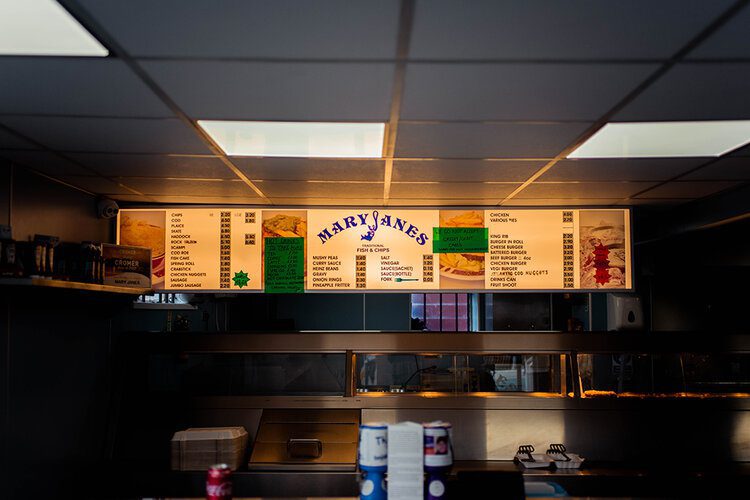
You order fish and chips from pretty much any restaurant in the UK from The Ivy to any old pub, but the best place to go is a local “chippy” either to eat in or take out. Very few foods bring me as much joy as when I unwrap my greasy paper to reveal more chips than I can physically eat and a piece of fish bigger than my head – challenge accepted!
The great fish debate has been going on in households since the dawn of time (or at least fish and chips), and really your choice of fried fish comes down to personal taste. Your options for the most part are:
Cod
Haddock
Plaice
Skate
Alternatives are: fish cakes, scampi a battered sausage or chicken nuggets (a firm favourite with kids).
There are three basic sides to fish and chips: pickled onions, pickled gherkins and mushy peas. I don’t know why, I don’t ask why, I just eat them and they taste good.
As for sauces, these tend to be a little more regional but they’re usually all available:
Curry sauce (which bares zero resemblance to curry but is amazing)
Gravy (that’s a northern thing)
Tartar sauce (that’s a posh thing)
Ketchup (standard)
The seasoning though is the most important part: salt and vinegar. Chips without salt and vinegar is like Sonny without Cher, Thelma without Louise, Burt without Earnie, LIFE WITHOUT AIR! They are what bring together this all time favourite meal of the British public. If you’re eating fish and chips in a pub or restaurant you will also be given a wedge of lemon for the fish.
Traditionally fish and chips is eaten on a Friday.
2. Sunday roast
A Sunday roast with all the trimmings is probably the British public’s favourite meal. It is synonymous with family and is a big home comfort for all Brits. Traditionally it is homemade but the alternative is to go to a pub for a carvery which is a buffet served roast. It’s called a roast because the meat and half of the trimmings are roasted, your meat options will be:
Chicken
Beef
Lamb
Pork
Turkey (reserved for Christmas)
The basic trimmings are:
Roast potatoes
Carrots
Parsnips
Yorkshire puddings
Stuffing
Gravy
Everyone has their own veg favourites so there could be additional ones depending on where it’s being served.
Condiments vary depending on the meat, Horseradish goes with beef, mint sauce goes with lamb, apple sauce accompanies pork and cranberry sauce enhances turkey. Chicken has been in a long-term relationship with gravy for so long that when you invite one the other comes too, chicken has no sauce on the side. Some people might serve bread sauce – a medieval sauce made from bread crumbs, butter and milk – but it isn’t a popular choice despite what Michael might tell you.
As a tourist visiting who hasn’t been invited into someone’s home for a Sunday roast, you can get one from virtually any pub on a Sunday. It’s not limited to Sunday but traditionally it’s eaten on a Sunday for lunch or dinner so Sunday will be your best bet.
3. Fry up
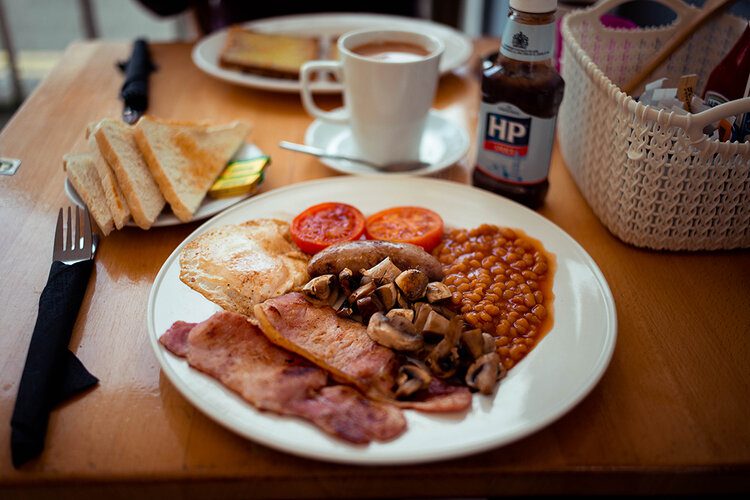
The fry up, otherwise known as a “full English”, is the quintessential British breakfast. Some ingredients change between England, Ireland, Scotland and Wales but the following staples stay the same:
Fried egg
Fried tomato
Fried mushrooms
Bacon
Sausage
Baked beans
A round of buttered toast
Black pudding is another core ingredient but is an acquired taste so it’s usually an add on.
Top off your fry up with a squirt of HP Brown sauce, a blob of ketchup and a sprinkling of salt and pepper and you’re ready to tuck in.
When I was working with children in Paris, the eight year old I was caring for came running across the playground when I was picking her up, looked up at me with disgust and said, “do you English really eat all that meat for breakfast every morning?” – eventually I worked out that she had just learnt in her English class that day about English food and our fry up. I’ll never forget the look on her little face! No we don’t eat a fry up every day or we would be dead in the ground in our 40s! A fry up is predominantly reserved for a lazy brunch or hangover cure.
You can get your fry up at any greasy spoon café serving fried food and any restaurant or pub open for breakfast/brunch. Your most authentic experience will be in a greasy spoon: an ever so slightly run-down and very cheap café.
4. Afternoon tea
Unlike everything listed above, afternoon tea is on the fancy side of Brit favourites and thanks to social media has become a true experience meal rather than just a slightly extra way to eat cake before dinner.
Afternoon tea is known to north Americans as high tea but they aren’t traditionally the same thing. Take a look at this blog post
PFH Fun Fact: though north Americans call afternoon tea “high tea”, they aren’t actually the same thing. Afternoon tea originates from the upper classes and royalty as a meal to satisfy the hunger that occurred between lunch and dinner, whereas high tea originates from the working class who didn’t have long afternoons to spend eating cake and ridiculously small sandwiches because they were well, working, so they had something to eat much later in the day and far more substantial than cake after a hard day’s work.
A traditional afternoon tea consists of:
Finger sandwiches (luckily we have progressed past plain cucumber)
A selection on mini cakes and pastries
Fruit and plain scones served with jam and clotted cream
Tea (expect an extensive list)
Almost everywhere will give you the option to pimp up your afternoon tea with prosecco or champagne, this is known as “Royal tea” and may concur an additional cost.
There is a certain etiquette to afternoon tea so listen up kids:
The dress code is “smart casual” unless stated otherwise. Use it as a chance to dress up
Place the napkin on your lap
Before pouring your tea, place the strainer over the tea cup so the tea leaves don’t enter your cup
Hold down the lid of the tea pot as your pour
Do not drop your sugar lumps in, place them
Never bash your tea spoon on the side of the tea cup when stirring
NEVER put your pinky in the air, that is not a thing
Do not dunk anything into your tea (do this behind closed doors and only with a sturdy biscuit)
Eat your sandwiches first, with your fingers not cutlery
Never sandwich the two halves of a scone together with jam and cream in the middle
Also it’s scone like “gone” not scone like “bone”
You may use your dessert fork to eat your cakes
Dab your napkin on your mouth, don’t wipe
Afternoon tea should be served at 4pm but restaurants, cafés and tearooms will generally serve between 2pm – 5pm.
You will be able to find afternoon and cream tea all across the UK but if you are looking for the crème de la crème for traditional afternoon tea in London your top choices are:
You will need to book in advance for all of the above.
If a full afternoon tea seems too much, you can just order a cream tea which is scones served with jam and cream and a pot of tea. It’s the best part of the afternoon tea anyway!
Want to create your own cream tea or even afternoon/high tea at home? Take a look at my traditional English fruit scones recipe so you can make your very own from scratch!
.
Apart from the fried fish, there are gluten free, vegan and vegetarian alternatives to all of the meals above so everyone can have a least one of the above! As we ever so sophisticated Brits say, “dig in!”
Approximately 2.5 billion single use coffee cups are thrown away every year in the UK and a staggering 25 billion polystyrene – which will never biodegrade – cups are thrown away every year in the US. Can you believe that? We have become a “throw-away” society, obsessed with convenience and little regard to making things last but there really is no excuse for it anymore. The effects cannot be ignored and we all need to take action. Luckily this is a good place to start!
Of course, the beverage industry isn’t the only one to blame, but it’s a good place to start as using a reusable cup is especially effective on your travels (which are already contributing to the world’s CO2 problem) because we’re far from our coffee machines and mugs at home, so the need to order beverages on-the-go becomes higher.
Using a reusable cup is great for the following reasons:
It removes the need for single use cups and even bottles
It helps to save our planet
It saves you money as most coffee shops offer a discount for orders made in a reusable cup
There’s an overwhelming choice of cups available out there though, so let me guide you through which is the best reusable coffee cup style for your travel requirements.
1. Plastic – KeepCup
KeepCup cups comes in a variety of colours, designs, sizes and materials so whether you’re looking for something lightweight and durable such as plastic or most sustainable such as glass, they’ve got you covered.
12oz plastic Keepcup reusable coffee cup.
What’s good about this cup?
The sip hole can be sealed – this doesn’t mean the cup won’t leak if you put it in your bag, but it does mean it is less likely to spill as you carry it in your hand
BPA free
Dishwasher safe
Microwave safe without lid
You can fit a reusable straw either in the sip hole or through the lid if you remove the plug
Lightweight which means it won’t weight down your luggage
Best for?
Carrying in your bag between uses when you’re on the go, the plastic ones are incredible light and are particularly useful on days out
Making travel-friendly meals in hotel rooms, click here to read more
In the car, their small base means they fit into all cup holders
2. Tumbler – Maars
This particular cup was given to me in a welcome gift from the Greater Palm Springs tourism board and is one of the greatest things I have ever been given. I didn’t realise how much I would end up loving this style of reusable cup. Thanks to its compact size, I’ve been able to use this in so many different ways, plus I love that it comes with its own straw!
Maars is the company that Great Palm Springs tourism board used to make their branded cups, but I have linked some alternatives below.
What’s good about this cup?
Vacuum lid which means it’s far less likely to spill
Thermal so it will keep drinks hot/cold for much longer
BPA free
Comes with a straw so you can drink from it in two different ways
Lightweight and small so it’s easy to carry around
Best used for?
On the plane – it saves you from using a single-use plastic cup and is perfect for any beverages, plus imagine your level of superior smug-ness when there’s turbulence and you don’t have to panic-reach for your cup like everyone else as their precious contents start sloshing around
Carrying in your bag between uses when you’re on-the-go
To prevent needing a single use cup when you purchase a soda fountain drink – think fast food outlets and road trips
In the car, especially when you’re driving, the straw makes drinking (non-alcoholic drinks of course) whilst driving so much easier than fumbling around with a bottle lid – be safe when driving
3. Thermal cup – YETI
If you’re a slow drinker but like a lot of coffee this is the one for you, as it’s thermal it will keep your drink hot/cold for a very long time.
Want to go the extra mile? Then purchase a YETI x 4ocean rambler for $40-45 and pull a pound of rubbish from the ocean!
4ocean x YETI 20oz rambler.
What’s good about this cup?
Durable
The sip hole can be sealed – less likely to leak
Magnetised sip hole cover so it’s easier to open and clean
Vacuum lid which means it’s far less likely to spill
Dishwasher safe
Double-wall vacuum insulation so it will keep drinks hot/cold for much longer
Rust and puncture resistant stainless steel
Best used for?
Adventurers who lead a rougher lifestyle and need something durable
Travellers who have coffee running through their veins
Environmentally-conscious travellers
If you don’t want to drink your coffee right away
4. Bamboo – Polū
For the most sustainable option pick up a bamboo coffee cup. Bamboo is an ethical resource and completely biodegradable, and in particular Polū cups are made with recyclable silicon.
If you want to buy your very own compostable Polū coffee cup then click here to make your purchase, and use “POSTCARDSFROMHAWAII” for 10% off your purchase!
16oz Polū cup in “Coral Reef”.
What’s good about this cup?
Biodegradable and recyclable materials
50p from each purchase of a Polū cup goes to AccesSurf, a Honolulu based non-profit charity organisation that provides water-based programmes, services, and events for people with disabilities.
The lid is made from silicone so it stretches to fit a reusable straw through the sip hole
Lightweight which means it won’t weigh down your luggage
Best used for?
Sitting in coffee shops that don’t have mugs (that’s one of my pet peeves, when there’s no other option to a single-use cup)
Drinking on the go
5. Bottle & cup combo – Dopper
A stainless steel thermal bottle might be your best option if you don’t intend on drinking your drink for a while. Say you’re going on a hike, you can get your hot beverage of choice to go in your bottle and depending on the brand, it can stay hot for 9-12 hours. If you go for a cold drink such as an iced coffee, you can keep that cold for 24 hours.
Dopper bottles’ best feature is that they convert into cups, making your hot beverage far easier to drink if you choose to take a break. Plus, pouring it out means it will cool down so you can drink it then and there. I filled mine with tea and took in with me on a hike in Scotland and was very grateful for my little hot cuppa when my face had near frozen up in the cold clouds.
800ml Stainless Steel Dopper Bottle in Misty Pink.
What’s good about this cup?
Leak free – it can be completely sealed
A bottle and cup in one
Keeps liquids hot for 9hrs and cold for 24hrs
Dishwasher safe – a lot of big brand stainless steel bottles are
Dopper bottles are sustainably made
Every purchase of a Dopper bottle helps to fight against ocean pollution
BPA free
Best used for?
Drinking later in the day
No risk of spillage if you need to go hands free (maybe you’ll be on a bike)
Hikes or other long days out
On the plane – use the cup to save you from using a single use plastic cup and it’s perfect for any beverages
.
If the topic of sustainable travel interests you – which hopefully is one of the reasons you’re here – then please take a read of Sustainable swaps for travellers for 25 sustainable swaps you can make on your travels to remove the need for single-use products wherever you are in the world. There’s so much more we travellers can do on top of carbon offsetting our flights.
Aloha, Gabriella
Pin this post
.
Products from Dopper, Polū and the cup from Palm Springs have been gifted and as an Amazon and Polū Associate I can earn from qualifying purchases, but please know that I completely support and believe in these companies and products. I use all of these products myself.
In December 2019 Michael, my brother and I set off on a road trip to Bath in Somerset, England. We stayed two nights in a central location to explore the small city and visit the Christmas market. I recommend a trip to Bath anytime of the year because it’s so pretty and rich in history, 2,000+ years in fact, but if you are only to go there once, I strongly recommend going for Bath’s Christmas market.
Before heading home, we made a trip to visit Stonehenge as it was just an hour’s drive from Bath, so I’ve included it in this itinerary.
Here’s everything we did and what I recommend doing:
Day 1
Check into apartment
Pulteney Bridge
Bath Guildhall Market
Shopping
Volunteer Rifleman’s Arms
Day 2
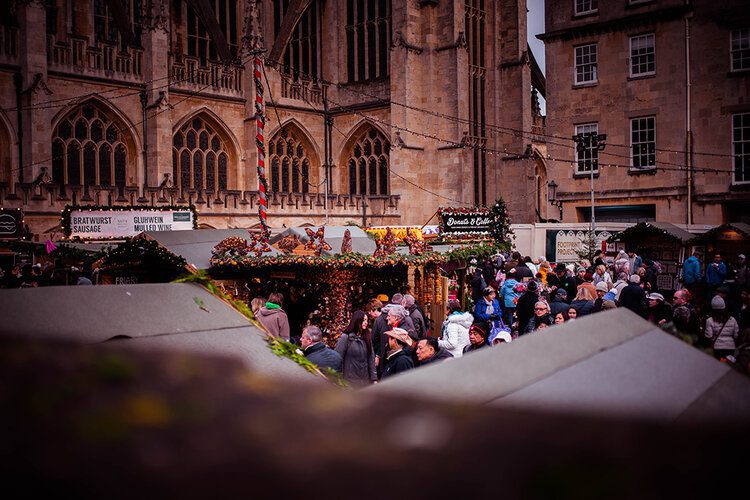
Christmas Market
Bath Abbey
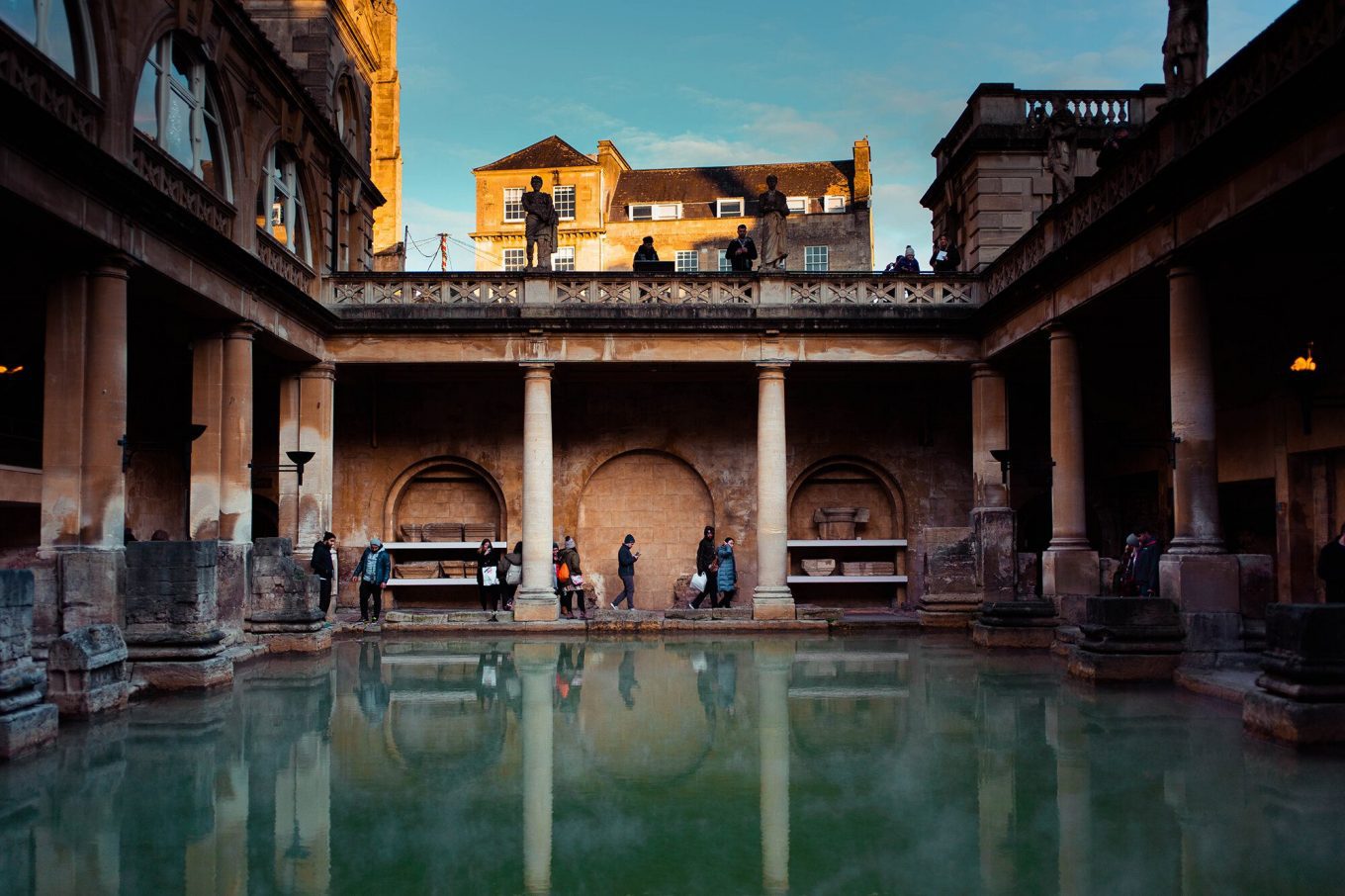
Roman Baths
Sally Lunn’s Buns
Day 3
The Circus
Leave bath
Drive to Stonehenge
Apartment
Originally seeking a hotel room that would sleep three people, I found that Bath was close to booked up during the Christmas market, even a couple of months out. Whilst on hotels.com I found an apartment that slept up to four people located seconds down the road from Pulteney Bridge (see below). It’s an extremely central location.
The apartment was clean, spacious, modern, had an equipped kitchen, a smart TV and offered great views of Bath’s Rugby pitch and the River Avon. It was perfect for our needs during our stay.
My only gripe with this beautiful apartment was that the kitchen/living room had five windows and no curtains which means that the person sleeping on the sofa bed receives an early wake up call, especially as the sun rises on that side.
There is no parking, but we parked in the underground car park in the shopping centre. It’s a 7mins drive and took less than 10mins to walk.
Pulteney Bridge
Pulteney Bridge was completed in 1774 and crosses the River Avon.
Its defining feature is that it has shops built along it on both sides, many of which are coffee shops offering great views of the river. It is one of only four bridges in the world that is lined with shops, the others located in Florence, Venice and Erfurt.
PFH Fun Fact: Pulteney Bridge was the filming location of Javert’s suicide in Les Misérables (2012).
Bath Guildhall Market
This 19th Century market is the oldest shopping centre in the city. Though it only has around 20 stalls, the variety covers a wealth of needs from household products, to knitting, leather goods and food.
I recommend picking up some bits from the Deli stall opposite the haberdashery, their English Breakfast scotch eggs are delicious!
Volunteer Rifleman’s Arms
You know those pubs you see in movies set in quaint little towns, where it’s packed full of locals and the atmosphere is both welcoming and electric? At first you’re not quite sure if you belong and then it’s like you’re part of the furniture – that’s what you get at the Volunteer Rifleman’s Arms on New Bond St.
I highly recommend stopping here in the late afternoon/early evening for a pint or G&T.
Christmas market
Bath Christmas market is award winning and one of the very best in the country. All of the stalls are individual chalets spread out across the city and cover food, drink, jewellery, homemade gifts, Christmas decorations and more!
Top stalls to visit
(From 2019, but hopefully they’ll return for 2020)
Pollyfields – for handmade Christmas decorations made from citrus fruits and chillis that embody the smell of Christmas.
Rose and Green – for handmade Christmas decorations from recycled clothing found in charity shops.
Flapjackery – for home-made flapjacks the size of bricks, all gluten free with vegan options too.
Opening hours
Mondays, Tuesdays and Wednesdays: 10am – 7pm
Thursdays, Fridays and Saturdays: 10am – 8pm
Sundays: 10am – 6pm
The 2020 dates of Bath Christmas Market will be published in late spring 2020.
Bath Abbey
Located right in the heart of Bath and right next to the Roman baths, it’s hard to miss Bath Abbey. Built in the 7th century, the gothic architecture has seen many restorations but has always been a working place of worship.
The exterior of Bath Abbey is best enjoyed during golden hour when the honey-gold stone is bathed in what seems like an aethereal light.
Opening hours
Monday: 9.30am – 5.30
Tuesday – Friday: 9am – 5.30pm
Friday: 9am – 5.30pm
Saturday: 9am – 6pm
Ticket costs
Adult ticket £8
Child ticket £4
Roman baths
Bath, originally named “Aquae Sulis”, was founded by the Romans over 2000 years ago. The city became a spa when they built baths from natural hot springs intended for worshipping their Goddess of wisdom, healing and sacred waters, Sulis Minerva, with dedicated temples built onsite.
Tickets include an audio guide which gives you a thorough history of the constructions of the baths, the usage of them, the Romans using them and artefacts found onsite. The audio guide will take you just shy of two hours to complete, so dedicate your time accordingly.
Sally Lunn’s is a world famous tea house, located in the oldest house in Bath (built 1482), and is where Georgian baker, Sally Lunn, first created the Bath Bun – a giant bread bun served sweet or savoury.
The buns are still baked to a secret recipe, but you can buy your own to enjoy at home – just pick them up from the gift shop.
If you dine in, you will get complimentary access to the museum below which includes the original underground kitchen where the buns were originally baked back in 1680.
Check out the menu here, you won’t be disappointed!
Opening hours
10am – 8pm
Museum closes at 6pm.
The Circus
The Circus is a circular formation of large Georgian townhouses designed by architect John Wood, the elder but completed by his son John Wood, the younger.
The houses are all Grade 1 listed buildings and are a fine example of Georgian architecture. John Wood, the elder, was inspired by Stonehenge (see below for more on Stonehenge) and built The Circus to the same diameter.
PFH Fun Fact: The Circus has been home to artist Thomas Gainsborough and actor Nicholas Cage.
Stonehenge
As we were just an hour’s drive from Stonehenge, I’d never been before and it didn’t look like we would be back down south any time soon, we decided to make a stop there before heading home.
Though the true origin story of Stonehenge is a mystery: who built it? How did they build it? Why did they build it? What was it for? – We do know that the first construction of this unique prehistoric monument took place at least 5,000 years ago, *mind blown*. To put that into perspective, that’s 3,000 years before the Romans even settled in bath (mentioned above under Roman Baths).
Stonehenge’s most fascinating feature is that the stones align with the movement of the sun, lining up directly with the midsummer sunrise and the midwinter sunset, two events that draw people in from all around the world, every year.
Click here to learn more about the history of Stonehenge.
Opening hours
October – March : 9.30am – 5pm
April – May: 9am – 7pm
June – August 9am – 8pm
September.- October: 9am – 7pm
Ticket costs
Adult tickets start from £19
Child (15-17 years old) tickets start from £11.40
Children under 5 years old go free
Student and senior tickets start from £13.05
Family tickets start from £49.40
Parking during peak times costs £5 but is refunded upon purchasing your tickets.
I also visited Bath’s fashion museum and I highly recommend going. When I visited way back in 2009 (I was there to take a tour of Bath Spa university) they had J.Lo’s Versace dress on display, oh yes I mean THE jungle dress from the 2000 Grammys.
Scotland is beautiful. So beautiful in fact that it made me sad knowing that I was born and raised in England and never took the time to drive up there. With endless snowcapped mountains, more sheep than you can shake a stick at and medieval architecture with the richest of histories, I would recommend a trip to Scotland for anyone who loves starting the day with a hike in the mountains and ending it with a G&T made from a local gin in a quaint village pub.
In December 2019 we drove from home (Norfolk, England) all the way up to Scotland and back, making overnight stops at Edinburgh, Isle of Skye and Glasgow. Here are nine of the best things that we did both in these destinations and on the journeys in-between:
1. Edinburgh Castle
Where?
Edinburgh
After pulling over to take selfies at the England/Scotland border, our first stop was Edinburgh, more specifically, Edinburgh Castle.
Proudly looking out over the city from the top of the hill that Edinburgh is built upon is Edinburgh Castle. It’s centuries old and has been the centre piece to centuries of battles between the English and Scottish monarchies, all of which you can learn about within the castle’s walls.
The views of the city from the castle are amazing but the pièce de résistance is visiting the crown jewels which includes the story of how they were made, hidden, lost and then found.
PFH Top Tip: Try to be around the castle at 1pm when a gun is fired precisely at one o’ clock. The tradition comes from alerting the ships in the nearby waters to set their maritime clocks. The sound of the gun firing echos across the city and can be heard every day except for Sundays, Good Friday and Christmas Day.
Cost
£17.50 for adults
£10.50 for children aged 5-15 years old
Children under 5 years old go free
£14 for seniors aged 60+
Opening times
1st April – 30th September 9.30 – 6pm (last entry at 5pm)
1st October – 31st March 9.30am – 5pm (last entry at 4pm)
2. Whisky tasting or a distillery tour
Where?
Edinburgh (and just about everywhere in Scotland)
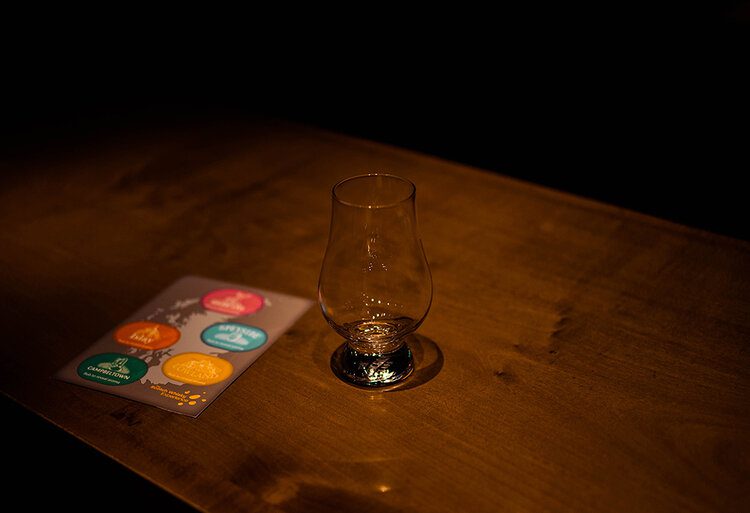
Whilst in Edinburgh we went to The Scotch Whisky Experience to learn about the production of whisky. There are many options for tours at The Scotch Whisky Experience from the basic introduction covered on the Silver tour right the way through to masterclasses. As we are not fans of whisky but wanted to learn we chose the Silver tour which includes the following:
An automated whisky barrel ride that tells you the process of the production of Scotch Whisky.
An introductory video that teaches you the various aromas of Scotch whisky related to its region.
A lesson in how to taste whisky which includes a dram of Scotch Whisky (or Irn-Bru for children under 18).
A viewing of the world’s largest collection of Scotch Whisky.
A complimentary crystal whisky tasting glass (adults only).
Of course you don’t just have to go here, there are many liquor shops in Edinburgh that will teach you about Scotch Whisky, we chose here because we didn’t want to pay for an experience where we had to try more than one whisky!
The other option you have in Scotland that’s centred around alcohol is to visit one of the countless distilleries both whisky and gin. Scotland gin and whisky is world famous and you won’t find it hard to find a distillery wherever you are in the country. Even when we were on the Isle of Skye and all I could see for miles was mountains and sheep there were still two distilleries there! We weren’t successful with visiting one because the ones we tried to go to were closed on the weekend so my advice is to check in advance. My alternative advice is to sit in a pub and (responsibly) work your way through their selection of local gins!
Cost
The costs for the Silver tour as follows:
£17 for adults
£8 for children
£15 for seniors aged 60+
Opening times
January – March 10am – 5pm
April 10am – 6pm
May – June 10am – 8pm
July 10am – 8.20pm
August Monday – Friday 10am – 5pm
August Saturday & Sunday 1-am – 5.40pm
September – December 10am – 5pm
Tours runs approximately every 20mins from opening.
3. Cairngorms Reindeer Centre
Where?
Cairngorms National Park
Meet Britain’s only free-ranging herd of reindeer in their natural environment at the Cairngorm Reindeer Centre.
Depending on the time of year there are two different experiences available: the hill trip and the paddock visit.
Hill trip
If you are physically able to make the trip up the hill to where the reindeer roam free then I strongly suggest you rise early to get tickets for this tour (see more under opening times below). Upon receiving your ticket you will be given directions and a parking pass for the Sugarbowl car park just a few minutes up the road. Here you will park and wait for the rangers to gather everyone at 11am. From there they will guide you across the road and down a steep path to a bridge crossing a river, where you will then make a short but steep incline up the hill to where the free-ranging reindeer are.
The rangers will give you a brief introduction to the reindeer herd and will then give you a handful of food to hand feed them. Don’t worry about having to find a reindeer, they know you have food and will come to you. It is best advised that you take your gloves off to feed them so you can feel their velvety soft noses, trust me they’re incredibly soft!
The tour lasts around 1.5 – 2 hours but you have the option of staying a little longer if you want to hang out with the reindeer for longer. To be honest though it’s very cold up there and once the reindeer work out you don’t have any more food, they aren’t interested in cuddles anymore.
Reindeer etiquette
All children must stand with an adult.
Do not bend down near a reindeer, they will perceive it as a signal that you want to fight them and you’ll be smacked with their antlers. I ducked in a photo so you could see the reindeer behind me without thinking and one came up to headbutt me in the leg with her antlers.
Do not chase them.
Don’t touch their faces, it irritates them which can again result in an antler-driven headbutt.
Don’t approach them from behind, it can startle them and they may run away or again, headbutt you.
Paddock visit
From Easter to the New Year it is possible to visit some reindeer in the paddock at the centre.
This option is best for people with mobility difficulties and young children who are unable to make the steep walk up the hill.
Whilst at the paddock rangers will teach you about the reindeer and will even be able to identify each one.
Although you are able to touch the reindeer you won’t be able to hand feed them, this is so they maintain a healthy weight.
PFH Fun Fact: Each season of calves are named with a theme. Previous themes were cheese (yes there’s Parmesan the reindeer), European cities and to commemorate the 2012 London Olympics the 2012 theme was…2012.
What to wear
Second to Ben Nevis, Cairngorms National Park is the highest mountain range in all of the United Kingdom and is a sub-arctic environment. Reindeer don’t feel the cold until the temperature drops below -30 degrees Celsius but you’re not reindeer so here’s how I recommend you keep warm:
A warm coat, preferably one that is waterproof as Scotland is notorious for rainfall, and if you go in winter the chances of snowfall are high.
A snood. A scarf may unwrap in the wind and you don’t want it to brush against the reindeers’ faces and startle them so I suggest a snood. Plus it will defend your face from the harsh windchill which can be in the minus.
Waterproof over trousers.
A wooly hat to keep heat from escaping through the top of your head and to protect your ears from the wind.
Thermal base layers, both tops and long-johns. For females I recommend a pair of thermal tights so you can have an added layer on your feet.
As many thick socks as you can fit into your boots. (I had 3 pairs of snow socks and my toes were still numb).
Layers. Layer up as much as you can under your coat.
Hiking boots or wellies (you can rent a pair of wellies for £1 from the centre if you don’t have hiking boots or wellies. They won’t let you go up with anything else on your feet).
Between June – October it is advised that you wear insect repellent.
Cost
Hill trip
£16 for adults
£10 for children
Children under 3 years old go free
Paddock visit
£3.50 for adults
£2.50 for children
Children under 3 years old go free
Closed on Christmas Day, 1st January and from 6th January – 8th February 2020.
Opening times
The centre opens at 10am.
Tickets are first come first served, I strongly advise arriving at least before 9.30am (9am on weekends) to make sure you get tickets.
Tours depart at 11am and 2.30pm with an additional trip at 3.30pm in July and August during weekdays.
Still arrive before 9.30am to buy your tickets for the afternoon tours as they will be sold to the people in the queue who don’t get on the 11am tour.
Winter trips may have adverse weather and therefore the centre may decline children to keep them safe. The centre telephone line is open from 9am so call ahead if you have concerns about the weather. The first time we tried to go the snow was so bad that we couldn’t even get to the centre.
The paddock is open from 10am – 5pm Easter – New Year.
4. Loch Ness
Where?
Inverness
It might not be the most beautiful loch in Scotland but it’s without a doubt the most famous one! If you don’t already know why, it’s because legend has it a monster known as the Loch Ness monster, or Nessie for short, lives in the depths of the loch. Its neck long and not unlike a Brachiosaurus with its body formed of many humps that protrude from the water. The first sighting was in 1933 with various pieces of “evidence” coming to light over the years when photoshop didn’t exist so it was hard to disprove.
Despite Loch Ness being 56.4 km², a road trip around Scotland would be incomplete without an attempt to spot infamous Nessie from one of the many parking bays surrounding the loch.
Cost
There is no entrance fee to visit Loch Ness.
5. Glenfinnan Viaduct (Featured in Harry Potter)
Where?
Glenfinnan
This 30m high structure built in the 1897 is most famously known for being the railway bridge that the Hogwarts Express travels across in the first Harry Potter film of the series, The Philosopher’s Stone, it’s also worth a visit simply because it’s magnificent.
For the best view point on foot, turn right out of the car park and start walking along the road until you reach a private car park which is gated off. Walk past the gate and continue up the path until you find another small path heading up hill on your left, just before you reach the viaduct. You’ll then cross under the viaduct and start curving back on yourself as you walk along the path up the hillside. When the path widens you will be able to look out upon the viaduct.
PFH Top Tip: For the best photo op, aim to be there around 10.55am or 3pm where you will see the Jacobite steam train cross the bridge aka, the Hogwarts Express.
Cost
Though you don’t have to pay to visit the viaduct, there is a £4 charge for parking. Though we arrived at 4pm (in December) when the sun was going down and the kind gentleman allowed us to park for free because we wouldn’t be there long due to the fading light. If you just want to hop out to see the viaduct and/or have a really good camera to shoot in low light, you could try your luck doing this.
Opening times
The visitor centre is open 9.30am – 4pm.
6. The Old Man of Storr
Where?
Isle of Skye
The Old Man of Storr is a peculiar rock formation up in the rocky hills on the Isle of Skye. The pinnacle was created by a massive ancient landslide and on a good day it can be seen for miles, but on a bad day, you’ll be lucky to catch it between breaks in the mist.
We, of course, hiked up on a very grey and miserable day but we did manage to catch a glimpse as the mist cleared for a few fleeting moments. I would say don’t give up hope if the weather is bad, just pray for wind.
There are various hiking routes surrounding the Old Man of Storr. As the weather was dreadful and the light was fading we chose to hike up to where it levelled out and we could appreciate the view of both the pinnacle and the vast stretch of water behind. There and back with a break for a cuppa and a few photos took us approximately 2hrs.
The terrain is steep, rocky and wet so I strongly advise hiking boots. Michael foolishly forgot to pack his and found it to be a slippery slope in his running shoes.
Cost
There is one car park that is free whilst the roadside parking is paid parking. I suggest you arrive as early as you can to park in the free car park, which is close to the entrance gate up the mountain (next to the construction site).
In winter you shouldn’t have a problem parking.
As we went in winter when it was quiet we used the free car park and therefore I don’t know the cost of parking along the road.
7. Fairy Pools
Where?
Isle of Skye
The walk from the car park to the pools isn’t strenuous like the walk up to the Man of Storr is, it’s paved for most of the way and only has a shallow incline. You do however have to cross many rushing streams both over stepping stones and giving into getting your shoes wet when the rainfall has been heavy and the rocks are submerged. For this reason I strongly recommend wellies or hiking boots.
Though many online guides will tell you the walk there and back is only 40mins, disregard this because it doesn’t include stopping to take in the view nor does it included walking to the furthest pools.
There are many pools to see but the further you go the more pure the blue water becomes in colour. Once you see it for yourself it’s not hard to imagine little fairies hanging around.
The path to the pools is the same you take back.
Cost
There is no entrance fee to the Fairy Pools but there is a parking cost of £5 per car. This is cash only so come prepared.
8. Gallery of Modern Art, Glasgow
Where?
Glasgow
There are four galleries within the GoMA, all of which are free to enter and rotate throughout the year so check ahead to see what is on here.
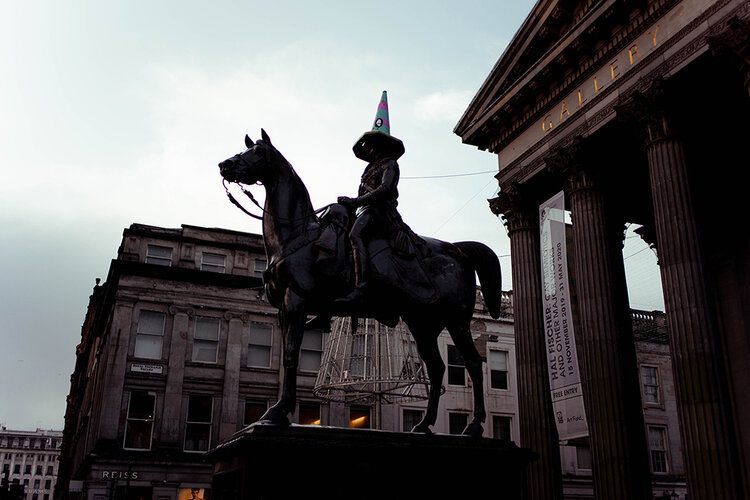
The best feature of the museum and no doubt the part that draws people to it from all over the world is the equestrian statue of the 1st Duke of Wellington that stands out front with a traffic cone upon his head. The traffic cone hat is a tradition that started way back in the 80s and was accepted as a way of expressing Glaswegians’ humorous side.
Cost
Entrance is free
Opening times
Monday – Wednesday 10am – 5pm
Thursday 10am – 8pm
Friday 11am – 5pm
Saturday 10am – 5pm
Sunday 11am – 5pm
9. Glasgow Cathedral
Where?
Glasgow
Read any guide of places to visit in Glasgow and the cathedral will be top of the list. For over 800 years Christians have worshiped God from within the medieval walls of this vast cathedral. Having been dedicated in 1136, it is the oldest cathedral on mainland Scotland and is the oldest building in all of Glasgow.
Cost
Entrance is free.
Opening times
Monday – Saturday 10am – 3.30pm
Sunday 1pm – 3.30pm
Our road trip around Scotland was just a week long and we were able to comfortably visit all of these places even with only 6.5 hours of daylight (as we visited in December). I chose these places to highlight because you truly get a feel for Scotland’s passions from their medieval history to the vast and beautiful landscape.
If you have any questions about my trip, feel free to contact me here.