Learn how to make snacks using store cupboard items and vegetable scraps to save waste and make something tasty that you can take on your travels for when you feel peckish. In this blog post I’m going to show you how you can turn potato skin peelings into potato crisps/chips without deep frying them, how to roast chickpeas to turn them into flavoursome crunchy bites and how to turn bulk-buy (save that plastic) corn kernels into popcorn! Yum!
All of these snacks can be stored in a tiffin or a reusable freezer/zip-lock bag to keep them fresh when you’re travelling or out and about.
Whether you’re travelling or not, these following three recipes will help you to reduce your plastic consumption and save you from throwing out food by composting it when you could eat it!
Before I share these really simple recipes I’ll answer a few questions you may have about them:
Are these small homemade snacks suitable for children?
These recipes for roast chickpeas, popcorn and potato skin crisps/chips are suitable for children who are over the age of 5 years old. As guided by the NHS website small snacks such as popcorn are a choking hazard for children under the age of 5. Also be mindful of how you season these homemade snacks as young children should not eat sugar to prevent tooth decay or salt to prevent kidney failure.
Above the age of 5 and with reduced sugar and salt these snack recipes are suitable for children.
Why are these plastic-free snacks better for the environment?
These homemade snack recipes are plastic-free as it’s possible to buy potatoes, chickpeas and corn kernels without any packaging and if you’re not used to buying dry chickpeas you can buy them in an aluminium can which can be infinitely recycled.
Reducing your single-use plastic consumption can help keep plastic out of our oceans and landfills saving wildlife from accidentally ingesting it and it can work towards a reduction in the need for single-use plastic production which will reduce the need for fossil fuels and production of poisonous greenhouse gasses.
Sure, making homemade snacks won’t save the planet right away but every little positive change we make will always help towards it. Don’t give up the good fight and remember the most sustainable thing you can do right now is to use up what you have first.
Can I take these homemade snacks on a plane?
Yes you absolutely can take homemade snacks on a plane. Check your destination for specific rules on what food products can be brought in just in case you don’t end up eating them in transit.
I travelled to Europe with my roast chickpeas and popcorn in reusable freezer bags.
Homemade potato skin crisps/chips recipe
How much will this recipe make?
At least two large potatoes will serve two people.
How long will these potato skin crisps/chips keep?
These potato skin snacks are best eaten warm and out of the oven but if you leave them to cool down completely before storing them they will last one day.
How long will it take to make potato skin crisps/chips?
It takes an hour to prepare and cook these potato skin snacks.
What you need to make potato skin crisps/chips
Baking tray/sheet
Tablespoon
Teaspoon
Sharp knife or vegetable peeler
Homemade potato skin crisps/chips ingredients
2 large potatoes
2 tbsp oil
Salt & pepper
1 tsp paprika (optional)
1 tsp garlic powder (optional)
How to make homemade potato skin crisps/chips
Pre-heat the oven at 200°C/392°F (fan assisted).
Peel the potatoes cutting a little deeper than you usually would – this will prevent the crisps/chips from burning as it makes them thicker.
Add peelings to a baking tray/sheet.
Drizzle the oil over the skins.
Season with salt, pepper and any seasoning of your choice. I like to use paprika and garlic but you can use anything. This time I used Everything-but-the-bagel seasoning from Trader Joe’s which works well too!
Pop the tray/sheet into the oven on the middle shelf and cook for 40-45 minutes, check after 35mins to be sure they’re not burning – if you peeled them thick then they’ll take slightly longer.
Allow to cool for a moment and serve or cool completely and store for later or the next day.
Homemade roasted chickpeas recipe
How much will this recipe make?
One tin of chickpeas will make 4 servings.
How long will these roasted chickpeas keep?
These roasted chickpeas will last about 5 days in a fridge or 2 days stored dry.
How long will it take to make roast chickpeas?
It takes 40mins to prepare and cook these roast chickpeas (if you use canned chickpeas).
What you need to make roasted chickpeas
Baking tray/sheet
Tablespoon
Teaspoon
Homemade roasted chickpeas ingredients
1 tin of chickpeas
1 tbsp oil
Salt & pepper
1 tsp paprika (optional)
1 tsp garlic powder (optional)
How to make homemade roasted chickpeas
Pre-heat the oven at 200°C/392°F (fan assisted).
Drain the chickpeas and put them on the baking tray/sheet – save the chickpea water from the can as you can use it as a vegan egg alternative for baking, 3 tbsp of chickpea water (aquafaba) is 1 egg.
Drizzle the oil over the chickpeas.
Season with salt, pepper and any seasoning of your choice. I like to use paprika and garlic but you can use anything.
Pop the tray/sheet into the oven on the middle shelf and cook for 30 minutes.
Allow to cool for a moment and serve or cool completely and store for later.
Homemade popcorn recipe
How much will this recipe make?
⅓ cup of corn kernels will make one large bowl of popcorn.
How long will homemade popcorn keep?
You can store homemade popcorn in an airtight container or reusable freezer bag for up to one week.
How long will it take to make homemade popcorn?
It will take around 15 or less to make popcorn.
What you need to make popcorn
Large saucepan with lid
Tablespoon
Homemade popcorn ingredients
40g (⅓ cup) corn kernels
3 tbsp oil
1 tbsp salt or cinnamon or sugar (optional)
How to make homemade popcorn
Heat the oil in a saucepan on a medium heat.
Add 4 kernels to the heated oil and cover the pan, when those kernels pop add the rest of them and cover but lift the saucepan off the heat for 30 seconds.
Place the saucepan back on the heat, with the lid left slight off centre for the steam to escape, until the corn pops. Once the corn starts popping shake the saucepan to even distribute the un-popped corn across the bottom of it.
Once the popping slows down, tip the popcorn into a large bowl and season with your choice of flavour.
Allow the popcorn to cool down completely before storing in a tiffin or reusable freezer bag.
.
Bon appétit! I hope you enjoy these quick and easy snacks that you can make from home to save waste.
This month on PFH I’m sharing my new vegan skincare routine with Dr Botanicals Apothecary range, my visit to the new Hockney exhibition in London, why I switched to Wild deodorant, the parts of Kew Gardens you don’t want to miss and the reusable glass straws that make all my drinks look fancy AF.
Each of my PFH favourites are chosen to inspire you to do more on & for the planet whilst caring for yourself and others.
This monthly feature shares five things that I’m loving and includes anything from plastic-free products and sustainable swaps to thought-provoking exhibitions and restaurant recommendations. It’s a space on PFH where I can keep you in the know of what’s popping up in London and my new finds that are helping me to live a more low-waste lifestyle.
Whilst travel restrictions are still in place due to the pandemic my favourites will continue to be more UK-based until it’s safe to travel further.
Here are my 5 favourites for August 2021.
1. Dr Botanicals Apothecary range
Dr Botanicals is a luxury vegan and natural skincare brand based in the UK. Created by a chemist with a family history in innovative skin treatments, their brand philosophy is to create natural products inspired by the nature they seek to protect and preserve.
“Let nature care for your skin with Dr Botanicals.” – Dr Botanicals.
Dr Botanicals’ new range, Apothecary, is inspired by superfoods to give your skin the rich nutrients it needs to keep it plump, hydrated and nourished.
Superfood describes a category of food that’s high in fibre, vitamins and antioxidants. Dr Botanicals has created the Apothecary range that features 14 superfood products each focused on one specific superfood’s qualities and how it can protect, replenish, and repair your skin.
Ingredients include Kale which is high in Vitamin C, turmeric which brightens the skin and watermelon which has antioxidants that can slow down skin ageing. There’s plenty to suit your skincare needs within the range.
I was gifted a few products from the Apothecary range by Dr Botanicals to try and I love using them so much that I want to share them as one of my August favourites. I have become obsessed with applying the Cocoa & Coconut Superfood Reviving Hydrating Mask straight out of the fridge at the end of the day, my skin feels immediately dewy after I remove it. The Strawberry Day Moisturiser and Cranberry Night Moisturiser are also contributing to a much more dewy and plump complexion and have a very light texture.
I for one am a big fan of a multi-use product so the lemon balm is my favourite. I have been applying it to my lips, elbows, feet and hands and it has significantly hydrated my skin. We also put the lemon balm on my partner’s sunburn and it settled down overnight!
The Apothecary range includes face masks, cleansers, exfoliators, serums and moisturisers and comes in a recyclable glass jar.
2. David Hockney: The Arrival of Spring, Normandy, 2020 exhibition at Royal Academy of the Arts
David Hockney’s work is amongst mine and my partner, Michael’s favourites and we were thrilled to find out there is a new exhibition of his work showing August – September at Royal Academy of the Arts in Piccadilly, London.
The Arrival of Spring, Normandy, 2020 consists of 116 works created by Hockney on an iPad with a personalised app that allowed Hockney to both paint and draw to his specific requirements.
The collection is a visual documentation of the unfolding of spring on his Normandy property during the period when most of the world went into the first lockdown of the Coronavirus pandemic. The property covers 4 acres which gave Hockney plenty of material to work with as he observed the season emerge out of winter.
“This exhibition will be a reminder of the constant renewal and wonder of the natural world – and the beauty of spring.” – Royal Academy of the Arts, London.
The work’s impressionist style, no doubt inspired by Monet’s springtime paintings created nearby in Giverny, France, can be admired up close where you can appreciate textures made by visibly individual strokes made with his stylus or from across the gallery where they all come together.
The exhibition shows all 116 works across 3 private rooms. Photography is prohibited within the exhibition so unfortunately I can’t share it with you, but it does make it all the more special to experience. You can see some of the pieces from the collection on the Royal Academy website.
Ticket cost for Spring in Normandy 2020 exhibition
The Arrival of Spring, Normandy, 2020 is on at RA from 11th August – 26th September 2021.
Tickets cost £17 each without a donation.
If you want to enjoy Hockney’s work in London for free head to Tate Britain to see A Bigger Splash.
3. Wild deodorant
Wild is a natural deodorant brand based in the UK. Their deodorant is free from aluminium, parabens and nasty chemicals whilst their packaging is plastic free.
I have been trying many different natural deodorants over the years trying to find one that doesn’t introduce nasty toxins to my body whilst also reducing plastic packaging. I have tried deodorants in glass, aluminium and cardboard packaging and though they’re great they still don’t quite satisfy both my partner and I so I decided to try out Wild and so far we both love it. It applies smoothly, only requires a couple of swipes and smells amazing. Something I particularly like about Wild deodorant is that the scent options change regularly, offering something new to try unlike regular deodorant brands that come in a limited range of scents. Of course the lavender scent is my favourite.
Though the applicator is plastic it is refillable and combined with the packaging for refills that is completely biodegradable, Wild greatly cuts down on waste compared to single-use plastic deodorant applicators.
Drop a comment on this blog post or email me at gabriella@7g5.cc5.myftpupload.com for a discount code to get your own Wild applicator for free.
4. Kew Gardens
Kew Gardens are the Royal botanical gardens of London in Richmond and is a UNESCO World Heritage site. The land covers 500 acres of land and has over 50,000 living plants, it is the largest botanical collection in the world.
It’s not only a picture perfect part of London, it’s also a fascinating way to travel to some of the world’s most beautiful plants all in one spot.
Things you don’t want to miss in Kew Gardens:
Palm House
The Palm House is a Victorian glasshouse that was built in 1844 to home the tropical plants Victorian explorers would bring back to England from their travels around the world. The living laboratory is filled with tropical plants and has a climate much like a steamy rainforest. It’s home to some of the most fascinating plants including the suicide palm that lives for 50 years and only flowers once before dying, the bottle palm that only grows wild in Mauritius and the world’s oldest potted plant.
The Palm House is super humid so be prepared from sticky skin and frizzy hair.
PFH Fun Fact: The Palm House is made with 16,000 glass panes.
Waterlily House
The Waterlily house was built in 1852 specifically to exhibit the giant Amazon waterlilies, Victoria amazonica, whose lily pads can grow up to 3 metres wide.
Temperate House
The Temperate House is the world’s largest Victorian glasshouse. It’s filled with 10,000 individual plants from Africa, Australia, New Zealand, the Americas, Asia and the Pacific Islands.
Rose Garden
The Rose Garden was designed in 1848 by landscaper, William Nesfield. It’s located opposite the Temperate House and features 170 different species of rose.
Kew Palace
Kew Palace was built in 1631 and became the home to King George III and his family in the 18th century. You can tour three floors of the palace and learn about King George and Queen Charlotte’s life at Kew with their 15 children.
Princess of Wales Conservatory
The Princess of Wales Conservatory has 10 climate controlled ecosystems. Take the path through to view succulents and cacti to waterlilies and Venus flytraps. It’s like a highlight reel of the gardens.
Ticket costs for Kew Gardens
Timed entry tickets for Kew Gardens must be booked in advance before visiting.
At the time we visited in summer 2021 tickets were:
£17.50 for adults aged 25+
£8.75 for young adults aged 16-24
£8.75 for students with valid ID
£5 for children aged 4-15
£15.50 for seniors aged 65+
£8.75 for jobseekers
£15.50 for disabled adults
Free to those who are registered blind
Carers accompanying disabled visitors get free entry
5. Manchester Glassworks reusable glass straws
Manchester Glassworks is ran by an independent glassblower based in the UK. They make reusable glass alternatives for a more mindfully sustainable future and their packaging is plastic-free and recyclable.
Manchester Glassworks’ glass straws have quickly become my favourite reusable straws. What I love most about them is that they’re aesthetically pleasing. Unlike bamboo or steel straws they elevate the look of my drink and look especially at-home in my imitation crystal cut cocktail glassware.
Manchester Glassworks has straws to suit all your glass depths from highballs to coupes and they’re currently developing an extra short straw for coupe glasses which I’ve recently been trying out. There’s also a wider straw at 10mm x 200mm for smoothies which I love using to drink my Mauritian alouda (recipe coming soon) because the basil seeds and agar agar doesn’t get stuck.
They’re particularly useful for preserving my lipstick whilst sipping on my drink and I’ve found the glass much easier to clean lipstick off than my bamboo straws. I also find them much nicer to clean because you can see through them.
I know what you’re thinking because I thought exactly the same thing – can you drop them? You absolutely can! They are incredibly durable, which makes this girl very happy because you won’t believe how many bamboo straws I’ve had to compost because Michael broke them by sitting on them – don’t ask.
Where to buy Manchester Glassworks reusable glass straws
You can buy Manchester Glassworks straws from plastic-free and UK-based shop, Coconut & Cotton. Straws start from £2.50 each
There you have it, my five favourites for August 2021. What are you loving right now? Let me know in the comments below.
Do more on & for the planet, Gabriella
Pin this post
Some products in this blog post have been gifted but I chose to feature them in this blog post.
How many times have you shopped at Westfield Stratford City and never realised right next door, opposite the International train station, sits five restaurants including a heated terrace, rooftop dining and an award winning cocktail bar that hosts live music events at the end of each week? This and more is why your next night out should be at The Mezzanine Bar at The Stratford.
The 42 story luxury hotel and apartments skyscraper is owned by the Manhattan Loft Corporation (managed by Marriott) who also own 5 star hotels: St. Pancras Renaissance London and Chiltern Firehouse. If that’s not already piqued your interest, The Stratford was designed by the same architects as the Freedom Tower New York City and Burj Khalifa in Dubai, the tallest building in the world.
The Stratford’s unique design makes it instantly recognisable for miles – we spotted it when we stayed at Shangri-La The Shard – and no matter how many skyscrapers go up in this forever developing borough there will be nothing quite so impressive as the building that looks like a precarious Jenga tower with trees where the blocks have been removed.
The Stratford Hotel has an impressive collection of five farm-to-table restaurants waiting for you inside:
Terrace E20
Terrace E20 is the outdoor restaurant on the ground floor at the main entrance to all five restaurants at The Stratford. A third of it is uncovered which is perfect during the summer if you want to bask in the sun, whilst the rest is under cover and when heated during the colder months by roaring fire pits is deliciously cosy.
PFH Top Tip – on a beautiful summer’s day, make a reservation for around 3pm as that’s when the sun will be in its prime position to drench Terrace E20 in golden sunshine.
Kitchen E20
Kitchen E20 is an extension of Terrace E20 but indoors, through the front doors and on the right to precise.
The Lounge
Whist Kitchen E20 is on the right of the main entrance to The Stratford, to the left is where you will find The Lounge. The Lounge is my favourite place to spend cosy Christmas evenings at The Stratford.
Sip cocktails beneath their enormous Christmas tree as the festive glow that radiates from within you is matched by the flickering flames within the large glass encased fireplace – it’s a winter wonderland.
Allegra
Take the express elevator up 7 floors to Allegra where you can dine either indoors or on their rooftop terrace. Sunloungers, tables, trees and a water feature fill this space where you can dine on dishes prepared with fresh local and seasonal ingredients.
Much like Terrace E20, Allegra is best enjoyed under the summer sun from around 3pm.
The Mezzanine Bar
Shortlisted for Best Bar Menu in the UK by Imbibe in 2019 for their innovative cocktail menu concept, The Mezzanine Bar is the hottest spot at The Stratford and by far my favourite.
If you’re looking for experiential cocktails, an electric atmosphere, seductive mood lighting, live music and bartenders so charming you feel like you’ve known them for years, then your next night out needs to be at The Mezzanine Bar.
I was invited for an exclusive preview of their 2021 cocktail menu, The Authentic Life, so you get to experience the behind-the-scenes on the inception of their 8 brand new cocktails for summer 2021.
With a combined experience of 22 years in the industry, the bartending team at The Mezzanine lead by senior bartender and one of Diageo Reserve’s World Class 2020 Top 100 list, Marcello Cauda, have created one of the most visionary cocktail menus to be served in London.
The Authentic Life was inspired by and celebrates 8 different lifestyles inspired by our collective passions and personalities that we discovered and nurtured during the intermittent months of lockdown during the pandemic.
With ingredients sourced from The Stratford’s very own organic farm, every element, bar the liqueur, created from scratch at The Mezzanine and an earth-forward mission to prevent anything from going to waste, you can bet that your night out at The Mezzanine is going to be every bit as authentic as you.
1. The Environmentalist
Low-waste libations.
Do you take your own reusable coffee cup out with you? Are you working hard to reduce your single-use plastic consumption and are you the one friends and family come to when they’re not sure what can and can’t be recycled?
Chances are if you’re a loyal Postcards from Hawaii reader then The Sustainable Living (or The Nomadic) is absolutely your Authentic Life cocktail of choice.
“Sustainable living describes a lifestyle that attempts to reduce an individual’s or society’s use of the Earth’s natural resources and one’s personal resources. It is often referred to as ‘earth harmony living’ or ‘net-zero living’”. – The Mezzanine.
The Stratford is already dedicated to working towards becoming a zero-waste business. Both the kitchen and bar uses their own fresh produce grown on their organic farm, anything that can be reclaimed is given a second life and any discards go back to the farm to be composted where it nourishes the next crop.
Sustainability is not just environmentalism, it’s about being able to uphold a consistent balance between meeting our own needs and those of the environment around us without compromising the quality of life for future generations. We care for our beautiful mama Earth now so that others may continue to thrive with her when we are no longer here.
To be able to do this we must look towards extending the life of what we already have and that’s exactly what Head Bartender, Marcello Cauda, and his team have done at The Mezzanine. The Sustainable Living expands your future expectations on how far the life of a single pineapple can stretch and uses every. single. part. of it, ensuring nothing goes to waste.
Pineapple juice is squeezed out to create the sour, the pulp is transformed into jam whilst the skin is fermented to make the tepache (which is much like kombucha) and best of all, everything is done at The Stratford.
Patrón Silver tequila is used for their commitment to limiting the environmental impact of the production of their tequila. They use reclaimed water for cooling and cleaning and they were the first tequila distillery to install a natural gas pipeline as their main energy source which reduces their CO2 emissions. They create fertilizer with the agave fibres from 10 surrounding distilleries, pay their growers fairly and participate in multiple philanthropic programmes.
2. The Socialite
That’s hot.
Are you the glitter glue that holds the group together, known for keeping the conversation flowing and cannot leave the room without first speaking to everyone in it? Do you have more invites in your inbox than there are posts on Instagram right now using #WFH? If it simply isn’t a party unless you’re in attendance, then The Socialite was made for you.
I bet you never missed one Zoom party during lockdown right?
“A socialite is a fashionable person very frequently involved in high society, they generally spend a significant amount of time attending various fashionable social gatherings.” – The Mezzanine.
I bet you’re offering sips of your cocktail to everyone at the table before taking a second one for yourself. You want everyone to share in your experience – sharing is caring right? – but your generosity often leaves you with little to enjoy for yourself, right? This is where the concept behind The Socialite, created by The Mezzanine bartenders, becomes the answer to that very problem. Served across two glasses so that you can enjoy your whole drink and still be able to share it with your friends, The Socialite is the drink of the season.
Grey Goose Vodka (what else?) layered flavours of cherries, plum, coconut and mint make this gorgeous cocktail a crowd pleaser, just like you are.
3. The Creative
The subjective one.
“The creative life is full of new possibilities, discoveries, exploration, experimentation, self-expression and invention. It’s a habit, a way of being, a style of existing.” – The Mezzanine.
Despite The Mezzanine bartending team’s month-long experimentations to come up with The Creative, staying true to its soul essence even upon my invitation to sample The Authentic Life cocktail menu, was still a work in progress.
Head Bartender, Marcello Cauda, channeled frustrations of some of the greatest artists in art history as the presentation of The Creative failed to meet his expectations. This was simply down to the fact that the edible Bombay Sapphire gin paint hadn’t yet arrived and he was temporarily using his own concoction of food colouring and syrup, which unfortunately wasn’t taking to the glass as he had hoped. With paintbrush in hand, his heartbreak filled the empty bar as the red colouring melted off the flute canvas and down the stem. Of all the cocktails from The Authentic Life sampled that day, no other concept lived a truer representation of its namesake.
No need for concern if The Creative speaks to you, the gin paint arrived shortly after and works perfectly to honour Marcello’s creative vision.
As a fellow creative who lives with another I can vouch that The Creative both inspires and touches a nerve, as all masterpieces should.
Peach bitters, Bombay Sapphire gin, champagne and a lacto-fermented melon and pine honey (made at The Stratford, of course) make The Creative the work of art that it is.
4. The Minimalist
Less is more.
Is Scandi-forward design your dream decor? Is your wardrobe full of linens in white, cream, beige, sand and taupe? Do your Christmas decorations look like they’ve been foraged from the woods? Sounds like your no fuss no muss lifestyle makes The Minimalist your choice of tipple.
To live a life of minimalism means to remove the unnecessary. You own fewer possessions but each one serves multiple purposes, nothing is fussy but everything is intentional.
Served in a simple tumbler, because no other glass can do it all, and accompanied by a solo cube of ice, The Minimalist stays true to its namesake. Just three ingredients make up this uncomplicated beverage but little do you know they’ve been ageing to perfection in a beeswax lined mason jar.
“A minimalist lifestyle is the process of identifying what is essential in your life and having the courage to eliminate the rest. When you remove the unnecessary, you free up your time and capacity to focus on the things that truly matter in your life.” – The Mezzanine.
Many would argue that two essential ingredients to getting through life are coffee and chocolate and coffee bean bitters with white chocolate liqueur are exactly what you’ll find in The Minimalist.
Representing the circle of life, the only garnish is a hand drawn ring of white chocolate on the inside of the glass that infuses with the cocktail as the clean cut edges of the ice cube melts away.
5. The Nomadic
Around the world in one cocktail.
Do you yearn for far-flung places? Does every penny you earn get spent on aeroplane tickets faster than your conscience can question if you should be saving them? If your Instagram resembles a travel brochure and your suitcase is permanently packed then The Nomadic is for you.
Actually, if you’re currently reading this article on Postcards from Hawaii, a travel blog for the organised traveller who cares greatly for the planet, your drink of choice from The Authentic Life is absolutely The Nomadic.
“Being fully nomadic means being able to live and work from anywhere and getting to sample tastes of the world, immersing yourself in cultures, traditions, new places and experiences that can evolve your soul exponentially in one year abroad than five years staying in the same place.” – The Mezzanine.
The Nomadic, a twist on a classic sour, takes you on a journey around the world with every sip. Seven ingredients go into making The Nomadic, each one representing the continents that make up our beautiful planet Earth.
Africa – Fennel seeds from Africa infuse The Nomadic
Antarctica – The Nomadic is served with an ice ball
Asia – A yuzu spray from Asia adds a fresh aroma to the The Nomadic cocktail before being served
Australasia – The Mezzanine uses Eucalyptus leaves from Australia to make a tincture concentrate
Europe – Flat peach syrup from Europe adds a little sweetness to the mix
The Americas – Banks 7 Golden Age rum which is a blend of 23 different rums from 7 different countries including Guyana in South America.
Served in a martini glass with a compass-inspired garnish drawn with bitters atop an egg-whites foam, this is a round-the-world trip that doesn’t require a Vaccination Passport.
6. The Foodie
#instafood
Are you the friend who everyone relies on to dish out the best restaurant recommendations? Does your food go cold because you need to get a good flat lay photo of it before digging in? Does your Instagram make everyone who looks at it ravenous? Sounds like the Foodie cocktail is your cup of tea.
The Foodie draws upon the experience of Michelin star chefs cooking your meal at your table and is delivered to you deconstructed. Get your phones ready as your Mezzanine bartender mixes The Foodie in front of you!*
The ingenuity of The Foodie doesn’t stop here! If you weren’t already geeking out (I certainly did) the actual cocktail itself takes a twist on a classic negroni and is inspired by one of Britain’s most treasured traditions: afternoon tea.
Boatyard’s Old Tom gin is infused with Savoiardi ‘lady’s fingers’ biscuits (cookies) and accompanied by Martini bitter infused with strawberries. With the addition of Cocchi’s Americano Rosa this show-stopping drink is intended to be a fusion of an aperitif and dessert; it’s sweet and bitter, complex yet smooth, opulent but accessible.
7. The Nature-Lover
It’s only natural.
Do you recharge by lying beneath the bushy canopy of trees whilst a gentle breeze makes the hairs on your arms stand to attention? Does the feeling of grass tickling your toes or sand filling the gaps between them give you a natural high? Would you sooner go on a 4 hour-long hike in the countryside than sprint on the treadmill at your local gym? Are you the one who carries the spiders from the bathtub outside whilst everyone around you is losing their mind? Yeah, you’re the inspiration behind The Nature-Lover.
“The ‘Nature-Lover’ is someone who finds their satisfaction in appreciating and feeling connected to the beauty of the natural world. They love to be outdoors in the fresh air, soaking up the wonders of nature.” – The Mezzanine.
Made with Canaïma gin (a Brazilian distillery who donates 10% of profits to reforestation efforts), The Mezzanine’s homemade cardamom and rosemary cordial and London Essence’s grapefruit & rosemary tonic, this extraordinary G&T, much like time spent in the great outdoors, keeps on giving. Watch as the homemade pink foam, made with egg whites and violet, jasmine and hibiscus flowers, that tops The Nature-Lover settles into your drink to form a pattern not unlike the wisps of a cirrus cloud.
Finished off with a spritz of sage flower mist every sip of The Nature-Lover smells like a leisurely stroll through Kew Gardens.
8. The Bohemian
Free spirit
“The modern bohemian lifestyle is one filled with music, art and literature – a way of living that embraces the doctrine of freedom over possessions.” – The Mezzanine.
The Bohemian is served in a rock glass, topped with crushed ice and a fig leaf foraged by The Stratford team themselves.
.
Don’t identify as just one? You don’t have to! Order your passions one after the other and drink to everything that makes your authentic life.
Should you prefer a classic cocktail The Mezzanine has got you covered, might I suggest their signature M Martini? To reduce wasting opened champagne that hasn’t been sold they reduce the reclaimed champagne and cut it with grappa (distilled pomace, which is everything leftover from the grapes during wine waking) to make their own bitters to accompany the Hepple gin and Grey Goose.
The Mezzanine Bar’s sustainable approach to their cocktails has set the bar for all future nights out, pun intended.
From Thursdays – Fridays live music sets the tone for your night out at The Mezzanine. Allow smooth jazz to soundtrack your intimate date night, the resident DJs to take your night out with friends to the next level or show everyone how it’s done at The Mezzanine’s Open Deck collective.
Takeaway cocktails at The Mezzanine, The Stratford
Enjoy some of The Mezzanine’s signature cocktails from home by purchasing the following bottled beverages:
Brownie Old Fashioned
Tropical Iced Tea
Floral Spritz
How to get to The Mezzanine Bar at The Stratford
The Stratford Hotel is located at 22 International Way, Stratford, next to Westfield Stratford City and opposite the International train station. Here’s how to get there from the following locations:
International train station
The main entrance to the International train station is located directly opposite from Terrace E20. You can literally hop on the Eurostar in Paris, pull into St Pancras (Kings Cross) and connect on a 7 minute direct train to step straight out into The Stratford – something to keep in mind if you ever visit London from Paris. From Stratford it’s only a 20 minute journey on the Central Line into the heart of London.
Stratford station
You can get to Stratford station on the Central, Jubilee and Overground lines. You can also take the national rail to Stratford and the DLR. To get to The Stratford Hotel from Stratford station enter Westfield (the direction is signposted in the station) and take one of the four exits listed below.
Westfield Stratford City
To get there on foot from Westfield shopping centre you can take one of four routes through the mall:
The ground floor exit between Curry’s PC World and HSBC. From this exit you will come out opposite The Stratford but the train tracks will be between you so you will need to make a left to walk beside them until you can take a right to walk over the bridge. The entrance to The Stratford Hotel and restaurants is at the end of the bridge on the right.
There are two more ground floor exits located within the Great Eastern Market food court. One is round the corner of Pasta Remoli, you’ll pass between a few restaurants before exiting opposite the children’s outdoor playground. Walk around the right of it and past the entrance to the International train station, over the bridge across the train lines and you’ll find The Stratford is at the end.
The last ground floor exit to The Stratford is located between Waitrose and Japan Centre and comes out in front of one of the car parks. From this exit, make a right and walk towards the International train station, past the children’s play area. Walk past the entrance to the train station and make a left onto the bridge over the train lines. At the end of the bridge is the entrance to The Stratford Hotel and restaurants.
You can also get to The Stratford from the first floor by taking the big exit between Cos and Kurt Geiger. Head down the steps, escalator or lift down to ground level and walk straight across the bridge towards The Stratford.
Driving
You can park at the International train station car park located next door to The Stratford. Parking here is cheaper than at the Westfield and more abundant once you get above the rental car floors. Just FYI there’s no barriers to the International train station car park but you must pay at the ground floor machines before exiting to avoid a fine as they detect your licence plate. Exit the car park and turn left, walk past the first door (this is to the loft apartments), the second door is the entrance you want and is indicated by “The Stratford” over the top of the doors.
Please drink responsibly and don’t exceed the legal limit.
.
Order from The Authentic Life cocktail menu from the 18th of August at The Mezzanine, one floor up from Kitchen & Terrace E20.
With so much to offer at The Stratford hotel from brunch at the outdoor terrace and coffee by the fireplace to dinner on the rooftop and cocktails served with live music, there is no better place to spend a night out in Stratford, East London.
Do more on & for the planet, Gabriella
Pin this post
The Authentic Life cocktail menu at The Mezzanine Bar in The Stratford Hotel has been created by seasoned bartenders: Jack, Serge and Marcello.
*subject to change depending on how busy The Mezzanine is upon the time of ordering
If you have curly hair and care for the environment then this is for you.
I have partnered up with Only Curls for this blog post to share who they are, why they’re leading the way to a more sustainable curly hair routine, why I love using Only Curls products and which ones are my favourite.
I decided to stop straightening my curls during the first Coronavirus lockdown in the UK – early 2020 – which was a significant part of my decision but it was mostly down to my struggle with my mixed-race (bi-racial) identity, which surfaced not long after the world watched the murder of George Floyd and Black Lives Matter became a global focus. During this time I tuned in to one of Norwich’s BLM live protests where I heard another Mauritian-English woman speak of her struggles with her mixed identity growing up in a white community in Norfolk. I listened to this empowered 19 year old step up to speak about straightening her hair to fit in with her friends, to avoid being called frizzy and escape hair-related microagressions because the skin tone ones weren’t avoidable. She spoke my truth and I burst into tears.
I realised how significant my hair was to finding myself and owning my mixed race identity. That I had to stop trying to change my hair because the patriarchy decided straight is normal and everything else is not – I mean that’s true across the board isn’t it?
This confident teenager who had decided to stop straightening her hair affirmed that I had a choice and from that day I chose to stop hiding my curls and instead I began the transition to embracing my natural and beautiful curly hair by nursing my damaged curls back to health.
A big-time player in my curly hair transition was introducing sulphate and silicone free products to my styling routine. As someone who is actively working to reduce my carbon footprint and live a more low-waste lifestyle I sought out eco-conscious curly hair products and that’s how I came across Only Curls.
Never had your curly hair cut by hairdressers who specialise in curls and don’t know where to go? Only Curls have an interactive map featuring hair salons who stock their products, isn’t that super helpful? Check it out here.
Who are Only Curls?
Only Curls are a London based haircare company who specialise in curly hair products. Founded in 2016 by a fellow curly, Lizzie Carter, Only Curls was created to care for curls and the planet whilst empowering people with natural curls to own their true beauty.
“Only Curls are on a mission to encourage curly haired girls of all textures to ditch the chemicals, forget the straighteners and start loving their natural curls.” – Only Curls.
All of their products contains natural ingredients and are free from silicones and sulphates. But Gaby, what are sulphates and silicones & why are they damaging to curls? I got you boo.
Sulphates are used in regular shampoos because they help the product to lather up which expands it so you get more use out of the shampoo – it spreads further across your scalp when you wash your hair. The problem with sulphates is that they rid the hair of natural oils leaving it dry and as curly haired people know, curls dehydrate easily (hello frizz) and when they’re dry they’re more prone to breakage. This is why it’s best to avoid products with sulphates in them if you have curly or dry hair.
Silicones are used in hair products to counteract the feeling of dry hair that the sulphates create and leave your hair feeling silky smooth. Unfortunately they aren’t actually hydrating the hair, instead they’re just coating it with a synthetic layer that builds up over time on the hair and scalp. Nasty right?
Whilst we’re on the topic of nasty ingredients that Only Curls don’t use in their products, they also avoid parabens. Parabens fight bacteria and are used in cosmetics to make the product last longer but they aren’t natural ingredients and can be absorbed by the skin – EW DAVID!
So the ingredients Only Curls use, and don’t, already had them in my favour but that isn’t all that makes them one of my favourite brands for curly hair.
Only Curls cares for our planet and all who live on it. Their products are vegan, cruelty free and they are working hard to reduce the impact their products have here on earth for generations to come. I’ll cover more on why Only Curls are a more sustainable choice for curlies who care for the environment below.
Before that, I also want to highlight how invested Only Curls are in your satisfaction and experience with their products. Once you receive your purchase you will also get an email asking you how you’re getting on with them and should you be having any troubles with your styling – like I did when I first transitioned to my curls – they are at hand to give you personalised styling tips. They also have a Curl Care space on their website with tutorials on brushing, styling, drying and refreshing.
Why Only Curls are better for the planet
Only Curls products are a better choice for curly people who care about the environment and the future of our planet because they are:
Cruelty free
Vegan
Bio-plastic packaging
Recyclable packing
In my experience, styling curly hair requires far more products, care and attention than straight hair, not that I’m dismissing caring for heat damaged hair but I used far less products on my hair when I was straightening it compared to my current curly hair styling routine.
Even though I have never felt better about my hair since I’ve embraced my curls, I found it extremely challenging to suddenly introduce plastic bottles into my haircare where there weren’t before. At the start of 2020 I was feeling really proud of myself for reducing my single-use plastic consumption in the bathroom and when I switched to the Curly Girl Method I suddenly needed styling creams, hydrating hair masks, oil treatments and different strength gels, even my hair brush collection needed to expand!
Then as every person with curly hair will know, your curls are as unique as your DNA and they won’t take to every product you try and trying products can increase your single-use plastic consumption – to deal with this I passed down my products to other curly haired people to try.
This is why it’s a deep sigh of relief knowing that Only Curls plastic packaging is made from bio-plastics derived from the bi-product of sugar-cane rather than fossil fuels. It’s still plastic but it’s plastic with a lower carbon footprint.
Only Curls also offers the following products in 1L bottles to reduce the amount of plastic bottles you need to purchase:
All curl cleanser
All curl conditioner
Hydrating curl cream
Enhancing curl gel
Cleansing co-wash
On the other hand it’s super frustrating not being able to try out products right? Buying full-sized products to find out the product doesn’t work with our curls wastes money and adds to single-use plastic waste not to mention it’s hella frustrating! Only Curls solution to this is selling their products in 100ml travel sized bottles so you can save money, save plastic and if you love them like I do, you can refill them with the full-sized product for your travels.
All of their bottles, boxes, packing materials and tape are recyclable.
My favourite Only Curls products
I’ve been using Only Curls products for the same amount of time as I stopped straightening my hair – just over a year from the date this article was published – and in that time I’ve tried almost every product Only Curls has on offer.
Aside from how environmentally-conscious Only Curls are, something I really love about them is their broad mix of products from styling products to help you feel your best self in your curls to accessories to protect your hair when your head hits the silky pillow at night.
Some of my favourite Only Curls products are:
Only Curls Cleansing Shampoo Bar
Once I decided to stop using shampoos with silicones and sulphates in them I found it particularly tricky to eliminate plastic from my hair wash routine. Previously I was using a shampoo bar from Lush (Honey I Washed My Hair) which I absolutely loved when I was straightening my hair because it made my hair feel silky and smooth and of course I loved it because it is a naked product – it has zero packaging.
Unfortunately it contains sulphate which wasn’t doing my curls any favours (see above for why sulphates aren’t good for curly hair) and as it turns out most shampoo bars contain sulphates as one of the main ingredients. So in my transition from damaged hair to bouncy curls I had to forfeit plastic packaging in my hair wash routine so I could use shampoo that was sulphate and silicone free.
Then Only Curls came out with their cleansing shampoo bar that has no plastic packaging! It also has no drying alcohols, parabens or mineral oil, it hasn’t been tested on animals, is vegan and is made in the UK. The packaging is made from FSC mixed card and is 100% biodegradable. Yay!
Wash day is way more exciting now that I have the Only Curls shampoo bar. It not only lathers up better than any other shampoo bar I’ve tried but it also lathers up immediately unlike many silicone and sulphate free shampoos.
Coconut, avocado and kukui nut oils work together to hydrate curls, eliminating frizz, and gives the shampoo bar Only Curls’ signature tropical scent.
After washing with the plastic-free Only Curls shampoo bar my hair feels clean, nourished and soft. This is not only one of my favourite Only Curls products but curl products of all time.
Also it travels way better than a bottle of shampoo!
Only Curls Hydrating Curl Cream
Something I was completely unaware of for so long when styling my curls was that they needed to be hydrated before applying gel or foam/mousse. I also didn’t scrunch out the crunch which is another sin in itself…
The hydrating curl cream is a light, non-sticky formula which prevents curls from getting weighed down by too much product and doesn’t leave them or your hands feeling tacky after application. Aloe, Shea Butter, and Marula Oil work together to leave your curls nourished, soft and defined. It’s my go-to curl cream.
Only Curls Microfibre Hair Towel
The rough surface of regular Terrycloth towels are notorious for causing damage to curls. They absorb surface moisture which leaves hair frizzy and more likely to break. Microfibre towels are made with smooth fibres that glide across the hair and dries faster without stripping curls of their moisture.
Their microfibre hair towel has a button and two elasticated loops so you can fasten the towel neatly on your head without it coming undone the second you bend over to moisturise your legs.
To use the Only Curls microfibre towel simply use it to scrunch excess water out of your hair after applying the hydrating cream to your wet curls.
Only Curls Afro Comb
Some of my earliest memories of my Mum is her fluffing her curls with her afro comb, the same one has lived in the family bathroom all my life. There weren’t many options back when she bought it, tortoiseshell or black was all she could get her hands on, which is why it’s super exciting to see all of the beautiful colours and patterns that Only Curls has!
I use my Only Curls Colour Splash Afro Comb on my dried hair to lift the roots which gives my curls more volume.
Look after your plastic hair combs well and they’ll last you for years to come.
Only Curls Silk Scrunchies
A major mistake I was making when it came to tying up my hair, worn curly or not, over the years was not using non-snag hair ties. Silk scrunchies are not only super cute accessories they also slide across hair without snagging or ripping the hair out of your head like the ones that leaving you cursing the day you bought them.
Only Curls has both regular and mini ones in so many colours. Aside from the scrunchies I make myself, these are my favourites.
Only Curls Baseball Hat
Their satin lined baseball hats are one of their newer products and has become my new favourite hat. The satin lining prevents curls from snagging or going frizzy while the open back mean you don’t have to force them through a tiny whole to only get forgotten at the back of your head. With this cap you can wear your pineapple whilst keeping the sun out of your eyes! It’s also way more comfortable to lay back on where you’re at the beach working on your tan!
Only Curls Satin Bonnet and Pineapple Protector
Protecting my curls in my Only Curls sleep bonnet has been one of the biggest game changers in recovering the heat damage I had done to my curls over the years. Like silk, satin prevents hair from drying out which keeps them better intact for styling the next day. This satin bonnet is elasticated and has plenty of room for all curl types. To use my Only Curls sleep turban I simply pop my curls into a pineapple with one of their silk scrunchies and then pop all of my hair into the turban/bonnet.
During the summer a bonnet can be hard to sleep in when the room is hot – yeah, the UK doesn’t have air-con – so on these sticky nights I pop my hair in a pineapple and prevent frizz with the pineapple protector. This one is their newer design which ties at the front into a sweet bow.
Where to buy Only Curls products
Only Curls are currently stocked exclusively on onlycurls.com.
Only Curls offers all sorts of discounted bundles that save you money and first-time shoppers get a 10% discount when you subscribe to their mailing list.
Keep an eye out on their emails for discount codes on holidays and when a new product drops.
If you are ordering within the UK shipping is free if you spend over £40 or a flat fee of £4.
If you are ordering to the US or Canada shipping is free if you spend over £100 or a flat fee of £18.
If you are shopping elsewhere in the world, check the shipping costs.
All of their bottles, boxes, packing materials and tape are recyclable.
In summary
Only Curls products are made with bio-plastics that don’t derive from fossil fuels.
Their shampoo bar is sulphate, silicone AND plastic-free.
They have a wide range of products all designed to take care of your curls and look cute.
All Only Curls products are vegan and cruelty free.
The satin lined bonnet and baseball hat are perfect for keeping your curls soft and intact on your travels.
.
I just want to take a moment to express if you have curly hair and you care for the planet please listen to me when I say, don’t feel guilty for using single-use plastic to care for your curls. Embracing your true self and your curls takes immense self-growth, especially in a society who has oppressed curly hair for centuries. Of course I encourage you to be mindful of how many products you use and to use more vegan, cruelty free and responsibly packaged products like Only Curls, but if those products don’t work for your curly hair then they aren’t sustainable for you, okay? You do you curly boo.
Do more on & for the planet, Gabriella
Pin this post
.
Some items in this post are PR samples from Only Curls, others have been purchased.
If you’re looking for refreshing, tea infused chilled beverages with reduced sugar then you’re in the right place.
I’ve teamed up with plastic-free and planet-loving shop Coconut & Cotton again to bring you six ways you can enjoy your loose tea chilled this summer. When temperatures rise it’s difficult to sip on a hot cup of tea right? So I’ve come up with six recipes for drinks that have been infused with loose tea so you can still enjoy the health benefits and flavours of loose tea but in exciting new ways. In this post you will find the recipes for the following six alcoholic and non-alcoholic tea infused recipes:
Iced tea
Agua de Jamaica
Mango sorbet green tea punch
Hibiscus margarita
Mango and raspberry green tea mocktail
Hibiscus champagne cocktail
These recipes use either Coconut & Cotton’s Mango sorbet green tea or Pure hibiscus tea but you can swap the tea for your favourite flavour of herbal or fruit loose tea.
Research by the University of East Anglia shows that half of the UK’s leading tea brands make their teabags with a non-biodegradable plastic skeleton. These polypropylene teabags mean the teabag will hold its integrity as the tea brews but for the sake of a few more minutes in a mug these teabags will sit on the planet for hundreds of thousands of years. With Brits collectively drinking approximately 36 billion cuppas per year it’s easy to see why switching to loose tea is an important yet super easy sustainable switch which massively reduce tea drinker’s single-use plastic consumption.
Unlike all the single-use teabags on the market shelves, loose tea has the potential to be steeped a second time – sometimes more! – and we all know that if it’s reusable it’s better for the planet, right? Simply remove your tea infuser, with leaves still inside, and place in a mug ready for your next cup of tea. This article by Tea How details some important questions such as which tea leaves can be brewed again, for how long and how many more times.
Why loose tea is a better cuppa than teabags
Ever wondered why tearooms serve you a teapot with loose tea rather than teabags? It’s not just because it looks hella fancy, it’s also because loose tea provides a better brew.
Mass-manufactured teabags tend to be made with lower quality tea leaves and often lose their flavour and freshness when they’re broken into such tiny pieces. When brewed, loose tea leaves expand letting in more water to extract their full flavour giving a much more rounded and intense taste.
This insightful article by Mental Floss on how long to steep your tea depending on your preference of flavour and health benefits.
Shop Coconut & Cotton’s loose tea
Plastic-free shop Coconut & Cotton sells over 30 flavours of loose tea. The range covers herbal, fruit and black teas and will see you through from your first cup of Good Morning Blend at the start of the day right to a calming cup of Sleepy Herbal before bed.
All of Coconut & Cotton’s loose teas are sold in 100% biodegradable packaging so you can pop the kettle on knowing your daily cup of tea is plastic-free and won’t be filling landfills for generations to come!
To make the following tea infused drinks you will need loose tea which you can shop from Coconut & Cotton using the links below.
Shop from Coconut & Cotton’s range of 30 plus loose teas starting from £2.80 per bag.
Coconut & Cotton often add tea samples to their orders so you’ll be able to try even more when you shop from them
6 tea infused drink recipes
Okay, so now that you know why loose tea is better for you and the environment, here’s 6 tea infused drinks for you to cool down with.
The following recipes make one glass of each tea infused beverage.
1. Iced tea
If you don’t fancy drinking a hot cup of tea on a sweltering summer’s day then my friend, you are not alone. The easiest way to enjoy all the benefits of your favourite tea is to make iced tea! Here’s how to make Iced tea using loose tea:
Measure out 1 tsp of loose tea into a tea infuser and place in a mug
Pour the boiling water over the infuser and leave the tea to brew for 2-3 minutes
Remove the tea infuser and leave the tea to cool for a moment
Pour the tea over ice in a glass and enjoy through one of Coconut & Cotton’s glass straws
2. Agua de Jamaica, Hibiscus juice
PFH Fun Fact: “Flor de Jamaica” is a Central American term for hibiscus flower.
Agua de Jamaica is a classic agua fresca – a non-alcoholic drink made with water infused by either fruits, seeds, flowers or grains – in Mexico and is made by steeping hibiscus flowers, so it’s basically hibiscus juice but it actually tastes like a tart cranberry juice. It’s both sweet and tart and accompanies a summer lunch or BBQ very well and it’s loaded with vitamin C so it’s great for your immune system. Here’s the recipe for Agua de Jamaica:
What you need to make Agua de Jamaica (hibiscus juice)
2 tsp caster sugar (traditionally Agua de Jamaica is served very sweet but I don’t want to recommend adding too much sugar so add as per your preference)
A sprig of fresh mint to garnish
Handful of ice cubes
How to make Agua de Jamaica (hibiscus juice)
Measure out 1 tsp of loose tea into a tea infuser and place in a mug
Pour the boiling water over the infuser and leave the tea to brew for 10 minutes
Remove the tea infuser and stir in the sugar until it dissolves then leave to cool
Pour the tea over ice in a glass, top up with cold water then garnish with a sprig of fresh mint and enjoy through one of Coconut & Cotton’s glass straws
3. Mango sorbet green tea punch
Looking for something you can make for a gathering of friends or family? Multiply this rum punch recipe below to please the crowd, it’s perfect for summer BBQs!
What you need to make mango sorbet green tea punch
Measure out 1 tsp of Mango sorbet green tea into a tea infuser and place in a mug
Pour the boiling water over the infuser and leave the tea to brew for 2-3 minutes
Remove the tea infuser and leave the tea to cool
Add the ice and lemon slices to a glass
Pour the tea over the ice, top up with ginger beer, stir and enjoy through one of Coconut & Cotton’s glass straws
4. Hibiscus tea margarita
Pink margaritas, need I say more? Mix up your regular margarita recipe and simply add some chilled hibiscus tea, it’s really that simple but looks way more fun!
Measure out 1 tsp of Pure hibiscus tea into a tea infuser and place in a mug
Pour the boiling water over the infuser and leave the tea to brew for 2-3 minutes
Remove the tea infuser and leave the tea to cool
In the meantime sprinkle the salt onto a saucer and cut a decorative slice of lime for garnishing
Run lime juice from the lime around the rim of the glass and dip it into the salt on the saucer
Add the brewed Pure hibiscus tea, tequila, cointreau and lime juice to a cocktail shaker filled with ice and shake until the shaker feels cold in your hand
Strain the cocktail into the glass over ice and garnish with the slice of lime
5. Mango and raspberry green tea mocktail
For those who don’t drink alcohol but want something a little more exciting than iced tea, give this mango and raspberry green tea mocktail a go.
What you need to make a mango and raspberry green tea mocktail
How to make a mango and raspberry green tea mocktail
Measure out 1 tsp of Mango sorbet green tea into a tea infuser and place in a mug
Pour the boiling water over the infuser and leave the tea to brew for 2-3 minutes
Remove the tea infuser and leave the tea to cool
Add the ice, raspberries and a few mint leaves to a glass
Pour the tea over the ice, top up with soda water and garnish with a sprig of mint and stir and enjoy through one of Coconut & Cotton’s glass straws
6. Hibiscus champagne cocktail
Add a little something, something extra to your champers or prosecco, you do you boo, by infusing your glass with some hibiscus petals. It doesn’t take many to turn your plain bubbles into hot pink fizz with this very simple recipe.
What you need to make a hibiscus champagne cocktail
250ml of champagne or prosecco – whatever your preference
How to make a hibiscus champagne cocktail
Pop a pinch of Pure hibiscus tea that includes a few flowers to a champagne flute or coupe glass
Fill your glass with either your choice or champagne or prosecco, leave the hibiscus tea to infuse for a couple of minutes then give it a stir before serving
Coconut & Cotton products used to make these tea infused beverages
The following products used to make the tea infused recipes listed above can all be purchased from Coconut & Cotton – a female owned, UK based and plastic-free company – by clicking on the links of each product.
If you try any of the tea infused recipes above then let me know how it worked out in the comments below or share with other readers what your favourite way to enjoy your tea is.
Do more on & for the planet,
Gabriella
Pin this post
This is a sponsored post with one of PFH’s longterm brand partners, Coconut & Cotton
This month on PFH I’m sharing the new plant-based dish soap we’ve been washing up with, where you can experience an original 1970s photo booth in central London, a fascinating exhibition in the V&A museum, one of my favourite style accounts to follow on Instagram and how I bought my pre-loved and vintage Chanel Classic Flap.
Each of my PFH favourites are chosen to inspire you to do more on & for the planet whilst caring for yourself and others.
This monthly feature of a few things I’m loving that you can use on or between your travels is a space on PFH where I can share fellow creatives, eco-conscious tips and products, podcasts, books, what I’ve been watching on TV, routines that I’ve benefited from, restaurant recommendations and so much more.
Whilst travel restrictions are still in place due to the pandemic my favourites will continue to be more UK based, specifically London this month, whilst I know it’s not the most helpful for all of you, I appreciate you hanging in here until I can expand.
Here are my 5 favourites for July 2021.
1. The Cinema at Selfridges
Love going to the movies but dislike everyone else in the movie theatre? Yeah, you’re not alone. The big screen, popcorn and surround sound makes every film better but it’s easily spoilt by people chatting through it, rustling sweetie (candy) wrappers or getting up to use the bathroom.
When Space Jam: A New Legacy hit the screens in the UK Michael and I were so eager to see it – Space Jam is one of his favourite childhood films – but knowing it’s, for the most part, directed at kids we were also eager to avoid a movie theatre full of rugrats making a ruckus. You can probably tell I don’t have kids.
On one of our many strolls around central London we ended up a lot further down Duke St than usual and that’s where we came across The Cinema at Selfridges.
At £20 a ticket we knew we would be able to see Space Jam: A New Legacy child-free and that we did, in fact despite going on a Saturday afternoon during the summer holidays there were only two other people in the screening with us.
I have to admit I wasn’t comfortable with the £20 ticket price at first however knowing that the cost means you’ve got a high chance of a quiet cinema with clean and plush reclining seats and really (I mean really) good snacks I can definitely say it was worth it.
Let’s go back to the snacks for a moment because they deserve their own paragraph. It’s Selfridges right, so don’t expect your average stale popcorn from a box so big no one can finish it. Instead your choice can be made from tantalising gourmet flavours by Maize & Grace including paprika, cheese & jalapeño and salted caramel oh and lest I forget, they also have homemade ice cream.
Watching the latest blockbuster isn’t the only activity you can enjoy at The Cinema at Selfridges either, you can also sit in their bar beneath soft lighting that bounces off mirrored tables and enjoy one of their signature or hidden cocktails that include a Raspberry & Sage Gin Fizz and a Geisha’s Old Fashioned.
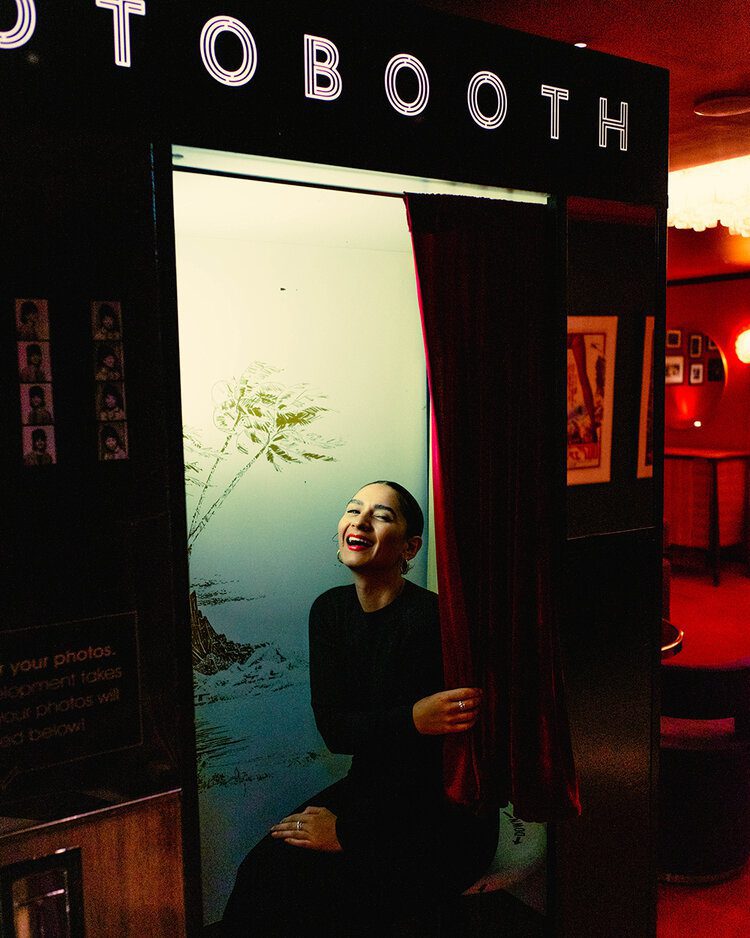
Then last but absolutely not least, there’s my favourite part about The Cinema at Selfridges. The original 1907s photobooth – you bet I fell hard for this baby. For £5 a go you can sit in the most charming photo booth I’ve ever seen and take x4 black and white photos that will be *developed* (not printed) right then and there. Of course it will take around 5-10 minutes as it’s an old machine with a more complicated process than these instant times provide and the ink will be wet when they come out, but just be patient and careful and you’ll be rewarded by the most beautiful and charming images no modern photo booth could produce today.
I will absolutely be returning to The Cinema at Selfridges before I leave London.
Cost of a ticket at The Cinema at Selfridges
£20 per adult
£14 per child aged 2-14 years old
£5 per strip of four photos in the photo booth
2. Colt & Willow’s plant-based liquid dish soap
For the past year Michael and I have been washing our dishes with solid bars of dish soap by Ecoliving, a plastic-free cleaning brand who create amazing biodegradable products. Their solid dish soap is amazing for the following reasons:
Vegan
Plastic free
Organic
100% natural ingredients
Made in the UK
Free of palm oil
Biodegradable
Lasts for weeks
Though we loved it for all the reasons above I have a few gripes with it, it doesn’t cut through grease all that well, it has a slightly funky smell and can be quite messy to use. Those weren’t the worst reasons but something I have really struggled with is our water wastage whilst washing with solid dish soap. As it doesn’t lather up it isn’t ideal for filling the sink with soapy water which means it can be quite inefficient. For that reason I decided to try something else and that’s how I found Colt & Willow.
Colt & Willow is another UK based brand that creates environmentally conscious cleaning products.
Here’s all the reasons to love Colt & Willow liquid dish soap
Plant-based ingredients
Vegan
Cruelty free
Made in the UK
Part of 1% for the Planet
Biodegradable
Free from phosphates and parabens
Gentle on hands
Smells amazing
Let me just hone in on that note about how amazing it smells for a moment. Colt & Willow’s fresh rhubarb scent smells so accurate it makes me want to drink it. It smells just like a freshly baked rhubarb crumble (a classic Brit dessert). I actually get excited about the washing up because it smells so good. I wish you could smell it.
“Tough enough to cut through the grease of your pans, but kind enough not to destroy your hands or the planet” – Colt & Willow.
Now, though we do prefer washing up with Colt & Willow because it’s more efficient in terms of how much water we use, it smells divine and gives a better clean, the refill bottles are plastic (their pump bottles are glass but I upcycled a bottle I already had). They are 1L bottles so it cuts down on how many you will need to purchase but unlike the Ecoliving dish soap it does mean purchasing plastic – a girl can’t catch a break!
I really wanted to mention the Colt & Willow soap though as we have reduced the amount of water we need for washing up by a far amount and I do see the 1L refill bottle lasting us a couple of months (washing up for 2 people daily).
Colt & Willow are looking for a replacement to their plastic bottles but have for now decided to use PET plastic bottles as they are the most widely recycled. I will say though thanks to their size and dark colour you can reuse them for drinks or maybe a vase with some sprigs of dry lavender. As it’s only carrying dish soap, a few rinses means you can drink from it as you would from the glasses you wash up with it.
Their postal packaging is plastic free with biodegradable protective filling and recyclable FSC certified cardboard.
Cost of Colt & Willow dish soap
A 1L bottle of Colt & Willow’s dish soap is £8
A 1L bottle and refillable glass soap dispenser is £18
If you use a low-waste washing up soap that you can recommend to readers, wherever you are in the world, drop it in the comments below.
3. V&A’s Design 1900 – Now exhibition
My third favourite for July 2021 is the Victoria and Albert Museum’s 1900 – Now design exhibition. Whilst there creating content for Dune – check out their “A date with Duchess” campaign I created for them here – I stumbled across this exhibition in room 74 on level 2.
The Design 1400 – Now exhibition has 250 objects on display from the past two centuries including some familiar objects and others you may never have heard of. The most compelling part of this exhibition is what you can learn about some items you may have previously taken at surface value without realising the research and often protest and retaliation against what came before.
What am I talking about? For example, did you know that bicycle seats were designed for men and it wasn’t until 2018 that a women’s saddle was developed? Or that the first female scientist LEGO figures weren’t produced until 2014? 2014!
“It was the first time the Danish toy company represented women in a non-gendered professional setting.” – V&A.
The exhibition covers all sorts of products from intelligent (and thus discontinued) Barbie Dolls to the material more valuable than gold that goes into medical grade face masks and is absolutely fascinating. It is divided into categories including technology where you can learn about cutlery that self-calibrates for users with Parkinson’s disease, branding where you can get a glimpse into the world of copycats, sustainability where you can learn about repurposed materials and social construct where you learn about campaigns such as Christian Louboutin’s inclusive “nude” skin tone shoes that only came out in 2013! – yes it took the brand 21 years to make “nude” shoes for anyone whose skin isn’t pinky-brown, worse it was the first major fashion house to challenge what “nude” is.
The writeup on each design product within the Design 1400 – Now exhibition at the V&A is fascinating, eye-opening, thought-provoking and a guaranteed conversation starter. I highly recommend visiting if you are able to. I found this FREE exhibition far more exciting than the Bags: Inside Out exhibition at the V&A and I’m a sucker for handbag design – so yeah, it’s that good.
Cost of V&A’s Design 1900 – Now exhibition
Free to all! During the pandemic you will need to book a ticket online in advance.
4. Sellier Knightsbridge
As some of you may know I am a lover of beautifully made shoes and bags, my long-term partnership with Dune London is a hint, and a Chanel Classic Flap has been at the top of my list longer than I can remember. No really, when my friends wanted Furbies I was dreaming of flap bags. Chanel’s Classic Flap bag – birthed from Gabrielle “Coco” Chanel’s original handbag, the 2.55 – has always been in style and it isn’t going anywhere.
Of course for that very reason the bi-annual price hike ups mean they’re not an easy purchase to make so I decided a few years back that when the time was right for me to make the purchase I would look for second-hand Chanel. The second reason I chose to buy second-hand Chanel was because I very much love the idea of the bag having a story before we meet. The idea that someone has already given it so much love makes me so happy. Finally the third reason I chose to buy pre-loved was, just like all things second-hand, because it’s the more mindful choice.
Cue Sellier Knightsbridge, a consignment store for pre-loved luxury fashion in Knightsbridge and London’s premier reseller for authentic new and preloved Hermès and Chanel bags. I can’t mention Sellier without a a nod to @sophiesouthmayd, former Head of Styling at Ralph Lauren and present founder of Digital Agency, @socialsouthmayd who introduced me to them. See more about Sophie in my number 5 PFH favourite for July 2021.
Don’t live in the UK? Fear not, Sellier offer worldwide shipping.
I couldn’t believe my luck when at the exact moment I refreshed their “Chanel edit” page (after doing so multiple times a day for a couple of weeks) I saw a vintage 1986 Chanel Classic Flap in black leather with gold hardware appear. Elated doesn’t even scratch the surface of the level of joy I felt when I successfully made the purchase. The serial number confirms it was made in 1986, just 3 years after after Karl Lagerfeld, the then creative director of the fashion house, released the design. Just imagine the places this bag has seen and the owners it has known!
To add to the thrill of purchasing a second-hand luxury item, Sellier operate by “fastest finger first” so if you’re looking to buy second-hand luxury fashion from them, you need to dedicate some time to refreshing their website. Here are my tips for making your dream purchase:
Turn on post and story notifications for their Instagram account @Sellierknightbridge as they often tease new drops before the items go on the website
Refresh the new drops or specific brand edit page regularly throughout the day – there’s no fixed drop time
Keep your card on hand when you refresh
My Chanel Classic Flap is a gift to myself for staying true to myself and my goals to create my very own successful travel blog, despite a lot of naysayers putting me down. This month marks 10,000 readers per month for Postcards from Hawaii. Thank you for reading, returning and loving this space here, I am so grateful to you. Before launching PFH I was a waitress with big dreams of travelling and working for myself, let this be today’s reminder that you can do whatever you set your heart on. You’ve got this!
5. Sophie Southmayd’s Sunday Style Stories
As I mentioned above, Sophie is a former Head of Styling at Ralph Lauren and founder of her Digital Agency, @socialsouthmayd. I can’t remember exactly what lead me to discovering her Instagram account in early 2020 but I can say she fast became one of my favourite accounts to follow.
Almost every Sunday, Sophie hops onto her Instagram stories on her account, @sophiesouthmayd, to share one of her amazing Sunday Style Stories which involves themed slides helping you to build a wardrobe that brings you joy and confidence through classic styles with nods to contemporary trends, but above all she always encourages you to dress to empower yourself and be your best self.
All of style guides are inclusive of ethnicity, abilities and shape as well as conscious of both budget and the planet. She never encourages over-consumption and her MO is always to buy items that will last for years to come.
Her knowledge of and uncanny ability to mix current trends and timeless style, with charming humour might I add, makes her the perfect account to follow if you, like me, wish to keep up with trends but not get tripped up by the fast fashion hauls from influencers who aren’t considering how those hails are increasingly damaging the environment for reasons including pollution and exploitation of garment workers. Sophie Southmayd is the perfect in-between for slowing down your retail consumption to make more mindful choices whilst satisfying your love of aesthetically pleasing garments and accessories.
.
There you have it, my five favourites for July 2021. What are you loving right now? Let me know in the comments below.
In this post I’ll be answering all the questions you may have regarding visiting Mayfield Lavender field and nursery, located just south of London, so you can plan your perfect day visiting Mayfield’s beautiful field of lavender.
Following the popularity of my Everything you need to know about visiting Norfolk Lavender blog post I decided to put together a guide on visiting Mayfield Lavender field and nursery so you have a place to find all you need to know about visiting for yourself, covering everything from “can I pick the lavender in the field?” to “how do I get killer photos with the lavender but no one else in them?”.
Why should I visit Mayfield Lavender?
Let’s be honest here, many of us end up in lavender fields because they make for great photos and whether we’re content creators or not we love a great photo opportunity, but there’s so much more to visiting a lavender field than taking photos.
Lavender essential oil is considered to have anti-sceptic and anti-inflammatory properties as well as aid in drifting off into a deep and restful slumber plus it can relieve stress and anxiety. So if a little bit of lavender essential oil can bring about calm and restfulness, just imagine what an entire field of lavender can do for your senses. My favourite part about visiting lavender fields is so that I can take a moment of stillness and take deep inhales – it’s one of my favourite scents.
Visiting lavender fields such as Mayfield Lavender Farm also helps to support what is usually a small business with the low and reasonable entry fee as will purchasing any of their products which you can trust have been made with care.
Lavender fields are also a great space to muse over buzzy little bees as they pollenate.
Where is Mayfield Lavender Farm?
Mayfield Lavender is located just 15 miles south of central London in a town called Banstead in Surrey. If you are living or staying in London during the summer months and want to visit an English lavender field then this is the closest and easiest one for you to get to. See below for how to get there.
How do I get to Mayfield Lavender field?
Driving to Mayfield Lavender Farm is the best way to ensure an early arrival and if you leave early in the morning to avoid traffic the drive is only around an hour long – however the return journey back into the city can be gruesome, especially at the weekend.
We drove from Stratford and it only took an hour to arrive but 2.5 hours to return home in the afternoon, we did however go on a Saturday during the heatwaves where many others were returning to the city after escaping the heat. Be warned though, the return journey should you go by car will be much longer heatwave or no heatwave.
If you don’t mind arriving later or don’t have a car then how to get to Mayfield Lavender Farm from central London is easy via public transport. Hop on the Thameslink from St Pancras International train station, in north London, to Purley Station, which will take you just under 40 minutes, then from Purley you can take the 166 bus for half an hour (20 stops) and it will drop you off right outside Mayfield Lavender’s field – like literally, the only thing between you and the field is a hedge which has a path through it as a shortcut into the field.
You can also catch the Southern train service from Victoria train station, in southwest London, to Purley where you can catch the 166 bus mentioned above.
Where to park at Mayfield Lavender?
There is free parking both onsite of Mayfield’s lavender field and nursery. Parking spaces start on the left of the field after the toilets, with disabled parking first, and wraps around to the right at the end of the field.
To get the best parking with minimal walking to the toilets, café and gift shop you’ll need to arrive early.
Here’s the address if you’re driving:
1 Carshalton Road, Banstead, SM7 3JA
How much does it cost to enter Mayfield Lavender field?
Entrance to Mayfield Lavender Farm is £4 per person over the age of 16 years old, any children under the age of 16 get free access to the lavender field.
Entrance to Mayfield lavender is paid for on the day and tickets cannot be reserved or pre-booked.
Payment is taken by card or cash by stewards at the entrance to the field.
There is no entrance fee to Mayfield Lavender Nursery as it is just a gift and plant shop.
What is the best time of year to visit Mayfield Lavender Farm?
Lavender in England usually blooms between June and the end of August.
As for the best time to visit, July is when the lavender should be in full bloom – June tends to often be too early whilst August can come quite close to harvest in which case you might not get the luscious lavender rows everyone dreams of prancing in.
This is totally dependent on weather conditions though, so your best bet is to check out Mayfield Lavender’s Instagram account here as they will post live photos that let you know when the lavender is in bloom and ready to visit.
What’s the weather like at Mayfield Lavender Farm?
Click here for the BBC weather forecast before planning your trip to Mayfield Lavender.
What time does Mayfield Lavender Farm open and close?
Mayfield Lavender Farm is usually open June 1st to August 31st.
What time do I need to arrive at Mayfield Lavender Farm to get no one in the background of my photos?
Mayfield Lavender opens at 9am but the car park will start filling around 8.30am so aim to arrive between 8am – 9am. If the field isn’t open, circle and come back.
I’ve seen multiple people sounding off on Mayfield Lavender Farm’s Instagram account about how busy it was when they visited and how they couldn’t get a photo “without anyone else in it”. All lavender fields open to the public in England get busy, even before the rise in popularity of creating content for social media lavender farms have always been popular for walking dogs, amateur photoshoots and visiting with kids. Do not expect them to be anything but busy, I have been to 6 lavender fields in England at the time of opening – often first in line – and they fill up early and no, not with content creators (not entirely anyway), but with families with kids who have already been awake since the crack of dawn. This has been the way for years!
If you want photos with no one else in the background here’s what you need to do:
Visit on a weekday, though I do want to make a note that we visited on a Saturday in the middle of a summer heatwave and got our beautiful photos despite this so trust me when I say a weekday isn’t your only chance, just your best.
Arrive before or as it opens.
Be creative with your angles and look for an empty row to begin with.
Use a lens with a longer focal length for a narrower angle of view and set it to a wider aperture (smaller F-number) to give you a shallower depth of field (blurry background) this way you’ll be able to recognise the rows and colour of the lavender but not people or their faces in the background.
Scroll down to “What is there to do at Mayfield Lavender Farm?” to find out how you can get an empty field to yourself past closing time.
You’re welcome.
Do I need a photography pass
This is a question I always have on my mind when visiting lavender fields because I’m like I want photos but I don’t want to pay for photos that I’m not making any money off and that’s my answer right there.
“Huh?” You say? Let me break it down for you.
If you are conducting a commercial photoshoot (or the likes of) whereby you will be making money off the images, for example you are charging to take photos of a newly married couple or selling your photos to the nature magazine you freelance for, then you need to pay for a photography pass. If you are taking photos for no profit from social media, personal blogs or personal use then you do not require a photography pass.
Photography passes for Mayfield Lavender farm must be applied and paid for in advance. A single session pass is available at £50 for unlimited photos within 2 hours whilst a full day pass is available at £100 for unlimited photos from 9am-6pm.
All visitors need to pay the £4 entrance fee (unless ages 16yrs or under) as does the photographer but their fee will be returned at the end of the day.
For more information on professional and/or commercial sunrise or sunset shoots or to apply for a photography pass click here.
Oh and also drones are not permitted without getting confirmation from Mayfield Lavender and before that you will need a certificate of Approval from the Civil Aviation Authority and a certificate of Public Liability Insurance.
What is there to do at Mayfield Lavender Farm?
Besides taking photos you can enjoy a lavender infused cream tea, shop all the anxiety and stress relieving lavender based products your heart desires or take your self-care game to another level with a yoga class in the lavender field itself. Curious? I thought so…
Mayfield Lavender gift shop
Located on the right hand side of the entrance to the field is Mayfield Lavender’s outdoor gift shop where you can find just about every lavender product you can imagine from lavender scented perfumes to culinary lavender flowers.
My personal favourite Mayfield Lavender products are:
Sleep Angel pillow mist
Lavender lemonade
You can also shop their products at Mayfield Lavender Nursery.
The price point is higher than most but at the same time their range of products is impressive.
Mayfield Lavender Farm Café
Due to people littering – remember to leave with everything you came with – Mayfield Lavender no longer allow picnics within their lavender field. If you get peckish whilst visiting you have two choices for eating at Mayfield Lavender Farm: the kiosk or the outdoor café.
The kiosk is located in the centre of the field near the big tree. This chrome trailer sells a variety of drinks, muffins and scones as well as a few gifts such as soap and posies of dried lavender. Under the big tree, next to the kiosk is limited seating where you can pause to enjoy the treat you just purchased – it’s also the only spot of shade in the field.
The open-air café is located next to the shop at the entrance of the farm. The menu is pretty impressive considering it’s located in a field, offering sandwiches, panini, alcoholic beverages, cakes, cream teas and afternoon tea.
Luxury Lavender Yoga Experience
Running from June 1st to August 31st is ‘Luxury Lavender Yoga Experience’ with Amanda Wass. Sign up for this class and you’ll be able to practise yoga either during sunrise or sunset within Mayfield Lavender’s field.
Is it yet another white person charging people for a yoga class, looks that way, but if you’re boujee like that then it sounds like a super relaxing and stress-free workout to either start or end your day.
Each session lasts for 1 hour 15 minutes and costs £30 per person, book here if you’re interested.
Amanda’s yoga classes get you access to the field before/after it opens/closes to the public so if you’re able to go this is your best chance of taking photos with no one else in them.
What’s the difference between Mayfield Lavender Farm and Mayfield Lavender Nursery?
Mayfield Lavender Farm is where you will find the 25 acre large field of lavender. It’s where you want to go for all your lavender field fancies such as taking photos for the gram just like every other basic bish on Instagram (myself included), taking deep inhales of one of the best scents in the world and making friends with bees. It’s also where you will find the café and one of two of their shops.
Mayfield Lavender Nursery has 12 acres of lavender and fruit trees and has a gift shop selling fruit trees and lavender plants as well as their full range of lavender products made with their homegrown lavender. Unfortunately Mayfield Lavender Nursery is undergoing renovations which means for the time being only the shop is available to visit.
As the nursery is only a 7 minute drive from the field, if you are driving I would recommend going there to shop their lavender products to avoid the long queue at the farm gift shop.
Which lavender field has the red telephone box?
If you’ve seen photos on social media of a red telephone box (a British icon) in a field of lavender and wondered where it is, you’re not alone. The red phone box is at Mayfield Lavender Farm located in the south of Greater London, Southwest of Croydon.
The red phone box is near the start of the field on the right hand side where the café is. Despite arriving before the opening time listed on the website, the queue to the telephone box formed quickly and it was only good for standing next to it for a hasty snap. If you have your heart set on shooting with the phone box then be willing to wait at the gate and race over there as quickly as possible.
There is also a red tractor within the lavender, located to the right of the phone box, if you want a more country bumpkin vibe to your photos or if you’re bringing kids. The tree in the centre of the field also makes for a beautiful background feature.
Are there toilets at Mayfield Lavender Farm?
Yes there are toilets at Mayfield Lavender Farm however they are portaloos and unfortunately even a field of lavender isn’t enough to mask that stank, but as there is no permanent facility on the farm it is the only option available and so we should be grateful they have provided us with something to use.
It’s not worth thinking you’ll be smart to go to Mayfield Lavender Nursery for the toilet. Whilst it’s being fixed up there is only one toilet available to use in the farm house and don’t expect it to be any kind of cute when you hear farm house. Still, they’re kind to offer it as an option if you’re desperate.
Is Mayfield Lavender Farm dog friendly?
The lavender field is absolutely dog friendly provided they are kept on their lead and you clean up after them – and if they do poop in the field, be a good human being and let the people around you know because pretty much everyone likes to sit in the field for photos and no one wants to sit on poop, right?
I will advise not visiting on a hot day with a dog as there is little to no shade – lavender doesn’t like the shade – so there won’t be many opportunities for your pup to get a respite from the sun.
Which species and varieties of lavender do Mayfield grow?
Mayfield lavender plants two species of lavender, and they are the two you will find in most lavender fields across England:
Lavandula Angustifolia (English lavender) – known for its brightly coloured flower heads.
Lavandula x Intermedia (Grosso) – yields more oil and has a stronger scent.
For some reason their field isn’t as potent as the others I have visited in England (many other visitors in the field noticed the lack of scent too) so if you’re hoping to inhale that sweet, sweet relaxing scent to calm your nerves then you’ll want to head to the back of the field where their Lavandula x Intermedia ( a hybrid known as Grosso) is planted as it is more fragrant.
Ask at the counter to smell a scent card which has Mayfield Lavender’s two lavender oil varieties so that you can smell the difference between them.
Can I pick the lavender in the Mayfield Lavender field?
Unfortunately unlike Hitchin Lavender field you are not allowed to pick your own lavender within Mayfield Lavender farm. This could be down to the fact that the field is 5 acres smaller than Hitchin or simply because they want to sell their bunches of lavender at an additional cost in their gift shop – understandable. It also ensures the lavender looks full in your photos that you’re obviously there for so we can’t be mad at them.
Bunches are £4 each or 3 for £10 and can be bought either in the kiosk in the centre of the field, at the gift shop at the entrance to the farm or at Mayfield Lavender Nursery.
Accessibility at Mayfield Lavender Farm
Disabled parking is at the very entrance to the field, opposite the shop and café.
The surface of the car park and field is fairly level but as it’s a field please expect it to be uneven in places. Access to the shop and café is via a slope but the shop (which is outdoors) has a shingled floor surface so this may cause mobility difficulty.
As lavender grows out wide the rows between the plants can be rather narrow and not necessarily suited for wheelchair access. There is however a grass footpath through the centre of the field.
Guide dogs are allowed just as all dogs are.
Conclusion
Do
Drive if you want to arrive early to get photos with less people in the background
Go to the red phone box first if you want to avoid the queue for photos
Avoid queues at the gift shop by going to Mayfield Lavender Nursery
Wear suncream as there is very little shade – summer temperatures in and around London can reach up to 30 degrees Celsius (86 Fahrenheit) so bring water too
Try their lavender cream or afternoon tea
Don’t
Pick the lavender
Fly your Drone without the appropriate certificates and prior approval
Walk across the rows unless there’s a natural gap in between the plants
Visit if you’re scared of bees and are likely to aggravate them – you’ll see more bees in a lavender field than content creators at Coachella
I will shortly be putting together a blog post on all the lavender farms I have visited in England that compares each field and highlights each one’s assets. If you have any questions that you want answered in that blog post please leave them in the comments below or you can email me at gabriella@7g5.cc5.myftpupload.com and I will do my best to answer them.
Each of my PFH favourites are chosen to inspire you to do more on & for the planet whilst caring for yourself and others.
This monthly feature of a few things I’m loving that you can use on or between your travels is a space on PFH where I can share fellow creatives, eco-conscious tips and products, podcasts, books, what I’ve been watching on TV, routines that I’ve benefited from, restaurant recommendations and so much more.
Here are my 5 favourites for June 2021.
1. Low-waste table decorations for parties, weddings, christenings etc.
For Michael’s 30th birthday I wanted to create a tablescape that was not only pretty to look at but low-waste. Whilst mood boarding I found a concerning amount of balloon decor – if you don’t know, foils balloons aren’t biodegradable – and now that I don’t use them anymore I was a little stuck on how I could pull something special together.
Then I saw a photo either on Pinterest or Instagram of a wine bottle with a tapered candle in it, like the ones on tables in Italian restaurants in rom-coms, and I thought now there’s something! I had some tapered candles in the draw and I’d been collecting bottles to take to the recycling centre.
I’d also been collecting jars for food storage and remembered I have all I need to make candles from when I created a candle making tutorial for you over on Postcards from Home: my guide for taking a vacation to Hawaii from home when travel isn’t an option for you.
If you want my step-by-step guide for making candles, subscribe to Postcards from Hawaii using the subscription box in the footer of this page below.
So I set about upcycling old jars by removing the labels from them, excluding a few wine bottles with pretty labels.
How to remove sticky labels from jars and bottles
Place the jars on an even and heatproof surface
Pour boiling water into the jars and leave for 4-5 mins
Tip the water out and peel the labels off
If you are left with a sticky residue, mix equal amounts of baking soda and cooking oil or coconut oil (if using coconut oil it needs to have melted to a liquid state)
Spread a layer of the oil and baking soda paste over the sticky residue and leave for 10-15mins
You will now be able to gently rub off the paste with a reusable cloth or wooden pot scrub and warm, soapy water to reveal clean and non-sticky glass
I filled the jars and bottles with tapered candles, homemade candles and dried flowers from Isle of Flowers so we could continue to use them long after his birthday. The only specific decorations I bought just for his birthday were the “30” candles but I just want to point out for the glitter, I’m not certain that its biodegradable so I would avoid glittery ones if you are inspired by my table display.
Another idea is to use dried petals as biodegradable table confetti.
Unlike the foil balloon display, upcycling jars and bottles into candle stick holders and vases means they can be reused over and over, there’s very little waste involved and it’s a wholesome project.
2. Little Black Book by Otegha Uwagba
The Sunday Times Bestseller, Little Black Book by Otegha Uwagba, is a handbook for creative working women who need guidance, encouragement and inspiration for making successful and lasting moves in their industry. Helping in areas such as talking money, networking, brand building and self care, this book will help any career womxn whether they’re just starting out or have years of experience behind them.
Little Black Book was actually in my Christmas stocking from Michael and I read it before the Christmas holidays were over but I always refer back to it and for that reason and many more, it has made its way into my PFH June favourites list.
I enjoyed Uwagba’s Little Black Book so much I have multiple notes scribbled in the margins (I didn’t realise there’s a dedicated space for notes in the back). Chapters are subcategorised and compact so they’re easily digestible on your commute to work, lunch break or before bed if you are particularly short on time in your day.
Even though not every part of Little Black Book applies to my current work as I no longer work in an office, I read it thinking how much I wish I had this book when my 23 year old self was trying to navigate office politics and how helpful it would have been for asserting myself under wildly sexist management.
It’s also packed full of inspiring quotes from successful womxn and external resources for further reading and inspiration.
Purchasing this book also helps to support a Black female author, yay!
3. Loewe basket bag
My weakness is accessories and I fall hard for bags, these days I invest rather than buying more bags than I feel comfortable admitting like I have done in years gone by. One of my favourite purchases this year has been my Loewe palm leaf basket bag.
My Loewe basket bag has become an extension of myself at this point, I have worn it endlessly come rain or shine. It is the perfect size for nipping to the market, picnics in Hyde Park, a day at the beach, outfit changes (I can carry an extra pair of shoes and our camera in there) or you know just as a handbag without ulterior motives.
The handles are comfortable and durable and due to the nature of the palm leaves the bag is super lightweight. I very much look forward to taking it on holiday/vacation… one day.
Of course, budget pending it does’t have to be a Loewe one, just about every brand has brought out a basket bag this year. If you are lucky enough to travel this year, maybe you can pick one up from a local artisan market.
My Loewe palm leaf basket bag is size medium.
4. Garden Party cocktail at The Coral Room
Mentioned in my 14 most Instagrammable cafés & restaurants in London blog post is The Coral Room, the cocktail lounge at The Bloomsbury Hotel. Whilst there to celebrate Michael’s 30th birthday we tried a few drinks from their new “A Sip of England” summer 2021 cocktail menu.
Their “A Sip of England” menu has 14 cocktails inspired by various locations across England and use local ingredients such as Kentish cobnuts, rosehips and Bramley apples.
My favourite of the four we tried is the Garden Party cocktail, inspired by Charleston, Sussex and is made with Banana, Diplomático Planas Rum, Crème De Banana, Cream Caramel and Tonka Bean Bitters which makes it taste exactly like banoffee pie. It is the most wonderful cocktail I have ever tasted.
Take a look at their summer 2021 “A Sip of England” cocktail menu here.
The Coral Room is located in Fitzrovia, London and is just a 7 minute walk from Tottenham Court Road station on the Central Line.
Tis’ the season of peonies and what a beautiful time of year that is, right?
Peonies are sweeping across social media and for a good reason too, much like a good rose they open out in a spectacular fashion that leaves you wondering how they had so much beauty hidden inside such a small bud. In a way, we’re all peonies just waiting for our moment to open up and reveal so much from within.
PFH fun fact: Peonies are native to eastern China and are the country’s national flower.
These peonies are of the intersectional peonies known as Itoh hybrids, named after the Japanese botanist, Toichi Itoh, who first hybridised the tree and herbaceous peonies to create these much larger flowers.
Did you know that peonies are edible? Pop some of those fragrant petals on your summer salad and you’ve got something delicious and pretty.
Try to shop your peonies from your local florist or if you are able to, grow them yourself!
.
What are you loving right now? Let me know in the comments below.
Learn how to make handmade soap with a naturally exfoliating loofah inside with this easy step-by-step tutorial in collaboration with Earth Conscious shop, Coconut & Cotton. Soap making is not only a fun activity to do (for yourself or with kids) but it’s also a great way to reduce plastic in your bathroom
Sidebar: wash out and reuse the tub that the soap base comes in to store your homemade soap.
Take your handmade loofah soap on your travels in an aluminium soap tin from Coconut & Cotton (it fits, I tried it) to prevent needing to use any plastic packaged soap or shower gel. These homemade soaps also make for great gifts and/or party favours.
This how to make soap tutorial is brought to you by Coconut & Cotton who provided many of the items needed to make these round loofah soap bars.
Coconut & Cotton is a female-owned plastic-free and planet-conscious shop selling an amazing range of affordably low-waste household products to help you live a more sustainable lifestyle. Coconut & Cotton is located in Shaftesbury, south west England and most of their products are available to shop online at www.coconutandcotton.co.uk. All orders are sent using reusable and plastic-free packaging and they often pop in a fun free sample.
Scroll past what you need to make handmade soap and the instructions for answers to some questions you may have.
6 cavity round silicone mould 7cm or 2 3/4” wide and 3cm or 1.18” deep
Bread knife
Sharp knife
Chopping board
Ruler or tape measure
Scissors
Microwave and microwaveable container or two saucepans and the stove top
Dessert spoon
Step-by-step instructions for making handmade loofah soap
1. Re-hydrate your loofah from Coconut & Cotton in the bathtub with the shower head or you can just pop it on the floor whilst you shower to hydrate it.
2. Slice your vegan loofah with a serrated knife (a bread knife will do) into x6 slices about 1.5cm or 1/2” thick.
3. Cut x6 pieces of 41cm or 16” long recycled cotton string from Coconut & Cotton. Pair one loofah with one piece of string and thread the string through one of the holes in the centre of the loofah slice and tie a knot to secure a loop handle. This string loop that you’ve created means you can hang your soap in the shower when you’re not using it and you can loop it around your fingers to stop you from dropping your soap when it gets slippery.
4. Next you’ll need to melt your soap base, to do this first remove your soap base from its package and cut it into smaller pieces. You can either place it into a microwaveable container and melt it for a couple of 30 second bursts in the microwave or you can create a double boiler with two saucepans and melt it on the stove top. If you’re using the double boiler method then it will take about 15-20 minutes on a medium heat to melt the soap base into a liquid. You may need to top up the water in your double boiler a couple of times.
5. Once liquified, frequently stir the soap with a dessert spoon to prevent a skin from forming. Add your choice of essential oil(s) from Coconut & Cotton, you need about 3-4 drops of each oil per soap you’re making.
6. Then add 6-8 drops of your choice of soap colourant if you’re adding it. Stir the soap base to combine the colouring and essential oils and stop a skin from forming.
7 .Carefully remove your soap mixture from the heat and gently pour into each of your 6 moulds.
8. The loofah slices may float to the surface but you can encourage them to sink by placing 3 regular knives over the top of them. Lay each knife over 2 moulds each.
9. Leave your soaps to cool and set for an hour and a half. Once cool, you can pop them out and they’re ready to use.
If you have any leftover soap mixture you can pour it into other moulds.
What is a loofah/luffa?
Loofah (or luffa) is the fruit of a tropical vine plant related to the cucumber family. The fruit, that looks much like a courgette, is left out to dry for 6+ months after which the husk can be re-hydrated to form a coarse sponge that will naturally exfoliate skin by brushing away dead skin cells and it stimulates blood circulation.
Once you are ready to discard your used loofah you can simply compost it.
No you don’t need to insert a loofah into your soap to use this soap making tutorial. You can leave out the loofah or alternatively you can use poppy seeds as another natural exfoliant.
Is soap making difficult?
Making homemade soap with a melt and pour soap base is not difficult. It only takes about half an hour to make and pour and then an hour and a half to set. I recommend using a melt and pour soap base because soap making with lye or sodium hydroxide can be dangerous if you don’t know what you’re doing.
Is homemade soap vegan?
The Stephenson melt and pour crystal soap base that I use is 100% vegetable based so yes it is vegan. It is also paraben free, biodegradable and isn’t tested on animals.
Which essential oils are best to use in handmade loofah soap?
You can use any combination of essential oils you like. Coconut & Cotton has a collection of 17 essential oils by Bio Scents, a Portuguese company who bottle 100% organic essential oils in reduced plastic packaging. Choosing your essential oil really depends on the effect you want the scent of your soap to have whilst you use it, for example:
Lavender essential oil in soap
Bio Scents lavender essential oil will soothe, de-stress and encourage a relaxed state of mind. Lavender scented soap is ideal to use before bedtime.
Eucalyptus essential oil is known for being stimulating and rejuvenating so it’s ideal for using in the shower first thing in the morning. It’s also ideal for when you have a cold or the flu because it helps to clear congested sinuses.
Do I need to use soap colouring in my handmade soap?
You don’t need to use soap colouring, the only thing adding soap colouring does is change the colour of the soap from translucent to whichever colour you choose. It ultimately makes the soap fun to look at so if you want to save money you don’t need to add soap colouring.
If you do choose to add soap colouring you can match it to the colour of your essential oil: purple with lavender, orange with orange etc.@coconut.and.cotton for amusing content of the owner, Lucy, as she shares new products and eco-conscious tips.
How long does handmade soap take to cool?
The soap will take about an hour to set at room temperature but to be certain it has before popping it out of the mould, leave it to cool for at least an hour and a half.
.
If making your own soap isn’t quite your thing and for some reason you’ve made it this far in this blog post then I recommend buying some heavenly scented bars of French Marseille soap – they’re my favorite bars of soap when I’m not making them myself!
Follow @coconut.and.cotton for amusing content of the owner, Lucy, as she shares new products and eco-conscious tips.
Each of my PFH favourites are chosen to inspire you to do more on & for the planet whilst caring for yourself and others.
Whilst I’m still grounded in the UK and can’t share fresh travel content from around the world I’ve decided to start a new blog post feature where once a month I will round up and share with you a few things I’m loving that you can use on or between your travels.
It’s a space on PFH where I can share fellow creatives, eco-conscious tips and products, podcasts, books, what I’ve been watching on TV, routines that I’ve benefited from, restaurant recommendations and so much more. I’m really excited about sharing these favourites with you.
1. LUSH’s Bring It Back Packaging Recycling Scheme
Save extra waste, save the planet and save extra waste?! Whaaat!
LUSH will send your recycled packaging that has already been made with recycled plastic back into their closed loop recycling programme and you get the opportunity to save money on your next product which you can also return once you’ve finished.
It’s really wonderful and I’m over the moon about it. Now you can earn money back and repurpose packaging from the low-waste toiletries you pack on your travels.
Whilst I’m talking about LUSH they have an amazing new bath bomb called #TBH365 which is in collaboration with The Black Curriculum and 100% (minus VAT) of the proceeds go towards supporting Black history being taught in school all year around!
Their ‘return 5 black pots for a free fresh face mask’ still applies but cannot be used in conjunction with the 50p credit so if you have black pots to return I would recommend getting the face mask because it’s a better deal.
Check your local LUSH store to see if it participates in their Bring It Back Packaging Recycling Scheme.
2. Circolo Popolare Italian restaurant
Circolo Popolare is an Italian restaurant located just a 4 minute walk from Tottenham Court Road tube station in London.
This one is specific to London so I do apologise to everyone who doesn’t have access to London right now but one day when you can, I hope that you add this restaurant to your list of things to do in London. In saying that, Circolo Popolare is part of the Big Mamma group who have restaurants in Paris, Lille, Lyon and Madrid so if you visit France or Spain you can eat with them there.
I first came across Circolo Poplare on Instagram and thought WOW it’s gorgeous! As you may know from your own experiences, I was a little hesitant about booking because not all Instagrammable restaurants in London can be trusted to have good food or service. Unfortunately many places focus more on bringing in customers based on how they look and the quality of food falls to the wayside. I took a chance though and it did not disappoint.
I enjoyed the food, service and decor so much that I booked it again for a friend’s birthday – who had been to one of their Paris restaurants and only had good things to say about the food – and I am returning again.
Circolo Popolare’s menu changes monthly but a firm favourite is their cacio e pepe wheel for two people and I could not recommend it more for its pizzazz and heavenly taste.
I have heard from friends that it’s getting harder to book into Circolo Popolare but they do keep tables for walk-ins so don’t give up hope if you can’t book a table.
3. The Spin Junkie YouTube channel
Former Soul Cycle instructor and personal trainer to A-list celebrities and Gold Medal Olympians, Holly Miller’s YouTube channel, The Spin Junkie, deserves all the credit for getting my body moving through our third lockdown in the UK which lasted 5 months. During that time we could only exercise outdoors once a day and as it was winter the motivation to go outside was little to non-existent.
When I found The Spin Junkie and purchased a spin bike my mornings had a whole new purpose, I really enjoyed getting up, moving my body and taking the moment that Holly gives us at the end of every one of her classes to inspire confidence and positivity both on and off the bike. Plus she has great playlists and themed classes which cover so many genres of music.
Despite gyms and fitness centres reopening, I still very much enjoy getting on my spin bike to workout with The Spin Junkie.
Check out her Earth Day fundraiser ride below.
Don’t worry if you’re new to spin, she has classes for beginners too.
Her message of encouragement to love and care for your body more than just for how it looks is inspiring and a message we all need to hear.
Back in the glory days of travel (pre-pandemic) I used to listen to workout playlists to spin to in gyms but now I look forward to being able to pop on one of The Spin Junkie’s ride videos and go. Of course, there’s no pressure to workout on your travels but if you do feel inspired to get your body moving then I think this is a great way to incorporate free training into your routine.
The Spin Junkie doesn’t monetise her channel so you can ride without being interrupted by those pesky adverts telling you you’re “working out wrong” so thank you Holly for providing this complimentary service.
4. Roam & Thrive’s self care journal prompts
Alex, founder of Roam & Thrive, a travel and wellness blog for those looking to live a healthier life whilst travelling around the world, has shared 13 of her favourite journal prompts that help you to explore your mental wellness, focus your mind and release any anxiety you may be experiencing.
One of my favourites from her blog post is “What things do I try to avoid? How can I stop avoiding them?” as it really encourages you to face whatever could be holding you back from reaching your full potential.
Roam & Thrive is currently living in Mexico and often shares content that will inspire you to book a trip there as soon as it’s possible. If you’re in the US and able to travel south of the border take a look at her super useful Mexico travel guides that include a list of yoga spots in Tulum and vegan restaurant recommendations in Playa del Carmen.
5. Sewing hair scrunchies
One of my biggest regrets (not that I would have done anything else in the moment) was selling my sewing machine ready for our move to Canada which actually turned out to be mere weeks before a global lockdown. Between then and purchasing a sewing machine this month, those 14 months are the longest I’ve been without a sewing machine, I’m beyond happy to have one again.
One of the things I’ve been loving is sewing hair scrunchies. It’s so easy to make a hair scrunchie and if you’re interested I created a tutorial on how to make hair scrunchies which you can check out here. They’re such a cute way to tie back your hair (if it’s long enough) on your travels – especially to warmer climates – and they make great gifts.
Sewing hair scrunchies is so easy for anyone who knows how to use a sewing machine and you can make them from scraps of material or old items of clothing that you want to upcycle.
My step-by-step guide for how to sew a hair scrunchie comes with photos and GIFs so you can see exactly what to do but let me know in the comments below if you want me to make a YouTube tutorial for how to make hair scrunchies!
If you make a DIY scrunchie, tag me in a photo of it on Instagram @gabriellawisdom, I’d love to see it and share it!
.
What are you loving this month? Let me know in the comments below.