Tag: Vegan

  • PFH 5 favourites: October

    PFH 5 favourites: October

    This month on PFH I’m sharing a book recommendation on understanding systemic racism for Black History Month in the UK, why I’m in love with my Polaroid Go Instant Camera, which brand of plastic-free and natural conditioner is finally suitable for my curly hair, how to get free pasta in London this October and the chocolatiers that are working to end slavery in the chocolate industry.

    1. Why I’m No Longer Talking to White People About Race by Reni Eddo-Lodge

    Reni Eddo-Lodge is a British blogger, journalist and author. Her work focuses primarily on seeking intersectional feminism and exposing the structural racism within.

    What originally started as a blog post in 2014, Why I’m No Longer Talking to White People About Race was published in 2018 and addresses why Eddo-Lodge effectively turned off her in-person comments over the very real but too often dismissed existence of structural racism.

    “Colour-blindness is a childish, stunted analysis of racism. It starts and ends at “discriminating against a person because of the colour of their skin is bad”, without any accounting for the ways structural power works in these exchanges. This definition of racism is often used to silence people of colour when we attempt to articulate the racism we face. When we point this out, we are accused of being racist against white people, and the avoidance of accountability continues.” – Why I’m No Longer Talking to White People About Race

    Why I’m No Longer Talking to White People About Race breaks down what white privilege is, takes a dive into Britain’s history and politics surrounding our nation’s systemic racism whilst also starting necessary conversations around class and feminism. I found this book to be extremely informative when discussing race in the United Kingdom as I realised my knowledge of racial injustice comes from examples in US history not where I grew up. In fact for the most part, my learnt examples of racism in the UK were that of mine and my family’s lived experiences. Why I’m No Longer Talking to White People About Race filled in a lot of historical blanks for me.

    I read Eddo-Lodge’s Why I’m No Longer Talking to White People About Race last summer as part of my journey to discovering my identity as a mixed race person with light-skin privilege and how being raised as white in a white community factored into that. Though I read it last year I am taking the opportunity to share it as one of my PFH October highlights as October is Black History Month in the UK.

    Black lives still matter so if you’re still struggling with your white privilege, haven’t read this book and are in a headspace where you can work through your white fragility to do the work or want to further educate yourself then pick up a copy of Reni Eddo-Lodge’s Why I’m No Longer Talking to White People About Race.

    The other books in the image above are also written by Black authors:

    2. Polaroid Go Instant Camera

    My Polaroid Go Camera isn’t just one of my October favourites, it is one of my favourite purchases of all of 2021. There is nothing quite like the excitement of a 15 second wait to know if you just created Polaroid magic!

    After wanting a Fuji Film Instax since the day they hit the instant-camera scene but deciding it was too bulky to travel with, I took one look at how small the Polaroid Go is and love hearts formed in my eyes. The Polaroid Go measures 5.9” x 3.3” x 2.4” (105 mm x 83.9 mm x 61.5 mm) and without the film pack it weighs just 0.53 lbs (242 grams) – it fits in the palm of your hand making it the most travel-friendly instant camera on the market!

    Besides being ridiculously cute, the Polaroid Go develops amazing instant photos which measure 1.851” x 1.811” (47 mm x 46 mm) which is really mind-blowing especially considering it performs one of the most complex chemical processes in just 10-15 seconds!

    I bought my Polaroid camera in time for my trip to Rome and it was one of the best decisions I’ve made! Since then I’ve been able to capture some gorgeous moments in Rome and during my friend Kelly’s trip to London, as well as some of our “lasts” in London and brand collabs too! Of course it’s still new so I’m still smitten but I don’t see this purchase as being one I regret – unless Polaroid bring out a lilac version!

    What are the features on the Polaroid Go camera?

    Small but mighty, the Polaroid Go instant camera boasts a flash with the option to turn it off, has a self timer with a reflective selfie mirror and does double exposure too! Now I haven’t quite yet mastered the whole double exposure thing, in fact so far my attempts have sucked but that has only made me love this camera more. I find it to be quite the thrill that there’s something to learn and work on.

    One of the greatest things about the Polaroid Go though is its battery capacity. One full charge will last for 15 packs of film which means you can charge it then go on a 1 month long trip where you take 4 minimum photos a day and not have to charge it until you return! – math is not my strong suit but I’m pretty sure I worked that out correctly. My point is this is really great for when you don’t want to travel with multiple cables or have to worry about dodgy outlets or adapters.

    Tips for shooting content with a Polaroid Go camera

    My tips are to make sure the object of your photograph is lit by direct light, especially if you want both the background and foreground in. Anything shot with the light behind will become a silhouette – perfect for double exposure but not if you want everything visible.

    Also, know that if you’re taking a photograph in the dark with the flash on, only the object in the foreground will light up.

    See some examples of my mistakes below:

    I found this YouTube video on the Polaroid channel to be the most helpful for learning how to set up the features on my Polaroid Go analogue camera – it’s so much easier than I imagined!

    Something I particularly love about my Polaroid Go camera is that it’s not just the developed polaroids that look amazing, the camera itself also makes a great subject and prop! See for yourself…

    Where to buy a Polaroid Go Instant Camera

    The best way to save money on your Polaroid purchase is to subscribe to Polaroid to get a 10% discount and then order a bundle to get another discount. I bought the Polaroid Go Travel Set which includes the Polaroid Go Instant Camera, a protective travel case and a double pack of film.

    I either buy my Polaroid Go film from Park Cameras London on Rathbone Place in Fitzrovia if I’m in central London or on Amazon if I need next day delivery.

    PFH Top Tip: though it’s easy to get distracted by the cute accessories, save yourself money by not purchasing an additional wrist strap as one comes with the camera!

    3. Object solid conditioner bar

    If you’re a regular reader of Postcards from Hawaii you will know that I stopped straightening my hair during the first lockdown in the UK in 2020. I instead decided to embark upon my journey to recovering my curls back to health and discover what they can look like if I stop damaging them with heat.

    Part of that process for me meant using sulphate and silicone free products, which you can read more about in my blog post with Only Curls: Sustainable styling with Only Curls – low waste haircare for curls. Though Only Curls’ shampoo bar for curly hair saved me from having to buy single-use plastic packaged shampoos I was stuck without a good solid conditioner that is sulphate and silicone free.

    Not anymore though! The Nourishing Conditioner Bar from Object is vegan, plastic free, cruelty free and natural. Better than that, unlike the conditioner bars I’ve tried from LUSH it doesn’t pull your hair out trying to applying it, it’s creamy and leaves enough product to detangle curls on wash day leaving them hydrated and silky. When Object say they are inclusive of all hair types, they actually mean it, unlike other brands who masquerade as suitable for “all hair types” but are made with ingredients that can mess with Black hair.

    Using one bar of Objects soap, shampoo or conditioner can save you from using up to three regular sized single-use plastic bottles!

    Aside from their minimal packaging something else I really like about Object’s solid toiletries is their travel tin. It screws shut to prevent any accidental leakage and it comes with its own removable drainage tray which means the product can dry properly between uses so you don’t have to fight to get it unstuck from the bottom of the tin next time. If you know, you know.

    4. Free pasta at Emilia’s Handcrafted Pasta on World Pasta Day

    World Pasta Day this year is on Monday 25th October and have I got a treat for you! One of my favourite Italian restaurants in London is letting you eat their delicious pasta for FREE! Yes free!

    I worked with Emilia’s Handcrafted Pasta when I was invited back after a date night with Michael and dinner with my brother. So though I understand scepticism over my opinion they stole my heart long before working with them and I think they have some of the best fresh pasta in London.

    My favourite dish on Emilia’s menu is the Radiatori served with homemade tomato sauce with freshly chopped basil. The chefs at Emilia’s know exactly what they’re doing when they pair up their pasta shapes and sauces and this dish is one of the best examples; these little radiator shapes of pasta tenderly hold the tomato sauce for you so you don’t have to waste time chasing it around your bowl. It’s vegan but if you’re not eating a strictly plant based diet then I highly recommend adding the buffalo mozzarella DOP because let me tell you, when it melts under the warmth of the pasta it leaves you with gooey, formaggio parcels sent by Aristaeus himself (the God of dairy and cheesemaking if you didn’t know). This really is the ultimate comfort dish on their menu.

    Their casarecce served with a homemade creamy walnut sauce and chestnut mushrooms is a close second for me!

    Head over to either their St Katharine Docks or Aldgate locations between12-4pm and 5-9:30pm for a free bowl of pasta per person. This is a very big deal because Emilia’s Handcrafted Pasta has some of the best pasta I’ve ever had and you can get it for free!

    Walk-ins only and subject to availability but I’ve heard everyone in the queue will get to sample their new menu whilst they wait!

    View this post on Instagram

    A post shared by Emilia’s Crafted Pasta (@emiliaspasta)

    5. Tony’s Chocolonely

    Over the past few years Tony’s Chocolonely replaced Dairy Milk as our go-to chocolate bar brand in our household. Now don’t get me wrong I LOVE the taste and nostalgia of Dairy Milk but they need to seriously step up their packaging and seek out plastic-free alternatives. Tony’s Chocolonely has got that down and better yet, it’s 100% recyclable!

    Not only this but Tony’s Chocolonely’s philanthropic game is something ALL chocolate brands should aspire to. Cocoa farms in West Africa are operating under slave labour and Tony’s Chocolonely’s goal is to make the worldwide chocolate industry 100% slave free and how could you not want to support a chocolatier that is working to eradicate slavery?

    “Alone we’ll make slave-free chocolate but together we can make all chocolate 100% slave free.” – Tony’s Chocolonely.

    As for taste, their flavours are an absolute delight from their classic such as dark chocolate almond sea salt and milk chocolate nougat to their seasonal flavours that include 51% dark mint candy cane and 32% milk chocolate gingerbread.

    Tony’s Chocolonely is made with fairtrade cocoa, sugar and honey.

    .

    If you enjoyed reading through my five favourites for October 2021 then let me know by commenting below! I’d also love to hear what your favourites are right now!

    Do more on & for the planet, Gabriella

    Pin this post


    This blog post contains a mix of purchased and gifted items but only products and brands I love using myself will be recommended by me on Postcards from Hawaii. This post also contains Amazon affiliate links where I can earn money from qualifying purchases. As I can appreciate it’s hard to avoid Amazon, all profits made through my Amazon affiliate links will be donated to an organisation helping to protect our planet.

  • 6 rooftop bars and restaurants in Rome, Italy

    6 rooftop bars and restaurants in Rome, Italy

    How does sipping Prosecco whilst overlooking the Trevi Fountain sound or perhaps enjoying a Bellini as you watch the sunset behind St Peter’s Basilica? Maybe a glass of wine as you adore the twinkling lights of Piazza Venezia on a dark evening in Roma?

    Whether you’re looking for an aperitif on a terrace with friends, dinner with your lover and the setting sun, copious coupes of champagne on balmy rooftop decks or perhaps even looking for an intimate setting to propose to a soulmate next to Rome’s most treasured landmark – I’ve got you covered with this list of 6 rooftop bars and restaurants in Rome.

    It’s so easy to get swept into the osteria’s on the vibrant streets of Rome as each waiter you pass by puts on their charm to draw you in. Of course you should experience eating on the pulsing terraces of Rome at least once but so much can be missed by not taking the opportunity to seek out higher ground. The skyline of Rome, much like most European cities, is comprised of low-rise buildings, many indistinguishable from the next with the exception of some of the city’s most iconic landmarks such as the dome of St Peter’s Basilica or Piazza Venezia.

    My partner and I put together this list of rooftop restaurants and bars when we were planning our return trip to Rome in September 2021. We have visited each one, some more than once, and with my recommendations below you can expect:


    • Where each bar or restaurant is located


    • What views you can expect


    • Notes on the cuisine


    • The cost of drinks or dining


    • Open hours


    • Dress code


    14 best places in Rome to take photos

    Read here

    Read on for my list of 6 romantic rooftop bars and restaurants offering panoramic views of the city of Rome – best enjoyed at sunset.

    1. Mater Terrae at Bio Hotel Raphaël

    Mater Terrae is a rooftop bar and restaurant located on the 7th floor of the 5 Star Bio Hotel Raphaël. A standout feature of Mater Terrae is that the restaurant is vegan and vegetarian cuisine only. Mater Terrae prides itself on creating a menu that uses meat-free ingredients that have been sourced from independent suppliers and cultivated without pesticides to give you nourishing food that not only serves your body but the community too.

    “If everyone avoided eating meat for one day a week, you can save 12 million animals and 910 square meters of forest in one year.” – Mater Terrae (based upon studies by the Italian Animal Rights Association).

    If you’re not already accustomed to a vegetarian or plant-based diet then please don’t hesitate to dine here. Mater Terrae prides themselves on taking the ordinary and creating a contemporary culinary experience that tests the boundaries on how many ways the everyday vegetables we take for granted can be served. Take their Il Fiore e la Zucchina (The Flower and the Zucchini) dish for example, where courgette (zucchini) was served in four different ways within one dish: courgette flower stuffed with buffalo ricotta and fennel, a scapece-style courgette slice served on a bed of root vegetables in a tomato sauce and a tempura courgette with a, you guessed it, courgette sauce.


    The rooftop bar at Mater Terrae, set one level lower than the restaurant offers views of Rome’s beautiful terracotta rooftops,  whilst the restaurant, set slightly higher up offers views of both Piazza Venezia and St. Peter’s Basilica over in the Vatican City – both of which are beautifully lit at night.

    Where is the rooftop bar in Rome in One Day on Netflix?

    Want to know where in Rome they filmed the scene where Dexter meets is Mum at a stunning rooftop restaurant in the limited series “One Day” on Netflix? 

    That fabulous, Italian rooftop restaurant and bar rooftop in episode 2 of One Day is Mater Terrae. It can be found on the rooftop at Hotel Raphaël in Rome. Dexter is standing at the bar on the lower level watching his Mother flirt with a waiter at the top of the stairs of the rooftop restaurant. 


    PFH Top Tip: Spot some of the Bio Hotel Raphaël’s valuable collection of art throughout the hotel including Picasso ceramics in the lobby.

    Location of Mater Terrae at Bio Hotel Raphaël

    Mater Terrae rooftop bar and restaurant is located in the Bio Hotel Raphaël, opposite Piazza Navona, at the end with the water fountain of Neptune, Fontana di Nettuno.

    The closest landmark to Mater Terrae is the Pantheon.

    Largo Febo, 2, 00186 Roma RM, Italy

    Open hours for Mater Terrae at Bio Hotel Raphaël

    Mater Terrae restaurant 

    Lunch: 12pm – 3pm

    Dinner: 7.30pm – 11pm

    Mater Terrae bar

    11am – 11pm daily

    Price of Mater Terrae at Bio Hotel Raphaël

    €28 for antipasti

    €32 – €36 for first course

    €36 – €38 for main course

    €16 – €22 for a cocktail

    €10 – €16 for a glass of wine

    €10- €18 for a glass of Prosecco/champagne

    Drinks are accompanied by a seasonal selection of amuse-bouches.

    Dress code for Mater Terrae at Bio Hotel Raphaël

    Daytime: Casual.

    Evening: Smart casual – cocktail dresses and men are required to wear trousers and shirts.

    2. Adèle Mixology Lounge at Grand Luxe Hotel Splendide Royal

    Adèle Mixology Lounge is the rooftop bar within the 5 Star Grand Luxe Hotel Splendide Royal in one of the most affluent areas of Rome. Nip up to the top floor for panoramic views of the city and one of the best spots to enjoy the sunset before heading down for an exquisite dinner in Mirabelle a few floors below.

    Choose between signature cocktails or contemporary twists in some of the classics as you nibble on complimentary luxury canapés. On select evenings a DJ lights up the night as the sun goes down. Expect electric vibes and to be in the company of people you think might be famous – if only you knew more about Italian celebrities.

    Location of Adèle Mixology Lounge at Grand Luxe Hotel Splendide Royal

    Adèle Mixology Lounge rooftop bar is located on the top floor of the 5 Star Grand Luxe Hotel Splendide Royal in the Ludovisi neighbourhood of Rome.

    Via di Porta Pinciana, 14, 00187 Roma RM, Italy

    Open hours for Adèle Mixology Lounge at Grand Luxe Hotel Splendide Royal

    5pm – 1am daily.

    Price of Adèle Mixology Lounge at Grand Luxe Hotel Splendide Royal

    €25 for classic cocktails with a twist

    €28 for signature cocktails

    €25 – €34 for a glass of wine

    €25 – €60 for a glass of champagne

    Drinks are accompanied by a seasonal selection of amuse-bouches.

    Dress code for Adèle Mixology Lounge at Grand Luxe Hotel Splendide Royal

    Smart casual – cocktail dresses and men are required to wear trousers and shirts. Sleeveless shirts for men will not be permitted. Men wearing jackets will comfortably fit in.

    6 best coffee bars in Rome, Italy

    Read here

    3. Mirabelle at Grand Luxe Hotel Splendide Royal

    Start your evening with a drink at Adèle Mixology Lounge, the rooftop cocktail bar located within the same hotel mentioned in number 2 on this list and follow it with a magical dining experience at Mirabelle.

    “It’s a bit like the magic created by the film La Dolce Vita, we put Rome at the centre of the scene and we gather strength from her most noble spirit.” – Luca Costanzi, Manager at Mirabelle.

    Mirabelle restaurant atop the Grand Luxe Hotel Splendide Royal is without a doubt the most romantic restaurant on this list of rooftop bars and restaurants in Rome. Actually, it might be one of the most romantic restaurants I’ve ever been to. Picture cosy seating at tables on a terrace that looks out over Villa Borghese and Trinità dei Monti as the sun sets behind St. Peter’s Basilica. Tiny lamps give just enough light to make your date’s eyes sparkle but leave your table dark enough that you could believe you have the restaurant to yourself. A pianist serenades you as you enjoy as many courses as your waistline will allow, all of which can be individually accompanied by an expertly chosen wine found on the sommelier’s list, that could rival an encyclopedia.

    Expect fine dining, exceptional service and a whole lot of tingly feels.

    Location of Mirabelle at Grand Luxe Hotel Splendide Royal

    Mirabelle is located on the 7th floor of the 5 Star Grand Luxe Hotel Splendide Royal in the Ludovisi neighbourhood of Rome, an area known for some of Rome’s most grand hotels frequented by some of the biggest names in Hollywood during the golden age of the silver screen.

    Via di Porta Pinciana, 14, 00187 Roma RM, Italy

    Mirabelle is a quick walk from the centre of Rome and can be done in under half an hour, be prepared for a slight hill – the elevation rewards you in the end.

    Open hours for Mirabelle at Grand Luxe Hotel Splendide Royal

    Lunch: 12.30pm – 2.30pm daily

    Dinner: 7.30pm – 10.30pm daily

    Price of Mirabelle at Grand Luxe Hotel Splendide Royal

    €95 for 2 courses

    €120 for 3 courses – antipasti, first or second course and dessert

    €130 for 3 courses – antipasti, first and second course

    €145 for 4 courses

    Dress code for Mirabelle at Grand Luxe Hotel Splendide Royal

    Smart casual – cocktail dresses and men are required to wear trousers and shirts. Sleeveless shirts for men will not be permitted. Men wearing jackets will comfortably fit in.

    4. Settimo at Sofitel Roma Villa Borghese

    Settimo Roman Cuisine and Terrace is a bar and restaurant located at the top of Sofitel Roma Villa Borghese hotel. Michelin star chef, Giuseppe D’Alessio has created a contemporary Roman menu that honours the traditional cuisine of the city but with a fresh twist, each dish prepared is made with the seasonal ingredients sourced from its origin.

    “Settimo avoids the cuisine’s obviousness, but it makes it distinctively Roman.” – Settimo.

    Located atop the hill in the Ludovisi neighbourhood of Rome, Settimo offers panoramic views of the city including St. Peter’s Basilica in the Vatican City.

    Settimo can be enjoyed year around as in addition to the uncovered roof terrace there is an indoor restaurant where every table has a view over Rome. The restaurant is heated in winter and kept cool with air-con during the summer which is welcomed on scorching days as the restaurant has floor to ceiling windows.

    Location of Settimo at Sofitel Roma Villa Borghese

    Settimo is located on the 7th floor of the Sofitel hotel in the Ludovisi neighbourhood of Rome.

    Via di Porta Pinciana, 14, 00187 Roma RM, Italy

    Settimo is located next to Mirabelle and therefore is also atop a slight hill from the city centre – something to keep in mind for choice of footwear.

    Open hours for Settimo at Sofitel Roma Villa Borghese

    Settimo Restaurant 

    Monday – Friday 5pm – 10.30pm

    Weekends 5pm – 11.30pm

    Settimo bar

    Monday – Friday 5pm – 12.30am

    Weekends 5pm – 12.30am

    Price of Settimo at Sofitel Roma Villa Borghese

    €15 – 18 for a cocktail

    €13 – 17 for a glass of wine

    €10 – 21 for a glass of Prosecco/champagne

    Drinks are accompanied by an aperitif of bread and olive oil.

    €17 – 26 for a first course (pasta)

    €28 – 35 for a main course

    Dress code for Settimo at Sofitel Roma Villa Borghese

    Smart casual.

    5. Garden Roof Trevi at Hotel Relais Fontana Di Trevi

    Hidden in plain sight along Via del Lavatore just around the corner from the Trevi Fountain is Garden Roof Trevi bar at the top of Hotel Relais Fontana Di Trevi. The entrance to the hotel in so tightly nestled inbetween souvenir shops, a Gelateria and restaurants with terraces spilling out onto the street that no one could blame you for walking past it never knowing it was there. The only reason I knew it was is because I stayed here the last time I was in Rome.

    Garden Roof Trevi bar is an uncovered terrace where three of the nine or so tables get a sneaky view of part of the Trevi Fountain. These tables can be reserved so reach out to the hotel to book one, alternatively you can arrive in the late afternoon before the evening crowd arrives.

    To enjoy a drink with an unobstructed view of the Trevi Fountain take a look below at number 5.

    Location of Garden Roof Trevi at Hotel Relais Fontana Di Trevi

    The Garden Roof Trevi bar is located on the top floor of Hotel Relais Fontana Di Trevi on Via del Lavatore, to the left of Santi Vincenzo e Anastasio a Fontana di Trevi.

    Via del Lavatore, 44, 00187 Roma RM, Italy

    Open hours for Garden Roof Trevi at Hotel Relais Fontana Di Trevi

    Lunch until late.

    Price of Garden Roof Trevi at Hotel Relais Fontana Di Trevi

    €16 for a cocktail

    Drinks are accompanied by an aperitif of crisps (potato chips) and peanuts.

    Dress code for Garden Roof Trevi at Hotel Relais Fontana Di Trevi

    Casual.

    6. Terrace bar at Hotel Fontana

    Hotel Fontana is the only hotel that is located directly opposite the Trevi Fountain which makes the Hotel Fontana’s terrace bar the only bar in Rome with unobstructed views of the Trevi Fountain. Enjoy a cocktail from a short list of classics, a glass of wine or Prosecco at sunset as the sun goes down and the fountain lights up. Watch as the reflection from the pools of water below dance across the fountain’s familiar faces as the ripples of water catch the light from the lamps within. Secretly observe the kisses, wishes, proposals and selfies along with the odd lover’s quarrel from above, as you would imagine the ancient Roman deities do every day.

    The terrace bar at Hotel Fontana is somewhat of a hidden treasure. We stayed in Hotel Fontana for 5 days and didn’t know the breakfast room converted into a bar until half way into our stay.  Operated by only one member of staff, when he’s not working the graveyard shift at reception, the opening times are unpredictable and ever changing – annoying or charming AF, you decide?… If staying in Rome I recommend popping into the hotel when visiting the Trevi Fountain to ask at reception when it will be open and if planning a visit then try and drop the hotel an email at info@hotelfontana-trevi.com.

    Though the cost of drinks here at the terrace bar in Hotel Fontana aren’t as spenny as others on this list of rooftop bars and restaurants in Rome, the view does come at a cost. If you’re not staying at Hotel Fontana then there is a visitor’s fee of €20 to be able to enjoy the view of fountain from one of two tables facing it.

    PFH top tip: If you want to propose to your lover in Rome and are considering popping the question at the Trevi Fountain then consider paying the €20 fee to visit the terrace bar at Hotel Fontana. It’s every bit as pretty but a little more intimate and as someone who has witnessed multiple proposals at the Trevi Fountain I can tell you intimate is something you will only get there in the wee small hours of the morning.

    Drinks are accompanied by a rather large complimentary aperitif (which will help to take the edge off the €20 fee for the view) along with the most darling gift of a coin to throw into the fountain so that you may return to Rome one day. 

    PFH Fun Fact: Traditionally three coins must be thrown into the Trevi Fountain: the first is to return to Rome, the second is to find love and the third is to marry. Of course times have changed, along with values so I prefer to think of it as one to return to Rome, one to find self love and the third to live your life as you choose.

    Location of the terrace bar at Hotel Fontana

    The terrace bar at Hotel Fontana is located on the 4th floor of the hotel. As mentioned, Hotel Fontana is located opposite the Trevi Fountain. 

    Piazza di Trevi, 96, 00187 Roma RM, Italy

    Open hours for the terrace bar at Hotel Fontana

    The open hours for the terrace bar at Hotel Fontana in Rome are totally dependant on who is working the desk at reception. You will need to contact the hotel to find out when they are open the week you intend on visiting.

    Price of the terrace bar at Hotel Fontana

    €15 – 20 for a cocktail

    €15 for a glass of Prosecco

    €20 fee for the view

    Drinks are accompanied by an aperitif of bread sticks, crisps (potato chips), peanuts and olives.

    Dress code for the terrace bar at Hotel Fontana

    Casual.

    Do more on & for the planet, Gabriella

    Pin this post


  • PFH 5 favourites: August

    PFH 5 favourites: August

    This month on PFH I’m sharing my new vegan skincare routine with Dr Botanicals Apothecary range, my visit to the new Hockney exhibition in London, why I switched to Wild deodorant, the parts of Kew Gardens you don’t want to miss and the reusable glass straws that make all my drinks look fancy AF.

    Each of my PFH favourites are chosen to inspire you to do more on & for the planet whilst caring for yourself and others.

    This monthly feature shares five things that I’m loving and includes anything from plastic-free products and sustainable swaps to thought-provoking exhibitions and restaurant recommendations. It’s a space on PFH where I can keep you in the know of what’s popping up in London and my new finds that are helping me to live a more low-waste lifestyle.

    Whilst travel restrictions are still in place due to the pandemic my favourites will continue to be more UK-based until it’s safe to travel further.

    Here are my 5 favourites for August 2021.

    1. Dr Botanicals Apothecary range

    Dr Botanicals is a luxury vegan and natural skincare brand based in the UK. Created by a chemist with a family history in innovative skin treatments, their brand philosophy is to create natural products inspired by the nature they seek to protect and preserve.

    “Let nature care for your skin with Dr Botanicals.” – Dr Botanicals.

    Dr Botanicals’ new range, Apothecary, is inspired by superfoods to give your skin the rich nutrients it needs to keep it plump, hydrated and nourished. 

    Superfood describes a category of food that’s high in fibre, vitamins and antioxidants. Dr Botanicals has created the Apothecary range that features 14 superfood products each focused on one specific superfood’s qualities and how it can protect, replenish, and repair your skin. 

    Ingredients include Kale which is high in Vitamin C, turmeric which brightens the skin and watermelon which has antioxidants that can slow down skin ageing. There’s plenty to suit your skincare needs within the range.

    I was gifted a few products from the Apothecary range by Dr Botanicals to try and I love using them so much that I want to share them as one of my August favourites. I have become obsessed with applying the Cocoa & Coconut Superfood Reviving Hydrating Mask straight out of the fridge at the end of the day, my skin feels immediately dewy after I remove it. The Strawberry Day Moisturiser and Cranberry Night Moisturiser are also contributing to a much more dewy and plump complexion and have a very light texture. 

    I for one am a big fan of a multi-use product so the lemon balm is my favourite. I have been applying it to my lips, elbows, feet and hands and it has significantly hydrated my skin. We also put the lemon balm on my partner’s sunburn and it settled down overnight!

    The Apothecary range includes face masks, cleansers, exfoliators, serums and moisturisers and comes in a recyclable glass jar.

    2. David Hockney: The Arrival of Spring, Normandy, 2020 exhibition at Royal Academy of the Arts

    David Hockney’s work is amongst mine and my partner, Michael’s favourites and we were thrilled to find out there is a new exhibition of his work showing August – September at Royal Academy of the Arts in Piccadilly, London.

    The Arrival of Spring, Normandy, 2020 consists of 116 works created by Hockney on an iPad with a personalised app that allowed Hockney to both paint and draw to his specific requirements.

    The collection is a visual documentation of the unfolding of spring on his Normandy property during the period when most of the world went into the first lockdown of the Coronavirus pandemic. The property covers 4 acres which gave Hockney plenty of material to work with as he observed the season emerge out of winter.

    “This exhibition will be a reminder of the constant renewal and wonder of the natural world – and the beauty of spring.” – Royal Academy of the Arts, London.

    The work’s impressionist style, no doubt inspired by Monet’s springtime paintings created nearby in Giverny, France, can be admired up close where you can appreciate textures made by visibly individual strokes made with his stylus or from across the gallery where they all come together.

    The exhibition shows all 116 works across 3 private rooms. Photography is prohibited within the exhibition so unfortunately I can’t share it with you, but it does make it all the more special to experience. You can see some of the pieces from the collection on the Royal Academy website. 

    Ticket cost for Spring in Normandy 2020 exhibition 

    The Arrival of Spring, Normandy, 2020 is on at RA from 11th August – 26th September 2021.

    Tickets cost £17 each without a donation.

    If you want to enjoy Hockney’s work in London for free head to Tate Britain to see A Bigger Splash.


    3. Wild deodorant

    Wild is a natural deodorant brand based in the UK. Their deodorant is free from aluminium, parabens and nasty chemicals whilst their packaging is plastic free. 

    I have been trying many different natural deodorants over the years trying to find one that doesn’t introduce nasty toxins to my body whilst also reducing plastic packaging. I have tried deodorants in glass, aluminium and cardboard packaging and though they’re great they still don’t quite satisfy both my partner and I so I decided to try out Wild and so far we both love it. It applies smoothly, only requires a couple of swipes and smells amazing. Something I particularly like about Wild deodorant is that the scent options change regularly, offering something new to try unlike regular deodorant brands that come in a limited range of scents. Of course the lavender scent is my favourite.

    Though the applicator is plastic it is refillable and combined with the packaging for refills that is completely biodegradable, Wild greatly cuts down on waste compared to single-use plastic deodorant applicators.

    Drop a comment on this blog post or email me at gabriella@7g5.cc5.myftpupload.com for a discount code to get your own Wild applicator for free.


    4. Kew Gardens

    Kew Gardens are the Royal botanical gardens of London in Richmond and is a UNESCO World Heritage site. The land covers 500 acres of land and has over 50,000 living plants, it is the largest botanical collection in the world.

    It’s not only a picture perfect part of London, it’s also a fascinating way to travel to some of the world’s most beautiful plants all in one spot.

    Things you don’t want to miss in Kew Gardens:

    Palm House 

    The Palm House is a Victorian glasshouse that was built in 1844 to home the tropical plants Victorian explorers would bring back to England from their travels around the world. The living laboratory is filled with tropical plants and has a climate much like a steamy rainforest. It’s home to some of the most fascinating plants including the suicide palm that lives for 50 years and only flowers once before dying, the bottle palm that only grows wild in Mauritius and the world’s oldest potted plant.

    The Palm House is super humid so be prepared from sticky skin and frizzy hair.

    PFH Fun Fact: The Palm House is made with 16,000 glass panes.

    Waterlily House

    The Waterlily house was built in 1852 specifically to exhibit the giant Amazon waterlilies, Victoria amazonica, whose lily pads can grow up to 3 metres wide.

    Temperate House

    The Temperate House is the world’s largest Victorian glasshouse. It’s filled with 10,000 individual plants from Africa, Australia, New Zealand, the Americas, Asia and the Pacific Islands.

    Rose Garden

    The Rose Garden was designed in 1848 by landscaper, William Nesfield. It’s located opposite the Temperate House and features 170 different species of rose.

    Kew Palace

    Kew Palace was built in 1631 and became the home to King George III and his family in the 18th century. You can tour three floors of the palace and learn about King George and Queen Charlotte’s life at Kew with their 15 children. 

    Princess of Wales Conservatory

    The Princess of Wales Conservatory has 10 climate controlled ecosystems. Take the path through to view succulents and cacti to waterlilies and Venus flytraps. It’s like a highlight reel of the gardens.

    Ticket costs for Kew Gardens 

    Timed entry tickets for Kew Gardens must be booked in advance before visiting.

    At the time we visited in summer 2021 tickets were: 

    £17.50 for adults aged 25+

    £8.75 for young adults aged 16-24

    £8.75 for students with valid ID

    £5 for children aged 4-15

    £15.50 for seniors aged 65+

    £8.75 for jobseekers

    £15.50 for disabled adults

    Free to those who are registered blind

    Carers accompanying disabled visitors get free entry


    5. Manchester Glassworks reusable glass straws

    Manchester Glassworks is ran by an independent glassblower based in the UK. They make reusable glass alternatives for a more mindfully sustainable future and their packaging is plastic-free and recyclable.

    You may recognise these gorgeous glass straws from my 6 tea infused drink recipes with Coconut & Cotton blog post.

    Manchester Glassworks’ glass straws have quickly become my favourite reusable straws. What I love most about them is that they’re aesthetically pleasing. Unlike bamboo or steel straws they elevate the look of my drink and look especially at-home in my imitation crystal cut cocktail glassware.

    Manchester Glassworks has straws to suit all your glass depths from highballs to coupes and they’re currently developing an extra short straw for coupe glasses which I’ve recently been trying out. There’s also a wider straw at 10mm x 200mm for smoothies which I love using to drink my Mauritian alouda (recipe coming soon) because the basil seeds and agar agar doesn’t get stuck.

    They’re particularly useful for preserving my lipstick whilst sipping on my drink and I’ve found the glass much easier to clean lipstick off than my bamboo straws. I also find them much nicer to clean because you can see through them.

    I know what you’re thinking because I thought exactly the same thing – can you drop them? You absolutely can! They are incredibly durable, which makes this girl very happy because you won’t believe how many bamboo straws I’ve had to compost because Michael broke them by sitting on them – don’t ask.

    Where to buy Manchester Glassworks reusable glass straws

    You can buy Manchester Glassworks straws from plastic-free and UK-based shop, Coconut & Cotton.
    Straws start from £2.50 each


    There you have it, my five favourites for August 2021. What are you loving right now? Let me know in the comments below.

    Do more on & for the planet, Gabriella

    Pin this post


    Some products in this blog post have been gifted but I chose to feature them in this blog post.

  • How to make handmade loofah soap

    How to make handmade loofah soap

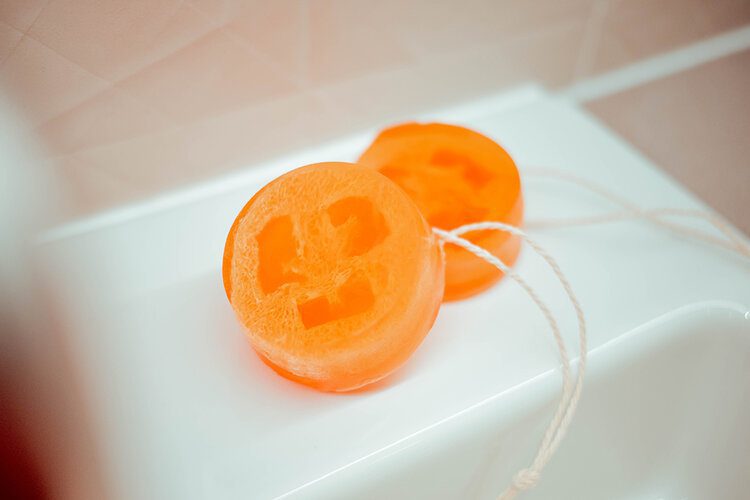
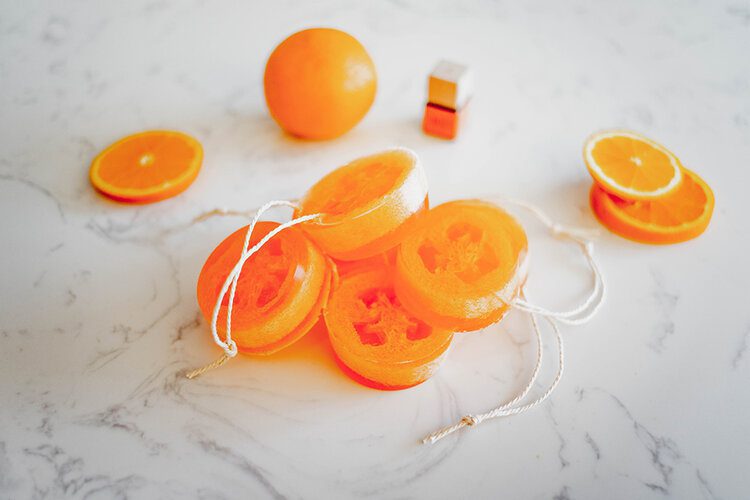
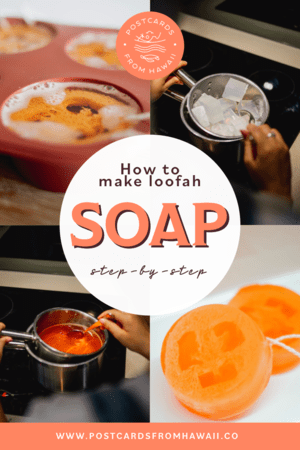
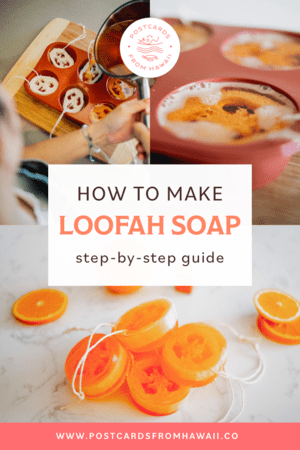
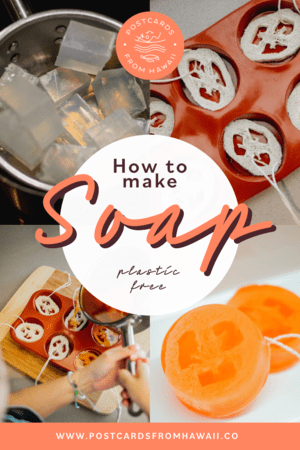
    Learn how to make handmade soap with a naturally exfoliating loofah inside with this easy step-by-step tutorial in collaboration with Earth Conscious shop, Coconut & Cotton. Soap making is not only a fun activity to do (for yourself or with kids) but it’s also a great way to reduce plastic in your bathroom

    Sidebar: wash out and reuse the tub that the soap base comes in to store your homemade soap.

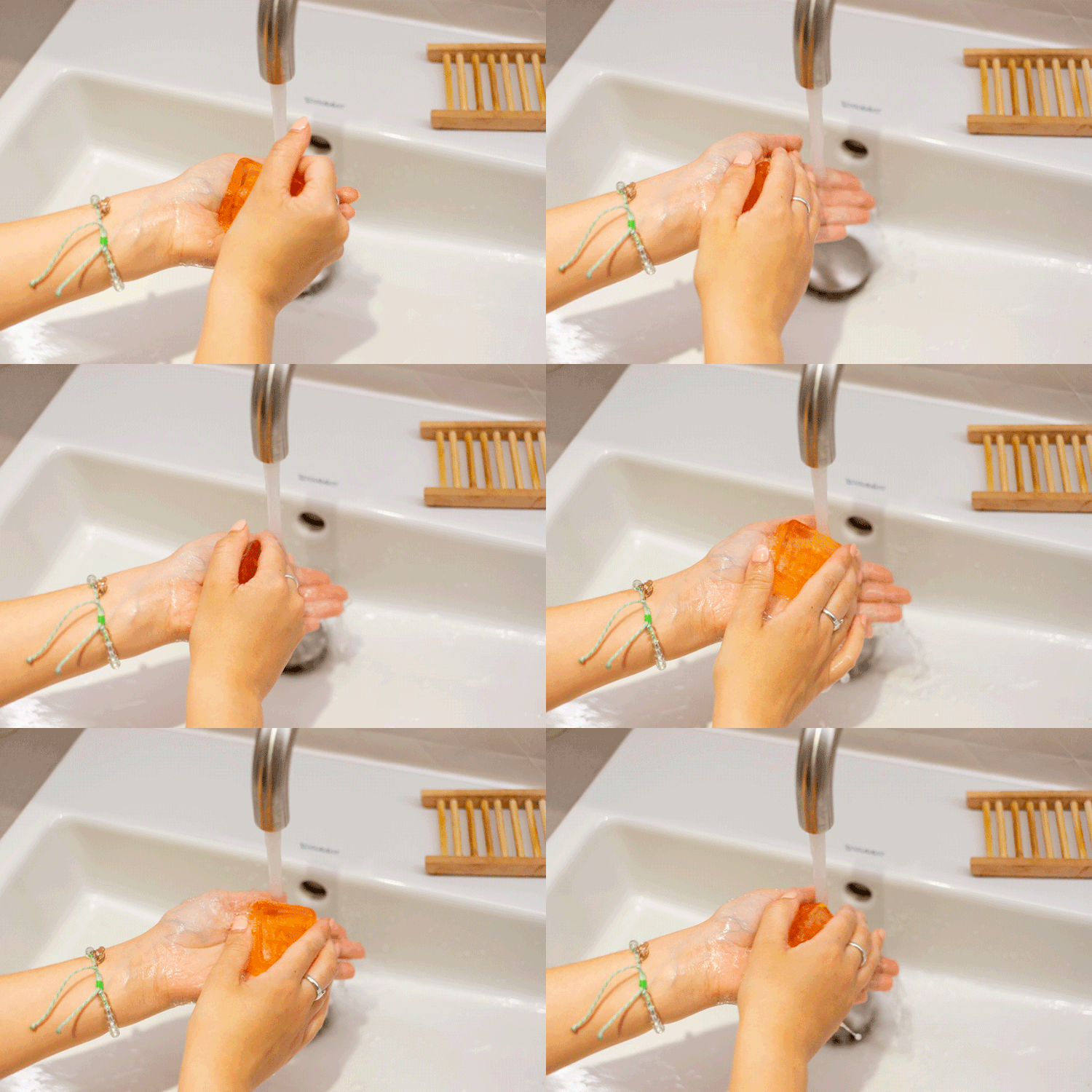
    Take your handmade loofah soap on your travels in an aluminium soap tin from Coconut & Cotton (it fits, I tried it) to prevent needing to use any plastic packaged soap or shower gel. These homemade soaps also make for great gifts and/or party favours.

    This how to make soap tutorial is brought to you by Coconut & Cotton who provided many of the items needed to make these round loofah soap bars. 

    Coconut & Cotton is a female-owned plastic-free and planet-conscious shop selling an amazing range of affordably low-waste household products to help you live a more sustainable lifestyle. Coconut & Cotton is located in Shaftesbury, south west England and most of their products are available to shop online at www.coconutandcotton.co.uk. All orders are sent using reusable and plastic-free packaging and they often pop in a fun free sample.

    Scroll past what you need to make handmade soap and the instructions for answers to some questions you may have.

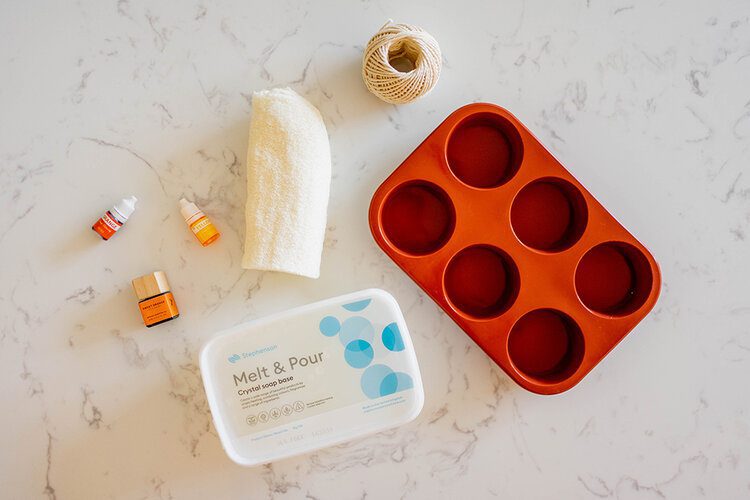
    Ingredients for making loofah soap

    Equipment needed for making loofah soap


    • 6 cavity round silicone mould 7cm or 2 3/4” wide and 3cm or 1.18” deep


    • Bread knife


    • Sharp knife


    • Chopping board


    • Ruler or tape measure


    • Scissors 


    • Microwave and microwaveable container or two saucepans and the stove top


    • Dessert spoon


    Step-by-step instructions for making handmade loofah soap

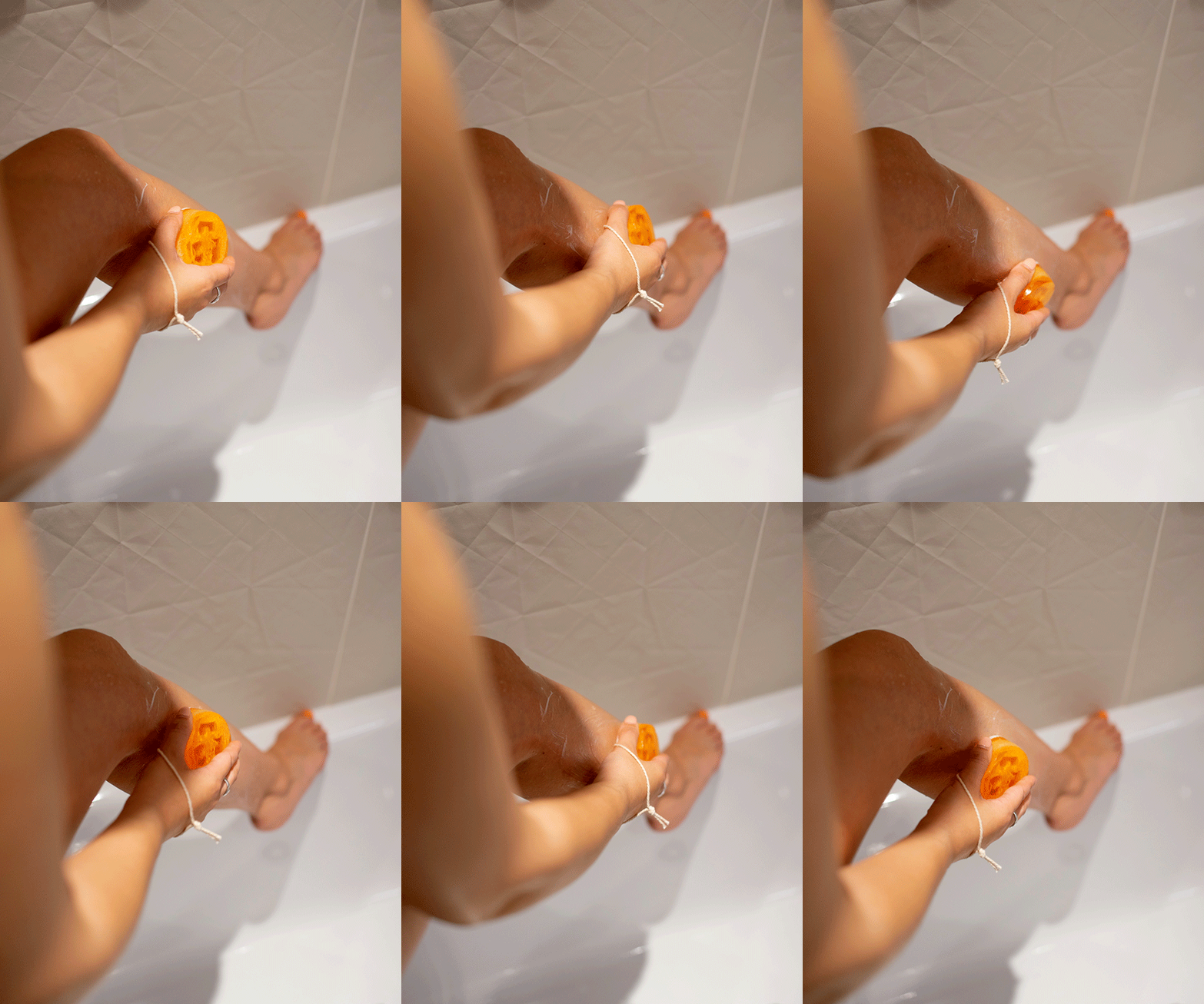
    1. Re-hydrate your loofah from Coconut & Cotton in the bathtub with the shower head or you can just pop it on the floor whilst you shower to hydrate it.

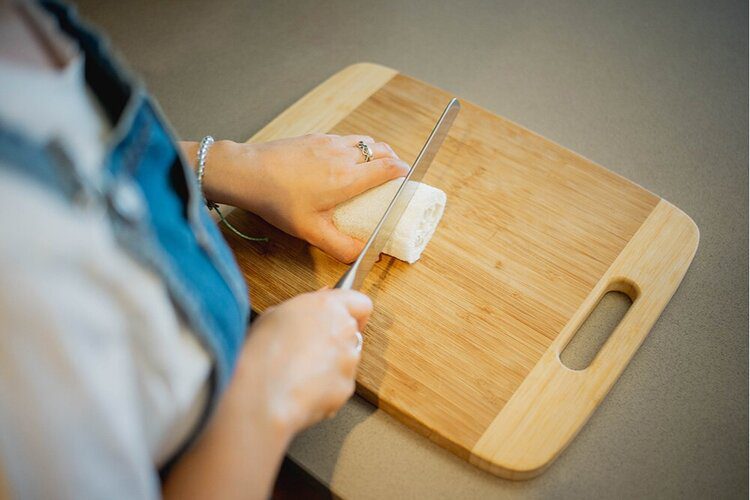
    2. Slice your vegan loofah with a serrated knife (a bread knife will do) into x6 slices about 1.5cm or 1/2” thick.

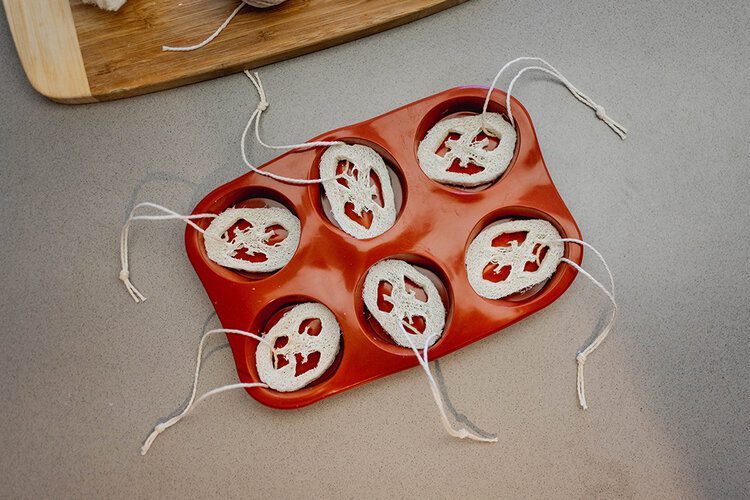
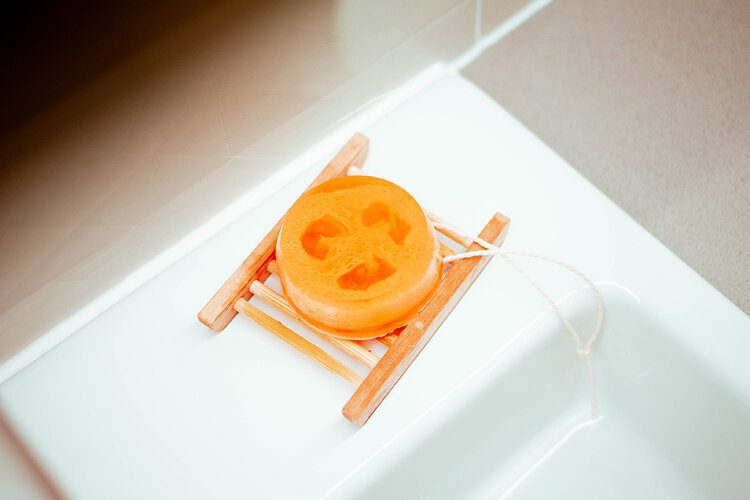
    3. Cut x6 pieces of 41cm or 16” long recycled cotton string from Coconut & Cotton. Pair one loofah with one piece of string and thread the string through one of the holes in the centre of the loofah slice and tie a knot to secure a loop handle. This string loop that you’ve created means you can hang your soap in the shower when you’re not using it and you can loop it around your fingers to stop you from dropping your soap when it gets slippery.

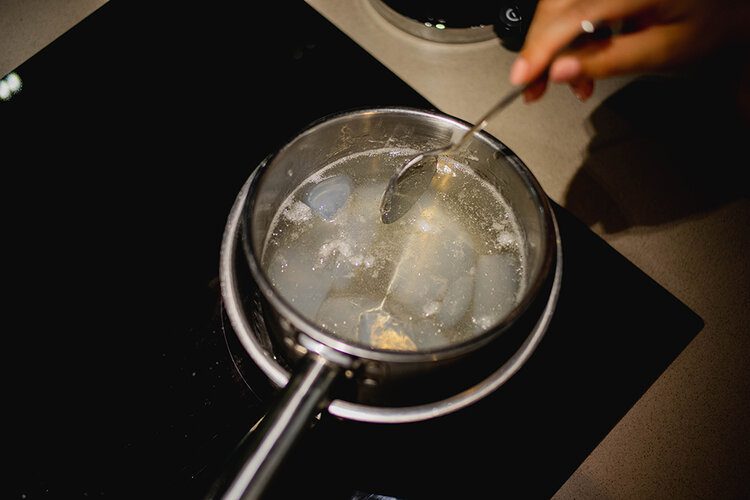
    4. Next you’ll need to melt your soap base, to do this first remove your soap base from its package and cut it into smaller pieces. You can either place it into a microwaveable container and melt it for a couple of 30 second bursts in the microwave or you can create a double boiler with two saucepans and melt it on the stove top. If you’re using the double boiler method then it will take about 15-20 minutes on a medium heat to melt the soap base into a liquid. You may need to top up the water in your double boiler a couple of times.

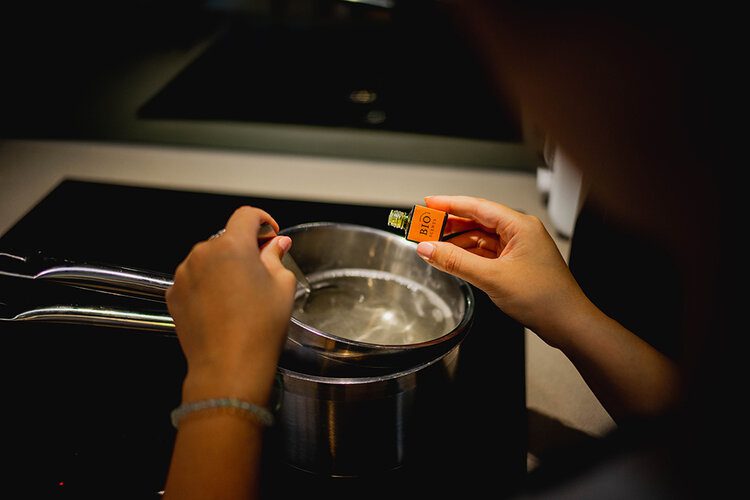
    5. Once liquified, frequently stir the soap with a dessert spoon to prevent a skin from forming. Add your choice of essential oil(s) from Coconut & Cotton, you need about 3-4 drops of each oil per soap you’re making.

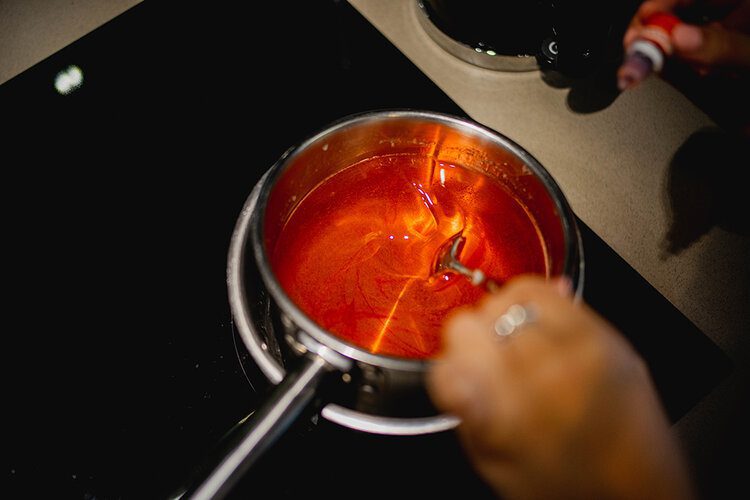
    6. Then add 6-8 drops of your choice of soap colourant if you’re adding it. Stir the soap base to combine the colouring and essential oils and stop a skin from forming.

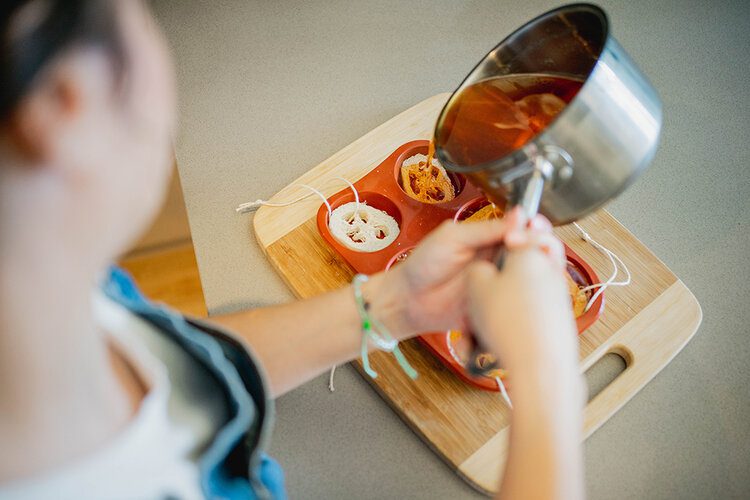
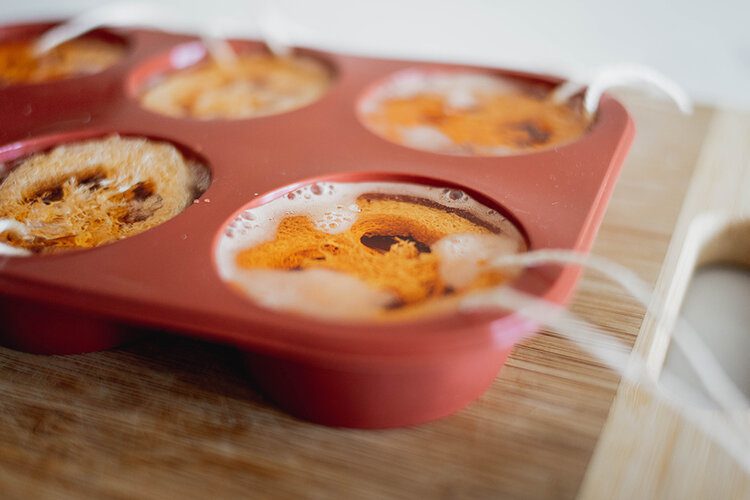
    7 .Carefully remove your soap mixture from the heat and gently pour into each of your 6 moulds.

    8. The loofah slices may float to the surface but you can encourage them to sink by placing 3 regular knives over the top of them. Lay each knife over 2 moulds each.

    9. Leave your soaps to cool and set for an hour and a half. Once cool, you can pop them out and they’re ready to use.

    If you have any leftover soap mixture you can pour it into other moulds.

    What is a loofah/luffa?

    Loofah (or luffa) is the fruit of a tropical vine plant related to the cucumber family. The fruit, that looks much like a courgette, is left out to dry for 6+ months after which the husk can be re-hydrated to form a coarse sponge that will naturally exfoliate skin by brushing away dead skin cells and it stimulates blood circulation.

    Once you are ready to discard your used loofah you can simply compost it.

    You can either buy a slice of loofah for £1.60 or a whole loofah for £7.50 from Coconut & Cotton which you can cut up yourself.

    Do I need to use a loofah to make this soap?

    No you don’t need to insert a loofah into your soap to use this soap making tutorial. You can leave out the loofah or alternatively you can use poppy seeds as another natural exfoliant.

    Is soap making difficult?

    Making homemade soap with a melt and pour soap base is not difficult. It only takes about half an hour to make and pour and then an hour and a half to set. I recommend using a melt and pour soap base because soap making with lye or sodium hydroxide can be dangerous if you don’t know what you’re doing. 

    Is homemade soap vegan?

    The Stephenson melt and pour crystal soap base that I use is 100% vegetable based so yes it is vegan. It is also paraben free, biodegradable and isn’t tested on animals.

    Which essential oils are best to use in handmade loofah soap? 

    You can use any combination of essential oils you like. Coconut & Cotton has a collection of 17 essential oils by Bio Scents, a Portuguese company who bottle 100% organic essential oils in reduced plastic packaging. Choosing your essential oil really depends on the effect you want the scent of your soap to have whilst you use it, for example:

    Lavender essential oil in soap

    Bio Scents lavender essential oil will soothe, de-stress and encourage a relaxed state of mind. Lavender scented soap is ideal to use before bedtime. 

    Citrus essential oil in soap 

    Any citrus essential oil such as Bio Scents lemon essential oil or the Bio Scents sweet orange essential oil from Coconut & Cotton is known for being uplifting and specifically orange essential oil can support clean skin.

    Eucalyptus essential oil in soap

    Eucalyptus essential oil is known for being stimulating and rejuvenating so it’s ideal for using in the shower first thing in the morning. It’s also ideal for when you have a cold or the flu because it helps to clear congested sinuses. 

    Do I need to use soap colouring in my handmade soap? 

    You don’t need to use soap colouring, the only thing adding soap colouring does is change the colour of the soap from translucent to whichever colour you choose. It ultimately makes the soap fun to look at so if you want to save money you don’t need to add soap colouring.

    If you do choose to add soap colouring you can match it to the colour of your essential oil: purple with lavender, orange with orange etc.@coconut.and.cotton for amusing content of the owner, Lucy, as she shares new products and eco-conscious tips.

    How long does handmade soap take to cool?

    The soap will take about an hour to set at room temperature but to be certain it has before popping it out of the mould, leave it to cool for at least an hour and a half.

    .

    If making your own soap isn’t quite your thing and for some reason you’ve made it this far in this blog post then I recommend buying some heavenly scented bars of French Marseille soap – they’re my favorite bars of soap when I’m not making them myself!

    Follow @coconut.and.cotton for amusing content of the owner, Lucy, as she shares new products and eco-conscious tips.

    For more with Coconut & Cotton check out Eco-conscious period packing list, How to have an Earth-conscious spa day at home with Coconut & Cotton and Sustainable stocking fillers for travellers with Coconut & Cotton.

    Do more on & for the planet, Gabriella

    Pin this post


  • Vegan fresh pasta recipe

    Vegan fresh pasta recipe

    Learn how to make simple homemade pasta from two ingredients with this simple recipe. If you’re  intentionally eating a more plant based diet then there’s no need to be scared off by the word “vegan”, this recipe doesn’t substitute anything it’s just an eggless fresh pasta recipe.

    This pasta recipe will help you to make pappardelle pasta which is like spaghetti with a whole lotta junk in its trunk – it’s about 2-3 times wider than tagliatelle. You don’t have to make pappardelle though, you can make any shape you fancy with this pasta dough.

    Yes my homemade pappardelle pasta is on the floor, it was the only spot with natural daylight when I made it.

    This fresh pasta recipe is super easy and quick to whip up and is really handy if you’ve run out of pre-made pasta, looking for a pretty simple way to impress your dinner guest, want something fun to cook with kids or are feeling extra come dinnertime. It’s also a neat way to honour a beautiful country whilst we can’t travel to Italy just yet.

    I have chosen to serve up my fresh pappardelle pasta with pesto sauce, mixed baby tomatoes, pine nuts, parmesan and basil but you can serve your homemade pasta with any sauce of choice.

    Ok so anyone who isn’t just here for the recipe and hasn’t already skipped down (no judgement here) I’ve answered a couple of questions you may have about this vegan fresh pasta recipe and then I share the ingredients, equipment and method.

    How much will this vegan fresh pasta recipe make?

    1 ½ cups of plain flour will make enough pasta to serve two people.

    Important tips for making homemade vegan fresh pasta

    The most important part is to make sure you have enough flour underneath and on top of your rolled out dough so that when you cut out your chosen shapes it doesn’t stick to itself.

    Does it have to be pappardelle pasta?

    Nope I’m just lazy and pappardelle shaped pasta requires very little effort.

    What you will need to make homemade vegan fresh pasta

    Ingredients for homemade vegan fresh pasta


    • 204g / 1 ½ cups of plain flour plus extra for dusting


    • 330ml / 1 ⅓ cups of cold water (approximately)


    • Teaspoon of salt


    Equipment for homemade vegan fresh pasta


    • Cup measurements


    • Dessert spoon


    • Fork


    • Rolling pin


    • Sharp knife


    • Saucepan


    • Wooden spoon


    • Colander


    Method for making homemade vegan fresh pasta

    1. Measure out the flour onto a clean surface, alternatively you can use a mixing bowl.

    2. Using a dessert spoon make a well in the middle of the flour, you can use the GIF below as a reference. Making a well in the flour makes it easier to gradually mix in the water so your dough doesn’t become lumpy.

    3. Add the water approximately one tbsp at a time and use the fork to mix the flour in. You want to gradually take flour in from the edge of the well you made and whisk it into the flour to combine it. As the dough becomes less sticky add a little more water and continue to mix the flour in. To make things easier, you can mix the dough in stages.

    Note that you might not need all of the water, use as much as you need to form a dough with all of your flour.

    4. Once you have mixed all of your flour into a dough, dust your surface with extra flour and knead your dough for about 4-5 minutes or until it becomes smooth and elastic. This helps the pasta to keep its structure once you shape it whichever way you please.

    5. Dust your surface again with flour and your rolling pin and roll out one half of the dough to a thickness of 3mm/0.2”. Be sure to dust flour onto your surface every time you move and flip your dough to make sure it doesn’t stick. If it’s easier you can work your dough in two halves.

    How to shape pappardelle pasta

    Before we continue, you don’t have to make pappardelle pasta, you can make whatever shape you like. I’m just lazy and pappardelle is easy.

    6. Bring a saucepan of salted water to the boil as you continue with steps 7-10.

    7. Sprinkle and smooth out a layer of flour onto the rolled out dough. You don’t want to smother it with flour but it needs enough so that neither side is sticky.

    8. Take one edge of your dough and lightly roll it in and continue to roll the whole dough so it resembles a Swiss roll. Be careful to roll lightly so the dough will unravel easily after you’ve cut it.

    9. With a sharp knife slice your rolled up dough (gently if you choose not to use a chopping board as to not damage your surface). To make pappardelle pasta cut your slices 2-3cm/3⁄4–1inch wide.

    10. Lightly flour your hands and gently unroll your pappardelle pasta.

    11. Place your pappardelle pasta into the boiling water, stir and cook for 2 minutes. Make sure you don’t overcook your pasta as it will become gloopy, lose its shape and be unpleasant to eat.


    12. Drain your pasta, add a little butter and stir in your sauce of choice, I used vegan green pesto. Add any extra you like such as pine nuts and tomatoes, add a sprinkling of parmesan and garnish with fresh basil.

    Buon appetito!

    Do more on & for the planet, Gabriella

    Pin this post


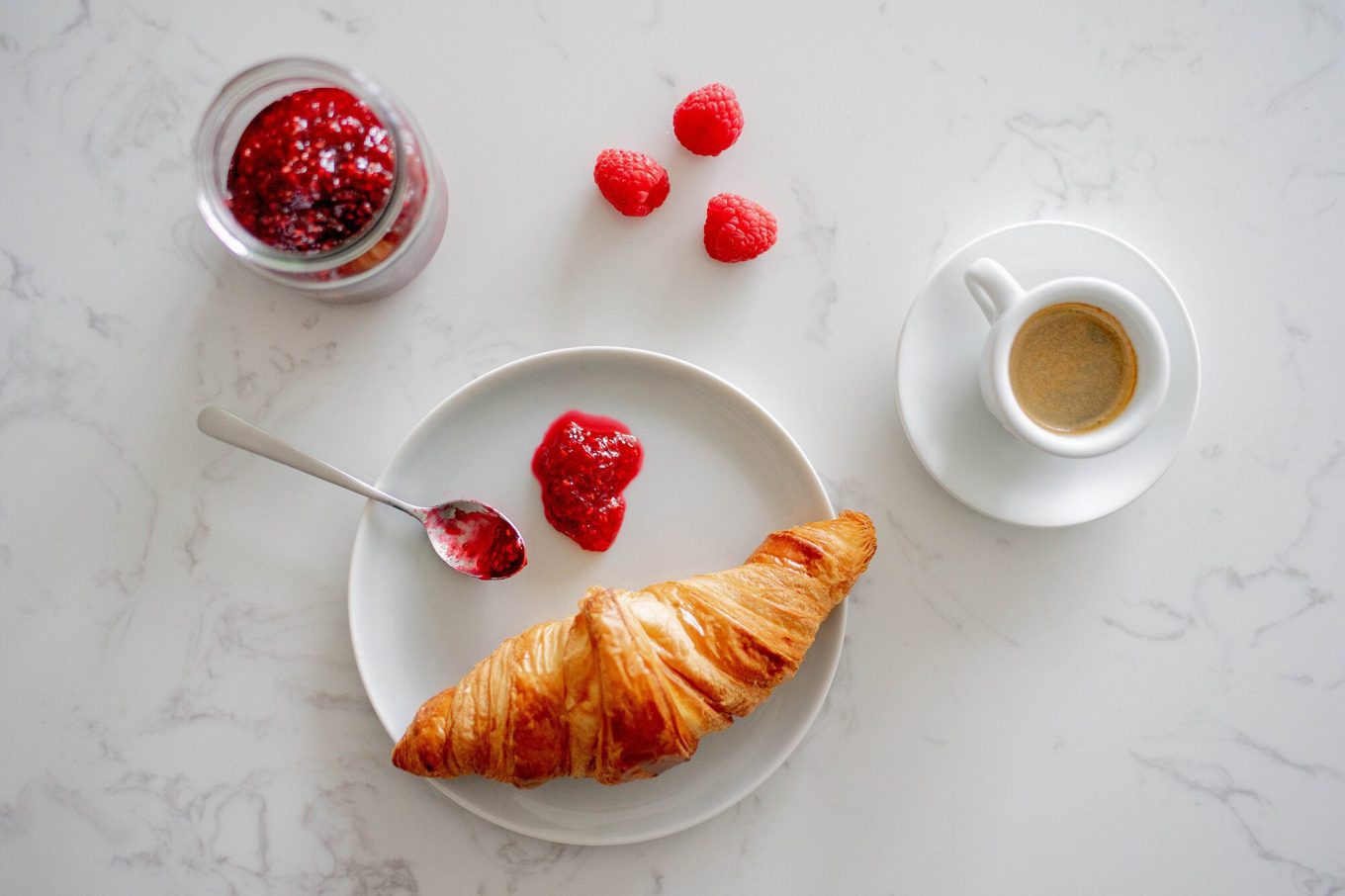
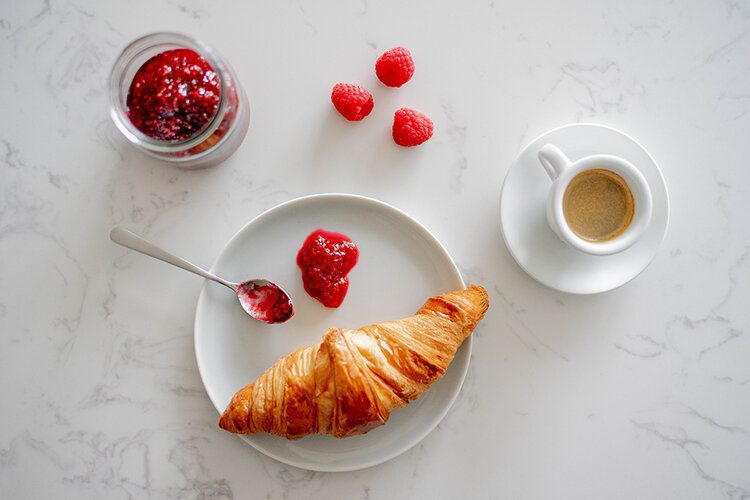
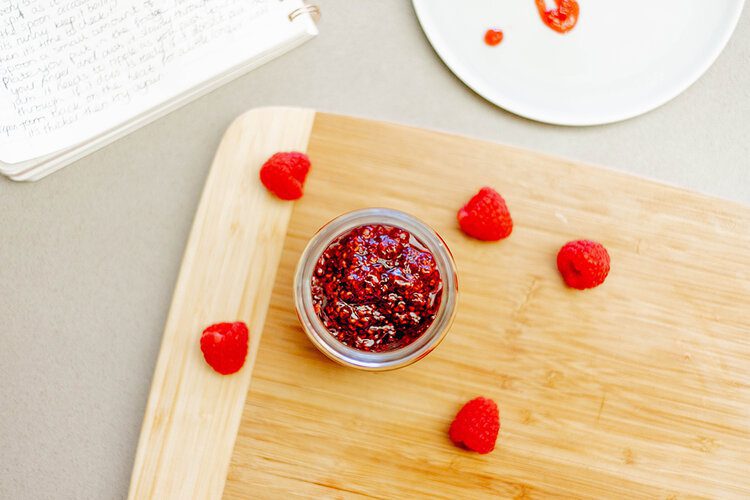
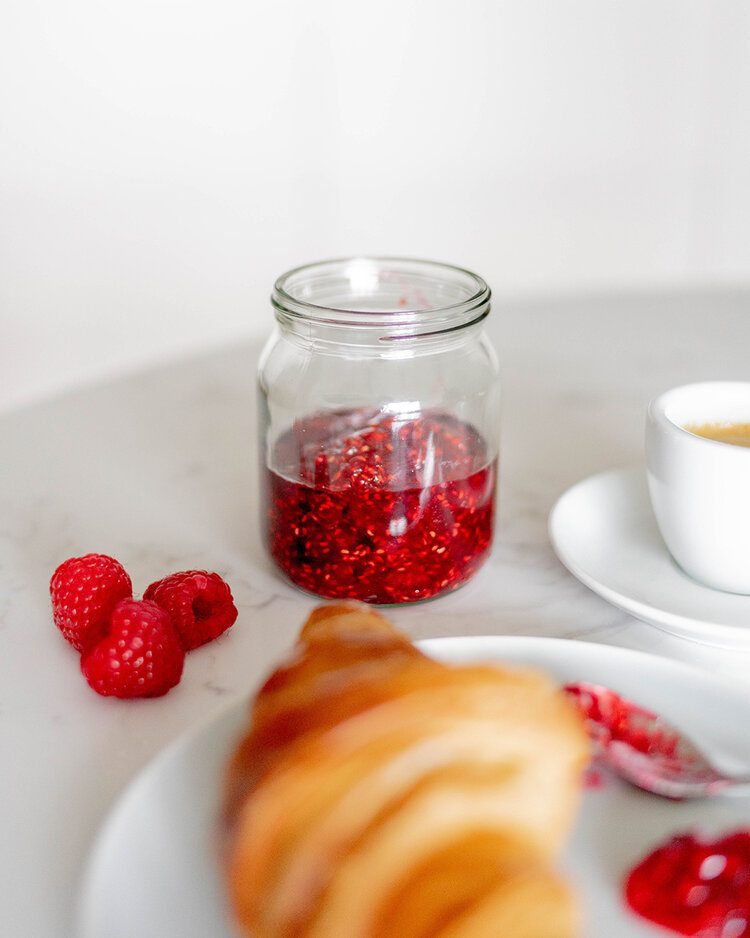
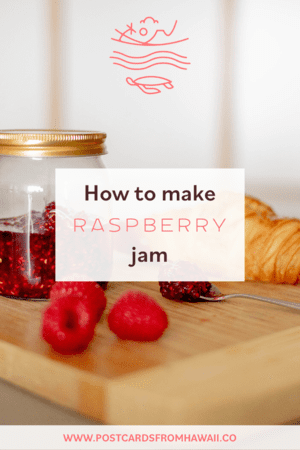
  • Homemade raspberry jam recipe

    Homemade raspberry jam recipe

    As you are aware, this homemade jam recipe blog post has been published in the midst of a worldwide pandemic. I haven’t left England in over a year and I don’t have any trips booked for the foreseeable future. Giving you fresh travel content is tricky, but I want to keep giving you blog posts that can at least keep you occupied whilst you also wait for your borders to open, so here I am publishing my Mum’s jam recipe. 

    Her homemade jam is stashed in just about every corner of her kitchen so we can all trust that she makes a good jam. You didn’t come here to read an essay about why you’re getting a homemade jam recipe though as the chances are you’re here because you just want a jam recipe, right? If that’s the case scroll down for the recipe. Everything that comes between now and the recipe is me answering some frequently asked jam related questions, so if you find yourself thinking “how long will this jam last Gaby?” check back here and I won’t judge you for skipping these paragraphs before the recipe – we all do it!

    Notes on making homemade jam

    Homemade jam is really easy to make, plus it’s a really cute gift if you’re trying to give more eco-conscious presents – it uses minimal ingredients, it preserves the fruit for much longer and it gives a greater purpose to your upcycled jars.

    PFH Top Tip: Wear an apron or something dark coloured that you’re not precious about as the jam will spit.

    Can I take jam on a plane?

    Making jam out of fresh fruit is also a really neat and easy way to preserve fruit to bring it home from your travels in your suitcase, should you be staying in accommodation with a kitchen. 

    Border restrictions prevent you from being able to enter a country with fresh fruit but the sugar in jam preserves the fruit and eliminate the risk of pests and diseases that can spread with fresh fruit.

    Of course, the jam is a liquid so you will have to pack it into your checked luggage to be able to bring it back. Make sure it’s protected within your luggage so it doesn’t break when your suitcase gets tossed around behind the scenes.

    Jars are super easy to get hold of in homeware stores so should you go coconuts for some juicy mangoes on your tropical travels, you can make them into jam and bring them home to enjoy! I actually made a raspberry and mango jam with this recipe (if you add another fruit then increase the amount of sugar to match the weight of all the fruit) and it was delicious!

    How do I sterilise up-cycled jars?

    It’s super simple to sterilise old jars to give them a second life such as holding your homemade jam. Place the jar into a container filled with warm soapy water and leave for a few hours to remove the labels and the sticky residue. Then either wash out the jar or put it in the dishwasher to clean the inside.

    To sterilise it before using it for food storage (leftovers, jam etc.), pour some boiling water into it  and let it sit for a few minutes. Wear oven gloves/mitts or use a tea towel to touch it to pour out the water so you don’t burn your hands. Dry it and it’s ready to use.

    You may also be interested in my Mauritian achard légumes recipe, a vegetable pickle you can store in your sterilised jars!

    How much jam will this recipe make?

    This is a small batch jam recipe and will make one jar of jam. A 150g punnet of raspberries (which is a standard measurement in British supermarkets) will make one 350g jar of jam.

    Although I give quantities of the ingredients below the rule of thumb for jam making is to have equal sugar to fruit. The quantities in my jam recipe are based on the punnet of raspberries I bought, so just check the weight of the punnet you buy and adjust your sugar to equal it. 

    Take into consideration this is based on weight not volume.

    How long will homemade jam keep?

    If you store homemade jam in a cool and dry space that is out of direct sunlight it will last for 12 months. 

    Once opened, your jar of jam should be consumed within a couple of months. 

    Store opened jars of jam in the fridge.

    Use a clean spoon/knife (as opposed to one with butter on it) to prevent it from getting contaminated.

    How will I know my jam is the right consistency?

    I explain the process for checking your jam is the right consistency in step 9 of the recipe below but if you’re just looking for this answer then the test goes as follows:

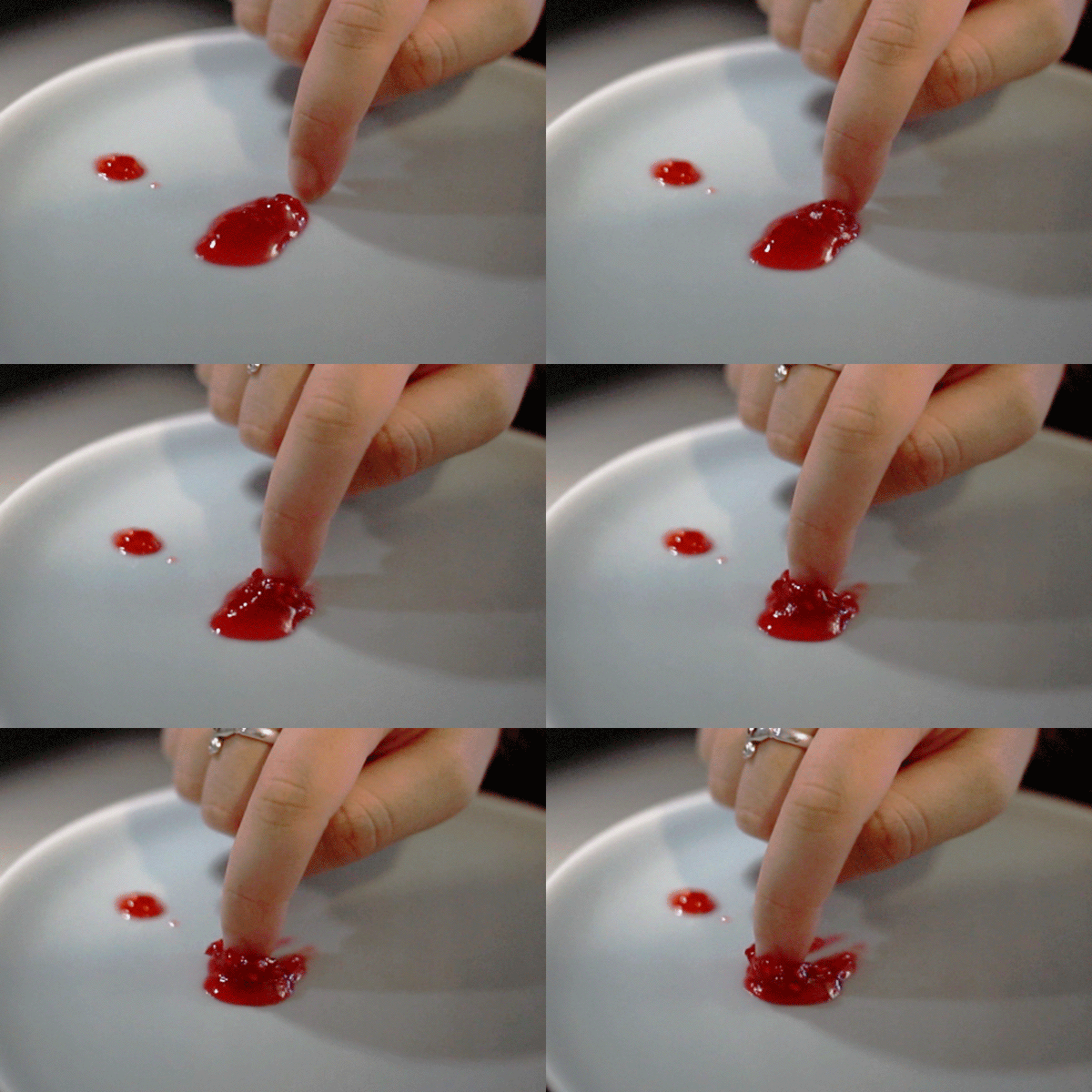
    To test if your jam is ready to pour into your jar push your finger through the centre of the jam. If the jam ripples in resistance to your finger nail and your finger leaves a clear path through the jam then your jam is at the right consistency.

    If you’re still unclear then take a look at step 9 for a GIF that perfectly illustrates what I mean.

    What you need to make jam

    Wooden spoon

    Medium saucepan

    Small saucepan

    Scales/measurement cups

    Tbsp measure

    Small plate

    Jam jar with lid

    Homemade raspberry jam ingredients 

    150g / 1 ⅓ cups / 5.3 oz of fresh raspberries

    150g / ¾ cups / 5.3 oz of Billington’s golden caster sugar

    1 tbsp lemon juice

    Raspberry jam recipe

    1. Put a small plate in the fridge. This is for checking if your jam is the right consistency before pouring into your jar to set.

    2. Pour some boiled water into your jar to sterilise it. Set it aside until you’re ready to pour the jam in.

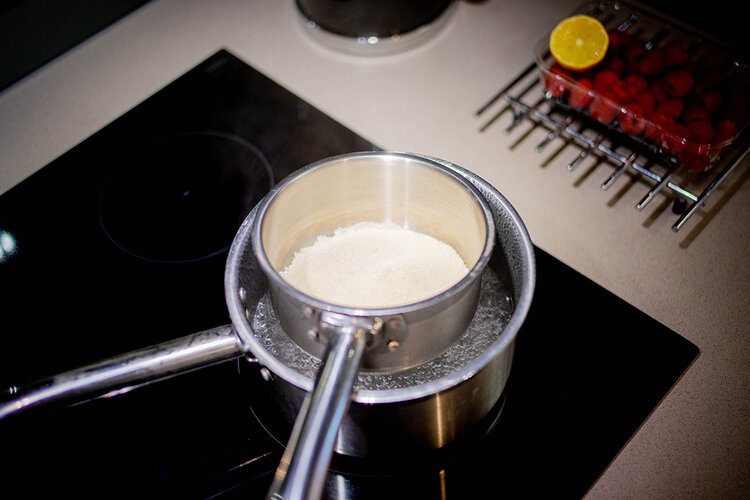
    3. Set up a double boiler by placing the smaller saucepan into the larger saucepan and bringing enough water to the boil in the large saucepan that it heats the small one but doesn’t touch the bottom. Once the water is boiling, turn it down to a simmer.

    4. Add your sugar to the small saucepan and leave it to gently warm the sugar, this will encourage the fruit to melt rather than burn when you add it. Stir the sugar every few minutes to make sure it’s heating evenly.

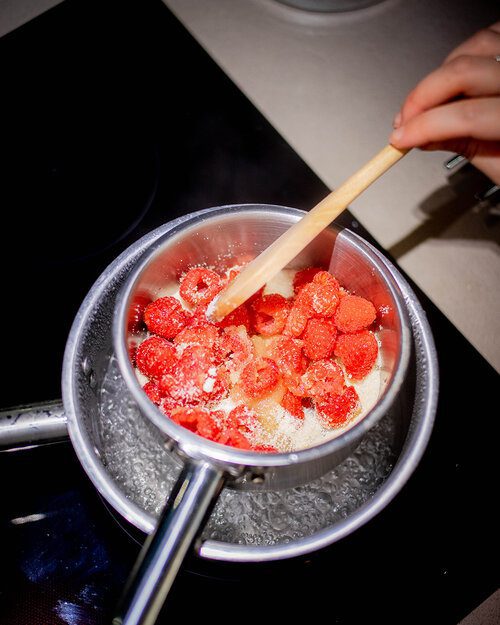
    5. Once the sugar is warm to the touch (it should only take about 8 minutes) add your raspberries (or fruit of choice) and lemon juice.

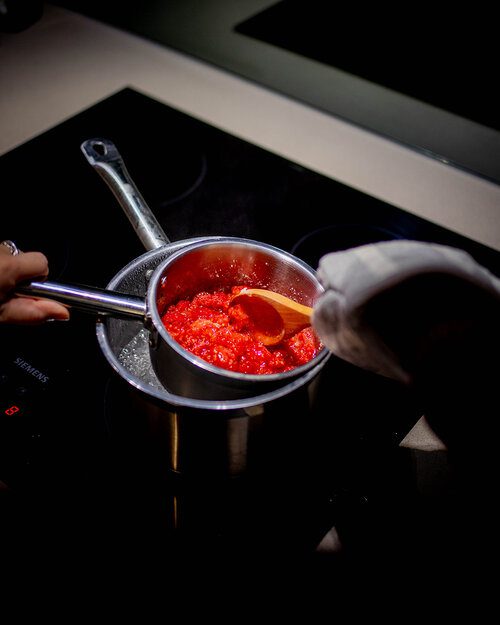
    6. Gently stir to encourage the fruit and sugar to melt together.

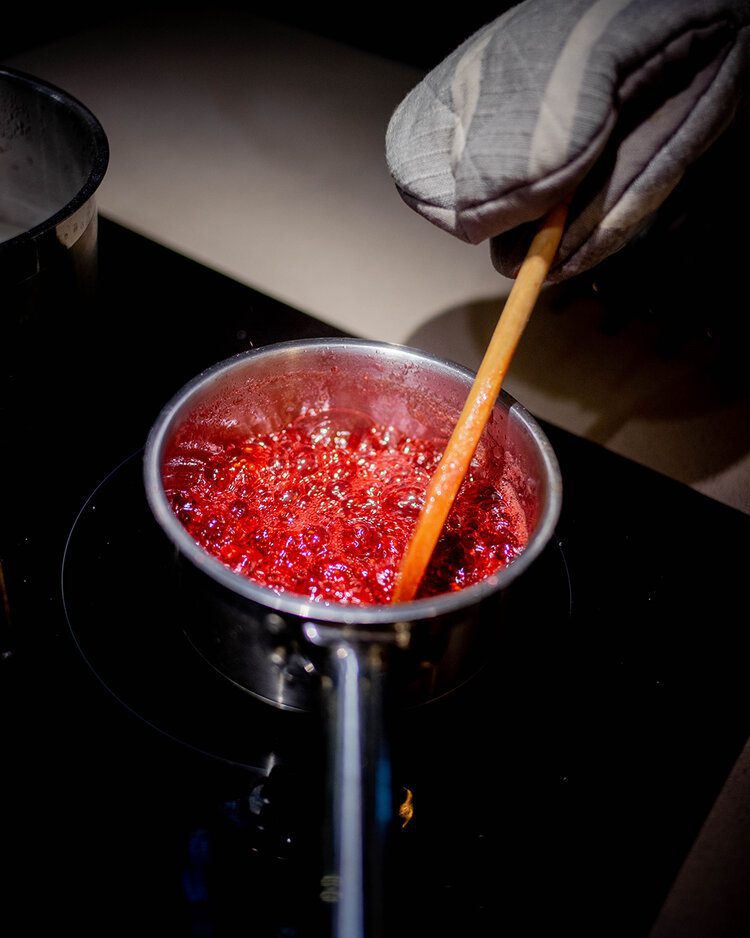
    7. Once the fruit and sugar has combined, remove the small saucepan from the large one and place it directly onto the hob (giving the bottom a quick wipe dry before) and increase the heat until you have brought the mixture to a boil, stirring it consistently every 5 seconds. WARNING, the jam mixture will spit as it boils so wear oven gloves/mitts to protect you hands.

    8. After 10 or so minutes boiling, the consistency should go from runny to sticky. If it is still runny then continue to boil and stir it. You want to keep an eye out for when it starts to stick to the sides of the saucepan.

    9. Once you see the jam starting to stick, take your small plate from the fridge and use the spoon to drop a small amount of jam onto it. To test if your jam is ready to set, push your finger through the centre of the jam, just like I’m demonstrating in the GIF below. If the jam ripples in resistance to your fingernail and your finger leaves a clear path through the jam then your jam is at the right consistency. If it doesn’t ripple and looks as though your finger was never there then continue to boil and stir the jam until it appears thick enough to try this test again.

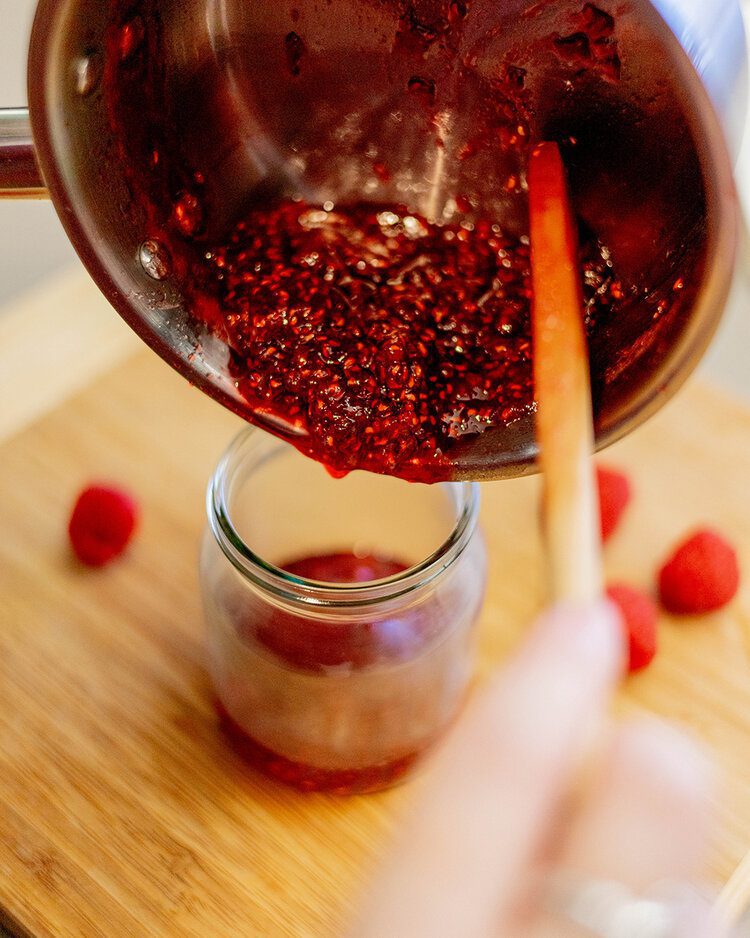
    10. Once your jam is the right consistency on the plate, take the saucepan off the heat. Pour the water out of the jar, dry it and pour the jam in. Place the lid on whilst the jar is still warm so that it forms a seal (as it cools you’ll hear a pop as the lid expands to form a seal).

    11. Leave it out to cool completely so that it sets. You can keep your unopened jam in a cool and dry place for up to a year. Once opened, store it in the fridge where it will last for a couple of months.

    Bon appétit!

    You may also be interest in my vegan sugar cookies recipe.

    Do more on and for the planet, Gabriella

    Pin this post


  • Simple vegan sugar cookies recipe

    Simple vegan sugar cookies recipe

    This sugar cookie recipe is super simple, needs very few ingredients but makes delicious and really cute biscuits that can be enjoyed on any occasion. As you’ll see from the photos I love making them for Valentine’s Day but I also make them as Christmas cookies or whenever there’s a party – ahh remember what parties were? Those were the days.

    I’ll be honest with you, being a travel blogger in a time when international travel is illegal is getting to be somewhat tricky and makes me feel like some kind of dirty accomplice. Sharing fresh travel content not only during the UK’s 3rd lockdown but also having not left the country for over a year now isn’t easy but of course I want to provide you with useful content that can at least keep you occupied in your spare time whilst you’re not working from home and you can’t travel.

    So with that said, here’s my sugar cookie recipe for the cookies that I will most likely bring to your party when they’re legal again but until then, you can bake these little bickies (that’s Brit slang for biscuits which are cookies, yes I know you’re now practicing your English accent) yourself for your zoom party or whatever sad thing we’re all doing to feel alive on a weekend during the pandemic.

    What if I don’t want vegan sugar cookies?

    I’ve been reducing my dairy intake for the last 3 years but I’ve been baking these sugar cookies for so much longer. Originally I was baking them with an egg and butter before switching to margarine and vegan eggs.

    Sure, they’re richer with butter but they are delicious baked with dairy or vegan ingredients so I would urge you to try the vegan option for the future of the planet but either way, they will taste amazing!

    How to make gluten free sugar cookies

    Simply switch out the plain flour for gluten free plain flour and use double the amount of egg or vegan egg replacement if you want to make these easy sugar cookies gluten free. I will say that despite the vegan eggs and butter making no difference to the taste or texture, the gluten free flour does make the sugar cookies dryer. I always counteract this by using piping icing so you don’t notice it quite so much. They will look at lot more pale than if they weren’t gluten free so don’t bake them for longer than 10mins.

    How long sugar cookies will last

    Sugar cookies will last 2 weeks if stored in a dry, airtight container for 6 weeks in the freezer.

    If you have an event coming up such as Valentine’s Day or Christmas and you’re short on time, you can use this recipe to make them in advance and then freeze the sugar cookies. Just take them out of the freezer to defrost for at least 2 hours to be sure they’re ready to eat.

    How to decorate sugar cookies

    If I have a lot of time I will mix up icing sugar with water and food colouring and smooth the icing over each one, but it’s very time consuming and usually something I do for Christmas. If you choose to do this you will need to leave them to set overnight.

    If you want to add sprinkles then add them before you leave the icing sugar mixture to set.

    When I’m short on time, I use the same cookie cutter to cut out fondant icing which I’ll stick on with a little icing I’ve made with water and icing sugar. 

    Add a little something extra by decorating them with piping icing. My tip for using piped icing is to go slower than you would think necessary to keep your pattern or writing consistent.

    This recipe will make approximately 36 sugar cookies.

    Ingredients

    Sugar cookies

    275g / 2¼ cups plain flour

    100g / ½ cup caster sugar

    100g / ¼ cup and 3 tbsp vegan margarine or butter

    1 free range egg / 3 tbsp vegan egg replacement for baking, check the packaging for the brand you use (I used Oggs) 

    1 tsp vanilla extract

    Icing 

    Piping icing with:

    400g icing sugar mixed with 3-4 tbsp water with ½ tsp of food colouring

    Or 

    250g fondant icing

    Equipment 

    Mixing bowl

    Scales or measuring cups

    Measuring spoons

    Wooden spoon

    Rolling pin

    Cookie cutter in shapes of your choice

    Cooling wire/rack

    Method

    1. Preheat the oven to 190ºC Fan or 374ºF.

    2. Line your baking trays/sheets with greaseproof/parchment paper (if you have a reusable lining then use that).

    3. Cream the butter and sugar together in the mixing bowl with a wooden spoon.

    4. Beat in the egg or vegan egg replacement and vanilla extract.

    5. Stir in the flour and bring it together until the mixture forms a dough (you will need to use you hands towards the end).

    6. Split the dough into two so you can manage it better and roll it out onto a lightly floured surface until it’s 1cm thick.

    7. Take your cookie cutter in the shape(s) of your choice and cut out your cookies/biscuits. Keep rolling out the excess dough until you have cut as many cookies as possible, you will get approximately 18 from each half of the dough. Place your cookies onto your pre-lined baking trays/sheets.

    You may also be interested in my American Buttermilk Pancakes recipe.

    8. Bake your cookies in the oven for 8 – 10mins, you want to catch them right before they start to brown on the edges, they should be baked but pale in colour. Start them at 8mins and if they’re about to turn golden then remove them, if they’re looking under-baked then leave them in a further 2mins but no longer.

    9. Place your baked sugar cookies on a cooling wire/rack and leave them until they’re cool to the touch. You want to decorate the sugar cookies when they have cooled down completely or the icing will melt.

    You may also be interested in my traditional British Christmas mince pies recipe.

    Bon appétit, Gabriella

    Pin this post


  • 5 no-cook recipes you can make in a hotel room

    5 no-cook recipes you can make in a hotel room

    Need hotel room food ideas? These five no-cook meals for travelling are perfect for making in your hotel room when you don’t have a kitchenette or are looking to save money on your travels. These easy no cook recipes are a mix of vegan, vegetarian, meat, dairy free and gluten free meals that are all healthy and delicious – there’s something here for everyone. These travel food recipes are perfect for when you have a tight travel budget and want to save money by not eating out but don’t want to eat junk food and don’t have a kitchen to cook in. These no-cook recipes are also ideal for camping if you don’t have a stove to cook on but want to make something healthy to eat.

    Eating out in new restaurants is one of the most exciting things about travelling but do you ever feel like you can’t be bothered to go out, want to save money or need to resist temptation of another bowl of pasta? Well you’re not alone! Often I will opt to save money by making no-cook meals in my hotel room and these are my top recipes that don’t require any cooking.

    I’ve been experimenting the past few summers whilst road tripping to be able to eat well with very little kitchenware and have made these five no-cook meals for travelling as simple as possible because I know first hand that we aren’t equipped with the regular basics such as seasonings or a microwave in hotel rooms. I’ve also picked five no-cook recipes that have ingredients that cross over to help you use up what you’re buying and to make them cost-efficient.

    What you need to make food in a hotel room

    To make these five no-cook travel food recipes for road trips, hotel stays or camping you will only need the following three items:


    1. Swiss Army knife – this will be your knife, can opener and scissors


    2. Camping cutlery – to stir, serve and eat with (I have metal ones but bamboo cutlery are a good low-waste choice)


    3. Collapsible bowl – your chopping board and bowl


    I previously wrote 6 items for making food in your hotel room which features a few more bits that are super helpful for making food to pack-up for the day.

    You may also be interested in my guide to picking the best reusable coffee cup.

    Tips for making food in a hotel room


    • Pay attention to tins having ring pulls to make life easier for you, but don’t worry if you can’t get one as your Swiss Army knife should have one


    • Try to buy loose fruit and vegetables so you can avoid extra plastic packaging but it also means you don’t need to buy in bulk when you won’t be able to eat it all


    • Buy a large onion and spread it out across all the recipes that use it


    • Use your collapsed bowl as a chopping board as the base is solid


    • Use cherry tomatoes because they only require a small surface space for cutting


    • I have cleaned my counter before taking these photos but I do recommend you avoiding placing your food on the surface space of your hotel room. Use your bowl or the food packaging 


    1. Vegetarian wraps

    Swap the vegan ham to ham to include meat and use gluten wraps if you don’t need a gluten free meal.

    Ingredients


    • Ham


    • Cucumber


    • Sweetcorn


    • Cress (easy to use up vs. a bag of salad)


    • Hummus


    • Wraps (these gluten free fajita wraps are so much better than any other gluten-free wrap I have ever tried so I always get these)


    No-cook vegetarian wrap recipe


    1. Spread a layer of hummus over your wrap


    2. Lay a few slices of ham on top


    3. Sprinkle on some sweetcorn


    4. Use your Swiss Army knife and bowl to chop up the cucumber into small chunks and sprinkle over your wrap


    5. Top with cress, roll up and enjoy


    2. Tuna and avocado dip recipe with crackers

    Swap out the tuna for feta to be vegetarian or to tomatoes to be vegan. You could also use a vegan tuna substitute such as Tuno.

    Ingredients


    • X1 tin of tuna


    • Onion


    • Avocado


    • Cucumber


    • Lime (stops the avocado from tuning brown and adds flavour)


    • Crackers (oat cakes for a gluten free version)


    No-cook tuna and avocado dip recipe


    1. Use your Swiss Army knife and bowl to chop up the cucumber into small pieces and leave it in the bowl


    2. Do the same with some onion


    3. Cut your lime in half and put it to the side for a moment


    4. Cut open your avocado and scoop it into the bowl


    5. Squeeze your lime over the avocado and add the remains to your water bottle to infuse your water and give it a second life


    6. Open and drain your tuna and add it to the bowl


    7. Stir and serve on crackers


    3. Mixed bean salad recipe

    Swap out cheese to hummus to be vegan, add ham to include meat or use vegan ham to be vegetarian and vegan.

    Ingredients


    • X1 can of mixed beans


    • Cherry tomatoes


    • Onion


    • Sweetcorn


    • Cucumber


    • Feta cheese


    No-cook Mixed bean salad recipe


    1. Use your Swiss Army knife and bowl to chop up the cucumber into small pieces and leave it in the bowl


    2. Do the same with some onion and cherry tomatoes


    3. Sprinkle in some sweetcorn


    4. Drain your can of beans and add them to your bowl


    5. Crumble over some feta cheese and enjoy


    4. Roast Chicken salad

    Ingredients


    • Pre-cooked chicken from the hot deli counter at the supermarket


    • Sweetcorn


    • Cherry tomatoes


    • Cucumber


    No-cook roast chicken salad recipe


    1. Use your Swiss Army knife and bowl to chop up the cucumber into small pieces and leave it in the bowl


    2. Do the same with some cherry tomatoes


    3. Add sweetcorn to your bowl along with your pieces of chicken


    5. Antipasto

    Swap out meat to be vegetarian, cheese to vegan cheese and crackers to oat cakes to be gluten free.

    Ingredients


    • Crackers


    • Hummus


    • Sliced meat


    • Cheese


    • Olives


    • Grapes


    • Cherry tomatoes


    • Nuts/crisps


    No-cook antipasto recipe


    1. The great thing about a makeshift antipasto is it requires little effort as you can leave all the elements in the packaging.


    .

    There you have it, five no-cook recipes that are cost-effective, nutritious, easy to make and delicious. These travel food recipes are easy meals to make in your hotel room and will save you so much money.

    Let me know in the comments below if you liked or have tried these hotel room dinner ideas and if you want me to share more!

    Bon appétit, Gabriella

    Pin this post featuring 5 no-cook hotel room meals


  • Mauritian achard légumes (vegetable pickle) recipe

    Mauritian achard légumes (vegetable pickle) recipe

    Achard légumes is a Mauritian mixed vegetable pickle that originates from the Indian dish, achaar.

    Though it took me a long time to acquire an appreciation for the taste of achard légumes, its place on the table in my family is a nostalgic one. This bright yellow, orange and green dish has been present at almost every large family gathering and for me, conjures the same comforting summer feels as strawberries and cream. 

    Achard légumes is one of the best side dishes you can make because it compliments such a wide variety of meals. It can be eaten with a curry or rougaille along with many other side dishes, or it can be eaten with a roti (Mauritian flat bread) or fresh bread, it can go into a sandwich or on a salad and it goes great with a BBQ or a cheese board. It’s a really flavoursome way to bring a variety of vegetables to whatever you’re eating.

    Just like the rougaille recipe I shared last month, this achard légumes recipe is my Mum’s, so there are variations.  Her adaptation is that she doesn’t use vinegar or cauliflower because my Papa, her Dad, didn’t like it so he didn’t use it. Many of the tweaks to our Mauritian recipes come from my Papa not having liked something!

    This achard légumes can last up to two weeks if refrigerated if you do the following:


    • Fry all of the onion as this recipe tells you to. Some recipes will tell you to only fry half and add the rest in raw but this makes the achard watery and it won’t preserve for as long.


    • Add salt just before eating. Salt will also make the achard watery and again, it won’t last as long.


    • Prep your vegetables the day before you are planning to cook it. By allowing the vegetables to dry out overnight, the achard will last longer.


    I almost forgot to point out, though you will be able to work it out from the ingredients list below, it’s vegan and vegetarian!

    This recipe will serve 4-6 people.

    Ingredients 

    3 carrots

    3 stringless flat beans

    1/4 small white cabbage

    2 shallots

    2-3 cloves of garlic

    1 fresh or dry chilli (add more if you want the achard to have more of a kick)

    1/2 tsp mustard seeds

    2 tsp fresh turmeric (can be dry if you can’t get hold of fresh)

    2 tsp fresh ginger

    4 tbsp oil

    Salt and pepper

    You may also be interested in my Mauritian rougaille recipe to serve as your entrée/main dish.

    Equipment 

    Chopping board

    Sharp knife

    Measuring spoons

    A wok or a large saucepan

    Large cooking spoon (black or metal, keep in mind that the turmeric will stain it)

    When it comes to washing these up, use an old tea towel as the turmeric will stain it.

    Method

    1. Prepare your vegetables a day before and allow them to dry out.


    • Julienne the carrots and beans.


    • Shred the cabbage.


    • Cut the chilli(es) in half, lengthways. If you don’t like too much spice then remove the seeds, if you don’t mind then keep them in.


    2. When you are ready to cook, peel and finely slice the shallots, mince the garlic and ginger and grate the turmeric.

    3. Heat 2 tbsp of oil in the wok/frying pan on a medium heat and fry the shallots.

    4. Add the garlic, turmeric, mustard seeds, chilli, pepper and ginger and stir through. Let them heat through for a few minutes to release their flavour.

    5. Add the carrots and beans. Stir frequently so they get covered with the spices.

    6. Add the remaining 2 tbsp of oil along with the cabbage and cook it until it wilts. The length of time you cook your achard really depends on whether you want the vegetables to be crunchy or soft. The longer you cook it, the softer it gets, so stop cooking it when you are happy. We cook ours for about 10mins so there’s still a little crunch.

    You may also be interested in my family’s rougaille/rougail recipe.

    7. Serve with your food of choice! Add salt just before eating.

    8. Pop the rest into a container (be mindful that this pickle will stain plastic) and store in the fridge for up to 2 weeks.

    .

    Bon appétit, Gabriella

    Pin this post


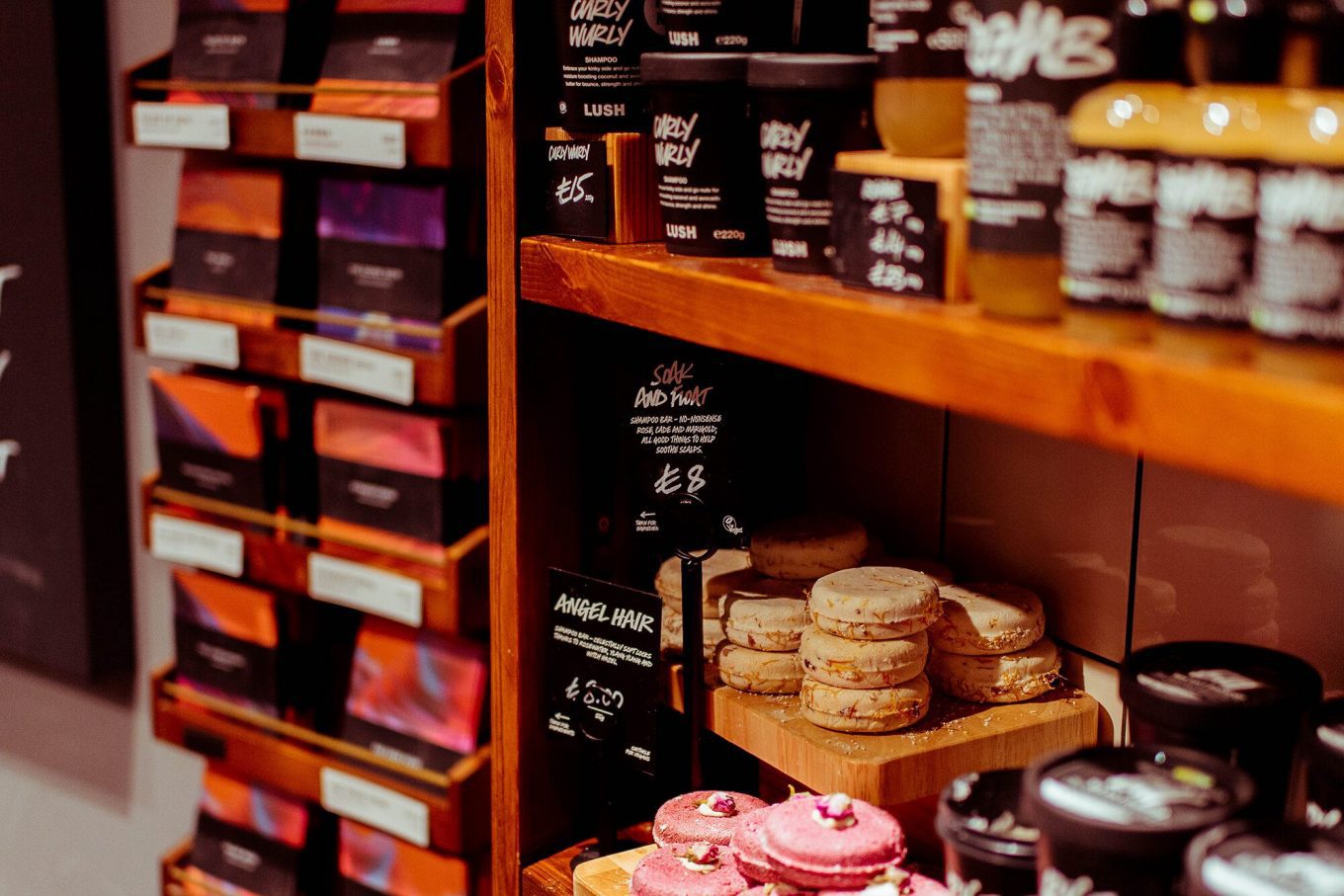
  • 10 Lush products for reducing plastic usage whilst travelling

    10 Lush products for reducing plastic usage whilst travelling

    As travellers, we have a rather large impact on the planet with those large carbon emissions produced by every flight we take. This creates a pretty tricky situation for us as the more of this beautiful planet we see, the more we want to travel but this also means we see first hand what a massive impact our neglect has had and we end up contributing to it more. The best thing we can do, second to limiting our travel and opting for direct flights, is to offset our carbon emissions. Some leading airlines such as Virgin have the option to add this on to your flight purchase, but you can also do it externally online. A seriously impactful way, beyond these options, is to reduce our plastic usage to stop it from ending up in landfills or our oceans where it is polluting natural resources and killing animals worldwide. The best way to do this whilst travelling is within our toiletries, so here are 10 products from Lush which come without packaging or in recycled/reusable packaging.

    Before taking you through these 10 products, let me take a moment to tell you why Lush:


    • Their products either come in recycled packaging, reusable packaging or none at all, which they like to call “naked”.


    • Speaking of their recycled packaging, if you bring back five clean pots in store you will receive a free fresh face mask, which comes in a pot that you can bring back with four other pots when you’ve finished it! How great is that?


    • Their products are all handmade with natural ingredients and/or safe synthetics.


    • All the products are vegetarian, with many being vegan, and they don’t test on animals.


    • They advocate for the environment.


    • They’re a super fun brand with everything designed to encourage you to enjoy your bathroom routine.


    Here are 10 products for sustainable travel:

    1. Solid shampoo

    Switching to solid haircare is one of the easiest and best ways to eradicate plastic packaging from your bathroom products, plus it last forever! I’ve even found it foams up better than liquid shampoo. I use Honey I Washed My Hair and it leaves my hair feeling so soft and silky every time. Store it in one of Lush’s reusable round tins – you’re going to read that a lot in this post! They’re perfect for travel and prevent the need for single use packaging. Just make sure the product has dried before popping the lid back on.

    2. Solid conditioner

    Switch for all the reasons I mentioned above! The solid conditioner bars are a different shape to the shampoo so you’ll want an oval tin for one of these. They’ve recently had a makeover and are now pressed which makes them lather up better than before and come in far more fabulous scents. I previously used Sugar Daddy-O but I cannot tell you how excited I am to try American Cream!

    3. Superbalm scalp treatment

    Whilst I’m away my hair often comes into contact with a variation of soft water, hard water, sea water and chlorine which can wreak havoc on my scalp and make it quite dry. Though the shampoo bar, particularly the Honey I Washed My Hair bar, makes my hair soft and silky, it doesn’t help my scalp. So to treat my dry scalp I was still using Head and Shoulders, but then I came across Superbalm which is formulated with coconut oil and candelila wax to treat dry scalps. If I’m on a short trip I won’t take it, but if I’m on a trip that’s two or more weeks long I will make sure to treat my hair at least once. 

    This product isn’t really a must, it’s just really helpful if you put your hair through a lot whilst you travel.

    The Soak and Float solid shampoo will help with dry scalps too.

    4. Soap/shower gel/body conditioner

    There’s a multitude of options for keeping fresh on your travels with Lush. There’s solid soaps and gels (yes really, gel), liquid shower gel or something in the middle which is their body conditioners. 

    Shower gel and “naked”solid shower gel.

    Grab a piece of one of their numerous naked packaging soaps and store it in a tin, or chop up one of their naked shower gel bars – these are formulated to be more moisturising than the soap – and also store it in a tin. Or you can travel with one of their shower gels which come in a recycled bottle if that’s more your style. Then there’s their body conditioners which clean like soap but apply like moisturiser and leave your skin feeling crazy soft and moisturised. These come in plastic pots which you can return to store for a free face mask as I mentioned earlier.

    There’s an option for everyone. There’s even solid scrubs if exfoliating is more your jam.

    5. Moisturiser 

    Very few moisturisers come in reusable packaging and if they do, they don’t tend to be made of natural ingredients or safe synthetics. There are many options for moisturisers in Lush for all skin types. I use Vanishing Cream because it leaves my skin moisturised and not greasy or oily. Plus it’s made with lavender which is my favourite essential oil and witch hazel which helps to keep skin clear from blemishes. Again it’s in a pot which you can return in store with four others for a free face mask.

    6. Solid cleanser or biodegradable cleanser wipes

    I am a big fan of packaging free makeup remover and cleanser. It took me a long time to find products that worked for my skin, I tried all the big brands from drug store to pricey labels, but all my skin needed was minimal and natural products. I use a magic cloth to remove my makeup with water, then to cleanse I massage Like a Virgin – a solid cleanser that smells like lemon drizzle cake – into my skin and remove it with a reusable cotton pad and warm water. I used to travel with heaps of skincare products and now I just have a magic cloth, a reusable cotton pad, Like a Virgin (which I store in one of Lush’s round tins) and Vanishing cream in my Flat Lay toiletry bag.

    If I have a long flight I pack a 7 to 3 cleansing wipe into my travel bag so I can remove makeup inflight. You just need water and you can get multiple uses out of it before it biodegrades. If I am travelling with this in my hand luggage I will leave Like a Virgin at home. Like most of the products on this list, the cleansing wipes are packaging free so store them in a reusable round tin.

    7. Solid or powder deodorant

    Solid deodorant is a great way to cut down on packing liquids whilst travelling, plus, natural deodorants remove the risk of harmful chemicals that may contribute to breast cancer.

    I have very sensitive skin and don’t get on with Lush’s solid or powder deodorant. Instead I use Neal’s Yard spray on deodorant (not aerosol) but Michael uses T’eo and T for Toes and gets on well with them. He stores T’eo in a square tin.

    8. Toothpaste tablets

    Eliminate non-recyclable packing from your dental care with toothy tabs, there’s a variety of flavours to choose from plus they are a great alternative to packing liquids/gels. It’s just a shame that these don’t come in a reusable tin because that would be far more sustainable but it’s a start.

    9. Makeup

    Lush has a much bigger makeup line than you’d think, from refillable lipsticks to vegan makeup brushes, take a look at what you can replace in your makeup bag, if you wear it.

    My lips suffer greatly with changes of climate, they dry out and crack or peel and I’m not here for it. Keep your lips soft and moisturised with a Lush lip balm, they’re compact and come in so many fun flavours. The scrubs are particularly great for exfoliating dry lips.

    10. Body lotion

    It’s very important, whether you’re going to be bronzing under the sun or hitting the slopes, to keep your skin moisturised so it doesn’t become dry, irritated or flakey. I have found very few body lotions in reusable or responsible packaging; I love Aveeno (thanks to Jennifer Aniston’s ad campaign) but the pumps on their bottle can’t be recycled from home so I sought out an alternative in Lush. Dream Cream like Aveeno is made with oats but it also has lavender oil (yay), rose water and Tea Tree which is, quite appropriately, a dream for your skin.

    .

    These 10 packaging free or recyclable products will not only make travelling without checked luggage so much easier, but they also will prevent you from using any single use hotel products and you will always be prepared!

    Aloha, Gabriella

    Pin this post


    .

    This post has not been written in collaboration with Lush, I just love everything the company stands for and they are an ideal source for plastic free packaging. The photos were taken within the Norwich store.