Tag: Packing Guide

  • What to wear in Iceland packing guide

    What to wear in Iceland packing guide

    With Iceland making it onto the 2021 travel green list I wanted to put together a quick packing guide for clothing that will keep you warm and dry in Iceland’s forever changing weather, whilst also keeping your luggage light and compact. 

    “If you don’t like the Icelandic weather, just wait five minutes” – Iceland.

    If you’re not used to travelling places where the weather changes often but never makes it into the  20°C (low 70s in Fahrenheit) then this packing guide will help you with what to wear to stay warm and comfortable in Iceland so the only thing on your mind is adventure.

    I am not partnered with any of the brands in this blog post but you will find me recommending them as they are what Michael and I own and frequently travel with. I’m only recommending the brands whose clothes wash well, last a long time and are reasonably priced. Don’t forget to look on Depop and eBay etc. for second hand clothing and there is always the option to do what I have done for trips like this which is to borrow clothing and outerwear from friends and family to save money whilst being more mindful of the planet. Got any friends who regularly ski? Great, now’s the time to shoot them a message.

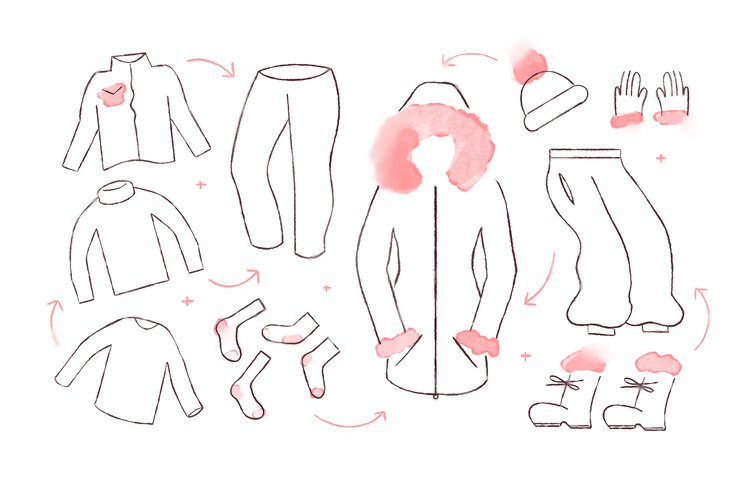
    Here’s what I recommend packing to wear on a trip to Iceland to stay warm.
    Thermal base layer 

    My biggest mistake in packing for colder places such as Canada or Scotland has been not taking enough thermal base layers. The layers that go on top such as fleeces, jumpers and coats can be worn multiple times but I find wearing the same base layers without washing is like wearing the same pair of undies 2 days in a row. Maybe I’m just stanky, whatever, either way I advise having 2-4 minimum thermal base layers.

    They’re lightweight and it means you can stay warm under any layers you already own to save having to buy more clothes.

    For those reading this that wear bras, you can save yourself some space by packing thermal base layers with bra support sewn in.
    Fleece

    A fleece is a lightweight and breathable layer that will keep you warm by trapping air in the pockets of its fibres. There are varying weights and looks of fleeces so it’s up to you what you go for. I’ve found the mountain warehouse Camber half zip fleece to be great for fitting comfortably under tighter coats and it’s super compact in luggage, but the bulkier fluffy fleece jacket from Uniqlo is so cosy and can be unzipped if I get warm. 

    Thermal fleeces don’t necessarily need to come in the form of a jacket or jumper, you can travel extra compact with a fleece turtle neck. If I know the weather is going to be particularly cold I will wear a thermal base layer with a fleece turtle neck and a fleece jumper or jacket over the top, under my coat.

    If you don’t already own fleeces then don’t feel like you need to buy them, you can save money by wearing a jumper with a thermal layer underneath. Fleeces are great though for insulating whilst being a light layer so consider one next time you need a new jumper if you’re looking for warmth and comfort.

    Thermal leggings or long underwear

    I recommend wearing either thermal leggings or trousers with long underwear underneath rather than something like jeans. Jeans take much longer to dry when wet and as it can be sunny one moment and snowing the next in Iceland you don’t want to spend your time there uncomfortable.

    Michael and I have thermals from Uniqlo and Mountain Warehouse but the best pair I’ve ever owned were from Calzedonia which I really wasn’t expecting but I’ve worn them non-stop through the winter.

    A tip for those who wear tights – to save money on thermals get a pair of thermal tights to wear under your trousers. Not only do they provide a slim extra layer of warmth but they’re a base pair of socks too! Plus you have the versatility of wearing them as tights.
    Waterproof over-trousers

    I swear there are very few things in life that will make you feel more invincible than wearing effective waterproof clothing in adverse weather conditions. Seriously, I might look like I’m wearing a bin bag but when I have my waterproof over-trousers on I feel better than every other human being on the planet and I don’t care how that sounds because I’m not soggy and miserable.

    I chose to purchase waterproof over-trousers before my round the world trip in 2016 because I didn’t think the actual waterproof trousers were flattering, but I wanted to keep dry and they are one of my favourite purchases ever. They pack down smaller than a water bottle when I’m not using them and when I do need them I just unroll them and slip them over whatever I’m wearing and I’m dry. My pair from Mountain Warehouse have slits on the side so I can still access my pockets (if I actually have them to begin with, you get me) and are adjustable at the bottom so I can slip them over my feet without needing to take my shoes off. Over-trousers are also great because you can take them off when you get to your destination so you don’t have to sit in wet clothing. I swear if I had these back in 2015 to go between the tube and the office when I was working a corporate job in London, I might have actually been good at my job…

    My waterproof over-trousers have saved me all over the world, from keeping my butt dry whilst hiking the Tongariro Crossing in New Zealand to keeping my butt dry on outdoor rides at Disneyland Paris on a rainy day, but they were particularly handy in Iceland because I could throw them over any of my bottoms to keep dry whenever the snow started. They also act as an insulating layer and were welcomed at 1am between snow flurries whilst waiting for a chance to see the Aurora Borealis (Northern Lights).

    Waterproof over-trousers are also a good idea to have if you’re still not budging on wearing jeans in Iceland.

    Hiking socks or ski socks

    In Iceland and other cold climates I wear either a pair of regular socks or my thermal tights with a thick pair such as these outdoor socks from mountain warehouse or a pair of the same ski socks I’ve had since I was 13 years old over the top.

    Worn under hiking boots or snow boots, these have been enough to keep me warm. By wearing two pairs of socks, it not only provides an extra layer of insulation but it means I can take more regular socks which pack into smaller spaces and less thicker socks as I can get a couple of extra days wear out of them before they need washing.

    Snow boots

    Before going to Iceland I borrowed snow boots from my Mum and apart from the one pair of shoes I took to wear for dinner at Lava, the restaurant at Blue Lagoon, they were the only pair of shoes I wore all trip. It’s probably the only trip that I’ve only brought two pairs of shoes and I really didn’t need anything else.

    If you do find yourself needing more shoes, travel in your boots to save space in your luggage.

    Snow boots are my best recommendation because they insulate, they have good tread and they’re waterproof but if you don’t have them and can’t borrow them, rain boots or hiking boots will do the job with thick socks.
    Coat

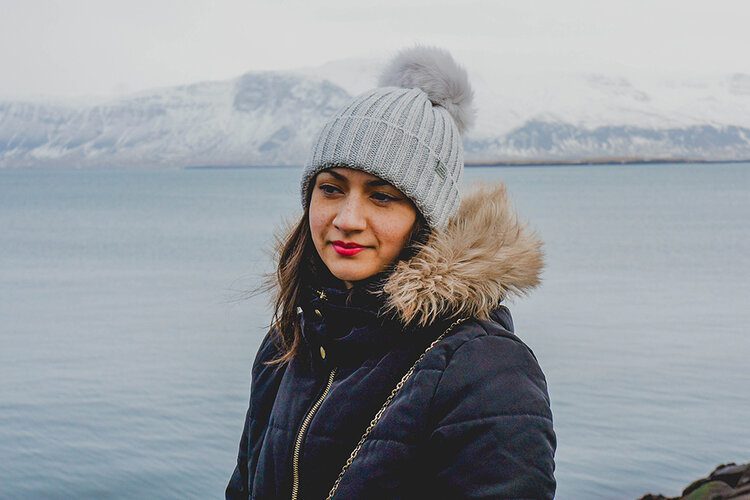
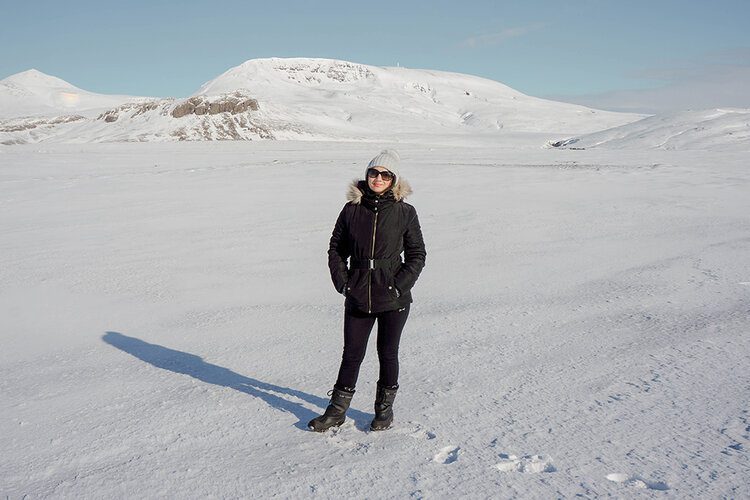
    You want to be pretty serious about your coat for a trip to Iceland if you want to be warm, comfortable and dry. You don’t want something thin like a trench coat or one that won’t dry quickly when it suddenly snows, so any kind of faux fur/teddy bear coat is out of the window. You want something with a hood to prevent snowflakes from getting down your neck and some kind of insulation against cold winds.

    The best coat choices for a trip to Iceland are:


    • A waterproof coat that has a fleece lining, even better if it’s detachable so you have more options in one garment. Michael has this 3 in 1 coat from Mountain Warehouse and it has kept him dry all around the world.


    • A puffer coat that is waterproof, the longer the better.


    If you have one with a faux fur trim around the hood that will do well in Iceland too as the furry trim will catch snowflakes around your face, keeping them out of your eyes.

    Hat and gloves

    Depending on the time of year you go to Iceland, you may not need gloves, but if you are travelling there outside of summer then my advice is just to pack ski gloves as anything less won’t really keep the chill out and I’ve found mine to be useful on so many trips or even just when it snows in the UK and I want to throw snowballs at Michael.

    Keep your head warm and ears protected from the wind with a beanie hat. 

    Want to know how to make your own wooly hat that’s perfect for your travels to Iceland or cooler climates? Check out my crochet beanie hat tutorial which has a free pattern, a step-by-step guide and a YouTube tutorial so you can stitch along with me.

    Planning a trip to Iceland? Take a look at my Reykjavik itinerary for inspiration including Blue Lagoon, the Golden Circle and spotting the Aurora Borealis.

    Do more on & for the planet, Gabriella

    Pin this post


  • Eco-conscious period packing list

    Eco-conscious period packing list

    A period packing list is an underrated one for sure but when you plan ahead for a period that lines up with your travels, being prepared with the following products will eliminate a lot of the stress that comes with menstruating, especially when you’re not in the comfort of your own home.

    I’ve put together this low-waste period packing list with cramping, comfort and cravings in mind as well as, of course, options that have a reduced impact on the planet whilst you explore it.

    The following products will not only empower you by letting you be your best self on your period but they also empower other women too. The two brands I have worked with to create this period packing list for you, Coconut & Cotton and Saalt, are female-owned brands who also support organisations that offer menstrual health education and products to women in need around the world.

    Every day girls all around the world miss school on their periods because of discrimination, lack of information or no access to menstrual hygiene products. UNICEF estimates 1 in 10 girls in Africa alone miss school because of their periods. 

    Patriarchy dictates that we are to feel ashamed of our periods and as a result, education on menstrual health and access to affordable products is lacking all around the world and this is simply unacceptable. We deserve to take back the power and beauty behind the natural process of our periods for all people who menstruate and together we can by supporting companies and organisations that do just this. My personal recommendations are:

    The products recommended in this period packing list not only help to empower you and other menstruating people, they are also low waste. They have been designed, made and chosen to last you years and eliminate as much single-use waste as possible.

    This period packing list is also handy for putting together an environmentally-conscious period care package for someone you know who has just started their period for the first time or is finding menstruation more challenging than others.

    To purchase any items from Coconut & Cotton or Saalt simply click on the underlined links or on the photos below and you’ll be taken to their online store where you can add them to your basket.

    Use code “HAPPYPLANET15” for a 15% discount on all Saalt products for Earth Day!

    Menstrual cup

    Let’s start with what a menstrual cup is if you aren’t too sure. A menstrual cup is a silicone cup that is worn like a tampon but rather than absorbing the blood and only being good for one use, it collects the blood and can be washed out and reused for 10 YEARS!

    Though the upfront cost seems significantly higher than a box of tampons, the price of a menstrual cup will end up saving you dollar, dollar for years to come. 

    As well as saving you money, a menstrual cup will also help to save the planet from a vast amount of single-use menstrual waste. With each individual it varies but the average menstruating person will have periods between the ages of 13-51 and will use approximately 11,000 tampons (alone) in their lifetime. With this in mind, the lifetime of a single Saalt menstrual cup (10 years) will save Earth from approximately 2,900 tampons – that’s not even considering pads.

    Saalt has created a very exciting calculator to help you find out roughly how many period products you will prevent from polluting the planet if you switch to a menstrual cup. Calculate how much waste you will divert with Saalt here.

    Before finally switching to a menstrual cup, after I had used what I thought was all of my tampons (they turned up in various handbags and drawers for about a year after), I was eager to use it for the benefits to the environment but I was TERRIFIED. I was scared that it was too big for its purpose, that it would go off on an adventure inside me and need to be removed by, eek, another human being, the idea of emptying it seemed gross and I was really scared that removing it would sting like a bish. Valid fears but once I started using it I found those fears faded away and were replaced by feelings of empowerment and confidence. 

    If you want to read more about my experience using a menstrual cup you can in my blog post Travelling on your period with a Saalt menstrual cup.

    Saalt offers menstrual cups in 3 sizes:


    • Regular – recommended for people with a high cervix or who have carried a child to term. They hold 3-4 tampons worth and are ideal for those with a medium-heavy flow.


    • Small – recommended for people with a low cervix, first time users over the age of 18 and those with a light-medium flow, it will hold 2-3 tampons worth of blood.


    • Teen – Saalt recently introduced a smaller size designed specifically for menstruating people under the age of 18. The silicone softness is between the soft and the original which makes it ideal for young menstruating people. It will hold 1-2 tampons worth.


    Saalt also offers two types of silicone in the regular and small sizes. Their original silicone menstrual cup is firmer, opens more easily and is ideal for those with an active lifestyle. Their soft silicone is better for those with sensitivities such as increased cramping or bladder pressure.

    Saalt offers a Twin Pack which gives you the opportunity to try both their original and soft silicone cups for a reduced price.

    If you’re uncertain about which menstrual cup you need, take Saalt’s cup quiz for extra guidance. You can also reach out to the friendly folk at Saalt for advice.

    Cost

    £24.99 for a single cup and £38 for a Twin Pack or Duo Pack.

    $29 (USD) for a single cup and $49 for a Twin Pack or Duo Pack.

    Use code “HAPPYPLANET15” for a 15% discount on all Saalt products for Earth Day!

    Coconut & Cotton also sell various brands of ethically made menstrual cups.

    Reusable sanitary pad

    Switching to a menstrual cup is scary when you haven’t used one before, even transitioning from tampons to a menstrual cup is a big jump for so many – it was for me. For those who don’t feel comfortable using a menstrual cup on their period or want a cheaper reusable alternative to period panties (see more below) reusable sanitary pads are the answer to your low-waste menstrual health needs.

    This reusable Eco Femme organic cotton sanitary pad from Coconut & Cotton comes in fun patterns and recyclable packaging but there’s so much more to the brand Eco Femme that Coconut & Cotton supports.

    Eco Femme products are ethically made by empowered women in Auroville, India. The production of these handmade sanitary pads provides women in rural areas with a living wage and the sales surplus helps to sustain Eco Femmes educational programmes for Indian girls and women as well as provides them with affordable menstrual products.

    When you purchase an Eco Femme pad they give one to a girl in rural India.

    How to wash a reusable sanitary pad

    First soak the used sanitary pad in cold water for half an hour then wash by hand or in a washing machine on a 30ºC eco wash with Tru Earth’s Biodegradable laundry detergent sheets (see more about these below). Hang to air dry naturally.

    Each pad is designed to last for at the very least 75 washes which will cover 3-5 years of period protection! That’s at least 75 plastic sanitary towels that have been avoided! 

    Each single-use sanitary pad made with plastic (most leading brands) takes over 800 years to decompose. Build a collection of pads to rotate during each menstrual cycle and you will be protecting the environment from thousands of single-use plastic waste over your remaining periods. 

    This Eco Femme sanitary pad is a day pad and is made with 6 layers and offers medium protection from leakage. Coconut & Cotton also sells reusable panty liners and a plus pad that has 7 layers for extra leakage protection.

    Cost

    £8.75

    Period panties

    An alternative to menstrual cups and reusable pads are period panties, but what are period panties? Period panties/knickers/undies are underwear that are designed to absorb period blood. 

    I love them because they’re basically a discrete version of a menstrual pad. I haven’t used every brand but I can speak to the quality of Saalt Wear, Saalt’s very own period panties, and they are amazing. They’re so light that they feel like regular underwear with a slightly thicker gusset. They are soft and sensitive and come in various cuts including a thong that absorbs 1-2 tampons worth of blood and high waisted briefs that absorbs 2-3 tampons worth.

    Saalt Wear or any period underwear for that matter can be used either in place of a menstrual cup, pad or tampon if you haven’t made the switch yet they can be used as an extra layer of protection with any of the aforementioned period products.

    Use code “HAPPYPLANET15” for a 15% discount on all Saalt products for Earth Day!

    They are made from an antimicrobial and moisture-wicking material that draws moisture away from your body and prevents odour, they’re also stain resistant.

    What I particularly love about them is that each pair of Saalt Wear is made with three post-consumer recycled plastic bottles! So you’re not only saving plastic waste but you’re also giving it a second life.

    I own a thong in Volcanic Black and bikini cut in Quartz Blush both in medium. The thong is perfect on the lighter day at the end of my period when a cup won’t collect much blood but I still have spotting and I want to avoid VPL.

    Saalt wear comes in a size range of XS – XXL. The sizes run small so I recommend sizing up.

    Cost

    £21-28 (approximate conversion)

    $29-39 (USD)

    Bar of soap

    A bar of soap is already the perfect plastic-free washing alternative on your travels so if you’ve already made the step towards a plastic-free bathroom it’s likely you’ll already have this on your packing list. 

    Allow me to nudge you towards this Friendly aloe vera soap from Coconut & Cotton. As well as washing your hands and body you’ll need soap to keep your menstrual cup (if you choose to use one) clean. It’s very simple to do and only requires a quick wash with cold water and some soap but I encourage you to be mindful of the soap you use. To avoid irritation to your most sensitive area use a perfume-free and gentle soap such as this aloe vera soap. 

    Aloe vera has antibacterial properties which is ideal for washing a menstrual cup between uses.

    Friendly Soap use recycled and recyclable packaging and their soaps are free from preservatives, palm oil and cruelty.

    Cost

    £2.40

    Biodegradable laundry detergent sheets

    Accidents happen but don’t let it ruin your clothes. If your menstrual cup doesn’t quite form a seal or your period starts earlier than you anticipated you may accidentally leak into your underwear, clothing and sometimes bedsheets (we’ve all been there). If you don’t have a washing machine where you’re staying, have a couple of laundry detergent sheets in your luggage. Rinse the area with blood under the cold tap, dissolve a little of the detergent strip (for frame of reference I use half a strip for a light load of washing) into cold water in the sink or bathtub and leave the garment(s) in there to soak for a few hours (judge it on how stubborn the stain is). Once it looks like the stain has washed out, rinse and hang out to dry.

    I switched to Tru Earth laundry eco-sheets in 2020 and I see no reason to go back when there’s all these amazing reasons to use them:


    • They’re dissolvable and biodegradable


    • They’re sensitive


    • They’re vegan


    • They’re phosphate-free


    • They’re paraben-free


    • They’re free from chlorine bleach


    • They’re hypoallergenic


    • They have absolutely no plastic packaging, and the packaging is compostable


    • They’re flat so they are perfect for packing on a trip


    • They’re liquid free so there’s no risk of leakage in your luggage


    Shop either the fragrance free, scented or baby True Earth laundry detergent eco-sheets from Coconut & Cotton.

    Cost

    £13

    Sweatpants

    One of the best things about wearing a menstrual cup is that you can wear whatever you want without fear of leaking (provided it’s inserted correctly). I never felt comfortable wearing light colours with a tampon, especially on heavy days when the string would absorb blood and stain my underwear. After just a couple of periods I knew I could trust my Saalt cup and I don’t even hesitate putting on a white swimsuit.

    Let’s be realistic though, we don’t feel like serving up looks in white swimsuits every day of our period and that’s okay! So pack some sweatpants or something equally comfortable for when you feel bloated and need to just lounge about. Remember to listen to your body and hold space for how to feel.

    Organic chocolate

    Period cravings hit different right? 

    I rarely eat chocolate but come my period it’s all I want and it never tastes as good as when my uterine lining is packing its bags.

    If chocolate is your period craving too then take a look at Cocoa Loco chocolate from Coconut & Cotton. Cocoa Loco chocolate is organic, vegetarian, Fairtrade and is free from Palm Oil. Your craving can satisfy you and care for the planet too.

    Most of us who menstruate crave something salty or chocolate on our periods and though studies can’t really confirm why, we know our bodies want it. So if you’re going to be on your period or premenstrual on a flight, long train ride or road trip then pack some of your personal cravings so you don’t have to go too long without them.

    Cost

    £3.50

    Lavender headache gel

    On the 2nd day of my period, like clockwork, I wake up with a terrible headache that is guaranteed to limit what I will achieve that day if I leave it untreated. In recent years I have reduced the circumstances in which I will take painkillers – I’m not against them, I just don’t want my body to rely on them to alleviate pain – instead I use natural remedies. So when my inevitable period headache comes around I use the lavender headache gel from Norfolk Lavender.

    This translucent gel made with lavender and peppermint oils soothes tension and alleviates stress. Trace some of the headache gel across your forehead and gently massage it into your temples. You’ll know it’s working when it starts to tingle.

    The tiny pot won’t take up much space and can be reused after (unlike packets of painkillers).

    If you’re a Norfolk local or on holiday/vacation in Norfolk, you can shop Norfolk Lavender products from Norfolk Lavender, Jarrolds and Cromer Gift Shop (which has the second biggest stock of Norfolk Lavender products after their own gift shop).

    If you have lavender essential oil knocking around, simply dab a little onto your temples.

    Cost

    £3.75

    Rechargeable hand warmer

    If you suffer from cramps like so many of us who menstruate do, applying heat to your abdomen will help to relax your womb muscles and alleviate cramping. You may find that a hot water bottle or a soak in the bathtub does the trick at home but who really wants to pack a hot water bottle on their travels if you’re not going somewhere frosty?

    If you know heat helps to relieve your period cramps consider getting a reusable hand warmer. It’s compact, rechargeable, heats up quickly, has multiple settings and doubles up as a phone charger (any kind of portable phone charger is a traveller’s friend right?).

    Then come winter (or if you travel somewhere cold) this reusable hand warmer will keep your mitts toasty and you’ll be so grateful to yourself and period cramps for purchasing it.

    Cost

    £21.24

    .

    Coconut & Cotton is a female-owned, environmentally conscious business located in Shaftesbury, south-west England. Both their store and online shop sells affordable plastic-free and low-waste products. Living a life of low impact on the environment is their focus and each one of their products will enable you to live a more mindful and less wasteful lifestyle. When you order from Coconut & Cotton you can trust that it will be sent out plastic free and in reused and reusable packaging.

    If you ever find yourself in Shaftesbury then be sure to pay the owner, Lucy, a visit as she is a ray of sunshine and will be more than happy to share information about her products so you can live a more environmentally-conscious life.

    Saalt is a female-owned menstrual health brand who create clean, ethically made and sustainably sourced menstrual products. Their products enable people who menstruate to care for themselves whilst protecting the environment by using a plastic-free menstrual cup that will last 10 years. Saalt is a certified B Corp and gives 2% of profits to help further educate people around the world about menstrual health and sustainability.

    Go follow Saalt on social media for tips on how to use your menstrual cup and better care for ourselves and the planet. Just like Postcards from Hawaii they openly talk about periods to challenge the social stigma surrounding them. 

    Use code “HAPPYPLANET15” for a 15% discount on all Saalt products for Earth Day!

    For more with Coconut & Cotton check out How to have an Earth-conscious spa day at home with Coconut & Cotton and Sustainable stocking fillers for travellers with Coconut & Cotton.

    For more with Saalt take a look at Travelling on your period with a Saalt menstrual cup.

    Do more on & for the planet, Gabriella

    Pin this post


    This article is a sponsored piece with Coconut & Cotton and Saalt. I was originally and still remain a customer of Saalt and Coconut & Cotton. I highly recommend purchasing your low-waste menstrual health supplies from both of these brands as their advocacy for our environment and menstrual health is unparalleled. 

    As a Saalt Partner I may earn from qualifying purchases made using my affiliate link.

    Use code “HAPPYPLANET15” for a 15% discount on all Saalt products for Earth Day!

    Earth Day discount code is valid from 22nd April – 25th April 2021.

  • Eco-conscious Cornwall packing guide

    Eco-conscious Cornwall packing guide

    Whether it’s a staycation within the UK or you’re coming from far and wide (post pandemic) a holiday/vacation to Cornwall in south-west England will be one of your best adventures in Great Britain. 

    If you haven’t already take a look at my previous travel guide for Cornwall, 8 beautiful places to visit in Cornwall part 1 and part 2 to learn about everything you don’t want to miss on your trip. There’s something for everyone from indulging on Cornish pasties and cream teas to riding waves and hiking to medieval castle ruins.

    To help you prepare for your best trip to Cornwall I’ve put together this pinpointed packing guide for some key things that will make life so much easier on your holiday/vacation to the Cornish coast.

    Wetsuit

    One of the most ideal things to pack for a trip to Cornwall is a wetsuit as it’s one of the top locations in the world for water sports. It will insulate you when the water is chilly and protect your skin from board rash so if you already have one this is definitely the trip to pack it.

    If you don’t have a wetsuit, don’t panic as you’ll have plenty of options for renting them out at a low cost and some tourism companies include wetsuit rental in their prices – check ahead of time just to be sure. 

    Swimsuit  

    Unless you are going in the middle of winter and have no intentions of getting into the sea, the first thing you should be packing for a trip to Cornwall is your swimsuit. 

    The beaches in Cornwall are the best I’ve been to in the UK. Golden sands + turquoise waters + warm sunshine = the perfect set up for very long and lazy beach days.

    Whether you’re jumping into a wetsuit and onto a surfboard, cooling off in the ocean, going for a swim at one of the many sea pools and lidos in Cornwall or laying out in the sun a swimsuit is a Cornwall staycation necessity. 

    Of course you can wear whatever makes you feel comfortable and if that’s not a swimsuit than I am here for you no matter what you choose. My message is more that if you do choose a swimsuit and it’s time to purchase a new one look for one made from recycled fabric or even biodegradable (yah that’s a thing now, I’m yet to try but I hear good things). I have a few swimsuits made from recycled plastic bottles and you would never know from the texture.

    The most responsible thing is to use the swimsuits you already have though so as difficult as it is and I REALLY understand this one, please try to limit your purchases and use what you have.

    Another tip for swimwear is to purchase interchangeable sets or reversible pieces for more options on your travels.

    Dock and Bay towel/poncho

    The most sustainable choice would be to pack a towel you already own but if you need a new one then I recommend one from Dock & Bay. Michael and I been using Dock & Bay products since 2018 for the following reasons:


    • All of their products are now made from 100% recycled materials.


    • They’re part of the blue light card discount for NHS staff.


    • 5% of their profits go to one of their partnered environmental charities. Their 2021 partner is WWF and if you purchase one of their two collaborative towels they will donate 20% of those profits to WWF.


    • They are compact and pack down much smaller than a regular towel.


    • They dry x3 times faster than a regular towel.


    • They’re sand resistant so you can shake it right off.


    Along with one of the XL towels which are perfect for stretching out on to sunbath or to share with someone else for a picnic, the towel you absolutely need for a trip to Cornwall is one of Dock & Bay’s ponchos. 

    Their super absorbent towels are the best accessory for any waterspouts from surfing to kayaking and for hanging out on the beach. I forgot to bring mine and Michael could tell you I said “I wish I had my Dock & Bay poncho” every. single. day. As they’re made from the same material as the towel they’re just as absorbent and lightweight but the reason they’re perfect for a trip to Cornwall is because they’re big enough to get changed in and out of your swimsuit in public without revealing yourself to the world.

    Dry bag

    Dry bags are a must have for me when I’m going anywhere near the water for two reasons:

    1. They keep your belongings together and dry on the beach, paddle board, boat etc. You can us it to store suncream, your phone, car keys etc.

    2. You can pop your wet swimsuit and towel in it after you’ve changed and it will stop everything else from getting damp.

    Look after your dry bag and it will see you through many years of travelling all over the world. 

    Sandals/trainers suitable for hiking 

    The South West Coastal Path is the longest walking trail in England. At 630miles long it passes through Somerset, Devon, Cornwall and Dorset. Whether you’re embarking on the full length or just enjoying parts of it, the trail is an opportunity to get some of that fresh sea-air in your lungs – the kind that people say will make you sleep better – to be at one with nature and enjoy some incredible views of the prettiest coastline in England.

    The path is natural and therefore uneven so though it wouldn’t be impossible to take it on in flip flops but it would be super uncomfortable. For this reason I think a pair of trainers, hiking boots or some bang-on-trend Dad sandals (like these ones from Dune) is something you need on your feet for enjoying long walks in Cornwall without the risk of rolling your ankle.

    To prevent unnecessary waste make sure that when you purchase a pair of shoes or sandals they are high quality, made with care and meant to last. A comfortable pair of shoes is one of the most important things to me and something I value highly in the world (hence why I work with Dune) I believe an uncomfortable pair of shoes can ruin your day let alone your travels – and trust, I’ve been there. So look for shoes that are comfortable for you, sensible and versatile so you can enjoy them for years on your travels around the world. 

    Biodegradable disposable BBQ

    I don’t know about you but BBQs along with Pimm’s are my first thought when I hear the word summer. Was it even summer if you didn’t have a BBQ? 

    With over a million sold each summer in the UK it’s safe to say disposable BBQ grills are a popular summer accessory HOWEVER safe they are not. Regular disposable BBQs are not-only single use but they are toxic, non-recyclable nor biodegradable. 

    Of course we love the idea of being able to take a little BBQ out to the beach or the park to cook up a quick feast with friends and family under the sun so what’s the alternative? It’s pretty simple: a biodegradable disposable BBQ grill!

    We purchased our sustainable BBQ grill from Casus Grill for the following reasons:


    • It’s made from 100% natural materials: bamboo, lava stone, recycled cardboard and charcoal


    • Everything but the lava stone is biodegradable


    • Remove the lava stones and use on a fire, campfire or log burner – they are a neutral product that will return to earth when burnt


    • It’s free from fossil waste


    It lit quickly (out of the wind) and was ready to cook on within an hour. If you need to purchase a disposable BBQ try to choose a sustainable grill from now on to reduce your impact on our planet. I recognise they are more expensive and not everyone is in a position to buy one but I encourage you to make this choice if you are able to.

    DO NOT leave any kind of disposable BBQ in an enclosed space, the carbon monoxide fumes are poisonous and may result in death.

    Reusable water bottle

    Stay hydrated kids, there are very few things in life more important than drinking water. Please don’t go littering the earth with endless single-use plastic bottles to do this though, instead bring a reusable water bottle.

    By law all licensed pubs, bars, nightclubs, cafes, restaurants, takeaway food and drink outlets, cinemas and theatres are required to provide tap water to anyone who (politely) asks for it. Though pandemic rules have made this a little difficult so be smart about it, it is absolutely acceptable to ask for your bottle to be filled with tap water so just think of all the money you’ll be saving as well as plastic!

    I always recommend a thermal one as most will keep cold liquids cool for 24 hours and hot liquids warm for 12 hours which is not only super handy on travels around the world but it also cuts out that nasty risk of plastic water bottles poisoning you when you leave them in the car to get warm.

    My thermal bottle is from Dopper and if you’re interested in why I love it so much you can read about here.

    Waterproof phone case or camera case  

    This truly depends on the kind of traveller you are. If you love to document your adventures, are outdoorsy or even clumsy then a waterproof case for your camera or phone will suit you on Manu of your travels, however if you like to be in the moment and reduce your screen time then this won’t necessarily be an accessory you need on your packing checklist for Cornwall.

    If you do want one, look for one that fits multiple phone makes and models so that you don’t need to buy a new one when you get a new phone. 

    Better still, though it is more cumbersome, invest in a waterproof camera case so that you have better quality photos and are less likely to need a new camera case as cameras last far long than phones. 

    Reef-safe sun cream  

    Cancer doesn’t discriminate folks the sun will cause damage to everyone’s skin so always protect it from harmful UV rays by wearing suncream/sunscreen/sunblock – whatever you call it, wear it!

    Unfortunately chemicals that go into most suncreams to help protect us from the sun have harmful effects on creatures living in the sea so when we enter the water wearing sun protection made with oxybenzone and octinoxate they wash off and cause corals to bleach and die and when they die an entire ecosystems are destroyed. That means no more colourful reefs to explore on your travels.

    Over 50% of our planet’s coral reefs have been destroyed in the last 30 years due to Climate Change and pollutants. Next time you purchase sunscreen make sure it doesn’t contain oxybenzone and octinoxate. Instead look for sunscreen that contains zinc oxide and titanium dioxide, these are not linked to coral bleaching and will still protect your skin from harmful UV rays.

    You may be thinking, but Gaby I won’t be exploring tropical coral reefs in Cornwall so why is wearing a reef-safe sunscreen important? Our oceans are connected and whether you’re swimming in Cornwall or Mauritius once you’re in the water those chemicals are casing harm to something in our global waters so please try to purchase reef-safe suncream when your current one runs out.

    I have been using Shade – sold through Coconut & Cotton – as it is a natural suncream that is free from any harmful chemicals plus the package is plastic free and reusable.

    Other reef safe suncream brands I use (but have reduced as they are sold in single-use plastic bottles) are Australian Gold and Hawaiian Tropic.

    Raincoat

    Though for the most part the weather is beautiful in Cornwall the weather can drastically change should a storm roll in from the Atlantic. Whilst in Cornwall towards the end of September the weather went from shorts-and-tshirts weather to wet, windy and cold overnight. 

    To be prepared pack a raincoat no matter the time of year you’re going – after all it’s not the weather than can hold you back from having a good time it’s how you dress for it.

    If you don’t own a good waterproof coat look for one with taped seams for extra protection from wet weather. I’ve had my Joules one for years and it has seen me through freezing cold and wet conditions in Scotland so I highly recommend it but you don’t have to spend heaps on a rain coat, Michael has one from Mountain Warehouse which was much cheaper and it saw him through the same weather.

    Looking for a raincoat with taped seams will ensue that coat is more durable which means will have better longevity that ultimately means it’s a more sustainable way forward than buying endless cheap raincoats or worse single-use plastic ponchos.


    .  

    Do more on & for the planet, Gabriella

    Pin this post


    As an Amazon affiliate I may earn from qualifying purchases.

  • Eco-friendly Airbnb packing checklist

    Eco-friendly Airbnb packing checklist

    You may or may not know that I was supposed to move to Canada on 13th April 2020. I was just a few weeks away from my moving date when the news came that the worldwide spread of the coronavirus meant that the border needed to close. With most of my belongings packed up ready to be sent overseas and nowhere to live other than temporary accommodation we decided that as soon as the restrictions lifted we would hop around Airbnbs with the few belongings we had access to, waiting for each monthly announcement in the hopes that the border would open for us again. As the announcements are every month and there’s no indication as to which way it could go, we have entered an indefinite state of uncertainty as to where we can live for longer than 30 days. So with that on our minds, we chose to live week-to-week, safely exploring parts of England I always wanted to but hadn’t previously made the time to do so before moving.

    To prevent the need to eat out, not just to save money but because we didn’t want to be around too many people during a pandemic, we wanted to book accommodation that had a kitchen and that could feel like a home, particularly whilst we didn’t have one. This lead to us staying in various Airbnbs across England.

    Doing this meant I worked out what I needed to travel with to make life easier living with the uncertainty of what the next Airbnb would provide by having it already to hand, but also having environmentally conscious products so that even if the Airbnb provided it, I had a plastic-free/responsible/sustainable alternative.

    So now I’m sharing my checklist with you for what I recommend packing for a comfortable and eco-friendly stay in an Airbnb. As much as this blog post is about making sure you are prepared in case your host hasn’t provided some basics such as salt and pepper, soap or towels, it’s also about being equipped with environmentally conscious alternatives so that you aren’t using single-use plastics or harmful chemicals.

    If you’re an Airbnb host then I’m so happy to have you here! I hope that you pick up some tips on what sustainable swaps you can make to provide a more environmentally conscious experience for your guests.

    Kitchen 

    Dish soap and brush/sponge/cloth

    Pack a bar of dish soap along with your choice of eco brush, sponge or cloth (these could be made from coconut, cotton or bamboo) because if your host has provided washing up liquid and a sponge the chances are it won’t be eco friendly.

    The benefits to using solid dish washing soap:


    • Vegan


    • Organic


    • Free from palm oil


    • It will also last far longer than liquid soap, so you get more washes out of it


    • No plastic packaging and any packaging is recyclable


    Tea towel

    Packing a tea towel is less about there not being one at the Airbnb you’re staying in but more about the quality of the one they’ve provided for you to use. Out of all the Airbnbs I’ve stayed in only two places had decent tea towels, the rest only provided one and they were those awful thin ones that don’t absorb any water and leave fluff all over the thing you’re trying to dry. 

    Your alternative is to let things drip dry but I’ve noted that not every Airbnb provides a drying rack, so you have to do the drying, and now we’re back to square one in needing a good tea towel.

    Try to avoid the dishwasher, especially if there’s only a a few things going in there. It’s a waste of energy and water.

    Seasoning

    Personally, I think if a host provided at least salt and pepper to season your food then they’re a decent human being. It’s inexpensive but goes a long way for making guests feel at home when they can make food that doesn’t taste like eating cardboard. Unfortunately not every host provides this so pack some with you, along with your favourite seasonings to bring life to what you cook.

    To save on packing, bring a combined seasoning like this Hawaiian seasoning that has garlic, salt, pepper and ginger.

    Remember to reuse your containers! You can even use it to make your own seasoning mix!

    Cooking oil

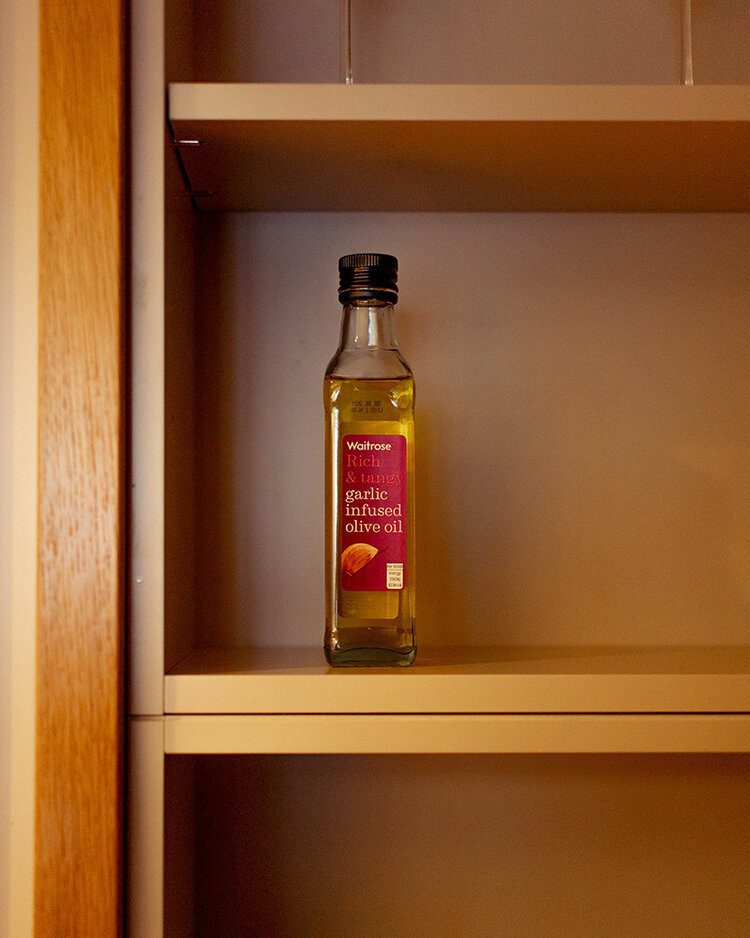
    Similar to seasoning, a considerate Airbnb host will provide oil for cooking but it isn’t a given. To bring more flavour to your cooking, bring an oil that has been infused with an additional herb such as garlic, basil or chilli.

    If you’re buying bottled oil, choose glass over plastic and reuse the bottle. I would normally have my reusable oil pourer bottle which I pop a few garlic gloves or rosemary, sage and thyme in to infuse it myself, but it was in storage (ready for our move to Canada) at the time of publishing.

    If you want to save on the amount you’re packing/buying then you can always use butter/spread to cook with.


    Tea and coffee

    Not every Airbnb provides tea and coffee but if they do I am absolutely certain they will be provided in single use sachets or pods which contributes to more plastic waste. 

    Bring loose tea from home so that you can start the day with your favourite cuppa and avoid plastic packaging and plastic teabags.

    Did you know that half of the leading UK teabag brands contain polypropylene, a plastic that won’t biodegrade? With over 10 million mugs of tea being made a day in the UK, that’s a catastrophic amount of plastic tea bags that will sit on our planet for thousands of years to come.

    Unfortunately not all bags that coffee grounds come in can be recycled so if you are purchasing these then shop from a local or independent coffee shop who has sourced them sustainably so you are at least protecting the environment in another way and supporting a local business.

    If you’re a coffee snob, travel with a WACACO Nanopress portable espresso maker so that you will always get a high quality shot of espresso and can avoid the temptation of coffee machines that use non-biodegradable pods.


    Candle and matches

    Lighting a candle will help to get rid of smells when you’re cooking. You might think this is a little extra and a candle with the means to light it wouldn’t usually make your packing list, but if your Airbnb is a studio then it will help to prevent your clothes smelling like a fry up.

    I love lavender candles but if you’re cooking something particularly potent such as bacon/vegan bacon or onions then choose a citrus scented candle to neutralise the smell of your cooking.

    Yes, matches are made with our precious trees, but they are a more sustainable alternative to a lighter as those are made from plastic and metal and will never biodegrade. Second to this, because lighters are made from mixed materials, they aren’t recyclable. 

    View this post on Instagram

    A post shared by 4ocean (@4ocean)

    A candle also fits into the comfort category below as it is a moment of self care that we all deserve when taking a break from our regular schedule.

    Subscribe to Postcards from Hawaii at the bottom of this page to learn how to make your own candles.

    Swiss army knife

    A Swiss army knife is always a wise thing to travel with (in checked luggage) for obvious reasons from needing to cut something to opening a wine bottle. 

    My particular reason for recommending you bring one is that not all Airbnb hosts provide a sharp knife and aside from burning your food, there’s nothing more frustrating when cooking than not being able to successfully chop it up. A Swiss army knife provides you with a knife without needing to carry around a big kitchen knife.


    Beeswax wraps

    Cooked extra and need to put your leftovers somewhere and the Airbnb you’re in doesn’t have any food containers? Beeswax wraps mean you can easily wrap up food or cover a bowl for the next day. They also come in handy for a sustainable packed lunch if you plan on making sandwiches for on-the-go.


    Food storage containers

    Whether it’s a fancy glass one with a bamboo lid, a repurposed butter tub or a plastic tub from an old take-out order, packing a couple of reusable food storage containers means you can store your leftovers in the fridge or freezer (depending on how long you’re staying). 

    You can even use these to pack up a salad for a cheap and sustainable lunch on-the-go whilst you explore wherever it is you’re staying.


    Bathroom 

    Toilet roll

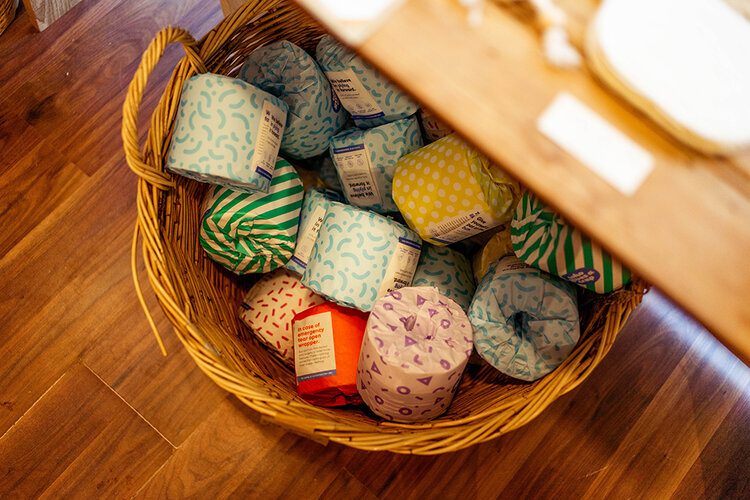
    I really think not supplying at least two rolls of toilet roll is a cruel joke but some Airbnbs, believe or not, don’t provide any and rarely is it enough to last you and your fellow guests more than a few days. Be prepared with your own toilet roll, and better yet, buy it from an eco-conscious brand like Who Gives A Crap who make 100% recycled toilet paper wrapped in recyclable (plastic-free whoop whoop) packaging!

    Soap

    Pack a bar of soap to wash your body in the shower and your hands at the sink to prevent needing to use what will probably be a plastic bottle of liquid soap. 

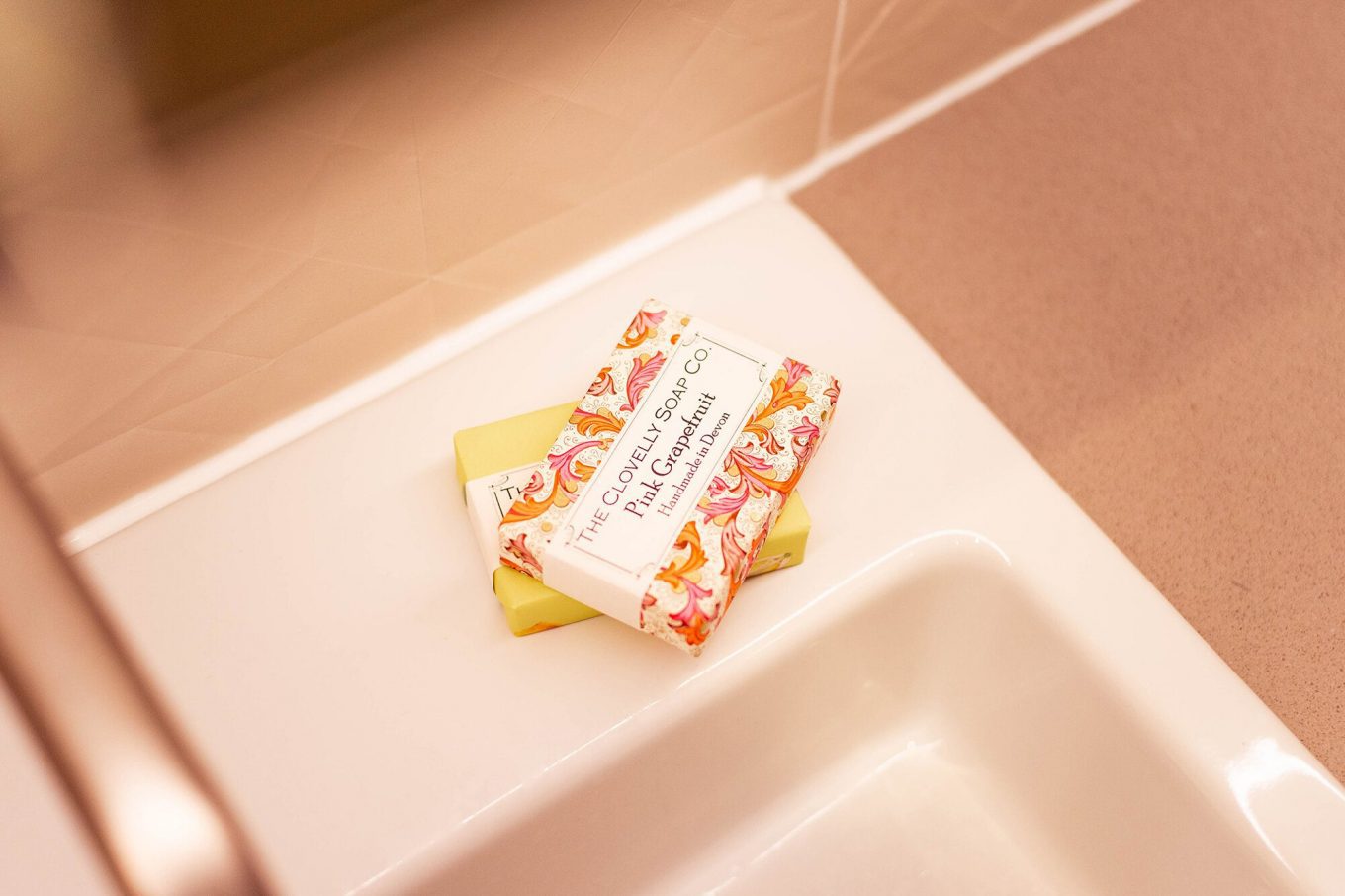
    Handmade soaps from independent retailers are always a good purchase on your travels, they’re a souvenir that won’t gather dust in a draw somewhere plus they help to protect the planet from further plastic waste. I picked these bars up from Clovelly Soap.

    Shampoo and conditioner

    Sometimes a bottle of shampoo and conditioner is provided but it will be a plastic one or worse, mini plastic bottles, so avoid using these by bringing your own solid hair products.

    As a curly haired gal using the Curly Girl Method to revive my hair I appreciate that most solid shampoos contain parabens and sulphates that we don’t want drying out our curly locks, so bring your preferred hair products to prevent an attack on your scalp. 

    Towel

    Before packing a towel, double check if your Airbnb provides them. Most Airbnbs do and will list it under the essential amenities along with toilet roll and soap if they are providing them, but if they aren’t then you don’t want to be caught out.

    If you have one, pack a microfibre towel to save space.


    Hairdryer

    It’s rare that an Airbnb will have a hairdryer for you to use but if it does have one it will be listed on the Airbnb’s amenities. I can tell you with 99.9% certainty that even if they did provide one it won’t be accompanied by a diffuser for curly hair. So if you, like me, want to style your curls or maybe you want to dry your hair quickly in winter I suggest bringing your own hairdryer with attachments.

    This is a big difference between hotels and Airbnbs and something that unless your hair is textured, might not cross your mind.


    Laundry

    Laundry detergent 

    If you are staying in an Airbnb with a washing machine then SCORE! The chances of being provided with detergent is pretty darn slim though and only once has it been powder, the rest have been pods or tablets. Individually wrapped tablets are usually wrapped in plastic and pods though dissolvable contain harmful chemicals to wildlife, so though you don’t see the harm when you wash your clothes, the toxic water leaving your washing machine is going out to aquatic life. Never mind the fact that they all come in plastic bags. 

    Avoid tablets and pods by bringing eco-friendly laundry detergent strips.

    The benefits to using laundry detergent eco-strips:


    • Vegan


    • They are flat so they are perfect for packing


    • They are completely dissolvable and biodegradable


    • Phosphate-free


    • Paraben-free


    • No plastic packaging, the packaging is recyclable


    Washing line

    Maybe you’re lucky and the Airbnb you’re staying in has a clothes horse, but maybe you’re not and now you’re stuck dodging the clothes you’ve hung up everywhere you can because you want to avoid using the tumble dryer. Well, having a portable washing line means you can easily hang your clothes out to dry in the bathroom.

    A travel washing line is also useful for when there isn’t a washing machine and you want to give your undies a quick wash in the sink (pssst the eco-strips mentioned above are good for doing that. Tear them to use less on smaller washes) then hang them up to dry. 


    Comfort

    Google Chromecast

    Not all TVs are smart, which isn’t a bad thing, it means that people are using the old TVs until they don’t work anymore which is better than upgrading and wasting what you already have. It does mean however that you’re stuck with your bog standard channels and if it’s not a night where the The Great British Bake Off or The Bachelor (look at me making pop culture references without having watched them) isn’t on, then you’ll be forced to watch one of the 76 game shows that are always on air.

    Pop in your Google Chromecast/Fire Stick/Streaming thingy-ma-bob and you’ll be able to continue watching whatever you’ve been binging on Netflix, or whatever.

    If you don’t have one and won’t make use of it then obviously this isn’t important so just forget I ever said it okay? Cool.


    Slippers

    Despite being charged a cleaning fee, you can’t always guarantee that the floor has been cleaned, so bring a pair of slippers to protect your socks from getting grubby. Also if the floors are cold they will keep your feet warm and provide a sense of home comfort.

    To make things easier for you, copy and paste the checklist below so that you can drop it into your own packing list or use my interactive packing list here.

    Eco-friendly Airbnb packing checklist

    ☐ Dish soap
    ☐ Brush / sponge / cloth
    ☐ Tea towel
    ☐ Seasoning
    ☐ Cooking oil
    ☐ Tea and coffee
    ☐ Candle
    ☐ Matches
    ☐ Swiss army knife
    ☐ Beeswax wraps
    ☐ Food storage containers
    ☐ Toilet roll
    ☐ Soap
    ☐ Shampoo and conditioner
    ☐ Towel
    ☐ Hairdryer
    ☐ Laundry detergent
    ☐ Washing line
    ☐ Chromecast
    ☐ Slippers


    I do understand that buying eco-friendly products is more expensive than buying those that aren’t, so please don’t feel guilty if you don’t have the budget to afford some swaps. Instead, start by using up what you already have and find a way to repurpose it. For example, wash out a butter tub and use it for leftovers or wash the sandwich bags you already have to reuse if you aren’t able to purchase beeswax wraps. To quote Tesco, “every little helps”.

    Gabriella

    Pin this post


  • 10 accessories to transform a simple outfit

    10 accessories to transform a simple outfit

    As the significant damage to our planet that fast fashion causes is coming more into focus, I wanted to create a blog post that highlights the simple ways you can accessorise one dress to create different looks without needing to buy new outfits for a trip, instead using what you already have or can buy second hand. It’s a great way to reduce the amount of clothes you pack into your luggage, which also saves fuel consumption on your travels as the load is lighter and helps to prevent you needing to buy more than necessary, contributing to the effects of fast fashion consumption. 

    “My mother worshipped at the alter of accessories and I got the bug. She always said, if you have a good, little, simple black dress and you have different accessories, you can have 27 different outfits.” – Iris Apfel.

    I have decided to focus on one dress to show you the ways just one outfit can be changed up for different looks. I have taken this dress on almost every trip since I bought it in 2018 and no matter how many times I post a photo wearing it on Instagram I never get any comments about needing to wear something new. It’s ok to repeat outfits, in fact it’s amazing and something we should be doing a lot more.

    This dress was purchased from Urban Outfitters, which I no longer recommend due to their unethical practices, but as it’s a simple linen dress that has been on trend for the last few years, it is easier to buy one from more responsible brands, or better yet, you could make one yourself. You could also buy one second hand or borrow one from a friend.

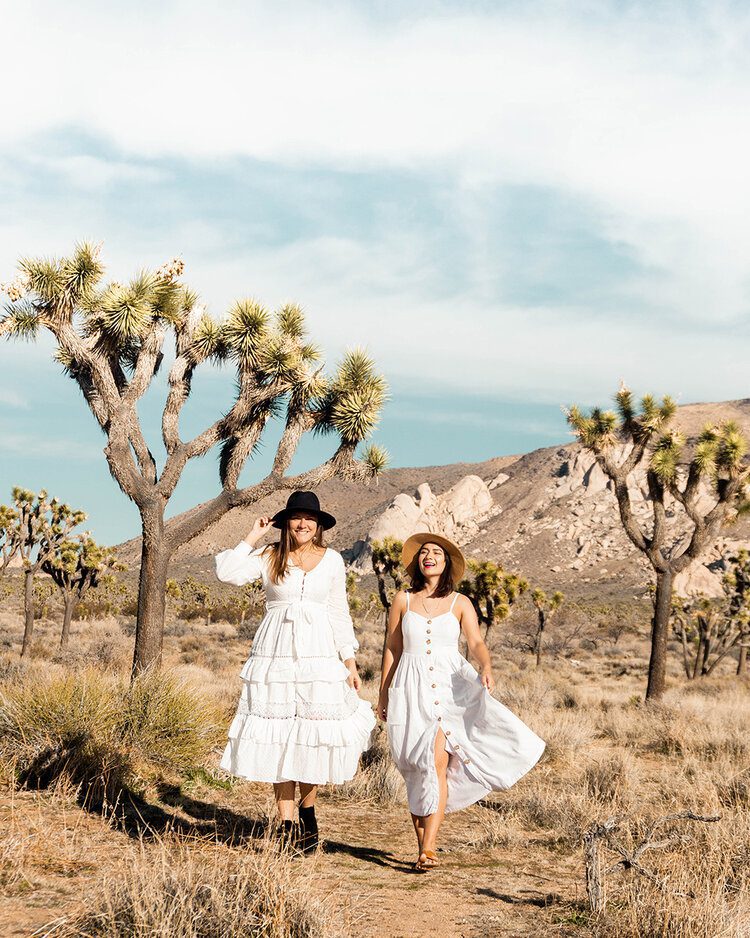
    PFH Top Tip: A white dress will get you far. It’s a classic that is easily accessorised and if you’re taking photos it suits most locations.

    These accessories will change up your outfit, help you to save pennies, make life easier and prevent you from overpacking multiple garments.

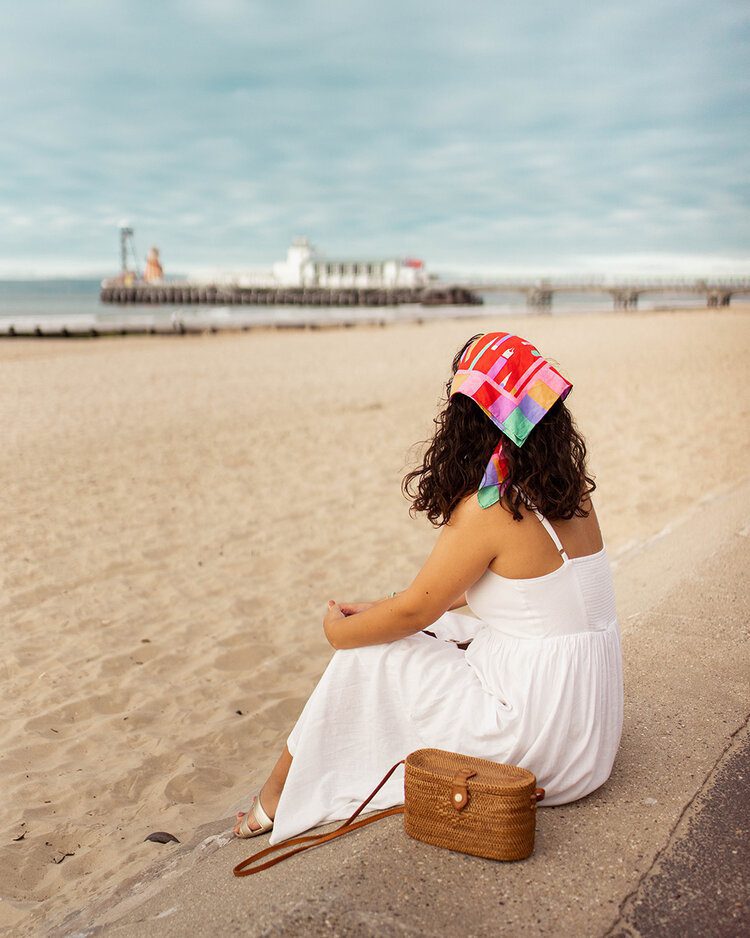
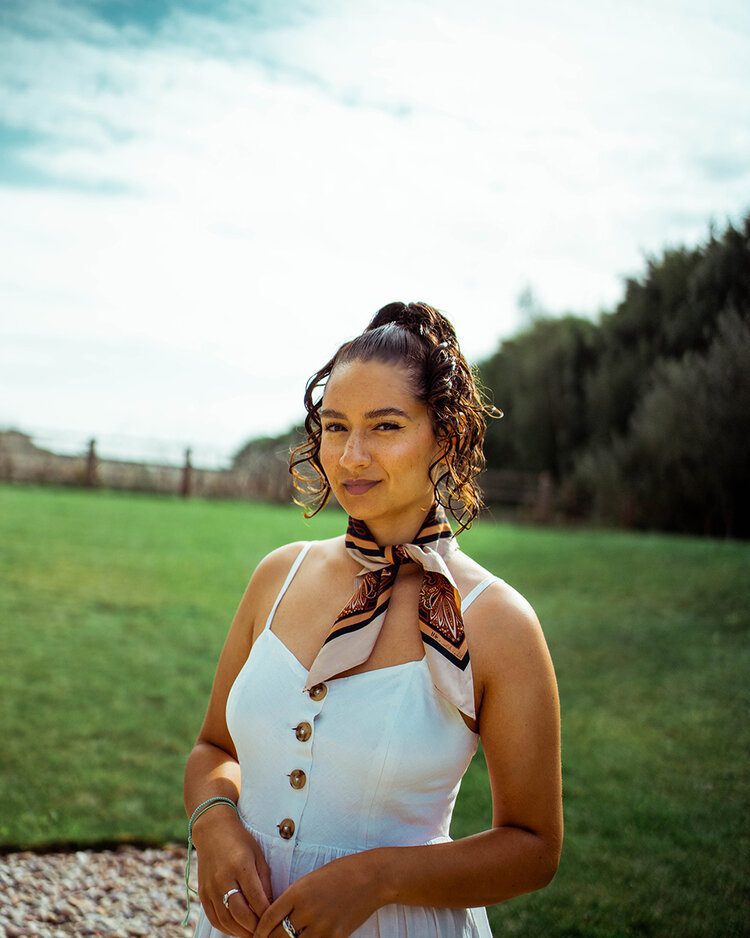
    Silk scarf 

    A silk scarf really is one of the best accessories womxn can travel with because it’s so versatile. I realise silk scarves are expensive but you can save pennies by buying one second hand, I bought a Liberty silk scarf for just £9.99 ($13 USD) in a charity shop. It doesn’t have to be silk either, there are many shops selling silk imitation scarves, just be mindful to avoid buying one from a fast fashion brand. I’ve done it in the past, but I don’t intend to anymore.

    Here are the ways you can wear a silk scarf to accessorise an outfit in different ways:

    Headband 

    Fold your square in half into a triangle and roll it up keeping its length, so that you have one long piece. Wrap in around your hairline, tying it either at the top of your head or at the nape of your neck, depending on the look you want. Either keep your hair down or if you have the length, you can tie it up.

    Bracelet 

    Tie your scarf around your wrist for a cute bracelet. This is especially cute if it catches in a breeze.

    Tie your hair up

    You can also use your scarf to tie up your hair. Wrap it around a messy bun or a pony tail for an effortlessly styled look.

    50s bandana style

    The second Girls From Ipanema (originally titled in Brazilian Portuguese Coisa Mais Linda) came to Netflix last year – it’s a Brazilian drama about independent women breaking free from oppressive gender roles to make a name for themselves in beautiful Rio de Janeiro – I started wearing my headscarves in the bandana style that the lead character, Maria Luiza, does. It also picked up as a popular style so it won’t look dated by any means. This style automatically makes your outfit chic, plus it helps to protect your head from the sun.

    Neckerchief 

    For an air of sophistication tie your scarf around your neck.

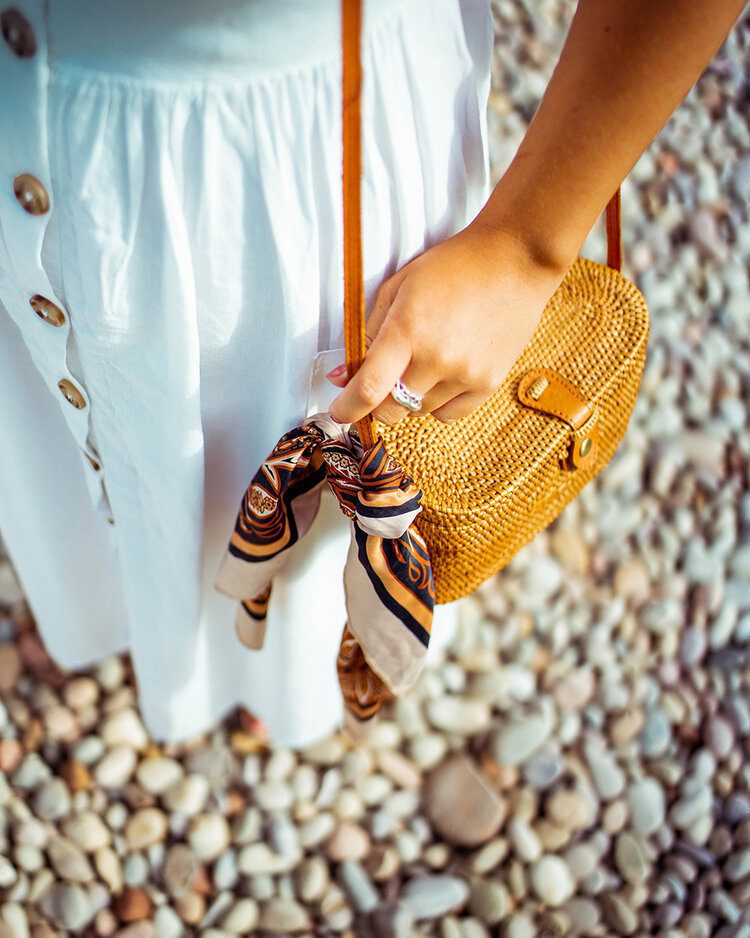
    Other ways you can use your scarf:


    • Tie it around a handbag for a different look.


    • Use it as a DIY face covering.


    • Tie it around your body to make a boob tube – yep this style has made a comeback.


    • If you have curly hair you can tie it around your curls before you go to bed so your curls don’t get damaged as you sleep.


    Straw hat

    A straw hat is such a great prop let alone accessory. When taking photos, you can swing it, throw it, or you know, actually wear it. A hat always makes an outfit look well put together plus it will protect your hair from the sun and cover up any not-so-great hair days.

    A straw hat will get you far, it’s timeless and goes with so many outfits from floaty dresses to cut off denim shorts.

    If you need a transitional hat for changing seasons, I suggest a beret or a structured felt hat. A beret looks cute with a jumper/sweater in Autumn/Fall, a coat in winter and a dress in spring; I don’t recommend wearing one in summer as the wool gets hot and itchy.

    Statement jewellery

    Statement jewellery always pulls together an otherwise simple outfit. Whether it’s a big necklace layered with shells or beads or a knock out pair of earrings it’s going to give your simple outfit a fresh look. 

    Earrings and necklace from Lux Reve.

    A personal favourite of mine is to tie up my hair into a messy bun, wrap a scarf around my hairline in a headband style and pop in a pair of statement earrings.

    Cardigan

    A short knitted cardigan will compliment so many sundresses, keep you warm on a chilly day, cover your arms on a day you’re feeling a little self conscious of them and if it buttons up, it will transform your dress into a skirt. 

    You can also throw it over your shoulders and knot the sleeves over your chest for a quick chic look.

    This little white cardigan pictured here was my last purchase from Urban Outfitters before I became clued up to they’re misconduct with paying employees. I don’t want to encourage you to buy from them so my top tip would be to knit it yourself, or if you don’t think you’re able to knit one, go to a wool shop and ask if you can pay one of the sales assistants to knit one from the patterns they sell. They often sell garments they have knitted themselves, so take the opportunity to get something custom made and of high quality. If you’re really lucky, maybe there’s someone in your family, like a Grandma, who could possibly knit you one.

    Denim jacket

    Maybe it’s a cooler day or you want to dress down your look, just add a denim jacket and it will compliment almost any sundress. A denim jacket always comes in handy on warmer trips because it will take the chill off cooler evenings or shops with air con.

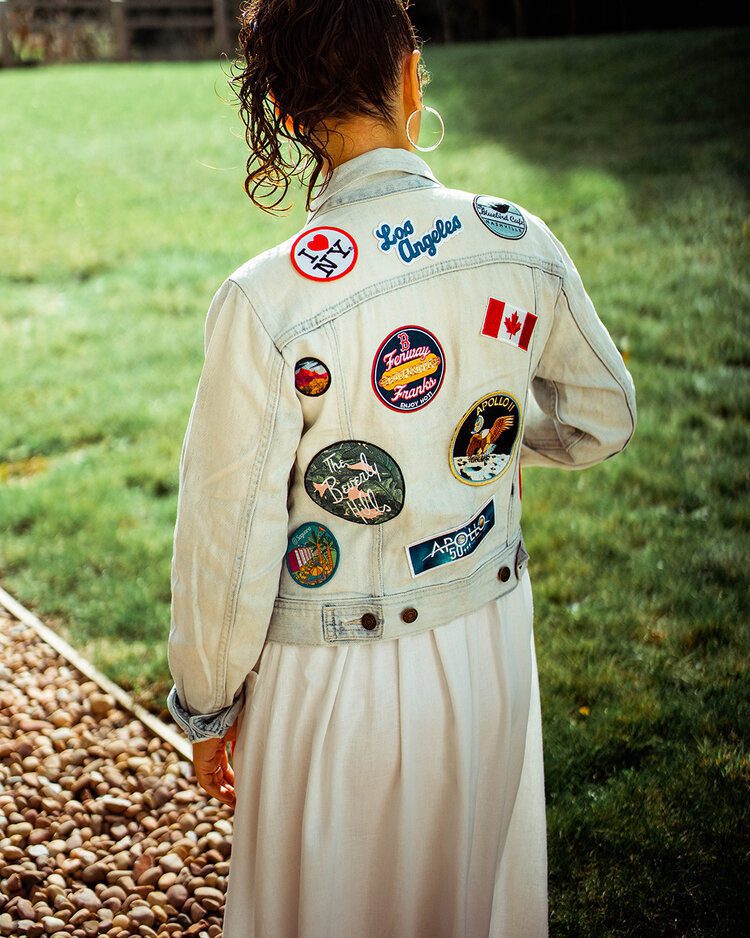
    PFH Top Tip: Customise your jacket with pins, patches or embroidery for a unique look.

    Shirt

    To make my dress look like a skirt, I layer a button up shirt over the top and tie it up at the front, around the waist. A simple addition like this gives you a new outfit with minimal packing. Plus you can team the top up with a pair of denim short on another day.

    Bags

    Aside from its purpose of carrying your belongings, it’s a great prop for photos and the style of bag changes the look of your outfit. 

    A basket bag has been a classic for years and goes with so many outfits, an ethically made or personalised tote bag makes for a bold statement, a designer handbag levels up your outfit, a colourful bag makes the outfit playful and a backpack makes it casual.

    Sunglasses 

    As well has protecting your eyes from the sun, sunglasses are such a great prop for photos: wear them on your face, on your head, tuck them into your neckline or hold them in your hand. 

    Sunnies will change a look quickly and dramatically depending on their style. Want something edgy? Go for a round, black pair. Wear a gimmicky shaped pair (but not something that you won’t wear often or will throw away) like hearts if you want something fun and quirky or a pair that’s a bright colour. Oversized has been chic for goodness knows how long, likewise, tortoiseshell is a classic. Sun damage to your vision is important to avoid, so invest in a pair that’s going to protect your eyes. You don’t need to spend big bucks on a designer label but please make sure they have UV protection lenses.

    The bonus to packing multiple sunglasses is that they are much smaller and lighter than packing multiple garments.

    Shoes

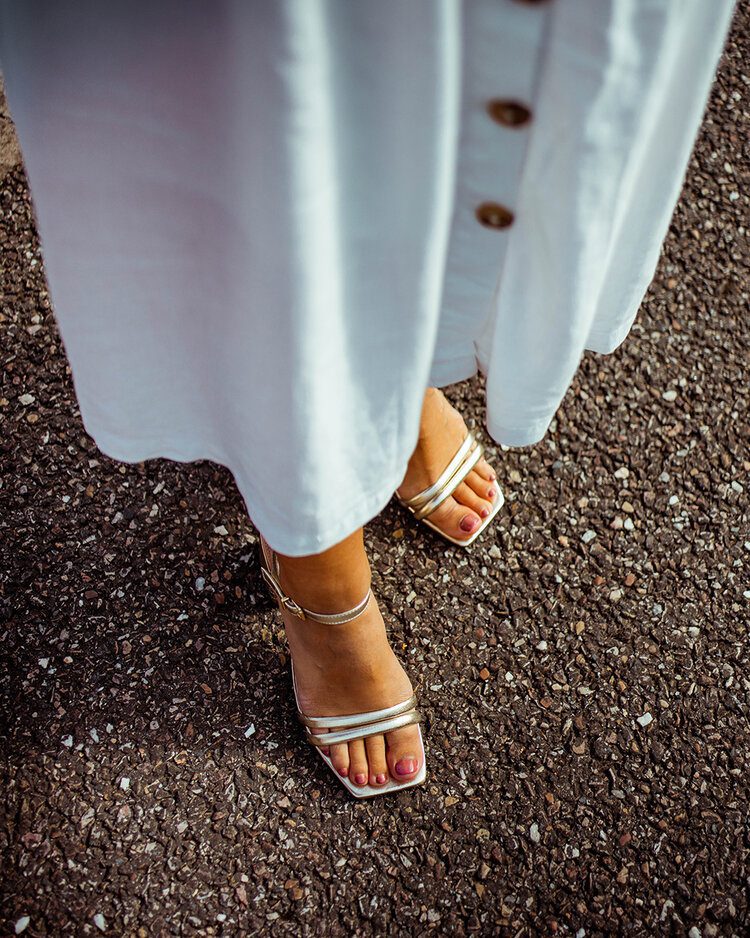
    Shoes are the most important accessory for changing up a look. Elevate it with a pair of heels and bring it down to earth with trainers/sneakers. My go to shoes, unless I’m going somewhere cold, is a pair of plain sandals in either tan or gold. They smoothly take me from a day on the beach to dinner and cocktails in the evening and they go with almost everything! My absolute favourites are Dune’s Loupe sandals – I believe in investing in a good pair of shoes is more important than buying endless cheap shoes from the likes of Primark/H&M/New Look because they will last longer and won’t cause long term damage to your feet. I mean, don’t get me wrong, it took me a long time to figure that out, despite my Mum telling me for years, but I get it now, so hopefully you listen to me when I tell you.

    If there’s one thing I’ve learnt about packing shoes it’s that it is important to pack shoes that go with multiple outfits and outfits that go with most, if not all, of the shoes you pack. It sounds simple but it’s so easy to pack outfits that only go with one pair of shoes and it creates deadweight in your suitcase and limits your options. By keeping things interchangeable it prevents you from overpacking and keeps your outfit options versatile.

    .

    You may have noticed that in some of my photos I have more than one of these accessories, that’s the beauty of these, you can mix and match so that your one dress can feel like so many different looks.

    Styling outfits before packing always helps me to cut down on how many clothes I think I need to pack for a trip.

    Let’s see if we can make a difference together by nipping fast fashion habits in the bud!

    Gabriella 

    Pin this post


  • Essential curly hair products for travellers

    Essential curly hair products for travellers

    The current attention on the Black Lives Matter has been transformative for me in so many ways, one of which is the attention and treatment I give my hair. After watching a live stream of the @norwichsupportsblm protest on 7th June I was deeply moved by one teenager, a fellow half Mauritian and half English person, who spoke of their experiences growing up in Norfolk. It made me realise the damage I did to my hair by years of consistent straightening to fulfil a need to fit in. Throughout my school years I didn’t know how to style my curls and those of us who tried were teased for it, so I straightened my hair until my curls became less defined, dry and frizzy; they were neglected. Her speech was the wake up call I needed to take a proper look at the quality of my hair and make the necessary changes to my haircare routine to bring them back to life.

    Though I am finally addressing the quality of my curls, this is not the first time I am appreciating them. I have a previous blog post, Embrace your curls and waves with Umberto Giannini but I want to use this space to explore further the extra steps curly and wavy haired people need to take to maintain, protect and enhance our curls and waves in addition to embracing them.

    As this is a travel blog and curly/wavy people travel, I have gone through the products I’ve been loving for a long time as well as some new ones I’ve just started using to make a list of curly hair products and accessories for styling and maintenance that you can take on your travels, so the quality of your curls and waves don’t take a hit when you’re not at home. Just an FYI I don’t travel with all of these products at once.

    I have done my very best to find sustainable alternatives for you too. I’ve hunted high and low for recyclable packaging, natural ingredients/fibres, upcycled products, and biodegradable options to recommend to you so that we can care for our curls and waves and our planet at the same time.

    I’ve also added a packing list for curly and wavy hair people below that you can copy!

    Curly hair care products

    Umberto Giannini products are vegan and cruelty free. They contain no sulphates or silicones.

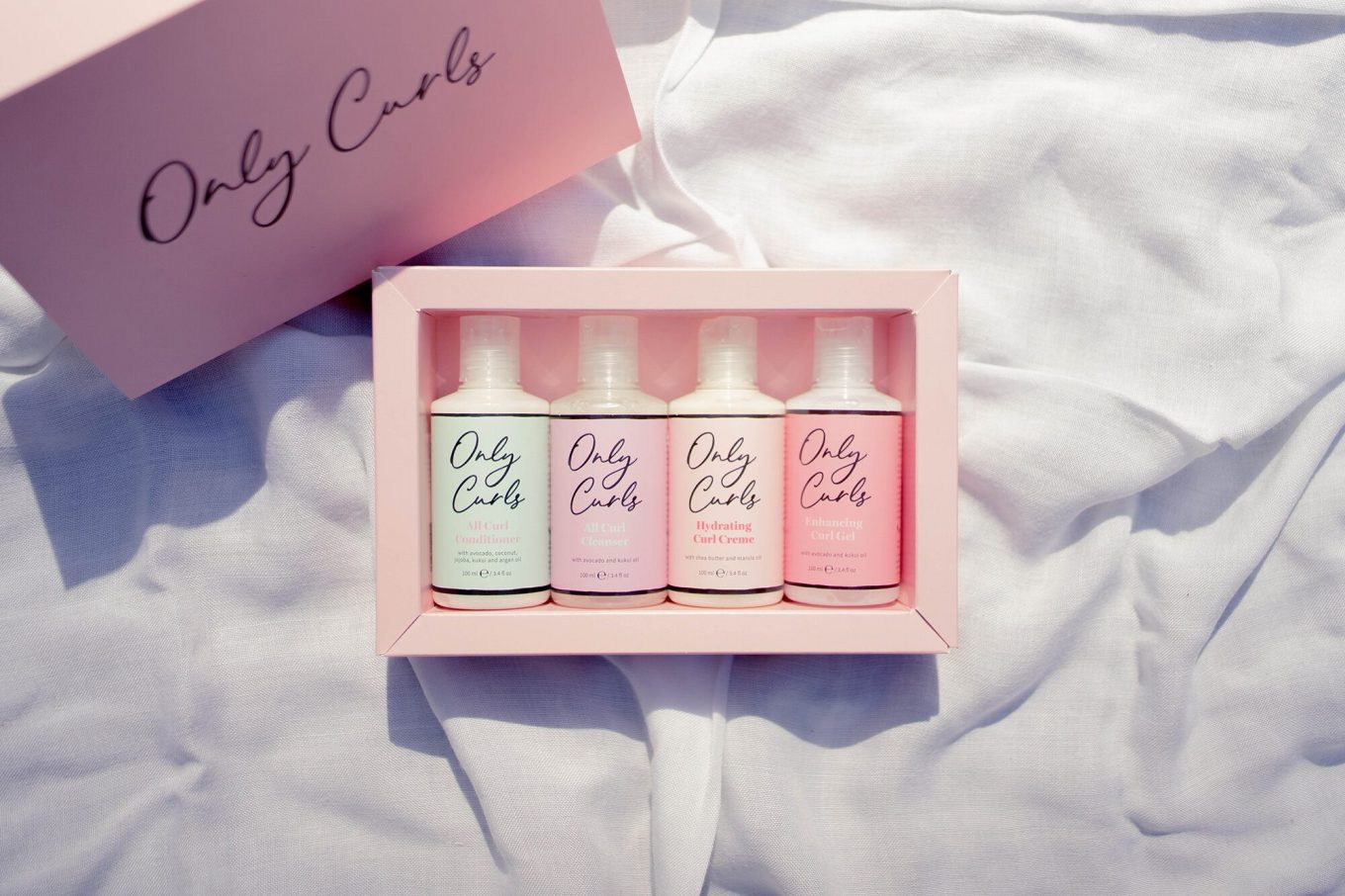
    Only Curls’ products contain no sulphates, silicones, drying alcohols, paraffins, minerals, oils or parabens. They are cruelty free and vegan plus their bottles are made from bio-plastic (derived from Sugarcane) and are 100% recyclable. 

    Shampoo/cleanser

    People with curly hair should refrain from using regular shampoos as they contain sulphates and silicones which strip the scalp of natural oils which causes curly and wavy hair to be even dryer. It is important to keep curls hydrated so we need to use special sulphate and silicone free and gentle foaming shampoos like Umberto Giannini Curl Jelly Wash Shampoo and the Only Curls All Curl Cleanser. I really want to note that the Only Curls cleanser and conditioner smell exactly like some of the toiletries used in hotels in Hawaii (citrus and coconut).

    Wash your hair with a cleanser/shampoo once a week to remove any build up on the scalp. Use your finger tips to massage it in, not your fingernails: be gentle to your scalp. Section your hair off when washing for ultimate product distribution across your scalp.

    Switching from a solid shampoo and conditioner back to a liquid one in a bottle was a tough decision for me as I want to eradicate waste from my toiletries but solid hair products contain sulphates and silicones so I sought out a brand that made their bottles from bio-plastic and are 100% recyclable, cue Only Curls.

    Conditioner

    Conditioner is THE MOST important product for all hair but particularly curly hair! Do not do anything to your hair until it is conditioned and hydrated. I use either Umberto Giannini’s Curl Jelly Care De-frizz Conditioner or the Only Curls All Curl Conditioner.

    Just like when I shampoo, I section off my hair to fully distribute the product through my hair but I brush it through with my wide-tooth comb (See “Curly hair styling accessories” below for the wide-tooth hair comb I use) before moving on to the next section. I never fully rinse my conditioner out because it keeps my hair hydrated between washing and styling.

    Deep conditioning hair mask

    Curly hair is naturally dry and needs the extra helping hand that deep conditioning hair masks provide. I try to apply the Umberto Giannini Curl Jelly Mask 1-2 times a week. I apply it to damp hair after washing it and depending on what I have on for the day I’ll leave it in for anything from a couple of minutes to a few hours before rinsing it out. This particular hair mask contains organic coconut oil and shea butter which leaves curls more defined, shiny and bouncy.

    Curly hair styling products

    Umberto Giannini products are vegan and cruelty free. They contain no sulphates or silicones.

    Only Curls products contain no sulphates, silicones, drying alcohols, paraffins, minerals, oils or parabens. They are cruelty free and vegan plus their bottles are made from bio-plastic (derived from Sugarcane) and are 100% recyclable. 

    Styling cream/creme 

    Under the Curly Girl Method, The first thing you should apply to it after washing your hair is a styling cream, this locks in moisture keeping your curls healthy, defined and glossy. The two I love using is Umberto Giannini’s More Than Moisture Twirling and Styling Defining Cream and the Only Curls Hydrating Curl Creme.

    Apply using the “praying hands method” and brush through for even distribution of product through your hair. See “Curly hair styling accessories” below for the wide-tooth hair comb I use to evenly distribute my curl cream/creme.

    Styling gel/jelly

    Styling gel should be applied to hair after the curl cream/creme has locked in the moisture of your curls. Curl gel or jelly helps to hold the shape of your curls and gives them definition. The ones I love using are Only Curls’ Enhancing Curl Gel and my all-time favourite curly hair product: Umberto Giannini’s Curl Jelly. To apply your gel/jelly, scrunch it into your hair from the ends upwards.

    Laying edges

    For YEARS I didn’t know what to do about my fly-aways. They were either frizzy coils sprouting from my head or if I had straightened my hair they would just stick straight up. I tried various waxes and gels in my youth that I swiped from my brother but they would only give my fly-aways more height, resilience to laying flat and they left my hair sticky or flakey, so I gave up and rolled with the frizz.

    I still remember being told by my manager in my first (and last) corporate job in my early twenties that my hair (she was referencing my fly-aways) didn’t give me a “professional appearance”. See the thing was, I straightened my hair because the few times I wore my hair naturally curly, my team made comments about how my hair was “trying to get the attention of and impress the owner [of where I worked]”. Though it was, I assume, meant as a compliment it made me feel uncomfortable (MICRO-AGGRESSION ALERT) so I stuck with destroying (straightening) and pulling back my hair.

    Then one day, I learnt about laying edges and my whole world changed. With the research I did online I found that Eco’s Argon Oil styling gel is the top choice for laying your edges. This wonderful technique means that I can smooth down my fly-aways and baby hairs with a swooping motion of a toothbrush (see “Curly hair styling accessories” below for the toothbrush I use) lightly dipped in Eco’s Argon Oil styling gel. It gives me so much joy to do I cannot explain how much CONFIDENCE this styling technique gives me.


    Unfortunately this isn’t the most sustainable choice but the tub will last me way into the future and I will repurpose it when it’s empty. For travel, scoop some into a little tin pot with a screw on lid, laying you edges doesn’t take a lot of product so a lip-balm-sized tin will do the trick.

    Spray bottle

    If my hair has dried whilst I’m styling it or I need to revive it in the morning after waking up, I spray a mixture of conditioner (silicone and sulphate free remember) and water on it. Instead of creating more waste by buying a spray bottle I washed out one of my old Neal’s Yard deodorant bottles and use that. Yay for a zero waste moment!

    Curly hair styling accessories 

    Microfibre towel

    After watching many, many YouTube videos and IGTVs of curly hair styling tips, I have made all my cotton hair towels hand towels and now only use microfibre hair wraps or T-shirts. Regular cotton towels absorb more moisture leaving curly hair frizzy, microfibre towels are smooth and reduce frizz.

    The Dock & Bay hair wrap is perfect for picking all of my hair up no matter how long it is. As it’s quick dry I make sure to not leave too long between wrapping my hair in it and styling my hair, so it’s not too dry to handle. Alternatively I use a T-shirt as it’s also gentle on curls and waves. Microfibre hair wraps are great for travel as they are so compact so they take up very little room in your luggage.

    Dock & Bay uses biodegradable and recyclable packaging, they have multiple products already made from recycled plastic bottles, 5% of their profits go to their partnered charities (Whale and Dolphin Conservation and One Tree Planted) and they plan to make all their products from 100% recycled post consumer plastic, by 2021. Now you really want one of their towels right? Thought so.


    My Dock & Bay hair wrap is in “Waikiki Coral”.

    Wide-tooth hair comb 

    Wide-tooth combs and brushes with help to detangle curls without snagging them. They are useful for evenly distributing product through your hair without breaking apart your curl formation. I bought a hair comb made from bamboo as it’s a natural fibre and will one day be able to biodegrade. 

    ALWAYS BRUSH CURLS WHEN THEY ARE WET AND CONDITIONED!

    Hairbrush 

    Again after watching many videos on styling curly hair I saw that the Denman D3 7 row is the holy grail hairbrush for defining curls. My bright yellow and hot pink brush is the “Honolulu” edition. Remember to always brush your hair away from your head and down for volume.

    Again: ALWAYS BRUSH CURLS WHEN THEY ARE WET AND CONDITIONED!

    Hairdryer and diffuser 

    I got so sick of stepping into yet another hotel room bathroom to find yet again there is no diffuser because they don’t cater to anything other than straight hair (like seriously, they need to sort this hidden bias out!). So I purchased a travel hairdryer with a diffuser attachment so I can dry my curls without the risk of frizz and damage.

    It’s not ok that people with textured hair have to spend money on something hotels should provide for inclusivity, not to mention we lose space in our luggage and it adds to the weight of the plane. So, next time you see a hairdryer with no diffuser, say something to the hotel staff and demand inclusivity! 


    My travel hairdryer folds in half and has worldwide dual voltage.

    Toothbrush

    Under “Curly hair styling products” above, I spoke about how I use Eco’s Argon Oil styling gel to lay my edges. I use an adult medium Humble Co bamboo brush to apply and style the gel on my hair as it’s biodegradable.

    Curly hair maintenance accessories

    Silk pillowcase

    The smoothness of silk helps to prevent tangles, frizz and breakage of hair. Silk absorbs less moisture than cotton so it helps curly hair (which we know is naturally dry) to keep hydrated and maintain shine. For this reason it also helps to keep your skin hydrated too so it’s anti-aging as well!

    Slip has spent 10 years developing Slipsilk™ a pure silk which is specially-commissioned using the highest grade (6A) long fibre mulberry silk and non-toxic dyes.

    My silk pillowcases are one of the best investments I’ve made for myself both physically and mentally. The idea that I’m helping my hair recover from years of heat damage by reducing frizz from the friction of my cotton pillow cases, helps put my mind at ease when I go to bed with a beautiful set of curls atop my head and the physical improvement is evident, I wake up every morning with significantly less frizz.

    I bought two as I wanted one for travel and one for home. I purchased them in “Caramel” and “White” as white goes with pretty much every set of bedsheets I own so it blends in well, however when I use my silk pillowcase in hotels (etc.) on my travels, I DO NOT want to leave it behind, so I went for a darker colour so that I identify it as my own and don’t forget it when I check out.


    I do want to address that £85 is a lot for a pillowcase and the reason I bought them from Slip is because I had vouchers to use on feelunique.com. I also didn’t find Only Curls until after I made the purchase. Only Curls has silk pillow cases on sale for £40, but I can’t speak for the quality as I haven’t tried one but I can say that I LOVE my Slip ones.

    Silk scrunchies 

    Silk scrunchies are the best hair tie for curly and wavy hair as just like the smoothness of a silk pillow case, they help to reduce breakage, frizz and tangles. Either use them to tie up your hair or into your pineapple for sleeping. 

    Tying your curly hair into a pineapple on the top of your head helps to prevent your curls from falling out of shape and getting damaged whilst you sleep, it keeps them up and out of the way.

    Due to pandemic-induced lockdown, I was unable to buy silk and make my own scrunchies so I bought a couple from Only Curls. Originally I was looking at silk scrunchies from Slip when I bought my silk pillowcases but I couldn’t stomach spending £40 on some scrunchies that I could make myself so I didn’t add them to my basket. Not long after that I came across the brand Only Curls and £10 was more reasonable to spend on a couple of scrunchies.


    Essential curly hair packing list

    Curly hair care products

    ☐ Shampoo/cleanser

    ☐ Conditioner

    ☐ Deep conditioning hair mask

    Curly hair styling products

    ☐ Styling cream/creme

    ☐ Styling gel/jelly

    ☐ Spray bottle

    Curly hair styling accessories 

    ☐ Microfibre towel hair wrap

    ☐ Wide-tooth hair comb 

    ☐ Hairbrush 

    ☐ Hairdryer and diffuser 

    ☐ Toothbrush

    Curly hair maintenance accessories

    ☐ Silk pillowcase

    ☐ Silk scrunchies 

    I’d love to hear what curly products you love using! Drop them in the comments below!

    Gabriella

    Pin this post


    .

    As an Amazon Associate I earn from qualifying purchases but please know that I recommend all of the products above from personal use which you can see throughout my blog posts.

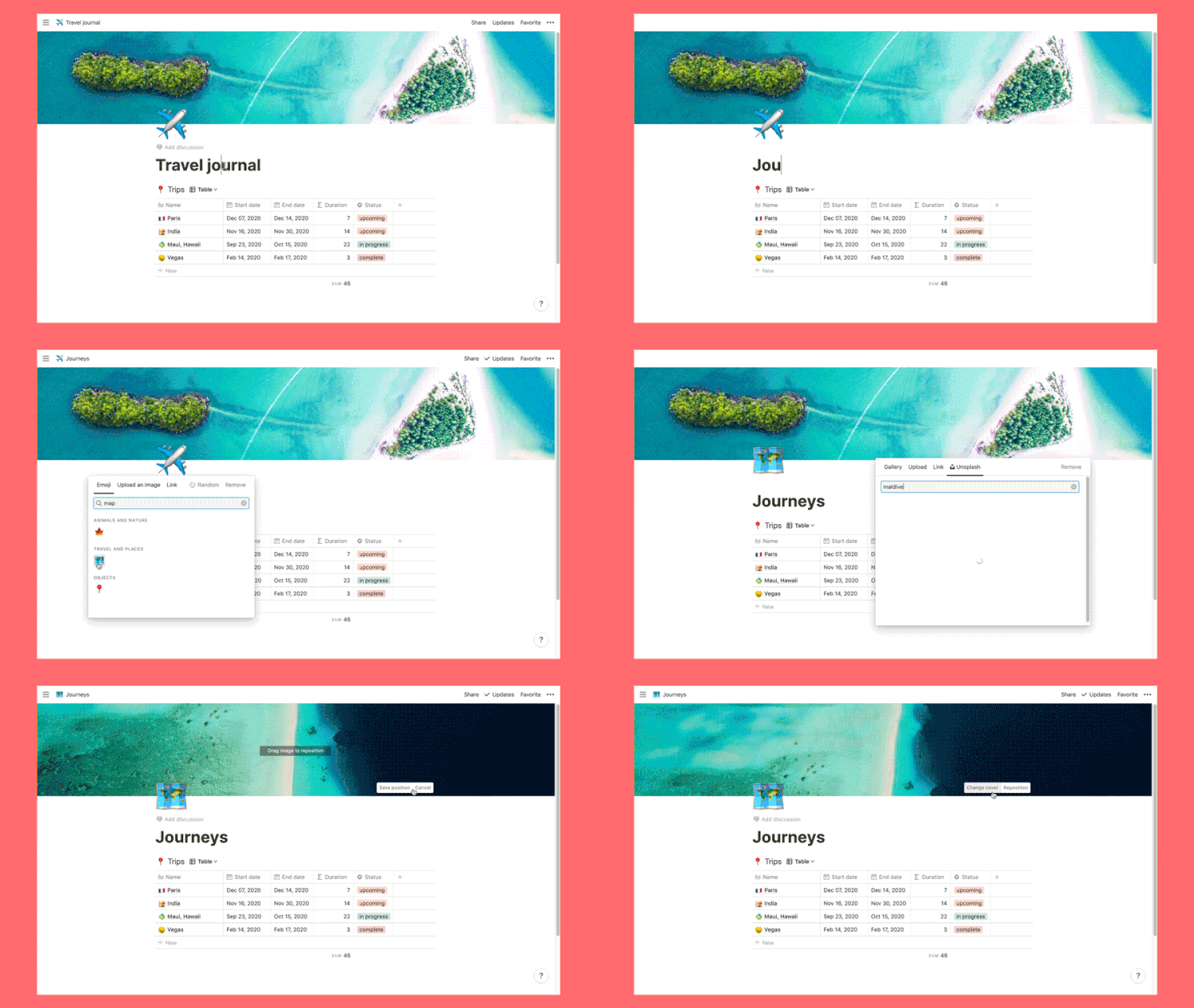
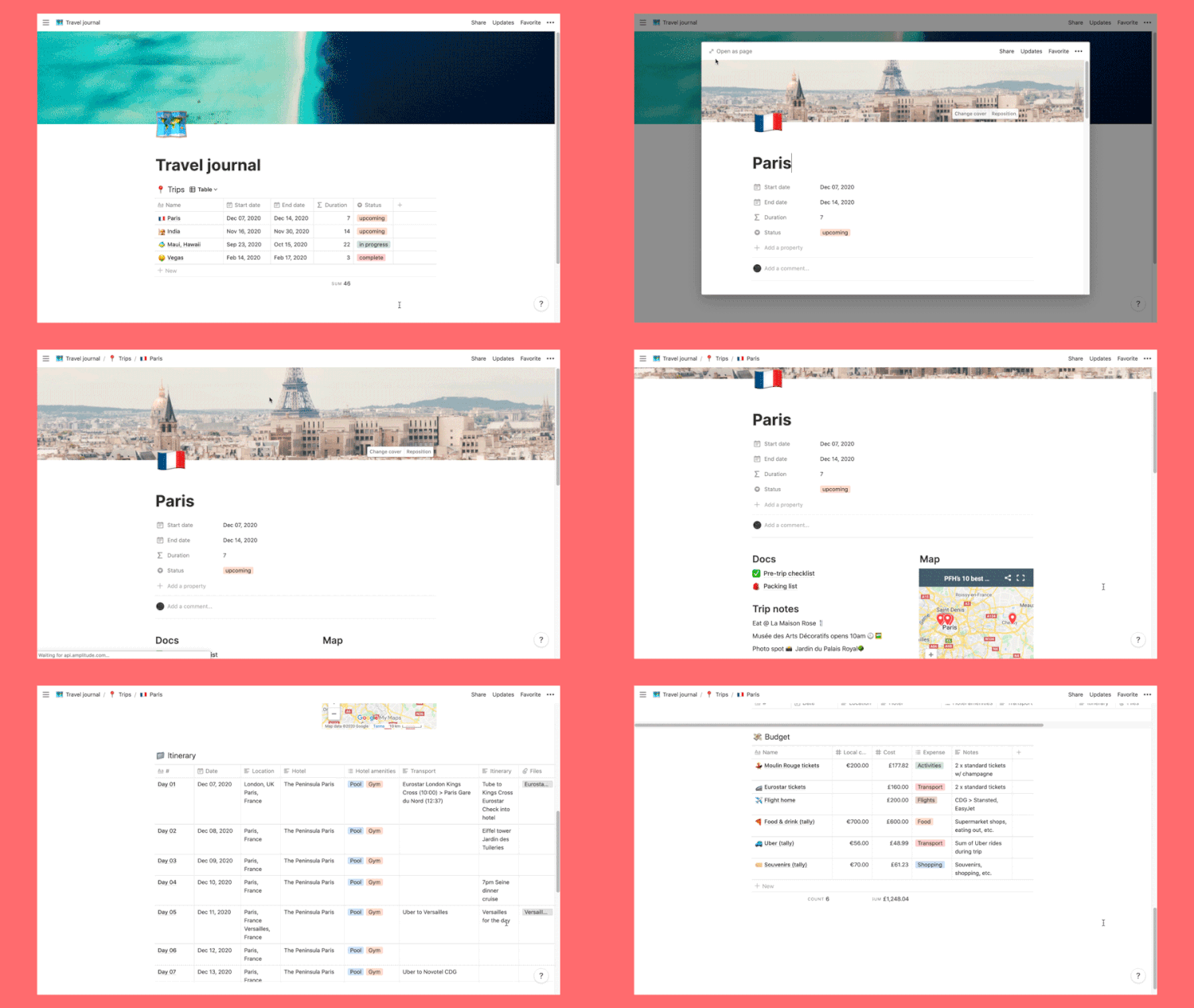
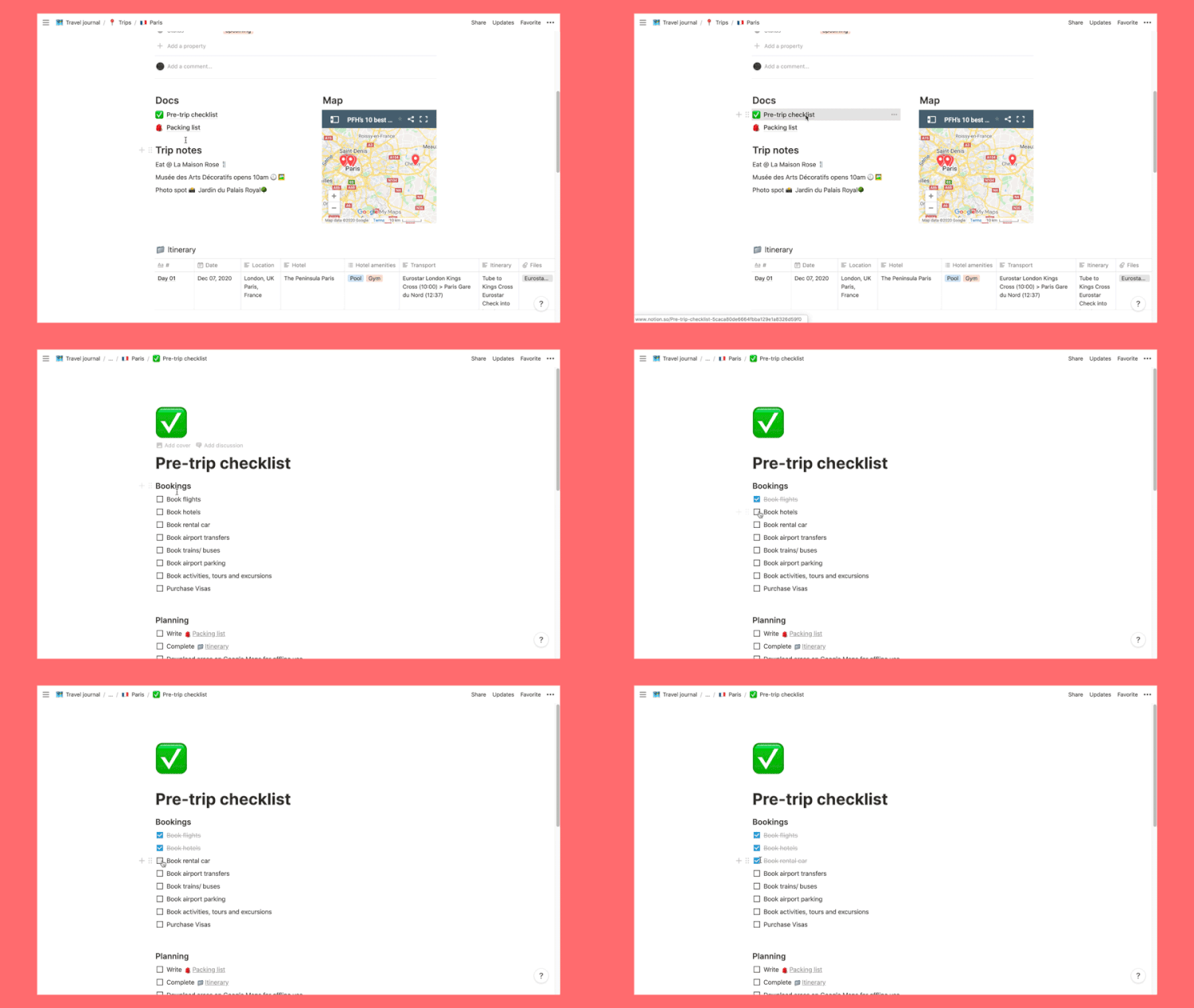
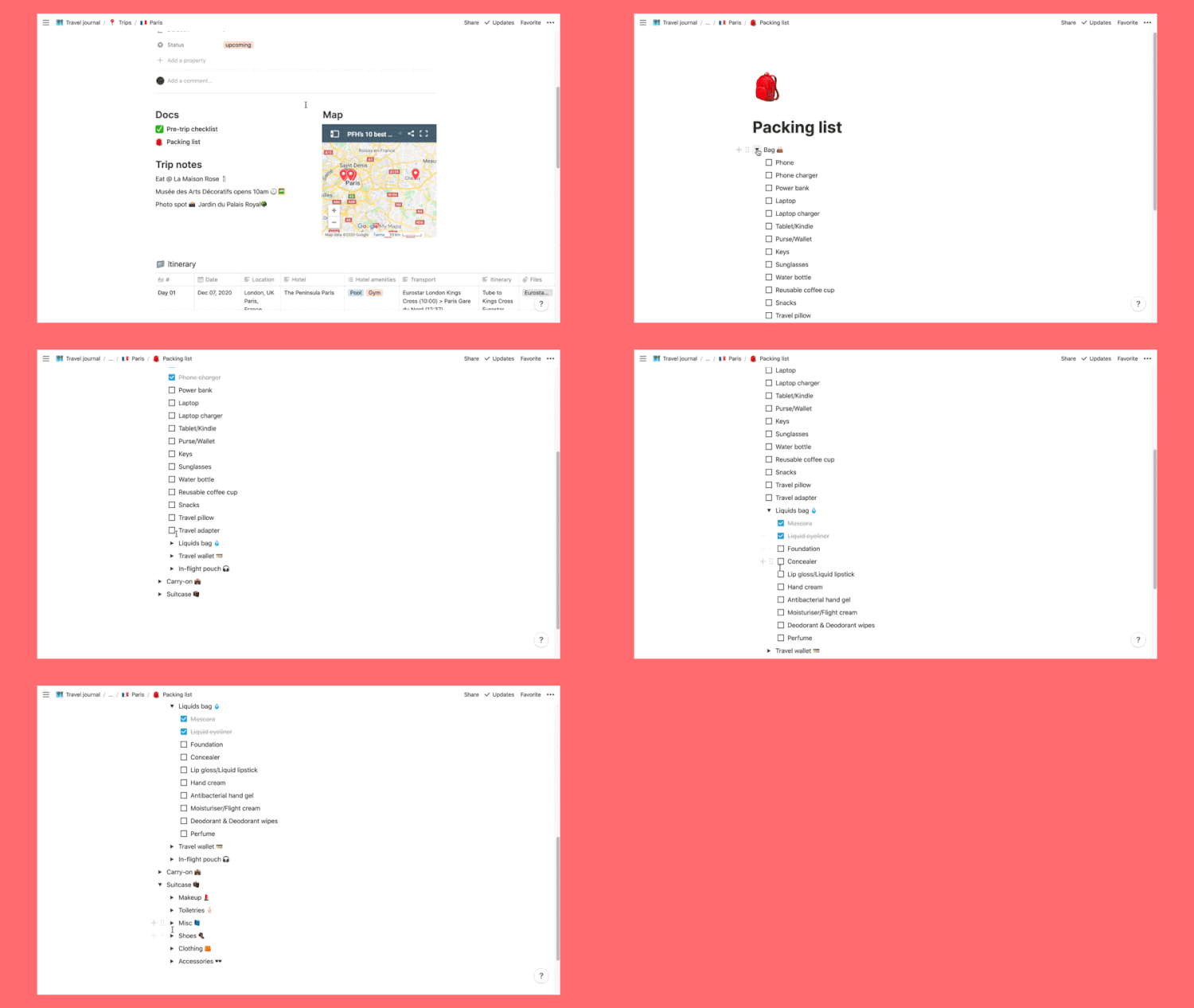
  • How to plan trips with Notion

    How to plan trips with Notion

    For the first time ever, someone other than me has published a blog post on Postcards from Hawaii and here it is, Michael has written all about his love affair with Notion and why he uses it as his space for planning and organising our travels. Everyone plans and prepares for trips differently right? So we figured why not share with you an alternative way that he absolutely swears by!

    So Michael, take it away…

    Notion is a tool that helps you organise just about every aspect of your life. It works in your browser or as a dedicated app for Mac, Windows, iOS and Android. You can organise your every day via to do lists and goals, you can run your business on it through powerful project management tools and it works perfectly for single users and giant corporations alike.

    I use Notion mainly to run my animation studio, organising complicated projects, timelines and teams. However, the page I most enjoy opening in my Notion account isn’t work related at all, it’s my beautifully organised and very detailed travel journal. It’s the place I plan every single trip in and it’s been through many rounds of refinement to get it to its current form, a form that I am sharing in full with you as a Notion template, meaning you can use this very blueprint for your own adventures around the world. Let’s dive in!

    1. Sign up

    To get started with this travel journal you will need a Notion account. If you already have one great, if you don’t, sign up here. You can easily use your Google account to create one with Notion. They offer a free account which has a limit on how much you can create, a $4/month personal subscription which offers unlimited creation and a couple of business plans.

    2. Duplicate my template

    Once you have an account, the next step is to duplicate the template I have created so you can personalise it and begin planning your travels.

    Click on this link then click “duplicate” in the top right hand corner. If you’ve made an account and are logged in, it will take you to your new travel journal in your own account. If you’re not logged in it will prompt you.

    3. Personalise

    Time to make it yours! Personalise your travel journal with a new title, emoji and cover photo. Notion hooks up to Unsplash and gives you 900k+ hi res photos to choose from (you can use these anywhere you like not just as header photos).

    Individual trip pages can be personalised in this way as well, in fact any page of your travel journal can!

    4. Explore the template

    Take it for a spin and get familiar with how your trips will be organised. Click on one of the demo trips, Paris for example. Notice each trip has its own page? Inside the trip page you’ll find what I consider key resources for planning a trip: a pre-trip checklist, a packing list, a map (all inspired by Gaby’s previous blog posts), an itinerary, a budget, and a space for any notes.

    Here’s a quick breakdown of each section:

    Pre-trip checklist

    You’ll be able to customise this check list to suit your needs – add to it, take away, rework it.

    Packing list

    Again, use ours as a guide or write your own from scratch. Use toggles to organise cases, bags and categories. To add to this list (or any aspect of the travel journal) hover or click on the + and choose what kind of block you’d like to add; there are so many to explore.

    Itinerary

    The itinerary is set up as another database so it functions just like your main travel journal database – each day can be clicked and is a stand-alone page. This is great if you want more space for each day, maybe you’re a big journaller or want a place to collate some images for a travel shoot moodboard, you can do it all here.

    Customise your columns to suit your needs: fill in your days, drop your boarding pass PDFs in the ‘files’ column on the corresponding day and you have everything for your trip in one place.

    Budget

    Depending on how organised you want to be you can create a budget – either use this as a plan to keep to your spending limit or a log as you go. You can add single expenses or create more detailed budgets by nesting smaller tallies (see ‘food & drink’) – the possibilities are endless!

    Map

    Use this space to drop a map of your destination in. It’s a great way to embed pre-made maps with spots you want to visit. Just click on replace in the map menu and paste the link to any Google map.

    Trip notes

    A free space for anything that doesn’t have a home above. I like to jot down recommendations we’ve received on our trips or useful details I need to remember like airport parking locations (because I always forget where the car is parked which always leads to an argument in the middle of the carpark with Gaby).

    5. Start planning

    Time to create your own trip! When you are back to your main travel journal page (use the navigation menu at the top of the page), hover over the trips database, click on the arrow on the blue ‘New’ button and click ‘New Trip’. Title your trip page, personalise the icon & wallpaper and add some details. Back in your travel journal you’ll see your new trip, now you are ready to plan.

    Edit your trip template

    When you create a new trip, you are duplicating a template I have made. If you want to make changes to this template click on the blue arrow of your main database and select edit – any changes you make in here will be active each time you press new trip. This is great if you want to customise your pre-trip checklist or packing list and have the changes reflected for every new trip.

    6. Additional tips

    Explore different views

    With any Notion database you can create multiple views. Let’s say you want to see how all your travel plans look on a calendar, you simply click “new view” and then “calendar view”; your trips will appear based on the dates you’ve set. There’s also a “board view” and ““gallery view” – explore your options. You can then toggle between views whenever you like and you can even copy and paste a linked view, so you can see both at the same time while retaining it as one database.

    Add custom columns

    Add your own columns to your main database for example, a checkbox for carbon offsetting the trip.

    Use filters

    Filters are a great way to change which trips your database shows without deleting anything. Try adding a filter to hide any completed trips.

    .

    So there’s my introduction into how Notion works as a whole but particularly how it can benefit you most for planning your travels. As you’ve probably gathered by now, every part of what I’ve shown you is customisable so don’t be afraid to explore. We all have different organisation styles and ultimately different travel needs and Notion recognises this by allowing you to plan in a multitude of ways. So what are you waiting for? Make an account, grab a coffee and use this template to start organising all your future travel plans, dreams and soon, your whole life (it’s addictive).

    Thanks for reading!

    Here is the link to the template again

    Aloha, Michael

    Pin this post


  • How to make a drawstring laundry bag (free pattern & tutorial)

    How to make a drawstring laundry bag (free pattern & tutorial)

    I was packing up my sewing equipment ready for my move to Canada when I came across some fabric I bought in Maui the last time I went to Hawaii and thought, what can I teach you to make from any beautiful fabrics you might have picked up on your travels around the world that’s also useful when you travel and I came up with this drawstring laundry bag pattern. 

    Fabric purchased in Hawaii. I encourage you to pick up some fabric on your next trip!

    I use a combination of packing cubes and laundry bags when I pack my suitcase. Laundry bags are easy to get in and out of and can be used to pack shoes, separate your clothes, keep your accessories together or you can put your dirty undies in them between washes when you’re on the go. I am phasing out plastic bags to pack my shoes as I’m not purchasing them anymore so these drawstring laundry bags are a great sustainable alternative.

    Speaking of sustainable alternatives, I also made a bunch of these drawstring bags last Christmas as a replacement for gift wrap as they’re reusable and way better for the environment. You can just change the measurement of the pieces and fabric and length of ribbon to work with whatever you want to put in there.

    As a size reference, this bag that I am showing you how to make will fit a pair of women’s size 5 UK/7 US shoes.

    This DIY step-by-step tutorial shows you the most simple way to make a drawstring laundry bag with the least amount of equipment, so that anyone with a sewing machine can make this at home. I have done it this way keeping in mind that not everyone is going to have access to an abundance of fabric and equipment at home.

    This guide measures in inches to accommodate for my American audience but none of these measurements needs to be the same as I’m showing you, you can make it as big or small as you like. You can measure out in centimetres or inches, just make sure that the width you fold over and press down in step 2 is bigger than the width you sew from the edge in step 4 so that the raw edge is concealed into the seam.

    If you enjoy making this laundry/gift bag then why not take a look at my hair scrunchie DIY tutorial?

    Alright, that’s enough from me if you haven’t already skipped forward to the DIY laundry bag tutorial.

    What you need


    • Sewing machine (you could sew this by hand as it’s not complicated, it will just be time-consuming)


    • Iron and board


    • Tape measure (or ruler if you don’t have access to a tape measure)


    • Fabric shears


    • Snips (your shears will do if you don’t have dedicated snips)


    • Pins


    • Safety pin


    • Thread


    • 52” of ribbon cut in half


    • 2 pieces of fabric measuring 12” x 16” each


    Method

    1. Measure out and cut your fabric making sure it’s ironed beforehand.

    2. Take the top edge of each piece, turn down 1/2” and press it down with an iron.

    3. Fold down the new clean top edge of each piece by 3”, press it down with the iron and pin it to secure it.


    4. Take one piece and line up the edge you have pinned with the edge of the presser foot on your sewing machine and stitch it down. Backstitch both ends to secure your stitching every time you sew.


    5. Turn the piece around and using the measurement guides on your sewing machine line up the top edge to the 3/4” marker. Sew straight down to form the channel for your ribbon. 


    6. Repeat steps 4 and 5 on the other piece.

    7. Lay the two pieces together with the right sides of the fabric facing inwards. Pin them together making sure the stitching for the channels on each piece lines up together.


    8. Line up the raw edge of the fabric with the edge of the presser foot. Only sew from the top edge of the bag down to the first channel seam.

    9. Start sewing again from the second channel seam and continue sewing around the three raw edges, stopping at the first channel seam you come across on the other side. It is important to leave the channel open so you can feed your ribbon into it.

    10. Sew from the second channel stitch to the top edge of the bag.

    11. Repeat 8, 9 and 10 but this time sew between the existing seam that you just sewed and the raw edge of the fabric. This is to secure the first stitches and to minimise the fraying. If you are using a fabric that doesn’t fray such as a felt then you can skip this step. You can also use an iron bondaweb to line your fabric to prevent it from fraying.

    12. Trim the excess fabric as close to the seam without interfering with the stitching.

    13. Turn out the bag to the right way around.

    14. Cut x2 strips of ribbon 26” long. Trim each end on a diagonal to prevent fraying.

    15. Attach a safety pin to one end of a ribbon. This makes it easier to thread the ribbon through the channels.

    16. With the wrong side of the ribbon facing you (this is so when you pull it though to the outside of the bag, the right side of the ribbon faces out), feed the ribbon into a channel at one of the openings. Using the safety pin, bunch the fabric and continue to feed the ribbon all the way around until you are back where you started.


    17. Use the safety pin to push both ends of the ribbon to the outside of the bag through the opening. Tie the two ends together with a knot to prevent them from disappearing back into the channels.

    18. Repeat steps 15, 16 and 17 with the other piece of ribbon into the other opening.

    19. There you go! You’ve completed your homemade drawstring laundry bag. Pull on each end of the ribbons to draw it closed!

    .

    If you make one, I’d love it if you shared it on Instagram stories! Tag me with @gabriellawisdom and I’ll share it!

    Aloha and stay home, Gabriella

    Pin this post


  • 5 best shoes to travel the world in

    5 best shoes to travel the world in

    After years of travelling with a ridiculous amount of shoes – and I’m not even a shoe person, I prefer handbags – I have come to terms with the fact that there are really only five types of shoes that you need for travelling anywhere in the world. Anything beyond these five types of shoes comes down to your personal style and which pair goes with what outfit, but as long as you have these gender-neutral five to hand when you’re packing for your trip, you can’t go wrong.

    1. Trainers/sneakers

    We are finally comfortably living in a time where it’s socially acceptable to go almost anywhere in a pair of trainers/sneakers. They’re versatile, comfortable, fashionable and practical. Great for long days on your feet exploring and for working out in hotel gyms or going for a run.

    I am particularly fond of Reebok Nike. If you want a pair that you can wear during the day and to the gym, I suggest going for a pair made by a sports brand.

    2. Hiking boots 

    As well as being completely appropriate for hikes, hiking boots are comfortable for long days on your feet and are water proof so ideal if the weather isn’t peachy where you’re heading. It’s important to hike with supportive shoes to prevent injury and misery. A few years ago we went on an organised trek through the Malaysian jungle just outside of Kuala Lumpur. It was a steep trail over rocks and through streams, and the other couple with us were wearing trainers (sneakers) and struggled with their little tread underfoot. I strongly suggest breaking in a pair of hiking boots if you plan on hiking on your trips.

    I have a pair of hiking shoes from Hi-Tec and boots from Dune and I recommend both as they are waterproof with a great tread.

    3. Flip flops

    If you’re going anywhere remotely warm, you cannot go wrong with a pair of basic bish flip flops. These will take you to the pool, the beach, communal showers or for a potter around but I don’t recommend wearing them all day because they don’t offer any support.

    Lorem ipsum dolor sit amet, consectetur adipiscing elit. Ut elit tellus, luctus nec ullamcorper mattis, pulvinar dapibus leo.

    You can be as expressive as you want with your flips flops, the more colourful the better! What’s great about these is that you don’t have to splash cash at these, whether they’re from Primark/Target or Prada, they do the same thing, plus you can wash them on the go!

    My go-to flip flops are Havaianas.

    4. Sandals

    Going somewhere hot and need something a little smarter than flip flops? Sandals have got your back. Go for something classic and neutral so you can take them from the beach to the bar. I am not a big fan of heels so I prefer to go out to dinner in a pair of sandals that can be dressed up or down.

    My favourite sandals are Loupe in tan from Dune. They look like a pair from Hermès but with an affordable price tag.

    5. Ankle boots

    If you’re going somewhere cooler where flip flops and sandals will leave you with blue feet but trainers aren’t appropriate, a pair of ankle boots will do the trick. A simple pair of ankle boots will dress up an outfit for the evening and will help keep the cold out during the day. 

    Dune has the most amazing selection of ankle boots.

    Depending on the climate of your destination and what you plan to do there, the chances are you won’t need all of the above, and if you do, kudos on the amazing trip, but here are the five pairs that you can refer to that will get you all over the world.

    Aloha, Gabriella

    Pin this post


  • Winter packing guide – Scotland

    Winter packing guide – Scotland

    There are parts of Scotland that are not unlike Iceland in that the weather can change in an instant and you’re not sure what you’re going to get next. In one morning up in the Cairngorms we went from rain to a blizzard then to bright blue skies, and don’t even get me started on the wind in Edinburgh that whipped my hat off my head from under my rain coat, or the intermittent mist in Isle of Skye that is the only thing between you and incredible views. To keep you warm, prepared and prevent you from over or under packing, here’s everything you need:

    Clothing 

    Coats 

    I brought the following coats for a week long trip:


    • Rain coat


    • Puffer coat with a faux fur trim hood


    • Packable down coat


    My lightweight down coat is from Uniqlo.

    A water proof coat will be the most important coat to pack on a trip to Scotland but unless you have a super-dooper amazing rain coat, it won’t be the warmest option which is why I packed two others. The packable down coat was perfect for keeping me warm on dry days whilst the puffer coat was perfect in the snow because it kept me warm, dry and the faux fur trim on the hood caught the snowflakes that fell around my face.

    My raincoat is from Joules and hiking boots were gifted from Dune.

    Thermals

    Without a doubt thermals are the most important items on this list. The thermals I brought on our week long trip around Scotland were:


    • 2 thermal base layers.


    • 4 thermal turtle necks.


    • 1 pair of thermal long johns 


    • 1 pair of thermal tights


    I cannot stress how important thermal layers are. They are the best at keeping you warm and are thin so you can layer up and they take up far less room in your suitcase than wooly jumpers. On really cold days I recommend wearing the tights or long johns under your trousers.
    Zip up fleece

    Fluffy or not, the choice is yours, but a zip up fleece is ideal for Scotland. You can wear it over thermals and under your coat. You can zip it up to stay warm or leave it unzipped when you get warm hiking.

    Bottoms


    • Trousers – I packed one pair to wear over thermal long johns/tights.


    • Running tights – one pair for hiking, I still wore my long johns underneath them.


    • Water proof over trousers – I wore these to keep my legs dry in the rain and snow.


    • Skirt – for the couple of times we went out for dinner or drinks I packed a button down A line skirt which I paired with one of my turtle necks.


    My waterproof over trousers and snow gloves are from Mountain Warehouse.

    Thick PJs

    I learnt from our various accommodations across Scotland that you cannot trust the heating will be sufficient, so pack a pair of warm PJs.

    Footwear

    Hiking boots

    Between the hills in Edinburgh and Glasgow and the mountains in the Highlands it’s more than wise to bring a pair of walking boots, especially if you’re heading up into the Highlands where you’re going to encounter all sorts of terrain.

    Hiking boots are from Dune.

    Water proof shoes/boots

    As practical as hiking boots are, they’re not appropriate for dinner or drinks so take an alternative pair of shoes such as ankle boots for women or Chelsea boots for men. I suggest something water proof because, well, no one wants damp feet.

    Thick socks 

    Whilst high up in the Cairngorms visiting the reindeer I was wearing three pairs of socks under my hiking boots and my toes were still numb. Bring at least four pairs of thick hiking socks.

    Accessories 

    Backpack

    With all the walking you’ll inevitably be doing, the best day bag I can recommend for a trip to Scotland is a backpack.

    Wooly hat

    For an idea on how much you will need a hat to keep your head and ears warm and sheltered from the wind, Michael, whose only hats are baseball caps, had to buy a knitted beanie on day two of our week long trip.

    Snow gloves

    Seeing how the chance of snow in Scotland is pretty high during winter I suggest making the gloves you pack snow gloves. These will keep your mitts warm no matter how cold it gets outside.

    Snood

    For Scotland I recommend a snood over a scarf because when the wind picks up you want your scarf to have as little chance as possible of being blown off your neck.

    Sunglasses

    The sun sits low in the sky in winter and can be pretty blinding on a clear day.

    Miscellaneous 

    Coffee cup

    Hot drinks on the go are a great way to warm up. Favour a thermal cup to keep your drink warmer for longer in the cool weather. This YETI x 4ocean one will keep your drink hot for hours plus each purchase pulls a pound of rubbish from the ocean.

    Water bottle

    It’s important to stay hydrated and it’s a lot harder to do in winter because we don’t notice dehydration the same way that we do in the heat. Keep a reusable water bottle on you and download the Refill app so you find places to refill on the go.

    The Dopper bottle converts into a cup, and the thermal option will keep hot drinks hot for up to 9 hours.

    Blanket

    If you plan to road trip around Scotland, it’s wise to keep a blanket in the car just in case you break down or get stuck in the snow. It will also keep you warm at night in your accommodation. We stayed in an Airbnb in Isle of Skye and it was freezing so the blankets were welcomed. 

    . 

    So there you have it, everything you will need to pack for a trip to Scotland in the chilly winter months, aside from the basics, of course.

    If you haven’t yet planned what you’re doing and need some inspiration, take a look at 9 points of interest on a road trip in Scotland.

    If you would like to edit your own Postcards from Hawaii packing list, check out My ultimate interactive packing list where you will find a downloadable PDF and help on how to use it.

    Aloha, Gabriella. 

    Pin this post